
Are Incandescent Light Bulbs Coming Back in 2026?

Rumors keep popping up that traditional light bulbs are about to return to store shelves. That idea is wishful thinking, because standard everyday incandescent bulbs are not coming back. Federal energy standards phased them out to reduce wasted electricity, which means manufacturers can no longer produce or distribute traditional general-purpose bulbs for household sockets.
Still, a few key details complicate the picture. First, certain specialty bulbs never actually left, including shatter-resistant workshop lights and small bulbs built for kitchen ovens. Second, most people do not truly miss high power bills; they miss warm color, zero buzzing, and smooth dimming. Here is why the old bulbs disappeared, where exemptions still exist, and how to get that comforting golden glow back into your home.
Why Standard Incandescent Bulbs Are Gone for Good
The standard incandescent bulb has officially left retail shelves across the United States, and it is not making a comeback. For decades, the classic pear-shaped bulb was the default choice for living rooms, hallways, and bedside tables. That run ended when federal energy efficiency standards took full effect. These regulations established a strict efficiency baseline of 45 lumens per watt for general-purpose home lighting. Lumens measure actual brightness, while wattage measures how much electrical power the bulb consumes.
Traditional incandescent bulbs, which rely on an old-style bulb with a glowing wire filament, simply cannot meet that benchmark. In a classic 60-watt bulb, roughly 90 percent of the consumed electricity is wasted as radiant heat, producing only about 800 lumens of light. That equals an efficiency rating of roughly 13 to 14 lumens per watt, falling well below the legal standard. Because physics prevents a heated metal filament in an open glass chamber from reaching 45 lumens per watt, standard household teardrop bulbs (known on retail shelves as A19 or A21 bulbs) can no longer be manufactured or imported for general household use.
Rumors about incandescent bulbs returning usually stem from inventory clearing or confusing headlines. When the rules took effect, retailers were allowed to sell through existing stock already sitting in warehouses. Shoppers who saw cases of old bulbs at closeout stores or online marketplaces assumed the regulations had been quietly reversed. In truth, manufacturers have permanently re-tooled their assembly lines to build energy-saving lighting. The law does not ban you from screwing an old bulb into your lamp if you have a stash in your basement, but companies cannot make or sell new standard versions.
The Specialty Incandescent Bulbs That Are Still Legal
While general-purpose bulbs are gone, you will still see traditional glowing-filament bulbs on hardware store shelves and online. Federal regulations specifically exempt dozens of specialty bulb designs where high heat, extreme vibration, or compact physical space make alternatives impractical. These exceptions explain why you might see familiar packaging in the lighting aisle today.
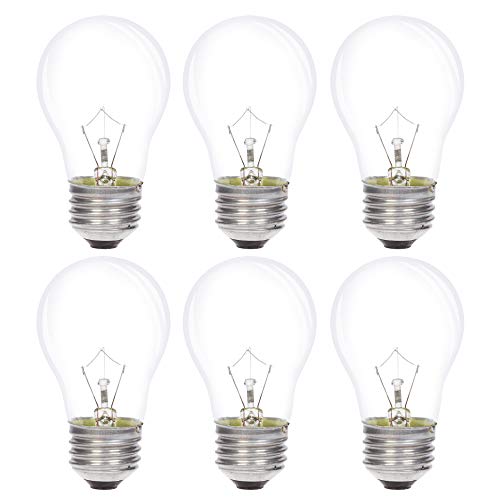
- Appliance bulbs: Mini-standard bulbs, often labeled as A15 bulbs, remain legal for high-heat environments like conventional ovens and microwaves, or chilled compartments like refrigerators and freezers. Traditional incandescent filaments can endure baking temperatures that would easily melt the electronic driver boards inside standard LED bulbs.
- Rough service bulbs: These are bulbs with reinforced wire filaments built for vibration. Mechanics and factory workers use them in portable work cages, shop drop lights, and ceiling fans where constant shaking would snap a standard wire filament. For shop drop lights or work areas where machinery creates heavy shaking, look into durable industrial light bulbs built to handle physical shocks.
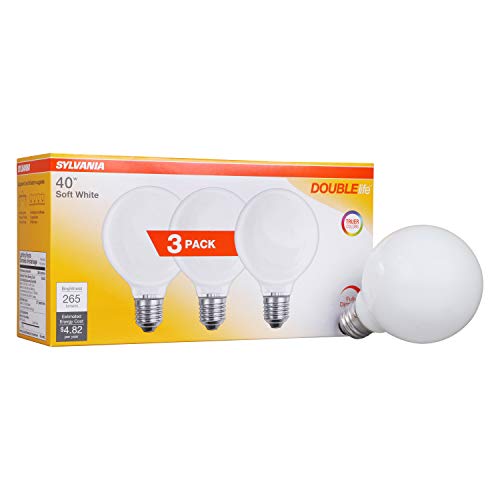
- Decorative vanity globes: Round vanity globe bulbs, labeled as G25 bulbs, are often sold in frosted styles for bathroom mirror strips and dressing room makeup bars where soft, diffused 360-degree light is required.
- Very low or very high brightness bulbs: Bulbs emitting fewer than 310 lumens, such as tiny 15-watt or 25-watt accent bulbs, sit outside the standard household lighting rules because they draw minimal household power over a year.
You can physically screw a rough service or appliance bulb into an ordinary living room lamp as long as it has an E26 standard medium screw base. However, using specialty bulbs for everyday room lighting is rarely a good solution. Specialty filaments are thicker and sturdier, which means they actually emit less light than the old general-purpose bulbs you remember. A 40-watt rough service bulb may produce only 250 lumens of brightness compared to the 450 lumens an old everyday 40-watt bulb used to deliver. You pay full price for electricity while getting a noticeably dimmer room.
What People Miss About Old Filaments (And Why Early LEDs Felt Harsh)
Frustration over losing traditional bulbs is completely understandable. When early energy-saving bulbs first hit the market, they were deeply flawed. Many homeowners remember the sickly greenish tint of early spiral fluorescents and the harsh, icy glare of first-generation LEDs. That bad experience left many people longing for the familiar, soothing look of a glowing wire filament.
The primary reason people miss incandescent lighting comes down to color temperature. Color temperature is measured on the Kelvin scale, which is a number showing whether light looks yellow-warm or blue-cool. Classic incandescent bulbs burn at roughly 2700K soft warm white. As the filament heats up, it radiates a continuous, natural amber tone that flatters human skin tones, makes wood furniture feel rich, and helps the body wind down in the evening. Early replacement bulbs, by contrast, were often rated at 5000K daylight white, which casts a sterile, bluish tint better suited for a hospital hallway or an office than a cozy bedroom.
Color accuracy is another major factor. The lighting industry measures color quality using the Color Rendering Index, or CRI, which is a score showing how natural and true colors look compared to natural daylight. Because traditional bulbs produce light through natural heat, they boast a perfect CRI score of 100. Early LED bulbs had low CRI scores in the 70s, which stripped the warmth out of red, brown, and earth tones, making living rooms look washed out and lifeless.
Dimming performance also created widespread irritation. When you dim a traditional incandescent bulb, the filament cools down, naturally shifting its color from 2700K to an ultra-cozy 2200K amber glow. Early LEDs could not replicate this effect. When placed on an older dimmer switch, early LEDs stayed the same static white color, began to buzz, flickered uncontrollably, or suddenly shut off when dimmed halfway down. Fortunately, modern lighting technology has solved these exact problems, provided you know what specifications to look for on retail packaging.
How to Replace Burnt-Out Bulbs Without Getting Harsh Glare
You do not need to hunt down overpriced, hoarded incandescent bulbs to get comfortable, warm light in your home. By checking a few specific details on the package, you can find modern bulbs that match the exact tone, warmth, and dimming quality of traditional filaments. Follow these steps when shopping for replacements.
-
Switch off power at the wall and let the old bulb cool completely.
Traditional bulbs reach scorching surface temperatures within seconds of operation, and grasping hot glass can cause burns or cause the glass to twist free from its metal base.
-
Check the base type and shape needed for your fixture.
Most standard table lamps and ceiling fixtures use an E26 standard medium screw base, but small chandeliers require an E12 candelabra or small screw base, and mini track lights use a GU10 twist-and-lock two-prong base. If your living room lamp has a multi-contact switch that clicks through several light outputs, look into what is a three way light bulb and how it works to ensure your socket functions properly.
-
Shop by lumens to match the brightness you want, not wattage.
Wattage only tells you how much electricity the bulb draws, while lumens tell you how bright the bulb will actually shine. To replace a burnt-out 40-watt bulb, look for roughly 450 lumens; look for 800 lumens to replace a 60-watt bulb, 1,100 lumens for a 75-watt bulb, and 1,600 lumens for a 100-watt bulb.
-
Select a color temperature between 2200K and 2700K for cozy living spaces.
Look for packages labeled 2700K soft warm white to match the exact color of an old 60-watt lamp. If you want an even cozier, candle-like glow for bedside lamps or dining areas, look for 2200K to 2400K vintage warm ratings.
-
Confirm the CRI score on the box is 90 or higher.
Choosing a high CRI rating prevents the dull, gray look of budget bulbs and ensures your skin, clothing, and interior furnishings look just as vibrant as they did under classic incandescent light.
-
Verify dimmer compatibility on the packaging.
Non-dimmable bulbs installed on a circuit controlled by a dimmer switch will buzz loudly, flicker, and burn out within months. Look for explicitly labeled dimmable options, and check if your wall dimmer switch is rated for electronic bulbs.
-
Check for enclosed fixture ratings when installing in sealed globes.
If your light fixture has a tight glass shade, an airtight globe, or a flush ceiling cover, the bulb must be enclosed fixture rated so heat does not build up inside the housing and destroy the internal power circuit.
-
Consider warm-dimming technology if you love evening mood lighting.
Look for bulbs labeled "warm glow" or "warm dim," which feature internal circuitry that automatically drops the color temperature from 2700K down to a rich 2200K amber as you slide your dimmer switch lower, perfectly replicating the look of an old heated wire.
Choosing Comfortable Warm Light for Your Home
When searching for a replacement light bulb that preserves the inviting character of your home, focus on filament-style LED bulbs or purpose-built specialty incandescent bulbs. Filament LEDs feature clear glass bulbs with thin, glowing vertical micro-strips inside that mirror the physical appearance of vintage carbon and tungsten filaments. If you have open clear glass pendants or cage lamps, check our guide on the best bulb for exposed light fixtures to avoid uncomfortable bare-bulb glare while preserving that classic look.
Before purchasing any bulb, check the retail package for three critical marks. First, check the socket base to verify it matches your lamp, whether it is an E26 standard medium screw base, an E12 candelabra base, or a push-in socket. Second, verify the location rating: wet or damp location ratings are necessary for outdoor porches and steamy bathrooms, while dry ratings suit living rooms and bedrooms. Third, match the bulb shape to your shade to ensure wide flood bulbs for recessed ceiling cans (BR30) or directional indoor/outdoor spotlight and floodlight bulbs (PAR20 or PAR38) do not protrude past the trim ring.
- LFR Score9.2
LFR Score is a ranking system developed by lightfansreviews.com. LFR Score has no relationship or impact from any manufacturers or sales agent websites. Learn more
- BrandLEDVANCE

- LFR Score9.2
LFR Score is a ranking system developed by lightfansreviews.com. LFR Score has no relationship or impact from any manufacturers or sales agent websites. Learn more
- BrandAGS
- LFR Score9.2
LFR Score is a ranking system developed by lightfansreviews.com. LFR Score has no relationship or impact from any manufacturers or sales agent websites. Learn more
- BrandSimba Lighting

- LFR Score9.0
LFR Score is a ranking system developed by lightfansreviews.com. LFR Score has no relationship or impact from any manufacturers or sales agent websites. Learn more
- BrandGE

- LFR Score8.6
LFR Score is a ranking system developed by lightfansreviews.com. LFR Score has no relationship or impact from any manufacturers or sales agent websites. Learn more
- BrandGE

- LFR Score8.4
LFR Score is a ranking system developed by lightfansreviews.com. LFR Score has no relationship or impact from any manufacturers or sales agent websites. Learn more
- BrandSatco

- LFR Score8.2
LFR Score is a ranking system developed by lightfansreviews.com. LFR Score has no relationship or impact from any manufacturers or sales agent websites. Learn more
- BrandPhilips

- LFR Score7.8
LFR Score is a ranking system developed by lightfansreviews.com. LFR Score has no relationship or impact from any manufacturers or sales agent websites. Learn more
- BrandHoimuv

- LFR Score7.0
LFR Score is a ranking system developed by lightfansreviews.com. LFR Score has no relationship or impact from any manufacturers or sales agent websites. Learn more
- BrandHoimuv

- LFR Score7.0
LFR Score is a ranking system developed by lightfansreviews.com. LFR Score has no relationship or impact from any manufacturers or sales agent websites. Learn more
- BrandHoimuv
Last update on 2026-10-02 / Affiliate links / Images, Product Titles, and Product Highlights from Amazon Product Advertising API
FAQs
Did the government completely ban every incandescent bulb?
No, the government did not ban all incandescent bulbs. The federal efficiency standard applies specifically to general-service lamps used for standard room lighting. Specialty bulbs like appliance bulbs for ovens, shatter-resistant rough service bulbs for workshops, and decorative globe bulbs remain legal and available on store shelves.
Can I legally put an appliance or rough service bulb in a regular lamp?
Yes, you can legally screw any specialty bulb with an E26 standard medium screw base into an ordinary living room lamp. However, these bulbs are designed for physical durability or heat resistance rather than efficient brightness. They cost significantly more to operate than modern bulbs and often deliver a noticeably dimmer light output for the wattage consumed.
Why do some new bulbs buzz or flicker when I dim them?
Buzzing and flickering happen when a bulb is not dimmable, or when an older dimmer switch is incompatible with modern low-wattage electronics. Traditional dimmers were built to handle heavy 300-watt to 600-watt incandescent loads, so they struggle to regulate low-draw circuits cleanly. Installing an updated dimmer switch rated for modern bulbs and choosing dimmable-certified bulbs will stop the noise and flickering.
How do I make sure a new bulb does not look cold and sterile?
To avoid a cold or sterile look, check the Lighting Facts label on the package and select a Kelvin rating of 2700K soft warm white or lower. Pair that with a Color Rendering Index score of 90 or higher. This combination guarantees an inviting amber glow and accurate, natural room colors that completely eliminate the harsh, bluish tint of early energy-saving bulbs.

Best Bulb For Exposed Light 2026 That Shines Bright

Best Industrial Light Bulb Reviews: Top Picks for 2026
Best Outdoor Light Bulb Reviews: Top-Rated Picks for 2026
Best LED Reading Light Bulb Reviews - Top Picks for 2026

Best Vintage Light Bulb 2026 With Style And Glow
Best Yellow Fog Light Bulb 2026 For Clearer Night Drives

Best Z Wave Light Bulb 2026 Top Picks For Smart Control
Best Light Bulb For Vanity Mirror 2026 Brightness Boost






