
Best Air Conditioner Fan for Car: Cooler Drives

A parked vehicle can turn into an oven before the factory air conditioner has a chance to catch up. The steering wheel feels untouchable, the seat traps heat, and air around the back row barely moves. A best air conditioner fan for car setup tackles that awkward first stretch by pushing air toward spots the dashboard vents often miss. It won't replace a working AC system, but it can make the cabin feel bearable sooner.
The most useful models focus on directed airflow rather than flashy extras. Adjustable fan heads let the breeze reach a rear-facing child seat, a passenger sitting away from the main vents, or a driver whose dashboard outlet is blocked by a phone mount. Dual-head designs spread air across two zones, though they usually take up more room and create extra cable clutter. A compact single-head unit is easier to position in a tight console, but its cooling reach may feel narrow.
Power supply deserves a close look because weak connections can make an otherwise capable fan frustrating. Most car fans plug into a 12-volt socket or USB port, and the available output affects how strongly the motor can run. A USB model offers simpler compatibility with power banks and newer vehicles, while a 12-volt version may provide steadier airflow at higher settings. Still, a loud motor can turn that stronger breeze into an irritating hum during calls, podcasts, or quiet highway trips.
Mounting stability matters just as much as fan speed. Suction cups can work well on smooth glass, yet summer heat may loosen cheap rubber and send the fan sliding at the worst moment. Clip mounts grip headrest posts, seat pockets, or trim edges, although a stiff clip can leave marks on softer materials. Dashboard bases feel neat and accessible, but they need enough flat space and shouldn't block airbags, controls, or the driver's view.
Airflow settings help balance comfort against noise. A gentle speed can keep air moving during a long commute without drying the eyes, while a stronger setting is handy after the vehicle has baked in a parking lot. Oscillation spreads the breeze more evenly, but it also adds moving parts that may rattle over rough roads. Fixed-angle fans tend to feel simpler and sturdier, especially when one hot spot needs constant attention.
Realistic expectations prevent disappointment. These devices circulate existing cabin air, so they'll struggle if the windows are closed, the interior is heat-soaked, and the vehicle's AC isn't producing cool air. Cracking the doors briefly, using a windshield shade, and venting trapped heat before driving can improve results. Then the fan helps distribute cooler air instead of merely blowing the same hot pocket around.
Safety can't be brushed aside, either. Long cords should stay clear of pedals, gear controls, and seat tracks, while the housing needs a grille that keeps fingers away from the blades. A well-placed car cooling fan should remain secure during braking and sharp turns. That practical combination of stable mounting, manageable noise, and focused airflow matters far more than decorative lights or inflated cooling promises.
The right pick depends on the cabin layout and the specific area that stays uncomfortable. Large vehicles may benefit from two adjustable heads or a headrest-mounted fan that serves the second row directly. Smaller cars often need a slim design that won't crowd cup holders or block the infotainment screen. Either way, the smartest option solves an airflow problem without creating a new problem with noise, loose wiring, or obstructed visibility.

- LFR Score10.0
LFR Score is a ranking system developed by lightfansreviews.com. LFR Score has no relationship or impact from any manufacturers or sales agent websites. Learn more
- BrandGeneric

- LFR Score7.6
LFR Score is a ranking system developed by lightfansreviews.com. LFR Score has no relationship or impact from any manufacturers or sales agent websites. Learn more
- BrandPelidox
- LFR Score5.6
LFR Score is a ranking system developed by lightfansreviews.com. LFR Score has no relationship or impact from any manufacturers or sales agent websites. Learn more
- BrandUwqaqx

- LFR Score5.2
LFR Score is a ranking system developed by lightfansreviews.com. LFR Score has no relationship or impact from any manufacturers or sales agent websites. Learn more
- BrandLONNIY
- LFR Score4.8
LFR Score is a ranking system developed by lightfansreviews.com. LFR Score has no relationship or impact from any manufacturers or sales agent websites. Learn more
- BrandCBDYWVR

- LFR Score4.8
LFR Score is a ranking system developed by lightfansreviews.com. LFR Score has no relationship or impact from any manufacturers or sales agent websites. Learn more
- BrandGeneric

- LFR Score4.6
LFR Score is a ranking system developed by lightfansreviews.com. LFR Score has no relationship or impact from any manufacturers or sales agent websites. Learn more
- BrandNiaoyun
Last update on 2026-07-31 / Affiliate links / Images, Product Titles, and Product Highlights from Amazon Product Advertising API
2026 Car Clip-On Air Conditioner Fan
A parked cabin can hold onto heat long after the doors open, leaving the front vents struggling while the backseat stays stuffy. That uneven airflow is exactly where the best air conditioner fan for car should earn its space, not by pretending to replace the vehicle’s AC, but by moving air toward neglected areas. The 2026 Car Clip-On Air Conditioner Fan adds 360-degree positioning, a rechargeable design, and an unusually broad speed range to make that job more flexible. Its practical appeal lies in targeted circulation, though the ambitious cooling language deserves a realistic reading.
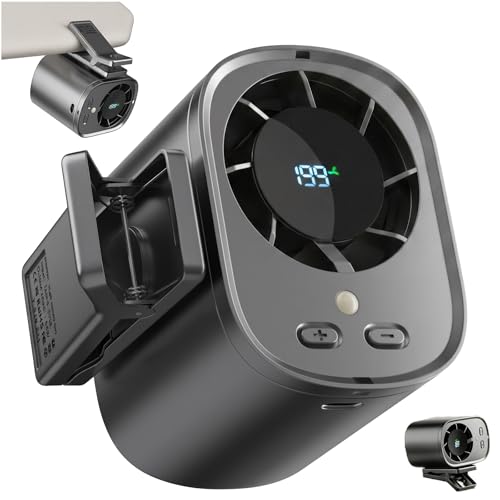
Car Clip-On Fan With LED Display
The shortened name fits the product better because this is primarily a clip-on circulation fan, not a self-contained automotive air conditioner. It uses a rotating fan head to redirect existing cabin air toward passengers, seats, windows, or other spots beyond the reach of fixed dashboard vents. That distinction matters on brutally hot days, since moving warm air alone won’t lower the cabin temperature like refrigerated AC. Paired with a functioning climate-control system, though, the fan may help distribute cooled air more evenly.
The design makes the most sense in vehicles where airflow feels lopsided. Rear passengers often get whatever air happens to drift past the center console, and pets in cargo areas can sit well beyond the strongest vent path. With a hands-free clip mount, the fan can be aimed toward those overlooked zones rather than taking up a cup holder or being held by hand. That’s a small convenience on paper, but it can make long drives feel less fussy.
The built-in LED screen shows the selected setting without forcing anyone to guess whether the fan is running at a low, medium, or near-maximum level. A display is especially handy with 199 speed settings, since such a wide range would otherwise be difficult to track. Still, 199 increments may feel excessive for someone who simply wants low, medium, and high. Fine control is the benefit, while extra button presses are the tradeoff.
The black housing keeps the look fairly neutral inside most interiors. It doesn’t appear designed as a decorative dashboard accessory, and that’s probably for the best. A car fan should blend into the cabin, stay put, and move air without becoming a visual distraction. The LED screen adds useful information, but its brightness could matter during nighttime driving if it can’t be dimmed.
Airflow Control And 360-Degree Rotation
The 360-degree rotating head is the feature with the clearest everyday value. Fixed fans often create a narrow stream that misses the person who actually needs it, especially after a seat is moved or the mounting point changes. This model can be redirected toward a rear headrest, a foggy side window, or a hot front seat without removing the entire clip. That flexibility helps one fan handle different seating arrangements from trip to trip.
The broad speed range gives more control over how the airflow feels. Lower settings can keep air circulating without blasting directly into someone’s eyes, while stronger settings may help push cooler air farther across the cabin. The manufacturer describes the effect as semi-cooling technology, but the most sensible expectation is forceful air movement rather than genuine refrigeration. A fan can improve perceived comfort, yet it can’t create cold air from a heat-soaked interior by itself.
Cabin layout will shape the real result. A compact sedan may need only a moderate setting to move AC-cooled air toward the rear, while a three-row SUV presents a much larger space and more obstacles. Seatbacks, bags, child seats, and tall center consoles can all interrupt airflow. Careful placement will matter just as much as the selected speed.
The fan may also support windshield clearing by moving air across glass where moisture collects. That can be useful during humid weather, although it shouldn’t replace the vehicle’s proper defogging system. Directing the fan toward a problem area can speed up circulation and reduce stagnant pockets. The key strength is localized airflow control, not a substitute for built-in safety equipment.
Clip Stability And Everyday Placement
A portable fan loses its charm quickly if it shakes loose on every rough road. This model uses a widened anti-slip claw clip intended to grip air vents, headrests, dashboards, and desk edges. The wider contact area should distribute pressure more evenly than a narrow spring clip, which may help it stay steady during turns. Even so, the mounting surface needs to be firm enough to support the fan’s weight.
Vent mounting requires a little caution because automotive vent slats vary widely in thickness and strength. A heavy clip may stress thin plastic louvers, especially if the fan is angled far from the mounting point. Headrest posts or sturdy trim edges may provide a more secure base in some vehicles. The best location is the one that keeps the fan stable without blocking controls, mirrors, airbags, or the driver’s sightline.
The clip also expands the fan’s usefulness beyond the car. It can attach to a desk during work, a table during a camping trip, or a shaded seating area at the beach. That broader use helps justify carrying and charging another device, particularly for someone who wants one rechargeable personal fan rather than separate models for each setting. Outdoor performance will still depend on wind, humidity, and how close the fan sits.
Stability on bumpy roads is a reasonable priority, though no universal clip can grip every surface equally well. Smooth, rounded, padded, or unusually thick edges may not provide an ideal hold. Testing the mount while the vehicle is stationary is the sensible first step. A secure attachment should resist light pulling without twisting the vent or marking the surrounding trim.
USB-C Charging And In-Car Convenience
USB-C charging makes the fan easier to integrate into a modern travel setup. The same general cable type is commonly used with phones, tablets, power banks, and other portable electronics, so replacing a forgotten cable may be simpler than sourcing a proprietary charger. Rechargeable operation also keeps the fan running without occupying a power socket at every moment. That flexibility is useful when the vehicle has limited charging ports.
The product description says it supports all-day cooling, but no battery capacity or measured runtime is provided. Actual endurance will depend on the selected speed, battery condition, charging source, and how often the display remains active. High-speed operation usually draws more power than a gentle setting, so the maximum level may shorten the time between charges. Keeping expectations tied to the available specifications prevents disappointment.
The LED display helps manage power because the current speed is visible at a glance. Dialing the fan down once the main AC has cooled the cabin may extend battery life and reduce unnecessary noise. For a long road trip, the fan can also run while connected to an appropriate USB power source. Cable routing still needs attention so the cord doesn’t cross pedals, seat tracks, or frequently used controls.
Battery-powered use offers another subtle benefit: the fan can operate outside the vehicle. A picnic table, tent entrance, or cramped workspace may have no convenient outlet nearby. That portability makes the device more than a one-purpose automotive accessory. Still, it remains a compact fan, so open outdoor spaces will dilute the airflow much faster than an enclosed cabin.
Noise, Fresh-Air Claims, And Practical Limits
The manufacturer emphasizes an ultra-quiet structure, which sounds appealing in a small cabin where motor noise can become tiring. No measured decibel level is included, so silence shouldn’t be assumed, especially near the upper end of 199 settings. Any compact fan moving a meaningful amount of air will produce some combination of blade noise and wind noise. Lower speeds are more likely to suit phone calls, podcasts, or sleeping passengers.
Air circulation can help disperse stale odors, smoke, and trapped heat, but the fan doesn’t filter contaminants from the cabin. Pet smells and lingering food odors may become less concentrated as air moves, yet the source still needs cleaning or ventilation. Dust may also be stirred up rather than removed. Calling it a fresh-air aid is fair; treating it as an air purifier would stretch the product’s actual role.
The semi-cooling description needs the same grounded interpretation. Evaporative coolers, compressor-based AC units, and ordinary circulation fans work in very different ways. Based on the supplied details, this product is best understood as a fan that creates an AC-like breeze when moving cooler cabin air across the skin. It may feel refreshing, but it won’t refrigerate a closed car that has been sitting under direct sun.
Separately, room-scale airflow depends on different mounting and blade considerations, which are discussed in best indoor ceiling fans for larger living spaces. That reference doesn’t change the role of this compact car model, but it highlights how strongly fan performance depends on room size and placement. Inside a vehicle, close-range direction matters more than broad whole-room coverage. Aiming the head carefully will produce better results than simply running it at maximum speed.
Strengths, Weaknesses, And Best Use Cases
The strongest feature is the combination of adjustable positioning and a firm clip. Those two details solve a common problem that raw fan power alone can’t fix: getting air exactly where the factory vents don’t send it. The LED display and wide speed range add control, while USB-C charging keeps the setup fairly flexible. Together, these features make the fan useful for commuting, road trips, parked breaks, and temporary desk use.
The biggest weakness is the potential gap between the phrase “air conditioner fan” and the product’s real function. It circulates air and may help distribute cooled air from the vehicle’s AC, but it shouldn’t be expected to chill the cabin independently. The 199-speed control may also be more complicated than necessary, especially if adjusting it requires repeated taps. A simpler range could be faster to manage while driving.
Mounting compatibility is another question that can’t be answered universally from the supplied description. Wide clips can grip many surfaces, yet air vents and dashboard edges aren’t standardized. Some placements may feel rock solid, while others could wobble or place too much strain on plastic trim. That doesn’t make the clip a poor design, but it does make careful placement essential.
This fan fits best where the vehicle’s existing AC works but distributes air unevenly. It can also help during mild weather when a full blast from the climate system feels unnecessary, or when a rechargeable breeze is wanted outside the car. It’s less suitable as a rescue device for a failed AC system in extreme heat. Used as an airflow helper rather than a miniature refrigerator, the product’s strengths make much more sense.
What The Daily Experience May Feel Like
Daily use should be straightforward once a reliable mounting point is chosen. Clip it securely, rotate the head toward the problem area, and select a speed that balances airflow with cabin noise. The fan can remain focused on one passenger or be repositioned as seats and cargo change. That adaptability keeps it from becoming dead weight after the first week.
During a hot start, the strongest setting may help push trapped air toward an open door or window before the main AC settles in. After the cabin cools, a lower setting can continue directing air toward the rear without adding much disturbance. This two-stage approach makes better sense than expecting the fan to overpower stored heat by itself. A windshield shade and brief ventilation will still do a lot of the early heavy lifting.
The rechargeable format reduces dependence on the vehicle, but charging becomes part of the routine. Someone who regularly forgets to recharge portable devices may prefer leaving the fan connected during longer drives. A visible battery indicator would be useful, though one isn’t mentioned in the provided description. The LED display is confirmed for speed information, so any additional readouts shouldn’t be assumed.
Overall, the 2026 Car Clip-On Air Conditioner Fan offers a practical mix of directional airflow, portable power, and adaptable mounting. Its benefits are clearest in stubborn hot spots rather than across an entire heat-soaked cabin. The product asks for sensible placement and realistic expectations, but that’s hardly a deal-breaker. For spreading existing cool air where it’s needed, the design has a clear and believable purpose.
2026 Upgraded Car Seat Back Cooling Fan
Heat tends to settle where factory vents have the least influence, leaving seatbacks warm and rear rows uncomfortable even after the dashboard starts blowing cool air. The best air conditioner fan for car should address that uneven circulation without crowding the console or becoming another loose object under the seats. This upgraded car seat fan takes a different route with a compact headrest-mounted shape, three wind levels, and a USB-powered design that avoids storing a rechargeable battery inside a hot vehicle. Its appeal is less about flashy controls and more about putting airflow exactly where a standard vent often falls short.
Car Seat Back Cooling Fan
The first thing worth noting is the fan’s hidden seat-mounted layout. Rather than sitting on the dashboard or clipping onto a delicate vent slat, it’s designed to work around a car seat or headrest area. That positioning can free up valuable space near the front controls while bringing airflow closer to the driver’s back or the rear seating area. In a crowded cabin, that’s a practical difference, not just a styling choice.
The adjustable outlet moves through a wide vertical angle, allowing the breeze to reach higher or lower depending on the seat position. That matters because headrests, child seats, and tall seatbacks can easily block a narrow stream of air. A flexible outlet helps the fan work around those obstacles instead of forcing the entire unit into an awkward position. Still, the mounting point will influence how evenly the air reaches its intended spot.
The product description emphasizes improved materials, workmanship, compatibility, and styling based on weaknesses found in similar designs. No test records or comparison measurements are supplied, so those claims should be treated as design intentions rather than proven performance data. The useful takeaway is that the maker appears to have focused on fit, reach, and day-to-day usability. Those are sensible areas to improve in a seat-mounted fan.
Its compact shape also makes the unit easier to leave installed without turning the cabin into a mess of bulky accessories. A smaller housing is less likely to interfere with passengers entering the vehicle or shifting bags across the backseat. The tradeoff is predictable: a mini fan may need higher speed to push air across a long distance. Placement close to the problem area will likely produce better results than expecting broad cabin-wide coverage.
Three-Speed Airflow Without Needless Fuss
Three settings keep the controls refreshingly simple. Low, medium, and high speeds cover the usual situations without asking the driver to tap through dozens of tiny increments. Low can maintain gentle circulation after the cabin cools, medium suits regular commuting, and high is better suited to the first hot minutes after startup. That straightforward range is easier to manage than an overly complicated digital control panel.
The internal turbo-style motor is described as delivering strong airflow from a small body. Without measured airflow figures, there’s no honest way to quantify how forceful the breeze will feel at different distances. What can be said is that a concentrated outlet may provide more useful spot cooling than a broad, weak stream. The closer it sits to the seatback or passenger zone, the more noticeable the effect should be.
Rear-seat comfort is where the design makes the most sense. Many vehicles direct most cooled air toward the front row, while passengers behind the seats wait for the entire cabin temperature to drop. A headrest-mounted fan can move conditioned air toward that lagging zone sooner. It won’t create cold air, but it may help the vehicle’s existing AC feel more evenly distributed.
The same airflow can also reduce the sticky feeling against a driver’s back during long trips. Even with the cabin cool, body heat can build where clothing presses against the seat. Directed movement across that area may reduce trapped warmth and make extended drives less tiring. That’s a modest benefit, yet it solves a frustration that dashboard vents rarely touch.
USB Power And Hot-Car Safety
The fan runs only while connected to a USB power source. That means there’s no internal rechargeable battery to sit inside the vehicle during high summer temperatures. For an accessory that may remain in the cabin day after day, avoiding battery storage can ease concerns about heat exposure. The tradeoff is obvious, though: unplug the cable, and the fan stops immediately.
Power compatibility covers car chargers, power banks, laptops, computers, and AC adapters. That broad range lets the fan move from a vehicle to a temporary desk or travel setup without needing a specialized power brick. The supplied description specifically warns against using a low-output 5V/1A USB port. A weak port may leave the motor underpowered, so the available USB output deserves attention before judging the fan’s strength.
Cable routing becomes part of the installation. A cord should stay clear of pedals, seat rails, gear controls, and places where passengers may snag it while entering or leaving. Running it neatly along the seat edge can preserve the fan’s low-profile look and prevent accidental disconnection. A USB extension may be useful in larger vans or RVs, although no extension cable is listed in the provided details.
Continuous USB power can be more convenient than repeated charging on long drives. There’s no need to monitor a battery level or remember to recharge the unit before a road trip. On the other hand, it occupies a USB outlet that may already be needed for phones, navigation devices, or cameras. A multi-port car charger could solve that bottleneck, provided it supplies enough power to each connected device.
Air Circulation For Seats, Glass, And Odors
The fan’s practical role goes beyond directing a breeze at a passenger. Moving air through stagnant sections of the cabin may help reduce pockets of trapped heat and moisture. During damp weather, aiming airflow toward a problem area on the glass can support the vehicle’s normal defogging system. It should remain a helper, not a replacement for the built-in defroster.
Smoke, dust, and pet odors are also mentioned in the product description. A circulation fan can spread and dilute stale air, especially with a window slightly open or the ventilation system drawing in fresh air. It doesn’t capture particles or neutralize odor molecules, so calling it an air purifier would be misleading. The realistic benefit is faster air movement, not filtration.
Pet travel presents a familiar airflow problem because cargo areas often sit far from dashboard vents. A fan mounted behind a front seat may push conditioned air farther into that space. Careful positioning matters, particularly around loose fur, leashes, and curious paws. The outlet and wiring should remain secure and out of reach wherever possible.
Moisture control can also matter after rainy trips, wet umbrellas, or damp clothing. Circulating air may help prevent one corner of the cabin from staying clammy while the front area dries. The effect will depend on humidity and ventilation, but constant movement is generally more useful than leaving damp air trapped around the seats. That makes the fan a year-round accessory rather than something useful only during peak summer.
Compatibility Across Cars, Vans, And Trucks
The manufacturer describes compatibility with most cars, vans, trucks, SUVs, and RVs. That broad claim sounds plausible for a USB-powered accessory, yet actual fit depends on the headrest and seat design. Integrated headrests, unusual seat contours, or limited rear clearance could complicate installation. A conventional adjustable headrest is likely to offer the easiest mounting arrangement.
Larger vehicles create both an opportunity and a limitation. Vans and RVs often have more distant seating zones that need extra circulation, so a portable fan can fill a real gap. At the same time, a mini unit can’t move air across a huge cabin as effectively as a larger multi-fan setup. Using it close to one seat or sleeping area is more realistic than expecting whole-vehicle cooling.
Compact cars benefit from the opposite side of the design. Space is tight, so a fan that hides around the seatback won’t occupy a cup holder or block the infotainment display. Its small footprint also reduces visual clutter in the front row. Still, the cord may feel more noticeable in a short cabin unless it’s tucked away carefully.
Seat adjustment should be checked after installation. Moving the seat far forward or backward may tighten the cable, alter the airflow angle, or bring the unit into contact with another surface. A quick stationary check can reveal those issues before driving. The fan should remain secure through the full range of normal seat movement.
Quiet Operation And Cabin Comfort
The product is described as quiet, but no measured noise level is provided. Small high-speed fans often produce a mix of motor hum and rushing air, especially at maximum output. Lower settings should be better suited to calls, music, sleeping passengers, or quiet highway travel. The three-speed control allows a reasonable compromise between breeze strength and sound.
Mounting location also affects perceived noise. A fan placed near a driver’s ear may sound much louder than the same unit mounted lower behind the seat. Plastic panels can amplify vibration if the fan presses against them, so a firm but isolated installation is preferable. Minor repositioning may reduce rattling without sacrificing airflow.
Long drives tend to expose small annoyances that barely register during a ten-minute errand. A constant buzz, loose clip, or fluttering cable can become tiring after an hour. This fan’s simpler control system and hidden placement may help keep those distractions in check. The real test is whether the unit stays stable and unobtrusive once the road turns rough.
Quiet performance shouldn’t come at the expense of useful circulation. A nearly silent fan that barely moves air won’t solve much, while a roaring motor defeats the point of a calmer cabin. Medium speed will probably be the practical middle ground for most trips. It offers a sensible balance without leaning too heavily toward either extreme.
Strengths And Weaknesses In Daily Use
The main strength is the way the design targets areas that factory vents commonly miss. Seatback placement, a flexible outlet, and three usable speed levels create a focused cooling setup without cluttering the dashboard. USB-only power also avoids keeping a rechargeable battery in a hot cabin. Those choices feel practical rather than decorative.
The biggest weakness is dependence on an external power source. No built-in battery means no cordless operation, and the fan won’t continue running after the vehicle or power bank is disconnected. That can be inconvenient during parked breaks or outdoor use away from a USB supply. Still, the power arrangement is intentional and tied to the product’s heat-safety approach.
The fan’s odor and dust claims also need realistic boundaries. It can circulate air and help stale pockets disperse, but it can’t remove particles the way a filter does. A similar distinction applies to cooling: the fan moves existing air instead of refrigerating it. Understanding that circulation is the core function makes the product easier to evaluate fairly.
The unrelated maintenance problem of overhead dust requires different tools, and a neutral reference is available through vacuum cleaners for ceiling fans. That household task has little connection to vehicle cooling, so forcing the two together would muddy the discussion. Here, the car seat fan is best judged by placement, power access, airflow reach, and noise. Those factors determine whether it improves the ride or simply adds another cable.
Where This Fan Makes The Most Sense
This model fits vehicles with working air conditioning but uneven cabin circulation. The fan can redirect cooled air toward a warm seatback, rear passenger, child seat area, or pet zone without changing the main climate settings. That makes it especially useful during commuting and road trips where one section stays hotter than the rest. Its localized cooling support is the clearest reason to consider it.
It also suits drivers who prefer simple controls. Three speeds remove the guesswork, and USB power avoids battery management. There’s no elaborate screen or app to learn, just a direct airflow tool with a flexible outlet. That simplicity can feel refreshing in a cabin already crowded with electronics.
The product is less convincing as a substitute for failed vehicle AC. On a scorching afternoon, blowing hot cabin air at higher speed won’t create genuine cooling. Venting the vehicle first, using a sunshade, and running the built-in AC will give the fan cooler air to distribute. Used as part of that routine, it has a much more believable role.
Daily satisfaction will come down to installation. A stable mount, adequate USB power, thoughtful cable routing, and a clear airflow path are the key factors. Get those details right, and the little fan can reduce stubborn hot spots without taking over the cabin. Ignore them, and even a strong motor may feel underwhelming.
Portable Clip-On Car Cooling Fan With LED Display
Hot air rarely settles evenly inside a vehicle. The front vents may cool the dashboard while the rear seat stays muggy, and blasting the main AC harder can leave one person freezing while another still feels sticky. That uneven comfort gap is where the best air conditioner fan for car can be useful, and this compact clip-on model approaches the problem with a high-speed brushless motor, a rechargeable battery, and a rotating head. It’s an air circulator rather than a true portable air conditioner, which is an important distinction, but its ability to redirect conditioned air could make stubborn hot spots less irritating.
Portable Clip-On Car Cooling Fan
The product’s compact clip-on design gives it an immediate advantage over larger dashboard fans. It doesn’t need to occupy a cup holder, sit loose on the center console, or rest on a flat surface that may not exist. The widened silicone-lined clamp can attach to vents, headrests, sun visors, seat belts, and other firm edges. That flexibility allows the fan to sit closer to the exact place where airflow feels weak.
A clear disclaimer in the supplied description keeps expectations grounded: this device is not a portable air conditioner. It won’t refrigerate hot cabin air, remove humidity like an AC system, or cool an entire parked vehicle on its own. Instead, the fan accelerates air movement and helps distribute cooler air produced by the car’s existing climate system. That honest limitation makes the rest of the feature set easier to judge fairly.
The lightweight body also works outside the vehicle. It can function as a desk fan, handheld fan, wearable neck fan, or clip-on unit for a stroller, tent, umbrella, or bed frame. That broad usefulness is a real strength because a small car accessory can otherwise spend most of its life sitting unused in the glove compartment. Here, the four-in-one format gives the device more chances to earn its keep.
Portability does create one predictable compromise. Smaller blades and housings generally provide a more concentrated stream than a large, room-filling breeze. That makes placement crucial, particularly inside SUVs, trucks, and RVs where the air has farther to travel. The fan should work best as a personal cooling tool or an airflow bridge between the front AC vents and a specific rear-seat area.
Turbo Airflow Without False AC Promises
The brushless motor is listed at up to 14,000 RPM, with stated airflow ranging from 14 to 24 feet per second. Those supplied figures suggest the fan is intended to deliver a focused, fast-moving stream rather than a lazy background breeze. Stronger air movement can help cool air from the dashboard vents reach the backseat sooner. Still, cabin size, mounting angle, obstructions, and the selected speed will shape the actual experience.
The airflow has the most practical value during the awkward first minutes of a summer drive. After opening the doors or lowering the windows briefly, the fan can help push trapped heat out and move newly cooled air across the cabin. Aiming it toward a warm seat, a rear passenger, or a pet area may feel more effective than simply increasing the factory blower. The directional boost is the point, not magical temperature reduction.
Fuel-saving language in the product description deserves a measured interpretation. Better air distribution may allow the vehicle’s AC to feel more effective without remaining at its highest blower setting, but no verified fuel-consumption data is provided. Driving conditions, outside temperature, vehicle size, and AC efficiency all matter. The believable benefit is faster circulation, while any fuel savings should be treated as a possible side effect rather than a guaranteed result.
The fan may also be useful when full cabin cooling feels unnecessary. Mild weather, short errands, or parked breaks can call for a localized breeze instead of heavy climate control. That said, extreme heat is a different story, and a small circulator shouldn’t be relied on as the only cooling source. Realistic use means pairing it with ventilation, shade, and working vehicle AC whenever conditions demand it.
199 Speeds And Smart LED Feedback
The most unusual feature is the range of 199 adjustable speed levels. That level of control lets the breeze move from barely noticeable to much more forceful without relying on a simple three-step switch. Fine adjustment can be useful near a sleeping child, during a phone call, or when a strong stream feels too harsh on the face. The downside is that such a broad range may feel excessive for anyone who prefers quick, simple controls.
The LED screen helps make those settings manageable. It displays the selected speed and the remaining battery level in real time, reducing guesswork during long drives or outdoor use. Battery information is especially useful because runtime changes with fan speed. The visible status display makes it easier to lower the setting before power runs out unexpectedly.
Precision control can also reduce noise. Instead of jumping directly from a weak low setting to an aggressive high setting, the speed can be nudged until the airflow feels useful without becoming distracting. That matters inside a compact cabin where motor noise sits close to everyone’s ears. A moderate setting will often provide the best balance between reach, comfort, and sound.
Drivers should adjust the fan before moving whenever possible. Tapping repeatedly through dozens of levels while watching the display could become a distraction on the road. Once a comfortable range is identified, small changes should be easier to make without much attention. The control depth is an advantage, but only when it’s used sensibly.
Rotation And Clip Placement In Real Vehicles
The fan head rotates through a full 360-degree range, which is arguably more valuable than the enormous speed count. Vehicle interiors rarely offer a perfect mounting point, and seats, mirrors, pillars, bags, and child seats can interrupt the airflow path. A rotating head allows the clamp to stay on the strongest available surface while the breeze points somewhere else. That separation between mounting angle and airflow direction makes installation less frustrating.
The widened anti-slip clamp uses silicone contact points to improve grip and reduce sliding. On rough roads, a broader clamp should resist vibration better than a narrow plastic clip. It may also spread pressure across a larger area, which can be gentler on the mounting surface. Even so, thin vent slats and soft interior trim still deserve caution.
Sun-visor placement can put the fan near the driver or front passenger, but it mustn’t block visibility. A headrest mount may be safer for rear-seat coverage, while a seat-belt edge could offer convenient positioning if the fan doesn’t interfere with belt movement. Stroller and umbrella mounting add outdoor flexibility, though wind and uneven surfaces can weaken the perceived airflow. The best mounting point will change from one setting to another.
A quick stability check can prevent headaches later. The fan should remain firm when the head is rotated, the seat is adjusted, and the cable is connected. If the clamp twists or puts visible strain on a vent, another position is wiser. Strong airflow isn’t worth cracked trim, blocked controls, or a device dropping into the footwell.
Rechargeable Battery And Charging Tradeoffs
The built-in 1500mAh battery supports cordless operation for a stated one to three hours, depending on speed. That range makes sense because the high-speed motor will draw far more power near its upper limit than at a gentle setting. A short commute may fit comfortably within the battery window, while a long road trip will probably require charging along the way. The LED battery display should help with planning.
USB-C charging adds convenience across several environments. The fan can connect to car chargers, power banks, laptops, or wall adapters without depending on a proprietary cable. It also supports use while charging, which removes the runtime limit when a suitable power source is nearby. That pass-through operation is particularly useful during extended drives.
The battery creates a different tradeoff than a USB-only car fan. Cordless use keeps the cabin cleaner and allows the unit to move between seats without rerouting a wire. On the flip side, rechargeable batteries shouldn’t be left exposed to severe heat carelessly, especially inside a closed vehicle under direct sun. Storing the fan away from the hottest dashboard areas is a sensible habit.
Cable management still matters during charging. The cord should never cross pedals, wrap around the steering column, or stretch tightly across a moving seat. A nearby USB port or power bank can keep the setup tidy. The wireless flexibility is most useful when charging remains an occasional task rather than a constant tangle.
Night Light And Emergency Visibility
The built-in light is described as a gentle glow, not a flashlight. That distinction keeps expectations reasonable because it’s intended for simple close-range tasks in darkness. It may provide enough illumination to locate a phone, check around a seat, or see nearby objects during an outage. It won’t replace a proper emergency torch or light up a wide outdoor area.
A blinking mode adds basic visibility when signaling presence. That could be useful beside a parked vehicle, near a campsite, or during a temporary power interruption. Still, the fan shouldn’t be treated as dedicated roadside safety equipment. Reflective gear, hazard lights, and a proper emergency lamp remain more appropriate for serious situations.
The light may also be convenient around sleeping areas. A soft glow is less jarring than a bright phone flash when checking on a child or navigating inside a tent. Since the same battery powers the fan and light, using both features may shorten runtime. The shared power demand is worth remembering during longer outages.
Placement makes a difference here, too. Clipping the fan to a headrest or bed frame can position the light above nearby objects without occupying a hand. That hands-free arrangement is useful, though the fan should remain stable before anyone relies on it in the dark. A loose clip can turn a handy glow into a floor-level nuisance in a hurry.
Noise And Personal Comfort
The manufacturer describes the fan as whisper-quiet, but no measured decibel level is included. Brushless motors often run smoothly, yet strong airflow still creates audible wind noise, especially near the highest settings. Lower levels are more likely to suit naps, calls, podcasts, or focused work. Maximum output will probably prioritize air movement over silence.
Noise perception also depends on distance. A fan clipped beside the head can sound louder than the same unit mounted behind a seat or farther down a desk. Vibration may increase if the clamp touches a hollow plastic panel. Small adjustments can sometimes reduce buzzing without weakening the breeze.
The huge speed range gives this model an advantage in sound management. Rather than tolerating a preset level that feels slightly too loud, the user can step down until the motor fades into the background. That’s particularly useful around babies or during overnight camping. The fine-speed tuning has more value here than it might at first appear.
Comfort also depends on airflow angle. A constant stream aimed directly at the eyes can become irritating even at low speed, while air directed across the shoulders or seatback may feel gentler. The rotating head helps soften that problem. A slightly indirect breeze often feels cooler without becoming annoying.
Strengths And Weaknesses That Matter
The strongest part of the design is its combination of focused airflow, flexible mounting, and cordless operation. Those features address the real problem of moving cool air into a stubborn hot spot without cluttering the dashboard. The LED readout and USB-C charging add useful control rather than empty decoration. Its versatility outside the car also improves the value of keeping it around.
The main weakness is limited battery endurance at higher speeds. A one-to-three-hour range may cover errands and commutes, but it won’t sustain cordless turbo airflow through an all-day trip. Using the fan while charging solves that problem, though it removes some of the cable-free appeal. The runtime tradeoff is the price of a compact 1500mAh battery.
The 199 speed settings may also divide opinion. Some people will appreciate precise control, while others may wonder why a tiny fan needs so many increments. A handful of memorable presets would be quicker during everyday driving. Still, the display prevents the system from feeling completely opaque.
The product’s unrelated indoor-airflow counterpart involves larger fixtures and different installation concerns, with a neutral reference available in porch ceiling fans with lights. That household topic doesn’t influence this portable model’s vehicle performance, but it underscores a broader point: fan size and placement must match the space. Inside a car, this unit’s strength is close-range direction rather than broad architectural airflow. Expecting that distinction keeps the evaluation honest.
Where This Portable Fan Fits Best
This fan makes the most sense in a vehicle with working AC but disappointing rear-seat circulation. Mounted near a headrest or vent, it can push conditioned air toward a warm passenger, child seat area, or pet zone. That airflow extension is more believable than the idea of cooling the entire cabin independently. A compact sedan may feel the effect more broadly than a large RV.
It also suits short-term personal cooling away from the vehicle. A desk, stroller, tent, golf cart, or beach umbrella can provide a stable mounting point, and cordless operation keeps setup simple. Outdoor wind may overpower the stream at a distance, so close placement remains important. The fan is portable, not industrial.
The model is less suitable for anyone who wants a set-it-and-forget-it cooling device that runs all day without power access. High-speed users will need a charger or power bank nearby, and the many control levels may feel fussy. It also won’t rescue a vehicle with broken air conditioning during dangerous heat. Those are genuine limitations, not minor footnotes.
Used with a sunshade, brief ventilation, and the vehicle’s main AC, the fan has a clear job. It redirects cool air, eases uneven cabin temperatures, and provides a portable breeze once the drive ends. Careful mounting and realistic battery planning matter more than chasing the highest speed. With those details sorted, the device can solve a very specific annoyance without pretending to be something it isn’t.
LONNIY Car Clip-On Air Conditioner Fan
A dashboard vent can blast cold air up front while the rear seat remains warm, stale, and oddly disconnected from the rest of the cabin. That mismatch becomes more irritating on long drives, especially when turning the factory blower higher only makes the front row uncomfortable. The LONNIY model enters the best air conditioner fan for car discussion with 360-degree rotation, 199 speed levels, a digital display, and a silicone-lined clip built to stay steady on rough roads. Its flexibility is appealing, though the strong cooling language needs to be weighed against the limited technical details supplied.
LONNIY Clip-On Cooling Fan
The compact format is built around targeted air movement rather than taking over the vehicle’s entire climate system. It clips near a dashboard vent, rear headrest, or other firm surface, allowing the airflow to start closer to the area that stays uncomfortable. That can help cooled air travel past seatbacks and into sections where fixed factory vents barely reach. A small device won’t reshape the whole cabin, but good placement can solve a stubborn local problem.
The dark gray housing should blend into many interiors without drawing much attention. That’s useful because a car accessory can become annoying fast if it blocks controls, crowds the dashboard, or hangs awkwardly near the windshield. The hands-free clip design keeps the fan off seats and cup holders while leaving both hands available for driving. Its small footprint also makes it easier to move between the vehicle and a desk.
The product description refers to a balanced 16C semi-cooling system. No technical explanation is provided for how that system works, so it’s wiser to treat the phrase cautiously rather than assume compressor-style refrigeration. The fan may create a cooler-feeling breeze through rapid air movement and by redistributing air from the vehicle’s AC. That expectation gap matters because circulation and active temperature reduction aren’t the same process.
Portability adds another layer of usefulness. The fan can move from a dashboard vent to a rear headrest, office desk, or camping setup without requiring permanent installation. A portable design makes sense for changing routines, but it also means remembering the device, charging cable, and a suitable mounting surface. The fan earns its place most easily when it solves more than one airflow problem.
199 Speeds Offer Fine Control
The 199 adjustable speed settings give this model far more control than a conventional low, medium, and high switch. A gentle setting may suit hands-free calls or quiet highway cruising, while stronger airflow can help during the first stuffy minutes after entering a parked car. Fine increments also make it easier to avoid an irritating blast directly at the face. The benefit is precision, though the number itself sounds more dramatic than most daily routines require.
A driver usually wants quick adjustments, not a long session scrolling through tiny differences. If the controls respond smoothly, the broad range may feel natural after a favorite setting is established. If every change requires repeated tapping, 199 levels could become tedious. The control method will matter nearly as much as the maximum fan speed.
The smart LED display shows the selected level and battery status in real time. That’s practical because a fan with so many increments would otherwise leave the current setting unclear. Battery information also prevents the familiar surprise of a portable device stopping midway through a trip. A glance at the display can help decide whether to lower the speed or connect USB power.
The screen introduces a small nighttime consideration. A bright display near the windshield can reflect on glass or become distracting during dark drives. The supplied details don’t mention brightness adjustment or an automatic dimming mode. Careful placement should keep the LED readout useful without putting it directly in the driver’s line of sight.
Rotation Solves Awkward Cabin Angles
The full 360-degree rotation is arguably more valuable than the giant speed range. Vehicle cabins are packed with obstacles, including headrests, screens, child seats, pillars, bags, and tall center consoles. A rotating head lets the clip stay attached to a solid point while the airflow aims somewhere entirely different. That flexibility can save a lot of fiddling.
Rear-seat placement is a natural fit. Mounted around a front headrest, the fan can direct air toward a passenger who receives very little from the dashboard vents. It may also help move cooled air toward a pet area or cargo section. The result will depend on distance, but close-range direction is where a compact fan usually performs best.
Dashboard vent mounting places the fan near an existing source of cool air. In that position, it can catch conditioned air and push it toward another part of the cabin rather than merely recirculating the warmest pocket. Thin vent slats deserve caution, though, because the fan’s weight and rotating head may put leverage on fragile plastic. A stable mount shouldn’t bend or twist the vehicle trim.
Desk use benefits from the same range of motion. The clip can hold the unit above paperwork or beside a monitor while the head directs air across the body instead of straight into the eyes. Camping arrangements may be less predictable because fabric, poles, and uneven table edges vary in firmness. The rotating joint adds options, but it can’t compensate for a weak mounting point.
Grip And Stability On Rough Roads
The mounting system combines shock-resistant construction with non-slip silicone contact points. Silicone can improve grip while reducing direct plastic-on-plastic contact with vents, trim, or furniture. A wider, cushioned surface may also spread pressure more evenly. That sounds sensible for a fan expected to remain steady through turns and road vibration.
Absolute stability is a strong claim, and real vehicles don’t offer identical mounting surfaces. A thick headrest post may hold the clip firmly, while a curved dashboard edge could allow gradual twisting. Dust, heat, and textured plastic can also affect grip. The mounting surface deserves a quick inspection before every long trip.
Road vibration can expose small design flaws that never appear on a stationary desk. A loose hinge may let the fan head sag, and a stiff cable can pull the unit off angle. The supplied description emphasizes shock resistance but doesn’t provide test details. Sensible expectations mean checking the clip and rotation joint rather than assuming they’ll never shift.
Placement also affects safety. The fan shouldn’t interfere with airbag deployment zones, steering movement, mirrors, pedals, or seat belts. A secure clip in the wrong location is still a bad setup. The safest position keeps the device useful without adding visual or physical clutter around the driver.
Semi-Cooling Claims Need Perspective
The phrase semi-cooling technology suggests performance beyond that of an ordinary fan, yet the description doesn’t explain the cooling mechanism in measurable terms. No coolant, evaporative medium, heat exchanger, or compressor is identified. Without those details, it’s difficult to verify whether the device actively lowers air temperature or simply produces a stronger cooling sensation. That doesn’t erase its usefulness, but it changes how the claim should be read.
Fast-moving air can feel noticeably cooler against skin because it helps moisture evaporate and carries away body heat. Inside a car with working AC, the same airflow can distribute chilled air more effectively. Those effects may create an air-conditioner-like sensation close to the fan. The realistic benefit is improved personal comfort, not guaranteed whole-cabin refrigeration.
A heat-soaked vehicle presents a tougher challenge. If the cabin has been closed under direct sun, the fan initially has only hot air to move around. Opening the doors, lowering the windows briefly, and starting the factory AC will give it better conditions to work with. Used after that first heat release, the fan can help the cooler air reach neglected zones sooner.
The device shouldn’t be relied on during dangerous heat if the vehicle’s main climate system has failed. A portable fan can’t make a sealed car safe in extreme temperatures, particularly for children or pets. Its role is supportive, not protective. That limitation is essential despite the ambitious product wording.
Low Noise And Driving Comfort
The manufacturer describes low-noise operation intended for calls, focused driving, and long trips. No decibel measurement is included, so the claim can’t be judged against a fixed standard. Any small fan moving substantial air will create some blade and wind noise, especially near its upper settings. Lower speeds are more likely to fade into the cabin background.
Mounting location changes how loud the fan feels. A unit placed near the driver’s head may sound prominent even at moderate speed, while one behind a seat could be less intrusive. Contact with a hollow dashboard panel may amplify vibration. A slight shift in position can sometimes reduce buzzing more effectively than lowering the speed.
The large adjustment range should make noise balancing easier. Rather than accepting a preset level that feels a little too loud, the fan can be dialed down until the sound becomes tolerable. That’s helpful during podcasts, phone conversations, or late-night drives. The precision control has practical value here, not just marketing appeal.
Quiet operation also depends on cleanliness and wear. Dust buildup around the grille can affect airflow, while a loose clip or hinge may begin rattling over time. Occasional inspection and gentle cleaning can preserve the fan’s smoother operation. Maintenance is simple, but ignoring it could undercut one of the model’s main strengths.
USB Power For Trips And Desk Work
The fan uses a USB-powered design, making it compatible with common car chargers, power banks, laptops, and wall adapters. That broad connection range suits daily commuting as well as extended office sessions. USB power also avoids tying the unit to one vehicle. A familiar cable is easier to replace than a proprietary charger.
The supplied description calls the fan rechargeable but doesn’t state battery capacity or expected cordless runtime. Without those details, it’s impossible to judge how long it will operate away from a power source. Speed level, display use, battery condition, and charging habits will all affect endurance. The missing runtime information is a notable weakness for a portable device.
Long trips are less troublesome if the fan can operate while connected, although that function isn’t explicitly confirmed in the supplied details. It’s safer not to assume unsupported charging behavior. A power bank could provide flexibility if the internal battery runs low and direct use during charging isn’t available. Either way, cable management deserves attention inside the cabin.
A charging cord should remain clear of pedals, steering components, seat tracks, and passenger foot space. Headrest mounting may require a longer cable than dashboard placement. Loose wiring can snag on bags or feet, turning a simple accessory into an annoyance. The cleanest setup uses the shortest practical route to the power source.
Strengths That Stand Out
The clearest strength is the combination of adjustable direction and fine speed control. Those two features let the fan solve a specific hot spot rather than throwing one fixed stream across the cabin. The display adds useful feedback, and the clip allows several mounting approaches. This is a more adaptable setup than a fan that depends on one dashboard position.
The low-profile form also supports regular use. It can remain near a rear seat or move to a desk without occupying much surface area. Dark gray styling should blend with common vehicle interiors, while silicone contact points may reduce slipping and scratching. The portable format makes sense for changing environments.
Quiet performance, if it matches the description, would be another meaningful advantage. A fan that cools one passenger while irritating everyone else with a harsh motor sound isn’t much of a win. The broad speed range offers room to trade a little airflow for a calmer cabin. That balance matters during long stretches behind the wheel.
The product’s usefulness is strongest alongside existing AC. It can push conditioned air past the front row, create a personal breeze, and reduce stagnant pockets near seats. Those jobs are believable and practical. Judged as a circulation assistant, the fan has a clear purpose.
Weaknesses And Unanswered Details
The biggest weakness is the lack of technical detail behind the 16C semi-cooling system. The wording implies substantial temperature reduction, but no operating principle or measured result is provided. Buyers expecting a miniature compressor-based AC may be disappointed. The product should be approached primarily as a high-control clip-on fan.
Battery specifications are another gap. Capacity, recharge time, and expected runtime aren’t listed in the supplied information. Those details matter because portability depends on how long the fan can run without a cable. The smart display shows remaining power, but it can’t compensate for an unknown endurance range.
The 199 settings may also feel needlessly elaborate. Precise control is useful, yet most people will probably settle on a handful of familiar levels. A complicated interface could become distracting if adjustments take too long. The difference between flexibility and excess will depend on how quickly the controls respond.
Household air circulation follows different rules, and a related desk-scale reference appears in oscillating desk fans without changing how this car model should be judged. Vehicle placement is tighter, vibration is greater, and visibility matters more than broad room coverage. The LONNIY fan needs to prove itself through stable mounting, manageable noise, and focused airflow. Those practical factors outweigh dramatic cooling terminology.
Best Use In Daily Driving
The fan makes the most sense in a car where the main AC works but doesn’t distribute air evenly. Rear seats, pet areas, and warm seatbacks can benefit from directed circulation close to the problem zone. Small cabins may feel the effect more broadly, while large SUVs or RVs will likely need closer placement. One compact fan can’t overcome every dead spot at once.
Short commutes may benefit from a high setting during startup followed by a quieter level once the cabin settles. Long trips call for a more balanced speed that won’t drain the battery quickly or become tiring to hear. The LED screen helps track both variables. That simple routine uses the fan’s controls without turning every drive into a settings experiment.
Office and camping use add value between trips. A firm desk edge or headboard can provide a stable clip point, and the rotating head makes personal positioning easy. Outdoor airflow may feel weaker in open spaces because natural wind disperses the stream. The close-range design remains the key, wherever the fan is used.
Careful expectations tie the whole product together. It can redirect air, create a cooling sensation, and improve comfort in a stubborn warm spot, but it shouldn’t be confused with a genuine portable AC system. A secure mount and suitable USB power will matter more than chasing the highest setting. Treated as a flexible cabin circulator, the LONNIY fan offers a practical answer to uneven airflow.
CBDYWVR Clip-On Air Conditioner Fan
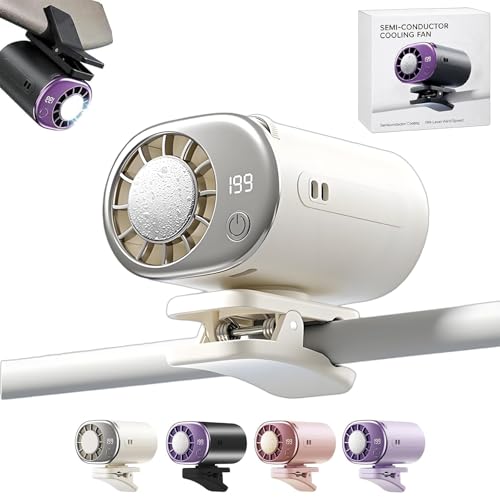
A hot cabin can turn a ten-minute drive into a sticky, impatient mess, especially when the dashboard vents cool the front row while everyone else waits. That uneven airflow is where the best air conditioner fan for car can make a noticeable difference, provided the device is judged for personal cooling rather than whole-cabin climate control. The CBDYWVR Clip-On Air Conditioner Fan combines semiconductor cooling, 199 speed levels, a 360-degree head, and a rechargeable 2000mAh battery in a compact white housing. Its strongest promise is focused relief near the face or body, not replacing the vehicle’s built-in air conditioner.
CBDYWVR Clip-On Cooling Fan
The CBDYWVR model takes a more ambitious approach than a basic circulation fan by adding semiconductor cooling. According to the supplied description, the cooling surface is designed to produce a noticeably cooler sensation instead of simply moving warm cabin air. That distinction could matter during slow traffic, parked breaks, or the first few minutes before the main AC reaches the rear seats. Still, the cooling area remains personal and close range rather than vehicle wide.
The compact clip design keeps the fan off the cup holder and away from loose dashboard clutter. Its wide silicone-lined clamp can attach to a car vent, desk edge, stroller, or bed frame, giving the product more flexibility than a fan built for one location. The silicone contact points should also help reduce sliding on smoother surfaces. Firm mounting matters because a fan that droops or vibrates on rough roads quickly becomes more irritating than useful.
The white finish gives the device a cleaner, lighter appearance than the dark plastic used on many automotive accessories. That may suit modern interiors, office desks, or nursery setups, though white surfaces can show dust and fingerprints sooner. Appearance isn’t the main selling point, of course, but a portable product often spends time in plain view. The small footprint helps it blend in without dominating the space.
Despite the product name, this isn’t a miniature replacement for a vehicle AC system. The description specifically states that it provides cooled airflow around the face or body rather than conditioning an entire room or cabin. That personal cooling focus is realistic for a device of this size. Used close to the seat or passenger, it has a much clearer purpose than it would as a whole-car solution.
Semiconductor Cooling In Daily Use
The semiconductor element is the feature that separates this model from an ordinary clip-on fan. Rather than relying only on evaporation and fast-moving air, the design claims to create a cooler output near the user. The listed 16°C cooling reference sounds impressive, but the supplied information doesn’t explain the testing conditions or whether that figure refers to surface temperature, temperature reduction, or another measurement. It’s best treated as a manufacturer-provided specification, not a guaranteed cabin result.
Close placement will likely matter more than raw fan speed. A cooled stream aimed toward the neck, face, or upper body can feel more effective than trying to push air across three rows of seats. That makes the fan better suited to one passenger or one warm zone at a time. The localized cooling effect may be especially welcome where built-in vents are weak or poorly positioned.
Semiconductor cooling also introduces a practical expectation: active cooling usually consumes more power than ordinary fan-only operation. The supplied description doesn’t separate battery runtime by cooling mode or speed level. That means the longest operating time will probably depend on restrained settings rather than maximum airflow and maximum cooling together. The power tradeoff deserves attention during long drives.
A heat-soaked cabin still needs basic ventilation. Opening the doors or windows briefly allows trapped hot air to escape before the fan and vehicle AC begin circulating cooler air. Expecting a palm-sized device to overcome a sealed interior under direct summer sun would be unrealistic. Its cooling system makes more sense as a personal comfort aid after the worst stored heat has been released.
199 Speeds Give Precise Airflow Control
The fan offers 199 adjustable speed levels, ranging from a soft breeze to stronger turbo-style airflow. That amount of control lets the user fine-tune the sensation instead of choosing between three widely spaced presets. A low setting may suit quiet desk work, while a higher level can provide more immediate relief inside a warm car. Precision is the appeal, although most people will probably settle on a few favorite settings.
The broad range can be helpful around children, sleeping passengers, or anyone sensitive to direct airflow. Instead of accepting a stream that feels slightly too strong, the setting can be nudged down in small steps. That makes the fan easier to position close to the body without creating eye irritation or dry skin. The fine adjustment is more useful in personal cooling than it would be across a large room.
There’s a usability tradeoff, though. Scrolling through dozens of increments could become tedious if the controls require repeated taps. Drivers should set the preferred level before moving rather than spending time watching the display on the road. The control interface needs to be simple enough that precision doesn’t become distraction.
Higher settings will likely produce more sound and shorten battery life, even with an efficient motor. Lower settings should stretch runtime while keeping the breeze less intrusive. That gives the user a practical choice between immediate cooling and longer cordless operation. The ideal setting will change with cabin temperature, distance, and whether the semiconductor cooling function is active.
LED Display Makes Settings Easier To Track
The built-in HD LED display shows both fan speed and remaining battery level. That’s particularly useful with 199 speed settings because guessing the selected level would be nearly impossible. Battery feedback also helps prevent the fan from shutting down unexpectedly during a commute or outdoor session. A quick glance provides more useful information than a row of vague indicator lights.
Battery percentage matters most when the fan is being used away from a cable. A user can lower the speed before power becomes critically low or connect USB-C power ahead of time. The display therefore supports better power management rather than serving as decoration. That real-time feedback is one of the model’s more practical details.
Night driving introduces a minor concern. A bright screen mounted near the windshield could reflect on glass or draw the eye during dark conditions. The supplied information doesn’t mention automatic dimming or adjustable screen brightness. Positioning the fan lower or farther from the driver’s direct sightline should reduce that issue.
The display may also make desk and bedside use more convenient. Speed and battery status remain visible without moving the fan or pressing extra buttons. Still, some users may prefer a screen that turns off after adjustment, particularly in a dark bedroom. The screen visibility is useful, but its nighttime behavior isn’t described.
360-Degree Rotation Improves Placement
The 360-degree rotating head allows airflow to point independently from the clip position. That sounds simple, yet it solves one of the biggest frustrations with portable fans. Vehicle vents, headrests, and dashboard edges rarely sit at the ideal angle. A fully rotating joint lets the clamp grip the strongest available surface while the fan faces the person who needs it.
Rear-seat use is an obvious scenario. Mounted near a front headrest, the fan can direct air toward a child seat, passenger, or pet area that receives little help from the dashboard vents. The compact stream won’t cover the entire rear row evenly, but it can improve one uncomfortable spot. The adjustable direction makes that targeted setup possible.
Vent mounting can place the fan close to the vehicle’s existing cold-air source. That arrangement may help move conditioned air farther across the cabin while adding the fan’s own cooling effect near the outlet. Thin vent slats should be treated carefully because the weight of the device can create leverage. A secure setup shouldn’t bend the vent or restrict its normal adjustment.
Outside the car, the rotating design works well on desks, bed frames, and stroller handles. A stable clip point may sit below or beside the desired airflow path, so the flexible head prevents awkward mounting. Outdoor use will feel strongest at close range because natural wind quickly disperses a small fan’s output. The rotation range adds convenience, not unlimited reach.
Battery Capacity And USB-C Charging
The built-in 2000mAh rechargeable battery supports cordless use, making the fan easier to move between seats or take outdoors. That capacity is larger than the batteries found in some ultra-compact fans, but the product description doesn’t provide a measured runtime range. Actual endurance will depend on speed, cooling intensity, display use, and battery condition. Maximum output will almost certainly drain power faster than a gentle setting.
USB-C charging makes the fan compatible with common car chargers, wall adapters, laptops, and power banks. A familiar cable is easier to replace than a proprietary lead, especially during travel. The charging format also fits naturally into vehicles already carrying phones and other USB-powered accessories. The universal charging convenience helps the fan remain useful beyond the car.
The phrase “all-day cooling” should be read carefully because no continuous-runtime figure is supplied. A 2000mAh battery may support extended use at modest settings, but semiconductor cooling and high fan speed can increase power demand. A charger or power bank may be necessary for longer sessions. The runtime uncertainty is the main limitation in the battery specifications.
Rechargeable devices also need sensible storage in hot weather. Leaving any lithium-powered accessory on a sun-baked dashboard isn’t a good habit. Keeping the fan shaded or taking it indoors during extreme heat can reduce unnecessary stress on the battery. Portability makes that easy enough, provided the device doesn’t get forgotten in the cabin.
Noise Claims And Real Cabin Expectations
The supplied description lists operation at 20dB, presenting the fan as suitable for quiet work, driving, or rest. That figure is appealing, but the information doesn’t state the distance, speed setting, or testing environment used for measurement. Maximum airflow is usually louder than minimum airflow because moving air itself creates sound. The quietest experience will likely come from lower settings.
Inside a car, road noise may mask much of the fan’s motor sound. During parked use or office work, small vibrations and airflow noise will be more noticeable. Mounting the fan against a hollow plastic panel could amplify buzzing, while a padded, firm surface may keep it calmer. The installation point influences noise almost as much as the selected speed.
The 199-level adjustment helps here because the user can step down gradually until the fan fades into the background. That’s more flexible than choosing between a weak low mode and a noisy high mode. A middle setting may provide enough cooling without interrupting conversation or music. The noise-to-airflow balance should be easier to manage than on a three-speed model.
Regular cleaning can preserve smoother operation. Dust on the grille or blades may reduce airflow and create uneven sound over time. A gentle wipe while the fan is powered off should keep buildup from becoming a problem. The compact housing may require patience around narrow grille openings, but the maintenance burden should remain modest.
Strengths And Practical Benefits
The most distinctive strength is the pairing of semiconductor cooling and concentrated airflow. Basic fans only move existing air, while this model is designed to add a cooler sensation near the user. That could help during stop-and-go traffic or in seats where the built-in AC barely reaches. Its value is strongest at arm’s length rather than across the whole cabin.
Flexible mounting is another meaningful advantage. The silicone clip, rotating head, and cordless battery let the fan move from vent to headrest to desk without permanent hardware. That reduces clutter and makes the device useful in several settings. The portable mounting system is more adaptable than a fixed dashboard fan.
The digital display improves everyday control. Battery information, precise speed feedback, and visible settings help the user avoid guesswork. That matters because the fan combines more features than a basic two-button model. The clear status readout supports the product’s otherwise complicated range of adjustments.
Quiet operation is also a worthwhile goal for a device positioned close to the head. Even if the listed 20dB figure applies only under certain conditions, the ability to run at many low-to-moderate settings should help. Calls, podcasts, and sleeping passengers are less likely to be disturbed when the fan isn’t forced into one aggressive mode. That flexibility strengthens its role as a personal comfort device.
Weaknesses And Sensible Limits
The largest uncertainty surrounds the 16°C cooling claim. Without test conditions, it’s difficult to know exactly what the figure represents or how it translates inside a hot vehicle. Users shouldn’t assume the entire cabin temperature will drop by that amount. The supplied description itself narrows the claim to airflow around the face and body.
Battery runtime is another unanswered question. The 2000mAh capacity is stated, but no charging time or operating duration is provided. A high speed combined with active cooling may require frequent recharging. The missing endurance data makes it harder to plan for long road trips without carrying a power source.
The enormous number of speed levels may be more complicated than necessary. Fine control is useful, but 199 increments can feel like overkill if changing settings takes too long. A memory function or a few preset favorites would make daily use easier, though neither feature is listed. The precision-versus-simplicity tradeoff will depend on the controls.
Larger household fans operate under very different conditions, and a neutral reference appears in small ceiling fans with lights for compact indoor spaces. A ceiling fixture moves air across a room, while this CBDYWVR model concentrates cooling close to one person. Expecting room-scale performance from a clip-on unit would set the wrong standard. Its success depends on proximity, angle, battery management, and a stable mount.
Where This Fan Fits Best
This model fits vehicles with functioning AC but uneven airflow. A driver with a warm seatback, a passenger outside the vent path, or a child in the rear row may benefit from focused supplemental cooling. The fan can’t replace proper climate control during extreme heat, but it can make one troublesome zone feel more comfortable. That’s a narrower job, yet it’s a useful one.
Desk workers may appreciate the combination of a quiet lower setting and direct cooling. The clip frees up surface space, while the rotating head prevents papers from being blown around unnecessarily. Bedside use offers similar control, though the LED screen may need careful positioning in a dark room. The personal airflow range suits close, stationary setups.
Camping and stroller use are possible because the battery removes dependence on a wall outlet. Outdoor conditions will shorten the effective reach, and strong natural wind can overwhelm the airflow. A shaded, close mounting position should deliver a more noticeable result. The fan remains a compact personal device, not an outdoor cooling system.
The CBDYWVR fan makes the most sense for someone who values precise adjustment and wants more than ordinary recirculated air. Its semiconductor cooling, rotating head, silicone clip, and digital display address several common frustrations in a thoughtful way. The key limitations are unclear runtime, ambitious temperature wording, and controls that may be more detailed than some users need. Used within those boundaries, it offers a practical way to cool one seat, one desk, or one person without taking up much room.


Best Quiet Ceiling Fan For Bedroom 2026 Ultimate Comfort Picks

Best Ceiling Fan For Master Bedroom 2026 With Ultimate Comfort

Best White Ceiling Fan With Light For Bedroom 2026 Top Picks

Best Quorum Medallion Ceiling Fan 2026 With Style & Breeze
Best Outdoor Fan For Pergola 2026 Comfort Boost

Best Ceiling Fan For Great Room 2026 With Ultimate Comfort

Best Outdoor DC Ceiling Fans 2026 For Breezy Comfort
Best ceiling exhaust bath fan with light and heater 2026



