
Best Ceiling Fan for Bedroom Light 2026 Picks

A best ceiling fan for bedroom light should solve two nightly annoyances without creating a third. It needs to move enough air to ease a stuffy room, provide comfortable light for dressing or reading, and stay quiet enough that the motor hum doesn't become the soundtrack of bedtime. That sounds simple, but plenty of fans miss the mark with harsh LEDs, awkward remotes, rattling housings, or airflow that feels weak beyond the highest setting.
Quiet operation deserves more attention than flashy blade shapes. A faint electrical buzz or repeated clicking can feel minor during the day, yet it becomes hard to ignore once the room settles down. DC motors often run more quietly and use less electricity than traditional AC motors, though replacement parts and compatible controls may cost more. A well-balanced fan also matters because even a good motor can't hide wobbling caused by loose hardware or uneven blades.
Light quality can make or break the setup. A cool, bright beam may help with cleaning, but it can feel stark late at night, especially in a smaller room with pale walls. Dimmable warm lighting offers more flexibility, shifting from practical brightness in the morning to a softer glow before sleep. Built-in LED modules usually create a clean profile, but a model with replaceable bulbs may be easier to maintain after several years.
Room size should guide blade span instead of guesswork. A fan that's too small may need to run at full speed, bringing more noise without spreading air evenly. An oversized model can crowd the ceiling visually and create an uncomfortable breeze directly over the bed. For many average bedrooms, a span around 44 to 52 inches feels balanced, while compact rooms often benefit from a smaller fan with a flush or low-profile mount.
Control convenience becomes surprisingly important once the lights are off. Pull chains can be dependable, but reaching above the bed or walking across a dark room gets old fast. A handheld remote, wall control, or app can make speed and brightness changes easier, though smart features aren't always worth paying for if the connection is unreliable. Separate fan and light controls are the real priority because airflow and illumination rarely need to stay at the same level.
Installation details deserve a careful look, too. Low ceilings generally call for a hugger-style body, while taller ceilings may need a downrod to place the blades at a useful height. Sloped ceilings require compatible mounting hardware, and heavier fixtures may need a properly rated electrical box rather than the box left behind by a basic light fixture. Cutting corners here can lead to wobble, noise, or a safety issue that no attractive finish can fix.
The strongest pick won't be the one with the longest feature list. It will match the room, deliver steady bedroom airflow, offer light that feels comfortable at different hours, and keep controls simple enough to use half asleep. Some tradeoffs are reasonable. A compact low-profile model may move less air, while a powerful wide-blade fan may look bulky in a tight room, so the right balance matters more than chasing the biggest motor.

- LFR Score10.0
LFR Score is a ranking system developed by lightfansreviews.com. LFR Score has no relationship or impact from any manufacturers or sales agent websites. Learn more
- BrandPOGGT

- LFR Score9.0
LFR Score is a ranking system developed by lightfansreviews.com. LFR Score has no relationship or impact from any manufacturers or sales agent websites. Learn more
- BrandDepuley
- LFR Score9.0
LFR Score is a ranking system developed by lightfansreviews.com. LFR Score has no relationship or impact from any manufacturers or sales agent websites. Learn more
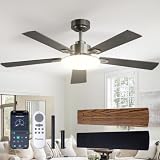
- BrandPassky

- LFR Score9.0
LFR Score is a ranking system developed by lightfansreviews.com. LFR Score has no relationship or impact from any manufacturers or sales agent websites. Learn more
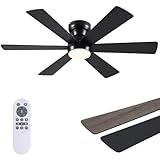
- BrandZMISHIBO
- LFR Score9.0
LFR Score is a ranking system developed by lightfansreviews.com. LFR Score has no relationship or impact from any manufacturers or sales agent websites. Learn more
- BrandAsyko

- LFR Score9.0
LFR Score is a ranking system developed by lightfansreviews.com. LFR Score has no relationship or impact from any manufacturers or sales agent websites. Learn more
- BrandPassky

- LFR Score8.8
LFR Score is a ranking system developed by lightfansreviews.com. LFR Score has no relationship or impact from any manufacturers or sales agent websites. Learn more
- Brandaddlon
- LFR Score8.8
LFR Score is a ranking system developed by lightfansreviews.com. LFR Score has no relationship or impact from any manufacturers or sales agent websites. Learn more
- Brandaddlon

- LFR Score8.6
LFR Score is a ranking system developed by lightfansreviews.com. LFR Score has no relationship or impact from any manufacturers or sales agent websites. Learn more
- BrandDAHUICFL

- LFR Score8.4
LFR Score is a ranking system developed by lightfansreviews.com. LFR Score has no relationship or impact from any manufacturers or sales agent websites. Learn more
- BrandOhniyou

- LFR Score8.4
LFR Score is a ranking system developed by lightfansreviews.com. LFR Score has no relationship or impact from any manufacturers or sales agent websites. Learn more
- BrandAmico

- LFR Score8.4
LFR Score is a ranking system developed by lightfansreviews.com. LFR Score has no relationship or impact from any manufacturers or sales agent websites. Learn more
- BrandAmico
Last update on 2026-07-08 / Affiliate links / Images, Product Titles, and Product Highlights from Amazon Product Advertising API
POGGT Ceiling Fan for Bedroom Light Review
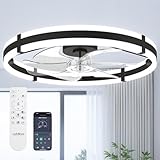
A bedroom fan can look sleek on the ceiling and still become irritating after sunset. Harsh lighting, a faint motor hum, limited speed control, and awkward pull chains tend to show their flaws once the room gets quiet. The POGGT ceiling fan approaches the best ceiling fan for bedroom light idea with a compact 20-inch flush-mount body, adjustable LED lighting, six fan speeds, and controls that can stay within arm’s reach.
POGGT 20-Inch Low Profile Ceiling Fan
The low-profile design makes the POGGT fan easier to place in rooms where a hanging fixture would feel bulky or sit too close to the bed. Its 20-inch frame keeps the visual footprint restrained, which suits smaller bedrooms, compact guest rooms, and living spaces with lower ceilings. Rather than using long exposed blades, the seven blades sit within the circular fixture, giving the unit a cleaner and more contained appearance.
That compact shape comes with a practical tradeoff. A 20-inch fan won’t create the same room-filling air movement as a traditional 52-inch ceiling fan with broad blades, especially in a large bedroom with tall ceilings. The 150-degree airflow coverage and aerodynamic blade arrangement are meant to spread air more evenly, but room size still matters. In a modest sleeping area, the design makes sense; in an oversized primary suite, expectations should stay realistic.
The white finish keeps the fixture visually calm rather than turning it into the room’s main attraction. That can be a plus in spaces already crowded with furniture, wall art, or textured bedding. The modern fandelier styling blends the light and fan into one circular unit, so the ceiling looks less cluttered than it would with a separate light fixture and a large conventional fan.
Installation suitability depends heavily on the existing electrical setup. The fixture needs a ceiling box that can safely support a fan, not merely a lightweight lamp. Since the fan sits flush to the ceiling, it avoids the awkward drop associated with downrods, but it also offers less flexibility for sloped or unusually high ceilings. Low-clearance placement is its strongest physical advantage, not universal ceiling compatibility.
Lighting That Adapts to Bedroom Routines
Lighting flexibility is one of the clearest strengths here. The integrated LED system offers three color temperatures: 3000K warm white, 4000K neutral white, and 6500K cool white. Warm light feels more relaxed during evening routines, neutral light is useful for everyday tasks, and cool light can make details easier to see while cleaning, organizing clothes, or working at a desk.
Brightness adjusts from 10% to 100%, which solves a common problem with ceiling fan lights that feel either fully on or practically useless. A lower setting can keep the room navigable without blasting the entire space with light. At full output, the stated 3840-lumen brightness is substantial, so the fixture may serve as the primary ceiling light rather than a weak decorative add-on.
The product description lists 600 LED beads, but the practical benefit isn’t the bead count itself. What matters is the broad light surface, which can reduce the harsh spotlight effect created by small exposed bulbs. The wide LED panel should spread illumination more evenly across the room, though reflective white walls and compact room dimensions may make the brightest setting feel intense.
Integrated LEDs also bring a maintenance tradeoff. There are no standard bulbs to swap when preferences change or when an individual bulb fails. The built-in design keeps the fixture slim and tidy, yet long-term repair may be less straightforward than replacing a regular screw-in bulb. Dimming and color control add everyday convenience, but the integrated format is worth considering before installation.
Six Speeds and Reversible Airflow
Six fan speeds provide more breathing room than the usual three-speed setup. The lowest levels can create a gentle breeze that doesn’t feel like air is being pushed directly at the bed, while higher settings can help clear trapped warmth after the room has been closed all day. That fine airflow control matters in a bedroom because comfort can shift quickly from stuffy to chilly.
The reversible motor adds seasonal usefulness. Downdraft mode pushes air toward the room during warm weather, while reverse mode draws air upward to help recirculate warm air gathered near the ceiling. The fan doesn’t generate heat or replace heating equipment, but reversible circulation may help the room feel more evenly conditioned during cooler months.
The seven enclosed blades may also feel less visually aggressive than long open blades spinning above the bed. Still, the smaller diameter means airflow depends on blade speed and design rather than sheer span. Higher speeds may be necessary in warmer conditions, and stronger airflow usually brings more audible movement even if the motor itself remains quiet. Compact size and broad coverage can coexist, but they don’t erase basic airflow limits.
POGGT describes the motor as a pure copper, whisper-quiet design. No independent noise measurement was provided, so it’s safer to view that as a design goal rather than a verified decibel rating. The remote’s silent signal response is a thoughtful detail, though, because many bedroom fixtures beep loudly with every adjustment. No-beep control can make late-night changes less disruptive.
Remote and App Control From Bed
Control convenience fits the bedroom setting well. The included remote can adjust fan speed, brightness, color temperature, direction, and timer settings without requiring anyone to get out of bed. The stated remote range is within 10 meters, which should cover most bedrooms under normal conditions. Bedside control is more than a novelty when light and airflow need frequent small adjustments.
The app offers another way to manage the same core functions. Phones are easy to misplace, though, and an app can feel slower than pressing a physical button in the dark. Keeping the remote near the bed will probably remain the simplest routine, while the app control may be more useful when the remote isn’t nearby or multiple settings need adjusting.
The memory function is designed to retain previous settings, cutting down on repeated changes each time the fixture is used. That’s useful for a stable bedtime routine, such as warm light at low brightness with the fan on its second speed. Memory behavior can depend on how the fixture is powered, so the wall switch limitation deserves attention. Saved preferences are most useful when the fan remains connected to power.
The wall switch only turns the light on or off and doesn’t control fan speed or work with a dimmer. That limitation may frustrate anyone expecting existing wall controls to manage every function. A standard dimmer should not be used, and speed adjustments belong to the remote or app. Remote-dependent operation is convenient in bed but less appealing if the remote gets lost or its batteries run down.
Sleep Comfort, Timers, and Daily Use
A bedroom fan earns its keep at night, not just during a quick daytime demonstration. The POGGT model’s timer can shut the fan off after a selected period, helping avoid an overly cool room in the early morning. This also reduces the need to wake up and change settings manually. The combination of a timer function and multiple low-speed options supports more precise nighttime comfort.
Light adjustment also fits changing routines. Bright neutral or cool light can help with folding laundry and getting ready, while warm dimmed light feels less jarring before sleep. Switching color temperature from the remote avoids relying on separate lamps for every task. The three-tone lighting gives one fixture a wider role throughout the day.
Quietness remains one of the biggest deciding factors, and the enclosed construction may reduce some of the sweeping sound associated with large blades. Even so, installation quality affects noise just as much as motor design. Loose screws, an uneven ceiling box, or contact between trim pieces can create rattles that the motor can’t prevent. Secure mounting is essential for getting the calm operation the design promises.
Cleaning should be simpler than wiping both sides of several long ceiling fan blades, though the enclosed grille and internal blades can collect dust over time. Access may take more effort than cleaning an open-blade fan, especially if the cover needs removal. Regular light cleaning can prevent buildup from becoming stubborn. Contained blades look tidy, but they aren’t maintenance-free.
Strengths, Weaknesses, and Best Fit
The strongest part of this fan is the way it combines several practical bedroom functions without taking up much ceiling space. It offers six-speed airflow, reversible operation, broad dimming, three color temperatures, a timer, memory, and two control methods. That mix addresses the little annoyances that often show up after installation, especially limited lighting control and inconvenient fan adjustments.
The main weakness is scale. A compact 20-inch fixture may suit a smaller room beautifully, yet it isn’t the safest bet for a large space that needs forceful circulation from wall to wall. The bold 3840-lumen light output may also require dimming in a small bedroom. Room matching matters more here than the raw feature count.
The wall-control restriction is another real compromise. Existing dimmer switches and fan-speed wall controls won’t provide the expected functionality, so the remote and app become central to daily use. Some households will appreciate that setup, while others prefer controls permanently mounted on the wall. Control preferences should be settled before replacing an older ceiling fan.
As a candidate for the best ceiling fan for bedroom light, the POGGT model makes the most sense where ceiling clearance is tight, adjustable illumination matters, and gentle customizable airflow is more valuable than the reach of a large traditional fan. Its strongest case rests on practical flexibility rather than oversized cooling power. The design offers plenty of control, but the room’s dimensions, wiring, and reliance on remote operation will decide whether those features feel useful or fussy.
Depuley 42-Inch Ceiling Fan With Light Review
A bedroom can feel uncomfortable for reasons that have little to do with temperature alone. Poor air movement leaves one corner stuffy, bright overhead lighting feels harsh late at night, and a noisy fan can become more distracting than the heat itself. The Depuley ceiling fan tackles those everyday problems with a 42-inch blade span, a dimmable LED light, six fan speeds, and a reversible DC motor aimed at making it a practical best ceiling fan for bedroom light candidate.
Depuley 42-Inch Ceiling Fan
The 42-inch size places this model between compact bedroom fans and the larger fixtures commonly used in open living rooms. Depuley lists it for rooms measuring about 129 to 215 square feet, which makes the dimensions more appropriate for many bedrooms, studies, kitchens, and smaller covered patios. That medium blade span gives it a broader reach than a tiny enclosed fan without making the ceiling look crowded.
Five black blades create a clean, modern profile that should sit comfortably with darker hardware, neutral walls, or simple contemporary furniture. The propeller-style shape gives the fixture a more streamlined appearance than ornate traditional fans with visible pull chains and decorative bulb shades. Still, the black finish can feel visually heavy in a very small room with a low white ceiling, so the surrounding decor will influence whether it blends in or becomes a focal point.
The product description states that the fan uses plastic material, which brings both benefits and limitations. Plastic blades are generally lighter and less prone to moisture-related swelling than unfinished wood, making them sensible for covered outdoor areas and rooms where humidity rises. On the other hand, plastic construction may not have the same substantial feel as metal or solid wood, and the finish should be handled carefully during installation to avoid scratches or flexing.
Placement deserves a little thought before the mounting bracket goes up. A flush-mount design keeps the fixture closer to the ceiling, making it better suited to rooms where a long downrod would hang too low. That low-profile mounting also helps preserve headroom, though it won’t offer the same airflow positioning flexibility on very tall or sharply sloped ceilings.
Lighting Control for Different Bedroom Routines
The integrated light gives this fan more flexibility than a basic one-temperature LED fixture. It supports three color settings at 3000K, 4500K, and 6000K, covering warm, neutral, and cool white light. The 3000K setting suits winding down at night, while the brighter 6000K tone can be useful for cleaning, sorting clothes, or working at a desk.
Brightness adjusts from 10% to 100%, so the room doesn’t have to jump from darkness to full intensity. A low setting can provide enough light for moving around without making the bedroom feel like an office, while full brightness offers more practical overhead illumination. This stepless dimming is especially helpful in rooms where the ceiling fixture serves as the main source of light rather than a decorative extra.
The one-touch night-light mode adds another layer of convenience. Instead of repeatedly tapping through color and brightness settings, a dedicated low-light function can make nighttime use quicker and less disruptive. The exact feel of that mode will depend on personal brightness preferences, but night lighting is a sensible addition for late bathroom trips, early mornings, or checking on a sleeping child.
The memory system keeps the chosen brightness and color temperature after the light has been off for at least ten seconds. That detail matters because switching the light back on too quickly changes the color temperature instead of restoring the saved setting. The ten-second memory rule isn’t complicated, but it may take a few uses before the routine feels natural.
Airflow, Motor Noise, and Seasonal Use
Six fan speeds provide finer control than the standard low, medium, and high arrangement. A mild breeze often feels more comfortable during sleep than a strong stream of air directed across the bed, while higher speeds help clear heat after the room has been closed during the day. The six-speed range makes it easier to adjust comfort without bouncing between settings that feel too weak or too aggressive.
The DC motor is described as quiet and energy-efficient, though the supplied details don’t include a verified noise rating or measured energy use. A DC motor usually supports smoother speed changes and more control options than a simple AC design, but mounting quality still plays a major role in actual sound. Loose fasteners, an uneven electrical box, or poorly seated blades can create vibration even when the motor itself runs quietly.
Reversible operation broadens the fan’s usefulness beyond hot weather. Forward rotation pushes air downward for a cooling effect, while reverse mode helps move warm air away from the ceiling during colder months. The fan won’t warm the room by itself, of course, but year-round circulation can reduce temperature pockets and make heating feel more evenly distributed.
The 42-inch propeller layout should offer wider coverage than a compact 20-inch fixture, especially in a bedroom near the middle of the stated room-size range. That doesn’t guarantee equal airflow in every corner, since ceiling height, furniture placement, and room shape all affect circulation. The broader blade sweep is a practical strength, yet a much larger room may still call for a wider fan.
Remote Functions and Everyday Convenience
The remote controls fan speed, light brightness, color temperature, rotation direction, timer settings, and night-light mode. That setup keeps the main adjustments within reach from the bed, sofa, or desk. The single remote system is especially useful at night, when getting up to change a wall control feels like one chore too many.
Two-hour and four-hour timer choices can help prevent the fan from running longer than needed. A timed shutdown is handy for falling asleep with stronger airflow, then letting the room settle later in the night. The 2-hour and 4-hour timers are straightforward rather than highly customizable, but they cover the most common sleep-related use cases.
The fan also remembers the previous speed setting, reducing the need to rebuild the same setup each time it is turned on. That can make a noticeable difference in a bedroom where the same low or medium speed is used night after night. The fan-speed memory adds continuity, though anyone sharing the room may still adjust the controls differently.
Remote dependence creates one obvious weak point. A misplaced controller or dead battery can make everyday adjustments less convenient, especially if the wall switch only handles basic power. Keeping the remote in a fixed bedside holder would reduce that annoyance and make the control layout feel more dependable.
Installation, Outdoor Use, and Tradeoffs
Depuley describes the blade system as a snap-in design intended to simplify installation. The seller suggests installation can take less than 30 minutes, but real timing will depend on ceiling access, wiring, electrical-box condition, and prior experience. The snap-in blade design may reduce assembly work, though electrical installation should still be approached carefully.
The fixture is presented for indoor and covered outdoor spaces such as patios, breezeways, gazebos, and pergolas. Covered placement is the key detail because protection from direct rain and severe exposure still matters. The indoor-outdoor flexibility adds value for sheltered areas, but the provided information doesn’t state a formal wet-location rating.
Material choice may help in damp environments, yet long-term durability depends on more than blade material. Motor housing protection, wiring seals, mounting hardware, and exposure to heat or moisture all influence lifespan. The seller mentions technical support and long-term use, but durability claims should be treated as product positioning rather than independent proof.
The strongest fit is a small to medium room that needs broader airflow than a compact fandelier can provide. Bedrooms, home offices, kitchens, and covered sitting areas all match the stated use cases, particularly where adjustable light and quiet operation matter. The 42-inch coverage and flush-mount format strike a useful middle ground between tiny decorative fans and oversized living-room models.
Strengths and Weaknesses in Real Use
The main strength is the balance between light control and airflow control. Three color temperatures, full-range dimming, six speeds, timers, memory, and reversible rotation give the fixture enough flexibility to adapt throughout the day. Those adjustable settings solve practical annoyances instead of simply adding features for the sake of a longer specification list.
Room sizing is another advantage because the stated 129 to 215 square-foot range gives a clearer sense of where the fan belongs. A 42-inch model can feel proportionate in a bedroom that would swallow a compact fan but look cramped under a 52-inch fixture. The mid-size design makes sense for many everyday spaces, though it may fall short in a large open room.
The plastic build is the most obvious compromise. Lighter materials can simplify mounting and handle humidity better than some wood products, but they may feel less substantial up close. The material tradeoff won’t bother everyone, especially once the fan is installed overhead, yet buyers expecting a heavy metal fixture should keep expectations grounded.
Remote control is both a benefit and a potential frustration. It makes nighttime adjustments easy, but convenience drops quickly if the remote disappears between cushions or runs out of power. The best ceiling fan for bedroom light should feel effortless during daily use, and this Depuley model gets close as long as the remote-based routine suits the room.
Passky 52-Inch Ceiling Fan With Light Review
Large bedrooms can expose every weakness in a ceiling fan. A small blade span leaves warm pockets near the bed, a bright fixed light turns late-night routines into a glare fest, and coarse speed settings make the room feel either still or downright windy. The Passky ceiling fan takes a broader approach to the best ceiling fan for bedroom light question with a 52-inch sweep, six fan speeds, three light temperatures, reversible airflow, and separate control over the fan and LED fixture.
Passky 52-Inch Ceiling Fan
The 52-inch blade span gives this model more physical reach than compact flush-mount fans designed for tight rooms. That wider sweep can make sense in a primary bedroom, open living area, study, or covered patio where air needs to travel beyond one small zone. The full-size design is a strength in roomy spaces, though it may feel oversized in a narrow bedroom with low ceilings or closely placed furniture.
Passky uses double-sided blades, with black on one face and walnut on the other. That small design choice gives the fixture two distinct personalities without requiring a separate blade set. The reversible blade finish can lean modern and minimal with black showing, or warmer and more traditional with the walnut side facing down.
The fan’s visual profile stays fairly clean because the lighting sits in a central integrated fixture rather than beneath several exposed bulbs. Black hardware gives it a sharper edge, while the walnut option can soften that appearance in rooms with wood furniture or warmer flooring. The sleek housing should blend more easily with contemporary decor than an ornate fan with chains, carved blade arms, and decorative glass shades.
Room proportion still matters. A broad fan can visually lower the ceiling, especially in a compact room where the blade tips appear close to walls or tall cabinets. The 52-inch diameter is better treated as a room-matching feature than an automatic advantage, because bigger only helps when the surrounding space can support it.
Light Control From Warm to Bright
The integrated LED light offers three color temperatures at 3000K, 4500K, and 6000K. Warm 3000K light feels softer during bedtime routines, while 4500K provides a more neutral tone for everyday use. The 6000K cool setting creates a crisper look that can help with cleaning, paperwork, or detailed tasks, though it may feel stark in a relaxing bedroom.
Brightness adjusts from 10% to 100%, giving the fixture more range than a simple on-and-off ceiling light. Low output can provide enough illumination for moving around without flooding the room, while full brightness is better suited to getting dressed or tidying up. This wide dimming range makes the fan light more practical across morning, evening, and late-night routines.
The fan and light can operate separately, which sounds basic but makes a noticeable difference in daily use. Airflow may be useful during sleep while the room stays dark, and the light may be needed on a cool day without running the blades. The independent fan and light control prevents the fixture from forcing both functions to work together.
Integrated lighting brings a familiar tradeoff. The slim design looks cleaner than a cluster of replaceable bulbs, yet the LED system isn’t as simple to service as a standard socket if the light eventually develops a problem. The customizable illumination adds flexibility now, but long-term maintenance may depend on compatible replacement components rather than an ordinary bulb change.
Six Speeds and Reversible DC Airflow
Six speed settings let the fan move beyond the usual low, medium, and high pattern. A gentle setting can keep air from feeling stagnant without pushing a cold draft directly across the bed. Higher levels offer stronger circulation after a hot afternoon, giving the six-speed motor enough range for changing weather and personal comfort.
The reversible DC motor supports downward airflow in warm conditions and upward circulation during cooler months. Reverse mode helps move warm air that collects near the ceiling, which can reduce uneven temperature layers in the room. The dual-direction operation doesn’t create heat, but it can help existing heating feel more evenly distributed.
Passky states that the fan carries an A energy-efficiency rating and is designed to avoid much of the electricity loss associated with traditional fans. Those claims come from the supplied product description rather than independent testing, so they’re best viewed as manufacturer specifications. Even so, a DC motor is a sensible fit for a fan offering six speeds, timer functions, memory, and reversible control.
The wider blades should move air across a broader area than the small enclosed fans often used in low-profile fixtures. That extra reach can feel more natural in a larger bedroom because circulation doesn’t depend entirely on high blade speed. The broader airflow pattern is likely to suit spacious rooms better, but furniture placement, ceiling height, and mounting position will still shape the result.
Noise Level and Nighttime Comfort
Passky lists an operating volume as low as 35 dB and positions the fan for quiet sleeping spaces. That figure comes from the seller’s information, so it shouldn’t be treated as an independently verified measurement. Still, the stated 35 dB noise target suggests that low-noise operation is a central part of the design rather than an afterthought.
Motor sound is only one piece of the bedroom-noise puzzle. Blade balance, ceiling-box stability, loose screws, and contact between trim pieces can all produce ticking or vibration after installation. A careful mounting job will matter just as much as the DC motor if the goal is a calm room at night.
The one-hour, two-hour, and four-hour timers can keep the fan from running until morning. That’s useful on nights when the room feels warm at bedtime but cools down before dawn. The timed shutoff also avoids fumbling for the remote after sleep has already started to settle in.
Light sleepers often notice control sounds as much as fan noise, especially in a silent room. The supplied description doesn’t say whether the remote produces beeps, so that detail remains unclear. The quiet motor claim is encouraging, but anyone sensitive to electronic sounds should keep expectations limited to the information actually provided.
Remote Control and Memory Behavior
The handheld remote manages fan power, light power, six speeds, brightness, color temperature, reverse mode, and timer settings. It can also be fixed in place and used more like a wall control, reducing the chance that it disappears under bedding or between cushions. The remote-based control system keeps the full feature set accessible without adding several separate switches.
Memory helps the fixture return to the settings used before it was switched off. That can preserve a preferred combination, such as warm light at low brightness with the fan running at a moderate speed. The saved operating state cuts down on repetitive adjustments, especially in a room with a stable evening routine.
Electrical compatibility deserves close attention before installation. This model is listed for 120-volt systems and won’t operate on 220 volts. The 120V limitation makes it appropriate for standard US residential power but unsuitable for locations using a different supply without proper electrical conversion.
The DC motor also means the fan and light can’t be wired separately in the way some traditional fixtures can. Passky advises using a basic on-and-off wall switch rather than a dimmer or fan-speed wall control. That wiring restriction places most daily adjustments in the remote, so the setup will feel best where remote operation is already acceptable.
Installation and Covered Outdoor Placement
The product includes an illustrated guide and installation videos intended to simplify setup. Even with those aids, ceiling-fan installation involves more than attaching blades and snapping on a light cover. The electrical box must support a fan, wiring needs to match the supplied instructions, and the mounting hardware should sit firmly enough to prevent wobble.
The description references downrod mounting while also mentioning flush-mount installation, so the exact mounting configuration should be verified against the included hardware and manual. Ceiling height will determine whether the fan sits comfortably above the room without hanging too low. The mounting method matters because blade clearance affects safety, appearance, and airflow.
Passky presents the fan for bedrooms, living rooms, offices, kitchens, studies, and covered outdoor spaces such as gazebos and pergolas. Direct rain exposure is specifically discouraged, which means the fixture belongs under reliable overhead protection. The covered outdoor use adds flexibility, but it shouldn’t be confused with unrestricted wet-weather placement.
Outdoor air, humidity, and temperature changes can be harder on finishes and electrical components than indoor conditions. The supplied details don’t list a formal wet-location rating, so sheltered placement remains the cautious approach. The indoor-outdoor versatility is useful, though the bedroom remains a more straightforward match for the stated lighting and quietness features.
Strengths, Limits, and Room Fit
The strongest feature is balance. A large blade span handles broader circulation, while three color temperatures and full-range dimming make the light useful beyond basic illumination. The separate controls, memory, timers, and reversible airflow support daily routines without turning the fixture into a complicated control panel.
Size is also the main limitation. A 52-inch fan may dominate a small bedroom, and the dark housing can make that visual weight more noticeable. The large-room bias works in its favor over a wide bed or open floor plan, but tighter rooms may feel better with a 42-inch or compact low-profile model.
Remote reliance is another tradeoff worth weighing. Mounting the controller on the wall helps, but conventional dimmers and fan-speed switches aren’t compatible with the supplied setup. The control limitation won’t matter much in a remote-friendly household, yet it may frustrate anyone who prefers fixed wall controls for every adjustment.
As a best ceiling fan for bedroom light contender, the Passky model suits larger sleeping spaces that need broad airflow and genuinely adjustable overhead lighting. Its strongest qualities are the six-speed DC motor, reversible blade finishes, separate fan and light operation, and flexible color temperature. The practical fit depends on having a 120-volt supply, enough ceiling space for a 52-inch fan, and no expectation of direct rain exposure or traditional dimmer-switch control.
ZMISHIBO 19.7-Inch Ceiling Fan With Light
Small bedrooms often force a compromise between decent airflow and a fixture that doesn’t swallow the ceiling. Add bright overhead lighting, a remote that beeps at midnight, or a fan that only feels useful on its highest setting, and the compromise gets old fast. The ZMISHIBO ceiling fan approaches the best ceiling fan for bedroom light problem with a compact 19.7-inch body, seven enclosed blades, six speeds, adjustable LED lighting, and separate fan and light controls.
ZMISHIBO 19.7-Inch Fandelier
The first thing that stands out is the footprint. At 19.7 inches, this fixture takes up far less visual space than a conventional 42-inch or 52-inch ceiling fan. The low-profile flush-mount design makes more sense in rooms where a long downrod would hang too close to the bed, a wardrobe, or the top of a bunk frame.
Its black circular housing gives the fan a clean, modern look without exposed blade arms or dangling pull chains. Seven blades sit inside the fixture, which creates a neater silhouette and keeps the spinning parts visually contained. That enclosed-blade layout may feel less imposing above a sleeping area, though it won’t have the broad decorative presence of a traditional wood-blade fan.
Compact dimensions come with an honest limitation. A fan under 20 inches can’t sweep the same volume of air across a large room as a full-size ceiling fan with long blades. The small-room focus is clear here, so the fixture fits bedrooms, offices, nurseries, or other contained spaces better than oversized primary suites or open-plan living areas.
The black finish can either anchor the ceiling or feel heavy, depending on the room. Dark hardware often pairs well with black window frames, metal bed frames, or modern furniture, but it may stand out sharply against a small white ceiling. The modern fandelier style is clean and deliberate, yet room color still affects how subtle it looks after installation.
Adjustable Lighting for Day and Night
The built-in LED light produces a stated 2200 lumens and adjusts from 10% to 100% brightness. That range allows the fixture to shift from a low evening glow to stronger general illumination without relying on a separate bedside lamp for every task. The stepless dimming is especially useful in a bedroom, where full brightness can feel far too sharp right before sleep.
Three color temperatures cover warm, neutral, and cool lighting needs. The 3000K setting creates a softer tone for winding down, while the upper 6000K setting produces a whiter, crisper look for dressing, cleaning, or reading paperwork. This 3000K to 6000K range makes the light more adaptable than fixtures locked into one fixed color.
Color temperature can change how the same room feels. Warm light tends to soften wall colors and wood furniture, while cooler light can make pale surfaces appear brighter and more clinical. The adjustable color control lets the room move between relaxed and task-oriented lighting, though the coolest setting may feel too intense for casual nighttime use.
The memory function saves the preferred light setup instead of resetting brightness and color each time. That removes a small but persistent annoyance, especially when the same dim warm setting is used every night. The light memory feature adds practical continuity, although its exact behavior may still depend on how the fixture is powered and switched off.
Six-Speed Airflow and Reversible Operation
Six fan speeds give the fixture more flexibility than the familiar three-speed arrangement. Lower settings can create mild circulation without pushing a noticeable draft across the bed, while higher speeds are available when the room feels stale or overheated. The six-speed control helps bridge the awkward gap between barely moving air and an overly forceful breeze.
The seven-blade configuration is designed to create stronger airflow within a compact housing. More blades don’t automatically guarantee better cooling, since blade pitch, motor power, and housing shape all play a role, but the arrangement is meant to spread air from a smaller diameter. The seven-blade design is therefore better viewed as part of the fan’s airflow system rather than a stand-alone promise.
Reversible operation extends the fan beyond summer use. Downdraft mode directs air toward the room during warmer weather, while updraft mode helps circulate warm air that gathers near the ceiling in cooler months. The reversible DC motor doesn’t heat or cool by itself, but it can help the room feel less uneven from floor to ceiling.
The pure copper motor is described as smooth, powerful, and low in noise. No independent decibel measurement was supplied, so it’s sensible to treat that as the manufacturer’s design claim rather than a verified lab result. Even so, the DC motor setup suits a bedroom fan because it supports multiple speeds, reverse rotation, and more controlled operation.
Remote and Bluetooth App Control
The included remote handles fan speed, lighting, dimming, and the two-hour timer without requiring a trip across the room. That convenience matters more at night, when even a simple wall-switch adjustment can feel disruptive. The remote control keeps the most common settings close at hand from the bed, desk, or reading chair.
Bluetooth app control provides a second route to the same core functions. A phone interface can be useful when the remote has been misplaced or when separate fan and light settings need a few quick changes. The smart app control adds flexibility, though Bluetooth range and phone availability naturally affect how convenient it feels in daily use.
The fan and light can operate independently. That means the room can stay dark while airflow continues through the night, or the light can remain on during cool weather without running the blades. This separate operation solves one of the most common frustrations with basic fan-light combinations that force both functions into the same routine.
The remote’s signal sound has been removed, according to the supplied description. That detail may sound minor during the day, but repeated electronic beeps can become surprisingly irritating in a quiet bedroom. The no-beep remote response makes late adjustments less likely to disturb someone already resting nearby.
Sleep Comfort and Everyday Practicality
Quiet operation is central to the product’s bedroom appeal. Motor hum, ticking hardware, and control beeps can all become more noticeable after lights-out, so the quiet motor claim and silent remote response address real nighttime annoyances. The low-noise focus is encouraging, although proper installation will still affect how calm the fixture sounds.
Loose screws or an uneven electrical box can introduce wobble and rattling even with a smooth motor. A flush-mounted fixture has less visible drop than a downrod fan, but it still needs a secure fan-rated box and evenly seated hardware. The installation quality may ultimately decide whether the fan feels whisper-quiet or develops distracting vibration.
The two-hour timer is simple rather than elaborate. It can shut the fan off after sleep begins, which helps on evenings that start warm but cool down later. The 2-hour shutoff won’t suit every schedule, yet it covers a common bedtime pattern without requiring another adjustment in the middle of the night.
Cleaning is another practical point. Enclosed blades avoid the broad exposed surfaces found on traditional ceiling fans, but dust can still collect around the grille, light diffuser, and internal blade area. The compact enclosed structure may look tidier from below, though occasional access to the inner section will likely be needed for deeper cleaning.
Strengths, Weaknesses, and Best Room Fit
The strongest feature is how many useful controls are packed into a small fixture. Six fan speeds, reversible airflow, app and remote operation, dimmable lighting, three color temperatures, memory, and a timer cover most day-to-day bedroom needs. The feature balance feels practical because each setting addresses a specific comfort or convenience problem.
The lighting system is another clear strength. A 2200-lumen output, broad dimming range, and adjustable color temperature give the fixture more flexibility than many compact fan lights. The customizable LED can serve as the room’s main overhead source, though larger rooms may still benefit from lamps for layered lighting.
Size remains the biggest tradeoff. The 19.7-inch body keeps the ceiling open and uncluttered, but it also limits the reach available from the blades. The compact airflow pattern is better suited to contained spaces than broad rooms where air must travel across several seating or sleeping zones.
App control may also be unnecessary for anyone who prefers a simple physical remote. Bluetooth adds another layer of convenience, yet phones can be charging, locked, or out of reach at the exact moment an adjustment is needed. The dual-control setup is useful because the remote remains available, but the app shouldn’t be treated as essential to basic operation.
As a best ceiling fan for bedroom light candidate, the ZMISHIBO model makes the most sense where ceiling clearance is limited, adjustable lighting matters, and compact airflow is enough for the room. Its biggest advantages are the contained shape, no-beep remote, six speeds, separate controls, and dimmable three-tone LED. Its limits are equally straightforward: the small diameter won’t replace a full-size fan in a large space, and long-term LED servicing may be less simple than changing a standard bulb.
Asyko 46-Inch Low Profile Ceiling Fan With Light
A bedroom fan can become annoying for reasons that don’t show up in a product photo. The light may be too bright at night, the airflow may jump from weak to excessive, and the controls may feel clumsy once everyone is settled in bed. The Asyko ceiling fan takes a more flexible route to the best ceiling fan for bedroom light setup with a 46-inch flush-mount design, six fan speeds, dimmable lighting, reversible rotation, and memory for frequently used settings.
Asyko 46-Inch Ceiling Fan
The 46-inch blade span sits in a useful middle ground. It offers more reach than a compact enclosed fandelier, yet it won’t dominate the ceiling as easily as a broad 52-inch model. The mid-size footprint makes sense for bedrooms, studies, kitchens, and other spaces where balanced circulation matters more than raw blade size.
Six blades give the fan a fuller visual profile, while the black ABS body keeps the design clean and modern. The double-sided blade arrangement adds some flexibility to the finished look, though the exact reverse color isn’t stated in the supplied details. The double-sided blades are still a useful design feature because they can help the fixture sit more naturally with different furniture finishes and room palettes.
The flush-mount format keeps the fan close to the ceiling, which is handy in rooms where a long downrod would hang too low. That lower profile can make the fixture feel less intrusive above a bed or central walkway. The space-saving mount is a clear strength for standard or lower ceilings, but very tall rooms may benefit from a fan positioned farther below the ceiling for stronger circulation.
Black hardware gives the fixture a crisp, contemporary appearance, yet it won’t disappear into every room. Against a pale ceiling, the fan may become a noticeable visual anchor rather than a subtle background element. The modern black finish suits rooms with dark accents, metal furniture, or simple lines, while softer traditional spaces may need more careful styling around it.
Adjustable Light for Real Bedroom Routines
The integrated light supports brightness adjustment from 10% to 100%. That broad range lets the room move from low evening illumination to brighter overhead light for cleaning, dressing, or desk work. The stepless dimming is more practical than a fixed-brightness light because bedroom needs can shift several times in a single day.
Three color temperatures are available at 3000K, 4000K, and 6000K. Warm 3000K light suits slower nighttime routines, 4000K provides a more neutral everyday tone, and 6000K creates a cooler, clearer appearance for tasks. The three-color lighting reduces the need to accept one permanent light mood from the ceiling fixture.
The coolest setting may feel sharp in a compact bedroom, especially with white walls or reflective surfaces. That isn’t necessarily a flaw, since brighter cool light can help during detailed activities, but it may be uncomfortable before sleep. The dimming control helps soften that tradeoff by allowing brightness and color temperature to work together rather than forcing full output at every setting.
Integrated LEDs keep the fixture slim and visually tidy, though they also change the maintenance equation. A standard bulb can be replaced in seconds, while an integrated light may require a compatible component if it fails later. The clean LED design improves appearance and control, but long-term servicing may be less straightforward than changing a common screw-in bulb.
Six Speeds and Reversible Airflow
Six speed levels give the fan a finer range than a basic three-speed motor. Lower settings can create a light breeze without making the bed feel drafty, while higher settings help move trapped heat after the room has been closed up. The six-speed control is especially useful at night because small changes in airflow can make a big difference in comfort.
The reversible copper motor supports two seasonal airflow directions. Forward rotation pushes air downward during warmer weather, while reverse operation helps circulate warm air that rises toward the ceiling in winter. The reversible motor doesn’t replace heating or cooling, but it can reduce uncomfortable temperature layering inside the room.
Asyko describes the DC motor as quiet and suited to peaceful spaces. No independent noise measurement was provided, so the exact sound level remains unverified. Still, the quiet DC design matches the needs of a bedroom better than a coarse motor that clicks, buzzes, or changes speed abruptly.
Installation quality will strongly affect actual noise. Loose screws, uneven blade placement, or a ceiling box that isn’t firmly secured can create wobble and rattling even with a smooth motor. The secure mounting matters just as much as the motor itself if calm nighttime operation is the goal.
Remote Control and Memory Behavior
All major functions are handled through the remote, including fan speed, light color, timer settings, and separate fan or light operation. That arrangement keeps controls close at hand from the bed, desk, or sofa. The remote-based operation is especially convenient after dark, when walking across the room for a wall switch feels needlessly disruptive.
The remote can also be fixed in place and used more like a wall control. That reduces the chance of losing it between cushions or under bedding, a small frustration that can quickly undermine the convenience of remote-only operation. The wall-mounted remote option gives the system a more permanent home without sacrificing bedside control.
One-hour and two-hour timers cover shorter sleep routines or temporary cooling periods. A timer can keep the fan running while the room settles, then shut it off after the temperature drops. The 1-hour and 2-hour settings are simple rather than highly customizable, but they address common nighttime use without complicating the controls.
The fan and light can operate separately, which keeps the fixture flexible throughout the day. Airflow can continue in darkness, or the light can stay on during cool weather without running the blades. This independent control prevents the fixture from forcing two functions into the same schedule.
Memory Function and Daily Convenience
The memory system stores preferred brightness and color temperature after the light remains off for at least ten seconds. That makes it easier to return to the same warm, dim setting without cycling through every option again. The saved light settings can make nightly routines feel smoother, especially when the same arrangement is used most evenings.
The fan also returns to its previous speed, which saves another round of adjustments. A room that usually feels comfortable at speed two or three can resume that setup after power is restored. The speed memory is a practical detail because it reduces repetitive button pressing rather than adding a feature that looks impressive but rarely gets used.
The ten-second rule deserves attention. Turning the light back on too quickly can change the color temperature instead of restoring the stored setting. The memory timing behavior may take a few uses to get used to, but it becomes easier once the wall-switch routine is consistent.
Remote dependence is still a tradeoff. A dead battery or misplaced controller can make adjustments inconvenient, particularly if the wall switch only provides basic power. The control setup works best when the remote has a fixed storage spot and spare batteries are kept nearby.
Installation, Materials, and Practical Limits
The product includes instructions and access to installation videos intended to simplify setup. Even so, ceiling-fan installation requires a fan-rated electrical box, correct wiring, and secure mounting hardware. The installation guidance can help with assembly, but electrical safety and ceiling support still deserve careful attention.
The ABS body keeps the fixture relatively lightweight and resistant to some moisture-related issues that can affect unfinished wood. That can be useful in kitchens, offices, or other spaces where temperature and humidity shift. The ABS construction may not feel as substantial as metal up close, yet its lighter weight can simplify handling during installation.
The supplied description focuses on small indoor rooms, despite mentioning several possible placements. A 46-inch fan can cover more area than a compact fixture, but it may still feel undersized in a large open-plan room. The room-size match should carry more weight than the long list of compatible spaces.
Support is described as responding within 24 hours, which may help with installation questions or operating issues. That promise comes from the seller’s information rather than an independent service record. The customer support claim is reassuring on paper, though the practical experience will depend on response quality as well as speed.
Strengths, Weaknesses, and Best Fit
The strongest feature is the balance between airflow and lighting control. Six speeds, reversible operation, three color temperatures, broad dimming, timers, and memory all address common bedroom frustrations. The balanced feature set feels purposeful because each function affects comfort, visibility, or ease of use.
The 46-inch size is another advantage. It offers more airflow potential than a 20-inch enclosed fan while staying less visually dominant than many 52-inch models. The middle-size design fits rooms that need useful circulation without turning the fan into the largest object overhead.
The main weaknesses are remote reliance and the integrated light format. Both choices make daily operation cleaner, but they can complicate control if the remote is lost or servicing if the LED component eventually needs attention. The practical tradeoffs aren’t deal breakers, though they should be considered before replacing a fan with standard bulbs and fixed wall controls.
As a best ceiling fan for bedroom light option, the Asyko model is best suited to spaces that need moderate room coverage, adjustable lighting, and quiet reversible airflow in a low-profile body. Its strongest benefits are the six-speed motor, flexible light settings, separate controls, and memory function. The right fit depends on ceiling height, room size, comfort with remote operation, and realistic expectations about integrated LED maintenance.

Best Quiet Ceiling Fan For Bedroom 2026 Ultimate Comfort Picks

Best Ceiling Fan For Master Bedroom 2026 With Ultimate Comfort

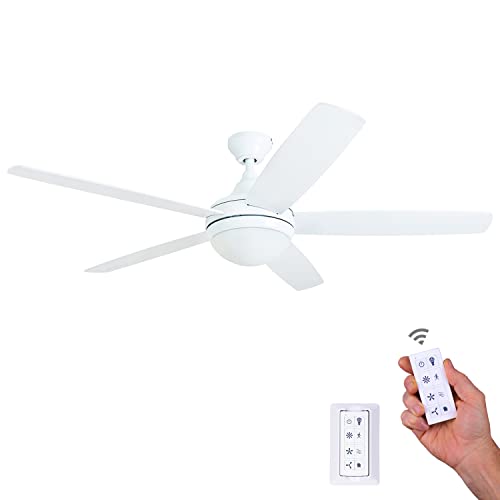
Best White Ceiling Fan With Light For Bedroom 2026 Top Picks

Best Quorum Medallion Ceiling Fan 2026 With Style & Breeze
Best Outdoor Fan For Pergola 2026 Comfort Boost

Best Ceiling Fan For Great Room 2026 With Ultimate Comfort

Best Outdoor DC Ceiling Fans 2026 For Breezy Comfort
Best ceiling exhaust bath fan with light and heater 2026





