
Best Ceiling Fan For Cool Air 2026 Room-Saver Picks

Best ceiling fan for cool air isn’t really about freezing a room like an air conditioner. A ceiling fan moves air across skin, breaks up stale pockets near the ceiling, and helps a room feel more breathable without cranking the thermostat every hour. That matters in bedrooms that trap heat, kitchens that get muggy after dinner, and living rooms where still air makes everything feel heavier than it should. A good fan should feel steady, quiet, and easy to adjust, not like a wobbly machine fighting the ceiling.
Airflow pattern carries more weight than flashy speed numbers. A fan with well-shaped blades, a balanced motor, and the right size for the room can make low or medium speed feel more comfortable than a louder fan running full blast. Small rooms often need controlled airflow, while open spaces need wider circulation that reaches corners without turning papers into confetti. So, bigger isn’t always smarter, especially if the ceiling height is low or the room already has strong air conditioning.
Motor noise can make or break the whole deal. A fan that hums at night, clicks during speed changes, or shakes at higher settings gets old fast. DC motors are often favored because they tend to run quieter and use less energy than many older AC designs, though build quality still matters. Remote controls, timer settings, and reversible airflow sound simple, but they become the little comforts people miss once they’ve had them.
Cooling comfort also depends on placement. A fan mounted too high may stir air above the room instead of where people sit, while one mounted too low can feel pushy and distracting. Sloped ceilings, covered patios, and compact bedrooms all need different mounting choices, so downrod options and angle support deserve a close look. Installation shouldn’t feel like a weekend punishment either, because vague instructions can turn a simple upgrade into a messy afternoon.
Best ceiling fan for cool air should balance breeze, noise, lighting, controls, and room fit without pretending to replace real cooling equipment. It won’t lower the actual temperature by itself, and that’s the honest tradeoff. Paired with AC or open-window ventilation, though, it can make warmer rooms feel calmer and easier to sit in. The sweet spot is a fan that disappears into the routine: quiet enough for sleep, strong enough for sticky afternoons, and simple enough that nobody has to hunt for the manual.

- LFR Score9.2
LFR Score is a ranking system developed by lightfansreviews.com. LFR Score has no relationship or impact from any manufacturers or sales agent websites. Learn more
- BrandDINGLILIGHTING

- LFR Score9.0
LFR Score is a ranking system developed by lightfansreviews.com. LFR Score has no relationship or impact from any manufacturers or sales agent websites. Learn more
- BrandDREO

- LFR Score9.0
LFR Score is a ranking system developed by lightfansreviews.com. LFR Score has no relationship or impact from any manufacturers or sales agent websites. Learn more
- Brandaddlon

- LFR Score9.0
LFR Score is a ranking system developed by lightfansreviews.com. LFR Score has no relationship or impact from any manufacturers or sales agent websites. Learn more
- BrandLEDIARY

- LFR Score8.8
LFR Score is a ranking system developed by lightfansreviews.com. LFR Score has no relationship or impact from any manufacturers or sales agent websites. Learn more
- BrandDepuley
- LFR Score8.8
LFR Score is a ranking system developed by lightfansreviews.com. LFR Score has no relationship or impact from any manufacturers or sales agent websites. Learn more
- Brandaddlon

- LFR Score8.8
LFR Score is a ranking system developed by lightfansreviews.com. LFR Score has no relationship or impact from any manufacturers or sales agent websites. Learn more
- BrandZOUQILAI

- LFR Score8.8
LFR Score is a ranking system developed by lightfansreviews.com. LFR Score has no relationship or impact from any manufacturers or sales agent websites. Learn more
- BrandZMISHIBO

- LFR Score8.6
LFR Score is a ranking system developed by lightfansreviews.com. LFR Score has no relationship or impact from any manufacturers or sales agent websites. Learn more
- BrandOPONL

- LFR Score8.6
LFR Score is a ranking system developed by lightfansreviews.com. LFR Score has no relationship or impact from any manufacturers or sales agent websites. Learn more
- BrandOhniyou

- LFR Score8.4
LFR Score is a ranking system developed by lightfansreviews.com. LFR Score has no relationship or impact from any manufacturers or sales agent websites. Learn more
- BrandAmico
Last update on 2026-07-11 / Affiliate links / Images, Product Titles, and Product Highlights from Amazon Product Advertising API
DLLT 20-Inch Bladeless Fandelier
A low ceiling can turn a normal fan search into a weird little puzzle. You want real airflow, but you don’t want blades hanging too close, shadows spinning across the room, or a motor hum that nags at bedtime. That’s where best ceiling fan for cool air becomes less about size and more about control, safety, and how comfortably the fan fits into daily life. The DLLT 20-Inch Bladeless Fandelier leans into that exact problem with a flush mount body, enclosed airflow design, dimmable LED lighting, and a quiet DC motor built for smaller rooms that still need steady movement.
DLLT 20-Inch Bladeless Fan
The DLLT Modern Ceiling Fan with Lights has a compact 20-inch profile, so it makes sense in spaces where a traditional downrod fan would feel clumsy. Bedrooms, nurseries, lofts, apartments, and basements often need cool air circulation without stealing visual space from the ceiling. The enclosed bladeless fandelier design also feels more relaxed around children and pets because the moving parts are tucked away. That doesn’t mean it should be treated like a toy, of course, but the covered layout removes the open-blade worry that comes with many standard ceiling fans.
The white LED body gives the fan a clean, modern look rather than the heavy hardware style of older ceiling fixtures. It’s not trying to look rustic, industrial, or decorative in a loud way. Instead, the design works best where a room already has simple furniture, light walls, or a neat apartment-style setup. For anyone chasing best ceiling fan for cool air in a low-ceiling room, that quiet visual footprint can matter almost as much as the breeze.
The biggest appeal is the way this fan combines lighting and airflow in one fixture. A room with only one ceiling box doesn’t always have space for separate upgrades, and adding floor fans can make the room feel crowded fast. This model handles both jobs with dimmable LED lighting and six fan speeds, which helps avoid the all-or-nothing feel of basic fixtures. You can soften the light at night, brighten it for chores, and still keep air moving without dragging out another appliance.
There is a tradeoff, though. A 20-inch enclosed fan won’t move air the same way a large open-blade ceiling fan can in a wide living area. It’s better suited for smaller or medium rooms where air feels trapped, not huge rooms that need broad, sweeping airflow from wall to wall. So, the smart expectation is personal comfort and room circulation, not a replacement for an air conditioner or a large traditional fan.
Low Profile Design For Tight Rooms
The flush mount build is one of the strongest reasons to consider this fan. Low ceilings can make standard fans feel awkward, especially in bedrooms where the bed sits close to the center of the room. This DLLT model keeps the fixture close to the ceiling, which helps preserve headroom and keeps the space from feeling chopped up. For best ceiling fan for cool air in apartments or basements, that slim shape is a practical win.
Small rooms tend to punish bulky fixtures. A fan that drops too low can make the ceiling feel lower than it already is, and a wide blade span may overpower the room visually. The 20-inch size gives this model a tidy footprint that suits nurseries, compact bedrooms, small dining spots, and home offices. It’s especially useful where the goal is better air movement without turning the ceiling into the main attraction.
The enclosed fandelier design also helps with everyday peace of mind. Open blades can collect dust, feel risky near bunk beds, or look too aggressive in rooms used by kids and pets. This covered style keeps the fan more contained, which fits homes where safety and simplicity matter. Still, the cover will likely need routine cleaning, because dust doesn’t magically skip enclosed designs.
Installation is described as DIY friendly, with pre-assembled parts, mounting hardware, and a step-by-step guide. That’s helpful because ceiling fan installation can get annoying quickly when parts are poorly labeled or the fixture feels heavier than expected. The product is intended for 8 to 10 ft ceilings, which lines up well with many bedrooms, kitchens, apartments, and dining rooms. Anyone dealing with unusual wiring or an old ceiling box should still be realistic and consider professional help.
Quiet DC Motor And Reversible Airflow
The DC motor is a major part of the comfort story here. A quiet fan matters most at the exact moments you notice noise: bedtime, early morning, reading, feeding a baby, or working from home in a small room. The product description highlights an ultra-quiet DC motor with six speed settings, which gives more flexibility than a simple low-medium-high setup. That range helps the fan feel less blunt and more tuned to the room.
The six speeds move from a gentle breeze to stronger airflow, which is useful because comfort changes throughout the day. A soft setting may be enough at night, while a higher setting may help after cooking, cleaning, or dealing with afternoon heat. For the best ceiling fan for cool air, that kind of control matters because too much airflow can feel just as annoying as too little. Nobody wants a fan that turns every paper, curtain, and loose receipt into a tiny weather event.
Reversible airflow adds another layer of usefulness. In summer, the fan can help create a cooler feel by moving air across the room. In winter, reverse mode can support better circulation by helping redistribute warmer air that rises near the ceiling. It won’t heat the room by itself, but reversible fan movement can make a room feel more balanced when used with existing heating or cooling.
The quiet motor angle also makes sense for sensitive spaces. Bedrooms, nurseries, and rooms used by older family members often need comfort without buzzing, clicking, or harsh wind. A noisy fan can ruin the whole point, especially in a room meant for rest. The honest caveat is that installation quality can affect noise, so a secure mount and proper balance still matter.
Dimmable Lighting With App And Remote Control
The lighting setup gives this fan more day-to-day value than a plain air circulator. Brightness adjusts from 10% to 100%, which helps the fixture move from soft evening light to brighter task lighting. The color temperature range runs from 3000K to 6500K, giving warmer, neutral, and cooler light options. That matters because bedroom lighting and office lighting rarely need the same mood.
Warm light around 3000K can feel calmer at night, while cooler light near 6500K may feel sharper for cleaning, sorting laundry, or working at a desk. The flexibility is useful in rooms that serve more than one purpose. A small apartment living room, for example, may shift from work zone to dinner spot to movie corner in the same day. The fan’s dimmable LED light makes those changes easier without adding extra lamps everywhere.
The memory function is a nice convenience because it remembers the last light setting. That saves the small annoyance of resetting brightness and color every time the fixture turns on. Little things like that sound minor on paper, but they matter after a few weeks of daily use. For best ceiling fan for cool air shoppers who also care about lighting comfort, this feature keeps the fixture from feeling fussy.
Remote and app control make the fan easier to live with, especially in bedrooms and nurseries. Getting out of bed to adjust light or fan speed gets old fast, and wall switches don’t always control every feature. App control adds convenience, but it also means anyone who dislikes phone-based controls should keep the remote handy. Simple, physical control still wins when you’re half asleep.
Best Fit, Limits, And Everyday Use
This DLLT fan fits best in rooms where low clearance, quiet operation, and combined lighting are bigger concerns than massive airflow. A small bedroom, child’s room, loft, apartment kitchen, or basement room can benefit from the compact shape. The enclosed design and flush mount style help it feel less intrusive than a standard ceiling fan. For best ceiling fan for cool air, that makes it a sensible pick for comfort-focused spaces rather than oversized rooms.
The fan’s strengths show up in routine moments. A stuffy bedroom after a hot shower nearby, a nursery that needs gentle circulation, or a home office that feels stale by midafternoon can all benefit from adjustable speed and quiet movement. The light controls also reduce the need for extra lamps in tighter rooms. That blend of airflow, lighting, and low-profile design is the main reason this product feels practical.
The limitations are worth saying plainly. A 20-inch bladeless fandelier may not satisfy someone expecting the sweeping breeze of a 52-inch open-blade ceiling fan. It also may not be the right match for high ceilings, large open living rooms, or spaces that need heavy-duty air movement. The product description points to 8 to 10 ft ceilings, so pushing it outside that comfort zone may lead to underwhelming results.
Warranty coverage adds reassurance, especially with the 5-year motor warranty and 2-year overall product warranty stated in the description. Customer support is also described as available 24/7, which helps if installation questions pop up or settings behave unexpectedly. Warranty terms still deserve careful reading, because coverage can depend on proper installation and normal use. Still, the listed support gives this flush mount ceiling fan a stronger ownership story than a bare-bones fixture.
The overall impression is practical rather than flashy. The DLLT 20-Inch Bladeless Fandelier solves a real low-ceiling problem with a compact body, enclosed fan design, adjustable light, remote and app control, and a reversible quiet DC motor. It’s not built to overpower a large room, and that honesty works in its favor. In the right space, best ceiling fan for cool air feels less like a marketing phrase and more like a calmer, cleaner way to keep air moving every day.
Dreo 52-Inch Ceiling Fan With Lights
Large rooms can feel strangely uneven, with one corner chilly, one corner stale, and the couch somehow sitting right where the air refuses to move. A stronger fan helps, but only if it can push air smoothly without sounding like a workshop tool above your head. That’s the real appeal of this Dreo model for best ceiling fan for cool air: it mixes a 52-inch blade span, a brushless DC motor, six speeds, and bright adjustable lighting into one fixture built for bedrooms and living rooms that need more than a lazy breeze.
Dreo 52-Inch Ceiling Fan
The Dreo Ceiling Fan with Lights feels aimed at rooms where a compact fan would simply run out of reach. Its 52-inch size gives it a broader sweep, while the 14˚ angled blade design supports stronger ventilation across the room. The product details list an average airflow of 3839 CFM and up to 5673 CFM at max performance, which gives this fan a more serious cooling feel than small enclosed fixtures. For best ceiling fan for cool air, that kind of airflow matters most in open bedrooms, living rooms, and shared spaces where still air gets old fast.
The six speed levels give the fan more personality than a basic three-speed ceiling fan. Low settings can keep air gently moving during sleep or quiet evenings, while higher settings make more sense after cooking, cleaning, or dealing with sticky weather. That range helps avoid the usual problem where one speed feels too weak and the next one feels like too much. Flexible speed control keeps the room comfortable without making the fan feel bossy.
The brushless DC motor is another practical piece of the design. Less friction usually means smoother operation, and the product description emphasizes quiet running with noise levels below whisper sound. That claim shouldn’t be treated like a lab guarantee for every ceiling and installation, but the motor type does fit the needs of quieter rooms. Bedrooms and living rooms benefit most from quiet airflow because noise becomes painfully obvious when the house settles down.
This fan is also more traditional than a bladeless fandelier, and that’s both a strength and a limitation. Open blades can move more air across wider areas, but they also need more ceiling space and more visual room to breathe. A 52-inch black ceiling fan can look sharp in the right room, yet it may feel too bold in a tiny bedroom with a low ceiling. So the best fit is a space that needs wide circulation, not a cramped room already fighting for head clearance.
Airflow That Feels More Room-Wide
Airflow is the strongest reason to consider this Dreo fan over smaller decorative fixtures. The listed 3839 CFM average performance gives it enough muscle for everyday cooling support, while the maximum 5673 CFM setting adds extra push when the room feels heavy. A fan still doesn’t lower the actual room temperature by itself, but moving air across skin can make warm conditions feel easier to handle. That’s the practical side of best ceiling fan for cool air, and it’s where this model earns attention.
The 14˚ blade angle helps explain why the fan focuses on ventilation rather than just spinning for show. Blade pitch matters because it affects how much air the fan can move with each rotation. A weak blade angle can look fine and still leave the room feeling sleepy, especially in larger spaces. Dreo’s angled design gives this fan a more purposeful airflow profile for rooms where strong air movement is the main reason for upgrading.
The six speeds also make seasonal use less annoying. A low breeze can take the edge off a warm bedroom, while a stronger setting can help circulate conditioned air after the AC kicks on. That pairing can make a space feel more evenly cooled without forcing the thermostat lower every time the room gets stuffy. In real life, fan speed control matters because comfort changes from morning to midnight.
There is a fair tradeoff with stronger airflow. Higher speeds usually feel more noticeable, and larger blades need proper clearance to work safely and comfortably. This fan makes more sense where the room can handle a 52-inch span without crowding furniture, lights, or visual balance. Smaller rooms may still benefit, but only if the ceiling height and layout make sense for a full-size fan.
Lighting Built For Real Daily Shifts
The LED light system gives this fan a wider job than airflow alone. Dreo lists up to 2400 lumens, described as equivalent to two 100-watt incandescent bulbs, which means the fixture can serve as a serious main light in many rooms. That brightness matters in living rooms used for reading, bedrooms used for folding laundry, or dining areas where one dull ceiling light makes everything feel flat. The fan doesn’t just cool the room; it helps set the room’s pace.
Six brightness options from 0% to 100% allow better control than a simple on-off light. A full-bright setting can help during cleaning or daytime tasks, while lower brightness can keep the room softer at night. The included soft light mode turns down the light to a more comfortable level while still leaving enough visibility to wind down. That small detail supports evening comfort without making the room feel like a showroom.
The five color tones add another useful layer. The range runs from 2700K warm yellow to 6500K cool white, so the same fixture can feel cozy, neutral, or crisp depending on the moment. Warm light suits relaxed evenings and bedrooms, while cooler light can help during work, dining prep, or task-heavy routines. It’s a sensible setup for rooms that don’t have one fixed identity.
Lighting flexibility can also reduce clutter. Extra floor lamps and desk lamps pile up quickly when one ceiling fixture can’t handle mood changes. With this Dreo fan, the ceiling light has enough adjustment to cover more situations without adding another cord across the room. The main caveat is personal taste: some people love cooler white light, while others find it too sharp for relaxing spaces.
Quiet Motor And All-Season Direction Control
The quiet motor story matters because a ceiling fan lives above your head, not tucked in a corner. Dreo’s brushless DC motor is described as running with less friction and optimized efficiency. That design supports smoother airflow and quieter operation, especially compared with older motor styles that can hum or buzz under load. For best ceiling fan for cool air, quiet performance keeps the breeze useful instead of irritating.
Bedrooms need that quiet character more than almost any room. A fan can have impressive airflow on paper, but one clicking sound during the night can ruin the whole setup. Living rooms benefit too, especially during movies, calls, or late conversations where background noise becomes distracting. Low-noise operation is one of those features that feels boring until it’s missing.
The reversible blade design expands the fan’s role past summer use. In warmer months, downward airflow helps create a cooling feel. In cooler months, upward movement can help circulate warmer air that gathers near the ceiling, making the room feel less uneven. That doesn’t replace heating or cooling equipment, but reversible airflow can make existing systems feel more balanced.
The remote makes direction changes less of a chore. Some ceiling fans require a ladder or a tiny switch on the motor housing to reverse airflow, which means the feature gets ignored. This model lets you adjust reverse direction, fan speed, light settings, and timer functions without getting up. That convenience makes the fan easier to use correctly instead of just leaving it on one setting forever.
Remote Control, Timer, And Installation Notes
The included remote control is central to how this fan feels day to day. Fan speeds, light brightness, color tone, timer functions, and blade direction can be adjusted from the same control point. That matters in bedrooms, where getting up to tweak a ceiling fixture feels annoying fast. Remote control convenience turns the fan into something you’ll actually adjust instead of tolerate.
The 8-hour timer also fits real routines. A timer can run the fan while falling asleep, during an afternoon nap, or while cooling down a room after a hot day. It’s useful for anyone who forgets to turn things off or doesn’t want air blowing all night. The feature adds practical energy control without asking you to babysit the fixture.
Installation is described as simplified with a pre-assembled design and four basic steps. That sounds friendly for a ceiling fan, though ceiling wiring still deserves respect. The product page’s installation video is mentioned as a reference, which can help visual learners avoid second-guessing every bracket and wire. Still, older ceiling boxes, unusual wiring, or heavy fixtures may call for someone with electrical experience.
The product description also notes ETL and DOE references, along with energy-efficient and bill-saving positioning. Those points support confidence, but they shouldn’t be stretched into made-up savings numbers. Actual results depend on room size, ceiling height, thermostat habits, climate, and how often the fan runs. The safer takeaway is that a DC motor ceiling fan can support more efficient comfort when used thoughtfully with heating or cooling.
Where This Fan Makes Sense And Where It Doesn’t
The Dreo 52-Inch Ceiling Fan with Lights makes the most sense in rooms that need stronger airflow and a capable main light. Bedrooms, living rooms, and dining areas with enough ceiling space can benefit from its blade span and lighting range. The black finish also gives it a defined modern look, which can ground a room with darker fixtures or simple furniture. For best ceiling fan for cool air, it feels better suited to real circulation than purely decorative ceiling lighting.
Large airflow is not always the right answer, though. A small room with a low ceiling may feel overwhelmed by a 52-inch fan, both visually and physically. Open blades also require proper clearance, so tight layouts need careful measuring before installation. The fan’s strength depends on giving it enough room to move air properly.
The light is powerful enough to be useful, but brightness preferences vary. Some rooms need soft, cozy lighting more than maximum lumens, and the cooler tones may feel too crisp for relaxed evenings. Thankfully, the brightness range and warm-to-cool color options reduce that risk. The key benefit is adjustability, not forcing one lighting style on every moment.
This Dreo model stands out because it brings together wide airflow, quiet DC motor operation, reversible circulation, a dimmable five-tone LED light, remote control, and an 8-hour timer. It won’t replace an air conditioner, and it won’t suit every ceiling or room size. But in a room that needs stronger air movement without giving up lighting control, it offers a practical balance of comfort and convenience. The best expectations are simple: cooler-feeling air, easier lighting changes, and fewer reasons to drag a portable fan across the floor.
Addlon 20-Inch Low Profile Fandelier
Small rooms can get stuffy in a sneaky way, especially when the ceiling is too low for a big blade fan and the floor already has enough clutter. A portable fan helps for a while, sure, but it also steals outlet space, blows dust around at ankle level, and ends up parked in the wrong corner. The Addlon 20-Inch Low Profile Fandelier answers that tight-room headache with a compact flush mount build, enclosed blades, adjustable LED lighting, and a reversible DC motor made for best ceiling fan for cool air in everyday living spaces.
Addlon 20-Inch Fandelier
The Addlon Ceiling Fan with Lights takes the compact route, and that choice makes sense for rooms where a standard 52-inch fan would feel like too much hardware overhead. Its 20-inch body keeps the fixture close to the ceiling, which helps in bedrooms, kitchens, studies, offices, and low-clearance living rooms. The enclosed blade design also adds a layer of family-friendly safety because the fan mechanism isn’t sitting out in the open. That covered shape won’t replace common sense, but it does make the fixture feel less fussy around daily movement.
The black finish gives the fan a sharper look than plain white ceiling fixtures. It can work nicely with modern cabinets, dark door handles, black lamps, or simple apartment furniture. Still, black hardware stands out more than white, so it may not disappear into every ceiling. That contrast is a style choice as much as a feature, and it’s worth thinking about before expecting a barely-there look.
The strongest pitch here is the mix of air movement and adjustable light in one compact fixture. A room with one ceiling box often has to choose between a proper light and better airflow. This Addlon model tries to solve both needs without asking for extra floor space or a separate lamp. For best ceiling fan for cool air, that matters because comfort often depends on airflow, lighting, and room layout working together.
The product is also described with a modular installation experience that takes just 5 minutes to assemble. That sounds convenient, especially for a fixture meant for common home rooms rather than complicated renovation projects. Still, ceiling installation involves wiring and mounting, so the total job may take longer depending on the existing ceiling box and comfort level with electrical work. A quick assembly claim is helpful, but safe installation still comes first.
Lighting That Shifts With The Room
The light system is one of the more useful parts of this fan because it avoids the one-brightness problem. Addlon gives brightness adjustment from 10% to 100%, which can soften the room for a quiet night or brighten it for homework, cooking prep, or cleaning. That range helps the fixture feel less rigid, especially in rooms that change jobs throughout the day. A kitchen corner, small office, or bedroom doesn’t always need the same light twice.
The three color temperatures make the lighting more adaptable. The 3000K warm white setting fits relaxed evenings, the 4500K natural white setting suits everyday tasks, and the 6000K cold white setting adds a crisper feel for focused activities. Those options matter because light tone can change how comfortable a room feels just as much as brightness. Too cool at night can feel harsh, while too warm during tasks can feel sleepy.
The dimming feature also helps in rooms where one overhead light usually does too much. Nobody wants a bedroom ceiling light blasting full brightness during a late-night check, and nobody wants a dim kitchen light while sorting ingredients. This fan lets the ceiling fixture behave with a little more manners. That’s a small thing, but in daily use, dimmable LED lighting can be the difference between useful and annoying.
The lighting controls pair with the remote and app setup, so adjustments don’t require walking across the room. That matters in bedrooms, studies, and living rooms where the comfortable spot is rarely next to the wall switch. App control adds a modern touch, while the remote keeps things simple for moments when grabbing a phone feels silly. The best part is the flexibility, not the tech for its own sake.
Airflow Control For Different Seasons
The Addlon fan uses a reversible DC motor, which gives it more year-round purpose than a basic summer-only fan. In warm weather, downward airflow helps create a cooler feel by moving air across the room. In cooler months, reverse direction can help circulate warmer air that naturally collects higher up. That doesn’t turn the fan into a heater, but reversible airflow can make a room feel less uneven.
The six wind speed settings give more control than a simple low, medium, and high layout. Addlon describes comfortable wind, natural wind, and strong wind modes, which makes the fan easier to match to the moment. A soft setting works better for sleep or quiet work, while stronger airflow helps when a room feels muggy after cooking or cleaning. For best ceiling fan for cool air, that range is more useful than raw power alone.
The pure copper motor is described as supporting stable operation. Stability matters because a ceiling fan that buzzes, shakes, or changes rhythm can get irritating fast. A compact enclosed fan should feel steady above a desk, bed, or small dining table. Proper mounting still matters, though, because even a stable motor can feel off if the ceiling box or installation isn’t right.
The 20-inch size shapes expectations. This fan is better for compact rooms, low-ceiling areas, and close-range comfort than for large open living rooms. It can help air feel fresher, but it won’t sweep across a wide space the way a full-size open-blade fan can. That tradeoff is fair if the room needs low profile airflow more than big-room coverage.
Remote, App, Timer, And Memory Function
The remote handles the everyday controls: fan on and off, wind speed changes, and timer settings. The timer options include 1, 4, and 8 hours, which fit common routines like falling asleep, running the fan during work, or keeping air moving after cooking. Timers are easy to overlook until the fan gets left on all afternoon. A simple shutoff schedule keeps comfort from turning into mindless electricity use.
The app control adds another way to manage the fan without hunting for the remote. That’s useful in rooms where remotes vanish under blankets, sofa cushions, or paperwork. Still, app control shouldn’t be the only convenient method, and Addlon includes the remote for that reason. A ceiling fan should stay easy even when the phone is charging in another room.
The memory function is a practical touch because the fan can maintain its previous state after being turned off through the wall switch. That means the fixture doesn’t force constant re-setting every time power is restored. For daily use, setting memory reduces tiny frustrations that pile up over time. It’s the kind of feature that feels boring on a spec sheet and helpful on a Tuesday night.
The control setup fits rooms where comfort changes often. A study may need stronger air during daytime work, then softer airflow later. A bedroom may need warm dim light before sleep and brighter natural light in the morning. The fan’s control range makes those shifts smoother without turning every adjustment into a little chore.
Practical Fit, Tradeoffs, And Support
The Addlon 20-Inch Low Profile Fandelier works best where ceiling height and room size limit the fan choices. Bedrooms, kitchens, studies, offices, and compact living rooms are better matches than tall great rooms or wide open layouts. The recessed flush mount style keeps the fan from hanging too low, while the enclosed blades help the fixture feel tidy. For best ceiling fan for cool air in a tight space, those details are more important than oversized blade span.
The eco-friendly packaging note is a nice supporting detail, especially since compact packaging usually means less bulk during delivery and storage. It doesn’t change airflow, of course, but it does fit the product’s space-conscious personality. The modular design also sounds easier to handle than a fan with a pile of loose parts. Still, installation conditions vary, so DIY friendly shouldn’t be mistaken for effortless in every home.
The warranty coverage stands out in the provided description. Addlon lists up to 120 months warranty on the motor and 2 years on the rest of the fan. That gives the motor a stronger ownership promise than many short-term fixture warranties, though actual coverage details should always be reviewed carefully. The 24-hour customer support note also helps if installation or setup questions pop up.
The main limitation is airflow scale. A 20-inch enclosed fandelier can make a smaller room feel fresher, but it isn’t built to replace a large open-blade ceiling fan in a spacious living area. The lighting is flexible, the controls are convenient, and the low-profile body solves real ceiling-height problems. The best expectation is controlled cooling comfort, adjustable light, and safer-feeling enclosed airflow in rooms where a traditional fan would feel bulky.
LEDIARY 20-Inch Low Profile Ceiling Fan
Hot air doesn’t always fill a room dramatically. Sometimes it just sits there, dull and stubborn, making a bedroom feel heavier than it should after the door has been closed for a while. A bulky fan might solve the airflow problem, but it can also crowd a low ceiling and make the room feel smaller. The LEDIARY 20-Inch Low Profile Ceiling Fan takes a more compact path for best ceiling fan for cool air, pairing an enclosed 7-blade design with dimmable lighting, quiet control, and a reversible DC motor for tighter everyday spaces.
LEDIARY 20-Inch Fan
The LEDIARY ceiling fan with lights feels built for rooms where ceiling clearance matters as much as airflow. Its 20-inch flush mount shape keeps the fixture close to the ceiling, which helps bedrooms avoid that crowded, hanging-too-low feeling. The black modern design gives it a clean, defined look without needing extra decorative trim. For best ceiling fan for cool air, this setup works best where the goal is steady comfort without a full-size fan taking over the room.
The enclosed fan style is a practical detail, not just a visual choice. Open blades can feel awkward in small bedrooms, especially around bunk beds, tall furniture, pets, or quick-moving kids. This model keeps the blades tucked inside the fixture, which makes the ceiling feel tidier and less exposed. That’s a real safety-minded design, though routine cleaning still matters because enclosed fans can collect dust along the grille.
The 7-blade design gives this fan a slightly different airflow personality from simpler enclosed models. More blades don’t automatically mean a better breeze, but they can support a smoother feel when paired with a stable motor and proper housing. LEDIARY combines that blade setup with six wind speeds, so the fan isn’t stuck in one blunt airflow mode. That matters in bedrooms where gentle air movement at night can be more useful than raw force.
The size also creates honest limits. A 20-inch flush mount fan isn’t the right pick for a large open living room that needs wide, sweeping airflow. It makes more sense in a bedroom, small office, compact guest room, or low-ceiling space where a bigger ceiling fan would feel visually and physically out of place. The best expectation is localized cooling comfort, not whole-house circulation.
Stepless Lighting With Memory
The lighting system gives this LEDIARY fan more range than a fixed-color ceiling light. It offers three color temperatures, moving from 3000K warm light to 6000K white light. Warm light can feel calmer at night, while the cooler setting fits tasks that need a brighter, cleaner tone. That flexibility makes the fixture easier to live with in rooms that shift from rest to chores to screen time.
Brightness adjusts from 10% to 100%, and the product description lists up to 2800LM. That amount of light can feel substantial in a small bedroom or compact room, especially compared with dim older fixtures. The stepless dimming approach is useful because it avoids the awkward jump between too dark and too bright. Fine-tuning light matters more than people admit, especially late at night.
The light memory function is a small comfort that can save repeated fiddling. Once the preferred color and brightness are set, the fan can remember the lighting state for the next use. That’s helpful in a bedroom where warm dim light may be the default, or in a small work area where brighter white light gets used often. Memory lighting keeps the fixture from feeling like a reset button every day.
The light and fan can also be controlled separately. That separation matters because air movement and lighting don’t always belong together. You may want the fan on with no light during sleep, or the light on without airflow while folding clothes. LEDIARY’s separate control makes the fixture feel less like a compromise and more like two useful tools sharing one ceiling spot.
Remote And App Control Without Beeping
The remote and app controls give this fan a convenient daily rhythm. Fan speed, LED dimming, timer settings, and mode customization can all be handled without reaching for a wall switch. The product description also notes 360° data reception, which suggests the remote doesn’t need to be aimed with fussy precision. In real use, easy control matters because comfort changes faster than people want to get up.
The lack of beeping during remote signal transmission is a surprisingly thoughtful detail. Many fans chirp every time a button is pressed, and that little sound can get old in a quiet bedroom. Late at night, a beep can feel louder than the fan itself. Removing that sound makes the LEDIARY better suited for quiet spaces where small noises stand out.
The timer setting adds another layer of convenience. A fan that can shut off after a set period is useful during naps, bedtime, or a stuffy first hour after closing the windows. It helps avoid running the fan longer than needed, especially in rooms that cool down once air starts moving. That’s practical comfort, not flashy tech.
App control adds flexibility, but the remote keeps the fan grounded. Not everyone wants to open an app just to lower the brightness or change speed. Having both choices is better than forcing one habit on every moment. The strongest part of this setup is control variety, which keeps the fan usable for different routines and preferences.
Six Speeds And Low-Noise Airflow
The six wind speeds give this fan room to adjust between barely-there circulation and stronger airflow. That’s useful because the best speed for a hot afternoon may be too much for sleep. A softer setting can keep air from feeling stale without blowing directly and aggressively across the bed. For best ceiling fan for cool air, that kind of range beats a fan that only offers loud or weak.
The pure copper motor is described as running smoothly with strong wind and low noise. Smooth operation matters with flush mount fans because the fixture sits close overhead, making rattles and buzzes harder to ignore. A motor that keeps things steady can make the room feel calmer while still improving air movement. Of course, quiet performance depends partly on correct installation and a secure ceiling mount.
The airflow is designed for comfort, but it should be judged against the fan’s size. A compact enclosed fan can freshen up a smaller room nicely, yet it won’t push air like a large open-blade model. That’s not a flaw if the room is the right size. Trouble starts only when a small fandelier is expected to behave like a full 52-inch ceiling fan.
The 7-blade enclosed setup also changes the feel of the breeze. Instead of a wide sweeping blade pattern, the airflow comes through the fixture housing in a more contained way. That can feel cleaner in a bedroom or small office, though some people may prefer the open, broader movement of traditional blades. The tradeoff is compact control versus big-room reach.
Reversible DC Motor For Year-Round Use
The reversible DC motor gives the fan a role beyond summer comfort. In warm weather, downdraft airflow helps create a cooler feel by moving air downward into the room. In colder months, updraft airflow can help circulate warmer air that gathers closer to the ceiling. That’s a useful seasonal airflow feature, even though it won’t replace heating or cooling equipment.
DC motor design also fits the low-noise, efficiency-minded purpose of this fan. The product details focus on smooth operation and strong wind power from the pure copper motor. That combination supports steady airflow without making the fixture feel harsh above the room. For bedrooms, smooth motor behavior is more valuable than a loud burst of wind.
Reversible airflow is most useful when people actually use it, and remote or app control makes that easier. A reverse switch hidden on a fan body often gets ignored because nobody wants to climb up and change it. With simpler controls, seasonal adjustment becomes less of a chore. That convenience makes the feature more practical, not just something printed in the specs.
The fan still needs reasonable expectations. Summer downdraft helps skin feel cooler, while winter updraft helps air mix more evenly. Neither mode changes the room temperature by magic. The benefit is better circulation, which can make the room feel less stuffy, less uneven, and easier to settle into.
Installation, Support, And Real-World Fit
LEDIARY describes the installation process as easy, with instructions and a detailed installation guide video. That’s helpful because ceiling fixtures can get confusing fast once wires, brackets, and hardware enter the picture. A guide video can reduce guesswork for someone comfortable with basic home projects. Still, electrical installation should be handled carefully, especially with older wiring or uncertain ceiling support.
The product includes 2-year support, with the description stating replies within 24 hours for issues. Support matters with ceiling fans because problems can involve installation, pairing controls, dimming behavior, or motor settings. Quick help can keep a small issue from turning into a frustrating return. Warranty and support details should still be reviewed closely, but the stated coverage adds some reassurance.
This fan fits best in spaces where a low-profile body is not optional. Bedrooms, compact rooms, and low ceilings benefit from the slim build, enclosed blades, and separate light and fan controls. A larger room may leave the fan feeling underpowered, especially if strong corner-to-corner airflow is the goal. The product’s best-fit zone is comfort in tight spaces, not oversized open-plan cooling.
The LEDIARY 20-Inch Low Profile Ceiling Fan stands out through its mix of stepless dimming, 2800LM lighting, three color temperatures, six speeds, quiet control, reversible airflow, and no-beep remote behavior. It’s not trying to be a giant wind machine, and that’s fine. Its better role is making a smaller room feel brighter, calmer, and less trapped without hanging a bulky fan overhead. For best ceiling fan for cool air, it offers a practical answer where ceiling height, noise, and lighting flexibility all matter at once.
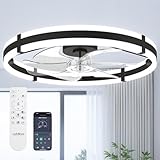
Depuley 19-Inch Bladeless Ceiling Fan
Warm bedrooms often become uncomfortable long before the thermostat suggests there's a problem. Air settles, humidity lingers, and a bulky ceiling fan can make a low ceiling feel even lower. The Depuley 19-Inch Bladeless Ceiling Fan approaches best ceiling fan for cool air from a different angle, combining a compact flush mount body, enclosed airflow, smart controls, and a remarkably quiet DC motor to improve comfort without overwhelming the room.
Depuley 19-Inch Ceiling Fan
Depuley designed this ceiling fan around smaller living spaces where every inch overhead matters. The 19-inch flush mount profile keeps the fixture close to the ceiling, making it suitable for bedrooms, children's rooms, and other areas where a traditional hanging fan could dominate the space. Its enclosed fandelier appearance also creates a cleaner visual style than exposed blades. That combination makes the fan feel modern without becoming the center of attention.
The enclosed construction offers another practical advantage. Open fan blades naturally raise concerns in rooms where beds, bunk beds, or active children occupy much of the available space. By surrounding the blades within the housing, Depuley creates a layout that feels more reassuring during everyday use. It's still an electrical appliance that deserves proper care, yet the covered blade design provides extra peace of mind.
Unlike oversized ceiling fans intended for expansive living rooms, this model focuses on moderate-sized spaces. That limitation actually works in its favor because oversized airflow can become distracting in compact bedrooms. The fan aims for balanced circulation instead of overwhelming wind. For anyone researching the best ceiling fan for cool air, matching fan size to room dimensions remains one of the smartest decisions.
The white finish also broadens its decorating flexibility. It blends naturally with light ceilings, simple interiors, and contemporary bedrooms without creating a heavy visual presence. That's useful in apartments or newer homes where subtle fixtures often fit better than bold industrial designs.
Quiet Cooling That Doesn't Interrupt The Room
Silence is one of this fan's strongest selling points. Depuley specifies operation below 25dB, thanks to its optimized DC motor and aerodynamic blade system. While actual sound levels always depend on installation quality and room acoustics, the stated specification clearly targets spaces where noise matters. Bedrooms immediately come to mind because even small mechanical sounds can become irritating once the lights go out.
The six wind speeds allow airflow to match different situations instead of forcing a single personality. A gentle setting works well overnight when subtle circulation feels more comfortable than direct wind. Higher speeds become useful after a warm afternoon, while cleaning, or during humid evenings when fresh airflow helps the room feel lighter. That flexibility gives the fan much more everyday value than a simple three-speed design.
The reversible airflow expands the fan's usefulness beyond summer. During warmer months, downdraft operation creates the cooling sensation most people expect. Once temperatures drop, reversing the airflow helps redistribute warmer air that naturally collects near the ceiling. That doesn't replace heating equipment, but seasonal airflow control helps create a more even indoor environment.
The overall airflow experience feels aimed at comfort rather than maximum force. Buyers expecting industrial-scale circulation should keep expectations realistic because a compact enclosed fan isn't intended to compete with large 52-inch open-blade models. Instead, it delivers controlled room circulation that better matches bedrooms and similarly sized spaces.
Lighting Designed Around Everyday Habits
The integrated LED lighting adds another layer of flexibility. Brightness adjusts continuously from 0% to 100%, allowing the same fixture to support completely different moods throughout the day. Bright illumination works well for organizing clothes or cleaning, while softer lighting helps create a calmer bedroom atmosphere before sleep. That range reduces the need for multiple lamps performing different jobs.
Color temperature adjustment stretches from 3000K warm light to 6500K cool white. Warm settings naturally complement quiet evenings, while cooler white light helps during reading, hobbies, or desk work. Having several lighting options makes one ceiling fixture feel much more adaptable than fixed-color LEDs.
The memory function removes one of those tiny annoyances that slowly build over time. After choosing preferred brightness and color settings, the fan remembers those adjustments for future use. That means the lighting doesn't constantly reset every time power cycles through the wall switch. Small conveniences like lighting memory often become surprisingly valuable after weeks of daily use.
The lighting controls remain completely separate from fan operation. Airflow doesn't always require bright lighting, and bright lighting certainly doesn't always require the fan. Independent control makes the fixture feel thoughtfully designed instead of forcing both systems to work together every time.
Remote And Smart App Convenience
Depuley includes both a handheld remote and smartphone app control, giving users two ways to manage daily adjustments. Wind speeds, light brightness, color temperature, timer functions, and fan direction can all be changed without standing underneath the fixture. That flexibility becomes especially convenient in bedrooms where comfort often changes after getting into bed.
The timer options include 1-hour and 2-hour automatic shutoff settings. Those shorter timers make sense for bedtime routines or quick cooling before falling asleep. Instead of running throughout the entire night, the fan can gradually finish its job before switching itself off. That feature encourages practical energy use without requiring extra attention.
Smartphone control isn't meant to replace the remote. Some days reaching for a phone feels perfectly natural, while other times pressing a physical button is simply faster. Offering both methods lets the fan adapt to different habits instead of forcing technology into every interaction. That's a practical approach rather than a flashy one.
The memory function also extends beyond lighting. Previous settings remain available, helping maintain familiar airflow and lighting preferences. The result feels more consistent because the fixture behaves the way it did before power was interrupted. Consistent operation often matters more than adding endless extra features.
Cleaning And Daily Maintenance
Ceiling fans naturally collect dust, especially around blades where moving air attracts fine particles over time. Depuley addresses this routine issue with a removable mesh cover, making cleaning less awkward than many enclosed fan designs. Easy maintenance encourages regular cleaning instead of postponing the job until airflow starts looking dusty.
The wipeable exterior also simplifies regular upkeep. Rather than requiring tools for every cleaning session, most visible surfaces can be maintained with straightforward wiping. Bedrooms especially benefit because accumulated dust tends to become more noticeable in sleeping environments.
The enclosed design still requires occasional attention. Dust doesn't disappear simply because blades are hidden, and airflow passages should remain reasonably clean for the fan to operate efficiently. Fortunately, removable access makes that routine less intimidating than sealed designs that discourage maintenance altogether.
Maintenance rarely appears at the top of shopping lists, yet it becomes important after months of ownership. A fixture that's easier to clean generally stays looking better for longer. That's one of those quiet advantages that doesn't sound exciting until cleaning day actually arrives.
Warranty, Support, And Practical Expectations
Depuley includes a lifetime warranty alongside a 30-day return policy according to the provided product information. Warranty length alone shouldn't determine a purchase, but longer motor coverage can provide additional confidence for products expected to remain installed for years. Buyers should always review warranty terms carefully to understand exactly what is covered.
The product description also mentions a free anti-afterglow controller upgrade if needed. That's an unusually specific support detail, suggesting attention to potential lighting behavior should it arise. Combined with professional customer support, the company appears prepared to assist beyond the initial installation period.
This fan fits best where compact dimensions, quiet operation, and adjustable lighting carry more value than maximum airflow volume. Bedrooms, children's rooms, guest rooms, apartments, and smaller home offices all match the product's design priorities. Larger open-plan spaces would likely benefit from wider blade spans and higher airflow capacity instead.
The Depuley 19-Inch Bladeless Ceiling Fan blends sub-25dB operation, six wind speeds, reversible airflow, stepless dimming, removable maintenance access, smart controls, and memory functions into one compact fixture. It doesn't promise oversized airflow beyond its intended room size, and that's an honest strength rather than a weakness. For buyers seeking the best ceiling fan for cool air in low-ceiling bedrooms where quiet comfort matters just as much as airflow, this balanced design addresses many of the everyday frustrations that larger ceiling fans often overlook.

Best Quiet Ceiling Fan For Bedroom 2026 Ultimate Comfort Picks

Best Ceiling Fan For Master Bedroom 2026 With Ultimate Comfort

Best White Ceiling Fan With Light For Bedroom 2026 Top Picks

Best Quorum Medallion Ceiling Fan 2026 With Style & Breeze
Best Outdoor Fan For Pergola 2026 Comfort Boost

Best Ceiling Fan For Great Room 2026 With Ultimate Comfort

Best Outdoor DC Ceiling Fans 2026 For Breezy Comfort
Best ceiling exhaust bath fan with light and heater 2026





