
Best Ceiling Fan for Drop Ceiling 2026 Guide

A best ceiling fan for drop ceiling setup takes more planning than cutting an opening in a lightweight ceiling tile. Suspended panels are designed to hide wiring, pipes, and ductwork, not support the weight and movement of a rotating motor. Even a compact fan can create vibration that rattles the grid, shifts tiles, or leaves the housing hanging unevenly. A secure installation connects the fan to solid framing above the drop ceiling through a fan-rated electrical box, brace, or approved suspension system.
Structural support matters more than blade color, remote controls, or decorative finishes. The visible metal grid may appear sturdy, but it usually isn't rated to handle the dynamic load created by spinning blades. A fan produces ongoing movement rather than the stationary weight of a basic light panel, so improvised brackets can loosen over time. That hidden support may add work during installation, but it prevents wobbling, cracked tiles, and constant ceiling noise.
Ceiling height creates another practical headache. Drop ceilings already reduce the distance between the floor and the finished ceiling surface, so a standard downrod can position the blades too low. A low-profile ceiling fan or compact model often fits more naturally, provided the motor housing still has enough breathing room and the blades maintain safe clearance. Measure from the finished tile surface rather than the original ceiling above it, or the final hanging height may be several inches lower than expected.
Blade span should match the usable room area instead of the dimensions above the ceiling grid. A 36-inch to 44-inch fan can make sense in a compact bedroom, office, utility room, basement workspace, or indoor growing area. Larger rooms may need a 48-inch or 52-inch model, but broad blades can feel cramped near vents, panel lights, tall cabinets, or hanging planters. A few inches of extra span won't help much if nearby fixtures interrupt the airflow or restrict safe blade clearance.
Quiet operation deserves extra attention because suspended ceilings can amplify small sounds. A mild motor hum, loose screw, or slightly unbalanced blade may cause the grid and nearby tiles to buzz. DC motors usually offer smoother speed changes, lower operating noise, and reduced energy use compared with many basic AC motors. Still, a quiet motor can't compensate for poor mounting, so proper alignment and blade balancing remain essential.
Lighting can be useful, though an integrated LED isn't automatically the smarter option. Many drop ceilings already contain recessed panels, fluorescent fixtures, vents, and sprinkler components, leaving the ceiling visually crowded. A fan without a light keeps the profile cleaner, while a dimmable light kit may replace an existing fixture in darker rooms. The better decision depends on actual lighting gaps, not the assumption that another bright fixture will always improve the space.
Dust and humidity also change what feels practical. Basements, workshops, laundry rooms, and indoor plant spaces can expose blades to moisture, soil particles, lint, and fine debris. A damp-rated fan helps in humid rooms, but it still shouldn't be exposed to direct water unless the manufacturer specifically allows it. Smooth blades and an accessible motor housing make cleaning less of a chore, especially since servicing a fixture through removable ceiling tiles can get fiddly.
The biggest tradeoff is simple: a drop ceiling hides mounting hardware nicely, but it complicates installation and future maintenance. Access panels may need to be removed, support components must reach the structure above, and electrical work should follow local code. A tile support bar intended for a light fixture isn't automatically approved for a rotating fan. Realistic expectations, careful measuring, and proper structural reinforcement matter far more than flashy speed settings or decorative extras.

- LFR Score9.6
LFR Score is a ranking system developed by lightfansreviews.com. LFR Score has no relationship or impact from any manufacturers or sales agent websites. Learn more
- BrandTALOYA
- LFR Score9.2
LFR Score is a ranking system developed by lightfansreviews.com. LFR Score has no relationship or impact from any manufacturers or sales agent websites. Learn more
- BrandEnsenior
- LFR Score9.0
LFR Score is a ranking system developed by lightfansreviews.com. LFR Score has no relationship or impact from any manufacturers or sales agent websites. Learn more
- BrandOrison

- LFR Score9.0
LFR Score is a ranking system developed by lightfansreviews.com. LFR Score has no relationship or impact from any manufacturers or sales agent websites. Learn more
- BrandWELLY

- LFR Score8.8
LFR Score is a ranking system developed by lightfansreviews.com. LFR Score has no relationship or impact from any manufacturers or sales agent websites. Learn more
- BrandSPT

- LFR Score8.8
LFR Score is a ranking system developed by lightfansreviews.com. LFR Score has no relationship or impact from any manufacturers or sales agent websites. Learn more
- BrandDepuley

- LFR Score8.6
LFR Score is a ranking system developed by lightfansreviews.com. LFR Score has no relationship or impact from any manufacturers or sales agent websites. Learn more
- BrandRoomratv
- LFR Score8.6
LFR Score is a ranking system developed by lightfansreviews.com. LFR Score has no relationship or impact from any manufacturers or sales agent websites. Learn more
- BrandiTni
- LFR Score8.4
LFR Score is a ranking system developed by lightfansreviews.com. LFR Score has no relationship or impact from any manufacturers or sales agent websites. Learn more
- BrandSPT

- LFR Score7.8
LFR Score is a ranking system developed by lightfansreviews.com. LFR Score has no relationship or impact from any manufacturers or sales agent websites. Learn more
- BrandecoCalm
Last update on 2026-07-11 / Affiliate links / Images, Product Titles, and Product Highlights from Amazon Product Advertising API
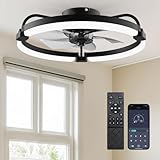
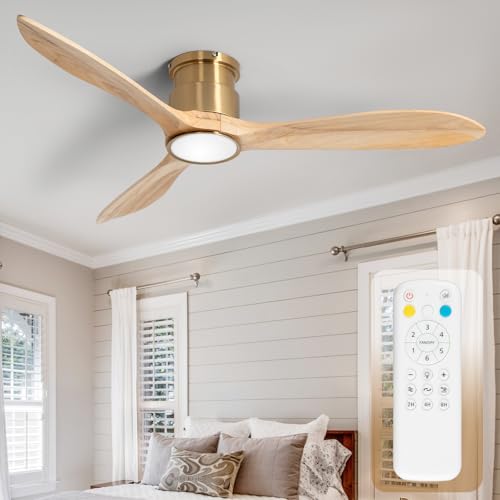
TALOYA 52 Inch Modern Ceiling Fan With Lights
Stale air has a funny way of making a room feel smaller than it really is. A ceiling fan often fixes that problem, but the wrong model can introduce new headaches like constant humming, harsh lighting, or an installation that turns into an afternoon-long puzzle. That's where the best ceiling fan for drop ceiling conversation becomes more interesting because mounting stability, quiet operation, and balanced airflow all matter just as much as appearance. The TALOYA 52 Inch Modern Ceiling Fan With Lights approaches those priorities with a clean metal construction, a reversible DC motor, and practical features that focus on everyday comfort rather than unnecessary gimmicks.
TALOYA 52 Inch Ceiling Fan
Modern styling is the first thing that catches the eye. The all-black finish keeps the fan looking understated instead of dominating the ceiling, making it fit naturally into contemporary bedrooms, living rooms, covered patios, and similar spaces. Three metal blades give it a streamlined appearance that doesn't feel bulky despite its 52-inch span. That simple look also blends comfortably with minimalist décor instead of competing with furniture or lighting.
The choice of metal construction deserves more attention than it usually gets. Plastic blades can discolor or gradually warp after years of temperature changes, while engineered wood sometimes reacts differently to humidity. Metal offers better resistance to deformation, helping the fan maintain balanced rotation over time. Stable blades generally translate into smoother operation, something that's especially valuable if the room already has a suspended or drop ceiling where vibrations become easier to notice.
Another welcome detail is the absence of concerns tied to lower-quality synthetic materials. Metal components eliminate the possibility of chemical odors that occasionally accompany inexpensive plastic products. That creates a fresher atmosphere from day one, especially in rooms where airflow stays limited until the fan begins circulating air. It's a subtle benefit, but one that contributes to a more pleasant living environment.
Airflow And Quiet Everyday Operation
The DC motor plays an important role in making this fan feel refined during daily use. Instead of producing an intrusive mechanical hum, the motor is designed for quiet operation while still delivering strong airflow. That combination works well in bedrooms where unwanted noise quickly becomes distracting during the evening. A calmer sound profile also suits home offices where background noise tends to stand out during video calls.
Six selectable speeds provide flexibility rather than forcing large jumps between airflow levels. A gentle breeze can freshen the room without scattering paperwork or drying indoor plants too aggressively. Turning the speed higher increases circulation for warmer afternoons without making the room feel like it's sits directly beneath a commercial fan. That wider adjustment range helps adapt to changing weather throughout the year.
Reversible airflow adds another layer of usefulness. During warmer months, the forward rotation encourages cooling airflow across occupied spaces. Switching directions during colder seasons helps move warmer air that naturally gathers near the ceiling back into the living area. While a ceiling fan doesn't replace heating or cooling equipment, balanced air circulation often helps rooms feel more comfortable from wall to wall.
Lighting Designed For Visual Comfort
The integrated dimmable LED light avoids one common frustration found in many ceiling fans: harsh glare. Instead of producing an overly concentrated beam, the honeycomb structure diffuses illumination into a softer, more even spread. The result feels easier on the eyes during longer periods spent reading, relaxing, or working indoors. Softer lighting often creates a room that feels calmer without sacrificing visibility.
The honeycomb matrix isn't simply decorative. Its design helps distribute light more uniformly while reducing uncomfortable brightness when viewed directly below the fixture. That makes the fan suitable for spaces where the ceiling fixture naturally sits within normal sightlines, such as bedrooms or family rooms. Comfortable illumination can have just as much impact on a room's atmosphere as airflow itself.
Dimming capability also increases flexibility. Bright light works well for cleaning or detailed tasks, while lower brightness creates a more relaxed setting during quiet evenings. Having both functions integrated into one fixture reduces ceiling clutter and keeps the overall appearance neat. It's a practical solution without adding unnecessary complexity.
Installation And Daily Convenience
Installation often becomes the part people worry about most, yet TALOYA simplifies much of the process. The company provides detailed written instructions together with installation videos that walk through each step clearly. Since the lighting components arrive pre-installed from the factory, there are fewer individual pieces to assemble overhead. That thoughtful preparation can save both time and frustration.
Remote control operation keeps everyday adjustments convenient. Fan speed, airflow direction, and lighting functions remain accessible without walking across the room or reaching for pull chains. The controls feel more appropriate for modern living spaces where convenience becomes part of the overall experience rather than an afterthought. Daily operation stays straightforward instead of complicated.
One practical consideration involves the fan's 52-inch blade span. It suits medium and larger rooms comfortably, but smaller spaces may not provide adequate blade clearance. For anyone researching the best ceiling fan for drop ceiling, careful measurement remains essential because suspended ceilings already reduce available height. Proper structural support above the ceiling grid also remains necessary since the visible ceiling panels themselves are not designed to carry a rotating ceiling fan.
Strengths, Tradeoffs, And Overall Value
The strongest aspects of this model come from its balanced combination of durability, quiet performance, and thoughtful lighting design. Metal construction supports long-term stability while the reversible DC motor offers flexible airflow throughout changing seasons. The integrated LED avoids the harsh appearance sometimes associated with basic ceiling fan lights. Together, those details create a product that feels carefully planned rather than overloaded with unnecessary extras.
No product fits every situation perfectly. A 52-inch fan may simply be too large for compact rooms or spaces crowded with cabinets, beams, or low-hanging fixtures. Anyone replacing a fan on a suspended ceiling should also verify that the existing electrical box and structural support are rated for ceiling fan installation instead of assuming the previous hardware is suitable. Taking those precautions helps the fan perform as intended over the long term.
The overall package feels well balanced without relying on exaggerated promises. Quiet operation, six speed settings, reversible airflow, durable metal construction, dimmable lighting, and simplified installation each address practical concerns that arise during everyday ownership. Rather than focusing on flashy features that rarely get used, this ceiling fan concentrates on dependable comfort, stable operation, and a clean modern appearance that can continue fitting naturally into a room for years.
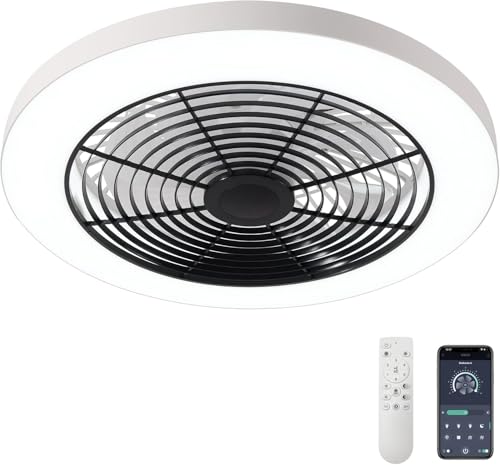
Ensenior 20 Inch Low Profile Ceiling Fan
Low ceilings leave very little room for bulky fixtures, and a standard downrod fan can make a compact bedroom feel even tighter. The best ceiling fan for drop ceiling needs to solve airflow, lighting, and clearance problems without hanging into the room like an obstacle. The Ensenior 20 Inch Low Profile Ceiling Fan takes a different route with an enclosed flush-mount body that drops only 6.3 inches from the ceiling. That shallow profile, paired with bright lighting and quiet operation, makes it a practical option for spaces where every inch overhead matters.
Ensenior 20 Inch Flush Mount Fan
The 20-inch enclosed design feels especially well suited to rooms where open blades would create anxiety or visual clutter. Bunk beds, low ceilings, and compact layouts often leave little room for error, so keeping the blades inside the housing adds a reassuring layer of safety. The smaller footprint also avoids overpowering the room, which can happen with a traditional 52-inch fan in a modest bedroom. It looks neat, compact, and intentionally designed rather than squeezed into place.
A drop of only 6.3 inches gives this fan a clear advantage in rooms under eight feet tall. That measurement helps preserve usable headroom while still allowing the fixture to circulate air below the ceiling surface. In a drop-ceiling installation, the visible tile grid still cannot carry the fan by itself, so proper support above the ceiling remains necessary. Once mounted correctly to a fan-rated structure, the shallow housing keeps the finished setup from feeling heavy or awkward.
The matte black finish adds a clean visual edge without getting too flashy. It can sit comfortably in industrial rooms, modern bedrooms, or farmhouse-inspired spaces where darker fixtures help ground lighter walls and furniture. Because the body is compact and enclosed, dust won't collect across long exposed blades in quite the same way it does on a conventional fan. Cleaning still matters, of course, but the overall shape feels easier to manage in tight spaces.
Bright Light Without A Bulky Fixture
The built-in 45W LED light produces up to 2500 lumens, which addresses one of the most common complaints about compact ceiling fans: weak lighting. A small fan often comes with a small light, and that can leave corners dim or force another lamp into an already crowded room. Ensenior's light output is designed for spaces around 15 to 20 square meters, giving the fixture enough reach to serve as a main source of illumination in many bedrooms. That combination of light and airflow saves ceiling space while reducing the need for separate fixtures.
Stepless dimming from 8% to 100% gives the light more range than a simple bright-or-dim setting. Full brightness makes sense for cleaning, folding laundry, or organizing a room, while lower levels create a calmer atmosphere before sleep. The dedicated night mode is especially useful because it brings the light down to its minimum setting without forcing repeated adjustments. Soft nighttime lighting can help during late feedings, hallway trips, or quiet reading without flooding the room with glare.
Three selectable color temperatures add another practical layer. The 3000K warm setting creates a softer evening mood, 4500K neutral light feels balanced for everyday tasks, and 6500K cool light offers a brighter, crisper appearance. That flexibility helps the same fixture adapt throughout the day instead of locking the room into one color tone. The stated CRI above 80 also supports more natural-looking colors, which matters around clothing, décor, artwork, and indoor plants.
Glare control can make or break a ceiling light, especially in a bedroom where the fixture sits directly overhead. The LED is described as avoiding noticeable strobe and harsh glare, which should make extended use more comfortable. Still, 2500 lumens is a lot of light for a very small room, so the dimming controls will likely become part of the daily routine. The good news is that the wide adjustment range makes that brightness easier to tame.
Quiet Airflow For Small Rooms
The copper DC motor keeps noise below 30 decibels according to the supplied specifications. That matters in a bedroom because faint humming can become surprisingly irritating once the rest of the room goes quiet. The enclosed structure also helps the fan feel visually calmer than a set of long spinning blades. For light sleepers, nursery use, or late-night work, reduced motor noise can be just as valuable as raw airflow.
Air movement reaches up to 2200 CFM, which is substantial for a compact 20-inch fan. Six speed settings allow the airflow to move from a mild circulation level to a stronger breeze without forcing an all-or-nothing choice. Lower settings can keep air from becoming stale, while higher settings help during humid afternoons or warm nights. The range also helps avoid blasting papers, bedding, or delicate plant leaves with more air than they need.
The reversible motor adds seasonal usefulness. A downdraft sends air into the occupied part of the room during warmer months, creating a cooling sensation without lowering the thermostat. Reverse mode helps pull air upward and recirculate warmth that gathers near the ceiling during colder weather. In rooms with drop ceilings, that circulation can be useful because trapped warm air often sits above the living zone and does little good on its own.
Ensenior claims the DC motor runs 75% more efficiently than traditional AC motors. That figure comes from the supplied product information, but the general benefit is easy to understand: a DC motor is designed to deliver flexible speed control with lower energy demand. It also avoids the abrupt, coarse speed changes common in basic AC fan designs. The result should feel smoother during daily adjustments and less wasteful during long overnight use.
Remote Controls And Useful Memory
The upgraded remote handles fan speed, light brightness, color temperature, direction, and timer settings from one place. That keeps the fixture free from pull chains, which would look clumsy on such a compact design. It also makes adjustments easier from a bed, desk, or chair. The APP control adds another control method for anyone who prefers using a phone instead of keeping track of a small remote.
The memory function solves a small but persistent annoyance. After the preferred light and fan settings are selected, the fixture can recall them the next time it is powered through a wall switch. Without memory, a ceiling fan may return to a harsh default brightness or an unwanted color temperature every time it turns on. Retaining the previous setup makes the fan feel more settled into the room's routine.
Timer options of one, two, or four hours are handy for bedtime use. The fan can run long enough to cool the room while falling asleep, then shut off later without anyone getting up. The timer can also limit unnecessary operation in a guest room, reading nook, or play area. It's a simple feature, but one that can quietly reduce energy use and nighttime interruptions.
Installation Strengths And Real Tradeoffs
The integrated structure arrives largely preassembled, which cuts down the number of parts that need to be handled overhead. The stated installation time is under 20 minutes, though real timing will depend on wiring access, ceiling condition, and whether a proper mounting box is already in place. For a drop ceiling, the key issue isn't attaching the fan to the decorative tile. A fan-rated support point must connect to the solid structure above the grid.
Clear instructions and a straightforward bracket system should make the process less intimidating than a traditional multi-piece ceiling fan. Preassembled lighting also removes one common source of confusion and saves time during setup. Even so, electrical work deserves care, particularly in older rooms or ceilings with concealed wiring. A simple-looking flush mount still needs secure hardware, correct wiring, and adequate structural support.
The three-year motor warranty adds useful protection, while the stated around-the-clock after-sales support may help with setup or troubleshooting questions. Those details are reassuring because enclosed ceiling fans combine the motor, lighting, and controls into one integrated unit. A failure in one area can be more complicated than replacing a standard bulb or pull chain. Warranty coverage makes that integrated design feel less risky over the first few years.
The main limitation is coverage. A 20-inch fan can move a healthy amount of air, but it won't distribute airflow across a large open living room the way a full-size 52-inch model can. Its enclosed look may also feel more like a ceiling light with a fan inside than a traditional decorative fan. For low ceilings, small bedrooms, bunk-bed rooms, and compact drop-ceiling spaces, though, that tradeoff often makes sense because clearance, lighting, and quiet operation matter more than broad blade span.
Orison 19.7 Inch Low Profile Ceiling Fan
Small rooms can become uncomfortable fast when warm air lingers near the ceiling and bulky fixtures steal valuable headroom. A traditional fan may move plenty of air, yet long blades and a hanging motor often feel awkward in a bedroom, kitchen, or compact living area with limited clearance. The best ceiling fan for drop ceiling needs a shallower shape, controlled airflow, and lighting that doesn't turn the ceiling into visual clutter. The Orison 19.7 Inch Low Profile Ceiling Fan tackles those concerns with an enclosed flush-mount design, six fan speeds, app and remote operation, adjustable lighting, and an opening protective grille that makes routine cleaning less of a wrestling match.
Orison 19.7 Inch Flush Mount Fan
The two-in-one design combines a ceiling light and circulating fan inside a compact 19.7-inch housing. That arrangement saves space because it replaces two separate fixtures without adding a long downrod or exposed blades. The enclosed body also feels less intrusive above beds, dining tables, kitchen counters, or play areas where an open-blade fan might seem too close for comfort. Visually, the black finish gives the fixture a tidy modern look rather than the heavy appearance of a conventional ceiling fan.
Low-profile construction makes sense in rooms where overhead space is already tight. A drop ceiling lowers the finished surface below the structural ceiling, so every extra inch in the fixture can affect how open the room feels. The flush-mount profile keeps the fan close to the ceiling while leaving the air outlet exposed enough to circulate air into the room. Proper support above the ceiling grid still matters, since lightweight tiles and metal T-bars aren't designed to carry a rotating fixture on their own.
The smaller diameter naturally fits compact layouts better than a 52-inch fan. It won't visually swallow a narrow bedroom or collide with cabinets, wall shelving, or nearby lighting panels. That said, the 19.7-inch size also sets realistic limits on coverage, especially in broad open-plan rooms. Its strengths lean toward concentrated airflow in modest spaces rather than sweeping circulation across a large living area.
Six Speeds Without The Usual Motor Noise
A noisy motor can turn a useful fan into something people avoid switching on. Orison uses a quiet DC motor intended to move air without the persistent humming often associated with cheaper compact fans. That quieter character matters during sleep, homework, reading, or conversations where mechanical noise quickly becomes distracting. In a room with a suspended ceiling, reduced vibration is even more valuable because loose panels can amplify small sounds.
Six speed settings provide a broader range than the familiar low, medium, and high arrangement. Gentle speeds can keep air from feeling stale without pushing loose papers around or drying out houseplant leaves too quickly. Higher levels bring more noticeable circulation during warm afternoons, cooking sessions, or humid nights. The adjustable airflow makes the fixture easier to live with because the fan doesn't force the same intensity on every situation.
Timing controls add a practical layer to those speed settings. A timer lets the fan run while someone falls asleep, cools down after exercise, or clears lingering kitchen warmth without staying on all night. That small convenience can also prevent forgotten operation after leaving the room. Controlled run times pair nicely with the energy-conscious DC motor, especially in spaces where the fan gets used in short bursts throughout the day.
Remote And App Controls Keep It Simple
The included remote handles six fan speeds, timer functions, and light adjustments without requiring a trip to the wall switch. That sounds like a small perk until the fixture sits above a bed, nursery chair, or work desk and repeated adjustments become annoying. The remote control keeps the most-used settings within reach and avoids dangling pull chains that would look out of place on such a compact fixture. Its controls also suit anyone who prefers straightforward physical buttons over phone-only operation.
App control offers a second way to manage the fan and light. Phones have a habit of staying nearby, so the app can be useful when the remote disappears beneath a blanket or gets carried into another room. The smart control option doesn't replace the remote, which is a good thing because not everyone wants to open an app for every small adjustment. Having both methods gives the fixture flexibility without making one control style mandatory.
Memory settings remove one of the more irritating habits found in multifunction ceiling lights. After the light is turned off with the remote, the selected color temperature and brightness remain stored for the next remote-controlled start. That means the fixture won't repeatedly jump back to an overly bright or overly cool default. The setting memory becomes especially useful in bedrooms where a comfortable evening light level tends to stay the same from one night to the next.
Flexible Lighting For Different Parts Of The Day
The integrated light offers three color-temperature ranges spanning warm, neutral, and white tones from 2700K to 6500K. Warm light creates a softer atmosphere for winding down, while neutral light suits ordinary household tasks without feeling too yellow or too clinical. Cooler white light can sharpen visibility for cleaning, organizing, or detailed work. That three-tone lighting allows one fixture to serve several moods instead of locking the room into a single appearance.
Stepless dimming gives more control than a few preset brightness levels. The light can be lowered for late-night use, then raised when stronger illumination is needed for chores or active play. Because the fan and light share the same housing, adjustable brightness helps the fixture cover more of the room's daily needs without an extra floor or table lamp. The flexibility also reduces the frustration of a built-in LED that feels permanently too bright.
Lighting memory strengthens the usefulness of that dimming range. Once a comfortable brightness and color tone are selected, the fixture returns to those settings the next time it is switched on through the remote. This matters in rooms where sudden bright light can disturb sleep or break a calm evening atmosphere. The saved light preference makes the fan feel less like a gadget that constantly needs resetting and more like a settled part of the room.
Cleaning Access Sets This Design Apart
Enclosed fans solve the exposed-blade problem, but they can create a new headache if dust builds up behind a grille that won't open. Orison addresses that issue with a removable protective net designed to open for cleaning. That access makes it easier to reach the internal fan parts instead of trying to push a cloth through narrow openings. In kitchens, bedrooms, and rooms with pets, that difference can save a fair bit of frustration.
Dust doesn't simply affect appearance. Buildup around the fan opening can restrict airflow, collect cooking residue, or send fine particles back into the room when the motor runs at higher speed. The opening grille supports more thorough maintenance, which helps preserve both airflow consistency and a cleaner look. Still, regular cleaning will be necessary because the enclosed housing naturally traps some dust around its intake and outlet surfaces.
The compact housing should also be easier to wipe down than a conventional fan with several long blades. There are fewer broad surfaces stretching across the ceiling, and the enclosed shape keeps most moving parts out of direct reach. The tradeoff is that cleaning requires opening the protective cover rather than simply wiping an exposed blade. For anyone tired of balancing on a ladder to reach dusty fan blades, the serviceable grille design may feel like the more manageable compromise.
Installation Limits And Practical Fit
A flush-mount fan often appears simple to install, but the ceiling structure determines whether the setup will remain stable. Drop-ceiling tiles cannot safely support the fixture by themselves, and the visible metal grid isn't a substitute for a fan-rated mounting point. The bracket needs to connect to solid structural support above the suspended ceiling. Skipping that step can lead to rattling, tile damage, or a fixture that gradually loosens.
The enclosed design is well suited to bedrooms, children's rooms, compact living rooms, and kitchens where long blades would feel excessive. It also keeps moving components out of easy reach, which can bring extra peace of mind around bunk beds or active play spaces. Large rooms are a different story because the smaller fan diameter may not spread air evenly into distant corners. The best-fit space is a modest room that values clearance, controlled airflow, and integrated lighting more than broad whole-room circulation.
Orison states that the fan includes a 30-day refund and return policy together with a lifetime warranty. Those terms add reassurance because the motor, lighting, control electronics, and enclosed fan assembly are integrated into one fixture. The warranty doesn't remove the need for correct installation or routine cleaning, but it does provide a longer support window if a covered issue develops. The main appeal remains practical: compact dimensions, six-speed airflow, flexible lighting, remembered settings, and easier internal cleaning packed into a ceiling-friendly shape.
WELLY WL-12 Drop Ceiling Tile Fan
Uneven room temperature can make one chair feel chilly while the opposite corner stays stuffy, and ordinary ceiling fans don't always fit neatly into a suspended grid. The best ceiling fan for drop ceiling should preserve headroom, avoid harsh downward drafts, and work with the heating or cooling already in the room. The WELLY WL-12 Drop Ceiling Tile Fan takes that job seriously with partial recessed installation, 15 airflow settings, reversible circulation, and a low-noise DC motor. It isn't an exhaust fan, and that distinction matters because its purpose is to redistribute indoor air rather than pull moisture, odors, or heat outside.
WELLY WL-12 Air Circulating Fan
The WL-12 stands apart from compact flush-mount fans because it was designed to fit directly into a T-bar drop ceiling grid while remaining compatible with wood and concrete ceilings. Once partially recessed in a suspended ceiling, only about five inches remain visible beneath the surface. That shallow finished profile helps preserve clearance in offices, classrooms, clinics, bedrooms, and other rooms where the ceiling has already been lowered. It also looks more deliberate than hanging a conventional motor and downrod below a lightweight tile system.
Installation flexibility widens the range of places where the fan can be used. The supplied description lists living rooms, kitchens, corridors, covered patios, offices, and similar residential or commercial settings. Concrete and wood mounting options make the model useful even when a building contains several ceiling types across different rooms. Covered outdoor placement is also possible, though the fan shouldn't be treated as a fixture for direct rain or fully exposed weather unless the manufacturer specifically permits those conditions.
The overall design makes the most sense where space is tight but broad circulation is still needed. A standard ceiling fan may interfere with tall shelving, medical equipment, classroom projectors, or overhead lighting, while the partially recessed WL-12 keeps most of its body above the finished ceiling line. That space-saving profile can make a room feel less crowded without giving up active air movement. Even so, proper support and correct grid integration remain essential because a ceiling fan needs more than a loose acoustic tile to stay secure.
Fifteen Speeds For Controlled Air Movement
Fifteen adjustable wind speeds give this fan a much finer control range than the usual three-speed setup. Low settings can keep air moving gently during sleep, quiet work, or patient care without creating a noticeable cold stream. Higher settings provide stronger circulation when warm air collects near the ceiling or conditioned air isn't reaching the far side of the room. That wide speed range lets the fan respond to the actual room instead of forcing everyone to tolerate either too little airflow or far too much.
The supplied specifications describe airflow comparable to a traditional 100 to 140-inch ceiling fan. That claim reflects the intended circulation effect rather than the physical diameter of the WL-12, so expectations should stay grounded in the room layout, ceiling height, and nearby obstructions. Its 360-degree circulation pattern is designed to spread air outward instead of sending one concentrated column straight down. In practical terms, that approach can reduce the familiar problem of one person sitting under a cold blast while everyone else barely feels the fan.
Air conditioning often cools unevenly because vents release air in a fixed direction. The WL-12 works alongside that existing system, helping carry cooled air across a wider area and break up stubborn hot spots. Its air-redistribution role can be useful in long rooms, shared offices, waiting areas, or classrooms where the vent location favors one side. It won't lower the actual air temperature by itself, but better circulation can make the conditioned air already present feel more evenly distributed.
Quiet DC Motor And Energy Use
Noise levels vary with speed, and the WL-12 is rated at approximately 30 to 44 decibels in normal operation, dropping as low as 22.6 decibels at its lowest setting. That quiet low-speed performance suits bedrooms, clinics, study rooms, and workspaces where a persistent mechanical hum would be hard to ignore. Stronger settings will naturally sound more noticeable, so the lowest noise figure shouldn't be expected across all 15 levels. Still, the broad speed selection makes it easier to choose a balance between airflow and background sound.
The advanced DC motor is described as using 77% less energy than traditional ceiling fan motors. That figure comes from the supplied product information, and actual consumption will depend on speed, run time, and electrical conditions. The practical advantage of a DC motor is its ability to provide many incremental speeds while maintaining smooth operation. For rooms where the fan may run for long stretches, lower power demand can matter more than flashy controls or decorative blade finishes.
A built-in circuit protection system adds another thoughtful detail. Voltage instability can place stress on a motor or control board, particularly in commercial spaces where several electrical loads operate at once. The protective circuitry is intended to reduce that risk and support steadier operation. No internal protection replaces correct wiring or an appropriate electrical supply, but it does show that the design accounts for more than basic on-and-off use.
Seasonal Circulation Without Direct Drafts
The reversible turntable changes how air moves through the room across different seasons. Counter-clockwise operation in summer pushes cooler air downward, helping the room feel fresher without aiming a narrow blast at one spot. Clockwise movement in winter supports upward circulation and helps redirect warm air that collects near the ceiling. This reversible airflow control gives the fan a role beyond summer cooling, especially in rooms with high heating costs or uneven warmth.
Pairing the WL-12 with a heater can help distribute warm air more evenly instead of letting it pool near the ceiling. That matters in spaces with drop ceilings because the occupied zone may stay cooler even while the upper portion of the room holds plenty of heat. The fan's circulation-first design encourages that trapped warmth to rejoin the room. It won't increase heater output, but it may reduce the sharp temperature difference between the ceiling area and floor level.
Direct drafts can cause headaches, dry eyes, or simple irritation during long periods at a desk. The rotating distribution pattern is meant to spread the airflow rather than dump it onto one seat. That balanced breeze is particularly useful in shared rooms where one person wants stronger cooling and another can't stand sitting beneath a conventional fan. Fine speed adjustment gives the room a better chance of reaching a middle ground.
Cleaning Access And Everyday Maintenance
Dust buildup can slowly reduce airflow, and ceiling-mounted equipment isn't always pleasant to service. The WL-12 uses a tool-free detachable structure with removable blades, making internal cleaning more approachable than a sealed housing. That matters in kitchens, classrooms, clinics, and covered outdoor corridors where fine particles can gather quickly. Easier access also encourages regular upkeep instead of waiting until the airflow becomes noticeably weaker.
The body is made from durable ABS plastic intended to resist yellowing and brittleness. Plastic doesn't offer the same visual feel as metal, but it can keep weight lower and simplify removable construction. The ABS housing also avoids the corrosion concerns that sometimes appear on metal fixtures in humid covered spaces. Regular wiping will still be needed because light-colored dust can remain visible against darker surfaces, while grease in kitchens may require more frequent cleaning.
Installation instructions and a remote control are included, which should make setup and daily adjustments less cumbersome. The fan is designed to integrate into a T-bar grid or mount onto solid concrete or wood using the provided accessories. Still, correct structural mounting matters more than speed, especially in a suspended ceiling where the visible tile alone isn't meant to carry moving equipment. A careful installation also reduces rattling, alignment problems, and premature wear.
Where The WL-12 Makes Sense
The WL-12 favors circulation over decorative impact. It doesn't have the familiar sweeping blades of a traditional living-room fan, and that may disappoint anyone who wants a classic centerpiece. Its functional ceiling-tile format fits better in spaces where airflow coverage, headroom, and quiet operation carry more weight than visual drama. Offices, classrooms, clinics, bedrooms, and compact commercial rooms line up naturally with those priorities.
The fan also has a clear limitation: it is not an exhaust system. It won't remove bathroom humidity, cooking smoke, stale odors, or hot attic air from the building. The air circulation function simply moves existing indoor air around the room more evenly. That makes it useful beside air conditioning or heating, but unsuitable as a replacement for a vented exhaust fan.
Compared with the WL-4, the WL-12 is described as delivering stronger airflow and broader ceiling compatibility. That difference makes the larger model more appropriate where air needs to travel across a wider area or the installation surface varies from room to room. The tradeoff is that stronger performance and more installation flexibility may be unnecessary in a tiny space that only needs a mild breeze. For a demanding drop-ceiling setup, though, 15 speeds, partial recessing, reversible circulation, and removable blades form a practical package built around real airflow problems rather than decorative extras.
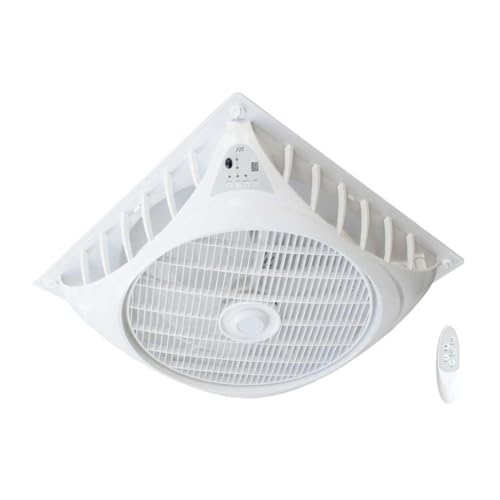
SPT SF-1691CA Drop Ceiling Fan
A suspended ceiling can hide wiring and ductwork neatly, yet it also leaves very little room for a conventional hanging fan. Long downrods waste headroom, exposed blades may feel awkward in compact spaces, and makeshift mounting can lead to rattling tiles. The best ceiling fan for drop ceiling should fit the grid properly, move air without becoming a distraction, and offer enough control to suit changing room conditions. The SPT SF-1691CA Drop Ceiling Fan addresses those needs with a 16-inch blade, nine speeds, adjustable direction, a DC motor, and a housing made specifically for suspended-ceiling installation.
SPT SF-1691CA 16 Inch Ceiling Fan
The 16-inch blade keeps the fan compact compared with a traditional residential model. Instead of stretching broad blades across the ceiling, the SF-1691CA concentrates its airflow within a smaller ceiling-mounted assembly. That format makes more sense around ceiling lights, vents, sprinklers, and other fixtures commonly packed into a drop-ceiling grid. It also avoids the visual bulk that a 48-inch or 52-inch fan can create in a modest office, clinic, classroom, or workroom.
Installation depth deserves careful attention because the unit requires 11.81 inches of clearance above the grid. That space must remain free of pipes, ducts, framing, and low-hanging electrical lines before the fan can sit correctly. Measuring only the room below the ceiling won't be enough; the hidden plenum matters just as much. In older buildings, opening a nearby tile and inspecting the space above can prevent a frustrating fit problem later.
Once installed, the fan projects 5.25 inches below the ceiling grid. That shallow drop preserves more usable headroom than a conventional fan with a motor housing and downrod. It can also reduce the cramped feeling that develops when a suspended ceiling is already lower than the original structure. Still, the finished height should be checked against shelves, doors, cabinets, and any equipment placed directly beneath the fan.
Nine Speeds Offer Finer Airflow Control
Three-speed fans often force a clumsy choice between barely noticeable airflow and a breeze that feels too aggressive. The SF-1691CA offers nine fan speeds, giving the room a much smoother adjustment range. Lower settings can keep air from feeling stale during quiet work, while stronger levels help when heat collects near the ceiling. That extra control is especially useful in shared spaces where one person runs cold and another keeps asking for more air.
A compact fan won't behave exactly like a wide-blade living-room model, and that's worth keeping in mind. Its strength lies in targeted circulation and placement within a ceiling grid rather than decorative sweep across a large open floor plan. In a small office, treatment room, break area, or narrow classroom, that focused approach may be more practical. Very large spaces may need multiple units or help from the existing HVAC system to avoid warm pockets.
The speed range also gives more control over sound and draft intensity. A lower setting can move air gently around paperwork, lightweight curtains, or delicate indoor plants without constantly disturbing them. Higher speeds become useful during crowded meetings, warm afternoons, or periods when the air conditioning is struggling to reach one section of the room. The nine-step adjustment makes those changes less abrupt and easier to fine-tune.
Oscillating Or Fixed Air Direction
The ability to choose between oscillating and fixed airflow changes how the fan can be used from one room to another. Oscillation spreads the breeze across a wider area, which helps in shared offices, waiting rooms, or classrooms where several seats need circulation. Fixed direction works better when one specific corner stays warm or a workstation needs steady airflow. That choice adds practical flexibility without requiring the fan itself to be relocated.
Oscillation can also soften the discomfort of a constant direct draft. Instead of blowing at the same chair for hours, the airflow moves across the room and gives each area a brief cooling pass. This pattern may feel more natural during long work sessions, especially for anyone bothered by dry eyes or cold air hitting the face. The moving airflow pattern helps distribute the fan's output rather than concentrating it in one narrow lane.
Fixed mode still has its place. A kitchen prep area, equipment station, or room corner near a sunny window may benefit from consistent airflow aimed in one direction. The setting can also help push conditioned air away from a nearby vent and into a stubborn warm zone. The directional control doesn't replace proper HVAC balancing, but it can make uneven rooms feel less frustrating.
DC Motor And Practical Energy Savings
The SF-1691CA uses a DC motor described as offering 45% energy savings. That figure comes from the supplied product specifications, so actual use will depend on speed, operating time, and local electrical conditions. The broader benefit is that DC motors tend to support finer speed control without the rough jumps common in simpler fan designs. For a unit that may run through an entire workday, reduced energy demand can matter over time.
DC operation also suits rooms where the fan needs to stay on quietly in the background. A ceiling fan shouldn't become the loudest object in a clinic, study area, or office, particularly at lower settings. The motor design supports smoother operation, though installation quality still plays a big role in controlling vibration. A loose grid, poorly secured frame, or uneven mounting can make even a well-designed fan sound worse than it should.
The electrical input range spans 100 to 277 volts, which gives the fan useful installation flexibility across residential and commercial environments. Buildings don't always share the same electrical setup, especially when offices, retail spaces, and institutional rooms are involved. A wide supported voltage range can simplify planning and reduce the need to source different versions for separate locations. Proper wiring should still follow local electrical requirements and the manufacturer's instructions.
Timer Settings For Controlled Runtime
The built-in one-to-seven-hour off timer helps prevent the fan from running longer than necessary. A short setting can cover a meeting, study session, treatment appointment, or afternoon warm spell without leaving the unit on after the room empties. Longer timer options work well during a full work block or overnight period. That simple control can reduce forgotten operation without forcing someone to return and switch the fan off manually.
Timer flexibility also fits spaces with changing schedules. A classroom may only need stronger circulation during occupied hours, while a bedroom or guest room may benefit from several hours of airflow after lights-out. Setting the fan to stop later can make nighttime use more comfortable without running it until morning. The adjustable shutdown window is practical rather than flashy, and that's exactly why it earns its place.
The timer also works neatly alongside the nine speed settings. A lower speed can run for several hours to maintain gentle circulation, while a stronger setting can operate briefly to clear a stuffy room. This combination gives more control over both airflow intensity and duration. It won't automate every aspect of room climate, but it handles the basic daily routine without unnecessary complexity.
Installation Limits And Best-Fit Rooms
The biggest installation constraint is the required space above the ceiling grid. With 11.81 inches of overhead clearance needed, crowded plenums may rule this model out before any wiring begins. Ductwork, plumbing, fire-suppression lines, and structural braces can all compete for that hidden space. Careful measurement is essential because a 2-by-2 grid opening alone doesn't guarantee the fan will fit above it.
The white finish helps the unit blend with common acoustic ceiling tiles instead of drawing attention to itself. That understated appearance suits offices, clinics, schools, utility areas, and other rooms where the ceiling is meant to stay visually quiet. Decorative homeowners may prefer something with a stronger design statement, but this fan is built around function and integration. Its shape feels more like part of the ceiling system than a centerpiece hanging below it.
The ETL designation listed in the product details adds a useful equipment-safety reference, though correct installation remains non-negotiable. The fan should be secured according to the included instructions rather than resting loosely on a ceiling tile. Suspended grids can transmit vibration if components aren't seated properly, so alignment and support deserve patience. The best ceiling fan for drop ceiling isn't simply the smallest model available; it is the one that fits the plenum, matches the electrical system, and circulates air without creating a new maintenance headache.

Best Quiet Ceiling Fan For Bedroom 2026 Ultimate Comfort Picks

Best Ceiling Fan For Master Bedroom 2026 With Ultimate Comfort

Best White Ceiling Fan With Light For Bedroom 2026 Top Picks

Best Quorum Medallion Ceiling Fan 2026 With Style & Breeze
Best Outdoor Fan For Pergola 2026 Comfort Boost

Best Ceiling Fan For Great Room 2026 With Ultimate Comfort

Best Outdoor DC Ceiling Fans 2026 For Breezy Comfort
Best ceiling exhaust bath fan with light and heater 2026





