
Best Ceiling Fan for Farmhouse 2026: Rustic Picks

A best ceiling fan for farmhouse spaces should feel like part of the room rather than a shiny appliance hanging in the middle of it. Wood-look blades, aged metal hardware, matte black finishes, and simple lantern-style lights usually sit comfortably beside exposed beams, shiplap, weathered furniture, and warm neutral walls. Still, appearance can't carry the whole job. A beautiful fan that barely moves air becomes frustrating once summer heat settles into a large family room.
Room size deserves attention before blade color or light shape enters the picture. A compact fan can look lost beneath a vaulted ceiling, while an oversized model may crowd a small breakfast nook and make the ceiling feel lower. Blade span, mounting height, and motor strength need to work together, especially in open layouts where air can drift into nearby kitchens or hallways. Getting those basics right creates a steady breeze without forcing the fan to run at full speed all day.
Ceiling height brings another wrinkle, and honestly, it's easy to overlook. Flush-mount models keep the blades closer to the ceiling in rooms with limited clearance, though that tighter gap may reduce airflow compared with a standard downrod installation. Taller rooms often benefit from a longer downrod that lowers the blades into the occupied area, where the breeze can actually be felt. Vaulted ceiling compatibility matters too, since not every mounting kit handles a steep slope without extra hardware.
Lighting should solve a real problem instead of merely filling an empty spot beneath the motor. Frosted glass softens glare over dining tables and seating areas, while exposed bulbs create a more industrial farmhouse mood but may feel harsh at eye level. An integrated LED light can save space and reduce bulb changes, yet replacing the light module may be less convenient than swapping a standard bulb. Dimmable controls help bridge that gap by shifting from bright cleanup light to a calmer evening glow.
Motor noise becomes noticeable fast in bedrooms, offices, and quiet sitting rooms. A faint electrical hum or loose light cover may not sound serious in a product description, but it can become the only thing anyone hears at night. DC motors often provide more speed settings and quieter operation, though they may cost more and rely heavily on a remote. Traditional AC motors remain familiar and dependable, but speed control can be less flexible.
Control style also affects daily convenience. Pull chains suit a classic farmhouse look and won't leave anyone searching between sofa cushions for a remote, but they can be awkward on tall ceilings. Wall controls feel permanent and tidy, while remotes make sense for bedrooms and vaulted spaces. Smart controls sound handy, sure, yet they add setup steps that won't appeal to every household, particularly where dependable simplicity matters more than app features.
Finish samples deserve a close look because online photos can flatten important color differences. “Distressed wood” may arrive with orange undertones, gray washing, or printed grain that clashes with real oak furniture. Reversible blades offer more flexibility, often pairing a lighter washed finish with a darker walnut tone. The strongest farmhouse ceiling fan designs use restrained details, practical airflow, and materials that complement the room without turning rustic style into a costume.
Maintenance is the final tradeoff that rarely gets much attention. Textured blades and cage-style light fixtures collect dust faster than smooth surfaces, and elaborate metalwork takes longer to wipe clean. Outdoor porches need a damp-rated or wet-rated fan rather than an indoor model dressed in rustic finishes. A thoughtful purchase balances looks, airflow, cleaning effort, ceiling conditions, and control preferences, so the fan remains useful after the decorating excitement wears off.

- LFR Score9.2
LFR Score is a ranking system developed by lightfansreviews.com. LFR Score has no relationship or impact from any manufacturers or sales agent websites. Learn more
- BrandBvenuBigLite
- LFR Score9.0
LFR Score is a ranking system developed by lightfansreviews.com. LFR Score has no relationship or impact from any manufacturers or sales agent websites. Learn more
- BrandFanbulous

- LFR Score9.0
LFR Score is a ranking system developed by lightfansreviews.com. LFR Score has no relationship or impact from any manufacturers or sales agent websites. Learn more
- BrandFanbulous

- LFR Score9.0
LFR Score is a ranking system developed by lightfansreviews.com. LFR Score has no relationship or impact from any manufacturers or sales agent websites. Learn more
- BrandEDISHINE

- LFR Score9.0
LFR Score is a ranking system developed by lightfansreviews.com. LFR Score has no relationship or impact from any manufacturers or sales agent websites. Learn more
- BrandSHLUCE

- LFR Score8.8
LFR Score is a ranking system developed by lightfansreviews.com. LFR Score has no relationship or impact from any manufacturers or sales agent websites. Learn more
- BrandDepuley

- LFR Score8.8
LFR Score is a ranking system developed by lightfansreviews.com. LFR Score has no relationship or impact from any manufacturers or sales agent websites. Learn more
- BrandFanbulous

- LFR Score8.8
LFR Score is a ranking system developed by lightfansreviews.com. LFR Score has no relationship or impact from any manufacturers or sales agent websites. Learn more
- BrandDepuley

- LFR Score8.4
LFR Score is a ranking system developed by lightfansreviews.com. LFR Score has no relationship or impact from any manufacturers or sales agent websites. Learn more
- BrandFanbulous

- LFR Score8.4
LFR Score is a ranking system developed by lightfansreviews.com. LFR Score has no relationship or impact from any manufacturers or sales agent websites. Learn more
- BrandFanbulous

- LFR Score8.0
LFR Score is a ranking system developed by lightfansreviews.com. LFR Score has no relationship or impact from any manufacturers or sales agent websites. Learn more
- BrandCurve Curio
Last update on 2026-07-11 / Affiliate links / Images, Product Titles, and Product Highlights from Amazon Product Advertising API
BvenuBigLite 72-Inch Farmhouse Ceiling Fan
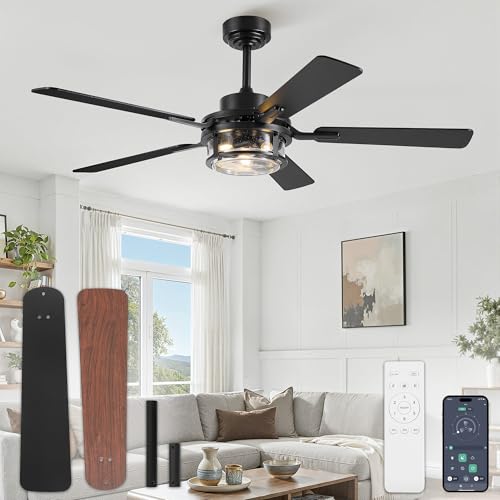
Large rooms can make an undersized fan feel almost decorative, especially once warm air starts lingering above a seating area or across an open great room. The best ceiling fan for farmhouse interiors needs enough reach to move air across broad spaces without looking out of place beside wood beams, black hardware, or rustic furniture. This 72-inch BvenuBigLite model tackles that problem with eight long blades, reversible finishes, and a design that leans modern without losing the warmth farmhouse rooms often need. Its scale is the first thing that stands out, but the real value lies in how its airflow, lighting, and mounting choices work together.
BvenuBigLite 72-Inch Ceiling Fan
The fan’s 72-inch blade span suits rooms larger than 18 by 18 feet, where a compact fixture may leave distant corners feeling stuffy. Great rooms, living rooms, workshops, barns, game rooms, covered patios, and porches all make sense, provided outdoor installations remain sheltered from direct rain. Eight blades create a broad visual footprint that feels proportional beneath tall or expansive ceilings. In a smaller room, though, that same size could feel heavy and overpower the furniture below.
Each blade has two finishes, with classic black on one side and a warm wood-grain tone on the other. That reversible setup gives the fixture more decorating flexibility than a single-color fan, particularly in farmhouse spaces where black metal and natural-looking wood often share the same room. The wood side can soften white walls and exposed beams, while the black side creates a sharper contrast against pale ceilings. Printed wood grain won’t have the depth of solid lumber, but it offers a practical way to change the mood without replacing the entire fan.
The overall shape feels cleaner than an ornate rustic fixture, which may suit homes that mix modern farmhouse style with simpler furniture and fewer decorative flourishes. Eight slim blades keep the design from looking like a bulky industrial prop, even at this generous diameter. Still, the fan won’t disappear into the ceiling, and that’s worth accepting before installation. This is a statement-size fixture, not a quiet little accent.
Wide Airflow For Open Farmhouse Rooms
Broad rooms often have several activity zones, and a single narrow fan can struggle to reach beyond the area directly below it. The eight-blade layout spreads airflow across a wider footprint, helping one fixture cover a large gathering room or connected living space. That can be cleaner than installing multiple smaller fans, both visually and electrically. Placement still matters, since walls, tall cabinets, lofts, and ceiling beams can interrupt the path of moving air.
The DC motor provides six speed settings, ranging from a gentle breeze to stronger circulation. That range makes the fan easier to live with across changing weather rather than forcing a choice between barely moving and overly windy. Lower settings can keep air from feeling stale during quiet evenings, while higher settings make more sense during humid afternoons or crowded gatherings. The fan also includes a natural-wind option, adding some variation instead of maintaining one completely steady airflow pattern.
Farmhouse great rooms often have high ceilings that trap warm air far above the occupied area. The reversible motor helps address that seasonal issue by changing the direction of circulation, supporting cooling in summer and better heat distribution in winter. Reversible airflow doesn’t create heat, of course, but it can help move warm air that has collected near the ceiling. The effect depends heavily on ceiling height, room shape, and the selected speed.
The listed operating noise reaches as low as 30 dB, which suggests the motor is designed for quiet use at suitable settings. That matters in open-plan homes where the fan may run above conversations, television, naps, or evening reading. Blade balance and installation quality will influence the final sound just as much as motor design, so careful assembly shouldn’t be rushed. A loose canopy, uneven blade, or poorly tightened light cover can create noise that no quiet motor can hide.
Lighting That Adjusts With The Room
The integrated light offers 10% to 100% dimming, giving the fixture more flexibility than a basic on-and-off ceiling light. Bright settings can support cleaning, projects, or busy family routines, while lower levels create a calmer atmosphere after dark. That range is especially useful in a farmhouse living room where the same space may serve several purposes throughout the day. The light’s usefulness will still depend on room size and whether nearby lamps or task lighting share the workload.
Color temperature adjusts from 3000K to 6000K, moving from warm white toward a much cooler, daylight-like appearance. A warmer setting generally complements wood tones, linen fabrics, and bronze or black finishes more naturally. Cooler light can be helpful in garages, workshops, or game rooms where visibility takes priority over coziness. Having both available prevents the fan from locking the room into one lighting mood.
The memory function saves the last selected fan and light settings, which cuts down on repetitive adjustments. Setting memory sounds like a small convenience, but it becomes more valuable in rooms used at the same times each day. Turning the fixture back on at a familiar brightness and speed feels smoother than rebuilding the setup every evening. Power interruptions or wall-switch behavior may affect how memory functions in practice, so the preferred control method should be tested after installation.
Integrated lighting creates a clean appearance, but it also carries a familiar tradeoff. The fixture avoids visible bulbs and bulky shades, yet the light source isn’t as simple to replace as a standard screw-in bulb. Dimmable integrated light works well for a streamlined farmhouse look, though households that prioritize easy bulb replacement may prefer a different fixture style. That distinction matters more over years of ownership than it does on installation day.
Remote, App, And Wall Control Options
Three control methods give the fan a useful degree of flexibility. The remote handles everyday changes from a sofa or bed, the app adds phone-based access, and the wall switch offers a familiar physical control point. Remote and app control make particular sense with tall ceilings, where pull chains would be awkward or impossible to reach. The variety also reduces dependence on one device, though the precise functions available through each control may differ.
Phone control can be convenient, but it won’t appeal equally to every household. Some people appreciate managing speed, brightness, and color temperature from one screen, while others would rather keep ceiling fans simple. The included remote keeps the fan practical even when app setup feels unnecessary. Multiple control choices are helpful here because they let the room operate without forcing everyone into the same routine.
Wall-switch support adds another layer of convenience, particularly near an entry where reaching for a remote would feel clumsy. Still, DC fans can behave differently from traditional AC models when connected to certain switches or dimmers. The product information indicates wall-switch control, but a standard dimmer should never be assumed compatible without checking the installation instructions. Correct electrical setup protects the fan’s electronics and prevents frustrating control problems later.
Mounting Options For Tall And Sloped Ceilings
The package includes 5-inch, 10-inch, and 24-inch downrods, covering a useful range of ceiling heights. That selection gives the installer more room to position the blades where air can be felt instead of leaving them tucked too close to a tall ceiling. Three downrod lengths also reduce the chance of needing an immediate separate purchase. Proper clearance around the blades and below the fixture still needs to follow the installation guide and local requirements.
Vaulted ceilings are supported up to a stated maximum angle of 15 degrees. That works for gently sloped ceilings, but steeper farmhouse vaults may require additional mounting hardware or a different fan designed for sharper angles. Measuring the ceiling slope before ordering avoids an unpleasant surprise during installation. A 72-inch fan also needs generous side clearance from walls, beams, cabinets, and hanging decor.
The product description mentions suitability across ceiling heights from 12 to 32 inches, though that wording appears to refer to available mounting configurations rather than total room height. The included downrods provide options, but a 24-inch rod may still be too short for exceptionally tall vaulted spaces. Blade height influences both airflow and appearance, so the longest included rod shouldn’t automatically be treated as the correct one. The goal is to bring the fan into an effective air zone while maintaining safe clearance.
Large fans place more demand on the ceiling box and mounting structure than lightweight fixtures. The fan should be attached to a fan-rated electrical box or suitable structural support, not a box intended only for a light fixture. Eight blades also mean more assembly steps and more opportunities for small alignment errors. Taking time to tighten each component evenly can help prevent wobble once the fan reaches higher speeds.
Quiet DC Motor With A Built-In Safeguard
The DC motor is designed for quieter operation and a broader range of speeds than many basic fan motors. Its six-speed adjustment makes fine-tuning easier, especially in bedrooms, nurseries, or shared living areas where one strong setting may feel disruptive. Lower electrical noise can make a noticeable difference during sleep or conversation. Actual sound will vary with speed, installation, blade balance, and room acoustics.
A built-in protection feature stops the motor if the blades aren’t installed and the system senses no proper load. That behavior may look like a malfunction during a quick installation test, but the product description identifies it as a normal safety response. The load-protection system is intended to reduce the risk of overheating or damage. Testing should therefore happen only after the fan has been assembled according to the instructions.
This safeguard is worth understanding before calling support or taking the motor apart. A DC fan doesn’t always behave like an older AC model, and spinning the motor without blades isn’t a reliable test here. Proper blade installation allows the motor to operate under the conditions it expects. That small detail can save a fair amount of confusion during setup.
Outdoor Use Has Clear Limits
The fan is described for covered patios and porches, but it should not be exposed directly to rain. That limitation matters because “outdoor” can mean very different levels of weather resistance across ceiling fans. Sheltered outdoor placement is the sensible interpretation, such as beneath a solid roof with protection from wind-driven moisture. Open pergolas, uncovered decks, and areas prone to blowing rain would push beyond the stated use.
Outdoor dust, pollen, humidity, and insects will also increase cleaning demands. Eight blades create plenty of surface area, and darker finishes can make dust more obvious under bright light. A soft cloth and regular attention should keep buildup from becoming stubborn. Routine blade cleaning helps appearance and may also reduce small balance changes caused by uneven debris.
Covered barns and workshops can benefit from the fan’s scale, though those spaces often expose fixtures to more dust than a living room would. The integrated light can brighten a broad area, but fine work may still require dedicated task lighting. Wide-area circulation is the stronger reason to use this model in a work setting. Heavy moisture, direct weather, or unusually dirty industrial conditions call for a fan rated specifically for those demands.
Practical Strengths And Real Tradeoffs
The strongest argument for this model is the combination of size, control, and adaptable styling. A 72-inch span can suit a broad farmhouse room where smaller fans look undersized, while reversible blades let the fixture lean warmer or more modern. Six speeds and adjustable lighting support different routines without requiring separate ceiling fixtures. The package also includes multiple downrods, which adds useful installation flexibility.
The biggest drawback is equally clear: this fan needs space. A low or compact room may feel crowded beneath eight 72-inch blades, and installation will be more involved than hanging a small five-blade model. Large-scale proportions demand careful measuring before purchase. Ceiling slope, structural support, wall clearance, and final blade height all deserve attention.
The app and integrated LED may feel modern beside rustic materials, which will suit some farmhouse interiors better than others. Homes built around traditional lantern fixtures, exposed bulbs, or deeply distressed finishes may find this design a little too streamlined. Modern farmhouse rooms are its natural visual match, especially those already using black metal and warm wood accents. The reversible blade color helps, but it doesn’t turn the fan into an antique-style fixture.
Warranty coverage is listed as five years for the motor and two years for the remaining fan components, with customer support available for installation and use questions. Those terms add reassurance, though coverage details, exclusions, and claim steps should be reviewed in the supplied documentation. Motor warranty coverage matters most on a large DC fan because the motor and control electronics are central to nearly every function. Keeping purchase records and installation information organized can make future support easier.
Fanbulous 52-Inch Farmhouse Ceiling Fan
A bedroom can look beautifully finished and still feel uncomfortable once warm air settles near the ceiling and the main light throws a harsh glare across the room. This Fanbulous model approaches the best ceiling fan for farmhouse role with a manageable 52-inch span, textured glass, reversible blades, and controls that don’t require leaving the couch. Its styling feels warmer than a plain modern fan, yet it avoids piling on so many rustic details that the fixture begins to look theatrical. The result is a practical blend of farmhouse character and everyday comfort for medium-sized indoor rooms or properly sheltered outdoor spaces.
Fanbulous 52-Inch Ceiling Fan
The visual centerpiece is the raindrop-textured glass shade, which gives the light a softer, more nostalgic presence than exposed bulbs or a flat plastic diffuser. Tiny surface variations break up the light, helping the fixture feel less clinical above a bed, sofa, or dining table. That texture also adds personality without relying on oversized metal cages or faux-antique decoration. Dust may settle into the patterned glass more readily than it would on a smooth shade, so occasional careful cleaning comes with the look.
Reversible blades offer a choice between a rustic wood-grain finish and a sleeker alternative on the opposite side. The wood tone can tie into beams, flooring, dressers, or farmhouse tables, while the darker side creates a cleaner contrast against light ceilings. Flipping the blades later is possible, though it still requires taking them down rather than changing the appearance with a switch. Even so, that flexibility makes redecorating less likely to trigger a full fan replacement.
A 52-inch diameter lands in a useful middle ground. It has enough presence for many bedrooms, living rooms, and covered patios without dominating the ceiling the way an oversized great-room fan might. Balanced proportions matter in farmhouse interiors because chunky furniture, wood trim, and layered fabrics already carry plenty of visual weight. Very large open rooms may need more blade span or a second source of circulation, so measuring the space remains more useful than relying on style alone.
Quiet Airflow Across Six Speeds
The pure copper DC motor supports six fan speeds, allowing smaller adjustments than a basic low-medium-high setup. A gentle speed can keep bedroom air from feeling stale without creating a strong draft across the bed. Higher settings are better suited to warm afternoons, crowded living rooms, or covered patios where still air quickly becomes uncomfortable. Having several steps between barely moving and full power makes the fan easier to use throughout the day.
Operating noise is listed below 35 dB, which points toward a motor designed for quiet environments. That specification is especially relevant above sleeping areas, reading chairs, or television seating where a persistent hum can become hard to ignore. Installation quality will still shape the final sound, since loose screws, uneven blades, and an unsecured glass shade can introduce rattles that have nothing to do with the motor. Careful assembly isn’t glamorous, but it often separates a calm fan from an irritating one.
The reversible motor changes airflow direction for seasonal use. A downward breeze helps create a cooling sensation during warmer months, while reverse operation circulates air upward and encourages trapped warmth to move through the room in cooler weather. Year-round circulation can make rooms with taller ceilings feel more evenly tempered, though the fan doesn’t produce heat or lower the thermostat by itself. The product description mentions energy savings of up to 60%, but actual household savings will depend on climate, HVAC use, room size, and operating habits.
Flexible Lighting Without An Integrated LED
The light fixture uses standard E12 bulb bases, and bulbs are not included. That may sound like an inconvenience at first, but it gives more freedom over brightness, color temperature, bulb shape, and replacement cost. Warm bulbs can emphasize wood finishes and cream-colored walls, while cooler bulbs may suit work areas or brighter daytime use. Burned-out bulbs are also simpler to replace than a proprietary integrated LED module.
The textured shade softens the appearance of the selected bulbs, but bulb choice still matters. Very bright or cool bulbs may create more glare than expected, while low-output decorative bulbs could leave a larger room underlit. Adjustable bulb selection lets the fixture match the room instead of forcing one permanent light tone. The E12 base limits the available bulb size and style somewhat, so bulb dimensions should be checked before ordering replacements.
The remote allows the fan and light to operate independently. That separation makes sense in a bedroom where airflow may continue overnight after the light is switched off, or in a living room where extra illumination is needed without running the blades. Independent fan and light control reduces trips to the wall switch and avoids the awkward pull-chain routine common with older farmhouse fixtures. Wall-switch behavior may vary depending on wiring, so the installation guide should remain the main reference for electrical setup.
Remote Control That Keeps Things Simple
The included remote handles speed selection, lighting, and timer settings from across the room. Six speed buttons make adjustments direct, while 1, 2, and 4-hour timers can shut the fan off after a selected period. A timer is handy for bedtime use, afternoon naps, or cooling a room before sleep without leaving the fan running until morning. The remote also avoids adding an app, account, or network setup to a fixture that doesn’t need one.
Remote-only operation has its own small frustrations. A misplaced handset can turn a simple speed change into a cushion-searching exercise, particularly in a busy living room. Mounting the remote holder near the entry keeps the control in a predictable place and gives the setup a more permanent feel. Simple physical controls often age better than app-dependent features, though keeping spare batteries nearby is sensible.
The fan and light can be toggled separately, which makes the remote more useful than a basic on-and-off controller. Speed changes don’t require cycling through every setting, and the timer controls support routines without much fuss. Practical control layout matters because a feature-packed remote can become annoying if common functions are buried behind combinations or menus. This model keeps the main functions accessible without turning ceiling-fan operation into a technical chore.
Mounting Options For Flat And Sloped Ceilings
Both 4-inch and 8-inch downrods are included, giving the installer two choices for positioning the fan below the ceiling. The shorter rod keeps the fixture closer to the ceiling in rooms with moderate height, while the longer option creates more breathing room around the blades. Downrod flexibility can improve both airflow and visual balance, especially where ceiling beams or architectural details complicate placement. Neither option makes this a true flush-mount fan, so low ceilings require careful clearance measurements.
Sloped ceilings up to 15 degrees are supported according to the supplied details. That range accommodates gentle vaults and modest ceiling angles, but it won’t cover every dramatic farmhouse ceiling. Steeper slopes may require an additional adapter or a different mounting system designed for sharper pitches. Measuring the angle before installation prevents the common headache of discovering compatibility limits with the fan already unpacked.
The package includes mounting hardware and a step-by-step manual, with the description presenting installation as achievable in under an hour. Actual setup time can vary considerably based on wiring, ceiling access, prior fixture removal, and familiarity with fan assembly. A fan-rated electrical box is essential because a ceiling fan creates movement and load that a light-only box may not safely support. The glass shade also deserves careful handling during assembly, since textured glass can be awkward to grip while working overhead.
Where This Fan Fits Best
The design suits rooms that combine black hardware with warm wood details rather than spaces built around one strict decorating theme. A bedroom with a wood bed frame, black curtain rods, and neutral bedding would give the reversible finishes plenty to work with. Modern farmhouse styling is the natural match, though the cleaner blade shape can also sit comfortably in transitional or lightly industrial rooms. Highly ornate country interiors may call for a more decorative motor housing or exposed-bulb fixture.
Covered patios are listed among the suitable locations, but shelter is the key word. The provided description doesn’t indicate that the fan should face direct rain, so installation belongs beneath a solid roof where moisture exposure stays limited. Protected outdoor use can improve comfort over a porch table or seating area while preserving the rustic indoor-outdoor flow many farmhouse homes favor. Open pergolas or locations exposed to wind-driven rain demand a fan with clearly stated weather protection for those conditions.
Medium-sized bedrooms and living spaces are likely to make better use of the 52-inch span than huge great rooms. The fan offers useful circulation without bringing the visual heaviness of a 60-inch or 72-inch fixture into a more intimate space. Room-to-fan proportion influences comfort, noise perception, and appearance, so ceiling height and furniture placement deserve as much thought as blade color. A room packed with tall cabinets or substantial beams may also interrupt airflow, even when the fan diameter looks appropriate on paper.
Strengths, Limits, And Long-Term Practicality
The strongest feature mix centers on quiet six-speed airflow, reversible seasonal operation, and lighting that uses replaceable bulbs. Those choices keep the fan adaptable without relying on a phone app or proprietary light color controls. Dual-finish blades add decorating flexibility, while the raindrop glass supplies a distinctive farmhouse note that isn’t too loud. For a room that needs both air movement and a warmer ceiling fixture, the pieces fit together sensibly.
The limitations are fairly straightforward. Bulbs must be purchased separately, the downrod design won’t suit every low ceiling, and the 15-degree slope limit excludes steeper vaults. Textured glass maintenance may also take more effort than wiping a smooth dome, especially near kitchens or dusty covered porches. None of these tradeoffs are unusual, but they’re easier to accept before installation than after the fan is hanging overhead.
The product includes a two-year warranty and access to round-the-clock customer support according to the supplied information. That coverage can be useful during installation or if remote, motor, or lighting questions appear later. Warranty terms, replacement procedures, and covered components should still be read in the included documentation rather than assumed. Keeping the order record, manual, and hardware notes together makes future troubleshooting much less of a scavenger hunt.
This Fanbulous model makes the most sense where rustic warmth matters, but convenience can’t be sacrificed for decoration. Its replaceable-bulb lighting, remote timers, reversible blades, and six-speed motor address the daily annoyances that make older fans feel dated. The main compromise is that installation conditions need to match the downrod format and limited slope range. In the right room, its softer glass lighting and wood-and-black palette can support farmhouse decor without letting the ceiling fixture steal the entire show.
Fanbulous 48-Inch Farmhouse Ceiling Fan
Small rooms have a funny way of exposing every bad design choice. A fixture that looks charming online can feel bulky over a bed, too dim over a dining table, or downright noisy once the house settles at night. This Fanbulous model takes a more measured approach to the best ceiling fan for farmhouse setup, pairing a 48-inch span with a caged light, reversible walnut-style blades, and a six-speed DC motor. The scale is easier to manage than an oversized fan, while the rustic details still give the ceiling some personality.
Fanbulous 48-Inch Ceiling Fan
The fan’s 48-inch diameter makes it a sensible fit for bedrooms, kitchens, smaller living rooms, and other spaces where a 60-inch fixture would feel like too much machinery overhead. It has enough visual presence to anchor a room without crowding the ceiling. That balance matters in farmhouse interiors, which often already include chunky wood furniture, open shelving, black metal accents, and layered textiles. A more compact blade span keeps the fixture from fighting with everything below it.
The decorative cage around the light creates a stronger farmhouse look than a plain frosted dome. Its rustic caged design adds depth and shadow, especially when paired with warm-toned bulbs. The tradeoff is predictable: open metalwork collects dust faster and takes a little more effort to clean. Grease buildup may also become noticeable in kitchens, so placement near a range deserves some thought.
Five reversible blades provide two finish options, including a walnut-style side that can echo wood floors, cabinets, or exposed beams. The opposite finish gives the fan more flexibility if the room shifts toward a darker or cleaner look later. Dual-finish blades are practical because the decor can change without replacing the whole fixture. Flipping them still requires partial disassembly, but at least the second look is already in the box.
Farmhouse Styling Without Excess Bulk
The design leans vintage, but it doesn’t pile on ornate scrollwork or oversized decorative parts. Black hardware and wood-look blades create a familiar industrial farmhouse mix that works with shiplap, neutral paint, brick, or warm wood accents. The caged light brings just enough texture to keep the fan from feeling generic. Rooms with very traditional country decor may want something more ornate, while minimalist spaces may find the cage a bit busy.
Proportion is one of this fan’s better qualities. A 48-inch model can sit comfortably above a queen bed, a modest dining area, or a compact seating arrangement without swallowing the room. Balanced ceiling scale makes the rustic detailing feel intentional rather than overdone. Very large great rooms, on the other hand, may need a wider fan or additional circulation to reach distant corners.
The fan works best where black and walnut tones already appear somewhere in the room. A dark curtain rod, cabinet handle, table base, or bed frame can help tie the fixture into the space. Coordinated finishes matter because a caged farmhouse fan draws more attention than a plain white ceiling model. Without nearby visual echoes, it may look like an isolated decorative choice.
Six Speeds For Everyday Comfort
The DC motor supports six adjustable speeds, offering more control than the usual three-setting setup. Lower speeds can keep bedroom air moving without creating a chilly draft, while stronger settings help during cooking, cleaning, or warmer afternoons. That extra range is useful in rooms that serve more than one purpose. The fan can stay subtle during quiet moments and become more assertive when the room heats up.
DC motors are generally chosen for efficient operation and smoother speed control, and this model follows that pattern. The supplied description emphasizes quiet motor performance, which makes sense for bedrooms and living spaces where mechanical hum quickly becomes irritating. Final noise levels will still depend on blade balance, mounting quality, and how securely the cage and canopy are tightened. A quiet motor can’t compensate for loose hardware rattling overhead.
The reversible airflow function helps the fan remain useful beyond summer. Forward rotation pushes air downward for a cooling breeze, while reverse operation redistributes warmer air that gathers near the ceiling. Seasonal air circulation can make a room feel more even, particularly in homes with higher ceilings or uneven heating. It won’t replace heating or cooling equipment, but it can support a more comfortable room without leaving the fan idle for half the year.
Remote Features That Feel Thought Through
The included remote controls speed, direction, timer settings, and a one-touch silent mode. Its six-speed layout makes it easier to choose a specific airflow level instead of cycling through settings repeatedly. Direction changes from the remote are especially convenient because older fans often require reaching for a small switch on the motor housing. That matters more than it sounds once the fan is hanging above a bed or table.
Timer options include 1, 4, and 8 hours, covering short naps, evening use, and overnight operation. An eight-hour setting is well suited to bedrooms where the fan should stop around morning without running indefinitely. Shorter timers can cool a room before sleep or keep air moving during a meal. The feature is simple, but it removes one more thing to remember before leaving the room.
A wall-mounted bracket gives the remote a proper home. That small accessory solves the familiar problem of handsets disappearing into sofa cushions, bedside drawers, or kitchen catchalls. Dedicated remote storage also makes the control feel more like part of the room rather than a loose gadget. Two batteries are included, so the controls can be used without an extra errand after installation.
The one-touch silent mode is intended to reduce operational disturbance, which is useful during sleep, reading, or television. Its exact behavior will depend on how the control adjusts fan operation, so the manual should clarify what changes when the button is pressed. Quick quiet control is still a practical idea for anyone who doesn’t want to step through several speeds late at night. A physical remote also avoids the setup hassles that sometimes come with app-based fans.
Replaceable Bulbs Add Useful Freedom
The light fixture uses an E26 bulb base, one of the more common household bulb formats. Bulbs aren’t included, but that omission comes with a clear upside: brightness, color temperature, and bulb style remain personal choices. Warm white bulbs can bring out walnut tones and soften the cage’s shadows, while brighter neutral bulbs may work better in kitchens or task-oriented spaces. Replacement is also straightforward compared with a proprietary integrated LED panel.
The open cage keeps the bulb visible, so shape matters almost as much as output. Edison-style bulbs reinforce the vintage look, while standard bulbs may appear more practical and less decorative. Bulb flexibility lets the fixture shift between atmosphere and function, but oversized bulbs need enough clearance inside the cage. Wattage limits should be followed carefully to avoid heat buildup or electrical issues.
Light control is separate from fan control, allowing airflow to continue after the room goes dark. That independence is handy in bedrooms, where the fan may run all night, and in kitchens, where light may be needed without extra air movement. Separate fan and light operation keeps daily use straightforward. Dimming capability will depend on the selected bulb and the fixture’s controls, so it shouldn’t be assumed unless the manual confirms it.
Two Downrods For Different Ceiling Heights
The package includes 4-inch and 8-inch downrods. With those options, the overall fan height measures approximately 13.4 inches or 17.4 inches, depending on the selected rod. The shorter configuration keeps the fixture closer to the ceiling, while the longer one gives the blades more room to move air. This isn’t a flush-mount design, so very low ceilings may require a different style.
Ceiling slope compatibility reaches up to 15 degrees. Gentle vaults and modest angles should fall within that limit, but steeper farmhouse ceilings may need an adapter or another fan with broader slope support. Measuring the pitch before ordering is much easier than discovering the problem halfway through assembly. Blade clearance from nearby beams and walls deserves the same attention.
The instructions are described as detailed, and the mounting hardware is included. Even so, ceiling-fan installation involves electrical wiring, weight support, blade alignment, and overhead assembly. A fan-rated ceiling box is essential because a standard light-fixture box may not handle the movement and load safely. Anyone uncomfortable with wiring or structural mounting should treat professional installation as the sensible route rather than a defeat.
Room Placement And Daily Use
Bedrooms are an obvious match because the 48-inch size, quiet DC motor, and timer settings support nighttime comfort. The caged light also gives the ceiling more character than a plain builder-grade fixture. Bedroom-friendly controls reduce the need to get up and adjust pull chains or wall switches. The cage can cast patterned shadows depending on the bulb, so testing bulb style and brightness is worthwhile.
Kitchens can also benefit from the compact footprint and replaceable bulbs. Stronger airflow helps keep the room from feeling stagnant, especially during cooking, while a brighter E26 bulb can support general visibility. Kitchen placement brings extra cleaning, though, because dust and grease may settle on the cage and blade edges. Installing the fan too close to a stove could make maintenance more frequent than expected.
Smaller living rooms and dining areas suit the fan’s visual weight well. The walnut finish can warm up neutral decor, while the black cage adds contrast without consuming wall space. Decorative overhead lighting becomes part of the room’s style rather than an afterthought. Large open-plan areas may still need a broader blade span to circulate air beyond the immediate seating zone.
Strengths Worth Noticing
The strongest feature is the way practical controls support the decorative design. Six speeds, remote reversal, several timer lengths, and silent mode make the fan easier to use than a basic pull-chain model. Control convenience matters because farmhouse style shouldn’t mean living with outdated operation. The wall bracket and included batteries make the remote setup feel complete rather than tacked on.
The E26 socket is another meaningful advantage. Integrated LEDs can look clean, but they limit replacement choices and may complicate repairs later. Standard bulb compatibility keeps lighting decisions flexible and makes maintenance familiar. Bulbs do cost extra at the start, yet that small expense buys control over brightness and color.
The reversible blades and two downrods give the fan room to adapt. Finish changes help with redecorating, while mounting options suit more than one ceiling height. Installation flexibility doesn’t cover every room, but it’s broader than a single-rod package. The 15-degree slope limit remains a boundary for sharply vaulted ceilings.
Tradeoffs To Consider Before Installation
The cage creates charm, but it also adds cleaning work. Open metal details hold dust in corners that a smooth glass shade wouldn’t have, and exposed bulbs can show residue more readily. Higher maintenance is the price of the vintage look. That tradeoff is minor in a bedroom but more noticeable near a kitchen or covered outdoor area.
The 48-inch span also has limits. It should feel proportionate in many medium or smaller rooms, but it may not deliver the broad coverage required by a large great room. Limited large-room reach is less a flaw than a sizing issue. Matching fan diameter to the room prevents disappointment that no speed setting can fix.
The fan includes a two-year quality assurance period according to the provided details. Warranty coverage adds reassurance, but the exact terms, exclusions, and support process belong in the included documentation. Two-year coverage is useful for motor, remote, or component concerns that appear after installation. Keeping the manual and purchase information together can save time if support is needed later.
This Fanbulous model favors manageable size, rustic personality, and straightforward controls over oversized airflow or smart-home extras. The main difference is its caged E26 light, which offers a warmer vintage look and easier bulb replacement than an integrated panel. Its strengths line up best with bedrooms, kitchens, and smaller living areas where a 48-inch fan feels properly scaled. Low ceilings, steep slopes, and very large rooms are the situations most likely to call for another configuration.
EDISHINE 52-Inch Burnt Wood Ceiling Fan
Warm rooms don’t always need a bigger cooling system, but they do need air that actually reaches the places where people sit, sleep, and gather. The EDISHINE 52-inch model approaches the best ceiling fan for farmhouse role with burnt-wood styling, five blades, adjustable lighting, and a reversible DC motor built for year-round use. Its design sits comfortably between rustic and modern, which helps it avoid looking too ornate in a cleaner farmhouse room. The practical appeal comes from its mix of controlled airflow, dimmable light, memory settings, and a remote that keeps most adjustments within easy reach.
EDISHINE 52-Inch Burnt Wood Fan
The five wooden blades create a warmer ceiling presence than plastic blades painted to imitate grain. Their burnt wood finish pairs naturally with exposed beams, reclaimed-style furniture, dark metal hardware, and neutral walls. The look has enough texture to support farmhouse decor without leaning into oversized cages or decorative scrollwork. That restraint gives the fan room to fit bedrooms and living rooms where the ceiling shouldn’t become the loudest feature.
A 52-inch span lands in a useful middle range for many everyday spaces. It can feel substantial above a seating area or bed without swallowing the room the way a much wider fan might. Room proportion still matters, because narrow rooms with low ceilings may find the fixture visually heavier than expected. Large open-plan great rooms may need broader coverage or another source of circulation beyond a single 52-inch fan.
The fan weighs 14 pounds, which is manageable compared with some oversized decorative models, though it still requires proper structural support. A fan-rated ceiling box remains essential because spinning blades place different stress on the mount than a stationary light fixture. The listed height ranges from 14 to 21 inches depending on the selected downrod. That gives some flexibility, but it doesn’t turn the design into a flush-mount option for especially low ceilings.
Six Speeds For More Precise Airflow
The reversible DC motor provides six fan speeds, making it easier to settle on a comfortable breeze rather than choosing between three broad settings. Lower speeds suit nighttime use, reading, or mild weather when the goal is simply to keep air from feeling stale. Higher settings are more useful during warm afternoons or in rooms where heat collects near windows and vaulted sections. The extra control helps the fan adapt to changing conditions instead of running harder than necessary.
The supplied performance figure reaches a maximum airflow of 4,377 CFM. That number gives a useful reference for the fan’s stated capacity, though actual room comfort will depend on installation height, ceiling shape, furnishings, and blade clearance. Tall cabinets, beams, and awkward corners can interrupt air movement even when the motor itself has adequate output. Centered placement usually gives the five blades the best chance to distribute air evenly.
The 40-watt DC motor uses silicon steel and pure copper according to the provided specifications. DC construction generally supports smoother speed adjustment and efficient operation, which fits a fan designed to run for long stretches. Motor efficiency matters most in bedrooms and living rooms where frequent use can add up over time. The fan is also UL listed, adding a documented safety standard to the electrical design.
Reverse operation changes the way air circulates during cooler months. Summer mode directs a breeze downward, while winter operation helps move warm air that has collected near the ceiling back through the room. Seasonal airflow reversal won’t replace heating or cooling, but it can reduce the uncomfortable temperature layers common in rooms with taller ceilings. The ability to change direction from the remote saves the awkward task of reaching for a switch on the motor housing.
Noise Levels Need Realistic Expectations
The stated operating level is 46 dB, described as similar to a soft whisper or gentle breeze. That may be quiet enough for many bedrooms and living spaces, though it isn’t silent in the literal sense. Light sleepers often notice steady mechanical sounds that others ignore, so expectations should stay grounded. Speed selection, ceiling resonance, and installation quality will influence how noticeable the fan sounds after dark.
Loose hardware can create more irritation than the motor itself. An uneven blade, unsecured canopy, or slightly loose light component may produce ticking or vibration that carries through the ceiling. Careful blade balancing and evenly tightened screws deserve patience during assembly. A quiet motor can only do its job if the surrounding parts remain stable.
The remote includes a button beep that can be turned off. That detail sounds minor, but it’s welcome in a nursery or bedroom where a sharp confirmation tone can be more disruptive than the fan. Muteable control feedback supports late-night adjustments without adding an unnecessary sound to the room. The wall-mountable remote base also helps keep the controller from vanishing into bedding or sofa cushions.
Dimmable Lighting With Memory
The integrated light adjusts from 10% to 100% brightness, giving the room more flexibility than a simple fixed-output fixture. Lower settings can create a softer atmosphere in the evening, while full brightness suits cleaning, dressing, or general room use. That range is especially useful in a bedroom where one overhead light may need to cover several different routines. The dimming feature also prevents the farmhouse fixture from feeling harsh simply because the light source sits near eye level.
The memory function saves the previous lighting selection, so the fan doesn’t need to be reset every time it turns on. Lighting memory becomes more valuable with repeated daily use than it may seem on paper. A preferred evening brightness can return without cycling through settings again and again. Power behavior may vary depending on how the wall switch is used, so the manual should be followed when testing saved settings.
Fan and light controls operate separately from the remote. That means the air can continue moving after the room goes dark, or the light can remain on while the blades stop. Independent operation makes the fixture more practical above beds, sofas, and multipurpose living areas. It also reduces the frustration common with older fans where one pull chain controls everything in a less predictable sequence.
Remote Controls Built Around Daily Routines
The remote handles fan speed, light settings, direction changes, and sleep timers. Six speed choices give direct access to the desired airflow, while separate buttons reduce the need to cycle repeatedly. Remote convenience matters most in rooms with taller ceilings or furniture placed beneath the fan. Nobody wants to climb onto a chair just to change direction or reach a pull chain.
The provided description mentions sleep timers of 30 minutes and 2 hours. Those intervals suit short naps, bedtime cooling, or temporary circulation after the room has warmed up. A 30-minute timer can take the edge off a stuffy bedroom without leaving the fan running all night. The two-hour option offers a longer window for settling in before automatic shutoff.
A wall-mounted holder gives the remote a consistent storage point. That’s a small but sensible addition, especially in family rooms where loose controls tend to migrate. Fixed remote storage keeps the system easier to use for everyone in the house. Mounting the holder near the room entrance also creates a familiar control location even when the remote is removable.
Mounting Flexibility And Ceiling Fit
The fan supports downrods ranging from 4 to 10 inches, producing an overall height between roughly 14 and 21 inches. The shorter setup keeps the fixture closer to the ceiling, while the longer rod can improve airflow in taller rooms. This flexibility helps the blades sit at a more useful height rather than hugging the ceiling. Still, homes with very low ceilings may need a true hugger-style fan instead.
Ceiling height affects more than appearance. Blades mounted too close to the ceiling may struggle to draw and circulate air effectively, while a fan hung too low can create clearance concerns. Correct hanging height balances comfort, safety, and visual proportion. Measuring before installation is far easier than swapping downrods after the fixture is fully assembled.
The fan is described as suitable for indoor and outdoor spaces, including bedrooms and living rooms. Outdoor placement should remain sheltered unless the product documentation specifically confirms exposure ratings for rain and moisture. Protected outdoor use makes more sense beneath a covered porch than under an open pergola. Humidity, wind-driven rain, and direct weather can demand a different level of construction than a general outdoor label suggests.
Farmhouse Appeal Without Heavy Ornament
The burnt-wood blades give the fan most of its rustic personality. Rather than relying on an elaborate cage or decorative motor housing, the design uses natural-looking texture to connect with farmhouse materials. That approach works well in rooms that mix warm timber with simple modern lines. It may feel too understated for spaces built around heavily distressed furniture and ornate country details.
Five blades create a familiar silhouette that doesn’t look overly industrial. The shape feels approachable above a bed or sofa, especially where dark wood tones already appear in flooring or furniture. Visual restraint keeps the fan from competing with exposed beams, wall decor, or a statement light elsewhere in the room. The tradeoff is that anyone seeking a dramatic caged farmhouse fixture may consider this design too simple.
The dark wood finish can also show dust along the blade edges. Regular cleaning keeps the grain visible and prevents buildup from creating an uneven appearance. Maintenance is straightforward, but taller installations may require an extension duster or stable ladder. Cleaning all five blades evenly can also help preserve balance over time.
Where The Fan Makes The Most Sense
Bedrooms benefit from the combination of six speeds, dimmable light, remote direction control, and adjustable timers. A lower airflow setting can keep air moving without blasting directly across the bed. Nighttime flexibility is the stronger reason to use this model in a sleeping space. The 46 dB rating should still be considered carefully by anyone especially sensitive to sound.
Living rooms gain more from the dimmable light and medium-size blade span. The fan can support general circulation across a seating area without carrying the scale of a huge great-room fixture. Balanced room coverage fits spaces where comfort matters but the ceiling shouldn’t dominate the decor. Larger open layouts may stretch beyond what a single 52-inch fan can comfortably cover.
Covered porches and sheltered transitional areas may also suit the burnt-wood appearance. The rustic finish can visually connect indoor furniture with outdoor materials, especially around wood ceilings or dark railings. Weather protection remains the deciding factor, since direct rain and exposed conditions call for clear wet-location compatibility. Placement should follow the product documentation rather than assumptions based on appearance.
Strengths That Stand Out
The strongest feature set combines adjustable airflow with flexible lighting. Six speeds, reverse operation, full-range dimming, and memory settings cover most daily comfort changes without extra hardware. Control flexibility gives the fan more practical depth than a decorative model with only basic pull chains. The remote holder and optional button sound show attention to small routine frustrations.
The DC motor and listed 4,377 CFM output support a useful balance between efficiency and airflow. A medium-size room can benefit from stronger circulation without jumping to an oversized fixture. Year-round operation also keeps the fan relevant during colder months, when warm air tends to collect overhead. That seasonal usefulness adds value beyond summer cooling.
The 52-inch span and adjustable downrod range make the fan adaptable to several common room layouts. It’s large enough to feel purposeful but not so wide that installation becomes visually overwhelming in an average bedroom or living room. Moderate scale is one of its quieter advantages. The fan avoids the extremes of tiny decorative fixtures and massive commercial-style models.
Tradeoffs Worth Considering
The integrated lighting system offers smooth dimming, but replacement may be less straightforward than changing a standard bulb. Proprietary light components can require specific parts if the module eventually fails. Integrated light maintenance is the main tradeoff behind the clean appearance and memory function. Buyers who strongly prefer common screw-in bulbs may favor a different farmhouse design.
The 46 dB sound specification is another point to weigh honestly. It may feel quiet in a living room, but an exceptionally light sleeper could still notice it during the night. Noise sensitivity varies widely, and room acoustics can amplify even modest motor or airflow sounds. Proper installation can reduce avoidable vibration, though it can’t change the underlying listed level.
The downrod format also limits suitability for low ceilings. Even at its shortest configuration, the fan hangs about 14 inches from the ceiling according to the provided dimensions. Low-ceiling compatibility is therefore weaker than it would be with a flush-mount model. Measuring blade height before purchase can prevent a fixture that feels too low over furniture or walking paths.
The EDISHINE fan includes practical features without burying the room in decorative clutter. Its main strength lies in pairing burnt-wood farmhouse styling with six-speed control, dimmable memory lighting, seasonal reversal, and a remote designed for regular use. Its limitations are just as clear: integrated-light replacement, noticeable sound for very sensitive sleepers, and a hanging profile that won’t suit every low ceiling. In a properly sized bedroom, living room, or sheltered outdoor area, those tradeoffs remain manageable rather than hidden surprises.
SHLUCE 22-Inch Farmhouse Caged Ceiling Fan
Low ceilings can turn an ordinary fan into a headroom problem, especially in bedrooms, hallways, or compact living spaces where every inch matters. The SHLUCE 22-inch model takes a different route, hiding its blades inside a protective cage and sitting close to the ceiling instead of hanging from a downrod. That compact profile gives it a credible place among options for the best ceiling fan for farmhouse interiors, particularly where rustic style needs to fit into a smaller footprint. Its appeal rests on flush-mount installation, four standard bulb sockets, six-speed control, and reversible airflow without exposed blades sweeping across the room.
SHLUCE 22-Inch Caged Ceiling Fan
The fan’s most obvious feature is its 22-inch caged design. Instead of using long exposed blades, the smaller ABS blades sit inside the metal housing, which keeps fingers and loose objects away from the moving parts. That setup feels reassuring in bedrooms, play areas, and rooms with bunk beds or tall furniture. The cage also gives the fixture a rustic-industrial look that fits black hardware, wood furniture, exposed brick, and farmhouse lighting.
Its flush-mount format keeps the body close to the ceiling, making it better suited to low-clearance rooms than a traditional downrod fan. A low-profile ceiling fan can reduce the visual drop over a bed or seating area while preserving usable space below. The compact scale also prevents the fixture from overwhelming narrow rooms. Large open-plan areas, however, may need wider blade coverage than a 22-inch enclosed fan can provide.
The metal cage gives the fixture a stronger decorative identity than a plain white ceiling fan. Its black finish can anchor pale walls and ceilings, while the open structure lets the bulbs become part of the overall look. Farmhouse styling comes from the combination of visible metalwork, exposed lighting, and a compact industrial shape. That same cage will collect dust along its bars, so the decorative appeal comes with a little extra cleaning.
Hidden Blades Add Safety And Compact Airflow
The concealed ABS blades reduce the chance of accidental contact, which is a meaningful advantage in rooms where ceiling clearance feels tight. Hidden blade protection also keeps the spinning parts visually contained, so the fixture looks more like a caged light than a conventional fan. That can make a small room feel less crowded overhead. The airflow will still be concentrated closer to the fixture than it would be with a broad 52-inch blade span.
Balanced ABS blades are designed to support smoother operation and reduce unnecessary vibration. A smaller enclosed blade system can feel more controlled in compact rooms, especially when the fan is mounted directly above a bed, desk, or dining nook. Smoother blade balance helps limit wobble and mechanical distraction. Proper installation still matters because a loose cage or mounting plate can create noise even if the motor itself runs quietly.
The 22-inch size is best understood as a focused-airflow design rather than a whole-house circulation solution. It can move air in a bedroom, small living room, or cozy sitting area without placing long blades near walls or furniture. Compact airflow coverage is useful where space is limited, but it won’t behave like a large great-room fan. Bigger rooms may need additional fans or another source of circulation to avoid stagnant corners.
Six Speeds And Reversible Operation
The remote provides six fan speeds, allowing more control than the usual three-speed arrangement. Low settings can keep air gently moving during sleep or quiet evenings, while stronger settings help when a small room heats up quickly. The narrower gaps between speeds make it easier to avoid a breeze that feels either too weak or too aggressive. That flexibility matters in compact rooms where airflow can feel more direct.
Each speed can be used with reversible operation, according to the supplied details. Summer mode produces a cooling breeze, while winter mode helps circulate warm air that has risen toward the ceiling. Reversible airflow keeps the fixture useful beyond hot weather without requiring a manual switch on the housing. The effect will depend on room size, ceiling height, and how freely air can move through the space.
The timer offers 2-hour and 4-hour settings, which can be practical for bedtime, naps, or temporary cooling. A short timer lets the room settle without leaving the fan running all night. The longer setting suits evenings when the room needs continued airflow before automatic shutoff. Timer control also removes one more small task from a nighttime routine.
The remote includes a no-beeping mode, so button presses don’t have to interrupt sleep or quiet conversation. Silent remote feedback is especially useful in bedrooms or nurseries where a sharp electronic chirp can feel surprisingly loud. Fan and light controls also operate independently, giving the fixture more flexibility during nighttime use. Airflow can continue after the bulbs are turned off, or the lights can stay on while the blades stop.
Four E26 Sockets Offer Flexible Lighting
The fixture includes four E26 light sockets, and bulbs are not included. Standard E26 bases give broad freedom over brightness, color temperature, bulb shape, and decorative style. Warm white Edison-style bulbs can strengthen the vintage farmhouse look, while brighter conventional bulbs may suit task-heavy rooms. Replaceable bulbs also avoid the maintenance concerns that come with proprietary integrated LED panels.
Four sockets can provide substantial light, but bulb output should be chosen carefully. Very bright bulbs may create glare through the open cage, especially in bedrooms or rooms with lower ceilings. Bulb selection becomes part of the comfort equation, not just a styling decision. Lower-lumen warm bulbs can create a softer atmosphere, while neutral bulbs may work better in kitchens or work areas.
The open cage leaves much of each bulb visible, so shape and finish matter more than they would behind frosted glass. Clear bulbs create a sharper sparkle, while frosted bulbs soften the light and reduce direct glare. Visible bulb styling lets the fixture lean rustic, industrial, or slightly modern depending on the choice. Bulb dimensions should remain compatible with the cage so nothing touches the surrounding metalwork.
Independent fan and light operation makes the four-socket design easier to live with. The room can stay illuminated without running the fan, or the fan can continue after the light is switched off. Separate lighting control is helpful above beds, sofas, and dining tables where airflow and illumination follow different schedules. Any dimming capability would depend on the fixture controls and selected bulbs, so it shouldn’t be assumed without confirmation in the manual.
Quiet Operation For Bedrooms And Small Rooms
The upgraded DC motor is described as operating below 30 decibels. That stated level points toward quiet performance suitable for bedrooms, reading rooms, and other calm spaces. Motor noise isn’t the only sound source, though, since airflow through the cage and blade assembly may become more noticeable at higher speeds. Room acoustics can also amplify small vibrations.
The no-beeping function reinforces the fan’s focus on quieter daily use. A remote tone may seem harmless during the afternoon, but it can become irritating during late-night adjustments. Low-disruption controls make the fixture friendlier for sleep routines and shared spaces. The ability to turn off confirmation sounds is a thoughtful feature that many basic fan remotes overlook.
Factory quality and noise testing are mentioned in the supplied details, though no independent testing data is provided. The realistic takeaway is that the design prioritizes lower noise rather than promising complete silence. Installation quality will still influence the final result. A securely mounted base, tight cage, and properly seated components help prevent buzzing or rattling.
Flush-Mount Installation Saves Vertical Space
The fan arrives with many functional components already assembled, which can reduce the number of overhead steps during installation. Partial preassembly is useful because caged fixtures often contain several metal parts that would otherwise need to be aligned individually. Mounting hardware and quick-installation instructions are included. Wiring and ceiling support still require careful attention, regardless of how much arrives preassembled.
A flush-mount fan attaches directly to the ceiling rather than hanging from a rod. That format helps preserve clearance in bedrooms, compact living rooms, and spaces with standard-height ceilings. Low-profile mounting also keeps the cage visually tighter to the room instead of letting it hang into the center of the space. Very tall or vaulted rooms may not benefit as much because the airflow remains closer to the ceiling.
The fixture should be installed on a proper fan-rated electrical box, not a box intended only for a lightweight ceiling lamp. Even a compact fan creates motion and repeated mechanical load. Secure support helps prevent wobble, loosening, and ceiling damage over time. Anyone uncomfortable with wiring or overhead mounting should treat professional installation as the safer route.
Where This Fan Fits Best
Bedrooms make sense because the fan combines hidden blades, quiet operation, timer settings, and independent lighting control. The compact 22-inch cage can sit above a bed without creating the visual sweep of long exposed blades. Bedroom-friendly proportions work especially well where furniture already fills much of the room. Extremely large bedrooms may need wider circulation than this design can deliver.
Small living rooms and reading spaces can also benefit from the decorative cage. The fixture adds character while staying close to the ceiling, which helps preserve an open feeling in rooms with lower clearance. Focused circulation can keep a seating area more comfortable without dominating the entire ceiling. Broad open layouts may expose the limits of its compact blade diameter.
The rustic black housing can work in farmhouse kitchens, but maintenance deserves a second thought. Open cages collect dust and may also pick up grease if mounted near a cooking area. Kitchen cleaning demands will be higher than they would be with a smooth enclosed light. Placement farther from the stove can reduce buildup and make the fixture easier to maintain.
Strengths That Make A Practical Difference
The strongest advantage is the combination of flush-mount clearance and enclosed blades. Many farmhouse fans rely on long downrods and wide blades, which can be awkward in small rooms. This design keeps the rustic look while solving the headroom issue. The cage also reduces accidental contact with the moving blades.
Four E26 sockets provide more lighting freedom than a fixed LED module. Bulbs can be selected for warmth, brightness, efficiency, or decorative appearance. Replaceable bulb convenience also makes future maintenance familiar and inexpensive. The missing bulbs add an initial purchase step, but they give control over the final lighting result.
Remote direction changes, six speeds, two timer lengths, and silent button operation create a practical control package. Everyday convenience is the bigger story here, since the fan can adapt to sleep, reading, warmer afternoons, and seasonal circulation without reaching overhead. The independent light switch adds another useful layer. All major functions remain available from the remote rather than hidden on the fan body.
Tradeoffs And Realistic Limits
The main limitation is the small blade diameter. A 22-inch enclosed fan can provide noticeable airflow in a compact area, but it won’t match the broad circulation of a standard 48-inch or 52-inch model. Limited room coverage makes sizing especially important. Large great rooms, open kitchens, and long living spaces are likely beyond its natural comfort zone.
The cage also adds cleaning work. Dust can settle on the metal bars, inside surfaces, bulbs, and hidden blade area. More detailed maintenance is the price of the decorative industrial look. A removable bulb setup helps, but cleaning the inner components may still take longer than wiping down exposed blades.
Flush mounting solves low-ceiling problems, yet it can reduce airflow efficiency compared with a fan positioned lower on a downrod. The blades have less open space above them to draw air, which is a typical compromise with compact ceiling fans. Ceiling-hugging design favors clearance over maximum circulation. That tradeoff is reasonable in small rooms where safety and headroom matter more than whole-room reach.
The supplied details list ETL certification, a two-year warranty, a 30-day refund period, and spare-parts support. After-sales coverage can be useful for missing hardware, a damaged remote, or component questions after installation. Exact eligibility and claim procedures should be confirmed in the included warranty terms. Keeping the manual and order details together can make support requests much easier if a part is needed later.


Best Quiet Ceiling Fan For Bedroom 2026 Ultimate Comfort Picks

Best Ceiling Fan For Master Bedroom 2026 With Ultimate Comfort

Best White Ceiling Fan With Light For Bedroom 2026 Top Picks

Best Quorum Medallion Ceiling Fan 2026 With Style & Breeze
Best Outdoor Fan For Pergola 2026 Comfort Boost

Best Ceiling Fan For Great Room 2026 With Ultimate Comfort

Best Outdoor DC Ceiling Fans 2026 For Breezy Comfort
Best ceiling exhaust bath fan with light and heater 2026





