Best Chandelier Fan For Bedroom 2026: Quiet Picks

A bedroom ceiling has to do more than hold a decorative fixture. It needs to support comfortable airflow, useful lighting, and a calm visual mood without turning the room into a noisy wind tunnel. The best chandelier fan for bedroom spaces balances those jobs rather than treating the light and fan as two unrelated parts. That balance matters most at night, when a faint motor hum, an overly bright bulb, or a wobbling crystal accent can become surprisingly hard to ignore.
Size deserves attention before sparkle. A broad, ornate fixture may look impressive in a product photo, yet it can feel heavy above a modest bed or hang too low beneath an eight-foot ceiling. A compact fandelier, flush-mount body, or short downrod usually makes more sense where headroom is tight. Larger rooms can handle a wider blade span, but bigger isn’t automatically better, since blade shape, motor design, and placement all affect how evenly air moves across the sleeping area.
Noise is the make-or-break detail. Decorative crystals and metal ornaments can rattle if the frame isn’t rigid, the hardware loosens, or the fan develops a slight wobble. A well-built quiet ceiling fan should use a steady motor, balanced blades, and secure decorative pieces that won’t chatter at medium speed. Even then, installation matters. Well, a beautiful fixture mounted to a weak electrical box can quickly become an expensive source of vibration and frustration.
Lighting also needs more thought than raw brightness. Harsh overhead light can flatten the room and feel unpleasant during late-night reading or early mornings, while weak decorative bulbs may leave corners gloomy. Dimmable LED lighting gives the fixture more range, letting it provide practical illumination while dressing, then soften into a warmer background glow before sleep. Replaceable bulbs offer flexibility, though integrated LED systems often create a cleaner silhouette. The tradeoff is that an integrated light module may be less convenient to repair after years of use.
Control design can quietly shape the daily experience. A handheld remote keeps fan speed and brightness within reach, which is handy once the blankets are pulled up. Wall controls are harder to misplace, but they may require extra wiring or limit certain settings. Smart controls add scheduling and voice commands, yet they aren’t worth much if the app is clumsy or the wireless connection drops. Simple, clearly marked controls often beat a long feature list that no one remembers how to use.
Reversible airflow is another practical feature, especially in rooms that feel stuffy during warm months and unevenly heated during colder weather. The forward setting creates a cooling breeze, while the reverse setting can help redistribute warm air collected near the ceiling. Still, expectations should stay realistic. A chandelier fan can improve comfort and circulation, but it won’t lower the actual room temperature like an air conditioner. Its real strength lies in making the space feel less stagnant while adding light without demanding a second ceiling fixture.
Style should support the room rather than hijack it. Crystal drops bring shimmer, caged frames add definition, and fabric shades soften the light, but every decorative layer also adds cleaning work. Dust settles quickly on blades, glass pieces, and open metalwork. A simpler frame with removable accents is easier to maintain than a densely layered design with dozens of delicate parts. The strongest pick is often the one that still looks appealing after considering ladder access, bulb changes, seasonal cleaning, and the occasional loose screw.
- LFR Score9.2
LFR Score is a ranking system developed by lightfansreviews.com. LFR Score has no relationship or impact from any manufacturers or sales agent websites. Learn more
- BrandZMISHIBO

- LFR Score9.2
LFR Score is a ranking system developed by lightfansreviews.com. LFR Score has no relationship or impact from any manufacturers or sales agent websites. Learn more
- BrandLEDIARY

- LFR Score9.2
LFR Score is a ranking system developed by lightfansreviews.com. LFR Score has no relationship or impact from any manufacturers or sales agent websites. Learn more
- BrandFejanical

- LFR Score9.0
LFR Score is a ranking system developed by lightfansreviews.com. LFR Score has no relationship or impact from any manufacturers or sales agent websites. Learn more
- BrandBevenus

- LFR Score9.0
LFR Score is a ranking system developed by lightfansreviews.com. LFR Score has no relationship or impact from any manufacturers or sales agent websites. Learn more
- BrandLEDIARY
- LFR Score9.0
LFR Score is a ranking system developed by lightfansreviews.com. LFR Score has no relationship or impact from any manufacturers or sales agent websites. Learn more
- BrandMizWacky

- LFR Score9.0
LFR Score is a ranking system developed by lightfansreviews.com. LFR Score has no relationship or impact from any manufacturers or sales agent websites. Learn more
- BrandBAYSQUIRREL
- LFR Score8.8
LFR Score is a ranking system developed by lightfansreviews.com. LFR Score has no relationship or impact from any manufacturers or sales agent websites. Learn more
- Brandaddlon

- LFR Score8.6
LFR Score is a ranking system developed by lightfansreviews.com. LFR Score has no relationship or impact from any manufacturers or sales agent websites. Learn more
- BrandFanyank

- LFR Score8.6
LFR Score is a ranking system developed by lightfansreviews.com. LFR Score has no relationship or impact from any manufacturers or sales agent websites. Learn more
- Brandaddlon
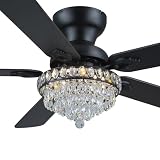
- LFR Score8.4
LFR Score is a ranking system developed by lightfansreviews.com. LFR Score has no relationship or impact from any manufacturers or sales agent websites. Learn more
- BrandGJeg
Last update on 2026-07-31 / Affiliate links / Images, Product Titles, and Product Highlights from Amazon Product Advertising API
Best Chandelier Fan For Bedroom: ZMISHIBO 24-Inch
A bedroom fan can look beautiful in photos yet become irritating once the lights go out and every faint vibration suddenly feels louder. Limited ceiling height makes the decision even trickier, since a bulky fixture may crowd the room while a tiny fan barely moves the air. The ZMISHIBO 24-inch ceiling fan approaches those problems with a flush-mounted frame, an enclosed blade system, and a crystalline light cover that gives the best chandelier fan for bedroom search a more practical direction. It aims to deliver decorative lighting and useful circulation without hanging like a traditional chandelier or looking like an ordinary utility fan.
ZMISHIBO 24-Inch Bladeless Ceiling Fan
The 24-inch diameter gives this model a wider footprint than many compact 20-inch fan lights, which can matter in a bedroom where cool air tends to collect on only one side of the bed. Its seven broad internal blades are designed to push air through the open frame rather than expose spinning blades below the fixture. That enclosed blade layout creates a cleaner visual profile and reduces the worry of low-hanging blades in rooms with modest ceiling clearance. Still, buyers expecting the sweeping reach of a conventional 52-inch ceiling fan should keep their expectations grounded, because this remains a compact flush-mount design.
The crystalline, irregular light cover carries most of the decorative weight. Instead of relying on dangling glass strands that may collect dust or rattle, the fixture uses a sculpted cover to scatter light across the room. The result leans more toward modern chandelier styling than classic crystal grandeur, so it fits contemporary bedrooms, polished guest rooms, and compact living areas more naturally than ornate traditional interiors. Its design is noticeable without dropping far into the room, which is a sensible compromise where ceiling height is tight.
That close-to-ceiling placement also makes the fixture less visually intrusive above a bed. Tall household members won’t have exposed blades sweeping near their heads, and the room keeps a more open feeling than it would with a long downrod. The low-profile mounting is especially relevant in apartments, converted rooms, and spaces where an existing ceiling light occupies the most useful installation point. On the flip side, flush-mounted fans generally circulate air differently from suspended fans, so careful placement near the room’s center remains important.
Lighting Controls That Suit Bedroom Routines
Lighting flexibility is one of the stronger parts of the package. The LED system supports brightness adjustment from 10% to 100%, allowing the fixture to shift from a subdued evening glow to stronger general lighting for cleaning, dressing, or organizing the room. Three selectable color temperatures, 3000K warm white, 4500K neutral white, and 6000K cool white, add another layer of control. Warm light feels calmer before bedtime, while the cooler settings can make early-morning tasks feel clearer and less gloomy.
The included remote uses large buttons and clear labels, which sounds like a small detail until someone tries to change fan speed in a dark room. Straightforward controls reduce the need to cycle through confusing combinations or stand beneath the fixture flipping a wall switch repeatedly. The companion app provides another way to manage the dimmable light and fan settings from a phone. Some people will appreciate the added control, while others may happily stick with the remote and avoid putting another household device on an app.
A two-hour auto-off timer fits naturally into nighttime routines. It can keep air moving while the room settles down, then shut the fan off without requiring anyone to wake up and reach for the remote. That feature is useful during mild nights when continuous airflow feels unnecessary after the first part of sleep. The automatic shutoff is limited to the provided timer setting, though, so anyone wanting highly customized schedules may still prefer app-based control or an external smart-home routine where compatible.
Airflow, Noise, And Seasonal Comfort
The fan uses a DC motor with six speed levels, giving it more adjustment range than a basic low-medium-high setup. Lower settings can maintain gentle circulation without blowing directly across pillows, while the upper levels are better suited to stuffy afternoons or rooms that hold heat after sunset. According to the supplied product details, the 24-inch design produces 30% stronger wind power than typical 20-inch models. That comparison comes from the manufacturer rather than independent testing, but the larger diameter and seven-blade layout offer a reasonable mechanical basis for expecting broader airflow than a smaller enclosed fan.
Noise matters just as much as airflow in a bedroom, and the stated operating level is 30 decibels. Manufacturer figures can vary according to speed, installation quality, and room acoustics, so that number shouldn’t be treated as a guarantee in every home. Even so, a DC motor is generally a sensible choice for quiet operation because it can regulate speed smoothly and consume less power than many older AC motor designs. Properly tightening the mounting plate and decorative components will also help prevent avoidable buzzing or vibration.
Reversible rotation gives the fan a role beyond summer cooling. Forward airflow creates the direct breeze people usually want during hot weather, while reverse operation helps move warm air that has risen toward the ceiling during cooler months. The dual-season motor won’t heat or chill the room by itself, but it can reduce stagnant pockets and make existing heating or cooling feel more evenly distributed. That distinction matters, since a ceiling fan changes perceived comfort rather than changing the actual temperature the way an air conditioner does.
Six speeds sound generous, but most households will probably settle on two or three favorites. A low setting suits sleep, a middle setting handles everyday circulation, and the highest settings provide a stronger burst when the room feels muggy. The useful part isn’t the number printed on the box; it’s the ability to avoid the common jump from barely noticeable airflow to an overly aggressive breeze. This model’s wider speed range gives more room to land on a comfortable middle ground.
Safety And Installation Practicalities
The enclosed fan design keeps rotating blades inside the fixture, which reduces direct contact risks around children, pets, bunk beds, and raised furniture. It also prevents long objects from accidentally reaching exposed blades during everyday activity. Calling the design “bladeless” is common marketing shorthand, though blades are still present inside the housing to generate airflow. The more accurate benefit is concealed blade safety, not the complete absence of moving fan components.
Many components arrive preassembled and sorted into separate bags, according to the supplied description. That preparation can cut down on the usual headache of identifying similar screws and assembling decorative pieces while balancing on a ladder. Installation tutorials are also provided, which should help clarify wiring and mounting order. Even with those conveniences, the ceiling electrical box must be suitable for supporting a fan, and professional installation is the safer route when wiring, mounting strength, or local electrical requirements are uncertain.
The 24-inch frame may look compact on paper, but measuring the ceiling area before ordering still pays off. Cabinet doors, tall wardrobes, wall clearances, and nearby recessed lights can affect how balanced the fixture looks once installed. A centered position usually gives the flush-mount fan the best chance of distributing air evenly and illuminating the room without odd shadows. Rushing the layout can leave an elegant fixture feeling awkwardly placed, and that’s a hard annoyance to ignore every night.
Decorative Strengths And Everyday Tradeoffs
The strongest visual feature is the crystalline cover, which adds texture without relying on a large collection of hanging ornaments. Light passes through its irregular surface and creates more visual interest than a plain frosted dome. That makes the fixture useful in rooms where the ceiling light needs to carry some decorative character but a full chandelier would feel excessive. The sculpted light cover may also hide dust better than perfectly clear glass, although its uneven surface could take more care to wipe clean.
Maintenance remains part of owning any decorative fan light. Dust can collect inside the housing, around the air outlets, and along the textured cover, especially in bedrooms with fabric bedding and rugs. The enclosed layout protects the blades from casual contact, but it may make deep cleaning less direct than wiping exposed fan blades one by one. A regular light dusting should help preserve both airflow efficiency and the fixture’s sparkle without turning cleanup into a major chore.
The product includes a two-year warranty and a stated customer-support response window of 24 hours. Those terms provide some reassurance for a fixture that combines a motor, receiver, remote, app control, and integrated lighting in one unit. Still, service quality can’t be confirmed from the provided specifications alone, so the warranty should be viewed as a formal coverage period rather than proof of a particular support experience. The two-year warranty is useful, but keeping purchase records and installation documentation will make any future claim easier to handle.
Where This Fan Fits And Where It Falls Short
This ZMISHIBO model makes the most sense where decorative lighting, moderate airflow, and low ceiling clearance all matter at once. Its flush body avoids the visual bulk of a hanging fan, while the crystal-inspired cover gives the room more personality than a basic plastic light panel. The remote-controlled comfort also fits bedrooms well because speed, brightness, and color temperature can be adjusted without leaving the bed. Kitchens and living rooms are possible placements too, provided the 24-inch airflow range matches the room’s size and layout.
Large bedrooms with vaulted ceilings may expose the limitations of the compact format. Airflow from a 24-inch enclosed fan won’t spread through a broad space in the same way as a properly sized traditional fan with longer blades and a downrod. The decorative cover also leans firmly modern, so it may clash with rustic, farmhouse, or heavily traditional furnishings. These aren’t defects so much as design tradeoffs created by prioritizing safety, close mounting, and visual polish.
Outdoor rooms require a different set of considerations, including moisture exposure, weather ratings, and durable controls. A neutral reference to outdoor ceiling fans helps separate those requirements from the indoor priorities that shape this model. The ZMISHIBO listing describes use in bedrooms, living areas, and kitchens, so it shouldn’t be assumed suitable for porches or damp locations without an explicit environmental rating. Indoor installation keeps the fixture within the conditions described by the provided product information.
Overall, the product’s appeal rests on how well its features work together rather than on one dramatic specification. The six-speed DC motor, adjustable LED light, reversible rotation, enclosed blades, timer, remote, and app controls address several everyday frustrations in a single fixture. Buyers who value maximum airflow above all else may prefer a larger conventional fan, while those who dislike integrated electronics may favor a simpler pull-chain design. For a bedroom that needs compact circulation and decorative light from one ceiling point, though, this ZMISHIBO model presents a thoughtful, fairly well-balanced arrangement.
LEDIARY 20-Inch Modern Bladeless Ceiling Fan
Bright overhead lighting often comes with an annoying tradeoff: the fixture lights the room well, yet leaves the air around the bed feeling stale. A traditional fan solves the circulation problem, but exposed blades and a long downrod can overwhelm a compact ceiling. The LEDIARY 20-inch ceiling fan takes a tidier route, combining adjustable lighting, concealed blades, and remote operation in a fixture that fits naturally into a search for the best chandelier fan for bedroom spaces. Its plain white finish isn’t flashy, but the circular design offers a crisp, modern look that won’t fight with bedding, wall colors, or smaller furniture layouts.
LEDIARY 20-Inch Bladeless Fan Light
The 20-inch housing keeps this fan noticeably smaller than a conventional ceiling fan, making it easier to place in bedrooms with lower ceilings or limited visual space. Five blades sit inside the round frame, so the moving parts remain concealed rather than sweeping across the room. That enclosed blade design creates a calmer ceiling line and reduces concerns around loft beds, tall wardrobes, or raised hands. The term bladeless can be a little misleading, though, because blades are still required to generate airflow; they’re simply tucked inside the fixture.
A flush-mount profile is the real space-saving advantage here. The fan sits close to the ceiling rather than dropping several inches on a long rod, which helps preserve headroom and keeps the room from feeling crowded. This low-profile construction is particularly useful where a decorative fixture needs to replace an ordinary ceiling light without dominating the space. Still, close mounting can produce a different airflow pattern than a suspended fan, so the fixture should be positioned near the center of the room whenever possible.
The white exterior gives the fan a restrained personality. It won’t imitate the sparkle of a crystal chandelier, yet the illuminated circular form adds more visual interest than a basic fan with exposed blades and bulb sockets. The modern ring-style appearance fits clean bedrooms, compact guest rooms, and simple contemporary interiors better than rooms built around rustic wood or ornate antique details. Decoration takes a back seat to convenience, and honestly, that may be the smarter call in a room meant for rest.
Stepless Lighting Offers More Useful Control
The integrated light is rated at 3,570 lumens in the supplied specifications, giving it enough stated output to serve as the main ceiling light rather than a faint decorative accent. Brightness adjusts smoothly from 10% to 100%, so the room doesn’t have to jump between dim, medium, and glaringly bright presets. That stepless dimming range makes the fixture more adaptable throughout the day, from softer evening light to stronger illumination for folding laundry or organizing a closet. Actual perceived brightness will still depend on wall colors, room dimensions, and how the diffuser spreads the light.
Color temperature also moves across a broad range from 3000K to 6500K. The warmer end creates a softer amber-white tone that feels less clinical before bedtime, while the cooler end produces a crisper appearance for morning routines or detailed tasks. Unlike fixtures limited to three fixed settings, this model provides stepless color adjustment, allowing finer control between warm and cool. That flexibility can be handy in a bedroom that doubles as a workspace, though some people may settle on one comfortable setting and rarely touch it again.
Memory retention saves a surprising amount of daily fiddling. After the light is switched off, the fixture is designed to remember the previous brightness and color-temperature settings, then restore them the next time it turns on. The setting memory means a carefully chosen low, warm glow won’t reset to full brightness during a late-night trip across the room. It’s a small feature on paper, but it addresses one of the most irritating habits found in cheaper adjustable lights.
Integrated LEDs also come with a practical tradeoff. The slim design looks cleaner because there are no exposed bulbs, glass shades, or hanging sockets to interrupt the circular form. However, an integrated lighting component may be less straightforward to replace than a standard screw-in bulb if the LED module eventually fails. The built-in LED system favors streamlined appearance and broad adjustment, while replaceable-bulb fixtures still hold the advantage in simple long-term servicing.
Six Fan Speeds Give Airflow More Nuance
Six speed levels provide more breathing room than the usual three-speed arrangement. The lower settings can maintain light circulation around the bed without creating a harsh breeze across the face, while the higher settings are better suited to stuffy evenings or rooms that trap heat near the ceiling. This six-speed control makes it easier to land between barely noticeable airflow and a blast that feels too aggressive. The supplied information doesn’t include a measured airflow rating, so room coverage shouldn’t be judged by speed count alone.
The five internal blades and pure copper motor are described as providing strong airflow with low operating noise. No specific decibel figure is supplied, which means the quietness claim can’t be verified from the listed details alone. Even so, a smoothly running motor and properly balanced internal fan assembly should help reduce the mechanical chatter that quickly becomes bothersome at night. Installation quality matters too, since a loose mounting plate can turn a quiet motor design into an avoidable hum or rattle.
A compact fan like this works differently from a traditional model with long exposed blades. Air leaves the enclosed housing across a smaller area, producing a more concentrated circulation pattern rather than the broad sweep of a 48-inch or 52-inch fan. The 20-inch footprint makes sense in modest bedrooms, offices, and smaller living areas, but it may feel underpowered in a wide primary bedroom with vaulted ceilings. Size is the compromise here: less visual bulk in exchange for less reach than a full-scale ceiling fan.
Realistic expectations help. This fan can make still air feel more comfortable and improve circulation around the room, but it won’t reduce the actual temperature like an air conditioner. The sensation of moving air supports comfort by helping moisture evaporate from the skin, which is why a gentle breeze can feel cooler even though the thermostat hasn’t changed. The circulation benefit is useful during sleep, yet extremely warm rooms will still need appropriate cooling beyond the fan itself.
Reversible Airflow Extends Seasonal Use
The reversible motor provides both downward and upward airflow modes. Downward rotation creates the direct breeze generally preferred during summer, while upward rotation helps redistribute warmer air that collects near the ceiling in colder weather. This dual-direction operation gives the fixture a role beyond warm-season comfort. It won’t replace heating, but it may help reduce uncomfortable temperature layers in rooms where warm air rises and lingers overhead.
Changing direction through the controls is more convenient than reaching for a small switch on the motor housing. Traditional fans often hide that switch above the blades, making seasonal changes easy to postpone because a ladder is required. Remote operation removes that little nuisance and makes the reversible motor more likely to be used rather than forgotten. The practical value comes from accessibility, not from turning the fan into a heating appliance.
Winter operation works best at a restrained speed. A gentle upward pull can circulate warm air without creating a noticeable draft over the bed, while a high setting may make the room feel breezier than intended. The six available speeds offer enough adjustment to keep this seasonal airflow mode subtle. Rooms with very high ceilings may see less benefit from a compact flush-mounted fixture because the warmest air sits farther above its reach.
Remote And Bluetooth Controls Keep Things Simple
The included remote handles fan speed, lighting, color temperature, and the sleep timer without requiring a trip to the wall switch. That matters in a bedroom, where convenience usually means being able to make small comfort adjustments after settling under the covers. The remote-controlled operation also keeps everyday settings together instead of relying on several pull chains or repeated switch toggles. A remote can be misplaced, of course, so storing it on a bedside table or mounting its holder in a consistent spot would prevent needless searching.
App control adds another option through Bluetooth. The local connection means the phone must remain within Bluetooth range, and it shouldn’t be mistaken for full Wi-Fi control from outside the home. This Bluetooth app control can still be useful when the remote is across the room or buried between cushions. People who prefer simple appliances may ignore the app entirely, which is fine because the physical remote covers the core functions.
A two-hour sleep timer lets the fan shut itself down after the room has cooled or sleep has settled in. That fixed duration is straightforward and easy to understand, though it doesn’t offer the broader scheduling flexibility found in some smart-home systems. The two-hour timer suits nights when continuous airflow feels unnecessary, particularly during spring or fall. Anyone wanting several timer lengths may consider the single preset somewhat restrictive.
The product specifications also mention a one-half-hour timer setting, while the descriptive text emphasizes a two-hour sleep timer. Because those supplied details aren’t fully consistent, it’s sensible to verify the available timer options in the included manual before relying on a particular duration. That small discrepancy doesn’t affect the fan’s basic operation, but it does leave the timer configuration less clear than the other listed controls. Clear labeling on the remote should settle the question once the fixture is in hand.
Installation, Safety, And Daily Maintenance
The enclosed housing reduces direct access to the spinning blades, which brings peace of mind in rooms with bunk beds, curious pets, or limited clearance. Exposed blades can be awkward around tall furniture and low ceilings, while this fixture keeps the moving assembly contained within its frame. The concealed fan mechanism doesn’t eliminate every safety concern, but it does remove the sweeping blade tips associated with conventional fans. Electrical installation and secure ceiling support remain just as important as the enclosed design.
A ceiling electrical box must be properly rated and firmly attached before mounting any fan, even a compact flush model. Fans generate movement and vibration that ordinary light-fixture boxes may not be designed to handle. The secure mounting requirement deserves attention because loose hardware can create noise, wobble, and long-term strain on the ceiling connection. Professional help is the safer route whenever wiring, grounding, or box strength is uncertain.
Dust will settle around the intake openings, inner blades, and light diffuser over time. The concealed format looks tidy from below, but cleaning inside the housing may be less direct than wiping long exposed blades with a cloth. Regular light cleaning should help protect airflow consistency and prevent dust from becoming packed around the vents. The white finish may show grime sooner than darker finishes, although it also makes missed dust easier to spot before buildup gets heavy.
The two-year warranty adds a defined period of coverage for a fixture that combines lighting, motor controls, Bluetooth operation, and a remote receiver. Warranty length doesn’t guarantee a particular service experience, and the supplied product details don’t provide enough information to assess support quality. Still, keeping the receipt, manual, and installation records can make any warranty request easier to document. The product description states that support is available for issues, but no response-time commitment is provided.
Bedroom Strengths And Honest Limitations
The LEDIARY’s strongest feature set revolves around control rather than raw size. Smooth brightness adjustment, a wide color-temperature range, six fan speeds, memory retention, reversible airflow, and two control methods all support changing bedroom routines. The adjustable lighting is especially useful because it allows the same fixture to handle bright practical tasks and softer nighttime illumination. That range helps the product feel like more than a fan attached to a generic ceiling lamp.
Its biggest limitation is also obvious: a 20-inch enclosed fan can’t imitate the broad air movement of a large conventional ceiling fan. Small and medium bedrooms are the more natural fit, while expansive rooms may need a larger blade span or additional circulation. The compact airflow range is a fair trade for low clearance and concealed blades, but it shouldn’t be ignored because the housing looks substantial in product images. Careful room measurement will prevent an undersized purchase.
The design also leans functional and modern rather than ornate. Anyone picturing hanging crystals, metallic scrollwork, or a dramatic chandelier centerpiece may consider the plain white circular body too restrained. A related view of decorative enclosed designs appears in bladeless ceiling fans, where compact proportions and integrated lighting often matter more than traditional ornament. The LEDIARY fits that practical category, offering a polished light-and-airflow combination without pretending to be a formal crystal fixture.
The final judgment comes down to room scale and daily habits. A smaller bedroom that needs quiet circulation, flexible illumination, and generous ceiling clearance stands to gain the most from this layout. A large room demanding forceful, wall-to-wall airflow will expose the limits of its compact frame, while a highly traditional interior may call for a more decorative finish. Within the right setting, the LEDIARY balances useful controls and restrained styling without loading the fixture with features that require constant attention.
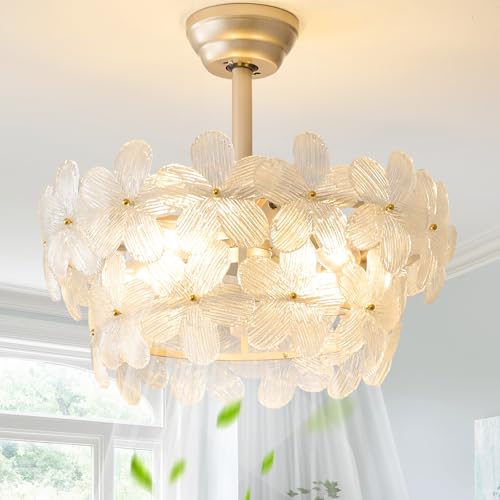
Fejanical 30-Inch Crystal Fandelier
A plain ceiling fan can cool a room, yet it often leaves the ceiling looking more practical than polished. A traditional chandelier fixes the visual problem but does nothing for the heavy, still air that builds around the bed on warm nights. The Fejanical 30-inch crystal fandelier tries to settle that tug-of-war by pairing retractable blades with clear crystals, adjustable LED lighting, and app-based controls. For anyone weighing the best chandelier fan for bedroom options, its appeal lies in keeping the decorative look visible while hiding the fan blades whenever they aren't needed.
Fejanical Crystal Retractable Fandelier
The most distinctive feature is the retractable blade system. Once the fan starts, the blades extend outward to circulate air; after it stops, they fold back above the crystal fixture and largely disappear from view. That concealed-blade design lets the chandelier remain the visual focus instead of leaving broad fan blades hovering over the bed all day. It’s a clever arrangement for rooms where airflow matters but a conventional ceiling fan would feel too casual or visually bulky.
At 30 inches, this fixture sits between compact enclosed fan lights and full-size ceiling fans. The size makes it more naturally suited to small and medium rooms, where a 52-inch model might crowd the ceiling or dominate the furniture below. Its wider reach should provide a broader breeze than a tiny 20-inch fan light, although the supplied specifications don’t include a measured airflow figure. Large bedrooms with tall or vaulted ceilings may still need a bigger blade span to move air evenly from wall to wall.
Clear crystals and a chrome finish give the fixture a bright, reflective character. Light catches the crystal surfaces and adds shimmer without requiring a long chain of hanging ornaments, while the chrome frame reinforces the modern look. The crystal chandelier styling fits rooms with mirrored furniture, polished hardware, cool neutral colors, or contemporary decor more easily than rustic or farmhouse spaces. Decorative tastes vary, of course, and the shiny finish may feel too formal in a room built around matte wood and soft natural textures.
Retractable Blades Keep The Ceiling Refined
Retractable blades solve a common decorating annoyance: the fan doesn’t have to look like a fan when it isn’t running. That makes the Fejanical particularly useful in a bedroom where the ceiling fixture anchors the room’s style and remains visible from the doorway. The automatic folding mechanism preserves the chandelier silhouette without requiring anyone to adjust the blades by hand. Once switched on, the fixture changes from decorative light to working air circulator with no extra fuss.
The retracting parts do add mechanical complexity compared with fixed blades. Hinges and moving joints need to open evenly, and dust around those areas may become more noticeable over time. Regular cleaning should help the blade movement remain smooth and prevent debris from gathering around the folded sections. A fixed-blade fan is mechanically simpler, but it can’t deliver the same tidy chandelier appearance after the motor stops.
Placement deserves a careful look before installation. A 30-inch fan still needs open space around its extended blades, even though the fixture looks compact while folded. Nearby cabinets, tall wardrobes, sloped ceilings, or decorative molding could interfere with the extended blade clearance if measurements are taken only from the chandelier body. Measuring the full operating diameter beforehand avoids the unpleasant surprise of blades unfolding too close to surrounding objects.
The fixture also hangs with more visual presence than a plain flush-mount fan light. That depth helps the crystals catch and scatter light, but it may reduce headroom in rooms with low ceilings. The chandelier-style profile makes more sense where there’s comfortable clearance above the bed or central walking area. Very low ceilings may be better served by a flatter enclosed design, even if it offers less decorative drama.
Adjustable Light Changes The Room’s Mood
The built-in LED system provides three color-temperature settings: warm white at 3000K, daylight at 4500K, and cool white at 6000K. Each setting changes how the crystals and surrounding decor appear, not just how bright the room feels. The 3000K warm light gives evenings a softer tone, while 4500K produces a more neutral balance for ordinary tasks. The 6000K setting feels crisp and bright, which may help during cleaning or morning routines but can seem sharp close to bedtime.
Dimming adds more flexibility than color selection alone. A bedroom rarely needs the same output at every hour, and bright overhead light can feel downright rude during late-night wakeups. The dimmable LED light can create a gentler background glow while still letting the crystal surfaces remain visible. Stronger illumination remains available for dressing, sorting laundry, or tidying the room, so the fixture isn’t limited to decorative accent lighting.
Integrated LEDs keep the structure clean because no exposed bulbs interrupt the crystal arrangement. They also make it easier for the manufacturer to coordinate dimming and color changes through the remote and app. The tradeoff is long-term serviceability, since an integrated light module may be less convenient to replace than a standard screw-in bulb. Anyone who prioritizes easy bulb replacement may prefer a traditional chandelier, while this design favors streamlined control and a cleaner silhouette.
Crystal surfaces require upkeep if their sparkle is part of the appeal. Dust, lint, and airborne residue can soften reflections, especially in bedrooms with rugs, fabric curtains, and frequently changed bedding. A gentle microfiber cloth should help maintain the light-scattering finish without scratching the clear pieces. Cleaning won’t be as quick as wiping a plain frosted dome, so the decorative payoff comes with a little extra maintenance.
Six Speeds Support Different Sleep Preferences
The fan provides six speed settings, allowing smaller adjustments than the usual low, medium, and high arrangement. A gentle setting can keep the air from feeling stale without sending a strong draft across pillows, while faster levels suit warmer evenings when the room holds heat. This six-speed range is useful because bedroom comfort can change quickly with humidity, bedding weight, and whether a window is open. More settings don’t guarantee greater airflow, but they make it easier to tune the breeze rather than settle for a setting that feels slightly wrong.
A pure copper DC motor powers the fan and is described as quiet and stable. The supplied information doesn’t state a decibel level, so there’s no honest basis for attaching a precise noise claim to the product. Still, a DC motor is a sensible match for a bedroom fixture because it supports multiple speeds, reversible rotation, and smoother speed changes. Proper mounting remains crucial, since loose hardware or uneven crystal components can create rattles even when the motor itself runs quietly.
Downdraft mode directs air into the room during warm weather, creating the cooling sensation expected from a ceiling fan. Reverse operation moves air upward and helps redistribute warmth that gathers near the ceiling during colder months. The reversible airflow broadens the fixture’s usefulness throughout the year without pretending that the fan creates heat or refrigerated air. It simply moves existing room air, which can reduce stagnant pockets and make heating or cooling feel more evenly spread.
Retractable blades may produce a different airflow character than long, permanently extended blades. Their compact format favors moderate room coverage and decorative flexibility rather than the broad sweep associated with larger conventional fans. The 30-inch operating span should be judged against the room’s dimensions, ceiling height, and furniture placement instead of the chandelier body alone. A cozy bedroom may feel well served, while a broad primary suite could expose the limits of the smaller diameter.
Remote And App Controls Add Bedside Convenience
The included remote manages fan speed, lighting modes, and timer settings without requiring repeated trips to the wall switch. That convenience matters most after the room has settled down and a breeze suddenly feels too strong or the light still seems too bright. The remote operation keeps the main adjustments within easy reach from a bed, chair, or sofa. A consistent storage spot is worth establishing, though, because a full set of controls isn’t much help when the remote slips between cushions.
Mobile app control provides another route to the same basic functions. It can be handy if the remote is across the room or shared among several people, although the supplied details don’t specify the app’s wireless range or broader smart-home compatibility. The app-based control should therefore be viewed as an extra convenience rather than a promise of advanced automation. Straightforward remote access remains the more dependable everyday feature because it doesn’t require opening a phone interface.
Timer choices include one, two, and four hours, which gives the fan more scheduling flexibility than a single fixed sleep timer. A one-hour setting suits a brief cooling period, while the longer options can maintain airflow through the first part of the night. The multi-hour timer reduces the need to leave the fan running until morning when continuous circulation isn’t necessary. It also helps avoid waking up chilly after the room temperature drops overnight.
Controls work best when their icons and labels remain easy to understand in low light. The product description confirms the available functions but doesn’t provide enough detail to judge button layout, backlighting, or app interface quality. That leaves control usability as an area that can’t be fully assessed from specifications alone. The feature list is promising, but actual convenience will depend on how clearly those options are presented on the remote and mobile screen.
Installation And Maintenance Need Some Patience
A fixture combining crystals, retractable blades, a motor, integrated lighting, and electronic controls is naturally more involved than installing a basic ceiling light. The ceiling box must be suitable for fan support, and every mounting connection needs to remain secure under movement. The fan-rated electrical box is a safety requirement, not a minor installation preference. Professional help is the sensible route whenever wiring, grounding, ceiling support, or assembly steps feel uncertain.
Crystal components may require careful handling during assembly. Tightening hardware too aggressively could stress decorative pieces, while leaving it loose may lead to unwanted vibration or clicking once the fan runs. The balanced installation affects both noise and appearance, so rushing through the final adjustments can undermine an otherwise attractive fixture. A slow setup with organized parts usually saves time later by reducing the need to climb back up and correct rattles.
Routine care involves more than dusting the visible crystals. The folded blades, extension joints, motor vents, and upper frame can all collect debris that isn’t obvious from floor level. Periodic cleaning supports smooth blade retraction and helps prevent dust from being thrown outward when the fan starts. A stable ladder and gentle cleaning tools are preferable to tugging on crystals or rotating the folded blades by force.
The unrelated requirements of compact tabletop airflow sit in a different corner of the fan market, and a neutral reference appears in Holmes table fans for rooms where ceiling installation isn’t practical. That distinction matters because this Fejanical model is a permanent decorative fixture rather than a portable cooling device. Its ceiling-mounted design clears floor and furniture space, but installation effort and maintenance access are greater. A table fan can move from room to room, while this fandelier trades portability for cleaner room integration and overhead light.
Strengths, Weaknesses, And Room Fit
The strongest argument for this model is visual transformation. With the blades folded, the fixture keeps the appearance of a crystal chandelier rather than advertising its cooling function all day. The two-in-one design makes good use of a single ceiling connection and avoids placing a separate portable fan near the bed. Adjustable lighting, reversible airflow, six speeds, and three timer choices give the decorative shell a genuinely practical core.
Its weaknesses come from the same ambitious design. Retractable mechanisms involve more moving parts, crystal surfaces take longer to clean, and integrated LEDs may be harder to service than replaceable bulbs. The 30-inch blade span also limits how confidently the fan can be recommended for large spaces. None of those tradeoffs makes the fixture a poor design, but they do narrow the rooms and habits it suits best.
A modern bedroom with chrome accents, mirrored surfaces, pale furnishings, or cool neutral colors gives the fandelier room to shine without feeling out of place. Small and medium layouts also align better with its stated purpose and operating diameter. The best chandelier fan for bedroom use here involves balancing decorative impact with moderate circulation, not chasing maximum wind power. A larger conventional fan remains the more practical route where broad coverage outweighs appearance.
The Fejanical earns attention because its features support a clear idea rather than feeling bolted together at random. The crystals handle atmosphere, the retractable blades preserve the chandelier shape, and the controls adapt airflow and lighting to different hours of the day. Its main difference is the ability to disappear visually as a fan once switched off. That quality gives it a stronger decorative identity than compact enclosed fan lights, provided the room can accommodate its depth, maintenance needs, and 30-inch operating span.
Bevenus Flower-Shaped Low Profile Ceiling Fan
A cramped bedroom ceiling leaves little room for bulky blades, dangling fixtures, or anything that makes the space feel lower than it already is. The Bevenus flower-shaped fan takes a more decorative route, combining a shallow 13-centimeter profile with petal-like lighting and an enclosed three-speed fan. That makes it a visually distinct entry in the best chandelier fan for bedroom category, especially where a standard fan would look too mechanical. Its main promise is straightforward: lighting and airflow from one fixture without giving up much headroom.
Bevenus Modern Flower Ceiling Fan
The first thing that separates this fixture from an ordinary ceiling fan is its flower-inspired shape. Petal-like light sections spread outward around the central fan, giving the ceiling more personality than a basic round panel or exposed-blade model. The look is modern and playful rather than traditionally ornate, so it fits bedrooms with soft curves, contemporary furniture, or lighter decorative themes. Anyone expecting hanging crystals and formal chandelier drama may find the style too restrained.
Its overall size is listed as 69 by 69 by 13 centimeters, which gives it a wide decorative footprint without a deep drop. That low-profile depth is helpful in rooms where a long downrod would make the ceiling feel crowded or leave uncomfortable clearance above the bed. The fixture still needs enough open ceiling space around its petals, though, so nearby wardrobes, sloped surfaces, and recessed lights should be considered before installation. Broad but shallow is the design strategy here.
The manufacturer describes the fan as suitable for rooms measuring roughly 8 to 15 square meters. That range lines up most naturally with small bedrooms, studies, and compact dining areas rather than large primary suites. Room shape matters too, since a narrow rectangular room may circulate air differently from a square one even when the floor area is similar. The stated coverage offers a useful starting point, but it shouldn’t be treated as a guarantee of identical performance in every layout.
Petal Lighting Adds Soft Decorative Character
The acrylic lampshade is designed to spread light evenly rather than create sharp points of glare. That diffused lighting can make a bedroom feel calmer because the fixture avoids exposed bulbs and harsh direct beams. The translucent petals also give the ceiling a layered appearance when illuminated, which helps the fan feel more like decor and less like an appliance. Light output figures aren’t provided, so brightness can’t be judged precisely from the supplied information.
Lighting and fan operation can be used together or separately. That separation sounds obvious, yet it matters during colder months when overhead light is needed but airflow isn’t. The independent operation keeps the fixture useful year-round instead of turning it into a seasonal device. On a mild evening, the fan can run without filling the room with bright light, while winter use can rely on the lamp alone.
The flower design also comes with a decorating tradeoff. Its shape draws attention, so it won’t disappear into the ceiling the way a plain white disk might. The statement-light appearance can work beautifully in a room that needs visual softness, but it may compete with heavily patterned wallpaper, an ornate bed frame, or elaborate wall decor. A simpler room gives the petals more space to look intentional rather than busy.
Color may vary slightly from product photos because of lighting and display differences, according to the supplied description. That’s worth remembering with a decorative fixture, since small shifts in white, cream, or surface tone can affect how it sits beside painted ceilings and furniture. The real-world finish may not match every screen perfectly. Careful expectations prevent a minor color difference from feeling like a major surprise.
Three Fan Speeds Keep Operation Straightforward
The fan offers three speed levels: slow, medium, and fast. This simple speed range avoids complicated menus and gives each setting a clear purpose. Slow airflow can reduce stuffiness without creating a sharp draft, medium suits routine circulation, and fast is intended for warmer periods when more movement is needed. People who enjoy fine-grained adjustment may miss the six-speed control found on some DC-motor fans.
ABS blades sit inside the fixture and are described as supporting smoother rotation. The enclosed arrangement keeps moving parts away from casual contact and preserves the decorative shape from below. That concealed blade design is useful in bedrooms with low ceilings, raised beds, or limited clearance around the fixture. Calling it fully bladeless would be inaccurate, though, because internal blades still create the airflow.
The supplied information doesn’t include a noise rating, motor type, or measured airflow value. That means claims about whisper-quiet performance or room-wide wind strength would be guesswork. The more honest reading is that the fan provides three levels of compact circulation for the stated room range. Installation quality, ceiling construction, and loose components can still influence how quiet or stable it feels in daily use.
Power consumption is listed at 50 watts for the fixture. That specification helps frame its electrical demand, although the details don’t separate fan usage from lighting consumption. The 50-watt rating suggests a compact combined appliance rather than a large traditional ceiling fan with a separate lamp kit. Actual energy use will depend on how often the light and fan run and which speed is selected.
Timer And App Controls Suit Nighttime Routines
The remote and mobile app provide access to fan settings without requiring repeated trips to a wall switch. That bedside control is especially useful after the room has settled down and the breeze starts feeling too weak or too strong. A remote is usually the faster option, while the app gives a backup when the handset isn’t nearby. The supplied details don’t explain the app’s connection method or compatibility, so broader smart-home support shouldn’t be assumed.
A timer function lets the fan stop after a chosen period rather than running through the entire night. The description says timing can be set through either the remote or app, but it doesn’t provide exact preset durations. That makes the timer flexibility appealing in principle while leaving the available schedule options unclear. The feature still addresses a familiar concern: falling asleep with airflow and waking later to a room that feels too cool.
Simple controls can be a strength in a bedroom fixture. Three fan speeds and separate light operation are easier to remember than a long list of modes that rarely get used. The straightforward control layout may suit households that value quick adjustments over advanced automation. Still, usability will depend on button labeling and app design, neither of which can be fully assessed from the supplied specifications.
Remote-dependent fixtures also have a practical weakness. Misplacing the handset can make everyday changes less convenient, particularly if the wall switch only handles basic power. A consistent storage spot keeps the remote-control convenience from turning into a nightly scavenger hunt. The app may soften that problem, but only if the phone connection remains stable and easy to access.
Low Profile Construction Saves Headroom
The 13-centimeter height is one of this fan’s strongest physical advantages. A shallow body keeps the fixture close to the ceiling and reduces the visual pressure created by hanging fans in compact rooms. This space-conscious profile is particularly useful above a bed, where a deep fixture can feel intrusive even if it technically clears the mattress. The design aims to spread outward rather than downward.
Acrylic and ABS components also keep the structure lighter in appearance than a heavy metal chandelier. The materials support the sculpted petal shape and enclosed fan housing without making the fixture look overly dense. That lightweight visual character works well with modern bedrooms, although it may not satisfy someone seeking the heft and sparkle of real crystal or polished metal. Material expectations should match the product’s contemporary, practical direction.
Manual measurements may vary by about one inch, according to the supplied details. That margin matters less in an open ceiling area but more where the fixture sits near cabinetry, beams, or decorative molding. The measurement tolerance is a reminder to leave breathing room rather than planning around an exact edge-to-edge fit. A little extra clearance prevents installation headaches later.
Low-profile fans can circulate air differently from models suspended on downrods. Air intake space near the ceiling, room height, and furniture placement may all affect the breeze below. The flush mounting trades some of the sweeping feel of a traditional fan for better headroom and a cleaner ceiling line. In a small room, that compromise may be worthwhile; in a tall, open room, it may feel less effective.
Installation And Service Details Deserve Attention
A combined light-and-fan fixture requires secure mounting and correct electrical connections. The ceiling box should be suitable for supporting a fan rather than treated like an ordinary lightweight lamp box. The mounting foundation affects stability, noise, and long-term safety, so uncertainty around wiring or support is a good reason to use a qualified installer. Decorative shape doesn’t reduce the mechanical demands created by rotating parts.
The manufacturer states that questions about installation and quality can receive a response within 24 hours. That stated support window offers some reassurance, though response quality can’t be judged from the supplied description alone. Warranty service is also mentioned for the motor and remote control, but a specific coverage duration isn’t provided. Keeping purchase records and installation photos would make any future service request easier to document.
Cleaning should be simpler than maintaining a hanging crystal chandelier, but the petal surfaces will still collect dust. The acrylic shades and enclosed fan openings need gentle wiping to preserve light diffusion and airflow. Regular care supports clear illumination and reduces debris around the internal blades. Harsh cleaners could dull plastic surfaces, so a soft cloth and appropriate cleaning method make more sense.
Portable fans serve a different need where permanent ceiling installation isn’t possible, and that distinction appears in rechargeable table fans used for flexible, room-to-room airflow. The Bevenus fixture instead prioritizes fixed overhead circulation and integrated lighting. It frees floor and furniture space, but it can’t be moved when airflow is needed elsewhere. That tradeoff is central to deciding whether ceiling-mounted convenience or portable flexibility matters more.
Practical Strengths And Noticeable Weaknesses
The Bevenus fan’s biggest strength is how neatly it combines a decorative ceiling lamp with everyday air movement. The flower-shaped lighting, shallow profile, independent functions, and three-speed control address several small-room frustrations at once. It avoids exposed blades and keeps furniture surfaces free from a separate fan. For an 8 to 15 square meter room, that compact two-in-one setup has a clear practical logic.
Its limitations are equally clear. No airflow rating, noise figure, color-temperature range, or brightness specification is supplied, so performance expectations have to remain measured. The three-speed system also offers less nuance than models with five or six settings. Large rooms, high ceilings, and people who prefer strong directional airflow may expose the design’s compact nature.
The styling won’t appeal to every bedroom. Its petal form feels decorative and contemporary, but it doesn’t mimic a traditional crystal chandelier. The modern floral look fits soft, playful, or minimalist interiors more easily than industrial, rustic, or heavily formal spaces. That visual specificity is a strength in the right room and a mismatch in the wrong one.
The product makes the most sense where ceiling height is limited, the room isn’t oversized, and one fixture needs to handle both illumination and gentle circulation. Its main difference is the broad flower silhouette paired with a very shallow body. A conventional fan may move more air, and a true chandelier may offer richer materials, but neither delivers the same compact combination. The Bevenus sits in the middle, trading maximum performance and formal luxury for space efficiency, simple controls, and a softer decorative presence.
LEDIARY 20-Inch Caged Fandelier
A low ceiling can turn an ordinary fan into a bulky obstacle, while a plain light fixture leaves warm air sitting stubbornly around the bed. The LEDIARY 20-inch caged ceiling fan tackles both problems with a shallow enclosed frame, replaceable bulbs, and controls designed for everyday use. Its black-and-gold styling gives the best chandelier fan for bedroom search a more rustic, industrial direction than crystal-heavy alternatives. Rather than hiding its structure, this fixture makes the cage part of the room’s character.
LEDIARY Black Gold Caged Ceiling Fan
The circular cage mixes farmhouse cues with an industrial edge, creating a fixture that feels decorative without becoming overly formal. Black metal provides contrast, while gold accents keep the design from looking flat or strictly utilitarian. That black-and-gold finish works particularly well with warm wood furniture, brass hardware, neutral bedding, and exposed-grain decor. Rooms built around cool silver finishes or delicate traditional details may need more careful coordination.
At 20 inches wide and roughly 6.7 inches high, the fixture favors compact placement. Its low-profile body preserves headroom and reduces the heavy visual drop associated with downrod fans. The enclosed shape also looks more intentional above a bed, breakfast nook, or small dining table than a set of short exposed blades might. Large rooms, however, may reveal the limits of its compact operating area.
The manufacturer offers the design in several finishes, including black, brushed gold, white with brushed gold, and walnut. That range helps the same basic structure fit different decorating schemes without changing its mechanical layout. The supplied description emphasizes true-tone color reproduction, though the exact appearance can still shift under warm bulbs, daylight, or nearby wall colors. Finish selection matters here because the cage remains visible even when the fan and lights are off.
Caged Styling Adds Character Without Hanging Low
The cage is more than decoration. It surrounds the moving fan components, reducing direct access to the blades and giving the fixture a tidier outline. This enclosed fan construction can feel reassuring in bedrooms with bunk beds, raised furniture, or limited ceiling clearance. The word bladeless is commonly used for this format, but the fan still relies on internal blades to move air.
Wood and metal elements give the fixture more texture than a smooth plastic fan light. That material mix helps it avoid the generic appearance common to basic flush-mount fixtures. The rustic-industrial design feels especially at home in farmhouse bedrooms, loft-inspired spaces, and rooms with darker hardware. Minimalist interiors may still accommodate it, although the visible cage will always attract more attention than a plain ceiling disk.
A decorative cage also creates extra surfaces where dust can settle. Bedroom lint, cooking residue, and outdoor particles may collect along the frame and around the internal fan opening. Maintaining the open metalwork will take a little more patience than wiping a smooth acrylic cover. On the bright side, the open structure makes buildup easier to see before it becomes thick.
The shallow height keeps the fixture practical despite its detailed appearance. Nothing dangles far below the ceiling, and there are no long blades sweeping across the room. This compact chandelier profile strikes a useful middle ground between a decorative pendant and a conventional fan. It brings personality overhead without demanding the clearance of a full-size hanging fixture.
Replaceable Bulbs Offer Flexible Lighting
Unlike fixtures with permanently integrated LEDs, this model uses replaceable bulbs. That serviceable lighting design gives owners more control over brightness, color temperature, bulb shape, and long-term replacement. A warmer bulb can soften a bedroom before sleep, while a neutral or cooler bulb can make a workspace feel clearer. The final lighting result depends heavily on the bulbs selected because no fixed lumen or color-temperature figure is supplied.
Compatible bulb styles include T14, A19, ST19, B11, and G14. Those options allow some freedom in shaping the look inside the cage, from compact globe forms to narrow vintage-inspired profiles. The bulb-style flexibility is useful because exposed or partly visible bulbs become part of the decoration. Oversized bulbs may protrude awkwardly, so physical dimensions matter just as much as socket compatibility.
The manufacturer limits each LED bulb to 10 watts and each incandescent bulb to 60 watts. Those restrictions help reduce heat buildup inside the low-profile cage. Following the maximum wattage guidance is especially important because excessive heat can shorten bulb life and place unnecessary stress on surrounding components. A brighter bulb isn’t automatically the better choice if it exceeds the fixture’s stated limits.
Replaceable bulbs bring one clear tradeoff: the fixture’s lighting experience isn’t fully defined out of the box. Owners must select bulbs that match the desired mood and physical clearance. That extra decision can be a benefit for people who dislike being locked into an integrated LED module. For others, the bulb-selection process may feel less convenient than receiving a fixture with preset dimming and color modes.
Airflow Controls Fit Changing Room Conditions
The fan is described as delivering smooth, consistent airflow with quiet operation. No decibel rating or measured airflow figure is provided, so those claims should be treated as manufacturer descriptions rather than verified laboratory results. The compact internal fan appears intended for local circulation in bedrooms, kitchens, and smaller gathering spaces. It shouldn’t be expected to match the sweeping coverage of a traditional 52-inch fan.
Remote control makes speed changes easier after the room has settled down. A gentler setting can reduce stale air around the bed, while a stronger setting may feel more useful during humid evenings. The remote-adjustable airflow removes the need for pull chains hanging inside the decorative cage. That cleaner arrangement supports both the appearance and the convenience of the fixture.
The reversible motor switches between summer and winter operation. Forward airflow creates a direct breeze, while reverse movement helps circulate warmer air that gathers near the ceiling. This seasonal reverse function expands the fan’s usefulness without suggesting that it replaces heating or air conditioning. It redistributes room air, which may improve comfort when temperature layers become noticeable.
Compact enclosed fans usually create a more concentrated breeze than long-blade models. That can work nicely above a bed or small seating area, but broad spaces may receive uneven coverage. The 20-inch fan span is best understood as a space-saving compromise rather than a substitute for a large ceiling fan. Room dimensions, ceiling height, and furniture placement will shape how effective the airflow feels.
Timers And Mute Control Improve Nighttime Use
The remote includes timer settings for one, four, and eight hours. That range supports several bedroom routines, from brief pre-sleep circulation to airflow lasting through most of the night. The multi-hour timer prevents the fan from running longer than needed without forcing everyone into a single preset duration. An eight-hour option is particularly practical for people who prefer steady movement until morning.
Button sounds can become surprisingly irritating in a quiet bedroom, especially when someone else is already asleep. This model includes a mute function for the control beeps, removing an annoyance that many product descriptions overlook. The beep-mute setting won’t change the fan’s mechanical noise, but it makes late-night adjustments less disruptive. Small details like this often matter more in daily use than another decorative flourish.
The controls also handle seasonal direction changes from the remote. That means no ladder is needed to reach a switch tucked inside the housing when the weather shifts. The remote reverse control makes the winter mode more likely to be used rather than forgotten. Convenience counts, particularly with a low-profile cage that could make a manual switch awkward to access.
A standard single-pole wall switch is required, according to the supplied installation details. That keeps the wiring arrangement simpler than systems needing multiple wall controls or unusual circuits. The single-switch requirement should suit many existing light locations, though the ceiling box still needs to support a fan properly. Simple wiring doesn’t remove the need for secure mounting and safe electrical connections.
Installation Is Manageable But Not Tool-Free
The fixture requires manual screw assembly, and tools aren’t included. Screws arrive pre-sorted, which should reduce the confusion of sorting similar fasteners during setup. That organized hardware is helpful, but the installation still involves more work than attaching a nearly preassembled light. Setting out every part before climbing a ladder can prevent missing pieces from interrupting the process.
The product description says an electrician isn’t required, yet that statement assumes the existing wiring and ceiling support are already suitable. A fan creates vibration and rotational force that a basic light box may not be designed to handle. The fan-rated mounting box remains essential regardless of how straightforward the instruction manual appears. Electrical uncertainty is a sensible reason to involve a qualified installer.
Bulb clearance deserves attention before the cage is fully assembled. Compatible shapes can still vary in length, and a protruding bulb may spoil the low-profile appearance or sit too close to surrounding material. The 6.7-inch fixture height leaves limited vertical room, so compact bulbs are the safer visual fit. Checking all bulbs before final tightening saves the hassle of reopening the cage later.
Remote pairing may also be part of the setup process. The manufacturer mentions support for pairing questions, suggesting that the receiver and handset may occasionally need synchronization. Keeping the pairing instructions nearby will make troubleshooting easier if the fan responds inconsistently after installation. That’s a common electronic step, not necessarily a fault, but it can catch an impatient installer off guard.
Covered Outdoor Use Needs Careful Placement
The supplied description includes covered outdoor areas among the possible locations. A covered porch has different environmental demands from a bedroom, including humidity, wind-driven moisture, and larger temperature swings. The covered outdoor placement should therefore be limited to conditions explicitly supported by the manufacturer. No specific damp-location or wet-location rating appears in the provided details.
Indoor bedrooms remain the clearest fit because the fixture’s strengths center on low clearance, quiet control, and decorative lighting. Outdoor spaces may require additional confirmation about corrosion resistance and moisture exposure. The wood-and-metal frame could age differently outside than it would in a climate-controlled room. Shelter alone doesn’t guarantee protection from condensation or damp air.
Windmill-style ceiling fixtures approach large-room circulation from a different design angle, and a neutral reference appears in windmill ceiling fans where broad blade spans and visual scale play a larger role. The LEDIARY model instead emphasizes compact enclosed airflow and a shallow decorative cage. These categories solve different spatial problems. One fills a large ceiling, while the other avoids overwhelming a smaller one.
Kitchen use also brings maintenance considerations. Grease can settle on cage bars and internal openings more stubbornly than ordinary bedroom dust. The open-frame construction may require more frequent wiping near a cooking area. A bedroom or dining space will generally be easier on the finish and internal fan components.
Strengths, Weaknesses, And Best Room Fit
The LEDIARY’s strongest trait is its balance of decoration and practicality. Its black-gold cage, low profile, replaceable bulbs, reversible airflow, and timer settings all serve clear purposes. The fixture looks intentional even while switched off, which matters in rooms where the ceiling light acts as part of the decor. It also avoids the hanging bulk and exposed blades of many traditional fans.
The weaknesses are equally specific. A 20-inch enclosed fan won’t provide the broad airflow of a large conventional model, and the cage creates extra cleaning surfaces. The manual assembly requires time and tools, while bulb selection introduces another decision before the fixture is ready. Buyers seeking integrated dimming or adjustable color temperature won’t get those features from the supplied specifications.
Small bedrooms, compact dining rooms, kitchens, and covered areas with suitable environmental protection fit the design most naturally. The rustic farmhouse styling favors interiors with warm metals, wood accents, or industrial details. A formal crystal bedroom may call for something more ornate, while a stark minimalist room may prefer a smoother fixture. This fan has a personality, and pretending otherwise would miss the point.
Realistic expectations make the LEDIARY easier to appreciate. It’s a decorative compact fan with thoughtful controls, not a full-size air mover squeezed into a tiny cage. The main difference lies in its replaceable-bulb lighting, muteable remote, and furniture-friendly profile. In the right room, those practical touches matter more than exaggerated airflow claims or complicated smart features.


Best Quiet Ceiling Fan For Bedroom 2026 Ultimate Comfort Picks

Best Ceiling Fan For Master Bedroom 2026 With Ultimate Comfort

Best White Ceiling Fan With Light For Bedroom 2026 Top Picks

Best Quorum Medallion Ceiling Fan 2026 With Style & Breeze
Best Outdoor Fan For Pergola 2026 Comfort Boost

Best Ceiling Fan For Great Room 2026 With Ultimate Comfort

Best Outdoor DC Ceiling Fans 2026 For Breezy Comfort
Best ceiling exhaust bath fan with light and heater 2026