
Best cigar exhaust fans residential 2026 picks

Best cigar exhaust fans residential setups need more thought than a basic bathroom fan slapped into the ceiling. Cigar smoke is heavier, stickier, and more stubborn than everyday household odor, so weak airflow usually leaves the room smelling like last weekend. A good setup pulls smoke away from the seating area, moves stale air outside, and helps the room feel comfortable without making every puff feel rushed.
Airflow strength matters, but bigger isn’t always smarter. A fan with too much pull can create a drafty, noisy room where the cigar burns unevenly and conversations feel strained. The sweet spot usually comes from matching fan capacity to room size, ceiling height, door gaps, and how often the space gets used.
Noise control deserves serious attention because a cigar room should feel relaxed, not like a workshop. Inline exhaust fans often make more sense than cheap wall fans because the motor can sit farther from the room. That small design choice can make the difference between a smooth evening and a constant mechanical hum in the background.
Odor management also depends on where the air goes after it leaves the room. Venting smoke into an attic, garage, or crawl space can create bigger problems later, especially with lingering tar smell. Direct outdoor venting, sealed ductwork, and a proper backdraft damper help keep the rest of the house from picking up that stale cigar-room scent.
Residential cigar exhaust fans also work better when paired with controlled makeup air. Without fresh replacement air, the fan may struggle, doors may whistle, and smoke can drift into nearby rooms. A small transfer grille, door undercut, or dedicated fresh-air path can keep airflow steady without making the room feel chilly.
Installation details can make or break the whole system. Shorter duct runs, fewer sharp bends, smooth metal ducting, and a weather-rated exterior vent all help the fan move air with less strain. Cheap flexible duct may be tempting, but it can reduce airflow and collect odor over time.
Fan controls are another underrated detail. Variable speed control lets the room run quietly during a single cigar and ramp up after a group session. Timers are handy too, since the fan can keep clearing the air after everyone leaves without wasting power all night.
Best cigar exhaust fans residential choices should feel practical, not flashy. The right fan clears smoke consistently, keeps odor from creeping through the house, and stays quiet enough that the room still feels like a place to unwind. It won’t replace smart room design, but it can turn a smoky corner into a more livable cigar space.

- LFR Score9.2
LFR Score is a ranking system developed by lightfansreviews.com. LFR Score has no relationship or impact from any manufacturers or sales agent websites. Learn more
- BrandVoltset

- LFR Score9.0
LFR Score is a ranking system developed by lightfansreviews.com. LFR Score has no relationship or impact from any manufacturers or sales agent websites. Learn more
- BrandAmico
- LFR Score9.0
LFR Score is a ranking system developed by lightfansreviews.com. LFR Score has no relationship or impact from any manufacturers or sales agent websites. Learn more
- BrandHG Power

- LFR Score8.8
LFR Score is a ranking system developed by lightfansreviews.com. LFR Score has no relationship or impact from any manufacturers or sales agent websites. Learn more
- BrandHG Power

- LFR Score8.8
LFR Score is a ranking system developed by lightfansreviews.com. LFR Score has no relationship or impact from any manufacturers or sales agent websites. Learn more
- BrandKAZE APPLIANCE

- LFR Score8.8
LFR Score is a ranking system developed by lightfansreviews.com. LFR Score has no relationship or impact from any manufacturers or sales agent websites. Learn more
- BrandHG Power

- LFR Score8.8
LFR Score is a ranking system developed by lightfansreviews.com. LFR Score has no relationship or impact from any manufacturers or sales agent websites. Learn more
- BrandHG Power

- LFR Score8.6
LFR Score is a ranking system developed by lightfansreviews.com. LFR Score has no relationship or impact from any manufacturers or sales agent websites. Learn more
- BrandAmico

- LFR Score8.4
LFR Score is a ranking system developed by lightfansreviews.com. LFR Score has no relationship or impact from any manufacturers or sales agent websites. Learn more
- BrandAmico

- LFR Score8.2
LFR Score is a ranking system developed by lightfansreviews.com. LFR Score has no relationship or impact from any manufacturers or sales agent websites. Learn more
- BrandALORAIR

- LFR Score7.8
LFR Score is a ranking system developed by lightfansreviews.com. LFR Score has no relationship or impact from any manufacturers or sales agent websites. Learn more
- BrandGROWNEER
Last update on 2026-06-24 / Affiliate links / Images, Product Titles, and Product Highlights from Amazon Product Advertising API
Voltset 10-Inch Exhaust Fan
A smoky room can turn comfortable fast, then annoying even faster, especially after the air stops moving and that stale cigar smell starts clinging to walls, jackets, and ceiling corners. The best cigar exhaust fans residential setup needs enough pull to move heavy smoke out without making the space feel like a loading dock. The Voltset 10-Inch Exhaust Fan leans toward raw ventilation power, with a 988 CFM rating, a plug-in cord, and a built-in switch that make it feel more practical than delicate.
Voltset 10-Inch Exhaust Fan
The first thing that stands out is the 988 CFM airflow, because cigar smoke doesn’t behave like a little kitchen odor. It lingers, layers, and settles into soft surfaces if the room doesn’t have a serious exhaust path. For a garage cigar corner, smoking house, workshop, or shed-style lounge, that level of pull gives the fan a clear job: move bad air out quickly and keep the space from feeling boxed in.
The 10-inch blade size also matters because wider air movement helps clear more than one small pocket of haze. A weak fan may clear the area near the grille while smoke still hangs over a chair or table. This Voltset model feels better suited for larger residential spaces where a small bathroom fan would simply tap out.
That said, strong airflow comes with a tradeoff, and this fan doesn’t hide it. The product notes that there will be some noise up close, which is worth taking seriously in a cigar room where conversation, music, or quiet downtime matter. Mounted farther from seating, or used in a garage or shed rather than a finished den, that noise becomes easier to live with.
The industrial-style ventilation makes the most sense where function matters more than a polished ceiling look. Silver metal, large blades, and a direct wall-mount design give it a utility feel. That’s not a flaw, really, but it means the fan fits a practical smoke-clearing setup better than a luxury lounge with hidden ductwork and decorative finishes.
Airflow That Suits Smoke-Heavy Spaces
Cigar smoke needs movement, not wishful thinking. The 988 CFM capacity gives this fan enough muscle for garages, sheds, greenhouses, chicken coops, and smoking house setups where air can get stale fast. In a residential cigar space, that can help reduce the heavy haze that builds during longer sessions.
The fan’s strength also helps with odors, steam, fumes, and pollutants, according to the provided product details. That broader ventilation role makes it useful for mixed-use spaces where smoking isn’t the only source of stale air. A garage that handles tools, storage, humidity, and occasional cigars can benefit from one exhaust point doing several jobs.
Placement will matter a lot, though. A powerful exhaust fan works best when it has a clear path outdoors and enough replacement air coming into the room. Without makeup air, even a strong fan can struggle, pull against closed doors, or drag smoke into nearby areas instead of sending it cleanly outside.
For cigar use, the fan should usually sit where smoke naturally collects or where airflow can pull haze away from the seating zone. A wall installation near the upper part of the room can help with rising warm air and smoke. Still, room layout decides whether the fan feels smooth or too aggressive.
Plug-In Convenience And Everyday Control
The built-in power cord and switch make this fan feel less intimidating than hardwired ventilation gear. The plug-in design is useful for garages, sheds, attic vents, and workshops where adding new wiring can turn into a headache. That kind of setup keeps installation simpler, especially for people who want ventilation without opening up half the wall.
The built-in on/off switch also helps during casual use. You don’t have to wire a separate wall control just to start clearing the air. For a cigar session, that means the fan can run during smoking and stay on afterward until the space feels fresher.
Still, basic switching has limits. A variable speed controller is not listed in the supplied details, so the fan appears to run as a straightforward on-or-off unit. That may be fine for a garage or smoking house, but a finished cigar room may benefit from speed control to balance noise, airflow, and comfort.
The long cord also adds flexibility, but cord routing should not be treated casually. A fan mounted high on a wall still needs a safe outlet location and a clean path for the power cord. Simple installation is a plus, yet safe placement still matters around tools, shelves, moisture, and foot traffic.
Metal Build For Demanding Areas
The heavy-duty steel construction gives this Voltset fan a more rugged personality. A corrosion-resistant metal body suits spaces that deal with heat, moisture, dust, and heavier daily wear. For a garage cigar area or shed smoking space, that durability feels more relevant than glossy styling.
Metal construction also makes sense for a fan that may handle smoke and fumes. Plastic housings can feel flimsy in hotter or rougher environments, especially around workshops and farm spaces. The steel frame gives the fan a tougher, more work-ready feel.
That rugged build does come with a visual tradeoff. This isn’t the kind of exhaust fan that disappears into a ceiling or blends into a refined cigar lounge. It’s better understood as functional ventilation equipment, the kind that earns its place by clearing air rather than dressing up the room.
Maintenance should still be part of the plan. Smoke residue can collect on blades, grilles, and nearby surfaces over time. Keeping the 10-inch blades clean helps preserve airflow and reduces the stale buildup that cigar rooms are known for.
Where This Fan Makes The Most Sense
This fan fits best in spaces where smoke removal matters more than silence. A garage exhaust fan, shed vent, greenhouse fan, attic vent, or smoking house setup lines up well with the product’s design. The 988 CFM airflow gives it enough force for larger or less polished areas that need fast air turnover.
Finished indoor cigar rooms need more caution. The fan may be effective, but the close-range noise could bother anyone sitting near it. A quieter inline system might feel more refined, while this Voltset fan feels better for utility spaces where stronger ventilation beats soft acoustics.
Large applications are part of its appeal. The product details mention use as a greenhouse vent, chicken coop exhaust fan, ridge vent attic fan, garage through-wall fan, and BBQ extractor fan. That range suggests versatile airflow use, though cigar ventilation still depends on proper venting outdoors.
Some cigar spaces also need a smaller personal cooling solution during hot outdoor days, and a separate reference sits naturally in portable fan comfort for situations where direct cooling matters more than exhaust. That’s a different need from removing smoke, but the distinction is useful. Exhaust clears the room, while personal airflow helps keep heat from ruining the moment.
Practical Strengths And Real Tradeoffs
The biggest strength is obvious: serious airflow from a 10-inch fan with a 988 CFM rating. For smoke, odor, steam, and fume removal, that gives the Voltset model a practical edge over small residential fans. It’s built for spaces where air problems are visible, stubborn, and hard to ignore.
The 80W motor also keeps the power draw from sounding excessive for the amount of airflow described. Strong ventilation usually requires some energy, so an 80W rating feels reasonable for a fan aimed at garages, shops, and large utility spaces. It won’t feel like a tiny whisper fan, but that’s not really the job here.
The main weakness is comfort around noise and airflow intensity. Sitting too close could feel loud, and a strong pull may be too much for a small, sealed room without planned makeup air. That’s why installation planning matters almost as much as the fan itself.
The Voltset 10-Inch Exhaust Fan works best for people who value practical smoke removal, simple plug-in operation, and durable metal construction. It may not suit a quiet luxury lounge, but it makes sense for a garage, shed, workshop, or smoking house where cigar smoke needs a firm exit. As part of a thoughtful residential setup, the fan’s power can solve the exact problem weak ventilation leaves behind.
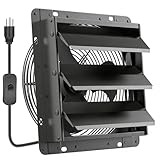
Amico 12-Inch Smart Shutter Exhaust Fan
Heat has a way of turning a smoke room into a stubborn little box, and cigar odor only makes that box feel smaller. A fan that simply roars at one speed can clear air, sure, but it can also make the room feel jumpy and overworked. The best cigar exhaust fans residential setup needs controlled airflow, steady exhaust, and enough intelligence to handle lingering heat without constant babysitting, which is where the Amico 12-Inch Smart Shutter Exhaust Fan starts to feel different.
Amico 12-Inch Smart Shutter Fan
The Amico fan brings a larger, more controlled approach to home ventilation, especially for garages, attics, greenhouses, sheds, and other big residential spaces. Its 1282 CFM airflow gives it serious clearing power for heat, odors, moisture, and stale air after a heavy-use session. For cigar smoke, that matters because haze doesn’t politely leave on its own once the door closes.
The 12-inch shutter design also gives this fan a broader footprint than smaller wall-mounted exhaust units. That wider opening can help pull warmer air and smoke out faster when installed with a clean outdoor path. In a cigar-friendly garage or attic-adjacent space, wide coverage can make the room feel less trapped and more manageable.
The product description says it can refresh spaces up to 1600 square feet, with enough airflow for a standard two-car garage. That claim should still be matched against real layout, ceiling height, duct restrictions, and where replacement air enters the room. Room planning still matters because even a powerful fan can’t perform well if the space is sealed tight.
The tone here is practical rather than fancy. This isn’t a decorative ceiling insert hiding behind polished trim. It’s a wall-mount exhaust fan with shutters, controls, and a job to do, which suits cigar setups where air movement is more important than a showroom look.
Smarter Airflow For Stale Smoke And Heat
The built-in thermostat gives the Amico a useful edge over a basic plug-in exhaust fan. A smart thermostat probe with a 3-foot wire can trigger the fan once the preset temperature is reached, so the room doesn’t have to sit hot and stale until someone remembers the switch. That’s handy in garages, attic spaces, and sheds where heat buildup can sneak up fast.
The 8-speed control makes a bigger difference than it might sound. Full blast may be useful after a smoky gathering, while a lower speed can keep air moving during quieter use. That kind of adjustable airflow helps avoid the all-or-nothing feel that makes some exhaust fans annoying in smaller residential spaces.
The power-off memory is another small but pleasant detail. After a power outage, the fan saves preferred settings instead of forcing another round of fiddling. For a ventilation system that may sit above eye level or in a less convenient wall spot, setting memory keeps everyday use from becoming a chore.
Still, cigar ventilation needs more than speed settings. Smoke needs a path out, and fresh air needs a path in. Without balanced makeup air, the fan may pull from cracks, door gaps, or nearby rooms, which can drag odor where it doesn’t belong.
Energy Use And Noise Feel More Thoughtful
The 25W brushless DC motor is one of the most interesting parts of this fan. Compared with traditional AC-style exhaust fans, the provided details claim it can cut energy consumption by up to 66 percent. That makes the energy-saving motor appealing for spaces where ventilation may run longer after smoke, heat, or moisture builds up.
The stated 50 dB noise level also deserves attention. Cigar rooms and home garages don’t need dead silence, but a constant harsh fan noise can wear out its welcome quickly. A fan that stays closer to a conversational background level can make longer ventilation cycles easier to tolerate.
That said, real noise depends on mounting, wall material, speed setting, and nearby surfaces. A metal wall, loose framing, or vibration-prone cutout can make even a quieter motor sound more obvious. Proper installation can protect the fan’s quiet-operation advantage from being wasted by rattles.
The brushless motor also fits the fan’s set-it-and-let-it-run personality. Less wasted energy, multiple speeds, and automatic temperature response give it a calmer feel than a brute-force exhaust fan. For smoke control, controlled consistency often beats short bursts of loud airflow.
Shutters Help Keep The Outside Outside
The automatic gravity louvers are more than a nice touch. They open when the fan runs and close when it stops, which helps block cold drafts, rain, and insects. For a wall-mounted residential exhaust fan, weatherproof shutters are a practical detail that can prevent small outdoor annoyances from becoming indoor problems.
This matters in garages, sheds, greenhouses, and chicken coops, where wall openings face real weather. An open vent without decent closure can invite moisture, bugs, and uncomfortable drafts. The Amico’s automatic louvers give the system a cleaner off-cycle behavior than a permanently exposed opening.
The galvanized steel frame and rust-proof aluminum blades also match the product’s outdoor-adjacent purpose. Smoke, humidity, seasonal temperature swings, and garage dust can be rough on flimsy equipment. A corrosion-resistant build gives the fan a better chance of staying useful in less pampered spaces.
Still, shutters require space and proper orientation to move freely. Paint buildup, wall obstruction, or poor mounting can interfere with their opening and closing. A little attention during installation helps the shutter system do its job instead of becoming a noisy flap on the wall.
Plug And Play Installation With Real Limits
The pre-wired 120V plug makes the Amico fan friendlier than hardwired ventilation equipment. A plug-and-play setup can save time in garages, workshops, and greenhouses where a nearby outlet already exists. That simplicity is especially appealing when the goal is better airflow without turning the project into a full electrical job.
The extra-long power cord adds flexibility, but the wall opening still needs careful planning. A 12-inch shutter fan needs a proper cutout, a stable mounting surface, and a safe route to power. Easy wiring doesn’t mean careless installation, especially around weather exposure or high wall placement.
The fan can be used as a wall-mounted unit or window-style ventilation solution, based on the supplied details. That gives it more placement options than a duct-only fan. Still, for cigar smoke, direct outdoor exhaust is the goal, not dumping smoke into an attic, crawl space, or enclosed storage area.
Installation should also consider where people sit. Even with quieter operation, a large fan placed right beside a chair can feel distracting. Positioning the fan away from the main relaxation spot helps preserve comfort while still giving smoke and heat a clean exit route.
Best Fit, Weak Spots, And Practical Use
The Amico 12-Inch Smart Shutter Exhaust Fan feels best suited for garage cigar rooms, attic ventilation projects, greenhouses, home gyms, workshops, large sheds, and semi-finished spaces that need steady air exchange. Its 1282 CFM airflow gives it more reach than many smaller residential fans. The thermostat and 8-speed controls make that power easier to live with.
The biggest strength is control. Instead of only offering raw airflow, this fan gives temperature-based operation, adjustable speeds, and power-off memory. That combination helps solve the everyday frustration of stale air management, especially after smoke, heat, or humidity builds up.
The tradeoff is that this still looks and installs like a practical shutter fan, not a hidden cigar lounge system. Finished rooms may need a more discreet layout, better sound isolation, or a dedicated ducted design. The Amico makes more sense where visible ventilation equipment won’t feel out of place.
Safety details also add reassurance without needing to overstate things. The product notes FCC safety standards, 3-year limited coverage, and 24/7 support, which are useful to know before placing electrical ventilation gear in a demanding space. For best cigar exhaust fans residential use, this fan stands out most when the room is larger, heat is part of the problem, and adjustable exhaust feels more valuable than a simple on-off blast.
HG Power 10-Inch Shutter Exhaust Fan
A smaller smoke room can fool you at first, because the haze looks manageable until the door opens and that sour cigar smell drifts into the next room. The best cigar exhaust fans residential choice doesn’t always need the biggest airflow number on the page, but it does need steady pull, decent sealing, and a build that won’t feel flimsy after a few months. The HG Power 10-Inch Shutter Exhaust Fan sits in that practical middle lane, with 647 CFM airflow, a shuttered wall design, low power use, and a detachable mesh screen for spaces that need cleaner air without a huge industrial footprint.
HG Power 10-Inch Shutter Fan
The HG Power fan feels more measured than the louder, heavier-duty exhaust fans built for huge garages. Its 647 CFM airflow gives it enough push for sheds, basements, gables, workshops, chicken coops, attics, greenhouses, and similar residential spaces. For cigar smoke, that means it can help move stale air out before odor settles too deeply into fabric, drywall, and storage clutter.
The 10-inch shutter layout also makes sense for through-wall ventilation. Smoke doesn’t just need circulation inside the room, because spinning the same air around only spreads the smell. A wall exhaust fan gives the smoke a clearer exit point, especially when installed high enough to catch warm air and rising haze.
The upgraded version matters because the product details point to thicker materials in the louvers and fan body. That’s a useful change for a shutter fan, since thin louvers can bend during shipping or rattle after installation. A sturdier body helps the fan feel less temporary, which is important if it’s going into a wall instead of sitting on a shelf.
The upgraded motor is also part of the new version, with the description noting a longer lifespan. That doesn’t mean it should be treated like maintenance-free equipment, especially around smoke residue. Still, motor improvement gives the fan a stronger case for repeated use in a garage cigar setup, hobby shed, or basement venting area.
Airflow Strength Without Overshooting The Room
The 647 CFM rating gives this fan a useful balance for residential ventilation. It’s strong enough to clear air in many small-to-medium utility spaces, yet it doesn’t feel as oversized as fans built for massive workshops. That balance can be helpful for cigar exhaust, where too much pull may make the room drafty and uncomfortable.
The fan runs at 1400 RPM, according to the supplied details, which helps explain its ability to move a significant volume of air through a 10-inch opening. In practical terms, faster air movement can reduce lingering smoke after a session, especially if the room has a clear path for replacement air. Without that fresh-air path, though, even a capable fan may fight against negative pressure.
The 42-watt power consumption is another appealing detail. A cigar room fan often needs to keep running after the last puff, because odor doesn’t vanish the moment smoke disappears from sight. Lower draw can make extended ventilation feel less wasteful, particularly in sheds, basements, or garage corners that need airing out after use.
Power still needs context. A fan mounted in a poor location, blocked by clutter, or installed with awkward airflow paths won’t perform like its rating suggests. Fan placement remains the make-or-break detail, especially in rooms where smoke collects near ceilings, shelves, or corners.
Shutters And Mesh Add Practical Protection
The shutter design gives this fan a more complete wall-vent personality than a plain open grille. Louvers can help reduce backdrafts and keep the opening from feeling exposed when the fan isn’t running. For a smoking area connected to a garage, shed, or gable wall, shutter protection can make the installation feel cleaner.
The detachable steel mesh screen is a smart touch, especially for spaces where leaves, debris, or small outdoor nuisances can become a headache. HG Power doesn’t pre-install the screen, which leaves the choice open depending on the space. That optional mesh screen is useful, but it also adds one more part to handle carefully during setup.
The product includes a reminder to use the provided gloves during installation to prevent injury. That detail feels refreshingly practical because metal edges and mesh pieces can be unforgiving. A little caution around steel components beats rushing the job and turning a quick install into a cut-hand situation.
The screen may slightly change airflow behavior depending on dust, debris, and buildup over time. Cigar smoke residue can cling to surfaces, so the mesh should not be forgotten once it’s installed. Regular cleaning helps preserve airflow performance and keeps the fan from working harder than necessary.
Installation Details That Matter At Home
The 8-foot power cord gives the HG Power fan a helpful amount of reach. A standard 100-120V US plug and an ON/OFF switch make it easier to use in garages, workshops, sheds, and other spaces where hardwiring feels like overkill. That plug-in convenience can lower the barrier for adding real ventilation.
The listed grille diameter is 12.6 inches, with a louver size of 10.6 by 10.6 inches. Those measurements matter before cutting anything, because wall fans are not forgiving once the hole is made. Careful measuring protects the installation fit and helps the louvers sit properly instead of binding against the frame.
The installable thickness is listed at 8 inches, which gives the fan some flexibility for different wall or panel setups. That can be useful in sheds, basement walls, coop structures, or framed garage openings. Still, wall depth should be checked before committing, especially if exterior siding, trim, or interior finishing layers add extra thickness.
The fan’s low-noise positioning is appealing, but real sound depends on the wall, mounting stiffness, and airflow restriction. A loose panel can make a decent fan sound cheap in a hurry. Solid mounting, straight alignment, and clean shutter movement help protect the low-noise advantage that the product aims to deliver.
How It Fits A Residential Cigar Setup
The HG Power fan makes the most sense in cigar spaces that need useful exhaust without going full industrial. A basement corner, garage lounge, shed smoking room, or gable-mounted vent setup could benefit from its moderate-strong airflow. It’s not trying to be invisible, but it doesn’t feel absurdly oversized either.
Cigar smoke is sticky, so the fan should be treated as one part of the system, not the whole answer. Fresh replacement air, a direct outdoor path, and routine cleaning all matter. The best cigar exhaust fans residential setups usually work because airflow is planned, not because one fan is expected to magically fix every odor problem.
The black finish may suit utility spaces better than polished indoor rooms. That isn’t a knock, because many residential cigar areas live in garages, sheds, and workshops rather than formal lounges. The fan’s practical appearance fits places where performance matters more than blending into décor.
Lighting and airflow often get mixed together in home comfort planning, though they solve different problems. A related home-air comfort topic sits separately in bright ceiling fan lighting, which is useful to separate from smoke exhaust needs. Ventilation removes stale air, while lighting changes how the room feels and functions.
Strengths, Weak Spots, And Real Expectations
The strongest point is the combination of 647 CFM airflow, 42-watt power use, and a shuttered wall design. That trio gives the fan a sensible identity for residential exhaust jobs where steady ventilation matters more than extreme output. For cigar use, it can help clear haze and reduce stale odor when installed with a proper exit path.
The upgraded thicker construction also gives it a more durable feel on paper than older or flimsier shutter fans. Thicker louvers and body materials may reduce the chance of deformation during transport, based on the provided description. That reinforced build matters because bent louvers can rattle, stick, or seal poorly.
The main limitation is that this fan is still a visible wall unit with practical hardware. It won’t satisfy a finished cigar lounge that needs hidden ducting, acoustic control, and a seamless interior look. The best-fit spaces are more likely garages, sheds, basements, gables, workshops, greenhouses, or utility-style smoking rooms.
The detachable mesh screen is useful, but it also asks for a bit of upkeep. Smoke residue, dust, and outdoor debris can collect there, especially if the fan runs often. Keeping the mesh and shutters clean helps the fan stay effective instead of slowly turning into a restricted vent.
The HG Power 10-Inch Shutter Exhaust Fan feels like a practical answer for residential cigar ventilation where the room needs real exhaust, not just a fan pushing smoke in circles. Its balanced airflow, plug-in setup, thicker upgraded build, and optional mesh screen make it especially sensible for less formal spaces that still need cleaner air. It’s not the fanciest route, but for the right room, it handles the dirty work without making the setup feel overbuilt.
HG Power 6-Inch Exhaust Fan
Small smoke spaces have their own little attitude, don’t they? One cigar, one closed door, and suddenly the air feels thick enough to remember. The best cigar exhaust fans residential setup for a compact room doesn’t always call for a monster wall fan, and the HG Power 6-Inch Exhaust Fan aims at that tighter, more controlled lane with 308 CFM airflow, a 38W motor, metal construction, and a detachable backdraft damper.
HG Power 6-Inch Exhaust Fan
The HG Power 6-Inch Exhaust Fan makes the most sense where space is limited and airflow needs to stay focused. Its 308 CFM ventilation capacity is smaller than larger garage fans, but that can be a good thing in a compact smoking room, basement corner, shop area, or enclosed workspace. Too much exhaust in a small room can feel jumpy, loud, and drafty, so a more modest fan can be easier to live with.
The fan uses a motor paired with seven blades, which gives it a practical smoke-clearing purpose rather than just a decorative vent role. Cigar smoke can hang low, crawl upward, and settle into corners, so the room needs a steady pull toward an exit point. A direct wall or ceiling installation can help move smoke out instead of letting it drift into hallways or stored items.
The 6-inch size also gives this model a different personality from the big shutter fans used in large garages. It feels more like a utility exhaust tool for smaller rooms where a huge cutout would be awkward. That makes the compact fan design easier to imagine in a basement smoking room, laundry-adjacent area, small shop, or home office that occasionally needs serious air exchange.
Its silver metal body is plain, but that plainness works in the right setting. This isn’t a hidden luxury ventilation system or a polished lounge fixture. The strength is simple smoke removal, especially when the space needs a fan that can be installed without turning the project into a full remodel.
Airflow That Fits Smaller Rooms
The listed 308 CFM airflow gives the fan enough pull for smoke, humidity, and odors in smaller spaces. That can be useful in a cigar room where stale air lingers after the visible haze has faded. The best cigar exhaust fans residential approach isn’t only about maximum power, because matching airflow to room size often feels better than over-ventilating.
A smaller exhaust fan can help preserve comfort during a slow cigar session. Big fans may clear smoke quickly, but they can also tug at the room, change the burn feel, and make nearby air feel restless. This HG Power model offers controlled ventilation for rooms where constant heavy suction would feel like overkill.
The 38W operation also suits longer run times after smoking. Cigar odor tends to hang around, so the fan may need to stay on beyond the last puff. Lower power draw supports after-session air clearing without making the fan feel wasteful for routine use.
Placement still does a lot of the heavy lifting. A 6-inch fan installed too far from the smoke path may underperform, even with a capable motor. Smart positioning near the upper wall, ceiling path, or main stale-air pocket helps the 308 CFM airflow feel more effective in real use.
Metal Build And Low-Maintenance Appeal
The metal construction gives this compact exhaust fan a tougher feel than lightweight plastic alternatives. Smoke rooms, garages, shops, kitchens, and basements can all put extra grime into the air, so a durable metal body makes sense. It also fits the product’s practical personality, more tool-like than decorative.
The supplied details mention long lifespan and reliability, including 30,000 hours of efficient operation. That figure comes from the product information, so it’s best read as a stated product spec rather than a personal test result. Still, long-service design matters for ventilation because a fan mounted into a wall or ceiling shouldn’t feel disposable.
Maintenance looks simple on paper, with only occasional cleaning required. Around cigar smoke, though, “occasional” can depend on how often the room is used. Smoke residue can cling to blades, grilles, and dampers, so routine cleaning helps protect airflow and keeps stale odor from building on the fan itself.
The silver finish may blend into utility spaces better than finished décor. It suits kitchens, garages, basements, shops, and work areas where function leads the design. For a polished cigar lounge, visible metal hardware may feel too plain unless it’s tucked into a less obvious spot.
Plug-In Setup With A Shorter Cord
The pre-installed 3.3-foot power cord is useful because it removes the need for extra wiring in many simple setups. Plug-in installation can be a relief when the goal is cleaner air, not a weekend of electrical work. The ready-to-use cord makes the fan approachable for garages, shops, basements, and small smoking rooms with a nearby outlet.
The shorter cord does create a real planning point. A 3.3-foot reach may be enough near an outlet, but it can feel limiting if the best vent location sits higher on the wall or ceiling. That means outlet placement should be checked before cutting a hole or deciding on the fan’s final position.
The fan can mount on a wall or ceiling, and the product notes that the damper should be removed for ceiling mounting. That detail matters because improper damper use can affect airflow or fit. A careful installation protects the ventilation path and prevents the fan from feeling weaker than expected.
Simple installation doesn’t erase the need for a real exhaust route. Sending smoke into an attic cavity, enclosed wall, or storage void can create worse odor problems later. A clean outdoor path gives cigar smoke somewhere to go instead of just moving it behind the scenes.
Damper Protection And Everyday Use
The detachable backdraft damper gives the HG Power fan a practical layer of protection. A damper can help reduce unwanted reverse airflow when the fan isn’t running, which matters in rooms connected to outdoor vents. For cigar ventilation, backdraft control helps keep outside air and stale reverse odors from sneaking back through the opening.
The damper also supports cleaner operation in spaces that deal with humidity, cooking smell, smoke, or shop air. A fan opening without backdraft control can feel exposed, especially during windy weather or temperature swings. This small part can make a compact exhaust setup feel more complete.
That said, dampers can also collect residue. Cigar smoke leaves a film over time, and moving parts don’t love sticky buildup. Keeping the detachable damper clean helps it open and close properly rather than becoming one more airflow restriction.
Everyday use should feel straightforward, but not silent in every setting. The provided details emphasize ventilation strength and wide application rather than a specific low-noise number. For a small cigar room, fan placement away from seating can help keep the exhaust useful without making the room feel mechanically busy.
Best Fit And Realistic Tradeoffs
The HG Power 6-Inch Exhaust Fan is a better match for compact residential smoke control than for large garage lounges. Its 308 CFM airflow can help in kitchens, garages, basements, home offices, shops, smoking rooms, and smaller commercial-style spaces. It doesn’t pretend to be a giant fume extractor, and that honesty is part of its appeal.
The main strength is balance. You get metal construction, a 38W motor, seven blades, a plug-in cord, and a detachable damper in a compact format. That mix supports small-space ventilation without forcing a large shutter fan into a room that can’t use one comfortably.
The main weakness is scale. Bigger cigar rooms, multi-seat garage lounges, or spaces with frequent heavy smoke may need more airflow than this 6-inch model can reasonably provide. In those cases, room size and smoke load should drive the decision instead of hoping a smaller fan can punch above its class.
Lighting, cooling, and exhaust often overlap in home comfort planning, though each solves a different problem. A separate home airflow reference appears naturally in solar indoor ceiling fans when the discussion shifts from smoke removal to room circulation. Exhaust sends stale air out, while ceiling circulation mostly moves air around the space.
The HG Power 6-Inch Exhaust Fan fits the quiet little problem spots: a smoking room that’s too small for a huge fan, a basement corner that traps odor, or a shop area that needs cleaner air after messy tasks. Its compact build, lower power draw, and damper-equipped design make it practical for controlled residential exhaust. Just give it a real exit path, clean it when residue builds, and don’t expect a 6-inch fan to behave like a full-size garage ventilator.
KAZE SNP100 Bathroom Exhaust Fan
A quiet room can still feel wrong when stale air has nowhere to go, especially after smoke, humidity, or odor starts sitting in the corners like it owns the place. The best cigar exhaust fans residential setup depends on matching airflow to the room, not just grabbing the loudest fan available. The KAZE SNP100 Bathroom Exhaust Fan brings a smaller, quieter approach with 100 CFM airflow, 0.8-sone operation, a 4-inch duct connection, and an installation design that avoids attic access.
KAZE SNP100 Bathroom Exhaust Fan
The KAZE SNP100 feels more like a quiet room-clearing helper than a heavy-duty smoke brawler. Its 100 CFM airflow is designed for bathroom spaces up to 100 square feet, so it fits best in smaller enclosed areas rather than big garage lounges or open smoking rooms. For light residential odor control, that kind of airflow can be useful when the room size is realistic.
The 0.8-sone rating is the standout detail because noise can ruin a small room fast. A cigar space, powder room, or compact ventilation area doesn’t need a fan that sounds like a shop vac running in the ceiling. The quiet operation gives this model a comfort-first personality, especially where conversation or calm matters.
Still, this fan shouldn’t be treated like an industrial smoke extractor. Cigar smoke is heavier and more stubborn than normal bathroom humidity, so a 100 CFM fan needs a controlled space, smart placement, and enough run time. The smaller ventilation capacity is a strength in tight rooms but a weakness in larger smoke-heavy areas.
The product’s ceiling-opening requirement also deserves attention before any tool comes out. The listed opening size is 9 by 9 inches, and resizing may be needed if an existing fan cutout is different. That small measurement detail can decide whether installation feels smooth or turns into a dusty ceiling project.
Quiet Ventilation For Compact Rooms
The KAZE SNP100’s biggest charm is how it handles air movement without making itself the center of attention. At 0.8 sones, it’s built for low-noise operation, which matters in smaller rooms where fan sound bounces off close walls. That quieter behavior can help ventilation feel like part of the room rather than a constant interruption.
The 100 CFM rating makes sense for a bathroom-sized area, a compact utility room, or a small enclosed space that needs steady odor removal. For cigar-related use, it could work in a very small area with occasional smoke, but expectations need to stay grounded. Heavy cigar sessions will likely ask more from a fan than this model is built to give.
That’s the tradeoff. A fan this quiet usually won’t move air like a larger shutter fan or wall-mounted garage unit. The comfort advantage comes from subtle operation, while the limitation comes from modest airflow.
Proper timing helps. Running the fan before, during, and after odor buildup gives it a better shot at keeping air fresher. A small fan needs patience and airflow planning, not just a quick burst after the room already smells stale.
No Attic Access Installation Appeal
The no-attic-access design is a practical win for older homes, finished ceilings, and cramped renovation situations. Nobody wants to crawl through insulation just to replace a fan if the ceiling-side installation can be handled from below. The installation approach makes this KAZE model feel friendlier for rooms where attic entry is awkward or impossible.
The fan still requires the correct ceiling opening, though. The listed 9 x 9 inch opening needs to be checked against the current cutout before assuming it will drop right in. A mismatch may require trimming, patching, or reworking the ceiling edge.
The detachable 4-inch polymeric duct adds another practical piece to the setup. A standard duct path can help send stale air out instead of letting odor sit above the ceiling. The 4-inch duct connection should stay as straight and unrestricted as possible for better airflow.
The backdraft prevention damper is useful because it helps reduce unwanted air movement back into the room. That matters in spaces connected to outdoor ducting, where drafts and outside smells can sneak through weak vent setups. The backdraft damper gives the system a cleaner off-cycle behavior.
Smoke Control Needs Realistic Expectations
For the best cigar exhaust fans residential discussion, this fan lands in the quiet-small-room category. It isn’t trying to ventilate a garage, shed lounge, or large smoking room. Its better role is helping a compact enclosed space handle lighter odor and humidity without adding much noise.
Cigar smoke changes the equation because it clings harder than ordinary moisture. Even with a fan running, residue can collect on nearby surfaces, ducts, and fan parts. The odor-control performance depends on how often the room is used, how sealed the room is, and where fresh replacement air enters.
Fresh air matters more than people think. A fan pulls air out, but something has to replace it, or the system starts fighting the room. A small door gap, transfer grille, or planned air path can help the 100 CFM airflow work instead of wheezing against a sealed space.
This KAZE fan also suits homeowners who value subtle sound over brute force. That preference makes sense in bedrooms nearby, finished bathrooms, small offices, or tight rooms where fan noise gets old quickly. The low-noise design is the main reason to consider it over stronger but louder utility fans.
Build Details And Duct Planning
The detachable 4-inch polymeric duct with damper gives the KAZE SNP100 a straightforward ventilation path. That part matters because poor ducting can ruin even a decent fan. The duct and damper setup helps control airflow direction while supporting a cleaner exhaust route.
Duct length should stay reasonable where possible. Long runs, tight bends, crushed flex duct, or clogged exterior vents can reduce performance. The fan’s 100 CFM capacity needs every advantage it can get, especially if smoke or stubborn odors are involved.
The ceiling placement can also help with warm air and odor buildup. Smoke and humidity often rise, so a ceiling fan can catch part of that upper-layer stale air. Still, fan location should be chosen with the room’s airflow pattern in mind, not just where the old fan happened to be.
Outdoor living spaces raise a different comfort question, and a related airflow topic sits separately in outdoor patio ceiling fans where circulation matters more than exhaust. That distinction is worth keeping straight. Exhaust removes stale air, while ceiling fans mostly move air around people.
Strengths, Limits, And Best Use Cases
The strongest part of the KAZE SNP100 is its quiet 0.8-sone operation. That gives it a refined feel in compact spaces where noise is more irritating than the installation itself. For a small room, that can make daily ventilation easier to live with.
The no-attic-access design is another practical strength. Replacement jobs often get messy when attic access is required, and this model reduces that headache. The easier installation design makes it appealing for finished ceilings where cutting and crawling are not part of the plan.
The main limitation is airflow scale. A 100 CFM exhaust fan can help with smaller rooms, but it won’t behave like a 600 CFM or 1200 CFM wall fan built for garages and smoking houses. Heavy cigar use, larger spaces, or frequent group sessions will likely need a stronger ventilation plan.
The ceiling opening requirement is another real-world checkpoint. A 9 x 9 inch opening may not match the fan already in place, and resizing can add time. That fit requirement should be measured before assuming the swap will be quick.
The KAZE SNP100 Bathroom Exhaust Fan works best as a quiet, compact exhaust choice for controlled residential spaces. Its 100 CFM airflow, low sound level, backdraft damper, and no-attic-access installation make it useful where subtle ventilation matters. For cigar smoke, it belongs in smaller, lighter-duty setups where quiet operation and proper ducting matter more than raw smoke-clearing force.


Best Quiet Ceiling Fan For Bedroom 2026 Ultimate Comfort Picks

Best Ceiling Fan For Master Bedroom 2026 With Ultimate Comfort

Best White Ceiling Fan With Light For Bedroom 2026 Top Picks

Best Quorum Medallion Ceiling Fan 2026 With Style & Breeze
Best Outdoor Fan For Pergola 2026 Comfort Boost

Best Ceiling Fan For Great Room 2026 With Ultimate Comfort

Best Outdoor DC Ceiling Fans 2026 For Breezy Comfort
Best ceiling exhaust bath fan with light and heater 2026





