Best Desk Lamp For Art Picks With Honest Color 2026

A best desk lamp for art has to do more than brighten a corner of the table. Color work falls apart fast under weak, yellow, or patchy light, especially after sunset when natural daylight has packed up and left. A good lamp keeps reds from looking muddy, blues from going flat, and pencil lines from hiding under your own hand. That sounds simple, sure, but anyone who has repainted a section the next morning knows the sting.
Strong color accuracy matters because art is unforgiving about tiny shifts. A lamp with a higher CRI rating, steady brightness, and a clean daylight-style tone helps materials look closer to how they’ll appear away from the desk. Soft, even coverage also matters, since one bright hotspot can trick the eye while the rest of the page sits in gloom. Basically, the lamp shouldn’t steal the show, it should get out of the way.
Adjustability deserves a serious look, too. A stiff neck, short arm, or tiny shade can turn a calm sketch session into a wrestling match with glare and shadows. The better setup lets the light sit above the working hand, sweep across a larger surface, and shift quickly between detail work and broader layouts. Nice and boring, in the best possible way.
Brightness control keeps things comfortable during longer sessions. Full power helps with line cleanup, miniature painting, paper cutting, and color matching, but softer settings feel better during rough drafts or late-night planning. Too much brightness can bounce off glossy paper or wet paint, while too little makes the eyes work overtime. So, a lamp with dimmable light feels less like a luxury and more like common sense.
Desk space can be the real villain. Paint jars, pens, sketchbooks, tablets, rulers, and half-finished ideas already fight for room, so a bulky base isn’t always welcome. Clamp lamps and slim-arm designs free up the surface, though they need a sturdy edge to grip. A weighted base feels easier to move around, but it can crowd a small table in a hurry.
The best pick depends on the kind of mess happening on the desk. Watercolor needs clean color and gentle spread, marker work benefits from even light without glare, and graphite or ink demands contrast that doesn’t wash out fine lines. A desk lamp for drawing should make small details easier to judge without turning the whole setup into a spotlight. Get that balance right, and the work starts feeling less like a squinting contest.

- LFR Score9.6
LFR Score is a ranking system developed by lightfansreviews.com. LFR Score has no relationship or impact from any manufacturers or sales agent websites. Learn more
- BrandKaulsoue

- LFR Score9.4
LFR Score is a ranking system developed by lightfansreviews.com. LFR Score has no relationship or impact from any manufacturers or sales agent websites. Learn more
- BrandMotumen
- LFR Score9.4
LFR Score is a ranking system developed by lightfansreviews.com. LFR Score has no relationship or impact from any manufacturers or sales agent websites. Learn more
- BrandSKYLEO

- LFR Score9.4
LFR Score is a ranking system developed by lightfansreviews.com. LFR Score has no relationship or impact from any manufacturers or sales agent websites. Learn more
- BrandLepro
- LFR Score9.4
LFR Score is a ranking system developed by lightfansreviews.com. LFR Score has no relationship or impact from any manufacturers or sales agent websites. Learn more
- BrandLEPOWER

- LFR Score9.4
LFR Score is a ranking system developed by lightfansreviews.com. LFR Score has no relationship or impact from any manufacturers or sales agent websites. Learn more
- BrandMicomlan

- LFR Score9.2
LFR Score is a ranking system developed by lightfansreviews.com. LFR Score has no relationship or impact from any manufacturers or sales agent websites. Learn more
- BrandVoncerus

- LFR Score9.2
LFR Score is a ranking system developed by lightfansreviews.com. LFR Score has no relationship or impact from any manufacturers or sales agent websites. Learn more
- BrandAirlonv
![iZELL Desk Lamp, [3 Color Modes & 10 Brightness] LED Reading Light with Clamp, Flexible Gooseneck Book Light for Kids Reading Book in Bed at Night Clip on Table, Headboard, Dorm - 15.8‘’ Black](https://m.media-amazon.com/images/I/41kabBTJ2SL._SL160_.jpg "iZELL Desk Lamp, [3 Color Modes & 10 Brightness] LED Reading Light with Clamp, Flexible Gooseneck Book Light for Kids Reading Book in Bed at Night Clip on Table, Headboard, Dorm - 15.8‘’ Black")
- LFR Score9.2
LFR Score is a ranking system developed by lightfansreviews.com. LFR Score has no relationship or impact from any manufacturers or sales agent websites. Learn more
- BrandiZELL

- LFR Score9.0
LFR Score is a ranking system developed by lightfansreviews.com. LFR Score has no relationship or impact from any manufacturers or sales agent websites. Learn more
- BrandDott Arts

- LFR Score8.6
LFR Score is a ranking system developed by lightfansreviews.com. LFR Score has no relationship or impact from any manufacturers or sales agent websites. Learn more
- BrandACNCTOP

- LFR Score8.4
LFR Score is a ranking system developed by lightfansreviews.com. LFR Score has no relationship or impact from any manufacturers or sales agent websites. Learn more
- BrandTORCHSTAR
Last update on 2026-06-01 / Affiliate links / Images, Product Titles, and Product Highlights from Amazon Product Advertising API
Best Desk Lamp For Art With Flexible Color Control
Late-night sketch sessions can turn irritating fast once shadows start creeping across the page and colors suddenly look different under weak lighting. A lot of artists end up compensating without realizing it, pushing contrast too hard or overworking details that looked fine an hour earlier. The best desk lamp for art usually fixes problems that don’t seem obvious at first, especially eye strain, uneven brightness, and awkward glare bouncing off smooth paper or tablet screens. This particular lamp leans heavily into adjustability, which honestly matters more than flashy design once the desk starts filling with brushes, markers, cables, and half-finished ideas.
LED Architect Lamp
LED Desk Lamp for Home Office sounds like one of those overly broad product names, so shortening it makes life easier. From here on, this lamp fits better under the name LED Architect Lamp. The long gooseneck, wide light bar, and adjustable color settings give it a more studio-focused feel than the average office lamp sitting in a dorm room or spare bedroom.
Flexible brightness control stands out immediately because the lamp shifts between five brightness levels and five color temperatures without making things overly complicated. Warm light around 3000K feels calmer during pencil sketching or journaling, while the cooler 6500K setting sharpens tiny details during line work, sewing, or digital editing. That range matters because lighting fatigue sneaks up quietly after a few hours. Eyes start squinting, colors flatten out, and suddenly every small correction feels harder than it should.
The touch controls feel surprisingly practical instead of gimmicky. Some lamps bury brightness changes behind clunky buttons or awkward apps, but this setup stays simple enough to adjust mid-project without breaking concentration. Artists shifting between watercolor references and detailed ink work will probably appreciate that quick control more than expected. Little interruptions add up during creative work, and this lamp avoids creating extra friction.
Desk coverage deserves attention too. The 16.2-inch lamp bar spreads light across a broader section of the workspace instead of dumping a harsh spotlight into one tiny area. That wider coverage helps during larger sketchbook layouts or craft projects where tools keep spreading farther than planned. Narrow lamps tend to create dark corners that constantly force repositioning, and honestly, that gets old in a hurry.
Lighting Performance During Art Sessions
Color consistency feels noticeably steadier under this lamp compared to basic warm household bulbs. Marker shades stay closer to their intended tone, graphite lines hold contrast better, and small paint details don’t disappear into muddy shadows. That matters a lot during evening work sessions where natural daylight has completely vanished. Bad lighting can make even decent artwork feel strangely off.
Eye-caring LED beads help reduce the flickering effect that cheaper lamps sometimes produce. People don’t always notice flicker consciously, but headaches, dry eyes, and general fatigue often creep in after extended exposure. This lamp pushes a softer, steadier glow instead of blasting harsh white light straight onto the workspace. Long drawing sessions feel less draining because the brightness spreads more evenly.
The 360-degree gooseneck works especially well for awkward desk arrangements. Small apartments, shared spaces, or cluttered hobby tables rarely allow perfect lamp positioning. The flexible neck bends smoothly enough to angle light around monitors, stacked books, drying paint palettes, or sewing machines without constant readjustment. That freedom sounds minor until a rigid lamp starts casting shadows directly across the active hand.
Heat output stays fairly controlled too. Traditional desk bulbs sometimes warm the workspace after several hours, especially during summer evenings or in smaller rooms with weak airflow. LED lighting keeps things cooler, which feels more comfortable during detailed projects requiring close focus. Nobody wants sweaty hands hovering over paper while trying to finish fine outlines.
Real Workspace Strengths And Tradeoffs
Space efficiency lands somewhere in the middle here. The included metal base feels sturdy enough to prevent wobbling, though it still occupies noticeable desk space compared to clamp-style lamps. Larger desks probably won’t care much, but crowded art stations already packed with supplies might feel tighter. That’s the tradeoff for easier portability and quick repositioning.
The lamp works best around monitor setups between 15 and 30 inches, which makes it surprisingly useful for hybrid workspaces balancing creative projects and computer tasks. Switching from editing digital references to hand sketching feels smooth because the light coverage adapts well across different zones of the desk. Some narrow lamps struggle badly once monitors enter the picture. This one handles mixed setups with less hassle.
Touch-sensitive controls occasionally require a deliberate press rather than a quick tap, especially if fingers are dusty from charcoal, pastel, or crafting materials. That isn’t a dealbreaker, though it’s worth mentioning because creative workspaces rarely stay spotless for long. Physical buttons sometimes feel easier with messy hands, but touch panels also eliminate the stiff clicking sounds that become irritating late at night.
The included USB adapter adds flexibility many lamps quietly skip these days. Some brands expect users to already own a compatible power brick, which turns setup into an annoying scavenger hunt through old electronics drawers. Here, the package arrives ready to plug into a wall outlet, power bank, or computer. That flexibility helps during temporary setups or travel between rooms.
Pros And Cons That Actually Matter
Pros start with the broad lighting spread, because it genuinely improves visibility across larger work surfaces. The adjustable color temperatures also make a noticeable difference for mixed creative tasks where warm and cool lighting each serve different purposes. Eye comfort stays solid during longer sessions thanks to the softer LED output and reduced flicker.
- Wide 16.2-inch lamp bar covers larger desks evenly.
- Five color temperatures adapt well between sketching and detailed work.
- Flexible gooseneck minimizes annoying shadows.
- Low heat LED lighting feels more comfortable during extended sessions.
- USB power compatibility supports portable setups.
Cons mainly revolve around desk footprint and personal preference. The metal base, while stable, takes up more room than clamp-mounted alternatives. People who prefer very minimal workspaces may notice that immediately, especially on smaller desks shared with tablets, cutting mats, or larger art books.
- Base design occupies noticeable desk space.
- Touch controls can feel slightly sensitive with dusty fingers.
- No wireless operation limits completely cable-free positioning.
- Cooler light settings may feel too stark for casual ambient use.
Long creative sessions sometimes leave wrists and fingers feeling stiff, especially during detailed sketching or repetitive crafting work. In real-world usage, red light therapy for carpal tunnel often gets discussed alongside ergonomic desk setups and lighting adjustments that reduce strain during extended projects.
Where This Lamp Fits Best
Creative desk setups benefit most from this lamp because of its balance between wide illumination and flexible positioning. Traditional office lamps often focus on paperwork or keyboard visibility, while this one feels more capable around sketchbooks, canvases, cutting tools, and layered craft materials. The broader spread prevents those annoying dim pockets around the edge of the workspace.
Digital artists using tablets or drawing monitors may appreciate the adjustable brightness range more than expected. Bright overhead lighting sometimes creates ugly reflections across glossy screens, but lowering intensity while keeping cooler color temperature active helps preserve visibility. Balancing glare and clarity becomes much easier once the lamp starts adapting instead of overpowering the setup.
Reading comfort stays surprisingly solid too. Warm settings create a softer atmosphere during late-night reading or planning sessions without pushing the room into dull yellow territory. Some daylight lamps feel clinical and cold no matter what, but this one softens reasonably well at lower temperatures.
The lamp probably won’t satisfy people wanting decorative mood lighting or tiny minimalist aesthetics. Its design focuses more on function than visual flair, and honestly, that practical direction works in its favor. Bright, even lighting solves real desk problems faster than trendy shapes ever will.
Best Desk Lamp For Art With Wider Workspace Coverage
Cramped desks and uneven lighting can wreck a creative flow faster than most people expect. One minute the sketch looks balanced, then suddenly half the paper disappears under shadow while glare bounces off the tablet screen like a flashlight in the face. The best desk lamp for art usually earns attention by fixing those tiny frustrations that pile up during long drawing sessions. This dual-head model leans heavily into broad light coverage and flexible positioning instead of chasing decorative trends that barely help the workspace.
Dual Head Architect Lamp
Led Desk Lamp for Home Office is a mouthful, honestly, so shortening it keeps the review cleaner. From here on, calling it Dual Head Architect Lamp fits better because the design clearly revolves around wide lighting reach and adjustable task positioning. The clamp setup, flexible gooseneck, and dual-head structure give it more of a practical studio vibe than a decorative office accessory.
Lighting flexibility feels like the core strength here. Five color temperatures paired with five brightness levels create enough range to handle pencil sketches, marker layouts, digital drawing, sewing projects, and regular desk work without constantly wishing for a different lamp. Warm settings around 3000K soften the workspace during evening reading, while cooler daylight tones sharpen detail work where tiny mistakes start hiding in dim corners.
The smart memory function sounds minor at first, though it quickly becomes one of those little conveniences people stop noticing because it quietly works. Nobody enjoys resetting brightness every single night after powering the lamp back on. Keeping previous settings intact helps maintain consistency during ongoing art projects where lighting conditions affect color perception more than expected.
Dual-head coverage separates this lamp from smaller single-beam models. Narrow desk lamps often leave the outer edges of larger sketchbooks sitting in dull shadows, forcing awkward repositioning every few minutes. This wider setup spreads light more evenly across broader workspaces, especially useful for crafters juggling tools, cutting mats, rulers, or layered reference sheets.
How The Light Feels During Long Sessions
Soft lighting matters a lot more after two or three straight hours at the desk. Cheap LEDs sometimes create harsh hotspots or subtle flicker that slowly wears down concentration without making the cause obvious. This lamp pushes a smoother glow across the workspace thanks to its 168 LED beads, helping reduce eye fatigue during detailed line work or long digital editing sessions.
Eye comfort stays fairly balanced even at brighter settings. Some ultra-bright lamps blast cold white light aggressively enough to feel clinical, almost like sitting under a retail display fixture. Here, brightness feels controlled rather than harsh, especially when paired with mid-range color temperatures around neutral daylight. That softer balance works better for creative spaces where concentration matters more than raw intensity.
The gooseneck flexibility makes a noticeable difference in real-world desk arrangements. Shared spaces, stacked monitors, sketch easels, and crowded craft tables rarely allow perfect lamp placement. Being able to bend both sections independently helps direct light exactly where it’s needed instead of flooding the entire desk blindly. Small adjustment freedom ends up solving a surprising number of workspace annoyances.
Heat control also deserves credit. Older desk lamps with stronger bulbs tend to warm smaller rooms after extended use, especially during summer nights or in compact apartments with weak airflow. LED output here stays relatively cool, which feels more comfortable during close-up detail work where hands and face stay near the desk surface for long stretches.
Clamp Design And Daily Practicality
Clamp-mounted lamps always create a love-it-or-hate-it situation. This one saves valuable desk space by attaching directly to the table edge instead of occupying the middle of the workspace with a chunky base. Art desks already fill up fast with supplies, cables, brushes, tablets, and coffee mugs, so reclaiming surface area honestly feels pretty satisfying.
The tradeoff comes down to mounting limitations. Thin desks work perfectly, but thicker tabletops or oddly shaped surfaces may create installation headaches depending on the edge design. People constantly rearranging their setup might also find clamp repositioning slightly slower compared to simply sliding a weighted base across the desk.
Remote control support sounds gimmicky until the lamp sits behind monitors or above shelving where reaching controls becomes annoying. Adjusting brightness from across the desk feels genuinely convenient during digital work sessions, especially while editing photos or sketching directly on a screen tablet. The included one-hour timer also helps during late-night reading sessions where falling asleep with the light still running becomes an accidental habit.
The build quality feels reasonably solid without pretending to be industrial equipment. Flexible sections move smoothly while staying firm enough to hold position once adjusted. Some cheaper gooseneck lamps slowly droop over time, especially after repeated repositioning, but this design appears sturdier than most lightweight budget alternatives.
Pros And Cons Worth Knowing
Pros lean heavily toward workspace flexibility and lighting coverage. The dual-head structure creates broader illumination that suits larger desks, while adjustable color temperatures help shift between creative projects and general office tasks without feeling locked into one lighting style. Eye strain reduction also feels more noticeable during longer sessions compared to smaller single-beam desk lamps.
- Wide dual-head lighting covers larger workspaces evenly.
- Five brightness levels adapt well to different tasks.
- Clamp design frees up valuable desk space.
- Remote control access adds convenience during monitor use.
- Memory function preserves preferred lighting settings.
Cons mainly revolve around setup preferences rather than lighting quality itself. Clamp mounting won’t suit every desk style, and the dual-head design takes slightly more adjustment time compared to a fixed single-arm lamp. Cooler light settings may also feel too stark for people wanting softer ambient lighting instead of focused task illumination.
- Clamp attachment may not fit thicker desks comfortably.
- Dual-head positioning requires occasional fine-tuning.
- Remote dependency adds another item to keep track of.
- Cool daylight modes can feel intense in darker rooms.
In real-world usage, layered room lighting sometimes matters just as much as task lighting, especially in offices without ceiling fixtures or natural daylight. A relevant reference is floor lamps for office lighting, particularly for setups where desk lamps alone leave the surrounding room feeling dim and uneven.
Where This Lamp Feels Most Useful
Creative workstations benefit the most from the wider illumination spread because art rarely stays confined to one tiny area of the desk. Large sketch pads, sewing patterns, layered paper crafts, and digital tablets all demand broader visibility than standard reading lamps usually provide. This model handles those wider layouts without forcing constant repositioning every few minutes.
Digital artists will probably appreciate the adjustable brightness range more than expected. Harsh direct lighting often creates ugly reflections across glossy display tablets, but lowering brightness while maintaining cooler color temperatures keeps detail visibility cleaner. Balancing glare and contrast becomes easier once the lamp adapts instead of overpowering the workspace.
Study sessions and long reading periods also fit naturally here because the softer LED output reduces that dry-eye feeling many bright desk lamps create. Lower warm settings feel calmer during late evenings without making text appear muddy or dim. That flexibility helps the lamp shift between focused creative work and quieter nighttime use without feeling out of place.
Minimalist desk lovers may still prefer smaller single-arm lamps simply because this dual-head design looks more functional than decorative. Still, broad lighting coverage tends to matter far more than sleek aesthetics once projects start spreading across the workspace. Practical visibility wins that argument pretty quickly.
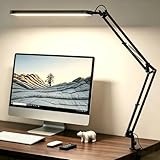
SKYLEO Swing Arm Desk Lamp
A messy desk has a funny way of making good light feel more important than fancy gear. Sketchbooks drift sideways, reference photos stack up, markers roll into the wrong corner, and suddenly one shadow across the page starts messing with every line. The best desk lamp for art has to keep up with that real setup, not some spotless catalog table. The SKYLEO Swing Arm Desk Lamp aims for practical control, wider brightness range, and enough adjustment to keep detailed work from turning into a squinting contest.
SKYLEO Swing Arm Desk Lamp
SKYLEO Led Desk Lamp is a long product name, so SKYLEO Swing Arm Desk Lamp fits better for daily talk. The lamp brings a 31.5-inch tall profile, a 12W LED setup, and a flexible arm that suits desks where art supplies and work tools share the same space. That taller reach matters because low lamps often throw light from awkward angles. With art, even a small shadow can make shading, tracing, or color matching feel off.
The lamp’s 112 LED beads and brightness output of up to 1300 lumens give it enough punch for detailed desk tasks without relying on a bulky fixture. That matters for drawing, craft work, reading, and study sessions where weak lighting slowly drains focus. Bright light alone isn’t the whole story, though. Control matters just as much, because full brightness can feel too sharp during relaxed sketching or late-night planning.
The five color modes and eleven brightness levels create a wider tuning range than many basic desk lamps. Warmer light can feel calmer during rough sketches or quiet evening use, while cooler tones help sharpen contrast during line cleanup, model building, or craft detail. That kind of adjustability keeps the lamp from feeling stuck in one mood. Nice, because creative work rarely stays in one lane.
The adjustable swing arm gives this lamp its main personality. Instead of nudging the whole base around every time the page shifts, the arm and rotatable head let the light follow the task. That makes a real difference on crowded desks, especially where monitors, notebooks, brush cups, or cutting mats compete for elbow room. The lamp feels built for movement, not just decoration.
Light Control For Detail Work
Lighting control is where the SKYLEO lamp starts to feel useful for art rather than just general office work. A single fixed brightness level can make graphite look too flat or make colored pencil layers harder to judge. With eleven brightness settings, the lamp gives more room to fine-tune the desk instead of forcing the eyes to adapt. That’s a small comfort that pays off during longer sessions.
The color temperature options help handle different materials without overcomplicating the setup. Cooler light can make fine lines and small edges easier to see, while warmer settings feel softer during relaxed reading or early concept sketching. No, it won’t replace natural daylight for serious color-critical work, and expecting that would be a stretch. Still, having several light tones is far better than being trapped under one harsh white beam.
The lamp head rotates, which helps reduce glare across glossy paper, tablets, or laminated references. Anyone who has worked on smooth marker paper knows that shine can be maddening. Tilting the lamp slightly away from the direct reflection keeps the work visible without blasting the surface. It’s a practical adjustment, not a flashy trick.
The memory function keeps the last brightness setting, which sounds tiny until the same workspace gets used every day. Rebuilding the same lighting setup over and over becomes annoying, especially during ongoing projects. With memory, the lamp feels less fussy because it returns closer to the preferred setting. That steady routine helps when focus is already split between tools, ideas, and deadlines.
Desk Fit And Everyday Handling
Space-saving installation is a big part of this lamp’s appeal. Art desks can get crowded fast, and a lamp that doesn’t demand too much surface area feels easier to live with. The swing arm design helps lift the light above the mess instead of sitting directly in it. That makes the desk feel less boxed in, even when supplies are scattered everywhere.
The 31.5-inch tall design gives the lamp enough height for larger work areas. Taller reach helps when working over sketch pads, notebooks, keyboards, or layered craft setups. A shorter lamp can feel cramped, especially when the shade or head sits too close to the page. This height gives more breathing room, though very small desks may still need careful placement.
The 180cm USB cable adds decent flexibility for power placement. It connects to a 5V/2A USB interface, so the setup can work with common USB power sources. That said, USB-powered lamps depend on having a suitable power supply nearby, and weak ports may not be the best match for brighter settings. Practical? Yes. Completely cable-free? Not at all.
The built-in 45-minute timer feels useful for people who lose track of time while reading, sketching, or working through repetitive craft steps. It can also help during short focused sessions where the lamp doesn’t need to stay on all night. Still, timer length is fixed based on the provided details, so anyone wanting several timer choices might feel limited. Simple features often come with simple boundaries.
Comfort, Strengths, And Weak Spots
Eye comfort gets a meaningful boost from the ability to soften brightness and shift color modes. Harsh lighting can make long sessions feel tiring, especially with small line work or close-up crafts. This lamp gives more control over intensity, which helps reduce that strained, over-lit feeling. The real benefit is not drama, just a calmer desk.
The main strength is adjustability. Between the swing arm, rotatable head, color modes, and brightness levels, the lamp adapts to different tasks without feeling locked into one setup. Drawing, studying, reading, and casual room lighting all need slightly different behavior. This lamp seems built around that daily switching.
The main weakness is that the lamp may feel more functional than decorative. The black desk-light look fits workspaces well, but it probably won’t soften a room the way a fabric-shade lamp would. Also, people expecting a heavy traditional desk lamp may need to adjust to the USB-powered setup. Function leads the design here, and style takes a back seat.
From a practical angle, long seated routines can connect with body comfort in ways lighting alone doesn’t solve, and a related wellness reference is red light therapy for cellulite. The topic isn’t the same as desk lighting, but it sits near the broader conversation about home routines, personal care, and small comfort habits. That separation matters because forcing a fake connection would feel silly. The SKYLEO lamp stays focused on light, while the linked topic belongs to a different self-care lane.
Pros And Cons In Real Use
Pros begin with the wide control range. Five color modes and eleven brightness levels give more room for matching the lamp to the task. The 1300-lumen output also gives enough brightness for detail work when the room itself feels dim. That combination makes the lamp useful across more than one desk routine.
- Five color modes help shift between warm comfort and cooler detail visibility.
- Eleven brightness levels allow finer control than basic three-step lamps.
- Adjustable swing arm helps aim light around supplies and screens.
- Rotatable lamp head reduces glare on paper, tablets, and glossy surfaces.
- Memory function saves the last brightness setting for repeat use.
Cons are mostly about expectations and setup. The USB power design is convenient, but it still needs a proper power source and cable management. The 45-minute timer is handy, though not as flexible as multi-time options. Also, the tall swing arm needs enough desk or rear space to move comfortably.
- USB power requirement may depend on the strength of the connected adapter or port.
- Timer function is useful, but the provided detail only mentions 45 minutes.
- Functional design may not suit rooms needing soft decorative lighting.
- Tall arm movement needs enough clearance behind or above the desk.
Best-fit situations include drawing desks, study corners, craft tables, and compact workstations that need flexible task lighting. The lamp makes the most sense where brightness control and angle control matter more than decorative charm. It may not satisfy someone who wants a cozy room accent first and a task lamp second. For focused desk work, though, its practical feature set lines up well with the daily annoyances that make poor lighting so frustrating.
Lepro Metal Desk Lamp
Small desks can get fussy fast once paper, thread, pens, puzzle pieces, or nail tools start spreading out. Shadows sneak in from odd angles, the monitor looks too bright beside a dark tabletop, and suddenly the whole setup feels harder than it needs to be. The best desk lamp for art should calm that mess with softer coverage, useful brightness control, and a shape that doesn’t hog the workspace. The Lepro Metal Desk Lamp takes a quieter route, focusing on diffused light, a compact footprint, and simple adjustability instead of oversized arms or flashy controls.
Lepro Metal Desk Lamp
Lepro LED Desk Lamp has a long official name, so Lepro Metal Desk Lamp keeps things cleaner and easier to remember. The lamp uses a 9.5W LED setup with an output listed at 800 lumens, which puts it in a sensible range for reading, crafting, sewing, puzzle work, nail tasks, and desk-based art. It’s not trying to light an entire studio. It’s built more for a focused table zone where softer control matters.
The lamp includes five color modes and five brightness levels, giving enough range for different moods and materials. Bright white light can help sharpen edges during detailed line work, while warmer light feels easier during casual sketching or bedside reading. That range matters because not every project needs the same intensity. Full brightness can feel useful at noon on a cloudy day, then way too sharp at midnight.
The frosted shade is one of the more practical details here. Instead of throwing a raw, harsh beam onto the desk, it softens the light before it hits the surface. That makes the lamp more forgiving around glossy paper, monitors, laminated references, or white craft mats. Harsh glare is the kind of thing people tolerate until they finally switch to something gentler and wonder why they waited.
The design also keeps a fairly minimal desk presence. A bulky lamp can turn a small workbench into a juggling act, especially with sewing supplies, drawing tools, or manicure gear already taking up room. This Lepro model folds when not in use, which helps keep the workspace from feeling permanently crowded. Neat freak or not, extra breathing room on a desk always feels like a win.
Light Quality For Creative Tasks
Diffused non-flickering lighting is the feature that makes this lamp more interesting for detailed work. The product details mention 72 energy-efficient LEDs, paired with a frosted shade and longer lamp head to spread light more broadly. That setup helps reduce harsh contrast between the working surface and nearby screens. For art, that softer transition can make long sessions feel less visually tiring.
The lamp’s broader span of soft light helps with tasks that need steady visibility across more than one tiny spot. Puzzle pieces, sewing seams, color swatches, sketch lines, and nail details all benefit from light that doesn’t drop off too quickly at the edges. Narrow-beam lamps often force constant repositioning. This one feels better suited to slower, patient work where the eyes need consistency.
The 800-lumen brightness gives enough strength for most close desk tasks without sounding overbuilt. Some art setups need massive illumination, especially for larger canvases or studio tables, but that isn’t really this lamp’s lane. Its strength sits in practical desk work, not floodlighting a whole room. That distinction matters because buying too much brightness can create glare instead of comfort.
Color mode switching gives the lamp a nice bit of flexibility. Cooler settings help bring out contrast during writing, cutting, or detail inspection, while softer warm modes feel more relaxed for evening reading or light sketching. The five lighting modes make it easier to match the lamp to the moment. No drama, just a useful range that keeps the desk from feeling stuck under one flat tone.
Adjustability And Desk Fit
Stable adjustability gives the Lepro lamp a practical edge. The main arm and top light bar can be adjusted to focus light where it’s needed, which helps avoid the classic problem of your hand casting a shadow over the exact spot you’re working on. That matters during drawing, sewing, or nail work because tiny details disappear fast under poor angles. A small shift in lamp position can save a lot of squinting.
The foldable design makes daily storage easier. Some architect-style lamps stay tall and dramatic even when the work is done, which can feel annoying on compact desks or nightstands. This lamp folds down instead, giving back some visual space when not in use. That’s especially helpful in multipurpose rooms where the desk doubles as a reading table, hobby zone, or work-from-home corner.
The included 4.9-foot DC power cord and US standard power adapter make setup straightforward based on the provided details. A dedicated adapter can feel more dependable than relying on a random USB port, especially for a lamp meant to provide steady brightness. The cord length should suit many common desk layouts, though larger rooms or faraway outlets may still need careful placement. Cable routing is boring, sure, but it affects how clean the workspace feels.
The white finish gives it a clean, simple look without making the lamp feel like a decorative centerpiece. That can be a plus or a minus depending on the room. For a bright craft table, sewing station, or minimalist desk, the sleek white body blends in nicely. For darker industrial setups, it may stand out more than expected.
Comfort Benefits And Everyday Limits
Eye comfort is where this lamp makes its strongest everyday argument. The product details point to natural, non-glaring light designed to help prevent eye fatigue, and the frosted shade supports that goal in a practical way. Softer light matters during longer desk sessions because the eyes don’t have to fight sharp contrast all evening. That’s especially useful around monitors, where the surrounding area can look too dim by comparison.
The lamp also works well for mixed routines. A desk might handle bills in the morning, craft projects in the afternoon, and sketching after dinner. With five brightness levels, it can shift from bright task lighting to a gentler bedside feel without needing a second lamp. That flexibility makes it more useful in real homes where one piece of gear often has to do several jobs.
The main strength is balance rather than brute power. It offers enough brightness for close-up work, enough adjustment for better angles, and enough softness to avoid that harsh desk-lamp glare. It doesn’t feel like a specialized studio lamp for huge art surfaces. Instead, it fits smaller work zones where comfort, neatness, and controlled light matter more.
The main weakness is coverage scale. Larger art desks, oversized cutting mats, or wide drafting setups may need a longer arm or broader lamp head than this compact model provides. The lamp can support detailed desk work well, but it may not fully replace a larger task light in a room with poor ambient lighting. Expectations matter here, and this one feels strongest as a personal desktop lamp.
Pros And Cons For Real Use
Pros start with the soft, diffused lighting. The frosted shade, long lamp head, and 72 LEDs work together to create a more comfortable desk glow than a tiny exposed bulb would provide. The five color modes and five brightness levels also give enough control for different tasks. That kind of flexibility helps prevent the lamp from feeling too harsh or too dim across the day.
- Five color modes support warm reading light and brighter task light.
- Five brightness levels make it easier to tune the desk for comfort.
- Frosted shade helps reduce glare on paper and screens.
- Foldable body saves space when the lamp is not being used.
- Adjustable arm and light bar help aim light more precisely.
Cons are mostly tied to size and use case. The lamp is compact and practical, but it may not satisfy anyone needing very wide illumination across a large art table. The 800-lumen output is useful for close work, though not a substitute for strong room lighting. Also, the white finish may not match every workspace style.
- Limited large-desk coverage may not suit oversized art surfaces.
- Compact design favors personal task zones over full-room brightness.
- White finish may stand out in darker desk setups.
- Power cord placement still needs planning around outlet location.
Lighting habits often overlap with other home-lighting questions, especially when older product lines or outdoor fixtures come up in the same search journey. A related reference sits in Malibu landscape lighting, which belongs to a different lighting category but still touches the bigger topic of how people rethink light around their home.
Best Fit And Practical Expectations
Best-fit use centers on smaller desks, bedside tables, sewing stations, nail setups, puzzle tables, and compact creative corners. The lamp feels especially sensible where the work surface needs soft, steady light without a big base taking over the room. It’s not pretending to be a studio fixture. It’s more like a dependable desk companion that keeps daily tasks visible and less tiring.
Art use feels strongest for sketching, coloring, paper crafts, and detail touch-ups. The adjustable light bar helps place light where the hand isn’t blocking it, while the diffused output keeps the surface from feeling harsh. Color-sensitive work may still benefit from natural daylight or more specialized lighting, because this product detail does not claim professional color accuracy ratings. For casual and practical creative work, though, the controls offer enough room to tune the setup.
Reading comfort is another quiet strength. Warm modes can soften the mood at night, and lower brightness levels help prevent that over-lit bedside feeling. The lamp’s minimalist shape also suits nightstands that don’t have room for bulky shades. Still, the look is modern and functional, not cozy in the fabric-lamp sense.
The difference between this Lepro lamp and more dramatic architect lamps comes down to restraint. It doesn’t have a huge dual-head design, a tall swing arm, or a clamp system meant for wide monitor setups. Instead, it focuses on soft light, compact storage, and straightforward controls. That makes it a better match for tidy, everyday workspaces than for oversized creative stations that need wall-to-wall illumination.
LEPOWER Eye-Caring Desk Lamp
Some desk lights look bright enough at first, then the trouble shows up after the first hour. Lines start to blur a little, white paper feels too sharp, and the far side of the sketchbook sits in a dull patch that keeps pulling the eye away. The best desk lamp for art needs more than raw brightness, because drawing, sewing, nail work, puzzles, and close reading all punish uneven light pretty quickly. The LEPOWER Eye-Caring Desk Lamp leans into wider coverage, flexible aiming, and a large mix of brightness and color settings for people who need their desk to behave, not just glow.
LEPOWER Eye-Caring Desk Lamp
LEPOWER Desk Lamp is the shorter name that makes sense for this review, though LEPOWER Eye-Caring Desk Lamp better captures what the product is trying to do. The provided details point to a 12W LED desk light with 800LM brightness, a gooseneck body, touch controls, and a broader lamp panel than typical desk lamps. That combination puts it closer to a practical work lamp than a decorative bedroom accent. It’s built for focused surface lighting, not mood lighting in the corner.
The headline feature is the RG0 certified eye-caring design. Based on the details provided, the lamp uses RG0 lamp beads and professional optical lenses intended to prevent hazardous blue light under the IEC 62778 RG0 level. That claim matters for long sessions because harsh light can turn detail work into a slow grind. Still, comfort also depends on brightness choice, lamp angle, room lighting, and how long the session runs.
The lamp’s 50 lighting modes come from five color temperatures paired with ten brightness levels. That gives much finer control than basic lamps with only three settings. Cooler light can help sharpen small pencil marks, thread lines, or edge details, while softer tones feel less aggressive for evening reading. Having ten brightness steps also means the lamp doesn’t force a jump from too dim to too bright.
The smart memory function helps keep the daily setup from becoming annoying. Once the preferred brightness and color tone are dialed in, the lamp can return to its last setting when turned back on. That’s useful during ongoing art projects where lighting consistency makes a difference. Nobody wants to keep chasing the same setting every night before getting back into the work.
Wider Light For Busy Desks
Lighting area is where this LEPOWER model separates itself from many compact lamps. The product details describe an upgraded lamp panel that is 200% wider than typical desk lamps, with a lighting area up to 50 inches. That broader reach can help on desks where sketchbooks, rulers, fabric scraps, and reference sheets spread farther than expected. A narrow beam might look fine on a book, but art desks usually don’t stay that tidy.
The listed 800LM soft bright light gives the lamp enough strength for close work without automatically making the desk feel harsh. Brightness alone can be a trap, though. Too much light aimed badly can wash out graphite, bounce off glossy surfaces, or create a bright island surrounded by darker edges. The wider panel helps reduce that problem by spreading light across more of the surface.
The details also mention 1400 lux, which suggests the lamp is meant to deliver focused task brightness at the work area. For art and craft use, that kind of directed brightness can make small details easier to see, especially in dim rooms or late-night sessions. Still, larger drafting tables may need extra room lighting around the desk. A desk lamp can carry the main task area, but it won’t always fix a dark room by itself.
The wider panel feels especially helpful around monitors. A bright screen beside a dark desk creates contrast that can make the eyes tired faster. Softer, broader desk lighting helps even out the working area, so the screen doesn’t feel like the only bright object in the room. That’s a practical benefit for mixed setups where drawing, studying, and computer work keep bumping into each other.
Controls, Gooseneck, And Daily Handling
Touch control gives this lamp a modern feel without making the setup complicated. The product details mention traditional plus and minus buttons along with a stepless slide-control bar. That slide control sounds useful for fine brightness changes, especially during work that shifts from rough sketching to tight detail. A small lighting adjustment can make a big difference when the page is already full of faint marks.
The 360-degree adjustable gooseneck is the part that solves a lot of ordinary desk frustration. Instead of dragging the whole lamp around, the neck can bend toward the exact spot that needs light. That helps reduce hand shadows during drawing, writing, sewing, or nail work. It also gives more freedom around monitors, storage bins, and stacked books that would block a rigid lamp.
The gooseneck design does have a natural tradeoff. Flexible arms are convenient, but they need enough stiffness to stay where they’re placed. The provided details describe the gooseneck as durable metal, which sounds reassuring, though real performance depends on daily use and how often it gets repositioned. For most desk tasks, the main advantage is clear: adjustable aiming beats fixed lighting every time.
The lamp suits workspaces where tools move around often. One minute the light might need to sit low over a drawing corner, then higher over a puzzle, then angled away from a screen to tame glare. That kind of movement is exactly where a gooseneck desk lamp earns its keep. Fixed lamps can feel neat, but they often lose patience battles on creative desks.
Pros, Cons, And Honest Tradeoffs
Pros start with adjustability and eye comfort. The 50 lighting choices give a wide range of control, while the RG0 eye-caring design is clearly positioned around reducing fatigue during long sessions. The wide panel also helps spread light over more of the desk, which is useful for art surfaces larger than a single notebook. It’s a feature set that favors function over decoration.
- RG0 eye-caring design is aimed at reducing hazardous blue light exposure.
- Five color temperatures and ten brightness levels create 50 lighting choices.
- Wider lamp panel helps cover larger desk areas more evenly.
- 360-degree gooseneck makes light positioning easier for close work.
- Smart memory function keeps the last-used setting ready for repeat sessions.
Cons sit mostly around expectations. The lamp is bright and flexible, but it still works as a desk lamp rather than a full-room lighting system. Larger studios, deep drafting tables, or rooms with no overhead light may still need extra ambient lighting. Also, the stronger cooler settings may feel too crisp for relaxed bedtime use if the brightness is left high.
- Desk-focused coverage may not replace room lighting in darker spaces.
- Cool light modes can feel stark during relaxed evening use.
- Flexible neck placement may need small adjustments during changing tasks.
- Functional style may not appeal to rooms built around warm decor.
From a practical angle, hands-on desk projects often overlap with basic troubleshooting skills around lamps, cables, and small electrical tools, and a related reference is how to use test light. The topic sits in a different lane, but it still belongs near the broader world of checking power, understanding light behavior, and keeping work areas functional. That separation is worth keeping clear. This LEPOWER lamp is about task lighting, while the linked topic deals with a different kind of light-based utility.
Best Use Cases And Practical Fit
Best-fit use starts with drawing, studying, reading, sewing, nail work, puzzles, and craft sessions that need clear surface visibility. The lamp’s wider panel makes sense for work that spreads across the desk instead of staying in one tiny area. It should feel more useful on a busy table than a small spotlight-style lamp. That broader light can reduce the constant habit of moving materials into the only bright spot.
Art use benefits most from the color temperature range and brightness control. Cooler tones can help with detail inspection, while warmer settings can keep casual sketching from feeling too clinical. For serious color matching, natural daylight or specialized color-accurate lighting may still matter because the provided details do not include a CRI rating. That’s not a flaw, just a realistic boundary.
Bedroom and study-room use also makes sense, though the lamp’s personality stays more practical than cozy. The touch controls and memory setting make repeated daily use smoother, especially for routines that happen at the same desk every evening. Lower brightness settings should feel better for reading than leaving the lamp at full power. Strong light is useful only when it’s controlled.
The difference between this lamp and smaller minimalist models comes down to coverage and adjustment. It gives more lighting choice, more panel width, and more aiming flexibility than many basic desk lamps. The tradeoff is that it looks and behaves like a task tool, not a soft decorative piece. For crowded creative desks, that practical bias is exactly the point.


Best Floor Lamps for Dark Rooms: Top Picks 2026
Best Value Outdoor Christmas Lights 2026 Brighten Nights

Best Lighting For Makeup 2026 Bright Ideas For Flawless Looks

Best Quiet Ceiling Fan For Bedroom 2026 Ultimate Comfort Picks

Best Christmas Lights For Bushes 2026 Brighten Your Yard
Best Outdoor Waterproof Christmas Lights 2026 For Festive Glow

Top 16 Kichler Barrington Flush Mount 2026 - Highly Rated

Best Wall Sconces For Staircase 2026 Brighten Your Home