
Best Electric Fan for Home 2026: Smart Cooling Picks

A best electric fan for home should cool the space people actually occupy, not merely produce an impressive breeze two feet from the grille. Strong airflow matters, but uncontrolled force can scatter papers, dry out eyes, and make television volume creep higher. A well-designed fan balances air circulation, noise, control range, and room coverage. That balance becomes especially noticeable during humid afternoons when the air feels stubborn even though the thermostat hasn’t climbed dramatically.
Room size changes everything, and bigger isn’t automatically better. A compact desk fan can handle a close working area without stirring the whole room, while a tower fan spreads air across a wider vertical path and slips neatly beside furniture. Pedestal fans offer stronger directional control, though their broad bases can feel clumsy in tight bedrooms or busy walkways. Box fans move plenty of air for the money, but they’re rarely the quietest or most polished choice for everyday living spaces.
Noise level deserves more attention than flashy speed counts. Twelve speed settings won’t help much if every useful setting produces a motor hum that interrupts sleep, calls, or quiet reading. Lower settings should feel genuinely gentle, not like slightly restrained high power. Better models also avoid rattling guards, clicking oscillation parts, and sudden electronic beeps that sound much louder after midnight.
Controls should be easy to understand without keeping the manual nearby. A clear panel, responsive remote, and practical timer remove small daily annoyances, especially when the fan sits across the room. App control can be handy, but it shouldn’t replace dependable buttons on the unit itself. Frankly, reconnecting a fan to Wi-Fi during a heat wave is nobody’s idea of convenience.
Cleaning is another make-or-break detail. Dust builds up quickly on blades and grilles, reducing airflow and sometimes adding an unpleasant smell when the fan runs. Removable guards or accessible intake panels make routine care far less frustrating. Sealed designs may look sleek, yet narrow vents can turn a simple cleaning job into a fiddly afternoon with brushes and canned air.
Energy-conscious cooling works best when the fan supports an air conditioner rather than fighting it. Gentle circulation can spread cooled air beyond one corner, helping a room feel more even without setting the thermostat uncomfortably low. Still, a fan doesn’t lower room temperature by itself, so expectations need to stay realistic. The real benefit is improved comfort through moving air, lower perceived heat, and fewer stagnant pockets around beds, sofas, and desks.
Safety and stability matter in homes with narrow paths, active pets, or curious hands. A sturdy base reduces wobbling, while a closely spaced grille limits accidental contact with moving blades. Long cords provide placement freedom, but loose excess cable can become a tripping problem. Sensible cord routing, smooth edges, and reliable tip resistance are less glamorous than digital displays, yet they’re far more important after the novelty wears off.
The strongest pick won’t be identical for every room. Light sleepers may accept gentler airflow in exchange for quieter operation, while large living rooms often need broader oscillation and a taller airflow path. Small apartments benefit from slim designs that don’t crowd furniture. So, the smartest purchase starts with the room’s layout, daily habits, and tolerance for noise, then matches those realities with useful features instead of chasing the longest specification list.

- LFR Score9.2
LFR Score is a ranking system developed by lightfansreviews.com. LFR Score has no relationship or impact from any manufacturers or sales agent websites. Learn more
- BrandDREO

- LFR Score9.2
LFR Score is a ranking system developed by lightfansreviews.com. LFR Score has no relationship or impact from any manufacturers or sales agent websites. Learn more
- BrandLevoit

- LFR Score9.0
LFR Score is a ranking system developed by lightfansreviews.com. LFR Score has no relationship or impact from any manufacturers or sales agent websites. Learn more
- BrandLasko
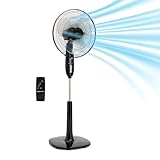
Amazon Basics 16-inch Pedestal Floor Fan Oscillating Remote, 3-Speed, Energy-Efficient,
View on Amazon- LFR Score8.8
LFR Score is a ranking system developed by lightfansreviews.com. LFR Score has no relationship or impact from any manufacturers or sales agent websites. Learn more
- BrandAmazon Basics

- LFR Score8.8
LFR Score is a ranking system developed by lightfansreviews.com. LFR Score has no relationship or impact from any manufacturers or sales agent websites. Learn more
- BrandLasko

- LFR Score8.8
LFR Score is a ranking system developed by lightfansreviews.com. LFR Score has no relationship or impact from any manufacturers or sales agent websites. Learn more
- BrandAmazon Basics

- LFR Score8.8
LFR Score is a ranking system developed by lightfansreviews.com. LFR Score has no relationship or impact from any manufacturers or sales agent websites. Learn more
- BrandLasko

- LFR Score8.6
LFR Score is a ranking system developed by lightfansreviews.com. LFR Score has no relationship or impact from any manufacturers or sales agent websites. Learn more
- BrandAmazon Basics

- LFR Score8.6
LFR Score is a ranking system developed by lightfansreviews.com. LFR Score has no relationship or impact from any manufacturers or sales agent websites. Learn more
- BrandLasko
- LFR Score8.6
LFR Score is a ranking system developed by lightfansreviews.com. LFR Score has no relationship or impact from any manufacturers or sales agent websites. Learn more
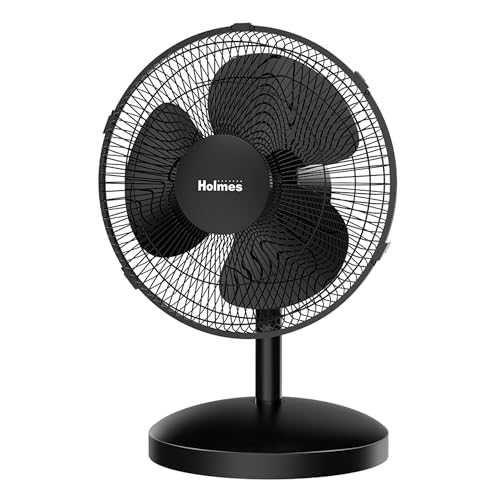
- BrandHOLMES
Last update on 2025-12-08 / Affiliate links / Images, Product Titles, and Product Highlights from Amazon Product Advertising API
Dreo Nomad One Tower Fan
Hot rooms rarely become uncomfortable all at once. The air first turns stale near the sofa, then the bedroom starts feeling stuffy, and soon the air conditioner is working harder than expected. The Dreo Nomad One Tower Fan addresses that everyday frustration with a slim 36-inch body, a stated air velocity of up to 24 feet per second, and 90-degree oscillation designed to spread airflow beyond one narrow spot. Its appeal lies less in brute force and more in combining room coverage, straightforward controls, and quieter nighttime behavior in one portable unit.
Dreo Nomad One
The Nomad One suits rooms where floor space is already spoken for by furniture, baskets, pet beds, or work equipment. Its narrow tower shape can sit beside a dresser or near the end of a couch without creating the wide footprint associated with many pedestal fans. A hidden carrying handle also makes room-to-room movement less awkward, especially during those afternoons when the coolest corner of the house seems to change by the hour. The built-in remote compartment is a small touch, but it helps prevent the usual hunt beneath cushions and nightstands.
Airflow comes from Dreo's combined impeller and motor system, which is rated to deliver air at speeds up to 24 feet per second. That figure describes outlet velocity rather than a promise that every corner will feel equally strong, so placement still matters. Set too close to a wall or blocked by furniture, even a capable tower fan can lose much of its reach. Positioned with a clear path, though, the fan's calibrated airflow and oscillation should provide broader movement across bedrooms, home offices, and modest living areas.
The four speed settings give the fan a useful range between gentle circulation and a stronger direct breeze. Lower speeds make more sense during reading, desk work, or sleep, while the upper end can help break up trapped warmth after cooking or during the hottest part of the afternoon. Four levels won't satisfy someone who wants tiny, highly precise adjustments, but the setup stays simple enough to operate without studying a crowded control panel. Sometimes fewer choices are a blessing, especially at two in the morning.
Airflow That Reaches Beyond One Chair
A stationary fan often cools one person beautifully while everyone else gets leftovers. The Nomad One's 90-degree oscillation helps distribute moving air across a wider section of the room, which is more practical for shared spaces or beds occupied by two sleepers. Oscillation also reduces the harsh, drying feeling caused by a constant stream hitting the same spot for hours. The tradeoff is that peak airflow becomes intermittent as the fan sweeps away, so fixed mode may still feel better during intense heat.
The tall outlet sends air across more of the body than a compact table fan usually can. That broader vertical path can make sitting or reclining feel more comfortable without aiming a fan directly at face level. Still, tower fans generally produce a concentrated column rather than the wide, heavy blast of a large floor fan. The slim profile favors everyday comfort and space efficiency over workshop-style air movement.
Pairing the fan with an air conditioner is one of its more practical uses. Moving cooled air away from the vent can reduce warm pockets and make a room feel more even, potentially allowing a less aggressive thermostat setting. The fan itself doesn't lower indoor temperature, a distinction worth keeping straight, but air circulation can improve how cool the room feels against the skin. That makes the Nomad One a supporting player rather than a replacement for mechanical cooling during severe heat.
Room layout can either help or hobble the fan. Open pathways allow the oscillating stream to travel, while tall furniture, curtains, and crowded corners interrupt it quickly. A position several feet from the main seating or sleeping area often creates a softer, more distributed breeze than parking the unit directly beside a chair. The free-standing design makes those adjustments easy, though its power cord still determines how flexible placement can be.
Sleep Features Without Fussy Setup
Nighttime comfort depends on more than motor volume. Bright displays, sharp button beeps, and abrupt speed changes can be just as irritating as the fan itself. In Sleep mode, the Nomad One includes automatic display shutoff and muted operation, reducing the little disturbances that become surprisingly noticeable in a dark room. The softer airflow is also better suited to long sessions than an unbroken high-speed blast.
Dreo describes the impeller design and Conada effect as part of its noise-control approach. Without independent sound measurements in the provided information, it would be careless to attach a decibel claim or promise near-silent performance. What can be said is that the fan is built around reduced operational noise, with sleep-oriented controls that address both sound and light. Real perception will still vary based on room acoustics, floor surfaces, and personal sensitivity.
The eight-hour timer covers most sleeping periods and can also handle naps, work blocks, or evening cooling. A timer helps avoid waking to a chilly room after the temperature drops overnight, and it saves the bother of getting out of bed to switch the fan off. Eight hours is practical, though some competing models offer longer or more finely stepped schedules. For a standard bedtime routine, the available range should be enough without adding complexity.
Natural mode varies airflow to mimic shifting breezes, while Normal mode keeps output steadier. Auto mode adds another layer of convenience by adjusting operation according to the fan's programmed behavior, and Sleep mode focuses on quieter, less intrusive use. These four operating modes provide meaningful differences rather than simply renaming the same speed settings. Even so, anyone who prefers completely predictable airflow may stick with Normal mode most of the time.
Controls, Cleaning, And Daily Handling
The control panel and included remote offer two straightforward ways to change speed, mode, oscillation, or timer settings. Remote operation is especially useful from bed or across a living room, where walking over for every adjustment gets old fast. The onboard controls remain important because the fan doesn't become useless if the remote is misplaced or its battery runs down. Keeping the remote in the built-in storage slot should reduce that risk, provided it actually gets returned after use.
Dust buildup is a common weakness in tower fans because narrow openings can make internal cleaning frustrating. The Nomad One counters that problem with a removable rear grille and removable impeller wheel, giving better access than a fully sealed housing. Easier access matters in homes with pets, open windows, or frequent cooking, where lint and airborne residue collect quickly. Cleaning still requires unplugging the unit and handling parts carefully, but the design removes some of the usual fiddling.
Safety features include fingertip pinch-resistant grilles, a fused plug, and built-in circuit protection. The product is also described as ETL listed, which supports confidence in its electrical design without suggesting that normal household precautions can be ignored. The fan should still sit on a level surface, away from wet areas and loose fabric. Its enclosed blade system offers a tidier barrier than an open-blade pedestal fan, although small objects should never be pushed through the vents.
The quick-start guide is the only listed included component beyond the fan and remote-related setup. Assembly and operation appear intentionally simple, which suits an appliance meant for daily use rather than occasional tinkering. A separate household detail, such as ambient lighting around a media console or plant shelf, may involve a reference like USB-powered LED strip lights, though that topic remains independent of the fan's cooling performance. The Nomad One earns attention through practical usability, not through an oversized accessory bundle.
Strengths, Limits, And Best-Fit Rooms
The strongest feature is the balance between compact placement and broad oscillation. A large floor fan may push more aggressive air, but it also brings a wider frame, exposed blades, and more visual clutter. The Nomad One fits more naturally into bedrooms, offices, and living areas where a fan needs to remain present for months rather than appear only during a heat wave. Its black finish is understated, though it may show dust more readily than lighter surfaces.
Quiet-focused operation, display shutoff, and an eight-hour timer make the fan particularly sensible near beds. Those features directly address the annoyances that often undermine overnight fan use. Still, quiet cooling is subjective, and the supplied details don't include verified decibel levels. Light sleepers who react to any motor tone should keep expectations measured rather than assuming complete silence.
The four speeds and four modes provide enough adjustment for common routines without turning the remote into a miniature dashboard. That simplicity improves daily use, but it may feel limiting beside fans with more granular speed control or advanced scheduling. The Nomad One also lacks any stated smart-home or app features in the supplied description. For many households, skipping another app is a relief; for automation enthusiasts, it's a noticeable omission.
Large open-plan rooms may expose the fan's practical ceiling. A 36-inch tower with oscillation can circulate air effectively within a defined area, but it isn't described as a whole-house air mover. Doorways, high ceilings, and distant seating zones can dilute the effect, particularly at lower speeds. The best electric fan for home use is always the one matched to the actual room, and this model makes the most sense where slim dimensions, flexible modes, and controlled airflow matter more than industrial force.
Maintenance access gives the Nomad One an edge over tower fans that trap dust behind fixed panels. Its portable handle, remote storage, and free-standing setup also remove several small hassles that tend to surface after the first week. The main compromises are the limited speed count, the absence of supplied independent noise data, and airflow that may not satisfy very large spaces. Within those boundaries, the Dreo Nomad One presents a sensible mix of circulation, sleep-friendly controls, safety measures, and room-to-room convenience.
LEVOIT Classic 36-Inch Tower Fan
Warm air has a knack for settling exactly where comfort matters most, beside the bed, around a desk, or across a living room that never seems to cool evenly. Running the air conditioner harder can feel wasteful, while a small desk fan often pushes air through one narrow lane and leaves the rest of the room untouched. The LEVOIT Classic 36-Inch Tower Fan approaches the best electric fan for home question with a slim body, stated airflow reaching up to 25 feet per second, and a sleep mode built around quieter operation. Its real appeal rests in balancing strong circulation, simple controls, and a footprint that won't swallow valuable floor space.
LEVOIT Classic Tower Fan
The 36-inch tower shape suits rooms where every open corner already has a job. A wide pedestal base can block walkways or crowd furniture, but this model keeps its body narrow and upright. That space-saving design makes placement beside a dresser, sofa, or work desk less awkward. The white finish also feels visually lighter in bedrooms, though it may reveal dust and scuffs sooner than a darker housing.
Assembly doesn't require tools, which takes some of the sting out of opening the box. The base sections snap together and attach beneath the fan body with a securing nut. LEVOIT specifically notes that the tower should be aligned before that nut is tightened, since a rushed setup may leave the unit sitting slightly crooked. That alignment detail sounds small, but it can affect how tidy the fan looks and how smoothly the oscillation appears.
Daily control feels straightforward rather than fussy. The LED display shows active settings clearly, while the included remote allows speed, mode, timer, and oscillation adjustments from across the room. The remote control is especially handy after settling into bed or getting comfortable on the couch. Onboard controls remain available too, so a misplaced remote won't turn the fan into an oversized paperweight.
The exterior uses a bladeless tower layout, meaning the moving components stay enclosed behind the grille. That setup looks cleaner than a traditional open-blade fan and reduces the temptation to reach near exposed blades. Still, the term bladeless design doesn't mean there are no internal moving parts, so ordinary care around vents and cleaning access still matters. The design favors neatness, safer everyday handling, and easy placement rather than mechanical simplicity.
Sleep Mode Handles More Than Motor Noise
Bedroom fans can fail for reasons that have little to do with airflow. A bright display glows across the room, button sounds feel louder after midnight, and one fixed speed may become too cold as the night goes on. LEVOIT's Advanced Sleep Mode turns off the display lights and gradually adjusts the fan speed through a temperature sensor. That behavior tackles the changing conditions of a sleeping room rather than simply lowering the motor once and leaving it there.
The supplied product information lists a minimum operating noise of 28 decibels. That figure gives the fan a strong quiet-cooling angle, though it shouldn't be treated as the sound level at every speed or in every room. Hard floors, nearby walls, furniture, and personal sensitivity can all change how a motor tone is perceived. Even so, low-speed operation paired with dimmed controls creates a more sleep-friendly setup than a fan that hums loudly and shines like an alarm clock.
Temperature-based adjustment brings both comfort and a tradeoff. A room often cools after midnight, so a fan that gradually softens its output may prevent that chilly wake-up around 3 a.m. On the flip side, anyone who prefers one constant breeze may dislike the speed changing on its own. The sensor-guided airflow makes sense for hands-off comfort, while Normal Mode remains the better route for people who want steady control.
The 12-hour timer adds useful breathing room around bedtime routines. Shorter timers sometimes switch off too early, leaving the room stuffy before morning, but this range can cover a full night or an extended daytime session. The 12-hour timer also helps limit unnecessary operation after leaving a room. It isn't a weekly scheduler or smart-home system, yet it handles the practical job most people actually need.
Airflow Has Strength Without Losing Control
LEVOIT states that the motor can push air at up to 25 feet per second. That number describes the speed of the airflow rather than a guarantee that every corner of a large room will feel equally cool. Furniture, wall placement, and distance still call the shots. With a clear path in front, the fan should deliver a brisk stream suitable for bedrooms, home offices, and moderate living spaces.
Five speeds offer more flexibility than the usual low, medium, and high arrangement. Gentle settings can keep air moving during sleep or desk work, while the upper levels suit warm afternoons and rooms that have been closed for hours. The five-speed range makes it easier to land between barely noticeable airflow and a breeze that feels too aggressive. That middle ground matters during long use, especially when the fan sits only a few feet away.
Turbo Mode provides the most direct response to trapped heat. It makes sense after cooking, exercise, or returning to a room that has baked in the afternoon sun. Stronger airflow may also bring more noticeable sound, so Turbo Mode isn't likely to be the preferred setting for light sleepers. Its rapid-cooling focus works best as a quick burst rather than the default answer for every situation.
Normal Mode gives manual control, Auto Mode reduces repeated adjustments, and Advanced Sleep Mode softens the nighttime experience. Those modes serve different routines instead of merely renaming the same basic behavior. The four operating modes provide enough variety without turning the remote into a puzzle. Simple, useful distinctions beat a long feature list that nobody remembers after the first week.
Oscillation Spreads The Breeze More Evenly
A fixed fan can leave one seat chilly while the rest of the room stays stale. The optional 90-degree oscillation spreads airflow across a wider zone, which helps in shared bedrooms, living rooms, or work areas with more than one occupied spot. The sweeping motion also prevents a constant blast from drying the face or eyes. Airflow feels less intense at any single point, but coverage improves across the room.
The oscillation angle is broad enough to serve a bed, couch, or desk area without rotating in an unnecessarily wide circle. That controlled sweep keeps the breeze focused where people are actually sitting. The wide-room coverage won't turn one tower fan into a whole-house cooling system, though. Open doorways, high ceilings, and distant seating areas can weaken the effect before the air reaches them.
Pairing the fan with an air conditioner may help move cool air away from a vent and into warmer pockets. The fan itself doesn't lower room temperature, so it shouldn't be treated as a replacement for refrigerated cooling during severe heat. Its job is to improve air circulation and make existing cool air feel less uneven. That distinction keeps expectations realistic and prevents the usual disappointment caused by asking a fan to do an air conditioner's work.
Placement makes a bigger difference than many shoppers expect. A tower pushed behind a sofa or pressed against thick curtains can't pull and distribute air efficiently. Leaving clear space around the rear intake and front outlet supports better airflow reach. Sometimes shifting the fan two feet does more than raising the speed another level.
Cleaning Access Solves A Common Tower Fan Problem
Tower fans often look sleek until dust settles deep behind narrow vents. Fixed housings can make cleaning a tedious job involving thin brushes, compressed air, and more patience than anyone planned to spend on a fan. LEVOIT uses a removable washable back cover, giving better access to the intake area. The inside can also be wiped down after the cover comes off.
Washable parts still need sensible handling. The fan should be unplugged before cleaning, and the rear cover must be completely dry before it goes back into place. Moisture near internal electrical parts is never worth the shortcut. The simplified maintenance reduces effort, but it doesn't remove the need for careful cleaning.
Regular dust removal can help preserve airflow and keep the fan from looking grimy around the vents. Homes with pets, open windows, rugs, or fabric-heavy rooms may need more frequent attention. The white exterior will probably show buildup quickly, which is annoying but also useful as a visual reminder. A visible layer of dust is easier to address than a hidden blockage that quietly weakens performance.
Indoor plant shelves can create their own pockets of warm, still air, especially under lighting fixtures. A neutral reference related to that setup appears in LED grow lights for tomatoes, where heat, light spread, and airflow often overlap in the same growing space. This tower fan isn't presented as dedicated horticultural equipment, but low-speed oscillation may help circulate room air around nearby plants. Direct, continuous wind can dry leaves and potting mix faster, so gentle air movement makes more sense than blasting foliage at close range.
Practical Strengths And Noticeable Limits
The strongest part of this model is its sleep-oriented design. Low stated noise, automatic display shutoff, temperature-based speed changes, and a 12-hour timer address several nighttime annoyances at once. Those features feel purposeful rather than decorative. Bedrooms appear to be the natural home for this fan, though its stronger modes broaden its usefulness during the day.
The narrow footprint, remote control, and five speeds also make it easy to live with. Nothing here requires an app, account, or wireless connection, which will be a relief for anyone tired of pairing basic appliances with a phone. The simple operation keeps attention on comfort rather than setup. That old-school practicality has real value in a device used several times a day.
Some limits remain clear from the supplied details. No room-size recommendation, power-consumption figure, or independent airflow test is provided, so exact whole-room performance can't be verified. The minimum 28-decibel rating also shouldn't be assumed at Turbo speed. Large open-plan areas may need more concentrated air movement or an additional fan.
The base assembly deserves care, since poor alignment can leave the tower looking skewed. White plastic may also demand more frequent wiping, and sensor-controlled changes won't please everyone. Those are manageable compromises rather than hidden deal breakers. The LEVOIT Classic Tower Fan fits best where quiet operation, flexible speeds, broad oscillation, and easier cleaning matter more than industrial-strength airflow.
Lasko Wind Machine Air Circulator Floor Fan
Summer heat has a funny way of exposing weak airflow. One side of the room feels comfortable while the opposite corner barely notices the fan is running. The Lasko Wind Machine Air Circulator Floor Fan approaches the best electric fan for home category from a different angle than slim tower models. Instead of emphasizing compact styling or digital features, it focuses on high-volume air circulation for larger living areas where moving stagnant air matters more than adding smart controls.
Lasko Wind Machine
Its appearance leaves little doubt about its purpose. The broad fan housing and floor-standing design prioritize airflow over decorative styling, making it a practical fit for garages, family rooms, workshops, finished basements, or spacious living rooms. The white housing keeps the look simple, while the integrated carry handle makes moving the fan between rooms surprisingly manageable despite its larger footprint.
The design also reflects a product built for everyday utility rather than chasing trendy features. Instead of touch panels, wireless connectivity, or multiple displays, operation revolves around straightforward physical controls. That approach won't impress someone looking for smart-home integration, yet the simple control layout reduces the chance of unnecessary complications over years of regular use.
Lasko describes this model as being built to last, using rugged construction intended for long-term household use. The product information doesn't claim military-grade materials or extraordinary durability, so expectations should remain realistic. Even so, the emphasis on solid construction suggests a fan intended for repeated seasonal use instead of something that feels disposable after one hot summer.
Large floor fans naturally occupy more space than slim towers. That's the tradeoff for moving greater volumes of air across wider areas. Anyone furnishing a compact bedroom may notice the larger footprint immediately, while open rooms usually have enough available floor space for the size to feel justified.
Air Movement Is The Main Priority
Some fans concentrate on producing a gentle breeze directly toward one chair. The Lasko Wind Machine follows another philosophy by functioning as an air circulator. Rather than cooling only one position, it helps keep air moving throughout a larger portion of the room. That difference becomes noticeable in spaces where warm air tends to collect near ceilings or distant corners.
The fan includes three performance speeds, providing straightforward adjustment without creating an overwhelming list of options. Lower speeds can maintain steady circulation during everyday activities, while the higher settings become useful after cooking, exercising indoors, or opening windows to exchange stale indoor air. Three speeds won't satisfy someone who enjoys fine airflow adjustments, but many households simply want reliable choices that are easy to understand.
High airflow naturally involves compromise. A fan designed to move substantial amounts of air generally produces more noticeable operating sound than a tower fan built specifically for sleeping. The supplied information doesn't provide noise measurements, so assigning quiet or loud labels would be speculation. Anyone placing this model beside a bed should simply recognize that its performance-first design places airflow ahead of whisper-focused operation.
Strong circulation also complements existing air conditioning systems. Air conditioners cool air, but they don't always distribute it evenly across larger rooms. The air circulation capability helps reduce stagnant areas by moving conditioned air farther into occupied spaces. That practical role often proves more valuable than pointing a narrow stream directly toward one seat.
Pivoting Head Adds Everyday Flexibility
A fixed fan angle limits where airflow actually reaches. Lasko addresses that limitation with a pivoting fan head capable of directing airflow upward, downward, or anywhere between those positions. That flexibility allows users to aim air across a room, toward a ceiling, or along a hallway depending on changing conditions.
Ceiling circulation becomes particularly useful during warmer months. Tilting airflow upward encourages air movement throughout the room rather than creating one concentrated blast at floor level. The result often feels more balanced, especially in spaces where warm air naturally rises. This adjustable airflow direction gives the fan more versatility than fixed-position models.
Window ventilation is another practical application. Fresh outdoor air can enter through one opening while the fan helps exhaust stale indoor air through another. The product description specifically mentions exhausting stale air and bringing in fresh air, reinforcing that this fan is intended to function as an air circulator, not simply a personal cooling device.
Placement still influences overall effectiveness. Positioning the fan behind furniture or tight against walls restricts intake and limits circulation. Leaving enough clearance around the housing allows the fan to move air more efficiently while making full use of the pivoting head. Sometimes a slight adjustment in placement produces more noticeable improvement than switching to a higher speed.
Built For Bigger Rooms
Large open spaces often expose the limitations of compact fans. Air reaches one seating area while another remains noticeably warmer. The Lasko product description specifically identifies large spaces as its intended environment, making this model more appropriate for expansive family rooms, recreation rooms, or open living areas than very small bedrooms.
The larger housing also suits seasonal airflow projects around the home. Opening windows during mild weather, encouraging fresh air exchange, or improving circulation around central cooling vents all fit naturally within the fan's capabilities. Those situations rely on broad air movement instead of narrowly focused cooling.
Mobility helps expand those uses throughout the year. The integrated carry handle simplifies moving the fan wherever airflow is needed most, whether that's a home office during the afternoon or a garage while working on weekend projects. Despite the larger frame, room-to-room portability remains part of the overall design.
Growing plants inside enclosed structures also depends heavily on consistent air circulation. A related reference appears in best grow lights for greenhouse, where lighting and airflow often work together to reduce stagnant growing conditions. Although the Lasko Wind Machine isn't marketed as greenhouse equipment, gentle circulation around growing spaces can help reduce still air without replacing proper ventilation.
Strengths And Practical Tradeoffs
The biggest strength lies in its straightforward purpose. Rather than trying to satisfy every possible feature request, the fan concentrates on strong airflow, directional flexibility, and dependable room circulation. That focus makes the overall experience feel refreshingly uncomplicated. Sometimes fewer electronic features mean fewer things to maintain over the long run.
Durability also stands out in the supplied product information. Lasko states that the Wind Machine uses rugged construction and notes the company's history of producing home environment products for more than 100 years. While company longevity doesn't automatically guarantee future performance, the emphasis on long-term construction aligns with the product's practical design philosophy.
Safety receives attention through ETL listing and Lasko's two-pronged blue plug safety fuse technology. Those features contribute to everyday confidence during normal household operation, although sensible placement, proper cleaning, and following standard electrical precautions remain important regardless of product certifications.
Several limitations deserve equal attention. Only three speeds are available, there are no digital timers or remote controls listed in the supplied description, and no oscillation feature is mentioned. Buyers wanting automatic scheduling or bedroom-focused silent operation may prefer another style of fan. Those seeking powerful room circulation, however, may appreciate the simpler approach.
The Lasko Wind Machine succeeds by staying true to its intended role. Large-area airflow, adjustable direction through its pivoting head, rugged construction, portability, and uncomplicated controls create a fan aimed at practical cooling rather than decorative technology. Its tradeoffs remain clear, yet so do its strengths, making it a sensible option for households where moving plenty of air matters more than collecting extra electronic features.
Dreo Nomad One Tower Fan
Hot rooms rarely become uncomfortable all at once. The air first turns stale near the sofa, then the bedroom starts feeling stuffy, and soon the air conditioner is working harder than expected. The Dreo Nomad One Tower Fan addresses that everyday frustration with a slim 36-inch body, a stated air velocity of up to 24 feet per second, and 90-degree oscillation designed to spread airflow beyond one narrow spot. Its appeal lies less in brute force and more in combining room coverage, straightforward controls, and quieter nighttime behavior in one portable unit.
Dreo Nomad One
The Nomad One suits rooms where floor space is already spoken for by furniture, baskets, pet beds, or work equipment. Its narrow tower shape can sit beside a dresser or near the end of a couch without creating the wide footprint associated with many pedestal fans. A hidden carrying handle also makes room-to-room movement less awkward, especially during those afternoons when the coolest corner of the house seems to change by the hour. The built-in remote compartment is a small touch, but it helps prevent the usual hunt beneath cushions and nightstands.
Airflow comes from Dreo's combined impeller and motor system, which is rated to deliver air at speeds up to 24 feet per second. That figure describes outlet velocity rather than a promise that every corner will feel equally strong, so placement still matters. Set too close to a wall or blocked by furniture, even a capable tower fan can lose much of its reach. Positioned with a clear path, though, the fan's calibrated airflow and oscillation should provide broader movement across bedrooms, home offices, and modest living areas.
The four speed settings give the fan a useful range between gentle circulation and a stronger direct breeze. Lower speeds make more sense during reading, desk work, or sleep, while the upper end can help break up trapped warmth after cooking or during the hottest part of the afternoon. Four levels won't satisfy someone who wants tiny, highly precise adjustments, but the setup stays simple enough to operate without studying a crowded control panel. Sometimes fewer choices are a blessing, especially at two in the morning.
Airflow That Reaches Beyond One Chair
A stationary fan often cools one person beautifully while everyone else gets leftovers. The Nomad One's 90-degree oscillation helps distribute moving air across a wider section of the room, which is more practical for shared spaces or beds occupied by two sleepers. Oscillation also reduces the harsh, drying feeling caused by a constant stream hitting the same spot for hours. The tradeoff is that peak airflow becomes intermittent as the fan sweeps away, so fixed mode may still feel better during intense heat.
The tall outlet sends air across more of the body than a compact table fan usually can. That broader vertical path can make sitting or reclining feel more comfortable without aiming a fan directly at face level. Still, tower fans generally produce a concentrated column rather than the wide, heavy blast of a large floor fan. The slim profile favors everyday comfort and space efficiency over workshop-style air movement.
Pairing the fan with an air conditioner is one of its more practical uses. Moving cooled air away from the vent can reduce warm pockets and make a room feel more even, potentially allowing a less aggressive thermostat setting. The fan itself doesn't lower indoor temperature, a distinction worth keeping straight, but air circulation can improve how cool the room feels against the skin. That makes the Nomad One a supporting player rather than a replacement for mechanical cooling during severe heat.
Room layout can either help or hobble the fan. Open pathways allow the oscillating stream to travel, while tall furniture, curtains, and crowded corners interrupt it quickly. A position several feet from the main seating or sleeping area often creates a softer, more distributed breeze than parking the unit directly beside a chair. The free-standing design makes those adjustments easy, though its power cord still determines how flexible placement can be.
Sleep Features Without Fussy Setup
Nighttime comfort depends on more than motor volume. Bright displays, sharp button beeps, and abrupt speed changes can be just as irritating as the fan itself. In Sleep mode, the Nomad One includes automatic display shutoff and muted operation, reducing the little disturbances that become surprisingly noticeable in a dark room. The softer airflow is also better suited to long sessions than an unbroken high-speed blast.
Dreo describes the impeller design and Conada effect as part of its noise-control approach. Without independent sound measurements in the provided information, it would be careless to attach a decibel claim or promise near-silent performance. What can be said is that the fan is built around reduced operational noise, with sleep-oriented controls that address both sound and light. Real perception will still vary based on room acoustics, floor surfaces, and personal sensitivity.
The eight-hour timer covers most sleeping periods and can also handle naps, work blocks, or evening cooling. A timer helps avoid waking to a chilly room after the temperature drops overnight, and it saves the bother of getting out of bed to switch the fan off. Eight hours is practical, though some competing models offer longer or more finely stepped schedules. For a standard bedtime routine, the available range should be enough without adding complexity.
Natural mode varies airflow to mimic shifting breezes, while Normal mode keeps output steadier. Auto mode adds another layer of convenience by adjusting operation according to the fan's programmed behavior, and Sleep mode focuses on quieter, less intrusive use. These four operating modes provide meaningful differences rather than simply renaming the same speed settings. Even so, anyone who prefers completely predictable airflow may stick with Normal mode most of the time.
Controls, Cleaning, And Daily Handling
The control panel and included remote offer two straightforward ways to change speed, mode, oscillation, or timer settings. Remote operation is especially useful from bed or across a living room, where walking over for every adjustment gets old fast. The onboard controls remain important because the fan doesn't become useless if the remote is misplaced or its battery runs down. Keeping the remote in the built-in storage slot should reduce that risk, provided it actually gets returned after use.
Dust buildup is a common weakness in tower fans because narrow openings can make internal cleaning frustrating. The Nomad One counters that problem with a removable rear grille and removable impeller wheel, giving better access than a fully sealed housing. Easier access matters in homes with pets, open windows, or frequent cooking, where lint and airborne residue collect quickly. Cleaning still requires unplugging the unit and handling parts carefully, but the design removes some of the usual fiddling.
Safety features include fingertip pinch-resistant grilles, a fused plug, and built-in circuit protection. The product is also described as ETL listed, which supports confidence in its electrical design without suggesting that normal household precautions can be ignored. The fan should still sit on a level surface, away from wet areas and loose fabric. Its enclosed blade system offers a tidier barrier than an open-blade pedestal fan, although small objects should never be pushed through the vents.
The quick-start guide is the only listed included component beyond the fan and remote-related setup. Assembly and operation appear intentionally simple, which suits an appliance meant for daily use rather than occasional tinkering. A separate household detail, such as ambient lighting around a media console or plant shelf, may involve a reference like USB-powered LED strip lights, though that topic remains independent of the fan's cooling performance. The Nomad One earns attention through practical usability, not through an oversized accessory bundle.
Strengths, Limits, And Best-Fit Rooms
The strongest feature is the balance between compact placement and broad oscillation. A large floor fan may push more aggressive air, but it also brings a wider frame, exposed blades, and more visual clutter. The Nomad One fits more naturally into bedrooms, offices, and living areas where a fan needs to remain present for months rather than appear only during a heat wave. Its black finish is understated, though it may show dust more readily than lighter surfaces.
Quiet-focused operation, display shutoff, and an eight-hour timer make the fan particularly sensible near beds. Those features directly address the annoyances that often undermine overnight fan use. Still, quiet cooling is subjective, and the supplied details don't include verified decibel levels. Light sleepers who react to any motor tone should keep expectations measured rather than assuming complete silence.
The four speeds and four modes provide enough adjustment for common routines without turning the remote into a miniature dashboard. That simplicity improves daily use, but it may feel limiting beside fans with more granular speed control or advanced scheduling. The Nomad One also lacks any stated smart-home or app features in the supplied description. For many households, skipping another app is a relief; for automation enthusiasts, it's a noticeable omission.
Large open-plan rooms may expose the fan's practical ceiling. A 36-inch tower with oscillation can circulate air effectively within a defined area, but it isn't described as a whole-house air mover. Doorways, high ceilings, and distant seating zones can dilute the effect, particularly at lower speeds. The best electric fan for home use is always the one matched to the actual room, and this model makes the most sense where slim dimensions, flexible modes, and controlled airflow matter more than industrial force.
Maintenance access gives the Nomad One an edge over tower fans that trap dust behind fixed panels. Its portable handle, remote storage, and free-standing setup also remove several small hassles that tend to surface after the first week. The main compromises are the limited speed count, the absence of supplied independent noise data, and airflow that may not satisfy very large spaces. Within those boundaries, the Dreo Nomad One presents a sensible mix of circulation, sleep-friendly controls, safety measures, and room-to-room convenience.
Lasko 2520 16-Inch Stand Fan
Uneven airflow can make a perfectly usable room feel stuffy within minutes, especially when warm air gathers around a desk, sofa, or bed. The Lasko 2520 16-Inch Stand Fan takes a straightforward approach to the best electric fan for home question with wide-area oscillation, adjustable height, a tilting head, and three speed settings. No remote, display, or complicated mode system gets in the way. Its appeal comes from direct control, flexible positioning, and enough physical adjustment to send air where a fixed fan often can't.
Lasko 2520 Stand Fan
The familiar pedestal layout gives this model a practical advantage over compact fans that sit too low to clear furniture. Its height can be adjusted to move airflow above a bed frame, across a desk, or toward the upper half of a living room. That adjustable stand also helps prevent the breeze from hitting only ankles and chair legs. At up to 47 inches tall, the fan has enough reach for everyday household placement without becoming an oversized fixture.
A 16-inch blade diameter puts the fan in a useful middle ground. It is larger than a personal desk fan, yet still manageable enough to move around the house without treating the job like furniture rearrangement. The listed weight of 8.7 pounds supports that portability, though the broad base still needs clear floor space. Tight bedrooms may feel more crowded than they would with a slim tower fan.
The white housing keeps the appearance simple and neutral. It won't disappear completely in a carefully styled room, since the circular grille and pedestal shape are visually obvious, but the color feels less heavy than a dark industrial fan. The design is functional first, and that's not necessarily a knock. A fan that spends the summer beside a sofa needs to be easy to operate more than it needs to resemble modern sculpture.
Assembly doesn't require tools according to the supplied details. That removes the usual hunt for a screwdriver and makes seasonal setup less of a production. The easy assembly should suit anyone who stores fans during cooler months and brings them back out as temperatures rise. Properly seating the base and tightening each connection still matters because a loose pedestal can introduce wobble or unwanted vibration.
Oscillation Covers More Than One Seat
A stationary breeze feels fine until someone moves three feet to the side. Wide-area oscillation allows the Lasko 2520 to sweep air across a broader section of the room rather than serving one chair all afternoon. This room-wide circulation is useful around shared sofas, dining spaces, and bedrooms where airflow needs to reach more than one position. The moving breeze can also feel gentler than a nonstop stream aimed directly at the face.
Oscillation brings a predictable compromise, though. Each spot receives airflow only while the fan is facing that direction, so the breeze won't feel as strong or constant as fixed positioning. Turning oscillation off makes more sense during intense heat or focused desk work. Leaving it on supports broader coverage when several areas need relief at once.
The fan doesn't claim to lower actual room temperature, and it shouldn't be expected to replace air conditioning during severe heat. Moving air improves comfort by increasing evaporation from the skin and reducing stagnant pockets around occupied areas. Paired with an air conditioner, the fan can help distribute cooled air beyond the immediate vent path. That circulation support may make a room feel more balanced without directing both appliances at the same spot.
Furniture placement can either help or hinder the oscillating sweep. A clear path lets the breeze travel across beds, chairs, and work surfaces, while tall shelving or heavy curtains can block it quickly. Setting the fan several feet from the main seating area often creates a more even effect than placing it directly beside one person. A little positioning trial and error pays off here.
Height And Tilt Improve Directional Control
Adjustable height is one of the clearest differences between this pedestal fan and a standard floor model. Raising the head helps airflow pass over low furniture, while lowering it can target a couch, mattress, or exercise area more directly. The height adjustment gives the fan a second life in different rooms instead of locking it into one airflow level. That's especially handy in homes where the same appliance moves between a bedroom and living room.
The tilt-back head adds another layer of control. Air can be aimed upward to encourage broader circulation or angled more directly toward an occupied zone. An upward tilt may help mix warmer air near the ceiling with cooler air below, though the result depends heavily on room shape and fan placement. The tilting head is simple mechanical flexibility, but it solves more real problems than a decorative display ever could.
Outdoor-space use is mentioned in the provided description, yet sensible limits still apply. The fan isn't described as weatherproof, so covered patios and dry locations are more appropriate than exposed areas where rain or moisture could reach the plug or motor. A pedestal fan can help on a still porch, but wind, humidity, and open surroundings reduce how concentrated the breeze feels. Electrical safety should remain the priority.
The easy-grip rotary control keeps operation refreshingly direct. A physical dial is quick to understand, even in a dim room or while carrying something in the other hand. The manual control does mean walking over to change speed, since no remote is listed. That tradeoff favors simplicity and fewer components over couch-side convenience.
Three Speeds Keep Operation Straightforward
Low, medium, and high settings cover the basic range most rooms need. Low speed suits background circulation, medium handles ordinary warm-weather use, and high provides the strongest available breeze. The three-speed control won't offer the fine tuning found on models with five or more levels. Still, fewer settings can feel perfectly adequate when each one has a clear purpose.
Lasko describes the speeds as quiet and energy efficient, though the supplied information doesn't include exact noise measurements or wattage figures. That means there is no sound level to verify against bedroom expectations. Low speed will generally be the sensible starting point for sleep, reading, or phone calls. High speed may become more noticeable because stronger airflow naturally creates more blade and air movement.
Sleepers who are highly sensitive to changing motor tones may prefer a fan with published decibel data and a dedicated sleep mode. The Lasko 2520 stays much more basic. Its quiet-operation claim comes without digital dimming, automatic speed reduction, or a timer in the supplied specifications. That simplicity works well for manual routines but leaves less room for overnight automation.
Office use fits the fan's design nicely. The adjustable height can lift airflow above desk clutter, while oscillation prevents one person from receiving the full breeze continuously. Papers may shift on higher settings, so medium or low speed will usually make more sense around documents. The controlled airflow is useful, but placement still determines whether the fan cools the room or merely rearranges everything on the desk.
Safety And Everyday Handling
The included fused safety plug adds protection at the electrical connection. Lasko has used this type of plug design across many household fan models, and its presence here supports routine indoor use. The fused plug doesn't replace ordinary precautions, however. The cord should stay away from wet areas, damaged outlets, and busy walkways where it could become a tripping hazard.
A broad pedestal base gives the fan necessary stability, though any tall appliance can be bumped. Homes with energetic pets or narrow paths should keep the unit away from door swings and heavy foot traffic. The 47-inch maximum height increases reach but also raises the center of mass. A level surface and secure assembly help reduce unnecessary wobble.
Cleaning will require more hands-on effort than a sealed tower fan with a removable rear panel. Dust naturally collects on the grille and blades, eventually affecting appearance and airflow. The fan should be unplugged before any cleaning or grille access begins. Regular attention to the blade and grille area prevents buildup from turning into a bigger seasonal chore.
Living rooms often combine cooling needs with lighting choices, particularly around seating areas where glare and heat can change how comfortable the space feels. A separate household reference appears in LED lights for living rooms, where placement and brightness influence the atmosphere independently of the fan. The two topics don't share a direct performance connection, but both affect how a room feels during long evenings at home. The fan's white finish may sit more quietly beside lighter décor than a darker, heavier-looking model.
Strengths And Tradeoffs In Real Rooms
The biggest strength is directional flexibility. Oscillation, adjustable height, and a tilt-back head give the fan several ways to solve awkward room layouts. That three-part adjustment system can aim air above furniture, across multiple seats, or toward a specific spot. Fixed floor fans rarely offer the same range without being physically lifted or repositioned.
Portability is another useful trait. At 8.7 pounds, the fan is manageable enough to move between common household spaces, though carrying a pedestal model still takes more coordination than grabbing a compact table fan. The lightweight build helps during seasonal storage or quick room changes. Its wide shape remains less convenient in cramped closets and narrow hallways.
The main weakness is the lack of convenience features listed in the product details. There is no remote, timer, sensor, digital display, or automatic sleep behavior. Anyone expecting those extras from the best electric fan for home may consider the design too plain. Someone who prefers a physical dial and doesn't want another remote to lose may see the same limitation as a relief.
Large open-plan rooms may also test the limits of a 16-inch residential pedestal fan. Wide oscillation improves coverage, but airflow weakens with distance and obstruction. The fan is better suited to defined bedrooms, offices, living rooms, and covered activity areas than to whole-house circulation. Its medium-room practicality matters more than claims of reaching every distant corner.
The Lasko 2520 makes sense as a straightforward household fan with adjustable airflow, three understandable speeds, and no digital fuss. It asks for floor space and manual control in return for easy direction changes and broad oscillation. The lack of published noise and power figures leaves some performance questions unanswered, so expectations should stay grounded in the provided specifications. Its strongest role is steady, movable cooling in rooms where height and angle matter as much as raw fan speed.

Best Quiet Ceiling Fan For Bedroom 2026 Ultimate Comfort Picks

Best Ceiling Fan For Master Bedroom 2026 With Ultimate Comfort

Best White Ceiling Fan With Light For Bedroom 2026 Top Picks

Best Quorum Medallion Ceiling Fan 2026 With Style & Breeze
Best Outdoor Fan For Pergola 2026 Comfort Boost

Best Ceiling Fan For Great Room 2026 With Ultimate Comfort

Best Outdoor DC Ceiling Fans 2026 For Breezy Comfort
Best ceiling exhaust bath fan with light and heater 2026





