Best Exhaust Fan for Garage Ceiling 2026 Picks

A garage can turn stuffy fast once a car pulls in, a tool starts running, or summer heat settles under the roof. The best exhaust fan for garage ceiling helps move trapped air upward and out instead of letting heat, odors, and fine dust linger around workbenches, storage shelves, and parked vehicles. That sounds simple, but fan size, airflow direction, noise, and vent routing can make or break the result. A powerful unit installed without enough replacement air may rattle loudly, strain against negative pressure, and move less air than expected.
Airflow capacity deserves more attention than the fan's physical size. A compact ceiling fan with a well-matched motor and short duct path may clear a small garage more effectively than a bulky model connected to long, narrow, sharply bent ductwork. Cubic feet per minute, commonly shown as CFM, offers a useful starting point, yet the number shouldn't be judged in isolation. Ceiling height, garage volume, insulation, attic temperature, and the amount of heat or odor produced all affect how much ventilation feels adequate.
Noise matters too, especially when the garage doubles as a workshop, gym, hobby room, or late-night project space. A loud motor may be tolerable for a five-minute purge, but it gets old quickly during longer sessions. Lower-noise operation, vibration-resistant mounting, and a solid housing can keep buzzing and humming from traveling through ceiling joists. Still, quieter models sometimes cost more or move less air, so the better fit depends on whether the fan will run continuously or only during short bursts.
Installation details often create the biggest headache. Ceiling-mounted exhaust fans usually need a safe path through the attic or roof, proper exterior termination, and a backdraft damper that limits hot, cold, or humid air from drifting back inside. Venting into an enclosed attic isn't a sensible shortcut because moisture, fumes, and heat simply move from one problem area to another. A short, smooth, properly supported duct run usually delivers better airflow and less noise than flexible ducting with several tight turns.
Controls can make daily use far less annoying. A basic wall switch works for quick ventilation, while a timer prevents the fan from running all night after a rushed cleanup. Thermostat controls help manage heat buildup, and humidity sensors can be useful where wet vehicles, washing tasks, or damp weather leave moisture hanging in the air. Smart controls add convenience, but they aren't essential if the fan's core airflow and duct setup are weak.
Realistic expectations matter because a ceiling exhaust fan isn't a substitute for source control. Strong chemical fumes, welding smoke, paint vapors, and combustion gases may require specialized local extraction, open doors, or professional ventilation planning. A general garage fan works best for removing accumulated heat, ordinary odors, and stale air after the source has stopped. Used that way, it can make the space noticeably more comfortable without pretending to solve every air-quality problem under the sun.

- LFR Score9.2
LFR Score is a ranking system developed by lightfansreviews.com. LFR Score has no relationship or impact from any manufacturers or sales agent websites. Learn more
- BrandiLiving
- LFR Score9.0
LFR Score is a ranking system developed by lightfansreviews.com. LFR Score has no relationship or impact from any manufacturers or sales agent websites. Learn more
- BrandBroan-NuTone

- LFR Score9.0
LFR Score is a ranking system developed by lightfansreviews.com. LFR Score has no relationship or impact from any manufacturers or sales agent websites. Learn more
- BrandHG Power

- LFR Score8.8
LFR Score is a ranking system developed by lightfansreviews.com. LFR Score has no relationship or impact from any manufacturers or sales agent websites. Learn more
- BrandHG Power

- LFR Score8.8
LFR Score is a ranking system developed by lightfansreviews.com. LFR Score has no relationship or impact from any manufacturers or sales agent websites. Learn more
- BrandVoltset

- LFR Score8.8
LFR Score is a ranking system developed by lightfansreviews.com. LFR Score has no relationship or impact from any manufacturers or sales agent websites. Learn more
- BrandAmico

- LFR Score8.8
LFR Score is a ranking system developed by lightfansreviews.com. LFR Score has no relationship or impact from any manufacturers or sales agent websites. Learn more
- BrandBroan-NuTone
- LFR Score8.8
LFR Score is a ranking system developed by lightfansreviews.com. LFR Score has no relationship or impact from any manufacturers or sales agent websites. Learn more
- BrandMdeinu

- LFR Score8.6
LFR Score is a ranking system developed by lightfansreviews.com. LFR Score has no relationship or impact from any manufacturers or sales agent websites. Learn more
- BrandRLOZUI

- LFR Score8.6
LFR Score is a ranking system developed by lightfansreviews.com. LFR Score has no relationship or impact from any manufacturers or sales agent websites. Learn more
- BrandAmico
Last update on 2026-08-18 / Affiliate links / Images, Product Titles, and Product Highlights from Amazon Product Advertising API
iLIVING 12-Inch Thermostat Shutter Exhaust Fan
Garage heat has a sneaky way of building overhead, even while the floor-level air still feels manageable. Add lingering vehicle odors, sawdust, or the stale warmth left after an afternoon project, and opening the main door isn't always a practical fix. The iLIVING 12-Inch Thermostat Shutter Exhaust Fan tackles that problem with 960 CFM airflow, adjustable speed, and temperature-based operation. It isn't technically a ceiling-mounted unit, though, so anyone researching the best exhaust fan for garage ceiling needs to weigh its strong wall-mounted performance against that installation limitation.
iLIVING 12-Inch Thermospeed Exhaust Fan
The headline figure is 960 cubic feet per minute, backed by a 1/20-horsepower direct-drive motor spinning at 1,650 RPM. That airflow rating makes sense for moving accumulated heat and ordinary garage odors from a sizable enclosed area, with the stated coverage reaching up to 1,400 square feet. Raw CFM doesn't tell the whole story, of course, because intake openings, wall placement, and pressure resistance affect real airflow. Still, the published capacity gives this model enough breathing room for more than a cramped storage bay.
Power requirements remain fairly modest at 115 volts and 0.6 amps, which helps keep the electrical side from feeling like an industrial retrofit. The direct-drive layout also avoids belts that need periodic tensioning or replacement. Fewer moving service parts can mean less fuss over time, especially in a dusty garage where exposed mechanical components tend to collect grime. The permanently lubricated motor adds another practical benefit by removing routine oiling from the maintenance list.
The 12-inch steel blades use a deep-pitch design intended to push a substantial volume of air through the opening. That matters because shallow blades may spin quickly yet struggle once a shutter, guard, or pressure difference adds resistance. Here, the blade shape and motor output are designed as a working pair rather than two impressive numbers printed beside each other. The result should suit heat removal, general ventilation, and light dust extraction better than a small household vent fan.
One detail deserves plain language: this is a wall-mount exhaust fan, not a purpose-built ceiling exhaust unit. A high wall position can still capture rising heat effectively, often with easier ducting than a ceiling route through an attic or roof. Mounting it flat overhead would step outside the listed mounting design and could affect shutter operation, safety, and motor loading. For a garage ceiling project, the smarter interpretation is to treat this fan as a high-wall alternative rather than force it into a position it wasn't described to handle.
Temperature And Speed Control In Daily Use
The included Thermospeed controller is the feature that separates this model from a basic on-or-off shutter fan. It combines variable-speed adjustment with temperature regulation across a stated range of 32 to 130 degrees Fahrenheit. That gives the fan a more responsive role during changing weather instead of requiring someone to remember the switch every time the garage heats up. On a hot afternoon, it can be set to react to rising temperature rather than waiting until the room already feels miserable.
Variable speed also helps manage the usual tradeoff between airflow and sound. Full power makes sense after parking a warm vehicle or finishing a dusty task, while a lower setting may be enough for steady background ventilation. The listed noise level is below 65 dB, though actual sound can shift with mounting rigidity, wall resonance, shutter vibration, and selected speed. A firmly framed opening should help prevent the buzzing and rattling that make ventilation fans seem louder than their motor rating suggests.
Automatic shutters simplify weather protection and airflow control. They open as the fan pushes air outward, then close when the motor stops, limiting the amount of outside air, insects, and loose debris that can drift back through the opening. That isn't the same as a sealed insulated damper, so some temperature transfer may still occur during very hot or cold weather. Even so, the aluminum shutters provide a cleaner setup than leaving a permanently open wall vent.
The controller's flexibility is useful, but it adds another component that needs thoughtful placement. A thermostat mounted where direct sunlight, engine heat, or a nearby heater affects it may trigger the fan at the wrong time. Positioning the sensor where it reads the general garage temperature will produce more sensible cycling. In practice, control placement matters almost as much as the temperature setting itself.
Construction, Safety, And Garage Durability
Garage equipment gets exposed to conditions that ordinary indoor fans rarely see. Fine dust settles on housings, humidity swings with the seasons, and the occasional bump from lumber or stored gear isn't unheard of. The iLIVING model uses an industrial-grade galvanized steel frame paired with aluminum fan blades and shutters. Those materials are a sensible fit for a workshop or garage because they balance rigidity with corrosion resistance.
The unit includes OSHA-compliant wire guards, which reduce the chance of accidental contact with the rotating blades. That protection matters around shelving, extension cords, and wall-mounted tools, particularly if the fan sits within reach rather than high near the roofline. A guard isn't an excuse for careless placement, but it adds a necessary layer between the blade assembly and the surrounding workspace. The product is also listed as UL and cUL certified, providing a recognized electrical-safety credential without relying on vague marketing language.
Corrosion resistance is helpful, though it shouldn't be confused with complete weatherproofing. A garage wall can still collect condensation, and an exterior opening may face wind-driven rain if the installation lacks proper flashing or a suitable hood. Careful sealing around the frame protects both the fan and the wall structure. The automatic shutters help, but weather-conscious installation remains essential for long-term reliability.
Cleaning shouldn't be ignored either. Dust buildup on the guard, shutter pivots, and blade edges can reduce airflow or cause the louvers to move unevenly. Periodic vacuuming and a careful wipe-down should keep the air path clear without turning maintenance into a weekend project. Because the motor is permanently lubricated, attention can stay focused on the accessible surfaces rather than internal service work.
Installation Fit And Ventilation Tradeoffs
A shutter fan works best when replacement air has a clear route into the garage. Without an open vent, cracked window, transfer grille, or partially opened door, the motor may fight negative pressure and deliver less airflow than the 960 CFM label suggests. Strong exhaust without adequate intake can also pull air from unwanted gaps around doors or adjoining rooms. A balanced intake and exhaust path makes the fan quieter, more effective, and less likely to create drafts through the house.
Wall placement should target the area where heat and stale air gather without interfering with shelving, garage-door tracks, or electrical runs. A high exterior wall can imitate part of the benefit people expect from a ceiling exhaust fan because warm air naturally rises toward it. That approach also avoids a roof penetration, which can simplify leak prevention. The catch is that the 12-inch fan opening still requires proper framing, electrical work, and exterior clearance.
The stated coverage of up to 1,400 square feet sounds generous, but room shape and activity level matter. A long garage with blocked airflow may need more than one ventilation point, while a smaller but tightly sealed workshop may require deliberate intake vents. Heavy welding fumes, paint vapors, or combustion exhaust call for specialized source capture and safe work practices rather than general room ventilation alone. This fan is better viewed as a heat and stale-air mover, not a replacement for purpose-built hazardous-fume extraction.
Installation confidence also depends on the wall material. Wood framing is usually more straightforward than masonry, metal siding, or a finished wall packed with utilities. The fan's industrial frame provides a solid foundation, but the surrounding structure must support it without flexing. A loose opening can turn normal motor vibration into a distracting hum throughout the garage.
Strengths, Weaknesses, And Best-Fit Scenarios
The strongest part of this package is the combination of high airflow and adjustable control. Many shutter fans provide plenty of air movement but run at one fixed speed, which can feel excessive during mild weather. Here, the variable-speed controller lets the fan run with more restraint when full output isn't needed. Temperature-based control also cuts down on the forgotten-switch problem that often leaves a garage baking through the afternoon.
Construction is another clear strength. The galvanized steel frame, aluminum components, direct-drive motor, and protective wire guards fit the messy reality of garage use better than a lightweight bathroom-style fan. The motor's permanently lubricated design reduces routine upkeep, while the automatic shutters make the exterior opening more manageable. Those details won't make installation effortless, but they support regular use once the unit is mounted correctly.
The biggest weakness is equally clear: wall mounting limits ceiling applications. Anyone needing a fan that sits directly in a garage ceiling and ducts through the attic should use a model engineered for that orientation. The iLIVING fan makes more sense on a high wall, where the shutters can open as intended and the assembly remains within its described mounting type. Calling it the best ceiling fan without that qualification would gloss over a real compatibility issue.
Noise may also be a sticking point for a garage used as an office, recording room, or quiet hobby space. A rating below 65 dB is reasonable for an industrial-style exhaust fan, yet it won't disappear into the background like a small low-sone residential vent. Lower speed can soften the sound, but it also reduces airflow. That noise-versus-ventilation tradeoff is manageable, not magical.
How It Differs From A Tower Fan
An exhaust fan and a tower fan solve different air problems. The iLIVING unit expels air outdoors, creating actual air exchange, while a tower fan mainly circulates air already inside the room. Circulation can make skin feel cooler, but it won't remove trapped heat or odors unless fresh air is entering elsewhere. That distinction is central to deciding whether ventilation or personal cooling matters more.
A tower fan is easier to place and doesn't require cutting a wall, yet it takes up floor space and can't purge stale garage air on its own. The exhaust fan demands a more involved installation but leaves the floor clear and moves unwanted air out of the building. Separately, lower-cost indoor circulation choices are discussed in tower fans under $100, which serve a different role from permanent garage ventilation. Keeping those jobs separate prevents an apples-to-oranges buying decision.
The iLIVING fan fits garages where heat buildup, stagnant air, and ordinary odors are recurring frustrations and a suitable exterior wall is available. It makes less sense where the only goal is a gentle breeze beside a workbench or where cutting a large wall opening isn't possible. A portable fan wins on simplicity, while the shutter fan wins on air exchange. Neither approach replaces the other; they simply address different discomforts.
For a high-wall garage installation, the 960 CFM output, automatic shutters, Thermospeed control, and sturdy metal construction create a well-rounded ventilation p hãy kiểm tra lại bạn đã tạo hyperlink chưa. Lưu ý yêu cầu: Create hyperlink as below rules. In addition, always add relevant CTA hyperlink or relevant hook before hyperlink to increase interaction. Structrue CTA or hooks ANCHOR_TEXT. Only 1 hyperlink in the response. I will provided you url part. "Here is list link:" Anchor text selected a 2–6 word phrase (or longer only if it reads more naturally) that still clearly represents the path topic. Rewrite full response with hyperlinkackage. For a true ceiling-mounted project, the wall-only specification remains the deciding drawback. The product's value rests on using it where its design makes sense, with enough intake air and proper structural support. Pushed into the wrong orientation, even strong specifications can't rescue a mismatched installation.
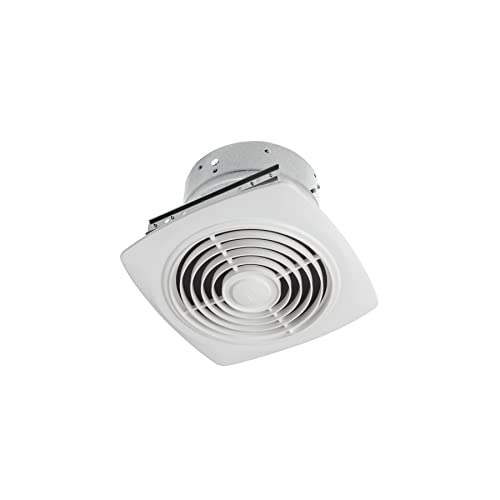
Broan-NuTone 505 Ceiling Exhaust Fan
Stale air tends to hang around long after the messy job is finished, especially in a closed garage where odors have nowhere useful to go. Opening the main door can help, but that also invites rain, insects, street dust, and unwanted attention. The Broan-NuTone 505 Ceiling Exhaust Fan offers a permanent vertical-discharge setup for anyone weighing options for the best exhaust fan for garage ceiling. Its 200 CFM airflow favors steady ventilation over brute-force air movement, while the 8.5-sone rating makes one tradeoff clear from the start: this fan prioritizes extraction, not whisper-quiet operation.
Broan-NuTone 505 Vertical Discharge Fan
The Broan-NuTone 505 uses a straightforward formula: an 8-inch ceiling fan, a galvanized steel housing, and a vertical discharge path. That arrangement suits spaces where air can be vented upward through an appropriate roof termination rather than pushed through a long horizontal duct run. The published 200 CFM capacity is considerably stronger than the output of many small bathroom fans, yet it remains modest beside large shutter-style garage ventilators. In plain English, it is built for regular odor and stale-air removal rather than rapidly flushing a cavernous workshop.
Vertical discharge can be a practical advantage when the ceiling sits directly below an accessible attic or roof area. A short, properly planned route generally creates less airflow resistance than a duct packed with bends, sagging sections, or abrupt transitions. That can help the fan operate closer to its stated capability. Still, the exhaust must terminate outdoors because dumping garage air into an attic merely shifts heat, moisture, and odors into another enclosed space.
The fan is described for removing tobacco smoke and cooking odors, which gives a useful clue about its intended ventilation role. In a garage, comparable everyday jobs might include clearing general stuffiness, mild workbench odors, or lingering air after ordinary household projects. It shouldn't be treated as dedicated protection against vehicle exhaust, welding fumes, concentrated solvents, or combustible vapors. Those hazards call for source-specific extraction, adequate replacement air, and safety practices designed around the actual contaminant.
Size matters just as much as airflow. The 8-inch format is easier to fit between ceiling framing than a bulky industrial shutter fan, particularly where garage-door tracks, lighting, and storage racks already compete for overhead room. That compact footprint can simplify placement, but it doesn't erase the need to inspect joists, wiring, insulation, and the planned roof outlet. The smaller ceiling profile is convenient only when the entire exhaust route is workable.
Airflow That Favors Steady Ventilation
The 200 CFM rating places this model in an interesting middle ground. It moves more air than a low-capacity residential vent, but it won't behave like a 600 or 1,000 CFM industrial fan built to purge a large garage quickly. That makes it more suitable for gradual air exchange in a compact space or for periodic operation after odors develop. A large three-car garage, a tall workshop, or a room producing substantial heat may expose the limits of its output.
Garage volume offers better guidance than floor area alone. A room with a high ceiling contains far more air than the same floor plan under an eight-foot ceiling, so the fan must work longer to complete a meaningful exchange. Long ducting, tight elbows, restrictive caps, and dirty grilles can reduce practical performance as well. The real airflow result depends on the complete installation, not just the number printed on the product description.
Replacement air is another piece people often miss. An exhaust fan can't keep pushing air outside unless fresh air can enter through a vent, a cracked window, a transfer grille, or another controlled opening. A tightly sealed garage may cause the fan to fight negative pressure, which can reduce airflow and increase noise. Giving the room a sensible intake path helps the ventilation cycle work without pulling air through random gaps around doors and walls.
Heat removal will depend heavily on placement and timing. Since warm air rises, a ceiling-mounted intake is naturally positioned near the hottest layer, which is exactly where a garage can feel oppressive during summer. Running the fan before heat peaks may be more effective than waiting until the room is already roasting. Even so, 200 CFM has realistic limits, and it won't cool the space below the outdoor temperature or replace insulation and shade.
Noise Is The Main Compromise
The specified 8.5-sone sound level is the biggest caution attached to this fan. Sones describe perceived loudness, and 8.5 sones sits well outside the quiet-ventilation category. In a garage used briefly for parking, storage, or noisy tool work, that may be tolerable. In a home gym, hobby room, office corner, or late-night workshop, the sound could become the detail that wears thin fastest.
Noise isn't always a deal-breaker because usage patterns matter. A fan that runs for ten or fifteen minutes after a smoky or smelly task doesn't need to fade into the background like a bedroom ceiling fixture. The obvious motor sound can even act as an informal reminder that the fan is still operating. But for long ventilation sessions, a lower-sone model would create a calmer environment.
Installation quality can add or subtract irritation. Loose mounting hardware, flexing panels, and poorly secured duct components may turn normal fan noise into buzzing, rattling, or vibration through the ceiling structure. The included steel mounting brackets provide a solid starting point, though the framing must also be firm and correctly spaced. A careful installer can prevent extra resonance, but can't transform an 8.5-sone fan into a quiet unit.
The noise-to-airflow balance is somewhat old-school: noticeable sound in exchange for direct, uncomplicated exhaust. That approach may suit a garage where compressors, shop vacuums, and power tools already set a louder baseline. It is less appealing where conversation, music, or concentration matters. The clearest weakness isn't hidden in fine print, so buyers can judge it before cutting an opening in the ceiling.
Installation And Vertical Venting
The galvanized steel housing is designed to install between ceiling joists, and the supplied brackets include keyhole slots intended to speed up positioning. That can make alignment less awkward than dealing with a housing that requires improvised supports. Even so, “easy installation” is relative when roof venting, electrical wiring, and ceiling cutting are involved. The physical fan may be simple to mount, while the surrounding construction still demands accurate planning.
A vertical-discharge design works best with a direct route above the fan. Roof type, attic access, insulation depth, and weatherproof flashing all influence whether that route is truly convenient. Cutting through a roof also introduces leak risk if the cap and flashing aren't installed correctly. The short exhaust path can be efficient, but only when water management receives the same attention as airflow.
Ceiling placement should avoid garage-door hardware, recessed lighting, storage lifts, and areas where joists block the required opening. The fan also needs enough service access for future cleaning or replacement. Burying the housing beneath deep insulation without preserving access can turn a basic maintenance job into a frustrating search. A few minutes spent mapping the overhead layout can prevent an expensive “well, that's awkward” moment later.
Electrical work deserves equal care. A hardwired ceiling exhaust fan should use the appropriate circuit, switch, connectors, and grounding method for the location. Garage conditions may introduce moisture, dust, and temperature swings that aren't present in a typical interior hallway. The fan's ENERGY STAR and HVI certifications are useful product credentials, but safe operation still depends on code-compliant installation.
Housing, Grille, And Everyday Upkeep
The galvanized steel housing gives the fan a more substantial backbone than a thin plastic enclosure. Galvanized metal resists ordinary corrosion better than untreated steel, which is helpful in garages that experience damp weather or seasonal condensation. It isn't invincible, though, and persistent moisture can still affect metal components over time. Keeping roof leaks and condensation under control protects the fan as much as routine cleaning does.
The polymeric grille offers a practical cosmetic perk because it can be painted to blend with the surrounding ceiling. That matters in a finished garage, converted workspace, or utility room where a bright white grille might stand out against darker paint. Paint should be applied without clogging the openings or restricting airflow. The paintable grille improves visual flexibility, but its vent slots still need to remain clear.
Dust will eventually collect on the grille and inside the intake area. Garages produce plenty of fine debris from cardboard, tires, woodworking, lawn equipment, and ordinary storage, so occasional cleaning isn't optional. A clogged grille forces the fan to work against additional resistance and may make the already noticeable sound more irritating. Gentle vacuuming and periodic inspection help preserve consistent air movement.
The 505's uncomplicated design should appeal to anyone who'd rather avoid sensors, apps, and layered electronic controls. A simple wall switch or suitable timer can cover most daily routines without turning ventilation into a programming exercise. The tradeoff is that automatic temperature or humidity response isn't listed among the supplied features. Its basic operating style keeps use predictable, though convenience depends on remembering to turn it on and off.
Strengths And Weaknesses In A Garage
The ceiling-ready format is the product's most relevant strength. Unlike wall-mounted shutter fans that are sometimes awkwardly considered for overhead installation, the Broan-NuTone 505 is specifically described as a ceiling ventilation fan. Its compact 8-inch size, joist-mount housing, and vertical outlet align with a true ceiling exhaust plan. That direct compatibility removes a major uncertainty before installation begins.
Steady 200 CFM ventilation is another useful trait for smaller spaces where extreme airflow isn't necessary. The fan can draw warm, stale air from the ceiling level without occupying wall space or interfering with shelves. It also avoids the visual bulk of an industrial louvered unit. For routine garage air exchange, compact overhead extraction may be more practical than oversized ventilation hardware.
The weaknesses are just as specific. The 8.5-sone noise level is high enough to rule it out for anyone seeking discreet background ventilation, and 200 CFM may feel underpowered in a large or intensely used garage. There is no stated variable-speed controller, thermostat, or humidity sensor in the supplied details. Those omissions keep the design simple but leave operating flexibility to external controls and personal routine.
The fan also isn't presented as a hazardous-fume extractor. Vehicle exhaust should never be managed by casually relying on a general ceiling fan, especially while an engine is running inside a closed garage. Paint spraying, fuel vapors, and welding smoke demand ventilation designed for those risks. The 505 is best understood as a general-purpose air-change fan, not specialized industrial safety equipment.
How It Differs From Quiet Ceiling Fans
Ventilation fans and room-circulating ceiling fans perform separate jobs. The Broan-NuTone 505 sends indoor air outdoors, while a conventional ceiling fan recirculates air to create a cooling breeze. Recirculation can improve comfort without removing odors, moisture, or stale air from the garage. The practical choice rests on whether the priority is air exchange or air movement.
Sound expectations differ as well. A ventilation fan may run briefly and make its presence obvious, whereas a circulation fan often stays on for hours near conversations or focused work. A quieter overhead breeze is discussed through quiet indoor ceiling fans, which address comfort rather than exhausting garage air outdoors. That distinction keeps the reference relevant without pretending the two fan types are interchangeable.
A circulating ceiling fan may feel better during a long project, but it can also stir dust and odors around the room. The 505 removes air from the upper zone, although its 200 CFM output won't create the broad breeze associated with large ceiling blades. Some garages may benefit from both functions, provided each unit is installed for its intended job. The key difference is simple: one refreshes room air, while the other mainly changes how that air feels.
The Broan-NuTone 505 makes the most sense where a true ceiling-mounted exhaust route is available, moderate airflow is acceptable, and noticeable operating sound isn't a major concern. Its vertical discharge, sturdy housing, mounting brackets, and paintable grille solve practical installation and appearance issues without adding complicated controls. Large workshops and quiet multipurpose garages may need a different balance of airflow and sound. In a compact garage with a direct roof path, though, its straightforward design can be easier to justify.
HG Power 8-Inch Variable Speed Exhaust Fan
Heat can collect above a garage workspace while the air near the open door still feels deceptively tolerable. Toss in paint odors, dusty equipment, damp storage, or the warmth left by a recently parked vehicle, and that trapped upper layer becomes hard to ignore. The HG Power 8-Inch Variable Speed Exhaust Fan approaches the problem with 576 CFM airflow, an adjustable controller, and an automatic damper, making it a plausible candidate for the best exhaust fan for garage ceiling. Its compact format and broad installation description are appealing, though placement, intake air, and sound expectations still deserve a careful look.
HG Power 8-Inch Speed-Controlled Fan
The central specification is a stated airflow capacity of 576 cubic feet per minute. That puts this fan well above small residential vent units that are designed mainly for bathrooms or compact utility areas. In a garage, the extra airflow can help remove accumulated warmth, ordinary odors, and stale air without requiring the footprint of a large industrial shutter fan. The actual result, naturally, will depend on room volume, intake openings, and any resistance around the exhaust path.
An 8-inch body gives the HG Power fan a useful balance between compact installation and meaningful airflow. A larger fan may move more air, but it also demands a bigger opening and more structural clearance. This model is easier to consider where joists, wall framing, lights, storage racks, or garage-door tracks leave limited room. That smaller size doesn't make installation automatic, but it can reduce the amount of rearranging required around the mounting area.
The supplied description lists applications that include ceilings, windows, attics, basements, kitchens, workshops, and grow rooms. That range suggests a flexible design rather than a fan locked into one narrow setting. Still, the mounting orientation should match the manufacturer's installation instructions, particularly because the automatic damper needs to open and close without binding. A ceiling installation that changes the damper's operating angle could behave differently from a vertical wall or window setup.
The fan is best interpreted as a general ventilation tool, not a substitute for specialized safety equipment. It can exchange warm or stale room air, yet vehicle exhaust, concentrated solvent fumes, and combustible vapors require more deliberate controls. Welding smoke and paint overspray may also need local extraction close to the source. The 576 CFM rating sounds substantial, but airflow volume alone doesn't determine whether a system is safe for hazardous contaminants.
Variable Speed Makes Airflow Easier To Live With
The included infinity speed controller is one of the more practical features in this package. Full output may be useful after a dusty job or during a hot afternoon, while a lower setting can support gentler background ventilation. That flexibility keeps the fan from behaving like a one-note appliance that is either roaring at maximum speed or doing nothing. In a garage used for several different tasks, adjustable airflow can be more useful than a higher fixed CFM number.
Lowering the speed may also ease the usual noise-versus-airflow tradeoff. The supplied information says the motor is designed to maximize airflow while reducing noise and energy consumption, but it doesn't provide a specific sound rating. Without a decibel or sone figure, quiet operation shouldn't be assumed. The sensible expectation is that lower settings will generally sound less intrusive, while maximum speed will be easier to hear.
Speed control can help during seasonal changes as well. Mild spring weather may call for a steady trickle of exhaust, while midsummer heat can justify a stronger pull from the upper part of the garage. That range prevents unnecessary airflow from making the room drafty during cooler conditions. It also gives more control over replacement-air demand, which becomes increasingly important as exhaust speed rises.
The controller's location deserves a little thought. Mounting it near the usual work area makes adjustments convenient, but it should remain protected from dust, accidental impacts, and moisture. A control box placed behind shelving or near moving garage-door hardware quickly becomes a nuisance. Practical placement turns variable-speed operation from a specification into something that actually improves daily use.
Motor Design And Everyday Air Movement
HG Power describes the unit as using a motor intended to reduce friction while extending the extractor fan's service life. Less internal friction can support smoother operation and reduce unnecessary mechanical strain. That claim fits the needs of a fan that may run for extended periods in an attic, workshop, or garage. The supplied details don't state the motor's horsepower, amperage, or rotational speed, so those figures shouldn't be guessed.
The impeller and motor pairing matters more than appearance alone. A fan can look rugged yet lose much of its usefulness if the blades struggle against a restrictive vent cover or poorly planned opening. Smooth airflow on both sides of the unit gives the motor a better chance to deliver useful ventilation. Obstructions, tight screens, and undersized exterior covers can quietly rob performance even while the fan continues spinning.
Air intake is the other half of the equation. Exhausting 576 cubic feet of air every minute requires replacement air to enter from somewhere, whether through a louver, transfer grille, window, or partially opened door. A tightly sealed garage may cause negative pressure, weaker exhaust, or drafts from random gaps. A planned air inlet path helps the fan move air through the room instead of merely tugging against a closed box.
Placement should encourage fresh air to cross the occupied portion of the garage before reaching the exhaust fan. An intake and exhaust positioned inches apart may create a shortcut that leaves stale pockets untouched. Locating them across the room from one another usually promotes broader circulation. That simple layout choice can matter as much as the difference between two nearby CFM ratings.
Metal Construction And Automatic Damper
The shell and impeller use a baking-varnish metal construction, according to the provided product details. A coated metal housing makes sense in a garage, where temperature changes, dust, and occasional bumps can be rough on lightweight plastic parts. The finish is intended to support durability while helping protect the metal surface. Persistent moisture can still cause trouble, though, especially if condensation or exterior water reaches unsealed edges.
The built-in damper opens while the fan is exhausting air and closes after operation stops. That design helps limit the return of outdoor air, odors, polluted air, and exhaust gases through the same opening. It can also reduce entry points for loose debris and insects. The automatic closure is a useful convenience, although a standard damper shouldn't be mistaken for an airtight or insulated barrier.
Damper movement needs regular attention in a dusty environment. Fine debris can gather around hinges and edges, eventually causing the flap to stick, chatter, or stop closing completely. A quick inspection and gentle cleaning can preserve smoother operation. Keeping the damper path clear also prevents the fan from pushing against a partially blocked outlet.
Weather exposure changes the installation requirements. A window or exterior-wall setup may need proper flashing, sealing, and protection from wind-driven rain. A ceiling route may require a suitable duct or roof termination rather than releasing air into an enclosed attic. The fan's metal construction is helpful, but moisture-conscious installation remains the stronger defense against premature wear.
Ceiling Installation Requires Careful Planning
A ceiling exhaust position has one obvious advantage: hot air naturally rises. Pulling air from the upper zone can reduce the pocket of warmth that often lingers above a workbench, vehicle, or storage loft. That makes ceiling placement attractive in garages where summer heat is the main frustration. The exhaust path still needs to carry that air fully outdoors rather than into a roof cavity.
Joist spacing, electrical lines, insulation, and garage-door hardware can complicate what appears to be a simple cutout. The fan needs firm structural support so motor vibration doesn't travel through loose ceiling panels. A poorly braced opening can turn normal mechanical sound into an irritating rattle. Solid framing supports both stable operation and damper movement.
Duct resistance also changes performance. Long runs, crushed flexible ducting, sharp bends, and restrictive caps can reduce practical airflow below the published figure. A short and direct outlet path usually makes better use of the fan's 576 CFM capacity. Where a straight route isn't possible, smooth ducting and gradual turns can protect more of the usable airflow.
Ceiling compatibility shouldn't be confused with universal overhead mounting. The fan's instructions should confirm the correct orientation, clearances, and damper position before installation begins. Gravity-operated parts may not function identically at every angle. That small check prevents the headache of mounting a capable fan in a way that compromises its backflow protection.
Strengths And Practical Limitations
The strongest feature is the combination of 576 CFM output and adjustable speed. It provides enough published airflow to interest anyone who has outgrown a small bathroom-style fan, yet it doesn't require running at full power for every task. The controller gives the fan more range across hot days, light ventilation periods, and post-project clearing. That flexibility is a practical advantage in a space that rarely has the same airflow needs all day.
The metal housing, coated impeller, and automatic damper form another sensible group of benefits. Together, they address durability, airflow control, and unwanted backdraft without adding a separate manual shutter. The 8-inch format may also fit more locations than a broad industrial fan. These space-conscious dimensions are useful where overhead storage and mechanical equipment already crowd the garage.
The missing noise specification is a notable weakness. Marketing language about quiet ventilation doesn't reveal how the fan will sound at full speed, especially after mounting resonance enters the picture. Anyone planning to use the garage as an office, studio, or reading space won't have a precise loudness figure to evaluate. The adjustable controller offers a workaround at lower speeds, but it doesn't replace published sound data.
The product details also don't provide stated coverage area, energy certification, amperage, or a thermostat. Those omissions don't make the fan ineffective, but they leave fewer numbers for planning electrical load and automatic operation. Temperature-based cycling would require a compatible external control if desired. This is primarily a manually adjustable ventilation fan, not a fully automated climate-management system.
How It Differs From A Decorative Ceiling Fan
An exhaust fan and a decorative ceiling fan may share overhead space, but they solve separate problems. The HG Power unit removes indoor air through an exterior opening, while a standard ceiling fan circulates the same room air to create a breeze. Circulation can improve comfort without clearing trapped odors or replacing stale air. The deciding issue is air exchange versus perceived cooling.
Style also plays a very different role. This exhaust fan is functional equipment with a metal housing and damper, not a centerpiece designed to complement furniture or lighting. Decorative circulation options serve another purpose, and related bedroom design considerations appear in chandelier ceiling fans where appearance and gentle room airflow carry more weight. That contrast helps separate permanent ventilation from overhead comfort and décor.
A decorative ceiling fan may run quietly for hours, yet it won't send garage heat or odors outside. The HG Power fan may provide stronger room exchange, but installation involves an exterior path, structural support, and replacement air. Some workspaces can benefit from both systems, provided each is used for its intended role. The clear difference lies in whether the goal is moving air around or removing it from the building.
The HG Power model fits a garage where adjustable ventilation, compact dimensions, and a metal damper assembly matter more than automated controls or published sound data. Its 576 CFM airflow offers a meaningful step above small utility fans, while the infinity controller makes that capacity easier to manage. Ceiling installation can be practical if the orientation is approved and the exhaust route remains short and properly terminated. Poor intake planning or a restrictive outlet, on the other hand, can blunt the advantage of an otherwise capable fan.
HG Power 10-Inch Garage Exhaust Fan
A closed garage can go from merely warm to downright unpleasant once heat, moisture, and stubborn odors gather near the roofline. Cracking the main door helps for a moment, but it also lets in rain, insects, and whatever happens to be blowing down the driveway. The HG Power 10-Inch Garage Exhaust Fan attacks that trapped-air problem with 988 CFM airflow, a metal body, an automatic backdraft damper, and plug-in operation. For anyone researching the best exhaust fan for garage ceiling, its strong extraction capacity is appealing, though its wall-mount design calls for a realistic look at placement before installation begins.
HG Power 10-Inch Metal Exhaust Fan
The standout number is the stated 988 cubic feet per minute airflow rate. That capacity gives this 10-inch unit considerably more muscle than a small residential ventilation fan intended for a bathroom or utility closet. In a garage, it can move accumulated warmth, smoke, steam, ordinary odors, and stale air outside at a brisker pace. Actual performance will still depend on the opening, mounting position, and the amount of replacement air entering the room.
The fan's 10-inch format lands in a practical middle ground. It is large enough to provide serious air movement without demanding the opening required by a broad commercial shutter fan. That can matter in a crowded garage where shelving, lights, electrical runs, and garage-door hardware compete for every usable inch. Still, a 10-inch fan isn't tiny, so measuring the intended mounting area before cutting anything remains essential.
HG Power describes this model as suitable for garages, workshops, sheds, basements, kitchens, warehouses, and chicken coops. Those applications share a common need: moving unwanted air out rather than merely stirring it around. The fan's extractor-style operation makes sense where heat and general odors build over time. It shouldn't be mistaken for specialized equipment intended to capture hazardous fumes directly at their source.
Vehicle exhaust, fuel vapors, welding smoke, and concentrated solvent fumes demand more careful ventilation planning than one general exhaust fan can provide. High CFM helps exchange room air, but it doesn't automatically make every contaminant safe. Source extraction, suitable intake air, and proper work practices may still be required. The HG Power model is best treated as a general garage ventilator, not a replacement for purpose-designed industrial safety systems.
Strong Airflow Without Complicated Controls
The fan uses a powerful motor to produce its stated 988 CFM output, giving it enough published capacity to clear a stuffy space more aggressively than lower-output utility fans. That can be handy after a humid afternoon, a dusty repair job, or several hours with equipment adding heat to the room. Fast air exchange also means the fan may not need to run as long as a weaker unit to create a noticeable change. Room layout and intake conditions, however, will decide how evenly that airflow reaches the corners.
This model includes a built-in switch rather than a variable-speed controller. The arrangement keeps operation simple: plug it in, switch it on, and let it run at its designed output. That straightforward setup suits a garage where ventilation is needed in short, deliberate bursts. The tradeoff is limited airflow control, since there is no supplied way to dial the fan down for quieter background operation.
A fixed-speed fan can feel refreshingly uncomplicated, but full output isn't necessary for every situation. Mild weather or a quick odor purge may call for less airflow than a hot workshop afternoon. Without an included speed controller, the HG Power unit behaves more like a direct tool than a finely adjustable appliance. That makes the on-or-off design easy to understand, though less flexible than thermostat-controlled or variable-speed alternatives.
The product information mentions reduced power consumption and energy-efficient operation, but no wattage or amperage figure is provided. That means exact running costs shouldn't be guessed. A high-output motor may clear air quickly, yet operating time and local electricity rates will affect the real expense. The safest takeaway is that efficient ventilation depends on using the fan only as long as the space requires.
Plug-In Convenience Changes The Installation
The attached 8-foot power cord is one of the fan's most practical details. Many permanent exhaust units require hardwiring, a dedicated switch, and additional electrical setup before they can run. This model arrives with a built-in switch and enough cord length to reach a nearby outlet in many garages or workshops. That can reduce installation complexity, provided the outlet location and cord routing remain safe.
Plug-in operation doesn't eliminate every installation concern. The cord shouldn't hang across a walkway, rest against sharp metal edges, or interfere with a moving garage door. Extension cords are best avoided unless the manufacturer permits them and the electrical load is properly supported. Thoughtful cord management keeps the convenient setup from turning into a snagging or tripping problem.
The power cord also makes the fan easier to test before committing to a permanent opening. Motor operation, switch function, and damper movement can be checked while the unit remains accessible. That small step may reveal shipping damage or an obstruction before the fan is fixed into a wall. Even so, test operation doesn't replace secure mounting and proper exterior sealing.
Ceiling placement raises a bigger question because the product is described as a portable wall-mount fan. A wall-mounted orientation generally allows the damper to respond to airflow and gravity as intended. Installing the unit flat overhead may alter how the check valve opens, closes, or rests when the motor is off. Anyone focused on a true ceiling installation should confirm that orientation in the manufacturer's instructions rather than assuming wall and ceiling mounting are interchangeable.
Metal Construction For Demanding Spaces
The housing is made from durable metal materials, a sensible choice for a garage where equipment gets exposed to dust, changing temperatures, and occasional bumps. Metal construction can provide better rigidity than a thin plastic shell, especially around a high-output motor. A solid frame also helps the fan stay aligned inside the mounting opening. That rigidity matters because flexing panels can amplify vibration and shorten the useful life of surrounding hardware.
The fan is intended for regular use without frequent breakdowns, according to the supplied description. No specific service-life figure is stated, so long-term durability can't be reduced to a neat number. Installation quality, cleaning habits, moisture exposure, and operating hours will all influence how the unit ages. The sturdy housing gives it a promising foundation, but upkeep still carries weight.
Garages are hard on ventilation equipment because dust tends to collect where airflow is strongest. Fine debris can settle on the guard, blades, motor area, and damper edges, gradually restricting movement. Periodic cleaning helps preserve airflow and prevents the shutter from sticking half open. A vacuum and careful wipe-down can protect the air path without turning maintenance into a major chore.
Metal doesn't mean weatherproof. An exterior opening still needs proper flashing, sealing, and protection from rain. Condensation can also form where warm indoor air meets a cold metal surface during winter. The housing may tolerate demanding surroundings, but moisture management remains essential for protecting the fan and the building around it.
Backdraft Damper And Airflow Direction
The built-in backdraft damper is designed to prevent reverse airflow after the fan stops. That feature helps limit outside odors, exhaust gases, insects, and loose debris from drifting back through the opening. It also reduces uncontrolled drafts compared with a permanently open vent. The damper adds useful protection, though it shouldn't be treated as an airtight or heavily insulated barrier.
Damper performance depends on clean movement. Dust, paint residue, grease, or a crooked installation can make the flap stick or chatter. A partially closed damper restricts outgoing airflow and forces the motor to work against unnecessary resistance. Keeping the check valve unobstructed supports both extraction and quieter operation.
Wind can influence the damper as well. Strong exterior gusts may press against it, create rattling, or reduce the amount of air leaving the garage. A properly positioned exterior hood can provide some protection while preserving adequate outlet area. Any added cover must remain large enough to avoid choking the fan's 988 CFM airflow.
Orientation deserves another mention because gravity-operated dampers often behave differently on a wall than on a ceiling. A flap designed to hang vertically may not close correctly when laid flat. That could weaken backdraft control or leave the motor pushing against the damper. The fan's wall-mount description is therefore a genuine installation limitation, not a minor wording detail.
Noise, Vibration, And Workshop Comfort
The provided specifications don't include a decibel or sone rating. That missing number makes it impossible to judge exact loudness before installation. A 988 CFM metal exhaust fan is likely to be noticeable, particularly in a small garage with hard walls and little sound absorption. The lack of published noise data is worth considering if the space doubles as an office, gym, studio, or quiet hobby room.
Mounting quality can change the character of the sound. A fan secured to sturdy framing may produce a steady motor and airflow note, while a loose panel can add buzzing, rattling, or drumming. Rubber isolation material may help in some installations if it doesn't compromise mounting safety. Solid support is the first defense against structure-borne vibration.
Full airflow may be acceptable during brief ventilation sessions even if the fan isn't quiet. Workshop tools, shop vacuums, and compressors already create a louder baseline, so the fan may blend into active project time. Long operating periods are another story, especially with no included speed adjustment. The central compromise is powerful extraction versus acoustic comfort.
A ceiling position can sometimes make mechanical noise more noticeable because vibration travels through joists and ceiling panels. A high exterior wall may contain that resonance more effectively, depending on the building structure. Wall mounting also keeps the installation closer to the product's stated design. For a garage that values conversation or concentration, placement may matter nearly as much as the fan itself.
Getting Useful Air Exchange From 988 CFM
An exhaust fan can't move 988 cubic feet of air out each minute unless replacement air can enter. A sealed garage may force the motor to pull through tiny gaps around doors, outlets, and wall joints. That restriction reduces practical airflow and may create unwanted drafts from adjoining spaces. A planned fresh-air intake lets the fan work with the room rather than against it.
Intake location affects the circulation pattern. Fresh air entering directly beside the exhaust fan may leave distant corners hot and stagnant. Positioning the intake across the room encourages air to pass through more of the garage before leaving. That broader path helps clear odor pockets and trapped warmth rather than creating a short loop near the fan.
Garage size matters, but ceiling height and room shape matter too. A tall workshop contains more air than a low-ceiling garage with the same floor area. Storage racks, parked vehicles, and partition walls can also interrupt circulation. The stated airflow is promising, yet room geometry decides whether that capacity produces an even result.
Opening the main garage door isn't always the best intake strategy because it can overwhelm the controlled flow path. A smaller dedicated vent or partially opened window may provide steadier replacement air without exposing the entire room. The right intake size depends on the installation and local requirements. Balanced airflow usually feels less chaotic and lets the exhaust fan perform closer to its intended output.
Strengths And Weaknesses In Real Use
The clearest strength is high airflow in a compact 10-inch body. A published 988 CFM gives the fan enough capacity to interest anyone dealing with persistent garage heat or stale air. The automatic damper and metal construction support that practical, work-focused design. It feels built around extraction first, without piling on controls that may never get used.
The plug-in setup is another meaningful advantage. An 8-foot cord and integrated switch reduce the need for a separate control box or immediate hardwiring. That can make the unit easier to position in a workshop, shed, or basement with an accessible outlet. The simplified electrical setup won't solve structural work, but it removes one layer of complication.
The main weakness is the mismatch between wall-oriented hardware and a search for the best exhaust fan for garage ceiling. The fan may move plenty of air near the roofline when installed on a high wall, but that isn't the same as being approved for horizontal ceiling mounting. Damper behavior and structural support need confirmation before overhead use. A purpose-built ceiling model may be the safer fit where the fan must sit flat above the room.
Fixed-speed operation is another limitation. Maximum airflow can be useful, yet it offers no gentler setting for cool days or extended background ventilation. Missing sound data also leaves uncertainty about comfort during long sessions. The HG Power fan favors simple, forceful ventilation over nuanced control and quiet-room manners.
How It Differs From A Kitchen Ceiling Fan
An extractor fan and a room-circulating ceiling fan handle entirely different jobs. The HG Power unit pushes indoor air outside, while a conventional ceiling fan keeps the existing air moving around the room. Circulation creates a breeze but doesn't remove odors, pollutants, or trapped heat from the building. The practical dividing line is air removal versus personal cooling.
Kitchen ceiling fans often place greater emphasis on appearance, lighting, and comfortable circulation during long periods of use. A related design perspective appears in kitchen ceiling fans with lights, where illumination and room airflow matter more than exhausting nearly 1,000 CFM outdoors. The two fan types may both occupy elevated positions, yet their installation methods and goals remain separate. Treating them as interchangeable would lead to the wrong expectations.
A decorative ceiling fan generally needs clear blade space and secure overhead support, but it doesn't require cutting an exhaust opening through an exterior surface. The HG Power fan avoids swinging blades and saves floor space, though it needs a route that actually releases air outdoors. One changes how the room feels; the other changes the air inside it. That functional difference should guide the purchase before style enters the discussion.
The HG Power 10-Inch model makes the most sense where strong air exchange, metal construction, a built-in switch, and plug-in convenience outweigh the need for variable speed or published noise figures. Its 988 CFM capacity can suit a garage, shed, workshop, or basement with enough intake air and a properly sized outlet. A high-wall installation appears more consistent with the supplied design than a flat ceiling position. Used within those limits, it offers straightforward ventilation without pretending to be a quiet decorative fixture or a specialized hazardous-fume system.
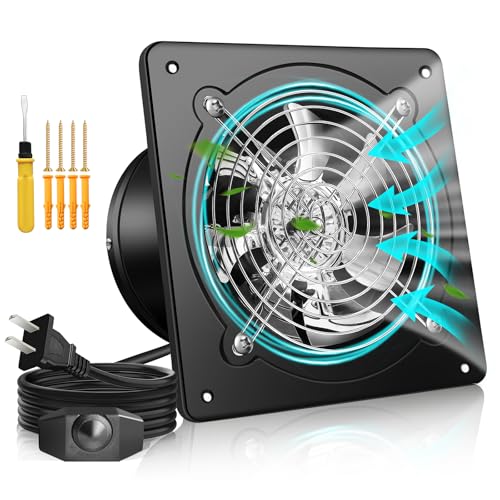
Voltset 10-Inch Industrial Exhaust Fan
Heavy, stale air can make a garage feel worn out before the first tool even leaves the drawer. Heat settles overhead, smoke lingers after certain projects, and moisture has a habit of sticking around in corners where fresh air rarely reaches. The Voltset 10-Inch Industrial Exhaust Fan addresses those problems with 988 CFM airflow, an 80-watt motor, plug-in operation, and a corrosion-resistant steel body. For anyone weighing the best exhaust fan for garage ceiling, its airflow is impressive, though the wall-mount and gable-style design deserves close attention before anyone treats it as a direct ceiling fixture.
Voltset 10-Inch Garage Exhaust Fan
The core of this fan is a 10-inch blade assembly driven by a motor rated to move 988 cubic feet of air per minute. That figure gives the unit enough stated capacity to handle larger garages, workshops, sheds, greenhouses, and other spaces where small household vent fans would feel underpowered. Strong airflow can clear ordinary smoke, steam, odors, and general stuffiness more quickly than a low-output unit. Real performance, however, will still depend on the size of the room and how freely replacement air can enter.
Its design leans toward practical ventilation rather than polished residential appearance. The silver metal body, exposed industrial form, and direct airflow path fit a garage or utility area better than a finished living space. That isn't a drawback for the right installation because function takes priority in a workshop filled with shelving, equipment, and stored materials. The fan looks like a working tool, and that is exactly the role it is meant to fill.
The product description positions it for garages, attics, greenhouses, chicken coops, smoking houses, farms, and commercial spaces. Those examples point to a common strength: moving a large volume of unwanted air without relying on complicated controls. It can serve as a through-wall exhaust fan or powered gable vent where the building layout supports that route. A true horizontal ceiling installation is less clear, particularly because the stated applications emphasize walls, attics, and gables.
That distinction matters because mounting orientation affects more than convenience. Fan frames, guards, shutters, and motor bearings may be designed around a particular position. Installing equipment outside its intended orientation can create vibration, reduce service life, or interfere with airflow. The Voltset fan therefore makes more sense as a high-wall or gable-mounted garage ventilator unless the manufacturer's instructions specifically approve flat ceiling use.
Airflow Built For Fast Garage Ventilation
The published 988 CFM airflow is the feature most likely to catch attention. In practical terms, it gives the fan enough muscle to exchange air faster than many compact ceiling vents designed for bathrooms or laundry rooms. That can be useful after a garage has absorbed afternoon heat or during a project that creates ordinary smoke and odors. It won't change the outdoor temperature, but it can remove the trapped indoor air that makes the room feel stuffier than it should.
High airflow also helps in spaces with tall ceilings or open rafters. A garage with extra height contains considerably more air than a low-ceiling room with the same floor area, so weak ventilation may barely make a dent. The Voltset's capacity gives it a better chance of pulling warm air from the upper portion of the room. Still, room volume and layout matter more than floor area alone.
Obstacles can reduce the benefit of a powerful motor. Packed shelves, parked vehicles, interior partitions, and storage lofts may create dead zones where air barely moves. Placing the exhaust point across from the main intake opening encourages airflow to travel through more of the room. That setup makes better use of the fan's large-volume extraction instead of letting fresh air take a short path directly to the outlet.
The fan shouldn't be treated as a complete answer for hazardous fumes. Vehicle exhaust, concentrated solvent vapors, welding smoke, and combustible gases require ventilation designed around the specific risk. A general exhaust fan can improve air exchange, but it doesn't guarantee safe contaminant levels. The Voltset model is better viewed as a heat, odor, and stale-air remover rather than specialized industrial safety equipment.
An 80-Watt Motor With Practical Efficiency
The motor is rated at 80 watts, giving buyers a concrete power figure instead of a vague efficiency claim. That is useful because airflow and energy draw can be considered together rather than separately. Moving 988 CFM with an 80-watt motor suggests a design focused on strong ventilation without the electrical demand of much larger industrial equipment. Actual operating cost will still depend on local rates and how many hours the fan runs.
Short ventilation cycles may be the most sensible way to use that output. Running the fan after a hot afternoon or odor-producing task can clear the room without leaving it on all day. A timer could also help where users tend to forget the switch, provided any added control is electrically compatible. The combination of high airflow and limited runtime may be more economical than relying on a weaker fan for long stretches.
No variable-speed controller is mentioned in the supplied description. That means the fan appears to operate at its designed output whenever it is switched on. Full power is useful for fast extraction, though it leaves less flexibility during mild weather or quiet work. The fixed-speed setup favors simplicity over fine adjustment.
An 80-watt rating doesn't tell the entire story of electrical installation. Outlet capacity, circuit condition, moisture exposure, and local code still matter in a garage. The plug and cord should remain protected from sharp edges, moving hardware, and areas where water may collect. Energy efficiency is worthwhile, but safe power delivery remains the first priority.
Plug-In Operation Keeps Setup Straightforward
The built-in power cord and on-off switch remove one of the usual hurdles associated with permanent exhaust equipment. Instead of immediately hiring someone to add a wall switch or hardwired connection, the fan can connect to a suitable nearby outlet. That makes the Voltset model more approachable for workshops and sheds with existing electrical access. The plug-in design also makes initial testing easier before the unit is fully mounted.
Simple doesn't mean careless, though. A dangling cord can snag tools, rub against sheet metal, or interfere with a garage door track. Securing it along a protected route keeps the installation tidy and reduces accidental damage. The cord should never become the only thing supporting the fan or hanging close to the moving blades.
The integrated switch is convenient for a fan mounted within comfortable reach. A high-wall or gable installation may place that switch well above head level, which makes daily operation less practical. In that situation, an approved switched outlet or compatible remote control arrangement may be worth considering. The switch location should be planned before the mounting opening is finalized.
Plug-in operation also makes replacement less involved than a fully hardwired setup. If the fan needs servicing, power can be disconnected without opening a junction box. That convenience is especially useful in dusty utility spaces where maintenance should stay simple. Even so, the mounting hardware and exterior opening still require the same careful workmanship as a permanent installation.
Steel Construction Suits Rougher Workspaces
The fan is built from heavy-duty corrosion-resistant steel, which is a sensible material for garages and farm buildings. Metal housing offers better rigidity than flimsy plastic, helping the frame stay aligned around a powerful motor. It also tolerates the occasional bump from stored lumber, ladders, or equipment more gracefully. That toughness fits spaces where ventilation equipment is expected to work rather than look delicate.
Corrosion resistance is useful in buildings that experience humidity, temperature swings, or condensation. Greenhouses, chicken coops, sheds, and garages can all become damp under the wrong conditions. A coated or treated steel surface slows deterioration, though it doesn't make the fan immune to standing water or constant exterior exposure. Proper sealing remains part of long-term durability.
The large blades and metal body will collect dust over time. Fine debris can settle on blade edges, guards, and nearby surfaces, gradually reducing airflow or causing imbalance. Periodic cleaning helps the motor move air without carrying unnecessary buildup. A clean blade and guard assembly also tends to produce less vibration than one coated in grime.
Metal construction can transmit sound more readily than a soft plastic housing. If the fan is bolted to a loose panel, normal motor vibration may become a buzz or rattle throughout the wall. Firm framing and evenly tightened fasteners help keep that under control. The material is a strength, but mounting quality determines whether that strength feels solid or noisy.
Noise Is Noticeable At Close Range
The supplied description openly notes that there will be some noise when standing close to the fan. That honest warning matters because a 988 CFM industrial unit isn't designed to disappear into the background. The airflow itself will create sound, even if the motor operates smoothly. Anyone expecting the hush of a small residential ceiling vent should adjust those expectations.
Distance changes the experience. A fan mounted high on an exterior wall may sound less intrusive from the main workbench than one installed directly overhead. Hard concrete floors and bare walls can reflect sound, while shelves and stored materials may soften it slightly. The perceived noise level will therefore vary from one garage to another.
Short, purposeful use makes the tradeoff easier to accept. Running the fan after a smoky task or during peak afternoon heat may be worth the temporary noise. Continuous operation during detailed woodworking, phone calls, or quiet hobbies could become tiring. The Voltset model favors air-moving power over acoustic subtlety.
No decibel or sone rating is included in the provided details, so exact loudness shouldn't be invented. Buyers can only rely on the stated warning that close-range operation is audible. Secure mounting, clear blades, and a stable wall can prevent extra rattling, but they won't remove normal motor and airflow sound. The key is matching the fan to a space where noise is acceptable during ventilation periods.
Fresh-Air Intake Makes The Fan More Effective
An exhaust fan can only remove air efficiently if new air has somewhere to enter. A tightly sealed garage may force the Voltset unit to pull through narrow cracks around doors, outlets, and framing. That restriction can reduce airflow and place unnecessary strain on the system. A planned replacement-air opening lets the motor work closer to its intended capacity.
Fresh air should enter far enough from the fan to cross the room before leaving. Placing an intake directly beside the exhaust can create a shortcut that leaves warm corners untouched. A vent, window, or partially opened door on the opposite side often produces a broader sweep. That arrangement improves whole-room circulation rather than simply moving air near one wall.
Outdoor conditions matter too. Pulling in humid summer air may remove heat while increasing moisture, and drawing in freezing air during winter can make the garage uncomfortable quickly. Full-output ventilation is therefore best used with some awareness of weather. Strong airflow is useful, but timing and duration keep it from creating a different problem.
Combustion appliances require additional caution. A powerful exhaust fan can create negative pressure that affects water heaters, furnaces, or other fuel-burning equipment located in or near the garage. Proper makeup air and professional evaluation may be necessary in those situations. The fan's capacity is an asset only when the building's broader airflow remains safe.
Wall And Gable Mounting Make The Most Sense
The Voltset fan is described for wall mounting, attic ventilation, powered gable use, and through-wall garage exhaust. Those applications place the unit in a vertical or near-vertical position, which aligns with common industrial exhaust layouts. A high wall can still capture rising heat effectively without putting the fan flat in the ceiling. This makes upper-wall placement a practical alternative for many garages.
A true ceiling installation introduces different structural demands. The fan's weight must be supported overhead, the motor orientation must be approved, and any shutter or guard must operate safely. Vibrations may also travel through joists and ceiling panels more readily than through a reinforced exterior wall. Without explicit ceiling-mount approval, forcing the unit overhead is a gamble.
Gable placement can be particularly useful in garages with open attic space. Warm air rises naturally toward the upper wall, where the fan can remove it before it settles back into the occupied area. That approach avoids cutting a roof opening, reducing one source of potential leaks. A properly flashed wall opening still matters, but the exhaust route may be easier to manage.
The best installation is the one that respects both airflow and the product's intended orientation. A shorter path, a clear exterior outlet, solid framing, and adequate intake air give the Voltset fan the best chance to perform. Mounting it in an awkward ceiling location simply to match a search phrase could create more trouble than benefit. Its real strength lies in high-level wall ventilation, not uncertain overhead improvisation.
Strengths And Weaknesses In Daily Use
The strongest point is the combination of 988 CFM airflow and an 80-watt motor. That pairing gives the fan a compelling balance of ventilation capacity and stated power use. It can clear ordinary garage heat, odors, and smoke faster than many compact residential fans. For larger utility spaces, that directness is valuable.
Plug-in operation is another meaningful advantage. The attached cord and built-in switch simplify power access and avoid immediate hardwiring. Steel construction adds a rugged feel suited to workshops, sheds, and farm buildings. Together, those features create a practical industrial package without complicated electronics.
The biggest weakness is the lack of variable speed. Full output may be more airflow and more sound than a small garage needs during light use. There is also no thermostat or automatic environmental control mentioned in the supplied information. The fan relies on manual on-off operation, which is easy but not especially nuanced.
Mounting compatibility is the other major limitation. Although the product is relevant to garage ventilation, it is described primarily as a wall, gable, attic, and through-wall fan. Someone specifically needing a horizontal ceiling unit may be better served by equipment designed for that position. The Voltset's strengths remain clear, but orientation is the deciding caveat.
How It Differs From A Downrod Ceiling Fan
An exhaust fan removes indoor air, while a downrod ceiling fan simply circulates it. The Voltset unit sends heat, odors, and general pollutants toward an exterior outlet instead of pushing them around the garage. A circulation fan can create a cooling breeze, yet the stale air remains inside. The central difference is air exchange versus air movement.
Downrod fans are usually selected for rooms with higher ceilings where the blades need to hang closer to the occupied zone. Related design considerations appear in downrod ceiling fans with lights, where circulation and illumination matter more than exhausting air outdoors. That category serves comfort and room function, while the Voltset fan serves ventilation. Sharing an elevated mounting area doesn't make the products interchangeable.
A downrod fan can operate for hours during work or recreation, often with less concern about ducting or exterior openings. The Voltset fan needs a direct outlet and enough intake air to support its 988 CFM capacity. It may run for shorter periods, but those periods produce actual air replacement. The installation burden is greater, while the ventilation result is more direct.
The Voltset 10-Inch Industrial Exhaust Fan fits garages that need strong, uncomplicated airflow and have a suitable wall or gable location. Its steel body, 80-watt motor, built-in switch, and plug-in cord keep the design practical rather than elaborate. Close-range noise and fixed-speed operation are fair tradeoffs to consider, especially in multipurpose garages. Used in the mounting orientation it was designed around, it offers forceful ventilation without pretending to be a quiet decorative ceiling fixture.

Best Quiet Ceiling Fan For Bedroom 2026 Ultimate Comfort Picks

Best Ceiling Fan For Master Bedroom 2026 With Ultimate Comfort

Best White Ceiling Fan With Light For Bedroom 2026 Top Picks

Best Quorum Medallion Ceiling Fan 2026 With Style & Breeze
Best Outdoor Fan For Pergola 2026 Comfort Boost

Best Ceiling Fan For Great Room 2026 With Ultimate Comfort

Best Outdoor DC Ceiling Fans 2026 For Breezy Comfort
Best ceiling exhaust bath fan with light and heater 2026