Best Extractor Fan for Bathroom 2026: Quiet Picks

A best extractor fan for bathroom setup should remove damp air before mirrors stay fogged, towels begin smelling musty, or dark marks creep across painted corners. Strong airflow matters, but raw power alone doesn't tell the whole story. A fan that's annoyingly loud often gets switched off too soon, while an undersized model may hum for ages without clearing the room. The sweet spot combines suitable extraction capacity, restrained noise, and controls that match everyday bathing habits.
Airflow capacity needs to suit both the room size and the length of the duct run. Compact bathrooms with a short wall outlet can often rely on a standard axial fan, since the air has little distance to travel. Longer ducts, ceiling installations, or routes with several bends create resistance, so a centrifugal or mixed-flow design usually handles the job more confidently. Otherwise, the quoted airflow may look reassuring on the box yet drop sharply once the fan is installed.
Noise deserves close attention, especially where early showers or late-night routines can disturb nearby bedrooms. A lower decibel rating helps, though installation quality also affects the final sound. Loose panels, rigid duct joints, and poorly secured grilles can turn a modest motor into an irritating rattle. Quiet operation comes from a well-designed fan and a careful fit, not from one specification alone.
Controls can solve another common headache: forgetting to leave the fan running after the moisture source has stopped. A timer model continues extracting for a set period after the light is switched off, while a humidity sensor starts or extends operation when moisture rises. Pull-cord versions offer direct control but depend on memory, and basic switched models may stop before the room dries. Humidity control costs more, yet it can make sense in bathrooms where condensation lingers or ventilation habits aren't consistent.
Maintenance is easy to overlook until dust builds across the grille and airflow weakens. Removable covers, accessible impellers, and smooth internal surfaces make routine cleaning less of a chore. Backdraft shutters also help stop cold air, insects, and outside odors from entering through the duct, although stiff shutters can add resistance or click in windy weather. A practical bathroom ventilation fan should be simple enough to clean every few months without taking half the ceiling apart.
Safety and placement matter just as much as comfort. Bathroom electrical zones limit where certain fans and switches can be installed, so the unit's ingress protection rating must suit its position. Low-voltage or suitably protected models may be needed close to a shower or bath, and electrical work should follow local requirements. Guessing here isn't worth the risk, particularly in a room where moisture and electricity share tight quarters.
Good extraction won't fix every damp problem on its own. A fan still needs replacement air through a door gap, transfer grille, or another suitable opening, or it'll struggle to pull moisture out. The duct should also discharge outdoors rather than into a loft, where warm vapor can condense against cold timber and insulation. For a reliable result, balance effective moisture removal, realistic noise expectations, sensible controls, clean duct routing, and safe installation instead of chasing the largest airflow figure available.

- LFR Score9.2
LFR Score is a ranking system developed by lightfansreviews.com. LFR Score has no relationship or impact from any manufacturers or sales agent websites. Learn more
- BrandBroan-NuTone

- LFR Score9.0
LFR Score is a ranking system developed by lightfansreviews.com. LFR Score has no relationship or impact from any manufacturers or sales agent websites. Learn more
- BrandAmico

- LFR Score9.0
LFR Score is a ranking system developed by lightfansreviews.com. LFR Score has no relationship or impact from any manufacturers or sales agent websites. Learn more
- BrandBroan-NuTone

- LFR Score9.0
LFR Score is a ranking system developed by lightfansreviews.com. LFR Score has no relationship or impact from any manufacturers or sales agent websites. Learn more
- BrandJOEAONZ

- LFR Score8.8
LFR Score is a ranking system developed by lightfansreviews.com. LFR Score has no relationship or impact from any manufacturers or sales agent websites. Learn more
- BrandSiasky

- LFR Score8.8
LFR Score is a ranking system developed by lightfansreviews.com. LFR Score has no relationship or impact from any manufacturers or sales agent websites. Learn more
- BrandBroan-NuTone

- LFR Score8.8
LFR Score is a ranking system developed by lightfansreviews.com. LFR Score has no relationship or impact from any manufacturers or sales agent websites. Learn more
- BrandFanspex

- LFR Score8.6
LFR Score is a ranking system developed by lightfansreviews.com. LFR Score has no relationship or impact from any manufacturers or sales agent websites. Learn more
- BrandAmico
- LFR Score8.4
LFR Score is a ranking system developed by lightfansreviews.com. LFR Score has no relationship or impact from any manufacturers or sales agent websites. Learn more
- BrandOrsong
- LFR Score8.4
LFR Score is a ranking system developed by lightfansreviews.com. LFR Score has no relationship or impact from any manufacturers or sales agent websites. Learn more
- BrandAmico
- LFR Score8.4
LFR Score is a ranking system developed by lightfansreviews.com. LFR Score has no relationship or impact from any manufacturers or sales agent websites. Learn more
- BrandOrsong

- LFR Score8.4
LFR Score is a ranking system developed by lightfansreviews.com. LFR Score has no relationship or impact from any manufacturers or sales agent websites. Learn more
- BrandGopper
Last update on 2026-07-28 / Affiliate links / Images, Product Titles, and Product Highlights from Amazon Product Advertising API
Broan-NuTone 50 CFM Bathroom Exhaust Fan Review
Small bathrooms can turn muggy in a hurry, especially after a hot shower leaves the mirror opaque and the ceiling damp to the touch. That daily moisture isn't merely annoying; it can keep towels clammy, trap odors, and make painted surfaces harder to maintain. The best extractor fan for bathroom spaces of modest size should clear humid air without demanding a major ceiling rebuild, and this Broan-NuTone model approaches that job with 50 CFM airflow, a compact housing, and installation features aimed at awkward retrofit situations.
Broan-NuTone 50 CFM Modern Grille Fan
The Broan-NuTone fan is designed for bathrooms and powder rooms measuring up to 45 square feet. Its 50 CFM rating fits spaces where a larger fan could add unnecessary sound, duct pressure, and installation bulk. That makes the sizing fairly focused rather than broadly adaptable, which is a strength in the right room and a clear limitation in a larger one.
Moisture removal is the main attraction here. A small bathroom often needs steady air exchange more than brute force, and 50 CFM ventilation can address lingering steam, ordinary bathroom odors, and airborne pollutants within the stated room-size range. The fan isn't positioned as a solution for a large primary bathroom, a long shower room, or a space with multiple moisture sources, so matching the room correctly matters.
The modern white grille gives the ceiling a cleaner appearance than older beige or yellowed vent covers. Its brighter finish is intended to blend with common ceiling paint, helping the fan look less like an afterthought. Still, the grille is functional rather than decorative, so anyone chasing a nearly invisible architectural vent may prefer a different style.
Broan-NuTone also keeps the overall footprint manageable. The housing measures 7-1/4 by 7-1/2 by 3-5/8 inches, while the cover measures 8-5/8 by 8-3/8 inches. Those dimensions are worth checking before purchase because ceiling joists, existing cutouts, and older fan housings rarely cooperate as neatly as product photos suggest.
Ventilation Performance In Smaller Bathrooms
Fifty CFM makes the most sense in a compact room with ordinary moisture demands. A powder room may benefit mainly from odor control, while a small full bathroom needs the fan to pull humid air away after showers. Used within its intended range, the airflow offers a sensible balance between extraction and energy use without turning the ceiling into a wind tunnel.
Room size isn't the only variable, though. A long duct run, several sharp bends, or a partially blocked exterior vent can reduce effective airflow after installation. The provided 3-inch duct connection keeps the system compact, but narrower ducting can create more resistance than a larger duct, particularly when the route isn't short and straight.
Replacement air also plays a quiet but important role. A tightly sealed bathroom door with almost no gap underneath can restrict how easily the fan draws fresh air into the room. Even a correctly sized bathroom exhaust fan may sound busy while moving less air if the room can't replenish what the fan removes.
The fan operates at 2.0 sones, which points to audible but controlled operation rather than near-silent performance. That sound level may actually reassure some households because it's easy to tell whether the fan is running. Light sleepers or anyone with a bathroom beside a bedroom, however, may prefer a lower-sone model if quiet nighttime use sits high on the priority list.
Installation Features And Retrofit Practicality
Installation is where this model separates itself from many basic builder-grade replacements. The compact housing includes foldable mounting brackets intended to support no-cut installation in compatible spaces. That can reduce the usual frustration of enlarging a ceiling opening, patching drywall, or working from an attic that isn't readily accessible.
No-attic-access installation is especially useful in finished upper floors, apartments, and bathrooms beneath another occupied room. The fan's mounting ears are designed to fold into position, allowing more of the work to happen from below. Even so, existing wiring, duct alignment, and joist placement still determine whether the project stays straightforward or turns into a Saturday-long puzzle.
The removable grille uses springs, a familiar setup that simplifies access for cleaning and basic inspection. Dust tends to collect around exhaust grilles, gradually narrowing the open area and making the fan look grubby. An easy-to-remove cover lowers the barrier to routine maintenance because the grille can be taken down without hunting for hidden screws.
The 3-inch duct connection may line up neatly with older bathroom exhaust systems that use the same size. A mismatched duct, however, can require an adapter or new ductwork, and careless transitions can create turbulence or leaks. Measuring the ceiling opening, housing depth, duct diameter, and available clearance before removing the old unit saves a fair bit of head-scratching.
Electrical and ventilation work still calls for care. Bathroom installations involve moisture, wiring, and local building requirements, so safe installation matters more than finishing quickly. The no-cut design can simplify the physical fit, but it doesn't erase the need for secure wiring, a properly vented exterior termination, and a sealed duct path.
Energy Use, Noise, And Everyday Experience
The fan carries Energy Star certification, supporting its role as an efficient choice for regular bathroom ventilation. That matters most in homes where the fan runs after every shower or stays on for extended periods to finish drying the room. Efficiency won't compensate for poor sizing, but it helps reduce needless energy use when the fan is operated consistently.
Consistency is a bigger deal than many feature lists admit. A powerful fan that feels irritatingly loud may be switched off before the moisture clears, while a modest fan that feels manageable is more likely to stay on long enough. At 2.0 sones, this model lands in a practical middle ground, noticeable without being described as whisper quiet.
The fan description doesn't mention a built-in humidity sensor, timer, light, or motion control. That keeps the design straightforward, yet it also means operation depends on the connected wall control and household habits. Anyone who routinely forgets to leave the fan running may want an appropriate timer switch, provided the chosen control is compatible with the installation.
Daily care should be uncomplicated. The grille can be removed from its spring clips, wiped clean, and returned without dismantling the housing. Keeping the cover and accessible fan area free of dust supports steady ventilation and prevents a clean white grille from slowly turning gray around the intake slots.
Strengths, Weaknesses, And Room Compatibility
The clearest strength is the focused combination of 50 CFM airflow and a compact housing for bathrooms up to 45 square feet. It doesn't pretend to cover every bathroom layout, which makes the product easier to assess honestly. Small powder rooms, guest bathrooms, and compact shower spaces fit the stated purpose better than oversized suites.
Installation flexibility is another meaningful advantage. Foldable brackets, mounting ears, and a design intended for work without attic access can reduce disruption in finished spaces. The benefit depends on the existing opening and duct position, though, so no-cut installation shouldn't be read as a guarantee for every replacement project.
Noise is the main tradeoff. Two sones is reasonable for effective ventilation, but it won't satisfy someone expecting the fan to disappear acoustically into the ceiling. The audible operation may be perfectly acceptable during daytime showers, while late-night use near a sleeping area could make sound level more noticeable.
The 3-inch duct is another point to weigh carefully. It suits compact installations and may match older vent systems, yet long or complicated duct routes can hold back performance. A short, sealed path to the outdoors gives the exhaust airflow a much better chance of meeting expectations than a twisting run through the ceiling cavity.
This Broan-NuTone model is ultimately a practical, narrowly sized ventilation fan rather than a feature-packed bathroom appliance. Its modern grille, Energy Star certification, manageable sound output, and retrofit-friendly mounting details address the problems that tend to matter after the packaging is gone. The fit becomes less convincing in rooms larger than 45 square feet, installations requiring stronger duct performance, or spaces where ultra-quiet operation is the deciding factor.
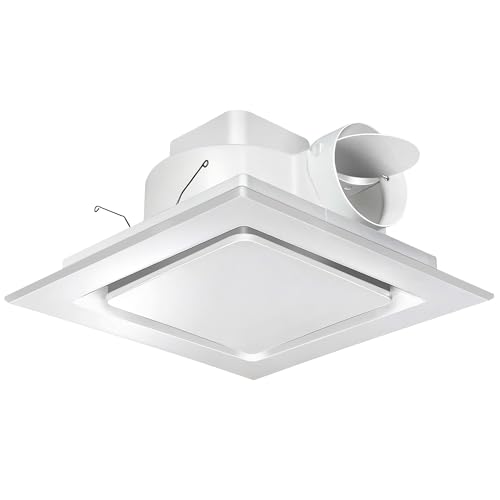
Amico 80 CFM Low-Noise Bathroom Exhaust Fan
Steam hanging over the mirror long after a shower usually points to weak airflow, poor ducting, or a fan that simply doesn't suit the room. A rattling motor makes matters worse because nobody wants to leave an irritating vent running while trying to unwind. For shoppers weighing the best extractor fan for bathroom use, the Amico model offers a practical mix of 80 CFM ventilation, 1.0-sone operation, and a retrofit-friendly ceiling design intended for rooms up to 80 square feet.
Amico 80 CFM Bathroom Fan
The headline specification is an 80 CFM airflow rating, which gives this fan more breathing room than basic 50 CFM units commonly used in compact powder rooms. Amico recommends it for bathrooms measuring up to 80 square feet, placing it in a useful middle range for guest baths, standard family bathrooms, and modest shower rooms. That sizing matters because a fan with too little capacity may run for ages while dampness still beads along the ceiling.
Moisture removal is the core job, and the extra airflow should help move steam before it settles on painted walls, grout lines, cabinets, and window trim. The fan also tackles stuffy air, a familiar annoyance in bathrooms with limited natural ventilation. Effective extraction won't repair existing water damage, but it can reduce the repeated surface dampness that makes peeling paint and musty smells harder to control.
The design stays refreshingly straightforward. There isn't a built-in light, decorative trim package, humidity sensor, or complicated control panel listed in the supplied specifications. That simplicity keeps the focus on ventilation performance, though it also means anyone wanting automatic humidity control will need to consider a suitable external switch or another fan design.
The grille measures 9.4 by 8.6 inches, giving it enough coverage to conceal the recommended 7.6 by 7.3-inch ceiling opening. Its size may help hide minor imperfections around a retrofit cutout, which is handy in older ceilings where edges aren't always ruler-straight. Still, measuring before purchase is nonnegotiable because the housing dimensions of 7.5 by 7.2 by 4 inches must fit between the framing and above the finished ceiling.
Airflow That Suits Everyday Shower Moisture
Eighty CFM is a sensible capacity for a bathroom that feels muggy after regular showers but doesn't require a large commercial-style fan. The airflow offers enough muscle to address steam and stale air while staying within a compact residential format. A correctly installed 80 CFM bathroom fan should feel more responsive than a lower-capacity unit in a medium-sized room, particularly after a long, hot shower.
Room area tells only part of the story, though. Ceiling height, shower frequency, duct length, and the number of bends all affect how quickly moist air reaches the exterior. A short, smooth duct route lets the rated airflow do its job more easily, while a cramped path with several elbows can quietly sap performance.
The included 4-inch duct connection is a practical strength because it generally allows easier airflow than a narrower 3-inch outlet. Wider ducting can reduce resistance, especially where the exhaust route isn't perfectly straight. Even so, crushed flexible duct, loose joints, or a blocked exterior cap can turn a capable fan into an underperformer, so the duct path deserves the same attention as the motor.
Fresh replacement air matters as well. A bathroom sealed tightly around the door can make the fan strain because it has little incoming air to replace what it's exhausting. A modest door gap or another suitable air path supports steady ventilation and helps the room clear more evenly instead of pulling weakly at the grille.
Low Noise Without Pretending To Be Silent
The stated 1.0-sone noise level is one of this model's strongest selling points. It should be noticeably calmer than many basic builder-grade fans that announce themselves with a coarse hum or mechanical buzz. That quieter character suits early-morning routines, late-night showers, and bathrooms located close to bedrooms or home offices.
One sone doesn't mean complete silence. A soft operating sound should still be present, and the final result depends heavily on mounting quality, duct condition, and how firmly the grille sits against the ceiling. Loose brackets or vibrating ductwork can add noise that has nothing to do with the fan's published sound rating.
A quieter fan also encourages longer operation after bathing. Loud ventilation often gets shut off the moment someone leaves the room, even though damp air is still trapped around the shower enclosure and ceiling. With low-noise extraction, letting the fan continue running feels less intrusive, which can make the stated airflow more useful in daily life.
Some households may actually prefer a slightly more audible fan because the sound confirms that it hasn't been left running by mistake. The Amico's restrained noise profile could make that harder to notice from the hallway. That's a minor tradeoff, but it's worth acknowledging for anyone accustomed to using motor noise as an informal reminder.
Retrofit Installation And Ceiling Fit
Amico supplies brackets that allow the housing to mount between ceiling joists, and the unit can also be screwed directly to a joist where the layout permits. This gives installers more than one route for securing the fan. The stated retrofit installation approach is particularly appealing where attic access is unavailable or impractical.
No-attic-access installation can spare a lot of aggravation in finished upper floors, apartments, or bathrooms beneath another room. Work can be approached from below, avoiding the need to crawl through insulation or open a second access point. Still, “no attic access needed” doesn't mean every replacement will be effortless, since existing wiring, framing, and duct position may refuse to line up neatly.
The recommended ceiling cutout is 7.6 by 7.3 inches, only slightly larger than the housing itself. A previous opening that's too small may need careful trimming, while an oversized or damaged cutout could require patching before the grille sits securely. Accurate measurements protect the ceiling finish and help the grille cover lie flat instead of exposing gaps at the edges.
Housing depth deserves a close look because the unit requires roughly four inches of vertical clearance. Pipes, shallow framing, insulation, or nearby electrical lines can complicate the fit in tight ceiling cavities. Measuring the available depth, joist spacing, duct direction, and old opening before removing anything keeps the project from going sideways halfway through.
Safety Details And Practical Tradeoffs
The fan is UL listed, providing a recognized electrical safety certification for the product as described. That certification is reassuring in a moisture-prone room, where dependable components and proper wiring matter far more than flashy extras. Installation must still follow applicable electrical and building requirements because certification doesn't excuse a loose connection or an unsuitable circuit.
The supplied description doesn't mention a built-in timer, motion sensor, or humidity sensor. Manual operation keeps the setup familiar, but it places responsibility on the wall control and daily habits. Pairing the fan with a compatible timer control may be useful where the fan tends to get switched off before the bathroom has dried, although control compatibility should be confirmed separately.
The room-size recommendation creates a clear boundary. Bathrooms larger than 80 square feet, rooms with unusually tall ceilings, or layouts containing both a tub and a separate shower may need more capacity or multiple ventilation points. The Amico fan makes the most sense where medium-room ventilation is needed without jumping to a bulkier, louder unit.
Maintenance should remain fairly ordinary: keep the grille clear, inspect the duct outlet, and remove dust that can restrict intake over time. A quiet fan can lose much of its appeal if buildup forces it to work harder or creates a fuzzy ring around the cover. Regular cleaning supports consistent airflow and helps the white grille remain less noticeable against the ceiling.
Strengths And Limitations In Daily Use
The strongest combination here is 80 CFM airflow paired with a 1.0-sone rating. That balance addresses two common frustrations at once: steam that lingers and fan noise that wears on the nerves. For a bathroom within the stated size range, the specifications point toward capable ventilation without an overbearing soundtrack.
The 4-inch duct connection and bracket-based mounting system add practical value during replacement work. They support a more conventional airflow path and offer flexibility around ceiling framing. The no-attic-access design is especially useful in finished spaces, though the existing opening and duct location will ultimately decide how smooth the installation feels.
The missing convenience controls are the most obvious limitation. A humidity sensor could automate operation during steamy showers, while a built-in timer could prevent the fan from stopping too soon. Their absence isn't necessarily a flaw in a straightforward exhaust fan, but it does mean the user experience depends more heavily on the switch arrangement chosen for the room.
This model also isn't intended to overpower a poor ventilation layout. Long duct runs, sharp bends, blocked exterior vents, and inadequate replacement air can undermine even a well-sized motor. The Amico fan is best treated as one part of a complete bathroom moisture-control setup, with sound ducting and correct room sizing carrying just as much weight as the fan itself.
Broan-NuTone BEL8 LED Bathroom Exhaust Fan
A fogged mirror is annoying, but damp paint, stale odors, and a ceiling that never seems to dry are the bigger headaches. This model approaches those problems with 80 CFM ventilation, an integrated LED light, and roomside installation designed to avoid unnecessary drywall work. Within the search for the best extractor fan for bathroom use, the Broan-NuTone BEL8 stands out as a practical two-in-one fixture for rooms up to 75 square feet, though its 1.5-sone sound level and taller housing still deserve a careful look.
Broan-NuTone BEL8 Exhaust Fan With LED
The BEL8 combines a bathroom exhaust fan and ceiling light in one square fixture, which helps reduce visual clutter in a smaller room. Its 80 CFM airflow is intended to pull out moisture and odors in bathrooms measuring up to 75 square feet. That capacity sits in a useful middle range, offering more extraction than a basic powder-room fan without moving into the size and bulk of a higher-output model.
The integrated LED light adds day-to-day value because the ceiling opening serves two jobs rather than one. A combined fixture can be especially useful where ceiling space is tight, recessed lighting is limited, or an older fan-light unit needs replacement. The supplied description doesn't specify brightness, color temperature, dimming support, or light replacement details, so those points shouldn't be assumed from the fan's general design.
The fan is also ENERGY STAR certified, and the product information states that it reduces energy consumption by about 50 percent compared with standard bath fans. That claimed efficiency matters in a room where the fan and light may run several times a day. Energy savings still depend on operating habits, of course, but an efficient motor makes frequent ventilation feel less wasteful than leaving an older fan grinding away.
The overall design is deliberately restrained. Broan-NuTone uses a modern CleanCover grille that creates a floating appearance against the ceiling, helping the fixture blend into common bathroom finishes. The result isn't invisible, but the seamless grille looks less industrial than exposed louvers and heavily ribbed covers found on older exhaust fans.
Moisture Control For Medium-Sized Bathrooms
Eighty CFM gives this fan enough airflow for ordinary showers, lingering humidity, and everyday bathroom odors within the stated room-size range. A properly vented installation should help clear steam before it settles across walls, cabinets, and trim. The real benefit of effective moisture removal isn't a perfectly dry room in seconds; it's reducing how long wet air hangs around after bathing.
Room area alone doesn't guarantee strong results. Long duct runs, tight bends, crushed flexible duct, or a sticky exterior damper can cut into actual airflow before the moist air reaches outdoors. A short and well-sealed route gives the BEL8 a fair chance to deliver the performance suggested by its 80 CFM rating.
Fresh replacement air matters, too. A bathroom door with almost no gap underneath may leave the fan pulling against a sealed room, which can make ventilation feel weaker than expected. Even a capable bathroom exhaust fan needs an incoming air path to move moisture steadily rather than merely creating noise at the grille.
The 75-square-foot recommendation creates a sensible boundary for planning. A larger primary bathroom, a room with high ceilings, or a layout with both a tub and separate shower may place heavier demands on one 80 CFM fan. In those situations, room volume and moisture load matter more than the floor-area number printed on the product description.
Sound Level And Everyday Comfort
The BEL8 operates at 1.5 sones, which should produce a noticeable but controlled sound rather than a harsh mechanical roar. Broan-NuTone describes it as quiet enough to preserve a peaceful setting while still being audible enough to confirm that it's running. That balance may suit households that dislike rattling fans but don't want the motor to disappear completely into the background.
Noise ratings tell only part of the story. Loose framing, an uneven ceiling opening, vibrating ductwork, or a grille that isn't seated correctly can add buzzes and rattles beyond the fan's stated operating sound. Careful mounting often makes the difference between a mild airflow hum and an irritating vibration that carries through the ceiling.
A calmer fan is more likely to stay on after the shower ends, and that matters because moisture doesn't vanish the moment the water stops. Loud models often get switched off too early, leaving steam trapped around grout lines and painted corners. The BEL8's moderate noise level may encourage longer run times without turning the bathroom into an echo chamber.
Still, “quiet as a whisper” should be treated as descriptive language rather than a promise of silence. One and a half sones won't suit every noise-sensitive room, especially a bathroom sharing a wall or ceiling with a sleeping area. Anyone expecting near-silent operation may prefer a lower-sone fan, while those who appreciate audible confirmation may find this level reassuring.
Roomside Installation And SlideClip Design
Installation is one of the BEL8's strongest practical features. Its no-cut roomside design is intended for retrofit situations where attic access isn't available, allowing the fan to be installed from below without enlarging the drywall opening in compatible spaces. That approach can save time and spare the ceiling from an avoidable patch-and-paint job.
The housing measures 7.5 inches deep, 7.25 inches wide, and 5.75 inches high. That height needs attention because a shallow ceiling cavity, nearby pipe, or cross brace could interfere with the fit. Measuring available ceiling clearance before removing the old fixture is far easier than learning midway through the job that the housing won't sit flush.
The square cover measures 9.5 by 9.5 inches, providing a broad finished surface around the opening. A larger cover can hide small edge imperfections left by an older fan, though it won't compensate for major drywall damage or a badly oversized hole. The CleanCover grille should sit flat for the floating look to work, so the ceiling surface still needs to be reasonably even.
Broan-NuTone's patent-pending SlideClip system replaces traditional spring attachments with a springless method for securing the grille. That detail sounds small, yet anyone who has wrestled with stiff wire springs above shoulder height will understand the appeal. The SlideClip attachment is also intended to make grille removal easier during routine cleaning.
Cleaning, Lighting, And Practical Tradeoffs
Bathroom fans collect lint, dust, and fine residue around the intake, gradually dulling the cover and restricting airflow. Easy grille removal makes it more realistic to clean the fixture before buildup becomes obvious. The BEL8's springless cover should reduce the usual fiddling involved in pulling down and reattaching a traditional grille.
The simple CleanCover face also has fewer visually busy openings than many older vent designs. That can make routine wiping quicker because grime has fewer deep ribs and narrow edges to settle into. A clean modern grille blends into the ceiling more convincingly than one ringed with dust, so accessibility supports both performance and appearance.
The light-and-fan combination simplifies the ceiling, but it also ties two functions to one housing. A future issue involving either component may require opening the same fixture for access, and the supplied details don't explain whether the LED module is user-replaceable. That uncertainty isn't a deal breaker, though it remains a maintenance consideration for anyone hoping to keep the fixture through many years of use.
The product description also doesn't list a humidity sensor, motion sensor, or built-in timer. Operation will therefore depend on the chosen wall controls and daily habits unless compatible external controls are added separately. The absence of automation keeps the setup straightforward, but manual control may be less forgiving in a household where the fan is regularly switched off before the room dries.
Strengths And Limits In Real Bathroom Use
The main strength is the way several practical features work together rather than one flashy specification carrying the whole product. Buyers get 80 CFM ventilation, a built-in LED light, ENERGY STAR certification, and roomside retrofit access in one ceiling fixture. That mix is particularly useful where both lighting and moisture control need improvement but a major remodel isn't on the table.
Its visual design is another plus. The square CleanCover grille avoids the dated look of exposed slats, while the floating effect helps the fixture sit more calmly against a white ceiling. The modern appearance won't become the centerpiece of the room, and frankly, that's probably the point for a bathroom exhaust fan.
The 1.5-sone rating lands in the middle rather than at the ultra-quiet end of the market. It should be less intrusive than a loud builder-grade fan, yet it will still announce that ventilation is running. That sound tradeoff may be welcome in a busy household and less appealing in a bathroom beside a nursery or light sleeper's bedroom.
The housing depth and room-size limit are the other practical constraints. A 5.75-inch-high housing needs adequate ceiling space, while bathrooms beyond 75 square feet may require more airflow than this model is designed to supply. The BEL8 makes the strongest case in a compatible medium-sized bathroom where easy retrofit installation, dependable moisture removal, and integrated lighting matter more than sensors or near-silent operation.
JOEAONZ 110 CFM Ultra-Quiet Bathroom Exhaust Fan
Heavy shower steam has a way of exposing every weakness in a bathroom's ventilation, from damp ceilings to towels that stay clammy for hours. A low-capacity fan may spin faithfully yet leave the mirror fogged and the room feeling close. The JOEAONZ model enters the best extractor fan for bathroom discussion with 110 CFM airflow, a 1.0-sone noise rating, and a 4-inch duct connection aimed at enclosed spaces up to 107 square feet.
JOEAONZ 110 CFM Bath Fan
The JOEAONZ fan puts airflow ahead of decorative extras. Its 110 CFM capacity is designed to move moisture, stale air, and odors from bathrooms and other enclosed rooms measuring up to 107 square feet. That gives it more reach than many compact 50 or 80 CFM fans, particularly in bathrooms where steam tends to hang around after a long shower.
A stronger fan can be useful in a larger room, but capacity needs to match the space rather than simply chasing the biggest number. An oversized unit may pull conditioned air out faster than necessary, while an undersized one can run and run without getting ahead of the humidity. The stated 107-square-foot coverage creates a practical upper boundary, though ceiling height and moisture load still affect real performance.
The white plastic grille keeps the ceiling appearance simple and familiar. It won't mimic a recessed architectural vent, but it avoids the bulky look of some older builder-grade covers. Beneath that grille sits a metal housing, giving the main fan body a sturdier structure than an all-plastic enclosure might suggest.
The design doesn't list an integrated light, humidity sensor, timer, or motion control. That straightforward setup may appeal where a dedicated fan switch already exists and extra electronics aren't wanted. On the flip side, manual operation depends on someone leaving the fan on long enough to clear the room, which isn't always how busy mornings play out.
Strong Airflow For Lingering Moisture
Steam control is where the 110 CFM rating earns its keep. In a bathroom with a shower enclosure, limited window ventilation, or several people bathing back to back, large airflow capacity can shorten the time humid air remains trapped around walls and ceilings. The result won't be instant dryness, but it should help reduce the damp, stuffy feeling that follows repeated hot showers.
Surface moisture deserves attention because it rarely stays confined to the mirror. Condensation can gather on painted drywall, cabinetry, metal fixtures, and cool corners where air circulation is weak. By moving moist air outdoors, the fan supports better moisture control and gives those surfaces a better chance to dry between uses.
Duct layout can either help or hobble that airflow. A short, smooth route with few bends allows the fan to move air more freely, while crushed flexible duct or several tight elbows add resistance. The published 110 CFM performance should therefore be viewed as the fan's rated capacity, not a guarantee that every installation will deliver the same airflow at the grille.
Replacement air matters just as much as the exhaust path. A tightly sealed bathroom with almost no door gap can starve the fan of incoming air, causing weaker extraction despite a capable motor. A reasonable air path into the room helps steady ventilation continue without forcing the fan to pull against a closed box.
The fan is also described for bedrooms, cloakrooms, and other enclosed areas where moisture or odors tend to linger. That flexibility is useful, though a bathroom remains the most natural fit for its airflow and ceiling-mount format. In any room, the ducted exhaust must terminate outside rather than dumping humid air into an attic or enclosed ceiling cavity.
Quiet Operation Without The Usual Rumble
The stated 1.0-sone sound level is a major strength on paper. A fan at this level should be audible without producing the coarse drone associated with many aging bathroom vents. That quieter operation can make a noticeable difference in a bathroom near a bedroom, home office, or nursery where mechanical noise travels easily.
Calling any operating fan silent would stretch the truth, though. Air moving through a grille and duct creates some sound, and the final noise level depends on how the housing is secured. Loose framing, vibrating ductwork, or an uneven ceiling opening can introduce rattles and resonance that aren't reflected in the motor's sone rating.
Lower noise also has a practical behavioral benefit. People are more likely to leave a calm fan running after a shower than tolerate a loud one while getting dressed or brushing their teeth. Longer operation gives the 110 CFM airflow time to remove moisture that remains after the visible steam begins to fade.
The product description calls the fan quieter than a library, but that phrase is best read as a general comparison rather than a measured promise for every bathroom. Room acoustics, ceiling construction, and duct condition change what the ear actually hears. The trustworthy specification here is the 1.0-sone rating, while the real-world experience still rests partly on installation quality.
Installation Fit And Duct Compatibility
The housing measures approximately 7.75 inches wide, 7.5 inches long, and 5.7 inches high. Those dimensions place it within a familiar residential size range, but the 5.7-inch depth needs enough space above the ceiling. Pipes, shallow joists, insulation, or cross-bracing can interfere, so ceiling clearance deserves a careful measurement before the old fan comes down.
JOEAONZ includes installation steps and pictures in the manual, with the process presented as manageable for a typical replacement. Existing wiring and duct placement will decide whether that promise holds true in a specific bathroom. A fan swap can stay fairly direct when the opening, power supply, and existing ventilation pipe line up, but mismatched framing can quickly add work.
The detachable 4-inch polymeric duct connector is a sensible feature. Four-inch ducting is widely used in household bathroom ventilation, so the connector may mate with an existing exhaust line without requiring extra materials. That said, the old pipe still needs to be in good condition, correctly sized, and routed outdoors for the duct compatibility advantage to mean much.
A detachable connector can also simplify positioning the housing during installation. The duct piece can be handled separately rather than forcing the full fan body into place while wrestling with a rigid connection. Small details like that reduce frustration, especially while working overhead with limited access and very little room for spare hands.
Direct replacement isn't guaranteed just because both fans use a 4-inch duct. The ceiling opening, housing depth, mounting method, and electrical junction position may differ from the previous unit. Accurate measurements protect against unpleasant surprises and help the white grille cover the finished opening cleanly.
Strengths, Weaknesses, And Everyday Fit
The clearest strength is the pairing of 110 CFM airflow with a 1.0-sone rating. Many bathrooms need stronger extraction but don't need the racket that sometimes comes with it. This specification balance makes the JOEAONZ fan appealing for medium to larger residential bathrooms where lingering humidity and noise are both sore points.
The 4-inch detachable duct connector is another practical plus. It supports a common household duct size and may reduce the need for adapters during a straightforward replacement. The metal housing also gives the assembly a more substantial core, while the plastic grille keeps the visible portion lightweight and easy to handle.
The main limitation is the lack of listed convenience controls. No humidity sensor or built-in timer means the fan won't automatically react to rising moisture or continue running for a preset period after the switch is turned off. A compatible wall control may address that gap, but the fan itself remains a basic manual ventilation unit.
Its 5.7-inch housing height may also be awkward in a shallow ceiling cavity. Older homes, basement bathrooms, and spaces beneath plumbing runs can have less room than the dimensions require. This is a fit issue rather than a performance flaw, yet it's the sort of installation constraint that can turn a promising replacement into the wrong purchase.
The stated room coverage should be respected as well. A bathroom far smaller than 107 square feet may not need this much airflow, while a larger suite with high ceilings or separate wet zones may need a different ventilation plan. The JOEAONZ model fits best where quiet, higher-capacity extraction matters more than lighting, automation, or decorative ceiling styling.
Siasky 50 CFM Bathroom Vent Fan Motor Kit
A tired exhaust fan usually announces itself with a grind, a wobble, or that stubborn hum that moves almost no air. Replacing the entire ceiling housing can feel like overkill when the grille, duct, and wiring still serve their purpose. For anyone weighing the best extractor fan for bathroom performance against repair cost and installation mess, this Siasky kit offers a narrower fix: a 120V replacement motor paired with a blower wheel for compatible Nu-Tone, Broan, and related fan assemblies.
Siasky 50 CFM Motor Kit
The Siasky kit isn't a complete exhaust fan. It replaces the motor and blower wheel inside a compatible existing housing, so the value depends almost entirely on fit. Its supplied specifications include 50 CFM airflow, a 120V plug-in motor, 0.6-amp draw, 3000 RPM speed, and 60Hz operation.
That distinction matters because a replacement motor can't correct a blocked duct, undersized housing, loose grille, or poor exterior vent. It restores the moving parts that create airflow, assuming the rest of the system remains sound. In the right setup, this approach can spare the ceiling from unnecessary cutting and keep a familiar fan assembly in service.
The included blower wheel measures 4 5/8 inches by 1 1/8 inches, while the shaft measures 3/16 inch by 1 3/4 inches. The mounting stud is listed at 1 7/8 inches on center, and the motor uses a 5/8-inch coil pack. Those numbers aren't minor details; they determine whether the kit mounts securely, spins freely, and sits at the proper depth inside the old housing.
The six-inch wire includes two plugs, which may simplify connection in fan assemblies designed around the same layout. Still, connector shape and mounting geometry need to match, not merely the voltage rating. A motor that powers on but doesn't seat correctly can vibrate, rub the housing, or position the wheel too close to surrounding metal.
Repair Value Versus Full Fan Replacement
A motor-only repair makes sense when the existing fan housing is solid and the problem clearly comes from the old motor or damaged blower wheel. That could mean sluggish spinning, mechanical noise, intermittent starts, or weak airflow caused by a worn drive assembly. The replacement approach avoids disturbing the duct connection and ceiling opening when those parts don't need attention.
Full fan replacement may still be the smarter move in a few situations. Rusted housings, brittle wiring, poor mounting, damaged dampers, or outdated duct sizes can limit what a fresh motor accomplishes. Swapping one component into a badly neglected ventilation system is a bit like putting new tires on a bent wheel: the repair helps, but the underlying problem remains.
The 50 CFM rating also sets realistic expectations. This capacity suits smaller bathrooms and powder rooms better than spacious primary bathrooms with frequent showers. A larger room may need stronger extraction, so restoring an old 50 CFM unit won't suddenly deliver the performance of an 80 or 110 CFM fan.
Repairing instead of replacing can reduce drywall work, attic crawling, and duct reconfiguration. That convenience is the kit's strongest practical appeal. Yet the job still requires patience because compatibility must be confirmed by measurements, plug style, motor position, and wheel clearance rather than by brand name alone.
Airflow And Moisture Control
The motor is designed to provide 50 CFM ventilation through a compatible fan housing. In a compact bathroom, that airflow can help remove shower steam, stale air, and everyday odors before moisture lingers across cool surfaces. The result depends on clean intake openings and an unobstructed route to the exterior.
A replacement motor may improve performance noticeably when the original unit has slowed with age. Dust buildup, worn bearings, and a warped blower wheel can reduce the amount of air moving through the duct. Replacing those worn components can bring the fan closer to its intended output without changing the entire ceiling assembly.
Duct condition still plays a major role. Crushed flexible tubing, heavy lint, stuck backdraft dampers, and long runs with several bends can choke effective airflow. A motor turning at 3000 RPM can't push efficiently through a path that is pinched, blocked, or leaking into the ceiling cavity.
Replacement air matters, too. A tightly sealed bathroom door may restrict incoming air and leave the fan pulling against the room. A suitable door gap or transfer path supports steadier extraction and gives the restored motor a better shot at clearing humid air after bathing.
Noise Level And Mechanical Balance
The supplied description states that the motor and aerodynamic blade keep noise below 1.5 sones. That figure suggests a quieter operating character than many worn fans that buzz, scrape, or rattle through every shower. A fresh, balanced wheel can make a substantial difference because uneven rotation often creates more annoyance than the normal sound of moving air.
Mechanical balance is especially important in a compact metal housing. A wheel mounted off-center can wobble at speed, while a loose motor bracket can transfer vibration into the ceiling. The listed precision-balanced design addresses that concern, but the final sound still depends on correct installation and a housing that isn't bent or loose.
Quiet operation shouldn't be confused with complete silence. Air passing through a grille and duct will create some sound, and older housings may amplify it differently from newer designs. A fan that remains clearly audible at 50 CFM isn't necessarily defective, provided the noise is smooth rather than harsh or irregular.
The stated 3000 RPM speed sounds high in isolation, yet small fan motors commonly rely on rapid rotation to move air through compact blower wheels. What matters is whether the wheel spins without rubbing, wobbling, or resonating against nearby metal. Proper alignment protects both noise control and long-term motor stability.
Compatibility Demands Careful Measuring
The kit is described as compatible with replacement motors used in Nu-Tone, Broan, Up-pco, Bay motors, Sears 569, Dayton, and other assemblies. Those names serve as compatibility references rather than a guarantee that every model under those brands shares the same dimensions. Exhaust fan housings can look nearly identical from below while using different mounting studs, shafts, plugs, or wheel offsets.
Measurement is the dull part, but it's also the part that prevents a bad purchase. The 3/16-inch shaft diameter, 1 3/4-inch shaft length, 1 7/8-inch mounting-stud spacing, and blower-wheel size should be checked against the removed motor. Even a small mismatch can keep the wheel from seating correctly or place it too close to the housing wall.
Plug configuration deserves the same attention. The supplied six-inch wire has two plugs, but an older housing may use a different connector arrangement or wire position. Electrical ratings must match, and the connection should sit securely without stretching across moving parts or resting against the blower wheel.
Housing clearance also affects the fit. The replacement wheel must rotate freely after the assembly is tightened, with no scraping at startup or during operation. Spinning the wheel by hand before restoring power is a simple way to catch interference before the motor reaches full speed.
Installation And Maintenance Practicality
Motor replacement is usually less invasive than replacing a complete fan housing, but it still involves working overhead around electrical components. Power should be disconnected before the grille, motor plate, or wiring is handled. A compatible plug-in layout may shorten the job, yet secure mounting remains just as important as the electrical connection.
The old housing should be cleaned before the new motor goes in. Dust mats around the intake, packed debris near the wheel, and grime inside the outlet can restrict ventilation performance. Cleaning the enclosure also makes it easier to spot bent metal, cracked mounts, loose screws, or signs of moisture damage.
The blower wheel needs to remain clean after installation because buildup can upset its balance. A dusty wheel may begin vibrating, lose airflow, and place extra strain on the motor over time. Occasional grille cleaning and visual inspection help the replacement assembly keep its smooth operating character.
The product description mentions moisture-resistant materials intended for bathroom environments and continuous, reliable running. Those qualities suit a fan that may operate for extended periods after showers. Even so, no replacement motor should be expected to compensate for water entering the housing, condensation dripping from a poorly insulated duct, or an exhaust line that terminates indoors.
Strengths, Weaknesses, And Best-Fit Situations
The biggest strength is its focused purpose. The kit provides a motor and blower wheel rather than forcing replacement of a serviceable housing, grille, and duct connection. That can reduce labor and disruption when the original assembly is compatible and the failed motor is the only meaningful problem.
The stated noise level, 50 CFM output, plug-in wiring, and common replacement dimensions give the kit practical appeal. Its metal motor construction and moisture-resistant materials are also suited to the damp conditions surrounding bathroom ventilation. For a small room with an aging compatible fan, the repair may restore useful extraction without turning the project into a ceiling renovation.
Compatibility is the main weakness because the product isn't universal in the literal sense. Brand references help narrow the field, but exact measurements decide whether the motor plate, shaft, wheel, and connectors line up. Buying by appearance alone is risky, especially with older exhaust fans whose model labels have faded or disappeared.
The 50 CFM capacity is another limitation. It can serve a smaller bathroom, but it won't address the ventilation demands of a much larger room simply because the new motor runs smoothly. Anyone trying to correct chronic moisture in a larger space may need a higher-capacity complete fan rather than a like-for-like motor replacement.
This Siasky kit makes the most sense where the ceiling housing is intact, the duct is clear, and the original motor dimensions match the supplied specifications. In that narrow but common scenario, quiet restoration and reduced installation hassle are the real benefits. Where fit is uncertain or the whole fan assembly is deteriorated, replacing only the motor may create more fiddling than savings.

Best Quiet Ceiling Fan For Bedroom 2026 Ultimate Comfort Picks

Best Ceiling Fan For Master Bedroom 2026 With Ultimate Comfort

Best White Ceiling Fan With Light For Bedroom 2026 Top Picks

Best Quorum Medallion Ceiling Fan 2026 With Style & Breeze
Best Outdoor Fan For Pergola 2026 Comfort Boost

Best Ceiling Fan For Great Room 2026 With Ultimate Comfort

Best Outdoor DC Ceiling Fans 2026 For Breezy Comfort
Best ceiling exhaust bath fan with light and heater 2026