Best Floor Lamp For Dark Room 2026: Brighter Picks

A best floor lamp for dark room setup needs to do more than brighten one lonely corner. Dim rooms often swallow light because of deep wall colors, limited windows, bulky furniture, or a ceiling fixture that barely reaches the edges. A lamp with strong upward output can bounce light across the ceiling, while an adjustable reading arm adds focused illumination where it's actually needed. That combination keeps the room from feeling like a cave without blasting harsh light straight into your eyes.
Brightness output deserves close attention, but raw power isn't the whole story. A tall torchiere with a wide shade usually spreads light farther than a narrow decorative lamp with an exposed bulb. Still, brighter isn't always better. A poorly diffused lamp can create glare, sharp shadows, and an uncomfortable hot spot that makes evening reading feel like sitting under a workshop light.
Dimmable controls make a noticeable difference as the day winds down. Full brightness helps during cleaning, paperwork, or gloomy afternoons, while a lower setting keeps movie nights and late conversations relaxed. Touch controls feel convenient, though a physical knob or foot switch may be easier to use in the dark. Remote controls are handy too, but they're one more small object that can disappear between sofa cushions.
Color temperature changes how the room feels just as much as brightness does. Warm white light softens bedrooms and living rooms, yet it may leave printed text looking slightly dull. Neutral white creates a clearer, more balanced look for reading, hobbies, and everyday tasks. Cool white can sharpen visibility, but whew, it may feel stark in a cozy space unless the lamp offers several selectable tones.
Placement can make or break the result. Tucking a lamp tightly behind a large chair may block half its output, while setting it near a pale wall helps reflect light back into the room. Corners benefit from upward-facing shades because the surrounding walls spread the glow instead of trapping it. On the flip side, glossy television screens and framed glass can catch reflections, so a movable head or flexible arm saves plenty of fiddling.
Stability and footprint matter in cramped rooms where every inch counts. A heavy base reduces wobbling around pets, cords, and busy walkways, but it also makes the lamp harder to move during cleaning. Slim pole designs fit beside couches and nightstands without eating up floor space. Tripod lamps look stylish, sure, though their wider legs may become toe-stubbing territory in narrow layouts.
Built-in LED models often provide strong illumination without requiring frequent bulb changes. Their clean design also avoids the oversized bulb peeking below the shade, which can be distracting from a seated position. The tradeoff is repairability because an integrated light source usually can't be swapped as easily as a standard bulb. A replaceable-bulb lamp offers more freedom to adjust brightness and tone later, provided its socket supports the wattage and bulb style you need.
The strongest pick balances broad coverage, comfortable diffusion, easy adjustment, and a base that feels planted rather than flimsy. Decorative details should come second because a beautiful lamp that leaves half the room gloomy won't solve the real problem. Skip tiny accent lamps pretending to be primary lighting, and don't assume the highest lumen number guarantees a pleasant result. Layered, controllable illumination wins the day, especially in rooms where natural light checks out early.

- LFR Score9.6
LFR Score is a ranking system developed by lightfansreviews.com. LFR Score has no relationship or impact from any manufacturers or sales agent websites. Learn more
- BrandSUNMORY

- LFR Score9.4
LFR Score is a ranking system developed by lightfansreviews.com. LFR Score has no relationship or impact from any manufacturers or sales agent websites. Learn more
- Brandmarctronic
- LFR Score9.2
LFR Score is a ranking system developed by lightfansreviews.com. LFR Score has no relationship or impact from any manufacturers or sales agent websites. Learn more
- BrandRUNTOP
- LFR Score9.0
LFR Score is a ranking system developed by lightfansreviews.com. LFR Score has no relationship or impact from any manufacturers or sales agent websites. Learn more
- BrandROTTOGOON
- LFR Score9.0
LFR Score is a ranking system developed by lightfansreviews.com. LFR Score has no relationship or impact from any manufacturers or sales agent websites. Learn more
- BrandSUNMORY

- LFR Score9.0
LFR Score is a ranking system developed by lightfansreviews.com. LFR Score has no relationship or impact from any manufacturers or sales agent websites. Learn more
- BrandAmbimall

- LFR Score9.0
LFR Score is a ranking system developed by lightfansreviews.com. LFR Score has no relationship or impact from any manufacturers or sales agent websites. Learn more
- BrandHoneywell

- LFR Score8.8
LFR Score is a ranking system developed by lightfansreviews.com. LFR Score has no relationship or impact from any manufacturers or sales agent websites. Learn more
- Brandluckystyle

- LFR Score8.8
LFR Score is a ranking system developed by lightfansreviews.com. LFR Score has no relationship or impact from any manufacturers or sales agent websites. Learn more
- BrandNintiue
- LFR Score8.8
LFR Score is a ranking system developed by lightfansreviews.com. LFR Score has no relationship or impact from any manufacturers or sales agent websites. Learn more
- Brandluckystyle

- LFR Score8.8
LFR Score is a ranking system developed by lightfansreviews.com. LFR Score has no relationship or impact from any manufacturers or sales agent websites. Learn more
- BrandCoucrek

- LFR Score8.6
LFR Score is a ranking system developed by lightfansreviews.com. LFR Score has no relationship or impact from any manufacturers or sales agent websites. Learn more
- BrandAmbimall
Last update on 2026-08-15 / Affiliate links / Images, Product Titles, and Product Highlights from Amazon Product Advertising API
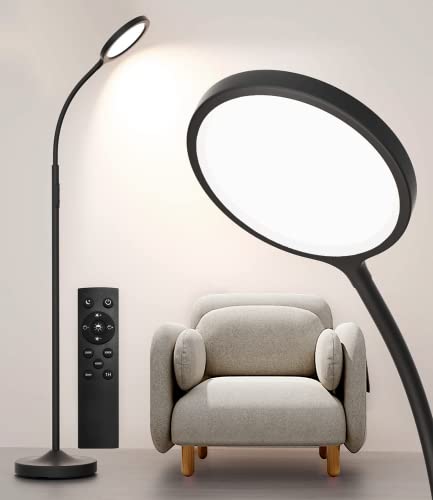
SUNMORY 32W LED Floor Lamp Review
A dim room can make reading tiring, flatten the look of furniture, and leave useful corners feeling oddly disconnected. The SUNMORY 32W LED Floor Lamp tackles that problem with a claimed 3,000-lumen output, adjustable color temperature, and a tall torchiere design built to spread light beyond one small spot. Its broad control range gives it more practical flexibility than a basic on-and-off standing lamp, though the modern LED head creates a distinctly functional look rather than the warm character of a fabric-shade fixture.
SUNMORY 32W LED Floor Lamp
The strongest part of this lamp is its ability to handle several lighting jobs without changing bulbs or moving fixtures around the room. Brightness adjusts from 5% to 100%, while the color temperature shifts from 3000K to 6000K. That range lets the same lamp provide a softer glow during a quiet evening, a clearer neutral light for reading, or a cooler setting for paperwork and focused tasks.
A claimed output of 3,000 lumens puts this model in a different category from decorative floor lamps that mainly create mood lighting. Dark living rooms often need light to reach the ceiling, nearby walls, and seating area at the same time, and the upward-facing head is designed for that broader spread. Still, one lamp may not erase every shadow in a large room with dark paint, heavy curtains, or several recessed corners, so realistic expectations matter.
The 69-inch height helps position the light above eye level, reducing the chance of staring directly into the LED panel while seated. Its slim vertical profile also makes it easier to place beside a sofa, behind a chair, or near a desk without surrendering much floor space. That narrow shape is useful in tight layouts, although the lamp won't add the decorative presence of an arched fixture, tripod base, or traditional shaded design.
The modern styling stays visually quiet, which can be a plus in rooms already crowded with furniture and electronics. A black pole and compact lamp head tend to blend into the background rather than compete with wall art or shelving. The tradeoff is simple: function leads the design, so anyone hoping for a statement piece may consider the appearance a little plain.
Brightness Control And Light Quality
Stepless dimming is more useful than a handful of fixed brightness levels because rooms rarely need the same amount of light all day. A low setting can soften late-night lighting, while full output can help with cleaning, reading small print, or working through a gloomy afternoon. The wide dimming range also reduces the need for separate task and ambient lamps in smaller spaces.
Color temperature control changes the character of the room as much as brightness does. The warmer 3000K setting suits relaxed evenings and bedrooms, while the cooler end of the range can make text, craft materials, and work surfaces easier to see. Cooler light may feel stark after sunset, though, so the ability to dial it back keeps the lamp from being locked into a clinical office-like mood.
SUNMORY describes the LED output as soft and easier on the eyes, but comfort will still depend on lamp placement, brightness, and the direction of the head. Pointing a powerful light toward a glossy wall, television screen, or framed artwork can create distracting reflections. Aiming the panel toward a matte ceiling usually produces a more even indirect lighting effect and helps prevent one glaring patch from dominating the room.
The listed 80+ color rendering index should provide acceptable color clarity for everyday living spaces, casual reading, and routine desk work. It isn't positioned as specialized lighting for color-critical art, photography, or professional design work, and that distinction is worth keeping in mind. For ordinary home use, the greater benefit is balanced visibility without relying on a bare, exposed bulb.
Remote Features And Daily Convenience
The remote control addresses a small annoyance that becomes surprisingly noticeable with floor lamps: walking across a dark room just to adjust the light. SUNMORY lists a control range of up to 50 feet, allowing brightness and color changes from a sofa, bed, or desk under suitable conditions. Walls, furniture placement, and the remote's angle may affect practical operation, but the stated range is generous for most bedrooms and living rooms.
Four preset modes cover reading, feeding, working, and night-light situations. Presets can be handy when the same lamp supports several routines, since they reduce repeated tapping through brightness and temperature settings. The labels won't match every household's habits, yet the custom dimming controls remain available when a preset feels too bright, too cool, or simply off for the moment.
The memory function adds another layer of convenience by restoring the previous lighting setup. That sounds minor on paper, but it prevents the lamp from returning to an unwanted full-brightness setting every time it's switched on. For a bedroom or shared living area, saved light settings can make the lamp feel less fussy and more predictable during everyday use.
Remote controls have an obvious weakness: they wander. Sofa cushions, bedside clutter, and desk drawers have a knack for swallowing small accessories, so the lamp's onboard controls still matter. Keeping the remote in one familiar spot will make the feature genuinely useful rather than turning it into another object that needs to be hunted down.
Adjustable Head And Room Coverage
The lamp head rotates up to 350 degrees horizontally and 180 degrees vertically, giving the fixture more directional freedom than a fixed torchiere. That movement allows light to bounce from the ceiling, wash across a wall, or lean toward a reading area. It also helps in oddly shaped rooms where the darkest corner isn't directly above the lamp base.
Broad adjustability doesn't mean every angle will be equally comfortable. Tilting the LED panel too far toward a seated position may expose the bright surface and cause glare, especially at higher settings. The best balance usually comes from using the head for reflected illumination rather than treating it like an oversized spotlight.
A thick, weighted base is a sensible match for a tall lamp with a movable head. SUNMORY describes the base as stable enough to resist tipping during normal adjustment, which should help on hard flooring and low-pile carpet. Even so, cords crossing a walkway, energetic pets, and uneven rugs can undermine any floor lamp's stability, so careful placement remains part of safe use.
The narrow pole takes up little visual room, but the base still needs a clear patch of floor. Sliding it partly under a sofa may save space, provided the base sits flat and the furniture doesn't pinch the power cord. That practical footprint makes the lamp easier to fit into small living rooms, home offices, and bedrooms where wide tripod legs would become a nuisance.
Energy Use, Lifespan, And Maintenance
The integrated LED design uses 32 watts while SUNMORY compares its brightness with a 200-watt incandescent lamp. That comparison suggests lower power demand for a similar perceived output, although actual savings depend on local electricity rates, daily usage, and the older lamp being replaced. The clearest advantage is getting strong illumination without the heat and energy draw typically associated with high-wattage incandescent bulbs.
SUNMORY lists the LED beads for up to 30,000 hours under correct current and voltage conditions. That figure represents a rated service-life claim rather than a promise that every unit will operate for exactly that long. Heat, electrical conditions, component quality, and usage patterns can all influence how an integrated LED fixture ages.
Integrated LEDs remove the hassle of buying and replacing bulbs, but they also create a repair tradeoff. A standard socket lamp can often return to service with a fresh bulb, while a failed built-in LED panel or driver may require more involved repair or replacement of the fixture. That makes the lamp convenient during normal ownership, though less flexible for long-term component replacement.
Maintenance should remain fairly simple because the fixture has no fabric shade to collect deep dust. A dry or lightly damp soft cloth can handle the pole, base, and lamp head after the unit has been unplugged and cooled. Keeping dust away from the LED panel and joints also preserves a cleaner appearance and prevents grime from making the controls or rotating mechanism feel sticky.
Assembly And Practical Limitations
The supplied description estimates assembly at roughly 5 to 10 minutes, with instructions and a supporting video included in the package. Floor lamps of this style commonly use pole sections that screw together, followed by connection to the base and lamp head. Taking a moment to align the threads carefully can prevent wobbling or accidental cross-threading during setup.
Cable routing deserves attention while the pole sections are being joined. Twisting the pieces too aggressively may place unnecessary strain on internal wiring, so steady assembly beats rushing to meet the shortest advertised setup time. Once assembled, checking that every joint is snug helps the tall frame remain straight and stable.
The unrelated world of party lighting uses a different approach to brightness, movement, and atmosphere, and a neutral reference appears in best disco lights for home party for readers separating everyday room illumination from event-focused effects. The SUNMORY lamp is designed around steady, adjustable household light rather than moving patterns or decorative color displays. That distinction keeps expectations grounded and avoids treating two very different lighting categories as substitutes.
The main limitations come down to style, integrated components, and reliance on indirect positioning for the most comfortable result. Its modern torchiere form may feel too plain for traditional decor, and the LED assembly doesn't offer the easy bulb swapping of a standard socket lamp. Yet for a dark room that needs substantial output, flexible tone control, and a small footprint, those compromises are straightforward rather than hidden.
Strengths And Weaknesses In Daily Use
Strong room-filling output is the clearest strength, especially where a decorative floor lamp leaves the ceiling and far wall dim. The combination of 3,000 lumens, adjustable direction, and a tall head gives the fixture a fair shot at brightening more than one chair or tabletop. Its stepless controls also keep that power from becoming an all-or-nothing experience.
Remote operation and memory improve everyday convenience without changing the core lighting performance. These features matter most in bedrooms, reading corners, and living rooms where the lamp sits behind furniture or beyond easy reach. They matter less in a compact office where the controls remain an arm's length away, but they don't get in the way.
Appearance and repairability are the more noticeable compromises. The slim black structure favors clean utility over decorative warmth, while the built-in LED design limits future bulb changes. Neither issue makes the lamp impractical, but both should be weighed before replacing a traditional shaded fixture that contributes heavily to the room's style.
The lamp makes the most sense where broad illumination, a narrow footprint, and adjustable white light carry more weight than ornamental design. It may feel excessive in a tiny room that only needs a soft bedside glow, and it won't fully replace layered lighting in a large open-plan space with several separate zones. Used as a powerful primary floor lamp, though, its brightness range, directional head, and practical controls address the frustrations that usually make dark rooms difficult to live and work in.
Marctronic 18W LED Floor Lamp Review
Dark corners have a way of making an otherwise comfortable room feel unfinished, especially once daylight fades and the ceiling fixture leaves half the space in shadow. The Marctronic 18W LED Floor Lamp approaches that problem with a claimed 1,800-lumen output, a flexible gooseneck, and several control methods that suit changing routines. Its focused design also makes sense for reading, sewing, puzzles, nail work, and other close-up tasks where a decorative lamp may look pleasant but simply doesn't put light where it counts.
Marctronic 18W LED Floor Lamp
The lamp's biggest selling point is the combination of 18-watt LED power and a light-guide plate intended to spread illumination more evenly. Marctronic describes the output as 1,800 lumens and compares it with an older 12-watt, 1,000-lumen design. That comparison comes from the supplied product information rather than independent measurement, but it still shows the intended difference: this model is built for practical brightness, not a faint decorative glow. In a room where one side of the sofa disappears into darkness, that extra output can be far more useful than another small shaded lamp.
The upright frame keeps the footprint modest, which matters beside crowded desks, narrow reading chairs, or bedroom furniture with little spare floor space. A 360-degree adjustable gooseneck lets the head swing toward a book, craft table, puzzle board, or darker wall without dragging the whole base across the room. That flexibility is handy, though constant bending may require a little patience to keep the head at the exact angle you prefer. A flexible neck also creates a more task-oriented appearance than a classic torchiere, so the design leans toward utility rather than formal decor.
The lamp suits rooms where broad ambient lighting and concentrated task light often compete for the same limited space. At full brightness, it can support detailed work; dialed down, it can sit quietly beside a bed or sofa without dominating the room. The 5% to 100% dimming range gives more breathing room than three fixed steps, since evening comfort rarely fits neatly into low, medium, and high. Still, a single directional lamp won't brighten every wall in a large open-plan room, particularly if dark paint and heavy furniture absorb much of the reflected light.
Brightness, Color, And Eye Comfort
Four color-temperature options span a listed range from 2700K to 6500K. The warmer end fits late-night reading and relaxed bedroom use, while cooler settings can make small details stand out during sewing, paperwork, or craft projects. Color temperature doesn't change the actual size of a room, of course, but it can change how awake, cozy, or clinical the space feels. A very cool setting may be useful during focused work and a bit harsh after dinner, so having several choices prevents the lamp from being stuck in one mood.
Marctronic says the acrylic lamp shell supports soft, flicker-free, anti-glare light. Those qualities matter because raw brightness can become tiring if the LED source sits directly in the line of sight or creates a sharp reflection on glossy surfaces. Positioning the head slightly above eye level and angling it toward the work area should help reduce discomfort. Even with an anti-glare design, though, running 1,800 lumens straight toward a seated face would be asking for trouble.
The light-guide plate is meant to distribute output rather than concentrate it into a tiny, piercing spot. That can be useful for puzzles, nail work, tattoo preparation, and sewing because the illuminated area needs to stay clear without producing a harsh central hotspot. Even light distribution also helps reduce the constant eye adjustment that happens when hands are brightly lit but the surrounding surface stays dark. The practical limit is coverage: a compact lamp head may illuminate a work zone well, yet it won't behave like a wide ceiling fixture across an entire large room.
Marctronic also claims energy savings of up to 85% through LED technology. The real household impact will depend on daily use, electricity prices, and the type of lamp being replaced, so that figure shouldn't be treated as a guaranteed bill reduction. What is clear from the listed 18-watt consumption is that the lamp aims to provide substantial task lighting without relying on a high-wattage incandescent bulb. Lower heat around the lamp head can be particularly welcome during long reading or crafting sessions.
Remote, Touch, And Smart Plug Use
Control flexibility is where this lamp starts to feel thoughtfully designed rather than merely bright. The supplied remote has a stated range of up to 50 feet, while touch controls remain available on the lamp itself. That combination prevents the remote from becoming a single point of failure, since the light can still be adjusted when the controller is across the room or buried under a magazine. The magnetic remote design is a small but sensible detail because attaching it to the pole reduces the usual sofa-cushion scavenger hunt.
Compatibility with a smart plug or wall switch adds another layer of convenience. Voice-controlled on-and-off operation may help when hands are occupied, during bedtime routines, or while settling into a chair with a book and a drink. The supplied description supports power control through those accessories, but it doesn't state that every brightness or color adjustment becomes voice-controlled. In practical terms, the smart plug handles basic power while the remote or touch panel manages the finer settings.
The memory function restores the last selected lighting setup after the lamp is switched on again. That saves a surprising amount of fiddling, especially when one person consistently prefers warm, low light while another relies on a cooler working mode. Stored brightness and color settings make the lamp feel predictable instead of resetting to an uncomfortable default. Memory behavior may depend on how power is disconnected, though, so a smart plug setup should be tested with the preferred routine.
A one-hour timer supports bedtime use without leaving the lamp running all night. The feature can also help during short reading sessions, quiet feeding routines, or any evening habit where falling asleep with the light on is common. Timed shutoff is practical, not flashy, and it pairs well with the lamp's lower brightness settings. The timer is fixed at one hour according to the supplied description, so anyone wanting several custom countdown lengths may consider that limitation a little restrictive.
Build, Stability, And Everyday Tradeoffs
The product information lists a stable base that has passed a tilt test, along with a UL-listed cord. A weighty base matters because repeated gooseneck adjustment shifts leverage near the top of the lamp, and a flimsy foundation would quickly become annoying. Placement still deserves common sense, particularly around thick rugs, active pets, or cords crossing a walkway. No floor lamp is immune to being knocked over if the base sits half on an uneven surface.
The acrylic housing keeps the lamp head visually clean and supports the softer-light claim. Acrylic is also easier to wipe than a fabric shade, which tends to trap dust around seams and pleats. A soft cloth should be enough for routine care, provided the lamp is unplugged before cleaning. Simple maintenance suits workspaces where lint, craft debris, or dust can collect faster than expected.
The integrated LED format removes the recurring cost and hassle of replacement bulbs, but it comes with a familiar tradeoff. If a standard bulb fails, replacement takes a minute; if an integrated LED panel or driver eventually fails, repair may be less straightforward. The supplied description emphasizes long-life LED technology but doesn't provide a specific rated lifespan, so there's no reason to invent one. Convenience now versus repair flexibility later is the honest way to frame this design choice.
Certifications listed in the product details include FCC, CE, RoHS, and UL certification for the plug. Those claims should be understood exactly as provided, without stretching them into promises about every aspect of long-term durability. Separately, plant-lighting needs follow different rules for spectrum and coverage, and a neutral reference appears in best CMH grow light kit for situations centered on horticultural lighting rather than household reading. The Marctronic lamp is designed for room and task illumination, not as a substitute for dedicated grow equipment.
Strengths, Weaknesses, And Best-Fit Situations
Brightness control stands out as the central strength. The 1,800-lumen claim, stepless dimming, and four color settings give the lamp enough range to move from quiet bedside light to focused task illumination. That flexibility is especially helpful in a multipurpose room where reading, computer work, crafts, and winding down all happen in the same few square feet. A fixed-output lamp would force more compromise.
Directional adjustment is another practical advantage, particularly for close work that shifts position during the day. The gooseneck can aim light toward a lap, desktop, puzzle board, or dark corner without repositioning the base. On the flip side, a narrow directional head won't create the same broad ceiling wash as a large torchiere. Rooms needing even wall-to-wall brightness may still benefit from a second lamp or existing overhead light.
Control options make daily use easier, but they also add a few moving parts to the experience. The magnetic remote, touch panel, timer, memory, and smart-plug compatibility provide several ways to operate the lamp. Some people will appreciate that flexibility; others may use only the power button and dimmer. The lamp doesn't demand technical skill, yet its feature set is more involved than a simple pull-chain model.
Styling is the clearest compromise. The slim pole, acrylic head, and flexible neck look modern and work-focused rather than warm, decorative, or furniture-like. That character fits an office, craft corner, reading nook, or practical bedroom setup, but it may feel out of place beside traditional wood furniture and fabric lampshades. The design earns its keep through adjustability and output, not ornamental charm.
The Marctronic model makes the most sense where focused brightness, a small footprint, and flexible controls matter more than decorative presence. It may be excessive for a tiny bedside corner that only needs a faint glow, and it may fall short as the sole source in a sprawling room with several dark zones. For reading, detailed hobbies, office tasks, or a stubbornly dim seating area, its combination of adjustable light, remote access, and directional reach addresses the everyday problems that basic floor lamps often leave unsolved.
RUNTOP Shelf Floor Lamp Review
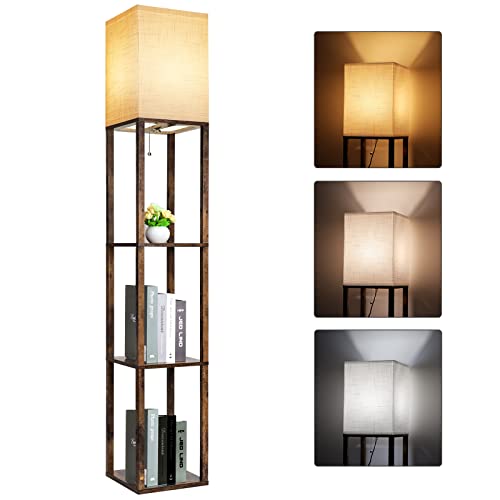
One dim corner can drag down an entire room, especially when floor space is already tight and another side table would only make the layout feel cramped. The RUNTOP Shelf Floor Lamp takes a different route from the usual bright torchiere by combining ambient lighting, display space, and narrow storage in one 63-inch frame. It isn't built to flood a large room with intense light, but its three shelves, selectable color temperatures, and fabric shade give it a practical role in bedrooms, offices, foyers, and living areas where atmosphere matters as much as raw brightness.
RUNTOP Shelf Floor Lamp
The standout feature is easy to spot: three brown display shelves sit beneath the lamp, turning an otherwise unused corner into functional space. Family photos, a small plant, magazines, or a few everyday items can stay within reach without adding another piece of furniture. RUNTOP lists a combined maximum shelf load of 50 pounds, though spreading weight sensibly across the tiers is wiser than piling one shelf with heavy objects.
At 63 inches tall, the lamp has enough presence to feel like part of the furniture rather than a skinny pole tucked beside a couch. The narrow vertical layout works nicely in rooms where a traditional end table and lamp would eat up too much floor area. Still, the open shelves put displayed items on full view, so clutter can quickly turn a decorative feature into visual noise. A few carefully chosen objects will suit the design better than stacks of loose cables, mail, and random odds and ends.
The brown wood-look structure and off-white shade lean toward a warm, relaxed style. That combination can sit comfortably beside modern, transitional, or mid-century-inspired furnishings without shouting for attention. The fabric lampshade softens the bulb's output and cuts the bare-bulb glare that often makes inexpensive standing lamps uncomfortable. On the other hand, anyone wanting an industrial metal fixture or a sharply minimalist profile may consider the shelf frame a little too furniture-like.
Lighting Performance In A Dark Room
The included 8W A19 LED bulb makes this lamp better suited to ambient illumination than heavy-duty room lighting. It can warm up a dark corner, make a bedroom feel less flat, or provide enough light for relaxed evening routines. It probably won't replace a strong ceiling fixture or a 2,000-lumen torchiere in a large room with dark walls. That distinction matters because the phrase best floor lamp for dark room can mean either broad brightness or comfortable layered lighting, and this model clearly favors the second approach.
Three selectable color temperatures give the lamp more range than a basic single-tone bulb. The listed 2700K setting creates a warmer glow for winding down, while 4000K offers a cleaner neutral tone for everyday use. The 5000K option feels brighter and crisper, which can help during light reading, organizing, or desk work nearby. Switching among them by pulling the chain is simple, though it requires getting up and reaching the lamp rather than using a remote.
The off-white shade spreads light gently through the room instead of throwing a sharp beam onto one surface. That softer output can reduce harsh contrast between a bright bulb and a dark background, which often causes eye fatigue in poorly lit spaces. Diffused illumination also makes the lamp more flattering around seating areas and bedrooms. The tradeoff is reduced intensity, since fabric naturally absorbs and softens some of the bulb's output.
RUNTOP lists a CRI of 80+ for the included bulb, meaning everyday objects should retain reasonably natural-looking color under the light. Wood tones, book covers, plants, and framed photos are less likely to look washed out than they might under a low-grade bulb. That rating is suitable for casual household use, though it isn't aimed at color-critical artwork, photography, or detailed design tasks. For ordinary decor and evening lighting, the practical benefit is a room that feels warmer without looking muddy.
Shelf Storage And Everyday Use
The three-tier structure solves a common small-room problem: lighting and storage often compete for the same patch of floor. A lamp that also holds a phone, books, decorative objects, or a lightweight plant can replace a separate stand in a tight bedroom or office. The combined storage function makes the footprint easier to justify, particularly beside a reading chair or guest bed. Still, the shelves are open rather than enclosed, so they won't hide chargers, paperwork, or less attractive necessities.
Spacing between the tiers appears designed for modest decor rather than oversized objects. Small framed photos, a compact planter, folded reading glasses, or a few magazines should fit the lamp's proportions naturally. Tall houseplants or broad ceramic pieces may crowd the shade area or make the structure look top-heavy. Balanced shelf styling keeps the lamp stable and prevents one side from feeling overloaded.
The top surface beneath the shade can also act like a compact nightstand, depending on how the lamp is positioned. That arrangement is handy where a conventional bedside table won't fit, although items placed close to the shade should stay clear of the bulb and pull chain. The included LED bulb produces less heat than an incandescent bulb, but leaving open space around the light remains a sensible habit. A narrow shelf lamp rewards tidy placement, not a balancing act.
Plant lighting follows a very different set of requirements than decorative household illumination, and one neutral reference appears in best LED grow light for a 2x4 tent for situations involving controlled plant growth rather than room ambiance. The RUNTOP lamp may hold a small decorative plant on its shelves, but its included bulb isn't presented as horticultural lighting. Display lighting and grow lighting solve separate problems, so treating them as interchangeable would set the wrong expectation.
Assembly, Bulb Options, And Controls
RUNTOP states that assembly takes about 10 minutes and requires no tools. Shelf lamps typically rely on threaded rods, stacked panels, and hand-tightened sections, so careful alignment matters more than speed. Rushing can leave the frame twisted or the shelves uneven. Once assembled, checking each connection helps the tall structure feel more planted and keeps displayed objects from sitting on a slight tilt.
The E26 socket adds useful flexibility because it accepts a wide range of compatible household bulbs. The included 8W A19 LED bulb covers basic use, but the socket leaves room to change bulb style later within the lamp's supported electrical limits. A higher-output compatible LED may improve brightness, while a smart bulb could add app or voice control. Any replacement should fit safely inside the shade and stay within the manufacturer's wattage guidance.
The pull chain keeps operation straightforward and easy to understand. Each pull cycles through the available color temperatures, and the lamp is described as remembering the last selected mode. That memory feature saves repeated cycling when one setting becomes the everyday favorite. Still, pull-chain control is less convenient from bed or across a room than a remote, wall switch, or smart-bulb setup.
Cord placement deserves a little thought because the lamp may sit near sofas, beds, or entryways where foot traffic is common. Running the cord behind furniture or along a wall helps preserve the clean look and reduces tripping risk. The tall open frame also collects visible dust along shelf edges, so occasional wiping will be part of ownership. Fabric shades need gentler cleaning than hard acrylic or metal heads, especially in rooms with pets or airborne lint.
Pros And Cons In Real Rooms
The strongest benefit is multifunctionality. Lighting, display space, and light storage share one slim footprint, which can make a cramped room feel more organized. The three color temperatures also let the mood shift from warm and sleepy to cooler and more alert. For a guest room, dorm, office corner, or compact living area, that mix can be more useful than a brighter lamp with no storage value.
The main weakness is limited raw brightness. An 8W bulb behind a fabric shade won't throw the same amount of light as a high-output LED torchiere aimed at the ceiling. Large rooms, dark paint, and heavy curtains may still need overhead lighting or a second lamp. This model works better as part of layered lighting than as the only fixture expected to erase every shadow.
Style is both an advantage and a limitation. The brown shelves and off-white shade create a warm, lived-in look that blends easily with wood furniture and neutral decor. That same design may feel too bulky or traditional in a stark modern room built around metal, glass, and sharp lines. Open shelving also demands a little restraint because too many objects can make the lamp look busy fast.
Bulb flexibility gives the lamp room to adapt. The E26 base makes future changes easier than an integrated LED fixture, and replacing a failed bulb should be straightforward. The downside is that performance depends partly on the bulb installed, so brightness, color quality, and smart features can vary after replacement. Keeping the shade size, wattage limit, and heat output in mind will prevent a poor match.
Best-fit situations favor atmosphere over intensity. The RUNTOP works well where a dark corner needs warmth, a few useful shelves, and enough light for casual reading or winding down. It won't suit detailed craft work, broad office illumination, or a large living room that lacks any other light source. Used beside existing ceiling lights or another task lamp, though, it adds storage and soft illumination without forcing another bulky table into the room.
Industrial Floor Lamp With Beige Shade
Harsh ceiling light can make a room feel exposed, yet a weak accent lamp leaves the corners murky and the furniture flat. The Industrial Floor Lamp With Beige Shade takes a calmer route, using a tall black frame, a fabric shade, and an included 9W LED bulb to create softer illumination near a sofa, bed, or desk. It suits the search for the best floor lamp for dark room spaces where relaxed lighting and simple operation matter more than maximum brightness. Still, its modest bulb and shaded design set clear limits on how much darkness one fixture can handle.
Industrial Floor Lamp With Beige Shade
The design keeps things refreshingly straightforward. A black metal-style frame gives the lamp a clean industrial edge, while the beige shade keeps it from feeling cold or overly mechanical. That pairing can settle into a bedroom, office, or living room without forcing the rest of the decor to follow a strict theme. It looks practical, a little understated, and unlikely to become visually tiring after a few months.
The supplied description makes one package detail especially clear: only one beige lampshade is included. That warning matters because product photos or similar versions can sometimes create the impression that extra shades come in the box. Nothing is wrong with receiving a single shade, since the lamp only needs one, but the expectation should be settled before purchase. A spare shade, alternate color, or decorative replacement isn't listed as part of this version.
The lamp's tall, narrow form helps it fit where bulky fixtures become awkward. A corner beside the couch, the gap near a nightstand, or a slim strip of floor behind a reading chair can all make sense. The small visual footprint is useful in rooms already crowded with storage, desks, or oversized furniture. Naturally, the base still needs a stable patch of floor, so squeezing it onto an uneven rug edge would be asking for wobble.
Warm Light And Visual Comfort
The product description identifies a 3000K warm white light, a tone commonly associated with relaxed evening spaces. It gives beige walls, wood furniture, and neutral fabrics a softer appearance than cooler white light. That warmth can make a bedroom or living area feel more settled after dark. For focused office work, though, some people may prefer a crisper color temperature that isn't confirmed in the supplied details.
The beige fabric shade plays a major role in how the light feels. Instead of leaving the bulb exposed, it filters the output and helps reduce the sharp glare that can become uncomfortable at eye level. This soft diffusion works well beside seating, where a bare bulb would otherwise sit directly in the line of sight. The tradeoff is simple: the shade also absorbs some light, so comfort improves while raw brightness drops.
Dark rooms often suffer from contrast rather than a complete lack of light. One bright bulb surrounded by deep shadows can make eyes work harder as they shift between the illuminated area and the rest of the room. The lamp's gentler spread may help smooth that contrast around a couch, bedside area, or office corner. It won't reach every wall in a large room, but it can make one frequently used zone feel far less gloomy.
The listing title mentions three color temperatures, yet the provided description only explains 3000K warm white lighting. No supported switching method or additional temperature values are included in the supplied information. Claiming three working settings without those details would be guesswork, so the review has to stay grounded in the confirmed warm-light specification. The actual bulb packaging or manual may clarify more, but that information wasn't provided here.
Brightness In A Dark Room
The included 9W LED bulb points toward ambient lighting rather than intense room-wide output. It should brighten the immediate area around the lamp and soften a shadowy corner, but it isn't described with a lumen rating. Without that number, broad claims about full-room coverage would be shaky. A large living room with dark walls, heavy curtains, and little ceiling light will probably need additional fixtures.
Placement can squeeze more value from the available light. Setting the lamp near a pale wall allows some illumination to reflect back into the room, while positioning it against a dark surface may swallow more of the glow. A spot beside a reading chair can also make the usable light feel stronger because the source sits closer to the task. Moving the lamp a foot sometimes matters more than swapping decorative accessories around it.
The fabric shade creates a broad, calm pool of light rather than a narrow beam. That makes the lamp comfortable for conversation, television time, or casual reading, but less suitable for stitching, drawing, or detailed paperwork. Those activities usually benefit from directional task lighting placed closer to the work surface. This lamp is better at changing the mood of a dark area than spotlighting tiny details.
A realistic setup may involve layered lighting. The floor lamp can handle the warm background glow, while an overhead fixture or desk lamp takes care of stronger illumination. That combination prevents the room from feeling either dim or painfully bright. The best floor lamp for dark room use isn't always the brightest standalone model; sometimes it is the fixture that fills the right gap without creating new glare.
Foot Switch And Daily Operation
The pedal switch is a practical feature because it keeps operation at floor level. A quick tap turns the lamp on or off without bending down or reaching beneath the shade. That feels handy beside a bed, couch, or desk where hands may already be occupied. Simple controls often age well because there's little to memorize and nothing to pair.
Switch placement deserves some thought, though. A pedal tucked too far under furniture becomes annoying, while one left in the middle of a walkway can get stepped on by accident. Routing the cord near a wall helps the hands-free control remain accessible without creating a tripping nuisance. A small cable clip may also keep the switch from wandering across smooth flooring.
No remote control, timer, memory feature, or touch panel is described in the supplied details. That absence may sound basic, but it also means there are no batteries to replace and no controller to lose. The lamp does one thing through a straightforward on-off switch, which suits anyone who'd rather skip extra settings. On the flip side, changing the light from across the room won't be possible without adding a compatible external control.
The pedal design also works well for routines that happen at the same spot each day. Walking into the room, tapping the switch, and sitting down becomes almost automatic. The action feels natural beside a favorite chair or at the edge of a bed. In a shared room, however, the switch needs to stay visible enough that nobody accidentally buries it beneath bags, blankets, or furniture.
Energy Use And Bulb Tradeoffs
The included energy-saving LED bulb is rated at 9 watts according to the product name. LED bulbs generally use less electricity and produce less heat than traditional incandescent bulbs designed for similar household lighting roles. The description also says the bulb is intended to avoid overheating and premature burnout. No exact service-life figure is provided, so a precise hourly lifespan shouldn't be invented.
Lower heat is especially useful beneath a fabric shade. The lamp can remain on through an evening without creating the same hot spot associated with older high-wattage bulbs. That makes the surrounding area more comfortable and reduces unnecessary heat near furniture. The cooler-running light source still needs proper ventilation, so covering the shade or crowding it against curtains would be unwise.
The product wording suggests that the bulb is a separate included component rather than a sealed LED panel. If that reading is correct, replacement should be easier than with an integrated fixture. Still, the provided details don't state the socket type or maximum wattage, so any future bulb change should follow the lamp's manual. The replacement flexibility is promising, but it shouldn't be stretched beyond what the documentation supports.
Electricity savings will depend on daily use and the lamp being replaced. A 9W bulb running for a few evening hours has modest power demand, yet the effect on a household bill won't look the same in every home. The strongest practical benefit is reduced energy use during ordinary lighting, not a dramatic financial windfall. Sensible expectations keep the energy-efficiency claim from turning into empty marketing language.
Style, Placement, And Room Fit
The lamp's classic black-and-beige palette gives it broad decorative flexibility. Black provides enough contrast to look intentional, while beige softens the overall appearance and pairs easily with warm woods, neutral upholstery, and muted wall colors. The industrial influence remains visible, but it doesn't become stark. That balance can work in a home office just as comfortably as in a casual bedroom.
Rooms built around glossy chrome, sculptural fixtures, or bold modern shapes may make this lamp look a little ordinary. Its strength is visual restraint, not dramatic decoration. The simple silhouette blends rather than commands attention, which can either feel calm or underwhelming depending on the room. Anyone expecting a statement piece may want more shape, texture, or architectural presence.
The beige shade will also collect dust differently from a metal or acrylic lamp head. A soft brush, lint roller, or gentle vacuum attachment can help maintain it without crushing the fabric. The black pole may show fine dust as well, especially in bright daylight. Routine cleaning isn't difficult, but fabric requires a lighter touch than a wipe-clean plastic surface.
Overhead lighting serves a separate role by spreading illumination across a broader area, and a neutral reference appears in best black ceiling lights for rooms that need light from above rather than beside a chair or bed. The floor lamp remains more useful for localized warmth and evening atmosphere. Those two lighting types can share a room without competing for the same job.
Strengths And Limitations
Soft, warm illumination is the clearest strength. The 3000K bulb and beige shade create a calm glow that suits bedrooms, reading corners, and relaxed living spaces. It avoids the harsh look of an exposed cool-white bulb. That comfort matters in rooms used mainly after sunset.
The foot-operated switch adds everyday convenience without making the lamp complicated. It allows quick control while carrying a drink, holding a book, or settling into bed. There are no remote batteries, apps, or menus involved. The weakness is limited reach, since the lamp can't be controlled from across the room unless another compatible device is added.
Brightness is the main compromise. A 9W bulb behind a fabric shade is unlikely to flood a large dark room by itself. It should improve a corner and contribute to layered lighting, but it isn't presented as a high-output torchiere or powerful task lamp. Deeply shadowed spaces may still need ceiling light, another floor lamp, or a brighter compatible bulb within the fixture's stated limits.
Feature ambiguity deserves attention because the title refers to three color temperatures while the supporting description confirms only warm 3000K light. That mismatch doesn't prove the other modes are absent, but it does prevent a confident claim that they are available. Anyone relying on adjustable color should verify the included bulb and operating method from the package details. The lamp remains easy to understand as a warm-light model, yet the unconfirmed feature shouldn't be treated as settled.
Simple styling and low-effort operation define the lamp's best use. It fits a narrow space, softens an underlit corner, and avoids the visual clutter of a bulky multifunction fixture. It won't satisfy someone seeking remote controls, intense brightness, movable heads, or elaborate decor. For a bedroom, office, or living-room corner that needs gentle light and a convenient floor switch, its modest approach makes practical sense.
SUNMORY Arc Floor Lamp With 3-Color LED Bulb
A shadowy sofa corner can make reading uncomfortable and leave an otherwise tidy room feeling oddly unfinished. The SUNMORY Arc Floor Lamp tackles that problem with an overhanging arm, an adjustable shade, and an included 9W LED bulb rated at 800 lumens. Its directed light makes more sense beside a chair, couch, or desk than a basic upright lamp that shines behind the furniture. For anyone considering the best floor lamp for dark room use, the key distinction is clear: this model improves a specific zone rather than flooding a large room from wall to wall.
SUNMORY Arc Floor Lamp
The curved arm gives this lamp a practical advantage over a straight pole design. Light reaches over the edge of a sofa or reading chair, placing the glow closer to a book, laptop, or side table. That extended lighting position can reduce awkward shadows cast by shoulders or tall furniture. It also saves the floor space that a separate end table and table lamp would normally occupy.
The black metal frame keeps the appearance clean without looking too bare. Its simple lines can sit comfortably in modern, American, Nordic, Japanese, or mixed decor, as stated in the supplied description. The arched silhouette adds shape to an empty corner while remaining quieter than a decorative tripod or oversized sculptural fixture. Still, the projecting arm needs some open space, so it may feel crowded in a narrow passage or tightly packed bedroom.
SUNMORY includes an E26 LED bulb, which gives the lamp a more serviceable setup than a sealed integrated panel. A replaceable bulb is easier to deal with if the original eventually stops working. Any replacement should match the socket, fit inside the shade, and remain within the lamp's supported wattage. That practical flexibility may matter more over time than flashy controls that rarely get used.
The lamp also includes a memory function that keeps the previously selected color setting. That feature saves repeated foot-switch cycling when one light tone becomes the everyday favorite. A remembered lighting mode sounds minor, but it makes the lamp feel less fiddly during bedtime or early-morning routines. Simple conveniences often earn their keep through repetition.
Brightness And Three Color Temperatures
The supplied bulb provides 3000K, 4000K, and 5000K color temperatures. Warm 3000K light suits relaxed evenings, bedroom use, and quiet television time. Neutral 4000K offers a clearer look for reading or casual office work, while 5000K produces a cooler tone that can sharpen contrast around paperwork. Three choices give the lamp more range than a fixed warm-white model.
Color changes are handled through the foot switch, freeing both hands while sitting or working. Repeated presses cycle through the available tones, so the controls stay easy to understand without a remote or app. The downside is that selecting a particular mode may require more than one tap. Anyone expecting direct buttons for each temperature won't get that level of control here.
The listed 800-lumen output is useful for localized lighting, but it shouldn't be mistaken for high-powered whole-room illumination. Positioned near a chair or desk, it can make reading and routine tasks noticeably easier. Pushed into a distant corner, the same bulb may leave the center of a large room dim. Placement matters a great deal with an arc lamp because its main strength is bringing moderate light close to where it's needed.
The lamp's softer output can also reduce the harsh contrast created by a bright ceiling fixture. Instead of blasting the entire room, it forms a more comfortable pool of light around a seating area. That focused brightness works well during late evenings when full overhead lighting feels too sharp. Dark walls, heavy curtains, and large open layouts may still require a second fixture.
Adjustable Shade And Reading Comfort
The hanging shade rotates up to 270 degrees horizontally and 120 degrees vertically according to the supplied details. That range lets the light aim toward a book, desktop, wall, or seating area rather than remaining locked in one direction. Small angle changes can make a big difference when glare reflects from a television or glossy tabletop. The movable head gives the lamp more practical value than a fixed decorative shade.
Directing the bulb downward can improve visibility for reading, though pointing it too close to eye level may become uncomfortable. A slightly offset angle usually creates a better balance between useful light and glare control. The adjustable lampshade makes those corrections possible without dragging the heavy base around. Once the preferred position is set, the lamp can stay put and quietly do its job.
The product description characterizes the light as soft and comfortable for the eyes. That claim should be understood as a design intention rather than a medical guarantee. Actual comfort depends on brightness, viewing angle, room contrast, and how close the shade sits to the face. A well-placed lamp can feel gentle, while even a modest bulb can annoy if aimed directly into someone's line of sight.
The arc design is particularly useful beside deep sofas where a standard lamp would sit too far behind the reader. It can also reach over a small desk without occupying valuable surface space. That overhead placement keeps the work area clearer and reduces shadows from hands or shoulders. A very wide desk may still need a dedicated task lamp with tighter beam control.
Heavy Base And Floor Placement
SUNMORY describes the base as metal and weighted with sand to improve stability. A heavy base is essential on an arc lamp because the upper arm extends away from the center of gravity. The added weight should reduce ordinary wobbling while the shade is adjusted. Even so, no freestanding fixture is completely immune to a hard bump or a tugged power cord.
The supplied description also emphasizes resistance to accidental tipping around children. That doesn't remove the need for careful placement near busy walkways, energetic pets, or thick rugs. A flat section of hard flooring gives the base its most reliable footing. Setting half the base on a rug and half on bare floor can make an otherwise sturdy lamp feel uneven.
Positioning the base behind the edge of a couch can keep it out of foot traffic while allowing the arm to reach over the seating area. That arrangement also hides some of the cord and leaves more open space around the chair. The arc clearance should be checked before assembly, since the upper section occupies more horizontal room than a straight floor lamp. Measuring the intended spot prevents the shade from colliding with shelves, curtains, or wall art.
The black finish should blend easily with dark hardware, metal furniture, and neutral upholstery. Against a pale wall, it creates a clean outline without appearing overly heavy. The slim frame keeps visual clutter down even though the arm reaches outward. Traditional rooms filled with carved wood and ornate fabrics may find the design a little plain, but mixed interiors can absorb it without much fuss.
Assembly And Everyday Operation
The package includes a user manual, and the supplied information says assembly shouldn't take long. The pole sections and curved arm need careful alignment so the finished lamp stands straight. Rushing threaded connections can lead to crooked joints or damaged threads. A slow setup is usually quicker than taking everything apart to correct a forced connection.
Internal wiring may run through the metal sections, so aggressive twisting isn't a smart move. Joining each part steadily helps protect the cord while keeping the frame connections snug. Once assembled, the shade should rotate smoothly without causing the whole structure to shift. A final check of the base and joints can prevent small annoyances later.
The foot switch handles both power and color-temperature changes. That keeps operation uncluttered, though it also means the lamp lacks the across-the-room control of a remote model. A switch positioned beside the sofa or bed feels convenient; one hidden under furniture quickly becomes irritating. The pedal location should remain easy to reach without leaving the cord across a walkway.
Seasonal decorative lighting serves a separate purpose from steady household illumination, and a neutral reference appears in best LED Christmas tree lights for settings centered on holiday sparkle rather than reading or room lighting. The SUNMORY lamp stays focused on adjustable white light and everyday furniture zones. Its strength lies in practical direction and atmosphere, not flashing patterns or decorative color effects.
Strengths And Practical Tradeoffs
Directional reach is the strongest part of the design. The curved arm brings light over furniture, while the rotating shade lets that output land on a useful surface. This setup can solve the annoying shadow created when a lamp sits behind the reader's shoulder. A straight pole lamp with a fixed shade simply can't offer the same placement flexibility.
Three color temperatures add meaningful versatility without making the lamp complicated. Warm light suits downtime, neutral light handles everyday tasks, and cooler light can make details appear clearer. The foot-switch method is easy but not instant, since cycling may take several presses. A remote-controlled model would offer greater convenience, though it would also add another accessory to keep track of.
Moderate brightness is both a benefit and a limitation. The 800-lumen bulb should feel comfortable near a chair or desk without making the space painfully bright. Large dark rooms may overwhelm it, especially where walls and furnishings absorb light. This lamp works more convincingly as focused or layered illumination than as the only fixture in a broad living area.
The weighted base supports the extended arc better than a lightweight stand would. Stable construction matters during shade adjustment and daily cleaning, and the sand-weighted design is intended to resist routine bumps. The tradeoff is reduced portability because a heavier lamp takes more effort to move between rooms. Once placed correctly, though, frequent relocation shouldn't be necessary.
The replaceable E26 bulb improves long-term flexibility. The included 9W model provides the advertised color settings, while the socket format may make future bulb replacement simpler than servicing a sealed LED head. A different bulb could change brightness or color behavior, so the original three-temperature function shouldn't be assumed after replacement. Within its intended role, the lamp balances adjustable light, uncomplicated controls, and a clean arc profile without pretending to illuminate every inch of a dark room.


Best Floor Lamps for Dark Rooms: Top Picks 2026
Best Value Outdoor Christmas Lights 2026 Brighten Nights

Best Lighting For Makeup 2026 Bright Ideas For Flawless Looks

Best Quiet Ceiling Fan For Bedroom 2026 Ultimate Comfort Picks

Best Christmas Lights For Bushes 2026 Brighten Your Yard
Best Outdoor Waterproof Christmas Lights 2026 For Festive Glow

Top 16 Kichler Barrington Flush Mount 2026 - Highly Rated

Best Wall Sconces For Staircase 2026 Brighten Your Home