
Best flush mount ceiling fan for bedroom 2026 picks

A best flush mount ceiling fan for bedroom should cool the room without hanging so low that it makes the ceiling feel cramped. That balance matters in rooms with eight-foot ceilings, loft beds, tall wardrobes, or limited open space above the mattress. A compact housing keeps the blades close to the ceiling, while a properly sized blade span helps move air across the bed instead of stirring only the space directly beneath the fixture. Still, an extremely shallow fan can sacrifice airflow, so the thinnest model isn’t automatically the smartest buy.
Quiet motor performance deserves just as much attention as blade size. A faint hum that seems harmless during the afternoon can become maddening once the lights go out and the room settles down. DC motors are often appealing because they allow finer speed control, use less electricity than many traditional AC motors, and tend to run with less mechanical noise. Even so, loose mounting hardware, an uneven electrical box, or poorly balanced blades can make any fan wobble or click.
Lighting creates another fork in the road. An integrated LED can keep the fixture slim and provide useful overhead illumination, but harsh color temperature or weak dimming can make a bedroom feel more like a utility room. A dimmable warm-white light usually feels calmer at night, especially when the fan doubles as the room’s main ceiling fixture. Replaceable bulbs offer easier maintenance, though their housings are often deeper and less streamlined than sealed LED designs.
Control options should fit real bedtime habits, not just look impressive on a product page. A remote is handy when the wall switch sits across the room, while a wall control is harder to misplace under blankets or behind a nightstand. App controls and voice commands add convenience, but they may bring pairing problems, Wi-Fi dependence, or extra setup that feels like a chore. Frankly, a clear remote with separate buttons for fan speed, light level, timer, and direction handles most needs without turning a ceiling fan into a tech project.
Room size also shapes the right choice. A blade span around 42 to 48 inches often suits a modest bedroom, while a larger primary bedroom may need a 52-inch fan for broader circulation. Oversizing can crowd the ceiling and create an overpowering breeze near the bed, while undersizing forces the motor to run faster and louder. The goal isn’t a wind tunnel, after all; it’s steady airflow that eases stuffiness without drying eyes or scattering papers.
Installation details can make or break the experience. The ceiling box must be fan-rated, the blades need safe clearance from walls and furniture, and the mounting plate should sit firmly against a level surface. Sloped ceilings may require a different mounting system because many true flush-mount designs can’t adapt to an angle. A realistic pick combines low-profile clearance, balanced airflow, gentle lighting, and simple controls rather than chasing one flashy feature.
- LFR Score9.6
LFR Score is a ranking system developed by lightfansreviews.com. LFR Score has no relationship or impact from any manufacturers or sales agent websites. Learn more
- BrandPACOVY

- LFR Score9.2
LFR Score is a ranking system developed by lightfansreviews.com. LFR Score has no relationship or impact from any manufacturers or sales agent websites. Learn more
- BrandPhylluz

- LFR Score9.0
LFR Score is a ranking system developed by lightfansreviews.com. LFR Score has no relationship or impact from any manufacturers or sales agent websites. Learn more
- BrandDepuley

- LFR Score9.0
LFR Score is a ranking system developed by lightfansreviews.com. LFR Score has no relationship or impact from any manufacturers or sales agent websites. Learn more
- BrandZMISHIBO

- LFR Score8.8
LFR Score is a ranking system developed by lightfansreviews.com. LFR Score has no relationship or impact from any manufacturers or sales agent websites. Learn more
- BrandZMISHIBO
- LFR Score8.8
LFR Score is a ranking system developed by lightfansreviews.com. LFR Score has no relationship or impact from any manufacturers or sales agent websites. Learn more
- Brandaddlon

- LFR Score8.8
LFR Score is a ranking system developed by lightfansreviews.com. LFR Score has no relationship or impact from any manufacturers or sales agent websites. Learn more
- BrandZMISHIBO

- LFR Score8.8
LFR Score is a ranking system developed by lightfansreviews.com. LFR Score has no relationship or impact from any manufacturers or sales agent websites. Learn more
- Brandaddlon

- LFR Score8.6
LFR Score is a ranking system developed by lightfansreviews.com. LFR Score has no relationship or impact from any manufacturers or sales agent websites. Learn more
- BrandTCL

- LFR Score8.4
LFR Score is a ranking system developed by lightfansreviews.com. LFR Score has no relationship or impact from any manufacturers or sales agent websites. Learn more
- BrandAmico

- LFR Score8.4
LFR Score is a ranking system developed by lightfansreviews.com. LFR Score has no relationship or impact from any manufacturers or sales agent websites. Learn more
- BrandAmico

- LFR Score8.4
LFR Score is a ranking system developed by lightfansreviews.com. LFR Score has no relationship or impact from any manufacturers or sales agent websites. Learn more
- BrandOhniyou
Last update on 2026-07-08 / Affiliate links / Images, Product Titles, and Product Highlights from Amazon Product Advertising API
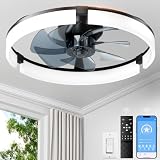
PACOVY 20-Inch Low Profile Ceiling Fan
Low ceilings leave little room for bulky fixtures, yet a bedroom can still feel stale after the door has been closed for a few hours. The best flush mount ceiling fan for bedroom needs to circulate air without hanging over the bed like an obstacle or flooding the room with harsh light. PACOVY tackles that problem with a 20-inch fan-and-light combination measuring only 4.7 inches tall. It’s built around space efficiency, adjustable comfort, and quieter nighttime control rather than the traditional look of long exposed blades.
PACOVY 20-Inch Ceiling Fan
The PACOVY’s compact shape fits bedrooms where a standard downrod fan would sit uncomfortably low. Its ultra-slim flush mount profile preserves headroom on ceilings between 7 and 10 feet, which can help a small room feel less crowded. The 20-inch diameter also keeps the fixture from visually taking over the ceiling above a full or queen-size bed. That said, its enclosed fandelier style looks more like a modern ceiling light than a classic fan, so rustic or traditional rooms may need a different visual approach.
Installation has been simplified around a relatively shallow body and straightforward mounting structure. PACOVY states that many installations can be completed in about 30 minutes, and the included manual and video should reduce the guesswork for anyone who hasn’t mounted this style before. Still, a fan-rated electrical box and secure ceiling attachment remain essential because spinning components create movement that an ordinary light box may not safely handle. Wiring confidence matters too, so there’s no shame in calling an electrician if the existing ceiling setup looks questionable.
Size is both the fan’s biggest convenience and its clearest limitation. The product information places its practical range around 60 to 150 square feet, with coverage potentially reaching 200 square feet depending on layout and airflow expectations. A compact bedroom, nursery, small office, or tucked-away guest room makes sense; a large primary suite with vaulted ceilings probably doesn’t. In a bigger space, the airflow may feel strongest directly below the fixture rather than evenly spread from wall to wall.
Lighting That Adjusts With The Room
The built-in LED array does more than add a basic ceiling light. PACOVY lists 300 LED beads, 32 watts of lighting power, and brightness reaching up to 3,600 lumens, creating enough output for cleaning, folding laundry, or getting ready before sunrise. The stepless dimming range from 5% to 100% is especially useful in a bedroom because the right brightness changes throughout the day. Full output can handle practical tasks, while the lower end avoids turning a late-night trip across the room into an eye-squinting event.
Three adjustable color temperatures give the fixture more flexibility than a single-tone LED panel. The 3000K warm setting suits wind-down routines and softer evening light, 4000K offers a neutral look for everyday use, and 6500K produces a cooler white tone for detail-heavy tasks. Cool white can feel a little clinical near bedtime, though, so it’s likely to be used less often in a cozy bedroom. The controls allow the lighting to shift with the moment instead of forcing one color temperature into every routine.
A built-in memory function saves the last lighting setting, which sounds minor until a ceiling fixture repeatedly snaps back to maximum brightness. Remembering the previous brightness and color temperature cuts down on daily button pressing and helps the room maintain a consistent feel. Lighting memory becomes particularly useful when the fan serves as the bedroom’s main overhead fixture rather than a secondary source. The practical catch is that memory behavior can sometimes depend on how the wall switch and remote are used, so following the operating instructions closely will prevent needless confusion.
The integrated light design keeps the fixture thin, but it carries the usual tradeoff of a built-in LED system. A standard bulb can be replaced in seconds, while an integrated light board may require a specific replacement component if it eventually fails. PACOVY’s listed five-year warranty adds reassurance, yet keeping purchase details and warranty information is still wise. Slim fixtures look cleaner because they hide more parts, but hidden parts aren’t always as simple to service.
Quiet Airflow For Sleep And Daily Comfort
Noise often separates a tolerable bedroom fan from one that gets switched off after ten minutes. PACOVY uses a pure copper DC inverter motor and lists operating noise as low as roughly 30 dB under suitable conditions. That figure suggests a restrained sound profile, though actual noise can change with mounting quality, ceiling construction, speed level, and blade balance. A tightly installed fan should produce mostly airflow sound rather than rattling, clicking, or a persistent electrical hum.
The remote’s silent operation is a thoughtful detail because many electronic fixtures beep loudly with every command. A no-beep remote lets someone adjust the fan speed or dim the light without adding a sharp electronic chirp to an otherwise quiet room. That’s a small but meaningful nighttime comfort feature, especially when one person is already asleep. The remote also avoids the awkward shuffle across a dark bedroom to reach a wall control.
Six fan speeds create a broader comfort range than a simple low-medium-high setup. Lower settings can maintain a light breeze near the bed, while higher speeds help clear trapped warmth after the room has been closed during the day. The six-speed adjustment makes it easier to avoid the common problem of one speed feeling useless and the next feeling too aggressive. Even so, a 20-inch fan shouldn’t be expected to throw air like a 52-inch open-blade model, so realistic expectations matter.
Air movement from this enclosed low-profile design will feel more concentrated than the broad sweep of large exposed blades. That can work well over a bed, desk, or central seating area, but furniture placement and room shape may create uneven zones. A narrow room may benefit more than a wide room with alcoves or an attached dressing area. Compact airflow coverage is the point here, not whole-floor circulation.
Controls That Fit Real Bedroom Routines
PACOVY offers control through a 2.4G remote and a Bluetooth app, with separate adjustment for the fan, light brightness, color temperature, and timer. Independent controls are useful because airflow may be needed without overhead light, and soft light may be wanted without the fan running. The dual-control setup also provides a backup when the remote disappears into bedding or ends up in the wrong drawer. Bluetooth control avoids reliance on a home Wi-Fi network, though the phone still needs to be nearby and paired correctly.
The app adds convenience but won’t appeal equally to everyone. Some people enjoy managing every setting from a phone, while others don’t want another app involved in a basic household fixture. Thankfully, the physical remote handles the main functions, so the fan doesn’t depend entirely on software for everyday use. That balance keeps the smart control features optional rather than turning them into a hurdle.
A timer adjustable from one to eight hours supports several practical routines. The fan can run through the first part of the night and shut down after the room cools, or it can circulate air while someone works without being left on until morning. The 1-to-8-hour timer is also useful in a child’s room where continuous high-speed airflow may not be desired. Timer use can reduce unnecessary operation, though the actual savings will depend on speed, duration, and how often the light is used.
Button layout matters more than flashy technology once the lights are off. Separate controls for airflow and illumination reduce accidental changes, while a silent remote keeps adjustments discreet. The Bluetooth app adds another layer, but the remote will likely remain the fastest tool for half-awake changes at night. PACOVY’s control system feels strongest because it provides several routes without forcing a single routine.
Seasonal Use And Everyday Tradeoffs
Reversible airflow allows the motor to change direction for different seasons. Downward airflow creates a direct cooling sensation during warm weather, while upward circulation can help redistribute warm air that gathers near the ceiling in cooler months. The reversible motor function won’t replace heating or air conditioning, but it can make room temperature feel more even. In a low-ceiling bedroom, that circulation may be subtle because there’s less vertical space for warm air to collect.
The fixture’s enclosed design keeps the blades less exposed, which can make the ceiling look tidier and reduce direct contact with spinning parts. Dust will still collect around the grille, housing, and light surface, so maintenance doesn’t disappear. Cleaning may require more attention to narrow openings than wiping three broad traditional blades. A soft brush attachment or microfiber cloth should handle most routine dust buildup without forcing debris deeper into the fan.
Brightness may be stronger than expected at the highest setting, especially in a compact room with pale walls. The wide dimming range addresses that issue, but the first setup should include testing several levels rather than leaving the light at full output. Similarly, maximum fan speed may feel too direct when the fixture sits immediately over the bed. The PACOVY works best when its adjustable settings are treated as tools to tune the room, not settings that should automatically remain at their highest values.
This fan makes the most sense where ceiling clearance, lighting flexibility, and quiet control carry more weight than traditional blade styling or broad-room airflow. Its compact body solves a real placement problem, while the dimmable LED and six speeds let the fixture shift between work, rest, and sleep. The main weaknesses come from the same design choices: limited blade span, concentrated circulation, and an integrated light system that may be less straightforward to service than replaceable bulbs. For a small bedroom with a low ceiling, those compromises are reasonable, but a spacious suite will likely benefit from a larger fan.
Phylluz 52-Inch Flush Mount Ceiling Fan
A low ceiling can make a conventional fan feel uncomfortably close, especially above a bunk bed, a tall wardrobe, or the center of a compact bedroom. The Phylluz model approaches the best flush mount ceiling fan for bedroom question with a broad 52-inch blade span tucked close to the ceiling, giving the room substantial circulation without the dangling presence of a downrod fixture. Its low-profile safety design, quiet DC motor, adjustable LED light, and three control methods address the daily annoyances that tend to matter after the novelty wears off. The tradeoff is equally clear: this isn’t a tiny fan for a cramped box room, so ceiling width and furniture placement deserve a careful look before installation.
Phylluz 52-Inch Ceiling Fan
The standout difference is the combination of a full 52-inch blade span with a flush mount body. Many low-profile fans shrink the blades to save space, which may limit how evenly air reaches the corners of a bedroom. Phylluz keeps the broader sweep associated with a standard-size ceiling fan while removing the long drop below the mounting point. That design makes sense in rooms where head clearance is tight but the floor area still calls for wider circulation.
Safety carries more weight than styling in rooms with raised beds or limited overhead clearance. By sitting closer to the ceiling, the fan reduces the unsettling sense that blades are hanging in the usable part of the room. The space-saving profile can also preserve visual openness, helping a lower ceiling feel less crowded than it would with a traditional suspended model. Still, flush mounting doesn’t erase clearance requirements, and the electrical box must be suitable for supporting a moving ceiling fixture.
The black finish gives the fan a crisp, modern presence without relying on ornate details. Against a white ceiling, it will create obvious contrast rather than fading into the background, which may suit industrial, contemporary, or minimalist rooms. A softer decorating scheme might need black furniture hardware, lamps, or curtain rods to make the fixture feel connected to the rest of the space. The bold visual profile is attractive in the right room, but it won’t behave like a discreet white fan that nearly disappears overhead.
Room proportions matter because 52 inches is generous for a flush mount model. The wider blades can move air across more of the bed and surrounding floor area, yet they also need adequate distance from walls, cabinets, and tall shelving. A narrow bedroom may feel visually crowded even if the blades technically fit. The fan’s broad coverage potential is therefore a strength in medium or larger bedrooms, while very small rooms may be better served by a shorter span.
Quiet Airflow Without The Hanging Bulk
Bedroom airflow needs to feel steady without introducing a mechanical soundtrack. Phylluz specifies a DC motor operating below 35 dB, placing quiet operation near the center of its design rather than treating it as a side benefit. Actual sound will depend on mounting quality, ceiling construction, and fan balance, so a careless installation can still produce vibration or clicking. Properly secured, the motor is intended to keep the background noise restrained enough for sleep, reading, or late-night work.
A 52-inch fan can provide a broader breeze than compact enclosed models, which often direct airflow mainly downward. Here, the longer blades should support more even circulation across the room rather than creating one strong pocket directly beneath the fixture. That difference matters when two sides of a bed need similar comfort or when a nursery chair sits away from the center. The wider airflow pattern may also let the fan run at a gentler setting instead of relying on a narrow, aggressive stream.
Quiet claims shouldn’t be mistaken for complete silence. Blade movement naturally creates air noise, and higher speeds will be more noticeable than a low overnight setting. The useful distinction is whether the sound remains smooth and consistent rather than turning into a hum, rattle, or rhythmic tick. For light sleepers, stable low-speed operation is likely to matter more than chasing maximum airflow after the lights go out.
The included two-hour timer supports a straightforward sleep routine. It allows the fan to ease the room through the warm beginning of the night and stop later without someone waking up to reach for a remote. That can be handy during transitional weather when all-night airflow feels too cool by early morning. The 2H timer is practical, though less flexible than models offering several timer lengths across a wider range.
Three Ways To Handle Everyday Control
Control flexibility is one of the Phylluz fan’s more practical strengths. The remote handles in-room adjustments, the smartphone app offers wireless control nearby, and a standard wall switch provides basic power on and off. This triple control setup avoids making the fan dependent on a single device that can be misplaced, uncharged, or left across the room. It also gives different household routines a reasonable fallback without forcing everyone to use the app.
The wireless app is designed for direct control without complicated network pairing, according to the supplied product details. That approach can remove the frustration of connecting a ceiling fixture to Wi-Fi, resetting a router, or creating yet another online account. A phone can manage the fan from the bed or sofa while the physical remote stays available for quicker adjustments. The simpler app connection is useful, but phone-based control still depends on device compatibility, Bluetooth access, and the app remaining available.
The wall switch adds familiarity but appears intended mainly for basic power control. Detailed adjustments such as light tone, brightness, or fan behavior will likely remain tied to the remote or app. That’s not unusual, though it means the remote deserves a consistent storage spot instead of bouncing between bedside tables. The standard wall-switch compatibility keeps daily operation approachable, while the smarter controls handle the finer settings.
Multiple controls can occasionally create confusion if settings are changed from different places. A wall switch may cut power completely, while the remote and app work only after power is restored. Learning that rhythm takes a little patience, particularly in a shared room where one person uses the switch and another relies on the app. Once the routine settles, the independent control options should feel more convenient than burdensome.
Adjustable Lighting For Work And Wind-Down Time
The integrated LED system supports stepless dimming rather than locking the room into a few preset brightness levels. That matters in a bedroom that doubles as a workspace, dressing area, or reading spot because full brightness isn’t appropriate for every hour. The stepless brightness adjustment can move from functional task lighting toward a softer evening glow without an abrupt jump between levels. A smooth range also helps reduce the temptation to install another lamp just to create a calmer mood.
Three color temperatures cover warm, natural, and white illumination. Warm light tends to suit evening routines, natural light offers a balanced everyday tone, and white light can make details clearer during cleaning or morning preparation. The ability to change color is more useful than it sounds because wall paint, bedding, and daylight can make one fixed LED tone look dull or overly harsh. The three-color LED light lets the room shift character without replacing bulbs.
Memory function removes a familiar irritation from adjustable ceiling lights. Instead of returning to an unwanted brightness or color every time the fixture is used, the fan is designed to restore the last preferred setting. That smart memory feature is especially valuable at night, when a sudden blast of cool white light can feel jarring. Its usefulness will depend on how the wall switch and electronic controls interact, so the operating instructions are worth keeping nearby during setup.
An integrated LED keeps the housing slimmer than many fixtures built around replaceable bulbs. The downside is serviceability because a failed LED component may require a compatible module rather than a quick bulb swap. No expected service life or replacement procedure was provided, so it would be unwise to make assumptions about long-term maintenance. The slim integrated lighting improves the ceiling profile, but it introduces a practical tradeoff that belongs in the buying decision.
Seasonal Circulation And Practical Limits
Reversible airflow makes the fan useful beyond hot weather. A downward summer setting creates a cooling breeze, while the upward winter direction helps move warm air that has collected near the ceiling back through the room. The reversible DC motor won’t heat or cool the space by itself, yet it can reduce uncomfortable temperature layering. That year-round usefulness makes more sense than storing a floor fan for half the year and dragging it back out every spring.
Low ceilings leave less vertical distance for warm air to gather, but circulation can still help in rooms with heating vents, sunny windows, or uneven temperatures. The wide 52-inch sweep may distribute that air more broadly than a small flush fixture. During winter, the goal isn’t to feel a direct breeze, so the upward setting should be paired with a modest speed. The all-season airflow direction adds value without requiring a complicated change to the room’s heating or cooling system.
Installation is the point where this fan’s benefits either come together or fall apart. A broad fan must be centered carefully, mounted to a fan-rated box, and given enough blade clearance to operate safely. Flush construction reduces downward intrusion, but it can also place the housing close to the ceiling, leaving less working room during wiring and attachment. The secure mounting requirement isn’t a minor detail, particularly in a room with bunk beds or regular activity beneath the fixture.
The Phylluz model fits the role of a best flush mount ceiling fan for bedroom most convincingly where broad circulation and low overhead clearance are both priorities. Its main strengths are the wide blade span, subdued motor specification, adjustable lighting, memory function, reversible airflow, and flexible controls. Its weaknesses are more situational: the black finish may dominate a pale room, the 52-inch size can overwhelm a tight bedroom, and the two-hour timer offers limited scheduling choices. Those tradeoffs don’t undermine the design, but they do make careful room measurement and realistic expectations essential.
Depuley 42-Inch Flush Mount Ceiling Fan
A bedroom fan can look fine on paper and still become irritating once it’s installed. Too wide, and it crowds the ceiling; too weak, and the room stays stuffy; too bright, and the light feels harsh during evening routines. The Depuley model aims at the middle ground for anyone searching for the best flush mount ceiling fan for bedroom, combining a 42-inch blade span with six speeds, adjustable lighting, reversible airflow, and remote operation. Its practical appeal comes from offering enough coverage for a typical bedroom without bringing the visual bulk of a larger 52-inch fixture.
Depuley 42-Inch Ceiling Fan
The 42-inch diameter gives this fan a useful balance between compact proportions and room-wide circulation. Depuley lists it for spaces measuring roughly 129 to 215 square feet, which covers many bedrooms, small living rooms, offices, and dining areas. That makes it less likely to overwhelm a modest ceiling than a full-size fan with longer blades. At the same time, it should move air across more of the room than a tiny enclosed fandelier that concentrates airflow directly below the fixture.
Five reversible black blades give the fan a familiar ceiling-fan profile rather than the look of a large light fixture with hidden blades. The five-blade propeller design should suit modern rooms where clean lines and darker hardware already appear in lamps, cabinet pulls, or furniture frames. Black can create a sharp contrast against a pale ceiling, though, so it won’t disappear quietly into every decorating scheme. In a very small bedroom, the strong color may make the fan seem visually larger than its actual 42-inch span.
Plastic is listed as the primary material, and that detail deserves a realistic reading. A plastic blade assembly can keep weight manageable and may simplify installation, but it won’t carry the same substantial feel as solid wood or metal components. The lighter construction may be an advantage for a flush mount fixture, particularly where the goal is easier handling during setup. Still, anyone expecting a heavy, furniture-grade finish may need to adjust those expectations before choosing this model.
The fan is described for indoor and covered outdoor locations, including patios, breezeways, gazebos, and pergolas. That flexibility can help maintain a consistent look across a bedroom and an adjacent covered sitting area. Yet “outdoor” shouldn’t be read as permission for direct rain exposure unless a specific wet-location rating is provided, and none was included in the supplied details. The safer interpretation is covered outdoor use where the fixture remains protected from water and severe weather.
Airflow Control Without The Usual Fuss
Six speed levels give the Depuley more range than a basic three-speed fan. A lower setting can keep air moving gently during sleep, while stronger settings can help clear trapped heat after a warm afternoon. The six-speed control also reduces the chance of getting stuck between one setting that feels too weak and another that feels too forceful. That finer adjustment matters above a bed, where overly direct airflow can become uncomfortable after several hours.
The DC motor is presented as both quiet and energy-efficient, two qualities that suit a bedroom better than brute-force airflow alone. No exact noise figure was supplied, so it would be careless to promise near-silent operation or attach a specific decibel level. The more useful expectation is that a properly mounted quiet DC motor should produce smoother mechanical operation than a poorly balanced or older-style fan. Blade alignment, ceiling-box stability, and installation quality will still influence rattling, vibration, and overall sound.
Forward and reverse rotation allow the fan to change roles with the season. Downward airflow creates a direct cooling effect in warm weather, while reverse operation helps circulate warm air that gathers near the ceiling during colder months. This reversible airflow function won’t replace heating or air conditioning, but it can reduce hot and cool pockets around the room. For a low-profile installation, that year-round circulation adds practical value without requiring extra floor equipment.
The listed room-size range suggests the fan is intended to provide meaningful circulation rather than serve as a decorative breeze source. Still, room shape matters just as much as square footage. A long narrow bedroom, a vaulted ceiling, or tall furniture near the blades can affect how evenly air travels. The fan’s 42-inch coverage looks most convincing in a regularly shaped small or medium room with reasonable clearance around all five blades.
Lighting Built Around Daily Bedroom Routines
The integrated LED system offers three color temperatures: 3000K, 4500K, and 6000K. Warm 3000K lighting can soften the room in the evening, 4500K creates a more neutral tone for ordinary tasks, and 6000K supplies a crisp white light for cleaning or detailed work. The three-color temperature range makes the fixture more adaptable than a single fixed LED tone. Cool white may feel too stark near bedtime, but having it available can still be useful during daytime routines.
Stepless dimming runs from 10% to 100%, allowing brightness to change gradually instead of jumping between a few presets. A bedroom rarely needs full overhead brightness all evening, and a lower setting can feel easier on the eyes before sleep. The 10% to 100% dimming range also helps the light work in a home office or study without forcing the same output during every activity. Since the lowest setting begins at 10%, it may not create the ultra-faint glow of a dedicated night-light bulb, but the separate night mode helps cover that gap.
One-touch night-light mode is a useful shortcut for late hours. Rather than repeatedly stepping through brightness levels and color temperatures, the remote can move the fixture toward a softer setting with one command. That night mode can be handy during a child’s bedtime routine, an early morning wake-up, or a quick trip across the room. Its real convenience comes from reducing button presses when bright overhead light is the last thing anyone wants.
The memory system saves brightness, color temperature, and the fan’s previous speed under the operating conditions described by the seller. Leaving the light off for at least 10 seconds allows the chosen light settings to return the next time it’s switched on. Turning it back on sooner may cycle the color temperature instead, which could seem confusing until the timing becomes familiar. The setting memory is helpful, but the 10-second rule is one of those small details worth remembering to avoid accidental changes.
Remote Convenience And Timer Flexibility
The remote handles fan speed, light brightness, color temperature, night mode, rotation direction, and timer settings from one place. That keeps the wall switch from becoming the only control point, which matters when the fan is mounted over a bed or seating area. The remote-controlled operation supports quick adjustments without getting up, and separate fan and light functions make the fixture useful throughout the day. A dedicated holder near the bed would be sensible because a feature-rich remote isn’t much help when it disappears under a blanket.
Two-hour and four-hour timers cover common nighttime routines without adding unnecessary complexity. The fan can run while the room cools down, then turn off later instead of operating until morning. These 2-hour and 4-hour timer options are straightforward, though they’re less flexible than systems offering one-hour increments or longer schedules. For most bedtime use, the two available durations should still cover the most practical scenarios.
Remote control also reduces the need to repeatedly use the wall switch, which supports the light’s memory behavior. Keeping power available at the fixture allows the remote to manage individual settings more consistently. The single-control convenience is especially valuable in rooms where the existing switch is awkwardly placed behind furniture or far from the bed. Battery dependence is the obvious downside, so spare batteries and a fixed storage spot are worth planning for.
No app control is listed, and that may actually suit people who don’t want another household device tied to a phone. The remote covers the useful functions without Bluetooth pairing, account setup, or software updates. The absence of an app means fewer control options, but it also keeps the daily operation simple. This fan leans toward physical convenience rather than turning a ceiling fixture into a connected-home project.
Installation Strengths And Realistic Weaknesses
Depuley highlights a snap-in blade system designed to reduce installation time. The seller states that setup can take less than 30 minutes, though actual timing will depend on wiring experience, ceiling-box condition, and whether an old fixture must be removed first. The snap-in blade design should reduce fiddly screw work compared with traditional blade brackets. Even so, a ceiling fan must be attached to a fan-rated electrical box, and rushed mounting is never worth a loose or wobbling fixture.
The flush mount format keeps the body closer to the ceiling and avoids the drop of a standard downrod. That makes the fan more comfortable in rooms where headroom is limited or where a hanging fixture would look out of proportion. The low-profile installation also creates a tidier silhouette above a bed or desk. A flat ceiling is the natural fit, while angled ceilings may require mounting hardware or a fan style designed specifically for slopes.
Maintenance should be manageable because the blades remain exposed and accessible for wiping. Black surfaces, however, tend to show pale dust quickly, so the fan may need more frequent cleaning to keep its crisp appearance. The five-blade layout also means a little more surface area than a three-blade design. A microfiber cloth can handle ordinary buildup, while the motor housing and light cover should be cleaned carefully with power switched off.
Support is listed as available around the clock for technical concerns, which may be reassuring during setup or troubleshooting. No detailed warranty length was supplied, so there’s no basis for assuming a specific coverage period. The fan’s main strengths are its balanced 42-inch size, six speeds, adjustable LED system, reversible motor, memory behavior, and easy remote access. Its clear weaknesses are the plastic construction, limited timer choices, lack of app control, and a black finish that may feel heavy in a tiny or softly decorated bedroom.
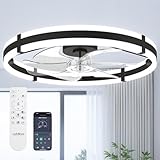
ZMISHIBO 19.7-Inch Low Profile Ceiling Fan
Small bedrooms can turn stuffy fast, yet a full-size ceiling fan may look awkward or hang too close for comfort. The ZMISHIBO model takes a compact route, pairing a 19.7-inch body with seven enclosed blades, adjustable LED lighting, and both remote and app control. That mix gives it a credible place in the best flush mount ceiling fan for bedroom conversation, especially where headroom and visual space matter more than sweeping airflow across a large room. Its appeal is practical rather than flashy: low-profile mounting, quiet controls, flexible light settings, and year-round air circulation packed into one shallow fixture.
ZMISHIBO 19.7-Inch Ceiling Fan
The 19.7-inch diameter immediately separates this fan from traditional 42-inch or 52-inch models. Its compact footprint suits a small bedroom, nursery, dressing room, or home office where a broad blade span could crowd the ceiling. The small flush mount body also keeps the room from feeling visually heavy, which matters when the ceiling is already low or the furniture sits tall. Still, compact dimensions naturally limit how widely the breeze spreads, so this fan shouldn’t be treated like a large-room air mover.
Seven enclosed blades sit inside the modern fandelier-style housing, creating a more contained appearance than exposed propeller blades. That setup can feel less intrusive over a bed and may reduce worries about visible spinning edges in a tight room. The seven-blade arrangement is designed to provide concentrated airflow from a relatively small body. On the flip side, enclosed housings tend to collect dust around grilles and narrow openings, so cleaning may require a soft brush rather than one quick wipe across open blades.
The black finish gives the fixture a strong modern character. Against a white ceiling, it becomes a deliberate design element rather than fading into the background, which can work nicely with black curtain rods, dark lamps, metal shelving, or contemporary furniture. The compact black housing may look sharp in a minimalist room, though it could feel visually busy in a tiny space filled with pale, traditional décor. Style fit is subjective, but the fan clearly leans modern rather than classic.
ZMISHIBO’s design favors rooms where the fan needs to stay close to the ceiling and provide directed comfort below. A bed, desk, or reading chair placed near the center of the room should benefit more than furniture tucked into far corners. The localized airflow pattern is useful for personal comfort without taking over the entire ceiling. Larger bedrooms or open-plan areas will likely need a wider fan if even wall-to-wall circulation is the main goal.
Lighting That Shifts With The Hour
The integrated LED light delivers a listed output of 2,200 lumens, giving the fixture enough brightness to act as the main overhead light in many small rooms. Brightness adjusts from 10% to 100%, so the room doesn’t have to remain stuck at full intensity. The wide dimming range is particularly useful in a bedroom, where folding laundry and getting dressed call for more light than winding down before sleep. The lowest 10% setting should soften the output, though it may still be brighter than a tiny bedside night-light.
Three color temperatures cover warm, balanced, and cool-white lighting from 3000K to 6000K. The 3000K warm setting can make evening routines feel calmer, while the cooler end of the range provides a crisper tone for cleaning, studying, or early-morning preparation. A middle setting can handle ordinary daily use without appearing too yellow or overly clinical. That flexibility helps one ceiling fixture serve several moods instead of forcing the same light tone all day.
The light memory function keeps the preferred brightness and color temperature available for the next use. That may sound like a small convenience, but it prevents the irritation of repeatedly rebuilding the same soft evening setting. The lighting memory matters most in bedrooms where overhead light is used briefly at night and maximum brightness would feel jarring. Exact memory behavior can depend on how the fixture is powered, so the included instructions deserve a careful read during setup.
An integrated LED system helps the fixture stay shallow and visually clean, but it also creates a maintenance tradeoff. Replaceable bulbs can be swapped in a minute, while a built-in light source may require a compatible LED component if it eventually stops working. No replacement procedure was supplied in the product details, so long-term serviceability remains uncertain. The slim LED construction supports the fan’s low-profile design, yet it isn’t as simple to maintain as a standard bulb socket.
Six Speeds Without The Remote Beep
Six wind speeds provide more control than the basic low, medium, and high arrangement found on older ceiling fans. A gentle setting can keep air moving during sleep, while stronger levels can clear trapped warmth after the room has been closed through the afternoon. The six-speed adjustment makes it easier to land on a comfortable middle point instead of bouncing between barely noticeable airflow and an overly direct breeze. That finer control is especially useful when the fan sits directly above a bed.
The pure copper DC motor is described as smooth, strong, and low in noise. No specific decibel level was supplied, so there’s no sound basis for promising near-silent operation. Even so, a DC motor generally suits bedroom use because steady speed control and reduced mechanical noise matter more there than dramatic bursts of airflow. Mounting quality will still play a major role, since loose hardware or an uneven ceiling box can turn any fan into a rattling nuisance.
Removing the remote’s confirmation beep is a smart detail. Electronic chirps can seem harmless during the day, then feel surprisingly loud once the room is dark and quiet. The silent remote signal allows speed or light adjustments without adding a sharp sound that might disturb someone already asleep. Tiny feature, big relief, especially in a nursery or shared bedroom.
The 2-hour timer adds another layer of nighttime convenience. It allows the fan to run while the room cools down, then shut off without someone waking later to reach for the controls. The 2H timer is simple and useful, although it lacks the broader scheduling range offered by models with several timer intervals. Anyone who wants four, six, or eight hours of automatic operation may find this limitation a bit restrictive.
Remote And Bluetooth Control In Daily Use
The fan can be operated with a handheld remote or a Bluetooth app, and the light and fan functions work independently. That separation means the room can stay illuminated without airflow, or the fan can run overnight with the light completely off. The independent fan and light controls make the fixture easier to live with than systems that tie both functions together. A physical remote also provides a straightforward backup when the phone is charging or out of reach.
Bluetooth app control avoids the complexity of connecting the fan to a full home Wi-Fi network. The phone only needs to remain within an appropriate nearby range, making setup less involved than cloud-based smart devices. The local app control can be handy from bed, particularly if the remote has slipped between cushions or landed across the room. Bluetooth still depends on device compatibility and app availability, so the remote remains the more dependable long-term control method.
Phone control may appeal to one person and annoy another. Some people like keeping every setting in one place, while others don’t want a smartphone involved in turning on a bedroom fan. ZMISHIBO avoids forcing that choice because the dual-control system supports both habits. The arrangement feels practical, not overcomplicated, as long as the remote has a regular storage spot.
Independent controls also help with overnight routines. The fan can stay at a chosen speed while the LED dims or switches off, and a lighting adjustment won’t necessarily interrupt airflow. That separate operation reduces unnecessary button cycling and keeps the fixture from behaving like one all-or-nothing device. Bedroom comfort often comes down to those small control details rather than one dramatic feature.
Reversible Airflow Across The Seasons
The reversible motor provides two airflow directions for warm and cool seasons. Downward rotation creates a direct breeze during summer, while upward rotation helps move warm air away from the ceiling during winter. The reversible airflow won’t replace a heater or air conditioner, but it can reduce stagnant pockets and make the room feel more balanced. That matters in bedrooms with uneven vent placement or windows that create noticeable hot and cool zones.
Winter operation should feel different from summer use. The goal is gentle circulation rather than a noticeable draft, so a lower speed generally makes more sense with upward airflow. The updraft mode can help redistribute warm air without blowing directly onto the bed. In a very low room, the effect may be subtler because there’s less vertical space for heat to collect.
Summer use plays more directly to the fan’s design. The seven enclosed blades push air downward from a compact central area, creating a focused cooling sensation beneath the fixture. The downdraft mode should feel most effective near the bed or desk rather than along distant walls. That concentrated airflow is either a strength or a limitation, depending on whether personal comfort or whole-room circulation matters more.
Reverse control is handled electronically rather than requiring a climb to reach a switch on the motor housing. That makes seasonal adjustments easier and removes one reason people often leave a reversible fan in the same direction all year. The remote-controlled direction change keeps the function usable instead of burying it behind an inconvenient manual step. A feature only helps if it’s simple enough to use, and this one clears that bar.
Installation, Support, And Practical Limits
ZMISHIBO includes written guidance and an installation video intended to simplify setup. A compact fixture can be easier to handle than a large fan with separate blade arms, especially while working from a ladder. The guided installation process may help reduce guesswork, but electrical skill and ceiling-box condition will still affect how smoothly the job goes. A fan-rated box and secure mounting remain essential because a spinning fixture creates forces that an ordinary light box may not handle safely.
The low-profile body helps preserve headroom, yet its shallow construction can make wiring space feel tight during installation. Neatly arranging wire connections before lifting the housing into place will likely make the final attachment less frustrating. The flush mount structure is best suited to a flat ceiling because no sloped-ceiling compatibility was provided. Rooms with angled ceilings may require a different mounting style altogether.
Two-year support and a stated response window within 24 hours add some reassurance after installation. That support could be useful for pairing issues, control questions, replacement parts, or setup confusion. The two-year support period is clearly defined in the supplied details, though it shouldn’t be treated as proof that every type of failure is covered without reviewing the actual terms. Keeping the order information and manual nearby would make any future support request easier.
The ZMISHIBO model fits the best flush mount ceiling fan for bedroom role most naturally in a compact room where a traditional fan would feel oversized. Its strongest points are the shallow 19.7-inch design, seven enclosed blades, six speeds, silent remote operation, adjustable 2,200-lumen light, Bluetooth control, and reversible motor. Its main limitations are concentrated rather than broad airflow, a single 2-hour timer, uncertain integrated-LED serviceability, and a black housing that may stand out sharply in a pale room. Those compromises are reasonable for tight spaces, but a larger bedroom will likely benefit from a wider open-blade fan.
ZMISHIBO 52-Inch Flush Mount Ceiling Fan
A bedroom can feel warm and stale even when the thermostat says the temperature should be comfortable. Poor circulation, trapped heat near the ceiling, and weak overhead lighting often create that mismatch. The ZMISHIBO model enters the best flush mount ceiling fan for bedroom discussion with a 52-inch blade span, a 20W LED light, app and remote control, and a reversible DC motor. Its strongest angle is simple: wide-room airflow without the drop of a traditional downrod fan, though its size makes careful room measurement essential.
ZMISHIBO 52-Inch Ceiling Fan
The 52-inch span gives this fan a broader reach than compact 20-inch fandelier designs. ZMISHIBO lists airflow at 3,057 cubic feet per minute, which suggests a moderate circulation level suited to bedrooms, apartments, living rooms, and kitchens where air tends to settle. A wider blade pattern can move air across more of the bed instead of creating one concentrated breeze directly below the motor. Still, a very large primary bedroom or open-plan space may need stronger airflow if fast cooling is the main expectation.
Flush mounting keeps the fan closer to the ceiling, removing the suspended look that can make a room feel cramped. That low-profile structure suits standard or lower ceilings where headroom matters, yet it retains the visual presence of a full-size fan. The fixture won’t disappear like a compact enclosed model, especially in black, but it should feel less intrusive than a comparable fan hanging several inches lower. Proper blade clearance from walls, cabinets, and tall furniture remains necessary despite the reduced vertical drop.
The listed plywood blades bring a different character from lightweight molded plastic. Tough plywood construction can provide a warmer, more furniture-like appearance while supporting a broad blade shape. Wood-based blades still need protection from excess moisture, so this fan makes more sense indoors unless specific damp-location suitability is confirmed elsewhere. The supplied details focus on bedrooms, living rooms, kitchens, and apartments rather than exposed outdoor spaces.
Black gives the fan a crisp outline against a pale ceiling. That contrast can tie together dark curtain rods, bed frames, lamps, or cabinet hardware without adding decorative clutter. The modern black finish may feel too strong in a tiny room filled with soft neutrals, though, and a 52-inch diameter naturally commands attention. This is a fan that becomes part of the room’s design rather than quietly blending into the ceiling.
Airflow Built For Broader Bedroom Coverage
Wide blades matter because bedroom comfort rarely comes from cooling one narrow spot. Air needs to travel around the mattress, past nearby furniture, and toward corners where heat can linger. The ZMISHIBO’s 52-inch sweep is better positioned for that job than a small caged fan with a tightly focused downdraft. A centered installation should help create a more even breeze across a queen or king bed, depending on room proportions.
The pure copper DC motor is described as high performing, energy efficient, and quiet. No exact decibel rating was provided, so claiming whisper-level silence would stretch beyond the supplied facts. The realistic benefit is that a DC motor can provide smoother speed control and less mechanical strain than many older fan designs. Installation still matters, since a loose mounting plate or uneven blade alignment can turn a quiet motor into an annoying source of vibration.
Strong airflow doesn’t always mean the fan should run at maximum speed. Over a bed, a forceful breeze may dry the eyes, disturb light bedding, or create a chilly patch after several hours. The adjustable operation lets the room settle into a gentler rhythm once the initial heat has cleared. That’s the sweet spot for sleep: enough movement to prevent stuffiness without making the room feel like a wind tunnel.
The listed airflow figure of 3,057 CFM deserves some perspective. It points to useful circulation, but it isn’t unusually high for a 52-inch ceiling fan, so expectations should stay grounded. The moderate airflow rating fits routine bedroom comfort better than rapid cooling across a very large area. Room shape, ceiling height, furniture placement, and blade direction will all influence how that airflow feels in practice.
Lighting That Moves From Task To Rest
The integrated LED light uses 20 watts and provides a listed output of 2,000 lumens. That level can support general bedroom lighting, morning preparation, or routine cleaning without requiring the fan to become an oversized light fixture. The 2,000-lumen LED should feel useful in many medium-size rooms, though dark paint, high ceilings, or limited natural light can affect perceived brightness. A separate bedside lamp may still be preferable for reading or softer late-night use.
Brightness adjusts from 10% to 100%, giving the light a wide operating range. Full output can handle practical tasks, while lower levels create a calmer atmosphere before sleep. The stepless dimming is more flexible than a few fixed brightness presets because it allows finer changes rather than abrupt jumps. The 10% minimum may still be brighter than a true night-light, but it should be considerably gentler than full power.
Color temperature shifts gradually from warm through neutral to cool white. Warm light can soften the room in the evening, neutral tones suit everyday use, and cool white can sharpen visibility during cleaning or focused work. The stepless color adjustment avoids locking the room into only three preset tones, which gives more control over how the light interacts with paint, bedding, and daylight. Cool settings may feel harsh near bedtime, so their value is more practical than cozy.
The memory function retains previous settings, reducing the need to rebuild the same lighting scene each time. That matters in a bedroom where repeated adjustments quickly become tiresome, especially if the preferred setup is low brightness with a warm tone. The saved setting memory can make the fan feel more predictable from one evening to the next. Its exact behavior may depend on how power is cut at the wall, so the manual should clarify the best operating routine.
App And Remote Control Without Leaving The Bed
Two control methods give the fan a useful balance between convenience and redundancy. The remote handles quick changes, while the app provides another route for adjusting fan and lighting settings from a nearby phone. This app and remote combination matters when the handheld controller is misplaced or sitting across the room. It also lets different household habits coexist without forcing every adjustment through one device.
Remote control is likely to remain the fastest option during the night. A physical button can change airflow or dim the light without unlocking a phone, opening an app, or staring at a bright screen. The bedside remote keeps the main functions close at hand, provided it has a consistent storage spot. A wall-mounted holder or bedside tray would prevent the usual hunt under blankets and pillows.
The app may appeal more during setup or daytime use. Fine adjustments to brightness and color temperature can feel easier on a screen, particularly when several settings are available. The phone-based control also reduces dependence on one small remote that could eventually be lost or damaged. App access still relies on compatibility and continued software support, so it shouldn’t be treated as the only dependable control path.
Memory function works alongside these controls to reduce repetitive tweaking. Once a comfortable fan and light setup has been established, the fixture is designed to retain those preferences. That control consistency is more valuable than adding dozens of novelty modes that rarely get used. Bedroom comfort usually comes from predictable behavior, not endless customization for its own sake.
Reversible Blades For Every Season
The reversible motor changes airflow direction for warm and cool seasons. Summer operation pushes air downward to create a cooling sensation, while winter mode pulls air upward and helps redistribute warmth gathered near the ceiling. The reversible blade function won’t change the actual room temperature by itself, but it can make heating and cooling feel more balanced. That keeps the fan useful after hot weather has passed.
Winter circulation should stay gentle. Running the fan too fast in reverse may create an unwanted draft or make the room feel unsettled rather than comfortable. The upward airflow mode works best as quiet background circulation that nudges warm air back into the occupied part of the room. Bedrooms with high ceilings or warm-air heating may notice the effect more than compact rooms with minimal temperature layering.
Summer use takes advantage of the full blade span. A 52-inch fan can spread a breeze across a broader area, helping both sides of the bed feel less stagnant. The downdraft setting may also reduce reliance on a noisy floor fan that takes up space and collects dust near the furniture. Air conditioning may still be necessary during severe heat, but moving air can make the room feel more comfortable at a less aggressive thermostat setting.
Electronic reversal is more practical than a manual switch hidden on the motor housing, though the supplied details don’t specify exactly how direction changes are activated. Since app and remote control are central features, the direction setting may be handled through one of those controls, but that shouldn’t be assumed without checking the instructions. The key confirmed benefit is year-round circulation, not a particular button sequence. Clear documentation will make seasonal changes much easier.
Installation, Support, And Real-World Tradeoffs
A flush mount fan can appear simpler than a downrod model, but installation still involves weight, wiring, alignment, and secure attachment. The ceiling box must be fan-rated, especially with a 52-inch fixture creating repeated rotational force. The secure mounting requirement matters more than saving a few minutes during setup. A poorly supported fan can wobble, rattle, or create a safety concern regardless of motor quality.
The integrated LED and low-profile body reduce visual clutter, yet they also place several components inside a compact housing. Wiring space may feel tight, and replacing an integrated light board is generally less straightforward than changing a standard bulb. The built-in LED tradeoff favors clean design and adjustability over simple bulb replacement. No LED lifespan or replacement procedure was provided, so long-term maintenance remains an open question.
ZMISHIBO lists five-year support for the motor and two-year support for other parts. Those periods provide a clearer safety net than vague promises of general assistance. The five-year motor support is particularly relevant because the motor is the heart of the fan’s cooling function, while the shorter coverage for other parts reflects a more limited window for electronics and accessories. Actual coverage terms should still be reviewed rather than assuming every issue qualifies.
The fan’s main strengths are its broad 52-inch sweep, 3,057 CFM airflow, adjustable 2,000-lumen light, app and remote control, reversible DC motor, plywood blades, and retained settings. Its main weaknesses are more situational: the black finish can dominate a small pale room, the airflow rating may feel modest for very large spaces, integrated LED serviceability is uncertain, and a full-size fan needs careful blade clearance. For a medium or spacious bedroom with a lower ceiling, those compromises are easier to accept than they would be in a narrow room with crowded furniture.


Best Quiet Ceiling Fan For Bedroom 2026 Ultimate Comfort Picks

Best Ceiling Fan For Master Bedroom 2026 With Ultimate Comfort

Best White Ceiling Fan With Light For Bedroom 2026 Top Picks

Best Quorum Medallion Ceiling Fan 2026 With Style & Breeze
Best Outdoor Fan For Pergola 2026 Comfort Boost

Best Ceiling Fan For Great Room 2026 With Ultimate Comfort

Best Outdoor DC Ceiling Fans 2026 For Breezy Comfort
Best ceiling exhaust bath fan with light and heater 2026





