
Best Full Spectrum Aquarium Light 2026 Setup Wins

Best full spectrum aquarium light choices matter more than a bright tank photo on a product page. A good fixture should balance red, blue, and green wavelengths, give plants usable light, and still make fish look natural instead of washed out or oddly purple. The tricky part, yep, is that too much intensity can stir up algae fast if nutrients, CO2, and water clarity aren’t keeping pace. Bright isn’t always better, especially in a low-tech tank that only needs steady, moderate lighting.
PAR output, spread, dimming control, and timer settings usually tell the real story. A narrow beam can leave stem plants leaning toward the center while corners fade into sad little shadows. A fixture with smoother coverage helps carpets, moss, Anubias, Java fern, and stem plants grow with fewer weird dead zones. Still, deep tanks need stronger penetration, so a slim budget bar may look nice up top but struggle near the substrate.
Full spectrum aquarium lighting also affects the way the whole aquascape feels after the room lights go off. Reds should look rich, greens should stay crisp, and fish shouldn’t appear like they’re under a nightclub lamp. Adjustable channels are handy because plant growth and visual taste don’t always line up neatly. Some tanks look better with warmer tones, while others need cooler white and a touch more red to bring out rotala, ludwigia, or colorful schooling fish.
Practical control saves headaches. A built-in sunrise and sunset cycle can reduce sudden light shock, while a simple dimmer helps dial back algae pressure during the first few weeks. Long photoperiods sound tempting, but many planted tanks behave better around a consistent, moderate schedule. Start lower, watch leaf response, then nudge intensity upward rather than blasting the tank from day one.
The smartest pick won’t always be the most expensive one. Low-tech aquariums often do better with reliable output, a stable timer, and broad coverage than with intense lighting meant for demanding red plants or CO2-heavy layouts. High-energy aquascapes, on the other hand, need stronger plant growth lighting and finer control to avoid uneven growth. So the right move is simple: match the light to tank depth, plant demand, and maintenance habits, not just the biggest number on the box.
- LFR Score9.4
LFR Score is a ranking system developed by lightfansreviews.com. LFR Score has no relationship or impact from any manufacturers or sales agent websites. Learn more
- BrandPawfly

- LFR Score9.4
LFR Score is a ranking system developed by lightfansreviews.com. LFR Score has no relationship or impact from any manufacturers or sales agent websites. Learn more
- Brandhygger
- LFR Score9.0
LFR Score is a ranking system developed by lightfansreviews.com. LFR Score has no relationship or impact from any manufacturers or sales agent websites. Learn more
- Brandhygger

- LFR Score9.0
LFR Score is a ranking system developed by lightfansreviews.com. LFR Score has no relationship or impact from any manufacturers or sales agent websites. Learn more
- BrandAQUANEAT
- LFR Score9.0
LFR Score is a ranking system developed by lightfansreviews.com. LFR Score has no relationship or impact from any manufacturers or sales agent websites. Learn more
- Brandhygger
- LFR Score9.0
LFR Score is a ranking system developed by lightfansreviews.com. LFR Score has no relationship or impact from any manufacturers or sales agent websites. Learn more
- BrandAQUANEAT

- LFR Score8.8
LFR Score is a ranking system developed by lightfansreviews.com. LFR Score has no relationship or impact from any manufacturers or sales agent websites. Learn more
- Brandhygger
- LFR Score8.6
LFR Score is a ranking system developed by lightfansreviews.com. LFR Score has no relationship or impact from any manufacturers or sales agent websites. Learn more
- Brandhygger
Last update on 2026-06-06 / Affiliate links / Images, Product Titles, and Product Highlights from Amazon Product Advertising API
Pawfly Aquarium Light for Plants Review
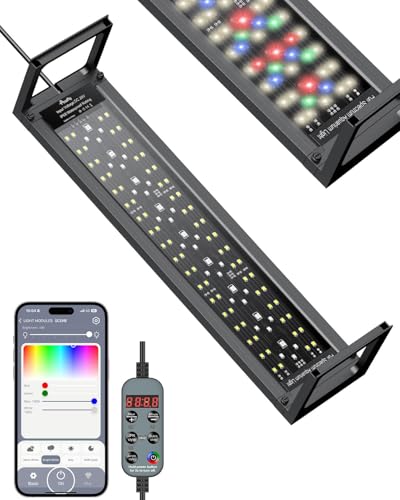
Murky lighting can make even a carefully maintained aquarium feel dull after sunset. Fish lose their natural shimmer, green plants flatten into one dark mass, and the tank slowly stops becoming the centerpiece it used to be. The best full spectrum aquarium light setups usually fix those visual gaps while also helping stabilize plant growth over time. Pawfly’s 20W Bluetooth Fish Tank Light takes that balanced approach by blending multiple color wavelengths into a cleaner, more natural display that doesn’t feel overly harsh or artificially blue.
Pawfly Aquarium Light
Full spectrum LEDs give this fixture a noticeably softer and more realistic appearance compared to many budget aquarium lights that lean too heavily into cool white tones. The mix of 6500K white, 660nm red, 525nm green, and 455nm blue creates stronger contrast between plants, fish, substrate, and driftwood. Stem plants tend to show deeper coloration under this spectrum balance, especially red varieties that often look washed out beneath weaker LEDs.
CRI 96 lighting also improves the viewing experience in a subtle but important way. Fish patterns appear cleaner instead of overly saturated, while planted sections gain more depth during evening viewing. Tanks with darker aquascapes benefit especially well because shadows remain softer instead of turning into black patches around hardscape corners. That visual consistency helps the aquarium feel calmer and more natural throughout the day.
Brightness levels can be adjusted gradually, which matters more than many people expect. Freshly planted tanks often struggle under overly intense lighting because algae spots develop before plants fully adapt. Lowering intensity during the first few weeks usually creates steadier growth and cleaner glass maintenance. Pawfly’s dimming controls help avoid that common mistake without forcing complicated setup routines.
PAR 95 output gives this light enough strength for many freshwater planted aquariums in the 18 to 24 inch range. Java fern, Anubias, cryptocoryne, and moderate stem plants should receive usable light coverage across most standard tanks. Very deep aquariums or demanding carpet plants may still require stronger systems, though, especially in high-tech CO2 setups.
Bluetooth Controls Feel Less Annoying Than Expected
Smart app control sounds flashy on paper, but daily convenience is where it actually earns its value. Reaching behind tanks to reset timers or change brightness becomes frustrating surprisingly fast, especially once cords, filters, and lids start crowding the back edge of the aquarium. The Pawfly Bluetooth system keeps most adjustments inside the app instead of forcing manual button pressing every evening.
Custom color settings allow more flexibility than basic white-only aquarium fixtures. Some planted layouts look better under warmer daylight tones, while reef-style tanks often benefit from stronger blue emphasis during nighttime viewing. The app makes those shifts easy without turning the process into a complicated programming session. Color transitions remain smooth instead of abrupt or distracting.
The huge range of over 100,000 lighting combinations might sound excessive at first, yet smaller adjustments can noticeably change the mood of a tank. Slightly warmer reds can help driftwood-heavy aquascapes feel richer, while cooler white tones often sharpen silver fish patterns. The flexibility gives hobbyists room to experiment as the aquarium matures and plant density changes.
Aquarium lighting often affects the surrounding room atmosphere too, and some decorative inspiration appears naturally alongside creative lamp shade ideas for boys rooms where softer lighting balance changes the feel of an entire space without overpowering it.
Automatic Timers Simplify Daily Maintenance
Built-in day and night cycles help stabilize tank routines without relying on separate outlet timers or smart plugs. Consistency matters because fish and plants respond better to predictable lighting schedules than random manual switching. Dutch, Jungle, and Japanese timer modes create automatic transitions that mimic sunrise, daylight, and nighttime patterns throughout the day.
Sudden bright light can stress fish more than many people realize. Tanks placed in darker rooms especially benefit from gradual sunrise simulation because fish remain calmer during the morning transition. Schooling species often behave more naturally when brightness ramps up slowly instead of instantly blasting the tank at full intensity. The softer shift creates a smoother visual experience too.
Custom scheduling makes this fixture easier to fit into real-world routines. Some aquariums are enjoyed mostly at night after work, while others become focal points during daytime hours. Flexible start times allow the lighting schedule to match actual viewing habits rather than forcing rigid default cycles. That adaptability feels surprisingly useful over the long run.
Timer stability also reduces the temptation to constantly tweak settings. Over-adjusting aquarium lighting can create unnecessary plant stress and algae swings. Once the balance feels right, the Pawfly system settles into a more hands-off routine that keeps the tank looking stable day after day.
Plant Growth Looks Balanced Instead Of Aggressive
Balanced spectrum output gives aquatic plants usable energy without creating the harsh appearance some stronger fixtures produce. Mosses, swords, Java fern, and many beginner-friendly stem plants should respond steadily under this lighting setup. Leaf coloration tends to stay healthier looking when intensity remains moderate and consistent instead of wildly fluctuating.
Low-tech tanks usually benefit the most from this style of lighting. Stronger systems can easily overwhelm aquariums without CO2 injection or heavy fertilization, leading to algae buildup before plants fully establish themselves. Pawfly’s adjustable brightness allows slower progression, which often creates cleaner long-term growth. Stable tanks almost always outperform aggressively bright setups that chase instant results.
Color rendering remains one of the stronger visual advantages here. Neon tetras gain cleaner contrast, goldfish scales reflect light more naturally, and darker bettas avoid looking muddy under uneven illumination. Fish remain the focal point rather than disappearing beneath flat white lighting.
Heat output stays fairly manageable as well. Older fluorescent systems sometimes raise water temperature noticeably during long photoperiods, especially in smaller tanks. LED lighting reduces that issue while also consuming less power overall during daily operation.
Everyday Use Feels Straightforward
Simple operation makes this fixture easier to live with over time. Aquarium equipment that requires constant adjustment tends to become irritating after the novelty fades, especially during busy weeks when maintenance already piles up. Pawfly keeps most controls accessible and relatively easy to understand without burying settings inside complicated menus.
Noise-free performance helps nighttime viewing feel more relaxing too. Some cheaper aquarium lights develop faint buzzing sounds or unstable dimming behavior after extended use. This fixture focuses more on steady operation, which suits tanks placed in bedrooms, offices, or quiet living rooms.
Extendable mounting brackets provide decent flexibility for standard aquarium sizes between 18 and 24 inches. Installation stays fairly straightforward without requiring custom mounting hardware or awkward positioning tricks. Tanks with glass lids, rimmed frames, or compact spaces around filters should still have enough clearance for a comfortable fit.
The overall experience feels practical rather than flashy. Strong color balance, adjustable scheduling, and moderate plant-friendly output give the aquarium a cleaner daily rhythm without forcing constant micromanagement. For many freshwater planted tanks, that kind of steady usability matters far more than exaggerated brightness numbers or unnecessary visual effects.
hygger Dual-Channel Controller Aquarium LED Light
Harsh aquarium lighting can ruin the entire mood of a tank faster than cloudy water. Fish hide more often, plants lose depth, and reflective glare starts bouncing around the room like a flashlight pointed at glass. The best full spectrum aquarium light setups usually solve those small frustrations quietly in the background, and hygger’s Dual-Channel Controller model leans heavily into that calmer, more balanced approach. Instead of flooding a tank with aggressive brightness, it focuses on gradual transitions, softer output, and cleaner cable management that makes smaller aquariums feel less cluttered.
hygger Dual-Channel LED Light
24/7 natural mode stands out immediately because the lighting shifts feel smoother than the usual abrupt on-and-off timers. Sunrise starts with a warm orange tone, daytime shifts into white light, then moonlight blue slowly takes over before the fixture powers down completely. Fish behavior often looks more relaxed under gradual transitions instead of instant brightness changes that can startle schooling species. That softer rhythm also makes nighttime viewing easier on tired eyes.
Full spectrum lighting helps maintain more natural color separation inside planted tanks. Green aquatic plants avoid that dull gray appearance weaker LEDs sometimes create, while fish patterns gain cleaner contrast without looking overly saturated. The blend of white, red, blue, green, cyan, purple, and orange channels gives the tank a more layered appearance during evening viewing. Smaller aquariums especially benefit because uneven lighting becomes more noticeable in compact spaces.
The light output itself leans toward moderate intensity rather than brute-force brightness. That matters because smaller tanks between 4 and 16 gallons can become algae magnets under overly aggressive lighting systems. Hygger’s softer approach feels more stable for low-tech planted setups using Anubias, moss, Java fern, and similar slower-growing plants. Tanks without CO2 injection generally behave better with that type of controlled lighting balance.
CRI 79 rendering won’t push ultra-vivid showroom colors, but it does maintain a more comfortable visual tone during long viewing sessions. Fish remain clear and natural-looking without the exaggerated neon effect some RGB-heavy lights produce. The softer rendering feels particularly pleasant in bedrooms, offices, or living spaces where the aquarium stays visible for hours at a time.
Dual-Channel Control Simplifies Multi-Tank Setups
Synchronized control quietly becomes one of the most practical features after daily use settles in. Managing separate aquarium lights individually can get annoying fast, especially in setups with multiple small tanks or irregular-shaped aquariums. Hygger’s controller allows two or three connected lights to operate through one centralized system, which cuts down on repetitive adjustments and reduces cable clutter around the tank area.
Multiple cords have a habit of turning aquarium stands into a tangled mess. Filters, heaters, air pumps, and lights already compete for outlet space, so reducing extra adapters makes maintenance feel cleaner overall. The multi-channel wiring system keeps things more organized while also improving the visual appearance around the aquarium setup itself.
Subtle environmental details often shape how comfortable a viewing space feels, and related design habits sometimes overlap with equipment organization found in remote control accessories for Canon 80D setups where cleaner cable layouts and simplified controls reduce unnecessary clutter around everyday gear.
Single-controller management also helps during routine maintenance sessions. Water changes, feeding adjustments, or algae cleaning become less irritating when brightness and schedules can be handled quickly from one control point instead of multiple scattered switches. Small convenience, honestly, but one that becomes more noticeable over time.
DIY Mode Gives More Flexibility Than Expected
DIY timer settings allow a surprising amount of control for a compact aquarium light. The built-in 6-hour, 10-hour, and 12-hour timing options make it easier to match the lighting schedule to plant growth and room conditions instead of relying on one rigid default cycle. Tanks near windows often need shorter photoperiods to avoid algae buildup, while darker rooms may benefit from slightly extended viewing hours.
Five-stage brightness adjustment helps newer tanks avoid one of the most common planted aquarium mistakes: too much light too early. Freshly planted layouts rarely stabilize overnight, and aggressive brightness can trigger algae before root systems settle in properly. Lowering intensity during the first few weeks usually creates steadier growth and cleaner maintenance routines.
Color customization changes the tank atmosphere more than expected too. Cooler tones sharpen silver fish patterns, while warmer combinations create richer contrast around driftwood and darker substrate. Purple and cyan effects can feel overly dramatic in heavily planted tanks, though they work surprisingly well for decorative nighttime viewing in casual community aquariums.
Manual spectrum adjustment gives hobbyists room to experiment gradually instead of locking the tank into one fixed appearance. Seasonal aquascape changes, plant trimming, or new fish additions can shift how the aquarium looks under certain colors. The flexibility helps the lighting adapt naturally as the tank evolves over time.
Submersible Design Adds Placement Freedom
IP68 waterproof construction opens up more placement options than standard top-mounted aquarium bars. The fixture can sit beneath the tank cover, mount behind the aquarium as ambient lighting, or operate fully submerged depending on the setup. That flexibility becomes useful for unconventional layouts where overhead lighting space feels cramped.
Hidden placement changes the visual feel of the aquarium in an interesting way. Light reflections soften, shadows spread more evenly, and equipment stays less visible from the front viewing angle. Tanks with floating plants or decorative lids often benefit most because the fixture doesn’t dominate the upper edge visually.
Background lighting support also gives aquariums a softer room presence at night. Blue moonlight reflections create a calmer atmosphere without flooding the room with bright white glare. That softer effect feels especially relaxing in darker spaces where strong aquarium lighting can become distracting after sunset.
The sealed construction adds peace of mind too. Water splashes, condensation, and humid tank environments slowly wear down poorly protected fixtures over time. Hygger’s waterproof design feels better suited for long-term aquarium use where moisture exposure becomes unavoidable.
Everyday Performance Feels Calm And Practical
Soft lighting behavior defines the overall experience more than raw brightness numbers. Tanks illuminated by this fixture feel steady and comfortable rather than aggressively vivid. Fish movement appears more natural during sunrise and moonlight phases, while plants maintain healthy visibility without looking overexposed.
The use of 2835 and 5050 LED beads helps distribute color more evenly across smaller aquariums. Harsh spotlighting stays fairly controlled, which matters in shallow tanks where uneven light becomes obvious quickly. Mosses, crypts, and low-growing plants tend to benefit from that broader spread instead of isolated hot spots.
Separable adapter design deserves more credit than it usually gets. Power adapters often fail long before the light itself, and replacing an entire fixture because of one damaged component feels wasteful. Hygger’s detachable setup makes long-term maintenance simpler and less frustrating.
Overall usability leans toward relaxed daily operation rather than flashy presentation. Gradual lighting transitions, moderate brightness control, waterproof flexibility, and synchronized multi-light management all work together to create a tank environment that feels calmer and easier to maintain over time.
hygger Clip On Aquarium LED Light Review
Small tanks can be fussy little things. Too much brightness brings algae knocking, too little makes plants stretch and fish colors look sleepy, and a bulky fixture can make the whole setup feel crowded. The best full spectrum aquarium light should solve those everyday headaches without turning maintenance into a science project. The hygger Clip On 24/7 Lighting Aquarium LED Light takes a practical route with soft color transitions, adjustable brightness, a clip-style bracket, and a 14W output made for planted tanks around 12 to 20 inches long.
hygger Clip On Aquarium Light
Clip-on installation gives this light a real advantage for compact aquariums where space around the rim gets tight. Instead of stretching a bar across the entire tank, the bracket clamps onto the glass and keeps the fixture positioned cleanly above the water. That matters on small planted tanks with lids, filters, feeding openings, or limited desk space. The body can also be removed and installed horizontally or vertically, which adds some welcome flexibility for odd little setups.
14W lighting power feels better suited to controlled planted tanks than to overly bright, high-energy aquascapes. That’s a good thing for many smaller tanks because harsh lighting can stir up algae faster than plants can settle in. The fixture includes 68 LED beads, with white, blue, red, green, and RGB beads working together for a fuller color mix. This gives plants and fish a more balanced look than plain white lighting alone.
The full spectrum aquarium light design uses 6500K white, 455nm blue, 620nm red, and 560nm green output. Those wavelengths support a more natural appearance across leaves, substrate, fish scales, and hardscape. Red plants may still need stable nutrients and careful trimming to look their best, but the color support here is more thoughtful than a basic clip lamp. Fish patterns also stand out without looking like they’ve been dipped in neon paint.
CRI 85 color rendering is another useful detail for everyday viewing. It helps the aquarium look closer to natural light, which is easier on the eyes during longer viewing sessions. Softer rendering also helps reduce that sharp glare some small tank lights create at night. For bedrooms, desks, or quiet corners, this calmer visual tone feels easier to live with.
Natural Mode Feels Gentle On Fish
24/7 natural mode is the feature that gives this hygger light its personality. The default cycle starts with gradient orange light from 6 am to 8 am, shifts into white daylight from 8 am to 6 pm, and then fades into blue moonlight from 6 pm to 10:50 pm. After that, the light stays off during the remaining hours. That steady routine feels more natural than a hard on-off switch, especially in darker rooms.
Fish often react poorly to sudden brightness changes. A tank that goes from pitch black to full white light can send shy species darting behind plants or rocks. The sunrise and moonlight transitions help soften that daily shift, so movement inside the tank feels less jumpy. It’s not magic, but it does make the aquarium feel calmer and more settled.
The default schedule can be delayed or advanced, which is handy if the tank gets enjoyed mostly in the evening. Fixed factory schedules can be annoying when they don’t match real life. With this light, the overall cycle can shift around daily routines instead of forcing the aquarium to run on someone else’s clock. That small adjustment makes a big difference in shared living spaces.
Moonlight mode also gives the tank a softer evening presence. Blue light can look peaceful after daylight fades, especially with floating plants, dark substrate, or slow-moving fish. Still, it’s smart not to overdo nighttime lighting because fish need dark periods too. The built-in off period helps avoid the common mistake of leaving decorative light running all night.
DIY Controls Add Useful Room To Adjust
DIY mode gives more control for tanks that don’t behave well under preset lighting. The timer can be set to 6, 10, or 12 hours, which makes it easier to manage algae pressure, plant needs, and viewing time. A newly planted aquarium may do better with a shorter lighting window at first. Once plants root in and growth stabilizes, longer schedules can be introduced more carefully.
Five brightness levels make the light easier to tune without guessing wildly. Small tanks can change quickly, and too much light often shows up as green dust algae, brown patches, or stressed-looking plants. Lower settings are useful during tank startup, after heavy trimming, or after adding new plants that need time to adapt. Higher settings can support fuller growth once the aquarium is balanced.
Color options include white, red, blue, green, purple, orange, cyan, and cycle color. That range gives the tank different moods, but it also needs a little restraint. White and balanced tones usually work better for plant viewing, while stronger decorative colors are better saved for short evening sessions. Purple or cyan can look fun, sure, but they may not be the most natural choice for daily plant observation.
The cycle color mode has no brightness selection, which is worth knowing before expecting full control over every effect. This isn’t a studio lighting panel with endless fine-tuning. It’s more of a practical aquarium fixture with enough flexibility to keep small tanks looking alive. That limitation feels reasonable for the product style, but picky aquascapers may want deeper app-based control.
Build Design Helps With Small Tank Clutter
Thickened aluminum supports heat dissipation, which matters for compact LED fixtures that run for long daily schedules. Heat management helps the light stay more stable and keeps the body from feeling overly stressed during long photoperiods. Small aquariums already deal with tight spaces, warm rooms, and limited airflow around lids. A cooler-running design makes daily use feel a bit more reassuring.
The separable adapter is a practical touch that doesn’t sound exciting until something fails. Power adapters can wear out before the light body does, and replacing the whole fixture for one damaged part feels wasteful. This setup avoids that frustration by allowing the adapter to be replaced separately. That’s a sensible design choice for aquarium gear that gets used every day.
Lighting also changes how a room feels around the tank, and larger home fixtures follow a similar idea through living room fan lighting where brightness, placement, and comfort all shape the final atmosphere. The connection is indirect, but the principle is familiar. Good lighting shouldn’t fight the space around it. It should settle in and make the whole area feel easier to enjoy.
Power cord length also deserves a quick mention because small aquarium setups often sit on desks, shelves, or nightstands where outlets aren’t always nearby. The listed cord sections give more placement freedom than a tiny short cable would. Still, clean cable routing will matter if the tank sits in a visible area. A few clips or cable ties can keep the setup from looking messy.
Plant Support Works Best With Realistic Expectations
Planted tank performance should be judged by the size and style of aquarium this light is meant for. The listed application range is 12 to 20 inch tanks, so it makes more sense for nano and small community aquariums than deep, high-demand aquascapes. Low to moderate light plants such as Anubias, Java fern, mosses, crypts, and many beginner stems fit the profile better. Demanding carpet plants may need stronger lighting, CO2, and stricter nutrient control.
817 lumens gives the fixture enough visible brightness for many small tanks, but lumen numbers don’t tell the whole story underwater. Plant growth depends on light spread, depth, duration, nutrients, and maintenance habits. A shallow tank with clean water and steady fertilizing will usually respond better than a deeper tank with poor flow and irregular trimming. The light can help, but it won’t fix neglected basics.
The softer output can actually be an advantage for anyone tired of scraping algae every few days. Strong lights often look impressive on day one, then punish the tank if balance isn’t there yet. This hygger model feels more forgiving because brightness can be stepped down and schedules can be shortened. That makes it easier to learn the tank’s rhythm instead of constantly reacting to problems.
Stroboscopic discomfort reduction is another thoughtful point from the product details. Flicker and harsh light can make viewing uncomfortable, especially in a tank placed near a desk or bed. Softer lighting protects the viewing experience and may help fish appear less agitated during daily transitions. It’s a quiet benefit, but one that matters in rooms where the aquarium stays in sight for hours.
Everyday Use Feels Practical And Low-Fuss
Easy maintenance fits the overall character of this light. The controls are simple enough for routine use, the clip bracket saves space, and the lighting modes cover most daily needs without piling on complicated settings. That makes the fixture feel approachable for smaller planted tanks where reliability matters more than fancy extras. It’s the sort of light that quietly handles the schedule while the tank matures.
The main tradeoff is control depth. There’s no mention of app control, advanced sunrise editing by minute, or detailed spectrum curves. For some setups, that’s fine because too many controls can lead to constant tinkering. For more demanding aquascapes, though, the fixed structure may feel limiting after a while.
Best full spectrum aquarium light expectations should stay grounded here. This hygger Clip On model is strongest as a soft, adjustable, space-saving light for small planted aquariums. It brings color variety, a natural 24/7 schedule, and enough brightness control to reduce common beginner headaches. It won’t replace stronger professional planted tank lighting, but it does fit everyday tanks that need balance more than brute force.
Daily viewing is where the fixture makes the most sense. Fish look clearer, plants gain better shape, and the room doesn’t get blasted with unpleasant glare. With reasonable timing, careful brightness settings, and basic plant care, this light can help a compact aquarium look more polished without making maintenance feel like a second job.
AQUANEAT LED Aquarium Light Review
Budget tank lighting can be a funny little trap. A fixture may look bright on day one, then slowly reveal every compromise through glare, algae pressure, weak coverage, or awkward mounting. The best full spectrum aquarium light should make a freshwater tank easier to enjoy without turning setup into a guessing game. The AQUANEAT LED Aquarium Light takes a simpler path with extendable brackets, a fixed full spectrum LED layout, and straightforward on-off operation for 18 to 24 inch aquariums.
AQUANEAT LED Aquarium Light
Simple freshwater lighting is the main story here. This AQUANEAT fixture doesn’t try to be a smart light, a sunrise simulator, or a color-tuning playground. It gives you a direct full spectrum setup with all lights on or all lights off. That plain approach can feel refreshing for tanks that just need dependable visibility without layers of settings.
The light is described as working best on 10 gallon tanks around 20 inches long, which makes sense for the 18 to 24 inch bracket range. Smaller freshwater tanks often need steady illumination more than aggressive plant-growing power. The fixture body measures 17 inches without docking brackets, while the assembled length starts at 18.5 inches. That sizing makes it a practical fit for many standard desktop or shelf aquariums.
Extendable brackets help with fit, especially on tanks that don’t match one exact fixture size. The design also notes no limit for rim thickness, which is useful for rimmed aquariums that can be annoying with clip-style lights. A rigid light that doesn’t sit correctly can make daily feeding and lid access irritating. This bracket style keeps the setup more forgiving.
Still, this isn’t a feature-packed fixture. There’s no timer, no adjustable brightness, and no dimming curve. That means a separate outlet timer may be needed for a consistent lighting schedule. For anyone who likes manual simplicity, though, the no-fuss controls might be easier to live with than complicated button menus.
Light Output And Color Balance
Full spectrum LED configuration includes 42 total LEDs, with 30 pieces of 6500K white, 6 blue, 3 pink, and 3 green LEDs. That mix gives the aquarium more visual depth than plain white light alone. White LEDs handle the main brightness, while the added colors help fish scales, plants, and decorations avoid looking flat. The overall look should suit freshwater tanks better than a cold, sterile lamp.
6500K white light is a familiar daylight-style tone for planted freshwater aquariums. It keeps green plants looking clean and helps the tank appear brighter during normal viewing hours. Blue LEDs can add a cooler touch, while pink and green LEDs soften the overall appearance a bit. The result is more about balanced viewing than advanced plant science.
Brightness is described as super bright, but the fixed output can be a double-edged sword. A bright light can make fish and plants easier to see, sure, but small tanks can react quickly if the photoperiod runs too long. Algae may show up on glass, rocks, or slow-growing leaves if nutrients and lighting time aren’t kept in check. A separate timer and shorter daily schedule can help keep things under control.
This fixture should be viewed as a practical light for freshwater visibility, not a specialized high-tech planted tank system. Low to moderate light plants may fit better than demanding carpeting plants or red stems that need stronger control over intensity and duration. Without dimming, dialing in plant response takes more patience. The tank’s schedule matters just as much as the fixture itself.
Setup Feels Straightforward
Installation simplicity is one of the stronger points of the AQUANEAT design. The extendable brackets allow the light to sit across compatible tanks without a lot of measuring drama. That matters for everyday aquariums where filters, lids, and feeding spaces already compete for room. A simple bar light can keep the top of the tank cleaner than bulky clip arms.
The fixture’s 17 inch light body makes it compact enough for smaller freshwater setups while still offering coverage across tanks in the 18 to 24 inch range. A 20 inch 10 gallon aquarium seems like the most natural match based on the product details. Wider or oddly shaped tanks may still fit, but light spread could feel less even at the outer edges. That’s a normal tradeoff with fixed-size LED bars.
The lack of a brightness adjustment also changes how setup should be handled. Instead of dimming the light, the better move is managing the daily run time. Starting with a shorter photoperiod can help prevent algae from getting a head start. Then, if plants look stable and glass stays clean, the schedule can be nudged longer.
Room lighting habits can shape the aquarium experience too, and unrelated lighting references sometimes sit in the same practical corner as flashlight use in DBD where brightness, timing, and visibility all change how a space feels. The aquarium version is calmer, of course. Still, the same idea applies: light placement and control matter more than raw brightness alone.
Limitations Worth Knowing
No waterproof protection is the biggest caution in the product details. The manufacturer specifically notes that the light is not waterproof and should be kept away from splashing water. That matters around aquariums because feeding, water changes, air stones, and filter flow can all create unexpected moisture. A glass lid or careful placement becomes more important with this fixture.
The no-timer design also means consistency depends on the setup around it. Manually turning aquarium lights on and off sounds easy until busy days throw the schedule off. Too much light can encourage algae, while inconsistent timing can leave plants looking uneven. A basic plug-in timer would pair naturally with this light for steadier results.
No adjustable brightness limits fine control in planted tanks. Some aquariums need softer light during startup, after trimming, or after new plants are added. Since this fixture only offers all-on or all-off operation, intensity control has to come from placement, tank depth, floating plants, or shorter timing. That’s workable, but not as flexible as modern dimmable aquarium lights.
The upside is that fewer controls mean fewer things to fiddle with. Some aquariums suffer because settings keep changing before plants have time to respond. This AQUANEAT light keeps the routine plain: set it up, manage the schedule, and watch the tank’s reaction over time. That simplicity can be a strength for freshwater tanks that don’t need advanced customization.
Best Fit For Everyday Freshwater Tanks
Freshwater community tanks are where this light makes the most sense. Guppies, tetras, bettas, corydoras, and similar fish benefit from clear viewing light without needing reef-level intensity. Decorations, gravel, and hardy plants should look brighter and easier to appreciate. The fixture gives the tank a cleaner daily presence without adding complicated controls.
Low-maintenance plant setups can also work well if expectations stay grounded. Anubias, Java fern, mosses, and basic stem plants are more realistic matches than high-demand carpets. These plants don’t usually need extreme output, but they do appreciate consistent timing and clean water. A steady lighting schedule will matter more than chasing long daily photoperiods.
Small tanks near windows need extra care. Natural daylight plus a bright LED can quickly push algae growth if the tank gets too much combined light. In that situation, the fixed brightness becomes something to manage carefully through shorter operation. A tank placed away from direct sun will usually be easier to balance.
The AQUANEAT LED Aquarium Light feels like a straightforward pick for people who want basic full spectrum aquarium lighting without app controls, color remotes, or preset cycles. Its strengths are clear sizing, simple operation, energy-efficient LEDs, and a freshwater-friendly color mix. Its weaknesses are just as clear: no timer, no dimmer, and no waterproof rating. That honest tradeoff makes it easier to decide whether it fits the tank instead of expecting it to behave like a more advanced planted aquarium light.
hygger 18W 24/7 Aquarium LED Light Review
A planted tank can look healthy in the morning and slightly tired by dinner if the lighting feels too harsh, too flat, or too random. Fish hide, leaves lose their shape, and algae starts acting like it owns the glass. The best full spectrum aquarium light should bring steadier rhythm to the tank, not just more brightness. The hygger 18W 24/7 Lighting Aquarium LED Light aims for that balance with sunrise, daylight, moonlight, DIY timing, adjustable brightness, and a freshwater-friendly full spectrum layout.
hygger 18W Aquarium LED Light
18W lighting power puts this hygger model in a practical lane for 18 to 24 inch freshwater tanks. It isn’t built like an oversized reef fixture, and that’s not a bad thing. Smaller planted tanks often need measured, consistent lighting more than raw intensity. With 1075 lumens and 98 LED beads, it gives enough presence for everyday viewing while still leaving room to manage algae through timing and brightness.
The LED mix includes 6500K white, 455nm blue, 620nm red, 560nm green, and RGB beads. That combination helps plants, fish, and hardscape look less flat than they would under plain white light. White LEDs carry the main daylight feel, while red and blue support a fuller planted-tank look. Green and RGB elements add a little extra color depth without making the aquarium feel like a party lamp.
CRI 85 color rendering is a useful middle ground for daily viewing. Fish colors appear clear without looking wildly exaggerated, and green leaves keep a cleaner tone under normal daylight mode. Tanks with driftwood, dark gravel, or dense plant clusters benefit from that softer rendering because shadows feel less muddy. The aquarium looks calmer, which matters if it sits in a bedroom, office, or living room.
The fixture suits freshwater planted tanks best, especially setups with Java fern, Anubias, crypts, mosses, swords, and many moderate stem plants. Demanding carpet plants may still ask for stronger control over CO2, nutrients, and light intensity. This light can help plants grow, but it won’t rescue an unbalanced tank by itself. Fair enough, because no aquarium light really can.
Natural Mode Brings A Better Daily Rhythm
24/7 natural mode gives this light its strongest everyday appeal. The default cycle starts with gradient orange from 6 am to 8 am, moves into gradient white from 8 am to 6 pm, and shifts into gradient blue moonlight from 6 pm to 10:50 pm. After that, the light turns off during the remaining hours. That built-in dark period matters because fish and plants still need rest.
Sudden lighting changes can make fish act skittish, especially in darker rooms. A tank that jumps from black to full daylight can send small schooling fish straight into the plants. The sunrise and moonlight transitions reduce that hard shift and make the aquarium feel more settled. It’s a small behavior detail, but it changes the mood of the whole tank.
The default timing can be delayed or advanced, which makes the schedule easier to fit around actual viewing habits. Some tanks are enjoyed after work, not at sunrise. The controller’s reference time points allow the overall cycle to shift without rewriting the whole pattern from scratch. That flexibility helps the light feel less rigid than a basic preset fixture.
Soft ramping also helps during DIY mode because the light slowly ramps up and down in 15 minutes before reaching the selected brightness. That gradual behavior feels more refined than an instant blast of light. Fish get a gentler transition, and the tank looks more natural during morning and evening changes. For a mid-range freshwater fixture, that’s a thoughtful touch.
DIY Controls Keep Algae Pressure Manageable
DIY mode gives the tank owner more say over time, color, and brightness. The timer can run for 6 hours, 10 hours, or 12 hours, which covers most normal freshwater routines. A new planted tank often benefits from the 6-hour setting while plants settle in. Once growth looks steady, a longer schedule can be tested without jumping straight into trouble.
Five brightness levels make the light much easier to tune than a fixed-output fixture. Too much light too early can turn new aquariums into algae farms, especially without CO2 or consistent fertilizing. Lower settings help after planting, after trimming, or during the first few weeks of a new setup. Higher settings make more sense once the tank has enough plant mass to use the extra energy.
The color options include white, red, blue, green, purple, orange, cyan, and cycle color. White and balanced color mixes are the most useful for everyday plant viewing. Stronger decorative colors can be fun in short sessions, but they may distort how fish and plants actually look. Cycle color has no brightness selection, so it’s better treated as an occasional mood setting rather than the main plant schedule.
Best full spectrum aquarium light expectations should stay practical here. This hygger model gives more control than a simple on-off bar, but it still isn’t a fully programmable pro aquascaping system. The settings are clear enough for routine use, which may be exactly the point. Less fiddling often means a more stable tank.
Build Design Feels Made For Daily Use
Extendable bending brackets make installation easier across different freshwater tanks in the 18 to 24 inch range. The brackets adjust in length and sit more naturally on standard aquarium rims. That helps avoid the awkward overhang or cramped fit that cheaper lights sometimes create. A clean fit also makes feeding and lid access less annoying.
The body uses thickened aluminum to improve heat dissipation. Long daily lighting schedules can warm up compact fixtures, so better heat handling is useful for stability. It also makes the light feel more prepared for routine use rather than occasional decorative use. Small tanks already deal with temperature swings, so cooler-running equipment is always welcome.
Power-off memory is another practical feature that doesn’t sound exciting until the power blinks. In 24/7 mode or time mode, the other settings stay unchanged, though the start time returns to the default 6 am operation. That means the light doesn’t forget the whole setup after a minor interruption. It still may need a timing check afterward, but the main preferences remain in place.
Lighting hygiene and household tools sometimes overlap in quiet ways, and moisture-aware gear habits appear in UV sanitizer wand options where clean handling and careful use shape the everyday experience. The aquarium connection is indirect, but the same practical mindset applies. Equipment near water should be easy to wipe, easy to manage, and not fussy every time maintenance day rolls around.
Water Resistance Adds Some Reassurance
Waterproof lamp beads give this light a useful safety cushion during normal aquarium life. Splashes happen during feeding, trimming, water changes, and filter maintenance. The product details also note that the light is easy to clean and wipe. That’s helpful because dust, mineral spots, and water marks can dull the output over time.
The listing says there’s no need to worry even if it falls into the water briefly. That doesn’t mean the fixture should be treated carelessly or left submerged. Aquarium gear lasts longer when splash exposure is minimized and cords stay properly routed. Still, brief accident tolerance feels reassuring around busy tank setups.
Separable adapter design is a smart maintenance detail. Adapters can fail before the light body does, and replacing an entire fixture because one power component goes bad feels wasteful. A separable adapter makes the product feel more serviceable. That kind of design choice matters more after months of daily use.
The 4.9 ft plus 2.3 ft cord setup also gives decent placement flexibility. Tanks on shelves, stands, or desks don’t always sit close to outlets. Extra routing length helps keep the light positioned properly without tugging on the adapter. Cable clips may still be needed if the tank is in a visible living area.
Realistic Plant Performance And Tradeoffs
Planted tank performance should be judged by balance, not just brightness. The 18W output and 1075 lumens can support many common freshwater plants, but plant health still depends on nutrients, water flow, tank depth, and trimming habits. A shallow 20 gallon-style tank may respond better than a deeper tank with shaded lower leaves. Light is only one piece of the puzzle.
Low-tech tanks may actually benefit from the adjustable design. Starting low, watching algae, and slowly increasing intensity is usually smarter than blasting the tank from day one. The 6-hour timer can help during early setup, while 10-hour and 12-hour options give more room later. Patience beats panic here, especially with slow-growing plants.
The main limitation is that advanced plant keepers may want more precise programming. There’s no detailed app schedule, no custom spectrum curve by hour, and no deep channel control. For many freshwater tanks, though, that simplicity keeps the light approachable. It offers enough adjustment without inviting endless tweaking.
Soft light quality is the quiet strength of this fixture. Fish look more comfortable under gradual shifts, plants get a fuller spectrum than basic white LEDs, and the room avoids that harsh aquarium glare. The hygger 18W 24/7 Aquarium LED Light feels best for planted freshwater tanks that need steady structure, gentle transitions, and practical controls without jumping into overly complex lighting gear.


Best Lighting For Makeup 2026 Bright Ideas For Flawless Looks

Best Wall Sconces For Staircase 2026 Brighten Your Home
Best Lighting For Computer Desk 2026 For Focused Work

Best Boat Black Lights 2026 For Nighttime Adventure

Best Black 30 Inch Light Bar Reviews – Top Picks of 2026

Best Black Light For Aquarium 2026 For Vibrant Glow

Best Black Light for Authenticating Glass 2026 Top Picks
Best Waterproof Spotlight 2026 That Outshines Expectations






