
Best Heat Fan Light for Bathroom 2026 Picks

A cold bathroom floor can make an early shower feel like punishment, especially while the main heating system is still catching up. The best heat fan light for bathroom combines three practical jobs in one ceiling fixture: warming the room, clearing humid air, and providing useful illumination. That compact setup keeps walls from becoming cluttered with separate heaters, lights, and ventilation controls. Still, squeezing three functions into one housing means the details matter, and a poorly matched unit can be noisy, dim, slow to warm, or weak against lingering steam.
Heating output deserves a closer look than flashy styling. A strong heater can take the edge off chilly air quickly, but it shouldn't be treated as a replacement for whole-room heating in a large, drafty bathroom. Smaller rooms often benefit most because the warm airflow reaches the occupied area before heat escapes through doors, windows, or uninsulated walls. Placement matters too, since a ceiling unit mounted far from the shower or vanity may leave the spot that feels coldest outside its useful warming zone.
The ventilation side has its own balancing act. Higher airflow can remove moisture faster, yet an oversized fan may create unnecessary noise and pull conditioned air from the rest of the house. A properly sized bathroom exhaust fan helps reduce fogged mirrors, damp towels, peeling paint, and that stale smell that hangs around after repeated showers. Quiet operation is worth paying for, honestly, because a harsh motor hum often leads to the fan being switched off too soon, which defeats the whole point.
Lighting quality can be easy to overlook until the fixture is installed. A weak or overly cool lamp may make shaving, makeup, and nighttime visits less comfortable, while a brighter, well-diffused light can cover the room without throwing sharp shadows across the mirror. Replaceable bulbs offer flexibility, but integrated LEDs usually reduce maintenance and keep the housing slimmer. The tradeoff is that an integrated light may require more involved service if the lighting component fails years later.
Controls and electrical requirements can separate a smooth installation from a weekend headache. Independent switches let the heater, fan, and light run only when needed, although that arrangement may require additional wiring or a dedicated circuit. Timer controls are handy for ventilation because the fan can keep running after the room is empty without being forgotten for hours. Before settling on a model, check ceiling clearance, duct size, insulation-contact ratings, wiring demands, and the manufacturer’s required distance from wet areas.
Maintenance shouldn't be brushed aside either. Dust builds up on grilles, fan blades, and heating elements, gradually reducing airflow and sometimes creating a burnt-dust odor when the heater starts. A removable grille and accessible motor area make routine cleaning far less annoying. So, the strongest pick isn't simply the model with the biggest wattage or brightest lamp; it's the one that fits the room, vents moisture effectively, stays tolerable at full speed, and can be serviced without tearing apart the ceiling.

- LFR Score10.0
LFR Score is a ranking system developed by lightfansreviews.com. LFR Score has no relationship or impact from any manufacturers or sales agent websites. Learn more
- Brandxugossio

- LFR Score9.2
LFR Score is a ranking system developed by lightfansreviews.com. LFR Score has no relationship or impact from any manufacturers or sales agent websites. Learn more
- BrandPanasonic

- LFR Score9.2
LFR Score is a ranking system developed by lightfansreviews.com. LFR Score has no relationship or impact from any manufacturers or sales agent websites. Learn more
- BrandFroceig

- LFR Score9.0
LFR Score is a ranking system developed by lightfansreviews.com. LFR Score has no relationship or impact from any manufacturers or sales agent websites. Learn more
- BrandBroan-NuTone

- LFR Score9.0
LFR Score is a ranking system developed by lightfansreviews.com. LFR Score has no relationship or impact from any manufacturers or sales agent websites. Learn more
- BrandScaleBelly

- LFR Score8.8
LFR Score is a ranking system developed by lightfansreviews.com. LFR Score has no relationship or impact from any manufacturers or sales agent websites. Learn more
- BrandBroan-NuTone

- LFR Score8.6
LFR Score is a ranking system developed by lightfansreviews.com. LFR Score has no relationship or impact from any manufacturers or sales agent websites. Learn more
- BrandVIVOHOME

- LFR Score8.4
LFR Score is a ranking system developed by lightfansreviews.com. LFR Score has no relationship or impact from any manufacturers or sales agent websites. Learn more
- BrandBroan-NuTone
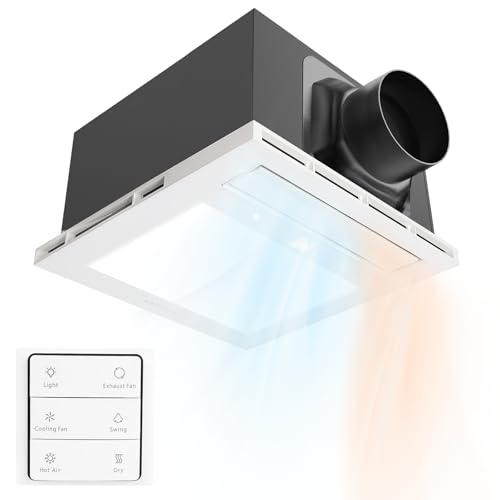
- LFR Score7.6
LFR Score is a ranking system developed by lightfansreviews.com. LFR Score has no relationship or impact from any manufacturers or sales agent websites. Learn more
- BrandAIRNATUX
Last update on 2026-07-28 / Affiliate links / Images, Product Titles, and Product Highlights from Amazon Product Advertising API
Xugossio Bathroom Heater Fan With Light
Cold tile, a fogged mirror, and stale air can turn an ordinary shower into a mildly irritating start to the day. The xugossio unit approaches those problems with a single ceiling-mounted fixture rather than a collection of separate devices competing for space. Built around the needs behind the best heat fan light for bathroom, it combines an 1800W heater, exhaust ventilation, LED lighting, and a blowing function in one housing. That all-in-one layout is its biggest practical strength, though installation requirements and room size still deserve a careful look.
Xugossio 4-in-1 Bathroom Heater
The core appeal is pretty straightforward: four everyday bathroom functions sit behind one ceiling grille. Heat helps soften the shock of stepping out of a warm shower, the 140 CFM exhaust fan moves damp air, and the 18W LED light supports normal grooming tasks. A separate blowing mode adds air movement without requiring the heating element, which may be useful during warmer months. Instead of filling the ceiling with several fixtures, the design keeps the room visually cleaner.
That combination can also simplify the daily routine. A bathroom often needs ventilation long after the heater is no longer useful, while the light may stay on throughout the entire visit. The included remote control allows those functions to be adjusted without reaching for a crowded wall plate or guessing which switch controls what. It’s a small convenience on paper, but it can feel far more meaningful with wet hands, sleepy eyes, or a bathroom layout where the controls aren’t positioned well.
The product description places this unit in residential bathrooms, and that makes sense given the balance of output and convenience. Its 1800W heating element is intended to deliver rapid warmth, while the exhaust side addresses steam and lingering moisture. Still, an electric ceiling heater won’t perform like central heating in a large, drafty room with poor insulation. Expectations should stay grounded: this fixture is designed for focused bathroom comfort, not whole-house temperature control.
Heating Performance And Everyday Comfort
The 1800W heat output is the headline feature, especially for bathrooms that feel unpleasant during colder mornings. Ceiling-mounted heat can warm the occupied area without taking up floor space or creating another object to clean around. That matters in compact bathrooms where every inch counts and portable heaters can become a tripping hazard. The unit’s value is less about turning the room tropical and more about reducing the sharp temperature drop before and after a shower.
Heat speed will depend on several real-world details, including ceiling height, room dimensions, insulation, and fixture placement. A smaller enclosed bathroom should retain warmth more effectively than an oversized room with an open doorway or leaky window. The rapid-heating design sounds well suited to short morning routines, but the heater still needs time to influence the air below. Turning it on shortly before bathing will likely feel more useful than expecting instant warmth the moment the shower stops.
A built-in thermal protection system adds an important safety layer by helping guard against overheating during operation. That feature doesn’t remove the need for proper wiring, ventilation clearance, or installation according to the supplied instructions. Bathroom electrical work has little room for guesswork because moisture and high-wattage heating components share the same environment. Professional installation may be the sensible route unless the existing opening, circuit, and ductwork already match the unit closely.
Ventilation Without The Usual Racket
Moisture control is where many combination fixtures either earn their keep or become frustrating. The stated 140 CFM airflow gives this model meaningful exhaust capacity for many residential bathroom layouts, provided the duct run isn’t excessively long or restrictive. Strong airflow can help clear steam, reduce mirror fog, and shorten the time damp surfaces remain wet. Those benefits reach beyond comfort because persistent humidity can encourage peeling paint, musty odors, and grime around grout lines.
The manufacturer also emphasizes ultra-quiet exhaust operation, which addresses a common reason bathroom fans get switched off too early. A loud fan can dominate a small room, rattle through the ceiling, or disturb nearby bedrooms during late-night use. Quiet performance makes it easier to leave ventilation running long enough to do its job. Still, actual sound can be affected by duct bends, loose mounting, grille vibration, and the condition of the vent path, so the fan itself isn’t the only factor.
Airflow ratings also work best when matched to the room rather than viewed as a bigger-is-always-better contest. A powerful exhaust fan in a very small bathroom may move air quickly, but it can also pull conditioned air from adjoining spaces. The 140 CFM capacity offers useful headroom, though a clean, properly sized duct is essential for realizing that performance. A crushed flexible duct or clogged exterior vent can turn a capable fan into a noisy underachiever.
Lighting And Remote Operation
The integrated 18W LED light gives the fixture a practical role even when heat and ventilation aren’t needed. LED lighting generally suits a ceiling combination unit because it uses less energy than older incandescent designs and produces less unwanted heat from the lamp itself. Brightness and color tone will still shape the experience, particularly around a vanity where harsh shadows can make grooming awkward. The provided description confirms the wattage but doesn’t specify color temperature or dimming capability, so those details shouldn’t be assumed.
The remote control is one of the more noticeable usability features. It reportedly manages temperature, lighting, and fan speed, putting the major functions in one handheld control. That setup can reduce wall-switch clutter and allow adjustments from the tub area, vanity, or doorway, assuming the remote is stored somewhere dry and easy to reach. Naturally, a remote introduces one more item that can be misplaced, so a consistent storage spot would prevent the usual hunt through drawers.
Remote operation also raises a practical question about backup controls. The supplied information doesn’t clarify whether every function can be operated from a wall control if the remote battery dies or the handset is misplaced. That doesn’t make the feature a weakness by itself, but it’s a detail worth confirming before installation. Control redundancy matters more in a permanently mounted fixture than in a small appliance that can simply be unplugged and replaced.
Installation Fit And Maintenance Tradeoffs
The housing uses a stated 11.7 x 11.7-inch frame designed to fit standard openings. Precise dimensions can reduce trimming and patching when the existing cutout is compatible, which is welcome news in a finished ceiling. Even so, the visible frame measurement doesn’t tell the whole installation story. Ceiling depth, joist spacing, duct position, electrical access, and clearance around insulation all influence whether the job stays simple or turns into a larger renovation.
The easy-install positioning should be read as compatibility-focused rather than universally effortless. Replacing a similarly sized combination unit may be fairly direct, while adding one to a bathroom without existing exhaust ducting could involve ceiling work, exterior venting, and a suitable electrical circuit. An 1800W heater draws considerably more power than a light-only fixture, so the existing wiring must be appropriate for the load. Skipping that check would be penny-wise and pound-foolish.
Routine care should include cleaning the grille and keeping the exhaust path free from lint and dust. Heating fixtures can develop a dusty odor after sitting unused, especially if buildup reaches the element or internal surfaces. Accessible components make that chore less aggravating, although the supplied description doesn’t explain how easily the grille or internal parts can be removed. Regular cleaning supports airflow, quieter operation, and more consistent heat delivery over time.
Strengths, Limits, And Practical Value
The strongest case for this xugossio model rests on functional consolidation. Heat, light, ventilation, and unheated air movement cover the main comfort needs of a bathroom without requiring four separate products. The 1800W heater and 140 CFM exhaust rating give the unit a more purposeful specification set than a basic fan-light combination. Add the remote, and the overall package feels designed around convenience rather than bare-minimum operation.
The tradeoffs mostly involve fit, verification, and realistic expectations. The fixture needs adequate ceiling space, compatible ducting, and electrical capacity suitable for a high-wattage heater. Its heating effect may be less noticeable in a large or poorly insulated bathroom, and the remote could become inconvenient if there’s no reliable backup control. The product information also doesn’t provide details such as light color temperature, precise sound level, or separate wiring requirements, so those points remain worth checking before purchase.
A one-year limited warranty provides basic coverage, though it’s shorter than some homeowners may prefer for a permanently installed ceiling appliance. The warranty still adds a measure of reassurance during the early ownership period, especially for a fixture combining several electrical and mechanical functions. Overall, the xugossio unit makes the most sense where ceiling space is limited, cold post-shower air is a recurring nuisance, and one coordinated fixture is preferable to several separate controls. Its practical success will depend as much on correct installation as on the specifications printed on the product page.
Panasonic WhisperWarm DC Bathroom Fan With Heater
A steamy mirror is annoying, but a bathroom that stays chilly after the shower creates a different kind of daily friction. Panasonic tackles both problems by pairing adjustable ventilation with a dedicated heater and integrated lighting in one ceiling-mounted unit. Built for the practical demands behind the best heat fan light for bathroom, the FV-0511VHL1 combines a 1600W PTC heater, selectable airflow, and room-side installation features. Its appeal isn’t flashy styling; it’s controlled airflow, dependable warmth, and fewer compromises packed into one fixture.
Panasonic WhisperWarm DC
The WhisperWarm DC is a precision ventilation unit rather than a basic exhaust fan with a heater bolted on as an afterthought. Its ECM motor works with SmartFlow technology to maintain the selected airflow as static pressure changes inside the duct system. That matters because elbows, longer duct runs, and exterior vent caps can restrict air movement once a fan is installed. A conventional motor may lose noticeable performance under those conditions, while this design is intended to compensate and keep airflow closer to the chosen setting.
Panasonic gives the unit three selectable ventilation levels through Pick-A-Flow settings of 50, 80, or 110 CFM. That flexibility makes the same fixture adaptable to different bathroom sizes or ventilation requirements without replacing the entire fan. A compact powder room may not need the highest setting, while a larger bathroom with frequent showers may benefit from stronger exhaust. The choice is made during setup, so the airflow can be matched more thoughtfully instead of accepting a one-speed-fits-all approach.
The integrated heater adds another practical layer. Its 1600W Positive Temperature Coefficient heating element is designed for quick warm-up, helping take the bite out of cold air before or after bathing. PTC heating elements regulate their electrical resistance as temperature rises, which supports steady heat delivery rather than relying on an exposed glowing coil. That doesn’t turn the fixture into a replacement for central heating, but it can make a noticeable comfort difference in the occupied part of a properly sized bathroom.
Lighting rounds out the package, keeping ventilation, warmth, and overhead illumination together in one ceiling location. This arrangement can reduce visual clutter compared with installing separate fan, heater, and light housings. It also makes sense in smaller rooms where ceiling space is already competing with recessed lights, shower fixtures, and access panels. The combined fixture design is useful, though the final experience still depends on switch configuration and how the electrician separates each function.
Airflow That Adapts To Real Ductwork
Bathroom fans rarely operate under laboratory-like conditions once they’re attached to residential ductwork. Tight bends, undersized ducts, and long runs can all create resistance that reduces exhaust performance. The SmartFlow technology is meant to detect that resistance and adjust motor speed so the fan can deliver the selected airflow more consistently. That’s a meaningful advantage in remodeling projects where the existing duct route can’t easily be shortened or straightened.
The 50 CFM setting suits modest ventilation demands, while 80 CFM provides a middle ground for bathrooms that see regular shower use. At 110 CFM, the unit has more capacity for larger spaces or heavier moisture loads, assuming the duct system can support that airflow. Bigger isn’t automatically better, though. Excessive exhaust can pull heated or cooled air from adjoining rooms, so choosing the closest appropriate setting usually makes more sense than defaulting to maximum speed.
Moisture removal depends on runtime as much as airflow. A strong fan switched off immediately after a shower may leave damp grout, wet walls, and humid towels behind. The Panasonic’s controlled ventilation can help clear that lingering moisture, but a timer switch or disciplined run period may still be needed to get the full benefit. Consistent ventilation is the real goal, especially in bathrooms where fogged mirrors and musty odors keep returning.
HVI certification gives the stated airflow and sound performance a more credible footing than unsupported marketing language. The unit is also UL listed, indicating that it has been evaluated against applicable safety standards. Those certifications don’t guarantee perfect installation or silent operation in every ceiling, but they do provide verified reference points for the fixture itself. Duct construction, mounting quality, and grille fit can still influence the noise heard inside the room.
Focused Heat Without A Floor Appliance
Portable bathroom heaters solve one problem while creating another: they occupy floor space near water, towels, and bare feet. A ceiling-mounted heater keeps the warming function overhead and out of the traffic path. The Panasonic’s 1600W heater is aimed at spot comfort, making it useful during short routines rather than heating a bathroom around the clock. That distinction matters because focused warmth can feel effective even when the entire room hasn’t reached the thermostat setting used elsewhere in the house.
The phrase “instant warm-up” should still be understood realistically. The heating element can begin producing warmth quickly, but room temperature, ceiling height, insulation, and placement affect how soon that warmth is felt below. A small enclosed bathroom will usually retain heat better than a wide room with an open doorway and cold exterior walls. Running the heater shortly before stepping into the room may produce a more comfortable result than switching it on after the shower ends.
PTC heating technology brings a practical safety and control benefit. As the element warms, its resistance changes, helping limit excessive temperature rise during normal operation. That built-in behavior supports stable heat output, though it doesn’t replace correct wiring, proper clearances, or adherence to installation instructions. A 1600W heating load deserves serious attention from the electrician, particularly if the old fixture was only a low-wattage fan and light.
The heater’s best use case is comfort at the moments cold air feels most irritating. Early mornings, winter showers, and bathrooms above unheated garages are the obvious examples. Large, drafty spaces may expose the unit’s limits because warm air can disperse before it reaches the occupied area. The spot-heating design works best as a targeted supplement, not as the sole heat source for a room with major insulation problems.
Installation Designed Around Finished Ceilings
Replacing a ceiling fan often becomes messy because traditional housings are easier to install from above than from inside the room. Panasonic’s Flex-Z Fast bracket is designed to support room-side installation, which can reduce the need to open a large section of ceiling or access an attic. That’s especially useful beneath another floor, where working from above may be impossible. The bracket also provides flexibility for positioning the housing between framing members.
Room-side installation doesn’t mean every project will be quick. The heater introduces additional electrical requirements, and the fan still needs a properly sized exhaust path to the outdoors. Existing ductwork may need modification if its diameter, route, or termination doesn’t match the new unit. Electrical capacity and duct compatibility should be checked before the old fan comes down, not after the ceiling is open and the bathroom is out of service.
Switch planning deserves attention as well. Separate controls for ventilation, heat, and light generally provide the most useful day-to-day operation because each function serves a different purpose. The heater may run briefly before a shower, the fan may continue afterward, and the light may be needed throughout. A crowded or poorly labeled switch arrangement can make a capable fixture feel clumsy, so control layout is part of the installation experience rather than a minor finishing detail.
Correct mounting also affects sound. A rigid, well-secured housing is less likely to transmit vibration into ceiling framing, while loose duct connections can add rattling or airflow noise. The WhisperWarm name suggests quiet operation, but the installation still has to support that goal. Smooth duct transitions, sealed joints, and a clean exterior vent path help the ECM motor operate without fighting unnecessary resistance.
Strengths, Weaknesses, And Daily Use
The Panasonic’s main strength is control. Adjustable 50-80-110 CFM airflow allows the ventilation level to match the bathroom, and SmartFlow helps protect that choice against real-world duct resistance. The dedicated 1600W heater adds purposeful warmth without occupying floor or wall space. Certification from HVI and UL also gives the specifications more weight than a product page filled only with broad promises.
The design is particularly sensible for renovation projects where dependable moisture control matters as much as comfort. A bathroom with peeling paint, slow-drying surfaces, or a mirror that stays fogged can benefit from properly sized exhaust ventilation. The heater addresses the separate frustration of cold air after bathing, while the light consolidates another ceiling fixture. That three-function approach can make a cramped ceiling look cleaner and simplify the room’s overall equipment layout.
The weaknesses are mostly practical rather than mysterious. This isn’t a plug-and-play appliance, and the high-wattage heater may require electrical changes beyond a standard fan replacement. The product information provided doesn’t specify lighting characteristics such as brightness, color temperature, or dimming support, so those details remain uncertain. Large bathrooms may also need more than spot heat, particularly if poor insulation or drafts are the real source of discomfort.
Maintenance should remain fairly straightforward, but it can’t be ignored. Dust collecting around the grille and heater area may reduce airflow or create an odor when the heating function returns after months of inactivity. Periodic cleaning helps preserve ventilation efficiency and keeps the visible surface from looking dingy. Any deeper service should follow Panasonic’s instructions because the fan, light, and heating components share one installed housing.
For the best heat fan light for bathroom category, the WhisperWarm DC stands out through adjustable airflow and a motor designed to respond to duct resistance. It favors measured engineering over oversized claims, which is refreshing in a category where wattage alone often gets all the attention. The heater provides targeted comfort, the fan manages moisture, and the Flex-Z Fast bracket reduces some of the pain associated with ceiling replacement work. Its value is strongest where proper installation, controlled ventilation, and dependable daily function matter more than bargain pricing or decorative extras.
5-in-1 Bathroom Heater Fan With Bluetooth Speaker
Steam hangs around, cold air hits the second the water stops, and a noisy ceiling fan makes the whole room feel less relaxing than it should. This five-function fixture tries to settle those annoyances through one ceiling opening, combining warmth, exhaust, ventilation, adjustable lighting, and Bluetooth audio. Its stated 1800W heating power and 230 CFM airflow put serious numbers behind the comfort-focused design, while the 1.0-sone specification aims to keep all that airflow from sounding like a small aircraft. For anyone weighing the best heat fan light for bathroom, the package is ambitious, useful, and loaded with conveniences, though its unusually broad feature list deserves a careful, clear-eyed review.
5-in-1 Bluetooth Bathroom Heater Fan
Five functions under one grille can free a bathroom from separate speakers, portable heaters, extra ceiling lights, and basic exhaust hardware. The unit provides instant heating, moisture removal, general air movement, three selectable light tones, and Bluetooth music through an integrated design. That consolidation makes particular sense in a compact room where ceiling space is tight and electrical fixtures quickly start looking cluttered. It also means several everyday routines can be managed from one wall-mounted remote rather than a row of mystery switches.
The heating function uses an 1800W PTC ceramic element, which the supplied description presents as a fast source of warmth. PTC ceramic heaters are commonly chosen for controlled heat delivery because their resistance rises as they warm, helping moderate the element’s operating temperature. The practical benefit is focused comfort before a shower, after exercise, or during a chilly early-morning routine. Still, the fixture should be treated as a supplemental bathroom heater rather than a replacement for whole-room heating in a large, poorly insulated space.
Air movement is handled by a 35W motor with stated overheat protection that allows the fan to resume operation after cooling. That safeguard is reassuring in a ceiling fixture expected to handle heat, humidity, and longer ventilation cycles. The design also offers both exhaust and blowing functions, giving the unit a role outside cold weather. On warmer days, unheated airflow may help the room feel less stuffy without forcing the ceramic heater into service.
The product information describes applications beyond bathrooms, including bedrooms, home gyms, game rooms, and workshops. Those extra possibilities sound flexible, but the integrated exhaust design makes the most practical sense in a room with proper exterior ducting. A workshop may appreciate strong air movement, while a home gym could benefit from ventilation and music, yet installation requirements won’t disappear just because the room changes. Correct ducting and electrical setup remain central to safe, useful performance.
Strong Airflow With A Quieter Target
The stated 230 CFM airflow is one of the boldest specifications in this package. That volume can be useful in a large bathroom, a room with frequent showers, or a space where steam lingers long after the mirror should have cleared. Faster moisture removal may help reduce the damp conditions associated with peeling finishes, musty smells, and slow-drying grout. Bigger airflow isn’t automatically better, though, because the fan still needs a compatible duct path that can move that air outdoors without creating excessive resistance.
Duct shape can make or break the result. The specified outlet measures approximately 2.4 inches high by 3.5 inches wide, so the surrounding ventilation route should be planned before the ceiling is cut. Tight bends, crushed ducting, or a restrictive exterior cap could limit exhaust performance and increase sound. A carefully sealed path, by contrast, gives the motor a fair shot at delivering the airflow promised in the product description.
Noise is listed at 1.0 sone, with the manufacturer likening that level to a library. That figure suggests a restrained sound profile for a fan rated at 230 CFM, although actual room noise can change with mounting, duct resistance, framing vibration, and grille fit. A rigid installation matters because even a quiet motor can sound rough if the housing rattles against the ceiling. The stated noise-reduction technology is encouraging, but installer workmanship will still have the last word.
Quiet exhaust has an overlooked behavioral benefit: people tend to leave a tolerable fan running longer. A loud unit often gets shut off as soon as the shower ends, leaving moisture trapped in towels, corners, and wall surfaces. The combination of low-noise operation and strong airflow could support better post-shower ventilation habits without turning the bathroom into an acoustic nuisance. That’s a practical comfort gain, not merely a specification to admire on paper.
Heating And Lighting For Changing Routines
The ceramic heater is aimed at one of the least pleasant bathroom moments: stepping from hot water into cool, humid air. With 1800W of stated heating output, the unit is designed to begin warming the space quickly rather than slowly raising the temperature over a long period. Smaller enclosed bathrooms should hold that warmth more effectively than wide rooms with tall ceilings or open doors. Placement also matters, since heat emerging far from the shower or dressing area may feel less immediate.
The supplied description mentions warmth after workouts and during physically sensitive routines, but the safest interpretation is broader and simpler. A ceiling heater can reduce the need for a portable appliance sitting near wet floors, towels, or crowded countertops. It keeps the source of heat overhead and out of the walking path. Even so, an electrician should verify the circuit because an 1800W load demands far more power than an ordinary exhaust fan or LED fixture.
Three lighting temperatures give the fixture more personality than a fixed-color ceiling lamp. The available 3000K, 4000K, and 5000K settings move from warmer light to neutral white and then to a cooler, crisper tone. Warm light can make an evening bath feel calmer, while neutral or cooler light may provide better visibility for shaving, grooming, or cleaning. This flexibility reduces the usual compromise of choosing one color temperature for every bathroom task.
Dynamic color light strips add a decorative layer alongside the practical three-tone lighting. Some people will enjoy that mood-setting feature during music playback or a long soak, while others may consider it more novelty than necessity. That difference matters because the fixture’s real value still rests on heating, ventilation, and usable illumination. Decorative lighting is the cherry on top, not the reason to overlook installation fit or airflow needs.
Bluetooth Audio Without A Countertop Speaker
An integrated speaker removes a familiar bathroom hassle: balancing a portable speaker on a sink ledge and hoping it stays dry. The Bluetooth system is identified as Plutoslove, with the supplied pairing password listed as 6666. Once connected, audio can accompany showers, grooming, exercise, or quiet downtime without adding another rechargeable gadget to the room. That convenience is easy to appreciate in a bathroom with limited counter space.
The product description refers to 3.0 surround music and noise-reduction technology intended to preserve clearer sound. Those terms suggest an effort to make the audio feature feel more substantial than a tiny notification speaker, though no speaker wattage or frequency-response details were provided. Bathroom acoustics can amplify mids and highs while swallowing finer detail, especially around tile, glass, and hard walls. Realistic expectations are wise: integrated ceiling audio may be enjoyable for casual listening without replacing a dedicated sound system.
Music and dynamic lighting can shift the fixture from purely functional to atmosphere-focused. A warm light setting paired with quiet audio may soften a rushed evening routine, while brighter light and energetic music could suit a morning workout. Yet Bluetooth adds another system that may require occasional troubleshooting, reconnecting, or device management. Audio convenience is a welcome bonus, but the fan and heater should remain easy to operate even when no phone is connected.
Shared households should also consider pairing behavior and privacy. A known device name and fixed password may make connection simple, but it could create confusion if several phones attempt to control playback. The provided information doesn’t explain how the speaker handles multiple paired devices or reconnection priority. That uncertainty isn’t a deal breaker, though it’s a useful reminder that Bluetooth operation can be less predictable than a regular wall switch.
Installation Options And Fit Requirements
The housing is designed for an 11.5 by 11.5-inch ceiling opening, a dimension that should be checked before purchase rather than estimated after the old fan comes down. The manufacturer specifically warns buyers to confirm sizing, and that’s sound advice. A slightly mismatched opening can lead to trimming, patching, or visible gaps around the grille. Ceiling depth, joist position, duct access, and wiring location deserve the same attention as the face dimensions.
Two wiring approaches are listed: plug-and-play installation and hardwiring. That flexibility may simplify certain projects, but the phrase plug and play shouldn’t be mistaken for permission to skip electrical planning. The heater’s wattage, the damp environment, and local electrical requirements still call for a proper circuit and secure connections. Hardwiring may be the cleaner permanent arrangement, especially in a bathroom where exposed cords or improvised outlets would be inappropriate.
A wall-mounted remote keeps everyday control within reach and avoids relying solely on a handheld unit that can vanish into a drawer. The supplied information doesn’t spell out every control combination, but the remote appears intended to manage the fixture’s multiple functions from one location. Labeling and logical button placement matter with a five-function product because complexity can quickly become irritating. Simple daily control is essential if the heater, fan, lighting, and music are all expected to earn regular use.
The installation manual reportedly includes cutout guidance and mounting instructions, with support available if the manual is lost. That’s helpful, yet a capable manual can’t correct unsuitable ducting or an overloaded circuit. A licensed professional can assess those hidden factors before installation turns into a ceiling repair project. The unit’s broad feature set makes careful setup more important than it would be for a plain exhaust fan.
Practical Strengths And Honest Limitations
The most compelling strength is the sheer amount of bathroom equipment consolidated into one fixture. 230 CFM ventilation, an 1800W heater, selectable white lighting, decorative color effects, and Bluetooth audio cover comfort, moisture, visibility, and entertainment. That can reduce ceiling clutter and eliminate several separate accessories. For a busy bathroom where cold air, fog, weak lighting, and limited counter space all collide, the design has a clear practical logic.
The specification sheet also shows thoughtful touches beyond the headline functions. Motor overheat protection, PTC ceramic heating, a low stated sound level, and two installation methods address common worries around safety, noise, and retrofit work. The manufacturer also states that product-use support is available for four years. That service promise sounds reassuring, although the precise coverage terms should be read carefully rather than assumed to be identical to a conventional full replacement warranty.
The weaknesses come from complexity and scale. More functions mean more components that could eventually require troubleshooting, and the product information doesn’t provide detailed electrical requirements, speaker output, light brightness, or verified independent performance certifications. The 230 CFM rating may also be excessive for a very small powder room, where a simpler and lower-capacity fan could be easier to install and operate. A feature-packed fixture only makes sense when its functions will actually be used.
The bold specifications place this model firmly in the conversation around the best heat fan light for bathroom, especially where strong moisture removal and integrated entertainment are priorities. Its strongest match is a properly ducted bathroom with enough ceiling space, suitable wiring, and a real need for rapid warmth. The design may be less convincing in a tiny half bath, a rental with limited installation freedom, or a room where Bluetooth audio and dynamic lighting would sit unused. Fit, electrical capacity, and ventilation planning will determine whether the experience feels seamless or unnecessarily complicated.
Broan-NuTone PowerHeat Bathroom Fan With LED Light
Cold air after a shower is irritating enough, but adding a fogged mirror and a loud ceiling fan can make a simple bathroom routine feel needlessly rough. The Broan-NuTone BHFLED110 handles those three comfort problems through one compact ceiling fixture, pairing ventilation with a 1500-watt heater and adjustable LED lighting. That combination gives it a practical place among the best heat fan light for bathroom options, especially where separate controls and a restrained grille design matter. It isn't the quietest fan specification in the category, though, and that tradeoff deserves as much attention as the convenient all-in-one layout.
Broan-NuTone PowerHeat BHFLED110
The BHFLED110 combines a 110 CFM exhaust fan, integrated lighting, and a dedicated heater inside a galvanized steel housing. Each function can operate independently or alongside the others, which makes the fixture more adaptable than a unit that forces heat and ventilation to run together. The fan can clear damp air after a shower, the heater can warm the room before bathing, and the light can remain useful throughout the day. That separation sounds simple, but it makes a real difference during ordinary routines.
A three-function fixture also reduces competition for ceiling space. Small bathrooms often have limited room between joists, recessed lights, ductwork, and plumbing, so combining several jobs in one housing can keep the ceiling from becoming a patchwork of grilles. The modern white grille is deliberately understated and should sit comfortably beside common white ceilings and trim. It won't become a decorative centerpiece, which is probably the point.
The design favors familiar bathroom needs rather than novelty extras. There’s no Bluetooth speaker, app connection, or decorative color strip competing for attention. Instead, Broan-NuTone focuses on heat, moisture removal, and adjustable task lighting, the functions most likely to earn daily use. That narrower feature set may also feel easier to operate in a shared bathroom where nobody wants to decode a complicated control panel before sunrise.
Independent operation does require thoughtful switch planning during installation. Separate wall controls generally provide the cleanest experience because ventilation, lighting, and heating rarely need identical run times. The fan may continue after the room is empty, while the heater might only run for a short period before or after bathing. A sensible control layout keeps the fixture convenient instead of turning three useful functions into a guessing game.
Ventilation At 110 CFM
The stated 110 CFM airflow gives this model enough exhaust capacity for many full bathrooms, provided the room size and ductwork suit that rating. Steam removal isn’t just about clearing the mirror; lingering moisture can settle into paint, grout, window trim, and towels long after the shower stops. Consistent ventilation helps surfaces dry sooner and makes that heavy, clammy feeling less likely to hang around. The fan’s effectiveness will still depend on how freely the duct carries air outdoors.
Duct resistance can quietly eat away at performance. Long runs, sharp elbows, crushed flexible duct, and restrictive exterior caps all make the fan work harder while moving less air. A properly installed path lets the 110 CFM fan breathe, so to speak, and gives the bathroom a better chance of clearing humidity efficiently. Poor ductwork can also add turbulence, which may make the system sound louder than its published specification suggests.
The fan is rated at 2.0 sones, so it shouldn’t be mistaken for an ultra-silent model. That sound level may be noticeable in a compact bathroom, particularly during quiet nighttime use. On the flip side, some households prefer an audible fan because it adds a layer of privacy and makes it obvious that ventilation is running. Noise sensitivity is personal, and this fixture sits closer to clearly heard than barely perceptible.
Runtime matters just as much as airflow. Switching the fan off the moment the shower ends can leave damp corners and wet walls behind, even with a respectable CFM rating. A timer control can help the exhaust function continue working without relying on someone to remember it later. That small control choice can improve the practical value of the fan more than chasing a larger airflow number on paper.
1500-Watt Heating In Daily Use
The built-in 1500-watt heater is designed to provide focused warmth without taking up floor or wall space. That ceiling position removes the clutter and cord management associated with a portable bathroom heater. It also keeps the heat source away from wet flooring, bath mats, and crowded counters. For a compact or moderately sized bathroom, targeted warmth can soften the unpleasant temperature drop that follows a hot shower.
Heating results will vary with the room rather than wattage alone. Tall ceilings, cold exterior walls, open doors, and weak insulation can let warm air escape before the space feels comfortable. A smaller enclosed bathroom should respond more quickly because there’s less volume to heat and fewer places for warmth to drift. The 1500-watt output is best viewed as supplemental comfort, not a cure for a poorly insulated room.
Timing changes the experience too. Running the heater briefly before bathing may take the chill off the air and nearby surfaces, while switching it on only after the shower can leave a waiting period before warmth is felt. The fixture’s overhead placement also means mounting location influences where the heated air lands. A unit positioned far from the shower or dressing area may feel less effective than the same heater placed closer to the occupied zone.
Electrical requirements deserve careful attention because the heater draws much more power than a basic fan or light. Existing wiring that handled an older exhaust fan may not automatically be appropriate for a 1500-watt heating load. Circuit capacity, wire size, switch ratings, and local bathroom requirements should be confirmed during installation. This is one of those jobs where guessing can turn a neat upgrade into a costly headache.
Dimmable LED Lighting With Three Color Options
The lighting system is more flexible than a simple fixed-output ceiling lamp. Broan-NuTone includes an integrated dimmable LED with selectable CCT color control, allowing the light appearance to shift among three available tones. That flexibility helps the same fixture serve bright grooming tasks and softer evening use. One color setting doesn’t have to carry the entire room from early morning to late night.
Color temperature affects more than mood. A cooler white can make details easier to see during shaving, makeup, or cleaning, while a warmer tone may feel less harsh during a nighttime visit. The middle setting can offer a balanced everyday look without feeling too amber or too clinical. The three-color selection makes the light easier to coordinate with vanity fixtures and surrounding finishes.
Dimming adds another layer of usefulness. Full brightness may suit morning preparation, but it can feel jarring during a late-night bathroom trip. Lowering the LED output allows the fixture to function as a convenient nightlight without flooding the room with glare. That feature is particularly useful in bathrooms near bedrooms, where a bright ceiling light can wake more people than intended.
Integrated LEDs reduce the routine of changing bulbs, though they create a different long-term tradeoff. A replaceable lamp is easy to swap if it fails, while an integrated lighting component may require more involved service. The provided description doesn’t specify brightness, LED lifespan, or compatibility with particular dimmers, so those details shouldn’t be assumed. Matching the dimming control to the manufacturer’s requirements will help avoid flicker or limited adjustment.
Compact Housing And Installation Demands
The housing is designed to fit 2-inch by 6-inch ceiling construction, which can make it workable in framing conditions where a deeper assembly would be awkward. Compact dimensions matter during remodels because existing joists and finished ceilings leave little room for improvisation. The galvanized steel housing adds a rugged structural base around the fan, heater, and lighting components. Even so, compact doesn’t mean universally compatible.
Ceiling access, duct direction, wiring location, and framing position should all be checked before the old fixture is removed. A heater-fan-light combination has more installation demands than a standard exhaust unit because it manages airflow and a substantial electrical load in the same housing. The available installation guide can clarify the manufacturer’s mounting sequence and clearance needs. Careful measurement prevents the familiar problem of discovering an obstruction after the ceiling opening has already been enlarged.
Room-side work may still involve attic access or ceiling repair depending on the existing setup. A compatible replacement opening can keep the project manageable, while a new installation may require ducting to an exterior termination and electrical changes at the panel. The compact housing helps with physical fit, but it can’t eliminate the need for a clear exhaust route. Venting into an attic would only move the moisture problem from the bathroom to the roof structure.
Grille removal and periodic cleaning should become part of normal upkeep. Dust buildup can restrict airflow, dull the light cover, and create a stale smell when the heater runs after sitting unused. A clean intake allows the fan and heater to operate with less obstruction. Maintenance isn’t glamorous, but a few minutes of cleaning can protect the fixture’s comfort benefits and keep the white grille from turning gray.
Strengths, Weaknesses, And Best-Fit Situations
The BHFLED110’s clearest strength is balance. Its 110 CFM ventilation is paired with a useful 1500-watt heater rather than an underpowered warming feature included merely to fill a specification list. The dimmable LED and selectable light tones bring everyday flexibility without adding a phone app or complicated wireless controls. Each function addresses a specific bathroom annoyance and can run on its own schedule.
The visual design is another quiet advantage. A clean white grille can blend with different paint colors, tile choices, and fixture finishes without making the ceiling look busy. That restraint suits renovations where the goal is to improve comfort without drawing attention to the mechanical equipment. The decor-friendly appearance won’t compensate for poor performance, but it helps the fixture settle naturally into the room.
The most obvious weakness is the 2.0-sone noise rating. People chasing near-silent ventilation may prefer a lower-sone fan, particularly beside a nursery, home office, or lightly sleeping household member. The unit also lacks the adjustable CFM settings found on some alternatives, so 110 CFM is the fixed ventilation target. That straightforward design can be useful, but it offers less flexibility if the bathroom’s airflow needs change.
Installation complexity is the other major tradeoff. A heater, dimmable LED, and exhaust fan need appropriate controls, wiring, ducting, and ceiling clearance to perform as intended. Retrofitting the fixture into a mismatched opening may cost more effort than the compact product dimensions initially suggest. The best heat fan light for bathroom only feels like an improvement when the surrounding system supports it properly.
This Broan-NuTone model makes the strongest case in a bathroom that needs solid moisture removal, focused winter warmth, and adaptable overhead lighting without extra entertainment features. It may be less suitable for a tiny half bath that doesn’t need heat or for a quiet room where 2.0 sones would feel intrusive. Its independent functions, selectable LED color, and compact steel housing provide practical substance, while the fixed airflow and audible operation keep expectations realistic. The result is a workmanlike three-in-one fixture built around daily comfort rather than a long list of rarely used extras.
ScaleBelly Smart Bathroom Fan With Heater And Speaker
A bathroom can feel oddly unfinished when the mirror stays fogged, the air turns clammy, and the floor feels cold enough to wake every nerve in your feet. ScaleBelly answers that pileup with one ceiling fixture rather than several separate devices, combining an 1800W heater, exhaust fan, adjustable lighting, nightlight, Bluetooth audio, and remote control. Those functions give it a strong place among the best heat fan light for bathroom options, particularly where comfort and atmosphere matter as much as moisture removal. The design is feature-heavy, though, so its fit, wiring needs, and long-term usefulness deserve more attention than the colorful lights alone.
ScaleBelly Smart 5-in-1 Bathroom Fan
The central idea is consolidation. A single housing manages heating, ventilation, lighting, nighttime visibility, and audio, cutting down on ceiling clutter and loose accessories around the sink. Each major function can work independently, which keeps the heater from becoming a seasonal-only feature that limits everything else. The fan can run after summer showers, the nightlight can glow without the main lamp, and the speaker can play without activating the heat.
That independent operation is more useful than it sounds. Bathroom routines change throughout the day, and forcing several functions to run together would waste energy and create needless noise. The wireless remote control lets the fixture behave more like a group of separate appliances while keeping the ceiling visually tidy. Still, a remote becomes part of the daily routine, so it needs a consistent, dry storage spot rather than floating from counter to drawer.
The fixture’s stated coverage reaches rooms up to 110 square feet, placing it beyond the tiny powder-room category. That figure comes from the supplied product description and should be treated as a practical ceiling rather than a guarantee in every layout. Tall ceilings, exterior walls, poor insulation, and open doorways can all weaken the perceived heating effect. A compact, enclosed bathroom will usually make better use of the available warmth than a drafty room at the upper end of the stated range.
ScaleBelly also leans into year-round usefulness. The heater tackles winter discomfort, while ventilation and lighting remain relevant every day of the year. RGB color options and Bluetooth playback add atmosphere, but the real backbone is still air movement and focused heat. Those core jobs will determine whether the fixture earns its ceiling space after the novelty of changing colors wears off.
Fast Heat Without A Floor Heater
The built-in 1800W PTC ceramic heater is intended to warm the room quickly, helping reduce that sharp chill before and after bathing. Ceiling placement keeps the heat source away from wet floors, bath mats, towels, and crowded counters. That alone solves a familiar space problem in smaller bathrooms where a portable heater feels awkward or unsafe. Warm air still has to travel downward, so placement relative to the shower and dressing area will shape how effective it feels.
The supplied description states that the heater maintains stable output below 70 degrees Celsius. PTC ceramic elements naturally increase electrical resistance as they warm, which helps moderate operating temperature during normal use. That characteristic supports steadier heat and reduces the risk of uncontrolled temperature rise within the element. Proper installation remains essential, though, because a self-regulating heater still draws substantial power in a humid environment.
An 1800W load is not a small electrical detail. Existing wiring that previously served a simple fan or light may not be suitable for the high-wattage heating function. Circuit capacity, conductor size, protection devices, and switching arrangements should be verified before installation begins. The phrase “easy DIY installation” refers to physical fit and the included template, but it shouldn’t be read as permission to take shortcuts with bathroom wiring.
Realistic expectations matter here. The heater is best viewed as a fast comfort source rather than a substitute for central heating in a poorly insulated room. It can take the edge off cold air, make a winter shower less punishing, and warm the occupied zone before bare feet hit the floor. Yet a large bathroom with cold tile, high ceilings, and constant drafts may still need another heat source to maintain an even room temperature.
Quiet Ventilation At 180 CFM
The exhaust side is rated at 180 CFM, giving the unit meaningful airflow for many full-size residential bathrooms. Strong ventilation can clear steam more quickly, shorten mirror fog, and help wet surfaces dry before moisture settles into corners. That matters where towels stay damp, paint begins to peel, or grout develops a stale smell after repeated showers. The fan’s actual effectiveness will still depend on the duct route rather than the motor rating alone.
ScaleBelly lists the operating sound at 1.0 sone, a restrained specification for a fan moving this volume of air. A quieter fan is easier to tolerate during nighttime use and more likely to remain running after the shower ends. That extended runtime is often what clears the moisture hiding beyond the mirror, including damp walls and humid air trapped near the ceiling. Noise can rise if the housing vibrates or the duct path is restrictive, so careful mounting remains part of quiet performance.
The fixture uses a side-outlet configuration with a stated 3.54-inch duct outlet. Duct compatibility should be checked before the ceiling is opened, since reducers, tight elbows, and narrow runs can choke airflow. A smooth, sealed path to an exterior vent allows the fan to move air with less turbulence and less strain. Venting into an attic or ceiling cavity would simply move the moisture problem somewhere harder to see.
Airflow also needs to match the room. A 180 CFM fan may be more than a tiny half bath requires, especially if there’s no shower producing a heavy moisture load. In a larger bathroom, frequent-use space, or room with stubborn humidity, that capacity makes more sense. The ventilation strength is a genuine asset, but only when the room and duct system can use it properly.
Lighting That Shifts With The Hour
The main LED offers stepless brightness control along with three selectable color temperatures. Warm 3000K light can soften an evening bath, neutral 4000K suits general use, and cooler 5000K light can make grooming details easier to see. That range removes the usual compromise of choosing one fixed tone for every task. It also helps the ceiling light work alongside vanity lighting rather than fighting it.
Brightness adjustment adds practical flexibility beyond color temperature. Full illumination can support shaving, cleaning, or makeup, while a lower level feels less harsh during an early morning routine. The fixture can therefore move from task lighting to softer ambient light without relying on separate lamps. Stepless dimming sounds especially useful in bathrooms where the main ceiling fixture would otherwise feel too intense at night.
A dedicated 180-lumen nightlight handles late-night visits without flooding the room with bright overhead light. That soft output can make the floor and fixtures visible while reducing the chance of fully waking someone nearby. It also avoids relying on a hallway lamp that leaves the bathroom itself dim. The feature is modest, but it may end up seeing more daily use than the decorative RGB modes.
Seven RGB colors and three lighting modes add a playful side to the fixture. A softer color can change the mood during a long shower, while dynamic lighting may pair naturally with music. Some households will enjoy that atmosphere control, and others may use it twice before returning to plain white. The adjustable white lighting carries the greater practical value, while the RGB effects remain a matter of taste.
Bluetooth Audio And Remote Control
The integrated Bluetooth speaker removes the need to balance a portable speaker on a damp countertop. Music, podcasts, or spoken audio can play from the ceiling while the phone stays outside the wettest part of the room. The system supports playback, volume adjustment, and track switching through a connected phone or the included remote. That setup keeps basic audio control within reach without requiring constant phone handling.
Bathroom acoustics can be tricky. Tile, mirrors, and glass reflect sound, often making voices clear while exaggerating sharper tones. The supplied details don’t include speaker wattage, frequency response, or stereo separation, so sound quality shouldn’t be overstated. The Bluetooth speaker is best treated as convenient background audio rather than a replacement for a dedicated home audio setup.
The remote centralizes nearly everything, including lighting modes, audio, heating, ventilation, and nightlight operation. That broad control can be a blessing in a feature-rich fixture because a crowded switch bank would quickly become confusing. On the other hand, losing the remote or dealing with a dead battery could interrupt several functions at once. The provided information doesn’t explain whether full backup controls are available, leaving control redundancy as a point worth clarifying before installation.
Wet hands also change how convenient a remote feels. A wall-mounted holder outside the direct splash area would keep it accessible without treating it like a waterproof device unless the manufacturer explicitly says otherwise. The phrase “hands-free convenience” in the supplied description appears to refer to avoiding movement across the room, not voice operation. Clear expectations matter because wireless control and true hands-free control aren’t the same thing.
Installation Fit And Practical Limits
The housing is designed for an 11.22 by 11.22-inch ceiling opening, and the included template should make the cutout easier to mark accurately. Precise sizing helps during a clean renovation, but replacement work can still become messy if the old opening is larger, smaller, or offset from the framing. Joist spacing, ceiling depth, duct direction, and nearby wiring need to be checked before any cutting begins. A neat face grille can’t compensate for a housing that doesn’t fit above the ceiling.
The installation language emphasizes DIY convenience, yet this is a multi-function electrical appliance with an 1800W heater. Physical mounting may be approachable for someone experienced with remodeling, while the wiring may call for professional review. The exhaust path also has to terminate outdoors and remain compatible with the 3.54-inch outlet. Careful planning keeps the “easy upgrade” from turning into patched drywall and improvised duct adapters.
Maintenance will involve more than wiping the visible grille. Dust can collect around the intake, speaker openings, fan components, and heater area, gradually reducing airflow or causing a dusty odor when heat returns after months of inactivity. Periodic cleaning supports quieter operation and steadier ventilation. The supplied description doesn’t explain how the grille or internal components are accessed, so serviceability remains an open practical question.
The main strength is obvious: this fixture bundles a surprising amount of useful equipment into one ceiling position. Its 180 CFM fan, fast ceramic heater, adjustable white light, nightlight, audio system, and remote cover several daily frustrations without filling the room with separate devices. The main weakness comes from that same complexity, since more functions create more controls, wiring demands, and components that may eventually need attention. A simpler bathroom may not benefit enough from the extras to justify the added installation work.
ScaleBelly’s model fits the best heat fan light for bathroom conversation through its mix of strong ventilation and broad comfort features. It makes the most sense in a bathroom that genuinely needs rapid warmth, frequent steam removal, adjustable lighting, and built-in audio. A tiny powder room or a space with limited electrical capacity would be a less natural match. Correct sizing, a clear duct route, suitable wiring, and realistic expectations will decide whether the fixture feels thoughtfully integrated or simply overpacked.


Best Quiet Ceiling Fan For Bedroom 2026 Ultimate Comfort Picks

Best Ceiling Fan For Master Bedroom 2026 With Ultimate Comfort

Best White Ceiling Fan With Light For Bedroom 2026 Top Picks

Best Quorum Medallion Ceiling Fan 2026 With Style & Breeze

Best Outdoor Fan For Pergola 2026 Comfort Boost

Best Ceiling Fan For Great Room 2026 With Ultimate Comfort

Best Outdoor DC Ceiling Fans 2026 For Breezy Comfort

Best ceiling exhaust bath fan with light and heater 2026



