Best Heat Lamp Fan For Bathroom 2026: Warm, Dry Picks

A best heat lamp fan for bathroom setup tackles three stubborn problems at once: cold air after a shower, lingering steam, and a ceiling crowded with separate fixtures. The heat lamp gives quick, focused warmth rather than trying to raise the temperature of the whole room. Meanwhile, the exhaust fan pulls humid air toward the duct before mirrors stay fogged for ages and damp towels develop that stale smell. It’s a practical arrangement, but only when the heating output, airflow, and room size line up.
Heating speed matters more than flashy controls. Infrared lamps warm skin and nearby surfaces quickly, which feels far more useful during a chilly morning than waiting for a central heating system to catch up. Still, radiant heat is directional, so placement can make or break the experience. A unit mounted too far from the shower exit may warm the vanity while leaving the wettest part of the room feeling like an icebox.
The fan side deserves just as much attention. A compact powder room won’t need the same airflow capacity as a large bathroom with a soaking tub and enclosed shower. Weak ventilation lets moisture settle on paint, grout, cabinets, and window frames, while an oversized fan may sound harsher than expected if the ductwork is narrow or poorly routed. So, bigger numbers aren’t automatically better; balanced airflow and sensible ducting usually produce a quieter, drier room.
Noise can be the fly in the ointment. Heat lamp fan combinations place several functions inside one ceiling housing, and cheaper designs may rattle, hum, or shift tone as the fan runs. A lower sone rating generally points toward calmer operation, but installation quality still plays a big role. Loose mounting, crushed ducting, and sharp duct bends can turn a decent unit into an annoying one.
Controls also shape daily convenience. Separate switches for the heat lamp, ventilation fan, and light keep energy use under control because each function runs only when needed. Timers are handy for clearing leftover moisture after the room is empty, while automatic humidity sensing can help when the fan is often forgotten. That said, extra controls may require additional wiring, so older bathrooms can need more electrical work than the product box suggests.
Ceiling space and insulation clearance can’t be brushed aside. Combination housings are often deeper than ordinary exhaust fans, which may cause trouble below shallow roof cavities or tightly packed framing. Some units allow insulation contact, while others need open space around the housing to manage heat safely. Checking the installation requirements before cutting drywall saves a lot of patching, swearing, and awkward trips back to the store.
The strongest pick isn’t simply the model with the hottest bulb or highest airflow figure. The better match delivers fast personal warmth, steady moisture removal, manageable sound, and controls that fit existing wiring. Heat lamps won’t replace full-room heating during long winter use, and ventilation won’t fix moisture problems caused by blocked ducts. But paired correctly, these functions make the bathroom feel warmer on bare feet, clearer after showers, and less prone to that clammy atmosphere nobody enjoys.

- LFR Score9.2
LFR Score is a ranking system developed by lightfansreviews.com. LFR Score has no relationship or impact from any manufacturers or sales agent websites. Learn more
- BrandPanasonic

- LFR Score9.0
LFR Score is a ranking system developed by lightfansreviews.com. LFR Score has no relationship or impact from any manufacturers or sales agent websites. Learn more
- BrandBroan-NuTone

- LFR Score8.8
LFR Score is a ranking system developed by lightfansreviews.com. LFR Score has no relationship or impact from any manufacturers or sales agent websites. Learn more
- BrandBroan-NuTone
- LFR Score8.8
LFR Score is a ranking system developed by lightfansreviews.com. LFR Score has no relationship or impact from any manufacturers or sales agent websites. Learn more
- BrandBroan-NuTone

- LFR Score8.4
LFR Score is a ranking system developed by lightfansreviews.com. LFR Score has no relationship or impact from any manufacturers or sales agent websites. Learn more
- BrandBroan-NuTone

- LFR Score8.4
LFR Score is a ranking system developed by lightfansreviews.com. LFR Score has no relationship or impact from any manufacturers or sales agent websites. Learn more
- BrandBroan-NuTone

- LFR Score8.2
LFR Score is a ranking system developed by lightfansreviews.com. LFR Score has no relationship or impact from any manufacturers or sales agent websites. Learn more
- BrandAir King

- LFR Score8.0
LFR Score is a ranking system developed by lightfansreviews.com. LFR Score has no relationship or impact from any manufacturers or sales agent websites. Learn more
- BrandAero Pure

- LFR Score7.8
LFR Score is a ranking system developed by lightfansreviews.com. LFR Score has no relationship or impact from any manufacturers or sales agent websites. Learn more
- Brandwelnek
- LFR Score7.6
LFR Score is a ranking system developed by lightfansreviews.com. LFR Score has no relationship or impact from any manufacturers or sales agent websites. Learn more
- BrandOrabriz

- LFR Score6.8
LFR Score is a ranking system developed by lightfansreviews.com. LFR Score has no relationship or impact from any manufacturers or sales agent websites. Learn more
- Brandjjxeqo
Last update on 2026-07-28 / Affiliate links / Images, Product Titles, and Product Highlights from Amazon Product Advertising API
Panasonic WhisperWarm DC Bathroom Fan Review
A chilly bathroom can ruin the calm of a morning shower before the day even gets moving. Damp air hangs around, the mirror turns useless, and stepping onto cold tile feels downright rude. The Panasonic FV-0511VHL1 takes a three-part approach to the best heat lamp fan for bathroom problem by combining ventilation, a 1600W heater, and built-in lighting in one ceiling unit. That combination makes sense for bathrooms where comfort matters, but ceiling space and separate fixtures are already becoming a headache.
Panasonic WhisperWarm DC
The WhisperWarm DC is built around a precision spot ventilation design rather than a traditional heat-lamp bulb. Its 1600W Positive Temperature Coefficient heater pushes warm air into the room, giving the fixture a different feel from radiant lamps that mainly warm whatever sits directly beneath them. Warm air can spread beyond one narrow spot, which helps reduce that sharp post-shower chill near the vanity or doorway. Still, the heater isn’t a substitute for a whole-house heating system, and expecting it to warm a large bathroom from stone cold would be asking too much.
The combined layout solves a common ceiling problem. A separate exhaust fan, heater, and light can consume considerable room above the drywall, especially in a compact bathroom with joists, ductwork, plumbing, and wiring packed closely together. This model gathers those functions into one housing, creating a cleaner ceiling and a more coordinated setup. The tradeoff is obvious, though: installation planning becomes more important because one larger unit has to fit correctly instead of several smaller fixtures being placed wherever space allows.
The design suits bathrooms that feel clammy after showers and uncomfortably cold during early mornings or winter evenings. It also makes sense where a basic fan clears moisture too slowly or where a small portable heater would be unsafe and awkward around wet floors. The built-in light helps keep the ceiling from becoming cluttered with overlapping fixtures. For a simple half bath without a shower, however, the heater and stronger ventilation settings may be more capability than the room truly needs.
Adjustable Airflow Without Guesswork
The Pick-A-Flow selector allows the fan to operate at 50, 80, or 110 CFM, giving the installer room to match airflow with bathroom size and moisture load. That flexibility matters because a fan that’s too weak leaves steam sitting on walls, while an unnecessarily powerful setting can create more noise and pull conditioned air from the home faster than needed. A small bathroom may be comfortable at 50 CFM, while a larger or frequently used shower room may benefit from 80 or 110 CFM. One product can therefore adapt to different renovation plans without forcing a new purchase every time the room requirements change.
Panasonic pairs Pick-A-Flow with SmartFlow technology, which is designed to help the ECM motor maintain the selected airflow when duct resistance increases. Real bathrooms rarely have textbook duct runs. Bends, longer distances, roof caps, and wall vents can all make air harder to move, so a fan rated for a certain airflow may deliver less once installed. SmartFlow addresses that practical gap by adjusting motor performance rather than leaving the fan to struggle at one fixed level.
The ECM motor is a meaningful part of the package because it supports controlled airflow without relying on a basic one-speed design. That said, no motor can rescue badly crushed ducting, a blocked exterior vent, or an installation filled with sharp turns. Duct quality still affects sound, airflow, and long-term moisture control, so the fan deserves a clear path outdoors. A carefully installed 80 CFM setting can outperform a poorly installed 110 CFM setup, plain and simple.
Adjustability also helps during remodeling because airflow needs aren’t always obvious until the room is finished. A tighter shower enclosure, a larger vanity mirror, or a door that stays closed can change how quickly humidity builds. Having three settings leaves some breathing room without requiring complicated electronic controls after installation. The selection isn’t meant for constant daily switching, though; it’s mainly there to let the installer choose the proper operating level for the room.
Heating Comfort And Everyday Use
The built-in 1600W PTC heater is aimed at quick comfort rather than slow background heating. Positive Temperature Coefficient heating elements regulate their electrical resistance as temperature changes, which supports stable heat production within the fixture’s intended operating design. In daily use, the practical benefit is straightforward: warm air arrives while someone is showering, drying off, or getting ready. That immediate response is far more useful in a bathroom than a heater that needs a long head start.
Placement still shapes the experience. A ceiling heater positioned near the main drying area can soften the shock of cold air, while one installed far across the room may feel less direct. The airflow pattern won’t behave exactly like a glowing infrared bulb, either, because this unit distributes heated air rather than radiant energy. People expecting the intense, sunlamp-style warmth of a traditional heat lamp may notice a different sensation, but the broader air movement can feel more balanced across a small or medium bathroom.
Separate control wiring is worth considering before installation. The fan, heater, and light provide the most practical value when they can run independently, since warm weather may call for ventilation without heat, and a quick nighttime visit may need only the light. Independent controls help avoid wasting power and prevent the heater from running simply because the fan is needed. Older switch boxes may require wiring changes, so the electrical side shouldn’t be treated as an afterthought.
The heater also adds a heavier electrical demand than a standard ventilation fan. A 1600W heating element generally requires more careful circuit planning, and the installation must follow the manufacturer’s electrical requirements along with local code. This isn’t the sort of fixture that should be casually swapped into the wiring from a tiny fan without checking capacity. The comfort payoff can be substantial, but safe power delivery is part of the product, not a separate detail to sort out later.
Lighting, Noise, And Installation Details
The integrated light keeps the fixture useful even outside shower time. A combined ceiling unit can reduce visual clutter, especially in a bathroom where recessed lights, speakers, vents, and access panels already compete for space. The light isn’t described here as decorative mood lighting; its value lies in practical illumination paired with ventilation and heat. Three functions in one housing can make a modest ceiling look more orderly, which is a small detail that becomes noticeable once the renovation is finished.
Panasonic uses the WhisperWarm name to emphasize quieter operation, but actual sound depends on more than the fan housing. Duct diameter, mounting rigidity, exterior vent design, and the number of bends can all affect what reaches the room. The Flex-Z Fast bracket is intended to support room-side installation, making placement and mounting more flexible than designs that demand full access from above. That’s especially helpful during a retrofit where attic access is limited or the bathroom sits beneath another floor.
The bracket can simplify the physical mounting process, yet the complete job still includes electrical work, duct connection, ceiling cutting, and clearance checks. A larger multifunction housing may expose framing conflicts that weren’t visible from below. Measuring first saves a world of grief, particularly in older homes where joist spacing and previous repairs don’t match modern assumptions. The fixture’s convenience begins after correct installation, not before it.
Certification adds useful context without replacing proper workmanship. The unit is listed as HVI certified and UL listed, supporting confidence that its ventilation performance and electrical construction have been evaluated under recognized programs. Those labels don’t guarantee quiet operation in a poor duct layout, nor do they make every bathroom an automatic match. They do, however, separate the published design claims from vague marketing language that offers no independent framework at all.
Strengths, Weaknesses, And Practical Fit
The clearest strength is the balanced combination of adjustable ventilation, fast electric heat, and ceiling lighting. Pick-A-Flow gives the fan useful flexibility, while SmartFlow helps the ECM motor respond to real duct resistance. The 1600W heater targets the exact moment a bathroom feels least comfortable, and the integrated light reduces the need for another fixture. Together, those features address moisture, cold air, and ceiling clutter without pretending one function can solve everything.
The main weakness is installation complexity compared with a basic exhaust fan. The heater increases electrical requirements, the housing needs adequate ceiling room, and separate controls may call for additional wiring. A cramped ceiling cavity or an overloaded circuit can turn a seemingly simple replacement into a broader renovation task. That doesn’t make the unit impractical, but it does mean the planning stage matters every bit as much as the product selection.
Heat distribution may also divide opinions. Anyone expecting the intense downward warmth associated with a traditional heat-lamp bulb may prefer radiant heat, while others will appreciate heated airflow that feels less concentrated. The fan’s three airflow settings are useful, yet they don’t remove the need to size ventilation sensibly or keep the duct path clear. Realistic expectations make the WhisperWarm DC easier to judge: it’s a capable bathroom comfort system, not a cure for blocked vents, poor insulation, or an oversized room.
The Panasonic FV-0511VHL1 fits best where showers create noticeable humidity, cold mornings make the room unpleasant, and one ceiling opening is preferable to several separate devices. It may be excessive for a rarely used powder room, and installation costs could outweigh the benefit in a bathroom that already has effective heating and ventilation. In a regularly used full bathroom, though, the combination of 50-80-110 CFM airflow, a responsive heater, and room-side mounting flexibility gives it a practical edge over simpler fan-and-light units.
Broan-NuTone PowerHeat Bathroom Fan Review
Cold tile has a way of turning a calm shower into a rushed routine, especially once damp air starts clinging to the mirror and walls. The Broan-NuTone BHFLED110 approaches the best heat lamp fan for bathroom category with a practical three-function design: ventilation, electric heat, and adjustable LED lighting. Each function can operate independently or alongside the others, so the fixture doesn’t force the heater to run during warm weather or the fan to stay on during a quick nighttime visit. That flexibility sounds simple, yet it solves several everyday bathroom annoyances without scattering separate fixtures across the ceiling.
Broan-NuTone PowerHeat BHFLED110
The BHFLED110 combines a 110 CFM exhaust fan, a 1500-watt heater, and an integrated LED light inside one ceiling-mounted unit. Its purpose isn’t subtle: move humid air out, warm the room, and provide useful illumination without requiring three unrelated products. The independent operation gives the setup more control than a basic all-on-or-all-off combination fixture. On a muggy summer evening, the fan and light can run without heat, while a cold morning may call for all three functions together.
The white grille keeps the appearance restrained rather than turning the ceiling fixture into a visual centerpiece. That’s useful in bathrooms where tile patterns, mirrors, cabinets, or hardware already carry most of the design character. The modern grille design should blend more easily with common white ceilings than a bulky industrial-looking vent. Still, anyone seeking a flush, nearly invisible architectural fixture may notice the grille more than a recessed light or minimalist fan cover.
This combination makes the most sense in a full bathroom where showers regularly create steam and cold air becomes a genuine comfort problem. A powder room without a tub or shower probably won’t benefit much from the 1500-watt heater or the full 110 CFM airflow. The fixture’s value comes from handling several recurring problems at once, not from squeezing extra features into a room that rarely needs them. Put plainly, practical fit matters more than the number of functions printed on the box.
Ventilation Power And Sound Balance
The fan is rated at 110 CFM, giving it enough airflow for bathrooms that generate a noticeable amount of moisture. Steam from a hot shower can settle on paint, window trim, grout, and cabinet surfaces if it isn’t moved outdoors efficiently. Stronger airflow helps shorten that damp period, especially in rooms where the door stays closed and the mirror fogs quickly. The benefit isn’t just a clearer mirror; it’s also less time spent leaving surfaces wet after the shower ends.
Noise is listed at 2.0 sones, which places the fan in a noticeable but not necessarily harsh range. It won’t disappear into the background like an ultra-quiet ventilation model, and that tradeoff deserves attention in a small bathroom where sound reflects off tile and glass. Some people prefer audible feedback because it confirms the fan is running, while others may want a softer acoustic presence during late-night use. The published rating gives a realistic clue: expect to hear it, but don’t assume it will dominate every sound in the room.
Ductwork can change the experience more than many product descriptions admit. Long runs, tight elbows, compressed ducting, and restrictive exterior caps can reduce airflow while raising noise. A solid 110 CFM fan still needs a sensible route outdoors, or its performance may feel weaker than expected. Clean installation matters here, because the housing can’t compensate for a vent path that resembles a maze.
The fixed airflow also separates this model from fans with selectable speed settings. There’s no need to choose among several CFM levels, which keeps the product straightforward. On the flip side, a compact bathroom may receive more ventilation than it truly needs, particularly if the room is used briefly and has a short shower cycle. The single-speed design favors simplicity over customization, and that’s either convenient or limiting depending on the space.
Heater Performance In Daily Routines
The built-in 1500-watt heater addresses the moment that makes many bathrooms unpleasant: stepping out of warm water into cold air. Rather than heating the entire home, the unit concentrates comfort where it’s needed for dressing, drying off, or getting ready. That localized approach can feel more immediate than waiting for central heat to raise the temperature of a room that may only be occupied for a short time. The heater’s real appeal is speed and convenience, not replacing a primary heating system.
Air-based heat feels different from a traditional glowing heat lamp. A heat lamp sends radiant warmth toward surfaces and skin beneath it, while this fixture uses an electric heater to move warmed air through the room. The Broan-NuTone therefore fits the broader search for the best heat lamp fan for bathroom, but buyers expecting a bright infrared bulb should recognize the difference. Heated airflow tends to feel less concentrated, which can be welcome in a small bathroom where one harsh hot spot would be uncomfortable.
Placement will still affect how quickly the warmth is noticed. A unit installed near the shower exit or main drying area can make the room feel more comfortable than one positioned far across the ceiling. Ceiling height, room volume, drafts, and insulation all influence the outcome as well. The heater function can reduce the chill, but it won’t magically correct an uninsulated exterior wall or a large bathroom that loses heat faster than the unit can supply it.
Electrical planning deserves serious attention because a 1500-watt heater draws far more power than a basic exhaust fan or LED light. The fixture should be installed according to the manufacturer’s requirements and applicable electrical codes, particularly in a wet environment. Independent function control may also require more wiring than the old fan being replaced. The comfort is appealing, no doubt, but safe circuit capacity is part of the purchase decision rather than a minor installation footnote.
LED Lighting And Nighttime Convenience
The integrated dimmable LED light gives this model more flexibility than a simple fixed-brightness bathroom fixture. Bright light helps during shaving, makeup, cleaning, or detailed grooming, while a lower setting can soften the room before bed. Dimming also keeps the bathroom from feeling like an operating room during a midnight visit. The lighting feature isn’t merely decorative; it changes how comfortably the room works across different times of day.
Color control adds another useful layer, with three available color options according to the provided product details. A cooler white can feel crisp around mirrors and counters, while a warmer tone may suit evening routines or bathrooms with softer finishes. The CCT color selection allows the fixture to better match nearby lighting rather than creating an odd patch of color overhead. That matters more than it seems, since mismatched color temperatures can make a renovated bathroom feel pieced together.
The light can also serve as a convenient nightlight, reducing the need to switch on full brightness during a quick visit. Gentle illumination is easier on tired eyes and less likely to wake someone fully before returning to bed. This feature is especially practical in a hallway bathroom shared by several rooms, where bright light can spill through an open door. The nightlight capability turns the combination fixture into something useful even when no shower or heating is involved.
Dimming compatibility may depend on the selected wall control and the wiring arrangement used during installation. A standard on-off switch won’t automatically provide every lighting function described for the unit. Planning the controls early prevents a common renovation disappointment: installing a feature-rich fixture but wiring it in a way that leaves those features inaccessible. The LED system offers real flexibility, though the control setup has to support it.
Compact Housing And Installation Tradeoffs
The housing is designed to fit 2-inch by 6-inch ceiling construction, which can make the unit workable in spaces where a deeper heater-fan assembly would create framing problems. Its galvanized steel housing adds a rugged structural base around the fan, heater, and lighting components. Compact dimensions don’t mean the installation is effortless, however. Duct routing, wiring, ceiling access, joist placement, and clearance around the unit still need careful review before the opening is cut.
Retrofit work can uncover surprises fast. An older bathroom may have undersized wiring, narrow ducting, unexpected pipes, or framing that doesn’t line up with the desired fixture location. The compact construction helps, but it can’t erase those hidden conditions. Measuring from above where possible and reviewing the installation guide before removing the existing fan can save drywall repair and a fair amount of muttering.
The combination design reduces ceiling clutter once installed, yet it also concentrates several systems in one location. If the fan, heater, or light ever needs service, access centers on the same housing rather than separate fixtures. That can be convenient because everything sits together, but it also means the unit is more involved than replacing a simple light bulb or standalone fan grille. The all-in-one layout pays off most for people who value a cleaner ceiling and coordinated controls.
Professional installation may be the sensible route where circuit capacity or bathroom wiring is uncertain. Heating appliances in damp rooms leave little room for casual shortcuts, and the 1500-watt load raises the stakes beyond an ordinary fan swap. A skilled installer can also assess whether the existing duct path will support the advertised ventilation performance. The product’s physical fit is compact, but the installation scope may still extend beyond a basic weekend replacement.
Strengths, Weaknesses, And Realistic Expectations
The biggest strength is functional independence. Ventilation, heating, and lighting can be used separately or together, which gives the fixture genuine day-to-day flexibility rather than a bundle of features that always run as one. The 110 CFM fan handles meaningful moisture removal, the 1500-watt heater targets cold-room discomfort, and the adjustable LED supports bright grooming light or softer nighttime use. Few parts of the design feel ornamental; each one answers a specific bathroom routine.
The lighting controls add another clear advantage. Dimming and three color choices make it easier to match the room’s mood and existing fixtures, while the nightlight function keeps late visits less jarring. That range is more useful than a fixed LED that always turns on at full intensity. It also helps the fixture remain relevant throughout the day, not just during a shower.
The main weakness is that 2.0 sones won’t satisfy someone chasing nearly silent ventilation. The fan should be audible, and a poor duct setup could make it sound more prominent. Fixed 110 CFM airflow may also be more than a very small bathroom requires, while the heater’s electrical demand can complicate replacement work. These aren’t hidden deal breakers, but they narrow the situations where the unit feels like a clean, easy fit.
The BHFLED110 also isn’t a literal infrared heat-lamp fixture, despite serving the same bathroom comfort goal. Its 1500-watt heater warms through moving air, so the sensation won’t mimic standing beneath a radiant bulb. That difference may actually suit people who prefer broader warmth without the intense heat concentrated directly below a lamp. Others may miss the immediate radiant feel, particularly in a tall or drafty bathroom.
The Broan-NuTone PowerHeat makes the most sense in a frequently used bathroom that needs stronger ventilation, quick supplemental heat, and flexible lighting from one ceiling location. It’s less compelling in a tiny powder room, a bathroom that already has reliable heat, or a space where near-silent operation outranks heating comfort. With realistic expectations, the combination offers a sensible balance of moisture control, warmth, and adjustable illumination without pretending that one fixture can fix poor ducting, weak insulation, or inadequate wiring.
Broan-NuTone BHFLED80 PowerHeat Bathroom Fan
Stepping onto cold tile after a hot shower can turn a relaxed routine into a race for the nearest towel. Steam adds another headache, hanging over the mirror and leaving dampness on walls long after the room is empty. The Broan-NuTone BHFLED80 addresses those daily irritations as a best heat lamp fan for bathroom alternative, combining an 80 CFM exhaust fan, a 1300-watt heater, and adjustable LED lighting in one ceiling fixture. It’s built around practical control rather than flashy extras, since the fan, heater, and light can operate separately or at the same time.
Broan-NuTone BHFLED80 PowerHeat
The BHFLED80 brings three bathroom functions into a single housing without forcing them to behave as one system. The independent operation matters because bathroom needs change throughout the day and across the seasons. A humid summer shower may require ventilation and light, while a cold winter morning may justify running the heater as well. That flexibility keeps the fixture from wasting energy on functions that aren’t needed at that moment.
The unit’s white grille gives it a clean, restrained appearance that won’t fight for attention against patterned tile, dark fixtures, or a statement mirror. Its modern design is less bulky-looking than older heater-fan combinations that can resemble commercial ventilation equipment. The decorative grille still remains visible on the ceiling, so it won’t disappear like a small recessed light. Even so, the neutral finish should sit comfortably in bathrooms ranging from simple rental updates to more polished remodels.
This model makes the most practical sense in a bathroom where moisture, chilly air, and limited ceiling space overlap. Separate fans, heaters, and lights can crowd a compact ceiling, especially once plumbing lines and framing enter the picture. Combining those functions reduces visual clutter and keeps the controls centered around one fixture. A half bath without a shower, though, probably won’t make full use of the 80 CFM ventilation or dedicated heater.
Ventilation Suited To Smaller Bathrooms
The exhaust fan is rated at 80 CFM, a level commonly associated with small to moderately sized bathrooms rather than broad primary suites. That airflow is intended to pull humid air toward the duct before moisture settles heavily on paint, grout, cabinetry, and window trim. Shorter moisture exposure can also help towels dry more comfortably instead of staying clammy for hours. The real benefit shows up after the shower, when the mirror clears sooner and the room loses that heavy, closed-in feeling.
Noise is listed at 1.5 sones, which suggests an audible presence without the rough growl associated with many older bathroom fans. It won’t be silent, and people who want ventilation to vanish acoustically may still notice it in a small tiled room. On the other hand, a modest operating sound can confirm that the fan hasn’t been accidentally left off during a steamy shower. That balance feels sensible for a multifunction fixture rather than a dedicated whisper-quiet ventilation model.
Duct installation will still shape what happens in the finished bathroom. A long run with tight elbows or crushed flexible duct can reduce effective airflow and add more sound, no matter what rating appears in the product description. The vent path should be treated as part of the fan rather than an unrelated construction detail. Straight, properly sized ducting gives the 80 CFM motor a fair chance to move moisture outdoors instead of merely stirring damp air near the ceiling.
The fixed airflow keeps operation straightforward because there’s no speed selector to configure or adjust later. Simplicity can be welcome in a standard bathroom where 80 CFM already fits the room’s needs. Still, the lack of multiple airflow settings creates a clear tradeoff: the unit offers less adaptability if the bathroom is expanded or its moisture load changes. A large shower enclosure or oversized room may call for stronger ventilation than this model is designed to provide.
Warm Air Without A Traditional Heat Bulb
The built-in 1300-watt heater is meant to take the edge off cold bathroom air during short periods of use. It targets the uncomfortable window around showering, drying off, shaving, or getting dressed rather than acting as the home’s main heat source. That focused purpose makes sense because bathrooms are often occupied briefly but demand comfort quickly. Waiting for central heat to warm a cold room can feel pointless when the entire morning routine lasts only twenty minutes.
This product doesn’t use the glowing infrared bulb many people picture when they hear “heat lamp.” Instead, it delivers heated air, which creates a broader and less concentrated sensation than radiant warmth aimed directly downward. That distinction matters within the best heat lamp fan for bathroom category because the experience won’t be identical. Anyone who likes standing under an intense warm spot may prefer a true radiant lamp, while someone bothered by sharp hot zones may appreciate the gentler air-based approach.
Placement affects comfort more than the wattage figure alone suggests. A fixture near the shower exit or drying area can make warmed air noticeable sooner, while one placed at the far end of a tall bathroom may feel less immediate. Drafty windows, poor insulation, and frequently opened doors can also steal heat faster than the unit supplies it. The 1300-watt output can improve a chilly routine, but it shouldn’t be expected to correct deeper building issues.
The heater’s electrical demand also deserves respect. A combination fan with a heating element asks more from the circuit than an ordinary exhaust fan, and older wiring may not be ready for a direct swap. Independent controls can require additional conductors and suitable wall switches as well. Proper planning around circuit capacity keeps the fixture convenient instead of turning installation day into a costly surprise.
Lighting That Adapts To The Routine
The integrated dimmable LED light gives the ceiling fixture a wider role than ventilation and heating alone. Full brightness can support shaving, makeup, cleaning, and other detail-heavy tasks around the mirror. Lower light feels calmer during an evening shower or a quick visit before bed. That range helps one fixture serve several moods without flooding the bathroom with the same brightness every time.
CCT color control provides three color options, allowing the light tone to coordinate more naturally with the rest of the room. A warmer setting can soften beige tile and wood cabinetry, while a cooler option may look cleaner beside white counters or chrome finishes. The adjustable color temperature also helps prevent the ceiling light from clashing with vanity bulbs. Mixed lighting can make skin tones and finishes look oddly mismatched, so this feature has practical value beyond decoration.
The nightlight function addresses a small irritation that often gets ignored. Full bathroom lighting can feel brutal during a late-night visit, especially in a hallway bathroom where brightness spills into nearby bedrooms. A subdued setting provides enough orientation without making the room feel like noon. The nighttime lighting feature may end up being used more frequently than the heater during warmer months.
Control compatibility remains part of the equation. Dimming and color features may depend on the wall control and wiring arrangement used with the fixture. A basic switch setup could limit access to some of the lighting flexibility described in the product details. Planning the switch configuration before installation helps ensure the finished setup actually delivers the convenience expected from the LED system.
Compact Construction And Installation Demands
The housing is designed to fit 2-inch by 6-inch ceiling construction, giving it an advantage where joist depth is limited. That compact format can make a combination unit easier to place than a deeper heater assembly. The galvanized steel housing provides a sturdy enclosure for the fan, heater, and lighting components. Still, “compact” doesn’t mean it will fit every ceiling without measuring.
Older bathrooms can hide all sorts of trouble above the drywall. Plumbing lines, electrical cables, narrow joist spacing, and previous repairs may interfere with the desired mounting location. The fixture also needs a suitable duct route outdoors and wiring capable of supporting its different functions. Careful inspection prevents the installation footprint from becoming apparent only after a large ceiling opening has already been cut.
The all-in-one design can simplify the finished ceiling while making the installation itself more involved. A basic exhaust fan replacement may need only fan power and ducting, but this model adds heat, dimming, color control, and independent operation. Each useful feature brings another detail that has to be wired or configured correctly. That’s the rub: daily convenience depends on doing more work behind the ceiling first.
Professional installation may be sensible where the existing circuit, duct size, or switch wiring is uncertain. Bathroom electrical work leaves little room for guesswork because moisture and higher heater loads share the same space. An experienced installer can also evaluate whether the ceiling structure matches the housing requirements before damage is done. The compact shell helps with fit, yet the complete installation still goes beyond fastening a grille and flipping a switch.
Strengths, Weaknesses, And Everyday Value
The strongest part of the BHFLED80 is its three-function flexibility. The fan can clear humidity, the heater can soften cold air, and the LED can shift from bright task lighting to a gentler night setting. Independent operation prevents the design from feeling rigid or wasteful. Each function answers a different bathroom annoyance, and none has to run simply because another one is needed.
The 80 CFM and 1.5-sone balance also suits spaces where extreme airflow isn’t necessary and excessive noise would become irritating. It offers more ventilation than many weak older fans while stopping short of the heavier airflow found in models aimed at larger bathrooms. The 1300-watt heater follows the same moderate approach. Rather than chasing the biggest available numbers, the fixture leans toward a practical fit for a smaller room.
The lighting package is another notable strength, particularly because dimming, three color options, and nightlight use go beyond basic illumination. Those features let the room feel brighter for grooming and softer during quiet hours. They also reduce the need for a separate nightlight plugged near a sink or walkway. For a ceiling already carrying ventilation and heat, the lighting doesn’t feel like an afterthought.
The main weakness is limited adjustability on the ventilation side. A fixed 80 CFM rating won’t suit every room, and a large bathroom with a strong steam load may need more airflow. The heater also produces less power than larger 1500-watt combination models, which could matter in a drafty or spacious room. Those limits aren’t defects, but they make accurate room matching especially important.
Sound expectations should remain realistic too. A 1.5-sone fan is quieter than many older units, yet it isn’t designed to be completely inaudible. Installation quality can push the experience in either direction, since poor ducting and loose mounting often create noise that doesn’t originate with the motor alone. The Broan-NuTone BHFLED80 makes the most sense where moderate ventilation, quick supplemental warmth, flexible LED lighting, and a compact ceiling housing matter more than maximum airflow or intense radiant heat.
Broan-NuTone 162 Infrared Bathroom Heater Fan
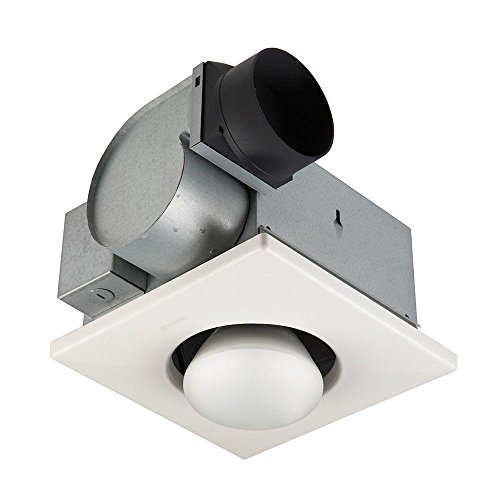
Cold air hits differently after a hot shower, especially in a bathroom that takes too long to warm through the central system. The Broan-NuTone 162 tackles that brief but irritating comfort gap with a genuine infrared bulb and a built-in exhaust fan, making it a straightforward candidate for the best heat lamp fan for bathroom search. Its design stays focused: one 250-watt heat bulb, 70 CFM ventilation, a white grille, and ceiling-mounted construction. There’s no decorative LED package or elaborate control system here, which may feel refreshingly simple or a little bare-bones, depending on what the room actually needs.
Broan-NuTone 162 Infrared Heater Fan
The Broan-NuTone 162 is a two-function fixture built around radiant warmth and mechanical ventilation. A compatible 250-watt R40 or BR40 infrared bulb provides heat, while the fan moves humid air through a 4-inch round duct. That setup feels more traditional than newer bathroom units that rely on concealed electric heating elements. It also creates the distinct sensation many people expect from a heat lamp: warmth directed toward the body and nearby surfaces rather than heated air spreading slowly through the room.
The bulb isn’t included, which is a small but important buying detail. Installation alone won’t make the heater ready for use unless a suitable 250-watt infrared bulb is purchased separately. That adds another item to the project list, though it also leaves room to choose between the supported R40 and BR40 bulb formats. Replacement is relatively direct later because the heating source remains visible and accessible from below.
The fixture’s appeal rests partly in its lack of fuss. There’s no integrated dimming, adjustable color temperature, or selectable airflow to configure. The single-bulb design does one job quickly, while the fan handles moisture at a fixed rate. For a bathroom that needs uncomplicated warmth near the shower or vanity, that narrow focus can be more useful than a longer list of features that rarely get used.
Infrared Heat That Feels Immediate
Infrared heating works differently from a conventional forced-air bathroom heater. The bulb sends radiant energy toward skin and nearby surfaces, so comfort can be noticeable before the entire room temperature changes. That’s the central strength of this fixture. A person standing beneath or close to the lamp may feel warmer quickly without turning up the home’s thermostat for a short bathroom visit.
Placement carries a lot of weight because radiant heat travels in a fairly direct path. A fixture mounted near the drying area can make the heat feel useful, while one installed over an empty section of floor may waste much of its effect. The heat coverage won’t feel uniform from wall to wall, and that’s not really what this type of product is built to provide. It’s better viewed as focused comfort for a particular zone rather than broad room heating.
The 250-watt bulb keeps electrical demand lower than combination units using 1300- or 1500-watt heating elements. That difference may simplify the overall energy picture, although proper wiring and code compliance still matter in a damp room. The tradeoff is obvious: lower-watt radiant heat can feel pleasant directly below the fixture but won’t push large volumes of warm air through a spacious bathroom. A drafty room with cold exterior walls may need more than a single bulb can deliver.
Bulb choice also influences the experience. A proper R40 or BR40 infrared lamp is designed to direct heat downward, while an ordinary household bulb won’t provide the intended output. The product description makes the supported bulb type clear, so improvising with a smaller or lower-rated lamp would defeat the point. The heater’s simplicity works only when the correct bulb is paired with it.
Ventilation For Everyday Moisture Control
The fan is rated at 70 CFM, placing it in a range that makes sense for smaller bathrooms and modest shower areas. That airflow can help pull damp air away before condensation remains on mirrors, walls, and ceilings for an extended period. It won’t behave like a high-capacity fan intended for a large primary bathroom or an oversized steam-heavy shower. Room size and shower habits should guide expectations, not the convenience of having heat and ventilation in one housing.
The provided description lists both 4.0 sones and 3.5 sones, so the exact published sound figure isn’t fully consistent in the supplied information. Either number points toward a fan that will be clearly audible rather than whisper-soft. That noise level may be acceptable for short shower cycles, but it won’t satisfy someone who wants ventilation to fade into the background. Tile, glass, and hard walls can make the sound feel even more noticeable in a compact room.
Audible operation isn’t always a drawback. Some households prefer a fan that can be heard because it confirms the ventilation is running and adds a little privacy. Still, the product shouldn’t be mistaken for a quiet modern DC fan. Its practical personality leans old-school: direct heat, fixed airflow, and a motor that makes its presence known.
Duct design will affect both airflow and noise after installation. The fixture uses a 4-inch round duct connector with tapered sleeves, which helps create a familiar connection point for bathroom venting. A short, smooth duct run gives the fan a better chance to move its rated airflow, while crushed flexible duct or sharp bends can reduce performance. Even a simple 70 CFM fan deserves a clean route outdoors.
Ceiling Fit And Insulation Contact
The Type IC designation means the unit is intended for insulation contact, a useful feature in ceilings where insulation surrounds the housing. That can make placement less awkward than fixtures requiring a large clearance gap. The design keeps most of the unit hidden above the ceiling, leaving the bulb and white grille visible in the room. From below, the appearance is functional and tidy rather than decorative.
The white grille suits common ceiling colors and won’t pull much attention away from tile, cabinetry, or plumbing fixtures. Its shape and visible bulb still give it the recognizable look of a traditional bathroom heat lamp. Anyone aiming for a nearly invisible ceiling may prefer a recessed or integrated LED design. The discreet installation refers more to the concealed housing than to the bulb disappearing from sight.
Steel construction gives the housing a sturdy base, while adjustable mounting brackets with keyhole slots are designed to make positioning more manageable. The permanently lubricated plug-in motor also reduces the expectation of routine motor lubrication. Those details don’t eliminate the need for careful installation, but they make the assembly more logical than a fixture with awkward fixed brackets or loose internal components. The hardware feels aimed at straightforward building practice rather than decorative novelty.
Ceiling access, joist spacing, wiring, and duct routing can still complicate the job. A replacement project may uncover old wiring, undersized ducts, or framing that conflicts with the preferred lamp location. The installation process is described as simple, yet “simple” assumes the surrounding structure cooperates. Measuring first remains the cheapest part of the project and usually the most valuable.
Daily Use Without Extra Complexity
The fixture’s basic layout keeps operation easy to understand. The fan ventilates, the bulb heats, and separate controls can allow each function to run as needed, depending on the wiring arrangement. That means the fan can clear humidity during warmer months without adding heat, while the lamp can provide focused warmth on a cold morning. Independent use makes the combination more flexible than a unit that forces both functions to operate together.
The exposed bulb also makes maintenance fairly direct. Once the infrared lamp reaches the end of its service life, replacement doesn’t require opening a sealed heating assembly. The downside is that the fixture’s heating performance depends entirely on the bulb remaining available and correctly installed. A burned-out lamp turns the unit into a ventilation fan until a new compatible bulb is fitted.
Cleaning deserves occasional attention because dust can gather on the grille and around the bulb opening. Built-up debris can make the fixture look dingy and may interfere with free air movement through the intake area. The visible components are easy to inspect, which is useful because there’s no guessing whether the grille needs attention. Power should be disconnected before cleaning or replacing the bulb, especially around a heat-producing fixture.
The absence of an integrated standard light is another practical distinction. This unit provides heat through the infrared bulb, but it isn’t described as a full bathroom lighting system. Some infrared bulbs emit visible light, though the fixture shouldn’t automatically be treated as a replacement for vanity or ceiling illumination. A separate light source may still be needed for grooming, cleaning, and general room use.
Strengths, Weaknesses, And Room Match
The main strength is immediate, localized warmth without relying on a high-watt forced-air heater. A 250-watt infrared bulb can make the drying area feel more comfortable while the 70 CFM fan handles routine humidity. Type IC construction also makes the housing easier to place around insulation than non-contact fixtures. The overall concept is clear and practical, with very little feature clutter.
Simplicity creates the next advantage. There are no LED color settings, complex electronics, or airflow selectors to manage. The straightforward design may suit a guest bathroom, smaller full bath, or older home where a traditional heat-lamp setup already makes sense. Fewer integrated systems can also make basic maintenance easier to understand.
The biggest weakness is fan noise. The supplied specifications mention both 3.5 and 4.0 sones, and neither figure suggests quiet operation. The 70 CFM airflow may also fall short in a larger bathroom or one with a heavily used shower. Anyone sensitive to fan sound or dealing with persistent steam should weigh those limitations carefully.
Heating coverage is another tradeoff. Radiant warmth feels fast beneath the bulb, but it won’t spread evenly into every corner. A large bathroom, high ceiling, or poorly placed fixture can make the 250-watt heat output feel underwhelming away from the lamp. That focused pattern is a feature in a small drying zone and a limitation in a broad open room.
The Broan-NuTone 162 fits best where a genuine infrared bulb is preferred over forced-air heat, a moderate 70 CFM fan is enough, and audible operation isn’t a deal breaker. It may feel outdated beside quiet DC fans with dimmable LED systems, but that doesn’t erase its practical niche. The fixture delivers direct radiant warmth, standard ventilation, insulation-contact installation, and an uncomplicated ceiling profile without pretending to be a full bathroom climate system.
Broan-NuTone 164 Two-Bulb Bathroom Heater Fan
A cold bathroom rarely feels like a small problem while wet feet are meeting chilly tile and steam is coating every reflective surface in sight. The Broan-NuTone 164 tackles that awkward mix with two infrared heat bulbs and a 70 CFM exhaust fan, giving the room focused warmth without asking the central thermostat to heat the whole house. As a best heat lamp fan for bathroom candidate, it sticks to a familiar formula rather than piling on decorative lighting modes or electronic controls. The result is a ceiling fixture with a clear job: warm the area below, move damp air outdoors, and keep most of its hardware tucked out of view.
Broan-NuTone 164 Two-Bulb Heater Fan
The defining feature is the two-bulb infrared layout. Each socket accepts a 250-watt R40 or BR40 infrared bulb, allowing the fixture to deliver up to 500 watts of radiant heat when both bulbs are installed and operating. Those bulbs aren’t included, so the unit won’t provide heat straight out of the box without an extra purchase. That detail is easy to miss, and it matters because ordinary household bulbs won’t create the same directed warmth.
The fan and heater functions can be controlled separately, which gives the fixture more flexibility than its old-school appearance might suggest. Humid summer showers may call for ventilation alone, while a brisk morning can justify running the bulbs before stepping out of the tub. The separate function control helps avoid wasting heat when only moisture removal is needed. It also keeps the fan from dictating every use of the heater, depending on how the wall controls are wired.
The white grille and exposed bulb openings create a clean but unmistakably traditional ceiling look. Most of the housing disappears above the drywall, leaving the grille and lamps visible from below. That discreet ceiling installation can keep the room from looking cluttered with separate heaters and vents. Still, the fixture won’t blend into the ceiling as quietly as a slim LED panel or recessed architectural vent.
Two Infrared Bulbs Change The Heating Experience
Radiant heat behaves differently from warm air pushed through a ceiling register. The bulbs direct infrared energy toward skin, towels, tile, and nearby surfaces, so warmth can feel immediate in the zone beneath the fixture. That quick response is the main reason this style remains relevant in the best heat lamp fan for bathroom category. The room itself may still feel cool, yet the drying area can become much more comfortable without waiting for the entire space to warm.
Using two bulbs broadens the heated zone and raises the available output beyond a single-lamp model. The pair can be positioned over a shower exit, dressing area, or central walkway where cold air causes the most frustration. Even so, 500 watts of radiant heat shouldn’t be mistaken for a full-room furnace. A large bathroom with high ceilings, drafty windows, or weak insulation may still feel cool away from the direct path of the lamps.
The bulbs themselves shape both heat and maintenance. R40 and BR40 infrared lamps are designed with reflector-style bodies that direct energy downward, which is exactly what this fixture needs. Once a bulb burns out, replacement is simple because the sockets remain accessible from the room side. The tradeoff is that heating performance depends on consumable bulbs, so keeping compatible replacements on hand may be useful in colder climates.
Heat-lamp placement deserves careful thought before the ceiling opening is cut. Mounted too far from the shower or drying zone, the radiant effect can feel weak even though both bulbs are working normally. Installed where people stand for several minutes, the warmth becomes much easier to appreciate. The fixture rewards good positioning, and poor placement can make a capable heater feel like it’s missing the mark.
Ventilation Performance And Sound Expectations
The exhaust fan is rated at 70 CFM, placing it in a practical range for smaller bathrooms and modest shower areas. That airflow can help clear steam before moisture lingers on mirrors, walls, grout, and painted trim. It isn’t intended for a sprawling primary bathroom or a large enclosed steam shower. Room size, shower duration, and duct quality all influence whether 70 CFM feels sufficient.
The supplied details list both 4.0 sones and 3.5 sones, so the exact published sound figure is inconsistent in the information provided. Either rating suggests a fan that will be clearly audible rather than whisper-soft. The noise level may be acceptable for a short shower cycle, but anyone hoping for a barely noticeable fan should keep expectations grounded. Hard bathroom surfaces can reflect motor and airflow noise, making the unit seem louder than the same fan in a softer room.
An audible fan isn’t automatically a flaw. Some people appreciate knowing the ventilation is actually running, and the steady sound can provide a little privacy in a shared bathroom. Still, the product’s description calling the performance quiet should be interpreted cautiously beside the listed sone figures. The Broan-NuTone 164 feels more like a sturdy, conventional ventilator than a modern low-sone DC model.
Ductwork can make or break the result. The fixture uses a 4-inch round duct connector with tapered sleeves, which gives the installer a familiar connection point. A short, smooth run supports better airflow and less turbulence, while crushed flexible duct or several tight bends can reduce ventilation and raise sound. The fan’s rating only tells part of the story; the path outdoors finishes the job.
Type IC Housing And Ceiling Fit
The Type IC designation means the housing is designed for insulation contact. That matters in insulated ceilings where non-IC fixtures may require extra clearance around the housing. Keeping insulation close can help reduce heat loss and avoid awkward gaps above the bathroom. The feature also makes the unit easier to integrate into many standard ceiling assemblies.
A sturdy steel housing supports the fan motor, duct connection, and dual lamp sockets. Adjustable mounting brackets with keyhole slots are included to make positioning more manageable between framing members. Those parts support a logical installation process, especially in new construction or a ceiling with decent access. They don’t remove the need to measure, though, and older homes have a habit of hiding pipes or wiring exactly where a fixture is supposed to go.
The permanently lubricated plug-in motor reduces routine maintenance demands around the fan assembly. There’s no expectation of periodic oiling, which suits a fixture mounted overhead and used in a humid room. The plug-in motor design can also make internal servicing more straightforward than a motor hardwired deep inside the housing. Dust removal and grille cleaning will still matter over time because airflow carries lint and bathroom residue toward the intake.
Most of the unit sits above the ceiling, leaving the white grille and two bulb faces visible below. That keeps the appearance fairly cohesive, though the twin lamps naturally draw more attention than a flat vent cover. The traditional visual style fits practical bathrooms, rental renovations, and older homes more easily than ultra-minimal interiors. A design-focused remodel may favor a sleeker fixture, even if the Broan-NuTone delivers the desired heat.
Electrical Load And Control Planning
The provided electrical figure is 4.5 amps, which helps frame the power demand of the fixture. Two 250-watt bulbs account for a meaningful share of that load, and the fan motor adds its own requirement. The circuit must be evaluated as part of the installation rather than assumed to match whatever old fan was already in the ceiling. Bathroom wiring deserves care, especially where heat, moisture, and multiple controls meet.
Separate control of the heater and fan is one of the model’s more useful practical traits. A two-function wall control can let the lamps and ventilation operate independently, which prevents unnecessary heat during warm weather. The control flexibility also makes the unit easier to fit into different routines. Wiring has to support that independence, so replacing a single-switch fan may require additional conductors or a revised switch box.
The bulbs reach high operating temperatures, and that’s part of how they produce useful radiant heat. Proper lamp type, fixture clearance, and manufacturer-approved installation should never be treated casually. A random bulb with the wrong shape or wattage may fit poorly or fail to deliver the intended result. The simplicity of a heat lamp can tempt shortcuts, but correct bulb selection remains central to safe and effective use.
Energy use is focused rather than broad. Instead of raising the central thermostat to warm several rooms, the fixture directs heat into one bathroom for a limited period. That can feel more sensible during short morning routines, though running both bulbs for extended stretches still consumes electricity. The unit saves energy only when its localized heat replaces a less efficient alternative or avoids unnecessary whole-house heating.
Daily Comfort Without Extra Electronics
The Broan-NuTone 164 doesn’t offer dimming, color-temperature control, motion sensing, or digital timers in the provided description. That absence may sound dated beside newer multifunction bathroom units, yet it also keeps operation simple. Flip the heater control for warmth and the fan control for ventilation. The straightforward layout leaves little room for confusion.
Two bulbs create a broader warm spot than one, which can make the drying area feel less fussy about exact foot placement. A single lamp often rewards standing directly beneath it, while a dual-lamp fixture can spread the radiant effect across more of the floor. The difference won’t turn the entire bathroom tropical, but it can make post-shower routines less rushed. That modest comfort gain is where this product earns its keep.
The fan continues working after the bulbs are switched off, assuming the controls are wired separately. That’s useful because humidity often remains long after warmth is no longer needed. Letting the 70 CFM ventilation continue can help dry the room while avoiding unnecessary heat. A timer switch could further simplify that routine, though no timer is included in the supplied product details.
Maintenance stays fairly approachable. The bulbs can be replaced from below, the grille can be cleaned, and the motor is permanently lubricated. Dust buildup around the lamp openings and intake should still be addressed because heat and restricted airflow make a poor combination. The product isn’t maintenance-free, but its service points are easy to recognize without opening a sealed electronic module.
Strengths, Weaknesses, And Practical Fit
The most obvious strength is fast radiant warmth from two infrared bulbs. Compared with a one-bulb fixture, the Broan-NuTone 164 offers more heating capacity and a wider heated zone while keeping electrical demand below many forced-air bathroom heaters. Separate fan and heater control adds genuine day-to-day usefulness. Type IC construction also makes the housing easier to install around ceiling insulation.
The simple mechanical design is another advantage. There are no integrated LED drivers, electronic color settings, or complicated control panels in the supplied specifications. Bulb replacement is direct, and the fan uses a permanently lubricated motor. For someone who values understandable hardware over feature-heavy operation, that plainspoken design can be reassuring.
The main weakness is sound. A listed range of 3.5 to 4.0 sones points toward clearly noticeable operation, and poor ducting could make it even more prominent. The 70 CFM airflow also limits the unit’s fit in larger or heavily used bathrooms. It’s better matched to a modest room than a spacious suite filled with long, steamy showers.
Bulbs not being included creates another minor frustration. The fixture requires two compatible 250-watt R40 or BR40 infrared bulbs before the heating side is functional. Those exposed bulbs also give the ceiling a dated look compared with concealed heaters and flat LED grilles. The traditional appearance will feel practical to some and visually busy to others.
The Broan-NuTone 164 suits a smaller bathroom where genuine infrared warmth matters more than silent operation or modern lighting features. It offers two-bulb radiant heat, 70 CFM ventilation, insulation-contact construction, and separate function control in one sturdy ceiling unit. It’s less convincing for a large bathroom, a noise-sensitive household, or a remodel centered on minimalist fixtures. In the right room, though, it delivers a focused kind of comfort: warm where people stand, ventilated where steam collects, and uncomplicated enough to use without a manual taped inside the vanity.

Best Quiet Ceiling Fan For Bedroom 2026 Ultimate Comfort Picks

Best Ceiling Fan For Master Bedroom 2026 With Ultimate Comfort

Best White Ceiling Fan With Light For Bedroom 2026 Top Picks

Best Quorum Medallion Ceiling Fan 2026 With Style & Breeze
Best Outdoor Fan For Pergola 2026 Comfort Boost

Best Ceiling Fan For Great Room 2026 With Ultimate Comfort

Best Outdoor DC Ceiling Fans 2026 For Breezy Comfort
Best ceiling exhaust bath fan with light and heater 2026