
Best Lasko 16 Inch Fan 2026: Cool Air, Less Fuss

A best Lasko 16 inch fan should solve a basic problem without creating three new ones. The room feels stuffy, the thermostat is already low enough, and dragging a heavy fan from one corner to another gets old fast. A practical 16-inch model delivers a noticeable breeze while remaining manageable around furniture, desks, beds, and narrow walking paths. That middle-ground size is the real appeal: more reach than a little tabletop fan, without the bulk of an oversized industrial machine.
Lasko’s 16-inch lineup includes straightforward pedestal designs as well as models with remote controls and timers. A basic model such as the 2520 focuses on three-speed airflow, oscillation, adjustable height, and a tilting fan head. Those controls aren’t flashy, but they handle the daily frustrations that matter. The breeze can be lifted above the edge of a bed, angled toward a work area, or swept across a wider section of the room instead of blasting one chair all afternoon.
Remote-equipped versions add convenience, though that comfort usually comes with a higher price and another small item that can disappear between couch cushions. A remote makes sense when the fan sits across a bedroom or behind furniture, especially late at night when getting up feels like a chore. A timer also helps prevent the fan from running until morning after the room has cooled down. Still, simple manual controls may be the wiser call for a workshop, spare room, or space where fewer electronics mean fewer headaches.
Oscillation deserves more attention than it usually gets. Fixed airflow can feel strong at first, yet it often leaves warm pockets untouched and may become irritating when aimed at the face for too long. A sweeping motion spreads air more evenly and softens that constant pressure. Even so, oscillation won’t replace air conditioning or lower the actual room temperature, so realistic expectations matter; the fan improves comfort by moving air across the skin and helping stagnant spaces feel less oppressive.
Noise is another tradeoff worth weighing. Higher speed produces a stronger breeze, but it also brings more motor and blade sound. That steady hum may mask traffic, conversations, or hallway noise, which can be handy at bedtime. On the flip side, light sleepers and quiet-office setups may spend most of the day on the lowest setting, so raw power isn’t the only thing that counts.
Assembly and cleaning can’t be ignored, either. Pedestal fans generally require the base, pole, guard, blade, and control housing to be fitted together, and rushing that job may lead to rattling or an unstable stance. Dust eventually gathers on the grille and blade edges, dulling airflow and leaving gray buildup in plain sight. A design that can be opened with ordinary household tools saves frustration, although removing the grille still takes more effort than wiping down a slim tower fan.
The strongest pick ultimately depends on how much control the room needs. Choose a manual Lasko 16-inch pedestal fan for affordable, no-nonsense cooling with fewer parts to manage. Step up to a remote-and-timer model for nighttime comfort or frequent adjustments from across the room. Either way, prioritize a stable base, adjustable height, a useful tilt range, and controls that won’t require a manual every time the weather turns muggy.
- LFR Score9.0
LFR Score is a ranking system developed by lightfansreviews.com. LFR Score has no relationship or impact from any manufacturers or sales agent websites. Learn more
- BrandLasko

- LFR Score8.8
LFR Score is a ranking system developed by lightfansreviews.com. LFR Score has no relationship or impact from any manufacturers or sales agent websites. Learn more
- BrandLasko

- LFR Score8.8
LFR Score is a ranking system developed by lightfansreviews.com. LFR Score has no relationship or impact from any manufacturers or sales agent websites. Learn more
- BrandLasko

- LFR Score8.6
LFR Score is a ranking system developed by lightfansreviews.com. LFR Score has no relationship or impact from any manufacturers or sales agent websites. Learn more
- BrandLasko

- LFR Score8.6
LFR Score is a ranking system developed by lightfansreviews.com. LFR Score has no relationship or impact from any manufacturers or sales agent websites. Learn more
- BrandLasko

- LFR Score8.6
LFR Score is a ranking system developed by lightfansreviews.com. LFR Score has no relationship or impact from any manufacturers or sales agent websites. Learn more
- BrandLasko

- LFR Score8.4
LFR Score is a ranking system developed by lightfansreviews.com. LFR Score has no relationship or impact from any manufacturers or sales agent websites. Learn more
- BrandLasko

- LFR Score8.4
LFR Score is a ranking system developed by lightfansreviews.com. LFR Score has no relationship or impact from any manufacturers or sales agent websites. Learn more
- BrandLasko
- LFR Score8.2
LFR Score is a ranking system developed by lightfansreviews.com. LFR Score has no relationship or impact from any manufacturers or sales agent websites. Learn more
- BrandLasko

- LFR Score8.2
LFR Score is a ranking system developed by lightfansreviews.com. LFR Score has no relationship or impact from any manufacturers or sales agent websites. Learn more
- BrandPELONIS

- LFR Score7.8
LFR Score is a ranking system developed by lightfansreviews.com. LFR Score has no relationship or impact from any manufacturers or sales agent websites. Learn more
- BrandCCC COMFORT ZONE
Last update on 2026-07-27 / Affiliate links / Images, Product Titles, and Product Highlights from Amazon Product Advertising API
Lasko R12210 Bronze Table Fan Review
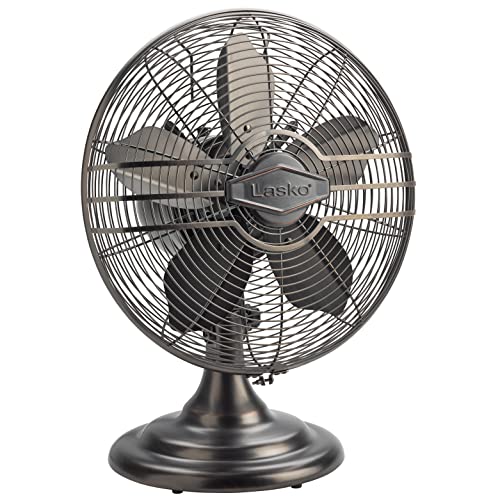
A plain plastic fan can cool a room, yet it often looks awkward beside carefully chosen furniture. The Lasko R12210 bronze table fan tackles that mismatch with an all-metal body, an oil-rubbed bronze finish, and practical controls that don’t demand a manual. Its 17-inch overall height gives it more visual presence than a compact desk fan, while the 12-inch blade keeps the footprint manageable on a table, counter, dresser, or sturdy shelf. For anyone researching the best Lasko 16 inch fan, one detail deserves clarification: the listed 17-inch measurement refers to the full height from the base to the top of the grille, not the blade diameter.
Lasko R12210 Bronze Fan
The biggest draw is obvious before the fan is even switched on. A vintage metal design gives the R12210 the character of an old-fashioned appliance without sacrificing basic modern convenience. The bronze finish feels more at home beside wood furniture, dark cabinets, leather seating, or traditional decor than a bright white fan would. Still, the look is specific, so it may feel heavy or overly decorative in an ultra-minimal room filled with pale colors and clean acrylic surfaces.
Its proportions sit in a useful middle range. The 17-inch full height makes the fan noticeable enough to move air above nearby objects, but it doesn’t demand the floor space of a pedestal model. A 12-inch blade also means this isn’t a true 16-inch blade fan, despite its relevance to searches for the best Lasko 16 inch fan. That distinction matters because blade size affects expectations about reach, airflow spread, and where the appliance fits comfortably.
Portability is helped by the built-in carry handle, which makes room-to-room moves less awkward than grabbing the grille or balancing the base with both hands. The all-metal construction may feel more substantial than lightweight plastic, though it also means the fan won’t be the lightest object on the desk. Moving it from a home office during the day to a bedroom at night should be manageable. Carrying it up and down stairs several times a day, though, may become less appealing.
The fan arrives fully assembled, removing one of the most annoying parts of buying a traditional fan. There’s no wrestling with blade caps, grille clips, poles, or a base that refuses to line up. Plug in the six-foot cord, choose a speed, and the cooling starts. That straightforward setup suits spaces where immediate use matters more than having a long list of electronic functions.
Airflow Controls And Room Coverage
Three manual speeds give the fan enough range for changing conditions throughout the day. The lowest setting suits steady background air, while the upper settings can push a firmer breeze when a kitchen grows warm or afternoon heat settles into an office. Lasko describes the settings as three quiet speeds, though sound tolerance is personal and higher airflow naturally tends to create more blade and motor noise. A sleeper who needs near silence may hear more than someone who enjoys a soft, consistent hum.
The tilt-back fan head solves a common placement problem. Table surfaces rarely sit at the exact height needed to send air toward a chair, bed, or standing work area. Tilting the head lets the breeze travel upward instead of striking the edge of a desk or blowing papers sideways. The adjustment remains simple and physical, which is handy for quick changes but less convenient than remote-controlled positioning.
Widespread oscillation helps the fan serve more than one fixed spot. A narrow stream of air can feel strong, yet it leaves much of a room untouched and may become irritating when it hits the same person continuously. The oscillating movement sweeps the breeze across a broader area, making shared spaces feel less stagnant. It won’t reduce the actual room temperature like an air conditioner, but moving air can make warm conditions more tolerable and help prevent that boxed-in feeling.
Manual controls keep operation uncomplicated. There’s no display glowing beside the bed, no remote to misplace, and no menu sequence to memorize. That simplicity is a real strength for anyone who wants a fan to behave like a fan: turn it on, select a speed, and move on. The tradeoff is equally plain, since the lack of a timer or remote means every adjustment requires reaching the unit.
Stability, Noise, And Surface Protection
Metal table fans can transmit vibration into hard furniture, producing an annoying buzz that sometimes sounds louder than the motor itself. Lasko addresses that issue with rubber pads on the bottom, which help reduce movement while protecting tables and counters from direct contact with the base. The pads are especially useful on smooth wood, laminate, or stone surfaces. Even so, a level and sturdy location remains essential because no rubber foot can correct a wobbly side table.
The fan’s weight and broad base should feel more planted than a featherweight personal fan. That stability matters in kitchens, offices, and living rooms where cords get bumped or surfaces are used throughout the day. The six-foot power cord also provides reasonable placement flexibility without forcing the fan directly beside an outlet. Cord routing still deserves attention, particularly near walkways where a loose cable can become a snagging hazard.
Noise expectations should remain grounded. The product description emphasizes quiet operation, but a metal fan with a 12-inch blade still moves a meaningful amount of air, and moving air isn’t silent. Low speed is the sensible starting point for phone calls, reading, or nighttime use. Medium and high settings make more sense when cooling power matters more than hush, such as during meal preparation or a muggy afternoon.
Surface vibration may also change depending on placement. A hollow desk can amplify sound, while a dense dresser or solid counter may keep the fan calmer. The rubber pads help, yet furniture construction plays a surprisingly large role in perceived noise. Placing the Lasko R12210 on a firm surface should produce a cleaner, less rattly experience than setting it on a lightweight folding table.
Safety Features And Everyday Practicality
The R12210 carries an ETL listing and includes safety fuse technology, both of which support peace of mind during normal household use. Those details don’t remove the need for common-sense placement, though. The fan should remain away from water, loose fabric, unstable ledges, and areas where the cord could be pinched. Its metal grille also shouldn’t be treated as a shelf or handle when the fan is operating.
Lasko backs the model with a one-year limited manufacturer’s warranty. That coverage is useful, but it’s shorter than the lifespan many people hope to get from a metal household fan. Keeping proof of purchase and reviewing the warranty terms can prevent confusion if a defect appears. Regular dust removal may also help preserve airflow because buildup on the grille and blades can make any fan feel weaker over time.
Cleaning may require a little more patience than wiping the face of a tower fan. The closely spaced grille protects the moving blade, yet it also collects visible dust around the front and rear surfaces. A vacuum brush, soft cloth, or carefully used detailing brush can handle routine buildup while the unit is unplugged. Deeper cleaning should follow the manufacturer’s instructions so the metal finish and internal components aren’t damaged by moisture or harsh chemicals.
The lack of digital features may be either refreshing or disappointing. A timer would help at bedtime, and remote control would be convenient when the fan sits across the room. On the other hand, fewer electronic controls often mean a cleaner appearance and less fuss during daily use. The manual three-speed design fits a straightforward routine better than a feature-heavy setup.
Where Th hãy kiểm tra lại bạn đã tạo hyperlink chưa. Lưu ý yêu cầu: Create hyperlink as below rules. In addition, always add relevant CTA hyperlink or relevant hook before hyperlink to increase interaction. Structrue CTA or hooks ANCHOR_TEXT. Only 1 hyperlink in the response. I will provided you url part. "Here is list link:" Anchor text selected a 2–6 word phrase (or longer only if it reads more naturally) that still clearly represents the path topic. Rewrite full response with hyperlinkis Fan Fits Best
A bedroom can benefit from the fan’s oscillation and adjustable tilt, particularly when air needs to pass over the edge of a bed rather than blow directly at one spot. The bronze styling also looks less temporary than a basic utility fan sitting on a dresser. Still, light sleepers should consider how they react to fan noise before expecting silent operation. The lowest speed is likely the most practical setting after lights-out.
Kitchen placement makes sense on a stable counter with enough clearance around the grille. Moving air can ease the discomfort created by cooking heat, especially where overhead ventilation doesn’t reach the rest of the room. The oil-rubbed finish may complement darker fixtures and traditional cabinetry, though grease and dust can become visible if cleaning is neglected. Keeping the fan away from sinks and active burners is non-negotiable.
A home office may be the most natural setting for this model. The fan can sit on a cabinet or side table, tilt toward the desk, and oscillate during long stretches of seated work. Its design adds some personality without looking like temporary dorm-room equipment. But a small desktop crowded with monitors, notebooks, and coffee cups may not have enough safe space for the 17-inch-tall frame.
The R12210 makes the most sense where visual character matters almost as much as airflow. Its strengths are metal construction, simple controls, adjustable tilt, oscillation, and ready-to-use assembly. Its weaknesses are the absence of a timer and remote, a style that won’t suit every room, and a blade size smaller than the wording of some 16-inch fan searches may suggest. Those tradeoffs make it a focused household fan rather than a do-everything cooling appliance.
Lasko 2520 Oscillating Stand Fan Review
Warm air rarely stays in one convenient corner. It settles around the bed, hangs over a work desk, or turns a calm living room into a stuffy box by midafternoon. The Lasko 2520 stand fan addresses that everyday irritation with a 16-inch blade, wide-area oscillation, adjustable height, and a tilting head rather than a pile of digital extras. Among options tied to the best Lasko 16 inch fan search, this model stands out as a practical floor fan built around simple positioning and straightforward airflow control.
Lasko 2520 Stand Fan
The Lasko 2520 follows the familiar pedestal-fan formula, but its proportions make sense for rooms where a tabletop fan sits too low. The unit measures approximately 18 inches long, 17 inches wide, and 47 inches high, giving the airflow a better chance of clearing beds, chairs, and nearby furniture. Its white finish looks plain rather than decorative, which can be a strength in rooms where the fan should blend in instead of becoming the focal point. At 8.7 pounds, it’s manageable enough to relocate without feeling flimsy in the hand.
A 16-inch blade diameter places this fan above small personal models that cool only a narrow workspace. That larger sweep is better suited to moving air through bedrooms, offices, living rooms, and covered outdoor areas where stagnant heat affects more than one seat. Still, blade size doesn’t mean the fan will chill an entire home or work like an air conditioner. It circulates existing air, which improves comfort but won’t lower the room’s actual temperature on its own.
The pedestal shape also saves usable table and counter space. Instead of squeezing a fan beside a monitor, lamp, or stack of books, the Lasko 2520 stands on the floor and directs air from a higher position. That setup is handy in compact rooms, although the 17-inch-wide base still needs a clear patch of flooring. Tight walkways and cluttered corners may require careful placement so the base and cord don’t become obstacles.
Assembly is refreshingly uncomplicated because the product is designed to go together without tools. That doesn’t mean every piece snaps into place without attention, but there’s no need to hunt for a screwdriver or dig through a hardware drawer. Following the assembly order matters, particularly around the grille and blade components. Once properly fitted, the fan is ready for the ordinary cycle of seasonal use, storage, and setup again.
Airflow That Reaches Beyond One Chair
Wide-area oscillation is the feature that gives this pedestal fan its broader usefulness. A fixed breeze can feel strong, yet it tends to cool one narrow strip of the room while leaving nearby areas untouched. The oscillating sweep moves airflow from side to side, helping the breeze pass across a bed, seating area, or shared workspace. It also reduces the annoyance of air hitting the same spot on the face or arms for hours at a time.
Three speed settings provide a simple way to match airflow with the moment. Low speed suits steady circulation during reading, sleeping, or desk work, while medium adds more presence without immediately jumping to maximum output. High speed is the sensible setting for hot afternoons, post-workout cooling, or rooms that have been closed up all day. The low, medium, and high controls keep operation familiar, with no screen, app, or complicated sequence standing between the room and a cooler-feeling breeze.
Lasko describes the three settings as quiet and energy-efficient, though noise expectations should stay realistic. A 16-inch blade pushing air at high speed won’t disappear acoustically, especially in a small bedroom during the dead of night. Low speed should be the calmer choice for sleep or calls, while high speed favors stronger air movement over silence. Some people appreciate the steady hum because it softens outside noise, but anyone sensitive to mechanical sound may prefer to place the fan farther from the bed.
The fan’s airflow pattern also depends heavily on placement. Parking it behind a tall chair or squeezing it into a packed corner blocks part of the breeze before it reaches the room. A clearer line of travel allows the 16-inch fan head to do more with each speed setting. The best position usually leaves open space in front of the grille while keeping the base away from busy foot traffic.
Height And Tilt Make The Difference
Adjustable height is more than a minor convenience on a floor fan. Bed frames, office desks, sofas, and dining tables all sit at different levels, so fixed-height airflow often strikes furniture instead of reaching the person who needs it. The Lasko 2520 can be raised or lowered to improve that angle. This fully adjustable pedestal makes the fan easier to adapt as it moves from one room to another.
The tilt-back head adds another layer of control. Raising the pole alone may not send air over a deep sofa or toward the upper half of a mattress, but tilting the head helps correct the path. Pointing the breeze slightly upward can also encourage broader room circulation instead of concentrating everything near the floor. The tilt adjustment remains manual, so changes require walking over to the fan rather than using a remote.
An easy-grip rotary control keeps speed changes direct and tactile. There’s little guesswork because each setting is selected physically, without cycling through hidden modes or reading a glowing panel in a dark room. That simplicity fits routines where the fan is switched on at one preferred speed and left alone for a while. The downside is the lack of remote operation, which becomes noticeable when the fan sits across a bedroom or behind a desk.
No timer is listed among the provided features, either. That omission won’t matter much during daytime use, but it may be inconvenient for anyone who likes airflow while falling asleep and wants the fan to stop later. A manual control system has fewer features to manage, yet it also offers less scheduling flexibility. The Lasko 2520 favors hands-on simplicity over programmable comfort, and that tradeoff should be clear before purchase.
Practical Strengths And Everyday Limits
The fused safety plug is a worthwhile detail in a household appliance expected to run for long stretches. It adds a layer of electrical protection, though normal precautions still apply. The cord should stay away from pinched furniture edges, wet areas, and places where someone might trip over it. Covered outdoor use also calls for extra care because this isn’t described as a weatherproof fan.
Its 8.7-pound weight strikes a useful balance between portability and floor stability. Carrying the fan from a bedroom to a living room shouldn’t feel like moving heavy equipment, but the tall shape can still be awkward around doorframes and narrow halls. Grabbing the pole carelessly may put unnecessary stress on adjustment points, so supporting the unit securely is the safer habit. The lightweight pedestal design helps with seasonal storage, provided there’s enough closet space for its assembled height.
Cleaning will eventually become part of ownership because open grilles collect lint and dust. Buildup on the grille and blade edges can dull airflow and make the fan look tired long before the motor has a problem. Routine surface cleaning should always be done with the unit unplugged, using methods allowed by the manufacturer’s instructions. The large front grille is easier to see than the narrow vents on many tower fans, although deeper blade access may require more effort.
The Lasko 2520’s biggest strengths are easy to pin down: wide oscillation, adjustable height, tilt control, three speeds, and tool-free assembly. Its limitations are just as straightforward, including manual-only controls, no provided timer feature, and a floor base that needs open space. Those traits make it better suited to consistent everyday circulation than feature-heavy bedside automation. For a room that needs movable air at the right height, rather than decorative styling or digital controls, the design stays sensibly focused.
Room Placement And Realistic Expectations
A bedroom is a natural fit because the height and tilt can send air above the mattress instead of into the bed frame. Oscillation spreads that breeze across a wider sleeping area, which helps prevent one side from receiving all the airflow. Low speed may suit nighttime use best, while medium can handle warmer evenings before sleep. The adjustable fan head also allows less direct positioning for anyone who dislikes constant air on the face.
Office use benefits from floor placement and uncluttered controls. The fan can stand beside a desk, aim above a chair arm, and circulate air without consuming the limited surface area needed for work equipment. High speed may interfere with loose papers, so a lower setting and thoughtful angle make more sense around documents. The wide oscillation pattern is especially useful in a shared room where several workstations sit within the sweep.
Living rooms present a different challenge because furniture often interrupts airflow. Raising the fan and tilting it slightly can help the breeze clear low tables or the back of a sofa, but a tall bookcase or room divider will still block circulation. Placement near an open path produces better results than hiding the unit behind decor. The 47-inch maximum overall height offers useful flexibility, though it can’t compensate for a completely obstructed position.
Outdoor comfort should be approached cautiously and realistically. The description mentions outdoor spaces, yet the supplied information doesn’t state that the fan is waterproof or built for exposure to rain. A dry, covered porch may suit occasional operation, while an uncovered patio introduces risks that ordinary indoor-style electrical products aren’t meant to handle. The Lasko 2520 oscillating stand fan earns its place through basic, adjustable airflow, not through weather resistance or specialized outdoor construction.
Lasko 1843 Cyclone Pedestal Fan Review
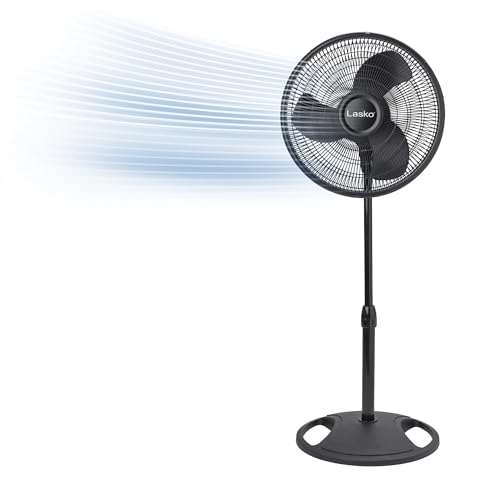
Getting comfortable shouldn’t require leaving the couch every twenty minutes to adjust a fan. Heat shifts through the day, furniture blocks poorly aimed airflow, and a fixed fan height can send half the breeze into the back of a chair. The Lasko 1843 Cyclone pedestal fan answers those annoyances with remote operation, a four-hour timer, wide-angle oscillation, three speeds, and an adjustable stand reaching up to 54 inches. Although shoppers researching the best Lasko 16 inch fan may encounter this model, its listed 18-inch size makes it a larger alternative with broader room-circulation ambitions.
Lasko 1843 Cyclone Fan
The Cyclone 1843 leans toward function rather than decoration. Its black finish has a neutral, appliance-like appearance that won’t demand much attention in a bedroom, living room, or home office. The larger fan head does require more visual and physical space than a compact 16-inch model, though, so cramped corners may feel crowded. That extra size makes more sense where wide airflow coverage matters more than keeping the fan nearly invisible.
Electronic controls give this model a different personality from basic pedestal fans with rotary switches. Speed changes, timer settings, and power controls are grouped into an easy-to-use setup, removing the need to wrestle with complicated menus. There are only three speed settings, which keeps operation straightforward while still allowing a softer breeze or more assertive circulation. Anyone expecting numerous wind patterns or app connectivity won’t get them here, and frankly, that restraint may be refreshing.
The adjustable stand reaches up to 54 inches high, giving the fan useful clearance around sofas, beds, desks, and other obstacles. Raising the head can prevent air from disappearing into furniture, while lowering it works better beside floor seating or a low mattress. Height adjustment also lets the same fan serve different rooms without being locked into one awkward airflow level. The pole still takes up floor space, of course, so placement needs a stable, open patch rather than a squeezed-in gap.
This model’s appeal rests on convenience features that solve ordinary household friction. A remote handles changes from across the room, the timer limits unnecessary runtime, and oscillation spreads air beyond one seat. Those strengths are practical rather than flashy, which suits a fan expected to run day after day. The main difference from simpler models is control without constant interruption.
Three Speeds For Changing Heat
Low, medium, and high speeds cover the common situations a pedestal fan encounters. Low works for gentle background circulation during reading, desk work, or sleep, while medium adds a more noticeable breeze as a room warms up. High is better suited to muggy afternoons or a living area that has collected heat throughout the day. The three-speed range is easy to grasp, though people who prefer very fine airflow adjustments may consider it limited.
Air movement from an 18-inch fan head should be approached with realistic expectations. The larger format is designed to circulate air across a broad area, but it doesn’t refrigerate the room or replace an air conditioner. Instead, the breeze helps sweat evaporate and keeps stagnant air from sitting around the body. That distinction matters because strong circulation and actual cooling aren’t the same thing.
Noise will likely change with the selected speed, as it does with practically every blade fan. Low speed is the sensible starting point around phone calls, television, or bedtime, while high speed puts airflow ahead of quiet. The supplied details don’t provide measured sound levels, so calling it silent would stretch the facts. A steady fan hum may feel soothing to some sleepers, but sound-sensitive rooms may require greater distance between the fan and the bed.
The electronic controls make speed changes easier than bending down to turn a mechanical dial. That small convenience becomes noticeable during long work sessions or late at night, especially when the fan stands several feet away. Since the remote also handles speed selection, airflow can be adjusted without breaking concentration or leaving a comfortable spot. The benefit is simple: less fuss during repeated adjustments.
Wide Oscillation And Flexible Direction
Wide-angle oscillation is central to the Cyclone’s room-coverage design. A fixed fan sends a concentrated stream toward one location, which can leave the rest of a shared space warm and motionless. Side-to-side movement spreads the breeze over a larger zone and prevents one person from taking the full blast continuously. The oscillating sweep fits bedrooms, seating areas, and home offices where air needs to reach more than one position.
The tilting fan head adds vertical control to that horizontal movement. It can point upward, downward, or somewhere between those angles, helping airflow clear the edge of a mattress or pass over a sofa arm. A slight upward tilt may also support broader circulation instead of driving air directly at papers or lightweight objects. Adjustment is physical rather than motorized, so the tilt angle must be set at the fan itself.
Height, tilt, and oscillation work best as a combined system. Raising the stand without adjusting the head may send air too high, while tilting a low fan can aim the breeze into nearby furniture. A few deliberate changes can line up the airflow with the part of the room that actually feels uncomfortable. Once positioned correctly, wide-area coverage reduces the need to keep dragging the base around.
Room layout still places limits on performance. Tall furniture, room dividers, and deep couches can interrupt airflow regardless of fan size. An open line in front of the grille allows the Cyclone to use its broad sweep more effectively. Hiding it behind a chair may keep the appliance out of sight, but it also wastes much of the adjustable airflow that makes the model useful.
Remote Control And Four-Hour Timer
The included remote operates the fan’s power, speed, and timer functions from a distance. That’s particularly handy in a bedroom, where getting out from under the covers to lower the fan speed feels like a raw deal. It also makes sense in a living room when the unit sits beyond a coffee table or beside a wall. The multi-function remote turns routine adjustments into a quick task rather than a small interruption.
Remote controls bring one obvious weakness: they’re easy to misplace. Sofa cushions, nightstands, and cluttered desks have a habit of swallowing small accessories at the worst moment. The fan’s onboard electronic controls remain available, so losing the remote doesn’t make the unit unusable. Still, giving the controller a consistent storage spot protects the convenience that distance operation is supposed to provide.
The timer can be set for up to four hours, after which the fan shuts off automatically. This feature suits bedtime use, short afternoon rests, or periods when constant operation isn’t necessary. It also prevents the fan from continuing all night simply because nobody wants to get up and switch it off. The four-hour ceiling may feel restrictive for longer schedules, but it covers many everyday routines without adding programming complexity.
Timer operation also helps avoid needless runtime after a room becomes comfortable or empty. That doesn’t support a precise energy-savings claim because no wattage figures were provided, but automatic shutoff plainly limits how long the appliance remains on. The control is practical, not magical. Its value lies in predictable stopping, especially for anyone prone to forgetting a running fan.
Safety Features And Daily Tradeoffs
The Lasko Blue Plug is designed to cut electrical current if it detects a potentially hazardous fault in the fan’s motor or power supply. That built-in measure adds reassurance during routine residential use, particularly when the fan runs for extended periods. It doesn’t replace sensible electrical habits, though. The safety plug should still be kept dry, fully inserted, and free from damaged extension setups.
Placement deserves the same care as electrical use. A tall pedestal fan needs a stable surface where the base won’t be bumped by pets, feet, rolling chairs, or frequently opened doors. Loose fabric should stay away from the grille, and the cord shouldn’t cross a busy walkway. These ordinary precautions help the 54-inch stand remain useful rather than becoming an obstacle.
Cleaning will eventually require attention because a broad grille and large blades collect visible dust. Buildup can restrict airflow, make the fan look neglected, and send dust back into the room once the motor starts. Routine cleaning should be performed with the unit unplugged and according to the manufacturer’s instructions. The large fan head may take longer to clean than a compact desk model, which is one tradeoff of wider circulation.
The Cyclone 1843 also occupies more room than the keyword might initially suggest. It’s an 18-inch pedestal model, not a true 16-inch fan, and its adjustable height emphasizes room coverage over compact storage. That makes it less appealing for a narrow dorm room or crowded office corner. Its larger format fits better where floor space is available and airflow needs to reach across furniture.
Bedroom, Living Room, And Office Use
Bedroom use plays directly to the model’s remote and timer strengths. The fan can be positioned near a wall, raised above mattress height, and controlled without leaving the bed. Wide oscillation keeps the breeze from sitting on one side of the room all night. A lower speed paired with the four-hour timer offers a practical setup for falling asleep without committing to continuous operation.
Living rooms benefit from the fan’s reach and side-to-side coverage. A sofa, recliner, and nearby chair can sit within the oscillating path instead of forcing the fan to aim at one seat. Remote operation also saves repeated trips around a coffee table or across an open floor plan. The black housing is visually straightforward, although the 18-inch fan head won’t exactly fade into the background.
A home office presents a different set of needs. Airflow should reach the chair without scattering paperwork, drying the eyes, or adding unnecessary sound during calls. Tilting the head slightly upward and using low or medium speed can make the breeze feel less aggressive. The adjustable positioning gives more control than a fixed desktop fan sitting beside a monitor.
The Lasko 1843 is strongest where convenience and broad circulation outweigh compactness. Its remote control, timer, adjustable height, tilt, and wide oscillation address the repeated little annoyances that make basic pedestal fans tiresome. The tradeoffs include a larger footprint, only three speeds, manual tilt adjustment, and a four-hour timer that won’t cover every schedule. Those limits are easy to live with in a spacious bedroom or shared room, but harder to ignore where storage and floor clearance are tight.
Lasko 1646 Remote Pedestal Fan Review
A warm bedroom can turn a simple speed adjustment into an annoying trip across the floor, especially after the lights are out. The Lasko 1646 pedestal fan cuts down that friction with a remote control, front-mounted electronic controls, adjustable height, three speeds, and an automatic timer. Its actual 16-inch fan size also matches the core expectation behind a search for the best Lasko 16 inch fan, rather than appearing merely as a nearby alternative. The design isn’t trying to be decorative or fancy; it’s built to place a broad, controllable breeze where a basic tabletop fan can’t reach.
Lasko 1646 Pedestal Fan
The Lasko 1646 follows a straightforward white pedestal design that blends more easily into a bedroom, dorm, living room, or office than a bold decorative appliance. Its upright format keeps the fan off desks and counters, preserving valuable surface space for lamps, monitors, books, and the usual clutter of daily life. The tradeoff is a floor base that needs enough clearance to remain stable and out of the walking path. In a tight dorm room, that floor-space requirement deserves as much thought as airflow strength.
Front-mounted electronic controls make the fan more approachable than models with switches hidden behind the motor housing. Power, speed, and timer changes can be handled directly from the control panel without reaching around moving parts. The interface offers three energy-efficient speeds, giving the room a light breeze, a firmer push, or stronger circulation without burying the basics beneath unnecessary modes. Simple, yes, but that’s often exactly what keeps a household appliance from becoming a headache.
The 16-inch format sits in a practical middle ground. It provides broader airflow than a personal desk fan while avoiding the oversized head found on some larger pedestal models. That balance helps the Lasko 1646 fit ordinary rooms where the breeze needs to reach past a bed frame or across a shared seating area. It still won’t behave like central cooling, so expectations should stay grounded: the fan circulates room air and improves how the heat feels rather than lowering the actual temperature.
White plastic construction gives the unit a clean, familiar appearance, although it won’t bring the visual character of a metal or vintage-style fan. Dust may become noticeable around the grille over time, particularly in rooms with open windows, pets, or fabric-heavy furnishings. Routine care matters because buildup along the grille and blade edges can interfere with steady airflow. The practical look suits a fan meant to work quietly in the background rather than command attention.
Adjustable Airflow That Fits The Room
Adjustable height solves one of the most common problems with fixed fans: the breeze often hits furniture instead of the person sitting behind it. Raising the fan can send air over a mattress edge, sofa arm, or desk, while lowering it makes more sense beside floor seating or a low bed. This height adjustment lets one fan move between rooms without remaining stuck at an awkward level. A few inches can make a surprisingly big difference once furniture starts blocking the airflow path.
The tilt-back head adds vertical direction that height adjustment alone can’t provide. It can aim the breeze upward toward the ceiling, downward toward a lower seating position, or somewhere between those extremes. An upward angle may help circulate air more broadly, while a direct angle delivers a more noticeable cooling sensation. Since the head must be tilted by hand, vertical positioning isn’t something the remote can change from across the room.
Height and tilt work best together rather than as separate features. A tall position with the head pointed too far upward may send most of the breeze overhead, while a low position can drive air straight into the side of a bed. Dialing in both adjustments helps the fan clear obstacles and reach the area that actually feels stuffy. This flexibility is a key reason the model belongs in the conversation around the best Lasko 16 inch fan.
Placement still matters, even with all that adjustment. A bookshelf, deep sofa, or room divider can interrupt the breeze before oscillation has a chance to spread it. Leaving open space in front of the grille gives the 16-inch fan head a cleaner route across the room. Hiding the unit behind furniture may improve the view, but it can also blunt the very airflow the fan was purchased to provide.
Oscillation For Wider Cooling Coverage
Optional oscillation changes the fan from a single-seat cooler into a broader air circulator. A fixed position sends a concentrated stream in one direction, which can feel refreshing at first but irritating after an hour. Side-to-side motion spreads the breeze across beds, sofas, or several work positions without blasting one spot continuously. The widespread oscillation is especially useful in rooms where more than one area feels stagnant.
Large-room language should be read with sensible limits. The fan can circulate air through a bedroom, living room, or home office, but walls, furniture, open doorways, and room shape all affect the result. An unobstructed setup will make the oscillating sweep feel broader than a placement boxed into a crowded corner. The model’s strength lies in room-wide air movement, not in producing refrigerated air.
The three speeds allow the oscillation to feel either gentle or more assertive. Low speed suits steady circulation while sleeping, reading, or working, whereas medium can keep a warm shared room from feeling stale. High speed pushes more air when heat has built up, though stronger blade movement generally brings more noticeable sound. Without supplied decibel measurements, the fairest description is that noise will vary by speed and placement.
Oscillation also changes how loose objects behave around the fan. Papers, lightweight curtains, and small items may shift if the head sweeps across them at a higher setting. Tilting the airflow slightly upward or choosing a lower speed can reduce that nuisance in an office or dorm. That kind of small adjustment keeps broad coverage from turning into scattered notes and fluttering pages.
Remote Control And Timer Convenience
The included remote handles power, speed selection, and timer settings from a distance. That feature earns its keep beside a bed, across a living room, or behind an office desk where reaching the front panel means interrupting whatever is already happening. A speed change takes moments without leaving the sofa or pulling back the covers. The remote operation isn’t glamorous, but it addresses a very real annoyance.
Small remotes have a habit of vanishing into bedding, couch cushions, and crowded drawers. The Lasko 1646 remains usable through its front-mounted controls, so a misplaced controller doesn’t disable the fan. Still, storing it in one consistent spot preserves the convenience that separates this model from a manual pedestal fan. A bedside tray, desk organizer, or small container can keep the remote control from becoming a daily scavenger hunt.
The automatic timer offers one-hour, two-hour, and four-hour settings. It can shut the fan off after someone falls asleep, finishes a work session, or leaves a room that no longer needs continuous circulation. Those preset intervals are easier to operate than a programmable schedule, though they provide less flexibility for unusual routines. The four-hour maximum timer suits common evening use but won’t cover an entire night.
Automatic shutoff may also prevent forgotten runtime after a room is empty. No specific wattage or savings figures were supplied, so attaching a precise energy claim would be guesswork. The concrete benefit is simpler: the fan stops after the chosen period without requiring another trip to the control panel. That predictable shutoff brings more value to bedtime and dorm use than a long list of decorative settings would.
Safety, Maintenance, And Practical Limits
The Lasko Blue Plug is designed to cut electrical current if it detects a potentially hazardous fault in the motor or power supply. That feature adds a layer of protection during residential use, though it doesn’t excuse careless placement or damaged wiring. The plug should remain dry, firmly connected, and free from crushed cords or questionable adapters. Built-in protection works best alongside basic electrical safety, not in place of it.
The product is described as made in the USA, a detail that may matter to households paying attention to manufacturing origin. More important during daily use, however, is the fan’s tall pedestal shape and the need for a stable location. Doorways, rolling office chairs, pets, and narrow walkways can all turn poor positioning into an ongoing nuisance. A clear patch of floor supports both stability and safer cord routing.
Dust will eventually collect on the grille and blades, and a white housing can make that buildup easier to spot. Cleaning should begin only after the fan is unplugged and should follow the manufacturer’s care guidance. A soft brush or vacuum attachment may help with routine surface debris, while deeper access can take more patience. Keeping the airflow path clean helps prevent a capable fan from feeling weak simply because the grille has been neglected.
The model’s main weaknesses come from its deliberately simple design. There are only three speeds, the timer stops at four hours, the tilt must be adjusted manually, and no specialized breeze modes are listed. Those omissions may frustrate someone seeking app control or fine-grained programming, yet they also keep operation tidy. The Lasko 1646 is better suited to straightforward room circulation than elaborate automation.
Bedroom, Office, And Dorm Performance
Bedroom use brings the remote and timer into their most natural setting. The height can be adjusted to clear the mattress, the head can be tilted away from the face, and oscillation can spread air across more than one sleeping position. Low speed makes sense for a softer nighttime breeze, while the timer prevents the unit from running longer than intended. That combination gives the Lasko 1646 pedestal fan a clear advantage over a manual-only model placed across the room.
A home office benefits from floor placement because the fan doesn’t consume desk space. Raising the head allows air to reach over a chair arm or side cabinet, and a slight upward tilt can keep stronger airflow away from paperwork. Remote speed changes also avoid breaking concentration during calls or focused work. The electronic controls remain available if the remote is buried beneath a notebook.
Dorm rooms create a tougher test because every square foot matters. The fan offers more coverage than a small desktop unit, but its pedestal base competes with storage bins, chairs, and narrow walking paths. Careful placement near a wall can reduce interference without burying the fan behind furniture. The adjustable stand helps it serve both a raised bed and a compact study area, provided the floor plan leaves enough room.
Living rooms give oscillation the broadest stage, particularly where several seats face the same general area. The fan can sweep across a sofa and nearby chair instead of forcing one fixed stream onto a single person. Its white finish is modest, though the pedestal silhouette remains visible and won’t suit every decorating plan. The strongest case for this model rests on true 16-inch sizing, remote convenience, timed shutoff, and flexible positioning, balanced against a plain appearance and limited control presets.
Lasko M16900 Wall Mount Fan Review
Floor space disappears quickly once a room holds a desk, storage bins, tools, chairs, or a bulky window air conditioner. The Lasko M16900 wall mount fan solves that layout problem by moving the entire fan off the floor while still providing a 16-inch blade, three speeds, adjustable tilt, and optional oscillation. That arrangement makes it a serious contender in the best Lasko 16 inch fan category, especially where a pedestal base would become a daily obstacle. Its strengths are practical rather than decorative: strong air movement, simple controls, permanent placement, and fewer surfaces sacrificed to cooling equipment.
Lasko M16900 Wall Fan
The defining feature is the wall-mounted design, and that changes how the fan fits into a room. A pedestal fan needs floor clearance, a box fan occupies a window or table, and a tower fan still claims a corner. The M16900 uses a mounting bracket instead, preserving floor, desk, and countertop space without giving up the reach of a full-size fan head. That can be a big deal in a packed workshop, narrow bedroom, busy kitchen, or garage where every open spot already has a job.
The light gray finish keeps the unit fairly neutral on most walls. It won’t disappear completely, since a 16-inch fan head has a visible presence, but the color is less visually heavy than a glossy black appliance. The design reads as functional and straightforward, which suits work areas and utility rooms particularly well. In a carefully styled living room, however, the industrial wall-mounted appearance may stand out more than a slim tower fan would.
The fan is described as moving plenty of air even on its lowest setting. That suggests the M16900 is aimed more at noticeable circulation than barely-there background airflow. Three speeds provide basic control, but anyone who prefers an ultra-gentle breeze may consider the lowest setting stronger than expected. The three-speed motor keeps operation simple, though it doesn’t offer the fine adjustment found on models with numerous electronic settings.
This model also avoids the seasonal storage problem that comes with portable fans. Once mounted, it can remain on the wall throughout the year without occupying a closet during cooler months. That convenience comes with a clear tradeoff: the fan is less flexible to move between rooms. The fixed installation works best when one particular area regularly needs better circulation.
Strong Airflow For Stubborn Hot Spots
Rooms without central air often develop uneven temperatures. A window unit may cool the immediate area while warm air lingers down a hallway, behind furniture, or in the opposite side of the room. The Lasko M16900 helps move that trapped air by delivering focused circulation from an elevated position. Mounting the fan above common obstacles also gives the breeze a clearer path than a low floor fan tucked beside a couch.
The 16-inch format strikes a useful balance between reach and wall space. It’s large enough to move a meaningful volume of air across bedrooms, enclosed patios, workshops, kitchens, and living spaces, yet it isn’t as visually overwhelming as an oversized commercial fan. The provided description emphasizes strong output even at low speed, which may suit hot and humid conditions where a faint breeze won’t cut it. Still, air circulation doesn’t reduce the room’s actual temperature, so the fan should be viewed as a comfort tool rather than a substitute for refrigeration-based cooling.
Medium and high speeds become more useful when heat builds quickly or a larger area needs circulation. A garage after an afternoon of sun, a kitchen during meal preparation, or a workshop with limited ventilation can all benefit from a more forceful setting. Stronger airflow will also create more sound and may disturb papers, curtains, or lightweight objects. The practical choice is to match speed with room activity rather than leaving the fan on high by default.
Low speed may still feel substantial because this isn’t positioned as a whisper-soft personal fan. That can be welcome in a stuffy room where immediate relief matters, but less appealing beside a bed for someone sensitive to moving air or motor noise. No measured sound figures were provided, so claiming near-silent performance would be guesswork. The fair expectation is audible but purposeful airflow, with noise increasing as speed rises.
Oscillation And Tilt Improve Coverage
Optional oscillation allows the fan to sweep air across a wider portion of the room. A fixed stream works well for a single workbench or chair, but it leaves nearby areas untouched and can become tiring when aimed at one spot for hours. The side-to-side motion spreads the breeze across multiple positions, making the M16900 more useful in shared rooms. This wide circulation pattern is especially valuable when a wall location needs to serve several zones below it.
The tilt-back head adds vertical control, letting the fan point downward, upward, or somewhere in between. A higher mounting position usually requires a downward angle to reach seating or work areas effectively. In other situations, a slightly upward angle can help push warm air away from a ceiling pocket and encourage broader movement. The manual tilt adjustment is simple, though it requires standing near the fan rather than changing direction remotely.
Oscillation is also turned on or off manually. That keeps the mechanism uncomplicated, but the lack of remote control means every change happens at the unit. In a garage or workshop, that may be no big deal. In a bedroom with the fan mounted high above furniture, the manual controls could feel less convenient than electronic operation from across the room.
Placement determines how useful these adjustments become. A wall position blocked by tall shelving or cabinets wastes part of the fan’s sweep, while a clear mounting area allows air to travel farther. Mounting too close to a ceiling may also limit tilt range or make cleaning awkward. The strongest setup gives the fan head enough clearance to oscillate freely and direct air toward the main occupied area.
Installation And Everyday Operation
The supplied mounting bracket attaches to a wall stud with the included screws. Securing the fan to a stud matters because the unit’s weight and repeated oscillating motion place stress on the mounting point. The description says assembly can be completed in minutes, but careful alignment is still worth the extra attention. A level, firmly anchored bracket supports stable operation and reduced vibration.
The five-foot plug-in cord hangs from the bottom of the unit rather than the top. That routing is practical because the cord falls naturally toward a lower wall outlet instead of draping across the fan housing. Five feet offers some placement flexibility, though outlet position should be considered before drilling. The bottom-hanging power cord is convenient, but it may still require tidy routing to prevent a loose cable from looking messy or becoming snagged.
Speed can be adjusted with either the rotary dial or the pull cord. The dial works well when the fan is mounted within easy reach, while the pull cord provides a more practical option when the unit sits higher on the wall. This dual-control setup is simple and durable, with no display or remote to manage. The downside is a lack of timers, automatic shutoff, or electronic scheduling, so the manual operation won’t suit every routine.
The fan can be removed from its bracket for cleaning. That detail matters because wall-mounted appliances often become neglected simply because access feels awkward. Removing the unit can make it easier to clean the grille and blade area thoroughly while keeping the fan securely supported. Regular care helps preserve airflow and appearance, especially in garages, kitchens, or workshops where dust and residue accumulate quickly.
Space Savings And Room Suitability
A workshop may be one of the strongest settings for this model. Benches, tool carts, storage shelves, and extension cords already compete for floor area, so mounting the fan overhead keeps the workspace clearer. Strong airflow can reach across a bench without forcing a portable fan into the path of sawdust, equipment, or foot traffic. The wall-mounted footprint fits a room where utility matters more than decorative subtlety.
Bedrooms can also benefit, particularly where a small floor plan makes a pedestal base inconvenient. The fan can be mounted above furniture and tilted toward the bed, while oscillation spreads the breeze rather than concentrating it on one sleeper. The absence of a remote or timer is more noticeable here, though, especially late at night. The pull-cord control helps, but it can’t match the convenience of bedside electronic operation.
Kitchens and enclosed patios present different advantages and cautions. Elevated airflow can help move warm, stagnant air without taking up counter space, and the oscillating head can cover more than one work area. Still, the unit should remain away from sinks, cooking splatter, moisture, and uncovered outdoor exposure. The description supports indoor use, so dry placement is the safer interpretation even in a patio or sunroom setting.
Living rooms may benefit from the broad sweep, but visual fit becomes more subjective. A wall-mounted fan can look orderly in a casual or practical space, yet it may feel too utilitarian beside formal decor. The fixed position also means furniture rearrangement can alter how well the airflow reaches seating. Its space-saving strength is real, but permanence reduces flexibility.
Safety Features And Real Tradeoffs
The M16900 is ETL listed and includes Lasko’s two-pronged Blue Plug safety fuse technology. That plug is designed to interrupt electrical current if it detects a potentially hazardous fault in the fan’s motor or power supply. The feature adds reassurance, but common-sense precautions still matter. A secure outlet, intact cord, dry environment, and properly installed bracket remain part of safe everyday use.
The product is described as made in the USA from domestic and imported parts. It also includes a one-year limited warranty, which provides a defined period of manufacturer coverage. That warranty is useful, though it shouldn’t be mistaken for a guarantee of indefinite operation. Keeping purchase records and following installation and care instructions can prevent unnecessary trouble if warranty support is ever needed.
The fan’s strongest qualities are easy to identify: substantial airflow, a true 16-inch format, wall-mounted space savings, optional oscillation, tilt control, and removable bracket access for cleaning. Its weaknesses are just as clear. There’s no listed remote, no timer, no digital display, and no effortless room-to-room portability. Those tradeoffs make the Lasko M16900 better for permanent circulation than flexible, feature-heavy cooling.
The model earns attention within the best Lasko 16 inch fan discussion because it solves a problem that pedestal and tabletop fans can’t fully address. It frees the floor, keeps airflow above clutter, and remains available year-round without needing storage. At the same time, installation commits the fan to one wall, and manual controls require more involvement than an electronic model. The fit is strongest where powerful airflow and saved space matter more than remote convenience or portability.


Best Quiet Ceiling Fan For Bedroom 2026 Ultimate Comfort Picks

Best Ceiling Fan For Master Bedroom 2026 With Ultimate Comfort

Best White Ceiling Fan With Light For Bedroom 2026 Top Picks

Best Quorum Medallion Ceiling Fan 2026 With Style & Breeze
Best Outdoor Fan For Pergola 2026 Comfort Boost

Best Ceiling Fan For Great Room 2026 With Ultimate Comfort

Best Outdoor DC Ceiling Fans 2026 For Breezy Comfort
Best ceiling exhaust bath fan with light and heater 2026





