
Best Lasko Floor Fan 2026: Strong Airflow Picks

A best Lasko floor fan should do more than push a weak breeze around the ankles. Strong circulation matters in rooms where cooled air settles unevenly, stale air hangs around, or an air conditioner needs help reaching the far side of the space. Lasko offers several floor-based designs, including broad-blade air circulators, rugged metal fans, and compact utility blowers. Each format handles heat differently, so the smartest pick depends on where the air needs to go and how much noise, weight, and floor space feel reasonable.
Large 20-inch air circulators suit living rooms, basements, and open areas that feel stuffy despite running central air. Models such as the Cyclone and Wind Machine use three speed settings and pivoting heads, allowing air to travel upward, across the room, or toward an open window. That adjustable angle is no small potatoes because a fixed breeze often cools one narrow spot while leaving the rest of the room untouched. Still, broad plastic models take up noticeable floor space and usually favor whole-room circulation over the concentrated blast needed for a hot workshop.
A high-velocity floor fan makes more sense around garages, home gyms, attics, and work areas. Metal blades and tubular steel frames provide a firmer, more focused stream that can move warm air out of stubborn corners. Several Lasko designs also pivot vertically and convert from floor use to wall mounting, which helps reclaim space once the best airflow position becomes clear. The tradeoff is straightforward: More force often brings more sound, so these fans won't always feel at home beside a bed, television, or quiet desk.
Utility blower fans solve a different headache. Their narrow outlet directs air toward wet flooring, freshly cleaned carpet, overheated equipment, or a workbench without flooding the entire room with wind. A pivoting body makes aiming easier, while a carry handle helps with quick moves from one job to another. Some versions include grounded accessory outlets and longer cords, but those practical extras can add bulk and may be unnecessary for simple household cooling.
Airflow control deserves more attention than decorative features. Three well-spaced speeds are usually enough for dialing back the breeze during mild weather or turning it up after cooking, exercising, or opening a humid basement. A stable base, reachable controls, and a head that holds its angle matter every day, while flashy controls may sit untouched after the first week. Also, a carry handle earns its keep fast because floor fans tend to move between rooms more often than expected.
Cleaning can be a sticking point, particularly in dusty garages or homes with shedding pets. Wide grilles collect lint along the edges, and tightly enclosed metal cages may require a vacuum brush or careful wiping instead of quick blade removal. Regular surface cleaning keeps airflow from dropping and prevents dust from blowing back across the room. Frankly, the strongest motor can't make up for a grille packed with fuzz.
The best Lasko floor fan balances air reach, sound, portability, and maintenance rather than chasing raw power alone. A plastic air circulator fits everyday indoor cooling, a metal high-velocity model tackles demanding spaces, and a blower handles focused drying or ventilation. None of these formats wins every situation, and that's the point. Match the fan's airflow pattern to the actual problem, and the room will feel better without running the fan harder than necessary.
- LFR Score9.4
LFR Score is a ranking system developed by lightfansreviews.com. LFR Score has no relationship or impact from any manufacturers or sales agent websites. Learn more
- BrandLasko

- LFR Score9.4
LFR Score is a ranking system developed by lightfansreviews.com. LFR Score has no relationship or impact from any manufacturers or sales agent websites. Learn more
- BrandLasko

- LFR Score9.4
LFR Score is a ranking system developed by lightfansreviews.com. LFR Score has no relationship or impact from any manufacturers or sales agent websites. Learn more
- BrandLasko

- LFR Score9.4
LFR Score is a ranking system developed by lightfansreviews.com. LFR Score has no relationship or impact from any manufacturers or sales agent websites. Learn more
- BrandLasko

- LFR Score8.8
LFR Score is a ranking system developed by lightfansreviews.com. LFR Score has no relationship or impact from any manufacturers or sales agent websites. Learn more
- BrandLasko

- LFR Score8.8
LFR Score is a ranking system developed by lightfansreviews.com. LFR Score has no relationship or impact from any manufacturers or sales agent websites. Learn more
- BrandLasko

- LFR Score8.6
LFR Score is a ranking system developed by lightfansreviews.com. LFR Score has no relationship or impact from any manufacturers or sales agent websites. Learn more
- BrandLasko

- LFR Score8.4
LFR Score is a ranking system developed by lightfansreviews.com. LFR Score has no relationship or impact from any manufacturers or sales agent websites. Learn more
- BrandLasko
- LFR Score8.2
LFR Score is a ranking system developed by lightfansreviews.com. LFR Score has no relationship or impact from any manufacturers or sales agent websites. Learn more
- BrandLasko
Last update on 2026-07-08 / Affiliate links / Images, Product Titles, and Product Highlights from Amazon Product Advertising API
Lasko U12104 Utility Blower Fan Review
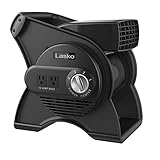
Heat that pools near the floor, damp carpet that refuses to dry, and stale workshop air can turn a simple chore into an all-day headache. The best Lasko floor fan should solve those practical problems without becoming another bulky machine that’s awkward to carry or difficult to aim. The Lasko U12104 takes a different path from a traditional round floor fan, using a compact blower-style housing to produce a focused stream of air. Its strengths sit squarely in portability, directional control, and useful job-site features, though its narrow airflow pattern won’t suit every room.
Lasko U12104 Utility Blower Fan
The shortened name, Lasko U12104, fits this fan’s no-frills personality. It’s built around a compact 12-inch utility design rather than a wide grille and exposed blade assembly. That shape helps concentrate the airflow toward a specific area, which makes more sense for wet flooring, a hot workbench, or a stuffy corner than for gently cooling an entire living room. The housing also looks rugged enough for frequent movement between a garage, basement, kitchen, or renovation area.
Three speed settings give the fan enough range for different jobs without cluttering the controls. The listed airflow runs from 251 CFM on low to approximately 289 CFM on high, so the jump between settings is practical rather than dramatic. Low speed can keep air moving near a damp surface, while high speed is better suited to pushing heat away from a workstation or exhausting stale air through a doorway. Those figures describe a targeted blower, not a giant warehouse fan, and expectations should stay grounded accordingly.
The 270-degree pivoting action is arguably the feature that gives this model its real value. Air can be aimed along the floor, tilted toward a wall, or directed upward depending on the task at hand. That flexibility reduces the usual trial-and-error dance of stacking a fan on boxes or wedging something beneath the base. Once the fan is positioned, the compact footprint helps it stay out of the main walking path.
Focused Airflow For Real Household Problems
Traditional floor fans spread air broadly, which feels pleasant during warm weather but can waste energy during drying or ventilation work. The high-velocity air stream from this blower is narrower and more deliberate. A freshly cleaned carpet, for example, benefits from air traveling directly across the damp fibers instead of swirling around the whole room. The same logic applies to wet entryway flooring, a humid basement corner, or paint fumes that need help moving toward an open window.
Kitchens and workshops can become uncomfortable for different reasons, yet both benefit from controlled air movement. Cooking heat tends to linger around appliances, while tools and equipment can warm up a small garage surprisingly fast. The pivoting blower design lets the airflow stay low near the floor or rise toward the source of the heat. That’s a practical advantage, though the concentrated breeze may feel too direct in a seating area where softer circulation would be more comfortable.
Room-wide cooling remains a limitation. The Lasko U12104 can circulate stuffy air, but its blower outlet doesn’t create the broad sweep associated with a large pedestal or 20-inch floor fan. A bedroom or family room may feel better with a wider airflow pattern, especially when several people are spread across the space. The U12104 works best where the problem has a clear location and the air needs a clear direction.
Portability And Placement Feel Well Considered
Moving a fan from one task to another becomes irritating fast if the unit is heavy or awkward to grip. This model weighs about 7.5 pounds and includes a large carry handle, making quick room changes less of a hassle. It can move from a damp basement floor to a warm garage without requiring two hands or a separate cart. That portability also helps during storage because the fan can be lifted onto a shelf rather than left underfoot.
The stated footprint measures roughly 12.19 by 9.63 inches, while the housing stands about 12.25 inches tall. Those dimensions make the blower easier to fit beside cabinets, under a worktable, or near a doorway. Small spaces benefit most because a broad metal floor fan can consume precious walking room. Still, the compact body doesn’t mean the power cord disappears, so some care is needed to keep the cord away from busy paths.
A 10-foot power cord adds meaningful flexibility. Short cords often force a fan into the wrong position or encourage the use of an extension cord that creates more clutter. Here, the longer reach makes it easier to aim the blower where the air is needed rather than where the nearest outlet happens to be. The grounded three-prong plug also matches the fan’s utility-focused design, particularly in garages, workshops, and other areas where equipment safety matters.
Accessory Outlets Add Practical Utility
Two 120-volt grounded accessory outlets sit on the fan, giving nearby tools or devices another place to connect. That feature can be handy during cleanup, painting, or light repair work where several small devices share a limited number of wall outlets. A work light, charger, or another modest accessory can stay close to the job instead of stretching cords across the room. Even so, the connected load should remain within the fan’s stated electrical limits and the instructions supplied with the product.
The electrical specifications list a 120-volt design drawing approximately 0.77 to 1.0 amps and using about 92 to 100 watts. Those numbers show that the fan is designed as a focused utility appliance rather than a massive industrial air mover. The built-in outlets don’t increase the fan’s airflow, but they do make the unit more useful as part of a temporary work setup. That’s a small detail on paper and a surprisingly convenient one in a crowded garage.
The fan includes a circuit breaker and reset button, which supports safer use around connected accessories. ETL listing and a grounded plug provide additional reassurance, though proper placement still matters. Water should never reach the electrical parts, and the fan shouldn’t sit where its intake or outlet can be blocked. Built-in protection helps, but it doesn’t replace ordinary caution around damp floors and power cords.
Noise, Cleaning, And Everyday Tradeoffs
A concentrated blower usually sounds more assertive than a gentle room fan. The product details don’t provide a noise rating, so it would be unfair to claim that the Lasko U12104 runs quietly. High speed will likely be most appropriate where airflow matters more than background sound, such as a garage, basement, or drying area. Near a television, phone call, or sleeping space, the lower setting may be easier to live with.
Cleaning the housing should be fairly straightforward, but dust can still collect around the intake and outlet. A vacuum brush or soft cloth can remove buildup without forcing debris deeper inside the unit. Keeping the air path clear helps preserve airflow and reduces the chance of dust being blown across freshly cleaned surfaces. The fan should be unplugged before any cleaning, and liquids shouldn’t be sprayed directly into the housing.
The compact body also creates a realistic tradeoff. It saves floor space and travels easily, but it won’t provide the broad breeze of a larger circulation fan. That distinction matters because a focused tool can feel disappointing if it’s purchased for the wrong job. The main strength is directional airflow for drying, exhausting, and spot cooling, not soft coverage across a large room.
Where The Lasko U12104 Makes The Most Sense
Basements with stubborn dampness are a natural fit for this fan. The pivoting head can send air across concrete, carpet, or a freshly mopped area without needing an improvised stand. Garages and workshops also benefit from the portable blower format, particularly when heat gathers around one bench or machine. The long cord makes those placements easier without tying the fan to one wall.
Home projects create another useful scenario. Paint, floor cleaning, and minor water spills often require steady air movement rather than a wide cooling breeze. The 289 CFM maximum airflow gives the fan enough output for focused household tasks while keeping the housing small enough to store afterward. It won’t replace a commercial restoration blower after serious flooding, but that isn’t what this compact unit is designed to do.
The Lasko U12104 earns its place among best Lasko floor fan options by solving specific problems cleanly. Its pivoting range, carry handle, accessory outlets, grounded cord, and modest footprint all support practical use rather than decorative appeal. The narrower airflow and likely noticeable sound at high speed are the main compromises. For directed cooling, ventilation, and small-scale drying, those tradeoffs are reasonable and easy to understand.
Lasko High Velocity Pivoting Utility Blower Fan U15617
Stuffy garages, damp flooring, overheated home gyms, and cramped work areas all create the same basic problem: air sits where it shouldn’t. A broad room fan may stir the space, but it often lacks the direction needed for drying, exhausting, or cooling one stubborn zone. The best Lasko floor fan for those jobs needs focused airflow, easy positioning, and enough portability to move without turning every setup into a chore. The Lasko U15617 approaches that problem with a compact blower shape, three speeds, a pivoting head, and practical electrical features built around real work rather than decorative appeal.
Lasko U15617 Pivoting Utility Blower
The shortened name, Lasko U15617, suits a fan that keeps things straightforward. Its 14-inch utility format sits between a small personal fan and a bulky industrial air mover, giving it a useful middle ground for home projects, garages, workshops, and job sites. The blower housing produces a concentrated stream instead of a wide, gentle breeze. That difference matters because focused air reaches wet carpet, a hot workbench, or a stuffy corner with less wasted movement around the rest of the room.
Three manual speed settings make the fan easy to operate without menus, remotes, or digital controls. The listed maximum output is approximately 341 CFM, which gives the U15617 more airflow than smaller utility blowers in Lasko’s lineup. Low and medium speeds can handle steady circulation, while high speed provides the stronger push needed for humid basements, workout spaces, or drying tasks. The controls aren’t fancy, but that’s hardly a drawback on equipment meant to be carried, repositioned, and used with dusty hands.
The fan arrives fully assembled, so there’s no hardware puzzle before the first use. That sounds like a small convenience until a hot room or wet floor already demands attention. The ready-to-use design lets the fan move directly from the box to the task, while the rugged housing appears better suited to regular handling than a delicate decorative fan. Still, this is a utility blower, so its appearance leans practical and workmanlike rather than polished enough to disappear into formal living-room decor.
Directed Airflow Solves Focused Problems
The pivoting blower head gives the U15617 its most useful advantage. Air can be sent horizontally across flooring, tilted toward a doorway, or aimed upward to break up heat that has collected higher in the room. That directional control saves the trouble of propping the fan on boxes or moving furniture to create the correct angle. Once the airflow is pointed where it belongs, the fan can handle a much more specific job than a standard round floor model.
Wet carpet and freshly cleaned floors benefit from air moving directly across the surface. A broad oscillating fan may cool the room, but much of its breeze passes above the damp area rather than along it. The high-velocity air stream from this blower is better matched to drying because the head can sit low and push air across a defined path. It won’t replace professional restoration equipment after serious water damage, but it makes sense for ordinary spills, carpet cleaning, mopped floors, and small damp zones.
Ventilation is another strong use case. Paint odors, cooking heat, garage fumes, and stale basement air often need a clear route toward an open window or door. The 341 CFM output can support that movement when the fan is positioned carefully, especially in smaller or moderately sized areas. It doesn’t purify the air, remove contaminants, or replace proper ventilation equipment, so expectations need to stay practical. Its role is simple: keep air moving in a chosen direction.
Cooling feels more personal with a blower-style fan because the air stream stays narrow. That can be a relief beside exercise equipment, near a workbench, or in a garage where one area becomes hotter than the rest. The focused breeze reaches the person or workspace directly instead of trying to cool every corner equally. On the flip side, several people spread around a large room may prefer a broader floor fan that distributes air more evenly.
Compact Size With Useful Reach
The U15617 uses an approximately 11.3 by 14.5-inch footprint and stands around 14.5 inches tall. That size makes it larger than a tiny personal blower but still manageable near cabinets, under worktables, beside gym equipment, or close to a doorway. Floor space matters in garages and workshops, where cords, tools, and storage bins already compete for every open patch. The upright blower shape keeps the fan relatively contained instead of spreading out through a wide circular frame.
A large easy-grip handle supports frequent movement between tasks. The fan may start in a basement during cleanup, move to a garage during an afternoon project, and finish beside workout equipment later in the day. The portable construction makes those changes less irritating because there’s a clear place to grab the unit. Its rugged build does add some bulk compared with a lightweight household fan, but that tradeoff fits equipment meant for repeated handling.
The 10-foot power cord gives the fan more placement freedom than models tied to a short cord. Airflow can be aimed at the problem instead of toward whichever wall outlet happens to be closest. That extra reach is especially handy in basements, garages, and construction areas where outlets may be sparse or poorly positioned. Cord management still deserves attention, since a longer cable can cross walkways or curl around tools if it isn’t routed carefully.
Small-room use requires a little judgment. The blower fits into tight spaces, yet its concentrated air may feel harsh at close range on the highest setting. A lower speed and a slightly indirect angle can make the air delivery more comfortable in a kitchen, office nook, or compact exercise room. Noise may also be more noticeable in confined areas, and the provided details don’t include a decibel rating. Anyone expecting whisper-level operation should treat that absence as a reason for caution rather than assuming silence.
Accessory Outlets Add Job-Site Convenience
Two built-in 120V accessory outlets give the U15617 a practical edge during temporary setups. A work light, charger, or other compatible device can share the area without requiring another wall outlet nearby. That can reduce cord clutter around a workbench or project zone, especially where available receptacles are limited. The outlets don’t change the fan’s cooling ability, but they make the unit more useful as part of a working space.
The accessory connections suit the fan’s broader personality. This isn’t merely a breeze machine carried out during summer; it can sit near sanding, painting, cleaning, or light construction tasks where several tools need power. The integrated outlet design keeps related equipment closer together and may simplify short-term arrangements. Connected devices still need to remain within the permitted electrical load, so the product instructions matter more than guesswork.
A built-in circuit breaker and reset button provide protection around the fan and its accessory outlets. The U15617 also uses a three-prong grounded plug and Lasko’s Blue Plug safety fuse technology. ETL listing adds another documented safety detail supplied with the product information. Those features are reassuring, but they don’t make careless placement safe, particularly near standing water, blocked vents, or tangled cords.
The safety setup feels especially relevant during drying jobs. Electrical equipment and damp flooring demand common sense, even when the fan includes protective hardware. The circuit breaker can respond to certain electrical problems, but the unit should still remain on a stable, dry surface with its plug and outlets protected from moisture. Good airflow begins with sensible positioning, not with leaning too heavily on built-in safeguards.
Strengths, Weaknesses, And Best-Fit Situations
The clearest strength is the combination of focused airflow and pivoting control. Many floor fans move plenty of air but can’t place it precisely, while smaller blowers may lack enough output for demanding spaces. The U15617 balances those needs with approximately 341 CFM, three speeds, and a head that can be aimed through a wide range. That combination works particularly well where the heat, dampness, or stale air has an obvious location.
Portability comes next. The carry handle, compact footprint, long cord, and fully assembled design make the fan easy to put into service without fuss. Those practical details matter during cleanup and project work because interruptions quickly become annoying when a fan is heavy, awkward, or tied to one corner. The two accessory outlets add another layer of usefulness for garages and job sites. Nothing feels ornamental, which is exactly the point.
The main weakness is coverage. A blower sends a concentrated stream, so it won’t create the soft, room-wide circulation produced by a large pedestal or 20-inch floor fan. That narrow pattern can also feel intense at close range, especially on high speed. Large family rooms, bedrooms shared by several people, or quiet offices may benefit more from a wider and potentially gentler fan design.
Sound is another realistic consideration. The details provided don’t state a measured noise level, and a high-velocity blower shouldn’t automatically be treated as quiet. Garages, basements, workshops, and drying areas usually tolerate more fan noise than bedrooms or media rooms. The best-fit setting is one where purposeful airflow matters more than near-silent background operation.
The Lasko U15617 stands out within the best Lasko floor fan category because it handles cooling, ventilating, exhausting, and drying with one compact form. Its 341 CFM maximum output, pivoting blower head, twin outlets, safety features, and 10-foot cord all support practical use in demanding spaces. It won’t replace a broad circulation fan for whole-room comfort, and it isn’t commercial flood-restoration equipment. For targeted air movement in a garage, basement, home gym, workshop, or project area, its design makes solid sense.
Lasko 2264QM High Velocity Floor Fan
Summer heat gets downright stubborn in garages, attics, and workshops where central air barely makes a dent. A lightweight room fan may stir the air close by, but it usually won’t push a meaningful breeze across a larger work area. The best Lasko floor fan for this sort of space needs a stronger motor, sturdy blades, and enough directional control to send air where it can actually help. The Lasko 2264QM answers that need with a 20-inch metal design, three speeds, a pivoting head, and a wall-mount option that frees up valuable floor space.
Lasko 2264QM Floor And Wall Fan
The shortened name, Lasko 2264QM, describes a fan built around function rather than visual flair. Its metal cage, metal blades, and supportive stand give it a more work-ready feel than a typical plastic household model. That construction suits garages, shops, and unfinished spaces where equipment gets bumped, moved, and exposed to dust. The black finish keeps the design simple, though the industrial appearance may look out of place in a carefully styled living room.
A 20-inch blade assembly creates a broader airflow pattern than compact utility blowers. Instead of sending a tight column of air at one patch of flooring, the wide fan head moves a cooling breeze through more of the surrounding room. That makes it useful beside a workbench, across an attic, or near an open garage door. The fan still needs sensible placement, since obstacles and crowded shelving can interrupt circulation.
Three manual settings cover the basic range expected from a high-velocity fan. Lower speed can maintain steady air movement during routine tasks, while the stronger settings suit muggy afternoons or spaces that have trapped heat for hours. The three-speed control avoids unnecessary complexity and can be adjusted without working through digital menus. Remote control, timers, and automatic modes aren’t part of the supplied feature set, so convenience here comes from simplicity rather than electronics.
Metal Blades Deliver A Broad, Forceful Breeze
The motor and metal blades are designed to create the stronger airflow associated with a workshop-style floor fan. A broad breeze can make a garage feel less oppressive by keeping warm air from settling around the work area. In an attic, the high-velocity circulation can help move trapped air toward a vent, doorway, or window. The fan cools through air movement rather than reducing the actual room temperature, so it shouldn’t be mistaken for an air-conditioning unit.
Home gyms can also benefit from the wide airflow. Exercise generates heat quickly, and a small desk fan often reaches only the face or upper body. The 20-inch head spreads the cooling breeze across a larger area, which feels more useful during treadmill sessions, weight training, or indoor cycling. High speed may feel too aggressive at close range, so a lower setting or greater distance can make the airflow less harsh.
Ventilation depends heavily on positioning. Pointing the fan toward an open garage door can encourage warm indoor air to move outward, while placing it near a cooler opening may help draw fresher air into the room. The metal blade design supports that job with stronger movement than a soft personal fan, but it doesn’t filter smoke, dust, or fumes. Work involving hazardous vapors still requires proper ventilation equipment and appropriate safety practices.
The broad airflow has one clear tradeoff: precision. A compact blower can aim air directly across wet carpet or into a narrow corner, while this round floor fan distributes air over a wider path. The main difference is coverage versus concentration. Drying a whole work zone may suit the 2264QM, but targeting one small spill may be easier with a purpose-built air mover.
Pivoting Control Makes Placement Less Fussy
The fan head pivots upward, downward, and through the angles in between. That movement helps send air across the floor, toward a seated work position, or higher into a hot attic space. The adjustable fan head also reduces the temptation to balance the unit on boxes or improvised stands. A stable angle is safer and far less annoying than rebuilding the setup every time the fan shifts.
Floor-level placement works well for circulating cooler air that has settled near the ground. Tilting the head upward can mix that air with warmer layers higher in the room, creating a more even feel. The directional airflow becomes especially useful in garages with tall ceilings, where heat tends to gather overhead. A fixed-head fan would offer fewer options and might waste much of its output on the wrong part of the space.
Downward adjustment has practical value too. Freshly mopped concrete, damp entry flooring, or a humid patch near a basement wall can benefit from air passing across the surface. The fan isn’t described as a restoration blower, so expectations should stay reasonable. Still, the pivoting range makes it more adaptable than a standard fan that only points straight ahead.
The head’s flexibility also helps reduce direct blast. Strong airflow can become uncomfortable if it hits the same spot for hours, particularly near a desk or stationary workbench. Angling the fan slightly above or beside the occupied area creates indirect circulation without losing all of the cooling effect. That small adjustment can turn a harsh breeze into steady room movement.
QuickMount Frees Up Valuable Floor Space
The included QuickMount bracket gives the 2264QM a useful second configuration. Once the bracket is secured to a suitable wall, the fan stand clips into the mount and converts the unit from floor use to wall use. This floor-to-wall design can make a big difference in garages and workshops where cords, toolboxes, and storage bins already crowd the ground. Wall placement also helps keep the fan away from routine foot traffic.
A wall-mounted position can send air over parked equipment or across a wider work zone without a bench blocking the breeze. It also reduces the odds of the fan being kicked, tipped, or buried behind supplies. The QuickMount feature preserves flexibility because the fan isn’t permanently locked into one format. It can return to the floor when a lower angle or temporary placement makes more sense.
Mounting does require a sound installation point. The bracket needs to be attached securely and according to the included directions, since a 20-inch metal fan shouldn’t rely on a weak fastener or questionable wall surface. The supplied details describe easy conversion, but they don’t remove the need for careful mounting. The wall-mount option is convenient only after the bracket has a stable foundation.
Floor use remains the simpler arrangement for anyone who moves the fan between rooms. A garage project might need airflow near the door one day and beside a workbench the next. Wall mounting favors consistent coverage, while the stand favors portability. That placement tradeoff is easy to manage because the same fan supports both approaches.
Rugged Construction Has Everyday Advantages
Metal surrounds the working parts that matter most, including the cage, blades, and stand. That structure gives the fan a tougher character than thin plastic models intended mainly for bedrooms or offices. The metal fan cage can better suit active work areas where accidental contact with tools or stored items is more likely. Tough construction doesn’t make the fan indestructible, though, and bent cages or damaged blades still require attention.
Rubber pads on the stand help the fan sit more securely on hard surfaces. Garage concrete, workshop flooring, and smooth basement slabs can allow bare metal stands to slide or vibrate. The rubber feet provide grip while also creating a small buffer between the frame and the floor. They may reduce minor rattling, although the supplied information doesn’t include a measured vibration or sound level.
Noise deserves realistic consideration. Strong motors and metal blades generally prioritize air movement over hushed operation, and no decibel figure is included in the description. The potential weakness is most relevant in bedrooms, television rooms, or quiet offices where constant mechanical sound can become distracting. Garages, shops, and attics usually tolerate that tradeoff more easily because airflow is the bigger concern.
Cleaning will require regular attention in dusty spaces. The metal cage can collect sawdust, lint, and garage debris that eventually restricts the open path around the blades. Keeping the protective grille clear supports consistent airflow and prevents loose dust from being scattered around the room. The fan should be unplugged before cleaning, and the instructions should guide any deeper access to internal parts.
Assembly Keeps The Setup Straightforward
The supplied description calls for simple assembly without tools. The fan head connects with the stand by following the included directions, avoiding a long session with bolts, sockets, and mismatched hardware. This no-tools assembly suits a product that may be needed quickly during a heat wave or before starting a garage project. Careful alignment still matters because the stand needs to hold the metal head securely.
Manual controls support the same straightforward approach. There’s no app pairing, remote to lose, or display that becomes hard to read through workshop dust. The simple operation keeps the focus on speed and direction, which are the two adjustments most likely to be used. Anyone wanting automatic shutoff or scheduled cooling will need to accept that those features aren’t listed for this model.
Moving the fan may take more effort than carrying a small plastic air circulator. Metal construction and a 20-inch head naturally create a larger physical package, even though no weight is supplied in the product details. The size tradeoff buys wider airflow and workplace durability at the expense of compact storage. Narrow closets and crowded shelves may not accommodate it as easily as a small utility blower.
Storage also deserves a little planning during cooler months. Wall mounting can keep the fan off the floor year-round, while floor storage requires enough width for the cage and stand. The convertible mounting system gives the 2264QM an advantage here because the same bracket used for operation can also keep the unit organized. Leaving the blades exposed to heavy dust, moisture, or falling objects would undercut the benefit of its sturdy build.
Practical Strengths And Clear Limitations
The strongest case for the 2264QM rests on its combination of broad airflow and adjustable positioning. Three speeds, a pivoting head, and metal blades address the core needs of hot garages, workshops, home gyms, and attics without piling on decorative extras. The primary strength is room-spanning air movement that can be aimed instead of fixed. QuickMount adds flexibility that many ordinary floor fans simply don’t offer.
Durability is another meaningful advantage. The metal cage and stand suit spaces where a fan may be moved often or kept near tools, storage, and ongoing projects. Rubber pads support steadier placement, while rugged construction helps the fan feel appropriate outside polished indoor rooms. The product still needs routine care, particularly where dust and debris accumulate quickly.
The limitations are just as specific. A large round fan needs more room than a compact blower, and the wide air stream won’t target small drying jobs with the same precision. The main weakness may be sound for anyone hoping to use it near sleep, conversation, or media, since no quiet-operation claim or noise rating is provided. Extra conveniences such as a remote, timer, or digital thermostat also aren’t part of the listed package.
As a best Lasko floor fan candidate, the 2264QM makes the most sense where airflow strength, coverage, and mounting flexibility outrank quiet refinement. It can remain on the floor for temporary jobs or move onto the wall for consistent circulation without buying a separate fan. The metal build and pivoting head give it a practical edge in hardworking spaces, while the size and likely stronger operating presence make it less suited to calm bedrooms. Garages, shops, attics, and exercise areas are where its design feels most at home.
Lasko Super Fan Max Air Mover Review
Large rooms can feel stubbornly hot even after a smaller fan has been running for hours. Air gets trapped behind furniture, humid corners stay heavy, and a narrow breeze barely reaches beyond one chair. The best Lasko floor fan for that kind of space needs more than casual circulation; it needs strong output, a useful aiming range, and enough flexibility to handle cooling, ventilation, or drying without constant repositioning. The Lasko Super Fan Max Air Mover tackles those chores with three high-velocity speeds, a pivoting blower, accessory outlets, multi-fan connections, and a housing built for regular movement.
Lasko Super Fan Max Air Mover
The shortened name, Lasko Super Fan Max, matches the straightforward nature of this air mover. It isn’t designed like a decorative pedestal fan or a slim tower meant to blend into a furnished room. The compact blower body focuses on moving air quickly through larger areas and directing it toward a specific problem zone. That practical shape suits garages, basements, work areas, home gyms, and rooms where gentle airflow simply doesn’t cut it.
Three high-velocity speed settings provide the basic control needed for changing conditions. A lower setting can keep air circulating during routine use, while the stronger levels are better suited to heavy heat, damp floors, or stale indoor air. The three-speed system stays simple, which makes sense for a utility fan that may be adjusted with busy or dusty hands. There’s no need to work through layered settings when a quick change in airflow is all that matters.
The blower can also support large-area ventilation rather than merely cooling one person. Pointed toward an open door or window, it can help move stuffy air out and encourage fresher air to enter from another opening. The high-velocity airflow works best when the room already has a clear path for air exchange. It won’t clean the air or replace dedicated ventilation equipment, but it can help reduce that stagnant, closed-in feeling.
Pivoting Airflow Adds Real Flexibility
The pivoting blower is the feature that keeps this fan from becoming a one-position appliance. Air can be directed along the floor, toward a wall, across a room, or upward into warmer air that has collected near the ceiling. That adjustable airflow makes the fan more useful for drying, cooling, and ventilation because each task needs a different angle. Frankly, a powerful fan pointed in the wrong direction is still wasting much of its effort.
Floor-level airflow helps with damp carpet, wet concrete, or freshly cleaned surfaces. The blower can send air across the material instead of letting the breeze pass harmlessly above it. This directed drying action is especially useful after routine carpet cleaning, small spills, or mopping. Serious water damage still calls for specialized restoration equipment, so this model belongs in the everyday cleanup category rather than emergency flood recovery.
Upward positioning offers a different benefit in tall rooms, garages, and workout spaces. Warm air tends to gather above head level, leaving the lower part of the room cooler but uneven. Tilting the blower upward helps break apart those layers and encourages broader circulation. The pivoting design also reduces the need to balance the fan on a box, chair, or unstable makeshift platform.
Direct airflow can feel intense at close range, particularly on the strongest setting. A slight upward or sideways angle softens the impact while keeping air moving around the occupied area. That placement tradeoff matters in home gyms, workshops, and hobby rooms where someone may stay in one spot for a long stretch. Stronger isn’t always more comfortable, and a little adjustment can make the fan easier to live with.
Multi-Fan Connections Expand The Coverage
The ability to connect two or three fans gives the Super Fan Max a notable advantage in larger or more demanding areas. One fan can move air through a central zone, while additional units cover distant corners or support a clearer ventilation path. This multi-fan capability can be useful in long garages, open basements, workshops, and temporary project areas. It also allows the airflow plan to grow without requiring a different type of equipment.
Several connected fans can be positioned in sequence to encourage air movement across a larger distance. One unit might pull cooler air from a doorway, while another pushes warm air toward an exit. That arrangement can provide faster room circulation than placing a single fan in the middle and hoping for the best. Room layout, obstacles, and open access points will still influence the result, so thoughtful placement matters more than simply adding more machines.
The two built-in 120-volt accessory outlets support those connected setups and can also power compatible accessories nearby. In a garage or project area, that may reduce the scramble for available wall receptacles. The outlets add convenience without turning the fan into a full power station. Connected devices still need to remain within the permitted electrical load stated in the product instructions.
Multiple fans also introduce a few practical complications. More equipment means more sound, more cord management, and more floor space to consider. The scalable setup is useful, but it won’t suit a small bedroom or quiet office where one gentle fan would be enough. Its value shows up most clearly where rapid circulation matters more than low-key operation.
Built-In Safety Supports Utility Use
A circuit breaker with a reset button adds protection to the fan’s electrical design. That feature becomes especially relevant when the accessory outlets or linked fans are being used. The built-in circuit breaker provides a clear recovery point if the system trips under an electrical issue. It doesn’t remove the need to follow load limits, but it does make the setup more practical for working environments.
The product information doesn’t provide every electrical specification, so there’s no reason to guess at the exact safe load for accessories. The included instructions should guide any multi-fan or device connection. This no-guesswork approach matters because power demands can add up quickly when several tools or fans share one source. A reset button is useful, though careful planning is still the first layer of protection.
Drying jobs deserve extra caution because electricity and moisture are a poor combination. The fan should remain on a stable, dry surface, with outlets and plugs protected from splashes or standing water. The safety feature supports sensible use rather than replacing it. Anyone working around damp floors should route cords carefully and avoid placing connections where water could reach them.
Portability And Cord Storage Feel Well Planned
An easy-grip handle makes the Super Fan Max easier to move between rooms and tasks. A utility blower often travels more than a regular living-room fan, especially during cleaning, renovation, or seasonal heat. The portable handle gives the housing a clear lifting point and reduces awkward two-handed carrying. That detail may sound minor until the fan needs to be moved several times in one afternoon.
The 10-foot cord provides better placement freedom than a short lead tied to the nearest wall. Air can be aimed where it’s useful rather than where the outlet happens to be. The long power cord helps in garages, basements, and large rooms where receptacles may be sparse or poorly positioned. Still, extra cord length needs to be routed away from walkways to prevent tangles and tripping.
An integrated cord wrap keeps the cable from becoming a loose mess during storage or transport. Wrapped neatly around the housing, the cord stays with the fan and is less likely to drag across the floor. This cord management feature also makes shelf storage tidier. It’s a practical touch that reduces one of the most common annoyances with portable electrical equipment.
Moving the fan frequently can expose the housing to bumps, scuffs, and occasional drops. The described impact-resistant construction is meant to handle that rougher routine better than a fragile decorative shell. It still shouldn’t be tossed around or left where heavy objects can fall on it. Durable means better suited to everyday knocks, not immune to damage.
Large-Area Cooling Comes With Tradeoffs
The strongest reason to consider this model is its ability to move air through a larger area quickly. A compact personal fan may cool a face or desk, but it won’t do much for a warm garage or stuffy basement. The large-area ventilation focus makes the Super Fan Max better suited to open or demanding spaces. Its blower format also provides more direction than a standard fan with a fixed forward-facing head.
Noise is a realistic consideration with any high-velocity air mover. The provided details don’t include a decibel rating or a quiet-operation claim, so silence shouldn’t be assumed. The likely weakness is that stronger airflow may be too noticeable beside a television, phone call, or sleeping area. Garages, workshops, gyms, and drying zones are more forgiving because function usually matters more than hush.
The airflow pattern may also feel narrower than the breeze from a large round floor fan. That makes the blower effective for targeted circulation, but a wide family room may require careful positioning or more than one unit. The main difference comes down to concentrated movement versus broad, gentle coverage. This fan favors purposeful airflow rather than a soft breeze spread evenly around furniture.
Size and appearance may be another sticking point in finished rooms. The durable utility housing prioritizes resilience and portability, so it won’t disappear visually like a slim tower fan. The practical design makes more sense near tools, exercise equipment, unfinished walls, or active project areas. A formal bedroom or carefully styled living room may call for a less industrial shape.
Where The Super Fan Max Fits Best
Garages are a natural setting because heat can build quickly around vehicles, tools, and closed doors. The fan can direct air toward a workbench, push warm air outward, or help draw cooler air through an opening. Its rugged construction and portable handle suit a room where equipment moves around regularly. Wall-to-wall cooling still depends on layout, but the pivoting blower makes adjustments straightforward.
Basements and large utility rooms benefit for similar reasons. Dampness, stale air, and uneven temperatures often collect in corners where a basic fan struggles to make a difference. The focused airflow can be aimed across flooring or toward an exit without rearranging the whole room. Multi-fan connections become useful when the space is long, divided, or packed with storage.
Home gyms can use the stronger settings for direct cooling during exercise, then switch to continued circulation afterward. Sweat and heat linger in enclosed workout areas, especially without central air or a nearby window. The three powerful speeds allow the breeze to change with the intensity of the workout. Aiming the fan slightly off-center may feel more comfortable than taking the strongest stream straight on.
The best Lasko floor fan label fits the Super Fan Max most convincingly where speed, direction, durability, and expansion matter together. The pivoting blower handles targeted air movement, the twin outlets support connected equipment, and the cord wrap keeps transport less messy. Its probable operating sound and utility appearance make it less appealing for calm, polished rooms. Large workspaces, hot garages, damp basements, and active project zones are where its strengths line up best.
Lasko 1843 Oscillating Cyclone Pedestal Fan
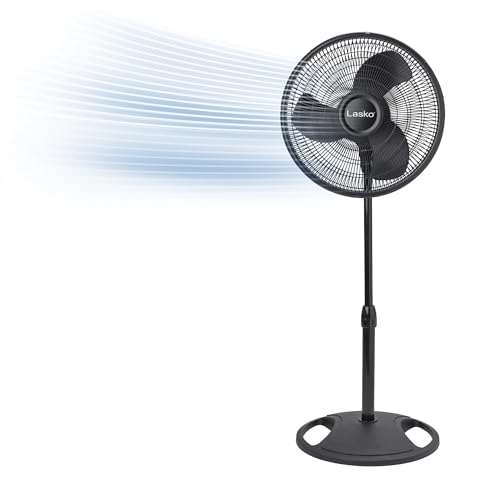
Uneven cooling can make a large room feel oddly uncomfortable, with one chair sitting in a breeze while the far side stays warm and stale. A fixed floor fan often makes that problem worse because its airflow remains trapped in one narrow lane. The best Lasko floor fan for shared indoor spaces needs broader coverage, adjustable positioning, and controls that don’t require getting up every few minutes. The Lasko 1843 answers those everyday frustrations with an 18-inch fan head, wide-angle oscillation, adjustable height, three speeds, a four-hour timer, and a remote control.
Lasko 1843 Cyclone Pedestal Fan
The shortened name, Lasko 1843 Cyclone, fits a fan designed for flexible room cooling rather than concentrated workshop airflow. Its pedestal format raises the breeze above floor level, helping air reach beds, sofas, desks, and seating areas more naturally. That makes it a better match for bedrooms, living rooms, and home offices than a low utility blower aimed at wet flooring. The black finish keeps the appearance restrained, although the large 18-inch head will still have a noticeable visual presence.
Three speed settings provide a straightforward range for changing temperatures and daily routines. The lowest speed can maintain gentle circulation while reading or working, while the higher settings suit warmer afternoons or crowded rooms. The three-speed control keeps operation simple without forcing the fan into one fixed level of airflow. Exact airflow and noise figures aren’t supplied, so claims about measured power or whisper-quiet performance would be guesswork.
The fan uses electronic controls rather than a basic mechanical dial. That setup supports both the timer and remote, giving the 1843 a more convenient feel than a bare-bones pedestal model. The electronic control panel is useful for quick adjustments at the fan itself, while the remote handles the same basic tasks from across the room. More features do mean more dependence on buttons and electronics, which may feel unnecessary to anyone who prefers a simple manual switch.
Wide Oscillation Spreads Air Through Large Rooms
Wide-angle oscillation is the feature that most clearly separates this model from a stationary fan. Instead of holding the breeze on one chair or one side of the bed, the head sweeps across a broader section of the room. That full-room coverage helps reduce hot pockets and makes the airflow feel more evenly shared. Large living spaces benefit most because people aren’t forced to crowd directly in front of the fan.
A home office can also gain from oscillation, especially where a desk sits near shelves, printers, or other equipment that adds warmth. The moving breeze prevents one side of the body from taking constant airflow while the rest of the room remains stagnant. This balanced circulation feels less intrusive during long work sessions than a strong fixed stream. Still, papers and lightweight desk items may flutter if the fan sits too close or runs at a higher speed.
Bedrooms present another practical use. Oscillation can move air across a wider sleeping area rather than blasting one person continuously for hours. The sweeping airflow may feel more comfortable through the night, especially after the room has cooled and only gentle circulation is needed. Couples may appreciate the broader coverage, though different comfort preferences can still make fan placement a bit of a balancing act.
Oscillation doesn’t lower the actual room temperature. It improves comfort by moving air across the skin and mixing warmer and cooler pockets within the space. That circulation benefit can support an air conditioner by helping cooled air travel farther, but the fan won’t replace mechanical cooling during severe heat. Room size, furniture placement, and open doorways will influence how evenly the breeze spreads.
Adjustable Height And Tilt Improve Air Placement
The pedestal can extend up to 54 inches, allowing the airflow to line up with different furniture heights and activities. Lower positioning may suit a bed or lounge chair, while a taller setting can move air across a standing workspace or open room. The adjustable height prevents the breeze from being trapped below a tabletop or blocked by the side of a sofa. That flexibility is especially useful in rooms where the layout changes often.
The head also tilts upward or downward, adding another layer of control beyond the pedestal adjustment. A slight upward angle helps mix air higher in the room, while a downward tilt can direct the breeze toward a seated position. The tilting fan head makes it easier to avoid a harsh stream hitting the face or shoulders. Small angle changes can have a surprisingly large effect on comfort, particularly at close range.
Height and tilt work best when adjusted together. Raising the stand but leaving the head level may send air above a seated area, while a lower stand with excessive upward tilt can waste airflow near the ceiling. The custom positioning lets the fan adapt to beds, couches, desks, and exercise areas without improvised risers or awkward furniture changes. A few minutes of setup can make the fan feel much more effective throughout the room.
The larger pedestal footprint is the obvious tradeoff. Unlike a compact blower that slips under a table, this model needs open floor space and enough clearance for its oscillating head. The space requirement may be inconvenient in narrow bedrooms or crowded offices. Careful placement matters because the grille shouldn’t strike walls, curtains, furniture, or nearby objects during its sweep.
Remote Control Makes Daily Use Less Fussy
The included remote can turn the fan on or off, change the speed, and set the timer from a distance. That means fewer interruptions during work, television, reading, or rest. The multi-function remote becomes particularly useful at night, when getting out of bed to reduce the airflow feels like a nuisance. It also helps in larger living rooms where the fan may sit across the space for better circulation.
Remote operation adds comfort, but it also introduces one small household problem: the remote has to stay somewhere sensible. A side table, desk drawer, or bedside organizer keeps it from disappearing under cushions. The distance control loses much of its appeal if the remote is constantly misplaced. Manual controls remain available on the fan, so losing the remote doesn’t make the unit unusable.
The remote doesn’t change the fan’s mechanical performance. Its value lies in reducing interruptions and making fine adjustments easier throughout the day. That convenience factor matters more in a bedroom or living room than in a garage where the fan might stay on one setting for hours. Anyone who prefers minimal electronics may see the remote as an extra rather than a necessity.
Furniture and room layout can affect remote operation. A clear line toward the fan usually gives the most dependable response, while heavy obstacles may make control less consistent. The practical limitation is minor, but it’s worth keeping the fan’s control panel visible from the main seating or sleeping area. Sensible placement improves both airflow and remote access at the same time.
The Four-Hour Timer Helps Manage Run Time
The timer can be set for up to four hours and automatically shuts the fan off after the selected period. That feature suits bedtime, afternoon naps, focused work blocks, and temporary room cooling. The automatic shutoff avoids leaving the fan running long after the room is empty or the temperature has dropped. It’s a simple tool, yet it solves one of the most common annoyances with overnight fan use.
A bedroom may benefit most from the timer. The fan can circulate air while someone falls asleep, then stop later when cooler nighttime temperatures settle in. The four-hour limit provides useful coverage without committing the fan to an all-night schedule. Anyone who wants longer timed operation may view that limit as restrictive, since the supplied details don’t describe a longer programmable range.
Work sessions offer another practical example. Setting the fan for a defined period can match a study block, remote meeting schedule, or afternoon task without requiring another reminder. The timer control reduces one small piece of mental clutter, especially in rooms that are used only part of the day. Once the timer ends, the fan stops rather than continuing to circulate air in an empty room.
The timer is convenient, not intelligent. It won’t react to room temperature, humidity, or occupancy unless those abilities are specifically built in, and none are listed here. The main distinction is scheduled shutoff rather than automatic climate control. That keeps expectations realistic and prevents the timer from being mistaken for a thermostat.
Safety Features Support Indoor Use
The Lasko Blue Plug is designed to cut electrical current if it detects a potentially hazardous fault involving the fan’s motor or power supply. That built-in safety feature adds protection beyond the ordinary on-and-off controls. It suits a residential fan that may run for extended periods in bedrooms, offices, or living areas. The feature doesn’t eliminate the need for routine inspection, proper placement, and a suitable electrical outlet.
Cords should stay away from busy walkways, chair wheels, and areas where they can be pinched beneath furniture. The safe placement of a pedestal fan matters because its height can tempt people to tuck the base into a crowded corner while leaving the cord stretched across the room. Curtains should also remain clear of the rear intake and oscillating grille. Good airflow depends on open space around both sides of the fan head.
Cleaning helps preserve performance and keeps dust from being pushed around the room. The grille can collect lint, hair, and fine debris over time, particularly in bedrooms or homes with pets. Keeping the air intake clear supports steady circulation and reduces visible buildup on the fan. The unit should be unplugged before cleaning, and deeper maintenance should follow the included instructions.
Stability deserves attention whenever the fan is extended near its maximum height. A level floor gives the base the support it needs, while thick rugs or uneven surfaces may make the stand feel less secure. The pedestal design should remain away from high-traffic paths where pets, children, or hurried feet could bump it. Oscillation adds movement at the top, so a stable base is more than a cosmetic concern.
Strengths And Weaknesses In Everyday Rooms
The clearest strength is the combination of oscillation, adjustable height, and head tilt. Those three features let the breeze reach more of the room and adapt to different seating or sleeping positions. The timer and remote add convenience without changing the basic operating routine. For shared indoor spaces, that package makes the fan easier to live with than a stationary floor model.
The 18-inch head gives the fan a broader physical presence and a wider airflow pattern. That can improve circulation in larger rooms, but it also requires enough space for the oscillating sweep. The main weakness is bulk in tight layouts, particularly beside narrow beds, crowded desks, or small apartment furniture. A compact tower or tabletop fan may fit those spaces more cleanly, though it won’t offer the same raised, adjustable airflow.
Noise remains an open question because the supplied information doesn’t include a decibel rating. Three speeds allow some control over operating intensity, but no honest review should label the fan quiet without measured data. The realistic expectation is that stronger airflow may sound more noticeable, especially in a silent bedroom. Lower speed will likely feel less intrusive, but exact sound behavior isn’t stated.
The best Lasko floor fan label fits the Lasko 1843 Cyclone most convincingly in living rooms, bedrooms, and home offices where broad coverage matters more than concentrated force. Its oscillation, 54-inch adjustable height, tilting head, remote, timer, and Blue Plug safety feature address the everyday hassles of uneven airflow and constant manual adjustment. It won’t suit cramped floors as neatly as a smaller fan, and it isn’t built for rugged workshop duty. Its strongest role is comfortable, flexible circulation across shared residential spaces.

Best Quiet Ceiling Fan For Bedroom 2026 Ultimate Comfort Picks

Best Ceiling Fan For Master Bedroom 2026 With Ultimate Comfort

Best White Ceiling Fan With Light For Bedroom 2026 Top Picks

Best Quorum Medallion Ceiling Fan 2026 With Style & Breeze
Best Outdoor Fan For Pergola 2026 Comfort Boost

Best Ceiling Fan For Great Room 2026 With Ultimate Comfort

Best Outdoor DC Ceiling Fans 2026 For Breezy Comfort
Best ceiling exhaust bath fan with light and heater 2026





