
Best Lasko Outdoor Fan 2026: Patio Cooling Picks

A best Lasko outdoor fan should do more than stir warm air around a patio. Strong airflow matters, but placement, weather resistance, electrical protection, noise, and cleaning effort can make or break the experience. A fan that feels powerful from two feet away may lose its punch across a wide seating area, while a well-directed model can cool the spots where people actually sit. That difference becomes painfully obvious during a humid cookout or a long afternoon spent repotting plants.
Outdoor misting fans add another layer of cooling by sending a fine spray into moving air. The effect can feel noticeably fresher in dry heat, especially on open decks where moisture has room to evaporate. Humid conditions are trickier, though, since excess mist may settle on tables, cushions, leaves, or nearby flooring instead of disappearing quickly. Thankfully, models with a water shutoff valve let the fan run without mist whenever the air already feels damp.
Lasko’s outdoor-focused Misto designs typically emphasize adjustable airflow, directional control, and convenient garden-hose connections. A compact pivoting fan suits a concentrated sitting area, workbench, or garden corner because the airflow can be aimed upward or straight ahead. A taller oscillating tower spreads air across a broader section, which makes more sense beside a dining table or several patio chairs. Neither format wins every matchup, so the layout of the space deserves more attention than the product’s height or appearance.
Electrical safety deserves a hard look before any fan goes outside. An indoor fan carried onto a damp patio won’t automatically gain protection from moisture, splashes, or changing weather. Outdoor-oriented Lasko models may include a grounded plug, an in-line GFCI, and materials designed to resist weather, ultraviolet exposure, and rust. Even so, common sense still counts, so cords shouldn’t sit in standing water, connections need protection, and the fan should be stored according to its care instructions.
Noise also changes the mood. A forceful high setting helps during yard work, grilling, or midday heat, but it may overpower a quiet conversation or compete with music. Multiple speed settings provide breathing room here, letting the airflow drop once the sun fades or fewer people remain outside. Well, that flexibility sounds minor on a feature list, yet it’s the sort of detail that keeps a fan useful beyond the hottest hour of the day.
Maintenance isn’t glamorous, but neglected misting nozzles can clog from mineral buildup. A detachable misting kit makes routine cleaning less awkward, while an accessible shutoff valve helps control water without repeated trips to the faucet. Hard-water deposits may require more frequent attention, and storing the hose attachment dry can reduce grime between uses. A little upkeep goes a long way, especially after several weeks of dusty weather and daily garden watering.
The strongest match depends on the real irritation behind the purchase. A narrow patio often benefits from a compact pivoting fan that doesn’t steal walking space, while a larger gathering area calls for oscillation and wider airflow. Misting is worth considering where dry summer air makes ordinary airflow feel weak, but plain fan mode is often more practical around food, electronics, delicate finishes, or moisture-sensitive furniture. The better pick solves the heat problem without creating a fresh annoyance somewhere else.
Expect realistic cooling rather than air-conditioner results. An outdoor fan can improve comfort by moving air across the skin, and mist can strengthen that cooling sensation under suitable conditions, but neither feature lowers the temperature of an open yard like a sealed cooling system. Shade, fan placement, and airflow direction still carry plenty of weight. Pairing the fan with a covered seating area often produces a more comfortable result than simply running the highest speed in direct sun.
- LFR Score9.4
LFR Score is a ranking system developed by lightfansreviews.com. LFR Score has no relationship or impact from any manufacturers or sales agent websites. Learn more
- BrandLasko

- LFR Score9.4
LFR Score is a ranking system developed by lightfansreviews.com. LFR Score has no relationship or impact from any manufacturers or sales agent websites. Learn more
- BrandLasko

- LFR Score9.4
LFR Score is a ranking system developed by lightfansreviews.com. LFR Score has no relationship or impact from any manufacturers or sales agent websites. Learn more
- BrandLasko

- LFR Score9.2
LFR Score is a ranking system developed by lightfansreviews.com. LFR Score has no relationship or impact from any manufacturers or sales agent websites. Learn more
- BrandBILT HARD

- LFR Score9.0
LFR Score is a ranking system developed by lightfansreviews.com. LFR Score has no relationship or impact from any manufacturers or sales agent websites. Learn more
- BrandLasko

- LFR Score9.0
LFR Score is a ranking system developed by lightfansreviews.com. LFR Score has no relationship or impact from any manufacturers or sales agent websites. Learn more
- BrandLasko

- LFR Score8.8
LFR Score is a ranking system developed by lightfansreviews.com. LFR Score has no relationship or impact from any manufacturers or sales agent websites. Learn more
- BrandLasko

- LFR Score8.8
LFR Score is a ranking system developed by lightfansreviews.com. LFR Score has no relationship or impact from any manufacturers or sales agent websites. Learn more
- BrandShark

- LFR Score7.8
LFR Score is a ranking system developed by lightfansreviews.com. LFR Score has no relationship or impact from any manufacturers or sales agent websites. Learn more
- BrandLasko
Last update on 2026-07-27 / Affiliate links / Images, Product Titles, and Product Highlights from Amazon Product Advertising API
Lasko U12104 Utility Fan For Focused High-Velocity Airflow
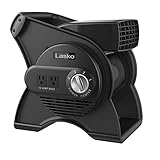
Hot rooms, damp flooring, and stale workshop air rarely need the same kind of breeze as a bedroom or living room. They need airflow that can be aimed low, tilted upward, or pushed toward a doorway without taking over the whole floor. The best Lasko outdoor fan search may lead practical shoppers toward the Lasko U12104, yet this model is better described as a compact utility blower for garages, workshops, basements, kitchens, and job-site tasks. Its 289 CFM maximum airflow, portable frame, and wide pivot range give it a different job than a traditional patio fan.
Lasko U12104 Utility Blower Fan
The shortened name, Lasko U12104 Utility Blower Fan, fits the product better than a long string of specifications. This is a 12-inch-class pivoting air mover with three speed settings and a maximum listed output of about 289 cubic feet per minute. That airflow can help circulate stuffy air, cool a concentrated work area, or support drying after a small spill. It won’t behave like a broad oscillating pedestal fan, and that distinction matters.
The blower-style housing creates a narrower, more forceful stream than the softer spread produced by many household fans. Air can be directed along a wet floor, toward a workbench, or up into a warm corner where heat tends to linger. The 270-degree pivoting action is the key feature here because it changes the fan from a fixed floor unit into a flexible air-moving tool. Aiming the airflow takes only a small adjustment instead of moving the entire fan again and again.
Three speeds make the fan easier to match with the task at hand. Low speed provides a steadier background flow for general circulation, while high speed reaches the listed maximum of 289 CFM for more demanding cooling or drying work. The supplied figures also list 251 CFM on low, giving a clearer picture of the usable range without relying on vague claims. That difference between low and high isn’t enormous, but it offers enough control to reduce noise or airflow intensity when full power feels excessive.
Power consumption is listed at 92 to 100 watts, with current draw ranging from 0.77 to 1.0 amps. Those figures place the fan in a practical range for short work sessions, room circulation, or targeted drying without the footprint of a larger industrial air mover. Still, expectations should stay grounded. This fan can move air effectively across a limited area, but it isn’t designed to cool an entire open patio, large warehouse, or heavily flooded room by itself.
Airflow Control And Everyday Placement
Placement determines whether a utility fan feels useful or merely loud. Set flat on the floor, the focused air stream can travel across carpeting, tile, or concrete where moisture collects after cleaning or a minor leak. Tilted upward, it can push warm air away from a workstation or improve circulation in a stuffy basement. The ability to change direction without stacking the fan on a box or chair keeps the setup safer and less awkward.
The compact body measures roughly 12.19 by 9.63 inches at the base and stands about 12.25 inches tall. That footprint slips beside a cabinet, under a workbench edge, or into a tight corner where a pedestal fan would get in the way. Small size also helps in crowded garages where tools, cords, and storage bins already compete for floor space. Even so, the concentrated blower shape won’t distribute air as evenly across a wide seating area.
Portability is another practical strength. At a listed weight of 7.5 pounds, the unit can be carried between a kitchen, basement, workshop, or job area without much fuss. The large handle gives the hand a proper grip instead of forcing an awkward hold around the housing. Moving it while unplugged is straightforward, though the long cord still needs to be gathered carefully so it doesn’t drag across wet surfaces or catch on tools.
The 10-foot power cord gives more freedom than the short leads found on many compact fans. It can reach across a room without immediately requiring an extension cord, which is handy around workbenches or freshly cleaned floors. The extra length also reduces the temptation to place the fan too close to a wall outlet rather than where airflow is actually needed. Cord management remains part of the tradeoff because ten feet of cable can become a tripping hazard in a busy workspace.
Accessory Outlets And Built-In Safety
Two grounded 120-volt outlets sit on the fan for accessory use. That dual-outlet design can be convenient where wall receptacles are limited and another low-draw tool or light needs power nearby. It may help keep a work area organized instead of running several cords back to different outlets. The connected load still needs sensible management, and the fan’s outlets shouldn’t be treated as unlimited power sources.
A built-in circuit breaker and reset button add a useful layer of protection. The unit is also listed as ETL certified, and its three-prong grounded plug supports safer operation on a properly grounded circuit. Those features are especially relevant in garages, basements, and renovation spaces where equipment may run for extended periods. They don’t replace careful placement, dry electrical connections, or routine cord inspection.
The accessory outlets make the U12104 more work-oriented than a basic cooling fan. A small task light, for example, may share the area without occupying another wall receptacle, provided the electrical load stays within the permitted limits. This functional power access is helpful, but it’s secondary to the fan’s main purpose. Buyers who don’t need accessory power may care more about airflow reach, noise, and directional control.
The fan’s rugged construction suits utility spaces better than decorative rooms. Black housing hides workshop dust more easily than a light finish, though dirt can still collect around the intake and outlet. Regular cleaning helps preserve consistent airflow, especially where sawdust, pet hair, or renovation debris floats through the air. The housing should be unplugged before cleaning, and moisture shouldn’t be introduced around the outlets, switch, or motor area.
Drying Performance And Practical Limits
Wet carpeting and freshly cleaned floors benefit from air moving close to the surface. The U12104 can be angled so its high-velocity stream travels across damp material rather than blowing above it. This setup may help moisture evaporate more evenly after carpet cleaning, mopping, or a contained spill. Deep saturation, hidden water beneath flooring, or flood damage calls for more than a compact fan and may require extraction, dehumidification, or professional assessment.
Fresh paint and stuffy rooms create a different problem. A pivoting fan can support ventilation by directing air toward an open doorway or window, helping stale air move out instead of circling endlessly in one corner. The adjustable discharge angle makes that arrangement easier than it would be with a fixed box fan. Proper ventilation instructions for paint or other materials still take priority, since a fan alone doesn’t make fumes harmless.
Noise is the unavoidable tradeoff behind focused airflow. A utility blower pushing up to 289 CFM may sound sharper than a gentle tower fan, particularly at close range or on high speed. That sound can be acceptable during repairs, cleaning, or garage work but distracting during conversation or quiet indoor tasks. Lowering the speed helps, though the compact housing will still produce the character of a work fan rather than a whisper-soft bedroom model.
Outdoor expectations need extra care. The product details describe use in household and work spaces such as garages, workshops, kitchens, and basements, but they don’t state that the fan is weatherproof or rated for exposure to rain. That makes the Lasko U12104 a possible choice for a dry, covered work area with a suitable grounded outlet, not a fan to leave on an uncovered patio. Moisture, standing water, and outdoor extension setups introduce risks that its compact convenience can’t erase.
Who Benefits Most From This Fan Design
A crowded workspace often needs airflow without losing another large patch of floor. The space-saving footprint suits a garage bench, small basement, utility room, or kitchen cleanup area where a tall fan would feel clumsy. Its handle and moderate weight also make sense for routines that move from room to room. Someone seeking broad, gentle airflow across several patio chairs may feel boxed in by the narrow stream.
DIY projects can make the pivot range especially useful. Sanding, painting, cleaning, and minor water cleanup all involve different airflow angles, and the fan can shift between them without complicated mounting. The three-speed control gives enough flexibility to avoid blasting lightweight materials during delicate tasks. Still, fine dust should be managed properly rather than simply blown around the room.
Basement and garage heat tends to settle unevenly. One corner feels stagnant while another sits near a door or vent, so a fixed breeze often misses the trouble spot. The 270-degree adjustment lets the fan target that pocket of warm air and redirect it toward a more open path. It can improve comfort around a bench or exercise area, though it won’t lower actual room temperature like air conditioning.
The U12104 earns its place through practicality rather than polish. Its compact body, grounded accessory outlets, long cord, and focused airflow solve specific problems in rooms where ordinary comfort fans can feel too weak or awkward. The tradeoffs are equally clear: no oscillation, a work-oriented sound profile, limited whole-room coverage, and no stated weatherproof rating. Those boundaries don’t make the fan less useful; they simply define where its design makes the most sense.
Lasko 2264QM High Velocity Floor And Wall Fan
Heat trapped in a garage, attic, or workshop has a stubborn way of settling into every corner, especially when ordinary household fans can only stir the air near their blades. The best Lasko outdoor fan search often points toward large, forceful models, yet the Lasko 2264QM is better understood as a rugged indoor utility fan for spaces that need serious circulation. Its 20-inch metal blade assembly, three speed settings, pivoting head, and wall-mount option give it more flexibility than a standard pedestal fan. Still, its strengths make the most sense in dry, protected areas rather than exposed outdoor locations.
Lasko 2264QM High Velocity Fan
The shortened name, Lasko 2264QM High Velocity Fan, captures the product without dragging every feature into the heading. This model uses a wide metal cage, metal blades, and a sturdy stand designed for demanding rooms such as garages, shops, and attics. The fan’s size immediately separates it from compact blowers because it’s built to move air across a broader area. That broader reach suits open work zones better than a narrow stream aimed at one chair or bench.
Three speeds let the airflow shift with the job. The lowest setting can maintain steady circulation while tools are running or while a room airs out, while the highest setting provides a stronger push during heavy heat. The powerful motor and metal blades are the core of that performance, not decorative extras. Even so, a high-velocity fan usually brings more sound than a bedroom model, so quiet operation shouldn’t be the main expectation.
The 20-inch diameter helps distribute air across a larger section of the room. A compact fan may feel intense up close yet fade quickly across a garage, while this design aims for wider room circulation. That makes it useful near a workbench, exercise area, attic access point, or open doorway where stale air needs somewhere to go. It won’t replace air conditioning, but it can make a hot workspace feel less stagnant.
Metal construction also changes the character of the fan. The cage and stand feel more appropriate around tools, storage bins, and busy household projects than a lightweight plastic shell. Rubber pads on the stand help reduce slipping and protect the surface beneath it. Those pads are a small detail, sure, but stable floor placement matters once a large fan starts moving air at higher speeds.
Airflow Direction And Room Circulation
A fixed fan can waste plenty of airflow by sending it straight ahead regardless of where the heat is collecting. The 2264QM uses a pivoting fan head that can be aimed upward, downward, or somewhere between those positions. That adjustment makes it easier to push hot attic air toward an exit, direct a breeze across a garage floor, or circulate air above a crowded work surface. The fan stays in place while the airflow angle changes, which saves a fair amount of shuffling.
Upward airflow is useful in rooms where heat gathers near the ceiling. Tilting the fan can help disturb that trapped layer and encourage movement toward an open window, doorway, or ventilation path. Downward positioning works better for floor-level cooling, drying, or moving air beneath a workbench. The wide adjustment range gives the fan several practical roles without requiring extra stands or improvised supports.
Ventilation depends on placement as much as power. Set in the middle of a closed room, the fan mainly recirculates the same warm air, but positioned near an opening, it can help direct air in or out. A garage door, attic vent, or open window gives the moving air a clearer path. The directional airflow is most effective when the room layout supports it rather than fighting it.
Large blades create a noticeable breeze over distance, though furniture and storage can interrupt the flow. Shelves, tool cabinets, vehicles, and stacked boxes may break up the air before it reaches the far side of the room. Raising the fan on its wall mount can reduce some of those obstacles and free the floor below. Floor use remains simpler, but wall placement can make the airflow feel more evenly distributed in a cramped workspace.
QuickMount Floor And Wall Flexibility
The included QuickMount bracket is the standout difference between this model and a basic floor fan. After the bracket is secured to the wall, the fan stand can clip into the mount without requiring the fan itself to be rebuilt. This floor-to-wall conversion gives the same unit two useful setups. A garage can use it on the floor during a project, then move it up and out of the way when space gets tight.
Wall mounting keeps the fan away from cords, rolling tools, pets, and foot traffic. It also opens more options for aiming air above benches or across parked equipment. The fan’s pivoting head still provides directional control after mounting, so height doesn’t lock it into one angle. That mix of elevated placement and adjustable tilt is especially practical in narrow rooms.
The bracket installation itself requires proper attachment to a suitable wall surface. The supplied instructions should guide placement, hardware use, and safe mounting, and the wall needs to support the fan securely. A poorly anchored bracket defeats the convenience and creates an obvious safety concern. Once mounted correctly, the clip-in design makes switching positions much less of a chore.
Floor operation has its own advantages. It requires no permanent installation, moves easily between rooms, and can aim air close to the ground. Wall operation trades that portability for clearer floor space and a wider line of airflow. Neither setup is automatically better, so the fan earns points by allowing both rather than forcing one arrangement.
Assembly And Everyday Handling
Complicated assembly can turn a simple fan purchase into an afternoon of misplaced bolts and vague diagrams. The 2264QM uses a no-tools assembly process for attaching the fan to its stand. Following the included instructions should get the unit ready without a toolbox or specialized hardware. That simplicity helps because most people buying a utility fan want airflow, not a construction project.
The metal frame gives the fan a sturdy presence, but it also means the unit won’t feel as featherlight as a small plastic model. Moving it around a garage should still be manageable, though frequent room-to-room carrying may be less convenient than with a compact blower. Its strength lies in being planted where airflow is needed and staying steady. The rugged stand supports that purpose better than a delicate base would.
Controls remain straightforward because the fan offers three speed choices rather than complicated electronic settings. There’s no need to work through menus, timers, or remote functions. A simple mechanical approach can be reassuring in dusty work areas where fewer delicate controls mean fewer things to fuss with. The tradeoff is obvious, though: convenience features common on living-room fans aren’t the focus here.
Cleaning deserves attention because metal cages and blades can collect dust over time. Garage debris, attic insulation fibers, pet hair, and workshop particles may gather around the intake side and reduce clean airflow. The fan should be unplugged before any maintenance, and the cage should be handled according to the manufacturer’s instructions. Routine dust removal helps the motor work without pushing through a thick layer of grime.
Strengths That Matter In Utility Spaces
The strongest benefit is the combination of size, power, and adjustability. A 20-inch fan can cover more space than a narrow personal fan, while the pivoting head prevents that airflow from being locked in one direction. The three-speed motor gives enough control for different temperatures and tasks. Together, these high-velocity features make the fan useful in rooms where gentle circulation falls flat.
Durability is another clear strength. Metal blades, a metal cage, and a metal stand suit workshops and garages where equipment may get bumped, moved, or surrounded by dust. Rubber pads soften the contact with the floor and may help limit vibration. The build isn’t meant to look delicate, and that’s exactly the point.
The QuickMount system adds value without changing how the fan operates. Many floor fans stay on the floor forever because wall mounting requires a separate model or a complicated conversion. This unit treats the wall bracket as part of the design from the start. That dual-position setup can stretch the usefulness of one fan across changing seasons and projects.
Broad airflow also makes the fan a sensible choice for ventilation support. It can help move warm air toward an opening, circulate stale air through a shop, or keep air moving during garage work. Results still depend on the room’s shape and available vents. The fan moves air, but it can’t remove heat from a sealed room on its own.
Weaknesses And Realistic Tradeoffs
Noise is likely the first compromise people notice. High-velocity fans prioritize airflow over whisper-quiet operation, and a large metal-blade design can sound forceful at higher speeds. That’s usually acceptable beside power tools or during attic work, but it may interrupt conversation or feel intrusive in a calm living area. The work-oriented sound profile fits utility spaces better than bedrooms.
The lack of oscillation is another limitation. The pivoting head changes the vertical angle, but the fan doesn’t automatically sweep air from side to side. A broad blade diameter helps cover a wide area, yet the airflow still follows the direction selected by the person setting it up. Rooms needing constant side-to-side distribution may benefit more from an oscillating design.
Outdoor use requires restraint. The provided product description highlights garages, shops, attics, and household use, but it doesn’t state that the fan is weatherproof, rain-resistant, or intended for exposed patios. That means the best Lasko outdoor fan label shouldn’t be interpreted as permission to leave this model in damp weather. A dry, covered space may be workable with proper electrical safety, but rain and standing water are outside the stated use case.
Wall mounting also introduces a permanent step that won’t suit every room. Renters, temporary workspaces, or finished interiors may not welcome mounting holes. Floor use avoids that issue, though it takes up more space and puts the fan closer to traffic. The flexibility is real, but each setup carries its own small inconvenience.
Where The Lasko 2264QM Fits Best
A hot garage is probably the most natural home for this fan. The metal build suits the setting, the wide blades move air across a substantial area, and the wall bracket can keep the unit above clutter. Aiming the head toward an open door may help push trapped heat outward. The garage-ready design feels purposeful rather than adapted from a softer household fan.
Attics also benefit from adjustable airflow, especially during short maintenance jobs where heat builds quickly. Pointing the fan toward a vent or access opening can help keep air moving around the work zone. The large frame may be awkward in very tight attic passages, though, so space should be checked before carrying it up. Its size provides reach, but that same size can become a constraint.
Workshops gain the most from the blend of durability and simple controls. Dusty surroundings, shifting projects, and limited outlets don’t call for decorative electronics. The three-speed operation keeps things direct, while wall mounting leaves bench and floor space available for tools. Fine dust still needs proper extraction because a fan can spread particles rather than remove them.
Covered porches and sheltered work areas may tempt buyers searching for the best Lasko outdoor fan, but the distinction between covered and weather-rated matters. The 2264QM makes sense where it stays dry, sits near a properly grounded outlet, and isn’t exposed to rain or splashing water. Its real appeal lies in forceful indoor circulation with flexible mounting, not unattended outdoor operation. Used within those boundaries, it offers a practical mix of reach, direction, and sturdy construction.
Lasko U15617 High Velocity Pivoting Utility Blower Fan
Heat becomes a real nuisance once it settles into a garage, basement, home gym, or job-site corner with no useful airflow. A regular room fan may stir the air nearby, but it often lacks the focused push needed for damp floors, stuffy spaces, or close-range cooling during physical work. The best Lasko outdoor fan search can lead to the Lasko U15617 because its compact blower shape, three speeds, and pivoting head suit hot, demanding environments. Still, this model makes the most sense as a portable utility air mover used in dry, protected locations rather than as a weather-exposed patio fixture.
Lasko U15617 Pivoting Utility Fan
The shortened name, Lasko U15617 Pivoting Utility Fan, fits the product better than its full retail description. This 14-inch utility blower arrives fully assembled, so there’s no frame to build, blade guard to attach, or stand to puzzle over. The fan is ready to operate after safe placement and connection to a suitable grounded outlet. That straightforward setup matters in work areas where the immediate problem is heat, stale air, or moisture, not assembly.
Three manual speed settings control a listed maximum airflow of approximately 341 CFM. The airflow comes from a blower-style outlet rather than a wide circular grille, producing a more concentrated stream than many household fans. That focused movement can be aimed across carpeting, toward a workbench, or into a stagnant corner. The result is less about creating a soft breeze across an entire room and more about putting air exactly where it can help.
The pivoting blower head is the product’s central feature. It directs air upward, downward, or at an intermediate angle without requiring the whole housing to be propped up or repositioned. This adjustable airflow direction helps with tasks that change through the day, such as cooling a standing work area, drying a low section of flooring, or moving warm air toward an open doorway. A fixed fan can’t offer that same level of placement control.
Its black, rugged housing gives the unit a practical workshop appearance rather than a decorative living-room look. The construction is intended for kitchens, garages, basements, shops, home gyms, job sites, and similar spaces where function carries more weight than styling. The fan may also suit covered event or performance setups where heat builds around equipment, provided it remains dry and electrically protected. That distinction is crucial because the supplied details don’t identify the unit as rainproof or weather-rated.
Focused Airflow For Heat And Stale Rooms
A listed maximum output of 341 cubic feet per minute gives the fan enough force for concentrated cooling and ventilation support. Positioned near a workout area, it can direct moving air toward the body instead of wasting much of the breeze across unused floor space. Set near a garage bench, it can reduce the heavy, still feeling that develops during summer projects. The airflow won’t lower the actual room temperature like air conditioning, but it can improve comfort through steady air movement.
Stuffy rooms benefit most when the fan has a clear path for moving air. Aiming it toward an open door or window may help push warm, stale air outward, while facing it inward from an opening can bring in fresher air. The pivoting blower head makes those arrangements easier because the discharge angle can match the height and direction of the opening. Placement still matters more than simply selecting the highest speed.
Compact blowers often feel stronger nearby than broad household fans because their airflow is more concentrated. That character works well around exercise equipment, tool stations, musical gear, or a specific patch of damp flooring. It works less well when several people are spread across a large patio or room and expect evenly distributed air. The focused air stream solves a precise problem, but it isn’t a substitute for wide oscillation.
Noise should be part of the expectation, too. A utility blower moving air at high speed will generally sound more assertive than a quiet bedroom fan. That may not matter during construction, garage work, exercise, or cleanup, but it can become distracting during conversation or recording. Lower speeds offer some control, yet the fan’s personality remains work-focused rather than whisper-soft.
Drying Floors And Supporting Ventilation
Damp carpeting and freshly mopped floors need airflow close to the surface. The Lasko U15617 can be tilted so its high-velocity air stream moves across wet material instead of sailing above it. This approach may help moisture evaporate after routine cleaning, a minor spill, or light surface dampness. Deep water intrusion, soaked padding, or hidden moisture still requires proper extraction and dehumidification.
The fan’s low profile supports floor-level drying without improvised stands or awkward furniture placement. Set a safe distance from the wet area, the housing can direct air along the surface while keeping the electrical components away from moisture. The 14.5-inch height and compact base also make it easier to position near cabinets, walls, or narrow work zones. Electrical connections should always remain dry, regardless of the built-in safety features.
Ventilation during painting or other projects is another practical use, provided the material instructions permit fan-assisted airflow. Angling the blower toward an exit can help move stale air instead of merely circulating it within a closed room. The fan does not remove hazardous fumes, and it shouldn’t be treated as a replacement for proper ventilation equipment or protective measures. Its role is simple: create controlled air movement along a chosen route.
Dust and debris introduce a tradeoff. Strong airflow can clear uncomfortable air around a work position, but it may also scatter sanding dust, loose insulation, sawdust, or lightweight materials. Proper dust collection should handle those particles instead of relying on the fan to blow them elsewhere. The directional control helps reduce unwanted spread, though careful placement remains necessary.
Compact Size And Easy Portability
The fan has an approximate 11.3 by 14.5-inch footprint and stands about 14.5 inches tall. That size is only a little larger than a standard milk crate, making it easier to fit beneath a bench edge, beside gym equipment, or near a crowded job-site wall. Floor space disappears quickly in garages and small workshops, so a compact housing has real value. The design still provides a larger airflow capacity than its modest footprint might suggest.
A large carry handle supports frequent repositioning. Moving the fan from a basement cleanup area to a garage workbench doesn’t require wrestling with an awkward pedestal or separate stand. The portable blower design also suits temporary projects because the unit can be stored after use instead of occupying a permanent spot. Its rugged frame should handle routine movement better than a delicate decorative fan, though it should still be carried while unplugged.
The 10-foot power cord offers more placement freedom than a short lead. That reach can reduce dependence on extension cords and allows the fan to sit closer to the actual trouble spot instead of hugging the nearest wall outlet. The long grounded cord is especially useful in basements, garages, and job areas where receptacles may be spread far apart. On the flip side, extra cord length needs careful routing to prevent trips and snags.
Storage is fairly simple because there’s no tall pole, wide pedestal base, or separate accessory kit to manage. The compact body can slide onto a sturdy shelf or into a utility closet once it’s clean and dry. Dust may build around the intake during workshop use, so occasional maintenance is sensible. Unplugging the unit before cleaning protects both the user and the fan’s electrical components.
Twin Outlets And Safety Features
Two built-in 120-volt accessory outlets sit on the side of the housing. These twin grounded outlets can be useful where a light, small tool, or other compatible device needs power near the fan. The arrangement may reduce cord clutter and preserve access to a nearby wall receptacle. Connected equipment still has to remain within the permitted electrical load, so the outlets aren’t an invitation to power everything in the room.
A circuit breaker with a reset button adds protection if the electrical load creates a problem. The fan also includes a three-prong grounded plug and the manufacturer’s Blue Plug safety fuse technology. These built-in safety measures support practical use in demanding spaces, but they don’t make unsafe placement acceptable. Standing water, damaged cords, overloaded outlets, and exposed outdoor conditions still call for caution.
The product is described as ETL Listed, which indicates evaluation to applicable safety requirements. That detail carries more weight for a utility fan because it may operate near tools, gym equipment, damp cleanup areas, or temporary work setups. Safe use still depends on following the included instructions and connecting the fan to an appropriate outlet. Certifications support responsible operation rather than replacing it.
Manual controls keep speed adjustment uncomplicated. There’s no remote to lose, app to configure, or digital panel to navigate with dusty hands. That simplicity suits job sites and workshops where dependable operation matters more than scheduling features. The tradeoff is fewer comfort conveniences for anyone expecting timers, oscillation, or automatic modes.
Strengths, Weaknesses, And Best-Fit Situations
The main strength is concentrated airflow from a compact, movable housing. A maximum listed delivery of around 341 CFM, combined with three speeds and a pivoting head, makes the fan useful for targeted cooling, circulation, and surface drying. The 10-foot cord and carry handle support flexible placement without turning setup into a chore. Fully assembled construction removes another small but common frustration.
The accessory outlets give the unit an advantage in busy work areas. A nearby task device can share the fan’s power access without immediately claiming another wall socket, provided the electrical limits are respected. The circuit breaker and reset button add reassurance around that feature. This practical setup feels especially relevant in garages, basements, and temporary job areas where outlet access is often inconvenient.
The clearest weakness is limited coverage compared with a large circular or oscillating fan. The blower sends a forceful stream in one chosen direction, but it won’t sweep a broad room automatically. Noise at higher settings may also feel too prominent for bedrooms, quiet offices, or conversations. Its work-oriented form suits active spaces better than calm relaxation areas.
Outdoor expectations deserve a final reality check. The description refers to heat and humidity outdoors, yet the provided specifications don’t state that the unit is weatherproof or approved for rain exposure. A dry, sheltered location with a properly grounded power source is different from an uncovered deck, wet patio, or poolside setup. The best Lasko outdoor fan label fits only where portable, focused airflow is needed under protected conditions, not where a fan must withstand open weather.
The U15617 makes the strongest case in a hot garage, stuffy basement, compact home gym, workshop, or construction area. It can also assist with light drying and ventilation tasks where directional control matters more than broad oscillation. Its realistic sweet spot is short-range, high-velocity airflow delivered from a small footprint. Buyers expecting quiet patio-wide cooling or permanent outdoor installation will likely need a different style of fan.
BILT HARD 20-Inch High Velocity Floor Fan 2-Pack
Summer heat inside a garage or greenhouse doesn’t politely stay in one corner. It settles around tools, workbenches, shelving, and plant trays until the whole space feels flat and stuffy. The search for the best Lasko outdoor fan may lead to this BILT HARD two-pack because it offers a very different kind of airflow: broad, forceful, and built around metal construction rather than lightweight patio styling. Each 20-inch unit delivers three listed airflow levels, a wall-mounting option, and a fully pivoting head, which makes the pair better suited to large work areas than casual tabletop cooling.
BILT HARD 20-Inch High Velocity Fan
The shortened name, BILT HARD 20-Inch High Velocity Fan, keeps the focus on what matters most. This package includes two industrial-style floor fans, each designed for garages, workshops, warehouses, and greenhouses. The twin-fan setup changes the way airflow can be managed because one unit can push fresh air inward while the other helps move warm air toward an exit. That arrangement can be more useful than relying on one oversized fan to handle an awkward room by itself.
Three speed settings are listed at 3,900, 4,100, and 4,600 CFM. Those numbers suggest a substantial step up from smaller household fans, especially in wide rooms where weak airflow disappears before reaching the far wall. The control stays simple, so there’s no remote, timer, or digital interface to fuss with. Turn the dial, pick the level, and let the fan do the heavy lifting.
The built-in handle sits within the grill housing, making each fan easier to carry around a workspace. That matters more than it sounds because industrial fans often get moved repeatedly between a garage bay, greenhouse aisle, or temporary job area. The integrated carrying handle keeps the frame from feeling quite so cumbersome, though a 20-inch all-metal fan still won’t move with the ease of a small plastic blower. Portability is practical here, not featherweight.
This product isn’t from Lasko, so the keyword match needs a reality check. It may appear beside searches for the best Lasko outdoor fan, but its identity is firmly BILT HARD and its design leans toward industrial ventilation. That difference matters for anyone expecting misting features, weather-focused controls, or patio-friendly styling. What it offers instead is a pair of rugged, high-output fans with straightforward mechanical operation.
Three Speeds For Large Work Areas
The lowest listed speed still moves a considerable amount of air at 3,900 CFM. That setting may suit steady background circulation in a greenhouse or workshop where constant high output would feel excessive. Medium increases airflow to 4,100 CFM, while high reaches the listed 4,600 CFM maximum. The gap between settings isn’t dramatic, but it gives enough room to balance airflow, sound, and comfort.
High speed makes the most sense when heat has built up across a broad area. A garage with an open door, for example, may benefit from one fan aimed inward and the second positioned deeper inside to keep air moving. The two-fan configuration can also break up stagnant zones behind vehicles, shelving, or machinery. Airflow still follows the path available to it, so cluttered rooms won’t respond as evenly as open ones.
Greenhouses create a different challenge because plants need circulation without having leaves hammered by a constant blast. Lower speed and careful angling can keep humid air from sitting still around dense foliage. The adjustable output allows each fan to serve a separate zone, which is handy when one section holds seedlings and another contains larger plants. Directing full power at delicate growth would be overkill, plain and simple.
Sound is part of the package with any high-velocity metal fan. The listed airflow suggests these units are meant to move serious air, not disappear into the background. High speed may be fine around machinery or active shop work, but conversation and quiet tasks could become less comfortable. The lowest setting offers a compromise, though buyers should still expect an industrial sound profile.
Full Pivoting And Wall-Mount Flexibility
Each fan uses a 360-degree pivoting head, allowing airflow to move upward, downward, or at nearly any angle between. That range is especially useful in workshops where heat collects near the ceiling while people work at bench height. One fan can be tilted upward to disturb trapped warm air, while the second stays low to cool the active work zone. The two units can cover different problems instead of duplicating the same airflow path.
Wall mounting clears valuable floor space. The included brackets allow the fans to shift from floor placement to a raised position, keeping them away from rolling carts, extension cords, plant trays, or busy walkways. A wall-mounted setup can also send air across obstacles that would block a fan sitting near the ground. Proper anchoring matters, of course, because an all-metal 20-inch fan needs a secure mounting surface.
Floor use remains the more flexible arrangement. Rubber feet on the tubular base help stabilize the fan and reduce sliding on smooth surfaces. The stable tube frame also keeps the fan slightly elevated, giving the blades room to pull air without resting directly against the floor. This setup works well for temporary jobs or seasonal use where drilling into a wall doesn’t make sense.
The pivot system isn’t the same as oscillation. Each head can be aimed through a full rotation, but the product details don’t state that it sweeps automatically from side to side. That means airflow remains fixed once the angle is set. The distinction is worth noting because a wide manual adjustment range offers control, while oscillation offers movement, and they solve different problems.
Metal Construction And Everyday Durability
All-metal construction gives these fans a sturdier feel than lightweight household models. The frame, protective grill, and aluminum blades are designed for spaces where equipment gets moved, bumped, and exposed to dust. A black powder-coated finish helps protect the exterior while giving the fans a clean industrial appearance. Scratches can still happen, but the finish suits work areas better than glossy decorative plastic.
Aluminum blades keep the rotating assembly lighter than heavier steel alternatives. That can help the motor move air efficiently while maintaining the rugged character expected from a shop fan. The metal blade design also contributes to the sharp, forceful airflow associated with high-velocity units. It isn’t built for a soft bedroom breeze, and pretending otherwise would miss the whole point.
Small grill spacing is intended to reduce accidental contact by fingers or paws. That detail matters in garages, greenhouses, and mixed-use areas where pets or family members may pass nearby. The protective grill design adds reassurance, but the fan should still sit where curious hands, loose clothing, and dangling cords can’t reach it. A safety feature supports good placement rather than replacing it.
Dust will eventually collect on the grill and blades, especially in workshops or greenhouses. Regular cleaning helps preserve airflow and prevents grime from building into a thick layer. Each fan should be unplugged before maintenance, and cleaning should follow the supplied instructions. The metal frame can handle practical use, but moisture around the motor or electrical parts is still a bad idea.
Assembly, Certification, And Warranty
The fans require assembly, though the product description presents the process as straightforward. The base, frame, and fan body need to be connected according to the included instructions before use. Simple assembly is a reasonable expectation, but lining up hardware on two separate units will still take more effort than unpacking a fully assembled fan. A careful setup pays off because stability depends on proper fastening.
The product is described as UL certified. That certification is relevant for equipment intended to run in garages, workshops, and commercial-style spaces. It provides a useful safety signal, though users still need suitable outlets, intact cords, and sensible placement. Electrical approval doesn’t make a fan weatherproof or safe around standing water.
A one-year warranty is included, along with a stated exchange policy for quality problems during that period. The one-year coverage offers a basic layer of support if a manufacturing issue appears. Warranty terms should still be reviewed carefully because coverage usually depends on proper use and may exclude damage caused by misuse or outdoor exposure. Two fans also mean two separate units to inspect during setup.
The manufacturer emphasizes direct customer service, which may be useful if mounting hardware, assembly pieces, or performance issues need attention. That support adds some reassurance, but it shouldn’t be confused with proof of long-term durability. The real test will be routine use, maintenance, and whether the fans stay within their intended environment. Heavy-duty construction helps, yet no fan is immune to dust, impact, or neglected cleaning.
Strengths And Limits In Real Use
The clearest strength is airflow capacity. A maximum listed output of 4,600 CFM per fan gives the pair plenty of potential for garages, workshops, warehouses, and greenhouse aisles. The second major benefit is placement freedom, since each unit can sit on the floor, mount to a wall, or pivot through a full range. That combination makes the package adaptable without relying on electronic extras.
The two-pack format also creates practical flexibility. One fan can stay mounted near a workbench while the other moves between storage, exercise, or plant-growing areas. The dual-fan setup may also help establish a more complete air path through a large room. Buying two units only makes sense, though, if the space and electrical layout can actually support them.
The main weakness is that these fans aren’t described as weatherproof. Garages and greenhouses may feel outdoorsy, but open rain, splashing water, and damp electrical connections are a different matter. Anyone searching for the best Lasko outdoor fan should avoid assuming that industrial metal construction equals outdoor certification. Covered, dry operation is a safer reading of the supplied information.
Size and sound create another tradeoff. A pair of 20-inch metal fans takes more storage space than compact blowers, and high airflow can be noisy at close range. Wall mounting solves some floor-space issues but adds installation work and permanent brackets. These fans make sense where circulation matters more than silence, subtle styling, or remote convenience.
The strongest match is a large, hot work area that needs broad air movement from more than one direction. Garages, workshops, warehouses, and greenhouses fit that profile better than bedrooms or small covered patios. The BILT HARD two-pack offers serious airflow, flexible mounting, and durable materials, but it asks for realistic expectations around noise, assembly, storage, and weather exposure. Used in the right setting, those tradeoffs are easier to accept because the airflow is doing a specific job rather than merely adding a light breeze.
Lasko YF200 Outdoor Bluetooth Tower Fan
A quiet porch can become downright uncomfortable once afternoon heat settles between the walls and the air stops moving. Traditional pedestal fans take up valuable floor space, while indoor tower models aren’t built for sun exposure or damp outdoor conditions. The best Lasko outdoor fan should handle those everyday annoyances without turning the deck into a tangle of cords and bulky equipment. The Lasko YF200 answers that need with weather-resistant construction, four speeds, internal oscillation, smartphone control, and a tall footprint designed specifically for porches, patios, and decks.
Lasko YF200 Outdoor Tower Fan
The Lasko YF200 Outdoor Tower Fan stands about 41.59 inches tall, giving it enough height to send air across chairs and tables instead of blowing mainly around ankles. Its base measures roughly 12.78 by 12.64 inches, so it claims less floor space than many round pedestal fans. That slim shape works nicely beside patio furniture, near a porch column, or along the edge of a covered seating zone. At 15.11 pounds, it has enough substance to feel planted while remaining manageable to carry.
A built-in handle makes repositioning less awkward when the sun shifts or a gathering moves from one side of the patio to another. The portable tower design avoids a wide blade cage, exposed neck, and oversized base, which helps maintain a cleaner outdoor setup. Still, tall fans should sit on a level, stable surface where foot traffic won’t bump the housing. Compact doesn’t mean invisible, especially around children, pets, coolers, and crowded dining chairs.
The fan requires assembly, but the supplied information states that no tools are needed. That’s a welcome detail for anyone who’d rather spend the afternoon outside than hunt for the right screwdriver. The tool-free assembly should keep setup fairly direct when the included instructions are followed carefully. Properly seating the base matters because a poorly assembled tower can wobble, particularly on uneven deck boards.
Weather Resistance For Patios And Porches
Outdoor construction is the biggest difference between this model and the utility fans that often appear in similar searches. The YF200 is specifically designed for exterior living areas and includes weather-resistant materials along with UV protection. Those features help the housing cope with routine outdoor exposure better than an indoor-only fan. They don’t turn it into equipment that should sit in standing water or face severe weather without care.
UV protection matters more than it sounds. Constant sunlight can fade, dry, and weaken materials that weren’t formulated for outdoor use, leaving ordinary indoor fans looking tired after a season. The UV-protected housing is intended to reduce that problem on sunny decks and porches. Sensible placement under some shelter can still help preserve the finish and controls over the long haul.
Weather resistance also removes much of the guesswork that comes with carrying an indoor fan outside for a few hours. An outdoor-rated design is better suited to changing humidity and routine exposure around covered exterior spaces. Even so, responsible storage remains part of ownership, particularly during storms, freezing conditions, or long periods when the fan isn’t being used. Outdoor-ready and maintenance-free aren’t the same thing.
Four Speeds And Internal Oscillation
Four speed settings give the YF200 a broader comfort range than a basic three-speed fan. Lower airflow can take the edge off a mild evening without dominating conversation, while stronger settings suit hotter afternoons when the porch feels heavy and still. The adjustable speed control also helps match airflow to seating distance. Someone sitting close to the tower won’t necessarily want the same output as a chair placed across the deck.
Internal oscillation moves air through the front louvers rather than rotating the entire fan body from side to side. That approach keeps the tower visually steady while spreading the breeze across a wider zone. The louvered oscillation can serve several seats more effectively than a narrow, fixed stream. It also reduces the need to keep turning the whole fan whenever people move around the table.
Wide circulation has limits, of course. A single tower fan won’t cool an open yard, reach every corner of a large wraparound porch, or replace air conditioning in enclosed heat. Its strength lies in creating a more comfortable seating area around a deck table, porch swing, or cluster of lounge chairs. Furniture, railings, walls, and wind direction can all change how far the breeze feels useful.
The louvers can direct airflow toward the part of the space that needs attention rather than wasting air against a wall. Careful placement near the edge of a conversation area often produces better results than setting the fan far away and running it at maximum speed. This directed airflow feels more natural during meals or relaxed evenings because the breeze can pass across the occupied zone. A little positioning goes a long way.
Bluetooth Control And Night Breeze Mode
Bluetooth compatibility lets the fan connect with the free Lasko Connect app on a smartphone. That means speed, oscillation, and other available functions can be adjusted without walking across the patio every time the air changes. The smartphone control is especially handy during meals, card games, or quiet reading sessions when repeated trips to the control panel become annoying. Manual buttons remain available, so the fan doesn’t depend entirely on a phone.
Bluetooth control has a practical advantage over a small physical remote: there’s no separate device to misplace between cushions or leave outside overnight. Phones are usually already close at hand, making quick adjustments feel less fussy. The built-in Bluetooth connection also avoids reliance on a home Wi-Fi network for basic nearby control. App compatibility still depends on a suitable smartphone and proper pairing.
Night Breeze mode provides a quieter setting for late evenings. Soft airflow makes more sense after sunset, when temperatures drop and conversation matters more than maximum cooling. The quiet Night Breeze mode may also help prevent lightweight napkins, papers, or table decorations from being blown around. It won’t make the fan completely silent, but the intent is gentler operation than the stronger daytime settings.
Manual controls deserve credit because outdoor equipment shouldn’t become useless when a phone battery dies or Bluetooth pairing acts stubborn. Buttons on the unit allow direct changes to speed and internal oscillation. This dual-control approach balances modern convenience with plain, dependable operation. Honestly, that’s a smarter setup than forcing every small adjustment through an app.
Power Setup And Outdoor Electrical Safety
A 10-foot power cord gives the tower more placement freedom around a porch or deck. The extra reach may reduce the need for an extension cord, letting the fan sit where its airflow helps rather than where the outlet happens to be. The long outdoor power cord is particularly useful beside wide seating arrangements or along covered walls with limited receptacles. Cord routing still needs attention so nobody catches a foot on it.
An in-line GFCI adds protection for outdoor electrical use. The fan also uses a three-prong grounded plug, which should connect to a suitable grounded receptacle. These outdoor safety features are far more reassuring than a basic two-prong indoor cord dragged across a patio. They support safer operation, but they don’t justify damaged outlets, submerged connections, or careless use around pooled water.
The GFCI can interrupt power when it detects certain electrical faults, and the in-line design keeps that protection close to the appliance. Outdoor humidity, wet hands, and nearby watering routines make this feature particularly relevant. The grounded power system should still be inspected before use for cord damage, loose connections, or cracked components. Built-in protection works best alongside common sense.
Cord length can become a nuisance if the extra cable is left across a walkway. Routing it along a wall, behind furniture, or away from a door reduces the chance of trips and accidental unplugging. The 10-foot reach creates flexibility, not permission to leave loops scattered across the deck. Outdoor comfort shouldn’t introduce a fresh safety headache.
Strengths, Tradeoffs, And Best Use Cases
The strongest feature is that the YF200 was engineered for outdoor living areas from the start. Weather resistance, UV protection, GFCI-equipped power, and grounded operation address concerns that indoor tower fans simply don’t. The outdoor-specific construction makes it a far more relevant match for the best Lasko outdoor fan than garage blowers or workshop floor fans. Its styling also fits casual seating areas without making the porch resemble a job site.
Space efficiency is another meaningful strength. The tall, narrow housing sends airflow near seated body height while preserving room around chairs, planters, and side tables. Its compact base works well where every square foot counts, especially on apartment balconies, screened porches, or narrow decks. A wide industrial fan may move more air, but it can be harder to place without disrupting the layout.
The biggest tradeoff is raw airflow coverage. A tower fan prioritizes a neat footprint, adjustable comfort, and broad louver movement rather than the force of an industrial metal-blade unit. The four-speed airflow should serve a defined patio zone, but it may feel modest in a huge open space or strong crosswind. Realistic expectations prevent disappointment here.
Bluetooth operation is convenient, though not everyone will care about controlling a fan through a phone. Some people will use the app constantly, while others may stick with the manual panel and forget the wireless feature exists. The control flexibility keeps either habit from becoming a problem. More technology also means one additional setup step during first use, even if pairing is usually a one-time chore.
The two-year limited manufacturer’s warranty provides longer stated coverage than several utility fans in the same broad category. The unit is also described as ETL Listed, adding a relevant safety credential for an electrical appliance designed around outdoor use. Warranty coverage doesn’t protect against misuse, poor storage, or exposure beyond the recommended conditions. Reading the supplied care guidance can help avoid those preventable issues.
Deck dinners, porch conversations, and quiet evenings suit this fan better than construction cleanup or heavy workshop ventilation. Its best-fit setting is a defined outdoor living zone that needs adjustable airflow without a bulky metal frame dominating the scene. Night mode supports calmer hours, while higher settings handle hotter stretches of the day. The combination feels considered rather than improvised.
Large uncovered spaces may expose the fan’s limitations. Wind can overpower or redirect the breeze, and one tower won’t create even cooling across a sprawling yard. The focused outdoor comfort works most effectively near occupied seating, under a porch roof, or beside a deck wall that helps shape the airflow. Thoughtful placement matters just as much as selecting the strongest speed.
The YF200 brings together the features that genuinely belong in an outdoor comfort fan: weather-ready materials, UV protection, oscillating louvers, four speeds, grounded GFCI power, and easy portability. Its main difference is balance rather than brute force, pairing outdoor durability with a slim tower profile and app-based control. It asks for a level surface, sensible cord management, and protection from extreme conditions. Within those boundaries, it’s built around how patios and porches are actually used.


Best Quiet Ceiling Fan For Bedroom 2026 Ultimate Comfort Picks

Best Ceiling Fan For Master Bedroom 2026 With Ultimate Comfort

Best White Ceiling Fan With Light For Bedroom 2026 Top Picks

Best Quorum Medallion Ceiling Fan 2026 With Style & Breeze
Best Outdoor Fan For Pergola 2026 Comfort Boost

Best Ceiling Fan For Great Room 2026 With Ultimate Comfort

Best Outdoor DC Ceiling Fans 2026 For Breezy Comfort
Best ceiling exhaust bath fan with light and heater 2026





