
Best Lasko Pro Performance Pivoting Utility Fan 2026 Review

The best lasko pro performance pivoting utility fan tackles the kind of stale, hot air that an ordinary desk fan barely disturbs. Its blower-style housing produces a concentrated stream rather than a soft breeze, making it useful for cooling a garage workbench, ventilating a stuffy room, or drying a damp floor. Three speed settings provide a little control over that force, though even the lower setting may feel stronger and sound louder than a typical household fan. That tradeoff matters because this machine favors practical airflow over quiet background comfort.
The pivoting blower head makes the fan far more useful than a fixed floor model. Air can be directed toward the ceiling to move trapped heat, across a floor after mopping, or toward an open doorway to help push stale air outside. That focused direction saves the hassle of stacking the fan on boxes or wedging objects beneath it just to change the angle. Still, the narrow air stream won’t spread evenly across a large room like an oscillating fan, so careful placement makes a noticeable difference.
A 10-foot grounded power cord gives the unit welcome flexibility in workshops, basements, exercise rooms, and renovation areas where wall outlets rarely sit in the right place. Two built-in 120-volt accessory outlets also reduce the usual scramble for another socket when a light, charger, or small tool needs power nearby. A safety circuit breaker with a reset button adds sensible protection when those outlets are being used. Even so, connected equipment must stay within the fan’s rated electrical limits, so the outlets shouldn’t be treated like an unrestricted power strip.
Portability is another practical strength. The compact body and easy-grip handle make it simpler to carry from a warm garage to a damp basement or a freshly painted room without wrestling with a broad metal frame. It arrives fully assembled, which means there’s no pile of hardware or vague instruction sheet standing between the box and the first blast of air. The rugged plastic construction also avoids some of the weight associated with large industrial floor fans, although the housing can still occupy meaningful floor space in a cramped area.
Noise deserves a realistic mention. High-velocity airflow creates a noticeable mechanical rush, especially at the highest setting, and that sound may interrupt television, phone calls, or sleep. For drying, exhausting, workshop cooling, and exercise areas, the extra noise usually feels like a fair bargain. For a quiet bedroom, reading corner, or shared office, a lower-output circulation fan will probably feel less intrusive.
The Lasko Pro Performance utility fan earns its place through focused airflow, useful electrical features, and easy directional control rather than decorative styling or remote-operated convenience. It won’t replace an air conditioner, remove humidity, or cool every corner of a large room by itself. But placed near a doorway, work surface, wet patch, or heat source, it can solve airflow problems quickly and without much fuss. That honest, task-first design is exactly why it remains appealing where delicate breezes simply don’t cut it.

- LFR Score9.4
LFR Score is a ranking system developed by lightfansreviews.com. LFR Score has no relationship or impact from any manufacturers or sales agent websites. Learn more
- BrandLasko
- LFR Score9.4
LFR Score is a ranking system developed by lightfansreviews.com. LFR Score has no relationship or impact from any manufacturers or sales agent websites. Learn more
- BrandLasko

- LFR Score9.4
LFR Score is a ranking system developed by lightfansreviews.com. LFR Score has no relationship or impact from any manufacturers or sales agent websites. Learn more
- BrandLasko

- LFR Score9.4
LFR Score is a ranking system developed by lightfansreviews.com. LFR Score has no relationship or impact from any manufacturers or sales agent websites. Learn more
- BrandLasko
- LFR Score9.4
LFR Score is a ranking system developed by lightfansreviews.com. LFR Score has no relationship or impact from any manufacturers or sales agent websites. Learn more
- BrandLasko

- LFR Score9.2
LFR Score is a ranking system developed by lightfansreviews.com. LFR Score has no relationship or impact from any manufacturers or sales agent websites. Learn more
- BrandBILT HARD

- LFR Score9.2
LFR Score is a ranking system developed by lightfansreviews.com. LFR Score has no relationship or impact from any manufacturers or sales agent websites. Learn more
- BrandVacmaster

- LFR Score9.0
LFR Score is a ranking system developed by lightfansreviews.com. LFR Score has no relationship or impact from any manufacturers or sales agent websites. Learn more
- BrandVEVOR
- LFR Score9.0
LFR Score is a ranking system developed by lightfansreviews.com. LFR Score has no relationship or impact from any manufacturers or sales agent websites. Learn more
- BrandAir King
- LFR Score7.4
LFR Score is a ranking system developed by lightfansreviews.com. LFR Score has no relationship or impact from any manufacturers or sales agent websites. Learn more
- BrandLasko
Last update on 2026-07-27 / Affiliate links / Images, Product Titles, and Product Highlights from Amazon Product Advertising API
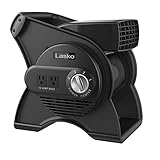
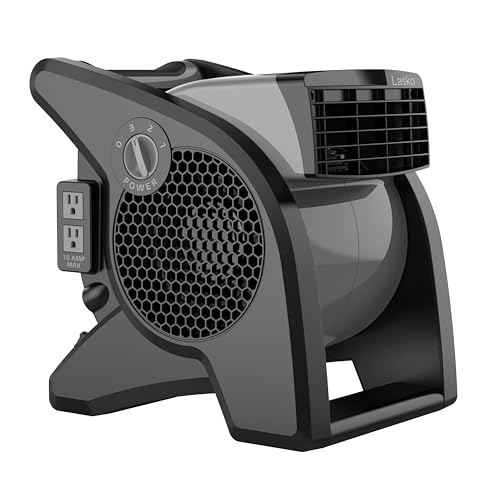
Lasko High Velocity Pivoting Utility Blower Fan U15617
Heat gets old fast when a garage, basement, home gym, or work area has no useful air movement. A regular pedestal fan may stir the room, yet it often sends a broad breeze that loses force before reaching the spot that actually needs relief. The best lasko pro performance pivoting utility fan takes a more focused approach, pushing air through a compact blower housing and letting the head aim that stream toward the floor, a doorway, or a hot workbench. That practical setup favors direct results over decorative styling, remote controls, or whisper-quiet operation.
Lasko Pivot-Pro Utility Blower Fan
The shortened name, Lasko Pivot-Pro Utility Blower Fan, fits the product better than its long retail title because the pivoting head is the feature that shapes nearly every useful application. Tilting the outlet upward can move warm air collecting near a ceiling, while a lower angle can help dry carpeting, tile, or a freshly cleaned concrete floor. Pointed toward an open door or window, the concentrated air stream can also support ventilation in a stuffy room. The fan won’t remove humidity or replace an exhaust system, but it can keep stagnant air from sitting in one place.
Three manual speeds make the controls refreshingly straightforward. There’s no display to study, no app to pair, and no remote likely to disappear behind a tool cabinet. The manual speed dial lets the airflow match the immediate job, whether that means a moderate breeze beside exercise equipment or the strongest setting aimed across a damp floor. Simple controls also make sense in dusty garages and active job areas where delicate touch panels would add complexity without improving the basic task.
The supplied description places maximum air delivery at approximately 341 CFM, a figure that helps explain the difference between this model and a soft household circulation fan. That airflow is concentrated rather than widely dispersed, so positioning matters quite a bit. A poor angle may blast one narrow section while leaving the rest of the room unchanged, but a thoughtful angle can move air through a doorway or across a problem area with less wasted output. In plain English, it behaves more like a compact air mover than a gentle living-room fan.
Focused Airflow For Heat, Odors, And Damp Floors
Cooling is the obvious job, though the high-velocity air stream can solve several smaller headaches that show up around the house. A hot garage becomes more tolerable when the breeze is aimed directly at a bench instead of drifting across parked equipment. A home gym feels less stifling when air reaches the treadmill or weight rack rather than circling behind it. Even a crowded kitchen can benefit from directed circulation, especially after cooking leaves warm air lingering near the stove.
Drying jobs reveal another strength. Wet carpeting, mopped floors, and damp basement corners need steady air movement, and the pivoting outlet lets that air skim close to the surface. The adjustable blower head avoids the awkward habit of propping a fan on blocks or leaning it against a wall to reach the right angle. Still, drying time depends on moisture level, room humidity, temperature, and ventilation, so this fan should be viewed as a helpful air mover rather than a substitute for a dehumidifier or water-extraction equipment.
Ventilation also benefits from deliberate placement. Set near an open doorway, the fan can help move stale air toward a better-ventilated space, while an inward-facing position may draw fresher air farther into a room. The directional design is useful for paint odors, stuffiness, or accumulated heat, but it shouldn’t be used as a safety substitute where hazardous fumes require certified ventilation. For everyday household smells and uncomfortable air pockets, though, the extra push can make a room feel less closed in.
Compact Footprint With Job-Site Practicality
Bulky equipment quickly becomes a nuisance in narrow work areas, so the stated 11.3 by 14.5-inch footprint deserves attention. Standing about 14.5 inches tall, the fan can sit beneath a worktable, beside exercise gear, or near a basement wall without occupying the sweeping circle demanded by a pedestal fan. Its shape also keeps the center of gravity low, which feels better suited to active spaces where cords, boxes, and tools are already competing for room. Compact doesn’t mean tiny, but the housing uses its floor space efficiently.
The large grip handle supports frequent movement from one task to another. Carrying the unit from a warm workshop to a wet entryway should be easier than wrestling with a wide metal floor fan, especially since the blower arrives fully assembled. That ready-to-use setup removes the usual bag of screws, mismatched legs, and vague diagram that can turn a simple purchase into a small project. Just place the fan, plug it in, select a speed, and adjust the angle.
A 10-foot power cord adds useful reach in spaces where outlets never seem to be near the actual problem. The longer cord may reduce dependence on an extension lead for ordinary placement, though it still needs to be routed carefully to avoid creating a trip hazard. Coiling the excess neatly matters in workshops and gyms where feet, wheels, and equipment can catch loose cable. The length is a genuine convenience, but good cord management remains part of using the fan responsibly.
Accessory Outlets And Straightforward Power Control
Twin built-in 120V accessory outlets give the fan a practical edge around work areas. A light, charger, or suitable low-draw device can share the nearby power point without immediately requiring a separate power strip. That arrangement can keep a compact workspace cleaner, especially when the wall outlet sits several feet away. The outlets aren’t permission to connect anything within reach, however, so attached equipment must stay within the electrical limits stated in the product instructions.
The circuit breaker and reset button add a sensible layer of protection for the fan’s power features. A three-prong grounded plug also suits garages, shops, and job areas better than a lightweight two-prong connection. The supplied information mentions Blue Plug safety fuse technology and ETL listing, details that support the product’s work-oriented design. Safety hardware is valuable, but it doesn’t replace proper outlet condition, dry placement, and careful inspection of the cord before use.
Built-in outlets may sound like a small detail until a room has only one reachable receptacle. Then, suddenly, keeping the fan running while powering a compatible accessory becomes much less annoying. The side-mounted outlet placement keeps connections accessible without forcing cables underneath the blower. On the flip side, multiple cords gathered around a compact fan can become messy, so the cleanest setup uses only what the task genuinely requires.
Noise, Air Spread, And Other Real Tradeoffs
Strong airflow rarely arrives silently. A blower moving roughly 341 CFM at its highest setting will produce noticeable air and motor noise, particularly in a hard-surfaced garage or basement where sound bounces around. The high-speed setting makes more sense during workouts, drying projects, or shop tasks than beside a bed, television, or phone conversation. Lower speeds may soften the interruption, but quiet operation isn’t the main reason to choose this style of fan.
Air spread is another meaningful tradeoff. The narrow outlet creates a forceful stream, yet it won’t blanket a wide room the way a large oscillating fan can. That focused delivery is helpful for one workbench, one damp section, or one exercise station, but several people scattered across a room may not receive equal comfort. Repositioning the unit can solve some of that limitation, though anyone wanting broad, gentle circulation may prefer a different fan format.
The rugged plastic housing keeps the blower manageable and avoids the sharp edges often found on basic metal shop fans. Even so, plastic can collect dust, workshop residue, and scuffs, especially near the intake and floor-level surfaces. Routine cleaning around the air intake helps prevent buildup from restricting performance. The fan should be unplugged before cleaning, and liquid shouldn’t be allowed to enter the controls, outlets, or motor housing.
Where The Lasko Utility Fan Makes The Most Sense
This model feels most convincing in spaces where targeted air solves a specific problem. Garages, basements, home gyms, kitchens, workshops, and renovation areas all benefit from a blower that can aim upward, downward, or straight across the floor. The compact air-mover design also suits temporary tasks because it can be carried in, used for a few hours, and stored without a broad stand or tall pole. It’s less suited to rooms where appearance, silent operation, or whole-room oscillation matters more than concentrated force.
The product also has a clear role during small drying and ventilation projects. A freshly mopped floor, damp rug edge, or humid corner can receive steady directional airflow without requiring the fan itself to sit at an odd angle. The pivoting head makes those setups cleaner and more stable than improvising with boxes or wedges. Realistic expectations still matter, since severe water damage, mold risks, or hazardous air conditions call for specialized equipment and professional handling.
Day-to-day usability is where the design pulls its features together. Three speeds cover basic control, the long cord improves placement, the handle supports portability, and the twin outlets add job-area convenience. The Lasko Pivot-Pro U15617 isn’t trying to be a bedroom fan dressed up with dozens of modes; it’s a compact utility blower built around direct airflow and practical handling. That narrow purpose is also its strength, provided the expected noise and focused air pattern fit the space and task.
Lasko 12-Inch Pivoting Utility Fan U12104
A cramped workshop can feel ten degrees hotter once tools are running and the air stops moving. Damp carpet creates a different headache, while paint odors and stale basement air call for airflow aimed somewhere useful rather than scattered around the room. The best lasko pro performance pivoting utility fan addresses those problems with a compact blower body, three speed settings, and a head that rotates through a stated 270-degree range. It’s a work-focused design, plain and simple, with portability and directional airflow taking priority over quiet operation or decorative looks.
Lasko Pivot Pro U12104
The Lasko Pivot Pro U12104 is smaller than many floor fans, yet its blower-style outlet concentrates air into a purposeful stream. Lasko lists output at approximately 251 CFM on low and 289 CFM on high, giving the fan enough airflow for localized cooling, circulation, ventilation, and drying tasks. Those figures don’t mean it will cool an entire building or replace air conditioning. They do explain why the breeze feels more directed than the broad, softer airflow produced by a typical pedestal fan.
Three manual speeds keep operation uncomplicated. A lower setting can maintain circulation near a desk, workbench, or exercise area, while the higher settings make more sense for drying a wet patch or pushing stale air toward an open doorway. The simple control layout suits garages and work areas because there’s no remote to misplace and no electronic menu to navigate. Turn the dial, aim the housing, and the fan is ready to handle the job.
The supplied specifications list a 120-volt motor drawing approximately 0.77 to 1.0 amps and using 92 to 100 watts across its operating range. That information offers a practical view of the fan’s electrical requirements without relying on vague power claims. Its strongest setting trades additional energy use and noise for more air movement, as expected. The difference between low and high airflow is useful, though the three speeds won’t provide the fine adjustment available from a variable-speed air mover.
Directional Airflow That Solves Specific Problems
The stated 270-degree pivoting action is the feature that gives this fan its practical character. Air can be sent across a floor, angled toward a work surface, or directed upward to disturb warm air sitting near the ceiling. That range removes the need to balance the unit on boxes or wedge objects underneath it. A stable fan at the right angle is safer and far less annoying than a makeshift setup that shifts every time someone brushes past it.
Floor-level airflow is especially useful after mopping, minor spills, or carpet cleaning. A concentrated stream can move across a damp surface instead of blowing above it, helping moisture evaporate more efficiently. The pivoting blower head won’t extract water or control humidity, so soaked materials and persistent dampness still require proper cleanup and, in some cases, a dehumidifier. For routine drying jobs, though, the adjustable angle makes the fan considerably more useful than a fixed upright model.
Ventilation tasks benefit from the same directional control. Positioning the blower near an open door or window can help move stuffy air out of a basement, kitchen, or freshly painted room. The focused air stream gives placement a bigger role than raw power alone, since a well-aimed fan can create a clearer path for air to travel. Paint fumes and hazardous vapors still require suitable ventilation practices, so the unit shouldn’t be treated as specialized safety equipment.
Personal cooling is another realistic use, especially in a garage, home gym, or workshop without air conditioning. The fan doesn’t lower the room’s actual temperature, but moving air across skin can make physical work or exercise feel less oppressive. Its high-velocity delivery works best when aimed toward a defined activity zone rather than placed randomly in a corner. Too close, and the breeze may feel harsh; a few feet of distance usually produces a more comfortable stream.
Compact Size Without Awkward Bulk
The fan occupies a stated footprint of roughly 12.19 by 9.63 inches and stands about 12.25 inches tall. Those dimensions allow it to fit beside storage shelves, beneath some worktables, or near exercise equipment where a wide circular fan would eat up valuable floor space. Small workshops often have enough tools already, so equipment that doesn’t demand a large parking spot has a real advantage. The compact housing also makes temporary placement easier during painting, cleaning, or repair work.
At approximately 7.5 pounds, the unit is light enough to move between rooms without turning the task into a workout. The large carry handle gives the hand a clear grip point, which matters more than it sounds when the other hand is holding a cord, rag, or tool. Carrying a broad metal floor fan through a narrow doorway can be a clumsy affair. This blower’s upright shape is tidier and less likely to catch on furniture or shelving.
A 10-foot power cord provides more placement freedom than the short leads attached to many small appliances. Outlets in garages and basements rarely sit exactly where airflow is needed, so the extra reach can reduce dependence on extension cords. The cord still needs sensible routing, especially across walkways or active work areas. A longer cable solves a reach problem, but left loose on the floor, it can create a different one.
Rugged construction supports its utility role, yet the compact plastic body comes with realistic maintenance needs. Dust, pet hair, and workshop debris can collect near the intake over time, reducing airflow if buildup is ignored. Keeping the intake area clear helps the motor breathe and preserves the fan’s practical output. Cleaning should always happen with the unit unplugged, using dry methods that keep moisture away from the motor, controls, and electrical outlets.
Accessory Outlets Add Useful Work-Area Flexibility
Two built-in 120-volt grounded accessory outlets sit on the fan for compatible equipment. That arrangement can be handy when one wall receptacle must support airflow along with a light, charger, or another suitable device. A workbench with limited electrical access quickly becomes cluttered with adapters and power strips. Integrating outlets into the blower keeps the setup more compact, provided the connected load stays within the limits specified by the manufacturer.
The accessory outlets don’t turn the fan into an unrestricted distribution box. Power tools, heaters, and other demanding equipment can draw substantial current, so plugging in devices without checking their requirements would be careless. The built-in circuit breaker and reset button add protection, but protection hardware isn’t a reason to overload the connection. Practical use means matching every attached device to the fan’s stated electrical capacity.
A three-prong grounded plug supports the fan’s job-site and workshop positioning. The supplied description also states that the model is ETL Listed, which is relevant for a product combining a motor, long cord, and accessory outlets. Even with those features, the unit should remain on a stable, dry surface with an undamaged receptacle. Wet hands, damaged cords, or poorly grounded outlets can undermine the value of any built-in safety design.
The reset control is particularly useful because overload protection doesn’t require replacing a separate external device before operation can resume. Once the cause of a trip has been identified and corrected, the manual reset system offers a straightforward way to restore power. Repeated trips are a warning, not an inconvenience to ignore. They may indicate an excessive accessory load, an electrical fault, or a problem requiring inspection.
Noise And Coverage Require Honest Expectations
A compact blower pushing up to approximately 289 CFM won’t behave like a silent bedroom fan. The air rushing through its narrow outlet creates noticeable sound, and the motor becomes more obvious as speed increases. The high-speed noise level is easier to accept during workouts, repairs, drying jobs, or garage projects than during sleep or conversation. Anyone prioritizing quiet background circulation may prefer a larger fan running slowly rather than a focused utility blower.
Coverage also differs from that of an oscillating pedestal model. This fan sends air toward a chosen area instead of sweeping repeatedly across a wide room. The narrower airflow pattern benefits one workbench, one damp section, or one exercise station, but it won’t provide equal comfort to people sitting in several corners. Repositioning takes little effort because of the handle and low weight, though frequent manual adjustment may feel inconvenient in shared spaces.
The maximum airflow is lower than the approximately 341 CFM listed for the larger Lasko U15617 described previously. That difference in output comes with a smaller footprint and a lower stated weight, making the U12104 easier to tuck into tight areas and carry around. More airflow isn’t automatically better if the larger machine becomes difficult to position. The sensible choice depends on whether maximum force or compact handling solves the more pressing problem.
Temperature reduction should remain in perspective as well. A fan circulates air and supports evaporative cooling, but it doesn’t refrigerate a room or remove heat the way an air conditioner does. The cooling benefit feels strongest when the airflow reaches skin directly or helps exchange indoor air with cooler air from elsewhere. In sealed rooms during extreme heat, the fan may improve comfort without changing the underlying temperature.
Daily Use In Garages, Basements, And Home Gyms
Garage work often creates heat in one concentrated zone, whether it comes from physical effort, machinery, or afternoon sun on a closed door. Setting the blower beside a bench provides targeted cooling without occupying the space required by a large pedestal base. The pivoting head can aim over low obstacles or send air underneath a vehicle during light maintenance. Its compact size also makes storage easier once the job wraps up.
Basements present a different mix of stale air, cool surfaces, and occasional dampness. The fan can support circulation near a wall, across flooring, or toward a stairway where air has a path to move. Its floor-level airflow helps address dead zones that ceiling fans and high-mounted fans may miss. Persistent moisture, mold, or flooding still demands more than circulation, so the blower works as one tool rather than a cure-all.
Home gyms gain from direct airflow because exercise produces heat in a predictable location. Aiming the fan toward a treadmill, bike, or lifting area makes better use of its concentrated stream than trying to cool the entire room. The three-speed control allows a lower setting during warmups and more force during demanding sessions. Noise usually matters less in this setting, especially when music, equipment, or headphones are already part of the routine.
Kitchens and freshly painted rooms can use the fan for circulation and exhausting, yet placement deserves care. Set near an opening, the unit can encourage air to travel outward rather than merely swirling odors around the same space. The adjustable angle helps direct that movement without putting the fan on an unstable surface. Grease-heavy areas, active cooking flames, and hazardous fumes require extra caution because a utility fan isn’t built to replace dedicated exhaust equipment.
Strengths, Weaknesses, And Practical Fit
The clearest strengths are compact dimensions, low weight, directional movement, and uncomplicated controls. Twin accessory outlets and a long grounded cord add genuine utility instead of decorative extras. The fan arrives ready for straightforward tasks without assembly or digital setup. For moving air exactly where it’s needed, that simplicity is refreshing.
The most obvious weaknesses are noise, limited whole-room coverage, and the absence of automatic oscillation. Its concentrated output may feel too forceful at close range, while people outside the direct stream receive less benefit. Manual controls also mean no timer or remote adjustment from across the room. None of those drawbacks are surprising for this category, but they matter in bedrooms, living rooms, and shared offices.
The best lasko pro performance pivoting utility fan label makes the most sense when portability and precision matter more than maximum airflow. This U12104 model gives up some output compared with larger utility blowers, yet its 7.5-pound body and small footprint make it easier to carry, store, and squeeze into crowded spaces. It’s built for a defined patch of hot, stale, or damp air rather than elegant whole-room circulation. That focused role keeps expectations realistic and highlights what the design actually does well.
Workshops, garages, basements, home gyms, and short-term drying projects suit the Lasko Pivot Pro U12104 better than quiet relaxation spaces. Its 270-degree pivot, three speeds, grounded outlets, circuit breaker, and 10-foot cord form a practical package with few unnecessary distractions. The fan won’t replace climate control, professional drying gear, or purpose-built fume extraction. It will, however, put a firm stream of air into small places where broad household fans often miss the mark.
Lasko 20-Inch High Velocity Floor Fan 2264QM
Heat tends to settle in the most inconvenient places, especially garages, attics, workshops, and rooms where air barely moves. A small household fan may create a pleasant breeze nearby, but it often runs out of reach long before the whole space feels any better. The best lasko pro performance pivoting utility fan takes a broader, more forceful approach with a 20-inch metal blade assembly, three speed settings, and a head that can be aimed above or below its standing position. Its wall-mount option also changes how the fan fits into crowded work areas, which is a meaningful advantage when floor space is already spoken for.
Lasko High Velocity Floor Fan 2264QM
The shortened name, Lasko High Velocity Floor Fan 2264QM, captures the product’s basic identity without dragging along every feature in the retail title. This isn’t a compact blower intended to send a narrow stream across one wet patch. Its 20-inch metal blades are designed to move air across a wider area, making the fan better suited to general circulation in garages, shops, attics, and similar spaces. That wider output can feel less concentrated than a utility blower, but it reaches more of the room without demanding perfect placement.
Three speed settings keep the controls simple and practical. Lower speed can maintain steady circulation while work continues nearby, while the stronger settings make more sense when heat has built up or stagnant air needs a firmer push. The powerful motor and metal blades are the key working parts here, though the supplied information doesn’t include airflow measurements, wattage, or noise ratings. Those missing figures prevent exact comparisons, but the design clearly favors force and coverage over delicate, low-profile airflow.
The floor-and-wall configuration separates this model from many basic drum-style fans. Used on the floor, it can be aimed upward, downward, or somewhere between those positions. Mounted to a wall, it frees space beneath the fan and places airflow above clutter, toolboxes, or stored equipment. That flexibility makes the fan easier to adapt as a room changes rather than locking it into one permanent setup.
Wide Air Movement For Hot Working Spaces
Garages can become uncomfortable long before outdoor temperatures reach their peak. Closed doors, parked vehicles, tools, and sun-heated walls trap warmth, leaving the air heavy and still. The high-velocity airflow from a large metal-blade fan can circulate that trapped air more effectively than a small tabletop model. It won’t lower the actual temperature like an air conditioner, but moving air across the room can make physical work feel far less punishing.
Workshops pose a similar challenge, though airflow needs to cover more than one chair or bench. A narrow blower may cool one station well, yet anyone stepping a few feet away can lose the breeze completely. The 20-inch fan head spreads air across a broader path, which suits spaces where movement is constant. That wider pattern also reduces the need to reposition the fan every time the task shifts from one side of the room to another.
Attics bring their own headaches. Hot air collects near the roofline, and floor space is often limited by boxes, beams, or stored belongings. The pivoting head allows airflow to be angled toward upper sections of the room or directed along a pathway between obstacles. A wall-mounted setup may be especially useful there, provided the mounting location is structurally suitable and the included bracket is installed according to the instructions.
Ventilation is another practical role, though placement matters more than brute force alone. A fan aimed toward an open doorway or window can help move stale air out, while a fan pointed inward may draw cooler air into the room. The directional airflow helps establish that path instead of merely stirring the same warm air in circles. Hazardous fumes still require proper ventilation equipment, so this fan should remain part of an everyday comfort setup rather than a substitute for specialized safety systems.
QuickMount Changes The Way The Fan Uses Space
The QuickMount system is one of the most practical details in the supplied description. The included bracket attaches to the wall, and the fan stand clips into that mount without requiring the entire fan to be permanently rebuilt. That approach allows the same unit to switch between floor and wall use as needed. A crowded garage can reclaim walking space, while the fan remains available for floor placement during temporary projects.
Wall mounting also keeps the fan above low obstacles. Tool cabinets, storage bins, extension cords, and worktables often block airflow from a fan sitting directly on the ground. Raising the fan head gives the breeze a clearer path across the room and reduces the chance of the unit being bumped during busy work. It may also keep the cord and stand away from areas where feet and rolling equipment frequently pass.
The conversion itself is described as quick because the stand clips into the mounted bracket. That convenience matters for anyone who doesn’t want to spend twenty minutes with tools every time the fan changes location. Still, the wall bracket installation deserves careful attention because the bracket must support the fan’s weight and vibration during operation. A weak anchor point could create noise, movement, or a genuine safety problem.
Floor use remains valuable even with the mounting option. A movable fan can be positioned near an open door, beside a vehicle, or at the edge of a work zone for temporary cooling. The dual-placement design gives the fan more range than a permanently mounted model, especially in rooms where airflow needs shift during the day. That adaptability is the real benefit, not simply the novelty of having two installation choices.
Metal Construction Brings Strength And Tradeoffs
The supplied description highlights a metal fan cage and stand, which suits the rougher conditions found in workshops and garages. Metal framing generally handles bumps and repeated movement better than thin decorative plastic. The cage also protects the blades while allowing air to pass through with limited obstruction. That rugged build gives the fan a more industrial feel, though it may also make the unit heavier and less forgiving around furniture.
Metal blades contribute to the fan’s forceful character. Their rigid shape supports strong air movement, particularly at higher speeds, and they fit the product’s work-oriented purpose. The metal blade assembly may create more mechanical and airflow noise than softer household fans, though no verified sound measurement is provided. Bedrooms, quiet offices, and television rooms may not be the natural setting for a machine designed around high-velocity circulation.
Rubber pads on the stand are a modest feature with real practical value. Hard metal feet can vibrate, slide, or scratch finished surfaces, especially when the motor is running at full speed. The built-in rubber pads help steady the fan and soften contact with concrete, tile, or other flooring. They won’t eliminate all vibration, but they make floor use less harsh than bare metal resting directly on the surface.
Durability still depends on routine care. Dust can collect on the cage and blades, while workshop debris may gather around moving parts if the fan is left uncovered for long periods. Keeping the air path clean helps preserve airflow and limits unnecessary strain on the motor. The fan should be unplugged before cleaning, and bent cage sections or damaged blades should never be treated as harmless cosmetic flaws.
Assembly Is Simple But Not Completely Effortless
The product is described as requiring simple no-tools assembly. The included instructions guide the connection between the fan and its stand, removing the need to search for a wrench or screwdriver before first use. That setup is less convenient than a fully assembled fan, but it remains manageable for a product of this size. The absence of loose hardware also reduces the risk of losing a critical screw in a garage or storage room.
Assembly should still be handled carefully. The fan head needs to sit securely in the stand so it can pivot without wobbling or shifting under motor vibration. A rushed connection could weaken the support and angle adjustment, particularly when the fan is pointed upward or downward. Taking a few extra minutes to follow the instructions is a better bet than forcing parts together and hoping they stay put.
The stand serves more than one purpose because it supports both floor use and the QuickMount connection. That makes correct assembly especially important. The mounting interface must remain solid enough to move between the floor and wall bracket without loosening over time. Regular visual checks can catch unusual movement before it becomes a larger problem.
Once assembled, operation appears refreshingly direct. Choose a speed, aim the fan, and let the larger blades move air across the room. The straightforward control scheme avoids remote controls, digital displays, and extra modes that could complicate workshop use. Some may miss timers or automated oscillation, but simplicity fits the fan’s practical role.
Strengths, Weaknesses, And Sensible Expectations
The strongest feature is the combination of wide airflow and flexible placement. A 20-inch pivoting head can circulate air across a meaningful area, while the wall bracket helps reclaim floor space. Three speeds provide basic control without cluttering the design. Metal construction also gives the fan a sturdier character than many lightweight household models.
The main weakness is that the provided details leave several performance questions unanswered. There’s no stated CFM rating, power consumption, cord length, weight, or noise level. Those omissions make it difficult to judge how far the airflow reaches or how disruptive the highest speed might sound. The product can still be evaluated by design and stated features, but exact performance claims would be guesswork.
Its larger size may also be inconvenient in small rooms. The 20-inch frame needs more clearance than a compact blower, and wall mounting requires a suitable surface plus enough room for the fan to pivot safely. Portability may be less effortless than with a seven-pound utility fan, though the supplied information doesn’t provide the actual weight. This model makes more sense where airflow coverage matters more than carrying the fan from room to room several times a day.
The airflow pattern represents another important difference. A compact blower concentrates air into a narrow stream for drying or spot cooling, while the Lasko 2264QM uses a large circular head to circulate air more broadly. That makes it better suited to general garage, shop, or attic comfort but potentially less precise for one small damp area. The better design depends on whether the problem is a hot room or a single stubborn spot.
Where The Lasko 2264QM Earns Its Space
The best lasko pro performance pivoting utility fan label fits this model best in places that need strong, room-spanning circulation rather than pinpoint airflow. Garages, shops, attics, and utility areas can benefit from the large blades and adjustable head. The wall-mount option adds value where the floor is crowded or where elevated airflow reaches farther. Its straightforward construction also suits spaces where fancy controls would mostly get in the way.
Home use is possible, but room choice matters. A basement workout area, enclosed porch, or hot utility room may welcome the fan’s forceful breeze. A quiet bedroom or formal living area may not suit the industrial-style metal build or the likely operating sound of a high-velocity motor. This isn’t a criticism so much as a reminder that the fan has a clear personality and purpose.
Workplace settings may appreciate the sturdy cage, stand, and mounting flexibility. Airflow can be redirected as tasks change, and the bracket keeps the machine off the floor when space gets tight. The pivoting range also allows air to reach higher shelves, overhead heat pockets, or lower working zones without awkward improvisation. Still, installation quality and safe clearance around the blades remain essential.
The Lasko High Velocity Floor Fan 2264QM is built around a simple promise: move a substantial amount of air in the direction the room requires. Its three speeds, metal construction, pivoting head, rubber-padded stand, and QuickMount bracket support that job without dressing it up as something quieter or more delicate. The fan won’t replace climate control, and it may be more machine than a small bedroom needs. In a hot garage or busy shop, though, broad circulation and flexible mounting can solve problems that smaller fans leave untouched.
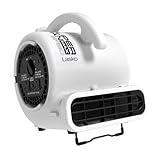
Lasko Super Fan Max SF-20-GC2
Large rooms can swallow the breeze from an ordinary fan, leaving hot corners untouched and stale air hanging around longer than anyone wants. The best lasko pro performance pivoting utility fan takes a more forceful route with a 1/5 HP air-mover design, three speed settings, and a pivoting blower that aims airflow toward the exact area causing trouble. Its two 120-volt outlets also add practical value around work zones where available receptacles disappear fast. This model is built around direct air movement, not quiet bedroom comfort or decorative styling.
Lasko Super Fan Max SF-20-GC2
The shortened name, Lasko Super Fan Max SF-20-GC2, fits the product without burying its identity beneath a long retail description. The supplied information describes a large white air mover powered by a 1/5 HP motor, which signals a more work-focused personality than a typical household circulation fan. That motor rating gives useful context, though no CFM figure, wattage, dimensions, weight, or noise measurement was provided. Any claim about exact coverage or operating cost would therefore go beyond the available facts.
A pivoting blower gives the fan its most useful form of control. The head can be aimed toward a warm work area, across a floor, or toward an opening where moving air has somewhere to go. This directional airflow matters because strong output is wasted when it shoots above the problem or into a blocked corner. A well-placed air mover often feels more effective than a broadly aimed fan simply because the breeze reaches the right spot.
Three speed options keep daily operation straightforward. Lower output may suit steady circulation, while stronger settings can address stubborn heat or stagnant air across a larger area. The manual speed selection won’t offer the precision of variable control, but it avoids menus, apps, and extra electronics that add little value during practical jobs. Simple controls are easier to adjust with dusty hands, gloves, or a room full of other things demanding attention.
Airflow Built For Large, Stuffy Areas
The product description states that the fan can cool rooms quickly and support large-area ventilation. That wording makes sense for garages, workshops, basements, exercise areas, and event spaces where a small desk fan barely makes a dent. The air mover won’t refrigerate the room or pull heat out of the building, of course. It improves comfort by circulating air and directing a stronger breeze through occupied zones.
Placement does a lot of the heavy lifting. A fan sitting in the middle of a room may simply churn warm air, while one positioned near a cooler doorway can encourage better exchange. The pivoting blower adds flexibility because the stream can be angled above obstacles, toward floor level, or along a path between equipment. That adjustability is especially useful in cluttered spaces where shelves and machinery interfere with a fixed fan.
Ventilation also benefits from a clear exit route. Aiming the fan toward an open door or window can help move ordinary stale air away from the room instead of pushing it in circles. The high-velocity output may support everyday odor control and heat relief, but it shouldn’t be treated as specialized protection against hazardous fumes, combustion gases, or regulated airborne materials. Those situations call for purpose-built ventilation and proper safety procedures.
Large-area cooling creates a different feel from narrow spot cooling. A compact blower may hit one bench with intense force, while the Super Fan Max is presented as capable of handling broader room ventilation. The larger working range sounds useful where several activities happen in the same space, though the absence of verified airflow data limits precise judgments. Realistic expectations keep the product in the right lane: moving air effectively rather than acting like an air conditioner.
Two Outlets Add Work-Zone Flexibility
Two built-in 120-volt accessory outlets solve a familiar problem around garages and temporary job areas. One available wall receptacle can disappear quickly once a fan, work light, charger, or suitable accessory enters the picture. Keeping outlets on the fan may reduce cable clutter and lessen dependence on a separate power strip. The exact electrical capacity of those outlets wasn’t provided, so connected equipment should remain within the limits listed on the product and its instructions.
The description also mentions multi-fan connections. That feature suggests multiple compatible units can be arranged across a larger space while sharing a more organized power setup. Such an arrangement could help move air through separate zones rather than expecting one fan to cover every corner. Still, the allowable number of connected fans and total load weren’t stated, so guessing at a daisy-chain limit would be irresponsible.
Accessory outlets are convenient, but they demand sensible cord management. Several cables gathered around a high-velocity fan can create a messy footprint, especially near tools, carts, or foot traffic. The power distribution feature works best when cords are routed away from the intake, moving parts, and walking paths. Convenience counts, yet a tidy setup keeps that convenience from turning into a trip hazard.
The outlet design may also reduce the need to move the fan simply because another device can’t reach power. That sounds minor until airflow has been positioned carefully and the room has only one useful receptacle. The integrated outlet setup keeps the fan at the chosen angle while compatible equipment receives power nearby. It’s a practical addition rather than a flashy one, and that matches the fan’s work-oriented character.
Strengths That Matter During Real Jobs
The clearest strength is focused air direction backed by a 1/5 HP air-mover format. Heat rarely spreads evenly, so the ability to aim output at one troublesome section can make a noticeable difference. Three speeds add enough control for changing conditions without overcomplicating the fan. The combination suits rooms where direct, adjustable airflow matters more than oscillation or remote operation.
The two outlets form another meaningful practical advantage. They support accessories and multi-fan arrangements without requiring every device to reach a separate wall outlet. That can keep temporary cooling or ventilation setups more organized. The benefit is strongest in work areas, garages, and event spaces where electrical access tends to be awkward.
The large air-mover design also appears suited to broader ventilation needs. A small fan often creates comfort only within arm’s reach, while this model is described for larger rooms. The room-cooling emphasis suggests a stronger, more purposeful stream than decorative household fans usually provide. Without CFM figures, though, the exact distance and coverage remain unknown.
Its white housing may fit more comfortably into multipurpose rooms than the dark industrial styling common in utility fans. Appearance isn’t the main reason to buy an air mover, yet color can matter when the unit stays visible in a studio, gym, event area, or finished basement. The large white design may look less workshop-heavy, though the fan’s real value still comes from airflow and outlet convenience. Form follows function here, as it should.
Weaknesses And Missing Details
The most significant weakness is the limited specification list. No airflow rating, sound level, dimensions, weight, cord length, pivot range, or power consumption appears in the supplied description. Those figures influence portability, operating comfort, storage, and room coverage. Their absence doesn’t make the fan ineffective, but it leaves several buying questions unanswered.
Noise is likely relevant for any high-velocity air mover, yet no verified measurement is available. Strong airflow and a 1/5 HP motor may produce a noticeable mechanical rush, particularly on the highest setting. The unknown noise level makes the fan easier to recommend for garages and active work areas than for bedrooms, recording rooms, or quiet offices. Silence simply isn’t established by the provided information.
Size may create another tradeoff. The product is labeled large, which can support broader airflow but may demand more floor or storage space than a compact utility blower. The larger body could be inconvenient in narrow hallways, cramped workshops, or rooms already packed with equipment. Since measurements and weight weren’t supplied, portability should remain an open question rather than a promised benefit.
The outlets also require electrical awareness. Their presence is useful, but the total supported load and connection rules weren’t included. The missing power limits mean heavy-draw equipment shouldn’t be attached based on assumption alone. Built-in convenience works best when paired with careful reading of the product label and instructions.
Where The Super Fan Max Makes Sense
The best lasko pro performance pivoting utility fan label fits the SF-20-GC2 most naturally in large, warm spaces that need forceful and adjustable air movement. Garages, home gyms, basements, workshops, event areas, and utility rooms align with its stated purpose. The pivoting head handles changing airflow needs, while three speeds keep control easy. Rooms demanding silence or subtle styling may call for a different fan category.
Multi-fan setups appear to be another strong use case. Two accessory outlets and support for fan connections can help distribute airflow across separate zones instead of relying on one central machine. The connection capability may prove useful in long rooms or open work areas with several heat pockets. Exact connection limits still need to come from the manufacturer’s instructions, not guesswork.
Spot drying may also benefit from the pivoting design, even though the supplied details focus more heavily on cooling and ventilation. Air aimed across a damp surface can support evaporation and reduce stagnant moisture around the area. The adjustable blower angle makes that job easier than using a fixed vertical fan. Serious water damage, soaked building materials, or persistent humidity still require proper extraction and dehumidification equipment.
The Lasko Super Fan Max SF-20-GC2 presents a sensible mix of high-velocity air movement, three-speed control, directional positioning, and built-in power access. Its strongest appeal lies in practical spaces where airflow needs to be moved, aimed, and sometimes extended through more than one fan. Missing technical figures keep the review grounded and prevent claims about exact performance. Within those limits, the design points toward a capable large-area air mover with useful work-zone flexibility.

Best Quiet Ceiling Fan For Bedroom 2026 Ultimate Comfort Picks

Best Ceiling Fan For Master Bedroom 2026 With Ultimate Comfort

Best White Ceiling Fan With Light For Bedroom 2026 Top Picks

Best Quorum Medallion Ceiling Fan 2026 With Style & Breeze
Best Outdoor Fan For Pergola 2026 Comfort Boost

Best Ceiling Fan For Great Room 2026 With Ultimate Comfort

Best Outdoor DC Ceiling Fans 2026 For Breezy Comfort
Best ceiling exhaust bath fan with light and heater 2026





