Best LED License Plate Light 2026: Clearer Night Visibility

A best LED license plate light should make the plate easy to read without turning the rear bumper into a miniature spotlight. That sounds simple, yet overly bright bulbs can create glare around reflective plate surfaces, while weak replacements barely improve an aging factory setup. A balanced LED license plate bulb produces clean, even illumination across the characters instead of leaving one side bright and the other side buried in shadow. That even spread matters more in daily use than chasing the highest advertised lumen number.
Color also changes how the light looks from behind the vehicle. A crisp white output usually gives the plate a cleaner appearance than the yellowish tone common with older incandescent bulbs, but an excessively blue tint can look harsh and may not suit every vehicle. White LED plate lighting works best when the beam stays controlled inside the factory housing and doesn't spill wildly onto the bumper. Small detail, big difference: the goal is readable illumination, not attention-grabbing glare.
Fitment deserves just as much attention as brightness. License plate housings are often cramped, so a long or unusually wide LED bulb can collide with the lens, socket, or housing even if the base technically matches. A compact LED bulb that closely follows the dimensions of the original lamp usually makes installation less frustrating. Nobody wants to remove trim, wrestle with tiny screws, and then discover that the new bulb is several millimeters too tall.
Electrical compatibility can be another headache, especially on vehicles that monitor exterior lighting. A low-power LED may trigger a bulb warning, flicker, or behave strangely if the vehicle expects the electrical load of an incandescent lamp. CANbus-compatible LED lighting can reduce those problems on supported vehicles, though compatibility still varies by model and electrical system. So, it's worth checking the original bulb type and vehicle requirements instead of assuming every socket-shaped replacement will behave perfectly.
Heat management sounds odd for something marketed as an efficient LED, but the electronics still generate heat inside a tiny enclosed housing. Bulbs with sensible construction and enough room around their components tend to handle repeated nighttime use better than oversized designs crammed against the lens. Stable LED output matters because flickering or premature dimming defeats the whole point of replacing an old bulb. Going for maximum brightness at any cost can actually create more compromises than benefits.
Installation should be straightforward, yet polarity occasionally catches people off guard. Some LED replacements illuminate only when inserted in the correct electrical orientation, so a bulb that stays dark after installation isn't automatically defective. Pulling it out, rotating it, and reinstalling it can solve the issue in seconds. That little quirk is easy to overlook, especially after carefully putting the license plate housing back together.
Weather exposure adds another practical concern. The bulb sits behind a lens, but moisture can still reach the housing if a gasket is worn, a cover isn't seated correctly, or screws aren't tightened evenly. A good license plate light setup includes checking the housing seal while the bulb is being replaced, because condensation can shorten the life of both incandescent and LED lamps. It's a quick bit of housekeeping that can save another round of disassembly later.
Brightness, fit, electrical behavior, and beam spread ultimately matter more than flashy packaging. The strongest choice is usually the bulb that disappears into the factory housing, lights the full plate evenly, and keeps working without flicker or warning messages. That isn't glamorous, but that's exactly the point. A license plate lamp has one job, and the best LED license plate light handles it cleanly without creating another problem to fix.
![True Mods Black LED License Plate Light for Boat Trailer [Steel Bracket Mount] [DOT FMVSS 108] [SAE L] 12V DC Waterproof Universal Submersible Tag Lamp for Car Work Utility Flat Bed Box Semi Truck RV](https://m.media-amazon.com/images/I/31qItB1p34L._SL500_.jpg "True Mods Black LED License Plate Light for Boat Trailer [Steel Bracket Mount] [DOT FMVSS 108] [SAE L] 12V DC Waterproof Universal Submersible Tag Lamp for Car Work Utility Flat Bed Box Semi Truck RV")
- LFR Score9.4
LFR Score is a ranking system developed by lightfansreviews.com. LFR Score has no relationship or impact from any manufacturers or sales agent websites. Learn more
- BrandONLINE LED STORE
- LFR Score9.2
LFR Score is a ranking system developed by lightfansreviews.com. LFR Score has no relationship or impact from any manufacturers or sales agent websites. Learn more
- BrandLESAUCE
- LFR Score9.2
LFR Score is a ranking system developed by lightfansreviews.com. LFR Score has no relationship or impact from any manufacturers or sales agent websites. Learn more
- BrandAUXITO

- LFR Score9.2
LFR Score is a ranking system developed by lightfansreviews.com. LFR Score has no relationship or impact from any manufacturers or sales agent websites. Learn more
- BrandXINYANG

- LFR Score9.2
LFR Score is a ranking system developed by lightfansreviews.com. LFR Score has no relationship or impact from any manufacturers or sales agent websites. Learn more
- BrandLESAUCE

- LFR Score9.2
LFR Score is a ranking system developed by lightfansreviews.com. LFR Score has no relationship or impact from any manufacturers or sales agent websites. Learn more
- BrandAsgohme

- LFR Score8.8
LFR Score is a ranking system developed by lightfansreviews.com. LFR Score has no relationship or impact from any manufacturers or sales agent websites. Learn more
- BrandLivTee

- LFR Score7.6
LFR Score is a ranking system developed by lightfansreviews.com. LFR Score has no relationship or impact from any manufacturers or sales agent websites. Learn more
- BrandRUXIFEY
Last update on 2025-12-14 / Affiliate links / Images, Product Titles, and Product Highlights from Amazon Product Advertising API
True Mods Black LED License Plate Light
A license plate lamp has a pretty thankless job until rain, road spray, a dark trailer ramp, or a cracked old housing suddenly makes plate visibility matter a lot more. The True Mods Black LED License Plate Light approaches that job with a steel bracket mount, waterproof construction, and a 12V DC setup designed for vehicles and trailers that live outside rather than in a clean garage. For anyone sorting through the best LED license plate light options, its appeal isn't flashy decoration but a practical combination of durability, mounting hardware, and legal-road-use considerations. The tradeoff is just as clear: this is a bracketed external lamp, so fit, mounting position, and wiring access deserve more thought than a simple plug-in bulb swap.
True Mods Black LED Plate Light
The strongest part of this design is the way the lamp and bracket are treated as one working package instead of leaving the installer to improvise a mount. A ready-to-mount stainless steel bracket gives the light a defined position around the plate, while the supplied installation accessories reduce the usual hunt for compatible hardware. That matters on utility trailers, flatbeds, work trucks, and older vehicles where the original plate-light arrangement may already be missing or damaged. Compared with a bare bulb replacement, this bracket-mounted LED light is better suited to situations where the entire lighting point needs to be rebuilt rather than merely refreshed.
Build quality matters here because a license plate lamp sits in one of the grittier places on a vehicle. Water, dust, vibration, road debris, and repeated temperature changes all reach the rear bumper or trailer frame sooner or later, so the product's emphasis on durable components makes practical sense. The housing is presented as being made to tolerate harsh climatic conditions, which fits the needs of equipment that spends long periods outdoors instead of being driven only on dry pavement. Still, no small lamp should be treated as indestructible, and careful mounting can help keep the steel bracket from becoming an unnecessary impact point.
The black finish also keeps the assembly visually restrained. Rather than turning the license plate area into a decorative lighting feature, the black LED housing can blend into many trailer frames, bumpers, and utility-body surfaces without calling much attention to itself. That low-key appearance suits a component whose real purpose is illumination and compliance, not styling theater. For a best LED license plate light search focused on work equipment or trailers, that straightforward presentation feels more appropriate than oversized housings or exaggerated light output.
Water Resistance And Outdoor Use
Water exposure is where this lamp separates itself from many basic plate-light replacements. The stated IPX7 waterproof rating means the product is designed with substantial water protection in mind, a useful characteristic for trailers that may see heavy rain, standing water, or launch-ramp conditions. That doesn't make careless wiring acceptable, though, because the surrounding electrical connections still need sensible protection from moisture. The lamp may be ready for wet environments, but the entire 12V DC installation is only as dependable as its weakest exposed connection.
Marine use is a particularly natural fit for this construction. Boat trailers get backed toward water, sprayed with road grime, parked outdoors, and sometimes left damp for hours, so a conventional plate lamp can become an irritating maintenance point. A waterproof LED license plate light reduces one obvious vulnerability by keeping the lamp itself better protected against those conditions. The practical gain isn't glamorous, but fewer worries around routine water exposure can make a submersible tag lamp much easier to live with over repeated launches and retrievals.
That same weather resistance expands its usefulness beyond marine equipment. Utility trailers, semi-truck applications, RVs, flatbeds, and work vehicles can all encounter rain, mud, road spray, and long outdoor parking periods, so weather-resistant construction has value even if the lamp never gets close to a boat ramp. Separately, lighting hardware used around growing spaces has its own mounting and heat-management concerns, and a related reference appears in best grow light hoods without changing the vehicle-focused purpose of this lamp. The distinction matters because this license plate light is built around vehicle identification visibility, not general area lighting.
Installation, Compliance, And Everyday Use
Installation looks more straightforward than piecing together a lamp, bracket, and fasteners from separate parts. The included mounting bracket and accessories remove some guesswork, which is especially useful on a trailer where the previous lamp may be broken, corroded, or completely gone. Wiring still requires attention because this is a 12V DC license plate light, and routing the connection away from abrasion or moving hardware is part of doing the job properly. A clean installation should leave the plate illuminated without loose wiring hanging near a hitch, suspension component, or exposed frame edge.
The product's stated DOT FMVSS 108 certification and SAE L designation are important details because license plate lighting isn't merely cosmetic. A lamp in this position has to support plate visibility while fitting the broader requirements applied to vehicle lighting equipment. That compliance-oriented design gives this model a more purposeful character than decorative LED strips or improvised marker lamps pressed into plate-light duty. For shoppers considering the best LED license plate light for road-going equipment, documented standards are more meaningful than vague promises about brightness.
Brightness itself should be judged by usefulness rather than spectacle. A plate lamp needs to illuminate the registration area clearly, and excessive glare around reflective plate material can be just as distracting as weak, uneven lighting. This True Mods setup focuses on a dedicated tag lamp design, which is a better match for the task than trying to adapt a general-purpose LED pod. The practical expectation is simple: consistent plate illumination from a compact LED license plate assembly, not a floodlight hanging off the rear frame.
Versatility is another strength, but it comes with a sensible caveat. The combination of waterproof construction, a bracket mount, and 12V operation makes the lamp adaptable to cars, trailers, RVs, flatbeds, utility equipment, and several truck applications, yet physical fit still depends on the space available around the plate. Some factory license plate recesses are tight enough that an external bracket assembly may be less tidy than an original-style replacement. In open trailer or work-body installations, however, the universal mounting approach makes considerably more sense because there is usually more freedom to position the light correctly.
Strengths, Limitations, And Best-Fit Scenarios
The most convincing strength is the combination of water resistance and mounting readiness. A lamp that already includes its bracket and installation accessories solves two common headaches at once: protecting the light from harsh conditions and figuring out how to attach it securely. That makes the design particularly practical for equipment where the factory mounting point has deteriorated or never existed in the first place. The best LED license plate light isn't necessarily the brightest one on paper; sometimes it's the one that can be installed cleanly and stay useful through bad weather.
The main limitation is that this isn't the smallest or most invisible way to replace a factory plate bulb. A vehicle with an intact molded lamp housing may be better served by a direct-fit bulb or OEM-style assembly, while the steel bracket system makes more sense where an exposed mounting point is acceptable. The universal nature of the design also means the installer has to confirm spacing, screw locations, wire routing, and plate clearance rather than assuming a factory-perfect fit. That extra bit of planning is the price of having a versatile external lamp that can work across very different vehicle and trailer layouts.
Another realistic consideration is the surrounding hardware. The lamp itself may carry an IPX7 waterproof rating, but poorly sealed wire joins, damaged trailer wiring, or corroded connectors can still cause trouble farther up the circuit. Treating the installation as a complete electrical job rather than simply bolting on the lamp will give the waterproof design a fair chance to do what it's meant to do. That practical mindset suits this 12V LED tag lamp better than expecting one sealed component to compensate for neglected wiring elsewhere.
For trailers, RVs, flatbeds, utility bodies, work trucks, and marine-related setups, the overall package feels thoughtfully matched to real maintenance problems. The stainless steel bracket provides a defined mounting solution, the waterproof construction addresses frequent outdoor exposure, and the stated DOT FMVSS-108 certification speaks directly to the lamp's intended road-use role. A factory-style passenger-car replacement may look cleaner in a tightly integrated bumper, but this True Mods unit has an advantage where toughness and mounting flexibility matter more than an invisible installation. That makes it a credible best LED license plate light candidate for practical equipment that sees rain, grime, water, and regular outdoor use.
LESAUCE Full LED License Plate Light Assembly
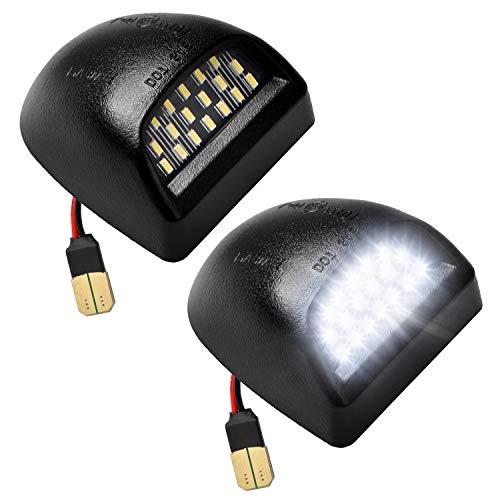
Dim factory plate lamps can make an otherwise clean rear end look tired, and swapping only the bulb doesn't always fix uneven light inside an aging housing. The LESAUCE Full LED License Plate Light takes a different route by replacing the complete lamp assembly with an 18-chip LED design rated at 6000K white. That makes it relevant in a best LED license plate light search where brighter plate visibility, straightforward installation, and factory-style fit matter more than decorative lighting. The biggest appeal is simplicity: it installs into the original housing location rather than asking for drilling, custom brackets, or improvised wiring.
LESAUCE Full LED License Plate Light
Each lamp uses 18 SMD 3014 LED chips, so the light source is spread across multiple points instead of relying on one concentrated diode. LESAUCE states that the pair is 300% brighter than factory license plate lights, which is a substantial jump on paper and clearly positions this set toward stronger rear plate illumination. The 6000K color temperature also produces a noticeably whiter appearance than the warmer tone common with older incandescent bulbs. That cleaner white output can make the license plate area look more modern without changing the shape of the original mounting location.
Brightness can become annoying if it spills upward into a reversing camera, and that concern is easy to overlook when shopping by output alone. LESAUCE specifically says the lamps are designed to increase rear-end illumination without blinding the backup camera, which addresses a practical problem on trucks and SUVs where the camera often sits near the plate. That balance matters because a brighter tag light isn't useful if it washes out the image during nighttime reversing. The design therefore makes more sense than simply installing the brightest generic bulb that physically fits.
The complete-assembly format is another meaningful difference. Instead of keeping an old lens, socket, and internal reflector while changing only the bulb, the full LED lamp assembly replaces the lighting unit as a package. That can simplify the upgrade on compatible vehicles because the LED layout, lens, and housing are already designed to work together. It also avoids depending on a worn factory socket to distribute light evenly across the plate.
Compatibility is broad across several Chevrolet, GMC, and Cadillac applications, including Silverado 1500, 2500, and 3500 models, Suburban, Tahoe, Avalanche, Sierra 1500, 2500, and 3500 models, Yukon, Yukon XL, and Escalade applications listed by the manufacturer. Still, vehicle-specific fitment deserves a careful check because model years and trim differences can affect lamp housings even within the same vehicle family. A direct-fit assembly is only convenient if the mounting shape and connector actually match the existing setup. That makes compatibility confirmation one of the few pieces of homework worth doing before installation.
Plug-And-Play Installation Without Wiring Drama
Electrical work is where small lighting upgrades often become more annoying than expected, but LESAUCE keeps the installation approach relatively simple. The lamps use non-polarity plugs, so there isn't the usual LED guessing game where a bulb stays dark until it's removed and flipped around. According to the supplied specifications, the assemblies are designed as a direct plug-and-play replacement and don't require modifications to the original housing. That can save time compared with universal lamps that need wire splicing, separate resistors, or custom mounting holes.
The manufacturer describes the job as a 15-minute installation, which gives a useful sense of the intended difficulty without turning it into a promise for every vehicle. Access can vary quite a bit depending on bumper design, plate placement, corrosion, and how easily the original lamp releases from its opening. On a clean housing, the direct-fit design should keep the process straightforward. On an older truck with stubborn clips or dirty connectors, the lamp itself may be simple even if removal takes a little patience.
A small but worthwhile detail is the absence of polarity sensitivity. Basic LED replacements sometimes require reinstalling the lamp in the opposite orientation because LEDs conduct current in one direction, and that can feel silly after the housing has already been snapped back into place. The non-polarity connection removes that particular nuisance. It's not a headline feature, but practical details like this are exactly what make a routine maintenance job less irritating.
The installation style also preserves the original appearance better than an externally mounted bracket light. Because the LESAUCE assembly fits into the factory position, the OEM-style replacement layout keeps the bumper and plate area uncluttered. That's especially useful on SUVs such as Tahoe, Suburban, Yukon, or Escalade models where a bolt-on lamp could look out of place. The tradeoff is less universal flexibility, since this design depends much more heavily on having the correct compatible vehicle.
CAN-BUS Behavior And Electrical Compatibility
Modern vehicle lighting circuits can be surprisingly picky about replacement LEDs. A low-current bulb may trigger an on-board warning because the vehicle interprets the reduced electrical load as a failed lamp, so CAN-BUS compatibility becomes more than marketing jargon on monitored lighting systems. LESAUCE states that these assemblies are error-free for 99% of vehicles and designed to avoid OBC warning messages. That claim is useful within the provided specifications, though the remaining compatibility margin means no aftermarket LED should be treated as absolutely universal.
Radio interference is another electrical side effect that can show up with poorly designed LED drivers. The supplied product information states that the circuitry is designed for better electrical stability without interference with FM radio reception. That's a sensible feature for a replacement installed permanently on a daily-driven truck or SUV, where a buzzing or noisy circuit would quickly become annoying. Clean operation matters just as much as brightness once the novelty of the whiter plate light wears off.
The manufacturer also describes the lamps as 100% street legal, tying the product to practical road use rather than decorative show lighting. Plate illumination has a straightforward job: keep the registration plate visible without creating distracting glare. A dedicated tag-light assembly is better suited to that role than improvised LED strips or excessively powerful pods aimed at the plate. Realistic expectations help here, because legal fit and proper visibility still depend on correct installation and the requirements that apply where the vehicle is registered.
Electrical compatibility is one area where the LESAUCE design has an advantage over cheap bulb-only swaps. The integrated LED circuitry is built into the complete assembly, so the lamp isn't relying solely on the vehicle's original reflector and socket geometry to behave properly. That doesn't remove every possible fitment issue, but it reduces the number of variables involved. For a best LED license plate light candidate meant for compatible GM trucks and SUVs, integrated electronics make the upgrade feel more purpose-built.
Weather Protection And Long-Term Practicality
License plate lamps live close to water, dirt, road salt, and bumper grime, so weather resistance isn't an optional nicety. LESAUCE gives these assemblies an IP65 waterproof rating, indicating protection against dust ingress and water jets under the stated rating standard. That's appropriate for normal exterior automotive exposure such as rain, washing, and road spray. It isn't the same as a submersible marine lamp, though, so the IP65 rating should be understood for what it actually covers rather than stretched into a claim the product doesn't make.
The housing uses flame-resistant PC material, another detail aimed at durability around heat-generating electronics. LED lamps run efficiently, but the circuitry still produces heat in a compact enclosed space, making material selection relevant over long periods of operation. LESAUCE states a service life of more than 50,000 hours under different circumstances. That figure comes from the supplied product specification rather than an independent endurance test, so it's best treated as the manufacturer's stated lifespan rather than a guaranteed real-world result.
Long life only helps if the housing remains sealed and the connector stays clean. During installation, checking the original mounting area for trapped moisture, dirt, or damaged seals can protect the new LED assembly from problems that have nothing to do with the lamp itself. Road grime has a sneaky way of turning small electrical connections into intermittent headaches. A few extra minutes spent cleaning the contact area can be more valuable than obsessing over tiny differences in advertised brightness.
Outdoor lighting has different priorities depending on the application, and unrelated plant-lighting projects involve their own bulb and fixture concerns; a separate reference exists at best grow light bulb for tropical plants. For this automotive application, however, weather sealing, connector stability, and housing fit are the factors that deserve attention. A license plate assembly spends its life exposed to vibration and road contamination rather than humidity management around foliage. Keeping those use cases separate makes the practical strengths of the LESAUCE unit easier to judge.
Where This LESAUCE Pair Makes The Most Sense
The pack-of-two format lines up naturally with vehicles that use a pair of license plate lamps. Replacing both sides together can keep the 6000K white color and intensity consistent instead of leaving one bright new LED beside an aging factory lamp. Visual balance sounds minor until one side of the plate looks icy white and the other stays yellow and dim. Matching assemblies remove that mismatch while refreshing both lighting points at the same time.
Truck and SUV applications are where this product feels particularly well targeted. Silverado, Sierra, Tahoe, Suburban, Yukon, and Escalade platforms often keep the license plate light tucked closely into rear trim or bumper structures, so a direct-fit lamp assembly preserves a cleaner factory appearance than an external universal bracket. The installation also avoids turning a basic lighting repair into a fabrication project. For someone repairing a broken or cloudy factory lamp, replacing the assembly rather than only the bulb can be the more complete fix.
The main limitation is equally straightforward: fitment isn't universal. This isn't the kind of lamp to buy based solely on voltage or bulb type and then adapt to whatever vehicle happens to be in the driveway. Its direct-fit advantage depends on having one of the supported housings, which makes the compatibility list more important than the brightness claim. Owners of unlisted vehicles would be better served by a lamp specifically designed for their original mounting dimensions.
Brightness is another area where taste and practicality can diverge. The stated 300% increase over factory lighting will appeal to anyone frustrated by weak stock illumination, but drivers who prefer a subtle OEM glow may consider the 6000K output more conspicuous than necessary. The upside is clearer plate illumination and a cleaner white appearance; the compromise is that the change won't be visually invisible at night. That stronger character is part of what distinguishes the LESAUCE assembly from a basic factory-equivalent replacement.
Strengths And Tradeoffs Behind The Bright Output
The most persuasive strength is the combination of complete assembly replacement and plug-and-play wiring. Those two details remove several common pain points at once: no polarity troubleshooting, no modification to the housing, and no need to reuse a tired original lamp enclosure. Add the stated CAN-BUS readiness, and the package feels deliberately designed for the electrical systems found in compatible late-model vehicles. That's more reassuring than a generic LED bulb whose only selling point is a high lumen figure.
Weather protection deserves similar credit because exterior lighting failures are often caused by moisture rather than the LED chip itself. The IP65 rating fits everyday automotive exposure, while the PC housing is intended to provide a durable enclosure around the electronics. Still, this isn't a deeply submersible trailer lamp, so applications involving repeated immersion call for a different design. Matching the protection level to the actual environment is smarter than treating every waterproof label as interchangeable.
The white 6000K output gives the product a crisp, modern look, yet color preference is subjective. Some older vehicles can look more natural with a warmer factory-style plate lamp, while newer trucks and SUVs often pair comfortably with cool white LED lighting. The LESAUCE set clearly leans toward the latter aesthetic. That distinction isn't a flaw, but it's worth knowing before replacing lamps on a vehicle where maintaining an untouched factory appearance matters.
Overall, the LESAUCE assembly earns attention in the best LED license plate light category because its useful features are tied to specific everyday problems rather than novelty. Brighter 18-chip lamps address weak plate illumination, non-polarity plugs simplify installation, CAN-BUS-oriented circuitry targets warning-light issues, and the IP65 housing addresses normal exterior exposure. Its weaknesses are mostly boundaries rather than defects: compatibility has to match, 6000K is noticeably cool, and IP65 shouldn't be confused with full submersion protection. For compatible Chevrolet, GMC, and Cadillac applications, those tradeoffs are easy to understand before the first trim clip is ever removed.
AUXITO 194 LED Bulbs For License Plate Light
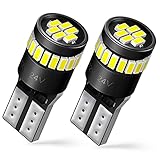
A dull yellow plate bulb can make the back of a car look older than it really is, yet going wildly brighter can create its own mess with glare and uneven illumination. AUXITO takes a compact approach with a pair of 12V bulbs using 24 SMD 3014 LED chips per bulb, a 6000K white output, and a 360-degree lighting arrangement intended to reduce dark spots. That combination puts the AUXITO 194 bulbs squarely into the best LED license plate light conversation for vehicles that use compatible 168, 175, 194, 2825, W5W, or T10 sockets. The catch is simple but important: socket names alone don't guarantee fit across every trim, so checking the original bulb before ordering saves a lot of unnecessary fiddling.
AUXITO 194 LED Bulbs
Size is one of the first details worth noticing because license plate housings rarely offer much breathing room. Each AUXITO bulb measures about 1 by 0.47 inches and weighs roughly 2 grams, keeping the package compact enough for many factory-style sockets listed by the manufacturer. That compact format matters because oversized LED replacements can hit the lens or sit awkwardly inside shallow housings. A smaller T10-style LED bulb has a better shot at fitting without turning a five-minute swap into an afternoon of trimming or improvising.
Each bulb carries 24 pieces of 3014 LED chips around its body rather than concentrating all illumination on one face. AUXITO describes this arrangement as a 360-degree lighting angle with no blind spot, which is useful in housings where the bulb sits sideways or relies on reflected light. Plate lamps can be surprisingly sensitive to diode placement, so light spreading in several directions makes more sense than a forward-only design. That multi-directional output is one of the more practical reasons to consider this style over a basic two-chip replacement.
The specified output is 500 lumens per bulb with a rated power draw of 2 watts apiece. Those are manufacturer-provided figures, not independent measurements, but they show the intent clearly: stronger visible output without a large electrical load. The 6000K color temperature gives the light a crisp white appearance rather than the warm amber tint commonly associated with older halogen or incandescent plate bulbs. For a best LED license plate light setup, that cooler tone can make the plate look cleaner, though anyone who prefers an OEM-warm appearance may consider 6000K noticeably whiter than stock.
Two bulbs are included in the package, which makes sense for vehicles equipped with a pair of license plate lamps. Replacing both sides at once keeps color temperature and brightness visually consistent instead of mixing a fresh LED on one side with an aging conventional bulb on the other. That mismatched look is easy to spot at night, especially on a light-colored plate. A matched pair avoids the odd half-white, half-yellow effect without requiring separate purchases.
6000K White Light And 360-Degree Coverage
License plate lighting is less about raw brightness than getting the light where it needs to go. The AUXITO design tackles that with LEDs distributed around the bulb, giving the assembly a stated 360-degree lighting angle. That layout can help factory reflectors do their job because light isn't restricted to a single narrow direction. In practical terms, the plate has a better chance of receiving a broader wash rather than one concentrated hotspot directly beneath the bulb.
The 6000K xenon-white color pushes the appearance toward a modern cool white rather than a soft factory-yellow tone. On newer vehicles with LED tail lamps, that can look more visually consistent with the rest of the rear lighting. Older cars are a different story, and the crisp white output may stand out more than expected beside warm incandescent marker lamps. That's a matter of taste rather than a technical flaw, but it's worth considering before chasing brightness alone.
AUXITO's 500-lumen specification sounds substantial for such a small bulb, yet the housing still determines how useful that output becomes. A cloudy plate-light lens, dirty reflector, or poorly positioned socket can blunt even a bright LED bulb. Cleaning the lens and checking the housing while replacing the bulb costs almost nothing and often improves the final result. Plenty of lighting complaints come from tired housings rather than the replacement bulb itself.
More light isn't automatically better around a reflective license plate, either. Excessive illumination can create glare or make the plate area look harsher than intended, so the useful measure is whether characters remain clearly illuminated across the entire surface. The AUXITO bulb's distributed chip layout is more interesting than its lumen figure for exactly that reason. Even illumination has more everyday value than simply winning a brightness contest on paper.
Plug-And-Play Installation Without Polarity Guesswork
The basic installation method is refreshingly familiar: remove the existing bulb and insert the AUXITO replacement into the compatible socket. The manufacturer describes the process as plug and play, which avoids additional wiring, external drivers, or separate brackets. That makes these bulbs fundamentally different from complete license plate lamp assemblies that replace the housing and electrical connector as one unit. For an intact factory housing, keeping the original fixture can be the cleaner and quicker route.
Fitment covers several common bulb references, including 168, 175, 194, 2825, W5W, and T10. Those designations overlap across many automotive interior and exterior lighting positions, which explains why the same bulb can serve more than one job. Still, AUXITO specifically warns that vehicle fitment databases may not always reflect trim-level differences. That warning is worth taking seriously because two versions of the same model year can occasionally use different lamp assemblies.
The safest approach is wonderfully low-tech: check the owner's manual or remove the existing bulb and read its size marking. Matching the original bulb size is far more reliable than assuming every vehicle under the same model badge shares identical lighting hardware. A direct socket match also reduces the chance of forcing a bulb into contacts it wasn't designed to use. Five minutes spent verifying fitment can prevent a return later, which is hardly glamorous advice but it's useful.
Installation simplicity also depends on access to the housing itself. Some license plate lamps pop out with a small clip, while others hide behind screws, trim panels, or weathered plastic that doesn't appreciate being disturbed. The compact AUXITO bulb doesn't make those vehicle-specific access points disappear, but it avoids adding another layer of complexity once the socket is exposed. That's the right kind of simplicity for a routine lighting repair.
CANbus Support And Electrical Behavior
LED swaps sometimes trigger warning messages because they draw less current than conventional bulbs. AUXITO describes these bulbs as CANbus error free, aiming to prevent that familiar bulb-out warning after installation. The lower 2-watt power rating is part of the appeal of LED lighting, but modern monitoring systems can interpret reduced electrical demand in unexpected ways. Built-in compatibility measures are therefore useful on vehicles that actively monitor exterior lamp circuits.
No aftermarket bulb can sensibly be treated as universally compatible with every electrical system, though. Vehicle electronics vary between makes, model years, and even trim packages, so CANbus compatibility should be viewed alongside actual vehicle fitment rather than as a blanket promise. AUXITO's own note about checking bulb size reinforces that practical mindset. A correct socket and stable electrical behavior matter more than any broad compatibility label.
Low power consumption is another advantage the manufacturer highlights. Each bulb is specified at 2 watts, allowing the LEDs to produce their intended output without the electrical draw associated with many conventional lamps. Lower consumption can also reduce heat generation at the bulb itself, although the electronics still need proper thermal management inside a confined housing. The important point isn't saving a dramatic amount of fuel or battery power from two tiny lamps, but reducing unnecessary electrical demand in a component that may stay illuminated for hours.
Electrical issues aren't always the bulb's fault, either. A loose socket, oxidized contacts, moisture intrusion, or damaged wiring can cause flicker even with a properly designed LED replacement bulb. If a new lamp behaves inconsistently, inspecting the connector is more useful than immediately assuming the LEDs are defective. Small exterior sockets live a rough life, especially in places exposed to road spray.
More Than A License Plate Bulb
AUXITO lists a broad range of compatible lighting positions, including map lights, dome lights, side markers, cargo lamps, reading lights, glove-box lamps, and certain tail-light positions. That range comes from the common T10-style bulb format, not from any special transformation inside the product. The same physical bulb can serve different locations as long as voltage, socket type, clearance, and lighting requirements all match. That flexibility can be handy when a vehicle uses the same bulb size throughout several interior fixtures.
License plate duty remains one of the more natural applications because the compact size and multi-directional output line up well with small reflector housings. Interior use has different priorities, though, and 6000K white lighting can feel noticeably cooler inside a cabin than a warm factory dome bulb. Some people enjoy that crisp look; others may find it stark during nighttime reading or entry. One bulb specification can technically fit multiple positions without producing the same visual result in every one.
Turn signals and marker positions deserve even more care because vehicle lighting functions can depend on color, flash rate, and electrical load. A bulb fitting physically doesn't automatically mean it's appropriate for every socket listed in a broad application range. Matching the required bulb function is just as important as matching the base. That's particularly true for safety-related exterior lighting where color and operation matter beyond appearance.
Automotive warning indicators bring a different set of troubleshooting concerns altogether, and a separate informational reference appears in how to fix a blinking airbag light. The connection is simply that modern dashboards report many electrical and safety-system conditions that shouldn't be lumped together. A license plate bulb warning relates to lighting circuitry, while an airbag indicator belongs to a very different safety system. Keeping those signals separate avoids treating unrelated dashboard warnings as though one LED replacement could solve them all.
Strengths, Weaknesses, And Realistic Expectations
The biggest strength is how much hardware AUXITO packs into a familiar bulb footprint. Each unit combines 24 SMD chips, a 360-degree arrangement, 6000K output, and the convenience of a traditional plug-in socket design. That allows the factory license plate housing to remain intact while changing the character and intensity of the illumination. It's a sensible route for a housing that's still in good condition but suffers from dim or yellowish original bulbs.
Versatility is another useful trait, yet it doubles as the main fitment trap. The bulb supports several commonly cross-referenced sizes, but vehicle trim differences mean the application list shouldn't replace checking the original lamp. AUXITO explicitly cautions that the fitment filter may not be completely accurate. That's a welcome bit of realism because automotive bulb catalogs occasionally flatten complicated trim variations into a single yes-or-no answer.
The cool white color creates another tradeoff. A 6000K LED license plate light gives the rear of a vehicle a crisp and noticeably modern appearance, but it won't mimic the warm glow of an incandescent factory lamp. Drivers aiming for an invisible restoration may prefer something closer to the original color temperature. Anyone specifically replacing dull yellow lamps with clean white light will probably see that same characteristic as a strength.
Heat, moisture, and socket condition still matter despite the lower power consumption. These are bulb replacements rather than sealed complete housings, so the factory lens and gasket remain responsible for protecting the electrical connection from outside contamination. A cracked lens or failing seal won't suddenly become waterproof because an LED sits behind it. That limitation isn't specific to AUXITO; it's simply the tradeoff that comes with retaining the original housing.
Where The AUXITO 194 Bulbs Make The Most Sense
A functioning factory housing with weak illumination is the sweet spot for this design. Instead of replacing an entire assembly, the AUXITO pair lets the existing fixture stay in place while adding multi-directional LED output and a whiter 6000K appearance. That keeps the repair relatively simple and preserves the original mounting arrangement. For vehicles using the supported socket sizes, it's a more restrained approach than installing a universal bracket lamp.
Older housings deserve a quick inspection before that swap, though. Cloudy lenses, corrosion, and dirty sockets can undermine the benefits of even the best LED license plate light because the light still has to pass through the original fixture. A clean lens allows the 360-degree chip arrangement to do more useful work instead of scattering through grime. Little maintenance details often matter more than squeezing another few lumens out of the bulb specification.
The pair also makes sense where matching light on both sides matters. Two identical bulbs keep the 6000K color and stated 500-lumen output consistent across dual license plate housings, avoiding the strange look of mixing LED and incandescent light. At only 2 watts per bulb, the setup remains relatively modest in electrical demand. That balance between brightness, low consumption, and straightforward installation is the main reason this AUXITO design stands out.
The limitations are pleasantly easy to understand rather than hidden behind marketing language. Fitment must be verified, 6000K won't suit every visual preference, and retaining the original housing means existing lens or seal problems remain existing problems. Against that, the 24-chip 3014 design, 360-degree illumination, multiple compatible bulb references, and plug-and-play format address the practical frustrations that usually drive a license plate bulb replacement in the first place. For a best LED license plate light search centered on a compact bulb rather than a full assembly, those are the details that carry the most weight.
2PCS Xenon White LED License Plate Light
Rear lighting gets surprisingly frustrating when a factory plate lamp is dim, cracked, awkwardly mounted, or simply too weak to illuminate the tag evenly after dark. This two-piece LED set takes a more utilitarian route with six upgraded LED chips per lamp, a sealed housing, and a broad 12V to 30V operating range that suits many vehicle electrical systems. In a best LED license plate light search, the appeal lies less in flashy styling and more in practical details such as waterproof sealing, straightforward two-wire installation, and a compact surface-mount format. The catch is equally practical: these lamps aren't direct-fit replacements for every factory housing, so measuring the mounting space before drilling or reusing holes matters.
2PCS Xenon White LED Plate Light
Each lamp uses six LED chips behind an arc-shaped optical surface designed to spread light outward instead of concentrating it into a narrow spot. The stated brightness is 100 lumens per lamp, giving the pair a defined output without leaning on vague claims about overwhelming intensity. That matters around reflective license plates, where excessively focused light can create harsh hotspots rather than improving readability. The arc-surface illumination is therefore more interesting than the raw lumen figure because beam distribution can make or break a compact plate-light installation.
Physical dimensions are refreshingly specific. Each unit measures approximately 66 by 33 by 22 mm, or 2.6 by 1.3 by 0.9 inches, while the mounting holes sit 55 mm, or 2.2 inches, apart. Those measurements should be treated as part of the buying decision rather than trivia tucked into a specification sheet. A universal surface-mount lamp only feels convenient if the 55 mm screw spacing actually works with the available panel, bumper, bracket, or trailer frame.
The package contains two lamps and four screws, so the basic mounting hardware is already accounted for. That makes sense for trailers, trucks, vans, or other equipment that may use a pair of lamps or benefit from keeping a spare matching unit available. At roughly 14 grams per lamp, the housings remain lightweight despite having their own lens, shell, wiring, and electronics. The combination of compact size and included hardware keeps the installation concept simple without pretending that every vehicle shares the same mounting pattern.
The lamps operate across a stated 12V to 30V DC range, which broadens their usefulness beyond a narrow passenger-car application. That range can suit many trucks, trailers, vans, RVs, boats, buses, and off-road vehicles that fall within the specified electrical supply. Still, voltage compatibility doesn't automatically guarantee physical compatibility, and that's where the supplied dimensions earn their keep. A lamp can be electrically right and mechanically wrong, so both sides of the equation matter.
Waterproof Sealing For Wet And Dirty Conditions
License plate lamps sit close to some of the nastiest conditions on a vehicle. Road spray, rain, slush, mud, and repeated washing can reach the rear bumper or trailer frame with very little protection, so the waterproof gel sealing is a meaningful part of this design. The manufacturer describes the housing as sealed to help keep water away from the internal components during rainy or snowy driving. That makes the lamp better suited to exposed mounting locations than an open-style bulb sitting behind a poorly sealed improvised cover.
The waterproofing also makes the lamps relevant for trailers and boats, though the supplied description doesn't provide a formal IP submersion rating. That's an important distinction because water-resistant exterior lighting and fully submersible marine hardware aren't automatically the same thing. Rain, road spray, and snow are specifically part of the intended use described for this product. Repeated deep immersion should therefore not be assumed simply because the housing uses waterproof gel.
Material choice backs up the weather-focused design. The lens is described as high-temperature-resistant PC material, while the outer shell uses ABS selected for toughness and resistance to vibration. Those details matter on trailers and work vehicles where a lamp may spend hours rattling against rough pavement rather than cruising on smooth city streets. A light housing doesn't need to be bulky to be useful, but it does need enough mechanical resilience to avoid becoming a fragile attachment point.
Water protection also depends on installation quality beyond the lamp itself. The supplied 152 mm, or 6-inch, wire leads still have to connect to the vehicle wiring, and exposed joins can become the weak spot if they aren't protected appropriately. The sealed lamp body can't compensate for a connection left open to road spray. That's a familiar lesson with trailer lighting: the lamp may be waterproof while the wiring job quietly decides how reliable the whole setup becomes.
Simple Two-Wire Installation With A Measurable Fit
Installation uses a straightforward electrical layout rather than a proprietary connector. The red wire connects to positive, while the black wire connects to negative, making the polarity easy to identify before power is applied. That two-wire arrangement is useful for custom installations, older trailers, utility bodies, and replacement jobs where a factory plug may no longer exist. It isn't quite as effortless as snapping a T10 bulb into an existing socket, but it gives far more freedom over where the lamp can be mounted.
The screw spacing is the detail that deserves attention before anything gets drilled. A 55 mm hole-to-hole distance means the lamps can mount directly only where the available surface accommodates that pattern or where new holes can reasonably be made. The manufacturer specifically advises measuring the installation area because automated fitment recommendations may not always be accurate. That's sensible advice for a universal-style accessory whose compatibility depends more on dimensions than vehicle model names.
Four screws are supplied with the pair, which removes one small annoyance from the job. Once the mounting position is settled, each lamp can be fastened directly rather than requiring a separate bracket assembly. That surface-mount design can be especially handy on flat trailer panels, truck utility bodies, cargo enclosures, or custom rear structures. Passenger vehicles with sculpted factory lamp recesses may be less accommodating, though, because a universal rectangle doesn't always blend neatly into molded trim.
The six-inch wire leads offer enough length for a nearby connection point, but they're not meant to span an entire bumper or trailer frame. Longer routing may require additional wire, connectors, and protection depending on the vehicle. That's not a weakness so much as the reality of a universal wired lamp: mounting flexibility shifts some responsibility to the installer. A direct-fit factory replacement is tidier for an intact original socket, while this design makes more sense when the original lighting setup needs to be rebuilt or repositioned.
Brightness Without Turning The Plate Into A Spotlight
Each lamp carries a stated output of 100 lumens while consuming 1.2 watts. That isn't an absurd brightness number designed to dominate the rear of the vehicle, and that's actually appropriate for license plate duty. A plate light should reveal the characters clearly without becoming the brightest object around the bumper. The six-chip layout and curved optical surface aim to spread that output rather than dumping everything into one concentrated beam.
Light color is described as xenon white, giving the assembly a cleaner appearance than the yellow-orange glow associated with many older incandescent lamps. A white LED plate light can visually sharpen the registration area, particularly beside newer LED tail lamps or marker lights. Still, color preference is subjective, and a crisp white lamp may stand out on an older vehicle that otherwise retains warm factory lighting. That stylistic difference is worth considering if preserving an original appearance matters more than modernization.
Power consumption stays modest at 1.2 watts per unit, which suits a small auxiliary lamp that may remain illuminated for long nighttime drives. The manufacturer pairs that low consumption with a smart IC driver and constant-current operation intended to support stable output and longer service life. Gold-wire copper-bracket lamp beads are also listed as part of the internal construction. Those design details sound technical, but their practical purpose is simple: keep the LEDs supplied consistently rather than treating the lamp like a bare diode wired directly to the vehicle.
A steady plate light is more useful than an aggressively bright one that flickers after a few months. The constant-current driver is therefore one of the quieter features worth noticing, particularly where vehicle voltage can fluctuate. No service-life figure was supplied in the product details, so there's no reason to invent one. The realistic expectation is simply that the driver, low power draw, and heat-resistant materials are intended to reduce the stresses that can shorten LED life.
Useful Beyond License Plate Duty
The lamp's rectangular housing and two-wire connection let it serve more roles than a dedicated factory tag-light insert. The manufacturer lists applications including courtesy lighting, dome or roof lighting, cargo illumination, trunk lighting, and license plate lighting across trucks, SUVs, trailers, motorcycles, vans, buses, boats, and off-road vehicles. That flexibility comes from the self-contained housing rather than a vehicle-specific socket. It can be positioned wherever the dimensions, voltage, and mounting pattern make sense.
Cargo spaces are a good example of where the same basic design can be useful. A small 100-lumen LED module can add localized illumination inside a utility compartment without requiring a large fixture, while the low 1.2-watt draw keeps the electrical demand modest. Under-hood or courtesy-light applications benefit from the same compact footprint. The important limitation is that beam placement and mounting angle will change how useful those 100 lumens feel in a larger space.
Marine and trailer use also highlight the value of the vibration-resistant ABS housing and weather sealing. A small lamp mounted on a trailer experiences movement that a cabin dome light rarely sees, so anti-vibration construction carries more practical weight there. Even so, the product description doesn't state a dedicated marine certification or submersion standard. The safer interpretation is that its waterproof design suits exposed environments without assigning capabilities that weren't provided.
Lighting problems can range from tiny vehicle fixtures to close-up task illumination, and those different jobs shouldn't be forced into the same category; a separate reference appears in best head magnifier with light for hands-free magnified work lighting. This lamp remains a vehicle-mounted LED module built around a 12V to 30V supply, screw mounting, and short two-wire connection. That distinction keeps expectations realistic instead of pretending one compact light solves unrelated illumination needs. Different jobs, different optics, different mounting demands.
Durability Details That Matter On Working Vehicles
Vibration is easy to underestimate until a lamp spends months attached to a trailer, off-road vehicle, or utility truck. The stated ABS shell is designed with toughness and vibration resistance in mind, while the PC lens is described as resistant to high temperatures. Together, those materials form a more purposeful enclosure than an exposed LED board or loosely covered strip. The real benefit is mechanical protection around the chips, driver, and wiring where everyday bumps and weather can otherwise take their toll.
Inside the lamp, the manufacturer specifies gold-wire copper-bracket LED beads and a smart IC driver. Those components are presented as supporting brightness, lower consumption, constant current, and longer service life. That's more specific than simply calling the lamp durable, yet it still doesn't justify inventing an exact lifespan. Hardware design can support longevity, but actual service depends on heat, voltage quality, mounting, wiring, vibration, and environmental exposure.
The waterproof gel adds another layer of protection around the electronics. On a rear bumper or trailer frame, that sealed construction can help prevent rainwater and road spray from getting directly onto the internal circuitry. However, screws, mounting surfaces, and external wiring remain part of the installation and should be treated accordingly. A sealed lamp paired with poorly protected wire joints is only halfway to a weather-ready setup.
The product also includes a stated 12-month return or refund service period in the supplied information. That's useful to know, but it doesn't change the mechanical realities of installation or fit. Measuring the 66 by 33 mm housing and 55 mm screw spacing remains more valuable than relying on broad compatibility language. Physical measurements are refreshingly honest because a tape measure doesn't care what model name is printed on the vehicle.
Strengths And Tradeoffs Of This Universal Design
The biggest strength is flexibility. A 12V to 30V operating range, two-wire hookup, supplied screws, waterproof sealing, and a self-contained housing let the lamp work in places where a vehicle-specific bulb or molded assembly simply isn't practical. That makes it particularly appealing for trailers, utility trucks, older vehicles, custom builds, and replacement projects with missing original hardware. The universal approach gives up factory-specific convenience in exchange for mounting freedom.
Its main limitation follows from that same flexibility. This isn't a direct-fit bulb that disappears inside an existing socket, so measurement and wiring are required before installation can be called simple. A vehicle with a healthy OEM plate-light housing may be easier to service with a plug-in replacement that preserves the original connector and lens. The 55 mm mounting pattern makes far more sense where screw-mounted hardware already exists or adding two small mounting holes isn't a problem.
Brightness appears sensibly restrained rather than extreme. The stated 100 lumens per lamp should be considered alongside the six-chip layout and curved optical surface, because usable coverage matters more than chasing an enormous number. Someone expecting a rear-facing work light will need something entirely different. Someone trying to illuminate a license plate, step area, or small cargo zone has a much more appropriate use for this output.
Waterproofing is another strength with a boundary attached. The gel-sealed housing is specifically described for rainy and snowy driving, which addresses the conditions most road-going exterior lamps encounter. Yet no IP rating is supplied in the provided details, so calling it fully submersible would go beyond the available information. That distinction keeps the review grounded and helps separate genuine weather resistance from assumptions based on the word waterproof alone.
Where This Light Fits Best In Real Use
Trailers and utility vehicles make a particularly convincing case for this design because their lighting hardware is often exposed and mechanically simple. The surface-mounted housing doesn't depend on a molded factory recess, and the two-wire arrangement can tie into an existing plate-light circuit without requiring a proprietary plug. Its small footprint also helps where rear-panel space is limited. For a custom or repaired trailer plate setup, those traits can matter more than having a perfectly OEM-looking lens.
Trucks, vans, RVs, and buses offer similarly practical mounting opportunities, especially around flat body panels or external equipment compartments. The broad 12V to 30V compatibility helps accommodate different electrical systems within the manufacturer's stated range. Again, mechanical fit comes first, because the 2.6-inch-wide housing and 2.2-inch screw spacing won't magically suit every location. Universal doesn't mean dimensionless.
The pair can also make sense where two matching courtesy or cargo lamps are needed. Identical six-chip LED modules keep the light appearance and physical footprint consistent on opposite sides of a compartment, doorway, or rear plate area. At 1.2 watts each, running both still represents a modest electrical load. Placement will determine whether the arc-shaped beam spread covers the intended surface well, so aiming and mounting position deserve as much thought as wiring.
For a best LED license plate light search built around rugged universal installation rather than a factory socket replacement, this two-piece set has a clear identity. The strengths are concrete: six LED chips, 100 lumens per lamp, 1.2-watt draw, 12V to 30V operation, waterproof gel sealing, vibration-resistant ABS housing, heat-resistant PC lenses, and defined mounting dimensions. The weaknesses are just as clear: it requires wiring, its 55 mm hole spacing must fit the location, and the supplied information doesn't establish a formal IP rating or universal vehicle fit. Those boundaries don't diminish the product's usefulness; they simply show exactly where this compact lamp makes the most sense.
LESAUCE LED License Plate Lights For Ford Trucks
Weak rear plate lighting tends to show its age long before the rest of a truck does, especially once yellow halogen bulbs start looking dull beside modern exterior lamps. LESAUCE replaces that older setup with nine high-power SMD LED chips inside a housing built to match the original lamp dimensions on supported Ford applications. That direct-fit approach puts this pair firmly in the best LED license plate light discussion for drivers who want stronger plate illumination without cutting wires, drilling holes, or adapting a universal bracket. The real advantage isn't simply more light, though; it's getting more light while keeping the factory mounting arrangement intact.
LESAUCE LED License Plate Lights
The most noticeable specification is the use of nine SMD LED chips inside each assembly. LESAUCE states that the lamps provide a 300% brightness improvement over the original tag lights, which explains why this pair is aimed at anyone frustrated by dim factory illumination. That figure comes directly from the supplied product information rather than independent measurement, so it makes sense to treat it as the manufacturer's stated comparison. Even so, the underlying idea is easy to appreciate: spread more LED output across the plate instead of relying on a small 194 halogen bulb.
Brightness alone can be a mixed blessing around reflective plates, but this assembly is designed specifically for the license plate position rather than being a generic LED stuffed into the socket. The full SMD LED layout allows the housing and light source to function as a matched unit, which can produce a more controlled result than changing only the original bulb. That matters because factory housings often rely on reflector geometry that was created for incandescent light. Replacing the whole lamp gives the LEDs their own purpose-built arrangement.
The white output also changes the visual character of the rear bumper. A bright white plate light looks cleaner and crisper beside newer tail lamps than the yellowish tint common with aging halogen bulbs. That cosmetic improvement isn't the main reason to replace a failing plate lamp, but it's hard to ignore once both lamps match. Owners trying to maintain a completely original period-correct appearance on an older Bronco or early F-Series, however, may prefer the warmer stock look.
Two assemblies are included, which makes sense for Ford applications using a pair of rear tag lamps. Replacing both sides together keeps brightness and color consistent instead of mixing an LED assembly with a fading factory lamp. Mismatched rear lighting tends to look more obvious at night than during daylight. A matched pair avoids that lopsided appearance while refreshing both lighting positions at the same time.
Factory-Style Fit Keeps Installation Straightforward
LESAUCE emphasizes a 1:1 OEM-size design, and that's one of the strongest practical arguments for this product. Instead of adding brackets or modifying the bumper, the lamp assemblies are made to occupy the same space as the original tag lights on compatible vehicles. The installation process involves removing the original 194 halogen setup and connecting the replacement plug. That keeps the job close to a normal maintenance task rather than turning it into a wiring project.
The manufacturer describes installation as taking about 10 minutes, though actual time will naturally depend on access, old clips, dirt, and the condition of the original housing area. A clean rear bumper can make a direct-fit swap quick, while twenty-year-old plastic sometimes has other ideas. Rust, hardened clips, or road grime can stretch a simple job beyond the advertised estimate. The lamp design itself still removes several possible headaches because no housing modification is required.
Plug-and-play installation also keeps the vehicle wiring largely untouched. The direct electrical connection avoids splicing a universal two-wire lamp into the harness, which is appealing on trucks that still have intact factory connectors. Fewer improvised connections mean fewer places for moisture or corrosion to creep into a homemade joint later. That's particularly useful on pickups and SUVs that see winter roads, muddy job sites, or regular outdoor parking.
A direct-fit part does have one obvious limitation: fitment matters far more than it does with a universal surface-mount lamp. The LESAUCE assembly is built around specific Ford and Lincoln applications, so the compatibility list should be taken seriously rather than treated as a loose suggestion. Model names can span decades and multiple body revisions. Matching the year and application is the difference between a tidy replacement and a lamp that simply won't seat correctly.
IP68 Housing Takes Weather Exposure Seriously
The rear bumper isn't a gentle place for electrical hardware. Rainwater, snow, road dust, wash spray, and grime regularly work their way around license plate lamps, so the IP68 waterproof rating is a meaningful specification rather than decorative jargon. LESAUCE says the upgraded housing is designed for foggy, rainy, snowy, and dusty conditions. That fits the reality of pickups and SUVs that don't spend their lives sheltered inside climate-controlled garages.
The housing material is another noteworthy change. LESAUCE specifies an upgraded PC housing rather than the lower-grade plastic construction it contrasts against. Polycarbonate is commonly used where impact resistance and temperature tolerance matter, which makes sense for an exterior lamp mounted low on a vehicle. A tougher enclosure doesn't make the unit immune to physical damage, but it gives the internal LEDs and driver a more substantial barrier against everyday road exposure.
Weather sealing matters most after several seasons rather than on installation day. A plate light can look flawless when new, then start flickering once moisture reaches the contacts or condensation gets trapped behind the lens. The sealed IP68 construction is intended to reduce that problem by limiting water and dust intrusion into the assembly. That's a far more practical durability feature than simply making the lamp brighter.
The surrounding vehicle hardware still deserves attention, though. An IP68 lamp can't repair a corroded factory connector, damaged bumper wiring, or pinched harness farther upstream. During replacement, inspecting the electrical connector and mounting area for corrosion or trapped debris makes sense before snapping the new assemblies into place. Waterproof hardware performs best when the rest of the circuit isn't quietly falling apart behind it.
CANbus-Ready Electronics Reduce Warning-Light Hassles
Modern vehicle electronics can turn a simple LED swap into an unexpected dashboard nuisance. LESAUCE includes an upgraded IC driver designed to operate without CANbus errors on supported applications, which addresses one of the more common frustrations associated with aftermarket LED lighting. A low-current LED can sometimes appear to the vehicle as a failed bulb if the electrical monitoring system expects the resistance of a halogen lamp. Integrated driver circuitry is intended to keep that behavior under control.
The supplied information also states that the lamps are designed to avoid OBC error warnings. That's useful on Super Duty applications where the goal is stronger license plate lighting without creating a persistent warning elsewhere in the vehicle. A lighting improvement loses some of its charm pretty quickly if it leaves a warning message glowing on the dash. The ability to retain normal system behavior is therefore as relevant as the extra brightness.
FM radio interference is addressed as well. Poorly managed LED electronics can sometimes introduce electrical noise, so LESAUCE specifies no FM radio interference from its driver design. That sort of detail won't show up in a nighttime photo of the plate, but it matters more after living with the vehicle every day. Quiet electrical behavior is one of those invisible features that only gets attention after something goes wrong.
The product description also frames stable plate lighting as a way to reduce problems associated with flashing or malfunctioning lamps. That's sensible because a steady license plate light is more useful than one that flickers intermittently due to electrical incompatibility. Still, proper road legality always depends on the vehicle, installation, and applicable local requirements rather than a single aftermarket component alone. The more useful takeaway is that LESAUCE built the electronics specifically around vehicle integration rather than treating these assemblies like simple decorative LEDs.
Ford Fitment Spans Several Generations
The compatibility range is broader than a quick glance at the product name might suggest. LESAUCE lists fitment for 1980-2014 Ford F150 models, along with the 2004 F150 Heritage. That covers several very different generations of Ford's half-ton pickup, so confirming the exact year remains essential even with a broad compatibility statement. The direct-fit nature of the assembly makes accurate fitment more important than it would be with a universal screwed-on lamp.
Heavy-duty applications include 1980-1999 Ford F250 and F350 models as well as 1999-2016 F250, F350, F450, and F550 Super Duty trucks according to the supplied fitment data. That makes this pair relevant to older work trucks as well as newer Super Duty generations within those listed years. Work trucks tend to accumulate plenty of rear-bumper grime, so the IP68 housing feels particularly appropriate here. Bright plate illumination and a sealed housing are practical upgrades on vehicles that spend long hours outdoors.
Ford's SUV and compact-truck families are represented too. Fitment includes 1980-1996 Bronco, 1984-1990 Bronco II, 1983-2011 Ranger, 1991-2004 Explorer, and 1991-2010 Explorer Sport Trac models according to the manufacturer. That spread covers everything from compact pickups to full-size SUVs. The same lamp may fit those applications, but surrounding trim and access can still feel quite different from one vehicle to another.
The listed range continues with 2000-2005 Excursion, 1997-2002 Expedition, and 2006-2008 Lincoln Mark LT models. Those dates are worth paying attention to because similarly named vehicles outside the listed production ranges shouldn't automatically be assumed compatible. A part can share the right general shape and still have a different connector or retaining method. Exact year matching remains the boring but dependable way to avoid that problem.
Brightness Versus Factory-Like Appearance
LESAUCE's stated 300% brightness improvement clearly targets drivers who think the factory plate lamps are too weak. That stronger output can make the rear license plate easier to see after dark, particularly where old 194 bulbs have dimmed with age. It also changes the appearance noticeably, which may be a benefit or a drawback depending on the vehicle. A bright LED pair isn't trying to mimic the soft yellow glow of an original halogen setup.
The complete lamp format creates an important difference from bulb-only upgrades. A replacement 194 LED still depends on the old housing and reflector, while the LESAUCE LED assembly brings its own chips, lens, electronics, and enclosure. That can eliminate several aging parts from the equation at once. On a truck with cloudy or tired original tag-light housings, replacing the assembly can make more sense than putting fresh LEDs behind old plastic.
Stronger output needs sensible placement, though. License plate lights aren't reverse lamps, and the purpose isn't to flood the pavement behind the truck with white light. The useful goal is clear plate illumination without creating distracting glare around the bumper. A dedicated replacement assembly has an advantage here because its optics are already shaped for the original mounting position rather than being adapted from some unrelated lighting application.
Automotive rear lighting involves more than the plate area, and bulb choices elsewhere can affect visibility and appearance in different ways; a related reference sits naturally in best LED tail light bulbs. License plate lamps and tail lamps still perform separate jobs, so their brightness, optics, and electrical requirements shouldn't be treated as interchangeable. The LESAUCE pair remains focused on rear tag illumination, not brake, turn, or running-light output. Keeping those functions distinct makes it easier to judge whether the product solves the actual problem at hand.
Where This Pair Has A Clear Advantage
Older Ford trucks with tired halogen plate lights are probably where the design makes the most immediate sense. The plug-and-play format preserves the original mounting style while replacing the bulb, housing, lens, and electronics as one package. That can be more satisfying than installing a new bulb only to realize the old lens still looks cloudy or uneven. The result is a cleaner repair with fewer aging pieces left behind.
Work vehicles also benefit from the combination of IP68 weather sealing and a direct factory-style mount. F-Series and Super Duty trucks routinely see dust, winter salt, rain, and outdoor storage, so keeping moisture away from the lamp electronics is worth more than a cosmetic lighting effect. The upgraded PC housing supports that same practical theme. Toughness matters more on a bumper-mounted component than fancy packaging ever will.
The CANbus-oriented electronics give the product another edge over bare LED conversions. An integrated IC driver means the assembly was built with electrical compatibility in mind rather than merely relying on LED chips attached to a replacement base. Avoiding OBC warnings and radio interference can make the installation feel genuinely finished instead of half-solved. That's particularly valuable on vehicles where the electrical system actively monitors lighting behavior.
The limitation is that none of those benefits matter if the truck falls outside the listed fitment. Unlike a universal lamp, this OEM-style replacement depends on the correct factory opening and connector. The fitment range is broad, but it still has boundaries. Matching the exact model and year before installation remains the simplest way to keep a supposedly easy lighting swap from becoming a parts-bin puzzle.
Strengths And Weaknesses Behind The Ford-Specific Design
The strongest part of the LESAUCE approach is how many common replacement headaches it removes at once. The nine-chip LED assemblies address dim output, the direct-fit housings avoid custom mounting, and the integrated driver targets electrical warning issues. IP68 protection then deals with the water and dust that exterior lamps inevitably encounter. Those features work together rather than existing as unrelated bullet points.
The Ford-specific design is also its biggest restriction. A 1:1 OEM-size lamp provides a neat installation on supported trucks and SUVs, but it offers none of the flexibility of a universal bracket light on custom trailers or unlisted vehicles. That's the tradeoff for preserving the factory mounting arrangement. Direct fit is wonderfully convenient right up until the vehicle isn't on the compatibility list.
Brightness is another characteristic with two sides. The manufacturer's stated 300% brighter output addresses weak factory illumination, yet drivers restoring an older F-Series or Bronco may not want a visibly modern white LED appearance. There's no universal right answer there. Stronger visibility favors LESAUCE, while strict period-correct styling favors the original lamp character.
For a best LED license plate light search focused specifically on compatible Ford and Lincoln vehicles, the practical package is easy to understand. Nine SMD chips, OEM-size housings, plug-and-play installation, IP68 sealing, and CANbus-ready driver electronics all address identifiable problems without asking the installer to redesign the rear bumper. Its limits are equally concrete: vehicle fitment must match, the brighter LED look isn't factory-period styling, and manufacturer brightness claims aren't the same thing as independent measurement. Those boundaries make the LESAUCE pair easier, not harder, to judge against the needs of an aging factory tag-light setup.


Best LED Track Strip Lighting 2026: Bright Ideas for Every Space
Best Integrated LED Track Lighting: Top Picks for 2026

Best Round LED Ceiling Light Reviews - Top Picks 2026

Top Rated Best LED Dimmable Track Lights of 2026: Enlighten Your Space!

Best Plug In Track Lighting LED 2026 For Bright Spaces

Best Mini LED Track Lighting: Top Picks for 2026
Best Oiled Bronze Track Lighting 2026 Stylish Illumination Picks

Best Modern Track Lighting LED 2026: Sleek Illumination Upgrade