Best LED Light Color for Kitchen 2026: Smarter Picks

Best LED light color for kitchen decisions get tricky because one room has to handle chopping vegetables, reading labels, washing dishes, eating breakfast, and winding down at night. A color that feels cozy over the dining end can look dull above a cutting board, while a very cool white can make counters crisp but leave the whole room feeling a little too clinical. The sweet spot usually comes from matching color temperature to the job instead of chasing one supposedly perfect number. That small shift in thinking makes the lighting easier to live with every day.
Warm white around 2700K to 3000K gives kitchens a softer, more relaxed character, especially where wood cabinets, cream finishes, brass hardware, or warm stone already dominate the room. Food tends to look inviting under warmer light, and the atmosphere doesn't feel like an office after dinner. Still, very warm light can mute contrast on pale counters and make detailed prep work less comfortable if it's the only illumination available. For a kitchen that doubles as a social space, though, that tradeoff can be worth it.
Neutral white around 3500K to 4000K often lands in the practical middle. It keeps white surfaces looking cleaner, gives enough visual contrast for slicing and measuring, and won't usually cast the icy tone associated with much cooler lighting. In a busy kitchen, that balance matters because little annoyances add up fast, especially shadows under cabinets or ingredients that seem oddly colored at night. Pairing neutral ceiling lighting with focused under-cabinet LEDs can fix those dark work zones without flooding the entire room with extra brightness.
Cool white around 5000K can sharpen visibility, but it isn't automatically better just because it looks brighter. On glossy cabinets, stainless appliances, or pale countertops, the cooler tone may feel stark and can exaggerate glare. That's handy in a work-heavy utility kitchen, yet it may feel out of place where meals, conversation, and late-night snacks happen in the same space. Brightness, fixture placement, and surface reflectivity matter just as much as the Kelvin number, so cranking the color temperature upward won't cure poor lighting design.
Color rendering deserves attention too. A light can sit at a comfortable 3000K or 4000K and still make tomatoes, herbs, meat, and painted cabinets look flat if its color rendering is weak. Better color accuracy helps ingredients look more natural and makes it easier to notice browning, ripeness, or subtle color changes while cooking. Also, dimmable or adjustable-white fixtures earn their keep in kitchens because breakfast prep and a quiet evening meal simply don't ask for the same mood.
Room finishes can nudge the decision one way or another. Dark cabinets absorb more light, so they often benefit from a slightly brighter or more neutral setup, while all-white kitchens can become glaring if every fixture is both intense and cool. Open-plan rooms add another wrinkle because a kitchen light color that clashes with nearby living-room lamps creates an obvious visual break. Keeping neighboring spaces reasonably close in tone makes the whole area feel intentional rather than stitched together.

- LFR Score8.8
LFR Score is a ranking system developed by lightfansreviews.com. LFR Score has no relationship or impact from any manufacturers or sales agent websites. Learn more
- BrandGovee

- LFR Score8.6
LFR Score is a ranking system developed by lightfansreviews.com. LFR Score has no relationship or impact from any manufacturers or sales agent websites. Learn more
- BrandBenreom

- LFR Score8.6
LFR Score is a ranking system developed by lightfansreviews.com. LFR Score has no relationship or impact from any manufacturers or sales agent websites. Learn more
- BrandLAFULIT

- LFR Score8.6
LFR Score is a ranking system developed by lightfansreviews.com. LFR Score has no relationship or impact from any manufacturers or sales agent websites. Learn more
- BrandDiomart

- LFR Score8.6
LFR Score is a ranking system developed by lightfansreviews.com. LFR Score has no relationship or impact from any manufacturers or sales agent websites. Learn more
- BrandBenreom

- LFR Score8.6
LFR Score is a ranking system developed by lightfansreviews.com. LFR Score has no relationship or impact from any manufacturers or sales agent websites. Learn more
- BrandAXHHTVCGY
- LFR Score8.6
LFR Score is a ranking system developed by lightfansreviews.com. LFR Score has no relationship or impact from any manufacturers or sales agent websites. Learn more
- BrandBLS
- LFR Score8.4
LFR Score is a ranking system developed by lightfansreviews.com. LFR Score has no relationship or impact from any manufacturers or sales agent websites. Learn more
- Brandmaylit
Last update on 2026-08-17 / Affiliate links / Images, Product Titles, and Product Highlights from Amazon Product Advertising API
Govee RGBIC LED Strip Lights for Kitchen Ambience
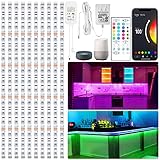
A kitchen can be perfectly functional and still feel flat once the overhead lights are the only thing carrying the room after sunset. Best LED light color for kitchen setups often benefit from a second layer of light that handles mood instead of chopping, measuring, or checking food color, and that’s where the Govee strip starts to make sense. Its RGBIC lighting can show several colors along the same strip instead of forcing the entire 16.4-foot run into a single shade. That distinction matters around cabinet tops, toe kicks, open shelving, or the back edge of a breakfast bar, where a little depth can keep the room from looking like one bright white box.
Govee RGBIC LED Strip Lights
The biggest strength here is the way RGBIC technology changes the visual character of the strip. Traditional RGB strips commonly display one color across the whole line, while this model can place multiple colors on the same run at the same time. In a kitchen, that makes subtle gradients possible instead of locking the space into a single red, blue, or green glow. Multiple-color effects are more decorative than task-oriented, but tucked above cabinets or beneath a counter edge, they can add personality without interfering with the main lighting plan.
The obvious limitation is just as important: colored accent light shouldn't replace practical kitchen illumination. A countertop used for cutting vegetables or checking whether meat is properly browned still needs clear, neutral light from dedicated fixtures. RGBIC strips are better thought of as the supporting cast, especially for evening meals, casual gatherings, movie nights in an open-plan room, or a soft late-night glow. Used that way, the strip avoids the common mistake of asking decorative lighting to perform jobs it wasn't designed to handle.
Placement can make or break the effect. Indirect mounting usually looks cleaner because the LEDs reflect off a wall, cabinet surface, or ceiling instead of shining directly into your eyes. A strip placed along the upper cabinet line can create a soft wash that makes the ceiling feel less dark, while installation under the lip of a peninsula can add color without cluttering the countertop. Exposed diodes may look busy in a polished kitchen, so hiding the strip itself often produces the more finished result.
The 16.4-foot length gives enough flexibility for a modest run, though layout planning matters before the backing paper comes off. Corners, power access, gaps between cabinet sections, and the route to the outlet can quickly eat into usable length. A single uninterrupted line is much easier to manage than trying to force the strip around awkward transitions. The supplied description also notes that the product isn't recommended outdoors, so it makes more sense on dry interior surfaces than around exposed patios or weather-prone outdoor kitchens.
App Control Changes How The Strip Feels Day To Day
Remote controls tend to end up in drawers, behind appliances, or under a stack of mail, so Govee Home App control is one of the more practical parts of this setup. Colors and brightness can be adjusted from the app rather than relying on a basic handheld controller. That’s useful in a kitchen because the same lighting can feel right at 7 p.m. and way too loud at midnight. Dialing the brightness down for a softer glow keeps the strip from competing with pendant lights or under-cabinet task fixtures.
The app also opens access to the product's large color range, including the stated 16 million color options. In practical use, that number matters less than having enough control to settle on a few shades that actually suit the room. Warm amber, muted orange, or soft pink can complement wood and cream finishes, while cooler blues and purples may suit a modern space with darker cabinets and stainless surfaces. The freedom is there, but restraint usually looks better in a kitchen than throwing every available color onto the walls at once.
Brightness control deserves just as much attention as hue. Even a pleasant color can become irritating if the strip is running at full intensity against a glossy backsplash or reflective countertop. Lowering the output can preserve the decorative effect while reducing glare, especially when the strip sits near eye level. That adjustable balance helps the lighting fit into normal routines instead of turning every evening into a light show.
One tradeoff is the lack of Alexa support noted in the product description. No Alexa compatibility won't matter much if app control is already the preferred routine, but it can be a nuisance in a kitchen built around voice commands. Hands can be wet, greasy, or covered in flour, and voice control would sometimes be more convenient than reaching for a phone. The strip still offers smart control through its own app, but anyone expecting full voice-assistant integration should keep that limitation in mind.
Scenes And DIY Effects Add More Than Basic Color
The 64-plus preset scenes move the strip beyond plain color selection. Party, holiday, movie, and mood-oriented effects can change the backdrop quickly without manually building a palette each time. In a kitchen connected to a dining or living area, those presets can help the room shift roles throughout the day. A calm evening scene can sit quietly in the background, while a brighter animated effect makes more sense during a birthday, holiday gathering, or weekend get-together.
DIY controls add another layer for anyone who gets bored with factory presets. The description says custom effects can be created in the app, and pieces can also be shared through the app community. DIY lighting effects are useful because kitchens vary wildly in finish, layout, and natural light, so a stock color scheme may not suit every room. Tweaking a gradient until it complements cabinet paint or backsplash tile can produce a much more deliberate look than simply selecting a generic scene and leaving it there.
The product description also mentions regularly updated themes within the app. New theme options can keep the strip from feeling static over time, although they’re more about variety than necessity. A carefully chosen warm gradient may end up being the setting used most often, and that’s perfectly reasonable. Plenty of smart-light features sound exciting on day one but settle into one or two dependable routines once the novelty wears off.
That gap between possibility and daily use is worth acknowledging. Having countless colors doesn't automatically make a kitchen better lit, and complicated animations can become visual noise around a space already full of appliances, reflective surfaces, and movement. Simple color combinations often age better because they support the room instead of demanding attention. The strip is at its best when its flexibility is used selectively rather than constantly.
Music Sync Makes Sense For Social Kitchens
The integrated high-sensitivity microphone supports 11 music sync modes, giving the strip another personality once cooking turns into entertaining. Light movement that follows music can make an open kitchen feel more connected to a party happening in the dining or living area. It isn't essential for everyday food prep, obviously, but that doesn't make it pointless. A kitchen island often becomes the unofficial center of a gathering, and reactive lighting can make that corner feel less utilitarian without adding extra decor.
Music-responsive lighting works best as an occasional feature rather than the default state. Constant pulsing beside a cutting board would get old quickly, and a fast animation can be distracting while people are cooking or cleaning. During a gathering, though, the same effect feels intentional because the room is already operating in a more social mode. That contrast is exactly why adjustable smart lighting has an advantage over fixed-color decorative strips.
The microphone-based approach also means the lighting response is tied to nearby audio rather than needing a complicated entertainment setup. That keeps things relatively simple for casual use. Still, the effect depends heavily on placement and the surrounding sound environment, so a strip tucked far away from the main speakers may respond differently than one installed closer to the action. Placement and sound exposure can influence how lively the result feels.
Some lighting topics sit outside kitchen ambience but still rely on matching color and intensity to a specific purpose, and a related reference appears in best grow lights for flowering stage. That distinction is useful because decorative RGB lighting and plant-focused illumination solve very different problems even though both use LEDs. A colorful strip can shape atmosphere around cabinets and counters, while plant lighting depends on output and coverage that this product description doesn't claim to provide. Keeping those roles separate prevents a stylish accent light from being mistaken for specialized functional equipment.
Installation Demands A Little Surface Prep
The product notes make surface preparation one of the most practical installation details. Dust, hair, grease, and moisture can weaken adhesive contact, and kitchens are especially good at collecting all four. Wiping the mounting area until it's clean and fully dry gives the tape a better chance of staying put. Skipping that step may save a few minutes up front but can turn into a sagging strip later, especially beneath cabinets where heat and cooking residue are common.
Kitchen surfaces deserve extra scrutiny because not every finish plays nicely with adhesive strips. Smooth, clean surfaces tend to be easier than textured wood, dusty cabinet tops, or uneven masonry. A strip hidden above cabinets is also less likely to be bumped during cleaning than one running along an exposed edge. Thinking through cleaning habits before installation can save frustration, since an attractive location isn't always the easiest one to maintain.
Heat and moisture are another practical consideration. The description says the strip isn't recommended for outdoor use, and that same caution suggests avoiding spots where water, steam, or heavy splatter are routine. Dry decorative zones make more sense than mounting the strip directly beside a sink, stovetop, or other messy work area. That placement also protects the visual effect because grease buildup on exposed LEDs can quickly turn a crisp installation into something that looks tired.
The adhesive design favors planning once and mounting once. Repositioning strip lights repeatedly can weaken the backing, so measuring the run, identifying the power source, and deciding how corners will be handled beforehand is worth the effort. Installation planning isn't glamorous, but it separates a clean line of light from a crooked strip with visible slack. In a room where cabinet edges and countertop lines are already very straight, sloppy placement stands out immediately.
How It Fits The Best Kitchen Light Color Question
The phrase best LED light color for kitchen usually points toward warm white, neutral white, or carefully layered lighting for daily work, so this Govee strip occupies a different lane. Its strongest role is accent and atmosphere, not accurate food color or concentrated task illumination. That difference isn't a weakness if the expectation is set correctly. A practical kitchen can use neutral task lighting for chopping and cleaning while the RGBIC strip handles softer background color after the hard work is done.
Layered lighting is where this product becomes easier to justify. Ceiling fixtures can provide the main brightness, under-cabinet lights can illuminate worktops, and the Govee strip can add depth above cabinets, beneath a counter lip, or along architectural details. Each layer then has one job instead of one fixture trying to handle everything. The result tends to feel calmer because decorative color can be dimmed independently rather than forcing the entire room into the same mood.
Color choice should also respond to the kitchen itself. Warm amber and muted tones can soften white cabinetry or make wood finishes feel richer, while cooler accent colors may suit black, gray, or steel-heavy interiors better. Highly saturated greens, reds, and blues can be fun for short periods but may distort how nearby surfaces and food appear. That's another reason to keep RGBIC light away from the primary prep zone and let functional fixtures preserve natural-looking color where it matters.
The main tradeoff is straightforward: this strip offers creative flexibility, app control, multiple colors on one line, preset scenes, DIY effects, and music synchronization, but it isn't positioned as a dedicated kitchen task light. Alexa support is absent, outdoor use isn't recommended, and adhesive performance depends on careful preparation. For a kitchen that already has solid functional lighting, those compromises are easier to accept because the strip is being asked to add atmosphere rather than solve visibility problems. Used with that boundary in mind, the 16.4-foot Govee RGBIC strip can make an otherwise plain lighting scheme feel more personal without pretending to replace the fixtures that actually make cooking easier.
Benreom RGB Under Cabinet Lights for Kitchen Color
Flat overhead lighting can make a kitchen feel harsher than it needs to, especially after the cooking is done and the room shifts into a quieter evening rhythm. The Benreom kit approaches best LED light color for kitchen from a more flexible angle by combining mixed white illumination with a broad range of RGB colors. Three light bars can sit beneath cabinets, counters, shelves, or nearby furniture, creating a separate layer of light without asking the ceiling fixture to handle every job. The key attraction is adjustable color and brightness, though the mixed white output and decorative RGB emphasis also create a few practical tradeoffs worth understanding.
Benreom RGB Under Cabinet Lights
The Benreom system is built around three plug-in light bars rather than one continuous strip, which changes how the lighting can be arranged. Individual bars can suit cabinet sections, workbench areas, shelves, or separate stretches of counter where a long strip would be awkward. That modular approach can reduce the visual clutter of unused strip length, especially around cabinet breaks or appliances. Still, the bars need thoughtful placement because gaps between them may create visible changes in brightness across a long countertop.
Sixteen million DIY colors give the kit far more decorative range than ordinary warm-white cabinet lighting. The stated color selection includes white, although the product description identifies it as mixed white rather than pure white. That difference matters in a kitchen because mixed white may not reproduce food, paint, or countertop colors as neutrally as a dedicated white task light. For accent lighting, though, the flexibility can be genuinely useful, especially after meal prep is finished and atmosphere matters more than precise visual judgment.
The light output is also dimmable from 0% to 100% through the app, while the supplied remote offers ten brightness levels. That gives more control than a basic on-or-off cabinet lamp and lets the same installation shift between brighter utility lighting and a softer evening glow. A lower setting can keep under-counter illumination from bouncing aggressively off polished stone or glossy cabinet finishes. Brighter settings make more sense around shelves, desks, or secondary work surfaces where a little extra visibility helps.
A practical caveat sits right beside all that flexibility. These lights aren't described as dedicated high-accuracy kitchen task fixtures, so color-changing capability shouldn't be mistaken for neutral work lighting. Chopping produce, checking browning, reading small labels, and judging food color are jobs where a stable white source usually makes life easier. The Benreom bars make more sense as a supplementary layer that can handle both casual white illumination and decorative color without replacing the room's primary task lighting.
Two Control Methods Keep Daily Use Flexible
The supplied 40-key IR remote handles the basics without requiring a phone every time the lights need adjustment. Its listed functions include on and off control, ten brightness levels, thirteen basic colors, timer settings for one, two, or four hours, twelve dynamic modes, and several themed modes such as night, starry, party, and movie. That combination is practical around a kitchen because a physical remote can be faster for small changes. It also gives the lighting a fallback control method if opening an app feels like more trouble than the adjustment is worth.
The app goes considerably deeper. It adds 0% to 100% brightness adjustment, the full DIY color range, 213 dynamic modes, music and microphone functions, and scheduled on and off times. Scheduling is particularly useful for cabinet lighting because decorative lights are easy to forget once the room is empty. A programmed shutoff can keep the bars from glowing long after everyone has gone to bed, while an evening schedule can bring softer ambient light into the room without repeatedly reaching for a switch.
Two control systems also soften one of the common frustrations with app-heavy lighting. Phones aren't always within reach, and kitchen hands are often wet, dusty with flour, or busy holding something. Remote plus app control means the setup doesn't depend entirely on one interaction style. The remote covers quick routine changes, while the app handles detailed color work, scheduling, and more elaborate effects.
The tradeoff is complexity. A system with dozens of buttons, hundreds of modes, and a large color palette can feel excessive if all that's wanted is a steady warm glow under a cabinet. Feature depth is useful only when it matches the routine, and plenty of kitchens will settle into two or three favorite settings after the novelty wears off. That's not necessarily a drawback, but it does mean the value of the app is stronger for someone who actually wants changing scenes and customized ambience rather than simple white illumination.
Mixed White And RGB Serve Different Kitchen Jobs
The most useful way to judge this kit is to separate functional white light from decorative RGB light. Mixed white can handle casual countertop visibility, cabinet interiors, shelves, or late-night navigation without flooding the whole kitchen with overhead brightness. RGB colors, on the other hand, are better suited to mood, parties, movie nights in an open-plan room, or simply giving a plain row of cabinets some visual depth. Treating those two modes as separate tools makes the product easier to use sensibly.
Color selection can also respond to the materials already in the room. Warm amber or muted orange can soften white cabinets and complement wood finishes, while low-intensity blue or violet can create a cooler accent around black, gray, or metal-heavy interiors. Saturated colors can distort nearby surfaces and food, though, so they aren't a smart default over a cutting board or food-preparation station. A vivid red backsplash glow may look fun during a gathering but becomes less helpful while judging whether ingredients are cooked properly.
The mixed white specification deserves special attention because the product description explicitly distinguishes it from pure white. Mixed white may carry a slight color character compared with dedicated neutral-white cabinet fixtures, depending on how the RGB channels create that appearance. That doesn't automatically make it unpleasant, but it changes the expectation. Anyone who wants highly neutral task lighting should keep the main kitchen work lights responsible for that job and use these bars as a flexible secondary layer.
Brightness control helps bridge the gap between decoration and practical use. A strong RGB effect can dominate a small kitchen quickly, while a dimmer setting can sit quietly under cabinets and add depth without turning the room into a party scene. Lower intensity often looks more deliberate, especially around reflective counters, glass doors, or stainless appliances. The ability to dial the output down is therefore just as valuable as having millions of colors available.
Music And Dynamic Modes Favor Social Spaces
The Benreom bars can change color with either music or microphone input, giving the kitchen a more animated character during social use. Music-responsive lighting makes more sense around an island, bar counter, wine rack, or open-plan kitchen than beside a serious food-prep station. The effect can tie the kitchen visually to music playing in an adjacent dining or living area. Used occasionally, it gives the lights a reason to stay interesting beyond static color selection.
The app's 213 dynamic modes offer substantially more variety than the twelve dynamic modes on the remote. That difference makes the app the better tool for anyone who enjoys changing the visual mood from one evening to the next. Still, more modes don't automatically produce a better-looking kitchen. Slow transitions and restrained color combinations usually sit more comfortably around cabinets than rapid flashing effects, especially in a small room where every reflection doubles the visual activity.
The themed remote settings provide a quicker middle ground. Night, starry, party, and movie modes can shift the room's mood without manually adjusting multiple values. Preset scenes reduce setup fuss, which matters because decorative lighting loses some appeal if every use requires several minutes of tweaking. A kitchen that doubles as a casual gathering place benefits most from that sort of convenience.
Music modes also reveal a limitation of this product category. Reactive lighting is entertaining, but it doesn't improve chopping visibility, food-color accuracy, or countertop contrast. Entertainment features and task performance solve different problems, so the bars shouldn't be judged solely by how dramatic they look with music playing. Their strongest case is versatility across work, ambience, and entertainment rather than specialization in one lighting role.
Placement Matters More Than The Color List
Under-cabinet installation sounds simple, yet placement has a huge influence on whether the finished result feels polished or patchy. Mounting the three bars so their light overlaps gently can help create a more continuous wash across the counter. Even spacing matters because widely separated bars may leave darker zones between bright pools of light. Cabinets with several short sections may suit the three-bar format particularly well since each fixture can serve a defined area.
Glare is another consideration. Positioning the bars too close to the front lip of an upper cabinet may expose the LEDs directly to someone sitting nearby, while placing them farther back can soften the effect through reflection off the backsplash or worktop. Indirect light usually feels calmer, especially at night when the eyes are adjusted to a darker room. Glossy stone and polished metal can amplify bright points, so dimming becomes useful in reflective kitchens.
The kit is also described for counters, closets, desks, wine racks, TV backs, shelves, beds, cupboards, wardrobes, and display cases. That broad placement range shows that the design is fundamentally ambient and multipurpose rather than restricted to cooking spaces. A kitchen installation can therefore spill into nearby shelving or a display cabinet for a coordinated look. The same flexibility can become a distraction, though, if unrelated areas are all set to different colors at once.
Specialized plant lighting has a very different job from decorative cabinet illumination, and that distinction becomes clearer in a neutral reference such as best grow lights for lettuce. RGB ambience and plant-growth lighting aren't interchangeable, even though both may use LEDs and sit near shelving. Lettuce lighting depends on plant-oriented intensity and coverage, while this Benreom kit is described around ambient color, mixed white illumination, music effects, and general decorative placement. Keeping those roles separate avoids expecting a cabinet light to perform a job it wasn't described to handle.
Strengths And Tradeoffs In Everyday Kitchen Use
The strongest argument for the Benreom kit is control flexibility. A physical remote handles quick adjustments, while the app provides detailed color selection, schedules, brightness control, dynamic scenes, and sound-reactive modes. That mix allows the lights to shift from a low white glow during a late snack to colored ambience during a gathering. Three separate bars also suit installations where a single long strip would be inconvenient or visually messy.
The main weakness is equally clear: mixed white isn't the same as dedicated pure white. For decorative or secondary lighting, that distinction may hardly matter, but a countertop used for detailed cooking deserves dependable illumination from a proper task fixture. The RGB palette adds personality, yet colored light can make ingredients and surfaces look unnatural. This kit therefore earns its place more easily in a layered lighting plan than as the only source under the cabinets.
Another tradeoff comes from the sheer number of controls. People who enjoy tweaking colors can spend plenty of time with the app, while someone who wants one dependable white setting may barely touch most of its features. Two hundred thirteen dynamic modes sound substantial, but practical value comes from the few settings that genuinely fit the room. A calm warm-toned scene, a dim nighttime level, and one lively music mode may end up doing most of the work.
The timer options on the remote and scheduling tools in the app add useful routine control without changing the basic character of the product. One, two, and four-hour remote timers can suit evenings when the lights are mainly decorative, while app scheduling supports a more consistent daily pattern. That can be handy beneath cabinets that otherwise stay dark until someone remembers to switch them on. It also reduces the little annoyance of walking back into the kitchen later and noticing the accent lights were left running.
Where The Benreom Kit Makes The Most Sense
A kitchen already equipped with capable ceiling and task lighting gives these bars the right environment to shine in their intended role. Layered illumination lets the Benreom system add mood without carrying the burden of every cooking task. Mixed white can provide softer supplemental light, while RGB settings can change the character of cabinets, counters, and display areas after the main work is done. That separation keeps decorative flexibility from compromising practical visibility.
Small kitchens may benefit from restraint. Three vivid bars running at high brightness can overwhelm a compact space, especially around glossy white cabinets or reflective countertops. Lower brightness and simpler colors can make the installation feel integrated instead of pasted on. Larger kitchens or open-plan layouts have more room for animated modes because the colored light can spread across a broader visual field.
The Benreom kit also fits spaces where the kitchen isn't used solely for cooking. A counter may become a coffee station in the morning, a homework spot in the afternoon, and a gathering point at night. Adjustable color, remote control, and scheduling give the same fixtures enough range to adapt without moving them around. The product's stated use on desks, shelves, wine racks, and display cases reinforces that flexible role.
For the best LED light color for kitchen question, the Benreom bars don't point to one magic shade. Their value comes from switching between mixed white and a wide RGB palette while allowing brightness to change with the situation. The practical limit is that their white output is explicitly described as mixed rather than pure, so they shouldn't be treated as a substitute for accurate task lighting. As a secondary cabinet layer, though, the combination of three light bars, app control, remote access, timers, music response, and broad color adjustment gives the kitchen far more visual flexibility than a fixed-color under-counter lamp.
LAFULIT RGB Under Cabinet Lights for Kitchen Ambience
Cabinet lighting can look oddly one-dimensional once every fixture is locked to the same white tone, especially in a kitchen that shifts from meal prep to casual evening use. The LAFULIT kit tackles best LED light color for kitchen from a decorative angle, giving the space access to millions of RGB colors instead of limiting the cabinets to warm or cool white. Its eight-piece, 13-foot layout is particularly interesting because separate sections can follow shelves, counters, bookcases, or cabinet runs without forcing one continuous strip into every corner. Still, this is primarily flexible ambient lighting, so its real value comes from mood, layering, and placement rather than replacing serious task fixtures.
LAFULIT RGB Under Cabinet Lights
The kit includes eight lighting sections, and that modular format can be easier to work with than a single uninterrupted strip. Kitchens rarely have perfectly straight cabinet runs, after all, and appliances, sinks, open shelves, and corner cabinets tend to break the line. Separate pieces give more freedom to light several zones without leaving excess strip bunched up behind an appliance or awkwardly routed around a gap. The stated 13-foot total length should still be planned carefully so each section lands where the light will actually be useful.
Color flexibility is the headline feature. The supplied description lists 16 million colors, giving the setup enough range for subtle amber, muted purple, deep blue, or brighter party-oriented combinations. That much variety sounds extravagant, but the practical advantage is being able to tune the light around cabinet color, countertop finish, and the mood of the room. A quiet warm shade under wood cabinets can feel understated, while stronger RGB settings make more sense after the cooking is done.
The kit is positioned for cabinets, counters, shelves, TV backs, displays, stairs, showcases, and bookcases, which tells you a lot about its intended personality. Ambient flexibility matters more here than highly specialized kitchen illumination. That distinction is useful because a strip designed to add color around shelving doesn't automatically become the right lamp for judging meat doneness or reading fine print on a package. Keeping those jobs separate leads to a much more sensible lighting setup.
The strongest fit is therefore a kitchen that already has dependable ceiling or under-cabinet task lighting. Layered light lets the LAFULIT system handle visual atmosphere while neutral fixtures take care of chopping, measuring, and cleaning. That arrangement also prevents colored light from distorting ingredients during food prep. Used as the supporting layer rather than the main source, the kit has far more room to show what it does well.
Color Control Gives The Kitchen More Personality
Static white light has its place, but it can make every hour in the kitchen feel exactly the same. The LAFULIT system uses RGB color control to create different visual moods without changing fixtures or moving lamps around. Warm orange can soften an all-white kitchen in the evening, while cooler blues may sit comfortably against gray cabinets or stainless appliances. The trick is restraint, because highly saturated colors can quickly dominate a small room.
Brightness adjustment helps keep the color from becoming too aggressive. A low-intensity wash under cabinets can add depth without turning the countertop into a glowing stage, and that matters around glossy stone, glass, or polished metal. Reflections can make even a modest strip appear brighter than expected, especially at night. Being able to dial the output down makes the lighting easier to live with rather than merely fun for a few minutes.
The millions-of-colors claim is less important than the handful of tones that actually fit daily routines. Most kitchens don't need a rainbow every evening, and constantly changing hues can become visual clutter fast. Simple, repeatable settings are often the better long-term choice, such as one soft warm shade for dinner, one dim color for late-night use, and a livelier option for gatherings. The broad palette is useful because it gives room to settle on those favorites instead of forcing a fixed color.
One realistic weakness is that RGB ambience doesn't provide the same visual clarity as a dedicated neutral task light. Colored illumination can shift the appearance of food and finishes, so it isn't the smartest choice directly over a cutting board or preparation surface during detailed cooking. That doesn't count against the product so much as define its role. It belongs in the atmosphere layer, not at the center of accurate visual work.
App And Remote Control Keep Adjustments Practical
LAFULIT provides two control routes: an app and a 40-key IR remote. That dual approach is handy because a phone isn't always convenient around food, water, flour, or greasy hands. The remote can handle straightforward changes without unlocking a screen or opening an application. Meanwhile, the app offers deeper control for anyone who wants to fine-tune colors, brightness, dynamic effects, timers, and sound-responsive features.
The description also lists a memory function, which can reduce the irritation of rebuilding a preferred setup every time the lights are switched on. Lighting becomes much easier to live with once the system remembers the tone and behavior that actually suit the room. Nobody wants to hunt through a large color menu before making coffee. A dependable remembered setting keeps the smart features from getting in the way of ordinary use.
Timers add another practical dimension. Scheduled or timed lighting can help cabinet lights fit naturally into evening routines rather than being left on until someone eventually notices them. A timed glow can make sense after dinner, around a display shelf, or under cabinets used mainly for ambience. The feature is simple, but it's the kind of convenience that often matters more over time than flashy animation modes.
Two control methods also reduce dependence on a single interface. If the app isn't nearby, the remote still keeps the basic lighting accessible. If more detailed adjustments are needed, the app steps in with broader control. Control redundancy may sound minor, but it makes the setup less fussy in a room where quick interactions usually beat complicated ones.
Music Sync Adds Energy Without Changing The Core Role
The LAFULIT lights can respond to music or microphone input, shifting colors with the rhythm of nearby sound. Music sync clearly leans toward entertainment rather than cooking, but kitchens often become gathering spots once guests arrive. An island, bar counter, or open kitchen connected to a living space can feel more lively with reactive color in the background. Used occasionally, the effect gives the lighting a second life beyond static ambience.
Fast movement won't suit every moment. A pulsing strip can be distracting during meal prep, especially in a small room with reflective surfaces multiplying every color change. Sound-reactive modes work best selectively, such as during a party, casual dinner, or weekend get-together. Turning the effect off during ordinary cooking keeps the lighting from feeling gimmicky.
The value of music sync depends heavily on expectations. It won't improve visibility on a countertop, make food colors more accurate, or replace neutral work lighting. Entertainment and task performance are separate jobs, and this kit is far stronger at the first one. That boundary helps prevent disappointment because the product is easier to appreciate when judged on the experience it is actually designed to create.
The feature can still be useful in mixed-purpose rooms. A kitchen that doubles as a dining area, homework zone, or social hub doesn't need the same atmosphere all day long. Responsive color gives the room a way to loosen up once the practical work is finished. It's a small change, but it can make cabinetry and shelving feel less static after dark.
Installation Is Simple But Placement Still Deserves Thought
The product description emphasizes strong self-adhesive installation: wipe the intended surface, attach the lights, and connect the power. That sounds straightforward, yet surface preparation matters more in a kitchen than it might in a bedroom or office. Grease film, dust, and moisture can build up under cabinets even when the area looks clean. A properly cleaned and dry surface gives the adhesive a much better chance of staying where it belongs.
Placement affects both appearance and comfort. Mounting the strip too close to the cabinet's front edge can expose the LEDs directly, creating glare instead of a soft wash. Indirect placement farther back often looks calmer because light can bounce off the backsplash or countertop before reaching the eyes. That approach also hides the hardware more effectively and makes the installation look less improvised.
The eight-piece format can be helpful around corners, cabinet breaks, display cases, and uneven shelving. Modular sections allow the lighting to follow the room rather than forcing the room to accommodate one long strip. Still, planning cable routes and power access before sticking anything down is worth the effort. A neat light effect loses some of its appeal if wires end up crossing visible cabinet faces or dangling beside appliances.
Kitchen cleaning habits should influence placement too. Areas right beside a sink or stovetop deal with more steam, splatter, and grease than the underside of a dry display shelf. Lower-maintenance locations can keep the strip looking cleaner and reduce how often the adhesive area is disturbed. A slightly less dramatic mounting spot may be the smarter long-term choice if it stays protected from everyday mess.
How It Fits The Best Kitchen LED Color Question
The search for best LED light color for kitchen usually starts with practical whites, but decorative RGB lighting serves a different purpose. Neutral or warm white fixtures are generally the better foundation for meal prep, while the LAFULIT system adds color around that foundation. This division of labor is exactly what makes layered lighting useful. One fixture handles visibility, another handles atmosphere, and neither has to compromise as much.
Warm colors tend to feel more relaxed in the evening, particularly around wood cabinets, cream surfaces, and warm-toned countertops. Cooler blues and purples can sit naturally in modern kitchens with gray, black, or metallic finishes. Color should support the room rather than fight it, which means the most dramatic setting isn't always the most attractive one. Softer saturation usually has more staying power in a kitchen used every day.
The kit's ability to move between millions of colors gives it room to adapt, but flexibility isn't the same thing as precision. RGB lighting is primarily visual and decorative, so it shouldn't be expected to deliver specialized performance outside that role. Plant lighting is a good example of a completely different use case, and a neutral reference related to electric-bike lighting appears in how to turn on Lectric bike light, where the lighting purpose is visibility and operation rather than kitchen ambience. Keeping unrelated lighting categories distinct makes the LAFULIT kit easier to evaluate on its own terms.
The main takeaway from a practical review angle is that color variety only pays off if the room already has the basics covered. Functional task light first, decorative color second is the safer order for a working kitchen. Once that foundation is in place, RGB strips can add warmth, depth, or movement without compromising everyday visibility. The LAFULIT system fits that secondary role especially well because its modular layout can spread the effect across several cabinet or display zones.
Strengths And Weaknesses In Everyday Use
The strongest feature is probably the combination of eight modular pieces and broad color control. That gives more installation freedom than a single rigid run and lets different parts of a kitchen receive light without forcing awkward bends. App control, remote access, brightness adjustment, and dynamic modes add plenty of flexibility after installation. For a room with cabinets, shelves, and display areas, that combination can create a more layered nighttime appearance.
The biggest limitation is equally straightforward. This isn't a dedicated task-lighting system, at least not from the functions described here, so it shouldn't be treated as the sole source over a food-prep surface. RGB color can be useful and attractive, but it can also distort the way food and finishes appear. Anyone expecting highly neutral white illumination would be better served by keeping a separate white fixture responsible for precision work.
Music sync and dynamic modes are fun additions, yet their value depends on how the kitchen is actually used. Someone who regularly hosts friends or uses the kitchen as part of an open entertainment area may enjoy them far more than someone who wants quiet, fixed under-cabinet illumination. Feature fit matters more than feature count. A simpler lighting routine can still make full use of the dimming, memory, and basic color functions without touching the more animated effects.
The installation method is easy on paper, but adhesive lighting always rewards preparation. Clean mounting surfaces, hidden LED placement, and planned cable routes can make the difference between a neat installation and one that feels temporary. Taking a few extra minutes before sticking the sections down is far easier than peeling them off and trying again later. Kitchens are visually orderly spaces with lots of straight edges, so alignment mistakes tend to stand out.
Where The LAFULIT Kit Makes The Most Sense
A kitchen with good overhead or task lighting is the natural home for this system. The LAFULIT kit can then operate as accent lighting under cabinets, along shelves, behind displays, or around a counter edge without carrying responsibilities it wasn't designed for. That setup gives the room more personality while preserving dependable illumination where cooking happens. It's a practical split between utility and atmosphere.
Open-plan rooms may get even more value from the dynamic features. A colored cabinet glow can visually connect the kitchen to a nearby dining or living area, particularly once the main white lights are dimmed. Music sync and adjustable color feel more appropriate in that social setting than during focused prep work. The same lights can remain subdued most nights and become livelier only when the room calls for it.
Smaller kitchens need a lighter touch. Bright saturated colors can bounce off cabinets and countertops quickly, making the room feel busier than expected. Lower brightness and muted hues usually preserve the sense of space better than aggressive animations. The flexibility of the app and remote makes that restraint easy enough, since the strip doesn't have to run at full intensity to remain noticeable.
For anyone weighing best LED light color for kitchen, the LAFULIT kit is better understood as a flexible color layer rather than a single answer to the entire lighting problem. Its 13-foot, eight-piece design, app and remote controls, music response, memory function, timers, and large color range give it plenty of decorative range. Its weakness is the same one shared by most RGB-focused systems: colorful ambience can't replace carefully chosen neutral light where accuracy and visibility matter. Used around that limitation, the kit can add a much richer evening character to cabinets, shelves, counters, and nearby display spaces without pretending to be the only light the kitchen needs.
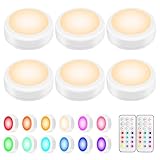
Rechargeable RGB Under Cabinet Lights for Kitchen Color
A dark counter can be annoying at night, but running bright ceiling fixtures every time you grab a glass of water feels like overkill. This six-light kit approaches best LED light color for kitchen with a broader mix than typical puck or bar lights, combining three white-tone settings with twelve RGB colors in compact rechargeable fixtures. Each light carries 40 white or warm LEDs plus 8 RGB LEDs, so the design isn't limited to decorative color alone. The real appeal is wireless placement, while the biggest compromise is having to recharge the individual lights instead of leaving them permanently powered.
48 LED Rechargeable RGB Cabinet Lights
Each fixture measures roughly 7.28 by 1.18 by 0.59 inches, giving the bars a slim profile for cabinet bottoms, cupboards, shelves, wine cabinets, showcases, hallways, or other tight spots. The absence of power cords is a genuine practical advantage around countertops because wireless installation avoids a cable dangling toward an outlet or crossing a backsplash. Six separate lights also let you spread illumination over several short cabinet sections instead of forcing one long strip around corners. That flexibility is particularly useful in kitchens broken up by a sink, range hood, refrigerator, or open shelving.
The lighting hardware combines 40 white and warm LEDs with eight RGB LEDs in each bar. That arrangement gives the fixtures two personalities: functional white-toned illumination for ordinary use and colored light for atmosphere. The distinction matters because RGB effects are fun around shelves or cabinets, but they aren't always comfortable over ingredients while you're slicing, seasoning, or judging browning. Having dedicated white-tone options makes this kit more practical than an RGB-only bar for everyday kitchen use.
The six-piece format has a tradeoff, though. Every light contains its own rechargeable battery, so battery management becomes part of ownership rather than something you can forget about. A long counter lit by all six bars may eventually mean removing several fixtures for charging at roughly the same time. That isn't necessarily difficult because the magnetic mounting system makes removal simple, but a permanently wired setup will demand less ongoing attention.
There's also no motion-sensing function, a limitation clearly stated in the supplied specifications. The lights rely on remote operation or their normal controls rather than automatically switching on when someone walks into the kitchen. That may suit a deliberate accent-lighting setup, yet it removes some of the convenience people often expect from rechargeable cabinet lamps. Anyone wanting automatic nighttime illumination should keep that distinction firmly in mind.
Three White Tones Cover More Practical Kitchen Needs
The remote offers three preset white-tone choices identified as 3000K, 4500K, and 6000K. That range is useful because one color temperature rarely feels equally comfortable for every kitchen task. The 3000K option brings a warmer appearance that can sit nicely against wood cabinets, cream paint, brass hardware, and relaxed evening lighting. The 4500K setting moves toward a more neutral look, while 6000K produces a visibly cooler character.
For everyday countertop use, 4500K neutral light is arguably the most practical place to start among the three supplied choices. It can give a crisper appearance than 3000K without pushing as far into the cool, bluish character associated with 6000K. That's handy around cutting boards, coffee stations, pantry shelves, and general cleanup where visibility matters more than mood. Still, the provided product information doesn't state a color-rendering specification, so it would be unwise to assume professional-level color accuracy.
3000K warm light has a different strength. It can make a kitchen feel less stark during an evening snack, a late cup of tea, or dinner cleanup when bright neutral light isn't necessary. Warm illumination also tends to blend more naturally with living-room lamps in open-plan spaces where the kitchen remains visible after the cooking is finished. Its weakness is that very warm lighting can make some white surfaces and ingredients appear less crisp than a neutral setting.
The 6000K cool setting pushes visibility in another direction, giving surfaces a sharper, colder appearance. It may feel useful inside a dark cupboard, utility area, or workbench where atmosphere doesn't matter much. On glossy white cabinets or reflective countertops, though, that cooler tone can feel harsher than expected, especially late at night. Having all three settings means the fixture doesn't force the kitchen into one permanent color temperature, which is more valuable than simply offering a single bright white mode.
Fifteen Colors Add Mood Without Losing White Light
The remote provides 15 color options in total, consisting of the three white-tone presets plus twelve RGB colors. That mix gives the lights room to move from ordinary kitchen illumination into softer decorative use without swapping fixtures. Colored bars beneath a cabinet, wine rack, or display shelf can add visual depth once food prep is over. The trick is knowing when to leave the RGB effects alone, because saturated color can make ingredients and countertops look noticeably different.
A low red, blue, or purple accent can work around a bar counter, glass cabinet, or shelf where appearance matters more than accurate color perception. RGB ambience is less sensible directly over a cutting surface during active cooking because it can mask subtle color changes in food. That's not a flaw unique to this kit; it's simply the nature of colored accent light. White mode handles the practical job, while RGB earns its keep after the work is done.
The kit also offers 10 brightness levels through the remote. That gives more control than a simple bright-or-off fixture, especially in a small kitchen where full output can bounce strongly from stone, glass, metal, or glossy cabinet doors. Lower brightness can create a calm path of light across a countertop without waking the entire room visually. Higher levels make more sense inside cupboards or under cabinets where the light source is hidden and more illumination is actually useful.
One remote can control several of the lights at the same time, according to the supplied details. Group control is a welcome feature with six separate fixtures because adjusting each bar individually would get tedious fast. A row of lights can therefore change color or brightness together rather than ending up with slightly different settings. That keeps the installation feeling coordinated, which matters more than people expect once several small fixtures share the same cabinet run.
Dynamic Modes Work Better As Accent Features
The remote includes four changing-light modes labeled Fade, Flash, Smooth, and Strobe. Fade can create a breathing-style brightness change with a selected color, while Smooth cycles gradually through twelve colors. These effects clearly favor atmosphere rather than practical countertop work. In a kitchen that doubles as a social space, though, they can add some life around shelves, a beverage station, or a display area without requiring a separate decorative strip.
Smooth color cycling is likely the least intrusive choice for longer periods because gradual transitions don't demand as much visual attention. Flash and Strobe are much more assertive, and they can become distracting quickly in a compact room full of reflective appliances. Bright animated color bouncing off stainless steel, glass doors, and polished counters can feel busier than it looked in the settings menu. Subtle modes generally make more sense if the lights are meant to remain on while people are talking, eating, or moving around the kitchen.
The dynamic options are also worth separating from the core lighting value. A cabinet fixture still needs to be useful when none of the color effects are running, and this kit's three white-temperature settings carry more day-to-day weight than Flash or Strobe. The decorative modes simply expand what the same hardware can do after hours. That's a healthier expectation than treating animation as the main reason to illuminate a work surface.
Lighting categories can serve completely different jobs even when the hardware looks superficially similar. A neutral reference to vehicle-focused illumination appears in best head light bulbs, where beam visibility and road use matter far more than decorative cabinet color. Kitchen accent lighting has a very different job, centered on nearby surfaces, mood, and convenient local illumination. Keeping those purposes separate prevents feature lists from sounding more interchangeable than they really are.
Rechargeable Power Trades Cords For Charging
Each light contains a 3.7V 1100mAh rechargeable battery, so the bars can operate without permanent power cables. The provided specifications state that a full charge takes roughly two to three hours. At 100% brightness in continuous-on mode, the stated runtime is about five to six hours. Those figures make the lights better suited to intermittent cabinet use than to serving as all-day primary kitchen illumination.
The description also states roughly seven to ten days of use in remote-control mode when the lights are activated three to five times per day. Actual habits obviously matter, since brightness and operating duration determine how quickly a rechargeable light needs attention. A bar used for a few short evening visits asks much less from its battery than one left glowing through dinner and cleanup every night. The key benefit is freedom from cords; the cost of that freedom is routine charging.
Six USB cables are included, one for each light, according to the package list. That can make simultaneous charging easier if enough suitable USB power connections are available, although the supplied description doesn't say that six power adapters are included. A standard 5V/1A or higher USB adapter is recommended for charging. The indicator reportedly shows red during charging and turns blue once the light is fully powered.
Battery-powered lights also give useful feedback when they're running low. The product information notes that weakening brightness or reduced remote sensitivity can indicate that the light needs charging or that the remote's batteries need replacement. AAA batteries for the remote aren't included, so that small extra requirement is worth remembering before installation day. None of this is complicated, but rechargeable cabinet lighting is less hands-off than a plug-in bar that always has wall power available.
Timers Make Short Evening Sessions Easier
The remote includes 30, 60, and 90-minute timer options, which suit the way rechargeable lights are often used. A short timer can cover an evening snack, cleanup session, or temporary display-lighting period without leaving the LEDs draining their batteries afterward. The feature is especially useful in a hallway or cabinet where it's easy to walk away and forget that the light was switched on. Timers don't add brightness or color, but they make limited battery capacity easier to manage.
There's one unusual behavior to remember: the supplied description says the lights have a default 90-minute shutoff if another timer isn't selected. That can be helpful for saving battery, yet it may surprise someone expecting the lights to remain on indefinitely. The remote's cancel function is used to remove timer settings so the lamps can continue operating until their batteries run down. Knowing that behavior in advance can prevent the mistaken assumption that a light has malfunctioned after an hour and a half.
The timer also changes how these lights fit into evening routines. Instead of leaving a full kitchen ceiling fixture running, a few cabinet bars can provide local light for a limited period and then switch themselves off. Timed local lighting makes more sense here than relying on the batteries for hours of uninterrupted ambience. It plays directly to the strengths of rechargeable hardware rather than treating it like permanently wired cabinetry.
There's no motion sensor to automate those routines, so the remote remains central to operation. No motion activation is a genuine weakness beside competing rechargeable cabinet lamps that wake automatically near a counter or hallway. On the other hand, manual control avoids unwanted activation caused by pets, passing shadows, or ordinary movement near the kitchen. Whether that's a drawback depends heavily on whether deliberate control or automatic convenience matters more.
Magnetic Mounting Makes Charging Less Annoying
Installation uses magnetic adhesive strips rather than screws. The strip attaches to a smooth surface, while the lamp can be detached when it needs charging. That arrangement is well suited to rechargeable lights because a permanently stuck fixture would make every recharge awkward. It also avoids drilling into cabinet panels, which can matter on finished furniture or rented spaces.
Surface preparation still deserves attention. Cabinet bottoms can collect grease and fine dust that aren't obvious until adhesive starts losing grip, so a clean, smooth mounting area gives the magnetic strip a better chance of staying put. Placement near heavy steam or frequent splatter also creates more cleaning work. A location a little farther from the sink or range may be less dramatic but much easier to maintain.
The slim dimensions help in cramped spaces where a bulky puck light would hang too low. A bar roughly 0.59 inches thick can stay relatively discreet beneath a shelf or cabinet edge. Low-profile mounting matters because seeing the fixture directly often creates more glare than seeing the surface it illuminates. Tucking the bar back from the cabinet lip can soften the result by letting the counter or backsplash reflect the light.
The magnetic system also makes repositioning more realistic than with a permanently wired fixture. Six independent bars can be moved among cabinets, closets, showcases, or other indoor areas as lighting needs change. Placement flexibility is one of the strongest arguments for this design, particularly in spaces where routing wires would be awkward. Just remember that moving the adhesive base itself repeatedly is different from detaching the magnetic lamp, so choosing the base location carefully still pays off.
Strengths And Weaknesses In A Working Kitchen
The biggest strength is the combination of three practical white temperatures and twelve decorative RGB colors in the same rechargeable fixture. A 3000K setting can soften the kitchen at night, 4500K can provide a more neutral everyday look, and 6000K can deliver a cooler appearance where sharper visual contrast is preferred. Ten brightness levels make those settings easier to tune around reflective surfaces. Six bars also provide enough pieces to spread local light across several cabinet sections rather than concentrating everything in one spot.
The most obvious weakness is limited continuous battery runtime compared with plug-in or hardwired cabinet lighting. The stated five to six hours at full brightness is reasonable for intermittent use, but a kitchen that keeps under-cabinet lights running for long stretches will create frequent charging chores. Removing six lights one after another can get old if they're treated like permanent illumination. This design makes more sense where wireless convenience outweighs the desire for always-available power.
A second limitation is the lack of motion sensing. That means the system won't automatically illuminate a counter when someone approaches in the middle of the night. The remote and timer partly compensate by giving centralized control over multiple lamps and automatic shutoff choices. Still, someone primarily seeking hands-free nighttime cabinet lighting should treat the missing sensor as a meaningful difference rather than a footnote.
The RGB modes are a strength only if decorative light actually has a place in the room. Twelve colors and four dynamic effects can be fun around a wine cabinet, shelf, display, or social kitchen, but they won't improve food-color accuracy. White light remains the practical side of the kit, while RGB is the optional personality layer. That balance makes the lights more credible for a kitchen than a color-only product, yet their compact rechargeable design still positions them as supplemental illumination rather than heavy-duty task lights.
Choosing The Best Color From The Available Settings
Among the supplied options, 4500K is the most balanced starting point for ordinary kitchen counter use. It sits between the warmer 3000K setting and the cooler 6000K mode, which can make it easier to combine with existing ceiling or pendant lighting. It also avoids committing the room to a strongly cozy or strongly cool appearance. Exact preference will still depend on cabinet finish, surrounding fixtures, and how much daylight reaches the space.
The 3000K setting is better suited to relaxed use after cooking has slowed down. Warm light can take the edge off a bright white kitchen and pair comfortably with wood, beige stone, or warm-colored decor. It also feels less jarring during a midnight trip to the counter than an intense cool-white lamp. For intricate prep work, though, the neutral option may provide a cleaner visual feel.
The 6000K mode makes the most sense where a crisp, cool appearance is specifically wanted. Dark closets, utility shelves, garages, or workbench areas may suit that character better than a cozy kitchen. Very cool light can make white countertops look strikingly bright, but that same effect can feel clinical during dinner or relaxed evening use. Having it available is useful; making it the default everywhere is another matter.
For best LED light color for kitchen, this six-pack offers an unusually broad answer because it doesn't force one color temperature on every moment. The white settings cover warm, neutral, and cool preferences, while the twelve RGB colors and dynamic modes handle decorative use. Its wireless magnetic mounting, 10 brightness levels, multi-light remote control, and timer functions solve several practical frustrations around cabinets where outlets are inconvenient. The compromises are equally concrete: no motion sensor, recurring charging, a default 90-minute shutoff unless canceled, and battery life that suits intermittent use better than permanent all-day lighting.
Benreom 6-Piece RGB Under Cabinet Lights
A kitchen can feel strangely flat once the main ceiling fixture is doing all the visual work, especially after meal prep winds down and softer lighting starts to make more sense. The Benreom system approaches best LED light color for kitchen from a flexible angle, combining mixed white illumination with a huge RGB palette instead of locking the cabinets into one permanent tone. Six separate light bars make it possible to spread that effect across counters, shelves, cupboards, or display areas rather than concentrating it in one spot. The big attraction is color flexibility, while the main limitation is equally clear: its white mode is described as mixed white rather than pure white.
Benreom 6-Piece RGB Cabinet Lights
The six-bar format gives this kit a different personality from one long LED strip. Cabinet layouts are rarely uninterrupted, and sinks, ranges, refrigerators, corners, and open shelves can break a straight lighting run into awkward sections. With six individual light bars, the setup can be distributed across several cabinet zones without leaving unused strip length curled behind an appliance. That modular layout is a practical strength for kitchens where placement flexibility matters more than creating one continuous illuminated line.
The product description centers heavily on 16 million DIY colors, which makes the lighting more decorative than a conventional warm-white cabinet fixture. Color can shift with the mood of the room, ranging from quiet tones for an evening meal to stronger shades during a gathering. That's useful around a wine rack, display shelf, TV area, or the underside of cabinetry where atmosphere matters. Still, colorful output doesn't automatically make food preparation easier, so the RGB side of the kit is better treated as an accent layer.
White illumination is included for more ordinary use, though the manufacturer specifically describes it as mixed white, not pure white. That detail shouldn't be brushed aside because a kitchen work surface often benefits from predictable, neutral illumination while chopping, measuring, or checking food color. Mixed white may still be perfectly comfortable for general visibility, but the supplied information doesn't claim specialized color accuracy. The sensible expectation is supplemental daily lighting, not laboratory-like color rendering.
Dimming from 0% to 100% gives the bars more practical range than fixed-brightness decorative lights. Full output may suit a dark shelf or counter, while a much lower setting can create background light without bouncing aggressively off polished countertops or glossy cabinet doors. That flexibility matters after dark because even pleasant colors can feel harsh if they're running too brightly. Brightness control therefore carries almost as much day-to-day value as the enormous color palette.
Remote And App Controls Split The Work Nicely
Benreom supplies both a 40-key IR remote and app control, so basic adjustments don't depend entirely on a phone. The remote covers on and off control, ten brightness levels, thirteen basic colors, timers, twelve dynamic modes, and several themed settings. That's handy in a kitchen because reaching for a remote can be simpler than touching a phone with damp or messy hands. The dual-control setup creates a useful balance between quick adjustments and deeper customization.
The app expands the control considerably with 0% to 100% brightness, the full DIY color palette, 213 dynamic modes, music and microphone functions, and scheduled on or off operation. That feature set makes more sense for someone who actually wants the kitchen lighting to change character throughout the day. A calmer color can sit in the background during dinner, while brighter effects can come out later during a party. The sheer number of modes is generous, although most people will probably settle on a small handful that suit the room.
The remote's timer options cover one, two, or four hours, which can be useful for evening accent lighting that doesn't need to stay on indefinitely. A timed shutdown helps prevent the cabinet lights from glowing long after everyone has left the room. The app's scheduling function pushes that convenience further by allowing the lights to follow a more regular routine. For a kitchen where accent lighting is used at roughly the same time each evening, scheduled operation can make the system feel less like a gadget and more like part of the room.
Control depth can also become a minor weakness if simplicity is the priority. Between thirteen remote colors, twelve remote dynamic modes, 213 app modes, music functions, timers, schedules, and millions of DIY shades, there's a lot to fiddle with. Feature overload isn't necessarily a problem, but it means the kit may feel more complicated than a straightforward warm-white cabinet bar. Someone who wants one dependable color may use only a fraction of what the system provides.
RGB Color Works Best As A Second Lighting Layer
Colored cabinet lighting can change the personality of a kitchen quickly, but RGB light and task light solve different problems. A muted orange or warm red can make a white cabinet run feel softer at night, while blue or purple can give a darker modern kitchen a cooler edge. Those same colors can distort the appearance of vegetables, meat, countertops, and painted surfaces during cooking. That's why RGB makes more sense around the edges of the room than directly over a preparation surface.
The strongest setup pairs the Benreom bars with dependable ceiling or dedicated under-cabinet white lighting. Layered lighting lets neutral fixtures handle chopping, cleanup, and food inspection while the RGB bars handle atmosphere. This division also prevents the decorative layer from becoming annoyingly bright just because the work surface needs more visibility. Each fixture gets a clearer role, and the kitchen feels less visually confused.
Mixed white gives the Benreom system some practical middle ground, but its stated limitation still matters. Since the supplied description explicitly says mixed white rather than pure white, it would be a stretch to present these bars as precision task lights. They can provide useful illumination for locating items, lighting shelves, or adding general counter brightness. For detailed food work, a dedicated neutral-white source remains the more predictable companion.
Other LED products can have completely different lighting goals even if they share similar color terminology. A neutral reference appears in best LED red light panel, where the lighting purpose is separate from cabinet ambience and kitchen visibility. Color alone doesn't define a lighting product's job, and that distinction is useful here because Benreom is built around decorative flexibility, mixed white illumination, and entertainment modes. Treating those roles honestly makes the kit easier to evaluate without pretending that every LED product serves the same need.
Music Modes Bring A More Social Side To The Kitchen
The lights can respond to music or microphone input, allowing their colors to change with nearby sound. Music synchronization is obviously more about atmosphere than chopping onions, but kitchens often turn into gathering spaces once guests arrive. A counter or island can become the center of conversation, and reactive color can make that area feel less utilitarian. The effect fits particularly well in an open kitchen connected to a dining or living room.
The app's music and mic modes can add movement without requiring a separate lighting controller. That keeps the entertainment side relatively accessible, especially for casual use. Still, constantly shifting color can become tiring if it's running through an ordinary dinner or cleanup session. A quieter static color usually makes more sense for everyday use, while sound-responsive effects are better saved for moments when the room is already lively.
The remote also includes night, starry, party, and movie modes. These preset scenes offer a faster route to a specific mood than manually tuning individual RGB values. That's useful because smart lighting loses some of its charm if every session turns into several minutes of adjustment. Presets can keep the system approachable even for someone who doesn't care about building custom effects from scratch.
Dynamic lighting has a practical ceiling, though. It won't improve color accuracy on food, sharpen small print, or eliminate shadows under badly positioned cabinets. Entertainment modes are secondary features, and judging them as such keeps expectations realistic. The bars become more convincing once they're viewed as flexible ambience that can occasionally get playful rather than as a replacement for serious kitchen illumination.
Installation Rewards A Little Planning
The six-piece design makes placement flexible, but that freedom means the layout deserves thought before anything is fixed in place. Cabinets may be separated by appliances, corners, or open sections, and each bar needs a sensible path to the plug-in power system. Planning the light zones first can prevent one counter from looking overlit while another ends up noticeably darker. A few minutes spent mapping the run can make the finished installation feel much more intentional.
Under-cabinet placement also affects glare. Bars positioned too close to the front edge may become directly visible, especially to someone seated nearby, while fixtures mounted farther back can wash the backsplash or counter more softly. Indirect illumination generally looks cleaner because the eye sees reflected light rather than staring straight at the LEDs. That small positioning choice can matter more than switching between dozens of color presets.
The Benreom system is also described for desks, wine racks, shelves, beds, cupboards, wardrobes, TV backs, closets, and display cases. That broad list reinforces the kit's ambient, multipurpose design rather than presenting it as kitchen-only hardware. In an open-plan home, that flexibility can help coordinate cabinet lighting with a nearby display shelf or entertainment area. It can also make the system useful beyond the kitchen if the room layout changes later.
Reflective finishes deserve some restraint during setup. Stainless appliances, polished stone, glossy tile, and glass-front cabinets can multiply the apparent intensity of colored LEDs, especially at night. Lower brightness levels often look more polished on those surfaces than full-power RGB effects. The app's broad dimming range gives enough room to tame the light rather than accepting whatever intensity the factory preset happens to use.
What The Six-Light Version Does Differently
The six-piece layout is the practical difference that stands out most strongly. More separate bars can cover additional cabinet sections, shelves, or counter zones without forcing every light source into one location. Distributed illumination is useful in kitchens with broken cabinet runs, and it can create a more balanced visual field if the bars are spaced carefully. Poor spacing, though, can still create alternating bright and dim patches, so quantity alone doesn't guarantee an even result.
The plug-in format removes the recurring charging routine associated with battery-powered cabinet lights. Continuous power suits kitchens where accent lighting stays on for longer stretches or follows a daily schedule. The tradeoff is obvious: power cables and outlet placement become part of the installation. A cordless bar looks cleaner in some situations, but a plug-in system asks much less attention once everything is mounted.
Benreom's combination of app and remote operation also separates it from simpler one-button cabinet lamps. Dual control keeps everyday operation straightforward while still supporting extensive customization for someone who wants it. The remote can handle quick color or brightness changes, and the app can manage more elaborate scenes and scheduling. That split prevents advanced features from making basic operation unnecessarily difficult.
The weakness remains the mixed-white specification. A six-bar kit can provide broader coverage, but more fixtures don't change the nature of the white output. Anyone building a serious food-preparation station should still pair these bars with a neutral task source if accurate visual judgment is important. Their real strength lies in flexible placement and atmosphere rather than specialized white-light performance.
Practical Strengths And Limitations
Six separate bars, 16 million colors, and full-range dimming form a strong feature combination for decorative kitchen lighting. The system can move from a low evening glow to a more animated party setting without changing hardware. Remote and app control add convenience, while timers and schedules keep the lights from requiring constant manual attention. For cabinets, counters, shelves, and display areas, that flexibility is the core reason to consider this design.
The product's mixed white output is the biggest practical caveat. It gives the bars a daily-lighting mode, but the supplied specifications don't position that mode as a dedicated color-accurate task source. That's relevant around food because colored or imperfectly neutral illumination can make ingredients look different from how they appear under conventional white lighting. Pairing the bars with existing task fixtures is a more realistic approach than expecting them to carry every lighting job.
The abundance of dynamic effects can be either a strength or unnecessary clutter. 213 app modes and twelve remote modes give plenty of variety, but the kitchen doesn't suddenly become better because more animations are available. Slow transitions and understated colors are likely to fit daily life more naturally than constant flashing. The variety matters most because it allows experimentation until a few comfortable settings emerge.
For best LED light color for kitchen, this Benreom six-piece kit doesn't point toward one permanent shade, and that's precisely its appeal. It can move between mixed white for ordinary visibility and a broad RGB spectrum for ambience, while brightness, timers, schedules, music response, and presets change how those colors behave. The main strength is flexibility, while the main weakness is the lack of a dedicated pure-white specification. In a layered kitchen lighting plan, that tradeoff is much easier to accept because the bars can focus on mood, secondary illumination, and visual depth instead of being forced into the role of the only light over the counter.


Best LED Track Strip Lighting 2026: Bright Ideas for Every Space
Best Integrated LED Track Lighting: Top Picks for 2026

Best Round LED Ceiling Light Reviews - Top Picks 2026

Top Rated Best LED Dimmable Track Lights of 2026: Enlighten Your Space!

Best Plug In Track Lighting LED 2026 For Bright Spaces

Best Mini LED Track Lighting: Top Picks for 2026
Best Oiled Bronze Track Lighting 2026 Stylish Illumination Picks

Best Modern Track Lighting LED 2026: Sleek Illumination Upgrade