Best led light strips for car interior 2026 picks

Best led light strips for car interior should make the cabin feel more personal without turning the footwells into a tangled mess of wires, loose adhesive, and distracting glare. A good setup spreads light evenly under the dashboard and seats while keeping the LEDs themselves mostly out of sight. That matters because exposed diodes can look harsh at night, especially on glossy trim or pale upholstery. Soft indirect lighting usually creates a cleaner result than mounting strips where every individual LED is visible.
Installation deserves just as much attention as color effects. Tight corners, textured plastic, carpet edges, seat rails, and narrow console gaps can make an otherwise simple job surprisingly fiddly. Flexible strips and compact light bars are easier to route around these areas, while longer cables give more freedom to hide wiring along existing trim lines. Still, extra cable can become its own headache, so good wire management matters if a tidy factory-like appearance is the goal.
Power options change the experience too. A 12V socket connection is quick and convenient, but it can leave a plug and cable visible around the center console. USB-powered lighting may look neater in vehicles with built-in ports, though the available placement depends on where those ports sit. Hardwired installations can appear cleaner, yet they require more effort and aren't the smartest route for anyone who wants to remove the lighting later without fuss.
App control can be handy for dialing in a specific shade, brightness level, or animated effect, but it shouldn't be the only practical way to operate the lights. Opening a phone app every time the cabin feels too bright gets old fast. A small inline controller or physical button gives quicker control during ordinary driving, while app features are better saved for fine adjustments. Music-reactive modes can be fun during parked gatherings or casual cruising, but calmer static colors tend to be easier on the eyes during longer nighttime drives.
Brightness is another area where more isn't automatically better. Footwell lighting should add atmosphere without reflecting heavily in windows, mirrors, glossy screens, or chrome trim. Dimming control makes a noticeable difference because a color that looks subtle at dusk can become overpowering on a dark road. Red, amber, and low-intensity warm tones generally feel less intrusive than bright blue or cool white illumination, though personal taste and local vehicle-lighting rules still matter.
Adhesive quality can separate a neat installation from one that starts sagging after a hot afternoon. Car interiors deal with temperature swings, dust, textured plastics, and repeated vibration, all of which challenge thin adhesive backing. Cleaning the mounting area first helps, but some surfaces simply don't hold tape well. Small clips, cable ties, or hidden mounting brackets can provide a more dependable solution where adhesive strips struggle to stay put.
Cabin layout should guide the number of lighting zones. Two front footwell lights can be enough for a compact car, while rear passengers may benefit from a four-piece arrangement that reaches beneath the front seats. Long continuous strips suit consoles and door contours better, but they take more patience to route cleanly. A setup that looks restrained and intentional usually ages better than one packed with flashing effects in every corner.
Practical details deserve a close look before buying. Check cable length, controller placement, connector size, power source, dimming range, and whether the strips can bend around the intended mounting areas without twisting. Also consider whether the system remembers the previous color after the vehicle is restarted, since resetting the same preference every trip can become annoying. The strongest car interior LED lighting setups balance easy control, hidden wiring, restrained brightness, and enough flexibility to fit the cabin rather than forcing the cabin to fit the lights.

- LFR Score8.8
LFR Score is a ranking system developed by lightfansreviews.com. LFR Score has no relationship or impact from any manufacturers or sales agent websites. Learn more
- BrandBFXM

- LFR Score8.8
LFR Score is a ranking system developed by lightfansreviews.com. LFR Score has no relationship or impact from any manufacturers or sales agent websites. Learn more
- BrandDUOFU365

- LFR Score8.6
LFR Score is a ranking system developed by lightfansreviews.com. LFR Score has no relationship or impact from any manufacturers or sales agent websites. Learn more
- BrandGovee
- LFR Score8.6
LFR Score is a ranking system developed by lightfansreviews.com. LFR Score has no relationship or impact from any manufacturers or sales agent websites. Learn more
- BrandNilight

- LFR Score8.6
LFR Score is a ranking system developed by lightfansreviews.com. LFR Score has no relationship or impact from any manufacturers or sales agent websites. Learn more
- BrandWinzwon

- LFR Score8.2
LFR Score is a ranking system developed by lightfansreviews.com. LFR Score has no relationship or impact from any manufacturers or sales agent websites. Learn more
- BrandGPJYD

- LFR Score8.0
LFR Score is a ranking system developed by lightfansreviews.com. LFR Score has no relationship or impact from any manufacturers or sales agent websites. Learn more
- BrandQVEVDACAR

- LFR Score7.6
LFR Score is a ranking system developed by lightfansreviews.com. LFR Score has no relationship or impact from any manufacturers or sales agent websites. Learn more
- BrandJushope

- LFR Score7.4
LFR Score is a ranking system developed by lightfansreviews.com. LFR Score has no relationship or impact from any manufacturers or sales agent websites. Learn more
- BrandQVEVDACAR
Last update on 2025-12-14 / Affiliate links / Images, Product Titles, and Product Highlights from Amazon Product Advertising API
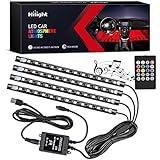
LED Strip Lights for Car Interior With USB and Music Sync
A dark cabin can feel flat once the sun goes down, yet piling on bright LEDs creates a different problem: glare, visible wiring, and colors that overpower the dashboard. This four-piece lighting kit takes a more flexible route by spreading illumination across separate areas while running from a simple 5V USB connection. For anyone sorting through best led light strips for car interior options, the combination of four independent strips, app control, a physical remote, and music synchronization covers many of the features that actually affect day-to-day use. The tradeoff is equally clear: getting a polished result still depends heavily on thoughtful placement, clean surfaces, and careful cable routing.
USB Ambient Car LED Strip Kit
The package keeps the hardware straightforward: four LED strips, one USB cable, and one remote control. Four separate lighting pieces make more sense inside a vehicle than one long strip because footwells, seat bases, and lower dashboard areas rarely form a continuous mounting path. Instead of forcing a single strand around awkward corners, the pieces can be positioned where indirect light does the most good. That layout is especially useful in SUVs and trucks, where the front and rear areas can feel visually disconnected after dark.
USB power removes one of the common headaches associated with cabin lighting kits. There's no need to splice into vehicle wiring or commit to a permanent electrical installation based on the supplied setup. Plugging into an available USB port also makes removal less complicated if the lighting needs to move to another vehicle later. The limitation, naturally, is that port location matters, because an inconveniently placed USB outlet can leave more cable visible than a carefully hardwired installation would.
The stated waterproof construction adds another practical layer, even though these lights are intended for interior placement. Footwells collect wet shoes, tracked-in moisture, dust, and the occasional spilled drink, so water-resistant materials make more sense there than delicate exposed components. That doesn't mean the strips should be treated like exterior lighting or submerged, since no specific ingress rating was provided. Still, the material choice suits the messy reality of floor-level installation better than a purely decorative strip designed for a dry shelf.
Placement will have more influence on the final look than chasing maximum brightness. Mounting the strips underneath the dashboard or seats keeps individual LEDs out of direct sight and lets reflected light do the work. Indirect footwell lighting usually feels calmer and cleaner than exposed diodes aimed toward passengers, especially on long nighttime drives. A little restraint pays off here; colorful doesn't have to mean visually noisy.
Color Control Without Being Tied To One Interface
The system offers 16 million RGB colors through its app, which gives plenty of room to move beyond the usual handful of preset red, blue, and green options. That degree of adjustment matters most for matching the lighting to existing dashboard illumination, upholstery, or a particular mood rather than simply creating the brightest cabin possible. A low-intensity warm tone can make a commuter car feel calmer, while deeper blues or purples may suit a parked show-style setup. The useful part isn't the raw number itself; it's having enough control to avoid being stuck with a shade that's almost right but still looks off.
Two control methods make the kit less dependent on a phone. The Bluetooth app handles brightness, color, timing, and customization, while the included remote provides a more immediate physical option. That's a sensible pairing because digging through a phone interface for every small adjustment can get tedious. A remote may feel old-school beside an app, but for quick changes from the driver's seat or passenger side, simple buttons can be refreshingly practical.
Brightness adjustment deserves more attention than flashy color lists usually get. Light that looks subtle in a driveway can become distracting on a dark rural road, particularly if it reflects from glossy trim, windows, or a center touchscreen. The ability to reduce intensity helps ambient lighting stay in the background where it belongs. At the other end, brighter settings can make more sense while parked, cleaning the cabin, or showing off the interior at a gathering.
Timing control adds another layer of convenience for anyone who doesn't want the same lighting behavior every time the system powers up. The supplied description confirms that timing can be adjusted through the controls, though it doesn't specify every scheduling behavior or memory function. That distinction matters because it's better to work with what the product information actually states than assume automatic routines that aren't documented. Multiple control methods are a strength here, but the exact app experience may still depend on the software implementation.
Music Sync Brings More Energy Than Static Lighting
Music synchronization is the feature that pushes this kit beyond simple footwell illumination. The app can make the RGB lights react to music and shift colors with the rhythm, creating a livelier cabin during parked meetups, road-trip stops, or casual drives where changing light is part of the atmosphere. Used with restraint, the effect can make playlists feel more connected to the interior instead of leaving the lighting completely static. Used at maximum intensity all night, though, the same feature could become distracting fairly quickly.
The music mode is best viewed as an optional layer rather than the main reason to install the strips. Static colors are easier to live with during routine commuting, while reactive effects fit moments where movement and color are actually welcome. That separation matters because not every feature needs to run constantly to justify its place. Music-reactive RGB lighting offers variety without forcing the cabin into permanent party mode.
There is also room to coordinate the lighting with other indoor plant or home-lighting setups in a broader lighting project, even though the use case is different. A separate reference for controlled-spectrum fixtures appears in best home grow lights, which deals with plant-focused illumination rather than automotive ambience. The distinction is worth keeping clear because decorative RGB strips and grow lights solve completely different lighting problems. One is about cabin atmosphere, while the other is built around supporting plant growth indoors.
The app-based color range gives music mode more personality than systems limited to a small set of preset shades. Fast tracks can produce a busier effect, while slower songs may create gentler changes depending on how the synchronization responds. The supplied information doesn't describe microphone sensitivity, latency, or detailed rhythm algorithms, so those points shouldn't be assumed. What can be said is that music sync expands the kit beyond fixed-color lighting without adding separate hardware.
Installation Is Easy Until Cable Routing Gets Real
The basic installation process is refreshingly simple: peel the adhesive backing, place the strips, and connect the kit to a USB port. That sounds almost too easy, and electrically, it largely is. The real work comes from making the finished setup look deliberate rather than temporary. Adhesive mounting saves drilling and permanent modification, but trim texture, dust, heat, and curved surfaces can all influence how securely the strips stay attached.
Surface preparation can make or break the result. Lower dashboards and footwell plastics often collect interior dressing products, dust, or oily residue that weakens adhesive contact. Cleaning and drying the mounting area before sticking anything down gives the backing a better chance to hold. On sharply textured panels, even decent adhesive may struggle, so the mounting surface deserves inspection before deciding exactly where each strip should live.
Cable routing presents the bigger aesthetic challenge, especially in a large vehicle. SUVs, trucks, Jeeps, and vans offer more cabin space, yet that also means longer distances between footwells and power points. Wires tucked beside trim edges or beneath seat structures can disappear nicely, while loose cables crossing visible floor areas quickly undo the polished effect of the lighting itself. The kit's four-piece layout gives placement flexibility, but neat wiring still requires patience.
USB power also creates a realistic fit consideration. Vehicles with a conveniently located center-console or dashboard USB port should accommodate the kit more naturally than cabins where the only port sits inside a closed compartment. An occupied USB port may also matter if that connection is normally used for charging or phone integration. So while 5V USB installation avoids electrical modification, it does introduce a small tradeoff around port availability and cable visibility.
Where This Car Lighting Kit Makes The Most Sense
This setup feels strongest in cabins that need multi-zone ambient lighting without permanent wiring changes. Four strips can cover front footwells and rear seating areas more naturally than a single continuous strand, and the combination suits vehicles where separate lighting pockets create a more balanced result. SUVs and trucks stand to benefit from that arrangement simply because their interiors are larger and often have deeper footwells. Smaller cars can still use the system, though careful cable management becomes even more important when there's less room to hide excess wiring.
The strongest practical feature may be the choice between app and remote operation rather than the huge color count. Phones aren't always within easy reach, Bluetooth connections can add an extra step, and sometimes a physical control is simply faster. Keeping both options available makes brightness and color adjustments less dependent on one interface. That kind of redundancy isn't glamorous, but it's exactly the sort of detail that can make an accessory easier to live with after the novelty wears off.
There are clear limitations worth acknowledging. Adhesive-mounted strips won't behave identically on every plastic texture, USB power depends on a suitable port, and music-reactive lighting may be more entertainment than necessity during ordinary driving. The product description also doesn't provide details about LED density, strip dimensions, cable lengths, ingress rating, or app-platform requirements, so those specifications shouldn't be guessed. Realistic expectations matter more than filling in missing details with assumptions.
As a piece of interior lighting rather than a major vehicle modification, the kit strikes a practical balance between customization and reversibility. RGB color control, music synchronization, separate strips, waterproof materials, remote operation, and USB power all address common frustrations without requiring complicated electrical work. The final quality of the installation, though, rests heavily on where the strips are hidden and how neatly the cables are routed. Done carefully, the system can add a controlled wash of color across the cabin instead of making the interior look like exposed decorative wiring.
RGB Interior Car Strip Lights With Smart App And Music Sync
Cabin lighting gets annoying fast if the glow looks patchy, the wiring hangs around the console, or every adjustment requires digging through awkward controls. This kit approaches those everyday frustrations with a 12V lighting system that can run through USB power or a cigarette-lighter adapter, while wireless controls handle the visual settings. Among best led light strips for car interior options, its mix of app control, music synchronization, waterproof construction, and flexible placement gives it a distinctly customization-heavy personality. The appeal isn't just colorful effects; it's the ability to shape the lighting around different driving moods without permanently rebuilding the vehicle's electrical system.
RGB Smart App Car Strip Lights
The biggest draw is the sheer amount of color adjustment available. According to the supplied specifications, the strips support more than 16 million colors, so the setup isn't limited to a handful of canned red, blue, or green presets. That extra range matters if the goal is matching existing dashboard illumination or keeping the cabin glow subtle rather than cartoonishly bright. A muted amber or deep red can feel restrained during a late drive, while brighter combinations make more sense for parked gatherings or show-oriented setups.
Control comes from both a wireless app and a remote, which is a practical strength rather than just a longer feature list. The app can adjust brightness, timing, and effect speed, while the remote offers a quicker physical alternative when pulling out a phone feels unnecessary. Bluetooth needs to be switched on before connecting the app to the strips, so there is one extra setup step compared with a purely remote-controlled kit. Still, having two interfaces reduces the irritation of being tied to one control method.
The dual power arrangement gives the installation some welcome flexibility. The supplied description lists both USB power and a cigarette-lighter adapter, letting different vehicles use whichever connection is more convenient. That's handy in cabins where the USB port sits inside a center console or is already occupied by a phone cable. The tradeoff is visual: whichever power point is used, careful wire routing still determines whether the finished setup looks integrated or improvised.
The system also includes a memory function, a detail that can make day-to-day use smoother. Rebuilding the preferred lighting setup every time the vehicle starts would get old quickly, so memory support is more useful than it sounds on paper. Short-circuit protection is included as well, according to the product information, adding another practical layer to the electrical design. These are quiet features, but they're the sort that can matter more after the novelty of animated colors settles down.
Music Sync Adds Motion Without Locking You Into It
A built-in microphone allows the lights to react to music, shifting colors along with the rhythm. That gives music sync a more playful role during road-trip stops, parked meetups, or casual nighttime cruising where moving light fits the mood. The benefit is choice rather than constant spectacle, because the same system can still run ordinary static colors when flashing effects would feel like too much. Nobody needs a rolling light show on every commute, and thankfully this setup doesn't force one.
Music-reactive lighting can also expose how important brightness control really is. A fast color sequence at full intensity may look energetic in a parking lot, yet the same effect can become tiring once the windshield and glossy trim start throwing reflections back at the cabin. The adjustable brightness and speed controls help keep those effects from dominating the interior. Turning things down a notch often produces a cleaner, more deliberate result than simply using the brightest setting available.
The built-in microphone means the lighting response isn't dependent on one particular music genre according to the supplied description. Rock, hip-hop, electronic tracks, or slower acoustic music can all feed the reactive mode, although the exact sensitivity and response behavior aren't specified. That missing detail is worth keeping in mind because music synchronization quality can vary depending on microphone placement and surrounding noise. The feature is clearly present, but assumptions about latency or beat-detection accuracy would go beyond the information provided.
Static illumination remains the more practical setting for routine driving. A steady low-intensity color around the footwell can create ambient cabin lighting without constantly pulling attention away from the road. Music mode then becomes an occasional extra rather than the whole identity of the kit. That balance suits a lighting system better than forcing every feature to be used simply because it's available.
Installation Rewards A Little Patience
The actual mounting process is simple on paper: decide where the strips will go, clean and dry the surface, peel the supplied 3M adhesive backing, and press the lights into position. That sequence avoids drilling holes or making permanent modifications to interior panels. Dash edges, footwells, seat bases, and narrow trim gaps are all potential mounting locations based on the supplied use cases. The job gets trickier only when cable routing enters the picture, which is where tidy installations separate themselves from rushed ones.
Clean surfaces matter more than people usually expect. Dashboard dressings, dust, skin oils, and textured plastic can weaken adhesive contact even when the tape itself is decent. Taking a few minutes to prepare the mounting area gives the adhesive installation a better chance of surviving cabin heat and daily vibration. Rough or heavily textured trim may still be less cooperative, so the flattest hidden surfaces are generally the safer bet.
The product description specifically notes that the strips can be tucked into gaps to reduce visible wiring. That's valuable because hidden cable routing has a bigger effect on the finished appearance than another animated color mode ever will. A strip glowing neatly beneath the dash can look intentional, while the exact same strip with loose cables draped across the console looks temporary. Larger trucks and SUVs offer more hiding space, though they can also require longer routing paths between sections.
Power is the final installation consideration. USB makes the system easy to disconnect, while the cigarette-lighter adapter can free up a USB socket if that port is normally used for charging or phone connectivity. Neither route requires the kind of electrical modification associated with hardwired lighting, which keeps the process approachable. The compromise is that plug-in power may leave a visible connection near the console unless the vehicle layout provides a conveniently hidden socket.
Water Resistance Broadens Where The Strips Can Live
The supplied specifications describe the lighting as IP68 waterproof, which gives it more environmental protection than a bare decorative strip intended only for a dry room. That can be reassuring around footwells where wet shoes, tracked-in moisture, or spilled drinks aren't exactly rare. It also supports the manufacturer's broader list of possible uses around vehicles and recreational equipment. Even so, installation should still respect connectors and power components rather than treating every part of the kit as something meant for careless exposure.
The stated low-heat operation is another practical detail inside cramped spaces. Strips mounted near trim, carpets, or seat structures shouldn't turn ambient lighting into a source of uncomfortable heat. According to the description, the system remains low heat and touchable, which suits close-quarters cabin installation. That's particularly relevant when strips sit where shoes, bags, or passengers may occasionally brush against them.
Application options stretch beyond ordinary sedans. The supplied listing mentions cars, SUVs, UTVs, ATVs, Jeeps, vans, pickup trucks, motorcycles, and boats, along with possible positions such as dash, footwell, grille, deck, and underglow areas. Not every location will make equal sense for every vehicle, of course, and exterior placement requires more attention to wiring and power exposure. The broader point is that the strip format isn't locked into one narrow cabin layout.
Lighting needs can vary dramatically outside a vehicle, and the difference becomes obvious once decorative illumination is separated from task-specific light. Plant-focused fixtures, for instance, serve a completely different purpose, with a related lighting reference available in best fluorescent light bulbs for growing plants. That distinction matters because automotive accent lighting is designed around appearance and visibility, not biological growth requirements. Keeping those use cases separate prevents colorful output from being mistaken for functional spectrum performance.
Where This Kit Fits And Where It Doesn't
This setup makes the most sense for a vehicle that needs customizable accent lighting without permanent wiring changes. The combination of app control, remote operation, music synchronization, adjustable brightness, and multiple power choices covers both casual everyday use and more expressive parked setups. Larger cabins can particularly benefit from flexible placement because a single fixed lighting point often leaves rear areas looking disconnected. Compact cars can use the same features, though hiding excess cable may require more care in tighter spaces.
The biggest strength is flexibility rather than any single visual effect. Dual control keeps the system usable even if the phone isn't immediately convenient, while the app provides finer adjustments for timing and speed. USB and cigarette-lighter power choices also make the kit easier to adapt across different vehicle layouts. Put together, those features solve several small annoyances that can otherwise make inexpensive interior lighting feel fussy.
There are tradeoffs, and they're worth spelling out. Bluetooth must be enabled for app control, adhesive performance still depends on surface preparation, and a plug-in power connection can leave wiring visible if the socket location is awkward. The supplied details also don't specify strip length, LED density, exact cable length, microphone sensitivity, or app compatibility by phone platform. Those unknowns are a genuine limitation, so they shouldn't be filled in with guesses.
Drivers who mainly want a soft fixed footwell glow may never use half of the available modes, while someone who enjoys changing cabin themes could get much more value from the 16-million-color palette and music-reactive behavior. That's the key difference here: the kit leans toward customization rather than minimalist one-color illumination. Its IP68 rating, memory function, short-circuit protection, dual power options, and wireless controls give the hardware a practical backbone beneath all the colorful effects. The final appearance still comes down to restraint, placement, and wire management, which no app setting can fix after a sloppy installation.
Govee Car LED Lights With App Control And Music Mode
A few loose cables can ruin an otherwise sharp cabin, especially once the glow from exposed strips starts reflecting off plastic trim and glossy screens. Govee approaches that problem with a four-strip, two-line layout designed to keep the installation more orderly while still leaving plenty of room for color customization. Among best led light strips for car interior choices, this 12V setup leans heavily on smart control, DIY color effects, and music-responsive lighting rather than complicated electrical installation. The real attraction is the balance between visual freedom and a layout that tries to keep the cabin from looking like a bundle of decorative wires.
Govee Smart Car Interior Lights
The color system gives you a lot of room to play without forcing you into a tiny preset palette. Govee lists 16 million available colors, and the DIY mode inside the Govee Home app lets those colors be shaped into custom effects rather than simple static shades. That flexibility is useful if the cabin already has factory illumination that you don't want to clash with. A deep red or soft blue can sit quietly beneath the dash, while brighter combinations make more sense during parked gatherings or weekend road trips.
The Govee Home app handles color selection, brightness, DIY effects, and music mode from a phone. App control makes sense for detailed adjustments because dozens of color combinations would be clumsy to manage with a tiny inline controller. Still, it also means the phone becomes an important part of the experience whenever you want to change more than a basic setting. That tradeoff won't bother someone who already uses app-controlled lighting at home, but a driver who prefers physical controls may see it differently.
Power comes through a 12V car charger, keeping installation separate from the vehicle's permanent wiring. There's no need to splice wires behind the dashboard based on the supplied setup, which lowers the barrier for a first cabin-lighting project. Plug-in power also makes the kit easier to remove later if the car is sold or the lighting moves to another vehicle. The obvious compromise is that the charger socket has to remain available, so cabins with only one convenient 12V outlet may need to give up that port while the lights are running.
The four strips are connected using a two-line design, and that layout is one of the more practical details in the package. Separate lines make it easier to reach multiple footwells without dragging a single continuous strand through every corner of the cabin. The arrangement can help hide wiring under seats, alongside trim, or behind lower dash panels. Neat routing still takes patience, but the basic architecture gives the installer a better starting point than one long strip with nowhere clean to go.
DIY Color Control Fits More Than One Cabin Mood
Color customization matters most after the novelty of bright RGB effects wears off. Constant rainbow animation may look fun for a few minutes, but subtle ambient lighting tends to feel more natural during ordinary nighttime driving. The DIY mode gives enough control to tone things down instead of treating every trip like a light show. That makes the kit easier to adapt to different moods, from a calm commute to a more animated weekend setup.
Brightness control is just as valuable as the color palette. Too much light near the floor can bounce off shiny trim, windows, or a center display, and that distraction becomes much more noticeable on an unlit road. Lowering the LED brightness lets the strips create a wash of color without becoming the brightest thing inside the vehicle. Sometimes less really does look better, especially if the strips themselves remain hidden from direct view.
The app-based DIY system also gives the lighting more personality than fixed presets alone. Someone who likes a restrained factory-inspired look can keep the colors simple, while another setup might use changing combinations for a showier cabin. The product information doesn't spell out every DIY pattern or animation behavior, so those details shouldn't be invented. What is clear is that custom effects are part of the feature set rather than limiting the lights to basic single-color operation.
Placement changes how those effects actually look. A strip mounted where every diode is visible can feel harsh no matter how sophisticated the app is, while a hidden strip beneath the dash creates softer reflected light. Indirect lighting usually gives the cabin a cleaner finish because the trim and carpet spread the color instead of putting the LEDs directly in your line of sight. That little installation decision can do more for the finished appearance than adding another effect inside the app.
Music Mode Brings Rhythm Into The Footwells
A built-in microphone lets the lighting react to music, giving the kit a more animated personality than static accent lights. The dynamic music mode is intended to shift colors with the rhythm of different music types, which can add energy during road trips, weekend drives, or parked meetups. It isn't something every driver will want running constantly, and that's fine. The feature makes more sense as an occasional setting rather than the default for every trip.
Music synchronization can be particularly entertaining in a cabin where the strips are distributed across the front and rear footwells. Instead of one bright patch reacting near the dashboard, the four-strip arrangement can spread the visual response around the interior. That wider distribution makes the lighting feel more connected to the whole cabin. The exact microphone sensitivity and response delay aren't supplied, though, so claims about precise beat detection would go beyond the available information.
Brightness still deserves restraint in this mode. Fast music paired with bright color changes can become visually busy, especially after your eyes adjust to a dark highway. A softer setting keeps music-reactive lighting fun without turning every bass hit into a distracting flash. Parked use gives the feature much more freedom, since glare and visual distraction aren't competing with the demands of driving.
Static mode remains the stronger day-to-day option for anyone who simply wants a little color around the cabin floor. Music mode then becomes the extra trick in the bag rather than the whole reason the system exists. That distinction keeps expectations realistic: ambient illumination solves the everyday appearance problem, while synchronized effects add variety when the mood calls for something livelier. It's a more sensible way to use the feature set than leaving every animation running simply because it's there.
Two-Line Wiring Helps Keep The Install Cleaner
Messy wiring is one of the fastest ways to make aftermarket lighting look unfinished. Govee's two-line design connects the four LED strips in a way intended to make installation easier across different car layouts while reducing exposed cable. The idea works especially well around front and rear footwells, where splitting the routing path can be cleaner than stretching everything along one side. A larger SUV or truck still requires thoughtful cable placement, but the basic layout helps avoid unnecessary crossings.
Surface preparation deserves attention before any adhesive touches the trim. Govee specifically instructs that the mounting area should be clean and dry, which is sensible because dust, interior dressing products, and skin oils can weaken adhesion. The strips are attached with adhesive and support clips, giving the installer more than one way to keep them in place. Skipping the cleaning step may save a few minutes initially, but it can create a much more annoying repair job later.
The supplied instructions also warn against repeatedly removing and reattaching the strips after the mounting location has been chosen. Every peel can reduce the adhesive grip, so planning the route before pressing the strips down is worth the effort. Test-fit the position mentally, check where the wires will pass, and make sure seat movement won't catch anything before committing. The included zip ties can add reinforcement where the adhesive alone doesn't feel secure enough.
Support clips and zip ties are modest accessories, but they're practical inside a vehicle. Cabin plastics aren't always flat, and heat cycling can be rough on adhesive over time. Adding mechanical reinforcement gives the installation another layer of support instead of asking tape to do all the work. It's not glamorous, yet these little installation details are exactly what separate a tidy setup from a strip dangling beneath the dash a few weeks later.
Rubber Tubing Adds Practical Protection
Govee places rubber tubing around the lights to help protect them from water spills. That's a sensible feature for footwell lighting, where wet shoes, dropped drinks, and routine cabin cleaning can put decorative electronics closer to moisture than expected. The supplied description doesn't state a formal ingress-protection rating, so it would be wrong to treat the strips as fully waterproof. Still, the tubing adds a useful barrier for the kind of minor spills that happen inside real vehicles.
The protective outer layer can also make the strips easier to live with around passenger areas. Bare lighting components sitting beneath a seat are more exposed to shoes, bags, cleaning tools, and whatever else gets tossed onto the floor. Rubber-covered strips provide a little more physical separation between those everyday hazards and the lighting elements. That doesn't make them indestructible, but it suits the rougher environment of a car cabin better than an exposed decorative strip.
The same practical logic applies to mounting position. Keeping the strips tucked under the dashboard or seat edges reduces direct contact while producing softer illumination at the same time. Hidden placement protects the hardware and improves the visual result, so there's little reason to put the strips somewhere passengers can constantly kick or snag them. Good placement solves two problems at once, and that's always better than trying to fix either one after installation.
Lighting behaves very differently depending on its intended job, and decorative automotive strips sit far away from plant-oriented illumination. A separate lighting topic appears in what is stale green light, which deals with a different lighting question rather than cabin ambience. That contrast helps keep automotive RGB lighting in perspective because its job here is atmosphere, visibility, and personalization. The Govee kit isn't meant to solve specialized lighting tasks outside that role.
Everyday Strengths And Real Installation Tradeoffs
The strongest part of this kit is the combination of smart customization and a fairly approachable installation process. Sixteen million colors, DIY effects, music synchronization, brightness control, and app operation offer plenty of visual flexibility without requiring hardwiring into the car's electrical system. The four-strip configuration also makes sense for spreading light through multiple footwells instead of creating one overly bright area. That combination suits anyone who cares as much about a clean cabin layout as animated effects.
The biggest weakness is dependence on the existing vehicle layout. A 12V charger connection is convenient, but the socket location determines how much power cable remains visible. Tight compact cars may also leave less room for hiding extra wire, while spacious SUVs provide more routing options but require longer paths between lighting zones. Cable management isn't difficult in principle, yet it remains the part of the job most likely to make the final result look either polished or sloppy.
Adhesive installation brings another tradeoff. It avoids drilling and permanent modification, which is appealing, but mounting reliability depends on surface texture, preparation, cabin temperature, and how often the strips are repositioned. Govee's warning about repeated removal is worth taking seriously because weakened adhesive can turn a clean installation into a maintenance chore. The support clips and zip ties help reduce that risk if they're incorporated from the start.
The product information doesn't specify strip dimensions, LED density, cable lengths, microphone sensitivity, or detailed compatibility requirements for the app. Those missing numbers limit how precisely the kit can be judged for a particular cabin before installation. Still, the confirmed DIY mode, music mode, app control, two-line construction, rubber protection, support clips, and 12V power give a clear picture of what this system is designed to do. Its best results will come from careful placement and restrained brightness, because even smart lighting can't disguise exposed cables or strips stuck in the wrong spot.
Nilight 48-LED USB Car Strip Lights With Music Control
A cabin can go from cozy to cluttered pretty quickly if the lighting kit leaves wires dangling around the console or blasts too much color into every corner. Nilight takes a simpler route with four compact SMD5050 strips, a 5V USB connection, and sound-reactive controls that don't require a permanent electrical installation. For shoppers considering the best led light strips for car interior, the appeal here comes from straightforward hardware, 48 total LEDs, and an IR remote rather than a phone-dependent app. The tradeoff is clear too: customization is more basic than app-driven systems, so this kit leans toward easy setup and music response rather than deep scene programming.
Nilight 48-LED USB Car Strip Lights
The hardware layout is easy to understand from the start. Nilight supplies four light strips with 12 LEDs per strip, creating a total of 48 LEDs that can be distributed around separate cabin areas instead of concentrating the glow in one spot. That arrangement makes practical sense under the dashboard and around front or rear footwells, where evenly spaced light tends to look more deliberate. Four smaller pieces also give more flexibility around seats and trim than one long strip that has to snake through every corner.
Power comes from a DC 5V USB connection, and the rated power is listed at 10 watts. USB power keeps the electrical side refreshingly uncomplicated because the kit doesn't require splicing into the vehicle wiring based on the supplied instructions. Plug it into an available port, arrange the strips, and the electrical setup is essentially handled. The catch, naturally, is that a conveniently placed USB socket makes the installation much cleaner than one hidden deep inside a console compartment.
The supplied specifications also list a 6000 K color temperature, though that figure sits alongside the kit's multicolor lighting capability. Rather than treating that number as a promise about every color mode, it's safer to view it as part of the manufacturer's listed electrical and lighting specifications. What matters more in daily use is that the system provides multicolor output and sound-reactive changes. The overall character is decorative cabin lighting, not precision task illumination.
Nilight also includes a smart USB port and a product manual in the package. That keeps the accessory count fairly lean, with no extra hub or complicated controller box mentioned in the supplied details. A simpler parts list can be appealing in tight interiors because there are fewer components to hide beneath trim. Less hardware doesn't automatically guarantee a cleaner result, though, since the quality of the final look still depends on thoughtful cable routing.
Sound Active Lighting Keeps The Experience Playful
The standout feature is the sound active function, which lets the strips change color in response to music or your voice. That can turn a quiet footwell glow into something more animated during road trips, parked gatherings, or casual evening drives. The system is designed to react to the rhythm coming from the car stereo, so color changes aren't locked to a single music style. It's a fun extra, but it makes the most sense when treated as an occasional effect instead of the only way to use the lights.
Music response can make a basic four-strip arrangement feel more dynamic because the cabin changes as the soundtrack changes. With 12 LEDs on each strip, the effect is distributed across four separate lighting zones rather than coming from one concentrated source. That can produce a more balanced interior appearance if the strips are positioned under the dash and around the floor. Exact microphone sensitivity or beat-detection behavior isn't provided, so those details shouldn't be dressed up with guesses.
Voice responsiveness adds another playful dimension to the same control system. The supplied description states that the LED colors can react to your voice as well as music, which broadens the sound-reactive function beyond the car stereo alone. That's more of an entertainment feature than a practical necessity, but it gives the kit some personality without relying on a smartphone app. For someone who prefers physical controls and quick plug-and-play behavior, that simplicity can be a genuine strength.
Sound-reactive modes are best paired with sensible placement. Bright LEDs aimed directly toward passengers can become visually exhausting, especially once colors start changing quickly. Tucking the strips beneath seats or lower trim lets the reflected glow carry the effect instead of exposing every diode. That small installation choice can make the difference between an interior that feels coordinated and one that looks overly busy.
Wireless Remote Control Keeps Things Simple
The kit uses a wireless IR remote control, which keeps operation separate from a phone. That's refreshing for anyone who doesn't want to install another app, pair Bluetooth, or hand over phone permissions just to change a footwell color. A remote also provides quick access to settings without navigating menus. The limitation is that infrared controls generally need a reasonable line of sight to the receiver, so controller placement can affect convenience.
Physical control also suits a kit built around uncomplicated installation. The remote and USB connection create a familiar plug-and-play setup without the learning curve that can come with app-based lighting systems. That makes the Nilight arrangement feel more like a traditional car accessory than a smart-home device transplanted into a vehicle. Some people will miss app automation, but others may prefer having fewer layers between pressing a button and seeing the lights change.
The simpler control approach does mean fewer documented customization options than systems that advertise extensive app scenes or DIY patterns. The supplied details focus mainly on multicolor output, sound response, and remote operation, not elaborate animation editing. That's a limitation if highly specific color sequencing is a priority. On the flip side, it reduces the amount of setup needed for someone who mainly wants color changes, music response, and easy brightness or mode adjustments through a handheld control.
Remote-based control can also be handy when the vehicle is shared. There isn't a phone pairing step for every person who wants to change the lighting, and the control stays with the vehicle if it's kept in the console or glovebox. That makes the IR remote practical in a very ordinary way. Just don't bury the receiver behind thick trim and expect flawless communication, because infrared systems benefit from sensible positioning.
Installation Is Quick But Surface Prep Still Matters
Nilight keeps the mounting procedure straightforward: connect the kit to USB, peel the backing from the double-sided adhesive, and attach the strips to the intended surface. That's the kind of installation process that avoids drilling, screws, or electrical modification. Footwell floors and lower trim areas are the obvious places to start based on the supplied description. Still, the easiest electrical install can look messy if the strips are stuck down before the wire path is planned.
Clean mounting surfaces deserve more attention than they usually get. Dust, oily interior cleaners, and textured plastic can reduce the grip of adhesive backing, especially in a cabin that heats up under direct sun. A dry, smooth location gives the double-sided tape a better chance of staying attached over time. Rough carpet and heavily grained plastic may require more care because adhesive alone isn't equally dependable on every material.
Cable planning matters just as much as strip placement. Four separate lights create plenty of opportunities to cover multiple footwells, but they also create several wire runs that need somewhere to go. Routing those wires along seat rails or trim edges can help preserve the clean look that ambient interior lighting is supposed to create. Loose wiring draped across the floor can quickly undermine the whole effect and may interfere with moving feet or seat mechanisms.
The ultra-thin construction described by Nilight can help in narrow mounting areas. Slim strips are easier to hide beneath lower dashboard surfaces or around the underside of seats than bulky light pods. That low-profile design is especially useful in compact cars where visible space disappears quickly. Even so, enough clearance should remain around moving seat tracks and pedals, since decorative lighting shouldn't interfere with basic vehicle operation.
Materials Suit The Messy Reality Of A Car Cabin
Nilight describes the strips as being made with ABS material and lists them as water resistant, anti-collision, and anti-corrosion. Those characteristics make sense in a footwell, where wet shoes, dust, cleaning spray, and accidental knocks are all part of normal life. Water resistance is useful around floor-level lighting, but no formal IP rating is provided in the supplied information. That means the strips shouldn't automatically be treated as fully waterproof or suitable for unrestricted exposure.
The anti-collision description is also practical rather than glamorous. Light strips mounted under seats or near the floor can be bumped by shoes, bags, vacuum attachments, or anything tossed into the cabin. A tougher outer construction gives the lighting some protection from those everyday annoyances. It won't make poor placement harmless, though, so hiding the strips out of direct foot traffic still makes sense.
Anti-corrosion characteristics may matter most in environments where moisture and dirt regularly enter the vehicle. Pickup trucks, work vehicles, or cars driven through wet winters can expose lower cabin areas to more grime than a pristine weekend cruiser. The listed water-resistant and anti-corrosion build fits that reality better than fragile decorative strips meant solely for a clean indoor wall. Realistic placement still matters because resistance isn't the same as immunity.
Lighting gear serves very different jobs once it moves outside the cabin, and decorative strips shouldn't be confused with fixtures intended for focused directional illumination. A related lighting topic appears in best track lighting heads LED, which concerns a separate style of controlled indoor lighting rather than automotive accent effects. That distinction keeps the Nilight car strips in their proper lane: colorful ambience, entertainment, and low-level decorative illumination. Their job isn't to replace functional vehicle lamps or household task lighting.
USB Power Extends Use Beyond The Vehicle
The 5V USB connection gives this kit a little more flexibility than a car-only power plug. Nilight specifically lists TV bias lighting, home decoration, KTV, and party use alongside automotive applications. That means the strips can theoretically move between a vehicle and other USB-powered setups without requiring a specialized 12V automotive socket. It's a practical bonus for someone who likes repurposable lighting rather than accessories permanently tied to one location.
TV bias lighting is a particularly natural secondary use because the strips already have adhesive backing and USB power. Mounted behind a screen, the lights can create a colored halo rather than throwing direct light toward the viewer. The four-piece layout may suit some screen configurations better than others, so cable placement still needs planning. The product information doesn't describe TV-specific calibration or screen synchronization, so the use should be understood as decorative background lighting rather than advanced display matching.
Home and party applications lean more heavily on the sound-active feature. A USB source is easy to supply in a room, and the music-responsive colors can serve the same purpose there that they do inside a car. That broader compatibility gives the kit some value after a vehicle setup changes or if the strips are temporarily removed. Just keep expectations grounded, since a compact four-strip car kit won't cover a room the way a long architectural LED roll would.
The main limitation of USB power is also its biggest practical consideration inside a car. The vehicle needs an accessible DC 5V USB port, and using the lights occupies that connection while they're running. If the same port is normally needed for charging, phone projection, or another accessory, the lighting may compete for space. That isn't a flaw in the strips themselves, but it's worth accounting for before deciding where the smart USB connection will live.
Strengths And Weaknesses In Everyday Use
The kit's clearest strength is simplicity. Four strips, 48 LEDs, USB power, adhesive mounting, and a wireless remote create a system that doesn't ask for much electrical knowledge or software setup. Sound activation adds personality without requiring an app, and the 5V format opens the door to uses outside the vehicle. For someone who values uncomplicated hardware over elaborate smart controls, that combination makes practical sense.
The biggest weakness is the relatively basic control ecosystem compared with app-driven alternatives. The supplied description doesn't mention smartphone control, custom scene building, schedules, or advanced DIY animation. Anyone who wants to program exact color sequences may feel boxed in by the remote-centered design. Someone who just wants multicolor lighting that reacts to music may see that same simplicity as a relief.
Another difference lies in physical durability claims. The strips are described as water resistant, anti-collision, and anti-corrosion, which suits floor-level use, yet the absence of a stated IP rating leaves the exact degree of moisture protection unclear. That's a good example of where realistic expectations matter. Protection against everyday cabin spills and exposure is useful, but it shouldn't be stretched into assumptions about heavy water exposure that the supplied specifications don't support.
The listed 10W power rating, 5V USB input, 48 SMD5050 LEDs, and four-strip layout give this Nilight kit a clear identity: compact, plug-in lighting with sound-reactive entertainment built in. It won't satisfy someone chasing detailed app automation, and adhesive installation still demands careful surface preparation and wire management. On the other hand, the absence of app dependence can make daily operation refreshingly direct. The kit fits best where simple controls, broad USB compatibility, and music-driven color changes matter more than elaborate digital customization.
Winzwon App-Controlled LED Lights for Car Interior
Night drives can feel oddly dull once the dashboard becomes the only source of color, yet adding cabin lighting often introduces a different headache: cables that don't quite reach, remotes that disappear between seats, and strips that start peeling after being moved around. Winzwon takes a straightforward approach with USB-powered LED strips, an extra-long cable, app-based controls, and a built-in microphone for rhythm-responsive effects. Within the best led light strips for car interior category, this kit stands out more for flexibility and simple phone control than for complicated hardware. Its strongest appeal is the ability to spread customizable color through different cabin layouts without relying on a cigarette-lighter adapter or a separate handheld remote.
Winzwon App-Controlled Car LED Lights
The extra-long cable is one of those features that sounds ordinary until installation starts. Different cars place USB ports, seats, center consoles, and footwells in very different positions, so additional cable reach can save a lot of awkward routing. A compact sedan may have only a short distance between power and the front footwells, while a pickup or larger cabin needs more room to route lighting around seat bases. That extra length doesn't automatically guarantee a spotless installation, but it gives you more freedom to hide wiring instead of stretching it across visible areas.
Power comes through a USB cable, which keeps the electrical setup simple. The supplied description specifically positions USB power as a lower-heat alternative to using a cigarette-port adapter, and it also removes the need to splice into factory wiring. That's handy for a removable installation or a vehicle where permanent modification isn't desirable. The tradeoff is obvious, though: the car needs an available USB connection in a useful location, and that port can't serve another accessory at the same time unless another power solution is added.
App control removes the worry of misplacing a tiny remote in a glovebox, cupholder, or seat gap. The phone becomes the main controller for color changes and lighting modes, so the adjustment interface is already something most people carry everywhere. That setup also fits the DIY focus of the kit because custom shades can be selected without squeezing dozens of functions onto a small remote. The downside is that phone access becomes part of the routine whenever lighting settings need to change.
Winzwon describes the strips as flexible and waterproof, two characteristics that make sense around lower cabin areas. Flexibility helps the strips follow gaps and tucked-away surfaces without forcing them into straight, exposed runs. Moisture protection is useful around footwells where wet shoes, spilled drinks, or damp floor mats aren't exactly rare. No specific IP rating is supplied, though, so the waterproof description shouldn't be stretched into assumptions about heavy exterior exposure.
Music Mode Gives The Cabin A Different Personality
The built-in high-sensitivity microphone is what gives these strips their more playful side. A one-click switch activates music mode, allowing the lights to flash and change with the rhythm playing inside the vehicle. That can make road trips, parked hangouts, or nighttime drives feel less static without requiring manual color changes every few minutes. It isn't a feature that needs to stay active all the time, and frankly, calmer static lighting will make more sense for plenty of ordinary driving.
Rhythm-based lighting works best when the strips aren't staring directly back at the occupants. Hidden beneath the dash or along lower trim, indirect RGB lighting can spread color across carpet and interior panels while keeping individual LEDs out of sight. That's especially useful once the effects begin changing quickly with music. Directly visible strips can look harsh, while reflected color tends to feel softer and more intentional.
The product information says the microphone responds to music, but it doesn't provide technical details about sensitivity levels, delay, or how the system distinguishes different frequencies. That means claims about precision beat detection would be guesswork. What is clearly supported is the sound-reactive color function, and that feature adds more movement than a conventional static strip kit. Keeping expectations grounded here matters because sound sync can be entertaining without pretending it's a studio-grade audio visualization system.
Music mode also changes how brightness should be treated. Fast color shifts can become visually busy if the LEDs are running at an aggressive intensity, particularly on dark roads where reflections become more noticeable. A restrained ambient glow generally works better for driving, while brighter effects fit parked settings where distraction isn't part of the equation. The sweet spot is enough color to change the mood without turning the footwell into the visual focus of the cabin.
DIY Colors Let The Setup Move Beyond Basic Presets
Color variety is central to the kit's personality. Winzwon states that the lighting supports a range of colors and allows custom styling through the app, giving the strips more flexibility than a simple fixed-color system. DIY color control can be useful for matching dashboard illumination, seasonal decor, or a particular cabin theme without replacing hardware. A soft red or amber tone can sit quietly during a commute, while brighter pinks, blues, or blended effects may suit a date night or weekend drive.
Customization also helps avoid one of the biggest problems with inexpensive decorative lighting: every interior ending up with the same canned rainbow effect. The app lets the lighting feel less generic by adjusting the color style around the actual cabin rather than accepting one default look. Dark upholstery can absorb a lot of light, while pale plastics and glossy surfaces reflect it much more strongly. Color choice and brightness therefore matter as much as the number of modes available.
The strips are also positioned as decorative lighting for several occasions, including birthdays, holidays, Halloween, and Christmas. That makes sense because changeable RGB lighting can shift with seasonal themes without replacing the strip system itself. Red and green can suit December, while warmer colors may feel better for a quieter evening drive. The feature is flexible, but restraint still matters because constantly changing themes can make a clean cabin look visually crowded.
Lighting discussions can branch into very different use cases, and decorative car strips sit alongside other RGB applications without serving exactly the same purpose. A related reference appears in best LED RGB strip lights, where broader strip-light uses extend beyond automotive cabins. That connection is useful because RGB strip behavior depends heavily on placement, power, and intended atmosphere regardless of where the lights are installed. Vehicle interiors simply add tighter spaces, vibration, heat, and cable-routing challenges to the equation.
Installation Is Simple Until Adhesive Meets Real Trim
Installation sounds easy because the strips are designed to fit into interior gaps, but surface preparation is still the part that deserves patience. Dust, silicone-based interior cleaners, skin oils, and textured plastic can all weaken adhesive contact. A clean mounting surface gives the strips a better chance to stay where they're placed instead of sagging after cabin temperatures rise. The instructions also warn against repeatedly pulling the strips off and sticking them down again because doing so can reduce adhesion.
Planning the route before peeling the backing is the smarter move. Check where the cable will run, whether seats need to slide over it, and whether the strip itself will be visible from normal seating positions. Hidden installation generally looks cleaner and protects the lighting from shoes, bags, and routine cabin cleaning. A few extra minutes spent mapping the route can prevent the irritating cycle of peel, reposition, and weakened adhesive.
The extra-long wiring helps here because it gives more freedom around larger cabins. Trucks often have deeper consoles and wider seating areas than compact cars, so longer cable reach can make rear or side routing more realistic. More wire does create another problem if the excess isn't tucked away neatly. Coiling or securing unused length under trim or seats keeps the installation from looking like a temporary accessory tossed into the cabin.
The supplied instructions also advise keeping the USB port and adapter clean and inspecting the cable and adapter for damage before use. That's sensible advice for any USB-powered accessory, especially one installed near floor areas where cables can be bent or stepped on. A damaged cable shouldn't be treated as a cosmetic inconvenience because power connections deserve basic inspection. That maintenance step isn't exciting, but it can prevent a minor wiring issue from becoming an ongoing annoyance.
USB Power Keeps Heat And Hardware To A Minimum
Winzwon emphasizes USB power partly because it runs at lower heat than the cigarette-port arrangement described in its product information. For cabin lighting, lower operating heat is reassuring because strips can sit close to plastic panels, carpet edges, seat structures, and personal belongings. Decorative LEDs don't need to add noticeable heat to an already warm car interior. The simple power connection also makes the system easier to unplug when the vehicle isn't being used.
USB power has another advantage: compatibility outside a vehicle. The supplied description mentions trucks, home spaces, camp kitchen lighting, KTV environments, and party decor alongside automotive use. That gives the lighting kit a life beyond one dashboard if the setup changes later. Still, the length and layout are designed around compact decorative applications, so it shouldn't be treated like a long architectural strip intended to cover an entire room.
The absence of a separate remote also reduces the number of small pieces floating around the cabin. Everything centers on the app and the USB-powered strip system, which can make the setup feel less cluttered. That remote-free design is a genuine convenience if remotes tend to vanish under seats. The flip side is dependence on the phone, so the advantage comes down to whether app control feels simpler or more cumbersome during daily use.
USB availability varies dramatically between vehicles. Some newer cabins have several ports scattered around the console and rear seats, while older vehicles may have one awkwardly positioned socket or none at all without an adapter. That makes power-port location an important fit issue before routing any strip. A great lighting position isn't very useful if the power cable has to cross an open console to reach it.
Where The Flexible Strip Design Helps Most
Tight interior gaps are where a flexible strip earns its keep. Lower dashboard edges, footwell contours, seat undersides, and console seams rarely provide long perfectly flat mounting paths. The flexible light strip can adapt more easily to those cramped areas than rigid light bars. That gives installers more choices for keeping the source hidden while allowing the glow to spill onto nearby surfaces.
Vehicle size changes the installation strategy too. A compact hatchback may need only modest routing between front and rear footwells, while a pickup or larger truck can make cable reach far more important. The extra-long cable addresses that issue directly, according to the supplied description, and broadens the number of cabin layouts the kit can accommodate. Still, there's no exact cable-length measurement provided, so precise fit calculations shouldn't be invented.
Waterproof construction adds practical reassurance around lower mounting positions. Shoes bring rainwater and grime into a cabin, while drinks have a funny habit of ending up everywhere except inside the cupholder. The stated waterproof design is useful under those everyday conditions. Since no formal water-resistance rating is included in the details, though, careful interior placement remains the sensible approach.
Flexibility doesn't eliminate physical wear. Strips placed where feet constantly brush them or where seat mechanisms move can still be pulled, pinched, or damaged over time. Protected placement does more for longevity than relying solely on material claims. Keeping the lights tucked away also improves the visual effect, so protection and appearance happen to point toward the same installation strategy.
Everyday Strengths And The Tradeoffs Worth Knowing
The clearest strength is how little hardware stands between the cabin and a customizable lighting setup. USB power, app control, music synchronization, flexible strips, and extra-long wiring create a system that can adapt to several vehicle sizes without a separate remote or permanent electrical work. The phone handles color changes, while the microphone takes over whenever rhythm-based lighting is wanted. That combination suits a cabin where personalization matters but complicated installation doesn't.
The most obvious weakness is that the experience depends heavily on the app. Anyone who likes a dedicated physical controller may miss the ability to make adjustments without reaching for a phone. The supplied description doesn't mention an included remote, manual button controller, or detailed app compatibility requirements. App-centered operation is convenient for some routines and mildly annoying for others, so that difference is worth considering before the strips are installed.
Adhesive mounting is another mixed bag. It keeps the installation simple and avoids drilling, but adhesive durability depends on surface preparation and how often the strip is moved. Winzwon's warning against repeatedly tearing off the lights is practical because repositioning gradually reduces stickiness. Picking the mounting path first, then committing once, is far less troublesome than treating the strips like removable tape.
The supplied information doesn't provide exact strip dimensions, LED count, cable length, formal waterproof rating, app platform requirements, or detailed microphone specifications, so those points remain genuine unknowns. What is documented is a USB-powered, app-controlled, music-responsive lighting system with flexible waterproof strips and extended wiring for varied vehicle layouts. Its strongest fit is a car or truck where personalized color, music effects, and minimal extra hardware matter more than advanced physical controls. The final result will still depend heavily on hidden wiring and thoughtful strip placement, because even colorful lighting loses its charm once cables start stealing the attention.


Best LED Track Strip Lighting 2026: Bright Ideas for Every Space
Best Integrated LED Track Lighting: Top Picks for 2026

Best Round LED Ceiling Light Reviews - Top Picks 2026

Top Rated Best LED Dimmable Track Lights of 2026: Enlighten Your Space!

Best Plug In Track Lighting LED 2026 For Bright Spaces

Best Mini LED Track Lighting: Top Picks for 2026
Best Oiled Bronze Track Lighting 2026 Stylish Illumination Picks

Best Modern Track Lighting LED 2026: Sleek Illumination Upgrade