Best Led Light Strips With Remote 2026: Best Picks

Best led light strips with remote can solve a surprisingly annoying problem: decorative lighting that looks good until controlling it becomes a hassle. A physical remote lets you change brightness, colors, and lighting modes without reaching behind furniture, opening an app, or hunting through phone settings. That convenience matters more once strips run behind a TV, underneath a bed frame, along shelving, or around a ceiling edge. Still, not every strip handles daily use equally well, so remote range, button layout, color consistency, adhesive strength, and installation flexibility deserve just as much attention as flashy effects.
Remote control convenience is especially useful in bedrooms and living rooms where lighting changes throughout the evening. Bright color can add energy during gaming or music, while a softer setting feels far less harsh once it's time to wind down. A well-designed remote makes those changes almost thoughtless, and that's the whole point. Tiny buttons packed together can be frustrating in dim rooms, though, so a simple layout with obvious brightness and color controls tends to be easier to live with.
Strip length creates another practical tradeoff. A long roll sounds appealing, but squeezing excess lighting into corners can produce uneven bends, exposed sections, or awkward overlaps. Shorter installations around a desk or headboard often benefit from a strip that can be trimmed at marked cut points, while larger rooms need enough total length to avoid patchy gaps. Flexible placement matters because clean installation usually looks better than simply covering every available inch.
Adhesive backing can make or break the setup, quite literally. Dusty walls, textured paint, unfinished wood, and warm surfaces may weaken the bond, even when the strip itself is perfectly fine. Cleaning and drying the mounting area first gives the adhesive a better shot, and clips can help around corners or spots that repeatedly peel loose. Stronger glue isn't always better either, since removing a firmly bonded strip later may pull paint or leave residue behind.
Color control deserves realistic expectations as well. RGB strips can create plenty of dramatic shades, but inexpensive models may produce whites with a noticeable blue, green, or pink tint because white is being mixed from colored LEDs. A dedicated white channel can give more natural-looking neutral light, especially if the strip will do more than provide background glow. That distinction matters around mirrors, work areas, shelves, or anywhere accurate-looking white light is useful.
Remote-powered lighting also avoids one common irritation with app-heavy setups: needing a phone for a basic adjustment. Apps can add timers, scenes, or deeper customization, but a remote remains faster for turning lights down from bed or changing a color during a movie. On the flip side, infrared remotes often need a fairly clear path to the receiver, while other control systems can be more forgiving about positioning. Control range and receiver placement are worth checking before sticking everything permanently to the wall.
Music-sync modes sound fun, and they can be, but results vary depending on microphone sensitivity and where the controller sits. Too close to a speaker, the lights may jump constantly; too far away, they can barely react. For casual parties or gaming rooms, that unpredictability isn't necessarily a deal breaker. For calm ambient lighting, however, smooth brightness adjustment and dependable static colors usually matter much more than an aggressive sound-reactive effect.
Power requirements should stay in the picture too, especially with longer runs. Stretching one controller and power supply across more lighting than intended can lead to dimmer sections or uneven color toward the far end. Keeping the installation within the strip's intended length helps maintain a more consistent look. In short, best led light strips with remote earn their place by being easy to control, simple to mount, and dependable during ordinary use, not by cramming the controller with effects you'll probably try once and forget.
- LFR Score9.2
LFR Score is a ranking system developed by lightfansreviews.com. LFR Score has no relationship or impact from any manufacturers or sales agent websites. Learn more
- BrandGovee

- LFR Score8.8
LFR Score is a ranking system developed by lightfansreviews.com. LFR Score has no relationship or impact from any manufacturers or sales agent websites. Learn more
- BrandKSIPZE

- LFR Score8.8
LFR Score is a ranking system developed by lightfansreviews.com. LFR Score has no relationship or impact from any manufacturers or sales agent websites. Learn more
- BrandGovee

- LFR Score8.8
LFR Score is a ranking system developed by lightfansreviews.com. LFR Score has no relationship or impact from any manufacturers or sales agent websites. Learn more
- BrandLeeleberd
- LFR Score8.8
LFR Score is a ranking system developed by lightfansreviews.com. LFR Score has no relationship or impact from any manufacturers or sales agent websites. Learn more
- BrandKANTUTOE
- LFR Score8.8
LFR Score is a ranking system developed by lightfansreviews.com. LFR Score has no relationship or impact from any manufacturers or sales agent websites. Learn more
- BrandTenmiro

- LFR Score8.8
LFR Score is a ranking system developed by lightfansreviews.com. LFR Score has no relationship or impact from any manufacturers or sales agent websites. Learn more
- BrandGovee

- LFR Score8.6
LFR Score is a ranking system developed by lightfansreviews.com. LFR Score has no relationship or impact from any manufacturers or sales agent websites. Learn more
- BrandDAYBETTER
- LFR Score8.6
LFR Score is a ranking system developed by lightfansreviews.com. LFR Score has no relationship or impact from any manufacturers or sales agent websites. Learn more
- BrandDAYBETTER

- LFR Score8.2
LFR Score is a ranking system developed by lightfansreviews.com. LFR Score has no relationship or impact from any manufacturers or sales agent websites. Learn more
- BrandNBBUFF
Last update on 2025-12-14 / Affiliate links / Images, Product Titles, and Product Highlights from Amazon Product Advertising API
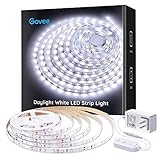
Govee 16.4ft Dimmable White LED Strip Lights
A bright strip tucked beneath a cabinet or around a mirror can fix dark edges without filling the room with bulky fixtures, but control method matters just as much as raw brightness. The Govee strip enters the conversation around best led light strips with remote because it offers adjustable lighting, yet the supplied description specifically identifies a control box rather than a handheld remote. That distinction shouldn't be brushed aside, especially if changing brightness from across the room is the whole reason for shopping this category. For close-range installations, though, its 16.4-foot flexible strip, daylight-white output, and straightforward physical controls address a simpler need: bright, adjustable illumination without color effects or app setup.
Govee White LED Strip Lights
Govee takes a focused approach here instead of cramming the strip with RGB colors and animated scenes. Its 300 LEDs produce a fixed 6500K daylight white, a color temperature suited to spaces where clear visibility matters more than cozy ambience. That can make cabinet interiors easier to see, reduce murky shadows around a mirror, or brighten a desk edge that never seems to catch enough ceiling light. The tradeoff is obvious: anyone expecting warm white, color-changing effects, or adjustable color temperature won't get them from the specifications provided.
The density of 300 LEDs across 16.4 feet also gives this strip a practical advantage over sparsely populated tape lights. More individual light points can help create a more continuous-looking line of illumination, particularly when the strip is mounted behind a lip, underneath cabinetry, or somewhere the LEDs aren't viewed straight on. Exposed installation may still reveal individual diodes, so placement makes a big difference in how polished the result feels. Used as indirect lighting, the strip's bright white output makes more sense than treating it as a decorative centerpiece.
That 6500K color has a personality of its own. It reads cool, crisp, and energetic rather than soft or relaxing, which can be useful around work surfaces, cabinets, mirrors, classrooms, and task areas. Put the same light around a bedroom late at night and it may feel sharper than expected, especially for anyone accustomed to warmer lamps. So, while the strip can physically fit many rooms, the cool daylight tone determines where it feels most comfortable.
A related lighting detail is worth keeping separate from this product's purpose: plant shelves often need a different kind of output than ordinary room illumination, and T5 fluorescent grow lights provide useful context for that specialized application. This Govee model is described as a general white lighting strip, not as horticultural equipment, so treating its 6500K color temperature alone as proof of plant-growing performance would go beyond the information supplied. That separation matters because visible brightness and plant-light performance aren't interchangeable claims.
Brightness Control Without Complicated Setup
Six brightness levels give the strip a useful amount of adjustment without turning a basic light into a menu-diving exercise. The supplied information says brightness changes through the control box, letting the strip move from stronger task illumination to a softer background level. That simplicity can be refreshing under a kitchen cabinet or beside a mirror, where fiddling with an app would feel like overkill. Still, the control box means you need physical access to the controller, which is a meaningful control limitation compared with a true remote-operated strip.
This is the biggest issue relative to the keyword best led light strips with remote. Nothing in the provided description states that a handheld remote is included, so calling the product a remote-controlled strip would be inaccurate. A strip mounted beneath a cabinet may put the controller within easy reach, making that difference fairly minor. Mount it high on a ceiling perimeter or behind furniture, though, and controller accessibility becomes much more important.
The six-step system also favors predictability over fine-grained adjustment. Rather than sliding through dozens of tiny brightness increments, you move among defined levels, which can make everyday changes quick and repeatable. One setting might suit early-morning kitchen use while another can tone down glare around a mirror at night. The downside is that anyone who likes precise dimming may find six preset levels less flexible than continuous dimming.
There are no supplied claims about timers, memory behavior, app control, voice assistants, or automatic scheduling, so those features shouldn't be assumed. The appeal here stays grounded in physical brightness adjustment and uncomplicated white light. That's either pleasantly straightforward or a little bare-bones, depending on what the installation needs. For a fixed work area, fewer controls can mean fewer headaches; for whole-room mood lighting, the missing remote and smart features may feel restrictive.
Installation Flexibility And Adhesive Support
Installation starts with the familiar peel-and-stick routine: clean the surface, dry it properly, then press the strip into place. Govee pairs the backing adhesive with 10 included clips, which is a sensible addition because adhesive alone can struggle around corners or on surfaces that aren't perfectly smooth. Those clips can provide extra security in places where gravity keeps tugging at the tape. Surface preparation still matters, since even strong adhesive can't compensate for dust, grease, or moisture trapped underneath.
The 16.4-foot length offers enough material for a fairly substantial run without becoming unwieldy. A bathroom mirror, kitchen cabinet section, desk perimeter, headboard, or shelving unit can often be approached with one continuous strip, depending on dimensions. Longer isn't automatically better, though, because unused material needs to be dealt with cleanly. That's where the stated cutting marks become important.
Trimming at designated cutting points allows the strip to fit a shorter surface instead of bunching excess tape behind furniture. The catch is that cutting LED tape should be treated as a one-way decision unless the product specifically supports reconnecting sections, and no reconnection accessories are described in the supplied details. Measuring twice is therefore more than an old workshop cliché here. Accurate planning protects the usable strip length and prevents an awkward gap at the end of an installation.
Flexibility also helps the tape follow straight edges and gentle directional changes, but flexible doesn't mean infinitely bendable. Tight corners can stress LED strips or cause sections of adhesive to lift, especially if the tape is forced sideways rather than routed naturally. The included clips can help anchor those troublesome points. A patient layout usually produces a cleaner result than trying to make the flexible tape behave like electrical wire.
Where The 6500K White Light Makes Sense
Cool white light earns its keep where visibility is the priority. Under kitchen cabinets, 6500K illumination can brighten countertops and reduce the dim strip that overhead fixtures often leave near the backsplash. Around storage shelves, the same crisp output makes labels, small objects, and cluttered corners easier to distinguish. It isn't subtle mood lighting, and that's precisely why it can be useful.
Mirrors are another logical location, though color preference becomes personal here. A cool daylight appearance can make a dim vanity feel much clearer, while someone wanting a softer, warmer reflection may find 6500K a little clinical. The six brightness levels give some control over intensity, but they don't change the fixed color temperature. Brightness and warmth are separate qualities, and dimming a cool light won't turn it into warm white.
Bedroom use comes with the same tradeoff. The strip can add indirect illumination behind a headboard, along shelving, or beneath furniture, yet its crisp daylight tone may feel stronger than the warm light commonly used before sleep. Lowering brightness can soften the visual impact, but the underlying cool tone remains. For reading, organizing, or morning routines, that energetic character may be useful; for winding down, preferences can swing the other way.
Seasonal decorating is mentioned in the supplied description as well, and the white output fits a clean, icy Christmas look rather than multicolor effects. Wrapped around architectural edges or used behind decorations, dimmable white light can add definition without introducing flashing patterns. The lack of RGB colors keeps the presentation simple. Anyone chasing red, green, or animated holiday scenes would need a different type of strip.
Power Design And Everyday Safety Details
The strip operates at a stated 12V working voltage, keeping the lighting tape itself on a low-voltage system. The description also specifies an ETL-listed power adapter and built-in short-circuit prevention technology. Those are concrete safety-related details supplied for the product, rather than assumptions based on appearance. Govee also describes the strip as producing low heat and being touchable during normal use.
Low heat is especially useful in installations where the strip sits close to cabinetry, shelving, or mirror frames. LED tape generally gets tucked into narrow spaces, so excessive heat would be more than an inconvenience. The stated low-heat operation supports the kind of close-surface mounting this product is designed around. That said, keeping the power hardware properly ventilated and following the supplied installation guidance still makes sense.
The adapter and controller also influence where the strip can realistically go. A 16.4-foot tape may reach across a broad area, but the installation still needs practical access to a power outlet and a sensible place for the power connection. Hiding the strip is easy; hiding wires cleanly can take more thought. Planning the route from the outlet outward usually prevents the common headache of finishing the lighting layout only to discover that the cable hangs awkwardly across the wall.
No waterproof or outdoor rating is included in the description provided, so wet-area or exposed outdoor use shouldn't be assumed. That matters around sinks, bathrooms, patios, or holiday installations that might encounter moisture. The listed applications center on indoor spaces such as cabinets, mirrors, bedrooms, ceilings, classrooms, and living areas. Staying within those stated uses keeps the review grounded in what the product information actually supports.
Strengths, Weaknesses, And The Remote Question
The clearest strength is focus. This strip gives you 300 LEDs, a bright 6500K white tone, six dimming levels, cut points, adhesive backing, clips, and a 16.4-foot run without piling on decorative color modes. That makes it easier to judge whether the product fits a job based on lighting needs rather than feature count. For cabinet, mirror, shelf, or task-oriented lighting, its straightforward specification set is easy to understand.
The most obvious weakness is equally straightforward: the provided description doesn't identify a remote. For someone specifically searching best led light strips with remote, that omission can be a deal breaker because the control box requires closer physical interaction. The distinction matters most in hard-to-reach installations such as ceiling edges or behind large furniture. A controller placed beside a countertop or desk is much less inconvenient.
A second limitation is the fixed 6500K color temperature. Crisp daylight white can make practical spaces feel brighter and clearer, but it doesn't offer the warmer look many people prefer for relaxed evenings. There are no supplied RGB capabilities or tunable-white settings to bridge that gap. What you see in the specification is what you get: bright, cool white light with adjustable intensity.
The product's difference from feature-heavy LED strips is therefore its narrower mission. It isn't described as an entertainment strip, smart-home accessory, music-reactive light, or color-changing decoration. Instead, it concentrates on straightforward white illumination that can be cut, mounted, dimmed, and positioned across a variety of indoor surfaces. That narrower approach can be a sensible fit when practical brightness matters more than controlling a light show from the couch.
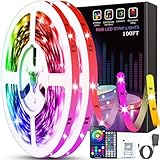
KSIPZE 100ft RGB Music Sync LED Strip Lights
Lighting a whole room with one strip sounds easy until the setup starts demanding awkward controller access, short cable runs, or constant phone fiddling. This KSIPZE model tackles those everyday annoyances with 100 feet of RGB lighting, Bluetooth app control, and an included IR remote, which puts it squarely in the conversation around best led light strips with remote. The combination makes sense for bedrooms, ceilings, living rooms, kitchens, parties, and seasonal setups where lighting changes often instead of staying on one fixed color. Its strongest appeal isn't just the huge color palette; it's the ability to control that palette in more than one way without locking the entire experience to a phone.
KSIPZE 100ft RGB LED Strip Lights
A hundred feet changes how an LED strip can be planned. Instead of treating the light as a small accent behind a television or desk, the 100ft length gives enough reach for broader ceiling edges, large bedrooms, living-room boundaries, or decorative runs that would quickly consume a shorter kit. That's handy if the goal is visual continuity rather than several isolated patches of color. The tradeoff is that long-strip planning deserves a little patience, because excess material and sharp corners can turn an otherwise clean installation into a tangled-looking one.
The product description centers on RGB color changing rather than white task illumination, so its personality leans toward atmosphere. With app access to a stated 16 million colors, the strip can shift from cool blue around a gaming setup to warmer tones during a quiet evening, then move into more energetic hues for parties. Those choices make the strip flexible from a decorating standpoint, but RGB lighting isn't automatically a substitute for bright, neutral under-cabinet task light. Someone expecting crisp countertop illumination should keep that distinction in mind.
Control flexibility is where this model separates itself from simpler LED tape. The supplied details specify both Bluetooth app control and an IR remote, so brightness and color changes aren't tied to a single interface. The remote suits quick adjustments from nearby, while the app opens the door to deeper mode customization without covering the controller box in dozens of buttons. That two-control setup is a practical strength because not every lighting change needs a phone, yet the phone remains useful for settings that benefit from a larger interface.
The supplied information also makes the product's purpose fairly clear: decoration first, task lighting second. Bedrooms, ceilings, living rooms, kitchens, Christmas setups, Halloween decorations, birthdays, and weddings are all mentioned as possible placements. That range doesn't mean every location will look equally good, though, because surface condition, visibility of the LEDs, and nearby wall colors can all change the effect. A hidden strip washing light across a wall usually feels softer than exposed LEDs running directly through the line of sight.
Remote And App Control In Daily Use
The included IR remote answers one of the biggest frustrations attached to app-only lighting. A phone can be charging across the room, buried under a pillow, or simply unavailable, yet remote control still gives immediate access to basic lighting changes. That feels particularly useful in a bedroom where shutting off bright LEDs shouldn't require unlocking another device. IR control does have a natural limitation, though, since the receiver generally needs sensible placement rather than being buried behind thick furniture or hidden completely out of view.
Bluetooth broadens the control options without turning the light into a complicated smart-home project. According to the supplied description, the app allows changes among 16 million colors, brightness adjustment, and customizable effects such as flashing, jumping, and fading at different speeds. Those controls make more sense on a phone screen than on a crowded remote, especially once speed and effect combinations enter the picture. The setup still depends on Bluetooth rather than the broader capabilities associated with a Wi-Fi ecosystem, so expectations should stay centered on the features actually provided.
This dual-control arrangement creates a useful division of labor. The remote can handle quick color or brightness changes, while the app becomes the better place for mode customization and more detailed adjustments. That reduces the chance of turning a simple evening lighting change into a miniature settings session. It's a small usability detail, but after the novelty wears off, convenience usually matters more than the number of effects printed on the box.
A strong difference from basic single-controller strips is that the lighting isn't stranded if one control method feels inconvenient in a certain moment. Someone sitting across the room can use the remote, while a more involved setup can be handled through the app. That flexibility suits shared spaces too, since one person doesn't have to keep a particular phone nearby just so everyone else can change the lights. Still, the product description doesn't state voice-assistant support or Wi-Fi control, so those features shouldn't be assumed.
Music Sync And Color Effects
Music synchronization gives this strip a more playful role than ordinary accent lighting. The built-in microphone is described as reacting to surrounding music, allowing the LEDs to change color with ambient sound. That can fit birthday parties, holiday gatherings, gaming rooms, or casual hangouts where static lighting starts to feel a little flat. The feature is less about precise audio analysis and more about making the room visually respond to what's happening around it.
Placement will influence how useful that effect feels. A controller positioned reasonably close to speakers or conversation should pick up more of the surrounding sound than one hidden far away, while an overly noisy location may cause constant reactions that feel busier than expected. The supplied description doesn't provide microphone sensitivity settings, so there's no basis for assuming fine control over how aggressively the lights respond. That's worth remembering if music sync is the main reason for buying the strip rather than an occasional extra.
Static colors still matter once the party is over. The app's wide color selection means the same strip can move from animated effects into a calmer ambient lighting role without changing hardware. A muted purple behind a headboard, soft blue around a gaming setup, or warm-looking RGB mix near shelving can give the room a different feel with minimal effort. RGB color mixing has its own limits, though, and the description doesn't identify dedicated tunable-white LEDs, so naturally rendered warm and cool whites shouldn't be assumed.
The different flashing, jumping, and fading modes add variety, but more movement isn't automatically better. Fast transitions can suit festive decorating, while slower fades are less distracting during conversation or casual evening use. That choice is one of the more useful parts of adjustable effect speed, since it lets the same underlying mode feel either energetic or restrained. The strip is at its best when those effects serve the room rather than becoming the only thing anyone notices.
Timer Scheduling Without Daily Repetition
The timer function brings a different kind of usefulness. The product description says the strip can be scheduled to turn on or off automatically at selected times and repeat according to chosen dates. That can make evening lighting feel less hands-on, especially if the strip is normally used at roughly the same time each day. A bedroom can light up before the usual evening routine, while decorative lighting can shut down later without relying on someone remembering the remote.
Scheduling also helps with installations that aren't particularly easy to reach. Ceiling-mounted strips look clean precisely because the hardware stays out of the way, but that same positioning makes physical controls less appealing. A programmed routine reduces the number of times anyone needs to interact with the controller at all. The timing setting doesn't replace the remote or app; it simply handles repetitive on-and-off behavior that shouldn't need manual attention every day.
There are limits to what can safely be claimed from the supplied details. The description confirms timed on-and-off behavior and repeated scheduling on selected dates, but it doesn't specify advanced sunrise routines, geofencing, occupancy sensing, or cloud-based automation. Keeping the feature framed as a basic scheduling tool is more accurate than treating it like a full smart-home automation platform. For many rooms, basic scheduling is plenty because the real need is simply having the lights follow a predictable routine.
This timer feature also gives the strip a quieter side that gets overshadowed by music sync and color effects. Party lighting is fun, but ordinary weekday convenience usually determines whether a product remains pleasant to use after the first few days. Automatic shutoff can prevent LEDs from glowing long after they're needed, and preset activation can make the room feel ready before anyone reaches for a remote. That balance between decorative effects and everyday routine support is one of the better aspects of the feature set.
Installation Across Larger Rooms
Installation follows a straightforward peel-and-stick approach. The supplied directions call for removing the backing from the adhesive tape and placing the strip on a clean, dry surface. That last part matters more than it sounds, because dust, cooking residue, moisture, and textured paint can all interfere with adhesive contact. A few extra minutes spent preparing the mounting path can make the difference between a clean line and sections that begin sagging later.
The 100-foot coverage opens possibilities that shorter strips can't handle as easily, but long runs demand planning before the backing paper comes off. Ceiling perimeters, room corners, doors, furniture, and outlet placement all affect the route. Stretching the strip first without sticking it down can help reveal where bends, controller placement, and power access may become awkward. Once adhesive touches the wall, repeated repositioning may weaken the bond or make the installation look less tidy.
Large installations also benefit from deciding whether the LEDs should be visible or hidden. Directly exposed RGB points create a stronger, more graphic look, while mounting the strip behind furniture or near an edge produces a softer reflected glow. Bedrooms and living rooms often feel calmer with indirect light because the wall becomes the illuminated surface instead of the individual LEDs. Party spaces may benefit from the opposite approach, particularly where bold color is part of the decoration.
The description doesn't provide waterproofing information, so indoor installation is the sensible frame for the listed uses. Kitchens are mentioned, but that doesn't automatically mean the strip should be placed where splashes, steam, or direct moisture are routine. Bedrooms, ceilings, living rooms, and dry decorative areas align more clearly with the information supplied. Keeping the controller and adhesive away from damp surfaces also gives the installation a better chance of staying neat.
Where The 100ft Length Helps And Hurts
More length solves one obvious problem: running out of strip halfway around a room. A 100ft LED strip can support broader decorating plans without requiring several unrelated kits, controllers, or color settings scattered across the same space. That makes it appealing for full-room ceiling outlines and party decoration where continuity matters. A shorter desk or television setup, on the other hand, may not benefit from carrying around so much unused lighting.
Big rooms make the scale easier to justify. A bedroom with multiple walls, a spacious living room, or a combined entertainment area can consume LED tape surprisingly quickly once corners and furniture edges are included. Long coverage creates more freedom to design the route without treating every extra foot as precious. The strength is reach; the corresponding weakness is that a large amount of strip can become cumbersome if the intended project is actually small.
Visual consistency also deserves attention over a long installation. Corners, furniture interruptions, and changes in mounting height can make one continuous strip look uneven even if the LEDs themselves behave properly. A little restraint helps here, because using all 100 feet isn't automatically the goal. Clean placement and consistent spacing usually contribute more to a finished-looking room than forcing every last inch of strip onto a surface.
The product description doesn't provide details about cutting points, reconnection hardware, extension cables, or how separate sections can be joined after trimming. Those details shouldn't be invented simply because many LED strips offer similar options. Anyone planning a complicated route involving separate shelves or disconnected wall sections should therefore treat continuous placement as the safer assumption based on the information provided. That makes advance measuring even more valuable.
Decorating, Parties, And Seasonal Lighting
Holiday lighting is an obvious use because RGB strips can switch character without changing hardware. Red and green tones suit Christmas decorating, orange and purple fit Halloween, while birthdays and weddings can use colors that match the surrounding theme. The color-changing system means those events don't require storing separate decorative strips for every season. Between events, the same installation can drop back into everyday room lighting instead of sitting unused in a box.
Party settings lean heavily on the music feature and animated modes. A room outlined with 100 feet of light can feel dramatically different once colors begin moving with the soundtrack. Still, restraint matters, and rapid flashing may become tiring during longer gatherings. Slower fades or stable colors can provide background atmosphere without making the lighting compete with conversation.
Bedroom use is almost the opposite scenario. Strong effects might be fun for gaming or listening to music, but everyday evenings usually benefit from calmer colors and lower brightness. The remote makes those transitions easier because changing the room's mood doesn't require walking back to the controller. That quick adjustment is where the product fits the phrase best led light strips with remote more naturally than strips that depend entirely on physical buttons or an app.
Lighting goals can vary sharply between decoration and specialized plant setups, and a neutral technical reference related to measuring horticultural light is available through PAR meters for grow lights. This KSIPZE strip is described as decorative RGB room lighting, not plant-growth equipment, so colorful output shouldn't be treated as evidence of horticultural performance. That distinction keeps decorative brightness, color effects, and plant-light measurement in their proper lanes.
Strengths, Weaknesses, And Practical Fit
The strongest part of the package is the combination of IR remote control, Bluetooth app access, a long 100-foot run, customizable RGB colors, music synchronization, and timing features. Those capabilities address several common frustrations at once: short coverage, inconvenient controls, repetitive manual switching, and limited decorative flexibility. The system can behave like quiet background lighting one evening and animated party lighting the next. That adaptability is useful because the hardware doesn't have to be replaced every time the room's purpose changes.
The biggest weakness is that the same broad feature set won't suit every lighting job. RGB strips prioritize mood and decoration, while kitchens, workshops, mirrors, or reading areas may benefit more from dedicated white LEDs with a clearly specified color temperature and stronger task-lighting emphasis. The supplied description doesn't give lumen output or dedicated white-channel details, so its suitability for precision illumination can't be established from the provided information. Decorative flexibility shouldn't be confused with task-light performance.
Remote operation also carries a practical caveat. The included IR remote is convenient, but infrared systems generally work best when the receiver isn't completely obstructed, making controller placement part of the installation plan. Bluetooth app control helps offset that limitation by providing another way to manage the lights. The two methods complement each other rather than making one redundant, particularly in larger rooms where different control situations come up throughout the day.
The most meaningful difference is the product's emphasis on whole-room atmosphere rather than a small accent zone. One hundred feet, music synchronization, repeatable timing, app customization, and remote access all point toward installations that change often and cover substantial space. Small, fixed lighting jobs may make better use of a simpler strip with fewer controls, while broad decorative layouts can take fuller advantage of what KSIPZE provides. Realistic expectations matter here: its strengths are color, reach, control variety, scheduling, and entertainment-focused flexibility rather than specialized white illumination.
Govee RGBIC 16.4ft Smart LED Strip Lights
A bedroom can look flat even after adding LED tape if every section is forced to show the same color at the same time. Govee takes a more expressive route with RGBIC multi-color effects, letting different portions of this 16.4-foot strip display several colors simultaneously instead of behaving like conventional RGB tape. That capability gives it an unusual position among best led light strips with remote, although the supplied specifications emphasize Govee Home app control rather than a traditional handheld remote. The result favors detailed customization, animated scenes, and music-driven lighting over the grab-a-remote simplicity some shoppers may expect from this category.
Govee RGBIC 16.4ft Smart LED Strip
The RGBIC technology is the feature that changes the character of this strip. Traditional RGB lighting commonly keeps an entire strip on one color at a time, while this model can show multiple colors along the same line. That means a bedroom wall can move through neighboring blues, purples, pinks, and warmer tones without forcing the whole run into a single shade. For decorative lighting, that multi-color segmentation creates a much richer visual effect than simply switching from red to blue to green.
The 16.4-foot length also keeps the project relatively manageable. It can fit behind a bed, around a desk, beneath shelving, or across part of a ceiling without immediately turning installation into a whole-room wiring project. That size is a strength for focused accent lighting because there's enough material to create a visible impact while still allowing careful placement. On the flip side, anyone planning to trace several walls may consider the 16.4ft coverage limiting compared with longer 50-foot or 100-foot kits.
Govee positions these lights primarily around atmosphere rather than practical task illumination. The supplied information highlights 16 million colors, animated effects, preset scenes, and music synchronization rather than a specified white color temperature or task-light output. That distinction matters around kitchen counters, mirrors, or workbenches, where dependable neutral white light can matter more than dramatic color combinations. Bedrooms, gaming areas, movie spaces, parties, and decorative corners fit the stated capabilities more naturally.
A separate lighting question sometimes comes up around energy use, especially once decorative LEDs start staying on for long evening stretches, and a neutral reference on low-watt light bulbs helps frame that broader topic without treating this RGBIC strip as the same kind of product. The supplied specifications don't state this strip's total wattage, so guessing at operating cost or direct bulb equivalence would be misleading. What can be said with confidence is that the product's main design priority is flexible decorative control rather than replacing an ordinary room bulb.
App Control Replaces Basic Remote Operation
The biggest usability difference deserves attention right away. The product description says the Govee Home App unlocks personalization while moving beyond simple remote control, so a conventional handheld remote isn't identified as part of the provided package. That creates a clear weakness for remote-first shoppers using the phrase best led light strips with remote literally. Anyone who wants to tap a physical button from bed without reaching for a phone should treat that distinction as more than a footnote.
App control earns its keep by offering far more adjustment than a small infrared handset could comfortably handle. Colors and brightness levels can be changed through the phone, while more elaborate effects can be personalized without squeezing dozens of functions onto tiny plastic buttons. The interface is also where Govee's RGBIC design makes more sense, since multi-color effects naturally require more detailed control. There's a tradeoff, though: deeper customization means the phone becomes an important part of everyday operation.
The supplied details specifically identify a Bluetooth connection, which keeps control centered on nearby mobile use. Alexa isn't supported according to the product information, so voice-control expectations should be kept in check. Nothing supplied here confirms broader Wi-Fi automation either, and adding that claim would stretch beyond the facts. For a bedroom where the phone is usually nearby, Bluetooth can be perfectly practical; for someone building a voice-controlled smart-home routine, the limitation is more noticeable.
This app-first approach will feel either liberating or mildly annoying depending on the routine. Detailed color tuning, scene selection, and DIY effects are much easier to navigate on a screen, yet simple actions such as lowering brightness before sleep can feel more involved without a dedicated remote. That's the central difference between this product and conventional remote-led strip kits. Govee is essentially trading button-level simplicity for deeper creative control.
RGBIC Effects Give Each Section More Personality
Multiple colors on one line can change how the strip interacts with a room. A single-color RGB strip tends to wash the wall in one uniform tone, while RGBIC effects can create gradual transitions and contrasting blocks across the same installation. Around a gaming desk, that makes it possible for one side to lean cool while another section shifts warmer. The visual result is more layered, especially when the LEDs are mounted where their light can reflect across a wall rather than pointing directly into the room.
Govee also provides access to 64+ preset scenes according to the supplied description. Those presets are built around moods and occasions such as parties, holidays, and movies, which cuts down on the need to manually build a color pattern every time the room changes purpose. A relaxed scene can serve ordinary evenings, then a brighter animated arrangement can take over during a gathering. Presets won't appeal equally to everyone, but they're useful when convenience matters more than designing every transition from scratch.
The DIY side adds more flexibility for someone who enjoys tinkering. The app offers a stated 16 million color choices and provides tools for building individualized lighting effects, while the community aspect allows creative pieces to be shared within the app environment. Govee also states that additional themes are updated through the application, increasing the number of visual combinations available over time. The practical benefit isn't the giant color number by itself; it's having enough control to move beyond a few repetitive red, green, and blue presets.
Still, RGBIC has a limitation that deserves equal billing. The product description doesn't state that the strip contains dedicated warm-white and cool-white channels, so accurate tunable white lighting shouldn't be assumed from its color capabilities. Mixed RGB can produce white-looking light, but decorative white and purpose-built white illumination aren't necessarily the same experience. That makes this strip better suited to mood-heavy setups than places where consistent task lighting is the priority.
Music Sync Makes The Strip More Reactive
Music synchronization pushes this strip firmly into entertainment territory. An integrated high-sensitivity microphone reacts to surrounding audio, and the supplied specifications list 11 music modes for changing how the lighting responds. That can make a bedroom or gaming area feel more active during music playback without requiring constant manual adjustments. The room itself starts behaving as part of the soundtrack, which is much more engaging than leaving one static color on all evening.
The number of modes matters because one sound-reactive pattern can get old quickly. With 11 music modes, the lighting can be matched more closely to different pacing instead of forcing every song through the same visual behavior. Faster tracks may suit sharper changes, while calmer music can pair better with less frantic movement. This variety is a practical strength for parties and casual home listening, where repetitive flashing would otherwise become distracting.
Microphone placement still deserves some thought. A controller buried behind furniture won't experience the same surrounding sound as one placed where music reaches it clearly, and the supplied description doesn't specify detailed sensitivity adjustment. That means installation position can influence how naturally the strip reacts. Keeping expectations realistic helps, since music sync is designed for visual atmosphere rather than precise professional audio analysis.
Movie nights can benefit from the feature set too, although music reaction isn't always the best mode for every scene. The preset library may offer a calmer alternative when constantly changing colors would pull attention away from the screen. That's where having scene control plus music modes becomes more valuable than either feature standing alone. The strip can stay energetic during a party and then settle into steadier background color when the room needs to feel less busy.
Installation Rewards A Clean Surface
Adhesive-backed strips always look simple until dust enters the picture. Govee specifically notes that the mounting surface should be clean and dry because hair, dust, and other debris can interfere with the tape's grip. That advice is especially relevant along baseboards, behind desks, and around bedroom furniture where fine dust collects quickly. A careful wipe before installation isn't glamorous, but it can prevent the frustrating sight of one section hanging loose a few days later.
The 16.4-foot format encourages more deliberate placement than very long room-perimeter kits. Behind a headboard or monitor, the strip can stay mostly hidden while throwing indirect color onto the surrounding surface. That arrangement usually softens the individual LED points and makes multi-color RGBIC transitions look more blended. Exposing the strip directly creates a sharper visual line, which may suit a gaming setup but can feel harsher beside a bed.
Outdoor decorating isn't where this model belongs based on the supplied information. Govee specifically says the strip is not recommended for outdoor use, so patios, exposed holiday displays, and moisture-prone areas fall outside the sensible use case described here. That limitation shouldn't be ignored just because adhesive LED tape is physically easy to stick almost anywhere. Indoor bedrooms, entertainment areas, walls, desks, shelving, and dry decorative spaces remain the safer match.
Corner placement can also affect the finished appearance. LED tape is flexible, but forcing tight angles can make adhesive lift or leave visible bends that interrupt an otherwise clean run. A slightly wider route around corners often preserves the smooth lighting line better than aggressively folding the strip. Since no specific cutting or reconnection details were provided, complex modifications shouldn't be assumed to work unless they're supported by the product's own installation instructions.
Strengths And Weaknesses For Everyday Use
The clearest strength is visual flexibility. RGBIC lets different sections display different colors at once, while the app provides 16 million color choices, 64+ scenes, customizable effects, and 11 music modes. That combination gives the 16.4-foot strip more personality than conventional RGB tape that changes the entire run to one shade. It makes the most sense where lighting is part of the room's atmosphere rather than merely a way to see better.
The main weakness is the control mismatch with the keyword. Someone searching specifically for best led light strips with remote may reasonably expect a handheld controller, yet the supplied description instead emphasizes app operation and explicitly frames it as moving beyond simple remote control. Alexa support is absent as well, narrowing the ways the strip can be controlled. Phone-based customization is powerful, but it isn't automatically more convenient for every routine.
Another tradeoff lies in the fixed length and indoor focus. 16.4 feet works nicely for a desk, bed, television area, or one decorative section, but it may run short if the plan involves outlining an entire large room. The strip also isn't recommended for outdoor use, limiting seasonal decorating to protected indoor spaces. Those constraints aren't flaws by themselves; they simply define the jobs where this model makes the most sense.
The most useful difference is that Govee treats the strip almost like a customizable visual layer rather than a basic color-changing lamp. Multi-zone RGBIC effects, app-built scenes, music response, and preset patterns favor people who regularly alter the mood of a room instead of setting one color and forgetting it. Anyone wanting straightforward physical remote control may prefer a simpler design, while a phone-centered setup can make much better use of this model's deep personalization. Its appeal rests on expressive color control, not on pretending every lighting job needs the same feature set.
Leeleberd 100ft RGB LED Strip Lights
Covering a large room with accent lighting gets frustrating fast when short strips force awkward gaps, extra controllers, or mismatched sections. Leeleberd takes the opposite approach with 100 feet of RGB lighting split across two 50-foot rolls, giving broader coverage for ceilings, bedrooms, stairs, kitchens, and dining spaces. That long reach, paired with both a handheld controller and Bluetooth app access, makes this model especially relevant to best led light strips with remote searches where convenience matters as much as color. The setup leans toward decorative atmosphere, music-driven effects, and scheduled lighting rather than plain white task illumination.
Leeleberd 100ft RGB LED Strip Lights
The first thing that stands out is simple: 100 feet of lighting gives you room to think beyond a desk edge or television. Two 50-foot rolls can cover much larger areas, which helps reduce the patchwork look that sometimes happens when several shorter kits are mixed together. Bedrooms with long ceiling runs, stairways, dining spaces, and kitchen perimeters can all benefit from that extra reach. The tradeoff is that long-strip installation takes more measuring, more surface preparation, and a clearer plan before the adhesive backing comes off.
Leeleberd keeps the focus on RGB decoration rather than neutral working light. The system offers a stated 16 million colors, allowing the room to shift between muted tones, saturated party colors, and combinations that better match seasonal decorations. That gives plenty of visual freedom, but it doesn't mean every shade will function like a dedicated white lamp. The supplied details don't mention a separate white LED channel, so task-light expectations should stay realistic.
The two-roll layout adds some flexibility to how a room can be approached. One roll can follow one side of a room while the second handles another zone, provided the installation matches the product's supplied configuration. That can feel neater than trying to snake a single extremely long strip through every corner and around every obstacle. Still, the description doesn't spell out independent zone control, so separate color control for each roll shouldn't be assumed.
Coverage is the product's obvious strength, but more material can also expose layout mistakes. Uneven heights, sharp turns, or visible adhesive gaps become easier to notice across a long installation. A clean, continuous route usually looks better than forcing the full 100 feet into every available space. In practical terms, placement discipline matters just as much as having extra length.
Remote And Bluetooth Control
The control setup fits the keyword well because Leeleberd provides both remote control and Bluetooth app operation. The remote handles quick changes without making a phone part of every small adjustment, which is handy while watching a movie, lying in bed, or entertaining guests. The app gives a larger interface for color selection and mode changes when more detailed control is useful. That two-way approach solves a common annoyance with app-only strips where a dead phone battery suddenly makes basic lighting feel less convenient.
The Bluetooth smart app opens access to the stated 16 million color choices and a large selection of lighting modes. A phone screen naturally makes this kind of customization easier because individual colors and effects don't have to be squeezed onto a crowded handheld controller. The remote remains the more practical tool for quick on-the-fly changes. Together, those controls create a useful balance between simple operation and deeper personalization.
A handheld remote also makes sense in shared rooms. One person doesn't need to keep the paired phone nearby just so someone else can change the lighting. That's especially useful in family spaces, bedrooms, or party settings where several people may want to adjust brightness or color without opening an app. The supplied information doesn't state Wi-Fi or voice-assistant compatibility, so the confirmed control methods remain the remote and Bluetooth app.
The remote is still worth planning around during installation. Receivers associated with conventional handheld controls generally work better when they aren't completely buried behind furniture or blocked by thick objects. The product description doesn't provide a stated operating range, so attaching an exact distance would be guesswork. A sensible installation leaves the controller area accessible instead of treating it as something to hide at all costs.
Music Sync Changes The Mood Fast
Music synchronization gives these lights a different personality from ordinary static accent strips. The supplied description says the LEDs can dance to the beat in real time, letting color movement react to surrounding music during birthdays, weddings, holidays, proms, or casual evenings. That makes the lighting feel tied to what's happening in the room instead of sitting in the background. For parties, music sync can create more energy without requiring someone to keep changing scenes manually.
The feature also has value outside big events. A bedroom playlist, gaming session, or living-room gathering can feel more animated when the lighting changes alongside sound. That said, reactive lighting can become visually busy if left running for hours. Static colors or slower effects may feel more comfortable once the novelty of beat-responsive lighting wears off.
Leeleberd doesn't provide microphone sensitivity specifications in the supplied details, so there isn't enough information to claim how precisely the lights react to soft versus loud audio. Placement will probably matter because sound-based effects depend on what the controller or microphone can hear, but the exact behavior shouldn't be invented. The safest takeaway is that real-time music synchronization is part of the feature set, not that it behaves like professional audio-reactive equipment.
The variety of modes adds another layer to the music feature. A party might benefit from more active transitions, while an ordinary evening could use calmer color changes that don't dominate the room. That flexibility prevents the strip from being locked into a single visual style. The broader decorative range is one reason this model suits spaces that regularly shift between everyday use and occasional celebrations.
64 Scene Modes For Different Occasions
The product includes 64 scene modes, which gives the strip a ready-made library of visual effects without forcing every look to be built manually. Seasonal decorations can use brighter, more animated settings, while everyday room lighting can lean toward steadier colors. That saves some effort when you want a different atmosphere but don't feel like manually adjusting several settings. Scene presets are particularly useful with long runs because changing the whole room's appearance becomes a quick operation.
Birthday parties, Christmas, Easter, Halloween, carnivals, proms, and weddings are all mentioned in the supplied use cases. Those occasions suit RGB lighting because color can become part of the decoration rather than merely illuminating it. A room outlined in color-changing light can shift its personality without physically replacing decorations every time the calendar changes. Once the event is over, the same strip can fall back to quieter bedroom or living-room lighting.
Sixty-four scenes sound generous, but sheer quantity isn't the only thing that matters. Most people will probably settle into a handful of effects that match their space and routine, while more aggressive animations may see occasional use. That's not a criticism so much as a realistic expectation. The real benefit is having enough variety to avoid being stuck with just a few repetitive patterns.
Scene modes also pair well with the remote-plus-app setup. The remote handles quick switching, while the app gives more room to browse through options without memorizing tiny button labels. That division keeps the product from feeling either too simple or unnecessarily complicated. The difference is practical: the lighting can stay approachable even though it offers a fairly broad set of visual effects.
Timer Control Adds Everyday Convenience
The timer function shifts the strip away from being purely decorative. Leeleberd says you can set a wake-up time and end time so the lights turn on and off automatically. That can help build a predictable lighting routine without reaching for the remote every morning or night. Used softly, scheduled RGB lighting can make a bedroom feel less abrupt at the start or end of the day.
The description frames the timer as a kind of light alarm clock, though it doesn't specify gradual sunrise simulation or slowly increasing brightness. That distinction matters because automatic activation isn't necessarily the same thing as a dedicated sunrise lamp. What is supported by the supplied information is scheduled on and off behavior. Keeping that boundary clear prevents a useful feature from being oversold.
Automatic shutoff can also make long decorative installations easier to live with. Ceiling strips and stairway lighting are easy to forget once they become part of the room, especially late at night. A preset end time reduces the need to remember one more switch before bed. That sort of routine automation may end up being used more often than flashy scene effects simply because it solves a daily nuisance.
Scheduled lighting is especially relevant in bedrooms where the remote may not always be within reach. The app can establish the routine, while the remote remains available for exceptions. That gives the system two layers of control without forcing either one into every interaction. The timer plus remote combination is a practical strength for anyone who likes both automation and immediate manual control.
Installation Needs A Clean Dry Surface
The mounting process is straightforward on paper: use the adhesive backing and attach the strip to a clean, dry surface. In real rooms, that preparation step deserves more attention than it usually gets. Dust along ceiling edges, cooking residue in kitchens, and textured paint can all interfere with adhesive contact. Rushing through the cleaning stage may save a few minutes initially but create sagging sections later.
One hundred feet also means more opportunities for alignment errors. A strip that begins only slightly crooked can look noticeably off after traveling across a long wall or ceiling perimeter. Measuring the route before exposing the adhesive helps preserve a straight visual line. Corners deserve extra care too, because forcing flexible tape into a tight turn can put stress on both the strip and the adhesive.
The product is described as suitable for bedrooms, kitchens, stairs, dining rooms, and ceilings, which gives plenty of indoor placement options. Kitchens still require a bit of common sense because the supplied note states that these lights are not waterproof. Dry cabinet edges or walls are one thing; splash-prone areas are another. That limitation should influence placement before the strip is stuck down permanently.
The two 50-foot rolls can make handling easier than wrestling with one huge 100-foot coil. Smaller rolls are less awkward while measuring and routing around furniture or ceiling edges. The supplied details don't explain cutting, reconnecting, or extension hardware, though, so complex segmented installations shouldn't be assumed to work a certain way. A straightforward continuous indoor layout stays closest to the information provided.
Where The 100ft Coverage Makes Sense
Large rooms are where the 100ft length earns its keep. A ceiling perimeter can consume far more strip than expected once all four walls are measured, and stairs add even more surface area if every section is outlined. Two 50-foot rolls reduce the need to buy several small kits that may use different controllers or settings. Broad coverage also makes the lighting feel more intentional because the color can continue across a larger portion of the room.
Small spaces tell a different story. A compact desk, short headboard, or television setup may only need a fraction of the included material, making a 100-foot package more cumbersome than useful. Extra strip doesn't automatically improve the result if most of it remains unused or gets stuffed into hidden corners. The weakness of generous coverage is simple: it makes the most sense only when the project genuinely needs the length.
Stairways can benefit visually because continuous color helps define the route, though the strip shouldn't be treated as a substitute for dedicated safety lighting unless its specifications support that role. The supplied information positions it as room and decorative lighting, not code-compliant stair illumination. That difference keeps expectations grounded. Used as accent lighting, the long coverage can still make stair areas look more connected to the rest of the home's lighting scheme.
Dining areas and ceilings can take advantage of softer reflected light instead of directly exposed LEDs. Mounting the strip where nearby walls or surfaces catch the glow often creates a smoother ambient effect. Visible LED points can feel more intense, especially across a 100-foot installation. Placement changes the personality of the same strip as much as the selected color does.
Not Waterproof Means Indoor Use Matters
The supplied note is clear that the 100ft LED strip lights are not waterproof. That rules out treating them as general outdoor decorations simply because holidays and parties are mentioned in the product description. Christmas or Halloween use makes more sense indoors or in dry, protected locations. Rain, condensation, and direct moisture fall outside the stated design.
Bathrooms and sink areas deserve the same caution. Decorative RGB lighting can look appealing near mirrors or cabinets, but non-waterproof construction limits where it belongs. A dry bedroom wall is far less demanding than a surface exposed to steam or splashes. The indoor-only limitation isn't unusual for adhesive RGB tape, yet it's still an important tradeoff for anyone planning several rooms.
Kitchens fall into a middle ground. The product is listed for kitchen use, but placement should stay on clean, dry surfaces away from routine moisture. Upper cabinet edges or dry wall sections fit that description better than areas directly beside a sink. That keeps the adhesive mounting and non-waterproof design aligned with realistic use.
The same practical distinction applies to seasonal lighting. Indoor party rooms, dining spaces, and decorated stairways fit the stated use better than exterior porches or exposed railings. There's no need to stretch the product beyond its specifications when the 100-foot length already offers plenty of indoor possibilities. The limitation is straightforward, but it doesn't undermine the strip's main role as interior decorative lighting.
Strengths, Weaknesses, And Overall Fit
The strongest argument for this model is the combination of 100ft coverage, handheld remote operation, Bluetooth app control, music synchronization, scheduled on and off times, and 64 scenes. Those features solve several everyday problems at once, especially in rooms where lighting needs change frequently. A physical remote keeps simple adjustments quick, while the app handles deeper customization. That balance makes Leeleberd a natural fit for best led light strips with remote discussions where remote convenience can't be treated as an afterthought.
The main weakness is specialization. This is decorative RGB lighting, so anyone expecting neutral task illumination, waterproof outdoor use, or a clearly specified dedicated white channel may need a different type of strip. The 100-foot size can also be excessive for compact installations. Plenty of length is only a benefit when the layout actually calls for it.
A separate lighting topic occasionally comes up around automotive bulb replacements, and a neutral reference exists in replacement headlights for a Honda Element, although that subject is technically unrelated to decorative room strips. Leeleberd's product stays firmly in the indoor RGB décor category, so vehicle lighting specifications shouldn't be blended into the same evaluation. Keeping those applications separate avoids implying a connection that the supplied information doesn't support.
The most useful difference is how much ground this package can cover while still retaining two convenient ways to control it. Long ceiling routes, bedrooms, dining areas, stairs, and party spaces can all make better use of 100 feet than a short accent project can. Remote access keeps ordinary changes quick, while music sync, timers, and scenes give the setup more personality whenever the room calls for it. Its strongest fit is a large indoor decorative installation where coverage, color variety, remote access, and scheduling matter more than waterproofing or specialized white illumination.
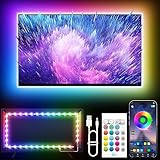
KANTUTOE 16.4ft RGB TV Backlight
A television can dominate a dark room in all the wrong ways, with a bright screen floating against a black wall and every scene change pushing the eyes through another contrast shift. KANTUTOE approaches that problem with a 16.4ft RGB backlight designed to wrap around TVs from 45 to 75 inches while adding color behind the display instead of blasting more light into the room. Its combination of Bluetooth app control, a physical remote, music synchronization, and USB power puts it comfortably within the conversation around best led light strips with remote. The real appeal, though, is less about owning millions of colors and more about gaining quick control over how the television area feels during movies, gaming, music, or a low-key evening.
KANTUTOE 16.4ft RGB TV Backlight
The strip is built around a specific job rather than whole-room coverage. At 16.4 feet, it has enough stated length to illuminate the edges of televisions between 45 and 75 inches, giving the light a defined purpose instead of asking it to snake around ceilings, stairs, and furniture. That focused size can make installation easier because there is less excess strip to hide after the television perimeter is covered. The TV-focused length is also a limitation for anyone hoping to continue the same strip across a large wall or around an entire room.
RGB lighting gives the setup a much different personality from plain white bias lighting. The supplied description states access to 16 million colors, which leaves plenty of room to match gaming themes, movie moods, seasonal decorations, or a quieter bedroom palette. A deep blue can make a dark entertainment corner feel less stark, while warmer shades can soften the visual edge around the screen. Still, RGB flexibility doesn't automatically mean accurate white task light, and the product description doesn't specify a dedicated white LED channel.
The strongest practical feature is the combination of remote control and Bluetooth app operation. A handheld remote handles quick adjustments without forcing a phone into every interaction, while the app gives more room for changing modes and enabling music synchronization. That arrangement feels more balanced than either method alone because simple changes stay simple. For someone searching best led light strips with remote, the included physical control method directly addresses the expectation behind that phrase.
The product's use cases extend beyond the television, but the TV installation remains the most natural fit. The supplied description also mentions living rooms, home theaters, general house decoration, and holiday setups such as Halloween and Christmas. Those uses make sense because color-changing RGB light can shift character without replacing the hardware. The narrower 16.4-foot length simply means decorative plans need to stay fairly concentrated rather than stretching across multiple large areas.
Remote And Bluetooth Control Feel Practical
Remote control can sound almost old-fashioned beside a smartphone app, yet it remains one of the easiest ways to manage decorative lighting. A physical remote lets brightness or color change without unlocking a phone, opening Bluetooth settings, or navigating an interface during a movie. That kind of convenience matters most after the novelty fades and the strip becomes part of the normal room setup. Quick controls tend to get used; complicated controls tend to get ignored.
The Bluetooth app adds a second layer rather than making the remote pointless. According to the supplied information, the app manages lighting modes and can activate music synchronization, giving the phone a more detailed role. That makes sense for features that would feel clumsy on a small remote with limited buttons. The difference between the two controls is useful: the remote handles casual changes, while the app is better suited to mode selection and customization.
Bluetooth control also avoids requiring a separate network setup in the details provided. There is no stated Wi-Fi requirement, cloud account behavior, or voice-assistant compatibility, so those capabilities shouldn't be assumed. That keeps expectations grounded around local app control and the handheld remote. For a television or bedroom setup where the phone is usually nearby, that arrangement can be plenty.
A practical installation should keep the controller and receiver from becoming buried behind a dense cluster of cables. Remote-controlled strips work best when the receiving hardware isn't treated like something that can disappear completely behind furniture. The supplied description doesn't state a remote range, so attaching a distance figure would be guesswork. Good placement simply gives the remote control system a cleaner chance to operate as intended.
Music Sync Brings Movement To The Backlight
The built-in microphone gives the strip a more animated side. KANTUTOE states that the RGB LEDs can change colors according to music, allowing the backlight to react to nearby audio rather than remaining fixed. During a party or gaming session, that response can make the television wall feel less static. Music sync works especially well as an occasional effect because it changes the whole character of the room without requiring manual color changes every few minutes.
Movie nights are a slightly different story. Constant color movement may feel fun during an action-heavy soundtrack, but calmer films can benefit from a steadier background glow that doesn't pull attention away from the screen. The presence of multiple lighting modes matters because music synchronization doesn't need to stay active all the time. A static color can be the better choice whenever subtle ambience beats visual activity.
The description doesn't provide microphone sensitivity data or advanced sound-response settings. That means it's safest to treat music synchronization as a decorative feature rather than assume precise beat detection or professional audio analysis. Placement may influence how well the microphone hears nearby sound, though the exact behavior isn't specified. Keeping expectations reasonable makes the feature more appealing because it can simply be enjoyed for what it is: reactive room lighting.
Music sync also broadens the strip beyond television viewing. A bedroom playlist, holiday gathering, or casual get-together can use the same sound-reactive RGB effects without moving the strip to a different location. The TV wall becomes part of the room's decoration even when the screen isn't the main event. That extra use helps justify keeping the strip installed year-round rather than treating it as a one-purpose accessory.
Bias Lighting Can Soften A Dark TV Wall
Backlighting changes the visual relationship between a bright screen and the surrounding wall. Instead of staring at a rectangle of light floating in darkness, the eye sees a colored glow behind the television that fills some of the empty space around the display. KANTUTOE is clearly aimed at that kind of setup, with enough stated length to cover every side of TVs within its listed size range. The effect is aesthetic first, but the room can feel less harsh simply because the television isn't the only illuminated surface.
Placement makes a big difference in how polished the backlight looks. Mounting the LEDs near the outer television edges can spread a broader glow across the wall, while moving them farther inward may make the effect tighter and less visible. The strongest appearance usually comes from reflected light rather than exposing individual LED points directly. The wall essentially becomes the diffuser, smoothing the color before it reaches the room.
Wall color also changes the result. A pale neutral wall reflects RGB light more clearly, while dark paint absorbs more of the output and may make the effect appear subdued. Highly colored walls can tint the reflected result as well. That's not a flaw in the strip; it's simply part of how indirect RGB lighting behaves in a real room.
A related lighting subject comes up whenever warmer, softer illumination is preferred over saturated RGB effects, and a neutral reference to LED warm light bulbs provides useful separation between decorative backlighting and conventional warm room lighting. KANTUTOE's supplied specifications focus on RGB color effects rather than a dedicated warm-white lighting system. That difference matters because a cozy warm bulb and an RGB TV strip solve two very different lighting problems.
USB Power Keeps The Setup Compact
The strip uses a 5V USB power supply, which fits naturally around televisions, gaming equipment, and entertainment furniture where USB connections are already common. USB power can also reduce the need for another bulky wall adapter around an outlet crowded with a television, console, soundbar, and streaming device. The result can be a tidier cable arrangement if the available USB source is placed conveniently. The supplied description specifically notes extremely low heat as part of the 5V design.
Low heat is a sensible characteristic for lighting attached directly to the back of a television. Adhesive, plastic housings, cables, and electronics already occupy that tight space, so low-heat operation is preferable to a light source that adds unnecessary warmth. The product description presents this as a safety-related advantage for decoration. It doesn't mean ventilation should be ignored, but it fits the intended close-contact installation well.
USB power does create one planning question: where the strip will draw power. The supplied information doesn't specify whether every television USB port behaves identically or whether power-state behavior changes between different TV models. Some setups may therefore depend on the available USB source. That's a realistic installation consideration rather than a defect in the light itself.
The compact power approach also suits bedroom and gaming installations outside the TV perimeter. USB-powered lights can often sit near consoles, computers, or media devices without demanding a dedicated high-voltage connection at the strip. Even so, this model's stated 45-to-75-inch TV compatibility makes television backlighting its most clearly defined role. Other decorative uses are possible, but they shouldn't distract from the design focus.
Foam Adhesive Addresses A Common Weak Point
LED strips are only as neat as the adhesive holding them in place. KANTUTOE describes a stronger foam adhesive designed to keep the RGB strip fixed to the television, which directly addresses the sagging corners and loose sections that can ruin a backlight installation. A television's rear panel can have vents, texture, dust, and uneven surfaces, so adhesion isn't always as simple as peeling and pressing. Careful placement still matters even with stronger backing.
Surface preparation should come before mounting. Dust and fingerprints can create weak spots between the adhesive and the television, especially along edges where the strip changes direction. Cleaning and drying the mounting path gives the adhesive backing a better surface to grip. It's a small job, but doing it first is far easier than trying to reattach a loose section after the whole strip has been routed.
The 16.4-foot length is stated as enough to illuminate every side of compatible TVs, but corners need patience. LED tape is flexible, though forcing a sharp fold can leave an awkward bend or put tension on the adhesive. Gentle routing tends to preserve both the strip shape and the visual consistency of the backlight. A few extra minutes spent positioning the corners can make the installation look much less improvised.
The product description doesn't provide cutting, connector, or reconnection instructions, so those options shouldn't be assumed. A straightforward installation using the supplied full strip length stays closest to the stated design. Anyone attempting a custom segmented layout would need product-specific guidance beyond the details supplied here. That restraint is especially sensible around a TV where loose connectors and extra wiring quickly create clutter.
16 Million Colors Offer Plenty Of Room To Experiment
The stated 16 million colors sound enormous, though the practical value isn't about manually using every possible shade. What matters is the freedom to move past a handful of preset red, green, and blue choices. A television wall can lean toward cool cyan during gaming, muted purple during music, or warmer-looking shades during a quieter evening. That range gives decorative lighting enough flexibility to stop feeling repetitive.
Holiday use benefits from the same color freedom. Orange and purple can support Halloween decorations, while red and green naturally fit Christmas setups. The strip remains attached behind the TV, so seasonal changes happen through the controls rather than through a new physical installation. That makes color customization more useful than simply owning a large theoretical palette.
Brightness control is part of the broader appeal of remote-operated decorative lighting, but the supplied description doesn't give a numbered brightness range or specific dimming steps. Claims about exact percentages or levels would therefore go beyond the information provided. The important point is that the product is built around adjustable RGB effects through its remote and Bluetooth control system. Specific performance measurements should stay out of the review unless they're actually supplied.
Color preference will always be personal, and not every shade suits every room. Saturated reds can feel intense close to a screen, while softer blues or purples may blend more easily into a dark entertainment space. The strip's color flexibility is most valuable because it allows experimentation rather than forcing one lighting personality onto every movie, game, or evening. That's a more practical benefit than treating a giant color count as a selling point by itself.
Room Placement And Realistic Limits
Home theaters are an obvious fit because the strip places color exactly where attention is already focused. The TV backlight design creates atmosphere without adding another floor lamp or table lamp near the screen. Gaming rooms benefit for the same reason, especially if RGB accessories are already part of the desk or console area. A matching backlight can visually tie the television into the rest of the setup without taking up any floor space.
Living rooms may call for a more restrained approach. Bright animated colors can feel lively during gatherings but distracting during ordinary television viewing. A lower-intensity static shade can keep the ambient glow present without turning the television wall into the loudest decorative element in the room. Having both app and remote controls makes those changes easier because the setup doesn't have to stay committed to one style.
Holiday decorating is listed among the product's applications, though the supplied details don't identify waterproofing or an outdoor rating. That makes indoor holiday use the safer interpretation. A TV wall, bedroom, gaming area, or protected indoor decoration fits the stated home décor role better than exposed exterior placement. Claims about outdoor resistance would need specifications that haven't been provided.
The 45-to-75-inch compatibility range also gives the product a clear boundary. Smaller displays may leave more excess strip than expected, while TVs beyond the listed range fall outside the stated fit. This is one of those cases where size matching matters more than buying the longest strip possible. The product works best as a planned TV accessory rather than a generic hundred-foot room-lighting kit.
Strengths, Weaknesses, And Practical Differences
The main strength is how well the feature set matches television and entertainment lighting. You get a 16.4-foot RGB strip, a stated 16 million colors, Bluetooth app operation, a physical remote, music synchronization, USB power, and stronger foam adhesive. None of those features feels wildly out of place around a TV. Together they solve the practical problems of control, placement, power, and changing the atmosphere without adding bulky lighting fixtures.
The most obvious weakness is that this isn't a general-purpose task-light strip. The product description doesn't specify a dedicated white channel, lumen output, tunable color temperature, waterproofing, or broad smart-home integrations. Anyone needing countertop illumination or accurate neutral white light may want something designed specifically for that job. KANTUTOE makes far more sense as decorative RGB backlighting than as the room's primary source of illumination.
Its most useful difference from long 50-foot or 100-foot kits is focus. Instead of trying to cover every ceiling edge, the strip is sized around 45-to-75-inch televisions and includes adhesive intended to keep it fixed behind the display. That narrower purpose can actually simplify installation because there's less material to route and fewer decorating decisions to make. The television becomes the center of the lighting plan rather than merely one stop along a huge strip run.
Within best led light strips with remote options, this model fits best where remote convenience and TV-specific placement matter more than whole-room reach. The physical remote keeps casual operation quick, the Bluetooth app handles broader mode changes, and music sync gives the lighting an entertainment-focused edge. Its realistic limitation is equally clear: 16.4 feet and RGB-focused output suit a defined backlight project far better than large architectural runs or white task lighting. That narrower identity is precisely what keeps the product practical instead of trying to be every kind of LED strip at once.


Best LED Track Strip Lighting 2026: Bright Ideas for Every Space
Best Integrated LED Track Lighting: Top Picks for 2026

Best Round LED Ceiling Light Reviews - Top Picks 2026

Top Rated Best LED Dimmable Track Lights of 2026: Enlighten Your Space!

Best Plug In Track Lighting LED 2026 For Bright Spaces

Best Mini LED Track Lighting: Top Picks for 2026
Best Oiled Bronze Track Lighting 2026 Stylish Illumination Picks

Best Modern Track Lighting LED 2026: Sleek Illumination Upgrade