
Best Light Bulbs For Apple HomeKit 2026 Picks

Best light bulbs for apple homekit aren’t just about changing colors from an iPhone. The real value shows up when the hallway turns on before shoes hit the floor, the kitchen shifts warmer after dinner, and Siri doesn’t need three tries to dim a lamp. A bulb can look simple on paper, but Apple HomeKit compatibility, hub behavior, app support, and wireless reliability can make or break the whole setup.
Thread bulbs can feel snappier in the right Apple Home setup, especially with a HomePod mini or Apple TV acting as a hub. Still, not every Matter or Thread bulb behaves the same once walls, routers, firmware updates, and crowded rooms get involved. That’s where the rubber meets the road. A cheap bulb that drops offline during a bedtime scene gets old fast.
Philips Hue still has a strong reputation because its ecosystem feels mature, especially for layered lighting, color scenes, and bigger rooms. The catch is cost, and the bridge may feel like one more little box on the shelf. Nanoleaf Essentials bulbs make more sense for a cleaner Apple Home build with Thread and Matter, though setup patience helps. A good HomeKit bulb should feel boring in the best way: Tap it, ask Siri, run an automation, and move on.
Brightness, color temperature, and dimming range matter more than flashy rainbow effects for daily living. A bulb that gets low enough for late-night rooms feels more useful than one with wild colors but harsh white light. Kitchens need clean, crisp light. Bedrooms need warmth without that yellow, sleepy fog that makes clothes look odd in the morning.
Apple Adaptive Lighting adds another layer of comfort when supported, shifting white tones through the day without constant fiddling. That sounds small until a room stops feeling like a phone screen at midnight. Even so, smart bulbs aren’t magic. Wall switches, weak Wi-Fi corners, old fixtures, and mixed brands can still turn a smooth setup into a head-scratcher.
The best Apple HomeKit light bulbs strike a balance between fast response, stable control, pleasant color, and sane setup. Some homes need a dependable white bulb in every lamp. Others need rich color for movie nights, plant shelves, gaming corners, or cozy winter evenings. Pick the bulb around the room first, not the marketing badge.

- LFR Score9.2
LFR Score is a ranking system developed by lightfansreviews.com. LFR Score has no relationship or impact from any manufacturers or sales agent websites. Learn more
- BrandPhilips Hue

- LFR Score9.2
LFR Score is a ranking system developed by lightfansreviews.com. LFR Score has no relationship or impact from any manufacturers or sales agent websites. Learn more
- BrandPhilips Hue

- LFR Score8.8
LFR Score is a ranking system developed by lightfansreviews.com. LFR Score has no relationship or impact from any manufacturers or sales agent websites. Learn more
- BrandOREiN

- LFR Score8.6
LFR Score is a ranking system developed by lightfansreviews.com. LFR Score has no relationship or impact from any manufacturers or sales agent websites. Learn more
- BrandLepro
- LFR Score8.4
LFR Score is a ranking system developed by lightfansreviews.com. LFR Score has no relationship or impact from any manufacturers or sales agent websites. Learn more
- Brandmeross
- LFR Score7.8
LFR Score is a ranking system developed by lightfansreviews.com. LFR Score has no relationship or impact from any manufacturers or sales agent websites. Learn more
- BrandFancylink

- LFR Score8.6
LFR Score is a ranking system developed by lightfansreviews.com. LFR Score has no relationship or impact from any manufacturers or sales agent websites. Learn more
- BrandLinkind

- LFR Score8.4
LFR Score is a ranking system developed by lightfansreviews.com. LFR Score has no relationship or impact from any manufacturers or sales agent websites. Learn more
- BrandTapo
Last update on 2026-06-14 / Affiliate links / Images, Product Titles, and Product Highlights from Amazon Product Advertising API
Philips Hue Smart 60W A19 LED Bulb 4 Pack
Few things derail a cozy evening faster than lights that refuse to cooperate. Delayed responses, clunky apps, and bulbs that randomly disconnect can turn a simple routine into an annoyance. That's partly why the best light bulbs for apple homekit conversation keeps circling back to Philips Hue. This four-pack doesn't try to wow with flashy gimmicks. Instead, it leans into consistency, ease of use, and lighting that feels natural throughout daily life.
Hue Smart 60W A19 Four-Pack
Philips Hue Smart 60W A19 LED Bulb arrives as a set of four soft warm white bulbs designed for everyday spaces. Kitchens, hallways, bedrooms, and reading corners all benefit from its practical approach. Rather than chasing endless color combinations, these bulbs focus on comfortable illumination and dependable smart functionality. That decision won't appeal to everyone, but it creates a product with a clear purpose.
The included bulbs deliver approximately 800 lumens, placing them in familiar territory compared to traditional 60-watt incandescent bulbs. The brightness feels balanced without overwhelming smaller rooms. During dinner prep, early morning routines, or late-night wind-down sessions, the soft white tone avoids the stark clinical appearance some cooler bulbs produce.
Apple HomeKit compatibility remains one of the strongest reasons people gravitate toward Hue. Siri commands feel intuitive once everything is connected. Asking lights to dim before a movie or brighten during household chores becomes second nature. The experience feels polished rather than experimental.
Lighting That Prioritizes Everyday Comfort
Soft warm white light sounds simple on paper, yet it dramatically shapes a room's atmosphere. Philips Hue strikes a pleasant balance that flatters living spaces without appearing overly yellow. Family dinners gain a welcoming glow, while quiet evenings under a blanket feel more relaxing than harsh overhead lighting.
Dimming performance deserves attention because not every smart bulb handles it gracefully. These Hue bulbs transition smoothly across brightness levels, helping create subtle mood shifts instead of abrupt changes. Reading before bed benefits from reduced intensity that eases visual strain. Morning routines can start gently rather than with a blast of brightness.
Realistic expectations matter, though. Buyers seeking vibrant colors for gaming setups or dramatic holiday scenes may feel restricted by this soft white model. Philips Hue offers color alternatives elsewhere in its lineup, but this particular package focuses squarely on practical household illumination.
That tradeoff actually works in its favor. Many homes don't require rainbow effects every evening. Reliable white lighting that behaves predictably often proves more valuable over months and years of ownership.
The Hue Bridge Advantage
Out of the box, the bulbs already provide smart functionality. Still, Philips makes a compelling argument for adding the Hue Bridge. The bridge expands automation possibilities and provides a more stable environment than relying exclusively on direct wireless communication.
Secure connectivity becomes especially noticeable as smart homes expand. Multiple accessories competing for bandwidth can sometimes strain network performance. Hue's dedicated bridge reduces dependence on household Wi-Fi while maintaining responsive control throughout the system.
Automations also gain flexibility. Lights can follow schedules that align with daily rhythms, creating routines that quietly support household habits. Waking up to gradual brightness or ensuring lights switch off automatically offers practical convenience without demanding constant attention.
Matter compatibility further strengthens long-term appeal. Smart home standards continue evolving, and Philips Hue appears committed to adapting alongside them. That adaptability provides reassurance for homeowners hesitant to invest in ecosystems that might lose relevance.
Voice Control And Daily Convenience
Voice control can feel frivolous until your hands are full of groceries or you're halfway under a blanket. Simple commands through Siri, Alexa, or Google Assistant reduce friction during busy moments. Turning lights off from another room suddenly becomes less about novelty and more about convenience.
The Hue app complements voice interactions without overwhelming users with unnecessary complexity. Scenes, schedules, and grouped rooms remain easy to navigate. There's enough depth for customization while maintaining an approachable learning curve.
Interestingly, consistency becomes the standout benefit over time. Smart features lose their charm if they require troubleshooting every other week. Hue has built much of its reputation around minimizing those headaches, and this package largely reflects that philosophy.
Minor limitations still exist. Some buyers may hesitate at the additional expense of purchasing a bridge separately. Others may prefer products offering color options at similar price points. Neither concern feels unreasonable, particularly for budget-conscious households.
Value Beyond Basic Illumination
General lighting rarely earns much attention until it fails expectations. Philips Hue transforms that overlooked aspect of daily living into something more intentional. The bulbs create spaces that adapt naturally to gatherings, focused tasks, and moments of quiet reflection.
Durability of experience arguably outweighs flashy specifications. Stable app performance, dependable HomeKit integration, and smooth dimming combine to support routines that feel effortless. The emphasis shifts away from technology itself and toward how comfortably people inhabit their spaces.
Lighting conversations occasionally branch into other applications around the home. Readers interested in directional illumination may notice related perspectives in spot light bulb recommendations for indoor spaces, especially where focused brightness serves a different purpose than ambient comfort.
Philips Hue's four-pack ultimately excels by understanding what many households genuinely need. Predictable operation, inviting warmth, and thoughtful ecosystem support rarely generate dramatic headlines. Yet those very traits tend to matter most after the novelty of smart home ownership settles into everyday life.
Philips Hue Essential Smart LED A19 Bulb
Bright ideas have a funny way of becoming frustrating once they collide with everyday routines. A light bulb that refuses to respond, struggles to dim smoothly, or locks you into complicated setup steps can drain the excitement out of smart home ownership. That's part of why discussions around the best light bulbs for apple homekit often circle back to Philips Hue. This single-bulb offering blends familiar convenience with a richer layer of customization that feels surprisingly practical after the novelty wears off.
Hue Essential Color Ambiance
Philips Hue Essential Smart LED A19 Bulb isn't trying to reinvent lighting. Instead, it refines the experience through thoughtful details. Featuring an E26 base, 800 lumens of brightness, and a color temperature range stretching from 2200K to 6500K, it adapts to different moments throughout the day with minimal fuss.
The setup process reflects that philosophy. Screw in the bulb, download the Hue app, and begin adjusting settings. There isn't a maze of menus standing between the bulb and daily use. That straightforward approach can make all the difference for households that simply want lighting to cooperate rather than demand constant attention.
Apple Home integration remains one of the product's biggest strengths. Siri commands feel natural, whether dimming lights before bed or brightening a kitchen before tackling breakfast cleanup. The responsiveness contributes to an experience that feels polished instead of experimental.
Color That Serves A Purpose
Millions of colors often sound like marketing fluff until specific situations reveal their usefulness. Warm amber tones soften a dining room during long conversations. Cooler whites help maintain focus during paperwork or household tasks. Gentle blues can subtly shift the mood during quiet evenings without overwhelming the space.
Hue's library of preset scenes offers another layer of convenience. Rather than manually tweaking brightness and hues every time, the app provides combinations developed for relaxation, concentration, and entertaining. It's a small touch that reduces decision fatigue. Sometimes the easiest option is simply choosing a scene and moving on with the evening.
Color flexibility also introduces a tradeoff worth acknowledging. Households seeking straightforward white illumination may rarely tap into the extensive palette. In those cases, paying extra for color capabilities could feel excessive. The broader range benefits people who genuinely enjoy tailoring environments to changing activities and seasons.
Interestingly, subtle adjustments often end up being more impactful than dramatic ones. Slight warmth changes during winter evenings or softer tones during movie nights gradually become part of the home's rhythm. Those little shifts quietly enhance comfort without screaming for attention.
Dimming That Feels Refined
Smooth dimming down to 2% separates this bulb from products that stumble through brightness transitions. Harsh drops in illumination can feel jarring. Hue manages those shifts with finesse, creating environments that adapt naturally to different moments.
Bedrooms benefit tremendously from low-end dimming performance. Reading a few pages before sleep doesn't require glaring overhead light. Hallways maintain enough visibility for midnight trips to the kitchen without waking the entire household. Small conveniences stack up over time.
Brightness consistency matters as much as dimming range. At full output, the bulb provides enough illumination for common household activities. At lower levels, it preserves atmosphere without becoming unusably faint. That balance gives the bulb versatility that extends beyond occasional novelty.
Still, expectations should remain grounded. This isn't a spotlight replacement designed for task-intensive workshops. Larger spaces requiring concentrated illumination may need multiple bulbs or dedicated fixtures to achieve the desired effect.
Expanding Beyond The Basics
Out of the box, the bulb already delivers an impressive experience through app and voice control. Adding a Hue Bridge, however, unlocks a broader ecosystem. Features like content syncing and expanded automations extend the bulb's capabilities beyond simple on-and-off commands.
Content synchronization introduces an entertaining twist. Movies, music sessions, and gaming experiences can influence lighting behavior in dynamic ways. For enthusiasts who appreciate immersive environments, those additions create memorable moments without requiring technical expertise.
Security-focused automations also become more accessible. Scheduled routines can simulate occupancy while households are away. Lighting patterns that mirror daily habits may contribute to greater peace of mind during travel periods.
That said, purchasing a Hue Bridge represents an additional investment. Some buyers will appreciate the expanded ecosystem immediately. Others may find the standalone functionality more than sufficient for their needs. Neither perspective is wrong. It simply depends on how deeply smart home integration factors into everyday life.
Everyday Impressions And Practical Tradeoffs
Voice control compatibility with Apple Home, Alexa, and Google Assistant broadens the bulb's appeal. Switching ecosystems later becomes less daunting. Flexibility carries weight in a category where platforms continue evolving and household preferences shift over time.
Seasonal decorating conversations sometimes overlap with broader lighting choices. Readers interested in festive illumination trends may notice that discussions around affordable Christmas lighting options highlight how color and ambiance shape memorable spaces in entirely different contexts.
Philips Hue Essential excels through thoughtful execution rather than flashy promises. Rich colors, reliable dimming, approachable setup, and strong Apple Home compatibility come together in a package that feels genuinely useful. The bulb isn't the cheapest route into smart lighting, nor is it trying to be. Instead, it offers a measured blend of flexibility and refinement that gradually earns its place in everyday routines.
Realistic limitations remain part of the story. Those seeking budget-focused white lighting may gravitate elsewhere. Yet households that appreciate adaptable ambiance and polished smart features may find that this bulb transforms ordinary moments into slightly more comfortable ones, one subtle adjustment at a time.
OREiN Matter Smart Light Bulb 4 Pack
A smart bulb can look like a tiny upgrade until the living room starts acting stubborn. One lamp connects, another disappears, and suddenly the whole “smart” part feels like it came with homework. The best light bulbs for apple homekit need to handle routines, color changes, and voice control without turning every evening into a reset session. The OREiN Matter Smart Light Bulb 4 Pack aims for that sweet middle ground, offering Matter support, color-changing light, and broad platform control in a package that feels built for busy homes rather than showroom demos.
OREiN Matter A19 4 Pack
OREiN Matter Smart Light Bulb keeps the setup fairly direct by leaning on the Matter standard. Instead of locking the bulb into one narrow ecosystem, it works with Apple Home, Alexa, Google Home, SmartThings, and the AiDot app. That matters in mixed homes where one person asks Siri for the hallway light and someone else uses a different assistant in another room.
The A19 shape and 800-lumen output make this four-pack suitable for many everyday fixtures. Table lamps, bedroom lights, hallway lamps, and smaller living room fixtures all fit the intended use case. The product details clearly note that buyers should check lamp fit before ordering, and that little warning deserves respect. Smart bulbs aren't fun if the shape or base turns the installation into a guessing game.
2.4GHz Wi-Fi is another practical detail that can't be ignored. These bulbs do not support 5GHz Wi-Fi, so setup works best when the network is ready before pairing starts. That may sound fussy, but plenty of smart home headaches come from skipping this step. A few minutes spent checking the router can save a lot of muttering later.
Dimmer switch compatibility is also a real limitation. OREiN warns that smart bulbs usually don't play nicely with traditional dimmer switches because flickering, buzzing, or failure can happen. App-based dimming is the cleaner path here. Old-school wall dimmers and smart bulbs often argue like cats in a laundry basket.
Matter Support Without The Usual Guesswork
Matter compatibility gives this bulb one of its biggest advantages for Apple Home setups. Scanning the Matter QR code helps streamline pairing, especially compared with older smart devices that required jumping between apps and reset modes. The process still depends on a stable network, but the standard is designed to reduce platform friction. That’s a meaningful win when smart lighting needs to feel less like tech support.
Local area network operation adds another useful layer. The product description notes that Matter devices within the LAN can operate smoothly even when the internet is offline. For daily lighting, that’s no small thing. A lamp shouldn’t become useless just because the internet hiccups during dinner.
Multi-platform interoperability makes the OREiN bulb especially flexible in shared spaces. Apple Home can handle scenes and voice commands, while other household systems can still stay involved. That kind of cross-platform behavior feels sensible for modern smart homes. Not every room lives inside one app forever.
Security also gets attention through Matter’s use of standard cryptographic algorithms and OTA upgrade support. That may not sound cozy, but device security matters when bulbs connect to home networks. The appeal isn’t flashy. It’s the quieter confidence that basic protections were considered instead of tacked on as an afterthought.
Color Range And Everyday Mood Control
RGBTW lighting gives the OREiN bulb more range than a basic warm-white smart bulb. The color temperature spans from 1800K to 6500K, covering deep warm tones for evening use and cooler whites for task-heavy moments. That flexibility helps a room shift from lazy Sunday comfort to focused cleanup mode without swapping fixtures.
The color options add personality, but the whites may be where this bulb earns its keep. A warm setting can soften a bedroom or reading corner, while cooler light can help a desk or kitchen counter feel less sleepy. For homes with indoor plants, bright neutral lighting can also make a shelf or corner easier to inspect while watering. It won't replace a true grow light, but it can make daily plant care feel less dim and cramped.
Music sync lighting brings a playful side through the AiDot app. Party, Dynamic, Calm, and Auto Rhythm modes let the bulb shift colors with sound. That feature suits casual gatherings, gaming corners, and weekend music sessions better than quiet reading. Used sparingly, it adds charm. Used constantly, it may become a bit much.
The bulb’s listed CRI 90+ is worth noting because color rendering affects how objects, furniture, and plants appear under light. Better color rendering can make greens look less dull and warm wood tones feel more natural. Still, the final look depends on shade material, fixture placement, and wall color. Lighting always has a bit of room-by-room personality.
App Dimming And Real Home Behavior
App-based dimming is the proper way to control brightness with this bulb. OREiN clearly advises using a hub or apps rather than a traditional dimmer switch. That guidance matters in older homes where dimmer switches are already installed. Leaving the wall switch fully on and adjusting brightness through software usually keeps things calmer.
The 9W design is described as equivalent to a 60W bulb, with energy savings up to 85% according to the provided product details. That efficiency angle is useful for lamps that stay on for long evening stretches. A hallway lamp, plant shelf accent, or bedside fixture can run smarter without feeling wasteful. Still, exact savings depend on usage habits and the bulbs being replaced.
800 lumens gives enough brightness for general household lighting, but it isn't built to flood a large room from one lonely lamp. Bigger spaces may need multiple bulbs or better fixture placement. That’s not a flaw so much as normal A19 reality. One bulb can only do so much from behind a thick shade.
Small-space lighting brings its own quirks. A single bulb in a tiny bedroom might feel bright at full power, while the same bulb in an open living room may feel more like accent lighting. Smart controls help soften that mismatch. Dimming, scenes, and color temperature changes let the same bulb behave differently across the day.
Where It Fits And Where It Doesn’t
OREiN Matter Smart Light Bulb 4 Pack makes the most sense in rooms where flexible control matters more than brand prestige. The four-pack format helps cover several lamps at once, which can make Apple Home scenes feel more cohesive. A movie setting, bedtime routine, or morning brightness scene works better when multiple lights respond together. One smart bulb is neat. Four coordinated bulbs feel more useful.
The biggest drawback is the reliance on 2.4GHz Wi-Fi. Homes with crowded networks, confusing router settings, or weak corners may need patience during setup. Matter helps with platform control, but it doesn’t magically fix poor signal strength. Placement still matters, and thick walls don't care how smart a bulb claims to be.
Holiday and hobby lighting sometimes overlap with everyday smart bulbs, especially in rooms where color and placement shape the whole mood. A separate lighting angle appears in floor lamp ideas for needlework spaces, where focused visibility matters more than color effects or music sync.
Realistic expectations keep this bulb in the right lane. It offers strong compatibility, useful color range, and practical automation potential, but it asks for the correct Wi-Fi band and avoids traditional dimmer switches. For a HomeKit-focused setup that also needs flexibility across other platforms, the OREiN bulb feels like a sensible, feature-rich pick with a few setup rules that shouldn’t be brushed aside.
Lepro BR1 AI LED Smart Bulbs 4 Pack
Color-changing bulbs can be a blast until the app turns into a maze and every scene feels like it was designed by someone who never sits in an actual living room. A bulb might promise wild effects, music sync, and voice control, but the daily test is simpler: does it make the room feel better without making you babysit it? The best light bulbs for apple homekit usually need tight Apple Home support, so the Lepro BR1 AI LED Smart Bulbs sit in a slightly different lane. They lean hard into AI-generated lighting, RGBWW color control, and app-driven personalization rather than native Apple Home compatibility.
Lepro BR1 AI LED 4 Pack
Lepro BR1 AI LED Smart Bulbs bring a different flavor to smart lighting because the focus isn't just on turning bulbs on and off. The product centers around LightGPM 4, Lepro's personalized AI lighting designer, which creates lighting effects from spoken ideas, preferences, photos, themes, and moods. That's a far cry from basic white dimming. It feels aimed at rooms where lighting gets used as part of the atmosphere, not just as background utility.
The BR30 shape matters right away. Unlike a standard A19 bulb, this style has a broader floodlight profile that fits recessed cans and compatible E26 fixtures. That makes it better suited for ceilings, media rooms, and open areas than tiny bedside lamps. Before buying, fixture compatibility deserves a close look because bulb shape can be the difference between a clean fit and a frustrating return.
RGBWW color gives the bulb both color effects and white-light flexibility. That combination is useful because constant neon colors get old fast. A room still needs practical white light for cleaning, folding laundry, watering plants, or reading labels on seed packets near a sunny window. Then, when the chores are done, the same bulb can switch into softer color scenes.
The main caveat is plain: the provided details mention compatibility with Alexa and Google Assistant, plus voice control through the Lepro app, but they do not state Apple Home compatibility. For a strict Apple HomeKit setup, that gap matters. A lighting product can still be fun and useful, but it shouldn't be mistaken for a native Apple Home bulb unless that support is clearly listed.
AI Lighting That Feels More Playful Than Basic
LightGPM 4 is the signature feature here, and it gives the Lepro BR1 a personality that many ordinary smart bulbs don't have. Instead of scrolling through preset after preset, the app lets you describe the lighting effect you want. Ask for holiday energy, a party mood, or a movie-inspired theme, and the bulb is designed to generate a matching lighting setup. That's clever, especially for anyone tired of poking around menus.
The “never forgets your favorite colors and effects” idea gives this bulb a more personal angle. Over time, the lighting design is supposed to suit repeated preferences better. That sounds handy for rooms that often shift between casual hangouts, gaming sessions, music nights, and quiet evenings. Still, AI lighting is only as satisfying as the app experience behind it, so expectations should stay realistic.
Photo-based lighting design adds another interesting layer. A room photo, movie poster, or game character can guide the lighting vibe. That could be fun in a bedroom, streaming corner, or den where the lighting is part of the mood board. Used thoughtfully, it saves time. Used without restraint, it can make a room feel a little too busy, like a carnival moved into the ceiling.
The biggest strength is creative flexibility. The biggest weakness is ecosystem fit. For homes built tightly around Apple HomeKit routines, this bulb may not slide into the same workflow as a native Apple Home product. For app-first control with Alexa or Google support, though, it has more personality than many plain smart bulbs.
Music Sync For Rooms That Actually Host Noise
LightBeats Music Sync gives the BR1 its party trick. The bulb can shift dynamically with music rhythms, creating movement that suits dancing, casual gatherings, and weekend soundtracks. A single bulb can add some energy, but four bulbs working together across a room should feel more coordinated. Placement matters, though. A ceiling can in each corner will feel different from one lonely recessed light over a sofa.
Music sync lighting isn't something most people use every night. That's fine. The value comes from having it ready for the right moments, like a birthday evening, a game-day hangout, or a living room dance break after dinner. It adds spark without needing extra light strips or decorative fixtures. Still, for calm bedrooms or task-focused offices, the feature may spend more time waiting in the wings.
Dynamic lighting can also become distracting if the room already has a lot going on. Bright wall colors, reflective surfaces, TV glare, and patterned décor can make color effects feel louder than expected. Softer modes may work better for smaller rooms. Bigger open spaces can usually handle bolder scenes without feeling cramped.
Gardening corners offer a useful comparison. A plant shelf needs steady visibility for checking leaves, soil moisture, and pest issues, while music sync is more about mood than plant care. The BR1 can brighten a room around houseplants, but it shouldn't be treated like a dedicated grow light. Pretty light and plant-supportive light are cousins, not twins.
Group Control And Shared Access
Group Control is one of the more practical features in the Lepro BR1 package. Managing multiple bulbs as one group makes sense for ceiling fixtures, open-plan rooms, and media spaces. Nobody wants to adjust four bulbs one at a time before watching a movie. Grouping keeps the experience from feeling like digital busywork.
Device sharing also matters in real homes. Lighting becomes annoying fast if only one phone can control everything. Lepro's shared control permissions allow more than one person to manage the bulbs, which keeps routines from bottlenecking around a single app owner. That small convenience can prevent plenty of “Can you turn the lights down?” moments.
Voice control through the app and compatibility with Alexa and Google Assistant add hands-free convenience. Saying what kind of lighting you want can feel more natural than building a scene manually. The product details frame this as a way to avoid manual setup and preset scrolling. For mood lighting, that approach makes sense.
Still, voice control depends on clear commands, stable app behavior, and the broader smart home setup. A bulb with clever software still needs basic reliability. Wi-Fi strength, fixture location, and app updates can all affect the experience. Smart lighting may feel magical on a good day, but it still lives in the real world.
Scheduling, Sleep Modes, And Practical Limits
Personalized Scheduling gives the Lepro BR1 a quieter, more useful side. Timers and routines can automate lighting across the day, while wake-up and sleep modes simulate gradual sunrise and sunset effects. That’s a practical feature for bedrooms where harsh sudden brightness feels rude. Slow transitions can make mornings feel less like an alarm ambush.
Sleep and wake routines also help reduce nightly app fiddling. A bulb that gradually dims can support a calmer rhythm without requiring someone to remember every setting. That said, light alone won't fix poor sleep habits, noisy rooms, or late caffeine. It can help shape the environment, but it can't carry the whole routine on its back.
BR30 flood lighting brings another tradeoff. It can spread light nicely from overhead fixtures, but it may not suit every lamp or small shade. The 8W design suggests efficient LED operation, though the real value depends on how often the lights are used and what bulbs they replace. Practical savings usually come from consistent use, not one flashy spec.
The link topic sits outside everyday smart bulb setup, yet lighting projects sometimes overlap across home and vehicle spaces. A separate reference appears in LED halo headlight installation guidance, where placement and wiring concerns matter more than room ambiance or app scenes.
Apple HomeKit Fit And Buying Expectations
Apple HomeKit buyers should pause before treating this as a direct match for the keyword. The supplied product details do not mention Apple Home support, Matter support, or Siri integration. That doesn't make the bulb bad. It simply means its strengths sit elsewhere, mainly in Lepro's app ecosystem, AI scene creation, music sync, and Alexa or Google voice control.
For someone building a room around AI lighting effects, the Lepro BR1 has a clear personality. It can generate moods from prompts, react to music, follow schedules, and coordinate multiple bulbs through group control. That makes it more expressive than a plain white smart bulb. It also makes it more dependent on enjoying the app experience.
Realistic expectations keep the product in the right lane. This isn't the most sensible choice for a strictly Apple Home-centered setup where every device must appear neatly inside the Home app. It makes more sense in entertainment-heavy rooms, shared spaces, and creative setups where color, movement, and personalization matter more than platform purity.
The Lepro BR1 feels like the kind of bulb that rewards tinkering. Not endless troubleshooting, ideally, but actual playing around: changing themes, saving favorites, syncing to music, and shaping the room around a mood. Buyers who just want quiet, invisible automation may prefer a simpler HomeKit-first bulb. Those who enjoy lighting with a bit of showmanship may find this four-pack has more character than expected.
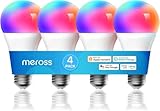
Meross Smart RGBWW WiFi LED Bulbs 4 Pack
A room can feel oddly unfinished when the lighting is technically bright but emotionally flat. The lamp turns on, sure, but the color feels cold during dinner, too sharp before bed, or too weak when a plant shelf needs a quick check for dry soil. That’s where the best light bulbs for apple homekit need to do more than obey a voice command. The Meross Smart RGBWW WiFi LED Bulbs bring HomeKit control, multicolor lighting, scheduling, and 900-lumen brightness into a four-pack that feels practical for everyday rooms rather than just flashy smart-home demos.
Meross RGBWW WiFi Bulbs 4 Pack
Meross Smart RGBWW WiFi LED Bulbs make a strong first impression because they support Apple HomeKit without requiring a separate hub. That matters in homes where one more bridge, puck, or little white box on the router shelf feels like clutter waiting to happen. With Apple Home, Apple Watch, Siri, Alexa, and Google Assistant compatibility listed, the bulb is clearly built for mixed smart-home habits. The setup still depends on a stable 2.4GHz Wi-Fi network, so router placement and signal strength shouldn’t be brushed aside.
The four-pack format gives the Meross bulbs a useful edge for scenes and room-wide routines. One smart bulb can feel like a novelty, while four can shape an entire bedroom, living room, or set of table lamps with better balance. The listed 900 lumens gives these bulbs a little more brightness than many 800-lumen 60W-equivalent bulbs. That extra light can help in task-heavy areas where dim bulbs make everyday chores feel oddly tiring.
RGBWW lighting means the bulbs cover both multicolor effects and adjustable white light. That’s the sweet spot for rooms that need to switch personalities during the day. A cool white setting can help during cleaning, reading labels, sorting tools, or checking leaves on indoor plants. Later, warmer tones can soften the same room without changing the fixture.
The product details also mention an upgraded design with a separate antenna for stronger Wi-Fi signal and better network stability. That’s a practical improvement, especially for bulbs tucked into lamps away from the router. Smart lighting lives or dies by connection quality. A bulb that drops offline at the wrong time can make even a nice feature list feel pretty thin.
Apple HomeKit Control Without Extra Hardware
Apple HomeKit compatibility is the main reason this Meross set belongs in the conversation. Siri control keeps the experience simple once the bulbs are paired, especially for quick commands like changing color, dimming the bedroom, or turning off lights from across the room. The example command, “Hey Siri, set the bedroom light to green,” shows the kind of casual control that makes smart bulbs feel less fussy. No one wants to open an app just to calm down a room before bed.
The no-hub design keeps the entry point clean. Instead of buying into a larger lighting bridge system, these bulbs connect through Wi-Fi and work through the Apple Home app with a stable 2.4GHz network. That can be a relief in apartments, small homes, and rooms where the setup should stay lean. Still, no-hub convenience comes with a tradeoff: each bulb depends directly on Wi-Fi health.
Remote control through Apple Home and the Meross app adds useful flexibility. Lights can be adjusted before arriving home, dimmed from another room, or switched off after someone forgets a hallway lamp. The Meross app also supports control from anywhere with internet access, according to the provided details. That remote access can feel quietly helpful during travel days or late-night “Did I leave that lamp on?” moments.
Security language appears in the product description, noting that data are transmitted and stored through Amazon AWS servers. That detail may matter for anyone who pays attention to how connected devices handle information. It doesn’t turn the bulb into a security product, of course. It simply clarifies part of the backend structure behind the smart features.
Brightness, Color, And Room Feel
900-lumen brightness gives the Meross bulb enough punch for common household fixtures. It can brighten a desk lamp, table lamp, or bedroom fixture without feeling underpowered. In rooms with dark walls, heavy shades, or tall ceilings, though, one bulb may still need backup from another light source. Lighting math gets messy fast once shade material and fixture placement enter the room.
The adjustable white range from 2700K to 6500K helps the bulb move between cozy and crisp. Warm white can make evenings feel calmer, while cooler white supports focused tasks. Plant corners benefit from this flexibility too, at least for visibility during care routines. It won’t replace specialized grow lighting, but it can make watering, pruning, and pest checks easier in dim rooms.
Multicolor lighting adds the fun layer. A party scene, movie-night color, or soft green lamp in the bedroom can shift the mood without changing decor. Still, color effects are best used with restraint. Too much saturation in a small room can make everything feel loud, like the walls are talking over the furniture.
The upgraded LED design is described as producing brighter light and more vibrant colors than the previous version. Since no measured comparison data were provided, that claim should be treated as a product-positioning detail rather than a lab result. What matters practically is whether the bulb gives enough brightness for the fixture and enough color control for the room’s purpose. On paper, the feature set looks well suited for everyday ambient lighting.
Schedules, Sunrise Mode, And Daily Habits
Scheduling is one of those smart-bulb features that sounds ordinary until it quietly fixes small annoyances. Timers can turn lights on before an evening routine or shut them down after bedtime. Sunrise and sunset mode support also gives the bulbs a more natural rhythm. A room that brightens gradually feels less abrupt than flipping on full brightness in one shot.
The energy detail deserves a practical reading. The provided description says these bulbs consume 9W while offering 60W-equivalent brightness and may save up to a stated yearly amount. Actual savings depend on electricity rates, usage time, and what bulbs are being replaced. The safer takeaway is simple: LED smart bulbs can reduce energy use compared with old incandescent bulbs while adding automation.
Routine-based lighting helps in spaces that serve more than one job. A kitchen can run bright in the morning, softer during dinner, and dim after dishes are done. A living room can move from homework mode to movie mode without touching four lamp switches. Small changes, repeated daily, are where smart lighting earns its keep.
Indoor gardening habits offer a surprisingly clear example. A shelf of herbs near a window may need quick evening checks, especially during dry winter air or after a missed watering day. Brighter white light makes it easier to spot drooping leaves, dry soil, or yellowing edges. Then the same bulb can warm back down so the room doesn’t feel like a utility closet all night.
Setup Friction And Realistic Tradeoffs
2.4GHz Wi-Fi dependence is the main setup detail to respect. Many smart bulbs require this band, and Meross is no different based on the supplied information. If a phone is connected to a 5GHz-only network during setup, pairing can become a headache. A little router prep saves a lot of squinting at blinking bulbs.
The no-hub design also means Wi-Fi congestion can affect the experience if many devices already crowd the network. Four bulbs won’t scare a healthy router, but larger smart homes can become busy quickly. Signal strength near the fixture matters, especially in basements, garages, far bedrooms, or corners blocked by thick walls. Smart bulbs may be small, but they’re still network devices.
Android support is noted too, with compatibility for Android smartphones or tablets running OS 6.0 or higher through the Meross app. That widens household usability beyond Apple-only control. Mixed-device homes can be awkward when one person uses an iPhone and another uses Android. Meross appears to account for that split better than some closed-off systems.
Outdoor lighting has its own needs, from weather exposure to mounting height and dusk-to-dawn behavior. A related lighting perspective sits in outdoor solar fence light ideas, where placement and weather durability matter more than indoor color scenes or Siri control.
Where The Meross Bulbs Make Sense
Meross Smart RGBWW WiFi LED Bulbs feel most useful in rooms where Apple HomeKit control, color flexibility, and no-hub setup all matter at once. The four-pack can cover several fixtures without forcing a bridge-based ecosystem. That makes it easier to create coordinated scenes across a bedroom, living room, hallway, or shared family space. The package has a practical “let’s get the room sorted” feel.
These bulbs are less compelling for someone who only wants plain warm-white lighting and never uses color. In that case, RGB features may sit untouched. They’re also not the cleanest fit for weak Wi-Fi areas unless the network is improved first. Smart lighting reliability starts with connection quality, not the app icon.
Voice control is the day-to-day comfort feature that may get used most. Asking Siri to dim lights while cooking, resting, or carrying laundry feels natural after a few days. App control fills in the gaps for schedules, remote access, and color tweaking. The whole setup feels strongest when it supports habits instead of becoming another hobby to maintain.
The Meross bulbs land in a practical lane: bright enough for general use, flexible enough for color scenes, and friendly enough for Apple Home setups that don’t want a hub. They ask for the right Wi-Fi band and realistic expectations, but they offer a good mix of HomeKit convenience, 900-lumen brightness, and RGBWW control for everyday indoor lighting.


Best Lighting For Makeup 2026 Bright Ideas For Flawless Looks

Best Wall Sconces For Staircase 2026 Brighten Your Home
Best Lighting For Computer Desk 2026 For Focused Work

Best Boat Black Lights 2026 For Nighttime Adventure

Best Black 30 Inch Light Bar Reviews – Top Picks of 2026

Best Black Light For Aquarium 2026 For Vibrant Glow

Best Black Light for Authenticating Glass 2026 Top Picks
Best Waterproof Spotlight 2026 That Outshines Expectations






