Best Mini USB Fan 2026: Small Fans That Deliver

A warm desk can turn an ordinary work session into a sticky, distracted slog. Central air may cool the room, yet it rarely sends enough airflow toward a laptop corner, makeup table, kitchen counter, or cramped dorm setup. A best mini usb fan solves that smaller, more personal problem by creating a focused breeze without taking over the surface. The appeal isn’t raw power alone; it’s having cooling exactly where it’s needed, without another bulky appliance underfoot.
Size matters, but smaller doesn’t automatically mean more convenient. A fan with a tiny base can still wobble, slide across smooth furniture, or buzz loudly enough to become annoying during calls. Practical models balance compact dimensions with a weighted base, rubber feet, or a stable clip that won’t slowly loosen. That little bit of structural thought makes the difference between a fan that stays put and one that needs constant fiddling.
Adjustable airflow also deserves more attention than flashy speed claims. One fixed setting may feel fine in the afternoon but become irritating at night, especially when air hits the face from close range. Multiple speed levels allow a softer breeze during reading, sleep, or video meetings and a stronger push after a workout or during a hot commute. Still, the highest setting often brings more motor noise, so a sensible middle speed may become the everyday sweet spot.
USB power keeps the setup simple, though the power source changes how the fan behaves. A laptop port, wall adapter, power bank, or USB hub can all be useful, but weak ports may limit performance or cause inconsistent speed. A longer cable offers more placement freedom, while an overly stiff cable can tug a lightweight fan out of position. For travel, a detachable cord reduces tangles and makes the fan easier to pack beside chargers and other small electronics.
Noise is a sneaky deal breaker. A soft hum can disappear beneath office chatter, but rattling guards, clicking bearings, and high-pitched motor tones become hard to ignore in a quiet bedroom. A quiet mini fan should move enough air at low and medium speeds without sounding strained. Even then, dust buildup can increase noise over time, so an accessible front grille and blades are worth having rather than treating cleaning as an afterthought.
Airflow direction shapes comfort just as much as speed. A tilting head can aim the breeze above a keyboard, toward the neck, or across a bedside table without moving the whole unit. Clip-on designs save space, although thin shelves and rounded edges may not give the clamp enough grip. Desk models feel steadier on flat surfaces, but they use precious room near notebooks, plant pots, speakers, or cosmetics. There’s no magic format here; the better design matches the space rather than forcing the space to adapt.
Realistic expectations prevent disappointment. A mini fan won’t cool an entire room or replace air conditioning during brutal summer heat. It helps by improving personal air circulation, easing that trapped, stuffy feeling around one spot, and making mild heat more tolerable. Used beside an open window or existing cooling system, it can also help move stagnant air instead of merely blowing the same hot pocket back and forth.
Small details round out the experience. Rounded grille openings reduce accidental finger contact, simple buttons are easier to use by touch, and a cleanable housing keeps dust from becoming permanent decoration. Battery-powered models add freedom, but built-in batteries eventually need charging and may lose capacity over time. USB-only fans skip that concern, though they remain tied to a cable. The best mini usb fan is ultimately the one that balances airflow, noise, stability, and placement without creating a fresh set of annoyances.

- LFR Score10.0
LFR Score is a ranking system developed by lightfansreviews.com. LFR Score has no relationship or impact from any manufacturers or sales agent websites. Learn more
- BrandHandFan

- LFR Score9.2
LFR Score is a ranking system developed by lightfansreviews.com. LFR Score has no relationship or impact from any manufacturers or sales agent websites. Learn more
- BrandAaoLin

- LFR Score9.2
LFR Score is a ranking system developed by lightfansreviews.com. LFR Score has no relationship or impact from any manufacturers or sales agent websites. Learn more
- BrandTriPole
- LFR Score9.2
LFR Score is a ranking system developed by lightfansreviews.com. LFR Score has no relationship or impact from any manufacturers or sales agent websites. Learn more
- BrandGaiatop

- LFR Score9.2
LFR Score is a ranking system developed by lightfansreviews.com. LFR Score has no relationship or impact from any manufacturers or sales agent websites. Learn more
- BrandJoanofArc
- LFR Score9.0
LFR Score is a ranking system developed by lightfansreviews.com. LFR Score has no relationship or impact from any manufacturers or sales agent websites. Learn more
- BrandGaiatop

- LFR Score9.0
LFR Score is a ranking system developed by lightfansreviews.com. LFR Score has no relationship or impact from any manufacturers or sales agent websites. Learn more
- BrandDNTESR

- LFR Score9.0
LFR Score is a ranking system developed by lightfansreviews.com. LFR Score has no relationship or impact from any manufacturers or sales agent websites. Learn more
- BrandKoonie

- LFR Score8.8
LFR Score is a ranking system developed by lightfansreviews.com. LFR Score has no relationship or impact from any manufacturers or sales agent websites. Learn more
- BrandAecooly
- LFR Score8.8
LFR Score is a ranking system developed by lightfansreviews.com. LFR Score has no relationship or impact from any manufacturers or sales agent websites. Learn more
- BrandELUTENG
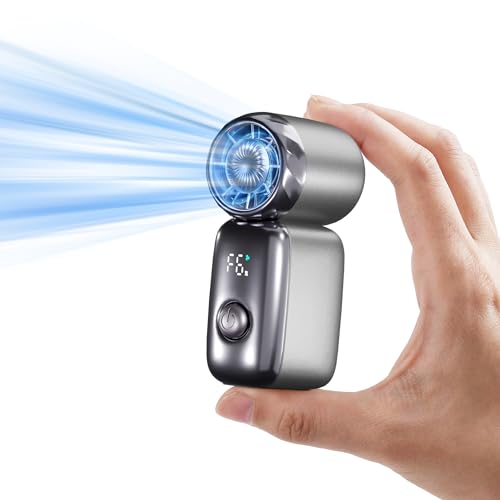
- LFR Score8.4
LFR Score is a ranking system developed by lightfansreviews.com. LFR Score has no relationship or impact from any manufacturers or sales agent websites. Learn more
- BrandPADONISE

- LFR Score8.4
LFR Score is a ranking system developed by lightfansreviews.com. LFR Score has no relationship or impact from any manufacturers or sales agent websites. Learn more
- BrandJUANANIUG
Last update on 2026-08-19 / Affiliate links / Images, Product Titles, and Product Highlights from Amazon Product Advertising API
HandFan Small USB Desk Fan Review
A crowded desk doesn’t leave much room for bulky cooling gear, and a noisy motor can be more distracting than the heat itself. The HandFan Small USB Desk Fan tackles that everyday squeeze with a compact body, three airflow settings, and a USB-powered design that fits naturally beside a laptop or monitor. Its appeal lies in focused personal cooling rather than room-wide air movement, making it better suited to close-range comfort than heavy-duty ventilation. The glossy blue finish adds a bit of personality without turning the fan into a flashy desk ornament.
HandFan Compact USB Fan
The product’s strongest first impression comes from its small footprint and weight of under four ounces. That light build makes it easy to move from a home office to a car, hotel room, kitchen counter, or outdoor table without treating it like another piece of luggage. It can sit near a keyboard, makeup mirror, stack of notebooks, or bedside charger without hogging the available surface. For anyone tired of rearranging half a desk just to make room for a fan, that compact shape solves a very real annoyance.
Portability does come with a practical tradeoff. An ultra-lightweight housing is convenient to carry, but it usually depends on careful placement to remain steady around loose cables or crowded work areas. The provided description doesn’t specify the base material, grip pads, or resistance to sliding, so those details shouldn’t be assumed. Keeping the USB cable relaxed rather than stretched across the desk should help prevent the cord from tugging the fan out of position.
The glossy blue exterior gives the fan a cleaner, more finished look than plain utility models. Still, a glossy surface may show fingerprints or dust sooner than a matte housing, especially in bright window light. That isn’t a serious functional weakness, though it does mean an occasional wipe may be needed to keep the finish looking tidy. The design feels aimed at people who want a cooling tool that blends into everyday spaces instead of resembling workshop equipment.
Three Speeds Keep Airflow Simple
The three adjustable speed modes cover low, medium, and high airflow through repeated presses of the power button. That single-button arrangement keeps operation straightforward, with no separate switches or complicated control panel to learn. Low speed makes sense for close placement during reading or quiet desk work, while medium can provide a more noticeable breeze during warmer afternoons. High speed is the setting to reach for when quick personal cooling matters more than minimizing sound.
A repeated-press control is simple, but it has a small usability wrinkle. Moving from high speed back to low may require cycling through the fan’s power sequence rather than selecting a setting directly. That’s hardly a deal breaker, yet it’s worth recognizing for anyone who changes airflow frequently during the day. The one-button interface favors simplicity over precise, instant access to each individual speed.
Three levels are generally more useful than a single fixed output because personal comfort shifts with distance and room temperature. A fan placed six inches away doesn’t need the same force as one sitting across a wide desk, and a steady high setting can become irritating during long work sessions. The adjustable wind levels let the HandFan adapt without requiring constant repositioning. Even so, it remains a mini fan, so expectations should stay centered on a small cooling zone rather than an entire room.
Quiet Airflow for Work and Rest
The listed operating noise is below 40 dB, which positions the HandFan as a relatively quiet personal fan based on the supplied product information. That matters in spaces where constant mechanical noise quickly wears thin, such as a bedroom, shared office, study corner, or video-call setup. A soft background hum is easier to live with than a rattling grille or sharp motor whine. The description doesn’t provide separate noise figures for each speed, though, so the highest mode may naturally be more noticeable than the lowest.
Quiet performance carries more weight than it might seem. A fan can move plenty of air, but if the sound keeps pulling attention away from reading, writing, or sleep, the cooling benefit starts to feel like a bad bargain. The HandFan’s combination of personal airflow and a stated sub-40 dB noise level directly addresses that frustration. It should be viewed as a close-range comfort tool, not as a silent replacement for air conditioning or a larger circulation fan.
The phrase “powerful airflow” should also be kept in proportion to the fan’s compact size. A mini desktop model can create a useful breeze across the face, hands, or upper body, yet it won’t push air across a large living room or cool several people at once. The focused cooling design is most practical when the fan sits nearby and points toward one specific spot. That narrower purpose is actually a strength because it avoids wasting energy trying to cool empty space.
Tilting Head Improves Placement
The fan head tilts vertically from 0 to 30 degrees, allowing the airflow to move upward without propping the unit on books or boxes. That range can help when the fan sits below face level, beside a laptop, or on a low car console. A small angle adjustment often changes whether the breeze hits the chest, chin, or hands, so even a limited tilt can improve comfort. The mechanism also keeps the base facing forward while the airflow direction changes.
The 30-degree limit is useful but not exceptionally wide. A fan positioned much lower than the desired cooling area may still need a raised surface, and it won’t provide the broad directional freedom of a fully pivoting or clip-mounted model. The vertical adjustment works best for modest corrections rather than dramatic changes in direction. That distinction matters in tight spaces where the available shelf or desk height can’t be altered.
Angle control also helps reduce the annoyance of direct air hitting the eyes for hours. Tilting the head slightly downward or upward can move the strongest part of the breeze toward the neck or upper chest instead. This makes the adjustable fan head more than a cosmetic feature, especially during long computer sessions. It provides a quick way to fine-tune comfort without sliding the entire fan around the desk.
USB Power Adds Everyday Flexibility
The HandFan runs through a USB power connection compatible with laptops, power banks, wall adapters, car chargers, and other USB ports. That broad compatibility reduces the need for a dedicated outlet and makes the fan easier to use in changing locations. A power bank can support outdoor seating or travel, while a laptop port keeps the setup simple at a desk. In a car, a USB charger can provide airflow without relying on a built-in battery.
USB power also means the fan isn’t described as a cordless model. It needs a connected power source during operation, so cable placement becomes part of the setup. That can be perfectly manageable beside a computer or wall adapter, but it may feel less convenient on a table with no nearby USB source. The corded operation trades complete freedom of movement for reliable power without waiting for an internal battery to recharge.
The supplied details don’t state the cable length, connector type, power draw, or whether the cable detaches from the fan. Those missing specifications matter for placement, especially in cars or on deep desks. A short cord can limit positioning, while a permanently attached cable may be less tidy in a travel bag. The known advantage is wide USB compatibility, but the physical cable arrangement remains an area where the listing information leaves some questions open.
Where This Mini Fan Fits Best
The HandFan makes the most sense in situations where space is limited and airflow only needs to cover one nearby person. A laptop desk, bedside table, dorm shelf, vanity, vehicle console, or travel setup all match its compact design. Its under-four-ounce weight also makes frequent movement less of a chore. The fan isn’t built around cooling a whole room, and treating it as though it were would set the wrong expectation from the start.
Its practical strengths are easy to identify: three speed settings, a stated noise level below 40 dB, a 30-degree tilting head, and compatibility with common USB power sources. Those features target familiar annoyances without burying the experience under extra controls. The limitations are equally clear, including cord dependence, a modest tilt range, and airflow sized for personal use. That balance makes the product easier to judge honestly rather than dressing it up as something larger than it is.
Larger spaces call for a different kind of airflow, especially where ceiling-mounted circulation is part of the room plan. A separate reference covering broader overhead options appears in 30 inch ceiling fans, which serves a very different purpose from this compact desktop model. The HandFan belongs at arm’s length, delivering localized cooling during work, study, travel, or rest. Within that narrow role, its simple controls and portable size are the features doing most of the heavy lifting.
Strengths and Practical Drawbacks
The clearest strength is the fan’s ability to fit into places where a standard desk fan would feel clumsy. It offers adjustable airflow without taking up much room, and the USB connection works with several common power sources. The tilting head adds useful direction control, while the glossy blue housing gives it a more polished appearance. For close-range cooling, those features form a sensible and easy-to-understand package.
The main weakness is that portability doesn’t mean complete independence. A USB source must remain connected, and the lightweight build may require thoughtful cable routing to keep the fan settled. The 30-degree tilt also provides less directional freedom than models with wider pivots or flexible necks. None of these tradeoffs ruins the design, but they narrow the situations where it will feel effortless.
Noise expectations should remain realistic as well. The listing states operation below 40 dB, yet it doesn’t break that figure down by speed or describe the sound character. A low hum and a sharp mechanical tone can feel very different even at similar measured levels. The quiet-cooling claim is promising based on the provided information, but the absence of speed-specific details means buyers should avoid assuming identical sound at low, medium, and high settings.
The HandFan Small USB Desk Fan is most convincing as a straightforward tool for a small, warm personal zone. Its compact size, three-speed control, and USB flexibility address common desk and travel frustrations without unnecessary complexity. It won’t replace a larger fan, cool a shared room, or offer cordless operation based on the supplied details. What it does offer is targeted airflow in a package that’s easy to carry, place, and power.
AaoLin 2-Pack Rechargeable Handheld Fans
Summer heat rarely waits for a convenient moment. It shows up in crowded festival lines, packed amusement parks, slow-moving commutes, and outdoor events where shade is scarce and wall outlets are nowhere nearby. The AaoLin 2-Pack Rechargeable Handheld Fans approach the best mini USB fan category with four airflow settings, a neck lanyard, pocket-friendly dimensions, and a rechargeable battery rated for 4 to 16 hours. Since two fans come in the package, the setup also makes sense for sharing, keeping one in a travel bag, or leaving a backup charged at home.
AaoLin Rechargeable Handheld Fan 2-Pack
The compact shape is the first practical advantage. Each fan measures 1.5 inches deep, 2.4 inches wide, and 6.2 inches tall, so it can slip into many purses, backpacks, totes, or larger pockets without becoming a burden. At 3.8 ounces, it’s light enough for long walks around an amusement park or outdoor market. Small fans sometimes save space by sacrificing useful airflow, but this model pairs its narrow frame with a brushless motor and four selectable speeds.
A two-piece package changes how the product fits into everyday routines. One fan can stay near the front door for errands while the second lives in a desk drawer, suitcase, or car bag. Sharing is also less awkward because nobody has to pass the same fan back and forth during a hot outing. The two-fan bundle won’t matter to someone who only needs a single device, but it adds flexibility for households, travel partners, or families dealing with summer heat together.
The included lanyard gives the fan another way to travel. Hanging it around the neck keeps both hands free for carrying drinks, holding tickets, taking photos, or managing a stroller. Still, this isn’t described as a wide wearable neck fan that blows upward automatically, so it may need to be lifted or angled by hand for direct cooling. The lanyard mainly prevents drops and keeps the fan close, which is useful in busy places where digging through a bag gets old fast.
Four Speeds Cover Mild Heat and Full Blast
The AaoLin fan uses a single power button to cycle through four wind speeds. According to the supplied specifications, the first level runs at 3,600 rpm with airflow listed at 3.3 meters per second, while the second reaches 4,600 rpm and 4.2 meters per second. The third setting rises to 5,600 rpm with 5.0 meters per second airflow. At the fourth level, the motor is listed at 7,000 rpm with airflow reaching 5.8 meters per second.
Those four steps give more control than a basic on-off fan. The lowest setting can take the edge off while waiting indoors, riding in a car, or sitting under partial shade, whereas the upper levels suit stuffy concert crowds and exposed outdoor lines. Adjustable airflow matters because maximum speed isn’t always comfortable at close range. A strong breeze aimed straight at the eyes can become irritating, so having milder settings prevents the fan from feeling like an all-or-nothing gadget.
The repeated-button control keeps the body uncluttered, though it comes with the usual cycling inconvenience. Reaching a preferred level may require pressing through the earlier settings, and returning from the highest speed to the lowest may involve switching the fan off before starting again. That’s a minor control tradeoff, not a serious flaw. Simple operation is often better during travel, especially when the fan is being used one-handed in a crowd.
The product description credits a brushless motor and turbocharging design for the stronger airflow. Brushless construction generally suits compact rechargeable devices because it avoids the physical brushes used in traditional brushed motors. Still, the supplied information doesn’t state operating noise at each speed, so it would be unwise to assume the fourth setting stays whisper-quiet. Higher motor speed often brings a more noticeable sound, particularly when the fan is held close to the face.
Battery Life Changes With Airflow
AaoLin lists a 2,600mAh rechargeable battery inside each fan. Runtime is rated at up to 16 hours on the first speed, 10 hours on the second, 5 hours on the third, and 4 hours on the fourth. That range tells a more useful story than a single maximum-runtime claim because it shows exactly how stronger airflow affects endurance. Anyone planning a full day outdoors can stretch battery life by reserving the upper settings for the hottest moments.
The difference between 16 hours and 4 hours is substantial, so speed habits will shape the real experience. Running the fan at full blast throughout a festival or theme park visit could require a recharge sooner than expected, while low or medium speed may last through a much longer day. The variable runtime is a normal tradeoff for battery-powered fans. More motor speed demands more energy, and the supplied figures make that compromise reasonably transparent.
A full recharge is listed at about four hours using a DC 5V/1A source. The fan can receive power from a regular USB adapter, computer, power bank, or another compatible USB port, which makes charging manageable in hotels, airports, offices, and vehicles. Four hours isn’t especially quick if the battery is empty right before leaving home. Charging overnight or topping it up between outings would be the less stressful routine.
The description doesn’t specify whether the fan supports operation while charging, nor does it identify the exact USB connector type. Those missing details could affect convenience for anyone carrying a carefully matched set of cables. The known benefit is broad USB charging compatibility, while the uncertainty lies in the cable connection and pass-through operation. A power bank remains useful on long outings, especially when higher speeds are used often.
Pocket Size Suits Crowded Summer Plans
A handheld fan earns its place by being easy to carry before the heat becomes uncomfortable. The AaoLin’s slim body fits situations where a desktop fan would be awkward, including outdoor queues, concerts, sporting events, sightseeing trips, and crowded public transportation. It can also sit nearby during makeup application, hair styling, or a warm commute. The narrow format makes it less suitable for cooling a whole desk area, but that isn’t really what it’s built to do.
The strongest use case is direct, close-range cooling. Holding the fan near the face or neck puts its airflow where it can be felt quickly, rather than wasting energy across an empty room. That focused breeze can help with short bursts of heat while walking between shaded areas or standing in slow lines. It won’t lower the surrounding temperature, and it shouldn’t be treated as a substitute for shade, hydration, or air conditioning during extreme heat.
Its compact proportions also bring a handling consideration. A small fan is easy to pack, but the narrower grip may feel less substantial than a full-size handheld model during long use. The lanyard helps by providing a backup against accidental drops and a resting place between cooling sessions. Still, the supplied description doesn’t mention a tabletop base, folding stand, or hands-free angle, so handheld use appears to be the primary operating style.
Bedroom cooling sits at the opposite end of the spectrum, where sustained room circulation matters more than pocket portability. A neutral reference for that broader setup appears in Hunter bedroom ceiling fans, which addresses overhead airflow rather than close-range relief. The AaoLin fans are better understood as portable companions for personal comfort. They shine during movement, travel, and temporary heat rather than all-night room ventilation.
Real Benefits and Noticeable Tradeoffs
The clearest strength is the balance between size and adjustable output. Four speeds give the fan room to handle mild warmth without draining the battery unnecessarily, then push harder when the temperature or crowd density climbs. The listed motor speeds and airflow figures provide a concrete picture of how the settings differ. Add the low weight, and the fan becomes easy to keep within reach instead of leaving it behind because it’s too bulky.
Battery flexibility is another meaningful advantage. A listed range of 4 to 16 operating hours allows the user to trade power for endurance depending on the day ahead. The 2,600mAh battery offers more staying power than tiny novelty fans with very small cells, based on the specifications supplied. Even so, maximum-speed use cuts the stated runtime to four hours, which may not cover a full summer event without backup power.
The primary weakness is the lack of detailed noise information. A fast motor turning at up to 7,000 rpm may produce an audible hum, yet the description doesn’t provide a decibel rating or distinguish sound levels across the four settings. That uncertainty matters in libraries, quiet offices, or shared sleeping areas. Outdoors, in a concert crowd, or inside a moving vehicle, motor sound is likely to be less of a concern.
The four-hour charging period deserves attention as well. It’s reasonable for a rechargeable personal fan, but forgetting to charge both units can leave them unavailable right when the weather turns miserable. The two-piece package helps here because one fan can serve as a backup while the other charges. That benefit only holds up, of course, if both aren’t routinely drained at the same time.
Who Gets the Most Practical Value
Long outdoor days expose the product’s most useful qualities. The lightweight lanyard design keeps the fan accessible during amusement park visits, concerts, festivals, travel days, and neighborhood walks. Four speed levels make it easier to conserve power between hotter stretches rather than burning through the battery on maximum output. The compact frame also leaves room in a bag for sunscreen, water, chargers, and other summer essentials.
The package can also reduce small household arguments. Two people can carry separate fans, or one unit can remain charged as an emergency spare. That sounds simple, but it’s a genuine benefit in a product category where one device often gets borrowed and never returned to its usual spot. The pair format works especially well for shared trips, while solo use gains a convenient backup without buying another model separately.
Anyone expecting silent bedside airflow or room-wide circulation may be less satisfied. The fan is designed around direct personal cooling, and its highest setting prioritizes stronger air movement rather than documented low-noise operation. It also lacks any stated oscillation, broad pivoting head, or large stable base. The best-fit scenario is active, portable use rather than replacing a nightstand fan or ceiling fixture.
AaoLin’s listed customer support is available around the clock, according to the provided product details. That offers a contact route for questions or dissatisfaction, though no warranty length or specific remedy terms are stated. The practical buying decision should rest more heavily on the fan’s four-speed airflow, rated runtime, compact dimensions, and USB charging setup. Those are the features most likely to shape daily satisfaction once the summer heat starts pressing its luck.
TriPole Small USB Desk Fan Review
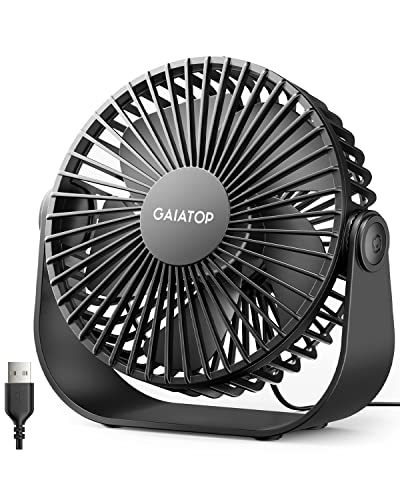
A cramped desk can turn even a small cooling device into one more thing competing for space, cords, and attention. The TriPole Small USB Desk Fan takes a practical route with a 4.5-inch frame, three airflow settings, a stable padded base, and a full 360-degree vertical rotation. Within the best mini USB fan category, its strongest appeal comes from combining a compact footprint with a 4.9-foot cable that gives the fan more placement freedom than many short-cord models. It isn’t built to chill an entire room, but it’s designed to put a steady breeze exactly where a warm desk, nightstand, or travel setup needs it.
TriPole Compact USB Fan
The fan’s 4.5-inch diameter keeps it small enough for a crowded desktop without making it feel like a toy. It can sit beside a laptop, keyboard, lamp, stack of books, or bedside charger while leaving room for the stuff that actually belongs there. That matters in compact offices, dorm rooms, hotel spaces, and shared workstations where every inch gets used. The space-saving shape also makes the fan easier to pack for a trip than a standard table fan with a bulky housing.
Small fans sometimes become annoying because they’re too light for their own good. A stiff cable can pull them sideways, or the motor can send a faint vibration through the desk. TriPole addresses that issue with a wide base and four silicone pads underneath. Those pads are meant to reduce vibration, improve grip, and help the fan remain planted on smooth surfaces instead of wandering across the table.
The black finish keeps the design low-key, which fits work areas and bedrooms without drawing much attention. There’s no oversized control panel, decorative lighting, or complicated display to manage. A button on the back handles operation, keeping the front clean and uncluttered. The simple layout feels appropriate for a fan meant to be plugged in, aimed, and left alone while work or rest takes priority.
Three Speeds Make Daily Cooling Easier
TriPole provides three adjustable wind modes, giving the fan more flexibility than a basic single-speed model. A lower setting can provide a light breeze during reading, office work, or sleep, while the middle level adds more noticeable airflow without automatically jumping to maximum power. The highest setting suits hotter afternoons, stuffy hotel rooms, or moments when quick cooling matters more than keeping the motor at its quietest. That spread makes the fan easier to live with across changing temperatures.
The control button sits on the back of the fan, which keeps it out of sight but may require reaching around the housing during use. That placement works well once the fan is positioned, though it isn’t quite as convenient as a front-mounted button for frequent speed changes. The single-button control still keeps operation straightforward, with no separate switches or settings to memorize. A few presses are all it takes to move through the available airflow levels.
Three speeds also help prevent the common mistake of using maximum airflow all day. Strong air at close range can dry the eyes, scatter lightweight papers, or become distracting during video calls. A softer setting often feels more comfortable when the fan sits only a foot or two away. The adjustable breeze lets the fan match the situation rather than forcing the desk setup to work around one fixed output.
The product information doesn’t provide airflow measurements or separate noise figures for each level, so those details shouldn’t be guessed. What can be said is that the fan is intended to deliver a strong personal breeze while remaining suitable for bedrooms and offices. Higher speed will naturally place more demand on the motor and power source than lower speed. The practical advantage is choice, not a promise that every level will feel or sound identical.
A 360-Degree Head Solves Awkward Placement
The fan head rotates 360 degrees vertically, which is one of the more useful features in this compact format. It can aim upward from a low desk, downward from a shelf, or straight ahead from a nightstand without moving the entire base. That flexibility helps when available surfaces sit at the wrong height or when the fan needs to clear a monitor, laptop screen, or stack of books. A wide rotation range is especially handy in small spaces where repositioning the whole unit isn’t practical.
Direct airflow can feel refreshing for a few minutes and irritating after an hour, particularly around the eyes. Tilting the fan slightly above or below the face can redirect the strongest part of the breeze toward the forehead, neck, chest, or hands. The fully adjustable angle gives more control over comfort than models limited to a narrow tilt range. It also lets the same fan move between a seated desk setup and a higher bedside position without improvised stands.
The rotating frame remains a manual adjustment rather than an oscillating feature. That means the fan won’t sweep air across a wide area or share its airflow between several people automatically. For personal cooling, that limitation isn’t necessarily a problem because the breeze stays focused on one spot. The fixed directional airflow works best for individual use rather than broad room circulation.
A full rotation can also help with storage. The head may be turned into a flatter or more protected position before the fan goes into a suitcase or bag, depending on how the frame moves within its stand. The supplied information doesn’t describe a folding mechanism, though, so it shouldn’t be treated like a collapsible travel fan. Its advantage lies in directional freedom, not in transforming into a different shape.
USB Power and the Longer Cable Matter
The TriPole runs from a 5V USB-A connection, so it can draw power from a USB wall charger, computer, power bank, or another compatible source. That setup is convenient at a desk because it avoids the need for a dedicated household plug on the fan itself. It can also travel across regions without relying on a specific local voltage, provided the USB power adapter is appropriate for the destination. The fan remains corded during operation, but the range of possible power sources gives it useful flexibility.
The 4.9-foot cable solves a surprisingly common problem with mini fans. Short cords often force the fan to sit too close to a laptop port or wall adapter, even when the better cooling position is across the desk or on the opposite side of a nightstand. Extra cable length creates more freedom to place the fan where the airflow feels right instead of where the outlet happens to be. It also reduces the temptation to stretch the cord tightly, which can tug a lightweight device out of position.
A longer cable does bring a small housekeeping issue. Extra slack can gather behind a monitor, trail across a table, or mingle with phone chargers and other USB cords. A simple cable tie or loose coil can keep the setup tidy without putting strain on the connector. The placement flexibility is worth that minor bit of cord management, especially in hotel rooms and older offices where accessible outlets aren’t always close.
The fan requires 0.8A of current while operating, according to the supplied details. TriPole specifically notes that the third speed may not work properly with an underpowered USB source and recommends testing with a charger that supports 5V/1A output. That warning is useful because a weak laptop port, low-output hub, or older adapter could make the fan seem faulty when the real issue is insufficient current. A suitable power source is part of getting the full three-speed performance.
Stable Operation Helps Keep Noise in Check
A wide base does more than prevent tipping. It helps keep the fan from shifting when the motor runs at higher speed, particularly on smooth desks, laminate nightstands, or glass-topped tables. The four silicone bottom pads add friction and absorb some vibration before it transfers into the furniture. That can make a noticeable difference because even a modest motor hum sounds louder when a hollow desk amplifies it.
The supplied description presents the fan as quiet, though it doesn’t provide a decibel rating. That means the noise claim should be interpreted cautiously rather than stretched into a promise of silent operation. Low speed will generally suit quieter settings better, while the third speed may be more noticeable at close range. The padded base and stable frame are the concrete design features supporting a calmer sound profile.
Loose placement can make almost any mini fan seem noisier than it is. A cable pressing against the grille, a pen touching the base, or a fan sitting on an uneven stack of papers can create rattles that don’t come from the motor itself. Giving the TriPole a flat surface allows the stable base to do its job. That small setup habit can improve both sound and airflow without changing any setting.
Bedroom use depends heavily on personal sound sensitivity. Some people barely notice a steady fan hum, while others pick up every pitch change in a quiet room. The TriPole’s compact body and silicone pads support bedside use, but the listing doesn’t state whether it includes sleep timers or automatic shutoff. Its plug-in simplicity favors continuous airflow over advanced nighttime controls.
Cleaning Is Easier With a Detachable Cover
Dust collects quickly on fan grilles and blade edges, especially near open windows, bedding, carpets, or busy office equipment. TriPole includes a detachable front cover, making routine access less frustrating than on a sealed fan housing. Regular cleaning helps prevent the grille from becoming clogged with lint and keeps the blades from carrying a visible layer of dust. It can also reduce the chance of buildup causing extra vibration or stale-smelling airflow.
A removable cover is practical, but cleaning still requires care. The fan should be disconnected from power before the grille is removed, and the blades shouldn’t be soaked or forced. A soft cloth or small brush is usually enough for surface dust, provided the parts are fully dry before reassembly. The serviceable design encourages maintenance instead of turning a dirty fan into something that gets replaced unnecessarily.
Easy access matters most in spaces where airborne debris builds quickly. Bedroom fans collect fibers from bedding, desk fans gather paper dust, and travel fans can pick up lint inside luggage. The cleanable grille and blades help preserve steady airflow as those particles accumulate. A fan that remains easy to maintain is more likely to stay useful through multiple seasons rather than feeling grimy after one summer.
The product details don’t describe replacement parts or the exact method used to release the front cover. That leaves some uncertainty about how much pressure or rotation the mechanism requires. Still, the fact that the cover is designed to detach is a clear advantage over models that hide the blades behind a permanently fixed guard. The maintenance access supports longer-term ownership without promising anything beyond the provided information.
Where the TriPole Fan Makes the Most Sense
The strongest fit is a desk, nightstand, office table, or temporary travel setup where localized cooling matters more than moving air through the whole room. Its compact diameter keeps it out of the way, while the rotating head can aim airflow around monitors, lamps, or stacks of work materials. The longer cord adds reach in places where a USB source sits several feet away. It’s a practical match for warm personal spaces, not a replacement for air conditioning or a full-size circulation fan.
Travel use benefits from the universal nature of USB power, but the fan still needs a live connection. A power bank can make it more portable, though the fan doesn’t include a built-in rechargeable battery according to the supplied details. That distinction separates it from cordless handheld models intended for walking or outdoor queues. The TriPole’s corded design fits stationary travel use, such as hotel desks, bedside tables, and temporary work areas.
Room-scale airflow requires a very different kind of fixture and installation. A neutral reference for that broader category appears in Broan ceiling fans with lights, which addresses overhead circulation rather than close-range desk cooling. The TriPole stays firmly in the personal fan lane, where compact dimensions and directional control matter more than coverage across an entire room. That narrower purpose helps explain both its usefulness and its limits.
The best mini USB fan isn’t automatically the one with the smallest body or the highest advertised speed. Stability, cable reach, cleaning access, power requirements, and angle control all shape whether a compact fan feels convenient after the novelty wears off. TriPole covers those everyday details with a broad base, silicone pads, a 4.9-foot cord, and a fully rotating head. Those features make it better suited to steady desk and bedside use than a tiny novelty fan with fewer placement options.
Strengths, Weaknesses, and Realistic Expectations
The main strength is the combination of compact size and flexible placement. A 4.5-inch frame saves surface space, while the long cable and 360-degree rotation prevent that small body from becoming overly restrictive. Three speeds allow gentle or stronger personal airflow, and the wide padded base helps the fan stay composed during use. Taken together, those details address the usual frustrations of short cords, narrow tilt ranges, and unstable mini fans.
The most important weakness is dependence on a suitable USB source. The fan needs 0.8A, and the third speed may not operate correctly if the charger or port can’t provide enough current. That could create confusion with older adapters, low-power hubs, or certain computer ports. Using a 5V/1A-capable source is part of the setup, not an optional technical footnote.
Another tradeoff is the lack of cordless operation. The fan can connect to a power bank for portable use, but it doesn’t carry its own battery based on the information provided. Anyone expecting to move freely between rooms without carrying a cable and power source may prefer a rechargeable design. The TriPole instead offers continuous USB-powered cooling without the downtime or aging battery concerns tied to built-in cells.
Its final advantage is straightforward usability. There are no complicated controls, unusual charging routines, or oversized parts demanding extra room. The three-speed airflow, stable base, rotating head, longer cord, and detachable cover each solve a small but common annoyance. For a desktop, office, bedroom, or travel table, those practical choices give the TriPole fan a clear role without pretending it can cool more space than its compact size allows.
Gaiatop 5.5-Inch USB Desk Fan Review
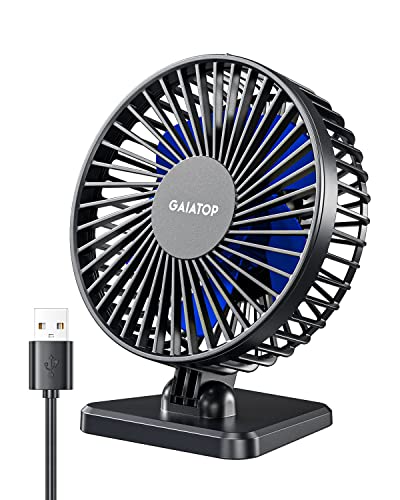
Stale air around a laptop can make a normal work session feel twice as long, yet a bulky fan often creates a different headache by swallowing half the desk. The Gaiatop 5.5-Inch USB Desk Fan takes a more measured approach, pairing a compact frame with three clearly defined airflow levels, a 90-degree tilting head, and a long USB cable. It fits naturally into the best mini USB fan conversation because its specifications focus on close-range cooling rather than vague room-wide promises. The result is a small corded fan built for desks, nightstands, dorm rooms, libraries, hotel tables, and other spots where space and noise both matter.
Gaiatop Compact USB Desk Fan
The fan measures 5.5 by 5.9 by 2.2 inches, giving it a slim profile that won’t crowd a keyboard, lamp, phone stand, or stack of notes. At about 6.5 ounces, it’s light enough to carry in a backpack or travel bag without feeling like unnecessary baggage. That size also makes it easier to move between a home workspace and an office drawer as the weather changes. Small doesn’t mean invisible, though, and the 5.5-inch fan face still needs a stable patch of desk rather than balancing on a narrow ledge.
The black housing keeps the appearance plain and work-friendly. No decorative lighting, oversized display, or flashy control panel competes for attention, which is honestly a relief in a room already full of screens. Its straightforward design suits both professional and casual spaces without looking out of place. The compact depth also helps the fan sit closer to a wall or monitor than chunkier tabletop models.
Portability here means easy transport between stationary setups, not cordless use while walking around. The fan must stay connected to a USB power source during operation, so it behaves differently from rechargeable handheld models. That corded format works well on desks, hotel nightstands, and library tables where a laptop, adapter, or power bank is already nearby. It’s less convenient for outdoor lines or moving through a festival, where carrying both the fan and a power source would be awkward.
Three Speeds Offer Noticeably Different Airflow
Gaiatop provides three speed settings with specific airflow and motor figures rather than leaving the differences unclear. Speed one is listed at 1,500 rpm with a soft breeze of 3.1 meters per second. Speed two increases to 2,000 rpm and 4.0 meters per second, while speed three reaches 2,500 rpm and 4.8 meters per second. Those steps create a useful progression from gentle circulation to stronger personal cooling.
The lowest setting makes sense when the fan sits close to the face or runs during reading, writing, or quiet desk work. A soft breeze can ease that muggy feeling without drying the eyes or blowing loose receipts across the room. Medium speed provides a more noticeable push for warm afternoons, especially when heat from a laptop or sunny window starts gathering around the desk. The highest airflow is better saved for moments when stronger cooling matters more than keeping papers perfectly still.
Defined speed figures make expectations easier to manage. A top airspeed of 4.8 meters per second sounds capable for a compact personal fan, but it shouldn’t be mistaken for whole-room circulation. The strongest breeze will be felt best at close range, where the fan can direct air toward the face, neck, hands, or upper body. Across a large bedroom, that same airflow will naturally feel much weaker.
Three settings also prevent the fan from becoming an all-or-nothing appliance. One fixed speed often feels too mild during peak heat and too aggressive after the room cools down. The adjustable output lets the fan follow the day rather than forcing the same breeze through every task. That flexibility is especially helpful in shared offices or bedrooms where comfort can change from hour to hour.
Quiet Operation Fits Focused Spaces
The product description pairs an upgraded motor with stronger airflow and reduced noise. That combination matters in a library, bedroom, dorm, or home office, where an irritating motor tone can undercut the benefit of cooler air. Gaiatop doesn’t provide a decibel figure in the supplied information, so calling it silent would go too far. The fair reading is that the fan is designed to remain comfortable for work and rest while still delivering its listed airflow.
Fan noise is shaped by more than the motor alone. A lightweight unit can sound louder if vibration travels into a hollow desk, metal shelf, or loose nightstand panel. Gaiatop’s wide base and four rubber pads help interrupt that transfer before a faint hum turns into an annoying buzz. The pads also reduce sliding, which matters at the highest setting when the blades and motor are working harder.
Low speed will usually be the sensible setting for quiet environments. The fan still moves air at a listed 3.1 meters per second, yet the lower motor speed should place less demand on the unit than the top level. Medium speed strikes a useful middle ground when soft airflow no longer cuts it but maximum output feels unnecessary. The three-level control gives sound-sensitive situations more breathing room without eliminating stronger airflow altogether.
Placement can make or break the experience. A pen touching the frame, a charging cable resting against the grille, or an uneven pile of papers beneath the base can create rattling that has nothing to do with the fan’s motor quality. A flat, open surface allows the rubber-padded base to stay planted and quiet. That simple setup choice can improve both sound and airflow without changing the fan itself.
The 90-Degree Tilt Improves Direction Control
The fan head can tilt through 90 degrees, giving it enough movement to aim airflow above, below, or straight across the desk. That range helps when the fan sits lower than the face, beside a laptop, or on a nightstand that doesn’t line up neatly with the bed. Instead of stacking the fan on books or sliding it around every few minutes, the head can be angled toward the preferred cooling zone. It’s a practical adjustment, not a decorative extra.
Direct air across the eyes can become uncomfortable during long computer sessions. Tilting the fan slightly downward shifts the strongest breeze toward the hands, chest, or neck, while an upward angle can clear a monitor edge or elevated shelf. The adjustable direction makes close-range cooling easier to fine-tune. That matters more than raw speed once the fan has been running for several hours.
The 90-degree movement is manual rather than automatic oscillation. Airflow stays aimed at one location until the head is repositioned, which suits personal use but won’t spread a breeze around a shared room. For a desk fan, that fixed focus can actually be useful because the cooling doesn’t drift away every few seconds. Anyone wanting broad circulation across multiple seats would need a larger oscillating design.
The tilting frame also supports unusual placements. The fan can point upward from a low shelf, angle toward a top bunk from a desk, or direct air across warm electronics without moving the base. Still, the supplied details don’t describe horizontal swivel, so side-to-side aiming may require turning the entire unit. The vertical flexibility is generous, while lateral adjustment remains dependent on base position.
USB Power Keeps Travel Setup Simple
The fan connects to a USB-enabled power source, including a computer, laptop, wall adapter, power bank, or car charger. That compatibility reduces the need for a dedicated fan outlet and makes the unit easier to use in temporary spaces. A hotel room with awkward wall sockets becomes less of a problem when a laptop or power bank can run the fan. The same logic applies to office desks already crowded with chargers and adapters.
USB power also sidesteps the uncertainty of a built-in battery losing charge between uses. As long as a suitable source remains connected, the fan can keep operating without a recharge cycle or battery gauge to watch. The continuous corded operation is useful for long desk sessions, overnight airflow, or extended study periods. The tradeoff is obvious: moving the fan means moving the cable and, sometimes, the power source too.
Gaiatop includes a 4.9-foot cord, which gives the fan more reach than short-cable models. That extra length helps bridge the gap between a wall adapter and a nightstand or between a desktop computer and the cooler side of a workspace. It also lets the fan sit where the breeze feels right instead of being trapped beside the nearest USB port. Some cable management may be needed, but that’s a fair exchange for better placement freedom.
The supplied information describes the fan as energy-saving, though no exact power consumption figure is provided. USB operation typically suits low-voltage personal electronics, but specific electricity savings shouldn’t be invented without measured data. The concrete benefit is power-source flexibility, not a guaranteed dollar amount on the utility bill. Its compact motor is designed for localized cooling, which naturally requires less hardware than a large floor or ceiling fan.
Stability Helps at the Highest Setting
A small fan that creeps across the desk at full speed quickly becomes a nuisance. Gaiatop counters that problem with a wide base and four rubber pads, giving the frame more grip on smooth surfaces. The base also spreads the fan’s weight across a broader area, reducing the chance of tipping when the head is angled. That stability is especially valuable beside laptops, drinks, or paperwork where a falling fan could create more trouble than relief.
Rubber pads serve two jobs at once. They help prevent slipping, and they absorb part of the vibration before it reaches the tabletop. The reduced vibration can keep the fan from producing extra resonance on wood, laminate, or metal furniture. A stable base won’t make the motor silent, but it can stop surrounding surfaces from amplifying normal mechanical sound.
The wide footprint does use more horizontal space than the fan’s slim depth might suggest. That’s the price of giving a lightweight device a steadier stance. On a very narrow shelf, the base may need more room than expected even though the fan itself remains compact. The stability-versus-space tradeoff favors dependable desk use over balancing in tight, precarious spots.
High speed is where this design detail earns its keep. At 2,500 rpm, the fan needs a base that won’t shift every time the cord moves or the desk gets bumped. The rubber contact points help the unit stay composed while producing its strongest listed airflow. That makes the top setting more usable in daily life, not merely an impressive number on a specification list.
Cleaning Access Supports Better Long-Term Airflow
Dust is unavoidable around fan grilles and blades. Bedroom lint, office paper fibers, pet hair, and particles from open windows gradually collect where moving air passes through. The supplied details describe the Gaiatop as easy to clean, which matters because clogged blades can reduce airflow and make a fan sound rougher over time. Routine maintenance keeps the unit from turning into a tiny dust circulator.
The exact cover-removal method isn’t explained in the provided description, so the process shouldn’t be guessed. Still, the emphasis on easy cleaning suggests that maintenance was considered in the design. A soft brush or dry cloth can handle loose dust, provided the fan is disconnected from power first. The cleaning-friendly approach is a practical benefit for something expected to sit exposed on a desk for months.
Regular care also protects the balance of the blades. Uneven dust buildup can contribute to vibration, particularly at the highest speed. Keeping the grille and blades clear supports the fan’s stable airflow and helps the rubber pads do their job without fighting avoidable wobble. A few minutes of cleaning every so often is easier than tolerating a noisy, dusty fan through the rest of summer.
Travel can speed up dirt accumulation because bags and suitcases contain lint that doesn’t appear on a clean desktop. Packing the fan in a separate pouch can help protect the grille and keep cables from pressing against the blades. The compact body makes that manageable without taking up much extra room. Its portable design benefits from simple maintenance habits just as much as its desk-friendly shape does.
Where This Fan Feels Most At Home
The Gaiatop is best suited to personal cooling at close range. A desk, bedside table, dorm shelf, library station, hotel counter, or small home office gives the fan enough stability and access to USB power. Its three speeds handle mild warmth and stronger heat without making the controls complicated. The 90-degree tilt helps the airflow reach the right spot even when the available surface sits at an awkward height.
Travelers gain the most from its compact dimensions and long cord, provided they expect stationary use. A power bank can run the fan away from an outlet, but both pieces need to remain connected. That makes the setup better for tents with a stable table, hotel rooms, parked vehicles, or temporary workstations than for walking through outdoor events. The corded portability is flexible, though it isn’t hands-free.
Room-wide cooling belongs to a different category entirely. A neutral reference for broader overhead circulation appears in small outdoor ceiling fans with lights, which serve covered patios and fixed spaces rather than a single desktop cooling zone. The Gaiatop focuses on one nearby person and uses its compact size to avoid wasting space. That narrow role is exactly where its listed airflow, tilt range, and USB connection make sense.
The best mini USB fan should solve everyday placement problems without pretending to replace larger equipment. Gaiatop’s 4.9-foot cord reaches farther, the padded base stays steadier, and the defined speed levels make airflow easier to judge. Its limits remain clear: no cordless battery, no stated oscillation, and no room-scale coverage. Those boundaries don’t weaken the product so much as clarify where it belongs.
Strengths and Tradeoffs Worth Knowing
The biggest strength is how well the features work together. Three speeds provide useful control, the 90-degree tilt adjusts direction, and the wide rubber-padded base supports steady operation. A 5.5-inch frame keeps the fan manageable on smaller surfaces, while the long cable prevents the power source from dictating every placement choice. None of these features is flashy, but each solves a common annoyance.
The fan’s listed airflow gives it another practical edge. Speeds of 3.1, 4.0, and 4.8 meters per second create meaningful separation between gentle, moderate, and stronger cooling. That makes the lowest setting more than a decorative mode and the highest setting more than a slight bump. Still, those figures describe airspeed near the fan, not cooling coverage across an entire bedroom.
The clearest weakness is its dependence on a cable and external power source. Anyone wanting a fan for walking, queues, or uninterrupted movement will probably feel restricted by the cord. A power bank adds mobility, yet it also adds another object to carry and manage. The Gaiatop is more convincing as a portable desk fan than as a truly mobile personal fan.
Noise expectations also need a level head. The product is described as quiet, but no decibel rating is supplied, and the highest speed may naturally sound more noticeable than the first. The rubber pads and upgraded motor support quieter operation without proving silence. For office work, study, and bedside use, the choice of speed and surface will shape the experience as much as the fan’s internal design.
The final tradeoff is coverage. This is a compact appliance made to cool one nearby area, not circulate air throughout a large room or serve several people. Used within that limit, the Gaiatop USB Desk Fan offers a sensible mix of directional control, defined airflow, stable placement, and easy USB power. Push it into a job meant for a floor fan or ceiling fixture, and its small frame will show its limits pretty quickly.
JoanofArc Mini Plug-In USB Fan Review
Hot air around a laptop, power bank, or crowded study table can become distracting long before the whole room feels uncomfortable. The JoanofArc Mini Plug-In USB Fan takes a stripped-down approach, using a direct USB connection, detachable silicone blades, and a flexible stem instead of a battery, stand, or control panel. Its tiny format gives the best mini USB fan category a genuinely pocketable option for quick personal airflow near compatible devices. That simplicity is appealing, though it also creates clear limits involving speed control, placement, and extended operation.
JoanofArc Pocket USB Fan
The most obvious feature is the compact plug-in design. This isn’t a miniature desk fan that merely happens to use USB power; the fan connects directly to the port and draws power from the attached device. With no separate base or long cable occupying the table, it suits situations where surface space is already tight. A power bank, laptop, or other compatible USB source effectively becomes the fan’s support structure.
Detachable blades make the unit easier to pack than a rigid fan with a fixed grille. Once separated, the components can slip into a pocket, small pouch, tech organizer, or handbag without demanding much room. The portable construction also reduces the chance of the blades getting bent while wedged between chargers and cables. Still, loose detachable parts are easier to misplace, so keeping the blade section with the fan body matters during travel.
The white-and-black color combination gives the fan a tidy, uncomplicated appearance. Nothing about the supplied description suggests decorative lighting, screens, or extra switches, and that restraint fits the product’s purpose. The minimal body is intended for quick use rather than becoming a permanent piece of desktop equipment. Anyone who prefers a stable fan with a broad base may consider the design too bare-bones, but minimalism is precisely what keeps it pocket-friendly.
Its size also changes how the product should be judged. A tiny fan can provide noticeable air close to the face or hands, yet it won’t circulate air throughout a bedroom, office, or tent. The localized cooling is most useful during short work sessions, travel stops, study periods, or moments when a power bank is already nearby. Expecting more than a small personal breeze would give this compact device a job it was never built to handle.
Plug-And-Play Power Keeps Things Simple
The JoanofArc fan uses a direct USB plug, so there’s no battery to charge before use. Once connected to a suitable powered port, it begins operating without a separate cord, adapter routine, or battery indicator. That arrangement is handy for people who forget to recharge small accessories until the heat has already become irritating. It also avoids the gradual loss of capacity that can affect built-in rechargeable batteries over time.
No battery means no truly independent operation, of course. The fan must remain attached to a laptop, power bank, or another USB-enabled device while running. That power-source dependence makes it less practical for walking around than a rechargeable handheld fan. A compact power bank can restore mobility, but the user still has to carry both pieces together and protect the USB connection from being bumped.
The direct connection also raises a placement question. A laptop’s USB port may sit low on the side, behind the screen, or close to other cables, and each position affects where the airflow lands. The flexible stem helps compensate, but it can only bend within the physical room available around the port. Crowded hubs or tightly spaced connectors may leave less freedom than a standalone fan placed anywhere on the desk.
Powering the fan from a device is convenient, yet it draws energy from that source. The supplied information doesn’t state current consumption, so no exact effect on laptop or power-bank runtime should be assumed. The practical expectation is simple: the USB-powered motor will use some available power while operating. For long unplugged work sessions, that tradeoff deserves more attention than it would beside a wall-powered USB adapter.
Flexible Positioning Directs the Breeze
The slim body can bend to adjust the airflow direction, giving the fan more control than a fixed USB propeller. That flexible positioning helps aim air toward the face, neck, keyboard area, or hands without rotating the entire computer or power bank. A small bend may also keep the blades clear of nearby cables and desk objects. In tight workspaces, that adjustability is what turns a basic USB accessory into a more usable cooling tool.
A flexible neck is useful, but it doesn’t provide the same stability as a weighted tabletop base. The fan’s position depends partly on the firmness of the connected USB port and the balance of the bent body. Too much leverage could place unwanted pressure on the connector, especially if the fan sticks outward from a laptop at a sharp angle. The placement tradeoff favors gentle adjustments rather than forcing the stem into an extreme shape.
Power banks may offer the most natural pairing because they can be turned or repositioned without moving an entire computer. Set on a table, the power bank acts like a compact movable base while supplying energy at the same time. The adjustable airflow direction can then be changed by bending the fan or rotating the power bank. That setup remains simple, though it still lacks the broad tilt range and sturdy footing of a conventional desk fan.
The description characterizes the airflow as gentle and similar to natural wind. That wording suggests comfort at close range rather than an aggressive blast, which suits work and study settings. The supplied details don’t include airspeed, motor speed, or multiple settings, so stronger performance shouldn’t be invented. The single-output breeze appears designed for quiet personal relief, not for overpowering heavy summer heat.
Low Noise Supports Work and Study
The listed operating sound is 25.8 decibels, making quietness one of the fan’s clearest stated strengths. At close range, motor tone matters because the device may sit beside a laptop, book, or study materials for extended periods. A softer sound is less likely to interrupt reading, writing, or concentration than the sharper hum produced by some tiny high-speed motors. The specification gives this fan a practical reason to exist beyond merely being small.
Noise perception still depends on the surrounding room and the attached device. A quiet motor may seem more noticeable in a silent bedroom than in an office with air conditioning, typing, and conversation. The low-noise operation should therefore be viewed as a relative comfort feature rather than a guarantee that every user will hear nothing. Sound character also matters, and the description doesn’t explain whether the tone is smooth, high-pitched, or variable.
Vibration can add noise even when the motor itself is subdued. Because the fan plugs directly into another device, slight movement may transfer into a plastic laptop shell, loose USB hub, or hollow tabletop through a power bank. Keeping the blades clear and avoiding extreme bends may help preserve the intended quiet performance. A stable power source is likely to provide a calmer setup than a dangling adapter or loosely supported connector.
The lack of speed settings simplifies sound expectations. There’s no high mode suddenly becoming louder during a late-night study session, but there’s also no lower mode for people wanting an even softer breeze. The fixed operating level is either suitable for the moment or it isn’t. That simplicity works best for users who value effortless operation over fine control.
Soft Silicone Blades Reduce Harsh Contact
The fan blades are made from flexible silicone, giving them a softer touch than rigid plastic blades. That material choice is sensible for an exposed mini fan because the blades aren’t hidden behind a protective grille. Accidental contact should feel less harsh than it would with stiff blades spinning at the same size. Even so, soft material doesn’t turn a moving fan into a toy, and fingers, hair, cords, and loose fabric should remain clear.
Exposed blades help keep the fan compact and allow the blade assembly to detach, but they require more awareness during use. Long hair can drift toward a nearby fan, especially when airflow is aimed at the face. The open-blade design also makes placement around children, pets, and cluttered bags less forgiving than an enclosed desktop model. The silicone construction improves contact safety, though it doesn’t remove the need for sensible positioning.
The product instructions warn against pressing the blades forcefully toward the motor. That caution suggests the blade assembly and motor shaft can be stressed by rough handling or improper storage. Reattaching the detachable blades should be done without bending or pushing them harder than necessary. Packing the parts in a small protective pouch would also reduce the chance of other objects pressing against the center connection.
Soft blades may flex when they meet resistance, but that same flexibility can make shape and alignment important. A blade stored under pressure could become temporarily bent, potentially affecting smooth rotation until it returns to form. The supplied details don’t discuss replacement blades or long-term material behavior, so those points remain unknown. What is clear is that careful handling plays a larger role here than with a rigid, fully enclosed desk fan.
Maintenance and Rest Periods Matter
The usage reminder recommends giving the fan a short break after several hours of continuous operation. That advice is unusually candid and reveals an important operating limitation. This model is better suited to intermittent personal cooling than nonstop, all-day room circulation. Letting the motor rest may help reduce heat buildup and support a longer service life.
A pause requirement isn’t necessarily a flaw in such a tiny device, but it changes the routine. Someone working through a full day may need to unplug the fan periodically rather than treating it like a conventional table fan that runs continuously. The compact motor prioritizes portability and simplicity over heavy-duty endurance. People wanting uninterrupted overnight airflow may be better served by a larger fan designed for sustained operation.
Cleaning exposed blades should be fairly straightforward once the fan is disconnected. Dust can be wiped from the flexible blade surfaces and around the motor area without navigating a fixed front grille. The detachable construction improves access, though the motor connection should remain dry and free from pressure. No cleaning method is specified in the supplied information, so gentle dry maintenance is the safer expectation.
Storage deserves equal care. Tossing the fan loose beside keys, pens, and heavy chargers could bend the blades or strain the USB plug. A dedicated pocket or small case protects the silicone blades and connector without adding much bulk. That tiny bit of organization helps preserve the portability advantage rather than allowing the product’s smallest parts to become its weak point.
Travel Convenience Comes With Boundaries
The fan’s pocketable form makes sense during train rides, airport waits, hotel stays, and short outdoor breaks where a power bank is available. It takes up less room than a framed desk fan and doesn’t require remembering a charging schedule. The instant USB operation can be especially handy after arriving somewhere hot with several other devices already connected to portable power. Slip on the blades, plug it in, and the airflow starts without much fuss.
Movement is where the direct-plug design becomes less graceful. A fan sticking out from a power bank can be awkward to carry while walking, and a sudden bump may strain the USB connection. The best-use position is on a stable table, tray, counter, or armrest rather than swinging from a hand during active travel. Rechargeable handheld fans handle motion better, while this model favors brief stationary stops.
Overhead circulation serves an entirely different need in larger rooms. A related reference appears in 52 inch ceiling fans with lights, which address broad, fixed airflow rather than pocket-sized cooling beside a USB device. The JoanofArc model belongs at the opposite end of the scale. Its personal cooling zone is narrow, immediate, and closely tied to the position of the connected power source.
The plug-in format also suits emergency desk use. A fan stored with a laptop charger or power bank is less likely to be useless because its internal battery has gone flat. The battery-free convenience removes one maintenance task, though it replaces it with permanent reliance on another powered device. That exchange feels reasonable for occasional use but less appealing for anyone seeking complete freedom from cables and ports.
Strengths and Weaknesses in Daily Use
The clearest strength is genuine portability. A detachable blade assembly, slim flexible body, and direct USB connection eliminate the bulky base, cord, and internal battery found on many mini fans. The stated 25.8-decibel sound level further supports use near books, computers, and study materials. For quick, quiet airflow from a power bank or laptop, the design is refreshingly uncomplicated.
Another benefit is the lack of charging downtime. There’s no waiting several hours for an internal cell to refill, and no battery capacity figure to manage across different speeds. The fan runs whenever a suitable USB source supplies power. That reliability depends entirely on access to power, but in a tech-filled work or travel setup, such access is often already available.
The biggest weakness is limited control. No multiple speed settings, timer, oscillation, broad tabletop base, or rechargeable operation is mentioned in the product details. Airflow direction can be adjusted through the flexible stem, but output appears fixed. Users who regularly shift between a faint breeze and stronger cooling may feel boxed in by that one-level approach.
Durability expectations should remain realistic as well. The exposed silicone blades, detachable connection, flexible body, and direct USB plug all benefit from careful handling. The recommended rest period after several hours reinforces that the fan isn’t intended as a heavy-duty cooling machine. Its light-use design suits study sessions, travel breaks, and temporary desk relief better than continuous summer operation.
Where This Tiny Fan Earns Its Place
The JoanofArc fan makes the most sense beside a laptop, tablet setup, power bank, or USB wall adapter where close-range airflow is needed without sacrificing desk space. Its quiet motor and compact form support reading, studying, typing, and temporary travel use. The flexible body helps point the breeze around screens and cables, while the silicone blades soften accidental contact. Used within those boundaries, it addresses a very specific annoyance with very little hardware.
People who dislike maintaining rechargeable gadgets may appreciate the direct-power format most. There’s no battery health to monitor and no chance of reaching for the fan only to realize it wasn’t charged. The plug-and-play setup removes that frustration completely. On the flip side, people who want cooling while walking, commuting on foot, or standing in long outdoor lines will probably prefer a self-powered handheld model.
The best mini USB fan isn’t always the model with the strongest listed airflow or the longest feature list. Sometimes the useful difference is whether the fan fits in a pocket, stays quiet near a microphone, or starts immediately from a power bank. JoanofArc focuses on those small conveniences instead of trying to imitate a full desk fan. Its appeal is narrow but understandable, and its limitations are just as easy to see.
This fan is ultimately a compact accessory rather than a primary cooling appliance. The 25.8-decibel rating, detachable silicone blades, flexible stem, and direct USB power are its defining traits. Limited output control, port dependence, exposed blades, and recommended rest periods keep expectations grounded. For short, quiet cooling sessions near a powered USB device, that balance can make sense without pretending the product can do a larger fan’s job.


Best Quiet Ceiling Fan For Bedroom 2026 Ultimate Comfort Picks

Best Ceiling Fan For Master Bedroom 2026 With Ultimate Comfort

Best White Ceiling Fan With Light For Bedroom 2026 Top Picks

Best Quorum Medallion Ceiling Fan 2026 With Style & Breeze
Best Outdoor Fan For Pergola 2026 Comfort Boost

Best Ceiling Fan For Great Room 2026 With Ultimate Comfort

Best Outdoor DC Ceiling Fans 2026 For Breezy Comfort
Best ceiling exhaust bath fan with light and heater 2026