Best Miniature USB Fan 2026: Small Cooling That Works

A best miniature USB fan should solve a small but stubborn problem: feeling hot in a place where a full-size fan simply doesn't fit. A crowded desk, stuffy hotel room, overheated makeup station, or warm kitchen counter leaves little space for bulky appliances. Compact airflow won't cool an entire room, but it can make the area around your face, hands, or electronics noticeably more comfortable. That focused approach is exactly where a tiny fan earns its keep.
Size alone doesn't make a fan practical. A truly useful model balances airflow strength, stability, noise, and power consumption without turning into a rattling plastic nuisance. Wider blades often move air more smoothly, while a well-shaped grille helps direct the breeze instead of scattering it in every direction. Still, tiny motors have limits, so claims about room-wide cooling deserve a raised eyebrow. These fans work best at close range, usually on a desk, nightstand, shelf, or tray table.
Adjustable speed settings matter more than flashy extras. A gentle setting can provide steady circulation during calls or quiet reading, while a faster setting helps after a humid commute or during a stuffy afternoon. Single-speed models may cost less, but they can feel either too weak or unnecessarily loud depending on the situation. Two or three useful speeds usually offer better control without adding much bulk.
Noise can make or break the experience. A soft mechanical hum may fade into the background, but clicking blades, loose grilles, and uneven vibration get irritating fast. Rubber feet or a weighted base help stop the fan from creeping across smooth surfaces, especially at higher speeds. Oddly enough, a slightly heavier body can be more convenient than an ultra-light design because it stays put instead of sliding around whenever the cable moves.
Power setup deserves a close look, too. A standard USB-powered fan can run from a laptop, wall adapter, power bank, or compatible charging hub, which keeps it flexible. Corded models avoid battery aging and are handy for fixed workspaces, though the cable can clutter a small desk. Rechargeable versions travel more easily, but battery life drops at higher speeds and eventually declines with regular use. Neither style wins every time, so the better fit depends on whether reliable stationary use or grab-and-go cooling matters more.
Small details often separate a handy fan from one that winds up in a drawer. A tilting head lets the breeze reach the right angle without stacking the fan on books. A protective grille with narrow openings is easier to trust around curious fingers, loose hair, or crowded work surfaces. Removable covers simplify dust cleanup, while sealed designs can become grimy after a season of use. Well, nobody enjoys picking lint from a tiny grille with a cotton swab.
The best miniature USB fan should feel honest about its purpose. It won't replace air conditioning, rescue a large patio, or push strong air across a bedroom. It can, however, reduce that sticky, stagnant feeling during computer work, help makeup settle more comfortably, circulate air around seedlings, or provide a personal breeze without disturbing anyone nearby. That modest, targeted performance is far more useful than oversized promises.
- LFR Score9.4
LFR Score is a ranking system developed by lightfansreviews.com. LFR Score has no relationship or impact from any manufacturers or sales agent websites. Learn more
- BrandSCCCF

- LFR Score9.2
LFR Score is a ranking system developed by lightfansreviews.com. LFR Score has no relationship or impact from any manufacturers or sales agent websites. Learn more
- BrandTriPole

- LFR Score9.2
LFR Score is a ranking system developed by lightfansreviews.com. LFR Score has no relationship or impact from any manufacturers or sales agent websites. Learn more
- BrandJISULIFE

- LFR Score9.2
LFR Score is a ranking system developed by lightfansreviews.com. LFR Score has no relationship or impact from any manufacturers or sales agent websites. Learn more
- BrandTriPole

- LFR Score9.0
LFR Score is a ranking system developed by lightfansreviews.com. LFR Score has no relationship or impact from any manufacturers or sales agent websites. Learn more
- BrandDNTESR

- LFR Score8.8
LFR Score is a ranking system developed by lightfansreviews.com. LFR Score has no relationship or impact from any manufacturers or sales agent websites. Learn more
- BrandUMLIFE

- LFR Score8.6
LFR Score is a ranking system developed by lightfansreviews.com. LFR Score has no relationship or impact from any manufacturers or sales agent websites. Learn more
- BrandWathai

- LFR Score8.6
LFR Score is a ranking system developed by lightfansreviews.com. LFR Score has no relationship or impact from any manufacturers or sales agent websites. Learn more
- BrandWathai

- LFR Score8.6
LFR Score is a ranking system developed by lightfansreviews.com. LFR Score has no relationship or impact from any manufacturers or sales agent websites. Learn more
- BrandBESKAR

- LFR Score8.4
LFR Score is a ranking system developed by lightfansreviews.com. LFR Score has no relationship or impact from any manufacturers or sales agent websites. Learn more
- BrandSCCCF
Last update on 2026-07-08 / Affiliate links / Images, Product Titles, and Product Highlights from Amazon Product Advertising API
SCCCF Quiet 80mm USB Cooling Fan
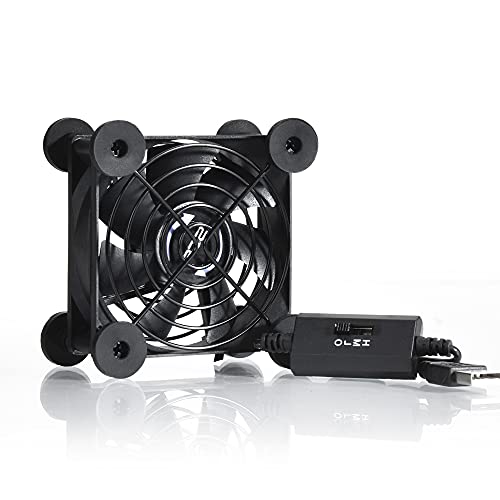
Cramped electronics cabinets can trap more heat than their size suggests, especially when a router, game console, receiver, or DVR runs for hours with barely any room around it. A full-size desk fan feels clumsy in that setting, while passive ventilation may not move enough warm air away from the equipment. The SCCCF Quiet 80mm USB Fan approaches the best miniature USB fan category as a compact equipment cooler rather than a personal handheld fan. Its small frame, adjustable speed controller, and flexible positioning are aimed at steady airflow in tight spaces where heat tends to linger.
SCCCF Quiet 80mm Fan
The SCCCF fan measures 3.64 by 3.64 by 1.81 inches, so it can sit beside compact electronics without swallowing the entire shelf. That footprint makes sense inside media cabinets, computer enclosures, entertainment centers, and other crowded spots where every inch matters. It can rest flat or stand upright, which gives the airflow a better chance of reaching vents that aren't conveniently positioned. The included shockproof foot pads also help keep vibration from traveling directly into a hard shelf or cabinet panel.
Its design is noticeably more practical than decorative. There are no lights, display screens, or oversized housings competing for attention. Instead, the fan uses a straightforward square frame with iron grilles on both sides, protecting the blades while reducing the chance of a loose cable slipping into the moving assembly. That protection is especially useful behind televisions or consoles, where power cords and HDMI cables often end up bundled together.
The USB connection keeps setup simple because the fan can draw power from a compatible USB port on a computer, television, game console, receiver, or separate adapter. This arrangement cuts down on the need for another specialized power supply, though the available USB port must remain powered for the fan to run. Some televisions and consoles shut off their USB ports in standby mode, so continuous cooling may require a wall adapter or powered hub. That small detail can determine whether the USB-powered cooling runs only during active use or continues after the equipment has been turned off.
This model isn't shaped like a traditional desk fan, and that's part of its appeal. The square profile fits naturally against cabinet walls, vent openings, and flat electronic housings. Airflow can be directed across a warm surface or positioned to help pull trapped air away from a cluster of devices. For a compact cabinet cooler, that simple geometry is often more useful than a round fan head mounted on a bulky base.
Three-Speed Airflow Control
A built-in controller provides low, medium, and high settings, allowing airflow to be adjusted without unplugging the fan or changing the power source. Low speed is the sensible starting point for equipment that only becomes mildly warm during normal operation. Medium offers a stronger balance for enclosed shelves with several active components. High speed is better reserved for hotter conditions where moving more air matters more than keeping sound to an absolute minimum.
The listed noise level is 21 dB on low speed, which suggests a restrained operating sound under the stated condition. Real-world noise can still change depending on placement, cabinet resonance, dust buildup, and how firmly the fan sits against a surface. A hollow wooden shelf may amplify vibration more than a dense desk or padded enclosure. The shockproof feet should help, but careful placement remains part of getting the quietest result.
Adjustable speed makes this fan easier to live with than a fixed-speed alternative. A single-speed model may push more air than necessary during light use or become distracting in a quiet room. Here, the controller lets the fan stay gentle during routine streaming or office work, then move to a faster setting during gaming sessions or heavier equipment loads. That flexibility strengthens its place among best miniature USB fan options intended for electronics rather than direct personal cooling.
The controller also makes experimentation less of a headache. Cabinet ventilation isn't an exact science because shelf depth, vent placement, cable clutter, and surrounding temperature all affect heat buildup. Starting on low and stepping upward gives a clearer sense of how much airflow the space actually needs. It won't provide a temperature readout, so the adjustment remains manual, but the three settings are still more useful than an all-or-nothing switch.
Seven-Blade Cooling Design
The fan uses a seven-blade arrangement designed to generate airflow through its compact 80mm frame. More blades don't automatically guarantee better cooling, since motor speed, blade angle, obstruction, and placement also shape performance. Still, seven blades can support a smoother stream of air within a small housing. That matters when the goal is circulating air through narrow gaps rather than creating a broad breeze across an entire room.
Placement will have a bigger impact than many buyers expect. Pointing the fan directly at a solid wall leaves the moving air with nowhere useful to go, while placing it near an intake or exhaust path can help warm air escape. A cabinet with rear openings may benefit from the fan pushing heat outward, whereas a nearly sealed compartment may need the fan aimed inward from a cooler external area. The airflow path should remain as clear as possible, since tangled cords can block a surprising amount of movement.
The fan's small size naturally limits the volume of space it can influence. It isn't meant to cool a room, replace an air conditioner, or deliver the broad airflow of a large desktop model. Its strength lies in localized circulation around routers, receivers, console shelves, DVR units, and computer cabinets. Used within that scope, the focused cooling is more sensible than expecting a miniature fan to handle an open living area.
Dust deserves attention as well. Any fan moving air around electronics will eventually collect lint and fine debris on its grille and blades. The protective iron grilles improve safety, but they can make deep cleaning slower than wiping an exposed blade assembly. Regular light cleaning is the better approach because heavy dust buildup can reduce airflow, increase imbalance, and make a previously quiet fan sound rougher.
Double Ball Bearing Durability
SCCCF states that the double ball bearing system has a service life of 65,000 hours. That specification is notable for equipment cooling because these fans may run for long stretches instead of being switched on for a few minutes at a time. Ball-bearing designs are generally chosen for stable operation in different orientations, which suits a fan that may be positioned flat or upright. Actual lifespan will still depend on operating conditions, cleanliness, temperature, and power consistency.
Orientation flexibility is a genuine practical advantage here. Sleeve-bearing fans can be more sensitive to how they're mounted, while a double ball bearing setup is better suited to horizontal or vertical use. The SCCCF model can therefore sit beneath a warm device, stand beside an exhaust vent, or rest near the back of a cabinet without forcing one specific installation. That makes the flat-or-upright placement more than a minor convenience.
The metal grilles contribute to the fan's sturdy, utility-first feel. They protect fingers from the blades and help keep nearby wires from contacting the moving parts. Still, the grilles shouldn't be treated as permission to press the fan tightly against cables or fabric. Leaving breathing room around both sides allows the protected blade assembly to move air without unnecessary resistance.
Long operating life doesn't eliminate routine care. Dust, pet hair, and cabinet debris can gather faster than expected, especially near floor-level entertainment centers. A quick inspection every so often can reveal blocked vents, shifting cables, or vibration that wasn't present during setup. Those small checks protect airflow and keep the fan from working harder than it needs to.
Practical Strengths And Tradeoffs
The biggest strength is the combination of compact dimensions and usable speed control. It can fit where ordinary desk fans can't, and it offers enough adjustment to suit mildly warm electronics as well as more demanding cabinet setups. USB power also makes it easy to pair with devices that already provide an available port. For neatly organized media shelves, that can mean fewer adapters and less power-cord clutter.
Noise management is another clear benefit, particularly on the low setting. A fan positioned near a television, workstation, or bedroom media cabinet shouldn't constantly draw attention to itself. The stated 21 dB low-speed figure supports that quiet-use intent, though surrounding surfaces can still change what the ear hears. The shockproof pads are useful here because vibration often causes more annoyance than the motor itself.
The main limitation is that the fan remains a compact 80mm unit. High speed may be more audible, and even its strongest setting won't compensate for a completely sealed cabinet with no meaningful intake or exhaust route. USB power can also be inconvenient if the host device cuts power during standby. Those aren't defects so much as installation tradeoffs that need to be understood before placing the fan behind expensive electronics.
The unrelated topic of large outdoor air circulation is covered separately in 3 blade outdoor ceiling fans, while this SCCCF model remains focused on close-range electronic cooling. It makes the most sense where a small, guarded fan can sit within a few inches of heat-producing equipment. Used thoughtfully, it can help move stagnant warm air without adding a bulky appliance to an already crowded setup. Its value rests on precise placement, adjustable airflow, and modest expectations, not on exaggerated cooling claims.
TriPole 4.5-Inch USB Desk Fan
A warm desk can turn ordinary work into a fidgety, uncomfortable slog, especially when the room itself isn't hot enough to justify running a larger appliance. Limited outlet access makes the problem worse, and a bulky fan can crowd a keyboard, lamp, or nightstand before it moves a single puff of air. The TriPole Desk Fan takes a personal-cooling approach to the best miniature USB fan category, pairing a 4.5-inch head with three speeds, a long cord, and broad angle adjustment. It doesn't pretend to cool an entire room, but it has several practical answers for close-range heat.
TriPole Mini USB Desk Fan
The 4.5-inch diameter keeps this fan small enough for a desk corner, narrow bedside table, vanity, or temporary travel setup. That compact frame matters in places where a standard table fan would block a monitor or constantly bump into other essentials. It remains a corded model, though, so portability means carrying it between powered locations rather than using it freely without a cable. The tradeoff is predictable operation without waiting for an internal battery to recharge.
A 4.9-foot power cable gives the fan more placement freedom than short-cord models that need to sit directly beside a laptop or USB charger. That extra reach can bridge the gap between a nightstand and a wall adapter or let the fan sit on the useful side of a crowded workstation. Cable management still deserves some thought because nearly five feet of wire can become desk clutter if the power source is close. Loosely coiling the unused length keeps it from snagging drawers, chair arms, or other cords.
The USB-A plug supports several common power sources, including a computer, power bank, and compatible USB charger. That 5V USB power arrangement is handy during travel because the fan doesn't depend on a country-specific wall plug by itself. A suitable adapter is still needed wherever USB power isn't already available. The fan also requires enough current to reach its strongest setting, which becomes an important part of setup rather than a minor technical footnote.
TriPole states that the fan needs 0.8A while operating and recommends testing it with a 5V/1A USB charger if the third speed doesn't work. Weak laptop ports, older hubs, and low-output adapters may power the lower settings but struggle at maximum speed. That behavior could easily look like a defective fan even though the power source is the bottleneck. Matching the fan with an adequate USB output gives all three modes a fair shot.
Three Speeds Without Fussy Controls
One button on the rear handles the three airflow settings, keeping operation simple enough for half-awake bedside adjustments or quick changes during a busy workday. Each press cycles through the available speeds rather than requiring a separate dial or remote. That minimalist setup cuts down on extra parts, although reaching behind the fan may feel less convenient if it sits tight against a wall. A front-mounted control would be easier in cramped spaces, but the rear button keeps the face uncluttered.
Low speed makes sense for a mild, continuous breeze while reading, typing, or sleeping nearby. Medium can handle warmer stretches without immediately jumping to the strongest airflow. High is the setting for stuffy afternoons or post-commute cooldowns, provided the connected USB source delivers enough current. The adjustable breeze gives the fan more range than a single-speed unit that may be too timid one moment and annoyingly forceful the next.
Three settings also help manage the balance between airflow and sound. TriPole describes the fan as quiet, though no specific noise measurement is supplied in the provided details. That means expectations should stay grounded, particularly at maximum speed where faster blade movement usually becomes easier to hear. The low and medium modes are more likely to suit shared offices, bedside use, and calls where background noise matters.
The fan is built for personal reach, not room circulation. Its airflow is meant to land on a face, hands, or upper body from nearby rather than move air across a large bedroom. Sitting several feet away will naturally soften the effect, even on high. Used at sensible range, the focused cooling can take the edge off without blowing papers around or disturbing someone across the room.
Wide Base And Vibration Control
Small fans often suffer from a simple flaw: the head produces more movement than the base can comfortably handle. TriPole counters that problem with a wide desktop base designed to remain upright during operation. The broader footprint gives the circular fan head a steadier platform, especially when it's tilted upward or downward. It also lowers the chance of an accidental knock sending the fan rolling across the desk.
Four silicone pads sit beneath the base to reduce direct contact with hard surfaces. Those anti-vibration pads can limit buzzing on hollow desks, thin shelves, and wooden nightstands where motor vibration tends to sound louder than expected. They also add grip, helping the fan stay in place when the button is pressed. Dusty or oily surfaces may weaken that grip, so an occasional wipe underneath is worthwhile.
Stability becomes more noticeable at the strongest speed. A lightweight body can creep backward across a smooth tabletop if the base lacks traction, and a loose cable may tug it sideways. The TriPole design addresses both annoyances with its broad support and silicone contact points. Still, careful cord routing protects the stable placement better than letting the cable hang under tension.
The base does take up more horizontal space than a clip-on fan or an ultra-thin folding model. That isn't a deal breaker, but it matters on packed desks where notebooks, speakers, and charging docks already compete for room. The extra width buys steadiness rather than disappearing entirely into the background. For a stationary setup, that space-for-stability tradeoff is usually reasonable.
Full 360-Degree Vertical Rotation
The fan head rotates 360 degrees up and down, allowing the airflow to point above, below, or straight ahead without moving the entire base. That range helps on uneven surfaces and crowded furniture where the fan can't always sit directly in front of the desired spot. It can aim upward from a lower shelf, downward from a raised desk, or toward a bed from a side table. The adjustment is mechanical and direct, so there's no oscillation motor or remote-controlled movement involved.
Precise aiming makes a small fan feel stronger because less airflow is wasted. A fixed-angle model may blow at shoulder level while the heat is bothering your face, leaving the breeze frustratingly close but not quite useful. Tilting the TriPole head corrects that mismatch in seconds. This directed airflow is one of the product's more practical advantages, particularly in tight personal spaces.
The rotation can also keep the fan from disturbing lightweight items. Pointing it slightly upward may cool the upper body without scattering receipts, sticky notes, or loose papers across a desk. A downward angle can circulate air near a laptop stand or under a shelf, although the fan is primarily described as a personal model rather than an electronics cooler. Sensible positioning gets more value from the adjustable fan head without expecting it to perform jobs it wasn't built around.
Broad rotation doesn't mean the airflow spreads automatically. The head stays where it is aimed, so anyone wanting side-to-side coverage will need to reposition the fan manually. That fixed direction can actually be a benefit in shared spaces because the breeze remains localized. The design favors steady personal cooling over sweeping circulation.
Cleaning Access That Makes Sense
Dust buildup is hard to avoid with any desktop fan because the blades constantly pull lint and fine particles toward the grille. TriPole uses a detachable front cover, making the mask and blades more accessible for routine cleaning. That detail matters after several weeks on a desk, especially near open windows, fabric, pets, or frequently used bedding. A cleaner blade surface can maintain smoother airflow and reduce the stale, dusty smell neglected fans sometimes develop.
Regular cleaning is simpler than waiting for a thick layer of grime to form. The fan should be disconnected from power before the cover is removed or the blades are touched. A soft cloth or brush can handle ordinary dust without forcing debris deeper into the motor housing. The removable grille doesn't make the unit maintenance-free, but it takes some of the irritation out of upkeep.
The detachable design may also help reveal strands of hair or fibers wrapped around the blade hub. Those obstructions can create imbalance, extra sound, and uneven rotation if ignored. Gentle cleaning protects the fan better than aggressive pulling or soaking internal parts. Keeping moisture away from the motor and USB controls remains part of safe fan maintenance.
A removable cover needs to be seated correctly after cleaning. Loose installation could introduce rattling or leave the protective grille less secure than intended. Checking the fit before reconnecting power takes only a moment and prevents avoidable noise. That small routine supports a cleaner breeze and steadier operation over repeated use.
Where The TriPole Fan Fits Best
The TriPole fan makes the strongest case on desks, nightstands, hotel furniture, and other surfaces where cooling needs to stay close and controlled. Its compact body won't dominate the area, yet the broad base provides more confidence than tiny fans balanced on narrow stands. The long cable helps when the nearest power source isn't right beside the desired position. A power bank can also support temporary setups away from a wall outlet, assuming it supplies adequate output.
Travel compatibility is practical but not completely cordless. The fan fits more easily into luggage than a full-size table model, though the fixed stand and cable still take up some room. Since it relies on standard 5V USB power, a suitable charger can keep it useful across different destinations without voltage concerns at the fan itself. The USB-A connection may require an adapter around newer devices that provide only USB-C ports.
Bedroom use benefits from the adjustable angle and silicone-padded base, but sound tolerance varies from person to person. Light sleepers may prefer the first speed, while stronger settings could be more noticeable at close range. The fixed head won't sweep air across the bed, so positioning needs to be deliberate. Broader room-air approaches belong to a different category, and a neutral reference appears in bedroom ceiling fan designs for spaces that need overhead circulation rather than a concentrated desktop breeze.
The fan's main strengths are straightforward speed control, flexible aiming, easy cleaning access, and a cable long enough to ease awkward outlet placement. Its weaknesses are just as clear: no battery, no side-to-side oscillation, and possible third-speed trouble with underpowered USB sources. None of those limitations are hidden once the setup requirements are understood. The better fit is a nearby personal breeze, not whole-room cooling or completely wireless use.
JISULIFE Life7 Foldable Handheld Fan
Summer heat has a knack for showing up where air conditioning can't help, from crowded concert lines to sun-baked transit stops and outdoor ceremonies with barely a breeze. A basic pocket fan may take the edge off, but weak airflow, mystery battery levels, and awkward handling can turn relief into another little annoyance. The JISULIFE Life7 enters the best miniature USB fan discussion with a 12-blade system, five speeds, a 5000mAh rechargeable battery, and three distinct ways to use it. That feature set sounds ambitious for a small fan, yet the real appeal lies in how those parts address different cooling routines without requiring separate devices.
JISULIFE Life7 Portable Fan
The Life7 isn't locked into a single grip or position. It works as a handheld fan while walking, folds into a desktop setup during makeup or computer work, and pairs with the supplied lanyard for neck-worn use. That flexibility matters on days that bounce between commuting, waiting outdoors, eating at a patio, and settling into a hotel room. Instead of carrying one fan for travel and another for a desk, this model reshapes itself around the moment.
A 150-degree folding range provides enough adjustment to balance the fan on a flat surface and aim the airflow toward the face. The hinge also lets the body fold down for packing, though a movable joint naturally deserves more care than a rigid frame. Forcing it beyond its intended range or repeatedly tossing it loose into an overloaded bag may shorten the hinge's useful life. Packed with a little common sense, the folding mechanism is a meaningful convenience rather than a decorative trick.
The black finish gives the fan a low-key appearance that won't look out of place beside office equipment, travel gear, or a makeup case. Still, the Life7 is built around function more than disappearing into the background. Its handle houses the battery, controls, and display, so it will feel more substantial than an ultra-thin novelty fan. That extra body size supports the 5000mAh battery and multiple operating modes, but anyone chasing the smallest possible pocket footprint should keep the tradeoff in mind.
Three-in-one marketing can sometimes stretch a simple feature into several names, but the distinctions here are practical. Holding the fan gives direct control, desktop placement frees both hands, and the lanyard supports movement without constant gripping. Each mode changes how the focused airflow fits into daily activity. The fan won't replace broad room circulation, yet it can stay useful across more situations than a fixed tabletop model.
Twelve Blades And A Brushless Motor
The Life7 uses a 12-blade design paired with an upgraded brushless motor. JISULIFE describes the combination as capable of producing strong airflow for hot summer conditions. Blade count alone doesn't tell the entire performance story because shape, motor speed, grille resistance, and distance all affect the breeze. Even so, the pairing suggests a design aimed at smoother, concentrated air movement rather than the faint flutter associated with many tiny souvenir fans.
A brushless motor brings a sensible mechanical advantage to a frequently used portable device. Without traditional brushes making physical contact inside the motor, the design can reduce wear at that contact point and support steadier operation. That doesn't mean the fan is silent or immune to aging, since bearings, blades, and the folding body still experience use. The brushless drive system simply fits the demands of a fan expected to run for hours rather than a few brief bursts.
Close-range positioning remains the key to satisfying performance. Held near the face or placed on a desk within personal reach, the fan can direct its airflow where sweat and stagnant air are most distracting. Set across a large room, it won't act like a box fan or ceiling fixture, and it shouldn't be judged by that standard. The Life7's personal cooling strength comes from proximity, direction, and speed control.
The protective grille also shapes how the fan feels in use. Twelve blades spinning at higher settings need a secure barrier, particularly around loose hair, lanyards, and clothing. Keeping the intake and front grille unobstructed protects airflow and reduces strain on the motor. A little spacing goes a long way, especially in neck-worn mode where fabric can drift closer than expected.
Five Speeds For Changing Conditions
Five selectable levels give the Life7 a broader adjustment range than common two-speed or three-speed portable fans. A mild setting can provide a soft breeze during desk work, while the upper levels are better suited to outdoor heat or crowded venues. The five-speed control avoids forcing every situation into either barely moving air or full blast. That middle ground is where most day-to-day comfort usually lives.
Lower settings also make sense when sound and battery preservation matter more than maximum output. Makeup application, reading, office work, and quiet waiting areas rarely demand the strongest airflow. A gentler setting can keep air moving without blowing hair across the face or scattering lightweight items nearby. The adjustable wind range makes the fan easier to tune instead of merely turning it on and tolerating whatever it delivers.
Higher speeds bring the expected compromise. Stronger airflow requires more energy and will reduce running time compared with speed one. Motor and blade noise may also become more noticeable as the fan works harder, though the supplied details don't include a measured sound level. Anyone sensitive to background noise should treat the lower levels as the likely sweet spot and reserve maximum power for moments when cooling intensity matters more than discretion.
The control layout works alongside the digital display rather than leaving the setting to guesswork. Being able to see the selected level helps prevent accidental operation at a stronger speed than intended. It also makes quick adjustments easier during a commute or outdoor event, where counting button presses can become oddly irritating. Small convenience, sure, but the visible speed reading helps the five-setting system feel organized.
Digital Display And Battery Awareness
The built-in screen shows wind speed and remaining battery, solving one of the most common frustrations with rechargeable fans. Indicator dots can be vague, and a sudden shutdown on a hot day is no fun at all. A numerical or clearly readable display gives a better sense of whether the fan can handle another stretch of use. That information is particularly useful before leaving a charger behind for a concert, wedding, commute, or day trip.
Battery visibility also changes how confidently the upper speeds can be used. Instead of staying on low simply because the remaining charge is unknown, the display lets the situation guide the setting. Plenty of charge may justify stronger airflow through a hot afternoon, while a low reading signals that a gentler mode would stretch the remaining runtime. The at-a-glance power status turns battery management into a quick decision rather than a guessing game.
The display adds electronic complexity, of course, and it consumes a small amount of power while operating. It may also be harder to read under harsh direct sunlight depending on brightness and viewing angle, though no display-brightness specification is provided. Those are fair cautions rather than obvious problems. For most portable use, knowing the battery and speed levels offers more practical value than a completely blank handle.
Charging still requires some planning. The included cable helps replenish the fan from a suitable USB power source, but charging time and input specification aren't stated in the supplied description. A power bank can reduce downtime during travel, while overnight charging suits predictable daily use. The rechargeable design eliminates disposable batteries, yet it doesn't eliminate the need to remember the cable.
Runtime And The 5000mAh Battery
JISULIFE lists a maximum runtime of up to 19.5 hours at speed one. The wording matters because that figure applies to the lowest setting, not every level. Higher speeds draw more energy and will run for less time, although exact durations for those settings aren't provided. Still, nearly a full day at the gentlest level gives the Life7 credible endurance for intermittent personal cooling.
A 5000mAh battery supports that long low-speed claim and gives the fan more stamina than tiny models built around much smaller cells. The larger capacity also adds weight, so the handle may feel heavier during prolonged handheld or neck-worn use. That tradeoff is hard to avoid: longer runtime requires storing more energy somewhere. Desk mode removes the weight from the hand, making it especially appealing during extended indoor sessions.
Real runtime will shift with speed choice, charging habits, battery age, temperature, and how continuously the fan operates. Cycling between medium and high during outdoor activities will drain the battery faster than steady low-speed office use. Lithium batteries also lose capacity gradually over repeated charge cycles, so the maximum duration shouldn't be treated as permanent forever. The 19.5-hour ceiling is best understood as an upper-end condition supplied for speed one.
Long endurance is most valuable when outlets are inconvenient rather than completely unavailable. Cruises, camping trips, festival grounds, outdoor weddings, and long travel days can leave charging opportunities scattered. A visible battery reading and multiple speed levels help ration power without making the fan feel overly restricted. That's a more grounded benefit than pretending one charge guarantees unlimited relief.
Hands-Free Use And Desk Placement
The lanyard turns the Life7 into a neck-worn cooling fan, freeing both hands for luggage, shopping bags, a camera, or event essentials. This setup is handy while standing or walking, though airflow direction depends on how the folded body rests against the chest. Clothing shape, movement, and lanyard length can shift the angle. A brief adjustment may be needed before the breeze lands where it's useful rather than cooling a shirt collar.
Long periods around the neck may reveal the battery's weight more than short outings do. Some people won't mind the extra heft, while others may prefer switching between neck and handheld use. The lanyard also needs to stay clear of the grille and moving blades. That simple habit protects the hands-free mode from becoming tangled or noisy.
Desktop use may be the most comfortable configuration for extended sessions. Folding the handle into a stand keeps the fan aimed without tiring the wrist, making it useful beside a monitor, mirror, or bedside lamp. The 150-degree adjustment helps direct air toward the face instead of straight across the table. The fan's foldable stand function is especially practical during makeup, since both hands remain available and the breeze can be softened to avoid drying products too quickly.
The base area is smaller than that of a dedicated desk fan, so placement should be reasonably level and stable. A bumped table, uneven surface, or tightly stretched charging cable could make the fan shift. That portable footprint is both a benefit and a limitation. It saves room in a bag, but it won't feel as planted as a broad, weighted desktop base.
Travel Strengths And Everyday Limits
Travel is where the Life7's combined features make the clearest case. The folding body, rechargeable battery, lanyard, and display cover several recurring problems without adding separate accessories. It can cool a face in a line, sit beside a hotel bed, or hang around the neck during a walk. That adaptability won't matter as much to someone who only needs a fan beside one computer, but shifting locations give it room to shine.
The main strength is flexibility backed by useful control. Five speeds handle changing heat levels, while the battery readout removes much of the uncertainty around remaining runtime. The 12-blade system and brushless motor aim for serious close-range airflow rather than a novelty breeze. Better yet, each feature supports a recognizable situation instead of merely padding a specification list.
The weaknesses are tied to the same design choices. A 5000mAh battery adds weight, the folding joint needs sensible handling, and maximum speed will consume charge faster than the advertised low-speed runtime. Neck mode may require frequent angle adjustment while moving, and the fan still cools one nearby area rather than a full room. Realistic expectations keep those compromises from becoming surprises.
Large overhead fans solve a different airflow problem, and blade-pitch discussion appears separately in 14-degree ceiling fans for rooms needing broad circulation instead of portable personal cooling. The Life7 belongs in bags, on desks, and around the neck where directed air matters more than whole-space coverage. Its best-fit role is flexible relief through long, mobile days, provided the extra battery weight and close-range focus suit the way it will actually be used.
TriPole 4.5-Inch Portable USB Desk Fan
Heat feels twice as irritating when the desk is already packed with a laptop, charger, notebook, and half-finished coffee. A large fan solves one problem while creating another, usually by stealing space or pushing papers around like it owns the place. The TriPole USB Desk Fan takes a leaner route within the best miniature USB fan category, combining a 4.5-inch frame, three airflow settings, USB power, and a tilting head. Its purpose is straightforward: deliver a close, directed breeze without turning a work area, car console, or side table into a cluttered mess.
TriPole Mini Portable Desk Fan
The fan weighs less than 5.5 ounces, giving it the kind of portability that doesn't feel like a chore after the first week. It can move from a home office to a kitchen counter, car, hotel room, or outdoor table without adding much burden to a bag. That light build also makes quick repositioning easy during the day. Still, low weight means the fan deserves a stable surface, especially when a connected cable is stretched or bumped.
A 4.5-inch fan head occupies far less room than a typical tabletop model, which matters on narrow desks and crowded nightstands. The shape leaves space for a keyboard, mouse, lamp, or phone stand instead of forcing an awkward furniture shuffle. Compact sizing also helps inside vehicles, provided the fan is placed where it won't interfere with controls or visibility. It won't disappear completely, but it has a much smaller footprint than broad-base room fans.
The black finish keeps the appearance simple and unobtrusive. There aren't decorative lights, oversized controls, or flashy accents competing with the rest of the setup. That restrained design suits both office and home environments where a fan should do its job without becoming the visual centerpiece. The sleek housing is practical rather than fancy, and that's a sensible choice for something likely to sit beside electronics.
Portability here depends on access to USB power because the supplied description doesn't mention an internal rechargeable battery. That distinction matters outdoors or in a parked car, where a laptop, power bank, or USB adapter may be needed. The fan is easy to carry, but it isn't fully cordless. Its lightweight USB design favors flexible powered locations rather than complete independence from cables.
Three Speeds With Measured Airflow
TriPole provides low, medium, and high settings, controlled by repeatedly pressing the power button. Three levels are enough to handle mild warmth, steady desk use, and hotter moments without burying the controls under unnecessary options. Low can provide gentle circulation while reading or typing, while medium offers a more noticeable breeze. High is better suited to short bursts of stronger cooling when the air feels stubbornly still.
The listed maximum wind speed reaches up to 5.3 meters per second. That figure gives a more concrete sense of the fan's intended output than vague language about powerful airflow. Actual sensation will still depend on distance, angle, surrounding temperature, and whether anything blocks the grille. Positioned nearby and aimed correctly, the fan should feel more effective than it would from across a room.
A compact fan naturally delivers its best results within personal range. Placing it beside a monitor or near the edge of a table lets the airflow reach the face and upper body before spreading out. Set several feet away, the breeze will weaken and feel less focused. The close-range cooling is the point, not broad circulation throughout a bedroom or office.
The three-speed setup also helps avoid the annoyance of constant full-power operation. Strong airflow can dry the eyes, disturb loose papers, or become distracting during calls. Dropping to low or medium creates a softer balance without shutting the fan off completely. That simple speed control makes daily use more comfortable than an all-or-nothing design.
Noise Levels And Everyday Comfort
TriPole states that the fan operates below 55 dB at maximum speed. That level isn't silent, and the strongest setting will naturally be more noticeable than the lower modes. Still, the supplied specification suggests an effort to keep the motor and blade noise within a manageable range. Desk material, nearby walls, and vibration can all change how loud the fan seems in actual use.
A hollow shelf or thin table can amplify motor vibration like a little speaker box. Moving the fan onto a denser surface or adding a thin mat underneath may reduce that effect. Cable tension can also introduce rattling if the cord pulls the housing sideways. The perceived sound level depends on more than the motor itself, so placement matters almost as much as the selected speed.
Low speed is likely the more comfortable choice for quiet reading, remote meetings, or bedside use. Medium can strike a practical balance where background sound isn't completely absent but airflow still needs some muscle. High belongs to warmer conditions where a stronger breeze matters more than keeping the room hushed. This noise-versus-airflow tradeoff is normal for small fans, and the three settings make it easier to manage.
The fan's compact blades may produce a more concentrated sound than a large, slow-moving tabletop fan. That doesn't automatically make it unpleasant, but anyone highly sensitive to fan noise should keep expectations realistic. No claim in the supplied details suggests studio-level silence. The more grounded benefit is controlled personal airflow without the bulk and heavier hum of a larger appliance.
Vertical Rotation And Air Direction
The fan head rotates vertically by up to 180 degrees, allowing the airflow to point upward, forward, or downward. That range is useful because the ideal position isn't always directly in front of the face. A low shelf may require an upward angle, while a raised counter may need the breeze aimed down. The adjustable head saves the trouble of stacking the fan on books or wedging objects underneath it.
Precise direction can make a small fan feel stronger than its size suggests. Airflow aimed past the shoulder or into the edge of a monitor does little good, even if the motor is running at full speed. Tilting the head toward the desired area uses the available breeze more efficiently. The customizable airflow angle is especially helpful on crowded desks where the fan can't sit in the most obvious position.
The description refers to vertical rotation rather than automatic oscillation. That means the fan stays aimed in one direction until it is adjusted by hand. Fixed airflow can actually be preferable during focused work because papers, hair, and nearby objects aren't repeatedly hit from changing angles. The limitation is clear, though: side-to-side room coverage isn't part of this design.
A movable head also benefits car use, assuming the fan can be positioned safely. USB power from a suitable car charger can support operation, and the angle can direct air toward a passenger without changing the vehicle's main climate settings. The fan should never block controls, vents, or the driver's sightline. Used sensibly, the adjustable tilt gives a compact unit more flexibility than a fixed-face model.
USB Power Across Different Settings
Universal USB compatibility is one of the fan's most convenient features. It can draw power from a PC, laptop, power bank, AC adapter, or car charger, provided the source offers a suitable USB connection. That range makes the fan useful in places where a traditional wall outlet isn't nearby. It also avoids the need for a proprietary charging brick or unusual cable.
Power source quality can still affect operation. An aging laptop port, weak hub, or low-output adapter may not deliver the same experience as a dependable USB charger. The supplied details don't specify a required current rating, so users should rely on properly functioning, compatible power sources rather than questionable adapters. Stable power supports consistent fan speed and reduces the chance of intermittent operation.
A power bank gives the fan a more mobile role for patios, camping tables, waiting areas, or outdoor work. Runtime in that setup depends on the power bank's capacity and the selected fan speed. Since no internal battery is listed, the external power source remains connected during operation. The tradeoff is a visible cable, but the benefit is avoiding battery aging inside the fan itself.
USB power also suits long desk sessions because the fan can remain connected while the computer is in use. Some computers reduce or disable USB power during sleep mode, so the fan may stop when the system goes idle. A wall adapter offers more predictable continuous operation in that situation. This power-source flexibility is useful, though it still calls for a little planning around the chosen setup.
Practical Strengths And Clear Limitations
The fan's main strength is the way several modest features work together. Low weight supports travel, the 4.5-inch head saves space, three speeds manage comfort, and the adjustable angle directs the breeze where it matters. None of those details is particularly elaborate on its own. Combined, they create a sensible personal fan for desks, bedside tables, cars, and temporary work areas.
Another useful difference is the supplied performance detail. A maximum wind speed of 5.3 m/s and an operating level below 55 dB at maximum provide clearer expectations than broad promotional wording alone. Those figures don't guarantee the same sensation in every environment, but they offer a practical baseline. The specified airflow and sound limits make the product easier to assess without invented claims.
The weaknesses mostly follow from the miniature format. The fan won't cool an entire room, it doesn't offer automatic oscillation, and the provided description doesn't indicate cordless battery operation. Its light body may also shift if placed on an uneven surface or pulled by the USB cable. These aren't small details to brush aside, but they are reasonable compromises for a fan designed around compactness.
Broader tabletop circulation calls for a different size and operating style, and that distinction is discussed through tabletop fan options where larger surface-based models receive more attention. The TriPole model stays firmly in the personal-cooling lane, delivering a directed breeze close to the body rather than moving air across a large space. Its best-fit use is a powered spot with limited room, a nearby seat, and a need for quick airflow adjustment. Keep those boundaries in mind, and the fan's small frame starts to look purposeful rather than merely tiny.
DNTESR 6-Pack Mini Cell Phone Fans
Standing in a slow line with heat bouncing off the pavement can make even a lightweight bag feel like a burden. Carrying a conventional handheld fan adds another battery, cable, and device to keep track of, which rather defeats the point of packing light. The DNTESR Mini Cell Phone Fan takes a stripped-down approach to the best miniature USB fan idea by drawing power directly from a compatible phone or tablet. Sold as a six-pack in assorted colors, these tiny plug-in fans favor instant personal airflow, simple storage, and sharing over long-range cooling or advanced controls.
DNTESR Mini Cell Phone Fan 6-Pack
The package contains six miniature fans in pink, blue, green, orange, black, and white. That assortment makes practical sense for households, classrooms, group outings, party bags, or travel companions who'd rather not pass one fan back and forth. It also provides backups because small accessories have a habit of disappearing into backpacks, glove compartments, and desk drawers. The six-pack format is a clear strength when several compact fans are more useful than one feature-heavy model.
Each fan measures roughly 9 by 4 by 4 centimeters, with blades around 3.75 centimeters long. Those dimensions keep the accessory small enough for a pocket, pencil case, purse compartment, or travel pouch. It won't require the space of a tabletop fan, and there isn't a separate stand or charging brick to pack. Tiny size is the main appeal here, though it also places natural limits on airflow coverage.
The fan body uses TPE material, which gives the blades a softer, more flexible character than rigid plastic propellers. Flexible blades are helpful around a handheld device because accidental contact is less alarming than it would be with a stiff blade design. Still, spinning parts deserve basic care around hair, loose threads, and curious fingers. The material improves everyday friendliness, but it doesn't turn the fan into a toy.
This product is offered as a colorful convenience accessory rather than a serious room-cooling appliance. There are no speed buttons, battery indicators, folding stands, or programmable modes listed in the supplied details. Plug it into a supported port and the motor runs; remove it and the airflow stops. That simple operating style suits quick relief, but anyone wanting adjustable control will notice the limitation immediately.
Direct Phone-Powered Cooling
The fan draws power directly from a compatible iPhone, iPad, Android phone, or tablet, removing the need for an internal battery. That can be handy during a warm commute, a crowded sporting event, or a long elevator ride where carrying another charged gadget feels excessive. The phone becomes both the power source and the handle, keeping the setup compact. Of course, the convenience comes at the cost of using some of the mobile device's battery.
Phone-powered operation means there is no separate charging routine. A rechargeable personal fan may sit useless after being forgotten in a drawer with an empty battery, while this model runs whenever the connected device has enough power. That said, extended use could leave less charge for navigation, calls, photos, or boarding passes. The battery tradeoff deserves attention during travel, especially when access to an outlet or power bank is uncertain.
The supplied description states that an IC protection board is included to help prevent damage to the phone. That protection is reassuring for an accessory connected directly to a mobile port, though no additional technical specification or certification is provided. A sensible approach is to keep the connector clean, insert it gently, and stop using any unit with a bent plug or visibly damaged housing. Small electronics still benefit from careful handling, even when their design looks uncomplicated.
Using a phone as the fan's support also changes the way airflow is aimed. The device may need to be held at a particular angle so the breeze reaches the face instead of drifting past the shoulder. That can become tiring during long sessions, and the fan isn't described as having a desktop stand. The best-fit use is brief, close-range cooling rather than hours of hands-free operation.
Port Compatibility Needs Careful Attention
Compatibility is the biggest area where buyers need to slow down and read the details. The supplied information says the iPhone and iPad version works with a Lightning 8-pin port, while Android compatibility requires a Type-C port on a phone that supports OTG. Not every phone with a physically matching connector will necessarily provide the required function. Port shape and device support both matter.
Newer phones that use USB-C instead of Lightning won't accept an 8-pin connector without a suitable version or adapter, and no adapter is listed in the package details. Older Android phones with Micro-USB ports also fall outside the stated Type-C requirement. This compatibility limitation is easy to overlook because the product name mentions several device families. Verifying the actual connector on the intended phone prevents a six-pack of fans from becoming six unusable accessories.
OTG support is another important detail for Android devices. A Type-C socket may charge the phone perfectly while still handling connected accessories differently depending on the model and settings. Some phones may require OTG functionality to be enabled in software before the fan receives power. The product doesn't provide a universal promise for every Android handset, so device-specific support remains a real consideration.
Phone cases can also interfere with the connector. A thick protective case or recessed port opening may stop the plug from seating fully, even though the phone itself is technically compatible. Removing the case may solve the fit, but doing that every time isn't convenient for everyone. The small connector-based design saves space, yet it offers less forgiveness than a fan powered through a flexible cable.
Removable Blades And Easy Packing
The fan blades can be removed for storage, which addresses one of the most obvious weak points in such a small accessory. Flexible blades may survive minor bending, but leaving them attached inside a packed bag invites crushing, twisting, or snagging. Detaching them lets the motor body and blades sit more safely among other travel items. That removable design is particularly useful when several units are being carried together.
Separate parts create their own housekeeping challenge. A blade removed in a hotel room, classroom, car, or airplane seat pocket can vanish surprisingly fast. Keeping each fan and blade in a tiny pouch or compartment makes the system less fiddly. The storage feature works well only if both pieces remain together.
Repeated removal should be handled with a light touch. Pulling the blades sideways or forcing them onto the motor shaft could wear the connection or cause uneven spinning. The supplied description doesn't specify a locking mechanism, so careful alignment is the safer habit. A properly seated blade supports smooth rotation and reduces wobble.
Cleaning is fairly approachable because the exposed blades can be removed. Dust, lint, and skin oils can collect on small fans, especially after use in bags, cars, or outdoor venues. Disconnecting the fan before wiping the blades is essential, and moisture should stay away from the connector and motor. Simple maintenance can preserve cleaner airflow without requiring tools or disassembly of a grille.
Motor Speed And Realistic Airflow
DNTESR lists a motor speed of 15,000 RPM, which sounds lively for such a compact accessory. The figure describes rotational speed, not the amount of air delivered across a room. Blade diameter, shape, distance, and surrounding conditions all influence how the breeze actually feels. The fan is best judged as a close personal cooler, not a miniature substitute for a desk fan.
At short range, the small blades can create a focused stream that helps during queues, stadium seating, public transit waits, or warm classrooms. Moving the fan farther from the face will weaken the effect quickly because the blade area is limited. The sweet spot is likely measured in inches rather than across a table. That short-range airflow matches the product's pocket-size design.
The description calls the operation smooth and very quiet, but no measured sound level is supplied. A tiny motor spinning rapidly may still produce a noticeable high-pitched whir in a silent room, even if it seems unobtrusive outdoors. Background noise at a pool, sporting event, or airport will likely mask it more easily. The noise expectation should therefore depend on the setting rather than an assumption of complete silence.
There is only one operating level mentioned. That removes control complexity, but it also means the breeze can't be softened for makeup, reading, or sensitive eyes. A stronger fixed output may feel refreshing outside and excessive at very close range indoors. The absence of speed adjustment is a clear weakness beside multi-speed rechargeable fans.
Where This Six-Pack Makes Sense
The six-pack arrangement fits situations where small, inexpensive-to-carry cooling accessories need to be spread across several bags or shared among multiple people. One fan can stay in a desk drawer, another in a travel kit, and a third in the car without constant repacking. Schools, outings, group events, and family trips are natural settings for that approach. The color variety also makes individual fans easier to tell apart.
Airplanes, elevators, stadiums, swimming pools, offices, and queues are listed among the possible environments. Some of those settings suit the product better than others. A brief wait or seated event plays to its strengths, while windy outdoor areas may overpower such a small blade. Inside a pool bag, the connector also needs protection from water and damp towels.
Car use requires a bit of caution because the fan plugs into a phone rather than mounting independently. It shouldn't distract a driver, obstruct controls, or be handled while the vehicle is moving. A passenger can use it more comfortably during stops or in areas where the vehicle's vents don't reach well. The portable format is useful, but safe placement matters more than squeezing airflow into every situation.
Whole-room circulation belongs to a separate scale of product, and a neutral reference for compact overhead airflow appears in compact ceiling fan lights. The DNTESR fan stays at the opposite end of the spectrum, providing immediate air from a device already in hand. Its appeal rests on tiny storage, direct phone power, and six-piece convenience, while its limits include connector restrictions, phone-battery drain, and no adjustable speed.
Strengths, Weaknesses, And Daily Practicality
The strongest feature isn't the motor speed by itself; it's the absence of extra gear. No charging cable, stand, battery pack, or wall adapter is required once a compatible phone is available. That makes the fan easy to keep around for unexpected heat. The minimal carry burden gives it an advantage over larger rechargeable models during short outings.
The six included units add useful redundancy. If one blade is misplaced or one fan remains in another bag, several others are still available. Shared households may appreciate not having to negotiate over a single accessory during a hot trip. On the flip side, six pieces aren't much of a bargain if only one matches the connector actually needed.
Compatibility and ergonomics are the main tradeoffs. The fan occupies the phone's charging port, draws power from the phone, and makes the device slightly more awkward to hold. It also lacks a display, battery of its own, stand, and airflow adjustment. Those omissions keep the design tiny, but they narrow the situations where it feels comfortable for extended use.
The DNTESR six-pack makes sense as an occasional heat-relief accessory rather than the primary fan for a bedroom or workstation. It slips into small spaces, starts without charging, and offers enough units to distribute among everyday locations. A compatible port is non-negotiable, and expectations should remain centered on a breeze delivered close to the face. Within those boundaries, the simple plug-in design is refreshingly direct and easy to understand.

Best Quiet Ceiling Fan For Bedroom 2026 Ultimate Comfort Picks

Best Ceiling Fan For Master Bedroom 2026 With Ultimate Comfort

Best White Ceiling Fan With Light For Bedroom 2026 Top Picks

Best Quorum Medallion Ceiling Fan 2026 With Style & Breeze
Best Outdoor Fan For Pergola 2026 Comfort Boost

Best Ceiling Fan For Great Room 2026 With Ultimate Comfort

Best Outdoor DC Ceiling Fans 2026 For Breezy Comfort
Best ceiling exhaust bath fan with light and heater 2026