
Best Nautical Ceiling Fan With Light 2026 Picks

A best nautical ceiling fan with light should do more than hang a few weathered blades beneath a rope-trimmed housing. The design needs enough coastal character to feel intentional, yet it shouldn't turn the room into a themed restaurant. Good models pair balanced proportions with practical airflow, useful illumination, and finishes that won't look tired after one humid season. That mix is harder to get right than glossy product photos suggest.
Air movement matters first, especially in rooms that trap warm air near the ceiling. A broad blade span can cover an open living area, while a smaller fan makes more sense in a compact bedroom, reading nook, or enclosed porch. Still, bigger isn't automatically better because low ceilings, narrow furniture layouts, and nearby cabinet doors can make oversized blades awkward. A correctly sized coastal ceiling fan feels steady and effective instead of visually heavy.
The light kit deserves the same scrutiny. Frosted glass softens glare and suits relaxed interiors, but heavily tinted shades may leave a room dimmer than expected. An integrated LED ceiling fan light often keeps the profile neat and lowers bulb maintenance, though replacing the light module may be less convenient than swapping a standard bulb. So, check brightness, color temperature, and dimming compatibility before falling for the fixture's good looks.
Material choices can separate a lasting fan from one that starts showing rust around the screws. Salt air, damp summers, and covered outdoor spaces put extra pressure on metal finishes and blade coatings. A damp-rated fan handles sheltered moisture better than an indoor-only model, while a wet-rated design is built for more direct exposure. Even then, installation instructions still matter because a rating won't rescue loose wiring or hardware mounted in the wrong location.
Motor noise is another detail that becomes obvious after bedtime. A quiet hum may disappear beneath normal conversation, but clicking hardware, wobbling blades, or abrupt speed changes can quickly get under your skin. Modern DC motors tend to offer more speed settings and lower energy use, though they may cost more and rely heavily on a remote. Traditional AC motors are often simpler, but their controls and speed range can feel less refined.
Controls should fit the room rather than complicate it. A handheld remote is handy with high ceilings, while wall controls are harder to misplace beside the sofa cushions. Smart features can add scheduling and voice control, but they aren't worth much if the connection drops or the app becomes a chore. Sometimes a dependable pull chain and a familiar wall switch are the sensible route, plain and simple.
Decorative details still count, of course. Weathered wood tones, cage-style lights, aged brass accents, and porthole-inspired housings can reinforce a nautical decor plan without shouting for attention. The trick is choosing one or two maritime cues and letting the rest of the room breathe. Too many ropes, anchors, and distressed surfaces can make a polished space feel cluttered rather than breezy.
Realistic expectations help narrow the field. A fan may circulate air well, yet it won't lower room temperature like an air conditioner. Outdoor ratings can resist moisture, but regular cleaning is still needed where dust, pollen, and salty residue collect on the blades. The strongest pick balances appearance, room size, installation height, lighting needs, motor behavior, and maintenance without asking you to overlook an obvious compromise.
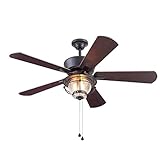
- LFR Score9.4
LFR Score is a ranking system developed by lightfansreviews.com. LFR Score has no relationship or impact from any manufacturers or sales agent websites. Learn more
- BrandHARBOR BREEZE

- LFR Score9.0
LFR Score is a ranking system developed by lightfansreviews.com. LFR Score has no relationship or impact from any manufacturers or sales agent websites. Learn more
- BrandHunter

- LFR Score9.0
LFR Score is a ranking system developed by lightfansreviews.com. LFR Score has no relationship or impact from any manufacturers or sales agent websites. Learn more
- BrandFanbulous

- LFR Score8.8
LFR Score is a ranking system developed by lightfansreviews.com. LFR Score has no relationship or impact from any manufacturers or sales agent websites. Learn more
- BrandFanbulous

- LFR Score8.8
LFR Score is a ranking system developed by lightfansreviews.com. LFR Score has no relationship or impact from any manufacturers or sales agent websites. Learn more
- BrandHoneywell Ceiling Fans

- LFR Score8.4
LFR Score is a ranking system developed by lightfansreviews.com. LFR Score has no relationship or impact from any manufacturers or sales agent websites. Learn more
- BrandFanbulous

- LFR Score7.8
LFR Score is a ranking system developed by lightfansreviews.com. LFR Score has no relationship or impact from any manufacturers or sales agent websites. Learn more
- BrandHUEOCZW
Last update on 2026-07-17 / Affiliate links / Images, Product Titles, and Product Highlights from Amazon Product Advertising API
Harbor Breeze Merrimack II Nautical Ceiling Fan With Light
Hot, still air can make a covered patio feel less inviting than it looks, while weak overhead lighting turns evening use into a squinting exercise. The best nautical ceiling fan with light needs to solve both problems without making the ceiling look like a stage prop. Harbor Breeze approaches that balance with the Merrimack II, a 52-inch, five-blade fan finished in matte bronze and equipped with an LED light kit. Its appeal rests on a practical mix of indoor and outdoor flexibility, broad proportions, and coastal styling that doesn’t lean too hard on anchors, rope, or novelty details.
Harbor Breeze Merrimack II 52-Inch Fan
The Merrimack II carries a strong visual presence without feeling oversized for a typical living room, sunroom, or sheltered outdoor area. Its 52-inch blade span gives the fixture enough width to look properly scaled over a seating arrangement or dining table, especially where a smaller fan might seem lost. Five blades create a familiar silhouette, which helps the design sit comfortably in both rustic and nautical spaces. The matte bronze finish adds warmth, too, rather than the colder look that polished silver or bright white can bring.
That bronze housing is a big part of the fan’s personality. It pairs naturally with weathered wood tones, dark patio furniture, tan upholstery, and deep blue accents, yet it doesn’t force the whole room into a seaside theme. That restraint matters because heavily themed fixtures can age quickly as decor changes. Here, the maritime feeling comes more from the sturdy proportions and lantern-like character than from decorative gimmicks.
The indoor and outdoor designation expands where the fan can reasonably be used, though placement still deserves careful thought. A covered porch or screened patio makes more sense than a spot exposed directly to driving rain. Outdoor-ready hardware can handle changing humidity better than an indoor-only fixture, but regular cleaning remains part of the deal. Dust, pollen, and moisture residue will still collect along the blade edges and around the light housing.
Installation height also affects how well the fan fits the room. A substantial fixture can feel crowded beneath a low ceiling, while taller spaces may benefit from a longer drop that positions the blades closer to the occupied zone. The fan’s appearance works best when the body has room to breathe and the blade clearance doesn’t compete with cabinets, doors, or nearby beams. Measuring first saves the headache of discovering that a good-looking fan dominates the room after it’s already mounted.
Airflow That Matches Larger Spaces
A 52-inch fan is generally associated with medium to larger rooms, and the Merrimack II’s dimensions support that role. The broad blade sweep can help break up stagnant air over open seating areas where a narrow fan would barely be noticed. Its real benefit is air circulation, not refrigeration, so expectations should stay grounded. The room may feel more comfortable because moving air helps moisture evaporate from the skin, even though the fan doesn’t lower the actual temperature.
Covered patios often expose the difference between decorative airflow and useful airflow. Heat collects beneath the roof, people gather in one spot, and still air makes every degree feel heavier. A properly placed outdoor ceiling fan can keep that pocket of warm air from settling so stubbornly. The Merrimack II’s wide format is better suited to that job than a compact fan designed mainly for a bedroom or breakfast nook.
Furniture layout matters more than many product descriptions let on. Centering the fan above the active part of the room usually produces a more noticeable result than simply placing it in the geometric middle of the ceiling. A sectional pushed to one side, for example, may sit outside the strongest circulation zone if the fan is mounted too far away. The 52-inch reach gives some forgiveness, but smart placement still wins every time.
Blade performance can also change as dust builds up or the mounting hardware loosens. A layer of grime adds drag, while an uneven blade can introduce wobble or distracting noise. Occasional tightening and cleaning help preserve smooth operation, particularly in outdoor settings where residue gathers faster. That maintenance isn’t glamorous, but it’s the difference between a fan that quietly does its job and one that clicks through every rotation.
LED Lighting With Practical Tradeoffs
The integrated light kit gives the Merrimack II a second job, which is useful in rooms where ceiling space is limited. Instead of installing a separate light fixture beside the fan, the combined design keeps the overhead area cleaner and more organized. The LED light kit also reduces the need for frequent bulb changes compared with older incandescent setups. That convenience becomes more valuable on high ceilings, where even a simple replacement can turn into a ladder project.
Light quality still deserves attention because decorative shades can soften brightness more than expected. A warm glow often complements the matte bronze body and coastal decor, but mood lighting and task lighting aren’t the same thing. Reading, food preparation, or detailed work may require extra lamps even with the fan light switched on. The Merrimack II makes sense as general ambient lighting, though it shouldn’t automatically be treated as the room’s only light source.
Integrated LED systems come with one clear tradeoff: the light source may not be as simple to replace as a standard screw-in bulb. That doesn’t make the design a poor choice, but it changes the maintenance equation. A conventional bulb is easy to swap, while an LED module can require a compatible replacement part. Buyers who keep fixtures for many years may want to consider that serviceability difference before prioritizing the cleaner appearance.
The combined fan-and-light format also helps preserve visual consistency. Separate fixtures can create a cluttered ceiling, especially in rooms with exposed beams or decorative woodwork. The Merrimack II’s coordinated housing keeps the lighting element tied to the fan’s overall shape. That unified look suits spaces where the ceiling fixture is meant to contribute character rather than disappear completely.
Coastal Style Without Looking Overdone
Nautical decor can go sideways fast. Too many distressed finishes, rope accents, and obvious maritime symbols make a room feel staged instead of relaxed. The Merrimack II takes a quieter route through its matte bronze finish, broad blade profile, and substantial light housing. Those details suggest a coastal or lodge influence without requiring the rest of the room to follow a strict theme.
The fan works especially well beside natural textures. Woven seating, linen curtains, stone surfaces, and reclaimed-looking wood can all pick up the fixture’s warmer tones. Darker hardware elsewhere in the room also helps the fan feel connected rather than randomly selected. That kind of material coordination creates a stronger design result than matching every finish exactly.
Color balance deserves a little attention because matte bronze carries visual weight. In a very small room with dark walls and heavy furniture, the fixture could make the ceiling feel busier. Lighter ceilings and open layouts give the fan more breathing room, allowing its shape to read as intentional rather than bulky. The five-blade design is familiar enough to feel comfortable, yet the finish keeps it from looking plain.
Style alone won’t cover every cooling need, especially in spaces where heat is intense and portable relief is sometimes useful away from the ceiling fan’s airflow. A separate reference for smaller-scale cooling appears in portable handheld misting fan options, though that category serves a different purpose from a permanently mounted ceiling fixture. The distinction is worth keeping clear because one circulates air across a room, while the other targets a person at close range. The Merrimack II remains the more integrated choice for whole-area circulation and overhead illumination.
Controls, Noise, And Daily Use
Daily satisfaction often depends less on appearance and more on how the fan behaves after installation. A slight rattle at night, an awkward control setup, or a light that feels too harsh can overshadow a handsome design pretty quickly. Proper mounting is central to quiet performance, since loose screws or an uneven electrical box can create vibration. Careful balancing also helps the five blades rotate without a distracting wobble.
Control preferences vary from room to room. A wall switch is dependable and hard to lose, while a remote is more convenient in a bedroom or outdoor seating area. The product details provided don’t specify the included control format, so that point should be confirmed before purchase rather than assumed. The right control setup can make a big difference where the fan hangs high or the light is used frequently.
Cleaning the blades may take a little more effort outdoors, especially during pollen season. A dry microfiber cloth handles loose dust, while a lightly dampened cloth can lift stubborn residue without soaking the finish. The light housing may also trap insects or debris over time, depending on its shape and location. Routine care protects both the matte bronze appearance and the fan’s mechanical balance.
Seasonal use adds another practical angle. During warmer months, steady circulation can make a porch or living room feel less stuffy, while cooler seasons may call for lower speeds or less frequent operation. The fan’s value comes from being available without taking up floor space, unlike pedestal or box fans that need storage when they aren’t being used. That built-in convenience is one of the Merrimack II’s strongest day-to-day benefits.
Strengths And Limitations To Weigh
The Merrimack II’s strongest feature is its ability to combine coastal character, a full 52-inch blade span, and integrated LED lighting in one coordinated fixture. It can anchor a room visually while also addressing stale air and limited overhead illumination. The indoor and outdoor positioning gives it more placement flexibility than a strictly indoor model. That versatility is useful, though it shouldn’t be mistaken for permission to install it in any exposed location.
Its size can be a limitation in compact rooms or beneath low ceilings. A broad fan that looks balanced over a patio table may feel imposing above a narrow bedroom. The matte bronze finish can also appear heavy in minimalist interiors built around pale metal and crisp white surfaces. Good fit depends on room scale and surrounding materials, not just whether the fan looks attractive in isolation.
The LED light kit offers convenience, but integrated lighting can create replacement concerns later. Brightness may also be better suited to ambient use than demanding tasks, depending on the room and shade design. Supplemental lamps could still be necessary near reading chairs or work surfaces. That lighting tradeoff is common in decorative fan fixtures and should be accepted before installation, not discovered afterward.
Outdoor placement brings extra maintenance, plain and simple. Moisture, dust, pollen, and insects can dull finishes and collect around moving parts faster than they would indoors. Regular cleaning and occasional hardware checks keep the fan looking sharper and running more smoothly. The Merrimack II rewards that care with a practical blend of wide-area airflow, warm styling, and built-in light without pushing the nautical theme too far.
Hunter Key Biscayne 54-Inch Nautical Ceiling Fan
A covered porch can look polished and still feel muggy the minute the air stops moving. Indoor rooms have their own headaches, too, especially when a bulky fixture hums overhead or throws a harsh pool of light across the ceiling. The best nautical ceiling fan with light should ease those everyday annoyances while fitting the room instead of hijacking it. Hunter’s Key Biscayne combines a 54-inch blade span, weathered zinc styling, two dimmable LED lights, reversible airflow, and straightforward pull-chain control in a fixture built for indoor rooms and damp covered spaces.
Hunter Key Biscayne 54-Inch Fan
The Key Biscayne leans into rustic nautical character without covering itself in anchors, rope, or novelty decorations. Its weathered zinc finish has an aged industrial quality that pairs naturally with painted wood, stone, woven furniture, and muted coastal colors. Painted cased white glass softens the light fixture and keeps the lower half from looking overly mechanical. The result feels more like a substantial architectural fixture than a themed accessory.
Size gives this fan much of its visual authority. At 54 inches across, it has enough presence for a living room, sunroom, bedroom, covered porch, or patio where a smaller model might look undersized. That width also means the ceiling and surrounding furniture need breathing room. In a cramped room, the fan may feel heavy even before the blades begin turning.
The stated dimensions are 54 by 54 by 7.83 inches, though the final hanging position changes with the chosen downrod and installation setup. Hunter includes both 2-inch and 3-inch downrods, allowing a modest degree of height adjustment. That flexibility helps maintain a sensible distance from the ceiling so the blades can move air rather than churning inside a tight pocket. Taller ceilings may still require separate mounting considerations beyond the included hardware.
Decoratively, the Key Biscayne sits between coastal, farmhouse, and industrial styles. Weathered zinc can tie together dark cabinet pulls, aged metal lighting, and gray-brown wood tones without demanding an exact finish match. That broad compatibility is a real design strength, particularly in rooms that have evolved over time instead of following one rigid theme. Very sleek white interiors, however, may make its rustic body appear more imposing than intended.
Quiet Airflow With Reversible Operation
Hunter equips this model with its Whisper Wind motor, which is designed to provide strong airflow with quiet operation. That combination matters in bedrooms and sitting areas, where repetitive mechanical noise can become far more irritating than warm air. A quiet ceiling fan motor won’t erase every sound caused by installation, though. Loose hardware, an uneven electrical box, or poorly balanced blades can still create clicks, vibration, and wobble.
The motor supports multiple speeds, allowing the airflow to change with weather and room activity. A low setting may be enough during a quiet evening, while warmer afternoons can call for a stronger downdraft. This multi-speed control is basic rather than app-driven, but basic isn’t necessarily a drawback. There’s no wireless pairing to troubleshoot, no software account to manage, and no remote to vanish between sofa cushions.
Reversible rotation extends the fan’s usefulness beyond hot weather. During summer, downdraft mode pushes air into the occupied part of the room, creating a cooling sensation across the skin. During winter, updraft mode helps redistribute warm air that has collected near the ceiling without producing the same direct breeze. The direction change doesn’t generate heat or cold, but it can make a room’s existing heating and cooling feel more evenly distributed.
Ceiling height and blade clearance influence how effectively that reversible airflow works. Mounted too close to the ceiling, a fan can struggle to draw enough air above the blades. Hung too low, it can crowd the room or create a safety concern. The included downrods provide a practical starting point, while the fan’s height-adjustable installation helps it avoid the one-position-fits-all problem found with rigid low-profile fixtures.
Two LED Lights For Flexible Ambiance
The Key Biscayne uses two LED lights behind painted cased white glass. That arrangement spreads light through a single coordinated fixture rather than leaving exposed bulbs in plain sight. The included dimmable LED lighting lets the room shift from brighter everyday illumination to a softer evening atmosphere. It’s useful over a covered dining area, in a bedroom, or in a living space where one fixed brightness level would feel limiting.
White glass also takes the edge off direct glare. Instead of staring at bare bulbs, the eye sees a broader, diffused glow beneath the fan housing. This can make the fixture feel more comfortable at night, especially when it hangs above a bed or central seating area. Still, diffused light may not provide enough focused illumination for reading, detailed food preparation, or desk work without additional lamps.
The product information recommends an A19 bulb shape, a common household format that offers more replacement flexibility than a proprietary light module. That’s a practical difference worth noticing. Standard-style bulbs are usually easier to replace when one eventually fails, whereas integrated modules can require a model-specific part. The replaceable bulb format gives the light kit a more familiar maintenance path.
LED bulbs also tend to last longer than traditional incandescent bulbs and use less electricity while operating. The provided details don’t specify exact wattage, lumen output, or color temperature, so brightness and tone shouldn’t be guessed. Those specifications matter because a warm bulb can flatter rustic materials, while a cooler bulb may feel sharper and more functional. Confirming bulb compatibility before replacement helps preserve dimming behavior and avoids an unpleasant mismatch between the two lights.
Pull Chains Keep Operation Straightforward
Pull-chain control gives the Key Biscayne a decidedly traditional operating style. One chain controls the fan, while the other handles the light, making speed and power adjustments available directly beneath the fixture. The setup is easy to understand and doesn’t depend on batteries or a handheld controller. That mechanical simplicity can be reassuring in a guest room, porch, or vacation property where complicated controls cause more trouble than convenience.
The downside appears when the fan hangs high above the floor. A pull chain that’s comfortably reachable beneath an eight-foot ceiling may become awkward in a room with greater height. Chain extensions can address the reach problem, though long dangling chains may not suit every decorating plan. This is the clearest control limitation for anyone expecting bedside adjustments or convenient operation from across the room.
Wall-switch compatibility can also affect daily use, depending on how the fan is wired. A standard switch may control power to the entire fixture, while the chains retain the selected fan speed and light setting. The supplied description doesn’t confirm advanced wall-control or remote compatibility, so those features shouldn’t be assumed. The Key Biscayne is best understood as a pull-chain ceiling fan first, with any control modifications requiring confirmation against Hunter’s instructions.
Simple controls have another quiet advantage: fewer electronic components sit between the person and the basic function. Pull the chain, and the speed changes. Pull the other, and the lights respond. That directness feels almost old-school, but there’s something to be said for a fixture that doesn’t need a tutorial. Anyone who expects smart-home integration, scheduling, or voice operation will likely consider the same simplicity a drawback.
Damp-Rated Placement And Outdoor Limits
The damp rating expands the Key Biscayne beyond dry indoor rooms. Covered porches, screened patios, and sunrooms can expose fixtures to humid air and occasional moisture that an indoor-only fan isn’t intended to handle. A damp-rated ceiling fan is built for those sheltered conditions. It is not the same as a wet-rated fan designed to withstand direct rain or open exposure.
Placement beneath a solid roof remains crucial. Wind-driven rain, leaking gutters, or uncovered installation can subject the housing and electrical components to conditions beyond the stated rating. The fan belongs in a covered outdoor area where it receives protection from direct water. Stretching the meaning of “outdoor” is a poor bargain when electricity and moisture share the same space.
Outdoor use also increases routine cleaning. Pollen, dust, small insects, and damp residue settle on blades faster outside than they do in a bedroom. That buildup can dull the weathered finish and eventually contribute to uneven rotation if ignored. Wiping the five fan blades and checking visible hardware from time to time helps keep the fixture balanced and presentable.
Humidity can make a sheltered patio uncomfortable even when the temperature isn’t extreme. Moving air won’t remove moisture from the atmosphere, but it can reduce the sticky, stagnant feeling that settles beneath a roof. The Key Biscayne’s larger sweep is well suited to circulating air over a seating or dining zone. Its indoor-outdoor flexibility is strongest where one fixture needs to supply both airflow and general overhead light without occupying floor space.
Room Fit And Installation Considerations
A 54-inch fan demands more planning than a compact fixture. Blade tips need safe clearance from walls, cabinets, doors, and tall furniture, while the fan body needs enough open ceiling area to look balanced. Large open rooms and covered gathering spaces make the most natural setting. Narrow bedrooms or tightly furnished rooms may expose the fan’s substantial scale as a weakness rather than an advantage.
The included downrods help position the blades below the ceiling, where they can draw and circulate air more effectively. Even so, this isn’t presented as a flush-mount fan, so very low ceilings may not be its strongest match. Proper mounting also requires a ceiling electrical box rated to support a fan, not merely a lightweight light fixture. A secure fan-rated mounting point protects against wobble and unnecessary strain.
Blade balancing deserves attention during installation instead of being treated as an afterthought. A large fan can magnify small alignment differences, particularly at higher speeds. Tightening screws evenly and following the supplied assembly sequence can help preserve stable operation. Rushing through those steps may leave a perfectly capable motor attached to a fixture that rattles because the hardware wasn’t seated correctly.
The fan’s industrial-rustic appearance also benefits from deliberate placement. Centering it over the main activity area, rather than blindly using the geometric center of an irregular room, can improve both comfort and visual balance. Over a porch table or living-room seating arrangement, its reach feels purposeful. Hung over an unused walkway, much of the airflow coverage may miss the place where it would matter most.
Practical Strengths And Honest Tradeoffs
The Key Biscayne’s biggest strength lies in its balanced feature set. It combines a 54-inch blade span, reversible multi-speed motor, two dimmable LED lights, common A19 bulb compatibility, and damp-rated construction. None of those details is unusual by itself, but together they address several frustrations in one ceiling-mounted fixture. Warm rooms gain circulation, dim spaces gain overhead light, and covered outdoor areas avoid the clutter of a separate floor fan and lamp.
The styling is distinctive without being cartoonishly nautical. Weathered zinc and white glass offer enough texture for coastal or industrial rooms while leaving space for furniture and fabrics to shape the rest of the look. That restraint gives the fan more decorating range than a fixture loaded with literal maritime symbols. The rustic nautical design still carries visual weight, however, and may feel too rugged in a spare contemporary room.
Pull chains create the most obvious compromise. They’re reliable, familiar, and quick to understand, but they don’t provide the convenience of a remote beside the bed or a wall control near the doorway. High mounting can make them harder to reach, and chain extensions aren’t always pretty. The fan’s straightforward controls will feel refreshingly uncomplicated to some and dated to others.
The damp rating is useful but easy to misinterpret. Covered patios and porches fit the stated use, while direct rain exposure does not. Two LED bulbs add flexible ambiance, yet the actual brightness and color characteristics need confirmation because the provided details don’t state them. Taken on its own terms, the Hunter Key Biscayne is a sturdy-looking best nautical ceiling fan with light candidate for spaces that benefit from broad airflow, traditional control, warm industrial character, and sheltered indoor-outdoor placement.
Fanbulous 48-Inch Farmhouse Ceiling Fan With Light
A bedroom can look warm and thoughtfully decorated, yet the comfort falls apart once stale air settles over the bed and the overhead bulb feels too exposed. The best nautical ceiling fan with light has to pull its weight as both a working appliance and a visible part of the room, not merely borrow a rustic finish and call the job done. Fanbulous takes a more flexible approach with a 48-inch frame, reversible dual-finish blades, a decorative cage, six fan speeds, timer settings, and remote operation. The result blends farmhouse character with several practical controls that suit bedrooms, living rooms, kitchens, and similarly sized spaces.
Fanbulous 48-Inch Caged Ceiling Fan
The Fanbulous design starts with five blades that carry two finish options, including a walnut-toned side. Flipping the blades changes the visual mood without requiring a replacement set, which is useful when furniture, wall color, or bedding gets updated later. This dual-finish blade design gives the fixture more decorating range than a fan locked into one surface treatment. It can lean warmer and more rustic or settle into a quieter background role, depending on which blade side faces downward.
A decorative cage surrounds the light area and supplies much of the fan’s industrial farmhouse personality. The open structure keeps the fixture from appearing like a plain builder-grade fan, while the darker framework adds enough weight to anchor a room with wood furniture or metal accents. That caged light fixture can also echo lantern-inspired nautical decor without relying on obvious ship-themed ornaments. Still, the cage will collect dust more readily than a smooth glass shade, so occasional detail cleaning comes with the look.
The 48-inch span falls into a manageable middle ground. It has more presence than a compact fan intended for a tiny office, yet it’s less likely to overpower a standard bedroom than a 54- or 60-inch model. Proper room placement remains important because blade clearance affects safety, visual balance, and useful airflow. A fan centered over the area where people spend time usually feels more effective than one placed over an empty walkway simply because that spot marks the ceiling’s midpoint.
This model uses an E26 bulb base, which accepts many commonly available bulb styles. Bulbs aren’t included, so the final brightness, color temperature, and appearance depend on the bulbs selected during setup. That freedom is a practical lighting advantage because warm decorative bulbs can reinforce the rustic atmosphere, while brighter bulbs may better suit kitchens or active living areas. The tradeoff is simple: lighting performance can’t be judged from the fan alone until compatible bulbs are installed.
Six Speeds Without A Complicated Control Routine
The supplied remote handles six fan speeds, giving the Fanbulous model a broader adjustment range than traditional three-speed pull-chain fans. Low settings can keep air from feeling stagnant during sleep, while stronger settings are better suited to warm afternoons or a busy room. This six-speed control helps avoid the familiar problem of one setting feeling too weak and the next feeling unnecessarily forceful. Fine adjustment matters most in bedrooms, where comfort can shift quickly from stuffy to drafty.
Timer choices include one, four, and eight hours. That feature makes sense at bedtime because the fan can run while the room cools down and then stop later without another trip to the switch. The 1/4/8-hour timer also suits kitchens or living rooms where steady airflow is useful for a limited stretch rather than all day. It won’t replace a programmable climate system, but it adds a sensible layer of control without turning the fan into a technical project.
A one-touch silent mode is included among the remote functions. The provided information doesn’t spell out exactly which sounds or operating behaviors the mode changes, so its effect shouldn’t be overstated. Even so, a dedicated silent-mode control signals that quiet nighttime operation is part of the intended use. Proper assembly still matters, since loose screws or an uneven mounting box can cause mechanical noise that no remote setting can correct.
The remote also changes airflow direction, saving the hassle of reaching for a switch on the fan housing. That convenience becomes more noticeable with taller ceilings, where manual seasonal changes can require a ladder. Two batteries are included, and the wall-mounted holder gives the controller a fixed parking spot instead of letting it disappear beneath cushions. This remote storage bracket sounds like a small detail, but small details often determine whether a control remains convenient six months after installation.
DC Motor Comfort Through Changing Seasons
A DC motor drives the six-speed operation and reversible airflow. Compared with traditional AC motor designs, DC motors are generally associated with more speed choices, quieter behavior, and lower power consumption during operation. Fanbulous describes this motor as energy-saving, though the supplied details don’t include wattage figures or measured operating costs. The fair takeaway is that the DC motor system supports precise adjustment without making unsupported promises about exact savings.
Summer operation pushes air downward, creating the breeze that makes a warm room feel more comfortable. The fan doesn’t lower the room’s actual temperature like an air conditioner, but moving air helps reduce the heavy, stagnant sensation that builds in closed bedrooms and living spaces. A related explanation of seasonal blade rotation appears in ceiling fan direction for cooling, where the distinction between downward summer airflow and winter circulation becomes especially relevant. The Fanbulous remote simplifies that seasonal adjustment through its reversible airflow function.
Winter operation reverses the blade direction to help move warmer air away from the ceiling and back through the occupied space. The goal isn’t to create a chilly downdraft, so a lower speed usually makes more sense during cold weather. This year-round circulation can be useful in rooms with taller ceilings, where heated air naturally rises and gathers well above seated height. Used thoughtfully, the fan remains relevant beyond the stretch of the calendar associated with hot weather.
Quiet operation carries extra weight in a bedroom. A steady low sound may fade into the background, but clicking, wobbling, or sudden tonal changes can become maddening once the lights go out. The DC motor is designed with quieter performance in mind, yet balanced installation still controls much of the final experience. Tight hardware, evenly seated blades, and a fan-rated electrical box are just as important as the motor specification printed on the product page.
Lighting Flexibility With A Few Honest Tradeoffs
The E26 sockets give the light assembly more flexibility than a sealed proprietary LED module. Bulbs can be selected according to the room’s needs, and a failed bulb is typically easier to replace than a model-specific integrated board. This standard bulb compatibility may appeal to anyone who expects to keep the fixture through several decor changes. The fan can shift from exposed vintage-style bulbs to softer frosted bulbs without replacing the whole light kit.
Bulbs not being included is both a drawback and an opportunity. Installation can’t be fully finished without an additional purchase, which may be irritating when the fan arrives and the right bulbs aren’t already on hand. On the other hand, bundled bulbs often lock the room into a brightness or color tone that doesn’t fit. The open choice lets lighting color and intensity match the space rather than forcing every room to accept the same output.
The cage leaves the bulbs more visually exposed than an enclosed glass shade would. Decorative bulbs can look striking inside that structure, but clear bulbs may create noticeable glare when viewed from below. Frosted bulbs can soften the effect while keeping the industrial shape visible. This open-cage tradeoff deserves attention in bedrooms, where a harsh point of light above the bed can feel far less charming at night than it did in a daytime product photo.
Cleaning takes a bit more patience around the cage bars and bulb sockets. Kitchen placement can add airborne grease to ordinary dust, while bedroom installations mainly deal with lint and household debris. A dry microfiber cloth and powered-off fixture make routine care more manageable. The decorative structure earns its keep visually, but maintenance is more involved than wiping a single smooth shade.
Mounting Choices For Flat And Sloped Ceilings
Fanbulous includes both 4-inch and 8-inch downrods. The shorter option creates an overall height of about 13.4 inches, while the longer setup reaches about 17.4 inches. This two-downrod arrangement offers useful flexibility for standard and moderately taller ceilings. It also allows the blades to sit far enough below the ceiling to draw air effectively rather than spinning inside a cramped gap.
Sloped-ceiling installation is supported up to a maximum angle of 15 degrees. That limit suits gentle ceiling pitches but won’t cover every vaulted or sharply angled room. Measuring the slope before installation avoids the frustration of unpacking the fan only to learn that the ceiling exceeds the supported range. The stated 15-degree mounting limit is practical for many homes, though steeper architecture may require a different fan or approved adapter.
Fanbulous describes the installation process as straightforward and includes detailed instructions. Even with clear directions, ceiling-fan work involves electrical connections, secure mounting, and careful blade assembly. A fan-rated electrical box is essential because a standard light box may not be designed for the fixture’s weight and rotational forces. The mounting foundation isn’t a place to cut corners, especially in a bedroom where the fan hangs above occupied space.
The two finished heights also affect how the fan looks in the room. The 4-inch downrod keeps the profile tighter, which may suit ordinary ceilings, while the 8-inch rod can improve proportion and airflow beneath a slightly higher ceiling. Neither configuration is a true flush mount. Rooms with especially limited overhead clearance may need a dedicated low-profile ceiling fan rather than forcing this hanging design into an unsuitable space.
Where The Farmhouse Design Fits Best
The Fanbulous aesthetic lands closer to farmhouse and industrial decor than literal seaside styling. Still, the lantern-like cage, walnut blade option, and darker frame can sit comfortably in a relaxed nautical room built around weathered textures and muted colors. This makes it a plausible best nautical ceiling fan with light candidate for spaces that favor subtle maritime atmosphere over obvious coastal symbols. It won’t suit a crisp marine interior dominated by polished chrome and glossy white surfaces quite as naturally.
Bedrooms benefit from the quiet DC motor, timer settings, and remote direction control. A lower speed can maintain gentle airflow without blasting the bed, while the timer prevents the fan from running longer than desired. The remote-controlled comfort is especially handy after settling under the covers. Light glare needs more planning there, so bulb selection matters just as much as fan speed.
Living rooms and kitchens draw different benefits from the same design. A living room can use the 48-inch fan as a decorative anchor, while a kitchen may appreciate stronger circulation and readily replaceable bulbs. Kitchen air, however, can leave more residue on the open cage and blade surfaces. The rustic caged construction looks attractive in an active room, but it won’t be the lowest-maintenance option near frequent cooking.
The fan’s styling may feel too busy in small rooms already filled with patterned furniture, exposed shelving, or multiple metal finishes. Its cage, five blades, and contrasting surfaces bring plenty of visual information overhead. A calmer room gives those details space to register without becoming clutter. This visual weight is neither automatically good nor bad; it simply needs to match the ceiling area and surrounding decor.
Useful Strengths And Noticeable Weaknesses
Control variety is a clear strength. Six speeds, three timer durations, remote reversal, and a silent-mode button provide more flexibility than a basic pull-chain fixture. The included remote holder and batteries remove two small setup annoyances as well. Together, those features make daily operation easier without depending on a phone app or wireless network.
The dual-finish blades offer another practical benefit. Decor changes don’t necessarily require purchasing new blades because the visible side can be reversed during installation or a later room update. Combined with the open cage and E26 bulb base, this creates meaningful appearance flexibility. The fan still has a defined rustic identity, though, so reversing the blades won’t turn it into a minimalist modern fixture.
Missing bulbs are the most immediate drawback. The fan can be installed mechanically, but the light won’t function until compatible E26 bulbs are supplied. The open cage may also expose more glare and require more detailed cleaning than an enclosed shade. Those lighting compromises are manageable, yet they should be expected before the box arrives rather than treated as surprises.
The two-year quality assurance period provides a stated layer of after-sales coverage. Warranty terms, exclusions, and service steps can vary, so the actual documentation remains the authority if assistance is needed. No specific performance data or service response claims were supplied, and none should be assumed. On the features provided, the Fanbulous 48-inch model offers a thoughtful balance of quiet reversible airflow, adjustable installation, flexible lighting, and farmhouse-nautical personality, with bulb costs and open-cage upkeep forming the clearest tradeoffs.
52-Inch IP65 Outdoor Gazebo Ceiling Fan With Light
Rain blowing across a pavilion can expose the weakness of an ordinary indoor fixture pretty quickly. Moisture reaches the housing, uncovered bulbs become a worry, and weak airflow barely cuts through the heavy summer air. This 52-inch model enters the best nautical ceiling fan with light conversation with an IP65-rated construction, a moisture-resistant shade, six fan speeds, and a remote-controlled timer. Its rugged black finish and practical outdoor focus suit gazebos, porches, patios, and pavilions where weather protection matters as much as appearance.
52-Inch IP65 Gazebo Fan
The 52-inch blade span gives this fan enough visual and functional reach for a covered gathering area. Five lightweight blades form a familiar silhouette that doesn’t look overly decorative or fussy. The black finish leans toward farmhouse and industrial styling, yet it can also support a restrained coastal setup with weathered wood, rope textures, or navy furnishings. That simple outdoor profile keeps the fixture from turning a nautical room into a themed display.
Scale deserves attention before installation. A 52-inch fan fits naturally above a patio dining table, outdoor sofa arrangement, or pavilion seating zone, but it may feel crowded inside a small enclosed porch. Adequate blade clearance is essential around walls, beams, curtains, and tall storage cabinets. Measuring the active space, rather than only the ceiling width, helps position the airflow where it’ll actually be felt.
The design includes an upgraded shade intended to keep the bulb protected from water and moisture. That enclosed approach is more reassuring outdoors than an exposed cage that leaves the socket and bulb open to damp air. It also gives the lower housing a clean, lantern-like character that fits casual coastal architecture. The protected light chamber is a practical feature, though the bulb itself must still meet the stated size and shape requirements.
No brand name is supplied in the provided details, which makes specification checking especially important. Replacement parts, installation support, and warranty communication may depend on the seller or manufacturer listed at the time of purchase. The stated features are useful, but they shouldn’t be stretched into assumptions about long-term durability or service quality. This review therefore treats the listed product information as the boundary rather than filling in missing details.
IP65 Protection For Exposed Outdoor Areas
The IP65 rating is the feature that most clearly separates this model from a standard damp-rated patio fan. According to the provided description, the fan is designed to resist water and outdoor moisture in windy or rainy conditions. That makes it a stronger candidate for gazebos and pavilions where weather can blow in from the sides. The IP65 waterproof rating offers broader placement confidence than an indoor-only fixture or a model intended solely for sheltered humidity.
Weather resistance still doesn’t remove the need for sound installation practices. Electrical connections must be protected, the mounting point needs to be secure, and the supplied instructions should govern allowable exposure. Standing water, damaged wiring, or an unsuitable junction box can create problems regardless of the fan’s rating. The fixture’s outdoor-ready construction supports difficult conditions, but it isn’t permission to ignore electrical safety.
Coastal settings add another layer of wear because salty air can be rough on exposed metal, screws, and finishes. A broader discussion of those environmental demands appears in outdoor ceiling fans for coastal areas, where corrosion exposure and placement deserve as much attention as airflow. The supplied details confirm waterproofing but don’t specifically claim salt-air certification or corrosion-resistant hardware. That missing coastal specification matters near shorelines, where moisture isn’t the only concern.
Routine inspection remains sensible even with a weather-rated fan. Dirt, pollen, insects, and moisture residue can collect on the blades and around the shade, while outdoor temperature shifts may gradually loosen hardware. A periodic wipe-down and visual check can protect balanced rotation and keep the black finish from looking neglected. Weather resistance reduces vulnerability, not maintenance.
Five Blades Built For Steady Circulation
Five lightweight blades are designed to optimize airflow and move room air through the covered outdoor area. A broad sweep can make a gazebo feel less stagnant, especially where a roof traps heat above seated guests. The breeze won’t lower the actual air temperature, but it can make warm conditions feel more manageable. That distinction keeps expectations realistic while recognizing the value of continuous air movement.
Outdoor layouts often waste airflow through poor placement. A fan centered over an unused walkway may leave the dining table or seating group outside the strongest breeze. Positioning the fixture above the main activity zone makes better use of the 52-inch blade span. In a long pavilion, one fan may not distribute air evenly from end to end, so the shape of the space matters as much as its square footage.
Lightweight blades can place less rotational burden on the motor, but the supplied details don’t identify the blade material. That omission makes it difficult to judge resistance to warping, fading, or prolonged sun exposure. The IP65 description addresses the fan’s overall weather readiness, yet material-specific durability shouldn’t be invented. The fair assessment is that the five-blade system is designed for useful circulation, while long-term surface behavior remains unconfirmed.
Outdoor debris may affect performance faster than it would indoors. Dust buildup along one blade can create a slight imbalance, and loose fasteners may produce clicking or wobble at higher speeds. Cleaning each blade evenly helps preserve smoother operation. A ceiling fan that starts quietly can become distracting if basic blade maintenance is ignored season after season.
Six-Speed DC Motor And Remote Operation
The fan uses a DC motor with six selectable speed levels. That range provides more control than a conventional three-speed setup, allowing a gentle breeze during quiet evenings and stronger circulation during humid afternoons. Six steps also reduce the odds of being stuck between one setting that feels weak and another that feels overly aggressive. This fine-speed adjustment is particularly useful above dining areas, where papers, napkins, and lightweight table items can react badly to excessive airflow.
A remote control handles speed selection and timer functions. Being able to adjust the fan from a chair or table makes sense in a gazebo, where wall switches may be inconveniently placed or absent altogether. The description doesn’t mention pull chains, app control, or voice integration, so those features shouldn’t be assumed. The remote-based control system appears to be the main operating method supplied with the fixture.
Timer settings include one, four, and eight hours. A one-hour cycle can cover a quick outdoor meal, while the longer choices suit extended evenings without leaving the fan running indefinitely afterward. Timers also reduce the need to walk back outside later just to shut the fixture down. That automatic shutoff flexibility is modest on paper but genuinely handy in everyday use.
The details don’t provide exact motor wattage, noise measurements, or airflow figures. A DC motor is commonly associated with efficient operation and flexible speed control, but claiming a specific energy saving or silent performance level would go beyond the supplied information. Installation quality will also influence sound, particularly if the mounting box flexes or a blade sits unevenly. The motor’s clearest confirmed strength is six-speed versatility, not an unverified numerical performance claim.
Bulb Compatibility Needs Careful Attention
The light fixture does not include a bulb, so illumination requires a separate purchase. Recommended bulb shapes include A19, T14, and G25, giving some freedom to choose between familiar household forms and more decorative profiles. The maximum bulb height is 120 millimeters, which is a firm physical limit rather than a casual suggestion. Selecting a properly sized bulb prevents interference with the waterproof shade.
ST19 and ST21 bulb shapes are specifically listed as unsuitable. Their elongated profiles may exceed the available interior space or prevent the shade from closing correctly. That restriction is easy to overlook when shopping for vintage-style bulbs, since those shapes often match farmhouse and nautical decor. Paying attention to bulb shape compatibility matters more here than simply checking the base type.
The missing bulb can feel inconvenient, especially if the fan arrives before the lighting choice has been made. Still, it gives more control over brightness, color temperature, and visual style than a permanently integrated LED module. A warm bulb can soften the black housing and create relaxed evening light, while a brighter neutral bulb may better suit food preparation or general patio use. The user-selected lighting output is both a freedom and an extra setup responsibility.
Shade protection may reduce direct exposure to rain and moisture, but it can also soften or limit the perceived brightness. The provided details don’t state lumen output because no bulb is included. Supplemental wall lights or table lighting may still be useful in a large pavilion. The ceiling fixture should be viewed as general overhead illumination, with final performance determined largely by the compatible bulb chosen.
Mounting Flexibility And Ceiling Fit
Two downrods are included, measuring 5 inches and 10 inches. The shorter rod keeps the fixture closer to a standard ceiling, while the longer option can improve proportion and airflow beneath a taller structure. This choice helps the fan adapt to different gazebo and porch heights without requiring an immediate accessory purchase. The dual-downrod setup is one of the more practical installation features in the package.
Ceilings with an incline of up to 15 degrees are supported. That allowance works for modestly sloped pavilion roofs, though it won’t accommodate every steep pitch. Checking the angle before mounting avoids forcing the canopy into a position it wasn’t designed to handle. The stated 15-degree slope limit should be treated as a boundary, not a rough estimate.
Clear instructions are included according to the product description, but ceiling-fan installation still involves weight support and electrical work. The mounting box must be rated for a ceiling fan, and outdoor wiring needs protection appropriate to the location. A loose bracket can create wobble, noise, and unnecessary strain even if every other component is functioning properly. Secure installation is the foundation of safe outdoor operation.
The longer downrod may improve airflow by giving the blades more room above them, but it also lowers the fixture into the occupied space. Gazebos with limited ceiling height may be better served by the 5-inch option. Taller pavilions can often accommodate the 10-inch rod without making the fan feel intrusive. The right choice balances air intake clearance with safe headroom beneath the light.
Farmhouse Styling With Nautical Potential
The black finish and five-blade layout create a straightforward farmhouse look. Paired with wood beams, dark hardware, and a protected light shade, the fan has enough ruggedness for a pavilion or covered porch. Its nautical appeal is indirect rather than literal, which can be a strength in spaces that already contain coastal materials. The understated black design won’t compete with striped fabrics, woven seating, or weathered decking.
Dark fixtures tend to stand out against pale ceilings. That contrast can frame the fan attractively in a white gazebo, but it may also make the 52-inch span appear larger. On stained wood ceilings, the fan may blend more quietly into the structure. This visual contrast should be considered alongside airflow needs because the fixture remains visible even when it isn’t running.
The protected shade offers a cleaner appearance than a bare bulb hanging beneath the motor. It also supports a subtle lantern influence that fits farmhouse and maritime spaces. Since the bulb can be selected separately, the fixture’s mood can shift from softly traditional to brighter and more functional. The enclosed light design adds style while serving a practical waterproofing role.
Minimalist indoor rooms may consider the fan too rugged, while ornate outdoor spaces may want more decorative detail. Its strongest setting is a functional covered structure where weather readiness and remote control matter more than elaborate ornament. The fan doesn’t pretend to be a polished brass ship fixture or a rope-wrapped novelty piece. That restraint makes it a more adaptable nautical-inspired outdoor fan.
Strengths, Limits, And Realistic Expectations
The IP65 rating stands out as the main strength. It addresses the moisture concerns that make ordinary indoor fans unsuitable for exposed gazebos and pavilions. Six speeds, three timer choices, remote operation, and two downrods add meaningful flexibility around that weather-resistant core. Together, these outdoor-focused features solve more than a single comfort problem.
Bulb restrictions create the most immediate setup complication. A bulb isn’t supplied, its height must remain below 120 millimeters, and ST19 or ST21 shapes aren’t allowed. Anyone drawn to long Edison-style bulbs could easily buy the wrong format without reading the specifications closely. The limited internal shade space protects the light but narrows decorative bulb choices.
The product description doesn’t identify airflow measurements, exact power consumption, noise output, or blade material. Those gaps prevent confident claims about room coverage, energy cost, or long-term resistance to fading and warping. The two-year after-sales period is stated, though its exclusions and claim process aren’t provided. These unconfirmed performance details don’t erase the listed benefits, but they keep the evaluation grounded.
The fan makes the most sense where direct outdoor exposure rules out ordinary damp-rated fixtures and where a 52-inch span suits the active seating zone. Small rooms, very low roofs, and sharply sloped ceilings may expose its limitations. Coastal homes should also verify corrosion-related specifications rather than assuming waterproofing covers salt-air wear. Within the information supplied, this model offers a capable blend of weather-resistant airflow, adaptable mounting, remote convenience, and protected lighting for porches, patios, gazebos, and pavilions.
Honeywell Foxhaven 52-Inch Farmhouse Ceiling Fan
A ceiling fixture can look right in a product photo and still become a headache once conflicting specifications enter the picture. The supplied name identifies the Honeywell Foxhaven as a 52-inch indoor-outdoor fan with five reversible blades, an LED light, and galvanized styling, while the separate description refers to a 44-inch indoor model with three blades and different wood finishes. That mismatch matters before treating it as the best nautical ceiling fan with light, since blade span, room coverage, mounting options, and outdoor suitability all affect the final fit. The most reliable reading begins with the named Foxhaven model, while every conflicting detail deserves verification against model number 51631-01 before installation.
Honeywell Foxhaven 52-Inch Fan
The Foxhaven name points toward a rustic farmhouse fixture with enough industrial character to work in a restrained coastal room. Its stated galvanized housing, paired with ebony and silver oak blade finishes, can sit naturally beside weathered lumber, black hardware, woven furniture, and muted marine colors. That combination gives the fan nautical potential without turning the room into a literal boat-themed display. The styling feels sturdy and casual, which suits porches, sunrooms, living spaces, and bedrooms built around natural textures.
Reversible blade finishes add practical decorating flexibility. Ebony brings stronger contrast against pale ceilings, while silver oak can soften the fixture and connect it to driftwood-inspired flooring or lighter furniture. This dual-finish blade design lets the fan adapt when wall paint, bedding, or upholstery changes later. Still, flipping the blades won’t alter the galvanized housing, so that metal finish remains the main visual anchor.
The product name specifies a 52-inch span and five blades, dimensions that usually suit a broader room better than a compact office fixture. A fan of that width needs clear space around walls, cabinets, beams, and tall furniture to avoid looking squeezed into place. The supplied description instead mentions a 44-inch, three-blade design for rooms up to 100 square feet, creating a serious size discrepancy. Buyers should confirm the actual blade count and diameter on the packaging because those details change both proportion and intended coverage.
That inconsistency doesn’t automatically make the fan unsuitable, but it prevents a clean one-size recommendation. A genuine 52-inch Foxhaven should feel more at home over a living-room seating area or covered porch than inside a tiny den. A 44-inch version would tell a different story entirely. The model-specific specification sheet should settle that question before a ceiling box is opened or a downrod is chosen.
Galvanized Style With Coastal Character
Galvanized finishes bring a weathered utility look that fits farmhouse interiors, but they can also echo dock hardware and aged marine fixtures. That overlap gives the Foxhaven a believable place among nautical ceiling fans, especially in rooms using navy fabric, rope textures, pale wood, or white-painted paneling. The industrial coastal appearance comes from material cues rather than decorative anchors or ship wheels. That restraint helps the fan stay relevant if the room’s theme becomes less coastal over time.
Ebony blades create a bolder ceiling presence. Against white or cream paint, the five-blade form may become one of the first things noticed on entering the room. Silver oak offers a quieter route, reducing contrast and tying into washed wood surfaces more naturally. This two-sided finish choice gives the same fixture two distinct moods without requiring a new blade set.
Visual scale still needs respect. A broad dark fan can feel heavy in a small bedroom already filled with tall furniture, patterned fabrics, and dark trim. Open layouts and covered outdoor rooms give the galvanized body more room to breathe. The Foxhaven’s rustic visual weight works best as an intentional focal point rather than another busy element competing overhead.
The light assembly also influences the nautical impression. A coordinated LED light can resemble a simplified lantern beneath the motor housing, depending on the shade design. The supplied details don’t describe the shade material, bulb format, color temperature, or lumen output, so those characteristics shouldn’t be guessed. The confirmed benefit is a combined fan-and-light fixture that reduces the need for two separate ceiling installations.
Airflow Claims Need Model Verification
The named product suggests a five-blade, 52-inch design, while the description refers to three blades and a high-capacity motor. Both layouts can move air effectively when properly engineered, but they won’t behave identically. Blade pitch, motor output, mounting height, and room geometry matter more than blade count alone. Without supplied airflow figures, the Foxhaven’s air movement capability should be discussed in practical rather than numerical terms.
A larger fan generally distributes its breeze across a wider seating zone. That can reduce the stagnant feeling in a living room or sheltered patio where warm air hangs beneath the ceiling. It won’t lower the actual room temperature like an air conditioner, but the moving air can make skin feel cooler. The 52-inch sweep, if confirmed, is the detail that most strongly supports use beyond a compact bedroom.
The description also states that the motor delivers powerful yet quiet airflow. No sound measurement or airflow rating is provided, so those words should remain manufacturer claims rather than treated as independently measured results. Proper installation will affect noise as much as the motor design does. Loose screws, an uneven electrical box, or a blade seated slightly out of line can undermine otherwise quiet operation.
Room layout can waste a good fan’s reach. Mounting it in the geometric center of an irregular room may leave the sofa or dining table outside the strongest circulation zone. Positioning the fixture above the area where people actually sit usually makes better use of the available airflow. The active cooling zone matters more than an abstract center point marked on the ceiling plan.
Reversible Operation Through The Seasons
The supplied description confirms reversible operation for winter use. During warmer weather, the fan should run in the direction that produces a downward breeze through the occupied part of the room. During colder months, reversing it at low speed helps redistribute warm air that has gathered near the ceiling. This seasonal airflow control gives the fan a purpose beyond summer without pretending it creates heat.
Winter circulation can be especially useful beneath taller ceilings. Warm air naturally rises, often leaving the occupied zone cooler while heat sits overhead doing little good. A gentle reverse setting encourages that air to move back into the room without creating an uncomfortable draft. The benefit is more even air distribution, not a replacement for the heating system.
The method for changing direction isn’t clearly identified in the supplied information. Some fans use a switch on the motor housing, while others allow remote or wall-control reversal. The Foxhaven is described with pull chains, so a manual direction switch is plausible, but it shouldn’t be stated as fact without confirmation. This control uncertainty matters most on high ceilings, where reaching the housing may require a ladder.
Seasonal changes also provide a useful time for maintenance. Dusting both blade sides, tightening visible hardware, and checking for wobble before reversing direction can prevent minor issues from becoming persistent rattles. The task takes longer with five blades than with three, though blade count remains one of the details requiring verification. Clean, balanced blades support smoother year-round use.
Pull Chains Keep The Controls Familiar
Two pull chains are listed in the description. One controls three fan speeds, while the other turns the light on and off. This traditional setup avoids batteries, pairing routines, and misplaced remotes. The simple pull-chain control makes sense in guest rooms, kitchens, or covered spaces where straightforward operation is more valuable than advanced automation.
Reach becomes the obvious tradeoff. A chain that hangs comfortably from a standard ceiling may sit well above practical reach on a vaulted installation. Extensions can solve that problem, though long chains may interfere with the clean appearance of the fixture. The Foxhaven’s manual control system is dependable, but it isn’t the most convenient arrangement for high or hard-to-reach mounting positions.
Three speed levels cover the usual low, medium, and high pattern. That’s enough for basic adjustment, though it offers less precision than a six-speed DC fan. A bedroom sleeper may wish for a setting between two noticeable airflow levels, while a porch installation may benefit from the simplicity. The three-speed limitation is neither fatal nor invisible; it depends on how finely the breeze needs to be tuned.
Wall-switch behavior will depend on wiring. A standard switch may cut power to the entire fixture, while the chains preserve the chosen fan speed and light state. The supplied information doesn’t mention remote compatibility, smart controls, or separate wall-control support. Any desired control upgrade should therefore be checked against the Foxhaven installation guide rather than assumed from another Honeywell model.
LED Lighting Without Enough Output Details
The product name confirms an LED ceiling fan light, which keeps illumination and airflow in one overhead fixture. That arrangement can free up floor space and reduce the need for a separate central light. It also gives the fan a more finished appearance than a motor housing without illumination. The integrated lighting function is useful in bedrooms, porches, and living areas where general ambient light is needed.
Brightness remains an open question. The supplied material doesn’t state lumen output, wattage, bulb shape, color temperature, or dimming support. A soft LED may create pleasant evening light but fall short for reading or detailed work. The safest expectation is general room illumination, with supplemental lamps still possible depending on the space.
LED lighting usually reduces bulb-replacement frequency compared with older incandescent setups, but the exact design matters. A standard replaceable LED bulb is easier to service than a proprietary integrated module. The provided details don’t identify which format the Foxhaven uses. That missing serviceability detail deserves attention for a fixture expected to remain installed for many years.
Light quality can influence the galvanized finish, too. Warm white illumination tends to soften gray metal and wood tones, while cooler light may sharpen the industrial appearance. Neither effect is inherently wrong, but it changes the room’s mood substantially. Confirming the LED color characteristics prevents a rustic coastal space from ending up under lighting that feels stark or clinical.
Dual-Mount Installation And Ceiling Fit
The supplied description includes a standard mounting option with a 4-inch downrod. It also mentions an angled configuration for vaulted ceilings using a longer downrod sold separately. That dual-mount flexibility supports both ordinary flat ceilings and sloped architectural spaces. Still, the description doesn’t state a maximum supported ceiling angle, so installers shouldn’t assume every pitch is acceptable.
A 4-inch downrod keeps the fan relatively close to the ceiling while leaving space above the blades for air intake. This can work well in rooms with standard ceiling heights, provided the completed hanging depth leaves safe clearance below. Very low rooms may still need a true flush-mount fan. The Foxhaven’s downrod configuration shouldn’t be mistaken for a low-profile installation.
Vaulted ceilings introduce extra variables. A longer rod may improve blade position and room proportion, but it increases the total drop and may expose the pull-chain controls as inconvenient. The electrical box must also be rated to support a rotating ceiling fan rather than an ordinary light fixture. A secure fan-rated mounting box is essential for limiting vibration and supporting the fixture safely.
The named product describes indoor and outdoor use, yet the separate description repeatedly calls the fan an indoor model. That is another conflict requiring confirmation before porch installation. An indoor rating, damp rating, and wet rating represent very different exposure limits. The Foxhaven should only be placed outdoors if model 51631-01 documentation specifically confirms the appropriate outdoor-use rating.
Outdoor Placement Requires Extra Caution
The product title identifies the fan as an outdoor and indoor model, which suggests some level of moisture tolerance. The supplied description, however, focuses on indoor rooms and doesn’t state damp-rated or wet-rated construction. That contradiction is too important to smooth over with assumptions. Covered-porch installation depends on the actual environmental rating printed in the manual and on the product label.
A damp-rated fan can handle sheltered humidity and occasional moisture in a covered location, while a wet-rated model is designed for more direct exposure. An indoor-only fan belongs in dry enclosed rooms. Those categories aren’t interchangeable, especially where wind-driven rain reaches the ceiling. Coastal placement raises further questions about corrosion resistance, and the broader relationship between room styling and fixture finishes appears in ceiling fan colors for bedrooms as a separate design consideration.
Galvanized styling shouldn’t be confused with guaranteed galvanized weather protection. A finish can look like aged outdoor metal without carrying a specific moisture or salt-air rating. Screws, internal electronics, blade materials, and coatings all influence real exposure tolerance. The appearance-versus-rating distinction is crucial near porches, patios, and coastal air.
Indoor use avoids much of that uncertainty. Living rooms, bedrooms, kitchens, dens, and offices allow the fan’s reversible airflow and light to work without direct weather stress. Dust still collects, of course, but pollen, blowing rain, and salt residue are less aggressive indoors. Until the rating conflict is settled, dry-room installation is the more conservative interpretation.
Specification Conflicts Are The Main Weakness
The supplied product name and description appear to refer to different configurations. One identifies a 52-inch Foxhaven with five ebony and silver oak blades, while the other describes a 44-inch fan with three maple and brown maple blades for rooms up to 100 square feet. That fundamental specification conflict affects nearly every recommendation in the review. Size, blade count, finish, room coverage, and placement can’t all be accepted simultaneously.
Model number 51631-01 is the best identifier available for sorting out the mismatch. Packaging, the manufacturer’s manual, and the listing’s specification table should all agree before purchase. Product titles can be copied incorrectly, and descriptive text can migrate from another model. Confirming the exact model configuration prevents ordering a fan that looks or fits differently from what was expected.
The stated limited lifetime warranty, ETL listing, and USA-based design are also supplied in the mismatched description. Those claims may belong to the Foxhaven, but the conflict makes it unwise to repeat them as certain model-specific facts without documentation. Warranty coverage can also vary by component and installation type. The warranty terms should be read directly rather than reduced to a broad promise.
Assuming the named 52-inch Foxhaven details are accurate, the fan offers an appealing mix of galvanized farmhouse styling, reversible ebony and silver oak blades, LED lighting, and dual-mount flexibility. Its strongest role would be as a substantial best nautical ceiling fan with light candidate for a room that favors weathered metal and understated coastal materials. Its biggest drawback isn’t an obvious design flaw but the uncertainty created by conflicting product information. That uncertainty needs to be resolved before judging room size, outdoor suitability, airflow coverage, or the exact number of blades overhead.

Best Quiet Ceiling Fan For Bedroom 2026 Ultimate Comfort Picks

Best Ceiling Fan For Master Bedroom 2026 With Ultimate Comfort

Best White Ceiling Fan With Light For Bedroom 2026 Top Picks

Best Quorum Medallion Ceiling Fan 2026 With Style & Breeze
Best Outdoor Fan For Pergola 2026 Comfort Boost

Best Ceiling Fan For Great Room 2026 With Ultimate Comfort

Best Outdoor DC Ceiling Fans 2026 For Breezy Comfort
Best ceiling exhaust bath fan with light and heater 2026





