
Best Office Desk Fan 2026: Cool Air Without the Racket

A stuffy workstation can drain concentration long before the workday ends. The best office desk fan should create a steady pocket of cool air without drowning out conversations, crowding the keyboard, or sending loose notes flying. Raw power matters less than controlled airflow, especially when the fan sits only a few feet from your face.
Noise deserves close attention because a faint hum can become downright irritating during calls, writing sessions, or detailed spreadsheet work. A fan with several speed settings offers more flexibility than a simple on-and-off model, letting the lowest setting handle mild afternoon heat while stronger airflow tackles warmer rooms. Still, manufacturer noise claims don't tell the whole story, since rattling buttons, loose grills, and vibration against a hollow desk can make an otherwise quiet motor sound rough.
Size creates another balancing act. A compact fan saves room beside a monitor, but an undersized blade may need to spin faster and sound sharper to move enough air. Larger models often produce a softer, broader breeze, though they can block screens or take over shallow desks. A stable base, adjustable tilt, and a head that stays firmly in position usually matter more than a flashy shape.
USB-powered fans keep cable clutter manageable and can run from a laptop, dock, or power bank. Yet some USB models feel weak when connected to low-output ports, so checking the required input helps avoid a disappointing trickle of air. Wall-powered fans generally deliver more consistent output, while rechargeable desk fans make sense where outlets are scarce or the fan moves between rooms.
Cleaning is easy to overlook until dust begins coating the blades and grill. A removable front cover makes routine maintenance far less fiddly, while tightly sealed housings can turn a two-minute wipe into an annoying chore. Dust buildup doesn't just look grimy; it may also reduce airflow and add unwanted noise over time.
Oscillation can spread air across a wider area, but it isn't always useful at a personal workstation. A fixed fan aimed at the upper body often feels cooler and causes fewer distractions than a breeze that repeatedly sweeps across papers, drinks, and nearby coworkers. On the flip side, oscillating airflow suits shared desks or larger cubicles where one narrow stream won't cover enough space.
The strongest pick won't necessarily be the smartest one. A practical office fan should feel unobtrusive, stay put when adjusted, and provide enough cooling at its quieter speeds. Models with bright lights, touch controls, or decorative finishes may look polished, but dependable airflow, easy cleaning, and a sensible footprint carry more weight once the novelty wears off.

- LFR Score9.2
LFR Score is a ranking system developed by lightfansreviews.com. LFR Score has no relationship or impact from any manufacturers or sales agent websites. Learn more
- BrandHoneywell
- LFR Score9.2
LFR Score is a ranking system developed by lightfansreviews.com. LFR Score has no relationship or impact from any manufacturers or sales agent websites. Learn more
- BrandSWEETFULL
- LFR Score9.2
LFR Score is a ranking system developed by lightfansreviews.com. LFR Score has no relationship or impact from any manufacturers or sales agent websites. Learn more
- BrandHoneywell
- LFR Score9.0
LFR Score is a ranking system developed by lightfansreviews.com. LFR Score has no relationship or impact from any manufacturers or sales agent websites. Learn more
- BrandGaiatop

- LFR Score9.0
LFR Score is a ranking system developed by lightfansreviews.com. LFR Score has no relationship or impact from any manufacturers or sales agent websites. Learn more
- BrandFRONTSUN
- LFR Score9.0
LFR Score is a ranking system developed by lightfansreviews.com. LFR Score has no relationship or impact from any manufacturers or sales agent websites. Learn more
- BrandKIMMOO

- LFR Score8.8
LFR Score is a ranking system developed by lightfansreviews.com. LFR Score has no relationship or impact from any manufacturers or sales agent websites. Learn more
- Brandduludulu

- LFR Score8.6
LFR Score is a ranking system developed by lightfansreviews.com. LFR Score has no relationship or impact from any manufacturers or sales agent websites. Learn more
- BrandAmazon Basics

- LFR Score8.6
LFR Score is a ranking system developed by lightfansreviews.com. LFR Score has no relationship or impact from any manufacturers or sales agent websites. Learn more
- BrandHoneywell

- LFR Score8.2
LFR Score is a ranking system developed by lightfansreviews.com. LFR Score has no relationship or impact from any manufacturers or sales agent websites. Learn more
- BrandKONSIDEN
Last update on 2026-07-18 / Affiliate links / Images, Product Titles, and Product Highlights from Amazon Product Advertising API
Honeywell TurboForce HT900 Office Desk Fan Review
A warm workspace can turn an ordinary afternoon into a slow grind, especially when the room feels stale but lowering the thermostat isn’t practical. The best office desk fan needs to move enough air to matter without taking over the desk, rattling through calls, or forcing papers to migrate across the room. Honeywell’s HT900 approaches that problem with a compact body, three fan speeds, and a pivoting head that directs airflow where it’s actually useful.
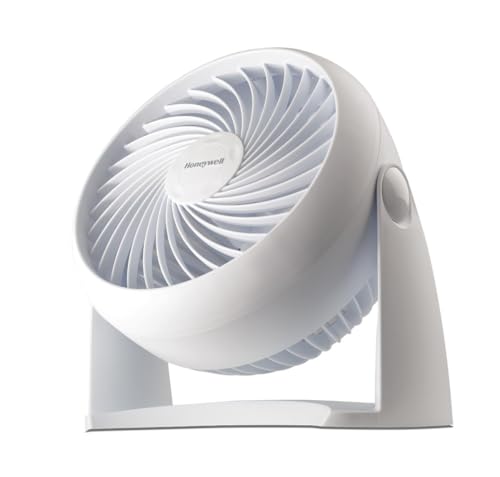
Honeywell TurboForce HT900
The Honeywell TurboForce HT900 is built as a small tabletop air circulator, but it isn’t limited to a desktop. Its size also works on a floor, shelf, nightstand, or wall, which gives it more placement flexibility than a fan designed around a fixed pedestal. That freedom matters in cramped rooms where the nearest open surface may not line up with the chair or sleeping area.
Honeywell states that this model is 25% quieter than comparable fans, a claim that directly addresses one of the biggest frustrations with compact cooling products. Small fans often rely on high blade speed, and that can create a sharp mechanical whine even when the airflow feels modest. The HT900 is intended to balance stronger circulation with a sound level that remains more manageable in offices, bedrooms, and shared spaces.
The black housing looks plain, and honestly, that’s part of the appeal. There are no decorative lights, app controls, or glossy trim pieces competing for attention. The design keeps the focus on air movement, simple controls, and flexible positioning rather than features that may sound impressive but rarely improve everyday cooling.
Compact Airflow With More Reach Than Expected
The aerodynamic TurboForce design is the central feature here. Honeywell says the fan’s airflow can be felt from up to 25 feet away, giving the HT900 more reach than its compact footprint might suggest. On a desk, that reach means the fan doesn’t need to sit inches from your face to create a noticeable breeze, which helps free up valuable space around keyboards, monitors, and notebooks.
Air circulators work a little differently from fans that simply blast air in one narrow direction. The HT900 is designed to push air through a room, helping break up stagnant pockets and distribute cooler or conditioned air more evenly. Used as a personal desk fan, it can stay focused on one spot; placed farther away, it can support broader circulation in a small or medium-sized room.
That stronger throw comes with a practical tradeoff. Papers, receipts, and lightweight desk items may shift if the fan is aimed directly across the work surface on its highest setting. Pointing the head slightly upward or placing the unit off to the side usually makes the airflow feel less aggressive while preserving the cooling reach that separates this model from weaker USB fans.
Three Speeds Keep Cooling Simple
Three speed settings provide enough adjustment for changing room conditions without turning the controls into a puzzle. The lowest speed suits mild warmth, close-range use, or moments when quieter operation matters more than maximum airflow. The middle setting adds a firmer breeze, while the highest speed is better suited to hot afternoons, stuffy rooms, or placement several feet away.
Simple controls are easy to underestimate until a fan is used every day. There’s no menu to scroll through and no remote to misplace behind a filing cabinet. A straightforward three-speed control lets the fan move from gentle circulation to stronger cooling with very little fuss, which fits the practical character of the HT900.
The fan doesn’t include oscillation, and that limitation is worth understanding before buying. Oscillation can spread air across a wider seating area, but it also means the breeze repeatedly moves away from the person who needs it. The HT900 instead supplies fixed directional airflow, making it better suited to focused personal cooling or deliberate room circulation than sweeping airflow across several desks.
A 90-Degree Pivot Changes Placement Options
The fan head pivots through a 90-degree range, so airflow can be aimed straight ahead, upward, or somewhere between those positions. That adjustment solves a common desk-fan annoyance: the base may fit perfectly, yet the airflow hits the hands instead of the upper body. Tilting the head upward can send cooling toward the face and shoulders without placing the fan on a stack of books.
Upward airflow also helps when the HT900 is used as an air circulator rather than a personal fan. Warm air tends to collect higher in a room, while conditioned air can settle or remain trapped near a vent. Directing the fan toward a wall or ceiling can encourage broader air circulation, although the result will depend on room shape, furniture placement, and where heating or cooling vents are located.
Wall mounting adds another useful option for crowded work areas. Mounting the fan keeps the desk clear and can create a better airflow angle in workshops, small offices, or bedrooms with limited furniture. Still, wall placement reduces portability, so it makes the most sense where the fan will serve one consistent spot rather than move between rooms throughout the day.
Noise Matters More Than Raw Power at a Desk
A powerful fan loses much of its value if the noise becomes distracting during calls or concentrated work. Honeywell positions the HT900 as a quiet personal fan, and the stated 25% noise reduction suggests the housing and airflow path were designed to reduce unnecessary turbulence. The actual sound will still increase with fan speed, as it does with nearly every compact air circulator.
Lower settings should be the natural starting point for close desk use. Sitting a few feet from the fan usually requires less output than cooling from across a room, and running the lowest effective speed can reduce both sound and unwanted drafts. A stable surface also matters because vibrations can turn a tolerable motor hum into an irritating desk-level buzz.
The highest speed is more likely to be heard in a quiet office, bedroom, or recording space. That doesn’t automatically make it a poor setting; it simply means stronger airflow comes with an audible cost. The HT900 makes the most sense for someone who values adjustable cooling power and can switch speeds based on the task rather than expecting silence at full output.
Energy Savings Without Inflated Promises
Honeywell suggests using the fan alongside an air conditioner to improve circulation and potentially reduce energy use. That approach is practical because a fan can make the immediate area feel cooler without lowering the entire building’s temperature. The HT900 itself doesn’t cool the air, but its moving airflow can improve comfort and help conditioned air travel beyond the area around a vent.
Actual savings will vary with climate, insulation, thermostat habits, room size, and utility rates. Running a fan while keeping the air conditioner at the same setting won’t automatically produce lower costs. The benefit appears when improved circulation allows less reliance on whole-room cooling or makes a slightly higher thermostat setting feel comfortable.
This makes the HT900 especially useful in rooms with uneven temperatures. A desk near a window may feel warmer than the rest of the office, while a bedroom corner may receive little direct airflow from the central system. A compact air circulation fan can address that local discomfort without forcing changes that affect every room in the building.
Where the HT900 Fits Best
The HT900 earns its place among best office desk fan options through focused airflow, a small footprint, and flexible positioning. It’s better suited to someone who wants a noticeable breeze than someone seeking the soft, barely perceptible airflow of a tiny USB model. The fan’s reach also makes it useful on a nearby shelf or cabinet when the desktop is already crowded.
Small and medium-sized rooms are the natural fit described by Honeywell. In a larger open office, the fan is more likely to function as personal cooling than as a whole-room solution. Its compact air circulator design can help move air within a defined area, but expecting one small unit to correct poor circulation across a large floor would be unrealistic.
Bedrooms, workshops, dorm rooms, and home offices can also benefit from the same qualities. The pivoting head helps adapt to different furniture heights, while the wall-mounting option offers a way around limited surface space. Portability remains another strength, although the HT900 is a corded fan, so each location still needs access to a suitable outlet.
Practical Strengths and Clear Limitations
The strongest qualities are easy to identify: three usable speeds, concentrated airflow, a 90-degree pivoting head, and several placement options. Those features solve common desk-cooling problems without adding complicated electronics. The fan can sit nearby for personal comfort or farther away to support circulation, giving it more flexibility than its simple appearance suggests.
The main weakness is the lack of oscillation. A fixed airflow stream works well for one chair or a carefully chosen circulation angle, but it won’t sweep evenly across a shared workspace. Anyone needing air distributed between several seats may prefer an oscillating model, even if that means accepting a larger base or less concentrated airflow.
The HT900 also isn’t cordless, so it won’t match the freedom of a rechargeable fan. Corded power does offer steady operation without battery charging or runtime limits, but cable routing can be awkward on a minimalist desk. That tradeoff favors dependable, continuous office cooling over grab-and-go portability.
Cleaning may require a little more effort than simply wiping the exterior, since compact fan grills naturally collect dust over time. Regular maintenance helps preserve airflow and keeps debris from building up around the blades and vents. A few minutes of occasional cleaning is a reasonable expectation for any small desk fan that runs through hot seasons or dusty office conditions.
SWEETFULL 6.5-Inch USB Desk Fan Review
Desk heat has a way of creeping up quietly, then wrecking concentration by midafternoon. A full-size fan may cool the room, but it can also eat up workspace, hum through calls, and push paperwork around like it has somewhere to be. The SWEETFULL model takes a lighter approach to the best office desk fan idea, using a compact frame, USB power, three speeds, and a fully adjustable head to deliver close-range cooling without turning the desk into a wind tunnel.
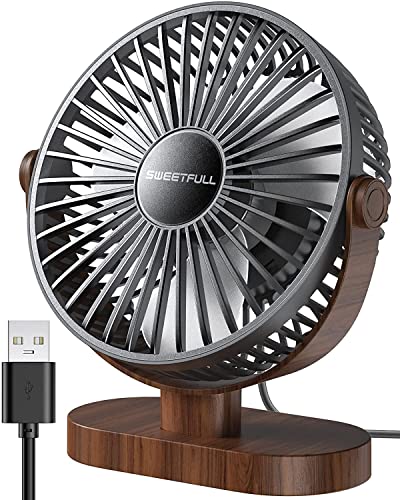
SWEETFULL USB Small Desk Fan
The first thing that stands out is the fan’s genuinely compact build. It measures 6.5 by 2.5 by 7.4 inches and weighs just 10 ounces, so it can sit beside a laptop, monitor stand, or stack of notebooks without swallowing the remaining workspace. That small footprint also makes it easy to move from a home office to a kitchen counter, car, hotel room, or camping setup.
Portability here doesn’t depend on a built-in battery. The fan runs through a 4.7-foot USB cable, which keeps the body light and avoids the long-term battery wear that often affects rechargeable models. The catch, plain and simple, is that it needs an external power source at all times, so it won’t run untethered during a power outage or away from a laptop, power bank, adapter, or vehicle charger.
The black wood-grain plastic base gives the fan a warmer look than the usual plain black office accessory. It won’t fool anyone into thinking it’s carved from timber, but the finish helps it blend with darker desks, shelves, and home-office furniture. That small visual detail matters more than it sounds when the fan stays in sight every day instead of being tucked away after summer.
Quiet Cooling for Calls and Focused Work
SWEETFULL lists the operating noise at under 25 dB, which positions this model around quiet personal cooling rather than brute-force air movement. A lower sound profile can make a real difference during video calls, reading sessions, or work that requires steady attention. Even so, the sound will naturally vary by speed, desk surface, and how close the fan sits to a microphone.
The anti-slip rubber base helps with more than stability. By reducing movement and vibration against the desk, it can limit the buzzing or rattling that sometimes makes small fans sound louder than their motors actually are. A solid wood desk will usually transmit less annoying vibration than a thin hollow table, but the rubberized base gives the fan a better starting point on either surface.
Close placement is where the quiet design makes the most sense. Since the fan is intended for personal airflow, it doesn’t need to sit across the room and run flat out just to be felt. Keeping it a few feet away and using the lowest effective setting can provide a gentler breeze while preserving the low-noise advantage that makes a compact desk fan useful during work hours.
Three Speeds Without Fussy Controls
The fan offers low, medium, and high speeds, controlled by repeatedly pressing the power button. That setup keeps the exterior clean and avoids a row of tiny switches, though cycling through the settings may feel less direct than having separate buttons. Still, the control is simple enough to use without glancing away from the screen for long.
Low speed suits mild warmth, close-range cooling, and quieter moments. Medium provides a more noticeable stream for stuffy rooms, while high is better reserved for hotter conditions or slightly greater distance. Because the fan is only 6.5 inches wide, expectations should stay realistic: it’s built to cool the immediate area, not replace a larger room circulator.
The three-level range also helps prevent the all-or-nothing problem found on cheaper single-speed fans. A breeze that feels pleasant in the afternoon may feel distracting first thing in the morning, especially if it hits the hands while typing. Being able to trim the airflow down gives the SWEETFULL fan more flexibility as a personal office fan rather than a device that simply blows at one fixed intensity.
Full-Rotation Airflow Aims Where Needed
The fan head rotates vertically from 0 to 360 degrees, allowing airflow to point forward, upward, downward, or anywhere between those positions. That wide adjustment range is unusually practical on a crowded desk because the fan’s base doesn’t have to sit directly in front of the chair. It can stay off to one side while the head angles the breeze toward the face, shoulders, or upper body.
Upward positioning can also soften the direct blast. Instead of aiming the fan straight across papers and loose receipts, tilting it above desk level lets the moving air circulate around the immediate workspace. This approach may feel less intense, but it can create a more comfortable indirect cooling effect during long sessions.
The fan doesn’t oscillate from side to side, so the airflow remains fixed once positioned. That’s useful for one workstation because the breeze won’t keep sweeping away every few seconds. Shared spaces may expose the limitation, though, since a stationary stream won’t distribute air across several seats as evenly as an oscillating desktop fan.
USB Power Adds Flexibility With One Clear Catch
USB power makes the fan compatible with desktops, laptops, power banks, AC adapters, and car chargers. That broad compatibility is handy in offices where wall outlets are already occupied by monitors, docks, lamps, and chargers. A spare computer port can keep the fan running without adding another bulky plug beneath the desk.
The 4.7-foot cable provides more placement freedom than the short cords bundled with many mini fans. It can reach a tower computer under the desk, a nearby charging hub, or a power bank tucked out of the way. Cable management still matters, of course, because a loose wire crossing the work surface can become its own irritation.
No battery is included, and the fan isn’t designed as a cordless model. That limitation deserves attention for camping, travel, or outdoor use, since a portable power bank becomes essential away from a fixed USB source. On the other hand, continuous wired operation removes concerns about limited battery runtime, charging cycles, and a rechargeable cell gradually holding less power.
Cleaning Is Easier Than on Sealed Mini Fans
Dust buildup can turn a quiet fan into a noisy one surprisingly fast. The SWEETFULL fan uses a detachable front cover, making the blades and inner grill easier to reach for routine cleaning. That access is a practical advantage over sealed compact fans that force owners to poke cotton swabs through narrow openings.
Regular cleaning helps preserve airflow as well as appearance. Dust around the blade edges can disrupt smooth air movement, while lint trapped in the grill may reduce output and create extra turbulence. A quick wipe every so often is less of a headache than waiting until the fan looks fuzzy and starts sounding rough.
The wood-grain base may show dust less aggressively than glossy black plastic, but the front grill will still collect debris in active offices or rooms with pets. Compressed air can remove loose particles, while a soft cloth handles residue once the front cover is removed. The fan should always be disconnected from power before cleaning, keeping the process simple and sensible.
Where This Small Fan Makes the Most Sense
The SWEETFULL model fits desks where space and noise control matter more than long-distance airflow. Its light weight makes it easy to shift around during the day, and the narrow profile leaves room for keyboards, notebooks, coffee mugs, and charging gear. It’s particularly practical where central cooling feels uneven or where one warm corner needs attention without changing the temperature for the entire room.
Travel is another reasonable use, provided a USB power source is available. At 10 ounces, the fan adds little weight to a bag and takes up less space than most traditional tabletop models. A power bank can support use in a tent, parked vehicle, or outdoor seating area, although the fan itself should be protected from moisture and rough handling.
Larger rooms expose the natural limit of the design. This isn’t a floor fan, whole-room circulator, or substitute for air conditioning in heavy heat. Its value comes from creating a focused pocket of airflow around one seat, which is often enough to make desk work feel less sticky without introducing much noise or clutter.
Strengths, Tradeoffs, and Daily Usability
The biggest strengths are the compact dimensions, stated sub-25 dB operation, three-speed adjustment, and 360-degree vertical rotation. Together, those features solve the most common personal-cooling problems: limited desk room, distracting fan noise, poor airflow angle, and inflexible speed. The detachable cover also makes upkeep less annoying than it is with many miniature fans.
The tradeoffs are just as clear. There’s no battery, no side-to-side oscillation, and no claim that the fan will circulate air across a large room. Anyone expecting cordless freedom or broad cooling coverage may outgrow it quickly, while someone wanting a steady breeze at arm’s length may appreciate the simpler design.
The single-button speed control could also require a little patience because moving from one level to another means cycling through the available settings. That’s hardly a deal breaker, but separate controls would make instant adjustments more direct. Even so, the uncomplicated layout supports the fan’s role as a straightforward USB desk fan rather than another gadget demanding setup, pairing, or menu navigation.
As a candidate for the best office desk fan, the SWEETFULL succeeds by staying focused on personal comfort. It won’t cool a conference room or replace a larger circulator, and it doesn’t pretend to. What it offers is quieter close-range airflow, flexible positioning, easy USB compatibility, and a body small enough to fit where a bulky fan simply becomes a nuisance.
Honeywell HT-904 TurboForce Desk Fan Review
A stuffy corner can make even a tidy workspace feel harder to tolerate. Lowering the thermostat for one warm desk wastes energy, while a bulky floor fan often creates more clutter than comfort. The Honeywell HT-904 takes a practical route toward the best office desk fan, pairing concentrated airflow with a compact white housing, three speeds, and a head that pivots through 90 degrees.
Honeywell TurboForce HT-904
The HT-904 is small enough to sit on a desk, table, shelf, or floor without demanding much room. It can also be wall-mounted, which is handy when every inch of the work surface is already claimed by monitors, notebooks, cables, and coffee cups. That flexible placement gives the fan more staying power than a desktop-only model with a fixed stand.
Honeywell describes the HT-904 as suitable for small to medium-sized rooms, though its most convincing role is focused personal cooling and purposeful air circulation. Sitting nearby, it can deliver a direct stream toward a chair. Positioned farther away, it can help move conditioned air through a room that feels uneven or stagnant.
The white finish gives the unit a lighter, less industrial appearance than the familiar black version. It blends more naturally with pale desks, bedroom furniture, and bright home-office setups, though white plastic can make dust easier to spot. Style isn't the main event here, but a fan that stays visible all summer shouldn't look wildly out of place.
TurboForce Airflow Packs a Stronger Throw
The aerodynamic TurboForce design is meant to maximize air movement and reach rather than produce a weak breeze directly in front of the grill. Honeywell states that airflow can be felt from up to 25 feet away, giving this compact fan more practical range than many tiny USB models. That distance claim comes from the supplied product information, not independent room testing.
At a desk, extra reach means the fan doesn't have to sit beside the keyboard or blast air straight into the face. It can rest on a cabinet, shelf, or corner of the work surface while still sending a noticeable stream toward the chair. That setup preserves desk space and cuts down on the nuisance of papers fluttering every time the fan runs.
Air circulators also help address stubborn temperature pockets. A vent may cool one side of the room while leaving the desk near a sunny window warm and stale. Aiming the HT-904 across that gap can encourage broader circulation, although the fan moves existing air rather than lowering its temperature.
Strong directional output brings a tradeoff, of course. Lightweight receipts, sticky notes, and loose documents may shift on the higher setting if the fan points directly across the desk. Tilting the head slightly upward often keeps the cooling effect while sparing the paperwork from an unexpected trip across the room.
Three Speeds Cover Different Workday Moods
The HT-904 offers three fan speeds, enough to move between mild circulation and a firmer cooling stream without piling on complicated controls. Low speed suits close-range use, cooler mornings, or tasks where background sound needs to stay subdued. Medium and high provide more force for warmer afternoons or placement farther from the chair.
Simple controls fit the fan's no-nonsense personality. There are no apps, digital displays, timers, or remote controls to set up and eventually forget about. Adjust the speed, point the head, and get back to work without turning personal cooling into another device-management chore.
The strongest setting won't be the right answer for every situation. More airflow generally brings more audible fan noise, and a breeze that feels refreshing from across a room may feel harsh from two feet away. The practical move is using the lowest setting that delivers enough personal comfort for the current distance and room temperature.
Three settings also make the fan easier to share between different spaces. A quiet bedroom may call for the lowest speed, while a warm workshop or sunlit office can justify more output. That range doesn't make the HT-904 endlessly adjustable, but it avoids the frustrating all-or-nothing behavior of a single-speed fan.
The 90-Degree Head Solves Awkward Angles
A fan can have plenty of power and still feel useless if the airflow lands on the wrong spot. The HT-904 uses a 90-degree pivoting head that can aim straight ahead or tilt upward through several working angles. That adjustment helps send air toward the upper body instead of chilling the hands while typing.
Placing the fan low and pointing it upward is especially helpful on crowded desks. The base can stay beneath a monitor shelf or beside a computer tower while the breeze rises toward the chair. Used that way, the unit takes up less prime surface area without wasting its directional airflow.
The pivot also supports indirect circulation. Aiming the fan toward a wall or ceiling can disperse the airflow rather than concentrating it on one person. The result may feel softer, but it can help stir still air in a small room and reduce the sensation of sitting in a warm pocket.
Side-to-side oscillation isn't included, so the HT-904 won't sweep air across multiple seats. Fixed airflow is often preferable at a personal workstation because the cooling doesn't repeatedly wander away. A shared office or meeting space, however, may benefit more from an oscillating fan designed to spread air across a wider area.
Quiet Operation Still Depends on Placement
Honeywell describes this model as providing cooling with quiet operation, an important point for calls, reading, writing, and focused computer work. Compact fans can sound surprisingly sharp when their motors and blades spin quickly, so a less intrusive sound profile is a meaningful advantage. The actual noise will still vary by selected speed and the surface beneath the fan.
Desk vibration often causes more irritation than steady airflow noise. A fan resting on a lightweight hollow table can transmit a low buzz that seems louder than the motor itself. Setting the HT-904 on a sturdy, level surface helps limit that issue and keeps the housing from shifting as the blades run.
Microphone placement deserves some thought during video meetings. Even a relatively quiet fan can create noticeable wind noise if it blows directly across a laptop or headset microphone. Angling the head away from the mic while directing air toward the shoulders can preserve cooling comfort without making every call sound breezy.
Full-speed operation is unlikely to disappear into a silent room. That's the basic bargain with a compact fan designed to throw air across a meaningful distance. The HT-904 makes more sense for someone willing to balance airflow strength and sound than for a recording environment where near-silence outranks cooling power.
Wall Mounting Frees Valuable Surface Space
The option to wall-mount the HT-904 separates it from many ordinary tabletop fans. A mounted fan leaves the desk open and can deliver airflow from above, where monitors and paperwork won't block the stream. Small offices, workshops, dorm rooms, and compact bedrooms can benefit from that space-saving setup.
Permanent placement isn't always the smartest route, though. Once mounted, the fan loses the easy portability that makes a compact circulator useful around the home. Keeping it freestanding is better when the unit moves from an office during the day to a bedroom or living space later on.
Wall positioning also requires a sensible angle and access to power. Mounting the fan too high or too far to one side can waste much of its directional output, even with the pivoting head. The cord must reach an outlet safely without stretching across a walkway or hanging where it can be snagged.
Supporting Air Conditioning Without Hype
Honeywell suggests using portable fans to improve airflow and reduce reliance on air conditioning. The logic is straightforward: a fan can make a person feel cooler and distribute conditioned air more effectively without forcing the thermostat lower for the entire building. That localized cooling approach can be practical in rooms where only one area feels uncomfortable.
Savings aren't automatic, and they shouldn't be treated as a guarantee. Energy use depends on climate, insulation, room layout, thermostat settings, local rates, and how the fan changes cooling habits. Running both devices exactly as before simply adds the fan's power consumption to the existing load.
The better use is strategic circulation. A fan placed near a vent can help push cool air toward a distant desk, while one angled across a warm room can reduce stagnant zones. Used thoughtfully, the HT-904 may let the air conditioner work less aggressively while keeping the immediate area comfortable.
The same principle applies during cooler seasons. Pointing the fan upward can help mix warm air that collects near the ceiling, although placement and room geometry will affect the result. That year-round air circulation value gives the unit more utility than a device used solely for a direct summer breeze.
Maintenance Is Simple but Still Necessary
Compact fan grills collect dust, lint, and pet hair whether the fan runs daily or sits between seasons. That buildup can restrict smooth airflow and add roughness to the operating sound. Regular surface cleaning helps the fan keep moving air without waiting for a visible layer of debris to form.
The fan should be unplugged before any cleaning begins. A soft cloth can handle the housing, while a vacuum brush or compressed air can loosen dust around the grill. Liquid cleaners shouldn't be sprayed directly into the motor housing, since moisture and electrical components don't mix.
White plastic makes maintenance needs easy to notice. Dust may show sooner than it would on a black model, but that visibility can be useful because it encourages cleaning before buildup becomes stubborn. A tidy grill also fits better in an office where the fan remains on display beside other equipment.
Practical Strengths and Honest Limits
The HT-904's strongest points are its compact size, three-speed control, 90-degree pivot, wall-mounting capability, and stated 25-foot airflow reach. Those features tackle common office frustrations without unnecessary electronics or a bulky footprint. It can sit close for personal cooling or farther away for directed circulation.
The absence of oscillation is the clearest limitation. A stationary stream suits one seat, but it won't spread airflow evenly across a shared table or broad room. Anyone needing a sweeping breeze may prefer a larger oscillating model, even if that alternative takes up more space.
This is also a corded fan, so placement depends on outlet access. Corded operation offers steady runtime without battery charging, yet it can't match the grab-and-go freedom of a rechargeable desk fan. Cable routing may need a little attention on a minimalist workspace where visible cords quickly become annoying.
Room expectations should stay grounded. The product information describes cooling for small to medium spaces, but a fan this size won't replace central air or a large floor circulator during heavy heat. Its sweet spot is focused office cooling, targeted airflow, and support for existing heating or cooling systems.
Among best office desk fan candidates, the Honeywell HT-904 favors usable power over miniature portability. It's larger and more forceful than a tiny USB fan, yet compact enough to avoid dominating a typical desk. The combination makes sense where steady airflow, adjustable direction, and uncomplicated daily operation matter more than cordless use or decorative extras.
Gaiatop USB Desk Fan Review
A crowded workstation leaves little patience for another bulky appliance fighting for elbow room. Heat still builds around a laptop, though, and stale air can turn a focused afternoon into a fidgety mess. The Gaiatop model approaches the best office desk fan role with a sub-eight-ounce body, USB power, three speeds, and a modest tilting range designed for close personal cooling.
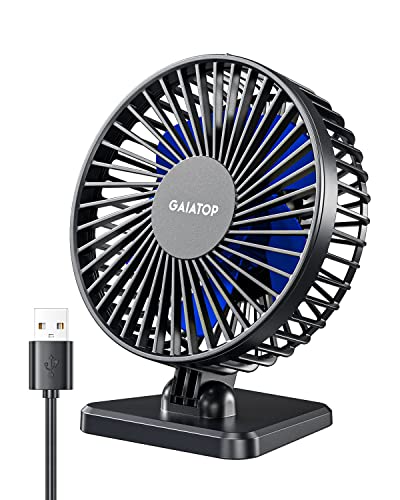
Gaiatop USB Desk Fan
The Gaiatop USB Desk Fan sticks to a familiar circular design, only scaled down for tight surfaces. Weighing less than eight ounces, it can sit beside a monitor, on a narrow shelf, or near a car console without feeling like permanent furniture. That low weight also makes it easier to toss into a work bag when the next desk, room, or hotel has questionable airflow.
Small dimensions solve a real problem rather than serving as a decorative talking point. Full-size fans can block screens, occupy mouse space, or force notebooks into awkward corners, while this model is intended to leave most of the work surface alone. The tradeoff is equally clear: a compact personal fan concentrates cooling around one seat rather than circulating air through a large office.
The blue finish adds a little personality without changing the straightforward layout. There’s no display, remote, timer, or app connection competing for attention. For a device that may run beside a keyboard for hours, that simple design keeps daily use pleasantly uncomplicated.
Small Footprint With Focused Cooling
Close-range airflow is the natural job for a fan this size. Set a short distance from the chair, it can move air across the face, neck, or upper body without requiring the whole room to be cooled. That personal cooling zone is especially useful when a shared thermostat feels comfortable to everyone except the person sitting beside a warm window or heat-producing computer.
Placement matters quite a bit. Sitting too close to the keyboard may send receipts and sticky notes skittering, while moving the unit too far away can weaken the breeze before it reaches the chair. A spot beside the monitor, angled slightly upward, usually makes more practical sense than pointing the grill straight across the desktop.
The lightweight frame helps with portability but may also make surface stability more noticeable. A hard press on the control or a tug on the cable can shift a small fan more easily than a heavier circulator. Keeping the USB cord relaxed rather than stretched tight protects the airflow angle from being knocked out of place.
Three Speeds Handle Changing Temperatures
Low, medium, and high settings provide a useful range for a miniature fan. Low speed suits mild warmth and close placement, while medium adds a firmer stream for stuffy afternoons. High delivers the strongest available air movement, although it will naturally be more noticeable to the ear.
Speed changes are handled by repeatedly pressing the power button. That single-button arrangement keeps the housing tidy, but it means stepping through the sequence instead of jumping directly from high to low. A separate control for each setting would be quicker, yet the current setup remains easy to understand after one use.
Three levels prevent the fan from becoming an all-or-nothing appliance. A strong breeze may feel welcome after walking in from summer heat, then become distracting once the room settles. Dropping to a gentler setting preserves steady comfort without forcing the fan off entirely.
Noise Stays Reasonable but Not Silent
Gaiatop states that operating noise remains below 50 dB, including while the fan provides stronger airflow. That figure suggests a sound level intended to remain manageable during ordinary work and rest. It shouldn't be mistaken for silence, particularly on high speed or in an otherwise hushed room.
Distance changes how intrusive the sound feels. A fan inches from a laptop microphone may be picked up more clearly than the same unit placed at the far side of the desk. Angling airflow away from the microphone can reduce wind interference while keeping the breeze directed toward the shoulders.
The surface underneath the fan can influence perceived noise as well. Thin tables sometimes amplify vibration, turning a mild motor sound into an annoying desk buzz. A firm, level surface or a small cushioning pad may help preserve the fan's quieter character during calls and concentrated work.
A 30-Degree Tilt Offers Basic Direction Control
The head rotates vertically through a 0-to-30-degree range, allowing some adjustment without moving the entire base. That tilt is enough to raise the airflow from hand level toward the upper body in many desk arrangements. It isn't a full-rotation design, so unusual placement angles may require repositioning the fan itself.
A limited pivot can actually keep setup simple. The head won't swing backward or spin through an unnecessary range while being adjusted. Still, a taller monitor stand or a very low shelf may expose the limitation if the breeze needs to travel at a steep upward angle.
Side-to-side oscillation isn't listed among the supplied features. The fan therefore produces a fixed stream of air rather than sweeping across several seats. That suits a personal workstation, but a shared table or wider room may call for an oscillating model with broader coverage.
USB Power Works Across Everyday Setups
USB power gives the fan broad compatibility with laptops, desktop computers, power banks, wall adapters, and car chargers. That flexibility reduces dependence on a traditional outlet, particularly where every socket is already occupied by office equipment. A spare USB port can support continuous desk cooling without adding another bulky plug beneath the table.
No built-in battery is described in the supplied information, so the fan needs a connected power source while running. That limits true cordless freedom outdoors or during travel, but it also removes concerns about charging cycles and an internal battery losing capacity over time. A power bank fills the gap where a fixed USB source isn't available.
Power output can vary between USB sources. A dependable wall adapter or powered hub may provide steadier operation than an older, low-output computer port. If the fan seems weaker in one location, the USB power source may be the culprit rather than the fan itself.
Portable Enough for Work, Cars, and Travel
The sub-eight-ounce weight makes this fan easy to move between a home office, workplace, car, or temporary travel setup. It occupies far less bag space than a conventional tabletop fan and doesn't add much carrying weight. That portability is useful where cooling needs change throughout the day instead of staying tied to one room.
Car use depends on sensible placement and a compatible USB charger. The fan should sit where it won't interfere with controls, visibility, or airbags, and its cable needs to stay clear of pedals and moving parts. Used carefully, the compact frame can provide localized airflow in parked or stationary settings.
Outdoor use also requires realistic expectations. The fan can run from a power bank, but a small breeze may be overwhelmed by open-air heat or natural wind. It should also remain protected from rain, damp ground, and blowing debris because the supplied description doesn't indicate weather-resistant construction.
Practical Strengths for an Office Desk
The strongest appeal lies in the combination of minimal desk space, three-speed control, USB compatibility, and easy portability. Those features tackle everyday annoyances without adding software, charging docks, or elaborate controls. The fan is ready once connected, which suits a workspace where equipment should fade into the background.
Focused airflow can also reduce arguments over the thermostat. Instead of lowering the temperature for an entire room, the fan directs moving air toward the warmest seat. It doesn't actually chill the air, but the local breeze can make a stuffy desk feel more tolerable without changing conditions for everyone nearby.
The simple build may appeal more than feature-heavy alternatives, provided expectations stay grounded. There is no supplied indication of oscillation, cordless operation, remote control, or whole-room circulation. Its job is narrower: provide an adjustable breeze within close range and take up very little room while doing it.
Limitations Worth Weighing Before Buying
The 30-degree tilt range is modest compared with fans that rotate through 90 or 360 degrees. It offers enough movement for ordinary tabletop placement, but it won't solve every awkward angle. A desk with tall equipment or limited positioning options may need a model with a wider pivot.
Noise below 50 dB may be acceptable in a regular office, yet sound-sensitive work calls for caution. Audio recording, meditation, or an extremely quiet bedroom may expose motor and airflow noise that disappears into normal daytime background sound. High speed will usually make the compromise more obvious.
The fan's small scale also limits room coverage. It can cool the immediate workspace, but it isn't designed to replace a larger circulator in a spacious office or tackle heavy indoor heat by itself. Choosing it as the best office desk fan makes the most sense when portability and personal airflow matter more than long-distance power.
Everyday Use Without Unnecessary Fuss
Daily operation boils down to connecting the USB cable, choosing a speed, and adjusting the head. That straightforward routine is a relief when the desk already holds enough devices demanding updates, passwords, and charging schedules. The Gaiatop fan behaves more like a basic tool than another piece of technology competing for attention.
Dust will eventually collect around the grill and blades, as it does on any fan. Regular exterior cleaning helps protect consistent airflow and keeps debris from becoming visible against the blue housing. The unit should be disconnected from power before cleaning, and moisture should be kept away from the motor area.
The fan fits best where cooling needs are modest but persistent: a warm cubicle, a laptop-heavy workstation, a bedside table, or a temporary travel desk. It won't sweep air across a team meeting or cool a whole room from the corner. Within its intended range, though, the lightweight USB design offers a practical way to make one seat feel less stuffy without surrendering much space.
FRONTSUN 100-Speed Rechargeable Desk Fan
Stale air can make a tidy workspace feel oddly exhausting, especially once screens, chargers, and afternoon heat begin warming the immediate area. A small fan helps, but basic models often jump from barely noticeable airflow to an overly sharp blast with little room in between. The FRONTSUN model enters the best office desk fan conversation with 100 speed levels, a rechargeable design, a digital display, quiet operation, dual-stage turbo airflow, and a head that tilts through a full 360 degrees.
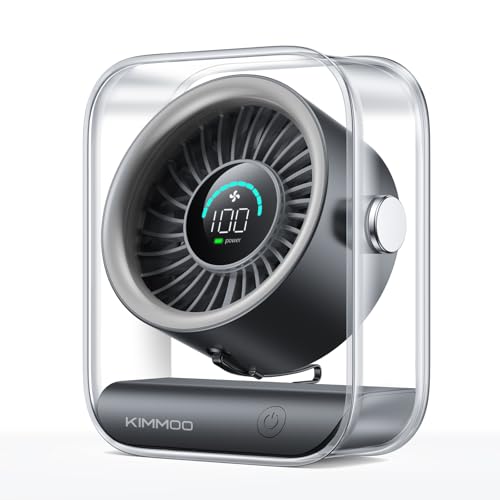
FRONTSUN Portable Desk Fan
The FRONTSUN fan takes a more adjustable approach than the usual three-speed desktop model. Its defining feature is 1-to-100 stepless speed control, which allows much finer changes between a faint breeze and stronger airflow. That range can be especially useful during long work sessions because comfort rarely stays fixed from morning through late afternoon.
A clear digital display shows the selected speed and remaining battery status. That visual feedback removes the guesswork common with single-button fans, where users have to remember which setting comes next in the cycle. The real-time display also helps at night because the current setting can be checked without relying on sound or repeated button presses.
The fan is designed for desks, shelves, nightstands, kitchens, dorm rooms, and travel setups. Its compact form keeps it from dominating a small surface, while the rechargeable format removes the need to stay attached to a wall outlet during use. Portability is one of its biggest practical strengths, though actual runtime will depend on the chosen speed and battery capacity, which weren’t specified in the supplied information.
One Hundred Speeds Offer Precise Control
Most personal fans provide three or five settings, and that can feel surprisingly limiting. Low may be too weak, medium may already feel distracting, and high can send loose notes skating across the desk. The FRONTSUN fan’s 100-level adjustment makes it possible to settle on a narrower comfort zone instead of accepting a big jump between preset speeds.
Fine control also suits changing distances. A fan sitting beside the keyboard may only need a low setting, while placement on a shelf or across a larger desk may call for more force. Rather than moving the unit every time the room warms up, the airflow can be increased gradually until the breeze reaches the chair comfortably.
The control system is described as using touch-sensitive buttons or a stepless control knob. That arrangement should feel more direct than repeatedly cycling through a short list of speeds, particularly when moving from a high setting back to a quiet one. The precision control is the feature that most clearly separates this model from simpler rechargeable fans.
More settings don’t automatically mean every level will feel dramatically different. Adjacent speeds may produce subtle changes, and some people may prefer the simplicity of three obvious options. Still, anyone bothered by fans that are either too weak or too aggressive may appreciate having enough range to fine-tune the airflow instead of settling for close enough.
Quiet Operation Supports Focus and Rest
The supplied description lists operating noise as low as 30 decibels. That figure applies to the fan’s quieter operation rather than every speed, since stronger airflow generally creates more blade and air noise. At lower settings, the fan is intended to sit in the background during office work, reading, studying, or sleep.
A brushless motor is used to support quieter and smoother operation. Brushless designs typically reduce mechanical friction compared with brushed motors, which can help limit unnecessary buzzing and wear. The practical benefit is a less intrusive sound profile during calls or focused tasks, though desk surface and placement can still affect how loud the unit seems.
Microphone position deserves attention in a work setup. Even a quiet fan may create wind noise if the airflow crosses directly in front of a laptop or headset microphone. Tilting the fan toward the shoulders while keeping it off to one side can preserve cooling without adding an airy hiss to every conversation.
High-speed use will naturally be easier to hear than low-speed operation. The fan’s wide adjustment range makes that tradeoff easier to manage because strong airflow doesn’t have to be the default. A setting somewhere between a whisper and full output may provide the best balance of cooling and concentration for ordinary desk work.
Dual-Stage Turbo Airflow Adds More Reach
FRONTSUN describes the fan as using dual-stage turbocharging technology to increase airflow through the blade structure. The goal is to create a stronger, more concentrated column of moving air than a basic compact fan. That focused stream can help the breeze reach farther across a desk or small room instead of fading immediately outside the grill.
The description refers to the fan as blowing cold air, but the distinction matters: a conventional fan moves room air rather than refrigerating it. The cooling sensation comes from increased air movement across the skin and from helping stagnant warm air disperse. That can still feel significantly better, yet the fan won’t lower room temperature in the same way as an air conditioner.
Stronger airflow gives the fan more flexibility, though it may also create a harsher direct breeze at close range. Placing the unit a little farther away or aiming it upward can soften the effect while retaining circulation. The columnar airflow is most useful when the fan needs to work from a shelf, nightstand, or the far corner of a crowded workstation.
Claims that it performs like a larger circulating fan should be viewed with realistic expectations. A compact desktop model may deliver impressive personal airflow, but room size, furniture, and distance will influence its reach. Its most credible role is strong localized cooling with some support for nearby air circulation, not replacing a full-size circulator in a large room.
The Digital Display Makes Settings Easy to Read
The high-definition LED display shows both fan speed and battery status. That combination is useful because speed affects not only comfort but also how quickly a rechargeable fan uses its stored power. Seeing the battery level helps prevent the unpleasant surprise of the fan shutting down halfway through a warm meeting.
A numerical readout also makes preferred settings repeatable. Once a comfortable level is identified, returning to it is easier than judging airflow by feel every time the fan starts. Someone might settle near a low number for quiet desk work and raise it substantially during cooking, exercise, or hotter afternoon conditions.
The display adds a more modern look, but it may not suit every bedroom or dark workspace. Any illuminated screen can become noticeable at night, depending on brightness and whether it remains continuously lit. The supplied details don’t specify whether the display dims or switches off, so light-sensitive sleepers should keep that uncertainty in mind.
Full 360-Degree Tilt Improves Placement
The fan head offers 360-degree vertical tilt and is designed to lock at the chosen angle. That range provides considerably more positioning freedom than models limited to a shallow upward adjustment. The base can remain on a low shelf or crowded desk while the airflow points toward the face, shoulders, ceiling, or another part of the room.
Indirect airflow becomes easier with a full tilt range. Aiming the fan upward can circulate air without blasting directly across the keyboard, eyes, or loose paperwork. Pointing it toward a wall may also soften the breeze, creating a less aggressive cooling effect during long periods of use.
The fan doesn’t appear to include automatic side-to-side oscillation in the supplied description. Its adjustment is manual, so the airflow remains focused once the angle is set. That fixed directional stream suits one workstation well, although it won’t spread air between several people without being repositioned.
A locking hinge matters because poorly supported fan heads can gradually droop as they run. The stated ability to hold any angle should reduce that annoyance and keep airflow where it was intended. Long-term hinge firmness can’t be judged from the provided specifications alone, but the broad adjustment range is still a meaningful design advantage.
Rechargeable Power Reduces Cable Clutter
Battery operation allows the fan to run without remaining tethered to a nearby outlet. That freedom can tidy up a desk already crowded with laptop chargers, monitor cables, and phone cords. It also makes the portable fan easier to move between an office, bedroom, kitchen, dorm, or temporary travel setup.
Rechargeable operation is particularly useful where outlets are awkwardly placed. The fan can sit at the angle that delivers the best airflow rather than wherever the cable happens to reach. A shelf, side table, or outdoor seating area becomes a viable location, provided the fan is kept away from moisture and unsuitable weather.
Battery-powered convenience comes with a familiar tradeoff. Higher speeds generally use more power, so maximum airflow is unlikely to last as long as gentle operation. Since the supplied description doesn’t state battery capacity, charging time, or runtime, those details shouldn’t be assumed.
A rechargeable battery also adds long-term maintenance considerations. Battery capacity usually declines gradually with repeated charging cycles, even when the fan itself continues working normally. The advantage is cordless flexibility; the downside is that battery health eventually becomes part of the product’s usable lifespan.
Office Use Reveals Its Strongest Advantages
The fan’s strongest office feature is the combination of quiet low-speed operation and unusually precise adjustment. A shared workspace may not tolerate a roaring tabletop fan, yet a warm desk still needs relief. Setting the airflow just high enough to feel comfortable can reduce distraction for both the person using it and anyone sitting nearby.
The compact footprint helps preserve room for actual work. A fan can become irritating if its base forces the mouse, notebook, or coffee cup into an awkward position. This model is intended to fit neatly on desks and shelves, making it easier to position the breeze without surrendering a large patch of surface space.
Battery status on the display is also useful during meetings or study sessions. A quick glance reveals whether charging will be needed soon, while the visible speed number makes adjustments predictable. Those small conveniences create a smoother routine than guessing at battery life and cycling blindly through preset levels.
Among best office desk fan options, the FRONTSUN model leans toward customization rather than bare-bones simplicity. It offers more control and information than a typical three-speed USB fan, but that also means more electronics and a busier interface. The better fit depends on whether fine control feels useful or unnecessary.
Useful Beyond the Desk
Kitchen use makes sense because heat can build quickly around a stove or sink. A rechargeable fan can sit away from crowded outlets and aim airflow toward a nearby prep area. It should remain clear of steam, grease, splashes, and open flames because no water-resistance rating was provided.
A nightstand is another logical location, particularly with the fan set near its quieter range. The 360-degree tilt can direct air above the bedding or toward the upper body without placing the base at an awkward angle. The display brightness remains a possible drawback in a dark room, depending on how the screen behaves during operation.
Dorms and temporary living spaces often have limited outlets and uneven airflow. The rechargeable design allows the fan to move between a study desk and sleeping area without constant cable rearrangement. Its compact size also makes storage easier where shelves and drawers are already packed.
Tradeoffs Worth Considering
The biggest limitation is the missing battery detail. Runtime, charging duration, battery capacity, and charging method all affect how convenient a rechargeable fan feels in practice. Without those specifications, the safest expectation is that runtime will vary by speed and frequent high-power use will require more regular charging.
The 100-speed system may feel excessive to someone who simply wants low, medium, and high. Fine increments improve control, but they can also add needless fiddling if only a handful of levels ever get used. The digital interface is a strength for precision-minded use and a complication for anyone who prefers one physical switch.
Powerful personal airflow shouldn't be confused with whole-room climate control. The fan can move warm air and create a cooling sensation, but it can’t produce refrigerated air. Heavy heat, large spaces, and high humidity may still require stronger ventilation or air conditioning.
The FRONTSUN fan stands out through stepless speed control, a readable display, quiet low-speed operation, rechargeable portability, turbo-focused airflow, and a full tilt range. Those features address common frustrations such as noisy motors, limited angles, coarse speed choices, and constant cable dependence. Its value is strongest where precise personal cooling matters more than automatic oscillation or large-room coverage.


Best Quiet Ceiling Fan For Bedroom 2026 Ultimate Comfort Picks

Best Ceiling Fan For Master Bedroom 2026 With Ultimate Comfort

Best White Ceiling Fan With Light For Bedroom 2026 Top Picks

Best Quorum Medallion Ceiling Fan 2026 With Style & Breeze
Best Outdoor Fan For Pergola 2026 Comfort Boost

Best Ceiling Fan For Great Room 2026 With Ultimate Comfort

Best Outdoor DC Ceiling Fans 2026 For Breezy Comfort
Best ceiling exhaust bath fan with light and heater 2026





