
Best Portable Fans For Cars 2026 Cool Cabin Picks

Best portable fans for cars solve a small but stubborn problem: trapped heat that lingers even after the AC starts blowing. A compact fan can move stale air out of corners, help cool the back seat faster, and make slow traffic feel less like sitting inside a toaster. That matters during errands, school runs, lunch breaks, or long drives where the cabin never quite feels even. The right fan won’t replace air conditioning, but it can make the ride feel more balanced and less stuffy.
Car cabin airflow gets tricky because vents don’t always reach every seat well. Rear passengers, pets in carriers, and gear-packed cargo areas often sit in dead zones where air barely moves. A clip-on or USB-powered fan helps push cooler air toward those spots without hogging space. Still, size matters, because a fan that’s too large can block visibility or become annoying on bumpy roads.
Power source should be the first thing to check before buying. USB fans are easy to run from a car charger, power bank, or built-in port, while rechargeable models are handy when the engine is off for a short stop. Battery fans feel more flexible, but they need charging habits that don’t get forgotten. Corded models can be more dependable on longer drives, as long as the cable reaches cleanly without dangling across controls.
Mounting style changes the whole experience. Clip fans work well on headrests, sun visors, and small interior edges, but weak clips can rattle or slip. Dashboard fans may give stronger front-seat airflow, though they need a stable base and shouldn’t sit where sunlight can loosen adhesive. Flexible neck designs are useful, but too much bend can make cheaper fans wobble like crazy after a few weeks.
Noise level deserves more attention than most buyers give it. A fan that sounds fine in a room can feel irritating in a quiet car, especially during phone calls or late-night drives. Lower speeds are usually more comfortable for steady airflow, while high speeds are better for quick cooldowns after the car has been sitting in the sun. A practical fan should give enough control so the breeze doesn’t turn into a buzzing distraction.
Blade safety matters inside a tight cabin. Covered blades, soft edges, and sturdy grilles help prevent finger taps, fabric snags, or curious little hands from getting too close. Open-style mini fans may move air well, but they’re not always the smartest pick for cramped back seats. A solid grille also keeps loose receipts, napkins, and pet hair from becoming a small road-trip headache.
Realistic expectations keep the purchase honest. A portable car fan won’t cool hot air by itself, and it won’t beat direct sunlight on a 95-degree afternoon. It works best as an airflow helper, especially alongside AC, cracked windows before driving, sunshades, and smart parking habits. Pick one with stable mounting, easy power, and low-noise airflow, and it’ll earn its place without feeling like another piece of clutter.

- LFR Score9.2
LFR Score is a ranking system developed by lightfansreviews.com. LFR Score has no relationship or impact from any manufacturers or sales agent websites. Learn more
- BrandKoonie

- LFR Score9.2
LFR Score is a ranking system developed by lightfansreviews.com. LFR Score has no relationship or impact from any manufacturers or sales agent websites. Learn more
- BrandGaiatop

- LFR Score9.0
LFR Score is a ranking system developed by lightfansreviews.com. LFR Score has no relationship or impact from any manufacturers or sales agent websites. Learn more
- BrandIriQuart

- LFR Score8.6
LFR Score is a ranking system developed by lightfansreviews.com. LFR Score has no relationship or impact from any manufacturers or sales agent websites. Learn more
- BrandHayousui

- LFR Score8.4
LFR Score is a ranking system developed by lightfansreviews.com. LFR Score has no relationship or impact from any manufacturers or sales agent websites. Learn more
- BrandPelidox

- LFR Score8.4
LFR Score is a ranking system developed by lightfansreviews.com. LFR Score has no relationship or impact from any manufacturers or sales agent websites. Learn more
- BrandTriPole

- LFR Score7.8
LFR Score is a ranking system developed by lightfansreviews.com. LFR Score has no relationship or impact from any manufacturers or sales agent websites. Learn more
- BrandKIMMOO
- LFR Score7.2
LFR Score is a ranking system developed by lightfansreviews.com. LFR Score has no relationship or impact from any manufacturers or sales agent websites. Learn more
- BrandUwqaqx
Last update on 2026-06-24 / Affiliate links / Images, Product Titles, and Product Highlights from Amazon Product Advertising API
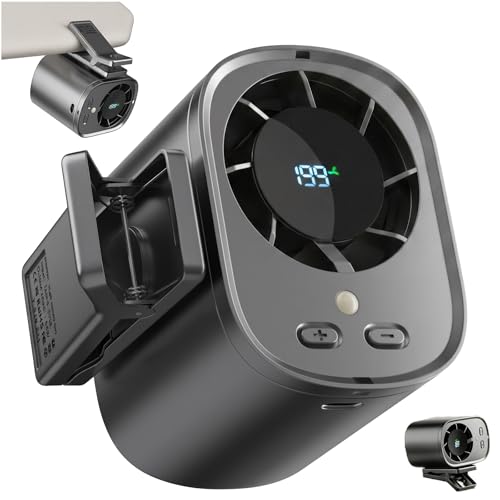
Koonie Clip Fan For Cars
A parked cabin can feel stuffy long after the dashboard vents start doing their thing, especially around the back seat, cargo area, or a sunny windshield corner. That’s where best portable fans for cars become more than a little comfort gadget, and the Koonie Clip Fan For Cars makes a practical case with its rechargeable build, 8-inch blades, and strong clamp. It doesn’t pretend to replace air conditioning, but it does help move air into stubborn spots where factory vents often fall short.
Koonie 8-Inch Clip Fan
The Koonie 8-Inch Clip Fan feels built around one simple idea: airflow should go where the car’s vents don’t. Its 3-inch clamp gives it more placement freedom than a basic dashboard fan, so it can sit on a headrest post, a desk edge, a treadmill frame, or a nightstand without needing a flat surface. That matters because portable car cooling often depends less on raw fan size and more on whether the breeze can be aimed at the right sweaty little corner.
The 8-inch blade size gives this fan a larger breeze profile than tiny personal fans that mostly cool one cheek and call it a day. Three blades and four speed choices, including an energy-saving setting, give it some range for different cabin moods. A gentle setting can help with steady circulation, while a stronger setting makes more sense after the car has been baking in the sun. The tradeoff is obvious, though: bigger airflow also means a larger fan body to place carefully inside a tight vehicle.
The clip-and-desk design gives the Koonie fan a useful second life outside the car. It can sit on a table during camping, clip near a stroller, or help move air around a workout area. That flexibility makes it easier to justify than a car-only gadget that spends half the year buried under receipts and jumper cables. Still, for small cabins, placement discipline matters because an 8-inch fan should never block visibility or crowd driving controls.
Battery Life And Charging Feel Practical
The 10000mAh rechargeable battery is the headline feature, and for good reason. Koonie states the fan can last up to 24 hours on a full charge, depending on speed and use, which makes it useful for errands, camping setups, golf carts, stroller walks, and parked downtime. That long battery promise removes the constant cord drama that can make small car accessories feel messy. For best portable fans for cars, fewer dangling cables often means fewer little annoyances during normal driving.
Fast charging support adds another sensible layer. The fan supports 5V-2A charging and can be fully charged within 6 hours, based on the provided product details. Dual charging ports, including Type-C and micro USB, make it easier to use the cable already sitting in a bag, glove box, or desk drawer. That’s a small detail, but charging flexibility matters when a fan moves between car, office, camping table, and bedroom.
A battery-powered design also brings a real limitation. Rechargeable fans only stay convenient when they’re actually charged, and nobody loves finding a dead fan during a hot drive. The energy-saving setting helps stretch runtime, but higher speeds will naturally use more power. So, the Koonie fan fits best into routines where charging habits are already part of the rhythm, like topping off phones, power banks, or Bluetooth speakers before leaving.
Airflow Control Helps In Awkward Spaces
The 360-degree vertical and horizontal rotation gives this fan its biggest everyday advantage. Car interiors are full of awkward angles, and a fixed fan can feel useless if the breeze misses by a few inches. With the Koonie model, the head can be aimed toward a rear passenger, across a warm dashboard pocket, or toward a sleeping area in a tent. That kind of control makes focused airflow easier without constantly moving the whole fan.
The sturdy clamp is just as important as the rotating head. A fan with good airflow but a weak grip turns into a rattling headache on rough roads, and nobody needs that soundtrack. Koonie describes the clamp as strong enough for unusual places, including desk edges, treadmill frames, and nightstands, which suggests a wider grip range than basic clip fans. Inside a car, stable mounting is the difference between helpful comfort and one more thing sliding around.
The fan’s size can be both a strength and a compromise. An 8-inch fan pushes more noticeable air than a palm-size model, but it also needs thoughtful placement in compact cars. Headrest mounting may work better than dashboard placement because it keeps the fan away from controls and windshield sightlines. A related cooling setup for open-air rides is covered in best rechargeable golf cart fan, where clamp strength and battery life matter in a slightly different way.
Quiet Operation Makes Daily Use Easier
Koonie describes this fan as quiet with strong airflow, which is a useful pairing for car cabins, offices, and sleeping spaces. Noise gets amplified in small areas, especially during phone calls, podcasts, or quiet evening drives. A fan that can run at a lower setting without becoming irritating feels easier to keep on for longer stretches. For best portable fans for cars, comfort is not only about air movement, but also about not adding a buzzing nuisance.
The quiet design also matters around babies, naps, and shared rooms, based on the product’s stated use cases. A softer airflow setting can help circulate air near a stroller or bedside without making the whole space feel windy. Of course, high speed will usually sound more noticeable than low speed, and that’s normal for small fans. The useful part is having speed control so the fan can shift from quick cooldown to steady background breeze.
Strong airflow in a compact fan can sometimes feel too direct, especially in a car where people sit close to the fan. The 360-degree adjustment helps soften that by letting the breeze bounce across the cabin instead of blasting one spot. That makes the Koonie fan more adaptable for long rides, desk work, or camping nights where steady circulation beats a harsh gust. The real comfort win is being able to tune the breeze without fussing every few minutes.
Where It Fits And Where It Doesn’t
The Koonie fan fits nicely into routines where heat builds in pockets rather than across the whole space. Back seats, golf carts, tents, treadmills, office desks, and stroller walks all benefit from movable airflow. Its clip-on and desk fan design means it doesn’t feel trapped in one use case, which is helpful for people who hate buying single-purpose gear. For car use, the strongest fit is supplemental airflow, not full cabin cooling.
The main drawback is the same thing that makes it useful: size. An 8-inch fan with a sturdy clamp needs room, and smaller cars may require a bit of trial and error before the placement feels natural. It may be too bulky for tiny dashboards or cramped front-seat areas. Still, mounted behind a seat or clipped away from controls, the larger fan head can feel more worthwhile than a weak mini fan.
Battery maintenance is another honest tradeoff. A cord-free fan keeps the cabin cleaner, but rechargeable gear always asks for a little planning. The 6-hour full-charge detail is reasonable, yet it’s not instant, so last-minute charging may not save the day. Keeping a USB cable in the car or topping it off after trips makes daily dependability much easier.
Practical Value For Car Cooling
The Koonie Clip Fan For Cars stands out because it combines battery capacity, clamp strength, blade size, and flexible adjustment in one straightforward package. It’s not trying to be a tiny novelty fan, and that’s a good thing. The larger 8-inch design gives the breeze more presence, while the rechargeable battery keeps the setup cleaner than a corded-only model. For best portable fans for cars, that balance feels practical rather than flashy.
Daily use should feel simple: charge it, clamp it, aim it, and pick a speed. That sounds basic, but basic is exactly what car comfort gear should be. The fan’s desk mode also means it can keep working after the drive ends, whether on a work table, campsite, gym corner, or nightstand. That wider usefulness gives better value to anyone who doesn’t want another seasonal accessory collecting dust.
Expectations should stay grounded. The Koonie fan won’t lower cabin temperature the way AC does, and it won’t beat direct summer sun by itself. It helps circulate air, reduce stagnant heat pockets, and make uncomfortable spaces feel more breathable. Used alongside smart parking, sunshades, cracked-window pre-venting, and air conditioning, this rechargeable clip fan earns its spot as a practical cooling helper.
Gaiatop Mini Car Seat Fan
Tight back seats can turn warm in a hurry, even while the front vents feel cold enough to make fingers stiff. The best portable fans for cars category gets interesting with the Gaiatop Mini Car Seat Fan because it’s not chasing big, loud airflow. It focuses on safer close-range cooling, flexible placement, and a compact body that can wrap around a stroller bar, crib rail, treadmill handle, or car seat area without acting like a bulky cabin gadget.
Gaiatop Mini Car Seat Fan
The Gaiatop Mini Car Seat Fan has a more delicate job than a typical clip fan. It’s meant to sit near small spaces where comfort matters, but safety matters even more. The cover uses 5.5mm gaps, according to the provided product details, which helps keep little fingers from reaching the blades. That one detail changes the whole vibe because baby-safe airflow needs to feel calm, controlled, and not like a spinning thing waiting for trouble.
The flexible tripod design gives this fan its personality. Instead of relying on a clamp, the silicone legs can wrap around handles, rails, and odd-shaped supports. That makes it useful in a car seat area, stroller frame, crib, camping chair, or treadmill corner where flat surfaces are basically wishful thinking. The tradeoff is simple: tripod mounting rewards careful wrapping, so loose placement may shift more than a hard clamp on rough movement.
Its small size, listed as 5.61 by 2.51 by 6.49 inches and 0.52 pounds, makes the fan feel easy to carry without turning the diaper bag, gym bag, or travel tote into a junk drawer. Small fans can be underwhelming if they’re expected to cool an entire cabin, though. This one makes more sense as a personal breeze maker for one seat, one stroller, or one sleeping nook. Used that way, compact cooling feels practical instead of overpromised.
Safety Details Matter In Close Spaces
Car interiors don’t give much margin for awkward accessories. A fan near a car seat, crib, or stroller has to be stable, quiet, and guarded well enough that curious hands don’t become a problem. The Gaiatop fan’s narrow grille spacing is the standout feature here because the product details specifically call out protection for infant fingers. That doesn’t remove the need for smart placement, but it does make the design feel more thoughtful for close-range use.
The shell is described as food-grade silicone, which fits the fan’s stroller and baby-focused design. Silicone legs also feel less harsh against stroller bars or crib rails than bare metal clamps. They can wrap, bend, and grip without demanding one exact mounting angle. Still, flexible legs aren’t magic, and they should be checked now and then if the fan is attached to anything that moves or vibrates.
The detachable fan head adds a bit of everyday convenience. Charging a fan without repeatedly unwrapping and rewrapping the tripod can save time, especially during travel or quick stops. That small design choice matters because repeated setup is how accessories slowly become “that thing we stopped using.” With detachable charging, the fan head can be topped off while the tripod stays where it belongs.
Airflow Feels Personal, Not Cabin-Wide
The Gaiatop fan uses a brushless motor and upgraded blade and cover design, based on the provided description, to support stronger airflow while keeping noise low. That sounds like the right formula for naps, stroller walks, and quiet car rides. The fan has three speeds, which gives enough control for changing between a soft breeze and more noticeable airflow. For best portable fans for cars, that kind of speed range helps because cabin heat rarely feels the same from minute to minute.
The airflow should be viewed through the lens of size. This is a mini fan, not a full cabin circulator, and expecting it to cool every corner of an SUV would be asking too much. Its real strength is moving air around a specific spot where vents don’t reach well. A rear seat, crib corner, treadmill handle, or stroller canopy can benefit from targeted breeze without needing a large fan head in the way.
Low noise also carries more weight than raw power in this category. Loud fans become irritating fast, especially around sleep, conversation, or long drives with soft music. The product details describe quiet operation, and that fits the fan’s close-range purpose. A small fan that can sit nearby without constantly announcing itself has better daily manners than a stronger fan that gets switched off because it’s annoying.
Battery And USB Use Keep It Flexible
The 2000mAh rechargeable battery gives this fan a practical portable setup. The stated runtime ranges from 3.5 to 10 hours depending on speed, so lower settings should suit slower, steady airflow while higher speeds are better for quick relief. That’s a fair tradeoff for a compact fan designed around travel, stroller use, car seats, cribs, camping, and beach days. Battery life depends on how hard the fan works, and that’s worth remembering before leaving it on high for hours.
USB operation adds a handy backup. The fan can be used while charging, according to the provided product details, which helps during longer drives or when a power bank is nearby. That feature lowers the stress of battery timing because the fan doesn’t become useless the moment the charge drops. For car seat cooling, being able to run from a USB source makes the fan easier to keep in rotation.
Charging habits still matter. A smaller battery keeps the fan lightweight, but it won’t behave like a large 10000mAh model that can run through much longer stretches. The smart play is using low or medium speed for routine airflow and saving the highest setting for hotter moments. That makes portable battery use feel more predictable without asking the little fan to punch above its weight all day.
Rotation Makes Awkward Angles Easier
The rotation range gives the Gaiatop fan more usefulness than its mini size might suggest. It offers 360 degrees of horizontal rotation and 210 degrees of vertical rotation, based on the supplied details. That helps aim the breeze around stroller canopies, car seat angles, crib rails, and treadmill handles. With flexible airflow direction, the fan can stay mounted while the head does most of the adjusting.
Good aiming matters in a car because air rarely moves evenly. A small fan pointed badly feels weak, while the same fan aimed cleanly can make one warm seat much more comfortable. The Gaiatop design lets the airflow land where it’s actually needed instead of forcing the whole mount to be repositioned. That’s a quiet little benefit, but easy adjustment can make or break a portable fan in daily use.
The tripod base also gives it more mounting options than a traditional clip in certain situations. Round stroller handles, crib rails, and oddly shaped car seat supports may not hold a clamp well. Wrapped legs can adapt to those shapes, though they require a snug setup and occasional checking. The best fit is a stable bar or handle where the legs can wrap securely without sliding.
Tradeoffs Worth Knowing Before Buying
The biggest limitation is coverage. The Gaiatop Mini Car Seat Fan is designed for close comfort, not whole-car cooling. It won’t compete with a larger 8-inch fan for moving air across a wide cabin. That’s not a flaw if the goal is personal airflow, but it is a mismatch if the expectation is cooling multiple rows at once.
The tripod mount also brings a different feel than a clamp. It’s softer, more adaptable, and friendlier around baby gear, but it may not feel as instantly locked down as a strong spring clamp. Rough roads, constant stroller movement, or loose wrapping can make any flexible mount shift. A careful wrap gives better stability, especially before long walks or drives.
The battery capacity is another reasonable compromise. A 2000mAh battery helps keep the fan light at 0.52 pounds, but the shorter runtime on higher speeds means charging can’t be ignored. For quick errands, stroller naps, car seat airflow, and small-space cooling, that balance makes sense. For long camping days with no USB source nearby, runtime planning becomes part of the deal.
Everyday Use Feels Simple And Sensible
The Gaiatop Mini Car Seat Fan works best as a small comfort tool that stays close to the spot that needs airflow. It’s easy to picture it wrapped around a stroller handle during a humid walk, angled toward a warm back seat, or sitting near a crib during a stuffy afternoon. The detachable head, three speeds, and rechargeable setup keep the design from feeling fussy. That matters because car cooling accessories only get used often when they’re quick to set up.
The safety-minded grille and silicone tripod make it feel more specialized than a generic desk fan. It has a clear role around baby gear, travel gear, and compact spaces where big fans would feel clumsy. Still, the mini size means expectations need to stay fair. The fan is better at easing heat around one person than changing the whole cabin’s temperature.
As part of the best portable fans for cars conversation, this Gaiatop model earns attention through control rather than muscle. It gives a small, quiet breeze where vents may not reach, especially in car seats, strollers, and tight travel setups. The design has real tradeoffs, including limited coverage and a smaller battery than larger clip fans. But for close-range cooling with safer fan cover spacing, flexible mounting, and easy USB use, it fills a very specific need without pretending to be more than it is.
IriQuart Dual Backseat Car Fan
Rear seats can feel like a separate climate zone, especially on slow summer drives where the front vents cool the dashboard while the back row stays warm and sticky. The best portable fans for cars category has plenty of tiny personal fans, but the IriQuart Dual Backseat Car Fan takes a different lane with two fan heads, USB power, and a no-battery setup. It’s built for steady airflow across the rear area rather than one narrow breeze pointed at a single passenger.
IriQuart Dual Backseat Fan
The IriQuart Dual Backseat Fan puts its main strength right where many cars struggle: the back seat. A single small fan can help one spot, sure, but two fan heads create a wider airflow pattern for kids, adults, pets, or anyone stuck behind the front seats. That wider coverage matters during errands, road trips, and hot parking-lot starts when the rear vents feel weak or missing. For best portable fans for cars, this dual-head layout feels more purposeful than a basic mini clip fan.
The product is clearly not trying to be a battery-powered travel gadget. It has no built-in battery, and that point needs to be understood before anything else. The fan powers directly through USB, so it’s meant to stay connected while in use. That makes it dependable for drives, but less useful for camping chairs, stroller walks, or parked use without a power source.
The dual-fan design also gives it a more family-car personality. Both sides of the rear seat can get airflow instead of forcing one passenger to hog the breeze. That can reduce the usual backseat complaints where one side feels fine and the other feels like a warm blanket. Still, balanced airflow depends on placement, cable reach, and whether the headrest mounting position works well in the vehicle.
Dual Heads Make Rear Cooling More Even
The two fan heads are the feature that separates this model from simpler car fans. Each head can send air in a different direction, which helps cover more than one seat without constantly adjusting the whole unit. On long drives, that can make the rear cabin feel less trapped, especially when sunlight hits one side harder than the other. The wider airflow coverage is the main reason this fan makes sense for backseat use.
Each fan head rotates 360 degrees, according to the provided details. That rotation gives more control than a fixed fan that only blows straight ahead. One head can aim toward a child seat area while the other points toward another passenger, or both can angle forward to help circulate air through the cabin. This kind of directional control is useful because car interiors rarely have neat, open airflow paths.
The dual setup does bring one practical tradeoff. More fan coverage means more hardware behind the seat, and drivers will want to keep it mounted neatly so it doesn’t feel like clutter. A clean headrest position is usually the best bet, especially if the cord can run without crossing feet, bags, or seat controls. The rear-seat design works best when the fan becomes part of the car’s routine rather than something tossed in before every trip.
USB Power Keeps It Simple But Limited
The IriQuart fan is USB-powered with no battery, which has both upside and downside. The upside is consistency: plug it in, pick a speed, and let it run as long as the vehicle or USB power source supports it. There’s no battery aging concern, no forgotten charging session, and no guessing whether it has enough power left for the ride home. For daily driving, that can feel refreshingly straightforward.
The downside is just as clear. This fan won’t run away from a USB source, so it isn’t the one to grab for a picnic table, tent, stroller, or beach setup unless another power option is available. It belongs in the vehicle more than in a travel bag. For portable car airflow, that’s fine, but anyone wanting a fan that hops between car, campsite, and desk may feel boxed in.
The 175cm cord, listed as 68.9 inches, gives a decent reach, but the product details wisely warn buyers to measure the distance from the rear headrest to the USB port before purchasing. That warning matters. A fan can have the right airflow and still be annoying if the cable barely reaches or has to stretch across the cabin. The cord length should match the vehicle layout before this fan earns a spot.
Three Speeds Give Useful Control
The fan offers three speed levels: low, medium, and high. That simple range fits car use well because the cabin can shift from scorching to comfortable within the same drive. Low speed can help maintain circulation once the AC catches up, while medium or high makes more sense during the first few hot minutes. The point isn’t blasting everyone all the time, but matching airflow to the ride.
Three speeds also help with comfort differences across the back seat. Some passengers like a direct breeze, while others get irritated if airflow keeps hitting their face. With two rotating heads and speed control, the fan can be tuned more politely than a single fixed-speed unit. That gives the backseat fan a better chance of staying on instead of becoming another gadget people keep switching off.
High speed should still be used with realistic expectations. A USB fan can move air and improve circulation, but it won’t cool hot air by itself the way air conditioning does. It works best alongside the car’s AC by pushing cooler air into areas the vents don’t reach well. That makes air circulation support the real benefit, not magic cooling in a sun-baked cabin.
Fit And Placement Need A Little Planning
The universal vehicle fit claim covers most cars, SUVs, vans, and trucks, based on the supplied information. That broad fit sounds useful, but the real-world success comes down to headrest shape, USB port location, and how neatly the cord can be routed. A fan mounted behind the front seat can be very effective if it doesn’t block movement or get kicked by restless feet. Vehicle layout matters more here than flashy product wording.
The no-battery design may suit people who dislike maintaining rechargeable gadgets. There’s a certain relief in not worrying about charge cycles or dead batteries during a hot afternoon pickup. Plug-and-play power keeps the setup predictable, especially for cars with rear USB ports. Still, older vehicles or front-only USB setups may need a longer routing plan, making power access a key buying checkpoint.
Cable management deserves attention because back seats collect backpacks, snack bags, shoes, toys, and all the usual road-trip chaos. A loose USB cable can become annoying fast, even if the fan itself performs well. Running the cord along seat edges or using existing cable clips can keep things cleaner. The best setup is one that stays out of the way without needing constant fixing.
Where The Fan Works Best
The IriQuart model makes the most sense for cars where the back seat runs warmer than the front. It’s especially useful in vehicles without strong rear vents, or in longer cabins where airflow takes too long to reach the second row. The dual heads help split the breeze instead of forcing one passenger to sit in the sweet spot. For best portable fans for cars, that rear-seat focus gives it a clear reason to exist.
Pets can also benefit from better circulation, as long as the fan is mounted securely and kept away from chewing, pawing, or loose fur buildup. Adults in the back seat may appreciate airflow during rideshare-style setups, van trips, or summer travel. The fan doesn’t need to be fancy to solve those small annoyances. It just needs steady airflow, adjustable direction, and a power source within reach.
This fan isn’t the best match for someone who wants cordless flexibility. No battery means no fan use during parked breaks unless USB power stays available. It also won’t be the neatest choice if the USB port is too far away or already occupied by other devices. A separate household fan wiring topic is sometimes discussed under ceiling fan remote bypass, though this car fan’s USB setup is a much simpler power arrangement.
Practical Strengths And Honest Limits
The biggest strength is dual-head rear airflow. That feature directly tackles uneven backseat cooling, which is one of the most common comfort gaps inside a car. The 360-degree rotation adds useful aiming control, and the three speed settings make the breeze easier to live with across different temperatures. As a car-focused fan, it feels direct and sensible.
The biggest limitation is also obvious: no battery operation. Some people will see that as a dealbreaker, while others will see it as fewer charging chores. A battery-free fan can be more convenient for regular driving because it’s always ready when plugged in. But for mixed travel use beyond the car, a rechargeable model would offer more freedom.
The cable length detail is worth taking seriously. Measuring before buying sounds boring, but it prevents the classic accessory problem where the product works fine and the setup doesn’t. A 175cm cord may suit many vehicles, yet port placement varies wildly from one cabin to another. The real buying check is whether the fan can mount behind the seat and still reach power cleanly.
Everyday Driving Experience
The IriQuart Dual Backseat Car Fan feels like a practical answer to a specific cabin problem rather than a gadget trying to do everything. It’s not built for stroller walks, camping tables, or cordless beach use. It’s built to sit in a vehicle and help the back row breathe better. That narrow focus can be a strength if the main frustration is warm rear-seat air.
Daily use should feel pretty low-maintenance once the mounting and cable route are sorted. Plug it in, aim each fan head, choose a speed, and let the airflow fill the spots where vents fall short. The two-head layout gives it more usefulness than a tiny single fan, especially with multiple passengers. The simple USB setup keeps the routine easy, provided the vehicle has a convenient power port.
Expect it to improve airflow, not replace the vehicle’s cooling system. That distinction matters because portable fans move air rather than create cold air. Used with AC, sunshades, and smart parking habits, this fan can make the back seat more comfortable during summer drives. The best portable fans for cars should solve a real comfort gap, and this IriQuart model does that best for rear-seat circulation with dependable plug-in power.
Hayousui Dual Head Car Fan
Hot air has a sneaky way of hanging around the rear cabin after the front seats already feel comfortable. The best portable fans for cars conversation gets more practical with the Hayousui Dual Head Car Fan because it focuses on backseat airflow, quiet circulation, and a plug-in design that doesn’t depend on a rechargeable battery. It’s a rear-headrest fan with two adjustable heads, so the whole idea is less about showing off and more about moving air into the spots where regular vents often miss.
Hayousui Dual Head Car Fan
The Hayousui Dual Head Car Fan takes the backseat problem seriously instead of treating it like an afterthought. Two fan heads give it a wider reach than a small single fan, especially in sedans, SUVs, RVs, vans, and trucks where rear airflow can feel uneven. One side can aim toward a child seat or pet area while the other helps another passenger. That split airflow gives rear-seat cooling a more balanced feel during long summer drives.
The fan uses a 5-blade vortex-style wind gathering design, according to the provided details. That matters because a fan mounted behind a headrest needs steady airflow rather than random gusts that hit one spot and miss everything else. The brushless motor and pure copper spindle are listed as part of the airflow system, while the noise level is stated to stay under 30dB. For quiet car circulation, that low-noise goal makes sense because backseat comfort can fall apart fast if the fan hums louder than the conversation.
The black and green design gives it a slightly sportier look than the plain all-black car fans that blend into the seat. That may not matter to everyone, but small details count when an accessory stays clipped in the cabin. The fan is meant to attach to the rear headrest, so it stays more organized than loose dashboard fans or handheld models rolling around under the seat. Still, headrest compatibility should be checked because bar spacing and seat shapes vary from one vehicle to another.
Backseat Airflow Feels More Intentional
Dual fans are the heart of this product. A single fan can cool one person well enough, but it often creates arguments over who gets the breeze and who gets stuck sweating. The Hayousui model gives both fan heads their own direction, so the airflow can be divided instead of fought over. That makes dual-head airflow useful in everyday backseat setups where one passenger sits near the window and another sits closer to the center.
The fan head has 90-degree rotation, and the base offers 360-degree adjustability, based on the supplied product information. That combination gives more aiming control than a rigid fan that only points straight forward. One fan can angle toward the rear corner while the other points across the cabin to stir up stagnant air. The real benefit is adjustable air direction, especially when sunlight shifts from one side of the car to the other.
Backseat air can also get stale during rainy days, pet rides, or longer trips with closed windows. The product details mention reducing hot air, cigarette smoke, dust, moisture, and pet odors by improving circulation. A fan can’t purify air or remove the source of odor, so expectations should stay grounded. What it can do is keep fresh air movement from feeling trapped in one warm pocket.
USB Power Has A Clear Personality
The Hayousui fan is a 5V/2A USB-powered car fan, and that gives it a very specific use pattern. It only works after being plugged into a USB power source, so there’s no battery to charge, monitor, or forget. That’s a relief for people who dislike rechargeable gadgets dying at the worst possible moment. It also means the fan is better suited for vehicle use than for stroller walks, picnic tables, or unplugged camping setups.
USB compatibility broadens the power options. The fan can work with power banks, car chargers, laptops, computers, and AC adapters, according to the provided details. Inside a car, the most practical setup is usually a rear USB port, a front charger with enough cord reach, or a power bank secured safely. The plug-in design keeps airflow consistent as long as power is available.
The no-battery design has another interesting benefit. The product details mention that USB power eliminates worries about battery issues in high temperatures, which is a reasonable concern for accessories left inside hot cars. Of course, any electronic accessory still deserves common-sense care in extreme heat. But skipping a built-in battery gives this fan a simpler storage profile than rechargeable models that need more attention.
Three Speeds Keep The Breeze Flexible
The fan offers three speed settings: low, medium, and high. That’s enough control for most car situations without turning the fan into a fiddly gadget. Low speed can keep air moving once the AC catches up, while high speed suits those first uncomfortable minutes after opening a heat-soaked vehicle. Medium speed sits in the sweet spot for longer rides where comfort matters but noise and direct wind still need to stay civilized.
Speed control also helps with mixed passenger needs. A baby, pet, or tired passenger may need softer airflow, while another backseat passenger may want stronger air after sitting near a sunny window. With two fan heads, each direction can be adjusted, though the speed setting affects the fan unit overall. That makes comfort tuning more flexible than a fixed-speed rear fan.
The listed noise level under 30dB sounds appealing, but the real experience will still depend on speed, mounting stability, and vehicle noise. A fan clipped loosely to a headrest can sound worse than the motor itself if it vibrates over rough pavement. Tight installation matters more than many people expect. For low-noise airflow, the fan needs both a quiet motor and a snug fit.
Clip Design And Cable Reach Need Attention
The clip design is made for rear headrest bars, with foldable clip arms to save space when not in use. That’s a smart approach because backseat accessories can quickly make the cabin look cluttered. Easy installation and removal also help if the fan moves between vehicles or gets stored during cooler months. The foldable arm design gives it a cleaner feel than bulky mounts that stay awkward even when the fan is off.
The 70-inch cord is another practical detail. A long cord can make the difference between a neat setup and a stretched cable running across the middle of the cabin. Still, vehicle layouts vary, so USB port location should be checked before assuming the cord will land perfectly. The power cord length is generous on paper, but clean routing matters just as much as total reach.
Mounting behind the headrest keeps the fan close to the rear passengers, but it also means the fan sits in a busy zone. Bags, jackets, child seats, and restless feet can all bump into accessories mounted behind front seats. The best setup keeps the fan high enough to avoid contact while still angled toward the people or pets who need airflow. A related household airflow topic appears in ceiling fans for 8 foot ceilings, though this car fan solves a much smaller and more mobile cooling problem.
Where This Fan Makes The Most Sense
The Hayousui fan fits best in vehicles where the rear seat never quite catches up with the front. That could mean a sedan without rear vents, an SUV with warm third-row air, or an RV corner that feels stale during travel. The dual-head layout gives it a clear role: move air across more than one backseat position. For best portable fans for cars, that focus is more useful than a vague promise of all-purpose cooling.
Pets can benefit from better air movement too, as long as the fan is mounted securely and kept away from chewing, pawing, or loose fur buildup. The same goes for kids in the back seat, where direct airflow should feel gentle rather than harsh. Aiming the fan slightly across the seat instead of straight at someone’s face can make the breeze feel smoother. That small adjustment gives practical comfort without turning the ride into a wind tunnel.
The fan may not be the right fit for drivers who want cordless flexibility. No internal battery means it won’t run during parked breaks unless a USB power source is still available. It also won’t be as portable outside the vehicle as a rechargeable clip fan. But for regular car use, the USB-only setup can be a strength because there’s no charging routine to babysit.
Strengths And Tradeoffs In Daily Use
The strongest part of the Hayousui Dual Head Car Fan is its rear-seat coverage. Two heads, three speeds, and adjustable angles give it a more thoughtful setup for families, pets, road trips, and warm daily commutes. The brushless motor and listed under-30dB noise level add to the appeal for longer rides. It feels like a fan designed for the cabin’s problem areas rather than a generic desk fan with a car label slapped on.
The main tradeoff is dependency on USB power. That dependency keeps the design simple, but it also limits where and how the fan can be used. A rechargeable model may suit camping tables, strollers, or outdoor breaks better, while this one belongs in a powered vehicle setup. The no-battery limitation is not bad by itself, but it needs to match the way the fan will be used.
Fresh-air circulation claims should be understood with a level head. The fan can help move air, reduce stagnant pockets, and push odors or moisture around so the cabin feels less trapped. It doesn’t filter smoke, remove dust, or replace proper cleaning and ventilation. The real value sits in steady airflow support, especially during hot weather, rainy-window fogginess, or pet rides.
Road Trip Practicality And Realistic Expectations
Long drives expose weak accessories quickly. A good backseat fan has to stay in place, run without drama, and give enough adjustment that people stop fussing with it every ten minutes. The Hayousui model checks the right boxes with dual heads, USB power, speed control, and headrest mounting. Its car-focused design feels more settled than handheld fans that always need a place to sit.
Air conditioning still does the heavy lifting. This fan helps distribute air, but it won’t create cold air on its own or fix a vehicle with weak AC. Its best role is pushing cooler air into the rear row, breaking up stale cabin pockets, and making passengers feel less forgotten by the front vents. That makes air circulation the honest selling point, not miracle cooling.
The Hayousui Dual Head Car Fan works best when the setup is planned before the first hot drive. Headrest fit, USB access, cord routing, and fan angle all affect how pleasant it feels day to day. Get those pieces right, and the fan can make rear-seat travel feel calmer, cooler, and less cranky. Miss those details, and even a capable portable car fan can become just another dangling accessory.
USB Car Seat Cooling Fan
Back seats often get the short end of the breeze, especially after the car has been sitting in the sun and the front vents are already busy fighting the dashboard heat. The best portable fans for cars category usually comes down to one simple question: can the fan move air where the built-in vents don’t reach? This USB Car Seat Cooling Fan leans into that job with a compact headrest-style design, three wind speeds, and plug-in power that skips the charging routine altogether.
USB Car Seat Cooling Fan
The USB Car Seat Cooling Fan is made for cabin circulation rather than flashy gadget appeal. Its main role is to push air toward the driver area, backseat passengers, kids, babies, or pets when the vehicle’s airflow feels uneven. That’s a practical angle because many cars cool the front row first while the rear area stays warm and stale. For best portable fans for cars, that targeted airflow can matter more than oversized fan blades or a long feature list.
The provided details describe it as a 2026 upgraded mini portable USB back cooling fan with a hidden car seat style. That suggests a design meant to stay low-profile instead of taking over the cabin. A smaller fan can be easier to mount near a headrest or seat area without blocking visibility, controls, or legroom. The tradeoff, of course, is that compact airflow works best for nearby seats rather than cooling the entire vehicle.
The fan uses three adjustable wind speeds: low, medium, and high. That matters because car heat changes fast, especially after the AC starts to catch up. Low speed may be enough for steady circulation, while high speed can help during those first sticky minutes after opening a hot vehicle. The speed control keeps the fan from feeling like an all-or-nothing accessory.
Air Outlet Design Feels More Focused
The upgraded air outlet is one of the more interesting details here. The description mentions an ultra-wide-angle and flexible up-and-down outlet designed to increase air supply area and distance. That kind of design fits the backseat problem well because rear airflow often needs spread, not just a narrow stream. A wider air outlet can help reduce that one-person-gets-the-breeze problem common with small car fans.
The “small but mighty” claim should be read with realistic expectations. A mini USB fan can improve circulation, but it won’t create cold air or replace a working AC system. Its real value comes from pushing existing air around the cabin so warm pockets don’t sit there stubbornly. That makes air circulation support the honest benefit rather than a promise of full-cabin cooling.
The turbo-style engine mentioned in the provided details points toward stronger airflow from a compact body. That can be helpful in cramped seating areas where a larger fan would feel clumsy or unsafe. Still, stronger airflow in a small package may feel more direct, so angling the outlet properly matters. A little adjustment can turn direct wind into a smoother cabin breeze.
USB Power Keeps Heat Worries Lower
The fan is USB powered, and the product details clearly state that it is not rechargeable. That design choice has a very specific personality: it’s meant to run when plugged into a power source, not live as a cordless camping or stroller fan. For car use, that can be a plus because there’s no battery to forget, charge, or leave baking inside the cabin. It also avoids the common concern of built-in batteries sitting in high-temperature vehicles.
The description warns against using low-speed 5V/1A USB ports. That’s a useful note because underpowered ports can make a fan feel weaker than expected or run less reliably. A proper USB power source, such as a compatible car charger, power bank, laptop, computer, or AC adapter, gives the fan a better chance to perform as intended. The 5V power requirement is not complicated, but it should not be ignored.
Plug-in power also creates one limitation. The fan won’t run unless it’s connected, so it’s not the right choice for parked breaks without power, outdoor seating, or quick stroller use away from the car. Anyone wanting a fan that moves freely between cabin, tent, and picnic table may prefer a rechargeable model. This one fits best where steady USB access is already part of the setup.
Cabin Freshness Is The Quiet Benefit
Fresh air movement often matters as much as cooling. The provided details mention reducing hot air, cigarette smoke, dust, interior windshield moisture, and pet odor through circulation. A fan cannot remove contaminants the way a filter or open-air ventilation can, so that claim needs a grounded reading. What it can do is help move stale cabin air instead of letting it sit in one uncomfortable pocket.
Windshield moisture is a good example of where circulation helps. On cold, rainy days, air movement near glass can support the vehicle’s defogging routine by moving damp air around. It won’t replace the defroster, but it can assist the airflow pattern inside the cabin. That makes moisture control support a reasonable secondary use beyond summer cooling.
Pet rides can also make a car feel stuffy faster than expected. A small fan aimed across the rear area may help air feel less trapped, especially during slow drives or short stops with the vehicle running. Placement still matters because pets can paw, chew, shed, or block airflow if the fan sits too close. The safe mounting position should keep the fan useful without creating a new nuisance.
Compatibility Sounds Broad But Needs Checking
The product description says the fan is compatible with most car models, including vans, trucks, SUVs, and RVs. That broad compatibility is useful, but the real test is always the cabin layout. A fan can be compatible on paper and still feel awkward if the USB port is too far away or the seat shape gives it a poor angle. For vehicle fit, power access and mounting position matter as much as the fan itself.
The compact design should help in tighter spaces. A smaller fan has a better chance of staying out of the way near a headrest, seatback, or rear passenger area. That said, the fan still needs a stable setup so it doesn’t rattle, sag, or blow air into the wrong place. A clean installation turns portable car cooling into a steady comfort boost instead of a dangling accessory.
The provided product details include a separate rechargeable headlamp description, but that lighting information does not belong to the car fan itself. So the review should not treat headlamp features like motion sensing, COB lighting, IPX4 waterproofing, or hardhat clips as part of this fan. Keeping those details separate protects the accuracy of the review. A different home airflow topic appears in bedroom ceiling fan with light, while this USB car fan focuses on close-range vehicle circulation.
Strengths That Show Up In Daily Driving
The biggest strength is simple plug-and-play use. Once it has a suitable USB power source, the fan can run without battery checks or charging breaks. That makes sense for regular commutes, school pickup lines, road trips, and warm backseat rides where consistency matters. Less charging fuss means one fewer thing to remember before leaving the house.
The three-speed setup also makes daily use more livable. Low can keep air moving quietly, medium can help during normal warm-weather drives, and high can give stronger relief after the cabin has been sitting hot. That flexibility lets the fan adapt without overcomplicating the controls. The adjustable airflow is especially helpful when different passengers prefer different levels of breeze.
The hidden mini style is another practical plus. Large fans can feel awkward inside smaller cars, especially near seats, bags, and child gear. A smaller body is easier to leave in place if it doesn’t block movement or look messy. The space-saving design fits the reality of cars that already carry chargers, bottles, snacks, toys, and random receipts.
Tradeoffs Worth Knowing Up Front
The main limitation is no rechargeable battery. That can be a strength for hot-car storage, but it also means the fan has no cordless freedom. It won’t help at a campsite, beach chair, or stroller unless a USB power source is nearby. That tradeoff is fine for vehicle-first use, but it’s not a one-fan-does-everything solution.
The fan’s cooling power should also stay in perspective. It can move air, improve circulation, and make certain seats feel less stuffy. It cannot lower the car’s temperature on its own or replace air conditioning during extreme heat. The most realistic use is pairing fan-assisted airflow with AC, sunshades, cracked-window pre-venting, and smart parking habits.
Power source quality may affect performance. The warning about avoiding low-speed 5V/1A ports suggests the fan needs enough current to run properly. Weak USB ports could leave the airflow feeling underwhelming, especially at higher settings. A dependable power source helps the small turbo fan deliver the kind of breeze the design is meant to provide.
Best Fit For Practical Car Cooling
This USB Car Seat Cooling Fan fits best in vehicles where airflow needs help in a specific zone. The rear seat, driver back area, pet space, or child seating area can all benefit from a small directed breeze. It’s not trying to cool a whole van by itself, and honestly, that restraint makes the product easier to understand. The best portable fans for cars should solve a real comfort gap instead of pretending to do the AC’s job.
The no-battery design makes the most sense for people who leave the fan in the vehicle. Heat exposure can make rechargeable accessories feel like something to babysit, while USB-only gear feels simpler as long as power is available. That’s the little give-and-take at the heart of this model. You trade cordless freedom for lower-maintenance car use.
The fan’s practical value depends on setup. A clean USB route, a stable mounting spot, and the right outlet angle will shape the experience more than buzzwords ever could. Get those details right, and the fan can make warm drives feel less stale and more manageable. Miss them, and even a capable car seat cooling fan can end up feeling like one more wire in the cabin.

Best Quiet Ceiling Fan For Bedroom 2026 Ultimate Comfort Picks

Best Ceiling Fan For Master Bedroom 2026 With Ultimate Comfort

Best White Ceiling Fan With Light For Bedroom 2026 Top Picks

Best Quorum Medallion Ceiling Fan 2026 With Style & Breeze
Best Outdoor Fan For Pergola 2026 Comfort Boost

Best Ceiling Fan For Great Room 2026 With Ultimate Comfort

Best Outdoor DC Ceiling Fans 2026 For Breezy Comfort
Best ceiling exhaust bath fan with light and heater 2026





