
Best Portable Ventilation Fan For Bathroom Picks 2026

A stuffy bathroom can stay damp long after the shower ends, leaving mirrors fogged, towels clammy, and painted surfaces vulnerable to moisture buildup. A best portable ventilation fan for bathroom use offers a practical workaround where installing a ceiling exhaust system isn't possible or worth the disruption. The right model moves humid air toward an open window or doorway instead of merely stirring it around the room. That distinction matters, because airflow without a clear exit path won't solve the underlying moisture problem.
Airflow direction deserves more attention than oversized power claims. A compact fan placed near the bathroom doorway can pull drier air inward, while a unit aimed toward an open window can help push steam outside. Small rooms rarely need a roaring industrial blower, and too much force may scatter dust, rattle lightweight objects, or create an annoying blast of cold air. A steady, focused stream often feels more comfortable and makes less noise during early mornings or late-night showers.
Portability adds flexibility, but it also introduces tradeoffs. Battery-powered fans are easy to position and don't leave a cord near wet areas, though their runtime and airflow may be limited. Plug-in models usually provide stronger, more consistent circulation, yet they need a safely located outlet and careful cord placement. Either way, water resistance, stable footing, and protected controls matter more in a bathroom than decorative styling or flashy display panels.
Noise can turn a helpful fan into something that gets shoved into a cabinet after a week. A lower setting is useful for routine drying, while a stronger setting can tackle the heavy steam that follows a hot shower. Still, manufacturer noise figures don't always tell the whole story because rattling housings, vibrating countertops, and narrow fan grilles can produce sharper sounds than the listed rating suggests. Rubber feet, a solid frame, and several speed choices help keep the experience manageable.
Size affects more than storage. A tiny desk fan may fit neatly beside the sink, but it can struggle to move humid air across a long bathroom or through a doorway. A larger floor or pedestal design covers more space, though it may become awkward around hampers, bath mats, and narrow walkways. The sweet spot is a compact fan with adjustable tilt, enough airflow for the room, and a base that won't tip when bumped.
Realistic expectations prevent disappointment. A portable fan can shorten drying time, reduce stagnant air, and make an enclosed bathroom feel less muggy, but it can't replace proper exhaust ducting in every situation. Persistent condensation, peeling paint, musty odors, or recurring mildew may point to a deeper ventilation or moisture issue. Used as part of a routine that includes opening a window, leaving the door ajar, wiping wet surfaces, and hanging towels loosely, the fan becomes far more effective.
Cleaning shouldn't be a chore, either. Bathroom fans collect lint, hair, dust, and aerosol residue faster than units used in bedrooms or offices. A removable grille or easy-access blade area keeps buildup from choking airflow and creating extra noise. Models with complicated housings may look sleek, but simple construction usually wins once regular maintenance enters the picture.

- LFR Score9.2
LFR Score is a ranking system developed by lightfansreviews.com. LFR Score has no relationship or impact from any manufacturers or sales agent websites. Learn more
- BrandBlissfuhue

- LFR Score9.0
LFR Score is a ranking system developed by lightfansreviews.com. LFR Score has no relationship or impact from any manufacturers or sales agent websites. Learn more
- BrandZuvas

- LFR Score9.0
LFR Score is a ranking system developed by lightfansreviews.com. LFR Score has no relationship or impact from any manufacturers or sales agent websites. Learn more
- BrandHose Vary

- LFR Score8.8
LFR Score is a ranking system developed by lightfansreviews.com. LFR Score has no relationship or impact from any manufacturers or sales agent websites. Learn more
- BrandEINTTAX
- LFR Score8.6
LFR Score is a ranking system developed by lightfansreviews.com. LFR Score has no relationship or impact from any manufacturers or sales agent websites. Learn more
- BrandSAILFLO

- LFR Score8.4
LFR Score is a ranking system developed by lightfansreviews.com. LFR Score has no relationship or impact from any manufacturers or sales agent websites. Learn more
- BrandWISFISSH

- LFR Score8.2
LFR Score is a ranking system developed by lightfansreviews.com. LFR Score has no relationship or impact from any manufacturers or sales agent websites. Learn more
- BrandEINTTAX

- LFR Score7.6
LFR Score is a ranking system developed by lightfansreviews.com. LFR Score has no relationship or impact from any manufacturers or sales agent websites. Learn more
- BrandHNRLOY
Last update on 2026-07-08 / Affiliate links / Images, Product Titles, and Product Highlights from Amazon Product Advertising API
Upgraded Suction Cup Rechargeable Wall Fan
Bathroom humidity has a habit of hanging around after the shower, especially where there’s no built-in exhaust vent or convenient outlet. The Upgraded Suction Cup Rechargeable Wall Fan tackles that daily nuisance with a cordless design, flexible mounting, and directed airflow that doesn’t eat up counter space. As a candidate for the best portable ventilation fan for bathroom use, it makes the most sense as an air-circulation helper rather than a true replacement for a ducted exhaust system. That distinction matters because it can move moist air toward a doorway or window, but it can’t physically vent humidity outdoors on its own.
Suction Cup Rechargeable Wall Fan
The defining feature is the vacuum suction cup with a locking knob, which attaches to smooth surfaces such as tile, glass, mirrors, metal cabinets, and refrigerator panels. This setup avoids drilling holes, peeling adhesive pads, or surrendering precious counter space to another appliance. For bathrooms with glossy tile or a large mirror, the fan can sit higher on the wall and send air across damp surfaces. Rough stone, textured tile, porous walls, and uneven grout lines won’t offer the same reliable seal, so surface choice is a real limitation rather than a minor footnote.
The washable suction cup adds practical value because bathroom residue can gradually weaken any vacuum seal. Rinsing the mounting surface and the cup should help remove dust, hair spray, soap film, and other grime that interferes with adhesion. Still, clean contact surfaces are essential, and it’s smart to check the lock before each longer use rather than assuming yesterday’s grip is still solid. Humidity may not defeat the mount immediately, but slick residue and condensation can make even a strong suction system less predictable.
Placement makes or breaks this fan’s usefulness. Mounted near a doorway, it can help draw drier household air into a damp bathroom, while positioning it near an open window can push humid air toward the exit. Aiming it directly at a fogged mirror may clear the glass sooner, but that doesn’t necessarily remove moisture from the room. The best airflow path carries damp air somewhere useful instead of simply swirling it around the sink and shower.
Battery Life And Everyday Flexibility
A built-in 4000mAh rechargeable battery removes the need to keep a cord stretched across a bathroom counter or near a wet floor. The listed runtime reaches up to nine hours on the lowest speed, which is better suited to gentle circulation than heavy post-shower moisture. Higher settings will naturally drain the battery faster, though the provided details don’t specify exact runtime at each level. That missing information is worth keeping in mind if the plan is to run the fan at full power after every shower.
USB operation gives the unit two useful personalities. It can run cordlessly where outlets are scarce, then stay plugged in for continuous airflow at a desk, kitchen station, RV, or dorm room. This cordless and plug-in flexibility prevents the fan from becoming a single-purpose bathroom gadget. The permanent battery isn’t removable, however, so the entire unit depends on the long-term health of its internal lithium pack.
The non-removable battery also affects repairability. Once battery capacity noticeably declines, swapping in a fresh cell won’t be as straightforward as replacing standard rechargeable batteries. That tradeoff is common in compact electronics, but it still matters for anyone hoping to keep the fan for years. Sensible charging habits and avoiding prolonged exposure to extreme heat may help protect the built-in battery, though no battery remains at full capacity forever.
Travel use is another strong angle. Cruise cabins, RV bathrooms, small hotel rooms, and temporary living spaces often have awkward airflow or limited places to set a fan. The compact body and suction mount let it attach to a suitable window or smooth wall instead of occupying a tiny shelf. Separately, bedroom airflow needs can involve a much larger circulation pattern, and ceiling fans for master bedrooms provide a useful reference for that different type of space.
Five Speeds And Smart Display
The fan offers five adjustable speed levels, displayed as 20, 40, 60, 80, and 100. Those steps should make it easier to balance airflow, battery life, and sound instead of settling for a basic low-high switch. Lower settings suit quiet background circulation or drying a mirror, while the upper range is more appropriate after a hot shower. The numbers appear to represent selectable levels rather than measured airflow values, so they shouldn’t be mistaken for CFM ratings.
A touchscreen gives the housing a clean, modern appearance and keeps physical buttons from cluttering the front. The display shows battery level, speed, and charging status, then returns to the battery reading after three seconds. That real-time battery display is more useful than a vague blinking light because it reduces the odds of starting a shower with a nearly empty fan. Wet fingertips may be less cooperative with touch controls, though, so operating it before stepping into the shower is the safer and less frustrating routine.
Five speeds sound generous, yet the real advantage is control rather than raw output. A compact fan won’t move air like a permanently installed bathroom exhaust unit, regardless of how many speed settings appear on the panel. The strongest setting may help break up a dense cloud of steam, but it still needs an open door or window to create meaningful air exchange. Without that escape route, air circulation improves while humidity remains trapped inside the room.
Rotation And Airflow Control
The combination of 180-degree tilt and 340-degree rotation gives this model far more aiming freedom than a fixed wall fan. It can point toward a shower enclosure, mirror, doorway, open window, workout station, or kitchen work area without removing the mount. That broad adjustment range is particularly handy in tight rooms where the mounting spot and desired airflow direction rarely line up neatly. A few angle changes can turn the same fan from personal cooling into a moisture-moving tool.
Rotation also helps compensate for the limited reach of a small fan. Instead of trying to flood the entire bathroom with air, the unit can target the dampest zone first, then redirect airflow toward towels or the doorway. This focused airflow approach is more realistic than expecting one compact device to dry every surface at once. Moving the head occasionally may deliver better results than leaving it pointed at the same section of wall for hours.
The adjustable body does create one practical concern: leverage. Tilting the fan far away from the mounting surface shifts its weight outward and may put more strain on the suction connection. A fully extended angle could be less secure than a position that keeps the fan close to the wall. Mounting it above breakable items or directly over a sink basin wouldn’t be my first choice, even with the locking knob engaged.
Noise, Materials, And Bathroom Safety
The housing uses ABS and PC materials, a common combination for lightweight consumer electronics. That construction keeps the fan portable and easier to mount than a heavy metal model. The product description characterizes operation as quiet, but no measured decibel figure is provided, so expectations should stay grounded. Motor tone, grille turbulence, and vibration against glass or tile can all affect how quiet it feels in a real bathroom.
A suction-mounted fan may transmit a faint buzz through a mirror or hollow cabinet panel. Tightening the locking knob, cleaning the contact area, and selecting a lower speed may reduce that vibration. The quiet-operation claim is most believable for grooming, desk work, or overnight circulation at modest speeds, while maximum power will likely be more noticeable. Compact fans have to spin harder to move more air, and physics doesn’t take the day off.
Water exposure deserves careful attention because the supplied description doesn’t state a formal waterproof or water-resistance rating. The fan may be intended for bathroom use, but that doesn’t mean it belongs inside a shower enclosure or where direct spray can reach the controls, motor, or USB port. Mounting it on a dry wall, mirror edge, or window away from splashes is the sensible approach. Bathroom suitability should never be interpreted as permission to expose rechargeable electronics to running water.
The washable part is the suction cup, not necessarily the entire fan body. Cleaning the grille and housing should be handled cautiously, using a dry or lightly damp cloth unless the manufacturer provides more specific care instructions. Hair, lint, powder, and aerosol residue can build up around a bathroom fan surprisingly fast. Regular cleaning protects airflow efficiency and helps prevent the motor from sounding rougher over time.
Strengths, Weaknesses, And Best Use
The strongest advantage is installation freedom. No drilling, adhesive strips, permanent wiring, or dedicated shelf is required, and the fan can move between a bathroom, office, kitchen, gym area, RV, or cruise cabin. The adjustable head and five speeds add enough control to suit several small-space tasks. For renters or temporary setups, that flexibility is far more useful than a fan that becomes permanently tied to one room.
The main weakness is equally clear: this isn’t a true exhaust fan. It doesn’t connect to ductwork, measure humidity, or automatically expel moist air outside. As a portable ventilation helper, it can improve circulation and shorten surface-drying time when paired with an open doorway or window. In a sealed bathroom with chronic condensation or mildew, its effect will be limited, and the underlying ventilation problem may still need a permanent fix.
Surface compatibility is another dividing line. Smooth glass, glossy tile, mirrors, and metal give the suction mechanism the kind of contact it needs. Matte walls, textured ceramic, painted drywall, and irregular stone may leave the fan with nowhere dependable to attach. A countertop position remains possible, but that sacrifices the hands-free wall mounting that makes the product distinctive.
Used thoughtfully, the fan fits bathrooms where steam lingers, outlets are inconvenient, and permanent installation isn’t practical. It also suits small travel spaces where one compact device needs to handle personal cooling and basic air movement. The realistic routine is simple: create an exit path for damp air, mount the fan on a clean smooth surface, angle it toward that path, and select a speed that balances drying with battery life. That’s where the Upgraded Suction Cup Rechargeable Wall Fan earns its keep, not through inflated promises, but through flexible placement and controlled airflow.
Zuvas Rechargeable Folding Desk Fan
Counter space disappears quickly in a small bathroom, and bulky equipment only adds to the clutter. The Zuvas Rechargeable Folding Desk Fan takes a simpler route with a slim frame, battery operation, and an adjustable stand that can aim air toward a mirror, damp towels, or an open doorway. As an option within the best portable ventilation fan for bathroom category, it’s better viewed as a compact circulation tool than a substitute for a ducted exhaust fan. It can help redirect humid air, but the room still needs a window, doorway, or existing vent to give that moisture somewhere to go.
Zuvas Folding Personal Fan
The folding body is the feature that immediately separates this model from a conventional tabletop fan. At roughly 7.1 by 5.7 by 1.4 inches and only 0.56 pounds, it can slide into a drawer, suitcase, cabinet, or work bag without becoming a nuisance. That compact footprint also leaves more room around a crowded bathroom sink. Still, the four-inch blade limits how broadly the fan can circulate air across a large room.
A small frame brings useful placement freedom. The fan can sit on a vanity, windowsill, shelf, toilet tank lid, or other dry and stable surface where the airflow has a clear path. Its portable design works especially well in rentals, dorm rooms, RVs, and temporary spaces where drilling or permanent installation isn’t realistic. A narrow base can be easier to fit, though it should stay away from edges where a towel or elbow could knock it into the sink.
The folding mechanism also protects the fan during storage and travel. Flattened down, the blade housing is less likely to snag on clothing or other packed items than a fixed upright fan. That’s a practical benefit for anyone shifting the unit between a desk, bedroom, campsite, and bathroom. The tradeoff is that repeated folding creates another moving joint, so handling the stand gently makes more sense than forcing it past its intended range.
Quiet Airflow For Shared Spaces
Zuvas lists a minimum operating noise of about 25 decibels, with maximum noise stated below 50 decibels. Those figures suggest the lowest setting is intended for quiet work, reading, sleeping, or getting ready without adding a harsh motor buzz. The upgraded blade design and ABS construction are described as making the fan 25 percent quieter than other models, although no specific comparison model or testing method is provided. That claim deserves some caution, but the stated noise range still gives a useful expectation for everyday operation.
Bathroom acoustics can make any fan sound louder than it does in an office. Tile, mirrors, glass shower doors, and bare walls bounce noise around instead of absorbing it. A low-speed setting may remain unobtrusive while clearing light mirror fog or moving air around damp hand towels. Full speed will be more noticeable, especially if the base vibrates against a hollow cabinet or glass shelf.
Surface vibration often matters as much as motor volume. Setting the fan on a folded washcloth, thin rubber pad, or stable wooden shelf may reduce buzzing, provided the air intake stays clear and the unit remains secure. A wobbly sink ledge can amplify the sound and make the fan seem rougher than it really is. The compact housing won’t eliminate vibration on its own, so placement deserves a little trial and error.
Quiet operation has another benefit beyond comfort. A fan that doesn’t dominate the room is more likely to stay running long enough to help dry damp surfaces after a shower. Loud fans tend to get switched off early, leaving humidity trapped around grout, curtains, and window frames. The Zuvas model’s modest size and low listed noise make it more suitable for extended circulation than a roaring utility blower.
Three Speeds With Measured Air Velocity
The single-button control cycles through three airflow settings, each identified by a different indicator color. Blue marks the first speed, green the second, and red the third. That setup is straightforward, with no touchscreen menus or complicated controls to navigate. One button also means fewer crevices where bathroom dust, powder, or residue can collect.
The listed air velocities are 2.8 meters per second on low, 3.7 meters per second on medium, and 4.6 meters per second on high. These numbers describe air speed near the fan rather than total room ventilation, so they shouldn’t be confused with a bathroom exhaust fan’s CFM rating. The 4.6 m/s top setting should produce a focused stream, but the four-inch blade won’t spread that airflow across a broad bathroom. Think targeted drying and directional circulation, not whole-room extraction.
Low speed suits gentle airflow while grooming or working nearby. Medium offers a sensible middle ground for clearing light steam without draining the battery as aggressively as the strongest setting. High speed is the better fit right after a hot shower, particularly when the fan is pointed toward an open window or doorway. The three-speed range isn’t elaborate, yet it covers the basic choices most small-fan routines need.
Indicator lights keep the controls readable, though colored LEDs aren’t always ideal in a dark bedroom. In a bathroom, they’re less likely to be bothersome because the fan usually runs during or after normal lighting. The color system also makes it easy to confirm the selected speed at a glance. That’s handy when the difference between medium and high isn’t immediately obvious from sound alone.
Battery And Plug-In Operation
A built-in 2000mAh rechargeable battery lets the fan operate without remaining tethered to a wall outlet. Cordless use is valuable in bathrooms where the only receptacle sits too close to the sink or where a cable would cross a busy counter. The battery also supports travel, camping, and short-term use during power interruptions. No exact runtime is provided, so it isn’t reasonable to promise how long each speed will last.
Plug-in operation removes that uncertainty during longer sessions. The fan can stay connected to USB power for continuous use at a desk, bedside table, or dry bathroom shelf. A red light indicates charging, while green signals a full charge. This dual-power setup gives the fan more flexibility than a battery-only model that becomes useless as soon as its charge runs out.
The internal battery isn’t described as removable. That keeps the body slim, but it also means the cell can’t be swapped quickly once its capacity declines with age. Charging habits will matter over the long haul, and the fan shouldn’t be stored for extended periods with a completely depleted battery. The permanent battery design favors convenience now over easy replacement later.
Water and charging cables still require common sense. The supplied details don’t mention a waterproof rating, so the fan should stay beyond splash range and never sit inside the shower enclosure. USB ports, indicator lights, and rechargeable cells don’t belong beside pooled water. Bathroom use is reasonable on a dry, stable surface, but it doesn’t make the device water-resistant by default.
Adjustable Tilt And Airflow Placement
The stand allows 180-degree vertical rotation, giving the fan a wide aiming range without requiring a separate mounting bracket. It can point upward from a low shelf, angle across a vanity, or direct air toward a doorway from the counter. That flexibility helps in bathrooms where usable surfaces don’t line up neatly with the best airflow route. A fixed fan would force more compromises.
Angle control becomes especially useful around mirrors. Pointing the airflow across the glass can reduce fog faster and keep the sink area more comfortable during shaving, makeup, or hair care. Aiming it at wet towels may encourage quicker surface drying, although thick fabric still needs room around it for air to circulate. The adjustable stand lets one small fan handle several focused jobs without constantly being moved.
Effective bathroom placement follows a simple airflow path. Positioning the fan toward an open window helps push humid air outward, while facing it from a doorway can bring in drier air from the hallway. Pointing it at the center of a sealed room merely stirs moisture around. The air exit path matters more than aiming the strongest setting at random.
The fan’s low weight is both a benefit and a weakness. It’s effortless to reposition, but it may shift if the surface vibrates or someone brushes the power cable. A stable shelf or wide counter is preferable to a narrow ledge. At steeper tilt angles, checking that the base remains balanced can prevent an irritating tumble.
Practical Limits In A Humid Bathroom
The central limitation is easy to understand: this fan circulates air but doesn’t exhaust it through ductwork. A real bathroom exhaust unit removes moist air from the building, while the Zuvas fan depends on an open door, window, or separate vent. Its role in the best portable ventilation fan for bathroom discussion is therefore supportive rather than equivalent. Used in a sealed room, it may make the air feel less stagnant without meaningfully lowering the total moisture load.
The small blade also favors close-range tasks. It can help clear a mirror, dry a sink area, or encourage airflow through a compact half bath, but it may struggle in a large primary bathroom with a separate tub and shower. Bigger rooms require broader circulation and usually benefit from a permanent exhaust system. For a separate look at quiet air movement in sleeping spaces, quiet bedroom ceiling fans cover a much wider room-scale approach.
ABS construction keeps the fan light and portable, though it shouldn’t be mistaken for rugged commercial equipment. Hair spray, dust, lint, and cosmetic powder can gradually collect around the grille and blades. Regular cleaning helps preserve airflow strength and prevents buildup from creating extra noise. The housing should be wiped carefully rather than rinsed, since only the general material is described and no washable-body claim is given.
Persistent mildew, peeling paint, dripping walls, or heavy condensation point to a ventilation problem beyond the reach of a four-inch personal fan. In those conditions, the Zuvas model may provide temporary relief but won’t address the source. Its realistic strengths are quiet personal airflow, easy portability, adjustable direction, and freedom from constant outlet access. Expecting those benefits keeps the product useful without asking it to perform a job it wasn’t built to do.
Strengths And Tradeoffs In Daily Use
The strongest feature is the balance between small size and usable airflow. It folds flat, weighs little, and still provides three distinct speed settings with published air-velocity figures. That combination makes it easy to carry from a bathroom counter to a home office or campsite. Few permanent bathroom fans can offer that kind of mobility, though permanent systems remain much better at removing moisture.
Noise control is another meaningful strength. The listed minimum of about 25 decibels suggests the fan can run gently without taking over a quiet room. At the same time, the under-50-decibel maximum doesn’t mean high speed will be silent, especially inside a reflective tiled bathroom. The realistic noise advantage lies in having a mild low setting rather than expecting whisper-quiet output at full power.
Battery capacity is modest by current portable-fan standards, and the lack of stated runtime leaves an unanswered question. A 2000mAh cell may be enough for short bathroom sessions, desk use, or a commute, but high-speed operation will consume power faster. Plugging it in solves that problem, provided the cable and power source remain safely away from water. The dual-power design softens the battery limitation without erasing it.
The Zuvas Folding Personal Fan makes the most sense where portability, quiet operation, and directional control matter more than broad room coverage. It can keep air moving after a shower, reduce the stuffy feel around a vanity, and travel easily between small spaces. Its main weakness is the same one shared by nearly every personal fan used for ventilation: it can’t remove humidity without a clear route out of the room. Paired with an open window or door, however, it becomes a practical little helper rather than another gadget gathering dust.
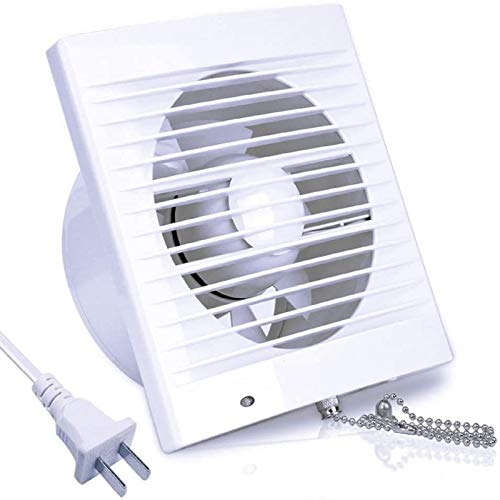
Hose Vary 4-Inch Wall Mount Exhaust Fan
Steam that clings to mirrors and leaves towels feeling damp isn’t just annoying; it signals that moist air has nowhere useful to go. The Hose Vary 4-Inch Wall Mount Exhaust Fan takes a more direct approach than a tabletop circulator by moving stale air through a four-inch opening or duct. Within the best portable ventilation fan for bathroom discussion, it sits in a slightly different lane because it plugs into a standard outlet but still requires a fixed wall, window, or duct position. That setup sacrifices grab-and-go portability, yet it provides genuine extraction rather than simply pushing humid air around the room.
Hose Vary 4-Inch Extractor Fan
The fan is built around a 100 mm four-inch connection, making it compatible with matching round ductwork or an appropriately sized wall opening. This compact diameter suits small bathrooms, toilets, utility rooms, offices, and other spaces where a larger exhaust unit would be awkward. Installation still requires a suitable opening, so this isn’t a fan that can be dropped onto a counter and used immediately. Once positioned correctly, though, it sends unwanted air toward an exit instead of recirculating it indoors.
The supplied quick-installation ring supports window mounting, while the included two-door check valve helps limit reverse airflow after the fan stops. That valve can reduce drafts and discourage outside air from moving backward through the opening. It may also add some airflow resistance, which is why the manufacturer advises removing it for ceiling installations where maximum output is preferred. That tradeoff is worth understanding before installation rather than treating every mounting method exactly the same.
A fixed extractor also needs a thoughtful air path. The fan can pull humid air out only if replacement air can enter through a door gap, open doorway, transfer grille, or another opening. Seal the room too tightly and airflow may weaken, even with the motor running. Balanced air exchange matters because extraction depends on both an outlet and a route for drier air to move inward.
Airflow And Moisture Control
The listed airflow is 95 cubic meters per hour, or about 55 CFM. That rating gives the fan a clearer ventilation role than a small personal fan whose specifications mention only air speed. Fifty-five CFM can be useful in a compact bathroom, but room size, duct length, bends, grille resistance, and installation quality will affect actual performance. A short, straight exit path generally preserves more airflow than a long duct with several turns.
Humidity removal is where this model earns its keep. Instead of aiming air at a foggy mirror and hoping moisture drifts away, the extractor pulls damp air toward the duct opening and sends it out of the room. The direct exhaust design can help surfaces dry sooner when the fan runs during and after a shower. Persistent leaks, soaked drywall, or recurring mold still need separate attention because ventilation can’t repair an underlying moisture source.
Placement affects results more than many product descriptions admit. A fan installed near the upper portion of a bathroom can capture warm, moisture-laden air that naturally rises, while a poorly positioned opening may leave steam trapped around the shower. The unit shouldn’t be mounted where direct water spray reaches it, despite its waterproof rating. Smart positioning combines a safe location, a short exhaust path, and enough distance from the wettest zone.
The four-inch format is practical for retrofits, but it also sets an upper limit on how much air can pass through the system. Large primary bathrooms, rooms with enclosed showers, or spaces with unusually high ceilings may need more capacity than this compact unit provides. In a smaller bathroom or toilet, however, the rated airflow is more proportionate. The fan’s value lies in matching the room rather than assuming stronger is always better.
Water Resistance And Build Quality
An IPX4 water-resistance rating means the housing is designed to handle splashing water from different directions. That makes it more appropriate for humid rooms than an ordinary desk fan with exposed charging ports and no stated protection. IPX4 doesn’t mean the fan is submersible, nor does it justify placing it directly inside a shower stream. Safe bathroom installation still calls for sensible distance from faucets, showerheads, and areas where water pools.
The grille and housing use ABS material, which keeps the assembly relatively light and resists the corrosion concerns associated with untreated metal surfaces. Plastic also makes routine wiping easier, especially where condensation and household dust collect around the front grille. Over time, lint and residue can narrow the openings and reduce effective airflow. Periodic cleaning, with power disconnected, helps the fan move air without working harder than necessary.
Inside the housing, a full-copper motor with ball bearings is intended to support stable operation and longer service life. Ball bearings generally suit equipment expected to run regularly because they manage rotating loads more consistently than basic sleeve designs. The provided information doesn’t state a rated service life, so there’s no basis for promising a specific number of operating hours. Still, the motor construction is a meaningful feature for a fan that may run every day.
The check valve deserves occasional inspection as well. Dust, grease, or bathroom residue can interfere with the two flaps, preventing them from opening freely or closing fully. A stuck valve may restrict exhaust while the fan runs or allow drafts when it’s off. Keeping this backflow control clean protects both ventilation performance and indoor comfort.
Noise And Energy Use
The manufacturer lists a 30 dB operating noise level, which is restrained for a powered extractor if the installed fan actually performs near that figure. Bathroom surfaces can make mechanical sounds seem sharper because tile, glass, and mirrors reflect noise rather than absorbing it. Duct vibration, a loose mounting ring, or a rattling check valve may create more disturbance than the motor itself. Proper fastening matters just as much as the fan’s stated sound rating.
A quiet exhaust fan is easier to leave running after a shower, and that’s a practical advantage. People often switch off loud ventilation too soon, long before grout, curtains, ceilings, and towels have had time to dry. The low listed noise output supports longer operation without turning the bathroom into a mechanical echo chamber. Actual comfort will still depend on mounting quality and how close the unit sits to occupied rooms.
Power consumption is rated at only 10 watts. That modest draw makes extended ventilation less burdensome than running a high-powered utility blower to handle ordinary bathroom humidity. Low wattage doesn’t guarantee low electricity costs in every location, but it does limit the fan’s energy demand during regular use. The balance of 55 CFM airflow and 10-watt consumption is one of the more practical parts of the specification sheet.
Quiet room-scale airflow can involve very different fan designs, and a neutral example appears in Lasko oscillating tower fans for spaces where circulation, rather than ducted extraction, is the main concern. The Hose Vary unit belongs in the extraction camp, so its airflow should be judged by how efficiently it moves stale air outdoors. A tower fan may make a room feel cooler, but it won’t perform the same moisture-removal job. That functional difference prevents an apples-to-oranges comparison.
Plug-In Design And Installation
The attached standard US two-flat-pin plug keeps the electrical setup simpler than a hardwired exhaust fan. Its 3.3-foot, or one-meter, power cord can reach a nearby wall outlet without opening an electrical junction box. That convenience may reduce installation complexity, but bathroom outlets and cord routing still need careful planning. A cord shouldn’t dangle across wet surfaces, touch a sink, or create a tripping hazard.
The operating specification lists 110 to 127 volts at 60 Hz, matching common household power in the United States. Any rewiring, cord extension, or electrical modification should be handled by someone qualified rather than improvised. Bathrooms combine electricity, grounded surfaces, and moisture, so shortcuts carry more risk than they do in a dry utility room. Plug-in convenience doesn’t erase the need for appropriate outlet protection and local code compliance.
Mechanical installation also deserves patience. The four-inch opening needs to be accurately sized, the mounting surface should hold the fan securely, and the duct should lead to a proper exterior termination rather than an attic or enclosed wall cavity. Exhausting moisture into another hidden indoor space simply moves the problem. A sealed exterior route helps prevent condensation from collecting where it can damage insulation, framing, or finishes.
Ceiling mounting introduces a special choice because the manufacturer advises removing the check valve for maximum airflow. That may improve output, but it also changes how the system handles reverse air movement. The correct setup depends on duct orientation, exterior vent design, and whether another damper is already installed farther along the line. This is one of those details where a quick professional opinion can save a fair bit of fiddling later.
Strengths, Weaknesses, And Realistic Use
The most important strength is true air extraction. Many products described as portable bathroom ventilation fans merely circulate humid air, while this unit can connect to a duct and discharge it elsewhere. Its IPX4 rating, low 10-watt demand, 55 CFM specification, and compact four-inch body form a sensible package for smaller rooms. The plug-in cord also avoids some of the complexity associated with hardwired motors.
The main weakness is that portability is limited. The fan can be moved before installation, but it isn’t designed to bounce from a bathroom counter to a campsite or office desk. A wall, window, ceiling opening, or duct connection is required for proper operation. Anyone expecting a rechargeable fan with no installation work will be barking up the wrong tree.
Airflow capacity creates another tradeoff. Fifty-five CFM may suit a compact bathroom or toilet, yet it can fall short in a sprawling bathroom with a tub, enclosed shower, and long duct run. Bends, restrictive exterior caps, and dirty grilles can reduce usable airflow further. The best fit is a modest room with a short exhaust route and a clear source of replacement air.
The included backdraft valve and mounting ring make the package more installation-ready than a bare fan body. Even so, the final result depends heavily on hole preparation, sealing, outlet location, and duct arrangement. A carefully fitted unit can run quietly and steadily, while a rushed installation may rattle, leak air, or leave moisture trapped. Installation quality isn’t an optional detail here; it’s part of the product’s real-world performance.
The Hose Vary extractor makes sense where humidity needs to leave the room rather than drift from one corner to another. It won’t offer battery operation, flexible aiming, or instant countertop placement, but those aren’t its job. Its role is narrower and more practical: move bathroom air through a four-inch route with modest noise and power consumption. For a small space that already has a suitable opening, that focused purpose is its strongest selling point.
EINTTAX 4-Inch Bathroom Exhaust Fan
Fogged mirrors, damp grout, and stubborn odors often point to one simple problem: moist air has no reliable way out. The EINTTAX 4-Inch Bathroom Exhaust Fan addresses that issue with a hardwired motor, a seven-blade impeller, and a backdraft valve that supports genuine air extraction. Although it appears beside the best portable ventilation fan for bathroom options, this model isn’t portable after installation because it belongs in a prepared wall or interior window opening. That fixed setup takes more effort upfront, but it can remove humid air instead of merely blowing it from one side of the room to another.
EINTTAX 4-Inch Extractor Fan
The central design combines a ball-bearing motor with a seven-blade impeller intended to produce steady suction through a compact four-inch outlet. That configuration targets moisture, cooking fumes, smoke, stale air, and lingering odors in enclosed rooms. A small personal fan may make the space feel less stuffy, but this extractor creates an actual route for unwanted air to leave. The difference is practical, especially after a long shower leaves condensation beading across tile and glass.
EINTTAX rates the airflow at 130 cubic meters per hour, which is roughly 76 cubic feet per minute. That figure gives the fan more extraction capacity than many tiny four-inch units, at least on paper. Real airflow can drop when the vent path includes sharp bends, restrictive covers, dirty grilles, or poorly fitted openings. A short, unobstructed route gives the motor a fairer shot at delivering useful bathroom ventilation.
The listed coverage range is 22 to 86 square feet, placing the fan within the territory of compact bathrooms, laundry areas, small offices, and similar enclosed spaces. Ceiling height and moisture load still matter because floor area alone doesn’t describe the full volume of air. A tiny room with a frequently used shower may demand more ventilation than a larger powder room without a tub. Room measurements are a starting point, not the whole ball of wax.
The circular intake is meant to draw air evenly around the front opening. That shape can reduce the narrow, concentrated pull associated with poorly designed grilles, while the seven blades keep air moving through the housing. Still, installation position affects how quickly steam reaches the intake. Mounting the fan far from the shower may leave pockets of humid air hanging around before they drift toward the outlet.
Moisture Removal And Air Exchange
True bathroom ventilation depends on more than fan speed. The EINTTAX unit pulls air outward, but replacement air must enter through a door gap, hallway opening, or separate vent. Without that incoming supply, the room can become slightly depressurized and airflow may weaken. A clear air exchange path helps the fan remove moisture instead of straining against a tightly sealed room.
The 130 m³/h rating should be useful for clearing ordinary shower humidity in a properly sized space. Running the fan while bathing and for a period afterward can help mirrors, walls, and grout dry more quickly. The supplied information doesn’t mention a timer or humidity sensor, so operation depends on a separate switch or control arrangement. That manual approach is straightforward, though it won’t automatically react when moisture rises.
Steam isn’t the only nuisance this fan is designed to handle. Kitchen fumes, pet odors, smoke, and stale basement air fall within its stated range of uses. The extractor format is particularly helpful where opening a window isn’t convenient or where natural airflow is weak. Even so, greasy kitchen exhaust may demand more frequent cleaning than normal bathroom use because residue can collect rapidly on the grille and impeller.
Persistent damp patches require a different kind of attention. A fan may reduce airborne humidity, but it can’t fix leaking pipes, failed grout, roof seepage, or water trapped behind a wall. The realistic benefit is quicker air exchange and reduced lingering moisture under suitable conditions. Asking it to solve structural water damage would be expecting a pocketknife to do a plumber’s job.
Noise And Energy Consumption
The rated sound level is 34 dB measured from three meters away. That distance matters because sound usually becomes more noticeable when standing directly below or beside the fan. In a tiled bathroom, hard surfaces can reflect motor tone and airflow noise, making the unit seem louder than the laboratory-style figure suggests. Even so, 34 dB indicates that quiet operation was a clear design goal.
A low-noise extractor is easier to tolerate during early showers, nighttime bathroom visits, or work hours in a nearby room. Loud ventilation often gets switched off too soon, which defeats the point of installing it in the first place. The EINTTAX fan’s moderate sound rating supports longer operation without the harsh rumble associated with heavier utility blowers. Installation quality will decide whether rattling screws or a loose window panel spoil that advantage.
Power consumption is listed at just 12 watts. That modest demand suits frequent operation and keeps the motor from behaving like an oversized appliance in a small room. Electricity cost depends on local rates and daily runtime, so there’s no honest reason to promise a specific dollar saving. Still, 12 watts is restrained for a fan rated to move 130 m³/h.
Noise and energy use should be judged together rather than in isolation. A fan that moves enough air at low wattage but rattles against the wall becomes irritating, while a silent unit with weak extraction accomplishes little. The EINTTAX specification suggests a sensible balance between airflow, sound, and consumption. Proper mounting and a clean airflow route are what turn those specifications into useful day-to-day performance.
Check Valve And Backflow Control
An automatic check valve sits at the air outlet to reduce reverse airflow after the motor shuts down. That feature can help prevent outdoor drafts, stale duct air, or odors from drifting back into the room. The valve opens under exhaust pressure and closes when airflow stops. It’s a small component, but it plays a big role in keeping the ventilation route one-directional.
Backdraft dampers aren’t maintenance-free. Dust, lint, grease, and bathroom residue can build up around the moving flaps, causing them to stick or close unevenly. A jammed valve may choke airflow while the fan is running or flutter noisily in changing air pressure. Periodic inspection protects the backflow barrier and prevents a minor maintenance issue from becoming an annoying rattle.
The check valve also creates a little resistance in the exhaust path. That’s normal, yet it means the effective airflow may be lower than the free-air rating once the unit is installed. Long ducting or an additional exterior damper can add further resistance. Keeping the route simple helps preserve the rated extraction capacity as much as practical.
Wind conditions outside can affect the valve as well. Strong gusts may press against an exterior termination, especially if the duct arrangement lacks suitable protection. Since the supplied directions exclude exterior walls and exterior windows, the installation plan needs careful thought about where the expelled air ultimately goes. Moisture should leave the occupied space without being dumped into another enclosed area.
Installation Requirements And Limitations
This model uses a four-inch duct diameter and can be installed on an indoor wall or an interior window using screws or glass adhesive. The manufacturer specifically excludes exterior walls and exterior windows, which narrows the range of straightforward installations. That limitation shouldn’t be glossed over because bathroom exhaust air still needs a safe final destination. Sending humid air into a closed wall cavity, attic, or another damp room simply shifts the problem.
Window mounting uses the included fastening ring to improve stability. Glass installation requires accurate cutting and careful handling, so it isn’t a casual weekend experiment for someone without the proper tools. A loose fit can vibrate, leak air, or place stress on the glass. The mounting ring helps secure the fan, but it can’t compensate for an incorrectly sized opening.
Electrical installation is hardwired rather than plug-in. The supplied wiring description identifies brown as the live conductor and blue as neutral. Working around household voltage in a humid room deserves professional attention, particularly where local electrical codes require protected circuits or specific bathroom zones. The hardwired connection produces a cleaner permanent setup, though it removes the convenience associated with a portable corded fan.
The product information doesn’t mention a wall switch, speed control, timer, or separate power cable. Those details may need to be resolved as part of the installation plan. A qualified electrician can determine suitable switching, connections, and protection without relying on guesswork. That extra step adds cost and complexity, but it’s better than cutting corners where water and electricity share the same room.
ABS Housing And Routine Cleaning
The fan body uses durable ABS plastic, chosen for impact resistance, scratch resistance, and resistance to deformation. Plastic housing also avoids the rust concerns that can appear on poorly protected metal grilles in damp rooms. White coloring blends easily with many bathroom walls and ceilings, though dust may become visible around the intake over time. That visible buildup is useful in a way because it signals when cleaning is overdue.
A detachable design makes the front section easier to access for maintenance. Dust and residue accumulating on the grille or impeller can reduce airflow and change the fan’s sound. Regular cleaning helps the motor work without fighting a clogged intake. The serviceable housing is more practical than a sealed decorative cover that turns a simple wipe-down into a wrestling match.
Bathroom cleaning products can leave their own film. Hair spray, powder, aerosol deodorizer, and fine lint often settle on fan blades even when the room looks tidy. Power should be disconnected before opening or wiping the unit, and harsh solvents may damage ABS surfaces. A gentle routine protects both the finish and the seven-blade impeller.
The ball-bearing motor may support long-term operation, but cleanliness still affects the surrounding airflow system. Bearings don’t stop dust from narrowing the grille, nor can they prevent a dirty check valve from sticking. Maintenance is the unglamorous part of ventilation, yet it keeps a modest fan from slowly becoming louder and weaker. A few minutes of periodic care beats wondering why the mirror suddenly takes twice as long to clear.
Room Suitability And Everyday Use
The stated applications include bathrooms, kitchens, bedrooms, laundry rooms, offices, garages, smoking rooms, pet rooms, shops, basements, and warehouses. That broad list reflects the fan’s basic purpose: remove unwanted air through a prepared opening. The 22 to 86 square-foot range is the more useful guide because a compact four-inch extractor won’t serve every room equally well. Larger or heavily contaminated spaces may need a bigger system or several extraction points.
A small bathroom is the clearest match. The fan can pull humid air away after showers while using little electricity and maintaining a relatively low sound level. In a laundry room, it may help with general dampness, though appliance exhaust must follow separate safety requirements. The best-fit situation combines modest room size, a short ventilation route, and regular but not industrial moisture loads.
Bedrooms and offices have different airflow priorities, often favoring broad circulation over extraction. A neutral example of a decorative circulation design appears in antique-style table fans, which serve a different purpose by moving indoor air rather than venting it through a wall. The EINTTAX unit is less about creating a breeze and more about removing stale or humid air. Mixing those roles can lead to disappointing expectations.
Garages, smoking rooms, and pet areas may place heavier demands on the fan. Strong odors and airborne particles can clog the intake faster than ordinary bathroom humidity. The unit may improve air exchange in a compact space, but it isn’t described as a filtration system and won’t capture fine contaminants. Its ventilation role is to move air outward, not clean it before recirculation.
Strengths And Practical Tradeoffs
The main strength is the combination of 130 m³/h airflow and a compact four-inch format. That capacity, paired with a seven-blade impeller and ball-bearing motor, gives the fan a more serious extraction purpose than a rechargeable desk fan. A 12-watt power rating keeps consumption restrained during regular operation. The check valve adds useful draft control once the motor stops.
Quietness is another meaningful benefit, though the 34 dB rating was taken from three meters away. Standing closer may reveal more motor and airflow sound, especially in a reflective bathroom. Secure mounting can prevent avoidable vibration from muddying an otherwise quiet design. The sound specification is encouraging, but it shouldn’t be interpreted as complete silence.
The biggest weakness is installation complexity. Hardwiring, cutting a suitable opening, securing the unit, and arranging a safe exhaust route require more planning than setting a portable fan on the counter. Restrictions against exterior wall and exterior window mounting may complicate otherwise obvious layouts. This model rewards a well-prepared installation and punishes improvisation.
Its fixed position also means the fan can’t be moved from room to room after installation. That makes the word portable a poor fit, even though the compact body may appear in searches for the best portable ventilation fan for bathroom use. What it gives up in mobility, it gains in direct extraction, higher stated airflow, and automatic backflow control. The choice comes down to whether quick relocation or genuine venting matters more.
The EINTTAX fan is best treated as a small permanent extractor for a correctly sized indoor installation. Its airflow rating, low wattage, detachable housing, and check valve address the practical headaches of humidity and stale air without loading the design with unnecessary controls. The limits are equally plain: no stated timer, no plug-in cord, no speed adjustment, and no support for exterior wall or window mounting. Within those boundaries, direct moisture extraction remains its clearest and most useful advantage.
SAILFLO 4-Inch Wall-Mounted Exhaust Fan
A bathroom can look clean and still feel clammy, especially after steam settles into grout, towels, and painted corners. The SAILFLO 4-Inch Wall-Mounted Exhaust Fan approaches that problem with a fixed-speed motor, a pull-chain control, and a backflow barrier built for permanent wall, window, or duct installation. It appears alongside the best portable ventilation fan for bathroom choices because of its compact body, but it isn’t a carry-around fan once mounted. What it gives up in mobility, it gains in direct extraction, which matters far more when humid air needs to leave the room rather than circle around it.
SAILFLO 4-Inch Extractor Fan
The core setup uses a four-inch axial fan behind a six-by-six-inch grille panel. Its listed output is 76 CFM at a fixed speed of 1,300 RPM, giving it a defined room-extraction role rather than the vague breeze produced by a small desk fan. That airflow can be useful in a compact bathroom, laundry area, office, or other enclosed space with a prepared outlet. Actual performance will still depend on the length and shape of the exhaust route.
A short, straight duct lets the fan move air with less resistance. Long runs, sharp bends, dirty screens, and tightly restricted exterior covers can all reduce the effective airflow reaching the outlet. The 76 CFM specification therefore works best as a reference point, not a promise that every installation will feel identical. A sloppy duct route can make a capable motor seem weaker than it is.
The fixed-speed design keeps operation simple. There are no digital controls, timers, or multiple airflow levels to fiddle with, just a pull chain that switches the unit on and off. That simplicity is useful in a bathroom where complicated controls often go untouched after the first week. The tradeoff is equally plain: airflow can’t be reduced for quieter or gentler operation.
The compact footprint makes the fan easier to fit into narrow spaces than a larger extractor. Still, a suitable hole, mounting surface, and electrical connection are required before it can do anything useful. This isn’t a set-it-on-the-counter product. The permanent installation demands more planning, but it creates a proper route for stale air to exit.
Airflow For Humidity And Stale Air
Bathroom moisture responds best to directed extraction. The SAILFLO fan pulls humid air toward the opening and moves it outward, rather than simply blowing steam from the shower toward the sink. That direct ventilation can help mirrors clear sooner and reduce the time damp surfaces remain wet. It also supports odor control in smaller enclosed rooms where natural airflow is weak.
Replacement air has to enter the room while the fan runs. A door gap, open doorway, transfer grille, or another vent gives the extractor something to pull through the space. Without that supply, the motor may struggle against negative pressure and move less air than expected. A clear air exchange path is just as important as the fan itself.
Placement affects how quickly steam reaches the intake. Warm humid air tends to rise, so a higher wall position near the moisture source may perform better than a low installation across the room. The fan shouldn’t sit where it receives direct spray, though, because the supplied details don’t state a specific waterproof rating. Good placement balances moisture capture, electrical safety, and an uncomplicated duct route.
Heavy condensation may require longer operation after the shower ends. The pull chain makes that easy enough, but the fan doesn’t include an automatic humidity sensor based on the provided description. Someone has to remember to switch it on and off. That manual routine is straightforward, though it can be less convenient than a sensor-controlled system in a frequently used bathroom.
Backflow Protection And Front Grille
The rear assembly includes a wind-proof ABS sheet designed to reduce backflow when the fan isn’t operating. That barrier helps keep outdoor air, loose debris, and drafts from pushing backward through the opening. It can also limit the entry of leaves, pollen, and dust under suitable installation conditions. A small flap may not look impressive, but it has a noticeable effect on comfort when the motor is off.
Backflow protection isn’t completely maintenance-free. Dust and residue can collect around moving parts and prevent them from opening or closing smoothly. A sticky flap may rattle in the wind, restrict airflow, or remain partly open after shutdown. Regular attention keeps the anti-backflow feature from becoming the system’s weak link.
The removable lattice filter gives the front of the unit a practical maintenance advantage. Bathroom lint, powder, hair spray, and airborne dust can gather on the grille faster than expected. Taking the panel off for cleaning helps preserve airflow and keeps the fan from looking grimy against a light-colored wall. The removable grille is a small convenience that matters more after months of use.
Filters and grilles also create resistance as they become dirty. A fan may still sound normal while moving noticeably less air through a clogged front panel. That gradual decline is easy to miss because there’s no warning light or airflow indicator. A quick visual inspection every so often can prevent a simple cleaning task from turning into a head-scratcher.
Pull-Chain Control In Daily Use
The pull-chain switch is one of this model’s more distinctive features. It allows direct control even when the fan is mounted high on a wall or window, without requiring a separate nearby switch. A chain is easy to understand and doesn’t depend on an app, remote, or touch panel. Sometimes simple wins, particularly in a utility-minded bathroom setup.
Chain length and placement deserve thought before the final installation. It should hang within reach without brushing against a wet surface, doorway, cabinet, or shower curtain. A poorly positioned chain can become irritating, especially if it taps against the grille while the fan runs. The manual switch is convenient only when the mounting location supports safe access.
The pull chain also means there’s no speed selection. Each tug starts or stops the motor at the same 1,300 RPM setting. That consistency suits straightforward extraction, but it removes the option of running the fan gently during quiet hours. The fixed-speed limitation may matter in bedrooms or offices more than in a small bathroom.
Mechanical switches tend to suit damp utility areas better than delicate touch controls, provided the unit is installed safely. Still, the product information doesn’t specify the chain mechanism’s service life or resistance to repeated pulling. A smooth, straight tug is less likely to stress the assembly than yanking it sideways. Common sense goes a long way with a simple control like this.
Motor Construction And Heat Management
A sealed pure-copper motor drives the axial fan. Copper windings are commonly used where stable electrical performance and heat handling matter, while the sealed design helps protect the motor’s internal components from routine environmental exposure. The supplied description states that the motor generates minimal heat during extended operation. No measured operating temperature or service-life figure is provided, so expectations should remain grounded.
The axial layout suits moving air through a relatively direct opening. It’s less suited to long, complicated duct systems with heavy resistance, where a different blower design may perform better. The axial fan structure makes sense for wall, window, glass, or short duct installations. Asking it to push through a winding maze of ductwork would be giving it the wrong job.
Built-in overheat protection adds a useful layer of safety. The device is designed to cut power if the motor overheats, helping reduce the chance of damage or a more serious electrical problem. That feature doesn’t excuse blocked airflow, neglected cleaning, or incorrect installation. It acts as backup protection, not permission to ignore maintenance.
Heat buildup often starts with restricted ventilation around the fan itself. A dirty grille, jammed backdraft flap, or obstructed outlet can force the motor to work under less favorable conditions. Keeping the airflow path clear supports both performance and motor longevity. The thermal cutoff is reassuring, but prevention remains better than repeatedly triggering it.
Energy Use And Long-Run Practicality
The motor consumes a listed 12 watts, which is modest for a fixed extractor rated at 76 CFM. That low draw makes longer post-shower operation easier to justify than running a large utility blower. Electricity cost depends on local rates and daily usage, so no honest dollar estimate can be made from wattage alone. Even so, 12 watts keeps the power requirement restrained.
Energy efficiency means little if the fan is switched off before the room dries. The useful part of the specification is that the unit can continue exchanging air without drawing the power of a much larger appliance. A quiet, low-watt extractor is more likely to stay on long enough to handle lingering moisture. The practical savings come from matching modest consumption with adequate runtime.
Fixed speed creates a small efficiency tradeoff. The fan always operates at full stated speed, even when only light ventilation is needed. A variable-speed unit could reduce output during low-demand periods, but it would also add cost and control complexity. The SAILFLO design favors simple full-power operation over fine adjustment.
Continuous use should still follow the installation instructions and electrical limits. The supplied description supports extended operation, but it doesn’t provide a formal duty-cycle rating. Keeping the motor clean and the outlet unobstructed gives it the best chance of running steadily. A low-watt label alone can’t compensate for a blocked vent path.
Installation Details That Matter
The fan can be installed on walls, windows, glass panels, ducts, or grow tents, according to the provided description. Each surface calls for a different fastening method and level of preparation. Glass work requires accurate cutting and secure support, while wall mounting needs a properly sized opening and a stable frame. There’s no one-size-fits-all installation trick here.
A four-inch fan should connect to a matching opening without gaps that leak air around the housing. Poor sealing can allow humid air to escape into a wall cavity rather than travel through the intended outlet. That’s bad news because hidden condensation can damage insulation, framing, or finishes over time. A sealed exhaust route protects both airflow and the surrounding structure.
Electrical details aren’t fully described in the supplied information. The product name and features don’t state whether a plug, loose leads, or another connection arrangement is included. That uncertainty means the final setup should be checked before cutting any openings. A qualified installer can sort out wiring requirements without relying on assumptions.
The exhaust destination matters just as much as the mounting surface. Humid bathroom air shouldn’t be released into an attic, enclosed cabinet, wall void, or another room where it can create a fresh problem. It needs a sensible path away from the occupied space. Installation can look neat from the front while being completely wrong behind the wall, so the hidden side deserves equal attention.
Noise Expectations And Room Comfort
The supplied details don’t provide a decibel rating. That leaves no reliable basis for calling the fan quiet or loud in measured terms. The fixed 1,300 RPM motor will produce some combination of blade noise, motor tone, and air movement. The actual sound level will also depend on mounting rigidity and the surface surrounding the fan.
Glass and thin panels can amplify vibration if the fastening ring or screws aren’t secure. A solid wall may transmit less rattling, though an uneven opening can still create buzzing around the frame. Careful installation can make the difference between a steady hum and an annoying chatter. Sound problems often come from the mount rather than the motor.
The backflow sheet may also produce noise during windy conditions. If the flap moves loosely, it could tap against the housing after the fan shuts off. Cleaning and checking its movement may reduce that nuisance. The wind-proof design is useful, but moving parts always introduce another possible sound source.
Room type changes how noticeable the fan feels. Bathrooms usually tolerate a moderate operating hum better than bedrooms, reading areas, or quiet offices. A related look at decorative overhead airflow appears in vintage ceiling fans with lights, which address broad room circulation rather than direct exhaust. The SAILFLO unit is built to remove air through an opening, so its purpose is narrower and more functional.
Strengths, Weaknesses, And Best-Fit Use
The main strength is straightforward extraction. A 76 CFM rating, 12-watt motor, four-inch format, pull-chain control, and anti-backflow sheet create a practical package for small rooms with poor air exchange. The removable lattice also makes routine cleaning less of a chore. Nothing here is fancy, and that’s part of the appeal.
The overheat protection adds reassurance during longer operating periods. Combined with the sealed copper motor, it supports a design intended for stable, repeated use. Still, the thermal cutoff shouldn’t be treated as a replacement for correct wiring and clear airflow. Safety features work best as a final layer, not the entire plan.
The biggest weakness is the lack of adjustability. There’s one speed, no timer, no stated humidity sensor, and no published noise level in the supplied details. The unit either runs at its fixed output or stays off. Anyone who prefers automatic moisture control or multiple airflow levels may feel boxed in.
Portability is also limited despite the compact dimensions. Once the fan is fitted into a wall, window, duct, or glass panel, it becomes part of that location. It won’t shift from bathroom to bedroom or travel in a suitcase like a rechargeable fan. The key difference is permanent extraction versus movable circulation.
The SAILFLO fan fits small bathrooms, shops, offices, kitchens, grow tents, and other spaces where stale air needs a direct exit. Its best performance will come from a short exhaust route, a clean grille, an unrestricted backflow flap, and a steady supply of replacement air. Poor ducting or a sealed room can hold it back, no matter what the airflow rating says. Within those practical limits, simple ventilation remains the reason this compact extractor earns attention.

Best Quiet Ceiling Fan For Bedroom 2026 Ultimate Comfort Picks

Best Ceiling Fan For Master Bedroom 2026 With Ultimate Comfort

Best White Ceiling Fan With Light For Bedroom 2026 Top Picks

Best Quorum Medallion Ceiling Fan 2026 With Style & Breeze
Best Outdoor Fan For Pergola 2026 Comfort Boost

Best Ceiling Fan For Great Room 2026 With Ultimate Comfort

Best Outdoor DC Ceiling Fans 2026 For Breezy Comfort
Best ceiling exhaust bath fan with light and heater 2026





