
Best Quiet Personal Fan 2026 for Peaceful Cooling

A best quiet personal fan should cool the space right around your face and upper body without filling the room with buzzing, rattling, or a high-pitched motor whine. That sounds simple, yet small fans often stumble here because compact blades must spin quickly to move enough air. The real sweet spot is a model that balances steady airflow, restrained motor noise, and a grille that doesn’t create an irritating whistle. Quiet doesn’t mean silent, of course, but the sound should fade into the background instead of demanding attention.
Noise matters most during focused work, video calls, reading, and sleep. A soft, consistent hum is usually easier to tolerate than a fan that clicks, pulses, or changes pitch every few seconds. Lower speed settings deserve close attention because they’re often used for hours at a time, especially in air-conditioned rooms that still feel stuffy. Frankly, a powerful top speed won’t make up for an unpleasant low setting.
Airflow control also shapes the day-to-day experience. Several usable speeds make it easier to avoid papers blowing across a desk or eyes drying out from a harsh stream of air. A tilting head helps direct cooling toward the neck, shoulders, or bed without stacking books under the base. Then there’s oscillation, which can feel gentler, though it may add mechanical noise and take up more space.
Power design brings its own tradeoffs. USB-powered fans fit neatly beside laptops and charging hubs, but some depend on a constant cable connection and may lose strength when plugged into a weak port. Rechargeable models cut cord clutter and travel more easily, yet battery life drops quickly at maximum speed. A stable power supply matters because fluctuating output can make the motor sound rougher than expected.
Size deserves a practical look rather than a bigger-is-better assumption. A wider blade can move more air at a lower speed, which often helps reduce noise, but it also eats up valuable desk or nightstand space. Tiny fans tuck into crowded corners, though their narrow airflow may require precise positioning. The right footprint leaves room for a keyboard, coffee mug, lamp, or bedside essentials without turning the surface into a balancing act.
Build details separate a pleasant fan from an annoying one. Rubber feet help prevent vibration from traveling into a hollow desk, while a weighted base reduces wobbling during speed changes. Removable grilles make dust cleanup less of a chore because dirty blades can grow louder and push less air over time. Even so, some compact housings are difficult to open, so easy maintenance deserves as much attention as sleek styling.
The strongest quiet personal cooling setup won’t try to chill an entire room. It creates a comfortable pocket of moving air while leaving conversations, music, and sleep undisturbed. That realistic expectation keeps disappointment in check and makes comparison easier. Pick for the distance, noise pattern, control range, and surface space involved, not just the highest advertised speed.

- LFR Score9.4
LFR Score is a ranking system developed by lightfansreviews.com. LFR Score has no relationship or impact from any manufacturers or sales agent websites. Learn more
- BrandBearwind
![Aecooly Slim Portable Fan, Thin Handheld Fan, USB Rechargeable Mini Personal [17H Max Cooling Time], Battery Powered Small Foldable Pocket for Travel, Summer, Gifts for Women, Girls -Beige](https://m.media-amazon.com/images/I/31Sw6XPTQjL._SL500_.jpg "Aecooly Slim Portable Fan, Thin Handheld Fan, USB Rechargeable Mini Personal [17H Max Cooling Time], Battery Powered Small Foldable Pocket for Travel, Summer, Gifts for Women, Girls -Beige")
- LFR Score9.4
LFR Score is a ranking system developed by lightfansreviews.com. LFR Score has no relationship or impact from any manufacturers or sales agent websites. Learn more
- BrandAecooly

- LFR Score9.2
LFR Score is a ranking system developed by lightfansreviews.com. LFR Score has no relationship or impact from any manufacturers or sales agent websites. Learn more
- BrandPeiyuu
- LFR Score9.2
LFR Score is a ranking system developed by lightfansreviews.com. LFR Score has no relationship or impact from any manufacturers or sales agent websites. Learn more
- BrandHoneywell

- LFR Score9.2
LFR Score is a ranking system developed by lightfansreviews.com. LFR Score has no relationship or impact from any manufacturers or sales agent websites. Learn more
- BrandiFunSky

- LFR Score9.2
LFR Score is a ranking system developed by lightfansreviews.com. LFR Score has no relationship or impact from any manufacturers or sales agent websites. Learn more
- BrandTUNISE

- LFR Score9.2
LFR Score is a ranking system developed by lightfansreviews.com. LFR Score has no relationship or impact from any manufacturers or sales agent websites. Learn more
- BrandWHATOOK

- LFR Score9.0
LFR Score is a ranking system developed by lightfansreviews.com. LFR Score has no relationship or impact from any manufacturers or sales agent websites. Learn more
- BrandKoonie
- LFR Score9.0
LFR Score is a ranking system developed by lightfansreviews.com. LFR Score has no relationship or impact from any manufacturers or sales agent websites. Learn more
- BrandGaiatop

- LFR Score8.6
LFR Score is a ranking system developed by lightfansreviews.com. LFR Score has no relationship or impact from any manufacturers or sales agent websites. Learn more
- BrandHoneywell
![Kimguard Handheld Portable Turbo Fan with Ice Cooler, Speed (1-199) Rechargeable Personal Fan[20000 RPM] Small Pocket Fans for Travel/Outdoor/Home/Office, Purple](https://m.media-amazon.com/images/I/41T6U2tdmmL._SL500_.jpg "Kimguard Handheld Portable Turbo Fan with Ice Cooler, Speed (1-199) Rechargeable Personal Fan[20000 RPM] Small Pocket Fans for Travel/Outdoor/Home/Office, Purple")
- LFR Score8.6
LFR Score is a ranking system developed by lightfansreviews.com. LFR Score has no relationship or impact from any manufacturers or sales agent websites. Learn more
- BrandKimguard
Last update on 2026-07-18 / Affiliate links / Images, Product Titles, and Product Highlights from Amazon Product Advertising API
Bearwind Turbo Fan for Quiet Personal Cooling
Hot, still air can derail a commute, outdoor event, or makeup routine faster than expected. A compact fan helps only if it delivers meaningful airflow without becoming another bulky gadget to carry, and the best quiet personal fan should feel practical beyond a single summer outing. The Bearwind model tackles that problem with five speed settings, a folding body, and a rechargeable design built for cooling at close range. Its strongest appeal lies in giving you several ways to direct the breeze rather than locking you into one awkward grip.
Bearwind Portable Handheld Turbo Fan
The Bearwind fan measures 6.7 inches and weighs 0.42 pounds, keeping it within the genuinely portable range rather than merely being smaller than a room fan. That compact build can slide into many purses, day bags, and larger pockets without claiming much space beside a phone, charger, or sunscreen. Its lightweight frame also reduces wrist strain during long lines, festivals, sporting events, and sightseeing days. Still, pocket fit will depend on the clothing, since a 6.7-inch body may feel bulky in shallow jeans or fitted shorts.
A 180-degree folding mechanism changes how the unit fits into daily routines. Held upright, it functions as a conventional handheld fan; folded at an angle, it can rest on a flat surface as a compact desk fan. The adjustable lanyard adds a third arrangement by allowing the fan to hang near the upper body for hands-free airflow. That setup won’t feel identical to a purpose-built neck fan, but it can free both hands while standing in a queue, carrying bags, or handling small tasks outdoors.
The black finish gives the fan a restrained appearance that won’t look out of place beside office electronics or travel gear. Bearwind also describes a black-and-silver treatment, which adds a little contrast without turning the body into a flashy accessory. Appearance isn’t the main reason to buy a portable cooling device, of course, yet clean styling matters when the fan sits on a work desk for hours. The folding joints and lanyard attachment remain more important over time because those moving and load-bearing areas will shape how convenient the fan feels after repeated use.
The design makes the most sense for situations where personal airflow matters more than cooling a whole room. A small turbo fan can ease the discomfort around the face and neck, but it won’t lower the temperature across a bedroom, tent, or patio. That distinction keeps expectations realistic and highlights the product’s true strength: close-range cooling that travels easily. Used within that lane, the Bearwind offers more flexibility than a basic one-position hand fan.
Airflow Control And Everyday Comfort
Bearwind equips this model with a seven-blade turbo design, a brushless motor, and what the brand calls a fourth-generation high-speed airflow system. The supplied specifications state that airflow can reach up to 9 meters per second, with output described as three times stronger than ordinary fans. Those figures come from the manufacturer’s product information rather than independent testing, so they’re best treated as stated capabilities, not guaranteed real-world results. Even so, the combination of a brushless motor and multiple blades suggests an emphasis on producing concentrated air from a small housing.
Five speed levels provide more useful control than a simple low-and-high switch. Gentle airflow can suit quiet desk work, makeup application, or bedside use, while the upper settings are better reserved for muggy sidewalks, beach trips, and crowded outdoor venues. That range matters because constant maximum output can feel harsh against the eyes and may drain the battery faster. A usable low-speed setting often adds more day-to-day value than raw power alone, particularly when the fan sits only a foot or two away.
Noise deserves a measured discussion because the supplied details don’t include a decibel rating. Brushless motors are commonly chosen for smoother operation and reduced mechanical wear, but motor type alone doesn’t prove that every speed will sound quiet. Higher airflow usually creates more wind noise, especially through a compact grille, so the strongest setting may be noticeable in a silent bedroom or during a microphone-sensitive call. The Bearwind can still fit the best quiet personal fan conversation if its lower gears deliver a steady, unobtrusive breeze, but the information provided doesn’t support calling it silent.
Airflow direction also affects perceived comfort. The folding body lets you tilt the stream toward the face, neck, hands, or upper torso rather than repositioning the entire base. On a desk, that can prevent the annoyance of balancing a fan on books or leaning it against a coffee mug. The adjustable angle is especially handy in tight spaces where a fixed fan might blow directly into the eyes or scatter loose papers. Narrow personal airflow remains the tradeoff, since anyone sitting outside the direct path will feel much less cooling.
Battery Life, Charging, And Travel Use
The built-in 4000mAh rechargeable battery is rated for up to 12 hours of cooling, depending on speed. Bearwind states that lower settings can last through an entire night, while the highest setting can continue through an entire concert. Actual runtime will vary with gear selection, battery condition, ambient temperature, and charging habits, so the “up to” language matters. Even with that caveat, a 4000mAh battery gives the fan enough stated capacity to cover many commutes, work sessions, and daytime outings without constant access to an outlet.
USB-C charging keeps the power setup familiar and reduces the need for a proprietary cable. The provided details list a full recharge time of about three hours, which is reasonable for topping up the fan overnight or between travel days. A portable battery pack can also extend usefulness during camping trips, theme-park visits, or long waits at transportation hubs, provided a suitable cable is available. The USB-C connection is a practical advantage, though the information supplied doesn’t state whether the fan supports operation while charging.
Battery performance shifts sharply with speed, and that’s worth remembering before heading out. Five gears invite frequent adjustment, so starting at a moderate level and saving the strongest airflow for brief bursts may stretch runtime more effectively. That approach also prevents the fan from feeling overly aggressive during calmer moments indoors. The adjustable power range lets you trade intensity for endurance instead of accepting one fixed balance chosen by the manufacturer.
Travel convenience depends on more than battery size. The foldable body packs more neatly than a rigid handle, while the lanyard helps keep the fan accessible without occupying a hand or disappearing at the bottom of a bag. Beach sand, cosmetic powder, and pocket lint may collect around the grille, however, and the provided information doesn’t mention whether the front cover is removable for cleaning. Regular surface cleaning will matter because dust buildup can reduce airflow and create extra noise over time.
Strengths, Limitations, And Best Uses
The strongest feature is the way several practical functions fit into one small device. Handheld use covers walking and waiting, desk mode suits work or meals, and lanyard use offers a basic hands-free option. Few people need all three configurations every day, but the flexibility reduces the chance that the fan becomes useless when circumstances change. The three-in-one design feels purposeful rather than decorative because each position solves a different handling problem.
Five airflow settings are another clear strength, especially for anyone bothered by fans that jump from barely moving air to blasting at full force. Fine control helps manage dry eyes, loose hair, papers, and battery drain without turning the fan off completely. The claimed 9 m/s maximum speed also gives the upper end a defined role during intense heat, though the figure hasn’t been independently verified here. That balance between gentle cooling and a stronger turbo setting makes the Bearwind more adaptable than a one-speed novelty fan.
The main limitations come from missing details rather than obvious flaws in the supplied description. No decibel figure is provided, the cleaning method isn’t explained, and there’s no stated water-resistance rating for beach or outdoor use. The lanyard arrangement may also swing during movement, which can make airflow less consistent than a structured neckband design. These practical tradeoffs don’t erase the fan’s appeal, but they’re worth weighing against the specific setting where it’ll be used most often.
Bearwind’s portable turbo fan is best treated as a concentrated cooling tool, not a substitute for air conditioning or a full-size circulator. It’s especially well matched to commutes, outdoor events, travel bags, makeup stations, crowded venues, and small desks where space is tight. The combination of a folding frame, rechargeable battery, and multiple speeds addresses the everyday frustrations that make simpler handheld fans feel disposable. For close personal comfort, its portable airflow control is the feature that carries the most practical weight.
Aecooly Slim Fan for Quiet Personal Cooling
A crowded bag leaves little patience for a bulky fan, especially when the heat shows up halfway through a commute or an outdoor afternoon. The Aecooly model approaches the best quiet personal fan category from a different angle, favoring a slim body, broad airflow, and long stated battery life over an oversized motor housing. Its foldable shape also gives it more range than a basic pocket fan because it can move from handheld use to a small desktop setup without extra parts. That mix sounds straightforward, but the practical value comes down to how well the design balances portability, airflow control, and realistic close-range cooling.
Aecooly Slim Portable Fan
The first thing that separates this fan from chunkier handheld models is its thin profile. Aecooly describes the body as lightweight and compact enough to fit inside a hand, bag, or pocket, which matters during travel days when every spare inch gets claimed by chargers, cosmetics, snacks, and other small essentials. The beige finish gives the fan a softer, less gadget-heavy appearance, so it can sit on a desk or vanity without looking like industrial equipment. Pocket comfort will still depend on clothing size and the fan’s exact thickness, which isn’t included in the supplied specifications.
Portability isn’t only about total weight. Shape matters just as much, and a slim rectangular body tends to pack more neatly against notebooks, tablets, or the flat side of a purse than a rounded fan with a thick handle. That flatter form can reduce awkward bulges and keep the fan from rolling around inside a bag. The space-saving design makes the most sense for daily carry, though a thin body may offer less gripping depth than a traditional cylindrical handle.
The folding mechanism adds another layer of usefulness. Opened upright, the Aecooly works as a handheld fan for walking, waiting in line, or sitting outdoors. Folded into a supporting angle, it becomes a small desktop fan that can direct airflow toward the face or upper body while leaving both hands free. A stable surface will matter in this mode, since narrow ledges, soft bedding, or uneven outdoor tables may not provide the same support as a flat desk.
Its styling leans toward subtle rather than sporty. That’s a practical difference for anyone who wants a fan that can move from a work setting to a travel bag without looking out of place. Still, appearance won’t solve heat by itself, and the strongest reason to consider the Aecooly is the way its foldable construction supports more than one routine. The design is most useful where storage space is tight and personal airflow is needed at arm’s length.
Three Speeds Without Unnecessary Fuss
Aecooly provides three adjustable speed settings, covering a gentle breeze, a moderate level, and a stronger airflow option. Three speeds may sound modest beside fans with five or more settings, but fewer controls can make everyday operation faster and less fiddly. The simple speed range gives enough flexibility for changing conditions without requiring repeated button presses to cycle through tiny differences. That matters during a commute or makeup routine, where quick adjustment beats a complicated control scheme.
The lowest setting should suit moments when cooling is needed without a sharp stream of air hitting the eyes. A light breeze can reduce stuffiness around a desk, bedside table, or waiting area while keeping papers and loose hair under control. The middle setting is likely to handle most ordinary indoor use, especially in rooms that are warm but not sweltering. The highest gear has a clearer role outdoors, where stronger personal airflow has to compete with humidity, direct sun, and surrounding movement.
The supplied product details don’t include a decibel rating, so quietness can’t be confirmed with a specific number. A fan’s sound also changes by speed, blade shape, grille design, and how the motor interacts with the housing. Lower gears will generally be the better fit for reading, office work, or bedside use, while maximum speed may create more noticeable wind noise. The Aecooly belongs in the best quiet personal fan discussion because of its adjustable output, but calling it silent would go beyond the information provided.
Three levels also create a clear battery tradeoff. Stronger airflow typically consumes more power, so running the fan at full speed for long stretches may reduce the stated operating time. A practical rhythm is easy to imagine: low for steady indoor comfort, medium for warmer stretches, and high for brief bursts outside. That kind of controlled cooling helps preserve charge without forcing the fan to operate at one fixed intensity all day.
Long Runtime for Travel and Daily Use
The stated maximum battery life reaches up to 17 hours on one charge. That figure positions the Aecooly for long workdays, extended travel, outdoor gatherings, and situations where a power outlet may not be nearby. The words “up to” deserve attention because actual runtime will depend on the selected speed, battery condition, charging habits, and surrounding temperature. Even with that qualification, 17-hour maximum cooling is the most notable specification in the supplied description.
Long battery life changes how a portable fan gets used. A short-runtime model often becomes something people ration, turning it on only during the worst heat and constantly watching the charge level. More available time encourages steady, low-speed cooling during flights, train rides, desk sessions, or evenings outdoors. The extended battery capacity could make the fan feel less like an emergency gadget and more like a regular part of a summer routine.
USB recharging adds convenience because it works with common charging setups, portable power banks, and many travel adapters. The description doesn’t specify the battery capacity, charging port type, or full recharge time, so those details can’t be evaluated here. That missing information matters for overnight planning and quick top-ups between outings. Still, a USB rechargeable design avoids disposable batteries and cuts down on the need to carry a dedicated power source.
Battery longevity will also depend on how the fan is stored and charged over time. Leaving any rechargeable device in extreme heat, especially inside a parked car, can shorten battery health and affect future runtime. Regular partial charging may fit daily use better than repeatedly draining the fan completely. The Aecooly’s long stated endurance is a strength, but real-world battery performance will naturally shift as the battery ages.
Wide Airflow in a Slim Housing
Aecooly highlights a large fan surface and an optimized blade design intended to spread air across a wider area. That approach is useful because narrow handheld fans often produce a concentrated jet that cools one small spot while leaving the surrounding skin warm. A broader stream can feel less harsh and may cover more of the face and neck at once. The wide airflow coverage is especially relevant for desk use, where constant repositioning gets old fast.
Evenly distributed air can also reduce the dry, piercing feeling caused by a tight blast directed at the eyes. Makeup application, skincare routines, and close desk work often benefit from softer coverage rather than maximum force. A wide fan face may help accomplish that at lower speeds, although no blade dimensions or airflow measurements are provided. The practical promise here is broader personal cooling, not whole-room circulation.
That limitation deserves a plain statement. A slim battery fan won’t cool a bedroom, tent, office, or patio in the same way a full-size circulator can. Its job is to create a comfortable zone around one person at close range. The Aecooly should perform best on a nightstand, vanity, small desk, tray table, or in hand during travel, where localized airflow is more useful than pushing air across several feet.
The larger fan surface may come with a small carrying tradeoff. More blade area can improve coverage, but it also affects the overall width of the device, even if the housing remains thin. That shape may slide easily into a bag yet feel noticeable in a narrow pocket. The balance still favors portability, though buyers focused on the smallest possible footprint may prefer a narrower fan with more concentrated airflow.
Practical Strengths and Everyday Tradeoffs
The Aecooly’s clearest strength is how neatly its features support ordinary routines. A slim body makes packing easier, the foldable hinge adds desktop use, and three speeds keep operation simple. The stated long runtime further reduces the need to carry a charger everywhere. Together, those practical features address the common annoyances that make many small fans feel more troublesome than helpful.
Its second strength is the wider style of airflow described by the manufacturer. Concentrated turbo fans can feel powerful, but they may require precise positioning and can become uncomfortable at close range. A broader breeze is often easier to live with during longer sessions because it spreads cooling across a larger area. The even airflow pattern may be more valuable than raw force for office work, travel, and bedside use.
The weaknesses come mainly from missing specifications. No noise measurement, charging time, exact dimensions, battery capacity, or cleaning instructions are included in the supplied details. Those gaps make it harder to judge how the fan behaves in silent rooms, how quickly it can be recharged, or how easily dust can be removed from the blades. The limited technical detail doesn’t make the product unsuitable, but it does call for realistic expectations.
The foldable design also introduces a moving part that will be handled repeatedly. A hinge can add convenience, yet its stiffness and long-term durability matter because it must support the fan in desktop mode. No hinge testing or durability information was provided, so there’s no basis for making a stronger claim. Careful folding and storage will likely help preserve the dual-use design over time.
For personal cooling within a few feet, the Aecooly offers a sensible mix of slim storage, broad airflow, and long stated runtime. It appears better suited to steady everyday use than to anyone chasing the strongest possible turbo blast. The fan’s compact beige body also fits naturally into work bags, purses, travel kits, and bedside setups without taking over the space. Its real appeal rests on quietly practical cooling, with portability and endurance carrying more weight than flashy extras.
4000mAh Foldable Handheld Fan With LCD Display
A stuffy desk, crowded train, or warm bedside can turn a normal routine into a slow grind. This model enters the best quiet personal fan conversation with a 4000mAh battery, six speed levels, a foldable body, and a digital display that keeps basic information visible. The design aims to handle quick bursts of cooling as well as longer stretches of low-speed airflow, without demanding much bag space. Its strongest appeal comes from combining quiet operation, flexible positioning, and simple controls in one compact unit.
4000mAh Foldable Handheld Fan
The body measures 7.2 by 3.6 by 0.9 inches and weighs 150 grams, or about 0.33 pounds. Those dimensions keep it slim enough for many purses, backpacks, desk drawers, and travel organizers without adding much bulk. A fan this light also feels less tiring during extended handheld use, especially while standing in a line or walking through a warm outdoor space. The pocket-size build is practical, though the 7.2-inch length may still feel noticeable in shallow clothing pockets.
The 180-degree folding hinge changes the fan from a simple handheld device into a small desktop unit. Set at the right angle, it can direct airflow toward the face, hands, or upper body while leaving both hands free for typing, eating, or reading. That flexibility helps in cramped spaces where a full-size desk fan would crowd the surface. The foldable design also makes storage easier because the body can close into a flatter shape after use.
An included lanyard adds a third operating style by letting the fan hang near the neck. This arrangement can help during shopping trips, outdoor events, or travel days when carrying the fan by hand becomes inconvenient. Airflow may shift as the fan moves against clothing, so it won’t feel as steady as a structured neckband model. Still, the three-in-one format gives the fan more flexibility than a rigid pocket model with only one usable position.
The package includes the portable fan, a Type-C charging cable, and a user manual. That’s a straightforward bundle without extra accessories that might end up unused. Type-C charging also fits easily into many existing travel and desk setups. The included charging cable keeps the fan ready to use without requiring an immediate accessory purchase.
Six Speed Levels And Strong Personal Airflow
Six adjustable speed settings provide a wider control range than the usual two- or three-speed layout. Lower levels can suit office work, reading, or sleep, while stronger settings handle outdoor heat and crowded spaces more effectively. The extra steps between low and high make it easier to settle on a comfortable breeze instead of bouncing between too weak and too harsh. That six-speed control is especially useful at close range, where small changes in airflow can noticeably affect comfort.
The fan uses a brushless motor, which the supplied description links to strong airflow and reduced noise. The manufacturer states that it can cool the user within two seconds, though that wording should be read as a claim about immediate airflow rather than a measurable drop in body or room temperature. A handheld fan can move air quickly across the skin, but it won’t lower the temperature of an entire room. The realistic benefit is fast personal relief right where the breeze is directed.
Airflow strength matters, but control matters just as much. Maximum output can feel refreshing outside, yet it may dry the eyes or disturb papers on a desk if used too close. Medium settings will likely cover most day-to-day situations with less noise and lower battery drain. The adjustable wind range helps prevent the fan from becoming a one-note device that only feels comfortable under limited conditions.
The one-button control keeps operation simple. Pressing the same button handles power and speed changes, so there’s no cluster of tiny controls to memorize. That setup can be easier for children, older adults, or anyone who prefers a straightforward device. The tradeoff is that cycling through six levels may require several presses when moving from a high setting back to a low one.
Quiet Performance For Work And Sleep
The supplied specifications state that noise remains below 20 decibels even at the highest speed. That is a strong claim for a compact fan, and no independent test results were provided to verify it here. Still, the stated figure places quietness at the center of the design rather than treating it as an afterthought. For the best quiet personal fan category, that focus is meaningful because inconsistent buzzing can become more irritating than heat during work or sleep.
Noise character can matter as much as volume. A smooth hum tends to fade into the background, while clicking, rattling, or changing pitch draws attention even at a lower level. The brushless motor may help reduce mechanical friction and uneven vibration, though the actual sound will also depend on blade balance and surface stability. The quiet motor design appears best suited to close personal use where a full-size fan would be unnecessarily loud or bulky.
Desk placement deserves a little care. A lightweight fan can transfer vibration into hollow tables, nightstands, or metal shelving, making the surface sound louder than the motor itself. Positioning it on a solid, level area should help keep the folding base steady and reduce unwanted resonance. The compact desktop mode works best when the fan isn’t pressed against loose objects or placed on an uneven stack of books.
Sleep use depends on both sound and airflow comfort. A lower speed may prevent the breeze from feeling too sharp through the night while also stretching battery life. The digital display could be useful for checking charge before bed, though the supplied details don’t explain whether the screen brightness can be reduced or turned off. That missing point matters for anyone sensitive to light in a dark room.
Battery Runtime And Fast Charging
The 4000mAh rechargeable battery is rated for five to sixteen hours of use, depending on the selected speed. That range makes sense because maximum airflow demands much more power than a gentle setting. Lower levels could cover a workday or overnight session, while stronger levels are better treated as shorter bursts. The 5-to-16-hour runtime gives the fan enough flexibility for commuting, travel, office use, and outdoor events.
A stated full charging time of 1.5 hours is notably short for a 4000mAh battery. No charging wattage or adapter requirement is included, so actual time may vary with the power source and cable used. A weak USB port could take longer than the listed estimate. Even so, the fast recharge claim makes the fan easier to top up between activities than models that need most of a day on the charger.
The fan can also function as a mobile power source for devices such as a phone or notebook, according to the supplied description. That feature may help during a low-battery moment, but the 4000mAh capacity should be viewed as emergency support rather than a full replacement for a dedicated power bank. Charging another device will also reduce the energy available for fan operation. The power-bank function is handy in a pinch, though it creates a clear tradeoff between cooling time and device charging.
Type-C charging adds welcome convenience because the connector is common across many current electronics. A single cable setup can reduce clutter during travel, especially if other devices already use the same format. Battery health will still depend on storage temperature, charging habits, and age. Keeping the fan out of hot parked cars and avoiding long periods at an empty charge should help preserve long-term battery performance.
LCD Display And Everyday Usability
The LCD digital display shows wind speed and remaining power, solving two common frustrations with basic portable fans. Without a screen, it’s easy to lose track of the current setting or discover a low battery only after leaving home. Visible status information makes planning simpler, especially before a concert, commute, or outdoor afternoon. The digital battery display adds practical value rather than merely decorating the housing.
Speed feedback also helps with repeatable comfort. A preferred setting can be selected again without guessing whether the fan is running at level three or four. That matters during quiet work, where one step can change both airflow strength and noise. The clear speed indicator makes the six-level system easier to manage than a button-only fan with no visual confirmation.
Simple operation reduces the learning curve, but one-button cycling isn’t flawless. Moving across six speeds can take several presses, and accidental taps may change the airflow unexpectedly. A separate power button would be quicker in some situations, though it would also complicate the clean control layout. The current setup favors ease of use over instant access to every setting.
Maintenance information isn’t included in the product details. Dust, hair, and pocket lint can collect around the grille over time, reducing airflow and making the fan sound rougher. A removable grille would help, but no such feature is stated, so careful exterior cleaning may be the only confirmed option. This cleaning limitation is worth considering for frequent travel or daily bag use.
Strengths, Weaknesses, And Realistic Use
The strongest part of this fan is the balance between control and portability. Six speeds offer more adjustment than many compact models, while the 180-degree hinge supports handheld and desktop use. The lanyard adds a basic hands-free arrangement without increasing the fan’s size. These multi-use features make it adaptable across work, travel, shopping, camping, and indoor relaxation.
Battery flexibility is another clear advantage. A 4000mAh capacity, stated five-to-sixteen-hour runtime, fast charging, and emergency device charging cover several practical needs in one unit. The LCD display removes much of the guesswork around remaining power. Together, those battery management features make the fan easier to rely on during longer days away from an outlet.
The weaknesses mostly involve details that aren’t provided. There’s no information about water resistance, hinge durability, screen brightness control, grille removal, or independent noise verification. The power-bank feature may also drain the fan quickly if used to charge a larger device. These missing specifications don’t cancel the useful features, but they limit how confidently certain situations can be assessed.
This model won’t replace a room fan, air conditioner, or full neck fan designed for stable hands-free airflow. Its real job is to create a close, adjustable breeze around one person without taking over a desk or bag. Used that way, the combination of quiet operation, six speeds, and visible battery information makes solid practical sense. The best-fit scenario is personal cooling within a short distance, especially where noise, storage space, and battery awareness all matter.
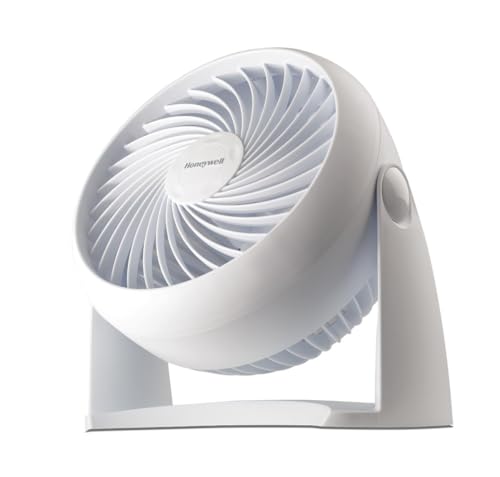
Honeywell HT-904 Quiet Personal Air Circulator
A warm office corner can feel stubborn even while the thermostat says everything should be fine. The Honeywell HT-904 tackles that pocket of trapped air with a compact tabletop body, three speeds, and a pivoting head that aims the breeze where it’s actually needed. Within the best quiet personal fan category, it stands apart from tiny handheld models because it’s built to circulate air across a room rather than cool only the skin from inches away. The tradeoff is simple: it needs an outlet and a stable surface, but it offers broader airflow and steadier everyday use in return.
Honeywell HT-904 TurboForce Fan
The HT-904 is small enough for a desk, nightstand, shelf, or floor, yet Honeywell positions it as an air circulator for small to medium rooms. That distinction matters because an air circulator is meant to keep air moving through a space, not just produce a narrow stream in one direction. The compact footprint helps it fit into crowded rooms where a pedestal fan would feel oversized. Its white finish also keeps the appearance simple, which suits bedrooms, home offices, and shared work areas without calling much attention to itself.
Wall-mounting support adds flexibility for rooms where surface space is scarce. A mounted position can keep the fan above clutter, away from pets, or clear of a cramped desk while still directing air toward a bed or seating area. The supplied description doesn’t include mounting hardware details, so installation requirements should be checked before relying on that setup. Even so, the multiple placement options make the HT-904 easier to adapt than a fan designed strictly for tabletop use.
This model isn’t pocket-sized, and it won’t travel like a rechargeable handheld fan. It’s better suited to moving between rooms, sitting under a desk, or staying near a work area for the season. That makes the term “personal” less about carrying it in a bag and more about shaping the airflow around one workstation or resting spot. The room-friendly size offers more reach than ultra-compact fans while remaining manageable enough to relocate without much fuss.
TurboForce Airflow And Cooling Reach
Honeywell uses what it calls an aerodynamic turbo design to maximize air movement. The product details state that airflow can be felt from up to 25 feet away, giving this little fan a much wider working range than most handheld models. That distance comes from the manufacturer’s information rather than independent measurement here, so it should be treated as a stated capability. Still, the claimed 25-foot reach explains why the HT-904 can contribute to room circulation instead of acting only as a close-up breeze source.
Three speed settings keep the control layout straightforward. Low speed can handle light circulation during focused work or sleep, while the higher settings are better for stagnant rooms, warmer afternoons, or helping conditioned air move through an awkward layout. Fewer speeds mean less fine-tuning than six-speed personal fans, but the controls are quicker to cycle through. The three-speed system suits anyone who prefers a simple low, medium, and high choice without extra buttons or displays.
The fan’s airflow has another practical role beyond direct cooling. Pointed across a room, it can help distribute air from an air conditioner instead of letting cool air settle near one vent. Angled toward a doorway, it may also encourage movement between connected spaces, though results will depend on room shape, obstacles, and temperature differences. This air-circulation focus makes the HT-904 more useful year-round than a fan that only feels comfortable when aimed directly at the face.
Strong airflow can become uncomfortable if the fan sits too close at maximum speed. Papers may flutter, eyes may dry, and loose hair can turn into a nuisance during desk work. Moving the unit a few feet away or using the pivoting head to send air slightly above the body can soften the effect without losing circulation. The adjustable positioning helps turn powerful output into a more pleasant background breeze.
Quiet Operation For Bedrooms And Offices
Quiet operation sits at the center of the HT-904’s appeal, particularly for desks, bedrooms, and reading spaces. Honeywell doesn’t provide a decibel figure in the supplied details, so there’s no numerical basis for calling it silent. Fan noise will also change with speed, surface type, dust buildup, and how closely the unit sits to the listener. The realistic expectation is low-distraction airflow, especially on the lower settings, rather than the complete absence of sound.
Sound quality matters just as much as raw volume. A steady rush of air often fades into the room, while clicking, rattling, or an uneven motor tone keeps pulling attention back to the appliance. The compact body should be placed on a solid surface because hollow desks and thin shelves can amplify vibration. A stable setup helps the quiet personal fan behavior feel more convincing during calls, sleep, or concentrated work.
Distance can improve both comfort and perceived noise. Because the fan is designed to project air farther than a small bedside model, it doesn’t need to sit inches from the head to be useful. Placing it across the room or at the far end of a desk can reduce the mechanical sound reaching the ears while maintaining noticeable airflow. That flexible operating distance is one of the HT-904’s clearest advantages over tiny fans that must stay close to make a difference.
The low setting will likely be the most sensible choice for overnight use. Gentle circulation can prevent a bedroom from feeling stuffy without creating a cold blast that wakes someone a few hours later. The description doesn’t mention timers, remote controls, or sleep modes, so speed and position must be adjusted directly on the unit. That lack of automation keeps the fan simple, though it may feel basic beside newer electronic models.
Pivoting Head And Everyday Placement
The 90-degree pivoting head gives the HT-904 more directional control than a fixed tabletop fan. Air can be aimed straight ahead, upward, or at an intermediate angle to suit the room and furniture arrangement. Pointing it upward can help mix warm and cool layers of air, while a lower angle provides direct relief at a desk or bedside. This 90-degree adjustment expands what the fan can do without adding an oscillating mechanism.
No oscillation is listed in the supplied description, which creates a clear tradeoff. A fixed stream can be more consistent and may avoid the intermittent mechanical sound that some oscillating fans produce. On the other hand, it won’t sweep airflow across several people or different parts of a wide room. The HT-904 favors steady directional circulation over automatic side-to-side coverage.
Floor placement can work well when the fan is angled upward across a room. Cool air often settles lower, so directing it diagonally may help move that air toward seating or sleeping height. On a desk, a slightly upward angle can keep papers from scattering while still sending air toward the upper body. The pivoting fan head makes these small adjustments easier than moving the entire fan or stacking it on improvised supports.
Wall mounting can also improve reach by removing furniture from the airflow path. A higher position may help circulate air above a bed, workstation, or crowded corner where a tabletop placement would be blocked. Permanent mounting reduces portability, though, and limits quick repositioning between rooms. The mounting option is most valuable where the fan will serve one consistent location throughout the warmer months.
Energy Use And Air Conditioner Support
Honeywell suggests using the fan to give an air conditioner a break by improving circulation. The logic is practical: moving conditioned air through the room can reduce hot and cool pockets, making the overall space feel more even. That may allow some households to rely less heavily on lower thermostat settings, though actual savings depend on climate, insulation, equipment efficiency, and daily habits. The fan’s energy-saving role is best viewed as support for an existing cooling system, not a replacement for one.
A fan changes how heat feels on the skin by increasing evaporation and moving warm air away from the body. It doesn’t lower the room temperature in the same way an air conditioner does, so expectations should stay grounded during extreme heat. Used in an occupied room, however, steady airflow can make a higher thermostat setting feel more tolerable. The comfort-per-watt advantage comes from cooling the occupied area rather than forcing the entire home to feel colder.
The corded design supports uninterrupted operation without battery checks or recharge cycles. That’s useful for long office days, overnight circulation, and rooms where the fan may run for many hours at a stretch. The downside is cable placement, especially near walkways, crowded nightstands, or wall-mounted positions. A safe, tidy route for the cord preserves the plug-in convenience without creating another household annoyance.
No power-consumption figure is included in the provided specifications, so exact operating cost can’t be calculated here. Fan speed will influence energy use, and local electricity rates will shape the final expense. Even without a precise number, a small tabletop circulator is generally intended as a lighter cooling aid than running central air solely to fix one uncomfortable corner. The focused circulation strategy makes the most sense in occupied rooms rather than empty spaces.
Strengths, Weaknesses, And Best-Fit Use
The HT-904’s strongest trait is its balance of small size and room-reaching airflow. It can sit on a desk without dominating the surface, yet Honeywell states that its breeze can be felt from a considerable distance. The pivoting head adds direction without complicating the controls. Those core strengths make the fan useful in bedrooms, offices, dorm rooms, kitchens, and small living areas with uneven airflow.
Simple controls are another advantage. Three speeds reduce guesswork, and the lack of extra electronic features means there’s little to configure before the fan starts moving air. That simplicity may also suit spaces where a remote, app, display, or rechargeable battery would add more hassle than value. The straightforward operation keeps attention on placement and airflow rather than menus or charging schedules.
The limitations are equally clear. This fan isn’t cordless, doesn’t include listed oscillation, and lacks the pocket portability of a handheld model. The supplied details also don’t mention a timer, remote control, decibel measurement, or exact wattage. These feature tradeoffs make it less suitable for travel or highly automated bedrooms, but they don’t interfere with its main job as a compact air circulator.
The Honeywell HT-904 fits situations where quiet, steady airflow matters more than battery power or wearable convenience. It works best from a desk, shelf, floor, or mounted position, serving one room or work area without demanding much space. Its turbo-style airflow and adjustable head give it more authority than its modest body suggests, while the three-speed control keeps daily use uncomplicated. The best quiet personal fan label fits most naturally here for home and office cooling that needs wider reach than a pocket fan can provide.
iFunSky Mini Portable Turbo Fan
Heat feels a lot more personal when it settles around your face during a packed commute, a long outdoor line, or a makeup routine that’s already running behind schedule. The iFunSky model tackles that irritation with a tiny 0.2-pound body, five speed settings, and a stated top airflow of 10 meters per second. Those details place it squarely in the best quiet personal fan category, especially where pocket space and low noise matter as much as cooling strength. Its appeal isn’t built around room-wide circulation; it’s about concentrated relief that stays close, travels easily, and doesn’t feel like another brick in the bag.
iFunSky Mini Handheld Turbo Fan
The frame measures 1.65 by 4.3 inches, making this one of the more compact handheld designs described in the supplied information. At just 0.2 pounds, it should feel easy to carry during walks, outdoor events, or travel days when even small gadgets start adding up. The ultra-compact shape can fit into narrow storage spaces that would reject a thick cylindrical fan. A wallet may be a stretch depending on its construction, but a clutch, jacket pocket, or small purse is a more believable home for it.
Small size often comes with a catch: less room for the motor, battery, and blade assembly. iFunSky addresses that tradeoff with a high-speed three-phase brushless motor and a fourth-generation airflow system, according to the product description. The design aims to keep the housing tiny without settling for a weak little breeze. That power-to-size balance is the feature worth watching, because portability means very little if the fan has to sit inches from the skin to be noticed.
The black finish keeps the look clean and understated. It won’t draw much attention on a work desk, and it should blend easily with phones, chargers, and other everyday electronics. More important, the narrow body appears built for one-handed use without demanding a bulky grip. The lightweight handling could make a real difference during long waits, though the slim frame may feel less substantial than a larger fan with a wider handle.
Portability also affects how often a fan gets carried in the first place. A larger model may offer more blade area, yet it’s the one that gets left at home when the bag is already crowded. The iFunSky avoids that problem by staying genuinely small rather than merely calling itself portable. Its pocket-ready footprint makes the most sense for quick-access cooling rather than extended room use.
Five Speeds With Serious Airflow
Five speed levels give the fan a useful spread between a light breeze and maximum output. Lower settings should suit indoor work, reading, or close-range use where a hard blast would feel irritating. The upper levels have a clearer role during humid commutes, outdoor festivals, crowded stations, or hot sightseeing days. That five-speed range lets the fan adjust to the moment instead of forcing one intensity on every situation.
The manufacturer lists a maximum wind speed of 10 meters per second and a top motor speed of 15,500 RPM. Those are supplied specifications rather than independently verified measurements, so they’re best treated as stated performance figures. Even so, they signal that this isn’t designed as a soft novelty fan. The high-velocity output should be most noticeable at close range, where moving air across the skin can provide fast relief.
Raw speed isn’t always the answer, though. Maximum airflow can dry the eyes, disturb loose hair, and make conversation less comfortable if the fan is held too close. Medium speed will probably do the heavy lifting during everyday use, with the top setting saved for short, hotter stretches. The adjustable intensity helps keep the fan useful beyond those brief moments when the heat feels downright rude.
A concentrated airflow pattern brings both strength and limitation. It can cool the face, neck, or hands quickly, but it won’t lower the temperature across a bedroom, office, or tent. Anyone expecting room circulation will be asking the wrong tool to do the job. The iFunSky is better viewed as close-range personal cooling, with the strongest results coming from deliberate positioning rather than distance.
Quiet Operation Without Overpromising
iFunSky describes the fan as whisper-quiet and credits precision acoustic engineering for reducing noise. No decibel figure appears in the supplied details, so the exact sound level can’t be confirmed here. That missing number matters because “quiet” can mean anything from a soft hum to merely less noisy than a competing turbo fan. Still, the focus on acoustic control suggests that sound was considered alongside speed rather than ignored.
A brushless motor can help create smoother operation by reducing mechanical friction compared with older motor designs. Yet motor type is only part of the story; blade balance, grille shape, housing vibration, and speed all affect what reaches the ear. High output usually creates more wind noise, even if the motor itself remains calm. The lowest speed settings will likely be the safer bet for sleep, office calls, or quiet reading sessions.
Sound character deserves attention, too. A steady rush of air often fades into the background, while rattling or sudden pitch changes keep pulling focus away from work. A lightweight fan may also transmit vibration if placed on a hollow desk or hard shelf. Using the foldable base on a stable surface should help preserve the low-distraction experience the design is trying to deliver.
The phrase best quiet personal fan fits this model most naturally in situations where the fan stays close but shouldn’t dominate the room. That includes makeup tables, small desks, shared bedrooms, travel seats, and quiet corners during long waits. Maximum speed may still be audible, and pretending otherwise would be silly. The real question is whether the lower and middle settings provide enough airflow without becoming a nuisance.
Three Ways To Use One Small Fan
The 180-degree folding body supports handheld, desktop, and neck-style use. Held upright, it works like a standard hand fan; folded, it can sit on a flat surface and aim airflow toward the upper body. An adjustable lanyard adds a hands-free option for walking, commuting, or handling bags. This three-in-one design expands usefulness without adding separate stands or brackets.
Desktop mode may be the most practical surprise. A small fan that can stand on its own becomes more useful during meals, work sessions, makeup application, or hotel stays. The folding angle lets the airflow rise toward the face instead of blowing straight across the tabletop. That adjustable positioning also helps keep papers and loose objects from getting pushed around.
Neck mode comes with realistic tradeoffs. A lanyard lets the fan hang near the chest, but it won’t stay as fixed as a structured neck fan with rigid arms. Movement may cause the airflow to drift or the body to bump lightly against clothing. Even so, the hands-free option can be handy during outdoor lines, photography, shopping, or travel days when both hands are already busy.
The hinge is a useful moving part, though no durability information is included. Repeated folding puts stress on any joint, especially when the fan doubles as its own stand. Careful handling will matter if the fan shifts between modes several times a day. The foldable mechanism adds real convenience, but it’s also the part most likely to shape long-term usability.
Battery Life And Charging Flexibility
A 4000mAh rechargeable battery powers the fan for up to 12 hours, according to the provided description. Actual runtime will change with speed, battery age, ambient temperature, and charging habits. Lower levels should stretch the charge farther, while the highest setting will naturally consume power faster. The up-to-12-hour runtime gives the fan enough stated endurance for many commutes, workdays, and outdoor outings.
Charging compatibility is broad rather than proprietary. The fan can draw power from USB ports, laptops, power banks, and car chargers, which makes it easier to keep running while away from a wall outlet. No full recharge time or charging wattage is listed, so turnaround speed remains unclear. Even so, the USB charging support fits neatly into the way most people already power phones and travel electronics.
Battery planning becomes easier with five speeds because output can be matched to the situation. A low setting during a long ride may conserve power, while a brief burst at maximum speed can handle a hot platform or crowded sidewalk. That rhythm makes better use of the available capacity than running full blast from morning onward. The speed-to-runtime tradeoff is flexible rather than frustrating.
The compact housing means the battery and motor share limited internal space, making the stated 4000mAh capacity notable for such a small frame. Still, no independent battery test is available in the supplied information. Expecting the full 12 hours at maximum output would be unrealistic. The sensible reading is longer endurance at lower speeds, with shorter operation as airflow intensity rises.
Strengths, Limits, And Daily Fit
The biggest strength is obvious: the iFunSky packs a strong set of features into a remarkably small body. Five speeds, a foldable stand, a lanyard, a brushless motor, and a 4000mAh battery cover the core needs without making the fan bulky. The stated 10 m/s airflow gives the product a more serious cooling identity than a basic novelty fan. Its compact performance package is the main reason it stands out.
Quietness is another meaningful strength, though it comes with an asterisk because no decibel figure is supplied. The design specifically emphasizes reduced acoustic output, which matters in offices, bedrooms, and travel spaces. Lower speeds should offer the best balance between comfort and sound, while top speed will likely produce more noticeable airflow noise. The quiet-cooling focus is credible as a design goal, even without laboratory verification.
The limitations are mostly tied to scale. A 1.65-by-4.3-inch fan won’t cool a whole room, and its concentrated airflow may need careful aiming. The lanyard mode won’t feel as stable as a dedicated neck fan, while the slim grip may not suit every hand equally well. These size-related tradeoffs are reasonable, but they shouldn’t be ignored just because the specifications sound impressive.
Maintenance details are also absent. Pocket lint, cosmetic powder, and dust can collect around a small grille, eventually affecting airflow and sound. The description doesn’t say whether the cover can be removed, so cleaning access can’t be judged. For frequent bag carry, regular exterior cleaning will likely matter more than it does with a fan that stays on one desk.
The iFunSky fits days where carrying less matters, yet weak airflow isn’t acceptable. It’s built for commutes, outdoor heat, travel, makeup routines, and quick desk cooling rather than replacing a room circulator. The blend of tiny dimensions, adjustable speed, and long stated runtime gives it a clear practical identity. Its best-fit role is quiet, close-range cooling that can disappear into a pocket once the temperature settles down.

Best Quiet Ceiling Fan For Bedroom 2026 Ultimate Comfort Picks

Best Ceiling Fan For Master Bedroom 2026 With Ultimate Comfort

Best White Ceiling Fan With Light For Bedroom 2026 Top Picks

Best Quorum Medallion Ceiling Fan 2026 With Style & Breeze
Best Outdoor Fan For Pergola 2026 Comfort Boost

Best Ceiling Fan For Great Room 2026 With Ultimate Comfort

Best Outdoor DC Ceiling Fans 2026 For Breezy Comfort
Best ceiling exhaust bath fan with light and heater 2026





