
Best Quietest Desk Fan 2026: Calm Airflow Picks

A best quietest desk fan should cool the space around your chair without adding a steady mechanical whine to every call, reading session, or late-night task. That sounds simple, but plenty of compact fans trade lower prices for rattling housings, buzzy motors, or airflow that feels harsh at close range. The better designs create a controlled breeze rather than blasting papers across the desk. They also stay planted instead of creeping backward whenever the speed is raised.
Low-noise operation matters most at the lower settings, since that is where a desk fan often runs for hours. A strong top speed can be handy after walking in from the heat, but a smooth first or second speed usually proves more useful during focused work. Brushless motors tend to produce a steadier sound profile, though the fan blade shape, grille design, and housing construction matter too. Even a quiet motor can become irritating if loose plastic parts vibrate against each other.
Airflow quality deserves just as much attention as the published noise figure. A narrow jet may feel refreshing for a minute, yet it can dry the eyes and become distracting when aimed at the face. Wide, gentle airflow spreads cooling across the upper body and lets the fan sit farther away from keyboards, notebooks, and microphones. Adjustable tilt also helps because the breeze can be aimed toward the chest or shoulders rather than directly into the eyes.
Size creates a real tradeoff. Tiny models save precious desktop space, but smaller blades often need to spin faster to move a useful amount of air, which can create a sharper sound. Larger desk fans usually deliver more airflow at a slower blade speed, though they take up more room and may look bulky beside a monitor. A stable base, compact footprint, and practical grille diameter often strike the sweet spot.
USB-powered desk fans suit flexible setups because they can run from a laptop, power bank, or wall adapter. Still, cable length and port placement can become annoying if the desk already has a tangle of chargers and accessories. Rechargeable models remove that clutter for a while, but battery runtime drops noticeably at higher speeds. Plug-in fans avoid battery aging and charging routines, making them easier to leave in one fixed workspace.
Controls should be easy to use without forcing a glance away from the screen. A single button may look clean, but cycling through every speed to turn the fan off gets old fast. Separate power and speed controls feel more natural, while memory settings save a small but welcome bit of friction. Physical buttons also tend to be easier to operate in the dark than smooth touch panels with no tactile feedback.
Cleaning is another detail that often gets ignored until dust coats the blades and reduces airflow. A removable front grille makes routine maintenance far less frustrating, especially in rooms with pets, open windows, or fabric-heavy furnishings. Sealed housings may look neat, but trapped dust can lead to extra noise and weaker performance over time. Easy-clean construction keeps a quiet fan from slowly turning into a dusty little rattle box.
No desk fan is silent, and that expectation usually leads to disappointment. Air moving through a grille creates sound even when the motor is barely audible. The practical goal is a soft, consistent hum without clicking, pulsing, scraping, or sudden changes in pitch. A fan that fades into the room is far easier to live with than one that posts a low number on paper but produces an irritating tone.

- LFR Score9.6
LFR Score is a ranking system developed by lightfansreviews.com. LFR Score has no relationship or impact from any manufacturers or sales agent websites. Learn more
- BrandDREO
- LFR Score9.2
LFR Score is a ranking system developed by lightfansreviews.com. LFR Score has no relationship or impact from any manufacturers or sales agent websites. Learn more
- BrandDREO
- LFR Score9.2
LFR Score is a ranking system developed by lightfansreviews.com. LFR Score has no relationship or impact from any manufacturers or sales agent websites. Learn more
- BrandHoneywell
- LFR Score9.2
LFR Score is a ranking system developed by lightfansreviews.com. LFR Score has no relationship or impact from any manufacturers or sales agent websites. Learn more
- BrandSWEETFULL
- LFR Score9.0
LFR Score is a ranking system developed by lightfansreviews.com. LFR Score has no relationship or impact from any manufacturers or sales agent websites. Learn more
- BrandKIMMOO

- LFR Score9.0
LFR Score is a ranking system developed by lightfansreviews.com. LFR Score has no relationship or impact from any manufacturers or sales agent websites. Learn more
- BrandKoonie

- LFR Score9.0
LFR Score is a ranking system developed by lightfansreviews.com. LFR Score has no relationship or impact from any manufacturers or sales agent websites. Learn more
- BrandDREO

- LFR Score8.8
LFR Score is a ranking system developed by lightfansreviews.com. LFR Score has no relationship or impact from any manufacturers or sales agent websites. Learn more
- BrandLevoit

- LFR Score8.6
LFR Score is a ranking system developed by lightfansreviews.com. LFR Score has no relationship or impact from any manufacturers or sales agent websites. Learn more
- BrandHoneywell

- LFR Score8.2
LFR Score is a ranking system developed by lightfansreviews.com. LFR Score has no relationship or impact from any manufacturers or sales agent websites. Learn more
- BrandKONSIDEN
Last update on 2026-07-08 / Affiliate links / Images, Product Titles, and Product Highlights from Amazon Product Advertising API
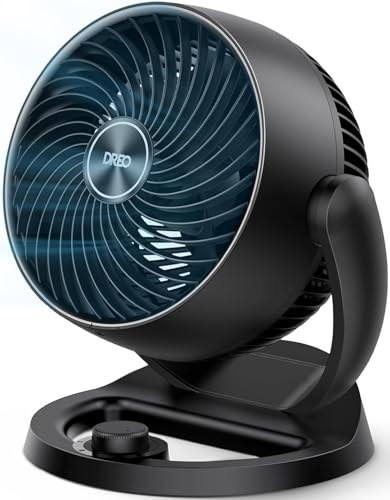
DREO Smart Fan For Quiet Whole-Room Airflow
A desk can feel perfectly organized and still become miserable once warm, stale air settles around the chair. Small fans often solve only half the problem, pushing a narrow stream toward one spot while adding a motor hum that becomes impossible to ignore. The best quietest desk fan needs to move air with purpose, keep noise under control, and avoid turning every adjustment into a fiddly chore. DREO approaches that challenge with a 12-inch smart fan built around long-range airflow, multidirectional oscillation, and unusually detailed control.
DREO TurboPoly Table Fan 565S
The most striking specification is the claimed 85-foot airflow reach, backed by TurboWind technology and airflow rated at up to 950 CFM. That puts this model closer to a compact room circulator than a basic fan meant to cool only the person sitting directly in front of it. Air can travel across a bedroom, home office, or dorm instead of fading a few feet from the grille. For a stuffy room with uneven temperatures, that extra reach may matter more than raw breeze intensity at arm’s length.
DREO also states that the fan can help cool a room in about one minute, although the practical result will depend on room size, layout, temperature, and whether cooler air is already available to circulate. A fan doesn’t lower air temperature in the same way an air conditioner does, so expectations need to stay grounded. Its real strength lies in moving trapped air quickly and helping conditioned air spread more evenly. That distinction matters because powerful circulation can make a room feel noticeably less stagnant without pretending to replace active cooling.
The 12-inch size creates a sensible middle ground. It’s larger than the tiny USB fans that struggle beyond a narrow workspace, yet it remains compact enough for a desk, nightstand, dresser, or shelf. That said, this isn’t the sort of fan that disappears beside a keyboard. Its broader housing and oscillating movement need a clear patch of space, particularly if both vertical and horizontal swing are enabled.
Airflow That Reaches Beyond The Desk
Many desk fans create a hard, concentrated blast that feels fine for a few minutes and then starts drying the eyes or disturbing papers. The DREO model aims for whole-room circulation, which changes how it can be positioned. Instead of sitting inches from the face, it can remain farther away and send air across the room. That setup often feels less intrusive during long work sessions because the breeze isn’t constantly hitting one narrow area.
Nine speed settings provide far more adjustment than the usual low, medium, and high controls. That broader range helps bridge the gap between barely-there nighttime airflow and stronger daytime circulation. A three-speed fan can force an awkward choice where one setting feels weak and the next sounds too aggressive. Here, fine speed control makes it easier to settle on a level that matches the room rather than simply tolerating the nearest option.
The six airflow modes add another layer, though they may feel excessive to anyone who prefers a straightforward switch-and-forget fan. Different modes can be useful as temperatures shift, especially when a steady breeze feels too direct or a changing pattern feels more natural. Still, more modes also mean more settings to understand. The benefit appears strongest for households that actually enjoy tailoring airflow instead of leaving the fan on one speed all season.
Power at the upper end should be treated as a tool rather than the default. Strong airflow can stir loose paper, lightweight curtains, or dust around a cramped workspace. A lower setting will usually make more sense at close range, while faster speeds fit rooms where the fan sits several feet away. That flexibility is a real advantage, but only if placement is planned with enough clearance around the unit.
Three-Dimensional Oscillation In Daily Use
The fan supports 90-degree horizontal and vertical oscillation, allowing airflow to travel side to side and up and down. That movement helps reach corners and different heights instead of sweeping the same horizontal band repeatedly. In a bedroom, the fan can circulate air from a lower nightstand toward the bed without being aimed directly at one person all night. In an office, it can spread air around monitors, shelves, and seating areas more evenly.
Vertical oscillation is especially useful because hot air tends to collect higher in the room. A fan that tilts upward can help disrupt that warm layer and mix it with cooler air below. The effect may be subtle in a small space, but it becomes more noticeable where heating, cooling, or sunlight creates uneven temperatures. Broader air mixing is the practical payoff, not merely the novelty of a moving fan head.
Full multidirectional movement won’t suit every situation. A person who wants constant airflow at a fixed chair may prefer to lock the fan into one position. Oscillation can also become distracting if the unit sits too close to the edge of a desk or sweeps air across loose documents. Luckily, the value here comes from choice: wide circulation when the room needs it, focused airflow when the task calls for something simpler.
The mechanical movement also deserves realistic expectations over the long term. More moving parts naturally create more complexity than a fixed-head fan. Nothing in the supplied information indicates a specific maintenance requirement for the oscillation system, so it would be unfair to claim otherwise. Still, leaving adequate clearance and avoiding obstacles around the fan should help prevent unnecessary strain during its 3D oscillation cycle.
Quiet Performance Without A Weak Breeze
DREO rates the lowest operating noise at 20 dB, supported by a next-generation brushless DC motor. That figure applies to the quietest operating condition, not every speed, so the fan will naturally become more audible as airflow increases. Even so, a 20 dB minimum suggests the design is intended for bedrooms, calls, reading, and late-night work where motor noise matters. The key is having enough low-speed airflow that the fan remains useful without being pushed into louder settings.
Brushless DC motors usually suit this kind of product because they allow smoother speed control and avoid some of the rougher mechanical character associated with cheaper fan motors. The supplied description also claims energy savings of up to 20 percent. Actual electricity use will vary with speed, mode, oscillation, and daily runtime, but the motor design supports the idea of efficient continuous operation. That’s relevant for a fan likely to run for hours rather than brief bursts.
Quietness involves more than a single decibel number. Blade noise, airflow passing through the grille, oscillation movement, and vibration against the desk all affect what the ear notices. A soft, steady whoosh is usually easier to ignore than clicking, pulsing, or a high-pitched motor tone. The provided details don’t describe those sound characteristics, so the safest judgment is that the 20 dB rating establishes a promising low-noise baseline rather than guaranteeing silence.
Placement can make or break the experience. A hollow desk, uneven shelf, or loose surface may amplify vibration from any fan, even one with a quiet motor. Setting the unit on a stable surface and keeping nearby objects from touching the housing can prevent needless rattles. That small bit of setup helps the fan deliver on its quiet-focused design without asking the motor to do all the work.
Smart Controls That Reduce Daily Fuss
The DREO app, Alexa support, and Google Home compatibility turn this into more than a fan with extra buttons. Remote control makes sense when the unit sits across the room, on a high shelf, or beside a bed that’s already comfortable. Adjusting speed, mode, or oscillation without getting up sounds minor until it becomes part of a nightly routine. Then, frankly, it’s hard to go back to walking across the room for every change.
Voice control can also help when hands are occupied, though it depends on an existing smart-home setup and reliable connectivity. Anyone who doesn’t use Alexa, Google Home, or phone-based controls may see little benefit in this layer. The physical fan should still earn its place through airflow and noise performance first. Smart features are convenient frosting, not a substitute for solid mechanical design.
The 12-hour timer is useful for sleep, work blocks, or rooms that don’t need continuous circulation. It can shut the fan down after the temperature drops overnight or after an office is no longer occupied. The product title also mentions an 8/12-hour timer, while the detailed description specifically lists a 12-hour timer. Because those details aren’t perfectly aligned, it’s safest to rely on the confirmed 12-hour capability rather than assume every timer option behaves identically.
Power-off memory saves the previous setting, which removes a common annoyance with electronically controlled fans. Instead of rebuilding the preferred speed and oscillation pattern after each shutdown, the unit can return to its earlier configuration. The 60-second automatic screen shutoff is another thoughtful touch for bedrooms because glowing controls can feel surprisingly bright in a dark room. Together, these details make the smart control system feel practical rather than tacked on.
Safety And Household-Friendly Details
A built-in child lock helps prevent accidental setting changes when curious hands reach the controls. That won’t replace sensible placement or supervision, but it adds a useful layer around a device with moving parts and multiple electronic functions. The lock is also handy in shared rooms where buttons tend to get pressed simply because they’re there. Less fiddling means fewer sudden speed jumps or unwanted oscillation changes.
The automatic screen-off feature contributes to safety and comfort in a quieter way. A darkened display reduces nighttime distraction while keeping the fan running normally. It also avoids the common bedroom irritation of covering bright control lights with tape. Small detail, yes, but sleep-friendly design often depends on these seemingly minor choices.
Power-off memory may be convenient, though households with changing conditions should still glance at the setting when restarting the fan. A high speed that made sense on a hot afternoon may feel excessive beside a bed at midnight. Memory reduces repetition, but it doesn’t replace judgment. That tradeoff is hardly a flaw, just part of using a feature-rich fan without letting automation run the whole show.
Where The DREO Fan Fits Best
This model makes the strongest case in spaces where a basic desk fan feels too limited. Its 85-foot airflow reach, up to 950 CFM output, and multidirectional oscillation suit rooms that need air moved beyond a single chair. A bedroom with uneven cooling, a home office that traps heat around equipment, or a dorm with restricted floor space can benefit from one compact unit doing broader circulation work. The fan’s appeal lies in covering more area without stepping up to a bulky pedestal design.
Close-range use still works, but the stronger specifications may be unnecessary for a tiny desk in a cool room. A simpler fan would take less space and involve fewer settings. The DREO earns its larger footprint by serving both as a personal fan and a room circulator. Without that second job, some of its power and smart features could go unused.
The lack of supplied information about cleaning access, cord length, exact dimensions, and included accessories leaves a few practical questions unanswered. Those details can affect placement and maintenance more than marketing numbers suggest. Dust buildup matters on any fan, particularly one designed for long daily operation. A buyer should keep those unknowns in mind rather than assume every maintenance detail is effortless.
As a best quietest desk fan candidate, the DREO TurboPoly Table Fan 565S stands out for combining low-speed quietness with room-scale airflow. Its strongest features work together rather than sitting in isolation: the brushless motor supports fine speed adjustment, the oscillation spreads that airflow, and the app makes distant placement easier. The tradeoff is greater size and complexity than a bare-bones desk fan. For rooms that genuinely need flexible circulation, though, that complexity has a clear purpose.
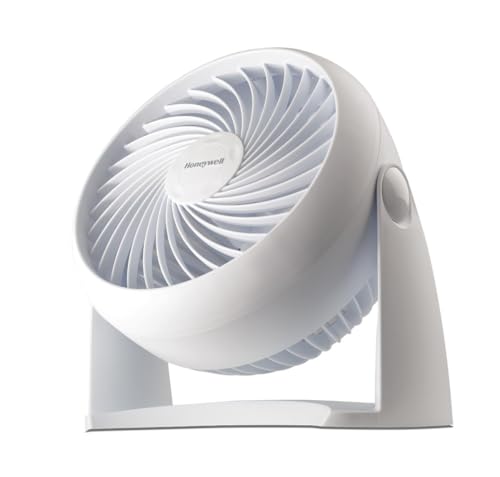
Dreo 12-Inch Quiet Whole-Room Air Circulator Fan
Hot air tends to settle into stubborn pockets, especially around a desk crowded with monitors, chargers, and paperwork. A tiny fan may cool one elbow while the rest of the room stays stuffy, and a louder model can trade heat frustration for a constant mechanical buzz. The best quietest desk fan should move air beyond arm’s reach without taking over the room acoustically. Dreo’s 12-inch air circulator tackles that problem with a 70-foot airflow claim, a 28 dB low-noise rating, adjustable tilt, and a refreshingly simple three-speed control.
Dreo 12-Inch Air Circulator
This fan measures 9 inches deep, 11 inches wide, and 12 inches high, so it occupies more space than a palm-sized USB model but remains manageable on a desk, dresser, kitchen counter, or sturdy shelf. That footprint gives the blades room to move a meaningful volume of air without demanding the floor space of a pedestal fan. It won’t vanish behind a coffee mug, though, and that’s worth remembering on narrow workstations. The design makes more sense where air circulation matters more than squeezing every last inch from the desktop.
Dreo’s WingBoost system combines deep-pitched blades with an aerodynamic housing intended to send air as far as 70 feet. The practical value isn’t simply feeling a stronger gust from across the room. Long-range airflow helps break up warm corners and move cooled or conditioned air through spaces that otherwise feel uneven. A bedroom with one chilly side and one stale side, for instance, can benefit from air being pushed through the whole room instead of straight at the bed.
The fan arrives ready for tabletop use, yet the description also notes that it can be hung on a wall. That extra placement option can free desk space or keep the unit above clutter, where the airflow has fewer obstacles. Wall installation will require a sensible mounting location and enough clearance for the fan’s adjustable angle. Still, tabletop and wall-mount flexibility gives this model more range than a conventional fixed-base desk fan.
Airflow That Travels Past The Workstation
The 70-foot reach is the headline feature, but the more useful story is how that airflow can be directed. A traditional personal fan often creates a narrow breeze that fades quickly, forcing the unit to sit close to the face. This Dreo circulator is designed to push air deeper into the room, so it can stay farther away and still feel effective. That distance may reduce dry eyes, fluttering papers, and the annoying sensation of constant air hitting one cheek.
Three speed settings keep the controls straightforward. A physical knob makes adjustment quick, with no app pairing, menus, or repeated button tapping needed to reach the preferred setting. The lowest speed suits gentle circulation near a bed or desk, while the higher levels are better positioned for moving air across a room. Simple knob control won’t impress anyone chasing smart-home features, but it’s easy to operate half-awake or with wet hands in a kitchen.
The limited three-speed range does create a tradeoff. Fans with six, nine, or continuously variable settings offer finer control when one speed feels slightly weak and the next feels too forceful. Here, the choice is simpler but less precise. That may be a welcome relief in a no-fuss setup, though sensitive sleepers or people who obsess over the exact breeze level could wish for an extra step between low and medium.
Strong room circulation also depends on placement. A fan pushed behind a monitor or wedged against a wall can’t use its aerodynamic design as effectively as one with open space around the intake and outlet. Setting it near a doorway may help move air between rooms, while aiming it toward the ceiling can mix warmer and cooler layers. The WingBoost airflow is most useful when the room layout works with it instead of blocking it.
Quiet Operation For Work And Sleep
Dreo rates the fan’s sound as low as 28 dB, supported by NACA-inspired airflow technology and a bionic design. That figure applies to the quietest operating condition, so the sound level will naturally rise at higher speeds. Even so, 28 dB signals a product built with bedrooms and focused work in mind rather than raw airflow alone. A low, steady air sound tends to blend into the room far better than rattling plastic or a sharp motor whine.
Noise quality matters just as much as the number on the box. A fan can measure softly yet still become irritating if the pitch pulses, clicks, or changes as the blades rotate. The supplied information doesn’t describe those finer sound characteristics, so it would be unfair to promise complete silence. The safer reading is that low-speed quietness is a central design goal, not that the unit becomes acoustically invisible.
Bedroom placement brings another practical consideration: distance. Sitting the fan several feet away and using the 70-foot airflow capability can create broader circulation without putting the grille right beside the pillow. That setup often feels calmer than a small fan aimed directly at the face all night. It also reduces the chance of loose bedding, curtains, or bedside items interfering with the airflow.
A stable surface can help preserve the quiet experience. Hollow furniture, uneven shelves, or objects touching the housing may amplify vibration that wouldn’t be noticeable elsewhere. Placing the fan on a firm base and keeping cables or decorations away from the body prevents avoidable buzzing. The 28 dB rating can only do so much if the surrounding furniture behaves like a drum.
Adjustable Tilt Without Complicated Controls
The fan offers 120-degree adjustable tilt, allowing the airflow to move from a low direct angle toward higher areas of the room. That range is useful because warm air often gathers near ceilings, especially in bedrooms with afternoon sun or kitchens that hold cooking heat. Tilting upward can help mix those layers instead of sending every bit of airflow across knee height. It also lets the fan sit on a low surface while still reaching a bed or standing workspace.
Manual tilt has a different appeal from automatic oscillation. The airflow stays exactly where it’s aimed, which works well for steady circulation through a doorway or toward one warm corner. There’s no moving head sweeping away every few seconds, and there are fewer motorized parts involved. The flip side is obvious: the fan won’t automatically distribute air side to side across a broad seating area.
A fixed direction can actually be preferable during concentrated work. Papers remain calmer, microphones encounter fewer sudden bursts, and the breeze doesn’t repeatedly cross the eyes. Once the angle is set, the fan quietly gets on with the job. For shared spaces, however, manual positioning may feel less convenient than an oscillating model that serves several spots at once.
The tilt mechanism also supports wall use. Mounted higher, the fan can direct airflow downward or across the room without taking up a counter or desk corner. Exact mounting hardware isn’t described in the provided details, so no assumptions should be made about what is included. The useful point is that the housing and base are designed for more than one orientation.
Seasonal Efficiency Beyond Summer
An air circulator earns its keep outside the hottest months by helping other appliances spread their output more evenly. Dreo specifically positions this fan alongside space heaters, humidifiers, and air purifiers. Moving heated air away from one corner can reduce the familiar problem of a warm ceiling and cold feet. Circulating humidified air may also prevent moisture from lingering only near the machine.
Pairing the fan with an air purifier can help room air reach the purifier more consistently, although the fan itself doesn’t filter anything. That distinction matters. It moves air; it doesn’t remove dust, odors, or allergens on its own. Used thoughtfully, though, faster room circulation can help another appliance influence a wider portion of the space.
Energy savings are presented as a benefit of improving appliance efficiency, but no exact percentage is supplied for this model. Real-world savings will depend on room size, insulation, thermostat habits, and how long each device runs. It would be a stretch to promise a specific reduction. The realistic advantage is that better air mixing may let heating, cooling, or humidity equipment work more evenly instead of creating one comfortable pocket and several neglected ones.
Seasonal placement may change, too. In summer, the fan can aim across occupied areas or help distribute cooler air from an air conditioner. During colder months, an upward angle can push rising heat into circulation. That flexibility makes the whole-room circulator design more useful than a narrow fan that spends half the year stored in a closet.
Cleaning And Everyday Handling
Dust buildup slowly reduces airflow and can add noise, so removable parts are a meaningful feature rather than a housekeeping footnote. The product description states that parts can be taken off for easier cleaning. Access to the grille and blades makes it simpler to remove lint, pet hair, and the gray film that collects after weeks of continuous use. A clean fan usually moves air more freely and avoids the off-balance vibration caused by uneven dust deposits.
The built-in base and handle also support moving the fan between rooms. A compact circulator often ends up traveling from a daytime workspace to a bedroom, then perhaps into a kitchen during meal prep. Carrying it by a proper handle is safer and less awkward than gripping the grille or motor housing. Portable handling matters more than expected when one fan serves several spaces.
Easy setup is another quiet strength. There’s no smart-home account, wireless connection, or software update standing between the box and the first breeze. Plug it in, set the angle, turn the knob, and the fan is ready. That simplicity may sound old-fashioned, but it removes several points of friction and keeps the experience centered on airflow rather than configuration.
The lack of remote control may bother anyone placing the unit across a large bedroom or mounting it high on a wall. Speed changes require physical access to the knob, which can become inconvenient at night. That’s the clearest cost of the stripped-down controls. The easy manual operation is dependable and direct, but it doesn’t offer couch-side or bedside adjustment from a distance.
Practical Strengths And Honest Limits
The strongest argument for this Dreo model is its balance of long-range airflow and restrained operating noise. Many small fans excel at one or the other, either whispering weakly or pushing air with a harsh mechanical presence. A 70-foot reach paired with a low setting rated at 28 dB gives this unit a useful middle ground. It can serve a desk without being trapped there.
Its limits are equally clear. Three speeds provide less precision than more elaborate circulators, manual tilt doesn’t replace oscillation, and the lack of remote or app control means every adjustment happens at the fan. The 12-inch body also takes more surface area than a mini personal fan. Those compromises aren’t deal-breakers, but they shape where the fan feels sensible.
A cramped workstation that needs only a light breeze may be better served by something smaller. This model makes more sense where one device needs to cool a nearby chair and keep the rest of the room from feeling stale. The ability to place it on a table, carry it between rooms, or hang it on a wall strengthens that role. Flexible placement is a bigger advantage here than decorative styling or a long feature list.
As a best quietest desk fan contender, the Dreo 12-Inch Air Circulator favors practical airflow over gadgetry. It offers meaningful reach, a broad tilt range, accessible cleaning, and controls that don’t need a manual beside them. The missing extras are noticeable, particularly from across the room, yet the core design remains focused. For steady circulation without constant electronic fuss, that focus is precisely what gives it character.
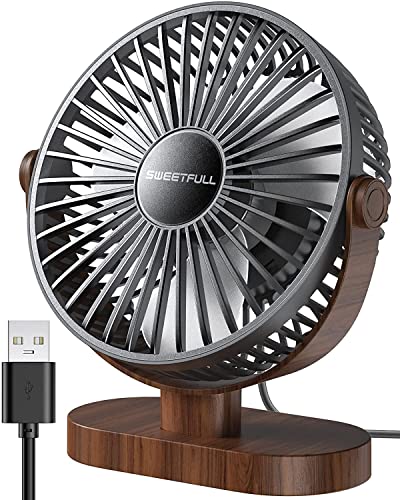
Honeywell HT-904 Quiet Personal Air Circulator Fan
A warm desk corner can become distracting long before the rest of the room feels uncomfortable. Add a noisy motor, and the cure starts competing with phone calls, reading, or sleep. The best quietest desk fan should create useful airflow without demanding much space or attention. Honeywell’s HT-904 takes a straightforward route with a compact body, three speeds, a 90-degree pivoting head, and airflow designed to remain noticeable from up to 25 feet away.
Honeywell TurboForce HT-904
The HT-904 is small enough to sit on a desk, nightstand, shelf, or floor, yet Honeywell positions it as capable of helping circulate air in small to medium rooms. That distinction matters because many compact fans barely move air beyond the person sitting directly in front of them. This model is built as an air circulator rather than a simple close-range breeze maker. Its job is to keep air moving through the space, not merely cool one hand beside a keyboard.
The white housing keeps the appearance clean and uncomplicated, which suits bedrooms, offices, and shared living areas without calling much attention to itself. Compact size is a practical strength in rooms where every surface is already doing double duty. A bulky fan can crowd notebooks, lamps, speakers, or bedside essentials, while the HT-904 asks for a relatively modest footprint. Still, it needs enough open space around the intake and grille to move air efficiently.
Wall mounting adds another layer of flexibility. Raising the fan above furniture can free up desk space and help airflow travel across the room with fewer obstacles. The supplied details don’t specify mounting hardware, so it’s best not to assume everything required is included. Even so, tabletop, floor, and wall placement give this small fan more options than models locked into one position.
TurboForce Airflow From A Compact Body
Honeywell’s aerodynamic TurboForce design is intended to maximize air movement without requiring an oversized fan housing. The company states that airflow can be felt from up to 25 feet away, which gives the HT-904 more reach than a typical miniature personal fan. That distance can help move air from one side of a bedroom or office toward another. It also allows the fan to sit farther away, reducing the need for a direct blast at close range.
Longer airflow reach changes how the fan fits into daily routines. Instead of parking it beside a monitor and aiming it straight at the face, the unit can sit on a shelf or dresser and circulate air across the room. That broader setup can feel less drying around the eyes and less disruptive around loose paper. The focused air stream is especially useful where one corner tends to hold heat while the rest of the room feels acceptable.
The fan won’t lower room temperature by itself, and that’s an important expectation to keep straight. It moves air, helps sweat evaporate, and can distribute cooler air produced by an air conditioner. In a closed, hot room with no cooler air source, the fan may improve comfort without actually reducing the measured temperature. Its strength lies in air movement and circulation, not refrigeration.
Placement makes a noticeable difference. A fan pushed against a wall, surrounded by books, or blocked by computer equipment can’t draw and send air as effectively. Giving the rear intake a little breathing room helps the TurboForce design do its job. Aiming the airflow through a doorway or across an open path may also make the 25-foot reach more useful than pointing it into nearby clutter.
Three Speeds Keep Operation Simple
The HT-904 offers three speed settings, which keeps control simple and familiar. There’s no app, remote, display, timer, or stack of airflow modes to learn. Turn the control, choose the desired speed, and the fan gets on with it. That direct approach suits spaces where reliability and quick adjustment matter more than automation.
Low speed is the natural setting for quiet desk work, reading, or nighttime circulation. Medium gives a stronger breeze without immediately jumping to maximum output, while high is better reserved for stuffier conditions or longer-distance airflow. Three steps won’t provide the precision of a fan with nine speeds, but they cover the basic range most people actually use. The tradeoff is fewer in-between options when one setting feels slightly too weak and the next feels a bit too brisk.
Physical controls also have an advantage in dim rooms. A simple knob or switch is easier to operate by touch than a glossy panel with tiny icons. There’s no pairing process, software update, or connectivity issue to interrupt operation. The manual control layout may seem plain, but plain can be a blessing when the room is hot and patience is running thin.
The lack of remote access is the obvious limitation. If the fan sits across the room or is mounted on a wall, speed changes require walking over to it. That may not matter on a desk, but it can become less convenient beside a bed or couch. The HT-904 favors simplicity over distance control, and that choice works best when the fan remains within easy reach.
Quiet Cooling Without A Complicated Setup
Honeywell describes the HT-904 as operating quietly, which is central to its appeal as a quiet personal fan. The provided information doesn’t include a specific decibel rating, so it would be misleading to assign one. Quietness should therefore be understood as a design intention rather than a guaranteed laboratory number. The practical goal is lower distraction during work, rest, or conversation.
Sound will naturally change with speed. Low is likely to be the most suitable setting for sleep or concentrated tasks, while high speed will produce more airflow noise. That isn’t a defect; moving more air usually creates more sound through the grille and blades. The useful question is whether the lower settings still provide enough circulation to avoid running at full power all the time.
Furniture can influence perceived noise as much as the fan itself. Hollow desks, loose shelves, or lightweight cabinets may amplify vibration and turn a modest hum into something more noticeable. Placing the unit on a firm, level surface can help keep operation calmer. A thin mat may also reduce transferred vibration, provided it doesn’t block airflow or make the base unstable.
Dust buildup is another source of extra sound over time. Lint on the blades or grille can reduce balance and make the fan work less smoothly. The supplied details don’t explain the cleaning process, so no claims should be made about removable parts or tool-free access. Regular surface cleaning around the grille remains a sensible way to protect steady airflow and quieter operation.
The 90-Degree Pivoting Head Matters
The fan head pivots through 90 degrees, allowing airflow to be aimed straight ahead, upward, or somewhere between. That adjustability is more useful than it may appear at first glance. Warm air often collects higher in a room, while cool air from an air conditioner may stay low or remain trapped near one side. Tilting the fan upward can help mix those layers instead of blowing only across desk height.
A pivoting head also supports low placement. Set the fan on the floor, and the airflow can still be directed toward a bed, chair, or upper part of the room. Place it on a shelf, and the angle can be lowered toward a workspace. The adjustable airflow direction makes the compact housing easier to fit into awkward rooms without relying on a tall stand.
The HT-904 does not provide automatic oscillation according to the supplied details. That means it won’t sweep airflow side to side across several seats. A fixed direction can be a benefit during focused work because the breeze stays where it’s aimed, but shared spaces may feel better served by an oscillating model. The choice comes down to whether steady targeted airflow or broader automatic coverage matters more.
Manual adjustment also means the fan head stays put until someone changes it. There’s no oscillation motor adding extra movement or complexity. That stripped-down design can reduce distractions and keeps operation predictable. Still, anyone expecting the fan to circulate every corner automatically should understand that positioning remains hands-on.
Working With An Air Conditioner
The HT-904 can help an air conditioner feel more effective by pushing cooled air through the room instead of letting it settle near a vent. This is where a circulator differs from a weak personal fan. It can move conditioned air toward a desk, bed, or warm corner without forcing the thermostat lower. The practical benefit is better distribution of existing cool air.
Honeywell also presents fan use as a way to reduce energy consumption and costs, though no exact savings figure is supplied. Real results will depend on climate, room size, insulation, thermostat settings, and daily runtime. A fan may allow a higher thermostat setting while preserving comfort, but that outcome isn’t guaranteed in every home. The sensible takeaway is that circulation can support an air conditioner rather than replace it.
The same logic applies during cooler months. Warm air from a heater tends to rise, and an upward-tilted fan can help push it back into circulation. That makes the HT-904 useful beyond summer, particularly in rooms with uneven temperatures. A compact fan that remains useful through several seasons is easier to justify than one stored away for most of the year.
Pairing appliances does require thoughtful placement. Putting the fan too close to a vent may create a concentrated draft, while placing it across the room can encourage broader mixing. The 25-foot airflow reach gives some freedom to experiment without keeping the unit directly beside the heating or cooling source. Small adjustments in angle and distance may produce a more comfortable result than simply using the highest speed.
Where The HT-904 Makes The Most Sense
This fan suits rooms where surface space is limited but weak airflow isn’t acceptable. A home office, bedroom, dorm, kitchen counter, or compact living area can benefit from a fan that remains portable and doesn’t dominate the room. The small footprint and room-reaching airflow are the core combination here. It’s less about gadgets and more about getting air from one side of a modest space to the other.
A large open room may expose the limits of the compact body, especially if strong coverage is needed across several seating areas. The fan is described for small to medium spaces, and expectations should stay within that lane. Its fixed direction may also feel restrictive where several people want airflow at once. In those settings, a larger oscillating fan could provide broader coverage.
Desk use highlights both its strengths and compromises. The fan is compact enough for many work surfaces, quiet-focused, and adjustable enough to avoid blasting directly into the eyes. On the other hand, its 25-foot capability may be more than necessary for a tiny cubicle, and three speeds offer limited fine-tuning. The best fit is a desk fan that also needs to serve the surrounding room.
As a best quietest desk fan candidate, the Honeywell HT-904 stands out through restraint. It offers three practical speeds, targeted 90-degree adjustment, portable placement, wall-mount potential, and airflow designed to reach farther than its small body suggests. It won’t satisfy a craving for remote controls or automatic oscillation, but it also avoids turning basic cooling into a technical project. For steady air movement with little fuss, that simplicity carries real weight.
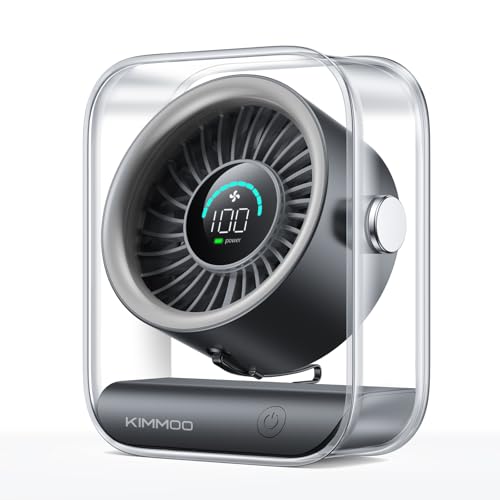
SWEETFULL 6.5-Inch Quiet USB Desk Fan
A cramped workspace doesn’t leave much room for a bulky appliance, yet warm air around a laptop can make a short task feel twice as long. Loud personal fans create another headache, especially during calls, reading, or late-night work. The best quietest desk fan should fit beside everyday gear, aim airflow precisely, and run without adding an irritating mechanical buzz. SWEETFULL’s compact USB fan leans into that practical role with a 10-ounce body, three speeds, full vertical adjustment, and a stated noise level below 25 dB.
SWEETFULL 6.5-Inch USB Desk Fan
The first thing that separates this model from larger air circulators is its compact 6.5 x 2.5 x 7.4-inch size. That narrow 2.5-inch depth helps it fit along the edge of a desk, inside a crowded cubicle, or on a small bedside surface without swallowing valuable space. At just 10 ounces, it’s also light enough to move between rooms or pack with work and travel gear. The tradeoff, naturally, is that this remains a personal fan rather than a machine designed to circulate an entire large room.
The black wood-grain base gives the fan a warmer look than the usual plain plastic shell. It won’t fool anyone into thinking it’s carved from real wood, but the pattern softens the office-equipment appearance that many USB fans carry. That small visual detail can matter on a tidy desk where every accessory is visible. More important, the base includes anti-slip rubber intended to reduce movement, vibration, and the extra noise that comes from a fan skittering across a hard surface.
Portability is one of the clearest strengths here. A lightweight fan can move from a home office to a kitchen counter, car setup, tent, or hotel desk without much planning. It doesn’t require a dedicated corner or permanent installation, and the slim frame should be easier to tuck into a bag than a round tabletop circulator. Still, lightweight construction means placement deserves attention outdoors, where a gust, uneven surface, or bumped cable could shift the fan more easily than a heavier model.
Quiet Airflow For Close-Range Comfort
SWEETFULL states that the fan operates at under 25 dB, making low-noise performance a central part of its design. That figure suggests a quiet baseline for desk work, studying, or sleep, though sound will naturally increase as the speed rises. No fan is completely silent because air passing through blades and a grille creates its own soft rush. The useful goal is a steady sound that fades into the background instead of producing clicks, rattles, or a sharp electronic whine.
Close-range airflow is where this fan makes the most sense. Sitting a foot or two from the body, it can provide a personal breeze without forcing an air conditioner to cool the entire room more aggressively. That setup is handy around heat-producing laptops, sunny windows, or parked cars where the surrounding air feels stale. The personal cooling focus also helps keep expectations realistic because a 6.5-inch fan isn’t built to push air across a spacious living room.
The anti-slip base supports quieter use by limiting vibration against desks, nightstands, and countertops. Hard furniture can amplify even a modest motor hum, especially if the surface is hollow or uneven. Rubber contact points help isolate some of that movement while keeping the fan aimed in the chosen direction. A stable placement also prevents the USB cord from slowly pulling the lightweight housing sideways.
Higher speed will be more audible, and that’s simply part of moving more air through a small frame. Compact blades often need to spin faster than larger ones to create a noticeable breeze, so maximum output may not retain the same subdued character as the lowest setting. The under-25 dB claim shouldn’t be interpreted as a promise for every operating condition. Low speed will likely be the setting that best matches quiet calls, light sleepers, and concentration-heavy tasks.
Three Speeds Without Control Clutter
The fan uses one button to cycle through low, medium, and high speeds. Repeated presses move through the available levels, keeping the control panel clean and easy to understand. Low can provide gentle airflow during long work sessions, medium offers a stronger everyday breeze, and high suits hotter moments when subtle cooling isn’t enough. There’s no app, remote, display, or complicated mode sequence standing between the user and the airflow.
A single-button layout is simple, but it has a small annoyance built into it. Turning the fan off may require cycling past other speeds, depending on the exact control sequence. Separate power and speed buttons would provide faster shutdown, especially when the fan is used repeatedly throughout the day. Even so, three straightforward levels are easier to manage than vague touch controls or a long menu of modes that rarely get used.
The limited speed range also means there are no fine adjustments between the three steps. Some people may feel that low is too mild while medium is slightly stronger than they want at close range. Larger fans with more settings handle that middle ground better, though they usually cost more and occupy additional space. This SWEETFULL model favors uncomplicated operation over precise tuning.
Placement can smooth out those differences. Moving the fan a little farther away often makes medium speed feel gentler, while directing the airflow toward the upper body rather than the face can reduce dryness. Small shifts in distance and angle may prove more useful than endlessly adjusting a digital control. The simple speed system works best when paired with thoughtful positioning rather than treating every setting as fixed to one use.
Full Vertical Adjustment Changes The Setup
The fan body rotates vertically from 0 to 360 degrees, giving it far more directional freedom than a fixed-head mini fan. Air can be aimed straight ahead, upward, downward, or toward an awkward angle without moving the entire base. That range is useful on shelves, low tables, car consoles, and desks where the fan can’t always sit directly in line with the body. It also helps keep airflow away from loose papers while still cooling the chest or shoulders.
Vertical rotation shouldn’t be confused with automatic oscillation. The fan stays in the selected position rather than sweeping around the room on its own. That fixed airflow can be preferable during desk work because the breeze doesn’t repeatedly cross the eyes, microphone, and paperwork. Shared spaces, however, may benefit more from an oscillating model capable of distributing air across multiple positions.
A complete rotational range also makes the fan easier to pack. The head can be repositioned to protect the grille or create a flatter shape among other items, depending on the surrounding space. Care is still needed because the frame and grille are lightweight components, not rugged travel equipment. The 360-degree adjustment adds flexibility, but it doesn’t make the fan immune to pressure inside an overstuffed bag.
Angle matters outdoors as well. On a picnic table or campsite surface, the fan may need to point upward from a lower position or around nearby objects. The rotating frame provides that freedom without requiring a stand or bendable neck. Wind conditions will still limit the effect, since a small personal fan can’t overpower strong natural airflow. In sheltered spaces, though, precise direction can make its modest output feel much more useful.
USB Power Brings Freedom And Limits
The included 4.7-foot USB cable can connect to desktops, laptops, power banks, AC adapters, and car chargers. That broad compatibility makes the fan easy to use in places where a standard wall outlet isn’t conveniently located. A power bank can support outdoor or travel use, while a laptop port keeps the setup compact at a temporary desk. The longer cable also provides more placement freedom than the short leads found on some miniature fans.
No battery is included, so the fan must remain connected to a power source during operation. That detail matters because the word “portable” can sometimes suggest cordless use. The fan itself is easy to carry, but it won’t run independently once unplugged. A power bank can create a mobile setup, although that adds another device and cable to manage.
USB power also means performance may depend on the source. A stable adapter or suitable power bank is generally a cleaner arrangement than relying on an overworked hub packed with accessories. The provided information doesn’t list the fan’s exact power requirements, so assumptions about compatibility with every low-output port should be avoided. The safest approach is to use a dependable USB source and keep the cable free from tight bends.
Cable routing can affect the tidy footprint. At nearly five feet, the cord offers welcome reach, yet excess length may gather around a small desk unless it’s guided behind equipment. The lightweight housing could also shift if the cable hangs under tension. The USB-powered design is flexible, but a little cable management keeps that flexibility from turning into clutter.
Cleaning Access And Everyday Tradeoffs
The detachable front cover addresses a common weakness in compact fans: dust that becomes trapped behind a sealed grille. Easier access allows buildup to be removed from the blades and interior surfaces before it begins restricting airflow. That matters in bedrooms, cars, pet-friendly homes, or offices where lint collects quickly. A cleaner blade assembly can also help preserve balanced rotation and quieter performance.
Cleaning still requires care. The fan should be disconnected from power before the cover is removed, and moisture should stay away from the motor and USB connection. The supplied description doesn’t provide detailed cleaning instructions, so aggressive disassembly or soaking would be unwise. Gentle dust removal is the practical route, particularly around lightweight plastic tabs and grille sections.
This model’s main limitations come directly from its compact design. It lacks automatic oscillation, cordless operation, a timer, remote control, and more granular speed settings. Its airflow is intended for personal comfort rather than serious whole-room circulation. Those omissions keep the fan straightforward, but they may feel restrictive in a bedroom where distant control or scheduled shutdown matters.
As a best quietest desk fan candidate, the SWEETFULL 6.5-Inch USB Fan makes its case through portability, low stated noise, precise vertical aiming, and easy cleaning access. It’s better suited to a desk, car, bedside corner, or sheltered outdoor setup than a large open room. The wood-grain base adds a little personality, while the three-speed button keeps operation uncomplicated. For close-range airflow without a bulky footprint, its modest scale is less a weakness than the whole point.
KIMMOO Rechargeable 100-Speed Quiet Desk Fan
A stuffy desk can ruin concentration faster than expected, especially when cables, screens, and warm electronics already crowd the space. Many compact fans offer either weak airflow or an irritating buzz, leaving little middle ground for steady comfort. The best quietest desk fan should give precise control, stay portable, and avoid turning every adjustment into a guessing game. KIMMOO’s rechargeable model tackles that frustration with 100 speed levels, a digital display, flexible positioning, and battery-powered operation in a body small enough for travel.
KIMMOO 100-Speed Rechargeable Desk Fan
The compact frame measures 5.5 x 3.11 x 6.58 inches, which makes it considerably easier to place than a traditional tabletop circulator. It can sit beside a monitor, on a nightstand, or inside a travel bag without taking over the available space. At 0.92 pounds, the fan is light enough to move around the house without a second thought. That low weight also makes it practical for hotel rooms, temporary workstations, and outdoor setups where a larger fan would be a pain to carry.
Portability is more than a size claim here because the fan includes a rechargeable battery. It can run away from a wall outlet, which clears some of the cable clutter that often builds up around laptops and chargers. That freedom makes a noticeable difference on patios, in cars, or during short power interruptions. The tradeoff is that battery life depends heavily on speed, so the strongest settings will likely drain power faster than the gentlest ones.
The black finish gives the unit a restrained, practical look rather than the toy-like styling found on some miniature fans. A compact fan still needs enough stability to stay aimed correctly, especially when the motor ramps up. The supplied details don’t mention the base material or anti-slip pads, so assumptions about grip would be unfair. Still, the small footprint and low weight clearly favor mobility over the planted feel of a heavier room fan.
One Hundred Speeds Change The Experience
The defining feature is the 100-speed control range, stretching from a mild setting at Speed 1 to the strongest output at Speed 100. That level of adjustment is far beyond the usual low, medium, and high layout. Instead of settling for a breeze that feels slightly too weak or annoyingly strong, the fan allows smaller steps between comfort levels. For close-range desk use, that precision can matter more than raw maximum power.
Fine control also helps with changing conditions throughout the day. A gentle breeze may be enough during a cool morning, while afternoon heat could call for something much stronger. The broad speed range avoids abrupt jumps that can dry the eyes or scatter paper across the desk. Precise airflow adjustment is particularly useful when the fan sits within arm’s reach and every change feels more noticeable.
There is a practical downside to having so many settings. Moving from a low number to a very high one could become tedious if the controls require repeated presses rather than quick scrolling. The provided description doesn’t explain the exact adjustment method, so it’s best not to pretend the process is effortless. Even so, 100 levels give this fan a flexibility that three-speed models simply can’t match.
The listed motor range of 2000 to 2900 RPM suggests the fan is designed to cover both gentle and stronger airflow modes. Those figures should be treated as supplied specifications rather than a guarantee of how far the breeze will travel in every room. Furniture, distance, and surrounding airflow will shape the result. The practical advantage is a motor built to operate across a broad range instead of being locked into a few fixed outputs.
Quiet Performance Has Realistic Limits
KIMMOO rates the fan at 35 dB on Speed 1, positioning the lowest setting for quiet relaxation, desk work, or nighttime use. That number is useful because it applies to a specific operating level rather than vaguely describing the whole fan as silent. Higher speeds will naturally sound louder as the motor turns faster and more air moves through the grille. The quietest experience, then, belongs to the lower end of the 100-speed range.
A 35 dB baseline won’t make the fan acoustically invisible, but it should provide a softer background presence than many louder compact units. Sound character matters too. A smooth airflow noise is easier to ignore than clicking, pulsing, or a high-pitched electronic tone. The supplied information doesn’t describe those finer qualities, so the safest claim is that low-speed operation prioritizes reduced noise.
Placement can either help or hurt that quiet performance. A hollow desk, metal shelf, or uneven surface may amplify vibration, turning a mild hum into something more obvious. Keeping the fan on a steady surface and away from loose objects can reduce rattling that doesn’t come from the motor itself. Small setup choices often make the difference between a fan that fades into the room and one that keeps announcing itself.
The 35 dB rating also creates a fair expectation for sleep. It may suit someone who likes light background noise, but very noise-sensitive sleepers could still notice it in a silent bedroom. Running the fan farther from the pillow and aiming the airflow carefully may help. The quietest setting is best viewed as low-distraction rather than completely silent.
Turbo Airflow For Faster Relief
The fan uses Turbo Wind technology with an ultra-high-speed motor and a claimed 200 percent power boost. That language points to a stronger upper range than the compact body might suggest. Rapid airflow can be useful after walking in from the heat, stepping into a parked car, or sitting down at a warm desk after cooking. It gives the fan a second personality beyond the barely-there breeze expected from a small rechargeable model.
Strong airflow from a compact fan will still be more personal than room-filling in many situations. The description says it can circulate air throughout a room, but no verified distance or airflow volume is provided. Room size, layout, and fan position will determine how broad that effect feels. The realistic benefit is fast close-range cooling with enough reserve power to push beyond a weak USB breeze.
High speed comes with predictable compromises. Noise will rise, the battery will drain faster, and the lightweight body may need a stable surface to remain properly aimed. Loose documents or curtains nearby may also react more strongly to concentrated airflow. The turbo capability is useful for short bursts, but lower settings will usually make more sense for extended desk use.
That wide gap between Speed 1 and Speed 100 gives the fan more range than a simple personal cooler. It can run gently during reading, then ramp up when the room becomes stuffy. The powerful upper settings don’t erase the fan’s compact limitations, but they reduce the feeling that portability must automatically mean weak airflow.
Battery Life And Charging Practicalities
The stated battery runtime is up to 8.5 hours on a single charge. That figure can cover a work session, an evening outdoors, or overnight use at a lower setting. Actual runtime will depend on speed and operating conditions, so Speed 100 shouldn’t be expected to last as long as Speed 1. The broad range of settings lets battery life become part of the decision rather than a fixed limitation.
A full recharge takes about 2.5 hours with a 5V/2A adapter, according to the supplied description. That turnaround is reasonably practical for a fan that may be used daily. Charging during lunch, between work sessions, or before bedtime can restore a substantial portion of the available runtime. The adapter requirement matters, since a weaker USB source may not deliver the same charging speed.
The LED display helps manage that battery more intelligently. Instead of guessing whether the fan has enough power left, the screen shows the current battery status alongside the selected wind speed. That is a small but valuable convenience, especially before carrying the fan outdoors. Real-time battery information reduces the chance of discovering an empty battery halfway through a hot afternoon.
A display can create a minor bedroom concern if it remains bright at night. The supplied information doesn’t say whether the screen dims or turns off automatically. Anyone sensitive to glowing electronics may need to position the fan so the display isn’t facing the bed. The screen adds useful information, but it may not suit every dark-room setup equally well.
Flexible Airflow And Safer Daily Use
The fan supports 90-degree rotation, letting the airflow angle shift toward the face, upper body, bed, or nearby seating area. That flexibility helps when the fan sits lower or higher than the spot that needs cooling. A compact frame becomes far more useful when the entire unit doesn’t need to be moved for every small angle change. It also keeps the breeze away from paperwork or sensitive eyes without sacrificing cooling.
Manual adjustment means the airflow stays where it is aimed rather than oscillating automatically. That fixed direction works well for desk use because the breeze doesn’t sweep repeatedly across a microphone or loose notes. Shared spaces may miss side-to-side circulation, though. The targeted airflow design favors personal comfort over broad automatic distribution.
The dual guard rail design adds protection around the blades. That extra barrier can reduce accidental contact in homes with children or pets, though supervision and sensible placement still matter. A protective grille doesn’t make any fan a toy or remove the need to keep fingers and loose objects away. It simply adds a useful layer around a device likely to sit within easy reach.
The KIMMOO model makes the strongest case where portability, fine control, and rechargeable operation matter more than whole-room coverage. Its 100 speeds give far more adjustment than basic desk fans, while the battery and compact body support travel and flexible placement. The 35 dB lowest setting is quiet-focused rather than silent, and high-speed use brings more noise and shorter runtime. As a best quietest desk fan candidate, it stands out by letting airflow feel carefully tuned instead of merely switched on.

Best Quiet Ceiling Fan For Bedroom 2026 Ultimate Comfort Picks

Best Ceiling Fan For Master Bedroom 2026 With Ultimate Comfort

Best White Ceiling Fan With Light For Bedroom 2026 Top Picks

Best Quorum Medallion Ceiling Fan 2026 With Style & Breeze
Best Outdoor Fan For Pergola 2026 Comfort Boost

Best Ceiling Fan For Great Room 2026 With Ultimate Comfort

Best Outdoor DC Ceiling Fans 2026 For Breezy Comfort
Best ceiling exhaust bath fan with light and heater 2026





