
Best Quietest Fan for Bedroom 2026: Sleep Cooler

A stuffy room can turn bedtime into a nightly argument with the thermostat. Lowering the air conditioning may cool the space, but it can also raise energy use, leave the room uncomfortably cold by morning, or create tension in a shared home. The best quietest fan for bedroom use offers a gentler fix by keeping air moving without filling the room with buzzing, clicking, or an uneven mechanical hum. The real goal isn't maximum wind speed. It's steady, comfortable airflow that feels natural enough to fade into the background.
Noise deserves a closer look because a fan can sound calm in a store yet become irritating beside a bed. Motor hum is only part of the story. Loose panels, rattling bases, rough oscillation, beeping controls, and sudden speed changes can all interrupt a quiet room. A dependable sleep-friendly fan should maintain a smooth sound profile rather than jumping between silence and noticeable mechanical noise. Soft, consistent sound often feels less distracting than a fan that repeatedly clicks, pulses, or changes pitch.
Airflow also needs restraint. A narrow blast aimed at the face may feel refreshing for ten minutes, then cause dry eyes, chilled shoulders, or constant blanket adjustments. Wider oscillation spreads the breeze across more of the room, while several low-speed settings make it easier to fine-tune comfort. A natural or sleep mode can help, but only if the speed changes are gradual rather than dramatic. Frankly, simple controls and a genuinely useful low setting matter more than a crowded control panel full of modes that rarely get touched.
Small nighttime details can make or break the experience. Bright displays may glow across the ceiling, loud confirmation beeps can wake someone nearby, and a remote without a clear layout becomes annoying in the dark. The best quietest fan for bedroom comfort should include dimmable lights, straightforward buttons, and a timer that prevents unnecessary all-night operation. A stable base matters too, especially in tight rooms where a fan may sit near a bed, dresser, curtain, or narrow walkway.
Fan style affects both airflow and daily convenience. Tower fans save floor space and often provide broad oscillation, though their tall shape requires a solid base. Pedestal fans give more control over height and direction but take up extra room. Table fans fit smaller spaces, yet a compact body can sometimes produce a sharper sound at higher speeds. Air circulators move air farther and can help balance room temperature, though their focused airflow may need careful positioning to avoid an uncomfortable direct draft.
Cleaning shouldn't be an afterthought either. Dust collects around grilles, vents, and blades, which can reduce airflow and contribute to new rattles over time. Removable covers or accessible intake areas make routine care less frustrating. Still, some slim tower models are harder to clean deeply than traditional fans, so the sleekest design isn't always the easiest one to maintain. A realistic choice balances low noise, usable airflow, compact size, and manageable upkeep rather than chasing one impressive specification.

- LFR Score9.6
LFR Score is a ranking system developed by lightfansreviews.com. LFR Score has no relationship or impact from any manufacturers or sales agent websites. Learn more
- BrandDREO
- LFR Score9.4
LFR Score is a ranking system developed by lightfansreviews.com. LFR Score has no relationship or impact from any manufacturers or sales agent websites. Learn more
- BrandDREO

- LFR Score9.4
LFR Score is a ranking system developed by lightfansreviews.com. LFR Score has no relationship or impact from any manufacturers or sales agent websites. Learn more
- BrandDREO

- LFR Score9.2
LFR Score is a ranking system developed by lightfansreviews.com. LFR Score has no relationship or impact from any manufacturers or sales agent websites. Learn more
- BrandDREO
- LFR Score9.2
LFR Score is a ranking system developed by lightfansreviews.com. LFR Score has no relationship or impact from any manufacturers or sales agent websites. Learn more
- BrandDREO

- LFR Score9.2
LFR Score is a ranking system developed by lightfansreviews.com. LFR Score has no relationship or impact from any manufacturers or sales agent websites. Learn more
- BrandLevoit

- LFR Score9.2
LFR Score is a ranking system developed by lightfansreviews.com. LFR Score has no relationship or impact from any manufacturers or sales agent websites. Learn more
- BrandDREO
- LFR Score9.2
LFR Score is a ranking system developed by lightfansreviews.com. LFR Score has no relationship or impact from any manufacturers or sales agent websites. Learn more
- BrandHoneywell

- LFR Score9.2
LFR Score is a ranking system developed by lightfansreviews.com. LFR Score has no relationship or impact from any manufacturers or sales agent websites. Learn more
- BrandDREO

- LFR Score9.0
LFR Score is a ranking system developed by lightfansreviews.com. LFR Score has no relationship or impact from any manufacturers or sales agent websites. Learn more
- BrandDREO
- LFR Score9.0
LFR Score is a ranking system developed by lightfansreviews.com. LFR Score has no relationship or impact from any manufacturers or sales agent websites. Learn more
- BrandDREO

- LFR Score8.8
LFR Score is a ranking system developed by lightfansreviews.com. LFR Score has no relationship or impact from any manufacturers or sales agent websites. Learn more
- BrandLevoit
Last update on 2026-07-08 / Affiliate links / Images, Product Titles, and Product Highlights from Amazon Product Advertising API
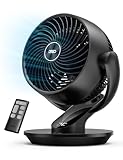
DREO Smart Fan for Quiet Bedroom Cooling
Warm air hanging over the bed can wreck an otherwise calm night, but blasting a loud fan creates a different headache. The DREO Smart Fan tackles that tradeoff with a compact 12-inch body, broad room circulation, and a stated minimum sound level of 20 dB. For anyone researching the best quietest fan for bedroom use, its mix of gentle low-speed operation and stronger long-range airflow makes it more interesting than a basic bedside fan.
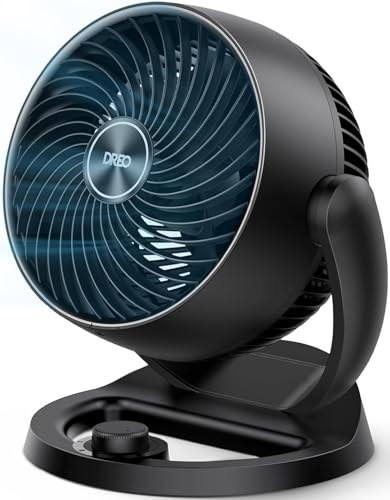
DREO TurboPoly Table Fan 565S
The DREO TurboPoly Table Fan 565S isn't limited to pushing a narrow stream of air across one corner of the bed. Its TurboWind system is rated to deliver up to 950 CFM and send airflow as far as 85 feet, giving it enough reach to circulate air beyond a small nightstand area. That matters in rooms where heat collects near the ceiling, around a workstation, or beside a sun-facing wall.
Strong airflow doesn't mean the fan needs to run flat out all night. With nine speed settings, the output can be dialed down for sleep, raised during a humid afternoon, or adjusted somewhere in the middle while working. That wider range helps avoid the familiar choice between barely feeling the breeze and having papers, hair, and lightweight curtains blown around.
DREO says the fan can help circulate a room in about one minute, though actual results will naturally depend on room size, furniture placement, door position, and temperature. The practical strength here is its ability to act as an air circulator rather than a simple personal fan. It won't replace air conditioning during severe heat, but it can spread cooled air more evenly and reduce those stubborn warm pockets that make a room feel stuffy.
Quiet Airflow That Fits a Sleep Routine
A fan can have an impressive airflow rating and still be miserable beside a pillow if the motor hums, rattles, or changes pitch. The brushless DC motor in this model is designed to run as low as 20 dB, which puts quiet operation at the center of the design rather than treating it as an afterthought. That low figure applies under the appropriate operating conditions, so higher speeds will naturally sound more noticeable.
The fan also includes a 60-second automatic screen-off feature, a small detail that carries surprising weight in a dark bedroom. Bright control panels often become more distracting once every lamp is off, especially when the display faces the bed. Letting the screen shut down on its own reduces that glow without requiring a nightly button sequence.
A programmable 12-hour timer gives the fan another sleep-friendly advantage. It can run through the hottest part of the night and shut off later, rather than continuing until morning when the room may already be cooler. The timer also helps limit unnecessary operation, while DREO states that the brushless motor can improve energy savings by up to 20 percent compared with the company’s referenced baseline.
Three-Dimensional Oscillation Changes The Coverage
Most desk fans move left and right, leaving air near the floor or ceiling largely untouched. This model adds 90-degree horizontal and 90-degree vertical oscillation, allowing the airflow path to sweep through a much larger portion of the room. That motion is useful when a fan sits on a dresser, desk, shelf, or low cabinet instead of being positioned directly beside the bed.
The vertical movement can aim air upward to help mix cooler lower air with warmer air near the ceiling. Horizontal movement, meanwhile, spreads the breeze across a shared room without pinning the airflow on one sleeping position. Together, the two axes help reduce the sharp, drying sensation that often comes from leaving a fixed fan pointed at the face for hours.
Wide oscillation does require sensible placement. A crowded shelf, nearby wall, hanging curtain, or loose cable can limit movement or interfere with the intake. Giving the 12-inch fan enough clearance lets the oscillation do its job and lowers the chance of surrounding objects creating extra tapping or rustling sounds.
App And Voice Controls Add Real Convenience
Reaching across a nightstand for tiny buttons isn't much fun once the room is dark. The DREO app allows speed, mode, timer, and oscillation adjustments from a phone, while Alexa and Google Home compatibility add voice control. Those options are particularly handy when the fan sits across the room for better circulation rather than within arm's reach.
The smart controls aren't essential for basic operation, which is a good thing because not every bedroom needs another connected device. Still, remote adjustment makes it easier to lower the speed after the room cools or change the oscillation without getting out of bed. The power-off memory can also restore preferred settings, cutting down on repetitive setup after the fan has been switched off.
A built-in child lock helps prevent accidental control changes in a busy home, while the smart-home integration can coordinate the fan with compatible DREO heaters, humidifiers, or coolers. Outdoor airflow needs follow a different set of priorities, and related placement considerations appear in ceiling fans for outdoor patio discussions. For this tabletop model, the connected features are most valuable indoors, where precise adjustments and scheduled operation can shape comfort throughout the day.
Six Modes Offer More Than Basic Speed Changes
The fan includes six airflow modes, giving it more flexibility than a unit with only low, medium, and high buttons. Different modes can soften the breeze for sleep, maintain steadier circulation during work, or provide stronger output when heat builds quickly. Paired with nine speeds, that creates enough adjustment to suit changing conditions without forcing the motor to run at maximum power.
More settings can be useful, but they also bring a modest learning curve. Someone who prefers one switch and three speeds may spend little time with the app or specialized modes. Even so, the core controls remain practical, and the extra options are there for households that like fine control over airflow intensity, timing, and movement.
Seasonal use adds another layer of value. During summer, the fan can distribute cooler air from an air conditioner; during colder months, low-speed circulation may help move heated air that collects near the ceiling. It can also support a humidifier by spreading moisture more evenly, though the fan shouldn't sit close enough to draw visible mist directly into its housing.
Bedroom Strengths And Everyday Tradeoffs
The strongest case for this DREO model is its balance of quiet low-speed operation and substantial circulation potential. Many compact fans are calm only when they barely move air, while powerful circulators can sound too assertive beside a bed. This design offers a broader range, so the setting can be tuned around changing heat levels rather than locked into one compromise.
Its footprint is still worth considering. A 12-inch fan is compact compared with a pedestal or tower model, but it needs more stable surface space than a tiny clip-on fan. The oscillating head also requires clearance above and around the unit, so a cramped nightstand packed with lamps, books, chargers, and water glasses may not be the smartest location.
Cleaning access matters over time because dust buildup can weaken airflow and introduce extra noise. The product details provided emphasize performance and smart features more than maintenance design, so buyers who live with pets or heavy household dust should factor routine grille and intake cleaning into ownership. Quiet performance tends to stay more consistent when the air path remains unobstructed.
How It Fits The Best Quietest Fan Search
The best quietest fan for bedroom use needs to do more than post a low decibel number. Sound character, low-speed airflow, display brightness, timer flexibility, oscillation smoothness, and placement all shape what the fan feels like at two in the morning. DREO addresses several of those pain points with its 20 dB minimum rating, screen shutoff, long timer, and two-direction oscillation.
Its high airflow ceiling also leaves room for daytime use. The fan can sit on a home-office desk, circulate air through a dorm room, or help spread cooled air across a larger bedroom before bedtime. That dual-purpose character makes the TurboPoly 565S more adaptable than a whisper-quiet fan that becomes ineffective as soon as the temperature climbs.
Realistic expectations still matter. The fan moves air rather than lowering the room's actual temperature, app features depend on a stable connected setup, and the highest speeds won't remain as hushed as the lowest one. Even with those limits, the combination of 85-foot airflow reach, customizable controls, broad oscillation, and thoughtful nighttime features gives it a well-rounded role in rooms where both cooling power and quiet matter.
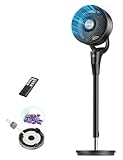
DREO PolyFan 306 Quiet Bedroom Standing Fan
Hot spots rarely stay put in a bedroom. Warm air gathers near the ceiling, the area beside the bed feels muggy, and a fixed breeze can leave one side chilly while the rest of the room stays stale. The DREO PolyFan 306 approaches the best quietest fan for bedroom question with long-range circulation, flexible positioning, and controls designed to cause less fuss after lights-out. Its strengths lie in moving air across a full room rather than blasting one narrow patch from a nightstand.
DREO PolyFan 306
The PolyFan 306 is rated to project air as far as 80 feet, giving it more reach than a small personal fan parked beside a pillow. DREO says its airflow system can circulate air through a bedroom, living room, or kitchen in under three minutes, though room shape, furniture, doorways, and temperature will affect the result. The useful takeaway isn't the stopwatch claim by itself. This fan is built as an air circulator, so its job is to keep room air moving rather than provide a harsh breeze at close range.
That distinction matters during warm nights. A strong stream aimed directly at the face may feel good at first, then lead to dry eyes, cold shoulders, and constant blanket shuffling. Positioning the fan several feet away allows the long-distance airflow to soften before it reaches the bed, creating broader circulation without the wind-tunnel effect. It can also help distribute cooled air from an air conditioner, reducing the warm pockets that often linger around corners or tall furniture.
Three speed settings keep operation straightforward, which may appeal to anyone tired of scrolling through a dozen barely distinguishable levels. The tradeoff is less granular control than fans with eight, nine, or more speeds. Still, the included automatic mode adds practical flexibility by raising the fan one speed whenever room temperature increases by 3 degrees Fahrenheit. That hands-off adjustment can keep airflow aligned with changing conditions without repeated trips to the control panel.
Quiet Operation Without Annoying Bedtime Beeps
Mechanical noise is only one part of bedroom comfort. Button beeps, rattling grilles, shifting pitches, and abrupt speed changes can be just as distracting once the house settles down. DREO rates the PolyFan 306 as low as 25 dB, supported by a bionic blade design intended to move air smoothly. Higher speeds will naturally be more noticeable, but the low setting is the one that carries the most weight for overnight use.
The remote includes a one-touch option to mute confirmation sounds, and that's a thoughtful touch rather than decorative fluff. Plenty of otherwise quiet fans announce every command with a sharp electronic chirp, which isn't exactly welcome beside a sleeping partner or a light sleeper. Muting those sounds lets speed and oscillation changes happen with less disruption. Small feature, big relief.
A quiet specification doesn't guarantee silence in every setup, of course. Uneven flooring, loose nearby objects, or a grille coated with dust can introduce vibrations and rustling that don't come from the motor itself. The fan should sit on a stable, level surface with enough space around the intake and oscillating head. Keeping the air path clear helps preserve both steady airflow and the calmer sound character that makes this model relevant to the best quietest fan for bedroom search.
Adjustable Height Solves Awkward Room Layouts
Bed frames, mattresses, desks, and couches all sit at different heights, so a fixed fan often sends air into the wrong place. The PolyFan 306 adjusts from roughly 33.8 to 41.3 inches, allowing the breeze to meet the room instead of forcing the room to work around the fan. At its lower setting, it can circulate air closer to the floor. Raised higher, it can direct airflow above a mattress edge or across a sitting area.
The head also pivots manually through 90 degrees vertically. Pointing it upward can help mix warmer ceiling air with cooler air below, while a flatter angle sends the breeze across the bed or workspace. That flexibility becomes handy in rooms where placing a fan directly across from the bed isn't possible. A corner position can still produce useful circulation if the head is angled into open space rather than toward a wall.
Horizontal coverage comes from 80-degree oscillation, which spreads air across a wider zone instead of holding it on one person. Shared bedrooms benefit from that movement, as do workspaces where the chair isn't always in the same spot. The oscillation range isn't a full-room 120-degree sweep, so placement still deserves thought. Set too close to a wall or bulky dresser, part of its travel may send airflow nowhere useful.
Remote And Auto Mode Keep Adjustments Simple
The top control panel handles the everyday basics, while the included remote control manages speeds, oscillation, and other functions from across the room. That setup feels especially sensible for a pedestal fan because the strongest circulation may come from placing it several feet away. Nobody wants to leave bed every time the room cools down or the breeze needs redirecting. The remote keeps those little changes from turning into a nightly chore.
Auto mode takes convenience a step further by responding to rising room temperature. Each 3-degree increase triggers a one-level speed adjustment, according to the supplied product information. That behavior won't replace a thermostat or actively cool the air, but it can make the fan feel less static as conditions shift. During an evening when the room starts warm and gradually cools, temperature-responsive airflow can reduce constant button pressing.
There are limits to the control system. This model description doesn't mention app support or voice-assistant integration, so connected-home control shouldn't be assumed. For many bedrooms, though, a physical remote is quicker and less troublesome than pairing another device with Wi-Fi. Bedroom style also affects airflow decisions, and a neutral reference to overhead alternatives appears in best-looking ceiling fan for bedroom discussions where permanent fixtures and room aesthetics carry more weight.
Detachable Parts Make Dust Easier To Manage
Dust buildup is a quiet fan's sneaky enemy. It collects along blade edges and grille openings, restricts airflow, and can eventually create extra vibration or an uneven mechanical sound. The PolyFan 306 uses a detachable design that allows the blade, front grille, and rear grille to be separated for cleaning. That access is more practical than trying to thread a cloth through narrow openings while leaving the fan assembled.
Regular cleaning matters even more in bedrooms with pet hair, open windows, or fabric-heavy decor. A clogged intake makes the motor work against resistance, while dust on the blade can disturb the smooth airflow the bionic design is meant to create. Removable components won't eliminate maintenance, but they make the job less fiddly. As a rule of thumb, visible buildup is already a sign the fan has waited too long.
The built-in aroma pad adds another feature, allowing fragrance to move with the circulating air. Some people may enjoy that, especially when a room feels closed up, but fragrance sensitivity varies widely. Strong oils can become overwhelming when dispersed continuously, and only compatible fragrance products should be used as directed by the manufacturer. The fan's core value remains circulation; the aroma pad is a side feature, not an air-cleaning system.
Practical Strengths And Honest Limitations
The strongest part of this design is its combination of 80-foot airflow reach, adjustable height, broad directional control, and low stated noise. Those features address several bedroom problems at once: stale corners, poor fan alignment, distracting beeps, and the need to adjust settings without getting up. The fan can also move between bedroom, office, and living areas without demanding permanent installation. That makes it useful beyond one season or one room.
Its three-speed layout may feel limited to someone who likes extremely fine airflow adjustments. The manual vertical tilt also requires a hand adjustment at the fan rather than remote control, and the pedestal footprint takes more floor space than a compact desk fan. In a tight bedroom, cords, curtains, and narrow walkways need consideration before deciding where it will stand. The adjustable pedestal offers better aim, but it isn't as visually discreet as a small tabletop unit.
The PolyFan 306 also circulates existing air rather than lowering its actual temperature. During severe heat, it may need to work alongside air conditioning, nighttime ventilation, or better shading rather than carry the whole cooling burden. Even so, its 25 dB low-noise operation, muted controls, remote access, and adaptable airflow make sense for rooms where sleep comfort depends on more than raw power. It offers a grounded balance: enough reach to influence the room, enough adjustment to avoid a direct blast, and few unnecessary complications.
DREO PolyFan Quiet Bedroom Standing Fan
A bedroom fan shouldn't force a choice between meaningful airflow and a motor that sounds busy all night. Weak models barely reach past the foot of the bed, while louder floor fans can turn a calm room into a low mechanical drone. The DREO PolyFan takes a broader approach to the best quietest fan for bedroom search, combining long-distance circulation, wide oscillation, eight speeds, and a stated minimum noise level of 20 dB. It won't lower the room's actual temperature, but it can make warm, stagnant air feel far less oppressive.
DREO PolyFan With 120-Degree Oscillation
This model blends three familiar designs into one body: a pedestal fan, an oscillating floor fan, and a room air circulator. That combination matters because personal cooling and whole-room circulation aren't quite the same job. A narrow breeze can cool exposed skin quickly, yet it may leave the opposite side of the room stuffy. The PolyFan is designed to push air farther and spread it more broadly, reducing the need to keep it planted beside the bed.
DREO lists the assembled size at roughly 13.07 inches deep, 7.28 inches wide, and 39.29 inches high. Its narrow width helps it fit beside a dresser, desk, or bed without occupying the footprint of a bulky box fan. Still, the circular base and moving head need open space, so squeezing it behind curtains or between crowded furniture isn't wise. A little clearance allows the intake to breathe and prevents surrounding objects from fluttering, tapping, or adding unwanted noise.
The adjustable height ranges from about 35 to 40 inches, which gives the airflow a better chance of clearing mattress edges and furniture. Lower placement can direct air across a chair or floor-level sleeping setup, while the taller position suits higher beds and standing work areas. That five-inch range isn't enormous, but it's enough to correct the awkward angle created by many fixed-height fans. Proper alignment often makes a lower, quieter speed feel more effective.
Long-Range Airflow Without A Harsh Direct Blast
The air booster and bionic blade system are rated to send airflow up to 85 feet. In practical terms, that reach lets the fan work from across a typical bedroom rather than demanding a spot inches from the pillow. Distance can soften the breeze before it reaches the bed, easing the dry-eye and chilled-shoulder problems caused by concentrated airflow. It also leaves more room around nightstands, cords, and narrow walking paths.
Long-range circulation becomes especially useful alongside an air conditioner. Cool air often settles in one area while warmer pockets linger near doorways, tall furniture, or sun-warmed walls. The PolyFan can keep that conditioned air moving, helping the room feel more even without constantly lowering the thermostat. Its air-circulator design is therefore more useful than raw wind speed alone would suggest.
The fan's 85-foot claim describes airflow reach, not a promise that every room will cool at the same rate. Large open spaces, high ceilings, closed doors, and crowded layouts can all change the result. A fan also cools through air movement rather than refrigeration, so room temperature won't fall simply because the blades are spinning. The realistic benefit is better air distribution, which can make existing cooling feel more effective and reduce stagnant zones.
Eight Speeds Make Nighttime Airflow Easier To Tune
Eight speed levels offer a useful middle ground between bare-bones controls and an overwhelming menu. The lowest settings can maintain gentle movement through a quiet room, while the upper end provides stronger circulation during hot afternoons. Fine adjustment matters at bedtime because the difference between barely noticeable and slightly too chilly can be surprisingly small. More steps make that sweet spot easier to hit.
The three operating modes add another layer of control, though the supplied product details don't name or explain each mode individually. It's fair to treat them as alternate airflow behaviors rather than assume functions that weren't provided. Paired with the eight-speed range, they broaden how the fan can respond to changing comfort needs. Some evenings call for steady air, while others benefit from a less constant breeze.
A wider control range also helps in shared bedrooms. One person may want noticeable airflow, while another would rather avoid a direct stream across the face. Lowering the speed and using broad oscillation can split the difference without switching the fan off entirely. That flexibility is one reason the PolyFan fits the best quietest fan for bedroom category better than a powerful unit with only low, medium, and high settings.
Twenty-Decibel Operation Supports Quieter Sleep
DREO states that the brushless DC motor can reduce operating noise to 20 dB under its quietest conditions. That figure matters most at low speed, where a bedroom fan is likely to run for hours near sleeping areas. Higher speeds will naturally create more motor and airflow sound, so the 20 dB rating shouldn't be read as universal across every setting. Even so, a low minimum gives light sleepers more room to balance cooling with sound.
The blade design also affects what the fan sounds like. Smooth airflow tends to create a steadier background character, while rough turbulence can produce whistling, pulsing, or sharp changes in pitch. DREO pairs its DC motor with turbine-style blade technology to move air quickly while limiting mechanical disturbance. A consistent whoosh is often easier to ignore than a fan that clicks, rattles, or repeatedly changes tone.
Room setup still plays a role in perceived quietness. Loose floorboards, an uneven base, nearby paper, and lightweight curtains can make a quiet motor seem much louder than it is. Dust buildup may also disturb airflow and introduce vibration over time. Keeping the unit level and the grilles clean gives the 20 dB design a better chance of delivering the calm operation promised in the specifications.
Wide Oscillation Reaches More Of The Room
Horizontal oscillation covers up to 120 degrees, a notably broad sweep for a pedestal fan. Instead of repeatedly sending air through one narrow lane, the fan can move the breeze across a bed, reading chair, and nearby workspace. That coverage is helpful when the room layout doesn't allow the fan to sit directly opposite the bed. It can stand off to one side and still circulate air through a substantial portion of the space.
The head also offers a 120-degree vertical tilt, though that adjustment is manual. Tilting upward helps mix warm ceiling air with cooler air lower in the room, while a level or slightly downward angle provides more direct personal cooling. Manual control means getting up to change the vertical aim, which is less convenient than motorized tilt. On the other hand, vertical angles are usually set once and left alone for long stretches.
Horizontal oscillation can be managed through the control panel or remote, making frequent changes easier from bed or across the room. The large LED display shows settings clearly, although a bright panel can be noticeable in a dark bedroom if it doesn't dim to the preferred level. The supplied description doesn't specify an automatic display shutoff, so that feature shouldn't be assumed. Careful placement can keep the LED display from facing directly toward the bed.
Remote Control And Timer Reduce Nighttime Fuss
The included remote handles oscillation, modes, and speed without requiring a trip across the room. That convenience sounds minor until the temperature drops at three in the morning and the strongest setting suddenly feels too cold. A remote allows quick correction while preserving the fan's best circulation position. It also makes the PolyFan practical in an office or living room where the controls may sit several feet away.
An eight-hour timer adds useful scheduling for sleep. The fan can run through the warmest part of the night and switch off later, rather than operating until morning by default. That may suit rooms that cool naturally before sunrise or households trying to limit unnecessary power use. The eight-hour ceiling covers a normal sleep window, though anyone wanting operation beyond that period will need continuous mode.
The brushless DC motor is claimed to produce 30 percent more air while using 40 percent less energy, according to the supplied product information. Those figures provide useful context for the motor's efficiency, but actual household consumption will depend on speed, runtime, and operating conditions. The broader point is that DC motors generally support finer speed control and quieter low-speed operation. Those traits matter more in a bedroom than headline power alone.
Cleaning Access Helps Preserve Smooth Performance
Dust doesn't merely make a fan look neglected. It collects along blade edges and grille openings, restricting airflow and sometimes creating small vibrations that become obvious in a quiet room. The PolyFan is described as straightforward to clean, which supports long-term airflow consistency. Regular attention matters even more around pets, open windows, heavy bedding, and carpeted floors.
Cleaning should focus on the intake, front grille, and blade surfaces while following the manufacturer's instructions. The fan needs to be unplugged before any maintenance, and moisture shouldn't reach the motor or electronic controls. A soft brush or cloth can handle routine buildup without forcing debris farther inside. Keeping the moving parts balanced helps preserve both airflow and the calmer sound profile.
The practical maintenance advantage isn't glamorous, but it affects daily ownership more than another decorative mode would. A fan that takes too much effort to clean tends to stay dusty until performance drops. Straightforward access makes upkeep less of a production. For a bedroom appliance expected to run night after night, easy cleaning deserves real weight in the buying decision.
Where This PolyFan Fits And Where It Doesn't
The PolyFan's strongest qualities are its wide 120-degree sweep, long airflow reach, eight speeds, and quiet DC motor. Those features suit rooms with uneven temperatures, limited fan placement, or a bed that sits too high for a compact desk unit. The adjustable pedestal can direct air over furniture while keeping the machine off crowded surfaces. Its understated footprint also makes moving it between rooms manageable.
Several tradeoffs remain. Vertical tilt is manual, the pedestal occupies more floor area than a tabletop fan, and the large display may need thoughtful positioning in a dark room. The fan also lacks any stated app or voice controls in the provided specifications. Anyone building a connected bedroom setup may prefer a smart model, while those who value direct controls may see the remote as simpler and more dependable.
Permanent ceiling airflow follows different rules, particularly where floor space and visual balance matter, and related design considerations appear in Levoit Classic 36-inch tower fan coverage. The DREO model makes more sense where adjustable height, portable placement, and concentrated room circulation carry greater value. It can be moved, re-aimed, and stored without installation, which gives it an edge in rentals, dorm rooms, and frequently rearranged spaces.
Realistic Bedroom Performance
The DREO PolyFan isn't a substitute for air conditioning during extreme heat, nor will every speed remain as quiet as the lowest setting. Its real appeal comes from balancing strong circulation with enough control to avoid an aggressive bedside draft. The eight speeds make small comfort adjustments possible, while the broad oscillation spreads airflow instead of pinning it on one sleeping position. That's a sensible formula for a room where steady comfort matters more than raw wind.
Placement will determine how well that formula works. Setting the fan a few feet from the bed can soften direct airflow, while aiming it slightly upward may improve whole-room mixing. A corner location can work too, provided walls and furniture don't block the intake or waste half the oscillation range. The 85-foot reach gives owners more freedom to experiment without losing useful circulation.
For the best quietest fan for bedroom search, this model brings a well-rounded set of practical strengths rather than leaning on one flashy feature. It offers a low stated noise floor, broad movement, adjustable height, remote operation, and a timer suited to overnight use. The limitations are easy to understand and mostly tied to placement, manual tilt, and the absence of listed smart controls. Used within those boundaries, it can provide steady, adaptable airflow without making the bedroom feel like a workshop.
DREO Nomad One Quiet Tower Fan
Floor space disappears quickly once a bed, dresser, chair, and charging cables claim their share of a room. A bulky pedestal fan may cool well, yet its wide base can turn a narrow walkway into an obstacle course. The DREO Nomad One takes a slimmer route for anyone weighing the best quietest fan for bedroom options, pairing a compact 36-inch tower with brisk airflow, sleep-focused controls, and a remote. Its design favors easy placement and straightforward operation rather than complicated connected features.
DREO Nomad One DR-HTF007
The Nomad One uses an all-in-one airflow system and a supercharged electric motor to produce air movement reaching up to 24 feet per second. That specification points to a stronger breeze than many small bedside fans can manage, particularly at the highest setting. Still, raw speed tells only half the story. A bedroom fan needs enough range to move air around the bed without sitting so close that the breeze becomes sharp or drying.
Its 36-inch tower shape gives it a narrow footprint compared with many round pedestal models. That makes placement easier beside a dresser, near a doorway, or between furniture where floor space is tight. The freestanding body doesn't require installation, so it can shift from bedroom duty at night to an office or living room during the day. A hidden carrying handle makes those moves less awkward.
The black exterior has a restrained look that won't dominate most rooms, though a tower fan remains a visible appliance rather than part of the decor. Its vertical form also places the airflow outlet across a taller section of the body, producing a more distributed breeze than a compact fan with one small circular grille. For cramped bedrooms, that space-saving profile may be as useful as the motor strength. Less floor clutter is a practical comfort feature in its own right.
Strong Airflow With A More Controlled Feel
A velocity rating of 24 feet per second gives the Nomad One enough muscle for warm afternoons and stuffy rooms. The highest speed can create brisk personal cooling, while the lower levels are better suited to sleeping or reading. Four speeds keep the choices easy to understand: soft airflow at one end, stronger output at the other. There aren't dozens of tiny increments to sort through in the dark.
The calibrated airflow path helps direct air beyond the immediate area around the fan. That can improve room circulation when the unit sits several feet from the bed rather than right beside a pillow. Placing it across an open section of the room lets the breeze spread before reaching the sleeper, which may reduce dry eyes and cold shoulders. The focused airflow path also makes the fan useful alongside an air conditioner.
An air conditioner often cools the area nearest its vent first, leaving warmer pockets around furniture or across the room. The tower fan can move that cooled air farther, helping the space feel more even without continually dropping the thermostat. It doesn't reduce the actual temperature by itself, of course. The realistic gain comes from air distribution and increased evaporation from the skin, not refrigeration.
Quiet Features Address More Than Motor Sound
A supposedly quiet fan can still be irritating if its buttons chirp, its display glows all night, or its airflow pulses with an uneven pitch. DREO addresses those smaller disturbances through an algorithmic impeller design and airflow shaped by the Coanda effect. The aim is smoother movement with less distracting mechanical noise. Exact sound levels weren't included in the supplied details, so a specific decibel claim shouldn't be assumed.
Sleep mode automatically mutes operating sounds, removing the sharp confirmation beeps that can wake someone nearby. The display also turns off automatically, which keeps the control panel from shining across a dark bedroom. These aren't headline-grabbing additions, but they solve problems that become obvious only after bedtime. A dark, beep-free control panel can matter more than another high-speed setting at two in the morning.
The airflow is described as soothing in quieter operation, although higher settings will naturally sound and feel stronger. A fan moving air at its maximum rate can't remain as subdued as it is on the lowest speed. Room placement also changes perceived noise because walls, corners, loose blinds, and nearby papers may amplify or create sound. Leaving open space around the air intake and outlet helps the fan run with fewer outside disturbances.
Four Modes Cover Different Daily Routines
The Nomad One includes Normal, Natural, Sleep, and Auto modes, each intended for a different pattern of use. Normal mode supplies steady airflow, which works well when consistent cooling is the priority. Natural mode varies the breeze instead of holding one unchanging speed. That variation can feel less forceful during long periods of sitting.
Sleep mode shifts the emphasis toward quieter, less intrusive operation. Muted controls and the automatic display shutoff make it the most relevant setting after lights-out. The softer behavior can keep air moving without making the fan the center of attention. For the best quietest fan for bedroom search, that supporting package matters because restful use depends on sound, light, and airflow together.
Auto mode adds a hands-off option for changing room conditions, although the supplied description doesn't explain its exact adjustment thresholds. It would be inaccurate to invent temperature ranges or speed behavior that DREO hasn't provided here. The safe takeaway is that the fan can manage output automatically within its programmed logic. People who prefer direct control can stick with the panel or remote and select one of the four manual speeds.
Ninety-Degree Oscillation Broadens Coverage
The fan sweeps through 90 degrees of horizontal oscillation, moving the breeze across a wider part of the room. That range can serve both sides of a bed or cover a desk and nearby chair without requiring frequent repositioning. A fixed stream feels stronger but may become uncomfortable after several hours. Oscillation softens that effect by giving each area a brief break between passes.
Placement determines whether the full sweep is useful. Set too close to a wall, dresser, or open door, and part of the oscillation may send air into an obstruction. A more central location can improve coverage, although that isn't always practical in a tight room. The slim body helps here because it can stand along the edge of an open path without occupying as much width as a traditional round floor fan.
The oscillation can also support air-conditioned rooms by moving cool air across a broader zone. Instead of pointing the fan directly at the bed, a slight offset may create gentler circulation around the room. That setup often feels more comfortable over an entire night than a constant blast. The 90-degree sweep isn't the widest range available among tower fans, but it covers the main sleeping and working areas in many standard rooms.
Remote Control And Timer Ease Bedtime Adjustments
The included remote controls speed, mode, oscillation, and other everyday functions from across the room. That convenience keeps the fan in the location where it circulates air best rather than forcing it within arm's reach. Lowering the speed after the room cools takes a button press instead of a trip across the floor. In a dark room, that remote access cuts down on unnecessary disruption.
An eight-hour timer can cover most of a night's sleep. The fan may run through the warmest stretch and shut down near morning, when outdoor and indoor temperatures often become more comfortable. Timed operation can also avoid leaving the fan on after the room is empty. Anyone who sleeps longer than eight hours or wants continuous circulation can leave it running without the timer.
The remote stores inside a built-in compartment, which helps prevent it from vanishing under bedding or between couch cushions. That's a small design decision, but misplaced remotes are a common annoyance with floor appliances. Returning it to the storage slot keeps the controls paired with the fan when it moves between rooms. The integrated remote storage also keeps nearby tables from collecting one more loose device.
Cleaning Access Makes Regular Care Less Tedious
Tower fans have a reputation for being awkward to clean because dust settles behind narrow grilles and around internal impellers. The Nomad One uses a removable rear grille and impeller wheel, providing better access than a sealed housing. That design should make routine dust removal less of a wrestling match. Easier access also encourages cleaning before buildup begins to affect airflow.
Dust along the intake can restrict air movement and create extra noise, especially in carpeted rooms or homes with shedding pets. Unplugging the fan and following the supplied cleaning instructions should come before removing any part. A soft cloth or brush is usually more appropriate than soaking electrical components. Keeping the impeller and grille clear supports steadier airflow and helps prevent dusty odors during operation.
Removable parts don't make maintenance disappear. The taller grille contains more surface area than a tiny desk fan, and regular use will pull household dust toward the intake. Still, accessible components are a meaningful advantage over tower models that permit only superficial wiping. Long-term quietness often depends as much on basic upkeep as it does on motor design.
Safety Details Suit Busy Indoor Spaces
The grille uses a fingertip pinch-resistant design, reducing access to moving internal parts. DREO also lists a fused plug, built-in circuit protection, and ETL listing among the safety features. Those elements provide sensible safeguards for a freestanding appliance used around bedrooms, offices, and shared living spaces. They don't replace careful placement, but they strengthen the basic design.
Power cords should remain outside walking paths, particularly where the fan sits near a bed or doorway. Curtains, loose bedding, and lightweight fabric need enough distance from the air intake. The narrow body is easy to tuck into small gaps, yet squeezing it too tightly can obstruct airflow or create a tipping hazard. A stable, open position gives the freestanding base room to remain secure.
The bladeless description refers to the absence of exposed traditional fan blades, not the absence of an internal impeller. That distinction matters because the unit still contains moving components behind its protective grille. The enclosed layout feels less intimidating around curious hands than an open-blade floor fan. Even so, normal appliance precautions still apply, including keeping liquids away from the electrical controls.
Practical Strengths And Everyday Compromises
The Nomad One's clearest strengths are its slim footprint, sleep-minded controls, useful oscillation, and brisk maximum airflow. It can fit into rooms where a wide pedestal base would feel clumsy, while the hidden handle makes relocation manageable. Four speeds and four modes cover daily cooling without burying basic functions under complicated menus. The display shutoff and muted Sleep mode give it an edge in dark, quiet spaces.
Its compromises are just as clear. Four speed settings offer less fine adjustment than models with eight or more levels, and the provided information doesn't mention app control or voice-assistant support. The 90-degree oscillation is practical but narrower than some fans offering 120-degree coverage. Also, a strong tower fan may sound more noticeable at maximum output, even if its lower settings remain calm.
Different formats solve different space and airflow problems, and related small-scale cooling considerations appear in Honeywell QuietSet table fan coverage. A personal table fan suits close-range airflow and small surfaces, while the Nomad One is designed to spread air from the floor across a broader section of the room. The tower format makes more sense where whole-room coverage matters but a large fan footprint doesn't.
How It Fits A Quiet Bedroom Setup
The DREO Nomad One suits bedrooms where limited space, warm air, and nighttime disturbances all need attention. Its compact tower can stand away from the bed while still providing a noticeable breeze, and the remote removes the need to keep it nearby. Sleep mode handles the irritating lights and beeps that many basic fans ignore. Those details help it feel purpose-built for overnight use rather than merely tolerated there.
Positioning the fan across an open area can soften its strongest airflow and allow oscillation to distribute the breeze more evenly. Pairing it with air conditioning may improve circulation without forcing the cooling system to carry every corner alone. The 24-foot-per-second maximum velocity offers enough headroom for hot daytime use, while the lower speeds serve calmer nighttime routines. One fan can therefore cover both brisk cooling and gentler background circulation.
The best quietest fan for bedroom isn't automatically the model with the highest speed or the longest feature list. It needs to remain easy to live with after the room goes dark. The Nomad One answers that need through muted Sleep mode, an automatic display shutoff, an eight-hour timer, remote operation, and accessible cleaning parts. Its four-speed range and moderate oscillation are limitations worth noting, but the overall design stays focused on practical, low-fuss bedroom cooling.
DREO 12-Inch Quiet Bedroom Air Circulator
A cramped nightstand leaves little room for a bulky cooling setup, yet a tiny fan that barely pushes air across the pillow doesn't solve much either. The DREO 12-Inch Air Circulator sits in a practical middle ground, using a compact desktop body to move air far beyond its immediate surroundings. For the best quietest fan for bedroom search, its appeal comes from a stated 28 dB minimum noise level, 70-foot airflow reach, simple controls, and a head that can tilt through a wide vertical range. It isn't loaded with smart features, but that stripped-down approach may be exactly the point for a room where quiet, easy operation matters more than another app.
DREO 12-Inch Air Circulator
The fan measures roughly 9 inches deep, 11 inches wide, and 12 inches high, so it fits more naturally on a desk, dresser, shelf, or sturdy nightstand than a full-size pedestal unit. Its footprint still deserves a quick check because the circular body needs open space around the intake. Tucking it tightly against a wall or curtain can restrict airflow and create extra rustling. Set on a stable surface, though, the compact frame keeps floor space clear and avoids adding another obstacle beside the bed.
DREO's WingBoost system combines deep-pitched blades with an aerodynamic airflow path to send air as far as 70 feet. That reach gives the fan a different role from a close-range personal model. Instead of sitting inches from the sleeper and blasting one narrow spot, it can stand farther away and circulate air across more of the room. The breeze has space to spread and soften, which can feel far more comfortable over several hours.
The fan arrives ready for tabletop use, but the supplied details also mention wall-mounting capability. That option can free a crowded surface or keep the fan above furniture where airflow has a clearer route. Wall placement requires sensible positioning because the tilt angle, power cord, and cleaning access still need attention. A portable base and built-in handle make the ordinary tabletop setup easier to move between the bedroom, kitchen, and office.
Three speeds keep the experience refreshingly direct. A physical knob handles the changes, so there's no remote to lose and no connection process to troubleshoot. The limitation is obvious: three-speed control doesn't offer the fine adjustment of a fan with eight or nine levels. Even so, simple controls can be a real strength for anyone who wants to turn a fan on half-awake without squinting at a display.
Long-Range Airflow Changes How It Can Be Placed
The stated 70-foot airflow distance sounds ambitious for a 12-inch fan, but the useful idea is broader than the number itself. This model is meant to circulate room air rather than cool only the person sitting directly in front of it. Positioned across a bedroom, it can help move warm air away from the bed and keep cooler air from settling in one corner. That flexibility reduces the need to sacrifice valuable bedside space.
Strong circulation also helps an air conditioner work more evenly. Cool air often pools near the vent while the opposite side of the room stays warmer, particularly around tall furniture or closed-off corners. The DREO can push that conditioned air farther and keep it moving through the space. The fan doesn't lower room temperature on its own, but better air distribution can make existing cooling feel more consistent.
Heating season gives the circulator another job. Warm air rises and gathers near the ceiling, where it does little good around a bed or desk. Tilting the fan upward can mix those layers and help return heated air toward the occupied part of the room. The same principle applies to humidifiers and air purifiers, since steady circulation can move treated air beyond the area immediately surrounding those appliances.
Placement still makes or breaks performance. Aiming the fan directly into a wall wastes much of its reach, while pushing it behind furniture can choke the intake. An open diagonal path across the room usually gives the airflow more room to travel. Oddly enough, moving the fan a few feet farther from the bed may produce a smoother and more pleasant breeze than keeping it close at the lowest setting.
Twenty-Eight-Decibel Operation Suits Quieter Rooms
DREO rates the fan down to 28 dB, using NACA-inspired airflow design and bionic engineering to reduce turbulence. That figure applies under the quieter operating conditions, so the upper speeds will naturally sound more noticeable. Still, a low stated noise floor matters for overnight use because bedroom sound becomes far more obvious once the lights go out. A soft, steady airflow tone is generally easier to ignore than a motor that hums, clicks, or changes pitch.
The lack of electronic beeps is another quiet advantage of the knob-based design. There isn't a bright control display or a cluster of touch buttons announcing every adjustment. That simplicity removes two common nighttime irritations at once: glowing light and sharp confirmation sounds. The fan may look less sophisticated than a connected model, but beside a bed, less fuss can be a blessing.
Room conditions can still add noise that doesn't come from the fan itself. Loose papers may flutter, blinds can tap against a window, and an uneven surface may introduce vibration. A stable dresser or desk is better than a lightweight folding table, especially at higher speeds. Keeping the surrounding area clear allows the fan's quieter motor design to matter instead of being drowned out by nearby clutter.
Dust also affects sound over time. Buildup along the grille or blade edges can disturb airflow and create a rougher pitch, even if the motor remains unchanged. The removable parts make routine cleaning more manageable, which is a practical advantage in bedrooms with pets, carpet, or open windows. Clean blades and open grille passages help preserve both airflow strength and the calmer sound character.
Wide Tilt Offers More Control Than A Fixed Desk Fan
The head tilts through 120 degrees, giving the fan a much broader vertical aiming range than a rigid desktop model. It can send air horizontally across the bed, angle upward to circulate warm ceiling air, or point higher from a low shelf. That flexibility matters because furniture rarely places a fan at the exact height needed. A wide tilt range lets the airflow adapt without balancing the unit on books or boxes.
The tilt is manual, so changing direction means walking over to the fan. That isn't a major burden if the angle stays fixed most of the day, but it lacks the convenience of motorized vertical oscillation. The fan also doesn't provide horizontal oscillation according to the supplied details. Its strength is directed circulation, not automatic side-to-side coverage.
A fixed horizontal direction can actually work well for targeted room mixing. Pointing the fan through an open doorway may help move air between adjacent spaces, while aiming it diagonally across a bedroom can create a continuous circulation loop. The trick is avoiding a direct line toward the face for hours. A slightly upward angle often produces gentler whole-room movement without sacrificing reach.
Different mounting styles handle comfort in different ways, and ceiling-mounted airflow follows its own set of design and coverage priorities, as reflected in tropical ceiling fan with light discussions. This DREO model remains more flexible because it can move from room to room and change direction without installation. A ceiling fan covers a fixed area, while the tabletop circulator suits temporary setups, rentals, and rooms that serve several purposes.
Simple Cleaning And Seasonal Use Add Practical Value
The removable components make routine cleaning less awkward than it is on sealed desktop fans. Dust tends to collect behind the grille and along the leading edges of the blades, where a quick exterior wipe can't reach. Better access allows a more thorough cleanup before airflow begins to feel restricted. The fan should always be unplugged first, and moisture needs to stay away from the motor and controls.
Seasonal flexibility gives the fan more value than a summer-only appliance. It can distribute air from a space heater, move humidified air through a dry bedroom, or help an air purifier cover a larger zone. None of those pairings changes the fan's basic role: it moves existing air more quickly. The benefit is more even circulation, not additional heating, cooling, moisture, or filtration.
The handle and compact base make carrying it between rooms fairly straightforward. A bedroom can use the quiet low setting overnight, while a kitchen or home office may benefit from stronger airflow during the day. That portability is useful in smaller homes where buying a separate fan for every room doesn't make much sense. The 12-inch body is large enough to feel capable yet small enough to relocate without much ceremony.
There are realistic tradeoffs. No remote means every speed change happens at the fan, three settings limit fine-tuning, and the fixed horizontal direction won't sweep air across a shared room. The wall-mount option adds placement flexibility, but it also reduces portability once installed. Those weaknesses don't erase the fan's appeal, though they do clarify that this is a straightforward circulator rather than an automated bedroom system.
How It Fits The Quiet Bedroom Fan Search
The best quietest fan for bedroom use isn't always the model with the longest feature list. Sometimes a physical knob, no glowing screen, and a motor rated for quiet low-speed operation create a calmer experience than an elaborate smart fan. The DREO keeps the controls basic while putting more effort into airflow reach and directional flexibility. That balance suits rooms where reliability and low distraction carry more weight than remote operation.
Its strongest feature is the combination of 70-foot circulation and a compact tabletop footprint. The fan can sit farther from the bed, freeing up the nightstand and reducing the harshness of direct airflow. A 120-degree tilt provides enough aiming freedom to mix room air, support heating or cooling appliances, and work from shelves at different heights. That is a lot of practical range from a relatively small body.
The 28 dB minimum gives it a credible place among quieter bedroom fans, though buyers should expect more audible airflow at the top setting. Three speeds may be enough for simple routines, but anyone who likes tiny adjustments could feel boxed in. Likewise, the lack of oscillation means careful placement matters more than it would with a sweeping tower fan. The DREO 12-Inch Air Circulator rewards a thoughtful setup rather than trying to solve every positioning problem automatically.
Used a few feet from the bed with a clear airflow path, the fan can provide steady circulation without crowding the sleeping area. Regular cleaning should help it maintain a smoother sound and stronger output, while the handle makes seasonal moves easy. Its limitations are plain, not hidden: manual control, three speeds, and no listed remote or timer. For a compact, quiet-leaning fan that focuses on moving air efficiently across the room, those compromises may be perfectly reasonable.


Best Quiet Ceiling Fan For Bedroom 2026 Ultimate Comfort Picks

Best Ceiling Fan For Master Bedroom 2026 With Ultimate Comfort

Best White Ceiling Fan With Light For Bedroom 2026 Top Picks

Best Quorum Medallion Ceiling Fan 2026 With Style & Breeze
Best Outdoor Fan For Pergola 2026 Comfort Boost

Best Ceiling Fan For Great Room 2026 With Ultimate Comfort

Best Outdoor DC Ceiling Fans 2026 For Breezy Comfort
Best ceiling exhaust bath fan with light and heater 2026





