
Best Rustic Ceiling Fan With Light 2026: Cozy Picks

A best rustic ceiling fan with light should do more than dress up a room with wood tones and vintage hardware. It needs to move enough air to make a stuffy living room, bedroom, or covered porch feel comfortable without rattling overhead like an old shop fan. The built-in light should also brighten the space without casting a harsh glare that fights the warm, relaxed look. That sounds simple, but plenty of attractive fans fall short once airflow, noise, and everyday upkeep enter the picture.
Room size matters more than the bold claims printed on a product page. A compact fan can look tidy in a small bedroom, yet it may leave a broad family room feeling muggy and uneven. On the flip side, an oversized model can crowd a low ceiling and make the entire space feel visually heavy. Measuring the room and checking both blade span and mounting height keeps that headache from showing up after installation.
The finish deserves a close look, too. Some rustic designs use convincing wood blades, aged metal details, and seeded glass, while others lean on printed grain patterns that look flat from a few feet away. Reversible blades can be handy because one side may have a darker farmhouse finish and the other a lighter natural-wood look. Still, highly textured blades collect dust faster, so ornate styling usually comes with a little more cleaning.
Air movement depends on more than blade count. Blade pitch, motor strength, ceiling clearance, and downrod length all affect how the breeze spreads through the room. A fan with fewer well-shaped blades may outperform a crowded decorative design, so don't assume that six or eight blades automatically mean stronger airflow. DC motors are often appealing for bedrooms because they tend to run quietly, offer several speed settings, and use less electricity than many traditional AC motors.
Lighting can be the make-or-break detail. Integrated LED fixtures keep the profile neat, but a nonreplaceable light module may become inconvenient years down the road. Fans that accept standard bulbs offer more freedom to change brightness and color temperature, although the fixture may look bulkier. Dimmable lighting is worth having in multipurpose rooms where bright task light feels useful at dinner but far too intense during a late movie.
Controls should match the way the room is actually used. A remote is convenient beside a bed or sofa, while a wall control is harder to misplace and feels natural near an entry. Smart controls can help with schedules and voice commands, but they add setup steps that aren't necessary for every home. Also, check whether the fan remembers its last speed and light setting after the wall switch is turned off, since that small detail can prevent daily frustration.
Installation brings its own tradeoffs. Heavy housings, layered light cages, and long downrods may create a convincing lodge-inspired look, but they can be awkward to lift and wire. The electrical box must be rated for ceiling-fan support rather than ordinary lighting alone. Sloped ceilings may also need a compatible mounting kit, and low ceilings usually call for a flush or close-to-ceiling design instead of a dramatic hanging profile.
Outdoor placement requires extra caution. A fan intended for a covered porch should carry a damp-location rating, while exposed patios need a wet-rated model built to handle direct moisture. Indoor-only finishes can peel, corrode, or swell when humidity settles in season after season. Rustic styling may look right at home outside, but appearance can't substitute for the correct environmental rating.
The strongest option balances character with realistic performance. Expect a slight tradeoff between elaborate styling and effortless cleaning, especially with cage lights, faux antlers, or heavily distressed finishes. A simple wood-and-metal fan may not grab attention in a showroom, yet it can age more gracefully and demand less maintenance. The sweet spot is a model that looks warm and lived-in without turning every dusting session into a chore.
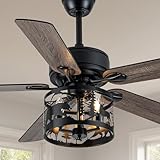
- LFR Score9.8
LFR Score is a ranking system developed by lightfansreviews.com. LFR Score has no relationship or impact from any manufacturers or sales agent websites. Learn more
- BrandTOPASSTX

- LFR Score9.2
LFR Score is a ranking system developed by lightfansreviews.com. LFR Score has no relationship or impact from any manufacturers or sales agent websites. Learn more
- BrandGOEBLESON

- LFR Score9.0
LFR Score is a ranking system developed by lightfansreviews.com. LFR Score has no relationship or impact from any manufacturers or sales agent websites. Learn more
- BrandFanbulous

- LFR Score8.8
LFR Score is a ranking system developed by lightfansreviews.com. LFR Score has no relationship or impact from any manufacturers or sales agent websites. Learn more
- BrandDepuley

- LFR Score8.8
LFR Score is a ranking system developed by lightfansreviews.com. LFR Score has no relationship or impact from any manufacturers or sales agent websites. Learn more
- BrandProminence Home

- LFR Score8.8
LFR Score is a ranking system developed by lightfansreviews.com. LFR Score has no relationship or impact from any manufacturers or sales agent websites. Learn more
- BrandAmico
- LFR Score8.8
LFR Score is a ranking system developed by lightfansreviews.com. LFR Score has no relationship or impact from any manufacturers or sales agent websites. Learn more
- BrandMinislak

- LFR Score8.4
LFR Score is a ranking system developed by lightfansreviews.com. LFR Score has no relationship or impact from any manufacturers or sales agent websites. Learn more
- BrandCriticn
Last update on 2026-07-17 / Affiliate links / Images, Product Titles, and Product Highlights from Amazon Product Advertising API
TOPASSTX Rustic Fandelier Ceiling Fan
A plain ceiling fan can cool a room, yet it often leaves a lodge-style space feeling unfinished and oddly generic. Decorative fixtures solve that visual problem, but some sacrifice practical airflow or become noisy once the speed climbs. The best rustic ceiling fan with light needs to handle both jobs without looking like two unrelated products bolted together, and this TOPASSTX model takes a bold approach with its wildlife-patterned drum cage, reversible blades, and quiet DC motor. It won't fade quietly into the ceiling, and frankly, that's the whole point.
TOPASSTX 52-Inch Rustic Fandelier
The shortened name suits the product because this is more than a standard fan with a small lamp tucked underneath. Its matte black wrought iron light cage features laser-cut silhouettes of white-tailed deer, black bears, pine trees, and forest scenery, creating a clear cabin-inspired identity. The pattern should cast a warm decorative presence even while the light is switched off. Once illuminated, the cage becomes the visual center of the fixture rather than an afterthought.
That strong styling makes the fan particularly effective in rooms already using timber furniture, stone textures, antler accents, plaid fabrics, or dark metal hardware. Put it in a sleek white room with chrome fixtures, though, and the contrast may feel abrupt rather than charming. The woodland drum cage demands supporting details nearby, so it rewards thoughtful decorating. Used in the right setting, it ties scattered rustic elements together without requiring a major room makeover.
The fan uses five reversible blades with a distressed pine finish on one side and black on the other. That simple choice changes the mood more than it may appear to at first glance. Pine brings out the lodge character and softens the black housing, while the darker side creates a moodier, more unified silhouette. Flipping the blades isn't something most people will do every week, but having two finishes gives the fixture room to adapt as paint colors, furniture, or seasonal decor change.
A 52-inch span places the TOPASSTX in a practical middle range for bedrooms, kitchens, and living areas where a tiny fan would look lost. Room dimensions and ceiling height still matter, of course, because blade span alone doesn't guarantee even circulation. The 52-inch blade sweep should be considered alongside furniture placement, mounting height, and clearance from nearby walls. In a cramped room, the decorative cage may also feel visually heavier than its measurements suggest.
Woodland Styling Without a Tacky Finish
Nature-themed fixtures can go sideways in a hurry. Oversized animal shapes and shiny faux-antique finishes sometimes look more like novelty decor than permanent lighting. This design keeps the silhouettes contained inside a structured black drum, giving the deer, bears, and pines a cleaner frame. The matte black ironwork helps the detailed cutouts read as intentional design rather than clutter.
The visual balance comes from repetition and restraint. Wildlife shapes wrap around the cage, yet the fan housing and blades remain familiar enough to prevent the fixture from becoming costume-like. That's a smart call because the ceiling already carries a lot of visual weight. The rustic fandelier profile feels distinctive without relying on fake weathering across every visible surface.
Cleaning will take a little more effort than wiping a plain glass bowl. Dust can settle along the cut edges of the silhouettes, inside the cage, and around the light assembly. A soft brush attachment or microfiber duster will be more useful than a flat cloth here. The intricate metal cutouts add character, but they also create extra corners that shouldn't be ignored during routine upkeep.
Lighting expectations should remain realistic as well. The provided details describe the decorative light kit, but they don't specify bulb type, brightness, color temperature, or dimming support. That means the fixture's ambient effect is easier to assess than its exact task-light capability. The drum-cage light will shape the room's mood, though buyers needing strong countertop or reading illumination should confirm the lighting specifications before treating it as the only light source.
Six Speeds Give the Airflow More Range
Six fan speeds offer more control than the familiar low, medium, and high setup. A gentle setting can keep air from feeling stale during quiet evenings, while stronger speeds can provide more noticeable circulation during warmer weather. The wider range also helps prevent the common problem of one setting feeling too weak and the next feeling overly aggressive. The six-speed control makes smaller adjustments possible without getting up to pull a chain.
The reversible motor supports seasonal airflow changes. In summer, the fan can direct cooling air downward, while the winter setting circulates warm air that collects near the ceiling. This doesn't replace heating or air conditioning, but it can help distribute conditioned air more evenly through the room. The one-touch reverse function is especially convenient because changing direction doesn't require reaching for a switch on the motor housing.
Remote control operation fits the product's mounting style. A decorative fan installed over a bed, dining table, or central seating area isn't easy to access, so handheld control saves a fair bit of fuss. Speed, airflow direction, and timer settings can all be adjusted from the sofa or bed. The handheld remote keeps the fixture practical even in rooms with tall or vaulted ceilings.
The remote also includes one-hour, two-hour, and four-hour shutoff timers. Those presets can be useful at bedtime, during a short afternoon rest, or while circulating air after cooking. Rather than leaving the fan running long after the room is empty, the timer handles the cutoff automatically. The 1/2/4-hour timer is a modest feature on paper, but it solves a very ordinary annoyance.
Quiet DC Motor With Seasonal Flexibility
Motor noise can make or break a ceiling fan in a bedroom. A decorative fixture may look terrific during the day and become irritating at night if it hums, clicks, or changes pitch as speeds increase. The TOPASSTX uses a quiet reversible DC motor, which is intended to reduce that distraction while supporting multiple speed settings. Exact sound levels aren't provided, so the sensible expectation is quieter operation rather than total silence.
DC motors also fit the six-speed setup because they can provide more gradual control than many basic three-speed designs. That broader adjustment range helps in spaces where airflow needs shift throughout the day. A bedroom may need only mild circulation overnight, while a busy kitchen or living room can benefit from stronger movement later. The adjustable airflow gives the fixture more flexibility than its decorative appearance might suggest.
Winter operation is easy to overlook until heated air starts collecting above head level. Reversing the blade direction helps draw cooler air upward and move warmer air outward along the ceiling and walls. The effect depends on room layout, ceiling height, and heating method, so it shouldn't be treated as a guaranteed energy-saving figure. Still, the reversible airflow mode makes the fan useful beyond the hottest months.
The blade finish can even support that seasonal shift visually. Distressed pine feels especially natural beside warm textiles and winter decor, while the black side creates a cleaner look that can suit a more restrained arrangement. No mechanical advantage comes from the color change, of course, but decor flexibility matters with a fixture this prominent. The dual-finish blades keep the fan from locking the room into one exact interpretation of rustic style.
Two Downrods Improve Mounting Flexibility
Ceiling height often exposes the weak point in otherwise appealing fan designs. A short rod may leave blades too close to a high ceiling, while an unnecessarily long rod can crowd a standard room. TOPASSTX includes 3.9-inch and 11.8-inch downrods, allowing the installer to choose between a tighter profile and a lower hanging position. That doesn't cover every possible ceiling, but it offers useful flexibility straight from the box.
The fan is described as suitable for sloped or vaulted ceilings up to 15 degrees. That makes it more accommodating than a fixture designed only for flat mounting. Still, slope limits deserve careful attention because steeper ceilings may require different hardware or an additional adapter. The 15-degree slope compatibility handles modest angles, not every dramatic A-frame ceiling.
Included hardware and step-by-step instructions are meant to simplify installation, yet ceiling fan work still involves electrical connections and secure structural support. The mounting box must be rated to hold a fan, not merely a lightweight lamp. The decorative cage and full fan assembly create both weight and movement, so secure attachment isn't negotiable. A fan-rated electrical box matters more than any convenience promised by an installation kit.
Room clearance should be checked before choosing the longer downrod. Blade height needs to remain safe while the light cage should sit comfortably above normal movement paths and furniture. In tall spaces, the longer rod can bring the blades down where they circulate air more effectively. The adjustable hanging height is useful, but only after ceiling height and blade clearance have been measured rather than guessed.
Useful Controls With a Few Practical Tradeoffs
The remote gathers several functions into one place, which keeps the wall area uncluttered and makes daily adjustments easy. The downside is obvious: handheld remotes wander into drawers, slip between cushions, and occasionally disappear at the exact wrong moment. A dedicated holder near the entrance or bedside can prevent that routine annoyance. The remote-based operation is convenient, though it benefits from a fixed storage spot.
The supplied description doesn't confirm smart-home integration, wall-control compatibility, memory behavior after a power interruption, or separate dimming commands. Those omissions don't mean the functions are absent, but they shouldn't be assumed. Anyone who relies on voice control or automated lighting schedules should verify those details first. The documented controls cover six speeds, timers, and reverse operation, which are the features that can be evaluated confidently.
The woodland cage may also influence where the fixture feels comfortable. Over a dining table, in a cabin bedroom, or above a lodge-style seating area, the detailed silhouettes can act almost like ceiling art. In a narrow kitchen with busy cabinets and patterned surfaces, the same detail could compete with everything below it. The bold lodge aesthetic needs breathing room, both physically and visually.
Some households may be researching ventilation for very different rooms at the same time, and a separate reference for moisture control appears in exhaust fans for laundry rooms without changing what this ceiling fan is designed to do. The TOPASSTX circulates room air, but it isn't an exhaust system and won't remove humidity outdoors. That circulation-versus-ventilation difference matters in kitchens, laundry rooms, and other moisture-prone areas. Using the wrong type of fan for the job can leave damp air exactly where it started.
Where This Rustic Fan Makes the Most Sense
This model fits best in a room where the ceiling fixture is expected to contribute real personality. The wildlife silhouettes, pine imagery, and black iron cage create a specific lodge mood rather than a vague farmhouse hint. Pairing it with natural wood, stone, leather, or warm neutral colors will make the design feel grounded. The woodland aesthetic is a commitment, not a barely noticeable accent.
Bedrooms gain from the quieter motor, timer presets, and remote access, especially when the wall switch is across the room. Living rooms benefit from six speed choices and the ability to change blade direction seasonally. Kitchens may appreciate the airflow, though the open decorative cage could require more frequent dusting where cooking residue is present. The practical feature set travels well across several room types, even if maintenance demands vary.
The product becomes less convincing in minimalist interiors, low-ceiling rooms where a hanging fixture feels intrusive, or spaces that need bright technical task lighting from a single source. Its strongest quality is the marriage of decor and air movement, not visual invisibility. Buyers who want a fan to disappear into the ceiling may find the cage too assertive. The decorative scale should be treated as a feature and a limitation at the same time.
TOPASSTX also promises support and guidance within 24 hours if problems arise, according to the supplied product information. Service commitments are reassuring, although they don't replace careful installation, specification checks, or realistic expectations about room fit. The real appeal rests on the reversible DC motor, dual-finish blades, remote controls, and unusually detailed wildlife design. Together, those elements make the fan feel purpose-built for rustic rooms rather than a generic fixture wearing a coat of black paint.
GOEBLESON 42-Inch Rustic Ceiling Fan With Light
A bulky fan can overwhelm a modest room, while a smaller decorative model often looks charming but barely stirs the air. That tension makes the best rustic ceiling fan with light harder to choose than the product photos suggest. This 42-inch GOEBLESON model aims for a middle ground with a caged light, dual-finish blades, a reversible DC motor, and remote-based controls. Its footprint is more restrained than many 52-inch farmhouse fans, yet the listed 6700 CFM maximum airflow gives it an ambitious performance claim.
GOEBLESON 42-Inch Farmhouse Ceiling Fan
The design blends industrial structure with farmhouse warmth rather than leaning fully into either style. A rustic brown cage softens the harder lines of the motor housing, while five blades carry black on one side and a rustic wood-grain finish on the other. That dual-color blade design makes it easier to adjust the fan’s appearance without replacing the whole fixture. Black feels sharper and more modern, while rustic brown brings out the warmer, lived-in side of the room.
At 42 inches, the fan occupies less visual space than the broad models often installed in oversized living rooms. That can be a real advantage over a bed, dining table, kitchen island, or compact seating area where a 52-inch blade span may feel intrusive. The 42-inch size also suits layouts where furniture and walls sit fairly close to the center of the ceiling. Still, room measurements matter because strong airflow doesn’t erase clearance requirements.
The caged light gives the fixture a distinct identity, but it also creates a maintenance tradeoff. Open metalwork tends to collect dust around the bars, bulb sockets, and inner edges, especially in kitchens or covered porches. A microfiber duster or soft brush attachment will make cleaning easier than trying to reach every corner by hand. The industrial cage looks more interesting than a plain glass dome, though it asks for slightly more attention.
Two bulbs are required and aren’t included, so lighting performance depends partly on the bulbs selected after purchase. That flexibility can be useful because warm bulbs can reinforce the rustic mood, while brighter neutral bulbs can improve practical visibility. The supplied description doesn’t confirm bulb base, wattage limits, dimming support, or enclosed-fixture requirements. Those missing lighting details should be verified before relying on the fan as the room’s primary light source.
Six Speeds And Detailed Timer Control
The remote offers six speed settings, which gives the fan more range than a basic three-speed pull-chain model. Gentle circulation can keep air from feeling stagnant during sleep or desk work, while stronger settings can tackle warmer afternoons. The six-speed adjustment also reduces the odds of being stuck between one setting that feels too weak and another that feels overly forceful. Small changes matter when the fan runs for hours at a time.
Timer choices include one, two, three, four, five, and eight hours. That unusually broad set of presets works well for bedtime, short naps, evening gatherings, or temporary circulation after cooking. Instead of leaving the fan on all night or remembering to switch it off later, the multi-hour timer handles the cutoff automatically. The eight-hour setting is especially practical for a full night’s sleep.
Fan and light operation can be controlled separately, which prevents the usual all-or-nothing annoyance. Airflow can continue in a dark bedroom, or the light can stay on without running the blades. The remote also includes one-button reversal, so seasonal direction changes don’t require reaching up to the motor housing. That separate fan-and-light control makes daily use simpler than decorative pull chains.
A wall-mountable remote base is included for storage. That sounds minor, but remotes have a knack for vanishing under cushions, landing in kitchen drawers, or being carried into another room. Mounting the holder near the entrance or bedside gives the control a predictable home. The wall storage base won’t improve airflow, yet it can prevent an irritating routine problem.
Reversible DC Motor For Year-Round Use
The reversible motor changes airflow direction for different seasons. Downward airflow creates a cooling breeze during summer, while the reverse setting helps circulate warm air that naturally gathers near the ceiling in colder weather. This process won’t create heat or replace an air conditioner, but it can distribute conditioned air more evenly. The all-season reversal gives the fan a purpose beyond warm-weather cooling.
The product information lists a maximum airflow of 6700 CFM, which is a substantial figure for a 42-inch fan. Maximum numbers usually reflect operation at the highest setting, so everyday airflow will vary with speed, room shape, mounting height, and blade clearance. The number is useful as a stated performance ceiling, not a guarantee that every corner will feel identical. The 6700 CFM rating should be weighed alongside room layout rather than judged in isolation.
Noise is listed below 30 dB, positioning the fan for bedrooms, home offices, and quieter living areas. Low motor noise matters because a steady hum can become far more noticeable at night than during a busy afternoon. The sub-30 dB claim suggests restrained operation, although installation quality can also affect rattling and vibration. Loose hardware, an uneven junction box, or unbalanced blades can make any fan sound worse than intended.
DC motors are generally valued for efficient speed control, quiet operation, and compact power delivery. Here, the motor supports six speeds and reversible rotation without requiring a manual switch on the fan body. That combination fits the product’s emphasis on convenience and year-round comfort. The reversible DC motor is one of the strongest practical features, not merely a technical line in the description.
Mounting Options And Room Placement
Two downrods are included, measuring 5 inches and 10 inches. The shorter rod keeps the fixture closer to the ceiling, while the longer option can lower the blades in rooms with additional height. This adjustable hanging setup gives the fan more flexibility than a single fixed rod. Even so, it isn’t a true flush-mount design despite the product wording, because downrod installation leaves visible space beneath the ceiling.
Ceiling height should guide the rod choice rather than appearance alone. A longer downrod can improve air circulation in a tall room, but it may hang uncomfortably low over a bed, table, or walking path in a standard-height space. The shorter rod creates a tighter profile and reduces visual bulk. Proper blade clearance matters more than squeezing out a slightly more dramatic silhouette.
The fixture is described for living rooms, kitchens, dining rooms, bedrooms, patios, porches, and covered outdoor areas. Covered placement still requires attention to the exact environmental rating, especially where humidity or wind-driven moisture may reach the fan. The description calls it an outdoor ceiling fan but doesn’t clearly state a wet-location or damp-location rating. That outdoor-use uncertainty deserves confirmation before installation beyond a fully protected area.
ETL certification is listed, which addresses the product’s stated safety compliance. Installation instructions are also included, but mounting a ceiling fan remains more involved than replacing a lightweight light fixture. The electrical box must be fan-rated and securely attached to the building structure. A stable mounting point is essential because the motor and rotating blades create ongoing movement.
Rustic Style With Realistic Tradeoffs
The fan’s strongest visual advantage is its ability to shift between two moods. Rustic brown blades bring warmth to wood furniture, neutral upholstery, and farmhouse accents, while the black side supports industrial hardware and darker cabinetry. The reversible blade finish gives the fixture more decorating flexibility than a single-tone design. Flipping the blades takes effort, of course, so this is an occasional style adjustment rather than a daily feature.
Its caged light can become a focal point in a bedroom or dining room without occupying the same ceiling area as a wide lodge fan. That smaller diameter may also feel less heavy in spaces where exposed beams, pendant lights, or tall cabinets already compete for attention. The compact farmhouse profile has enough character to be noticed but isn’t as theatrical as wildlife-cutout or wagon-wheel designs. That restraint will suit rooms that need rustic flavor without full cabin decor.
Lighting flexibility comes with a bit of unfinished business because the two required bulbs aren’t supplied. Buying bulbs separately allows control over brightness and color temperature, yet it adds another step before the fixture is ready for use. Bulb access inside a cage can also be less convenient than changing a standard exposed lamp. The bulb-not-included setup is neither a major flaw nor a hidden benefit, just a practical cost and planning detail.
Customer support is described as available around the clock, which may help with setup questions or troubleshooting. Service availability sounds reassuring, though the product information doesn’t provide details about warranty length, replacement policies, or response procedures. Those terms should be checked separately rather than assumed. The 24/7 support statement adds confidence, but the fan’s lasting value still depends on installation quality and component reliability.
Daily Comfort Without Overcomplicated Controls
The remote keeps the most useful functions within reach and avoids the clutter of several wall switches. Six speeds, seasonal reversal, timer presets, and separate fan and light control cover the settings most likely to be adjusted during normal use. The control layout sounds broad without becoming loaded with obscure modes. For a bedroom, that means less fiddling around after the lights go out.
A quieter fan can make a noticeable difference during sleep, reading, or concentrated work. The listed noise level below 30 dB supports that goal, while the timer prevents the motor from running longer than necessary. Neither feature is flashy, but both address small annoyances that tend to grow over time. The quiet-timer combination feels more useful in daily life than decorative extras that rarely get touched.
The 42-inch span also makes placement more forgiving in smaller rooms, though it may not visually anchor a very large open-plan space. A broad living area with high ceilings may call for a wider fan or multiple circulation points. This model’s compact blade sweep makes more sense where proportion and clearance are just as important as raw coverage. Bigger isn’t automatically better, but undersizing a fan can leave distant areas with weaker air movement.
Realistic expectations keep the product appealing. The GOEBLESON combines a strong listed airflow figure, quiet DC operation, flexible timers, dual-finish blades, and adjustable downrods in a fairly compact farmhouse design. Its main weaknesses are the missing bulbs, unclear outdoor moisture rating, and extra cleaning around the cage. Its strengths lie in convenient control and a rustic appearance that doesn’t need oversized antlers, heavy wood framing, or elaborate ceiling hardware to make its point.
Fanbulous 48-Inch Farmhouse Ceiling Fan
Good-looking ceiling fixtures have a habit of making one job look easier than it is. Some bring plenty of character but leave the room feeling muggy, while stronger fans can look oddly commercial above warm wood furniture and softer decor. The best rustic ceiling fan with light has to bridge that gap, and this Fanbulous model does it with a 48-inch blade span, a caged light fixture, six fan speeds, and a reversible DC motor. It has enough farmhouse personality to be noticed without turning the ceiling into a theme-park prop.
Fanbulous 48-Inch Rustic Caged Fan
The design starts with five blades carrying contrasting finishes that can shift the fan’s visual character. One side leans into a walnut-inspired look, while the alternate finish creates a darker, more industrial impression. This dual-finish blade setup makes the fixture easier to coordinate with changing paint colors, furniture, or metal accents. Flipping the blades takes some work, naturally, but it’s cheaper and simpler than replacing the fan because the room’s style changed.
A decorative cage surrounds the light source, giving the fixture more structure than the familiar frosted-glass bowl. The shape fits comfortably beside farmhouse tables, black cabinet hardware, exposed shelving, and warm wood flooring. At the same time, the cage keeps the design from looking overly soft or country-themed. That farmhouse-industrial balance is the fan’s visual sweet spot.
The 48-inch diameter sits between compact bedroom fans and broader 52-inch models commonly used in larger living areas. That middle size can feel less overwhelming above a bed or dining table while still providing meaningful coverage. Room shape, ceiling clearance, and furniture placement will affect the final result, so blade span shouldn’t be treated as the only measurement that matters. The 48-inch blade sweep is flexible, though it may look undersized in a sprawling great room.
Decorative metalwork also introduces a small maintenance catch. Dust can settle along the cage bars, around the bulb sockets, and near the upper edges where a flat cloth won’t reach easily. A soft brush or narrow vacuum attachment should handle those spots without much fuss. The open caged structure adds charm, but it won’t be quite as quick to clean as a smooth enclosed light.
Flexible Lighting With Standard Bulb Bases
The Fanbulous uses an E26 bulb base, a familiar format compatible with many widely available household bulbs. That gives more control over brightness, color temperature, and bulb shape than a sealed integrated light module. Warm white bulbs can deepen the cozy farmhouse mood, while brighter neutral light can make a kitchen or work area feel more practical. The E26 socket also makes future bulb replacement straightforward.
Bulbs aren’t included, which is both a limitation and a chance to tailor the fixture. The fan won’t be fully ready to light the room straight out of the box, so bulb cost and availability belong in the setup plan. On the upside, there’s no need to settle for a manufacturer-selected color temperature that feels too blue or too dim. This bring-your-own-bulb design offers flexibility at the expense of immediate convenience.
The supplied information doesn’t state the supported bulb wattage, dimming compatibility, or exact number of sockets. Those details matter because a decorative cage can look bright from below while still leaving corners of the room underlit. Anyone relying on the fan as the main light source should verify the bulb limits before installation. The unspecified lighting output makes ambience easier to predict than task-light performance.
Open cage fixtures generally let light spread more freely than thick or heavily frosted shades. That can make the room feel warmer and more dimensional, though exposed bulbs may create glare if they’re unusually bright or positioned directly above a bed. Frosted bulbs can soften that effect without hiding the rustic framework. The visible bulb arrangement rewards a little thought rather than grabbing the first bulbs on the shelf.
Remote Controls That Cover Daily Needs
The included remote handles six fan speeds, one-hour, four-hour, and eight-hour timers, seasonal direction changes, and a silent mode. That’s a useful collection of controls without burying routine functions inside an app or complicated menu. The six-speed adjustment makes it easier to move from a barely noticeable breeze to stronger circulation in smaller increments. Nobody enjoys a fan where medium feels sleepy and high feels like papers are about to leave the desk.
Timer presets can be particularly useful in bedrooms. One hour suits a short rest, four hours covers part of the night, and eight hours can handle a longer sleep period without requiring another adjustment. The fan turns off automatically after the selected interval, reducing the chance that it runs through an empty morning. The 1/4/8-hour timer is simple, but it addresses a very ordinary comfort problem.
Silent mode adds another layer of nighttime convenience. The product information doesn’t spell out exactly which sounds or functions the mode changes, so it’s wise not to assume more than the label promises. Still, a dedicated button suggests that quiet operation received attention beyond the general DC motor design. The one-touch silent mode should be most appealing where button beeps or operational noise feel especially intrusive.
A wall-mounted bracket gives the remote a fixed storage point, and two batteries are included. That small detail matters because loose remotes tend to migrate between nightstands, sofa cushions, and kitchen drawers. Mounting the holder near a doorway keeps the controls easy to locate without cluttering the wall with several switches. The included remote holder is hardly glamorous, yet it prevents a familiar annoyance.
Quiet DC Motor And Seasonal Airflow
The DC motor supports six speeds while aiming to keep operation quiet and energy use lower than traditional AC designs. No exact wattage or sound measurement is provided, so hard savings and noise figures shouldn’t be invented. Even so, DC motors are well suited to gradual speed control and remote-based direction changes. The energy-conscious motor design is one of the fan’s more practical selling points.
Summer operation pushes air downward to create a direct cooling sensation. During colder months, reversing the fan helps circulate warm air that gathers near the ceiling, making the room feel more evenly conditioned. The fan doesn’t produce heat or lower the actual temperature by itself, but it can improve how existing heating and cooling feel across the room. That reversible airflow keeps the fixture useful after hot weather passes.
Quietness carries extra weight in a bedroom or home office. A steady electrical hum may seem minor during a busy afternoon, then become maddening once the house settles down. The Fanbulous is described as quiet, though mounting quality, blade balance, and secure hardware will influence what reaches the ear. A stable installation matters just as much as the motor type.
Speed settings also need realistic expectations. Six choices create finer control, but actual airflow still depends on ceiling height, downrod selection, room layout, and how much clearance surrounds the blades. Weak circulation isn’t always a motor problem; sometimes the fan is mounted too close to the ceiling or installed in a room that’s simply too large. A neutral discussion of those factors appears in how to make a ceiling fan faster, where installation conditions matter as much as the selected speed.
Two Downrods For Different Ceiling Heights
The package includes 4-inch and 8-inch downrods, producing overall fixture heights of 13.4 inches and 17.4 inches. That gives some freedom to balance headroom with airflow performance. The shorter rod keeps the fan visually tighter to the ceiling, while the longer option lowers the blades in rooms with extra height. This two-downrod arrangement covers more installations than a single fixed-length rod.
Standard-height rooms will usually benefit from careful clearance checks before the longer rod is chosen. A dramatic drop may look appealing in product photos but feel intrusive above a bed, dining table, or central walkway. Taller ceilings can benefit from bringing the blades down into the occupied part of the room rather than leaving them tucked high overhead. The adjustable mounting height helps, provided the choice is based on measurements rather than guesswork.
Sloped-ceiling mounting is supported up to 15 degrees. That handles modest angles often found in vaulted bedrooms or open living rooms, though steeper ceilings may need different hardware. The stated limit shouldn’t be stretched just because the canopy seems capable of tilting farther. The 15-degree slope allowance is useful, but it isn’t universal compatibility.
Detailed instructions are included, according to the supplied description, yet fan installation still demands secure structural support and safe electrical work. A standard light-duty junction box may not be rated for the weight and movement of a ceiling fan. The mounting point must hold both the fixture and the ongoing rotational forces created during operation. A fan-rated ceiling box is a non-negotiable part of a sound installation.
Where The Farmhouse Styling Works Best
The walnut-toned blades and dark cage sit naturally in rooms with wood furniture, matte black hardware, neutral fabrics, and vintage-inspired lighting. They can also soften a kitchen filled with straight cabinet lines and hard surfaces. The design doesn’t require log walls or overt cabin decor to make sense. Its rustic character feels broad enough for farmhouse, industrial, transitional, and casual lodge interiors.
Minimalist rooms may be less forgiving. The cage, visible bulb area, and contrasting blade finishes create more detail than a thin three-blade fan with an integrated disk light. That doesn’t make the Fanbulous overly ornate, but it won’t disappear against the ceiling either. The decorative presence should support the room instead of competing with patterned wallpaper, elaborate beams, or several hanging fixtures.
Bedrooms benefit from remote access, timer settings, quieter operation, and the moderate blade span. Living rooms may appreciate the stronger visual presence and seasonal airflow, while kitchens gain flexible lighting through replaceable bulbs. A very large open-plan room could make the 48-inch size feel timid, particularly with tall ceilings. The best room fit is likely a medium-sized space where both proportion and character matter.
The light cage may also affect placement over televisions or glossy surfaces. Visible bulbs can reflect on screens or polished furniture if the selected lamps are especially bright. Softer frosted bulbs and sensible wattage can reduce that irritation while preserving the open-cage look. The bulb selection becomes part of the room design rather than a last-minute hardware purchase.
Practical Strengths And Honest Limitations
The Fanbulous brings together a 48-inch diameter, reversible dual-finish blades, six speed settings, multiple timers, and two downrods. None of those features feels tacked on merely to lengthen a specification list. Each one addresses a clear issue, whether it’s room proportion, seasonal comfort, mounting height, or nighttime control. The well-rounded feature mix is stronger than relying on rustic styling alone.
Lighting flexibility is both a strength and a chore. Standard E26 compatibility leaves room to select preferred bulbs and replace them without changing the whole fixture, but bulbs must be purchased separately. Exact brightness and dimming behavior also remain unknown from the supplied information. The replaceable-light approach is reassuring for long-term upkeep, though initial setup takes an extra step.
The two-year quality assurance period gives the ownership package a clearer boundary than vague promises of satisfaction. Its exact terms, exclusions, and claim process aren’t included in the provided details, so those conditions should be read before purchase. Still, a stated period is more useful than an open-ended support phrase with no timeline. The two-year assurance adds confidence without proving how every service case will unfold.
This fan makes the most sense where comfort controls and a warm decorative style carry equal weight. It may not satisfy a huge room needing a broader blade span, a low ceiling requiring true flush mounting, or a workspace dependent on precisely specified task lighting. For a medium-sized bedroom, kitchen, or living area, however, the quiet reversible motor, adaptable blades, and familiar bulb format create a sensible balance. Its appeal rests on useful choices, not on exaggerated promises.
Depuley 42-Inch Rustic Caged Ceiling Fan With Light
A ceiling fixture can look charming in photos and still become a daily nuisance if its controls feel clumsy, its bulbs are hard to replace, or its blades crowd the room. That’s the rub with decorative fans: style gets attention first, while mounting height, lighting limits, and seasonal airflow quietly determine whether the purchase makes sense. The Depuley enters the best rustic ceiling fan with light conversation with a 42-inch span, dual-finish blades, two included E26 bulbs, and a quiet reversible DC motor. Its design is restrained enough for mixed interiors, yet the open cage adds more personality than a plain bowl light.
Depuley 42-Inch Farmhouse Ceiling Fan
The visual recipe is fairly straightforward, and that works in its favor. Five straight blades give the fan a cleaner outline, while the vintage-style cage underneath adds the rustic detail. The matte black motor ties those two ideas together without piling on decorative flourishes. Instead of looking like a novelty fixture, it lands somewhere between modern farmhouse and light industrial.
Each blade has a walnut finish on one side and black on the other. That dual-color blade design allows the fan to lean warmer or more contemporary depending on which face points downward. Walnut pairs naturally with wood furniture, beige upholstery, and earthy finishes, while black creates a sharper link to metal shelving, dark hardware, or modern cabinetry. The option won’t change airflow, of course, but it can save the fixture from feeling mismatched after a room update.
A 42-inch blade span makes the fan easier to place than a broad 52-inch model in a modest bedroom, kitchen, or sitting room. It carries enough visual weight to feel intentional without swallowing the ceiling. Still, the compact 42-inch size may look undersized in a sprawling great room or an open space with unusually high ceilings. Proportion matters just as much as motor strength, so room dimensions shouldn’t be treated as an afterthought.
The cage light is decorative but relatively simple, which keeps cleaning from becoming a full afternoon project. Dust will still gather along the bars and around the bulb sockets, especially near a kitchen or covered patio. A soft brush attachment should handle those tight spots better than a flat cloth. The open metal cage adds texture, though it naturally requires more upkeep than a smooth enclosed shade.
Included E26 Bulbs Reduce Setup Friction
Two E26 bulbs are included in the package, so the fixture can be illuminated without an immediate trip for extra supplies. That’s a small convenience, but it removes one of the usual loose ends associated with caged ceiling fans. The standard E26 sockets also support a broad range of compatible replacement bulbs. Once the included bulbs reach the end of their service life, replacing them should be more straightforward than sourcing a proprietary LED module.
The sockets support bulbs up to 60 watts, according to the supplied details. That gives some room to select brightness and color temperature later, provided replacement bulbs remain within the stated limit. Warm white light will emphasize the walnut finish and farmhouse character, while a cooler neutral tone may feel more useful in a kitchen or home workspace. The replaceable bulb format offers flexibility that sealed lighting systems often lack.
Dimming isn’t supported, and that’s one limitation worth putting in plain English. The light operates at the bulb’s set output rather than moving smoothly between bright and soft settings. A room used for both reading and late-night relaxation may need secondary lamps to cover those different moods. The non-dimmable lighting keeps operation simple, but it also removes a layer of atmosphere control.
The symmetrical two-bulb arrangement should create a more balanced appearance inside the cage than a single off-center lamp. It also reduces the chance that one side of the fixture looks noticeably darker. Exact brightness will still depend on the supplied bulbs and any future replacements, so hard lumen claims shouldn’t be assumed. The double-bulb layout is more about even distribution and visual balance than a guarantee of room-filling task light.
Remote And App Controls Add Everyday Flexibility
Six fan speeds give the Depuley a broader adjustment range than the familiar low, medium, and high setup. A gentle setting can keep bedroom air moving without creating a strong draft, while the upper speeds suit warmer afternoons or busier living areas. The six-speed control also helps avoid that awkward jump where one setting feels sleepy and the next feels far too forceful. Fine control tends to matter more after the novelty wears off.
The remote includes one-hour, two-hour, and four-hour timer options. Those presets can cover a short nap, part of an evening, or the first stretch of sleep without leaving the fan running indefinitely. The 1/2/4-hour timer is especially practical in rooms where the fan is used for temporary comfort rather than all-day circulation. It’s a modest feature, but it can trim a repetitive task from the nightly routine.
App control adds another way to manage speed and timing from within the room. That can be handy when the remote is on the other side of the bed or has disappeared under a cushion, as remotes are fond of doing. The supplied description doesn’t specify app platform requirements, connectivity method, or voice-assistant support, so those capabilities shouldn’t be guessed. The remote-and-app combination is useful, though exact smart-home integration remains unclear.
Separate control details for the fan and light aren’t fully explained in the provided information. The system clearly manages fan speed and timer settings, but light memory, scheduling, and app-based brightness control aren’t stated. Since the bulbs aren’t dimmable, app control shouldn’t be assumed to change light intensity. The documented controls cover the airflow functions confidently, while the lighting side calls for more careful expectation setting.
Reversible DC Motor Supports All-Season Comfort
The motor reverses direction for summer and winter operation. During hot weather, downward airflow creates a direct cooling sensation across the occupied part of the room. In colder months, reverse rotation helps circulate warm air that gathers near the ceiling. This seasonal airflow function doesn’t generate heat or reduce the room’s actual temperature by itself, but it can make existing heating and cooling feel more evenly distributed.
Quiet operation is another stated strength. A bedroom fan can become irritating fast if the motor hums at low speed or develops a noticeable pitch at night. The Depuley uses a quiet DC motor, which is well suited to gradual speed changes and reversible operation. No exact noise level is provided, so the fair expectation is restrained sound rather than complete silence.
Installation quality will influence noise just as much as motor design. Loose screws, an uneven ceiling box, or blades that aren’t seated consistently can introduce vibration even when the motor itself is quiet. The five-blade configuration needs careful assembly to keep rotation smooth. A rushed setup can turn a calm motor into a fixture that clicks, wobbles, or rattles at higher speeds.
Airflow performance is described as powerful, but no CFM figure is included in the supplied specifications. That means the fan’s six speeds and 42-inch span are easier to assess than its exact air-moving capacity. Room layout, blade clearance, ceiling height, and downrod selection will all shape the result. The realistic airflow expectation is targeted circulation for modest spaces rather than automatic coverage of every large open-plan room.
Two Downrods Help Match Different Ceiling Heights
The package includes 5-inch and 10-inch downrods, giving the fixture two mounting heights from the start. The shorter rod keeps the fan closer to the ceiling, which can suit standard rooms where headroom matters. The longer option lowers the blades in taller spaces where air can otherwise remain trapped above the occupied zone. This two-downrod setup offers useful flexibility without requiring an immediate accessory purchase.
Flat ceilings and slopes under 15 degrees are supported. That makes the fan adaptable to conventional rooms and modestly vaulted layouts, though steep A-frame ceilings fall outside the stated range. The 15-degree slope limit needs to be respected rather than treated as a rough suggestion. A sharper angle may require different mounting hardware or another fan designed specifically for steep ceilings.
The longer downrod isn’t automatically the better choice, even if it creates a more dramatic hanging profile. In a room with an eight-foot ceiling, extra drop can make the blades feel too close to the walking area or furniture below. The shorter rod preserves clearance and reduces visual bulk. The correct hanging height depends on measurements, not on whichever configuration looks best in a staged photo.
A detailed installation guide is included, but ceiling fan mounting still requires a fan-rated electrical box and secure structural support. A box intended only for a lightweight lamp may not safely handle the fan’s weight and ongoing rotation. Wiring, canopy alignment, and blade attachment also need patience. The installation instructions can simplify the sequence, yet they don’t replace the need for a stable mounting point.
Covered Outdoor Use Needs Sensible Expectations
The product is described for indoor rooms and covered patios. That phrasing matters because a sheltered porch is different from an exposed pergola or open deck where wind-driven rain can reach the motor and light sockets. The supplied information doesn’t state a specific wet-location rating. The covered outdoor placement should therefore be interpreted conservatively rather than as permission for full weather exposure.
Wind presents another concern that has little to do with decorative style. Strong gusts can stress blades, mounting hardware, and downrods, particularly in open outdoor spaces. A related discussion appears in outdoor ceiling fans for high-wind areas, where structural stability and location ratings take priority over indoor-style features. The Depuley’s covered-patio suitability doesn’t automatically make it the right fixture for severe wind conditions.
Humidity and dust can also increase maintenance outdoors. The cage, bulb surfaces, and blade edges may need more frequent cleaning than they would in a closed bedroom. Walnut-look blades can hide light dust better than black surfaces, while the black side may show pollen and pale debris more quickly. The reversible finishes change the style, but they also reveal dirt differently.
Kitchen installation carries a similar maintenance tradeoff. Airborne grease can settle on the cage and blade surfaces, making routine dusting less effective over time. The open design is easier to access than some enclosed fixtures, but every bar creates another narrow surface to wipe. The caged light structure looks at home over casual dining areas, though placement directly beside heavy cooking activity may increase cleaning work.
Style Flexibility Comes With A Few Boundaries
The Depuley’s strongest design feature is its ability to sit between decorating categories. Walnut blades and the vintage cage support rustic rooms, while black blades and straight lines suit more modern or industrial spaces. That adaptable farmhouse styling reduces the risk of the fixture feeling locked to one narrow theme. It has personality, but it doesn’t rely on oversized wildlife silhouettes, wagon-wheel frames, or distressed ornament everywhere.
Minimalist spaces may still find the cage visually busy. A plain three-blade fan with an integrated light would blend into the ceiling more quietly, while this one clearly wants to be noticed. The decorative light cage works best where black metal, wood tones, or vintage-inspired details already appear elsewhere. Dropped into a glossy contemporary room without those supporting elements, it may look more accidental than intentional.
The included bulbs, two downrods, remote control, and app access make the package feel reasonably complete. There’s less setup friction than with models that omit lighting or supply only one mounting rod. On the other hand, the lack of dimming and the absence of a stated airflow figure leave a few practical questions unanswered. The package strengths lie in flexibility and convenience rather than fully documented performance numbers.
Support is described as reliable, though no warranty length or response timeline appears in the supplied details. That means service should be treated as a stated commitment rather than a precisely defined protection plan. The fan itself makes the clearest case through its replaceable E26 lighting, reversible DC motor, dual-color blades, and adaptable mounting choices. Its compromises are manageable, provided dimming, steep ceilings, and fully exposed outdoor installation aren’t part of the plan.

Best Quiet Ceiling Fan For Bedroom 2026 Ultimate Comfort Picks

Best Ceiling Fan For Master Bedroom 2026 With Ultimate Comfort

Best White Ceiling Fan With Light For Bedroom 2026 Top Picks

Best Quorum Medallion Ceiling Fan 2026 With Style & Breeze
Best Outdoor Fan For Pergola 2026 Comfort Boost

Best Ceiling Fan For Great Room 2026 With Ultimate Comfort

Best Outdoor DC Ceiling Fans 2026 For Breezy Comfort
Best ceiling exhaust bath fan with light and heater 2026





