Best Silent Fan for Bedroom 2026: Sleep Easy

A hot bedroom can turn a normal evening into a long battle with damp sheets, restless legs, and constant pillow flipping. Opening a window doesn't always help, especially when traffic, insects, humidity, or warm outdoor air create a fresh set of problems. The best silent fan for bedroom use should move enough air to ease that trapped, stuffy feeling without replacing it with a buzzing motor or a choppy blade sound. That balance matters more than raw power because the strongest setting isn't much use if it keeps pulling attention away from sleep.
Low-speed performance deserves a close look since bedtime airflow rarely needs to feel like a wind tunnel. A well-designed fan should produce a soft, steady breeze across the bed while keeping mechanical hum, rattling panels, and clicking controls in check. Larger blades or carefully shaped air outlets often spread air more gently than a small fan running at full speed. Still, a wider fan may take up more floor or nightstand space, so room layout can't be ignored.
Controls can make or break the nightly routine. A bright display glowing beside the bed gets old fast, and a loud confirmation beep can wake someone who has already drifted off. Display dimming, silent button operation, a remote, and an adjustable timer solve those small but nagging annoyances. Better yet, memory settings prevent the nightly ritual of rebuilding the same speed and oscillation pattern from scratch.
Airflow direction also changes how comfortable the fan feels after several hours. A fixed blast aimed at the face may dry the eyes, nose, or throat, while wide oscillation can keep the room from feeling stagnant without overcooling one spot. Adjustable tilt helps send air above the mattress or along a wall for softer circulation. On the flip side, broad oscillation mechanisms can introduce clicking or creaking over time, so smooth movement and a stable base matter.
The right design depends heavily on available space. A quiet tower fan fits neatly beside a dresser or at the foot of the bed, yet its narrow outlet may create a more focused stream. A pedestal fan offers flexible height and strong room coverage but takes up more visual and physical space. Compact table fans suit smaller bedrooms, though placing one too close can make even a modest motor sound more noticeable.
Cleaning shouldn't be treated as an afterthought, either. Dust collects on grilles, blades, and air inlets, eventually restricting airflow and sometimes adding an uneven whisper or faint rattle. Removable covers and accessible filters make routine care far less frustrating. Sealed designs may look cleaner, but awkward access can turn a five-minute wipe-down into a fiddly job involving brushes and compressed air.
A realistic pick won't be silent in the literal sense. Moving air creates sound, and some sleepers actually prefer a consistent soft hum because it masks doors closing, distant traffic, or household movement. The goal is smooth, predictable sound rather than sudden pitch changes or irritating mechanical noises. A fan that stays unobtrusive on its first few settings will usually be more useful at night than one built mainly to advertise maximum airflow.

AKIRES Pedestal Fan for Bedroom,120°+120°Omnidirectional Oscillating Standing Fan,38-46" Adjustable Height,Quiet
View on Amazon- LFR Score10.0
LFR Score is a ranking system developed by lightfansreviews.com. LFR Score has no relationship or impact from any manufacturers or sales agent websites. Learn more
- BrandAKIRES

- LFR Score9.6
LFR Score is a ranking system developed by lightfansreviews.com. LFR Score has no relationship or impact from any manufacturers or sales agent websites. Learn more
- BrandSEBADEAO
- LFR Score9.4
LFR Score is a ranking system developed by lightfansreviews.com. LFR Score has no relationship or impact from any manufacturers or sales agent websites. Learn more
- BrandDREO

- LFR Score9.4
LFR Score is a ranking system developed by lightfansreviews.com. LFR Score has no relationship or impact from any manufacturers or sales agent websites. Learn more
- BrandDREO

- LFR Score9.2
LFR Score is a ranking system developed by lightfansreviews.com. LFR Score has no relationship or impact from any manufacturers or sales agent websites. Learn more
- BrandLevoit
- LFR Score9.2
LFR Score is a ranking system developed by lightfansreviews.com. LFR Score has no relationship or impact from any manufacturers or sales agent websites. Learn more
- BrandDREO

- LFR Score9.2
LFR Score is a ranking system developed by lightfansreviews.com. LFR Score has no relationship or impact from any manufacturers or sales agent websites. Learn more
- BrandCoolhill

- LFR Score9.2
LFR Score is a ranking system developed by lightfansreviews.com. LFR Score has no relationship or impact from any manufacturers or sales agent websites. Learn more
- BrandSofucor

- LFR Score9.2
LFR Score is a ranking system developed by lightfansreviews.com. LFR Score has no relationship or impact from any manufacturers or sales agent websites. Learn more
- BrandCOWSAR
- LFR Score9.2
LFR Score is a ranking system developed by lightfansreviews.com. LFR Score has no relationship or impact from any manufacturers or sales agent websites. Learn more
- BrandHoneywell

- LFR Score9.2
LFR Score is a ranking system developed by lightfansreviews.com. LFR Score has no relationship or impact from any manufacturers or sales agent websites. Learn more
- BrandDREO

- LFR Score8.8
LFR Score is a ranking system developed by lightfansreviews.com. LFR Score has no relationship or impact from any manufacturers or sales agent websites. Learn more
- BrandHoneywell
Last update on 2026-07-31 / Affiliate links / Images, Product Titles, and Product Highlights from Amazon Product Advertising API
Best Silent Fan for Bedroom: AKIRES Pedestal Fan
Warm air that settles around the bed can wreck an otherwise comfortable night, yet a loud floor fan often swaps one irritation for another. The AKIRES model tackles that familiar tradeoff with a DC motor, broad motorized movement, and enough control over airflow to avoid the all-or-nothing feel of simpler fans. As a candidate for the best silent fan for bedroom use, it stands out less for brute force and more for how carefully its features fit a nighttime routine. The real appeal is being able to shape the breeze without repeatedly getting out of bed.
AKIRES Bedroom Pedestal Fan Review
The AKIRES fan offers 16 speed settings, which gives it a much finer adjustment range than a basic three-speed pedestal fan. That matters at night because the gap between “barely moving air” and “too much wind on your face” can be surprisingly narrow. Lower levels can provide a mild breeze for falling asleep, while stronger settings are available when the room feels stuffy after a hot afternoon. This degree of control also makes the fan easier to share when comfort preferences don't quite match.
Four operating modes add another layer of flexibility without making the controls feel like a science project. Normal Mode keeps the selected speed steady, Natural Mode varies the airflow, and Auto Mode changes fan speed according to the surrounding temperature. Sleep Mode gradually reduces the setting until it reaches Level 3, stepping down every 30 minutes according to the supplied product details. That gradual reduction can prevent the common early-morning problem of waking up cold after needing stronger airflow at bedtime.
The automatic features won't suit every sleeping habit, and that's worth saying plainly. Someone who prefers a perfectly consistent breeze may find Sleep Mode less predictable than selecting one low speed manually. Auto Mode also depends on room temperature rather than personal comfort, so it may not always make the exact adjustment you'd choose yourself. Still, having several approaches is useful because the fan doesn't lock the bedroom into one fixed airflow pattern.
Wide Oscillation And Room Coverage
The headline feature is the 120-degree horizontal and vertical oscillation. Instead of sweeping only from side to side, the fan can direct air across different heights and corners, producing a broader circulation pattern throughout the room. This helps when the bed isn't positioned directly in front of the fan or when air tends to collect near the ceiling. The movement can also reduce the harshness of a constant stream aimed at one person all night.
Broad oscillation makes particular sense beside an air conditioner. Rather than lowering the thermostat further to fix one warm corner, the fan can help redistribute cooled air around furniture, doorways, and the far side of the bed. The stated 3D airflow design is especially relevant in rooms with awkward layouts where a fixed fan leaves noticeable dead spots. It won't replace an air conditioner, of course, but it may help the existing cooling feel more even.
There is a tradeoff hidden inside all that movement. Motorized vertical and horizontal oscillation introduces more moving parts than a fixed-head fan, so long-term smoothness depends on the build and routine cleaning. Anyone who dislikes changing airflow may also prefer to lock the head in a chosen direction rather than use the full sweep. Room-scale air movement follows different rules outside, where mounting position and blade diameter matter more, and a related reference appears in large outdoor ceiling fans.
Nighttime Controls And Quiet Operation
A fan can sound acceptable during the day and become maddening once the room goes quiet. The AKIRES uses a DC motor, a design commonly chosen for finer speed control and reduced operating noise compared with rougher, less adjustable motor systems. The supplied information describes the fan as quiet, though no specific decibel figure is provided. That means expectations should stay realistic: moving air still creates sound, especially at higher settings.
The display behavior is one of the more thoughtful bedroom details. Its LED screen turns off after three minutes without input, preventing a glowing control panel from lighting up a dark room. That sounds minor until a bright display sits directly across from the pillow night after night. The fan can remain active while the visual distraction disappears, which is a better arrangement than covering the panel with tape or a folded sock.
A remote control keeps the useful settings within reach. Speed, mode, oscillation, and timer adjustments can be made without crossing the room, so a breeze that felt comfortable at bedtime can be softened later. The power-off memory also restores previous settings when the fan is switched back on, reducing repeated button presses. This feature becomes genuinely handy when the same airflow pattern is used most evenings.
Height Adjustment And Everyday Placement
The adjustable stand ranges from approximately 38 to 46 inches, allowing the airflow to meet different bed heights and room arrangements. A lower position may suit a low platform bed, while extra height can send air above a dresser or across a taller mattress. Vertical positioning matters because direct airflow at face level can feel dry after several hours. A small height adjustment may be all it takes to circulate air around the bed rather than straight into it.
A pedestal footprint requires more floor space than a tower fan or compact table model. That can be a drawback in a narrow bedroom where every inch beside the bed is already occupied by a nightstand, charging cable, or laundry basket. The standing design, however, avoids taking up valuable tabletop space and provides more placement freedom than a fan tied to a shelf. Its black finish should blend easily with darker furniture, though it won't disappear visually like a slim tower design.
Placement will influence both noise and airflow. A stable section of flooring helps prevent vibration, while leaving clearance around the rear intake allows the fan to pull air without working against a wall or curtain. The wide oscillation range also needs breathing room so the head doesn't brush furniture during movement. Those aren't major obstacles, but a crowded corner may keep the fan from using its strongest feature properly.
Timer, Child Lock, And Daily Convenience
The timer can be set from one to 12 hours, covering short naps, bedtime use, and longer overnight schedules. This avoids leaving the fan running well into the morning after the room has cooled. It can also help manage comfort without relying entirely on Sleep Mode. A fixed shutoff time is often easier to understand than an automatic setting that changes speed based on temperature.
The child lock activates by holding the mode button for three seconds. That can prevent curious hands from changing the speed, starting oscillation, or interfering with the timer. It may also help in homes with pets that bump controls near the base, depending on where the buttons are located. The lock adds peace of mind without requiring a separate switch or complicated sequence.
Cleaning hãy kiểm tra lại bạn đã tạo hyperlink chưa. Lưu ý yêu cầu: Create hyperlink as below rules. In addition, always add relevant CTA hyperlink or relevant hook before hyperlink to increase interaction. Structrue CTA or hooks ANCHOR_TEXT. Only 1 hyperlink in the response. I will provided you url part. "Here is list link:" Anchor text selected a 2–6 word phrase (or longer only if it reads more naturally) that still clearly represents the path topic. Rewrite full response with hyperlinkaccess deserves attention because pedestal fans collect dust quickly. The supplied details describe the AKIRES as easy to disassemble and clean, which should make blade and grille maintenance less of a chore. Regular cleaning helps preserve airflow and prevents dust buildup from creating extra noise or uneven movement. Even a quiet motor can't compensate for a grille packed with lint, hair, and bedroom dust.
Strengths, Weaknesses, And Best-Fit Use
The strongest part of this fan is its mix of fine speed control and broad directional movement. Sixteen levels make subtle adjustments possible, while horizontal and vertical oscillation can spread air beyond one narrow path. Bedroom-friendly touches such as the darkened display, remote, timer, and memory setting support nightly use rather than merely looking impressive on a feature list. The combination feels designed around convenience, not just maximum airflow.
The main weaknesses are tied to size and complexity. A full pedestal fan occupies more room than compact alternatives, and motorized two-axis oscillation creates more mechanical activity than a fixed model. The product details don't provide a decibel rating, so the exact noise level at each of the 16 speeds can't be judged from the supplied information alone. Higher speeds will naturally create more wind noise, regardless of how quiet the motor may be.
The stated ETL and FCC certifications add useful reassurance about the product's compliance claims, while the cleaning-friendly construction supports routine ownership. Still, the practical reason to consider this model is simpler: it can deliver a light bedside breeze, circulate conditioned air across a larger room, and remember preferred settings afterward. It fits best where floor space is available and where adjustable height matters more than a narrow tower-style footprint. For a bedroom that needs flexible circulation without a bright control panel glowing all night, the AKIRES offers a thoughtful, feature-rich approach with a few sensible tradeoffs.
SEBADEAO Quiet Pedestal Fan for Bedroom
A bedroom can feel several degrees more uncomfortable once warm air settles around the mattress and refuses to move. Turning on a harsh floor fan may solve the heat problem, but rattling parts, bright controls, and an aggressive breeze can create a fresh batch of annoyances. The SEBADEAO Quiet Pedestal Fan approaches the best silent fan for bedroom role with a DC motor, 32 speed levels, long-range airflow, and flexible directional control. Its appeal lies in giving restless sleepers more ways to cool the room without accepting one blunt, noisy setting.
SEBADEAO Quiet Pedestal Fan
The sheer number of settings is the first thing that separates this model from a basic pedestal fan. With 32 adjustable speeds, the SEBADEAO offers smaller steps between a barely noticeable breeze and stronger room circulation. That finer control matters beside a bed, where one speed can feel weak while the next setting suddenly becomes distracting. Instead of settling for “close enough,” the airflow can be tuned around room temperature, bedding, and personal sensitivity.
Three airflow modes provide different ways to use those speed levels. Natural Mode varies the breeze, Sleep Mode is intended for nighttime comfort, and Smart Mode adds automatic behavior for less hands-on adjustment. A shifting breeze may feel less drying than a fixed stream aimed at the same spot for hours. Still, anyone who sleeps best with an absolutely steady sound and airflow may prefer a manually selected speed over a changing mode.
The control range also makes the fan useful beyond bedtime. A low setting can keep air moving during reading or desk work, while a stronger level can push stale heat out of a closed room more quickly. The key strength is airflow flexibility, not simply maximum force. Thirty-two options may seem excessive at first, but the extra increments become practical when quiet comfort depends on subtle changes.
Long-Range Airflow And Room Circulation
The supplied product details rate the fan at 1,000 CFM with airflow projected up to 100 feet. Those figures position it as more than a close-range bedside fan, especially in bedrooms where cooled air struggles to reach the far side of the room. Its bionic blade design is intended to move a substantial volume of air while maintaining a focused throw. Actual comfort will still depend on furniture placement, open doors, and how much space surrounds the intake.
Strong projection can help with a familiar problem: one part of the room feels cool while another remains stuffy. Positioned near an air conditioner or open doorway, the fan may help carry conditioned air across the bed and into warmer corners. The long-distance airflow is particularly useful where a fixed cooling source leaves uneven temperatures. It won't lower room temperature by itself, but moving air across the skin can make a warm space feel more tolerable.
Power has a downside if the fan sits too close. A 100-foot airflow claim sounds impressive, yet a concentrated breeze from only a few feet away may feel sharper than expected at higher settings. The wide speed range helps tame that issue, but placement remains important. A little distance gives the airflow time to spread, which can make the whole-room circulation feel softer and less intrusive.
Quiet Motor And Sleep-Friendly Details
The SEBADEAO uses a DC motor and is listed with a minimum operating noise of 25 dB. That figure applies to the quiet end of its operating range rather than every setting, so stronger speeds should naturally create more airflow sound. Even so, a low-speed rating around that level points toward a fan designed with nighttime use in mind. The smoother motor control also supports the small speed adjustments that make this model stand out.
Motor noise isn't the only sound worth considering. Blade turbulence, floor vibration, and oscillation movement can become noticeable after the rest of the room goes silent. Placing the fan on a firm, level surface can reduce buzzing through loose flooring or hollow furniture nearby. The practical strength here is low-speed quietness, while the realistic limitation is that powerful airflow can never be completely silent.
The LED display includes an auto-dimming function that reduces glare after the controls have been left alone. That small detail can matter as much as motor noise because a bright screen facing the bed is hard to ignore in a dark room. The display still presents speed, mode, and timer information when adjustments are being made. Once the fan is running, the reduced brightness keeps the control panel from becoming an unwanted night-light.
Oscillation, Tilt, And Adjustable Height
The fan provides 80-degree horizontal oscillation, spreading air across a broader portion of the room instead of locking it onto one narrow path. This is helpful for shared bedrooms or layouts where the bed isn't directly in front of the fan. The sweep can also prevent one arm, shoulder, or side of the face from receiving constant airflow. For sleeping comfort, a moving breeze often feels gentler than a fixed blast.
Vertical control is more ambitious than the usual manually tilted pedestal head. The fan offers 90-degree automatic vertical movement along with up to 180 degrees of manual vertical adjustment according to the supplied description. That range allows air to travel near floor level, across the mattress, or upward toward warmer air near the ceiling. It also gives the fan more value as an air circulator rather than just a direct cooling appliance.
The stand adjusts from 35 to 41 inches, which should accommodate common mattress heights and desk arrangements. A lower setting may suit a platform bed, while the taller position can send airflow above a nightstand or across a thick mattress. Six inches isn't an enormous adjustment range, so very tall beds or unusual furniture layouts may still require careful placement. Even so, matching the fan head to the sleeping level can reduce dry eyes and overly direct airflow.
Remote Control And Timer Convenience
Nighttime comfort can change after the first hour, and getting out of bed to alter the fan quickly becomes tiresome. The included remote control allows speed, mode, and timer changes from across the room. That means a stronger breeze used while settling down can be softened later without interrupting the routine. Remote access also makes the fan easier to position where circulation works best rather than where the control panel is easiest to reach.
The 12-hour timer supports everything from a brief cooling period to a full night of scheduled operation. A shorter setting can shut the fan down after the room becomes comfortable, while a longer duration avoids an abrupt stop before morning. Timers are especially useful for anyone who tends to wake up chilly after falling asleep in a warm room. The adjustment range offers more control than a simple two-hour or four-hour preset.
Touch controls provide a second way to manage the fan when the remote isn't nearby. The LED panel clearly shows the current speed, selected mode, and remaining timer information, reducing guesswork during setup. The responsive control layout sounds convenient, though touch panels can be less intuitive in darkness than raised physical buttons. Keeping the remote in a consistent bedside spot will likely make late-night changes easier.
Practical Strengths And Everyday Tradeoffs
The strongest case for this fan rests on the combination of 32 speeds, broad directional control, and long-range circulation. Many pedestal fans handle one or two of those jobs well, but fewer provide such a wide adjustment range alongside motorized horizontal and vertical movement. That mix can help with awkward bedroom layouts, uneven cooling, and highly specific comfort preferences. It also gives the fan enough range to serve a dorm room, office, or shared living area during the day.
The main weakness is physical presence. A pedestal fan needs open floor space, and the moving head requires clearance from curtains, shelves, and nearby furniture. Its 35-to-41-inch height offers useful adjustment, but the design will still occupy more visual space than a narrow tower fan. Smaller bedrooms may require a little rearranging before the oscillation can operate without obstruction.
The feature list also invites a learning curve. Thirty-two speeds, three modes, motorized movement, a timer, touch controls, and a remote provide plenty of flexibility, yet not every setting will be needed each night. A simpler fan may feel quicker to operate, while this model rewards anyone willing to establish a preferred routine. The real difference is precision over simplicity, and that tradeoff won't appeal equally in every room.
Air movement outside the bedroom depends on different mounting and coverage needs, and broader examples appear in big outdoor ceiling fans where blade span and overhead placement shape the cooling pattern. The SEBADEAO remains better suited to movable indoor circulation, especially where airflow direction changes from one part of the day to another. Its remote, adjustable stand, and motorized tilt make relocation and retuning fairly straightforward. That flexibility is useful, though carrying a pedestal fan between rooms is still less convenient than leaving a dedicated fan in each space.
The 25 dB minimum noise claim, auto-dimming display, and Sleep Mode give the SEBADEAO a credible bedroom-focused feature set based on the supplied specifications. Its quietest operation will logically occur at the lower end of the speed range, while the most powerful settings prioritize circulation over near-silence. That distinction matters because “silent” shouldn't be taken to mean soundless at every level. Used at a sensible distance and carefully chosen speed, the fan offers a practical route to cooler, less stagnant nights without flooding the room with light or forcing constant trips to the controls.
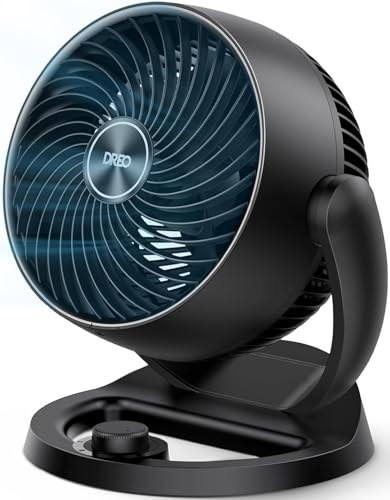
Dreo PolyFan 306 Quiet Bedroom Fan
Heat has a sneaky way of gathering around a mattress even when the rest of the room feels manageable. A loud fan can break that heavy pocket of air, sure, but the whirring motor, sharp wind noise, and button beeps may leave sleep just as elusive. The Dreo PolyFan 306 takes a more measured approach to the best silent fan for bedroom role, pairing a 25 dB minimum noise claim with long-range circulation and flexible positioning. It isn't loaded with dozens of speeds, yet its focused feature set covers the nightly basics without turning bedtime into a control-panel lesson.
Dreo PolyFan 306
The PolyFan 306 is built as an air circulator rather than a fan meant only to blow directly at the bed. Dreo states that its airflow can travel up to 80 feet and circulate room air in under three minutes, based on the supplied product description. That reach can help move cool air from an air conditioner across a bedroom, living room, or kitchen where temperatures tend to vary from one corner to another. Real results will naturally depend on room size, furniture placement, open doors, and how much clearance surrounds the fan.
Three speed settings keep operation refreshingly straightforward. The lowest level suits gentle overnight circulation, the middle setting adds more noticeable cooling, and the highest level is better suited to clearing trapped heat. Simple speed control can be a strength for anyone tired of tapping through a long menu just to get comfortable. The tradeoff is less precision than fans offering ten, sixteen, or thirty-two incremental levels.
An automatic mode fills part of that gap by responding to temperature changes. According to the provided specifications, Auto Mode increases the fan by one speed whenever the room temperature rises by 3 degrees Fahrenheit. That behavior can reduce constant adjustments on nights when the bedroom starts warm and gradually cools down. Still, temperature-based control can't account for every personal preference, so manual settings may feel more predictable for particularly sensitive sleepers.
Quiet Performance After The Lights Go Out
The listed minimum operating noise is 25 dB, which applies to the fan's quietest operating conditions rather than every speed. That distinction matters because stronger airflow always produces more wind noise, even when the motor itself remains smooth. At lower settings, the DC motor and bionic blade design are intended to move air without the rough buzz associated with some conventional pedestal fans. For bedtime use, that low-speed character matters far more than how the fan sounds while running flat out.
Button sounds can be surprisingly irritating in a silent bedroom. The remote includes a one-touch mute function, allowing adjustments without the usual electronic chirp announcing every change. That means a speed reduction or oscillation adjustment is less likely to disturb someone who has already fallen asleep. It's a small feature on paper, but small annoyances have a habit of becoming the loudest ones at two in the morning.
Placement will still shape the final noise level. A fan standing on loose flooring can transmit vibration, while a rear grille placed too close to curtains or furniture may create extra turbulence. A firm surface and open intake area help the quiet motor operate without unrelated rattles joining the mix. The 25 dB figure shouldn't be treated as a promise of complete silence, but it gives the PolyFan 306 a credible starting point for noise-conscious bedroom use.
Airflow Direction Without A Constant Draft
The fan sweeps through 80 degrees of horizontal oscillation, covering more of the room than a fixed head. That movement is useful when two sides of a bed need airflow or when a steady breeze aimed at one shoulder becomes uncomfortable after an hour. Oscillation can also distribute conditioned air more evenly rather than leaving one cool strip and several warm corners. The sweep isn't exceptionally wide, though it should cover a typical sleeping area without constantly turning away for long stretches.
A 90-degree manual vertical pivot lets the head aim from a low horizontal position toward the ceiling. Tilting upward can pull warmer air into circulation and spread cooled air without directing a sharp stream at the face. A level position makes more sense for direct cooling across a mattress or desk. Since vertical adjustment is manual, the head won't automatically travel up and down during operation.
That manual design is simpler than a motorized vertical oscillation system, and simplicity has its perks. Fewer moving mechanisms may mean less potential for clicking, creaking, or unwanted motion while the fan runs. On the other hand, changing the vertical angle requires walking over to the unit rather than using the remote. The directional flexibility is useful, but it isn't fully remote-controlled from every angle.
Adjustable Height For Different Bedroom Layouts
The stand adjusts from roughly 33.8 to 41.3 inches, giving the airflow enough vertical range for low beds, taller mattresses, desks, and casual seating. A lower setting can send air across the side of a platform bed, while the raised position can clear a nightstand or reach above thick bedding. This matters because a fan aimed a few inches too high or low may circulate the room without providing much personal relief. Height adjustment helps close that frustrating gap.
The pedestal format does require a dedicated patch of floor. In a tight bedroom, the base may compete with a laundry basket, nightstand, charging cables, or the narrow walking path beside the bed. The floor-standing design saves tabletop space, though it won't tuck into a corner as neatly as a slim tower fan. The 80-degree sweep also needs enough clearance to avoid brushing curtains or nearby furniture.
Portability is reasonable for moving the fan between rooms, but it remains a full-size pedestal unit rather than a compact personal fan. The adjustable pole and detachable parts support flexible use, yet frequent relocation may become a chore if stairs are involved. A bedroom-to-office move on the same floor should be manageable. For a permanent bedside setup, the larger footprint is easier to accept because the height and reach become more valuable.
Remote Operation And Automatic Comfort
The included remote control manages fan speed, oscillation, Auto Mode, and other core functions from across the room. That keeps the fan positioned where airflow works best instead of forcing it within arm's reach of the bed. A stronger setting can clear warm air before sleep, then drop to a gentler level once the room settles. No late-night shuffle across the floor, no fumbling around the top panel in the dark.
Built-in controls remain available on the fan itself, which is useful when the remote inevitably disappears beneath a pillow or blanket. The top-mounted panel should be easier to reach than controls placed low on the base. Physical access also prevents the fan from becoming useless if the remote battery runs down. Keeping both control methods gives the PolyFan 306 a sensible balance between convenience and basic reliability.
Auto Mode is best viewed as a helpful assistant rather than a mind reader. A 3-degree temperature increase triggers the next fan speed, but comfort can shift before the room sensor notices a large enough change. Bedding thickness, humidity, and direct sunlight also affect how warm the room feels without always matching the measured temperature. The manual controls remain important when the automatic response doesn't line up with the moment.
Cleaning Access And The Aroma Pad
Dust eventually collects on every fan blade and grille, slowly reducing airflow and sometimes creating an uneven fluttering sound. The PolyFan 306 has a detachable blade, front grille, and rear grille, making those areas more accessible for routine cleaning. That design can save considerable frustration compared with sealed housings that require narrow brushes and awkward angles. Regular cleaning is especially worthwhile in bedrooms where lint, hair, and fabric fibers accumulate quickly.
Detachable construction doesn't mean the fan should be taken apart casually while connected to power. Unplugging the unit and following the manufacturer's assembly guidance keeps cleaning straightforward and avoids bending the grille or misaligning the blade. Each piece should be fully dry before reassembly. A clean fan tends to move air more smoothly, which supports both circulation efficiency and quieter operation.
The built-in aroma pad allows fragrance to enter the moving air. That may appeal in a bedroom or office where a light scent is welcome, though fragrance strength can build quickly in a closed room. People who dislike scented air can simply leave the pad unused, so it doesn't interfere with normal fan operation. Airflow needs on a desk follow a smaller-scale pattern, and a related reference appears in Honeywell table fans for compact surfaces and close-range cooling.
Strengths, Weaknesses, And Realistic Expectations
The PolyFan 306 makes its strongest case through quiet low-speed operation, long airflow reach, and uncomplicated controls. Its remote mute function directly addresses one of those silly little bedtime irritations that cheaper fans often ignore. Adjustable height and a wide vertical pivot also help the breeze reach the right level instead of merely pushing air somewhere across the room. Those features work together in a practical way rather than feeling tacked onto a long specification list.
The limited number of speeds is the most obvious compromise. Three levels may be enough for many bedrooms, but they don't offer the tiny airflow adjustments available from models with broader speed ranges. The 80-degree oscillation is useful without being especially expansive, and vertical positioning must be changed by hand. Anyone expecting fully motorized three-dimensional movement may find this setup a little basic.
The claimed 80-foot reach and rapid room circulation come from the supplied manufacturer description, not independent testing included here. Furniture, doorway placement, ceiling height, and room shape can all shorten effective airflow distance. The listed 25 dB minimum also shouldn't be assumed across all three speeds. Strong circulation and near-silent operation pull in opposite directions, so the quietest experience will naturally come with gentler airflow.
For nightly use, the PolyFan 306 favors a clean, no-fuss routine. Set the height, angle the head, choose a speed, mute the beeps, and let oscillation spread the breeze without hammering one spot. Its best-fit strength is balanced bedroom circulation rather than extreme customization. The footprint and three-speed limit deserve thought, but the quieter motor design, remote access, washable components, and flexible head make it a sensible match for rooms where sleep comfort matters more than flashy extras.
DREO TurboPoly Fan 512
Bedtime cooling gets tricky when the room feels stuffy but a harsh, droning fan makes sleep just as difficult as the heat. The DREO TurboPoly Fan 512 takes a more refined route, combining broad circulation, nine speed levels, and a stated minimum sound level of 20 dB. That mix gives it a credible place among the best silent fan for bedroom options, particularly where gentle overnight airflow and stronger daytime circulation are both needed. It isn't a tiny fan tucked out of sight, though its adjustable height and directional head make the larger pedestal design far easier to position.
DREO TurboPoly 512 Bedroom Fan
The TurboPoly 512 combines three familiar fan styles in one body: a pedestal fan, an oscillating fan, and a room air circulator. That distinction matters because the unit isn't limited to blasting air at the nearest person. Its airflow system is designed to carry a breeze across a room, helping loosen pockets of warm, stagnant air around beds, desks, and upholstered furniture. The result should feel more balanced than placing a basic box fan a few feet from the mattress and hoping for the best.
Nine selectable speeds provide a useful middle ground between oversimplified three-speed controls and menus packed with dozens of tiny increments. The lower levels should suit quiet nighttime circulation, while stronger settings are available for clearing accumulated heat after the room has been closed all afternoon. Airflow precision is one of the fan's practical strengths because comfort often sits between barely noticeable and too windy. Nine levels offer enough room to make that adjustment without turning a simple fan into a complicated appliance.
Four operating modes widen the range of possible routines. The supplied description doesn't explain the behavior of every mode, so it would be careless to assign functions that haven't been provided. Even so, the combination of nine speeds and four modes gives more flexibility than a conventional pedestal fan with three fixed buttons. Some settings may prove more useful than others, but the extra control leaves room for different temperatures, room layouts, and sleep habits.
Long-Reach Circulation Across The Room
DREO states that the fan can project airflow as far as 100 feet using its air booster and bionic blade design. That claim comes from the supplied product information rather than independent measurements presented here, so room shape and furniture will affect real-world reach. A clear path across an open bedroom will allow air to travel more freely than a crowded space filled with curtains, shelves, and tall dressers. Still, the stated reach suggests that the TurboPoly 512 is built for more than close-range cooling.
Longer airflow can be especially useful beside an air conditioner. Cold air often settles near the vent or one side of the room, leaving the bed noticeably warmer even though the thermostat says everything is fine. The fan's room-circulation focus can help push that cooled air through the wider space rather than forcing the air conditioner to work harder on one stubborn corner. It won't refrigerate the room on its own, but a steady circulation pattern can make existing cooling feel less patchy.
Strong projection doesn't mean the highest setting belongs beside the pillow. At close range, powerful airflow may feel drying or overly sharp, particularly across the eyes and face. The better arrangement is often a little distance combined with a lower speed, allowing the breeze to spread before reaching the bed. That setup takes advantage of the fan's 100-foot airflow design without turning nighttime cooling into a constant draft.
Quiet DC Motor For Nighttime Use
The brushless DC motor is listed with a minimum operating sound of 20 dB. That number should be understood as the quiet end of the fan's range, not a guarantee that every speed produces the same amount of sound. Higher airflow naturally creates more turbulence at the grille and blades, even if the motor remains smooth. For bedroom use, the lower settings are the ones most likely to show the benefit of the quiet motor design.
A soft, consistent fan sound can fade into the background, while clicking oscillation or changing motor pitch tends to pull attention back toward the appliance. The TurboPoly 512's turbine-style blade system is described as moving air quickly while keeping noise low. No independent acoustic test results were provided, so the safest expectation is quiet low-speed operation rather than literal silence. That distinction keeps the product's nighttime promise grounded in how fans actually behave.
Floor placement will influence the sound reaching the bed. A stable, level surface helps prevent vibration from traveling through loose boards, while space behind the grille reduces extra turbulence caused by a blocked intake. Curtains shouldn't brush the moving head, either, since fabric tapping can undo the benefit of a quiet motor in seconds. A little setup care helps the stated 20 dB minimum remain meaningful in an otherwise silent room.
Wide Oscillation And Flexible Air Direction
The fan offers 120-degree horizontal oscillation, giving it a broader sweep than many pedestal models. Wide side-to-side movement can cover both sides of a bed, reach a nearby desk, or distribute conditioned air across a larger section of the room. It also reduces the discomfort of a fixed stream hitting the same shoulder for hours. The horizontal oscillation can be managed from either the control panel or the remote, which is handy once the lights are off.
Vertical direction is controlled through a 120-degree stepless manual tilt. Rather than forcing the head into only a few preset notches, the stepless mechanism allows more precise aiming toward the mattress, upper wall, or ceiling. An upward angle can help mix warm air near the ceiling with cooler air below, while a level angle provides more direct relief. The adjustment must be made by hand, so vertical movement isn't something the remote can change from bed.
Manual tilt is both a limitation and a sensible design choice. Motorized vertical oscillation would offer greater remote convenience, but it would also add another moving mechanism that could introduce noise or complexity. The TurboPoly 512 keeps automatic movement on the horizontal axis while leaving vertical positioning fixed once chosen. That arrangement works well where the fan stays in one place and the desired height rarely changes during the night.
Adjustable Height And Bedroom Placement
The stand adjusts from approximately 37 to 42 inches, covering a useful range for common beds, desks, and lounge seating. Lowering the head can direct air across a platform mattress, while the taller position helps the breeze clear a nightstand or thick bedding. Height matters more than it seems because airflow aimed too high may circulate the room without providing much personal cooling. A few inches of adjustment can move the stream away from the face and toward the torso or foot of the bed.
A pedestal fan does claim a visible patch of floor. Narrow bedrooms may require some reshuffling to keep the base out of the walking path while giving the 120-degree sweep enough clearance. The adjustable standing design saves nightstand space, though it won't tuck beside furniture as discreetly as a slim tower fan. Its larger head is part of what supports stronger circulation, so the footprint comes with a practical payoff rather than being wasted bulk.
Placement near a doorway can help exchange air between rooms, while a position beside an air-conditioning vent may spread cooled air farther. A corner can work too, provided walls and furniture don't choke the rear intake or block most of the oscillation arc. The fan's long-range circulation gives more positioning freedom than a small personal model that must remain close to the bed. Still, the most powerful specification won't help much if the grille is wedged against a curtain.
Remote Control, Display, And Nine-Hour Timer
The remote handles horizontal oscillation, speed changes, and operating modes from across the room. That convenience isn't fluff at bedtime, since comfort often changes after the body settles and the room begins cooling. A breeze that felt necessary at first may become too strong an hour later, and the remote control removes the need to climb out of bed. The large LED display also makes the chosen settings easier to read while adjustments are being made.
The fan includes a nine-hour timer, which covers a long stretch of overnight operation without requiring the unit to run indefinitely. A shorter timer can cool the room during the first part of the night, while the maximum setting can extend close to a full sleep period. That flexibility may help prevent waking up chilly after the temperature drops before dawn. It also makes the fan more convenient for naps, work sessions, or evening use in a living area.
A large display is helpful during setup, but brightness matters in a dark bedroom. The provided details don't state whether the screen turns off or dims automatically, so that behavior shouldn't be assumed. Light-sensitive sleepers may need to consider the display's placement in relation to the bed. The control convenience is clear, though the absence of supplied dimming information leaves one nighttime detail unresolved.
Energy Use And Everyday Practicality
The manufacturer states that the DC motor produces 30 percent more air while using 40 percent less energy. Those figures come directly from the supplied product description and aren't independently verified here. Even so, DC motors are well suited to fine speed control, which lets the fan run gently when full power isn't needed. Nightly operation benefits from that flexibility because maintaining a mild breeze usually makes more sense than leaving the highest setting on for hours.
Energy efficiency isn't only about the motor claim. The nine-hour timer can prevent unnecessary operation after the room cools, while nine speeds make it easier to avoid using more airflow than the moment requires. Paired with an air conditioner, the circulation effect may also help distribute cooled air more evenly instead of leaving one side of the room uncomfortable. The exact impact on an electric bill will depend on usage habits, climate, and the other cooling equipment in the home.
Smaller surfaces call for a different style of airflow, and a useful related reference appears among Holmes table breeze fans designed around compact placement. The TurboPoly 512 serves a different role by putting stronger, farther-reaching circulation on an adjustable floor stand. That difference matters in rooms where tabletop space is scarce or air needs to travel above furniture. A desk fan may be easier to move, but it can't usually match the pedestal model's height or room coverage.
Cleaning, Setup, And Long-Term Care
The fan is described as straightforward to install and clean. Easy access matters because dust on the grille and blades can restrict airflow, create an uneven flutter, and make a quiet fan sound rougher over time. Routine care helps preserve both airflow strength and the smooth sound expected from the DC motor. Bedroom lint, hair, and fabric fibers tend to accumulate faster than the grille's appearance might suggest.
Cleaning should begin with the fan unplugged and handled according to the manufacturer's assembly guidance. The supplied details don't specify exactly which components detach, so it would be unwise to imply a particular disassembly method. A soft cloth and careful grille cleaning are usually less risky than forcing parts apart without instructions. The important advantage is the stated easy-maintenance design, though the manual should remain the final authority on access and reassembly.
Installation should also include a quick check of the base, pole, and head connection. A properly tightened stand helps keep the fan steady through its broad oscillation arc, while loose hardware can introduce wobble or vibration. Because the height changes, each locking point needs to remain secure after adjustment. Those basic habits protect the fan's quiet operating character better than waiting until a rattle becomes impossible to ignore.
Strengths, Weaknesses, And Realistic Fit
The TurboPoly 512's clearest strength is the way its features reinforce one another. Nine speeds shape the airflow, the 120-degree oscillation spreads it, and the adjustable height puts it where the room actually needs it. The 100-foot projection claim gives the fan room-scale ambition rather than limiting it to the immediate bedside area. Add the remote and timer, and the daily routine becomes easier without burying basic functions under excessive controls.
The fan's weaknesses are fairly straightforward. Vertical adjustment is manual, the nine-hour timer may fall short of a longer overnight schedule, and the pedestal footprint needs more space than a tower or tabletop model. The 20 dB rating applies to minimum noise conditions and shouldn't be expected at the most powerful speed. A large LED display may also concern very light-sensitive sleepers because no automatic dimming behavior was included in the supplied information.
This model makes the most sense in a bedroom that needs both quiet personal comfort and broader air mixing. It may be more fan than necessary for a tiny room where a compact unit already reaches every corner, while larger or unevenly cooled spaces can make better use of the long airflow reach. The feature set favors practical control rather than novelty: enough speeds, broad oscillation, useful height adjustment, and a timer that handles most nighttime routines. Its strongest performance should come from thoughtful placement and moderate speed, not from parking it beside the pillow and running it flat out.
Realistic expectations keep the review balanced. The DREO won't lower the room's actual temperature like an air conditioner, and powerful air movement can't remain completely noiseless. What it can offer, based on the provided specifications, is smooth low-speed circulation, wide room coverage, and easier control from bed. For restless nights caused by stagnant air rather than extreme heat alone, that combination addresses the problem without piling on needless complexity.
LEVOIT Classic 36-Inch Tower Fan
A warm bedroom can turn bedtime into a tug-of-war between comfort and noise. Strong airflow helps, but rattling blades, glowing displays, and abrupt speed changes can make a fan feel like one more thing standing between you and sleep. The LEVOIT Classic 36-Inch Tower Fan approaches the best silent fan for bedroom role with a slim body, a stated minimum noise level of 28 dB, and a sleep program that adjusts airflow through the night. Its feature set is focused rather than flashy, which suits rooms where floor space, darkness, and steady comfort matter more than oversized controls.
LEVOIT Classic 36-Inch Fan
The 36-inch tower format gives this fan a different personality from a pedestal model. Instead of placing a large circular head above a wide stand, the slender vertical body keeps the footprint relatively compact while sending air across a useful height. That shape can fit beside a dresser, near the foot of a bed, or along a narrow wall where a conventional fan would feel bulky. It still needs open space around the intake, though, so squeezing it tightly between furniture can restrict airflow.
Five speed settings cover the practical range from a soft nighttime breeze to stronger daytime cooling. The controls aren't overloaded with dozens of tiny increments, yet there is enough variation to avoid the familiar problem of one level feeling weak and the next feeling too forceful. Five-speed adjustment keeps daily use straightforward, especially for anyone who doesn't want to study a control panel before bed. The limitation is equally clear: highly sensitive sleepers may prefer finer steps between the lowest settings.
The supplied specifications describe a maximum air velocity of 25 feet per second. That figure indicates the fan can produce a concentrated stream for faster relief, particularly when a closed room has trapped heat throughout the day. Maximum velocity isn't the same as cooling an entire room's air temperature, of course, because a fan moves air rather than refrigerating it. The useful part is how quickly that moving air can make skin feel cooler while stale air begins circulating.
Advanced Sleep Mode After Lights Out
The strongest bedroom feature is Advanced Sleep Mode. According to the provided description, this program turns off the display lights and gradually adjusts fan speed with help from a temperature sensor. That combination addresses two common nighttime irritations at once: excessive airflow after the room cools and a bright control panel shining across the bed. The automatic adjustment won't match every personal preference, but it reduces the need for repeated changes during the night.
Sleep comfort rarely stays constant from bedtime to morning. A room may begin warm, cool down after midnight, and become chilly near dawn, especially with air conditioning running nearby. The temperature-responsive control is intended to follow that shift instead of holding one rigid speed for hours. Someone who prefers a completely steady breeze may still favor Normal Mode, yet the automatic option makes sense for sleepers whose comfort changes as the room settles.
The stated minimum noise level is 28 dB, which applies to the quiet end of the operating range rather than every setting. Higher speeds will naturally create more rushing-air sound even if the motor remains smooth. At low speed, the combination of reduced noise and a darkened display gives the LEVOIT a more sleep-aware design than a basic tower fan. It shouldn't be treated as soundless, but it is built to keep common nighttime distractions under control.
Four Modes For Different Cooling Routines
Normal Mode provides the simplest arrangement: select a speed and let the fan maintain it. That can be the most predictable choice for light sleepers who notice every change in airflow. Manual control also works well during reading, desk work, or quiet evening use when the room temperature isn't shifting quickly. Sometimes simple wins, and this mode keeps the fan from making decisions you didn't ask for.
Auto Mode is meant to reduce hands-on adjustment, while Turbo Mode emphasizes faster cooling. The two serve different moments rather than duplicating each other. Auto Mode suits longer sessions where conditions change gradually, whereas Turbo Mode makes more sense when the room feels stuffy and immediate airflow matters. Turbo will logically produce more sound than the lowest setting, so it isn't the natural pick once the room is dark and quiet.
Advanced Sleep Mode rounds out the four-mode system with a more specific nighttime purpose. Together, the modes give the fan enough range for afternoon heat, evening relaxation, and overnight operation without burying basic functions beneath a complicated menu. The mode selection is broad enough to be useful, yet each option still has an understandable role. That clarity is a strength for shared bedrooms where several people may operate the fan differently.
Oscillation And Bedroom Coverage
The fan offers optional 90-degree oscillation, allowing the airflow to sweep across a wider section of the room. This is helpful when two sleepers share a bed or when the fan sits off to one side rather than directly in front. A moving breeze can also feel less drying because it doesn't remain fixed on the same patch of skin. The sweep isn't full-circle, but it should cover a typical sleeping zone without spending too much time pointed away.
Oscillation also helps distribute air from an air conditioner or open doorway. A tower fan placed near a cooler part of the room can push that air toward warmer furniture-lined corners, reducing the sense that one side is comfortable while the other feels stagnant. The wide coverage supports circulation rather than relying only on direct wind. Furniture, curtains, and wall placement will still shape how effectively the moving air reaches the bed.
The vertical tower body spreads airflow over a taller area than many compact table fans. That can make the breeze feel less like a narrow jet and more like a band of moving air across the body. The related design tradeoff is that the outlet height is fixed, unlike a pedestal head that can be raised, lowered, or tilted. The fixed vertical profile suits common bed heights, but unusually high mattresses or very low platform beds may require more careful placement.
Remote Control And Twelve-Hour Timer
The included remote control handles speed, mode, oscillation, and other routine settings without requiring a walk across the room. That convenience becomes especially useful after the fan has been positioned for proper circulation rather than easy access. A stronger breeze can cool the room before sleep, then be softened from bed once the temperature drops. No fumbling with a dim top panel, no bare feet on a cold floor.
The 12-hour timer covers short naps, evening cooling, and a full overnight schedule. A two-hour setting may be enough to settle a warm room, while a longer duration keeps air moving until morning. Timer control is also useful for people who wake up cold after leaving a fan on indefinitely. It doesn't replace automatic temperature adjustment, but it provides a clear stopping point when predictable operation is preferred.
The LED display keeps the selected information visible during setup, while Sleep Mode switches the lights off for darkness. That separation is practical because a readable display is helpful during the day but unnecessary once settings are established. The dark-room behavior is one of the fan's more thoughtful details, especially for sleepers bothered by even a small electronic glow. Remote operation makes it possible to preserve that dark environment while still changing the fan.
Cleaning Access And Setup Details
Tower fans can collect dust behind their narrow vents, and neglected buildup gradually restricts airflow. LEVOIT addresses that issue with a removable washable back cover, giving better access to the interior than sealed designs. The inside can then be wiped according to the supplied maintenance instructions. Easier access doesn't eliminate cleaning, but it makes the task less awkward and may help preserve smoother airflow over time.
Routine maintenance matters for noise as well as performance. Dust on internal surfaces can create uneven airflow, while lint around the intake may force the motor to work against a partial blockage. Keeping the rear intake clean supports the quiet behavior expected from a bedroom fan. The unit should be unplugged before maintenance, and all washable pieces need to be fully dry before reassembly.
Initial assembly requires no tools, with the base pieces snapping together before being secured to the fan body. The supplied setup tip warns that the body should be aligned before tightening the base nut, otherwise the tower may sit crooked. That detail deserves attention because a skewed installation can affect stability and make the fan look oddly tilted beside straight furniture. The tool-free setup is convenient, but careful alignment still matters.
Space Use And Everyday Placement
The biggest practical advantage of a tower fan is its narrow shape. A bedroom with limited floor area may not have room for a wide pedestal base and a large oscillating head, yet the LEVOIT can sit closer to a wall or dresser while preserving walking space. The compact footprint works particularly well beside a bed where cords, baskets, and nightstands already compete for every inch. Its 36-inch height keeps the controls reachable without making the unit visually overwhelming.
White housing gives the fan a cleaner, lighter appearance than the darker industrial look common among floor fans. Appearance won't improve airflow, but a large appliance sitting in a bedroom becomes part of the room whether anyone likes it or not. The neutral finish should blend more easily with pale walls, white furniture, or minimalist decor. Dust may become visible sooner on the exterior, though that can also serve as a useful reminder to clean it.
Outdoor overhead airflow follows a very different design logic, and a neutral related reference appears in chandelier ceiling fans where lighting, blade clearance, and permanent mounting shape the experience. The LEVOIT remains a movable indoor solution with no installation beyond its base assembly. That distinction is useful for renters, dorm rooms, and spaces where drilling or ceiling wiring isn't practical. Portability comes with a power cord, of course, so outlet placement still influences where the fan can sit.
Strengths, Weaknesses, And Best-Fit Use
The fan's clearest strength is its bedroom-centered design. Low-speed noise is listed at 28 dB, Advanced Sleep Mode darkens the display, and the temperature sensor helps adjust airflow as conditions change. Remote control and a 12-hour timer reduce nighttime interruptions, while the narrow body preserves more floor space than a traditional pedestal fan. Those features work together around sleep rather than feeling like unrelated extras.
The compromises are easy to spot. Five speeds offer less fine control than models with broader adjustment ranges, and the fixed tower outlet can't be tilted toward a high bed or ceiling. The 90-degree oscillation provides useful coverage but isn't as broad as 120-degree systems. Turbo Mode may also sound noticeably louder than the quietest setting, which is a normal consequence of moving air faster.
The temperature-based sleep behavior may not please everyone. Some sleepers prefer constant airflow regardless of the room reading, while others become uncomfortable when a fan changes speed during the night. The Normal Mode alternative prevents the automatic system from becoming a deal breaker because manual operation remains available. Realistic expectations matter here: automation adds convenience, but it can't measure personal comfort as precisely as the person in bed.
The LEVOIT Classic 36-Inch Fan fits bedrooms where quiet low-speed operation, dark controls, and a small footprint carry more weight than adjustable height or motorized vertical movement. It can provide brisk airflow during the day, then settle into a gentler nighttime routine without dominating the room. The main difference is balance rather than excess, with enough speed, coverage, and automation to handle daily comfort while keeping operation approachable. For tight rooms and light-sensitive sleepers, that restrained design may be more useful than a larger fan packed with controls that rarely leave their default settings.


Best Quiet Ceiling Fan For Bedroom 2026 Ultimate Comfort Picks

Best Ceiling Fan For Master Bedroom 2026 With Ultimate Comfort

Best White Ceiling Fan With Light For Bedroom 2026 Top Picks

Best Quorum Medallion Ceiling Fan 2026 With Style & Breeze
Best Outdoor Fan For Pergola 2026 Comfort Boost

Best Ceiling Fan For Great Room 2026 With Ultimate Comfort

Best Outdoor DC Ceiling Fans 2026 For Breezy Comfort
Best ceiling exhaust bath fan with light and heater 2026