
Best Small Ceiling Fan for Bathroom 2026 Picks

A cramped, steamy bathroom can feel uncomfortable long after the shower ends. The best small ceiling fan for bathroom use should move air without hanging so low that the room feels even tighter. Compact blade spans, flush-mount housings, and sensible speed controls matter more here than oversized motors or dramatic styling. Still, a ceiling fan isn't a substitute for a properly vented exhaust fan, so moisture removal and air circulation need to be treated as separate jobs.
Low-profile construction usually makes the biggest difference in bathrooms with eight-foot ceilings or limited clearance above a shower door. A hugger-style fan sits close to the ceiling, leaving more open space and reducing the boxed-in feeling that bulky fixtures can create. But there’s a catch: placing blades too close to the ceiling may restrict airflow, especially on cheaply designed models. A well-shaped motor housing and blades with enough pitch help compensate for that tighter installation.
Moisture resistance deserves a close look because ordinary indoor fans aren't built for constant humidity. A damp-rated ceiling fan is generally suited to humid indoor locations where condensation may occur, while a wet-rated model is made for more direct water exposure. Bathroom placement still matters, though, since electrical fixtures must follow local clearance and installation requirements around tubs and showers. Cutting corners here isn't worth the headache, particularly in a small room where water and wiring sit close together.
Noise can turn a relaxing bathroom into an irritating little echo chamber. A compact fan with a quiet DC motor often produces less mechanical hum and offers finer speed control than a basic pull-chain model. Even so, loose mounting hardware, an uneven electrical box, or unbalanced blades can make any fan wobble and rattle. Solid installation matters just as much as the motor printed on the product page.
Lighting is another practical tradeoff. A fan with an integrated LED light can replace an existing ceiling fixture and avoid cluttering a tight ceiling with separate units. On the flip side, sealed LED modules may be harder to replace than standard bulbs, and some produce harsh light that makes mirrors less flattering. Adjustable color temperature or a warm neutral output tends to feel more comfortable during early mornings and late-night routines.
Blade size should match the room rather than chase the highest airflow number. Fans around 20 to 36 inches are easier to fit in compact bathrooms, powder rooms, and narrow layouts, but very small enclosed designs may circulate less air than their appearance suggests. Also, ornate caged housings collect dust faster in humid conditions and can be fiddly to wipe clean. A simpler enclosure with accessible blades usually makes routine maintenance less of a chore.
Controls can quietly shape the day-to-day experience. A wall control avoids hunting for a remote with damp hands, while a remote offers convenient access to speed, light brightness, and timers. Smart controls sound handy, but bathroom Wi-Fi can be inconsistent behind tile, mirrors, and plumbing walls. Straightforward controls often win in the long run because they won't turn a two-minute shower routine into a troubleshooting session.
The strongest pick balances compact dimensions, damp-location suitability, quiet operation, and realistic airflow. It should fit the ceiling height, clear nearby doors and cabinets, and remain easy to clean after months of humid use. A reversible motor is useful for seasonal circulation, though it shouldn't outweigh safety ratings or proper dimensions. Measure first, confirm the electrical box can support a fan, and keep expectations grounded: circulation improves comfort, while an exhaust system handles moisture removal.

- LFR Score9.2
LFR Score is a ranking system developed by lightfansreviews.com. LFR Score has no relationship or impact from any manufacturers or sales agent websites. Learn more
- BrandHoneywell Ceiling Fans

- LFR Score9.0
LFR Score is a ranking system developed by lightfansreviews.com. LFR Score has no relationship or impact from any manufacturers or sales agent websites. Learn more
- BrandZMISHIBO

- LFR Score8.8
LFR Score is a ranking system developed by lightfansreviews.com. LFR Score has no relationship or impact from any manufacturers or sales agent websites. Learn more
- BrandBell+Howell

- LFR Score8.6
LFR Score is a ranking system developed by lightfansreviews.com. LFR Score has no relationship or impact from any manufacturers or sales agent websites. Learn more
- BrandEonini
- LFR Score8.6
LFR Score is a ranking system developed by lightfansreviews.com. LFR Score has no relationship or impact from any manufacturers or sales agent websites. Learn more
- BrandASALL
- LFR Score8.6
LFR Score is a ranking system developed by lightfansreviews.com. LFR Score has no relationship or impact from any manufacturers or sales agent websites. Learn more
- Brandocioc
Last update on 2026-07-17 / Affiliate links / Images, Product Titles, and Product Highlights from Amazon Product Advertising API
Honeywell Ocean Breeze For Small Bathroom Spaces
A bulky fixture can make a compact bathroom ceiling feel lower before the blades even start turning. The Honeywell Ocean Breeze addresses that space problem with a 30-inch blade span, a modern white finish, and flexible mounting choices that suit tighter layouts. For anyone researching the best small ceiling fan for bathroom use, its restrained dimensions and built-in light deserve attention. Still, bathroom placement calls for careful planning because the provided details describe this as an indoor fan rather than identifying a damp-location rating.
Honeywell Ocean Breeze 30-Inch Ceiling Fan
The Ocean Breeze avoids the oversized look that often makes a small bathroom seem crowded. Its compact 30-inch size fits more naturally above narrow floor plans, small vanities, and rooms where a 42-inch fan would dominate the ceiling. That smaller footprint also leaves more visual breathing room around vents, lights, cabinet doors, and shower enclosures. It’s a practical proportion, not merely a scaled-down decorative choice.
The contemporary housing has a clean shape that won’t fight with simple tile, painted walls, or modern bathroom hardware. White finishes tend to blend into light ceilings, helping the fan feel less intrusive in a room already packed with fixtures. The included dual-finish reversible blades add a little flexibility, since each side offers a different look. That detail makes it easier to adjust the appearance without replacing the entire fan during a minor room refresh.
A built-in LED light also helps reduce ceiling clutter by combining air circulation and overhead illumination in one fixture. That can be handy where the electrical layout allows only one central ceiling box. The light won’t replace focused vanity lighting for shaving or makeup, but it can provide useful general illumination. In a compact room, combining functions often makes more sense than squeezing separate fixtures into every available patch of ceiling.
Airflow That Fits A Smaller Room
The three-speed motor gives more control than a basic single-speed compact fan. Low speed can keep air gently moving during everyday routines, while a higher setting may feel better after a hot shower leaves the room stuffy. The quiet motor is especially relevant in bathrooms because hard surfaces tend to bounce mechanical noise around. Tile, mirrors, and glass can make a faint hum sound far louder than it would in a carpeted bedroom.
A reversible motor adds seasonal flexibility through both downdraft and updraft operation. Downdraft mode directs air toward the room, creating a noticeable breeze during warmer weather or steamy morning routines. Updraft mode circulates air toward the ceiling, which may help redistribute warmer air without producing the same direct chill. The reversible airflow feature is useful, though it should be viewed as comfort control rather than a replacement for ventilation.
That distinction matters. A ceiling fan circulates existing room air, but it doesn’t send humid air outdoors the way a properly installed exhaust fan does. The Ocean Breeze may help the bathroom feel less stagnant and support faster surface drying, yet moisture removal still depends on exhaust ventilation. Pairing circulation with an effective vent fan is the sensible setup, especially in bathrooms where mirrors stay fogged and towels remain damp long after use.
Mounting Flexibility And Ceiling Clearance
Mounting options can make or break a fan in a tight room, and this model offers more flexibility than many compact fixtures. It supports standard downrod installation, angled mounting for sloped ceilings, and a closer-to-ceiling configuration using the included 4-inch downrod. The tri-mount design makes it easier to work around different ceiling shapes and room proportions. That adaptability is useful in older houses where bathroom ceilings aren’t always perfectly level or conventionally framed.
The closer mounting arrangement will usually make the most sense where headroom is limited. Even so, the total installed height should be measured before purchase rather than guessed from the blade diameter alone. Fan housings, light kits, and mounting hardware all contribute to the final drop from the ceiling. A careful clearance check prevents trouble with tall occupants, raised cabinet doors, shower rods, or nearby doors that swing into the fan’s space.
The ceiling electrical box also needs attention because a fan creates movement and vibration that an ordinary light fixture doesn’t. A fan-rated support box and secure mounting surface help prevent wobble, clicking, and long-term loosening. This isn’t the place for a “close enough” installation, particularly around a room with regular humidity. Proper structural support protects the fan’s quiet operation and keeps the installation safer over time.
Controls, Daily Use, And Practical Tradeoffs
Pull-chain controls keep operation straightforward, with no remote to lose and no wireless connection to troubleshoot. That simplicity can be refreshing in a small bathroom where speed adjustments are occasional rather than constant. On the other hand, reaching the chain may be awkward on taller ceilings or above a central fixture. A pull-chain setup works best when the fan hangs within comfortable reach and the chain doesn’t interfere with the light or nearby cabinetry.
The reversible blades provide an easy design change, but they don’t alter the fan’s basic performance. Their real value lies in matching the room’s finishes without buying replacement blades or repainting the fixture. One side may sit more comfortably beside white cabinetry, while the alternate finish can add contrast against a plain ceiling. It’s a modest feature, yet two blade finishes offer useful freedom during remodeling or décor changes.
Cleaning should be manageable because the short blades are easier to reach than those on a wide living-room fan. Bathroom residue can be stubborn, though, since airborne moisture mixes with dust and creates a film on blade edges and the light housing. Regular wiping helps preserve balance and prevents buildup from becoming a sticky chore. The compact blade span reduces the area to clean, but it doesn’t eliminate routine maintenance.
Bathroom Suitability Needs A Careful Look
The product details position the Ocean Breeze for indoor rooms that include bathrooms, kitchens, bedrooms, and other small spaces. However, the supplied information doesn’t state a damp-rated or wet-rated certification. That missing detail deserves serious consideration because bathroom humidity levels vary widely. A dry indoor location with good exhaust ventilation presents a different environment from a fan mounted near a shower where condensation regularly reaches the fixture.
Placement should follow local electrical requirements and the manufacturer’s installation guidance, especially around tubs, showers, and other water sources. The fan shouldn’t be treated as suitable for direct moisture exposure without an appropriate rating that confirms it. This limitation doesn’t automatically rule it out for every bathroom, but it does narrow the sensible installation conditions. Distance from water, ventilation quality, and room humidity should guide the decision rather than appearance alone.
A powder room or well-ventilated half bath may be a more comfortable match than a constantly steamy bathroom with weak exhaust airflow. The compact dimensions, quiet three-speed motor, reversible operation, and integrated light still form a useful package for small indoor spaces. Yet realistic expectations matter: the fan improves circulation and comfort, while the exhaust system handles humidity control. The strongest reason to choose the Honeywell Ocean Breeze is its space-conscious design, provided the installation environment suits its stated indoor use.
Strengths And Limitations In Everyday Use
The main strengths are easy to spot: small-room proportions, three operating speeds, reversible airflow, flexible mounting, reversible blade finishes, and a built-in LED light. Together, those features address several frustrations that appear in compact bathrooms, from limited ceiling room to weak air movement. The fan can feel less imposing than a standard-size model while still providing adjustable circulation. Its clean white styling also keeps the fixture visually calm rather than turning it into the room’s loudest design element.
The limitations are just as important. Pull chains won’t suit every ceiling height, a 30-inch fan won’t move air like a much larger model, and the supplied details don’t establish a moisture-resistance rating. The compact airflow tradeoff is reasonable in a small room, but expectations should remain grounded. It’s built to circulate air in a modest area, not overpower heavy humidity or compensate for an undersized exhaust vent.
Measured against the needs behind the best small ceiling fan for bathroom search, the Ocean Breeze makes the most sense where size, quiet operation, and simple controls outrank smart features or dramatic airflow. Its mounting flexibility helps solve awkward ceiling layouts, while the reversible motor adds more year-round usefulness than a basic one-direction fan. Careful placement remains the deciding factor, particularly in a full bathroom. With the right ceiling support and a suitably dry installation zone, its compact design can improve comfort without crowding the room.
ZMISHIBO 19.7-Inch Low Profile Ceiling Fan
Steam, low ceilings, and limited floor space can turn a small bathroom into a muggy box before the morning routine is halfway done. A compact fixture needs to circulate air without crowding the ceiling or making the room sound like a tiny engine bay. The ZMISHIBO 19.7-inch fan approaches the best small ceiling fan for bathroom brief with a flush-mounted body, integrated LED lighting, and six airflow settings. Its indoor-focused design still calls for careful placement, since the supplied specifications don’t state a damp-location or wet-location rating.
ZMISHIBO 19.7-Inch Flush Mount Fan
The 19.7-inch diameter is the headline feature here, and for good reason. A traditional 42-inch fan can swallow a compact bathroom ceiling, while this low-profile footprint leaves more breathing room around vents, cabinets, and shower doors. The enclosed seven-blade layout also creates a cleaner visual outline than exposed blades stretching across the room. It looks more like a modern ceiling light with airflow built in, which helps a small space feel less cluttered.
Flush mounting keeps the fixture close to the ceiling, a real benefit where every inch of headroom counts. There’s no long downrod hanging into the room, and the black housing gives the design a sharper, more graphic appearance. That darker finish may look striking against a white ceiling, though it won’t disappear into the background the way a white fixture would. The compact housing suits contemporary interiors, but it may feel visually heavy in a very pale or traditional bathroom.
The seven internal blades are protected by the outer housing, reducing the exposed spinning area associated with conventional fans. That structure can feel reassuring in a tight room where raised hands, towels, or cabinet doors may come closer to the ceiling fixture. Still, enclosed fan lights tend to collect dust inside their grille, particularly where humidity makes particles stick. Routine cleaning will matter if the fan sits near a frequently used shower or vanity.
Lighting That Handles More Than One Mood
The integrated LED system provides up to 2200 lumens according to the supplied product details, with brightness adjustable from 10% to 100%. That range gives the fixture more flexibility than a fixed-output ceiling light. Full brightness can help with general cleaning or morning preparation, while a lower setting avoids the harsh, wide-awake glare nobody wants during a late-night bathroom visit. The fan and light operate separately, so air circulation doesn’t force the room to stay brightly lit.
Three selectable color temperatures cover warm 3000K light through cooler white light at 6000K. Warm light creates a softer atmosphere, while cooler settings can make tile, mirrors, and counters appear crisper. The middle setting will probably feel more balanced for daily routines, especially where overly blue light makes the room seem clinical. This adjustable color temperature gives one fixture enough range to handle both relaxed evening use and task-oriented mornings.
The memory function is a small feature that can save a surprising amount of fiddling. Instead of resetting the light every time, the fixture is designed to remember the previous lighting choice. That’s useful when a preferred brightness and color temperature have already been dialed in. A light memory function sounds minor on paper, but it removes one repetitive step from a room visited several times a day.
Six Speeds And Reversible Airflow
Six fan speeds offer finer control than the usual three-speed setup. Lower settings can keep air moving gently while brushing teeth or getting ready, while higher speeds are better suited to the stuffy period after a hot shower. More steps between slow and fast make it easier to avoid the all-or-nothing feeling common with basic compact fans. The six-speed control is especially useful in a small room, where even a modest change in airflow can be noticeable.
The reversible DC motor supports both downdraft and updraft operation. Downdraft sends air toward the room for a stronger cooling sensation, while updraft moves air toward the ceiling and can soften direct airflow during cooler weather. This reversible motor broadens year-round usefulness, though the seasonal benefit will be less dramatic in a tiny bathroom than in a large living space. Even so, having both modes is better than being locked into one direction.
The supplied description emphasizes smooth operation, low noise, and a pure copper motor. Noise matters in bathrooms because hard surfaces bounce sound around, turning faint hums and rattles into obvious distractions. ZMISHIBO also removed the confirmation beep from remote commands, which keeps speed or light adjustments from punctuating a quiet morning. The beep-free control is a thoughtful touch for bedrooms and bathrooms alike, especially during early or late hours.
Remote And Bluetooth App Control
The included remote handles fan speed, light dimming, color temperature, and timer settings without requiring a wall-mounted control panel. That’s handy when the existing electrical setup only has a basic switch or when the pull-chain approach feels dated. The fan and light can be adjusted independently, preserving flexibility during different routines. Separate fan and light controls make the fixture more practical than models that bundle every function together.
Bluetooth app control adds another way to operate the fan from a phone. Because it relies on Bluetooth rather than a cloud connection, control should remain local to the room and nearby areas, based on the supplied description. That can be simpler than connecting another household device to Wi-Fi, though opening an app just to change fan speed may feel like overkill. The app option is useful as a backup control, but the physical remote will likely remain the quicker everyday tool.
A two-hour timer can keep air circulating after the room is no longer occupied. That’s convenient after a shower, since the fan can continue moving air without being left on indefinitely. Still, circulating air isn’t the same as extracting moisture outdoors, so the timer shouldn’t create false confidence about humidity control. The two-hour timer improves convenience, while a properly vented exhaust fan remains responsible for removing moist air.
Installation And Everyday Maintenance
The product information mentions detailed instructions and an installation video intended to simplify setup. A flush-mount design avoids downrod adjustments, but wiring, ceiling-box support, and alignment still require care. Ceiling fans create movement and vibration, so the electrical box must be suitable for supporting a fan rather than only a lightweight lamp. Secure mounting is essential for keeping the fixture stable, quiet, and safe over time.
The integrated LED design reduces the need to purchase and replace standard bulbs. On the flip side, built-in light boards usually aren’t as simple to replace as a screw-in bulb if the light source eventually develops a problem. That tradeoff is common with slim modern fan lights, where the shallow housing depends on integrated components. The energy-saving LED keeps the fixture compact, but long-term serviceability is less straightforward than with traditional bulb sockets.
Cleaning may require more patience than wiping three open fan blades. Dust can settle on the grille and within the enclosed blade area, while bathroom humidity may turn that dust into a stubborn film. A soft cloth and regular light cleaning should prevent buildup from becoming difficult to remove. The enclosed seven-blade design looks tidy, but it shouldn’t be mistaken for a maintenance-free setup.
Bathroom Placement And Moisture Limits
The product is described as a bedroom fan, and the supplied information doesn’t confirm a damp-rated or wet-rated certification. That absence matters more than the compact measurements or smart controls when bathroom installation is being considered. A fan mounted in a half bath or a well-ventilated dry area faces different conditions from one exposed to heavy shower steam. Moisture suitability should be verified before placing the fixture in any full bathroom.
Local electrical rules may restrict fan placement near bathtubs and showers, particularly where a person could reach the fixture from a wet area. The low-profile body doesn’t cancel those safety considerations. Distance from direct water exposure, ceiling height, ventilation strength, and the manufacturer’s installation guidance all need to line up. Safe bathroom placement depends on more than whether the fan physically fits the ceiling.
A ceiling fan also can’t replace a bathroom exhaust system. It moves the air already in the room, which may reduce stuffiness and help damp surfaces dry more evenly, but it doesn’t carry water vapor outdoors. Pairing the ZMISHIBO with effective exhaust ventilation makes more sense than expecting the fan to solve persistent condensation by itself. The air-circulation benefit is real, yet its role should remain clearly separated from moisture extraction.
Practical Strengths And Honest Tradeoffs
The biggest strengths sit in the combination of small dimensions, adjustable lighting, six fan speeds, and independent remote controls. Those features address several common headaches at once: limited ceiling space, harsh fixed lighting, and airflow that’s either too weak or too aggressive. The reversible motor and timer add useful flexibility without making the fixture physically larger. For a compact indoor room, that’s a well-focused feature set.
The limitations deserve equal weight. The black housing won’t blend into every bathroom, integrated LEDs are less convenient to service than regular bulbs, and app control may go unused after the novelty wears off. More critically, the provided details don’t establish a bathroom moisture rating. That missing damp-rating information prevents an unconditional recommendation for steamy or splash-prone locations.
Against the needs behind the best small ceiling fan for bathroom search, the ZMISHIBO stands out most for its unusually compact 19.7-inch form and broad control range. It makes sense where headroom is tight, a combined fan-light fixture is preferred, and the installation area stays within the manufacturer’s approved indoor conditions. The adjustable LED, quiet control behavior, and six speeds improve everyday usability, while the moisture-rating question remains the deciding checkpoint. In the right location, it can make a cramped room feel less stagnant without hanging a full-size fan over the middle of the floor plan.
Socket Fan 15.75-Inch LED Ceiling Fan
A full ceiling-fan installation can feel like overkill in a room barely large enough for a vanity, toilet, and shower. Wiring changes, support boxes, long blades, and a bulky motor housing quickly turn a simple airflow problem into a weekend project. The Socket Fan 15.75-inch LED fan takes a radically simpler route for anyone weighing the best small ceiling fan for bathroom options: it screws into a standard E26 or E27 light socket and combines airflow with overhead illumination. That convenience is its biggest attraction, though moisture exposure and socket placement need serious thought before bathroom use.
Socket Fan Cool Light 15.75-Inch Model
The Socket Fan doesn’t behave like a conventional hardwired ceiling fan. Instead, the entire one-pound, four-ounce unit threads into a compatible light socket much like an oversized bulb. That screw-in installation eliminates separate fan wiring, a downrod, and the usual ceiling mounting bracket. For a small room where renovation work isn’t practical, the idea is refreshingly straightforward.
Its 15.75-inch blade span is genuinely compact, not merely smaller than average. The short blades stay close to the socket and avoid the broad sweep of a typical 36-inch or 42-inch fan. That makes the space-saving footprint easier to accommodate near cabinet doors, narrow walls, or awkward ceiling layouts. Still, clearance around the blades must be checked carefully because the fan needs open space to spin safely.
The included socket extender addresses recessed or deeper light sockets that might otherwise leave too little room for the fan body. That small accessory can make the difference between a clean fit and a fan pressed awkwardly against the fixture trim. Even so, not every recessed can, globe fixture, or enclosed lamp holder will be suitable. Socket compatibility deserves a careful look before the old bulb comes out.
Fast Installation Without New Wiring
Installation is the part that separates this fan from nearly every traditional ceiling model. There’s no ceiling plate to level, no motor housing to lift into place, and no separate electrical connection to make. The fan screws into a standard E26 or E27 socket and draws electricity from that existing fixture. This lightbulb-style setup can save considerable effort in rentals, older homes, or rooms where permanent modifications aren’t welcome.
Simple doesn’t mean careless, though. The socket must be secure, correctly wired, and capable of holding the unit without wobbling or sagging. A loose or damaged lamp holder may create movement that becomes more obvious once the blades start spinning. The fan’s low weight helps, but solid socket support remains essential for stable operation.
The wall switch generally needs to stay on for the remote to control the light and fan functions. That detail can take a little getting used to, especially in a bathroom where reaching for the wall switch is second nature. Turn the switch off, and the remote can’t wake the unit because the socket no longer has power. The remote-dependent operation is convenient once the habit settles in, but it changes the usual light-switch routine.
Compact Airflow For Tight Spaces
Three fan settings provide low, medium, and high airflow. A low setting can take the edge off stagnant air during a quick morning routine, while high speed may feel more useful after heat and steam build up. The short blades won’t behave like a wide conventional fan, and that’s a fair tradeoff for such a small device. Its three-speed airflow is better viewed as localized circulation than whole-room ventilation.
The fan’s central position beneath an existing light socket may work nicely in a compact bathroom with a single ceiling fixture. Air can move downward around the vanity and open floor area without a long downrod hanging overhead. Yet socket location matters a great deal because a fixture tucked into a corner won’t distribute air as evenly as one near the center. Ceiling placement shapes performance more here than it might with a larger fan.
A small screw-in fan can make still air feel less oppressive, but it won’t pull humidity out of the building. Steam remains in the room unless an exhaust fan or open window moves it outdoors. The Socket Fan may encourage evaporation from towels and surfaces by keeping air in motion, but that moisture still needs somewhere to go. Air circulation and moisture extraction are two separate jobs, plain and simple.
Cool White Lighting And Brightness Control
The integrated LED produces a stated 1,000 lumens, giving the unit enough output to serve as a primary ceiling light in many compact rooms. Its 5,000K color temperature creates a cool white appearance that tends to make tile, white walls, and chrome fixtures look crisp. That brighter visual character can be useful during cleaning, grooming, or early morning routines. On the other hand, it may feel stark in bathrooms designed around warm wood, beige stone, or softer evening light.
The remote cycles the light through low, medium, high, and off settings. Multiple brightness levels help tame the intensity when the full 1,000-lumen output feels excessive. Low light suits a late-night visit, while the brighter settings are more practical around mirrors and countertops. The adjustable LED brightness adds flexibility even though the color temperature itself remains fixed.
Combining a fan and lamp in one socket also avoids sacrificing overhead illumination for airflow. Traditional bulb-socket fans sometimes create a dilemma between adding a fan and keeping enough light, but this model handles both functions in the same body. The arrangement keeps the ceiling visually uncluttered and uses one existing power source. That two-in-one design is the product’s central advantage, especially where adding another fixture isn’t realistic.
Remote Control Without App Clutter
The remote uses three main buttons labeled for the light, fan, and complete power-off functions. Repeated presses on the light button cycle brightness, while the fan button moves through the three speed levels and off. The separate off button shuts down both systems at once. This simple button layout avoids pairing steps, account setup, and phone-app menus.
A wall mount is included for storing the remote on a vertical surface. That sounds like a minor accessory until the remote disappears beneath towels, toiletries, or laundry. Keeping it beside the door can make operation feel closer to using a standard wall control. The remote holder also reduces the odds of damp hands carrying the controller around the room.
The remote setup does introduce a dependency that a pull-chain or hardwired control doesn’t. A misplaced remote leaves fewer convenient ways to change fan speed or light brightness while the socket remains powered. Batteries also become another small maintenance item to remember. Wireless convenience works best when the controller has a permanent home and the wall switch stays in the correct position.
Bathroom Safety Needs Extra Scrutiny
The supplied product information lists bedrooms, living rooms, kitchens, and balconies, but it doesn’t state that the fan carries a damp-location or wet-location rating. That missing specification is crucial for bathroom planning. Humidity, condensation, and accidental splashing create conditions that ordinary indoor electrical products may not be designed to handle. Moisture-rating uncertainty prevents this model from being treated as automatically suitable for every bathroom.
Placement near a bathtub or shower deserves particular caution. Local electrical codes may restrict fixtures within wet zones, and a standard open light socket may not be appropriate where condensation gathers. A half bath without a shower presents a very different environment from a small full bath that stays steamy every morning. Distance from water matters just as much as the fan’s compact size.
The screw-in design also means the fan inherits the limitations of the existing fixture. An enclosed globe, narrow recessed housing, or damp-rated sealed fixture may not accommodate spinning blades after its cover is removed. Altering a bathroom-rated fixture could affect the protection that fixture was intended to provide. Existing fixture design should be evaluated as part of the installation, not treated as an afterthought.
Cleaning And Everyday Practicality
Short exposed blades are easier to reach than those on a full-size ceiling fan, which should make routine dusting less awkward. Bathroom residue can still be stubborn because moisture binds dust, lint, and aerosol particles to plastic surfaces. Frequent light cleaning is easier than waiting for a gray film to build up around the blade edges. The compact removable setup may simplify maintenance because the unit can be unscrewed after power is safely disconnected.
The white finish helps the fan blend into many pale ceilings and makes dust easier to spot before buildup gets heavy. It may also show discoloration sooner in rooms affected by hair spray, cosmetics, or lingering humidity. Wiping the housing and blades with a lightly dampened cloth should be approached carefully, with the unit disconnected from power and fully dry before reuse. Electrical care during cleaning matters more than cosmetic convenience.
Portability is another practical wrinkle. Since the fan isn’t permanently mounted, it can potentially move between compatible sockets in different rooms. That flexibility may be useful during seasonal heat or in a rental where permanent fixtures stay untouched. Still, repeated removal and installation can wear a weak socket or invite careless handling. The cordless screw-in format is movable, but it shouldn’t be treated like a casual countertop appliance.
Strengths, Limits, And Realistic Expectations
The strongest case for the Socket Fan rests on minimal installation, genuinely small dimensions, combined lighting, and straightforward remote operation. It solves a narrow problem neatly: adding modest airflow and bright overhead light without rewiring the ceiling. The included extender and remote mount round out the package with useful, practical pieces. Few compact fans can match this level of setup simplicity.
The compromises are equally clear. Its 15.75-inch blades can’t be expected to circulate air like a traditional ceiling fan, the 5,000K light may feel too cool for some bathrooms, and the remote becomes part of the daily routine. More importantly, the product details don’t confirm a damp-location rating. That omission carries more weight in a bathroom than any convenience offered by screw-in installation.
Within the best small ceiling fan for bathroom category, this model fits a highly specific situation: a dry, appropriately located socket where permanent installation is undesirable and light airflow is enough. A powder room or another low-moisture space may suit its design better than a shower-heavy bathroom with persistent condensation. Its compact weight, three speeds, and 1,000-lumen LED create a clever little utility fixture, but only where the electrical environment is suitable. Used with grounded expectations, it’s a space-conscious circulation aid rather than a substitute for a supported ceiling fan or dedicated exhaust system.
Eonini 16-Inch Socket Fan Light
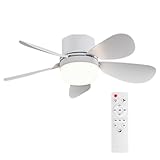
A cramped ceiling can make even a simple airflow upgrade feel like a remodeling job. The Eonini Socket Fan Light sidesteps much of that hassle by combining a compact fan and LED fixture in one screw-in unit. For shoppers weighing the best small ceiling fan for bathroom use, its 16-inch scale, remote control, and standard E26 base immediately stand out. Still, the supplied details don’t identify a damp-location rating, so bathroom placement requires more caution than the quick installation might suggest.
Eonini 16-Inch Socket Fan Light
The Eonini takes a lightbulb-style approach rather than copying a traditional ceiling fan in miniature. Its E26 screw-in base threads into a compatible socket, eliminating separate wiring, downrods, and a heavy mounting plate. That setup can be appealing in a rental, a small powder room, or a space where opening the ceiling feels like biting off more than anyone wants to chew. At 0.99 pounds, the unit also places far less weight on the socket than a conventional fan assembly.
Its listed dimensions are 16.5 by 16.5 by 5.9 inches, so the fan stays close to the ceiling without stretching blades across half the room. The compact 16-inch footprint leaves more clearance around cabinet doors, shelving, vents, and narrow wall sections. That can make a bathroom feel less crowded, especially where a full-size fan would look comically oversized. The small span does limit how broadly it can move air, but that’s the tradeoff behind the design.
A 4.8-inch socket extender is included for deeper fixtures. This is a useful detail because recessed sockets can hide the E26 connection too far inside the ceiling trim for the fan body to clear properly. The included extender gives the unit a better shot at fitting common recessed arrangements, though it won’t make every fixture compatible. Enclosed globes, narrow housings, or unusually shallow clearances may still rule out installation.
Two Functions Without Ceiling Clutter
The fan and light share one socket, which preserves the room’s overhead illumination while adding airflow. That two-in-one design is the real reason this product exists. Replacing a ceiling bulb with a fan-only device would leave a bathroom dim, while installing separate fixtures might require rewiring or another electrical box. Eonini keeps both jobs in one compact body and avoids turning a small ceiling into a patchwork of hardware.
The light uses 54 LEDs and is rated for up to 1,000 lumens according to the supplied specifications. That output can provide useful general lighting in a compact room, especially where the ceiling fixture supports the vanity lights rather than carrying the entire lighting load alone. It may not replace focused mirror lighting, since overhead light can cast shadows beneath the eyes and chin. Even so, 1,000 lumens gives the fixture enough muscle to do more than create a decorative glow.
The low-profile shape also keeps the visual footprint under control. Traditional fan motors can look bulky in a narrow room, but this one reads more like a modern light fixture with blades attached. The sleek white housing should blend fairly easily with common ceiling colors and bathroom finishes. Dust will still show over time, yet the pale finish is less visually dominant than a dark housing in a tiny room.
Three Color Temperatures And Five Brightness Levels
Lighting flexibility is one of the stronger parts of the package. The fixture provides 3000K warm white, 4500K natural white, and 6000K cool white settings. That three-color lighting lets the same ceiling fixture shift from a softer evening tone to a crisp morning look. A warm setting can make a small room feel less clinical, while the cooler setting may help tile and white surfaces appear brighter.
Five brightness levels add more control than a basic on-and-off bulb. Lower output can keep nighttime bathroom visits from feeling like a spotlight interrogation, while higher levels are better suited to cleaning or getting ready. The five-step dimming also helps compensate for different wall colors and fixture positions. Darker paint absorbs more light, while glossy white tile can bounce it around aggressively.
The 4500K setting may be the most balanced for everyday use because it sits between yellow-toned warm light and the sharper 6000K option. Still, preference matters, and some mirrors make cool light look harsher than expected. The adjustable color temperature prevents one fixed tone from dictating the entire room’s mood. That’s particularly helpful when the bathroom serves both early-morning routines and quieter evening use.
Airflow Control In A Small Room
Three fan speeds cover gentle, moderate, and stronger airflow. The lowest setting can keep air from feeling stagnant without creating a constant draft, while the highest speed may be more comfortable after a hot shower. The three-speed control is simple enough to use without a learning curve. It also avoids stuffing the remote with six or eight nearly identical speed options that may feel unnecessary in a compact room.
The five-blade design aims to move air from a very small diameter. More blades don’t automatically guarantee stronger performance, but they can help a compact fan distribute airflow with less of the choppy feel produced by a tiny two-blade setup. The stated upgraded DC motor is intended to run quietly, which matters in bathrooms where tile and mirrors amplify buzzing or vibration. No decibel figure was provided, so the low-noise claim should be understood as a manufacturer description rather than a measured result here.
Airflow will remain localized because the blades span only about 16 inches. A centrally placed socket may distribute the breeze reasonably well across a powder room or narrow bathroom, while a socket near one wall will create a more uneven pattern. The small blade span suits personal comfort and light circulation, not broad whole-room movement. Expecting it to behave like a 42-inch ceiling fan would be asking a pocketknife to do a chef’s knife job.
Remote Control And Daily Convenience
The remote provides control without requiring a wall-mounted fan switch. This matters because most existing light sockets are wired to a simple on-and-off switch, not a multi-speed fan controller. The wireless remote handles the light settings and fan speeds from below, keeping installation uncomplicated. It also saves anyone from reaching toward moving blades or fumbling for a pull chain.
The wall switch will generally need to remain on so the remote can communicate with a powered unit. That changes the usual habit of flipping the bathroom light switch on entry and off on exit. Once power is cut at the wall, the remote-controlled functions won’t respond until electricity returns to the socket. A small adjustment in routine, sure, but it’s worth knowing before the unit becomes the room’s primary light.
A dedicated storage spot for the remote will help keep daily use from becoming annoying. Bathroom counters already collect toothbrushes, razors, skin-care bottles, and loose odds and ends, so a small controller can vanish quickly. The simple remote setup works best when the remote stays near the doorway or vanity. Otherwise, the convenience can evaporate the moment it slips behind a towel basket.
Installation Is Easy, Compatibility Is Not Automatic
The installation process is much simpler than mounting a conventional ceiling fan. Once the existing bulb is removed and power is safely disconnected, the unit screws into a standard E26 socket. The DIY-friendly installation removes the need for separate fan wiring or ceiling-bracket assembly. That makes it attractive where permanent alterations aren’t practical or permitted.
The existing socket still needs to be secure and in good condition. A loose lamp holder can wobble under the movement of spinning blades, even with a lightweight one-pound fixture. The socket condition matters just as much as the fan itself because all support and electrical contact depend on that single connection. Cracked porcelain, loose trim, or damaged threads shouldn’t be ignored.
Clearance also requires careful measurement. The 16.5-inch blade sweep needs open space around all sides, and the 5.9-inch depth may extend farther below the ceiling once the socket extender is added. The installed dimensions should be checked against doors, cabinets, shower rods, and nearby walls before purchase. Quick installation loses its charm fast if a cabinet door clips a blade.
Bathroom Moisture Raises A Major Question
The product details mention bedrooms, kitchens, garages, offices, closets, and other compact spaces, but they don’t state that the fan is damp-rated or wet-rated. That missing specification is the biggest concern for bathroom installation. Steam and condensation can reach electrical components even when direct splashing never occurs. A product that physically fits the room isn’t automatically suited to the room’s moisture level.
A half bath without a shower presents a much milder environment than a full bathroom where hot water runs daily. Good exhaust ventilation can reduce humidity, yet it doesn’t change the product’s stated electrical rating. The moisture exposure risk should be evaluated according to the manufacturer’s guidance and local electrical rules. Guesswork isn’t a smart substitute when electricity and damp air share the same ceiling.
Placement near tubs and showers may also be restricted by code. A screw-in fan shouldn’t be installed inside a wet zone simply because it’s lightweight and easy to remove. The distance from water, ceiling height, and accessibility from the tub all deserve attention. This model makes more sense in a dry, well-ventilated area than directly above a shower enclosure.
Circulation Does Not Replace Ventilation
A ceiling fan moves room air in circles, while an exhaust fan removes humid air outdoors. That distinction is easy to blur because both create noticeable airflow. The Eonini may help damp towels and surfaces dry more evenly, but the circulating breeze doesn’t reduce the total moisture in the building by itself. Without exhaust ventilation, that water vapor can simply settle somewhere else.
Fogged mirrors, peeling paint, and musty corners point to a ventilation problem rather than a lack of breeze. A socket fan may make the room feel cooler and less stagnant during use, which is still valuable. Yet the moisture-control job belongs to a properly ducted bathroom exhaust system. Treating the two products as interchangeable would create unrealistic expectations.
The most sensible arrangement uses each tool for its intended role. An exhaust fan removes steam, while the Eonini provides extra circulation and light in an appropriately dry installation zone. That shared approach can improve comfort without pretending a small ceiling fan solves every humidity issue. It’s a supporting player, not the whole team.
Cleaning And Long-Term Tradeoffs
Compact blades are easier to reach than those on a wide ceiling fan, but bathroom dust tends to be sticky. Moisture mixes with lint, hair products, and fine particles, leaving a film on blade edges and the light housing. Regular wiping will keep the five-blade fan from losing balance or looking dingy. Waiting several months can turn a quick cleanup into a scrubbing session.
The screw-in design may simplify maintenance because the entire unit can be removed after power is shut off. That makes it easier to clean the upper surfaces that would be awkward to reach from below. The lightweight 0.99-pound body is easier to handle than a mounted fan motor, though the blades still need gentle treatment. Repeatedly twisting the unit in and out should be done carefully to avoid stressing the socket.
Integrated LEDs bring their own tradeoff. There are no standard bulbs to replace, which keeps the housing thin and tidy. If the built-in light source eventually fails, however, repair may be less straightforward than screwing in a fresh bulb. The integrated LED system supports the compact design, but it gives up some serviceability in return.
Strengths, Weaknesses, And Best-Fit Situations
The Eonini’s clearest strengths are fast screw-in installation, small dimensions, flexible lighting, and remote-controlled airflow. It adds a fan without demanding new wiring, and the included extender broadens compatibility with deeper sockets. Three speeds are enough for basic circulation, while the five brightness levels and three color temperatures make the lighting unusually adjustable for a device this small. Those features solve several space and installation headaches at once.
The weaknesses are equally specific. Its narrow blades can’t match the coverage of a conventional ceiling fan, the wall switch may need to stay on, and the remote becomes essential to everyday operation. More importantly, the supplied specifications don’t confirm a damp-location rating. That omission sharply limits how confidently it can be recommended for a steamy bathroom.
Within the best small ceiling fan for bathroom search, the Eonini makes the strongest case in a dry powder room or another compact area with a secure, centrally positioned E26 socket. Its 1,000-lumen output, adjustable light tone, and quiet-focused DC motor create a useful blend of comfort and practicality. A full bathroom with heavy condensation demands closer scrutiny, and direct placement near water should be avoided unless the manufacturer explicitly approves it. Used in the right environment, it offers a clever shortcut to modest airflow without turning a simple ceiling upgrade into a major project.
ASALL 16.54-Inch Socket Fan Light
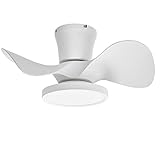
Small bathrooms have a funny way of making every fixture feel twice its actual size. Add a bulky ceiling fan, and the room can look crowded before the blades even move. The ASALL Socket Fan Light takes a lighter, simpler route for anyone sorting through the best small ceiling fan for bathroom options, combining a compact fan, adjustable LED lighting, and remote control in one screw-in unit. Its quick installation is appealing, but the supplied details don’t identify a damp-location rating, so moisture exposure still needs careful consideration.
ASALL 16.54-Inch Socket Fan Light
The ASALL is built around a standard E26 or E27 screw-in base rather than a traditional fan mounting plate. That lightbulb-style installation removes the need for a downrod, separate wiring connections, and a heavy ceiling bracket. At only one pound, the fixture is far lighter than a conventional ceiling fan, which makes handling it less awkward during setup. The whole idea is refreshingly direct: remove a compatible bulb, screw in the fan light, and keep the ceiling free of extra hardware.
Its 16.54-inch diameter keeps the blade sweep compact enough for tight rooms, narrow ceiling areas, and spaces where a 36-inch fan would look out of place. The listed height is 6.29 inches, so the fan still drops below the socket, though not nearly as far as many downrod-mounted models. This low-profile footprint can help preserve visual space around cabinets, shower doors, and overhead storage. Still, the blades need clear room on every side, and a nearby wall or tall cabinet may interfere with airflow.
The compact size is both a strength and a limitation. A small fan can create a noticeable breeze near the center of a powder room or narrow bathroom, but it won’t spread air as widely as a full-size ceiling model. The 16.54-inch blade span is best understood as localized circulation rather than whole-room air movement. That tradeoff makes sense where space is scarce, but expectations should stay grounded.
Simple Installation With Fewer Moving Parts
The screw-in design is the feature most likely to win people over. Traditional ceiling fans often require a fan-rated electrical box, mounting hardware, blade assembly, and careful balancing. This unit instead uses an existing compatible socket, so the wireless installation avoids most of that work. For a rental, a small secondary bathroom, or a room where permanent changes aren’t practical, that simplicity has real value.
Easy installation doesn’t mean every socket is automatically suitable. The lamp holder must be secure, undamaged, and positioned where the fan has enough clearance to rotate freely. A loose socket may allow wobble, while an enclosed globe or narrow recessed fixture may block the fan body. The E26/E27 compatibility covers many common sockets, but physical fit still depends on the surrounding fixture.
The wall switch usually needs to remain on so the remote can operate the fan and light. That can feel odd at first because bathroom habits tend to revolve around flipping the switch near the door. Once power is cut at the wall, the remote loses control until the socket is energized again. This remote-based routine isn’t difficult, but it does change how the room’s main light is used day to day.
Lighting Control For Different Bathroom Routines
The integrated LED light is rated at 10 watts and produces up to 1,000 lumens according to the supplied product details. That output can provide useful general illumination in a compact room, especially when paired with a separate vanity light. It’s bright enough to support cleaning, dressing, and morning routines without turning the fixture into a bulky ceiling lamp. Overhead light alone may still cast shadows at the mirror, so task lighting remains helpful.
Three color options cover warm light, natural light, and cool white. Warm light softens a room with beige tile or wood accents, while cool white makes white surfaces and chrome fixtures appear crisper. The adjustable color temperature gives the same fixture enough flexibility for both relaxed evening use and brighter morning tasks. Natural light sits between those extremes and will probably feel the least jarring for everyday routines.
Brightness adjusts from 10% to 100%, which is a wider range than a simple three-step dimmer. Low output can serve as a gentle night light, while full brightness is better suited to cleaning or getting ready. The dedicated night light mode is especially useful in a small bathroom where a full 1,000-lumen blast would feel harsh after dark. That flexibility makes the lighting side of the product more than an afterthought.
Three Fan Speeds And Timer Control
The fan offers three speed settings, giving a straightforward choice between gentle, medium, and stronger airflow. Low speed can keep still air from feeling stale, while the highest setting may help after a hot shower makes the room uncomfortable. The three-speed selection is simple enough to use without cycling through a long list of nearly identical levels. For a compact fan, that amount of control feels practical rather than excessive.
The motor is rated at 12 watts, which suits the fan’s modest size and screw-in format. The supplied information doesn’t provide airflow measurements or a noise rating, so performance should be judged by the stated features rather than assumed numbers. A fan this small is likely to feel strongest directly below or near the fixture, with less impact toward distant corners. The 12-watt fan motor is designed for light room circulation, not the broad reach of a conventional ceiling fan.
A timer function adds convenience when the fan should run for a while and then shut off. That can be handy after a shower, during a warm evening, or while drying a damp towel. Still, moving air around the room doesn’t remove water vapor outdoors, so the timer shouldn’t be mistaken for humidity control. The timed operation helps manage comfort and electricity use, while a proper exhaust fan remains responsible for ventilation.
Remote Control Without App Dependence
The included remote adjusts fan speed, light brightness, and other operating modes from across the room. That’s useful because there are no pull chains hanging from the fixture and no need to reach toward the blades. The remote control operation also keeps installation simple by avoiding a dedicated wall-mounted fan controller. Once the wall switch is left on, most adjustments can happen without touching the ceiling fixture.
A physical remote has an advantage over app-only control: it doesn’t require pairing, account setup, or a phone nearby. Grab it, press a button, and the setting changes. Of course, that convenience disappears quickly if the remote gets buried under towels or toiletries. The simple handheld control works best when it has a permanent storage spot near the doorway or vanity.
The remote also makes separate fan and lighting adjustments easier during different routines. Bright light and high airflow may suit cleaning, while dim light and low speed feel more comfortable late at night. That separation gives the fixture more flexibility than a single wall switch controlling everything at once. The independent setting control is one of the better day-to-day benefits of this compact design.
Bathroom Moisture Requires A Careful Decision
The supplied specifications list several indoor spaces, but they don’t state that the fan is damp-rated or wet-rated. That omission matters more in a bathroom than in a bedroom, kitchen, or garage. Steam and condensation can reach electrical components even when the fixture never receives a direct splash. The missing moisture rating means this fan shouldn’t be assumed safe for every bathroom location simply because its size fits.
A half bath without a tub or shower presents a much drier environment than a full bathroom used for hot showers every day. Good exhaust ventilation can reduce lingering humidity, yet it doesn’t change the product’s official electrical suitability. The room’s moisture level, fixture location, and manufacturer guidance should all line up before installation. A dry ceiling area away from water is a very different situation from a socket directly above a shower.
Local electrical codes may also restrict fixtures within reach of a bathtub or shower. The screw-in format doesn’t bypass those rules, and low weight doesn’t make water exposure less important. The distance from wet zones should be treated as a safety question, not merely a layout preference. This fan makes a stronger case in a powder room or well-ventilated dry area than in a constantly steamy enclosure.
Circulation Helps Comfort, Not Moisture Removal
A ceiling fan and a bathroom exhaust fan solve different problems. The ASALL moves air around the room, which can make the space feel less stuffy and may help damp surfaces dry more evenly. An exhaust fan, by contrast, carries humid air outdoors through ductwork. The circulation benefit is useful, but it shouldn’t be confused with true ventilation.
Fogged mirrors, peeling paint, and musty smells usually point to excess moisture that isn’t leaving the room. A small socket fan may reduce the stagnant feeling, yet the water vapor remains indoors until an exhaust system or open window removes it. That’s why humidity control still depends on proper ventilation, even if the fan makes the bathroom feel more comfortable. The two devices can complement each other, but they aren’t interchangeable.
The timer can keep air moving after the room is empty, which may support evaporation from towels and tile. However, evaporation simply shifts water from a surface into the air. Without ventilation, that moisture can settle elsewhere once the fan stops. The best use case pairs the socket fan’s circulation with a reliable exhaust system rather than asking one small fixture to do both jobs.
Cleaning, Durability, And Ongoing Care
Bathroom dust is rarely dry and fluffy. It mixes with humidity, lint, hair products, and fine residue, then clings to blades and housings in a thin film. Regular wiping will keep the compact fan blades cleaner and may help maintain smoother operation. Waiting too long turns a quick cleanup into a sticky little chore.
The light weight makes the unit easier to remove for cleaning once the power is safely disconnected. That can provide better access to the top surfaces and blade edges than cleaning from below. Still, frequent removal should be done gently because repeated twisting can wear a weak socket or strain the threads. The one-pound construction makes handling easier, but careful treatment still matters.
Integrated LEDs remove the hassle of replacing ordinary bulbs, and their slim shape helps keep the fan compact. The tradeoff is serviceability, since a failed built-in light source may not be as easy to replace as a standard bulb. The 10-watt LED system supports the low-profile design while giving up some repair simplicity. That’s common with modern fan lights, but it’s worth factoring into long-term expectations.
Certifications, Strengths, And Real Limits
The supplied description states that the product carries FCC, CE, and GS certifications. Those certifications relate to stated compliance and testing frameworks, though they don’t automatically establish bathroom moisture suitability. The listed certifications add useful product information, but they shouldn’t be treated as a substitute for a damp-location rating. Each mark addresses a particular set of standards rather than every possible installation concern.
The clearest strengths are fast screw-in setup, a compact 16.54-inch diameter, adjustable color temperature, wide-range dimming, remote operation, and a timer. Those features solve several real frustrations in small spaces without adding wiring clutter or a heavy motor housing. The night light mode is a thoughtful touch, and the 1,000-lumen output gives the fixture enough brightness to be genuinely useful. For simple indoor circulation and lighting, the package is well focused.
The limitations are just as specific. The small blades won’t circulate air like a traditional ceiling fan, the remote becomes part of the daily routine, and not every socket will offer proper clearance. Most importantly, the supplied information doesn’t confirm a damp-location approval. That missing detail keeps the ASALL from being an automatic recommendation for shower-heavy bathrooms.
Within the best small ceiling fan for bathroom category, the ASALL makes the most sense in a dry powder room or another compact space with a secure, centrally located E26 or E27 socket. Its 1,000-lumen light, three fan speeds, dimming range, and easy installation offer a practical shortcut where permanent ceiling work isn’t desirable. A full bathroom with frequent steam demands stricter scrutiny, especially near tubs and showers. In the right setting, this compact fan light can improve airflow and illumination without turning a small ceiling project into a major renovation.


Best Quiet Ceiling Fan For Bedroom 2026 Ultimate Comfort Picks

Best Ceiling Fan For Master Bedroom 2026 With Ultimate Comfort

Best White Ceiling Fan With Light For Bedroom 2026 Top Picks

Best Quorum Medallion Ceiling Fan 2026 With Style & Breeze
Best Outdoor Fan For Pergola 2026 Comfort Boost

Best Ceiling Fan For Great Room 2026 With Ultimate Comfort

Best Outdoor DC Ceiling Fans 2026 For Breezy Comfort
Best ceiling exhaust bath fan with light and heater 2026





