
Best Small Ceiling Fan For Kitchen 2026 Tiny-Room Picks

A best small ceiling fan for kitchen has to do more than spin quietly above a stove, sink, or breakfast nook. Kitchen heat builds fast, especially in compact rooms where steam, cooking smells, and poor airflow all pile up before dinner even hits the plate. A smaller fan can help move warm air out of the cooking zone without making cabinets rattle or turning recipe cards into confetti.
Size matters here, but not in the obvious way. A giant fan can look awkward, hang too low, or push air too aggressively across burners and prep areas. A compact ceiling fan in the 20 to 36 inch range usually feels more balanced for tight layouts, galley kitchens, pantry-style cooking corners, and apartments with limited ceiling room.
Low-profile mounting can make or break the setup. Nobody wants to duck under blades while carrying a hot pan, and a bulky light kit can make a small kitchen feel even more boxed in. Flush mount or short downrod designs often keep the room cleaner, safer, and visually lighter.
Noise deserves real attention, too. A quiet motor matters during early coffee, late-night snacks, or family meals where the fan shouldn't hum over every conversation. DC motors tend to be smoother and more energy-conscious, while basic AC models can still be fine if the room is small and expectations stay realistic.
Lighting adds another wrinkle. A small kitchen ceiling fan with light can free up ceiling space, but the light needs to be bright enough for chopping, wiping counters, and spotting crumbs near the backsplash. Warm light feels cozy, cool light helps with prep, and adjustable color temperature is handy when one fixture has to cover both cooking and casual eating.
Airflow should feel controlled, not dramatic. Strong speed settings help after frying onions or boiling pasta, but gentle low speeds matter just as much during breakfast or dishwashing. The sweet spot is a fan that can clear stuffy air without blasting napkins off the table.
Style still counts, even in a practical room. Matte black, white, brushed nickel, and wood-look blades all land differently against tile, cabinets, and appliances. A small ceiling fan for kitchen should blend into the space instead of shouting from the ceiling like an afterthought.
There are tradeoffs, naturally. Tiny fans won't cool an open-concept kitchen and living room by themselves, and some enclosed-blade models move less air than traditional blades. Still, for a cramped kitchen that traps heat and smells, the right small fan can make daily cooking feel less sticky, less stale, and a lot more pleasant.

- LFR Score9.0
LFR Score is a ranking system developed by lightfansreviews.com. LFR Score has no relationship or impact from any manufacturers or sales agent websites. Learn more
- BrandLEDIARY

- LFR Score9.0
LFR Score is a ranking system developed by lightfansreviews.com. LFR Score has no relationship or impact from any manufacturers or sales agent websites. Learn more
- Brandaddlon

- LFR Score9.0
LFR Score is a ranking system developed by lightfansreviews.com. LFR Score has no relationship or impact from any manufacturers or sales agent websites. Learn more
- BrandDepuley
- LFR Score8.8
LFR Score is a ranking system developed by lightfansreviews.com. LFR Score has no relationship or impact from any manufacturers or sales agent websites. Learn more
- Brandaddlon

- LFR Score8.8
LFR Score is a ranking system developed by lightfansreviews.com. LFR Score has no relationship or impact from any manufacturers or sales agent websites. Learn more
- BrandGJeg
- LFR Score8.6
LFR Score is a ranking system developed by lightfansreviews.com. LFR Score has no relationship or impact from any manufacturers or sales agent websites. Learn more
- Brandocioc

- LFR Score8.4
LFR Score is a ranking system developed by lightfansreviews.com. LFR Score has no relationship or impact from any manufacturers or sales agent websites. Learn more
- BrandAmico

- LFR Score8.4
LFR Score is a ranking system developed by lightfansreviews.com. LFR Score has no relationship or impact from any manufacturers or sales agent websites. Learn more
- BrandAmico
Last update on 2026-07-11 / Affiliate links / Images, Product Titles, and Product Highlights from Amazon Product Advertising API
LEDIARY 20" Low Profile Ceiling Fan With Light
Heat has a way of lingering in a compact kitchen long after dinner is finished, especially when cabinets, appliances, and limited airflow all work against each other. That's exactly where the best small ceiling fan for kitchen becomes more than another ceiling fixture. The LEDIARY 20-inch model blends a compact footprint with adjustable lighting and practical airflow, making it easier to keep smaller cooking spaces comfortable without overwhelming the room. Instead of chasing oversized airflow, this fan focuses on balancing quiet operation, lighting flexibility, and everyday convenience.
LEDIARY 20" Ceiling Fan
Space efficiency stands out almost immediately. At just 20 inches across with a flush mount design, the fan fits naturally into kitchens where ceiling clearance matters and oversized blades would feel awkward. Smaller apartments, breakfast corners, laundry rooms, and compact dining spaces can all benefit from that restrained size. Rather than becoming the focal point, it quietly blends into modern interiors.
The integrated LED light also helps reduce ceiling clutter. Instead of installing separate lighting and ventilation fixtures, one unit handles both tasks. That approach makes visual sense in kitchens where every square foot already feels busy with cabinets, shelving, and appliances competing for attention.
The black finish gives the fixture a contemporary appearance without becoming flashy. It pairs comfortably with stainless appliances, matte hardware, or lighter cabinetry, creating enough contrast to feel intentional while avoiding an oversized industrial appearance. That subtle styling keeps attention where it belongs, on the room instead of the hardware.
Lighting Designed Around Daily Kitchen Tasks
Stepless dimming is one of the strongest features of this model because kitchens rarely need identical lighting throughout the day. Bright illumination works well while preparing vegetables or reading recipes, while softer lighting creates a calmer atmosphere during breakfast or evening meals. Being able to adjust brightness from 10% to 100% gives the fixture considerably more flexibility than fixed-output ceiling lights.
The adjustable color temperature ranges from 3000K warm light to 6000K white light. Warm settings help soften the room during casual dining, while cooler white light makes food preparation easier by improving visibility across countertops. Switching between the two takes only moments rather than requiring different bulbs.
The built-in light memory function deserves attention because it remembers previous lighting preferences. Instead of resetting brightness and color every time the light turns on, it restores the previous setting, making everyday use noticeably smoother. Small conveniences like that often become the features people appreciate most after months of ownership.
LEDIARY lists the maximum output at 2800 lumens, which provides enough illumination for many compact kitchens. Actual brightness needs still depend on room size, wall color, and existing lighting, but the adjustable output offers flexibility that fixed fixtures simply cannot match.
Airflow That Matches Compact Spaces
The 7-blade design approaches airflow differently than many traditional ceiling fans. Instead of relying on fewer, larger blades spinning aggressively, the design aims for smoother circulation across multiple speed settings. That creates steady airflow without making the room feel like a wind tunnel.
Six selectable fan speeds allow better control throughout changing conditions. Gentle airflow may be enough while washing dishes, while higher speeds become more useful after using the oven or cooking with multiple burners. Having several options feels much more practical than simply choosing between low and high.
The pure copper DC motor supports efficient performance while helping reduce operating noise. Kitchens often connect directly to dining or living spaces, so quieter operation matters more than many shoppers initially expect. A fan that constantly hums during conversations quickly becomes irritating, while smoother operation simply fades into the background.
LEDIARY also removed the confirmation beeping normally heard from many remote-controlled ceiling fans. That small design choice keeps late-night adjustments quieter, especially in apartments or open layouts where unnecessary sounds travel farther than expected.
Controls That Simplify Everyday Use
Remote and app control give this fan plenty of flexibility without adding unnecessary complexity. Fan speed, lighting, dimming, timers, and operating modes can all be adjusted without reaching for wall switches every few minutes. That's particularly convenient when hands are busy preparing meals or cleaning the kitchen.
The lighting and fan functions operate independently, allowing either feature to run alone. Some evenings only the light is needed, while other situations call for airflow without bright overhead lighting. That separation makes the fixture feel adaptable instead of forcing one operating style.
The included timer settings provide another practical advantage. Running the fan for a while after cooking can help continue circulating air without leaving it on indefinitely. Once the timer expires, everything shuts down automatically without another trip back into the kitchen.
Seasonal Flexibility And Practical Considerations
The reversible DC motor gives this fan usefulness throughout the entire year. During warmer months, downdraft airflow creates a cooling breeze that helps reduce that lingering stuffy feeling common in smaller kitchens. Switching to the reverse setting during cooler seasons encourages warm air near the ceiling to circulate more evenly through the room.
Installation appears approachable for many homeowners thanks to the included instructional video and detailed guide. While electrical work always deserves appropriate care, having visual instructions often reduces confusion compared with relying solely on printed manuals. That extra guidance can shorten installation time considerably.
LEDIARY also includes two-year support and states that customer inquiries receive replies within 24 hours. While long-term ownership experiences naturally vary, having clearly stated product support provides additional reassurance should installation questions or operating concerns arise later.
There are realistic tradeoffs worth considering. A 20-inch ceiling fan is designed for compact rooms rather than large open kitchens connected to living spaces, so expecting whole-house airflow would be unrealistic. Likewise, anyone who prefers decorative exposed blades may find the enclosed fandelier styling less traditional, even though that same design helps maintain a cleaner appearance and suits tighter ceiling spaces remarkably well.
addlon 20" Low Profile Ceiling Fan With Light
A cramped kitchen can feel stuffy before the pasta water even boils, and a bulky fan only makes that ceiling feel lower. This addlon 20-inch flush mount model brings a more sensible approach to the best small ceiling fan for kitchen search because it combines adjustable lighting, compact airflow, and enclosed blades in one neat fixture. It doesn't try to act like a large living-room fan, and honestly, that's part of its charm. Small rooms need control, not drama.
addlon 20" Ceiling Fan
The 20-inch low profile design gives this fan a practical edge in kitchens where headroom, cabinets, and lighting layout all fight for space. A larger fan can look awkward above a narrow prep zone, while this compact fandelier shape keeps the ceiling cleaner. The black finish also adds a modern touch without making the fixture feel loud or heavy. For small kitchens, that visual restraint matters more than people usually admit.
The enclosed blade style brings a different kind of comfort. Open blades can feel too exposed in tight rooms, especially where upper cabinets, hanging racks, or nearby shelves already crowd the ceiling line. With this model, the recessed fan structure keeps the moving parts tucked in, which feels calmer in busy household spaces. It suits kitchens that need airflow but don't have room for a traditional sweeping blade span.
The fan also works beyond the kitchen, and that adds some flexibility if plans change later. Bedrooms, studies, offices, living rooms, and other low-ceiling spaces are listed as suitable locations. Still, its strongest fit remains smaller rooms where flush mount installation and built-in light control solve two problems at once. Big open spaces will likely need something larger, so expectations should stay grounded.
Its modular installation is described as quick to assemble, with addlon noting a 5-minute assembly experience. That doesn't mean every ceiling setup will be effortless, since existing wiring, mounting boxes, and ceiling conditions can change the job fast. Even so, a simplified structure can reduce the usual fiddling that comes with compact fan lights. Less wrestling with parts is always welcome, especially on a stepladder.
Lighting That Fits Real Kitchen Routines
The dimmable LED light gives this fan its most practical everyday value. Brightness adjusts from 10% to 100%, which helps because kitchen lighting needs shift constantly. Chopping vegetables calls for brighter light, while late-night tea or a quiet breakfast feels better with softer output. A fixed-brightness fixture just can't cover that range as gracefully.
The three color temperature settings also make the light more useful. 3000K warm white feels softer and more relaxed, 4500K natural white lands in that balanced middle zone, and 6000K cold white helps sharpen visibility for detailed tasks. That range matters in a kitchen where counter shadows can make food prep annoying. Good light won't make cooking easier by itself, but bad light definitely makes it more frustrating.
The lighting setup also works nicely for mixed-use spaces. A small kitchen table might become a homework spot, a snack corner, or a place where bills get sorted after dinner. In those moments, the customizable brightness keeps the fixture from feeling too harsh or too dim. One ceiling unit doing several small jobs, that's the sweet spot here.
The memory function adds an underrated convenience. If the fan is turned off through the wall switch, it can maintain the previous state the next time it turns on. That means fewer repeated adjustments after you've already found a comfortable light and fan setting. Small thing, sure, but small things are exactly what shape daily kitchen comfort.
Airflow With Six Speeds And Seasonal Use
The six-speed fan control gives more nuance than the usual low, medium, and high setup. Gentle airflow can help during dishwashing or morning coffee, while stronger airflow is more useful after cooking something steamy or fragrant. The ability to choose between comfortable wind, natural wind, and strong wind helps the fan feel less one-note. In a tight kitchen, that level of control beats raw power.
The reversible DC motor makes the fan useful in both warm and cool months. Downdraft airflow helps move warm air away from the cooking area during summer, while reverse airflow can help circulate heat during colder seasons. That seasonal flexibility makes sense for rooms where ceiling air tends to sit still. It isn't a substitute for proper ventilation, but it can make the room feel less stagnant.
The pure copper motor is described as stable during operation, which lines up with what shoppers often want from a kitchen fan: steady movement without a fussy mechanical feel. Noise is not given as a specific decibel rating in the provided details, so it would be wrong to pretend it's silent. Still, a DC motor design usually points toward smoother control than many basic fan setups. The real benefit here is controlled circulation rather than loud, forceful wind.
Airflow expectations need to stay realistic. A small ceiling fan for kitchen like this is meant for compact airflow, not pushing air across a large open-plan cooking and dining area. It can help reduce stuffiness near the ceiling and make a small room feel fresher. It won't replace a range hood, window fan, or full ventilation system after heavy frying.
Remote, App Control, And Timer Convenience
The remote control handles basic comfort adjustments without requiring a walk to the wall switch. Turning the fan on or off, changing speeds, and setting the timer can all happen from wherever the remote happens to be. That matters more than expected while cooking, especially with wet hands or a messy countertop. Nobody wants to cross the room just to dial back airflow while stirring soup.
The app control adds another layer of flexibility. Some people prefer a physical remote, while others would rather manage settings from a phone. Having both options keeps the fan from feeling locked into one control style. A kitchen fixture should adapt to habits, not make everyone memorize a new routine.
The timer settings are especially handy for lingering heat. The fan supports 1-hour, 4-hour, and 8-hour timer off functions, which can help keep air moving after cooking without leaving the fan running longer than needed. That works well after baking, simmering broth, or cleaning up with hot water. Set it, leave the kitchen, and let the fan handle the leftover warmth for a while.
Separate light and airflow control would be useful in many daily situations, although the provided details focus mainly on fan speed, light dimming, timers, and memory. The main point is convenience: the controls reduce friction. A fan that's easy to adjust gets used more often, while a fussy fixture slowly becomes ceiling decoration.
Strengths, Tradeoffs, And Best-Fit Spaces
The biggest strength is the blend of compact size and adjustable LED lighting. Kitchens with low ceilings often need both better illumination and more air movement, but adding two separate fixtures can make the ceiling look cluttered. This model solves that neatly with one flush mount unit. It feels especially sensible for apartments, small homes, and rooms where every inch overhead counts.
The warranty coverage is also notable based on the provided product details. addlon lists up to 120 months warranty on the motor and 2 years on the rest of the fan, along with 24-hour customer support. Warranty terms always deserve a closer look before purchase, but the stated coverage suggests the motor is treated as a long-term component. That helps build confidence around the part that matters most.
The compact packaging design is positioned as more eco-friendly, which is a thoughtful extra rather than the main selling point. Smaller packaging can reduce waste and make delivery or storage easier before installation. Still, buyers shouldn't choose the fan only for that reason. The real everyday value comes from its small-room fit, lighting control, and reversible airflow.
A few limitations are worth weighing before committing. The enclosed fandelier style may not move air with the same broad sweep as a larger traditional fan, and the 20-inch size won't satisfy anyone expecting strong coverage in a spacious kitchen. The modern black design also won't blend into every décor style. But for a tight kitchen that needs softer lighting at breakfast, brighter light during prep, and steady airflow after cooking, this addlon fan makes a practical case for itself without overpromising.
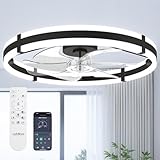
Depuley 42-Inch Ceiling Fan With Light
Some kitchens don't need a tiny breeze so much as they need air that actually reaches the corners, especially after the oven has been running and the room starts feeling boxed in. The Depuley 42-inch fan sits in an interesting spot for the best small ceiling fan for kitchen conversation because it isn't miniature, yet it still targets smaller rooms with broader coverage and a low-profile look. Its mix of dimmable LED lighting, remote control, and a quiet DC motor makes it better suited for kitchens that open into dining areas, breakfast spaces, or covered patio zones. It feels less like a tucked-away fandelier and more like a practical room fan that can handle a little more space.
Depuley 42-Inch Ceiling Fan
The first thing to understand is size. A 42-inch ceiling fan offers wider reach than the compact 20-inch models often used in very tight kitchens, and Depuley lists it for rooms around 129 to 215 square feet. That range makes sense for eat-in kitchens, small living rooms, home offices, or covered outdoor spots where a smaller fan might feel underpowered. In a narrow galley kitchen, though, this size may look too dominant.
The black finish gives the fan a clean modern outline without making it look overly decorative. Five reversible black blades create a more traditional ceiling fan shape than enclosed fandelier designs. That can be a plus in rooms where airflow matters more than hiding the blades. Still, the propeller-style look won't suit every kitchen, especially spaces with softer farmhouse or vintage styling.
The product details mention plastic material, and that's worth treating honestly. Plastic construction can help keep the fan lighter and easier to install, but it may not deliver the same tactile feel as metal or wood components. For a kitchen, that tradeoff may be acceptable if the priority is practical airflow, easy cleaning, and a lower-maintenance ceiling fixture. Fancy materials aren't always the point above a busy cooking area.
Depuley also positions this fan for indoor and covered outdoor use. That flexibility matters if the kitchen leads to a breezeway, patio, gazebo, or covered porch where matching airflow and lighting styles would be useful. Direct weather exposure still deserves caution, so covered placement is the smarter reading of the product details. A ceiling fan can handle a lot, but rain and open-air moisture are a different story.
Airflow Built For Wider Kitchen Areas
The quiet DC motor is one of the stronger reasons to consider this model. Kitchens often sit near gathering spaces, and a loud fan can become annoying fast during meals, homework, or a quiet cup of coffee. DC motors are generally valued for smoother speed control and lower energy use than many older AC setups. The provided details don't list a decibel rating, so it's better to say the design is intended for quieter operation rather than pretending it's silent.
Six fan speeds give the Depuley more range than a basic three-speed unit. A lower setting can keep air moving while chopping vegetables or washing dishes, while stronger airflow helps after baking, frying, or running several burners at once. That flexibility is helpful because kitchen heat doesn't behave the same all day. Some moments need a whisper of circulation, others need the room to stop feeling like a sauna.
The forward and reverse rotation feature stretches the fan's usefulness beyond hot weather. In summer, downward airflow helps create a cooling effect across the room. During colder months, reverse airflow can help circulate warmer air that gathers near the ceiling. For kitchens attached to dining rooms or small family spaces, that year-round circulation can make the room feel less uneven.
Coverage is the real advantage here, but it's also the main caveat. A best small ceiling fan for kitchen doesn't always mean the smallest fan possible, and this Depuley model proves that point in rooms where a 20-inch fan would feel too weak. On the other hand, a compact apartment kitchen with low cabinets and limited ceiling width may be better served by a smaller flush mount fan. Fit matters more than fan size bragging rights.
Lighting Control For Cooking And Downtime
The integrated LED light gives the fixture more daily usefulness than airflow alone. Depuley includes three color temperatures: 3000K, 4500K, and 6000K. Warm light suits slower evenings and casual meals, natural white feels balanced for ordinary use, and cool white gives stronger clarity for prep work. A kitchen light that can shift moods is more useful than one stuck in a single harsh tone.
The stepless dimming from 10% to 100% gives better control over brightness. Bright light helps with chopping, cleaning, and checking whether a counter is actually wiped down. Lower brightness feels calmer during late snacks or early mornings when full overhead light feels rude. Little adjustments like this can make a kitchen feel less like a work zone all the time.
The night light mode is another practical touch. Not every kitchen visit needs full illumination, especially after dark when someone only wants water, medicine, or a quick look in the fridge. A softer light setting helps avoid that sudden glare that makes the whole room feel wide awake. It won't replace under-cabinet lighting for detailed prep, but it adds comfort for casual movement through the space.
The memory function also helps reduce daily fiddling. The fan can keep preferred brightness and color temperature when the light is turned off for at least 10 seconds, and the fan can continue in the same gear it used previously. The note about turning the light back on within 10 seconds changing the color temperature is important. That small timing detail may take a little getting used to, but once understood, it keeps settings predictable.
Remote Features And Everyday Handling
The remote control handles the main comfort adjustments from one place. Fan speed, light brightness, color temperature, timers, forward rotation, reverse rotation, and night light mode can all be managed without reaching for a wall switch. That matters in real kitchens, where hands are often wet, greasy, or full. A remote sounds basic until the room is hot and the sink is running.
Timer options add a practical layer after cooking. The product details mention 2-hour and 4-hour timers, which can keep air circulating after dinner without leaving the fan running all night. That fits common routines like cooling the kitchen after baking or clearing a bit of lingering warmth after cleanup. A timer isn't glamorous, but it saves small annoyances.
The remote also supports the fan's seasonal use. Switching airflow direction from the seat or table feels much easier than climbing up to adjust a switch on the motor housing. For a fan mounted in a kitchen or dining area, that convenience encourages people to actually use reverse mode instead of ignoring it. Good features only matter if they're easy to reach.
The only caution is remote dependency. If the remote gets misplaced, daily adjustments may become less convenient depending on the wall switch setup and available controls. A fixed storage spot helps, especially in kitchens where remotes love disappearing under mail, recipe books, and snack wrappers. Small habit, big difference.
Installation, Durability, And Fit Notes
The snap-in blade design is one of the more appealing installation details. Depuley says installation can take less than 30 minutes, which suggests a simplified assembly process compared with older fan designs. Real installation time can still vary based on ceiling box condition, wiring, ladder access, and comfort with electrical work. Even so, fewer loose parts usually means fewer headaches.
The fan is described as suitable for home, commercial spaces, gyms, and yoga rooms. That broad placement list hints at a practical design rather than a fragile decorative fixture. For kitchens, the important takeaway is that the fan aims to handle regular use, not just occasional airflow. Still, kitchen grease and dust can build up over time, so the blades and light area will need routine wiping.
Depuley provides 24-hour technical support according to the supplied product details. Support can matter during installation, especially if a wiring question or remote pairing issue pops up. The wording says they do their best to make things right, which is reassuring enough without overreading it as a guaranteed outcome. Product support is helpful, but expectations should stay realistic.
This model makes the most sense in kitchens that need more reach than a tiny enclosed fan can provide. It may feel too large for very compact spaces, and the plastic material may not satisfy anyone wanting a heavier decorative fixture. But for a small-to-medium kitchen, dining nook, covered patio kitchen area, or open room where stronger airflow and adjustable lighting both matter, the Depuley 42-inch fan brings a useful mix of coverage, control, and everyday practicality.
addlon 24" Low Profile Ceiling Fan With Light
A kitchen that feels fine in the morning can turn sticky by dinner, especially once steam, oven heat, and a busy countertop all pile into the same small room. The addlon 24-inch model lands in a useful middle zone for the best small ceiling fan for kitchen because it gives more reach than a tiny 20-inch fan without taking over the ceiling like a full-size blade fan. Its flush mount fandelier design keeps the profile tidy, while the wider airflow upgrade gives it a little more muscle for medium-sized spaces. That balance makes it feel practical rather than showy, which is exactly what a kitchen fixture should be.
addlon 24" Ceiling Fan
The main story here is the jump from 20 inches to 24 inches. addlon describes this upgraded model as delivering up to 80% wider airflow coverage compared with its 20-inch version, so it’s aimed at rooms where a smaller fan may feel a bit timid. That matters in kitchens that spill into a dining nook or share air with a compact living room. A little extra reach can make the difference between moving air above the table and only stirring the ceiling directly under the fixture.
The low profile flush mount shape keeps the fan close to the ceiling, which helps in rooms where tall fixtures would feel clumsy. Kitchens already have cabinets, lighting, shelves, and sometimes hanging racks fighting for space. A compact ceiling fixture that doesn’t hang down too far keeps the room feeling cleaner and less boxed in. It also gives the fan a more built-in look rather than a bulky add-on.
The black modern finish gives the fan enough contrast to look intentional. It can pair well with black cabinet pulls, darker appliances, or a clean white ceiling that needs a little visual anchor. That said, the black housing may stand out too much in soft cottage-style kitchens or spaces built around warm brass and cream tones. Style fit matters, even with a practical fan.
The enclosed fandelier layout also adds a sense of control. Instead of long open blades sweeping across a tight ceiling, the blade area stays contained inside a smaller footprint. That helps the fixture feel calmer in kitchens where people move quickly between the sink, stove, and fridge. It’s a small design choice, but in a busy room, small choices carry weight.
Wider Airflow Without Oversizing The Room
The 80% wider airflow coverage claim is the feature that separates this model from addlon’s smaller 20-inch version. It suggests the 24-inch fan is built for stronger circulation in medium-sized rooms rather than only compact corners. For a kitchen, that can mean better movement around a breakfast table, island, or open pass-through. It still isn’t a large ceiling fan, but it has more breathing room than the smallest fandelier designs.
The fan offers six speed settings, which helps match airflow to real kitchen routines. A low setting can keep air from feeling stale while dishes dry, while higher speeds make more sense after boiling pasta or using the oven. That range keeps the fan from behaving like an on-off gadget. Control matters more than brute force in a room where napkins, paper towels, and stove flames may be nearby.
The reversible DC motor gives the fan two seasonal airflow modes. Downdraft mode helps during warmer months by pushing air down into the room, while updraft mode can help circulate warmer ceiling air in cooler weather. Kitchens with low ceilings often develop uneven pockets of heat, and moving that air gently can make the space feel less trapped. It won’t replace ventilation, but it can reduce that heavy, motionless feeling.
The motor is described as running quietly and smoothly, though the provided details don’t list a specific noise rating. That distinction matters because noise claims can get fuzzy fast. Based on the supplied information, the fair takeaway is that the DC motor is intended for smoother, quieter operation than many basic designs. For a kitchen connected to a dining area or living room, that’s a practical advantage.
Lighting That Handles Prep And Slow Evenings
The integrated LED panel gives the fan more everyday value than airflow alone. Brightness adjusts from 10% to 100%, so the same fixture can handle chopping vegetables, wiping down counters, or softening the room after dinner. Kitchen lighting is tricky because one harsh setting rarely feels right all day. Dimming makes the room more livable, not just brighter.
The three color temperature settings are another useful layer. 3000K warm white creates a softer look for relaxed meals, 4500K natural white works well for general use, and 6000K cool white sharpens visibility for detailed tasks. Food prep benefits from cleaner light, while early mornings and late evenings usually feel better with warmer tones. Having all three in one fixture cuts down on guesswork.
The memory function restores the last-used light setting, which is one of those features that sounds minor until it’s missing. Nobody wants to reset brightness and color temperature every time the kitchen light turns on. With the wall switch, addlon notes that power needs to stay off for more than 5 seconds to activate memory, while the remote does not require waiting time. That small operating detail is worth remembering to avoid confusion.
The light also makes this fan useful in mixed-purpose spaces. A small kitchen table may become a work surface, snack zone, or quiet spot for reading mail at the end of the day. The dimmable LED adapts better to those shifting habits than a fixed ceiling fixture. It’s not trying to be dramatic, just useful across the whole day.
Remote And App Control Feel Practical
The remote control keeps adjustments simple from the table, counter, or couch nearby. Fan speed, light settings, timer, and power can all be managed without constantly walking to the switch. That’s handy while cooking because hands are often wet, floury, or occupied. A ceiling fan that responds without fuss is more likely to be used every day.
The mobile app adds flexibility for homes where the remote tends to vanish. Some people prefer tactile buttons, while others naturally reach for a phone. Having both control methods gives the fan a broader comfort zone. It also helps in rooms where the wall switch location is inconvenient or shared with other fixtures.
The timer options are simple, with 1-hour and 2-hour timer settings listed in the details. Those shorter timers fit kitchen use nicely because lingering heat after cooking usually needs temporary airflow, not all-night operation. After baking, simmering, or washing a load of hot dishes, a short fan run can help the room settle down. Simple timer choices are often easier to live with than a menu full of rarely used options.
Separate fan and light operation adds another layer of usefulness. Sometimes the room needs airflow but not bright overhead light, especially after dinner or during cleanup with under-cabinet lights already on. Other times, the light matters more than the fan. That separation makes the fixture feel less rigid and more tuned to real routines.
Installation, Support, And Honest Tradeoffs
The modern flush mount fandelier design is aimed at low ceilings, and that’s a big part of its appeal. Traditional downrod fans can feel awkward in compact kitchens, especially where cabinets already make the upper half of the room feel crowded. A low-profile fixture keeps the ceiling line tighter. It also makes the fan feel less intrusive visually.
The blade design is described as enhancing safety while maintaining strong airflow. That makes sense for a smaller enclosed fan, particularly in rooms where kids, pets, step stools, or storage racks may be part of daily life. Enclosed styling can also make the fixture easier to accept in spaces where open spinning blades feel too busy. Still, enclosed fans may not create the same broad sweep as larger traditional fans.
The warranty details are notable: addlon lists a 10-year warranty on the motor and a 2-year warranty on other parts, along with 24-hour customer support. Warranty terms always deserve a careful read, but the supplied coverage gives the motor extra reassurance on paper. Support during installation or setup can also be useful, especially with remote and app features involved. A fan with lighting, memory, and reverse airflow has more moving pieces than a basic fixture.
This model does have a clear lane. It makes the most sense for kitchens and nearby rooms that need more airflow than a 20-inch unit but less visual weight than a 42-inch fan. Very tiny kitchens may still feel better with the smaller version, while large open spaces may need a wider blade span. For a medium-small kitchen where wider airflow, adjustable lighting, and low-ceiling clearance all matter, the addlon 24-inch fan feels like a smart compromise with a few honest boundaries.
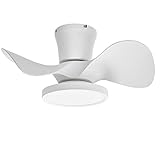
GJeg 42" Low Profile Ceiling Fan With Light
Small kitchens can get oddly stubborn about heat, especially after a skillet, a toaster oven, and a crowded counter all join the party. The GJeg 42-inch flush mount fan takes a wider-airflow approach to the best small ceiling fan for kitchen idea, giving compact and medium-small rooms more reach than tiny enclosed fan lights. Its remote control, dimmable lighting, and reversible copper motor make it feel like a practical fixture for kitchens that need real circulation, not just a cute ceiling accent. Still, its 42-inch blade span means it fits best where the ceiling has enough visual and physical room to breathe.
GJeg 42" Ceiling Fan
The 42-inch size gives this fan a clear personality. It isn't the smallest ceiling fan in the kitchen category, but that broader blade span can help in rooms where a 20-inch fandelier feels too weak. A kitchen connected to a breakfast nook, dining corner, or small living area may benefit from the extra coverage. Tight galley kitchens, on the other hand, may find the fan visually larger than expected.
The black body gives the fixture a clean, modern look without leaning too decorative. Paired with the double-sided fan blade design, it offers a bit more flexibility for matching different room styles. That matters in kitchens where hardware, lighting, cabinet finishes, and appliances all need to play nicely together. A ceiling fan can look out of place fast if the finish feels like an afterthought.
The flush mount structure helps reduce the hanging profile. Low ceilings make traditional downrod fans feel clumsy, especially above a kitchen table or prep path. This design keeps the fan closer to the ceiling while still using open blades for broader circulation. That combination gives it a more familiar ceiling fan feel than enclosed fandelier models.
GJeg lists the fan as suitable for farmhouse spaces, living rooms, bedrooms, offices, studies, kitchens, and other small indoor rooms. That wide placement range makes sense for a simple black fan with light. Still, kitchen placement deserves extra thought because grease, steam, and cabinets create different conditions than a bedroom. Airflow reach matters, but so does keeping the fan easy to wipe down over time.
Lighting That Shifts With The Room
The dimmable light is a strong part of this fan's everyday appeal. Brightness adjusts from 10% to 100%, which gives the room more flexibility than a basic on-off light. Food prep, dishwashing, and cleanup often need stronger illumination, while a softer glow feels better during coffee or late snacks. A kitchen light should know how to back off sometimes.
The three color temperatures cover practical daily needs. 3000K warm white creates a more relaxed feel, 4000K natural white works well for general kitchen tasks, and 6000K cold white offers sharper brightness for clearer visibility. That range is helpful where one ceiling fixture handles several jobs. Counters, tables, and open shelves don't always need the same kind of light.
The memory function keeps preferred brightness and color temperature after the light has been off for at least 10 seconds. That detail matters because nobody wants to reset the light every single time they walk into the room. The product note says turning the light back on within 10 seconds will change the color temperature. That timing quirk is worth remembering so the feature doesn't feel confusing.
The light and fan can be turned on separately, which is a small but meaningful advantage. Some evenings call for airflow without overhead brightness, especially if under-cabinet lights or nearby lamps are already on. Other times, the room needs light but no breeze at all. Separate operation makes the fixture feel less bossy and more adaptable.
Remote Control And Daily Convenience
The remote controller handles all major operations, including fan speed, light color temperature, and timer settings. That makes the fan easier to live with in a kitchen where hands are often busy, wet, or covered in flour. Instead of reaching for a wall switch during cooking, quick adjustments can happen from the counter or table. That kind of convenience gets noticed during the small messy moments.
The remote also supports six fan speed levels, which gives more control than a basic three-speed fan. Low speeds can keep air moving gently during breakfast, while higher speeds help after boiling, baking, or cooking foods with lingering smells. A small kitchen doesn't always need maximum airflow. It needs the right airflow at the right time.
The included 2-hour timer fits common kitchen use well. Air often needs to keep moving for a while after cooking, but leaving the fan on for half the day is easy to forget. A timed shutoff helps the room settle down without creating another chore. It’s especially useful after dinner cleanup, when nobody wants to circle back just to turn off the ceiling fan.
The remote can also be fixed and used like a wall switch after installation, according to the provided details. That helps solve the classic problem of remotes disappearing under mail, towels, or snack wrappers. A fixed spot keeps control predictable. In a busy kitchen, predictability is half the battle.
Reversible Motor And Air Circulation
The reversible copper motor gives this fan seasonal flexibility. During warmer months, forward airflow helps create a cooling breeze across the room. During colder months, reverse airflow can help promote better air circulation by moving warmer ceiling air back through the space. That matters in kitchens where heat collects unevenly near the ceiling.
The product details describe the DC motor as quiet, and that makes sense as a key selling point for rooms used beyond cooking. A kitchen often blends into dining, homework, conversation, or late-night snacking. Loud airflow can wear thin quickly in that kind of shared space. The provided information doesn't include a specific decibel number, so the fair reading is quiet-focused operation rather than a measured silence claim.
The six-blade design gives this fan a more traditional airflow profile than small enclosed fans. Wider blades can move air across more of the room, which helps if the kitchen isn't extremely narrow. The tradeoff is visual size. A 42-inch blade span needs enough ceiling space to look intentional rather than squeezed in.
The fan's airflow also shouldn't be confused with ventilation. A ceiling fan can make a warm kitchen feel more comfortable, but it doesn't remove smoke, moisture, or grease like a range hood. After heavy frying or high-steam cooking, proper ventilation still matters. Circulation helps comfort, while exhaust handles the messier air.
Installation, Fit, And Honest Tradeoffs
GJeg provides detailed instructions and installation videos, which can make setup less intimidating. A flush mount fan with light still involves wiring and ceiling mounting, so the actual difficulty depends on the existing electrical box and room setup. Clear guidance helps, but safe installation should always come first. A steady ceiling mount matters more than rushing the job.
The package includes a user manual, and installation support is backed by a stated 24-hour response time. That kind of support can be useful if remote pairing, wiring questions, or light settings cause confusion. Product support isn't the same as a guarantee that every setup will be simple. Still, responsive help can reduce the frustration that often comes with ceiling fixtures.
The fan's biggest strength is its blend of wider airflow, adjustable lighting, and low-profile mounting. It suits kitchens that need more air movement than a tiny fan light can provide, especially if the space opens into a small dining area or office corner. The black finish and reversible blades also help it feel more flexible across different décor styles. Practical, not fussy.
The main limitation is scale. For a very small kitchen with limited ceiling width, this 42-inch model may feel too large, even with its flush mount design. For a medium-small kitchen, study, bedroom, or dining nook where a stronger breeze is welcome, it makes more sense. The GJeg fan works best when room coverage matters more than having the smallest possible ceiling fixture.

Best Quiet Ceiling Fan For Bedroom 2026 Ultimate Comfort Picks

Best Ceiling Fan For Master Bedroom 2026 With Ultimate Comfort

Best White Ceiling Fan With Light For Bedroom 2026 Top Picks

Best Quorum Medallion Ceiling Fan 2026 With Style & Breeze
Best Outdoor Fan For Pergola 2026 Comfort Boost

Best Ceiling Fan For Great Room 2026 With Ultimate Comfort

Best Outdoor DC Ceiling Fans 2026 For Breezy Comfort
Best ceiling exhaust bath fan with light and heater 2026





