
Best Small Exhaust Fan for Kitchen 2026 Picks

A cramped kitchen can turn one sizzling skillet into a room full of smoke, lingering onion smells, and sticky moisture on nearby cabinets. A best small exhaust fan for kitchen setup helps move that stale air outside before it settles into fabrics and painted surfaces. The real goal isn't brute force alone. It’s getting enough airflow without adding an oversized appliance that crowds a window, wall, or cabinet area.
Airflow capacity deserves a close look, but bigger numbers aren't automatically better. A compact kitchen with a short duct run may need less power than a larger room with several bends between the fan and exterior vent. Too little airflow leaves steam hanging over the stove, while an overly aggressive fan can be noisy and may pull conditioned air out faster than expected. Balance matters, plain and simple.
Noise often becomes the deal breaker after installation. A small fan may fit neatly above a cooking area, yet a harsh motor whine can make conversations irritating and encourage people to switch it off too soon. Look for a design with a stable motor, well-shaped blades, and secure mounting points that reduce vibration. A fan that stays on during the entire cooking session will do more good than a louder model that gets used for only two minutes.
Installation location changes how well the fan handles grease and steam. A wall-mounted unit near the cooking source usually captures rising heat more effectively than one placed across the room. Window fans can be practical where permanent ductwork isn't possible, though they may sacrifice insulation and weather protection. Cabinet-mounted or through-wall models create a cleaner finish, but cutting the opening correctly takes care and accurate measurements.
Grease buildup is another everyday headache. Kitchen air carries tiny oil particles that can coat fan blades, screens, and shutters over time. Removable covers and washable filters make routine cleaning far less annoying, especially after frequent frying or wok cooking. Sealed electrical components and easy-access fasteners also help prevent maintenance from turning into a Saturday-long project.
A useful backdraft shutter keeps outside air, dust, and insects from slipping indoors when the fan is off. Flimsy shutters may rattle in the wind or stick after collecting grease, so the mechanism should move freely without feeling delicate. Weather-facing installations also benefit from a proper exterior hood. That small detail can cut down on rain intrusion and cold drafts.
Controls should match real cooking habits. A basic pull cord or wall switch is easy to understand, while variable-speed control offers more flexibility for simmering, boiling, and heavy searing. Timers help clear residual odors after dinner without leaving the fan running all night. Automatic humidity sensors can be useful, though cooking smoke and grease still require manual judgment.
The best small exhaust fan for kitchen use won't solve every ventilation problem by itself. Long ducts, clogged filters, blocked exterior vents, and poor replacement airflow can weaken even a capable unit. Still, a properly sized fan placed close to the heat source can make a noticeable difference. The kitchen feels less stuffy, cabinets stay drier, and yesterday's fried fish is less likely to greet anyone at breakfast.
- LFR Score10.0
LFR Score is a ranking system developed by lightfansreviews.com. LFR Score has no relationship or impact from any manufacturers or sales agent websites. Learn more
- BrandTruwilliy

- LFR Score9.2
LFR Score is a ranking system developed by lightfansreviews.com. LFR Score has no relationship or impact from any manufacturers or sales agent websites. Learn more
- BrandWumorlt
- LFR Score8.8
LFR Score is a ranking system developed by lightfansreviews.com. LFR Score has no relationship or impact from any manufacturers or sales agent websites. Learn more
- BrandMdeinu

- LFR Score8.8
LFR Score is a ranking system developed by lightfansreviews.com. LFR Score has no relationship or impact from any manufacturers or sales agent websites. Learn more
- BrandHG Power

- LFR Score8.8
LFR Score is a ranking system developed by lightfansreviews.com. LFR Score has no relationship or impact from any manufacturers or sales agent websites. Learn more
- BrandAmico

- LFR Score8.6
LFR Score is a ranking system developed by lightfansreviews.com. LFR Score has no relationship or impact from any manufacturers or sales agent websites. Learn more
- BrandRLOZUI

- LFR Score8.4
LFR Score is a ranking system developed by lightfansreviews.com. LFR Score has no relationship or impact from any manufacturers or sales agent websites. Learn more
- BrandCOMFORT ZONE

- LFR Score8.4
LFR Score is a ranking system developed by lightfansreviews.com. LFR Score has no relationship or impact from any manufacturers or sales agent websites. Learn more
- BrandBreetee

- LFR Score8.4
LFR Score is a ranking system developed by lightfansreviews.com. LFR Score has no relationship or impact from any manufacturers or sales agent websites. Learn more
- BrandAMZCHEF

- LFR Score7.2
LFR Score is a ranking system developed by lightfansreviews.com. LFR Score has no relationship or impact from any manufacturers or sales agent websites. Learn more
- BrandACEDUROBLA

- LFR Score6.8
LFR Score is a ranking system developed by lightfansreviews.com. LFR Score has no relationship or impact from any manufacturers or sales agent websites. Learn more
- BrandMity rain
Last update on 2026-07-08 / Affiliate links / Images, Product Titles, and Product Highlights from Amazon Product Advertising API
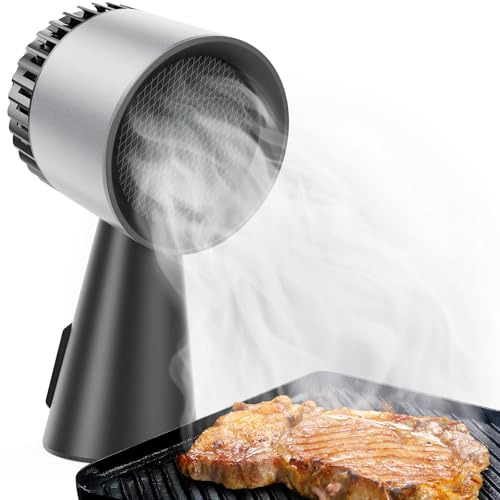
Portable 3-Speed Desktop Range Hood
Smoke from a tabletop grill has a sneaky way of spreading beyond the cooking area, clinging to curtains and hanging around long after dinner ends. Permanent ventilation isn’t always practical in an apartment, RV, dorm-style kitchenette, or rented space where drilling and ductwork are off the table. This portable unit approaches the best small exhaust fan for kitchen problem with a plug-in design, adjustable suction, and removable grease-catching parts. It won’t replace a professionally ducted range hood, but it offers a workable middle ground for compact cooking setups.
Portable Desktop Range Hood
The biggest appeal is the plug-and-play setup. There’s no wall opening to cut, cabinet to modify, or exterior duct to route, which removes the mess and commitment that usually come with kitchen ventilation. A 70-inch power cord gives some breathing room when the nearest outlet isn’t directly beside the cooking surface. Still, cord placement deserves attention so it doesn’t cross hot cookware, wet counters, or busy prep areas.
Portability also changes how the appliance fits into daily routines. It can sit near an indoor hot pot during dinner, move beside a compact stove for frying, and then return to a cabinet or shelf once the cooking area is clean. That flexibility matters in tight rooms where every inch of counter space earns its keep. The tradeoff, naturally, is that the fan must be positioned correctly each time rather than left permanently above the stove.
The supplied guidance calls for placing the hood about 4 inches from the heat source. That short distance helps the intake catch smoke and oily vapor before they spread into the room, yet it also requires careful positioning around open flames and hot pans. A stable, heat-safe surface is essential because a portable appliance can be bumped more easily than a fixed hood. Used thoughtfully, the compact form makes small-space ventilation less of a renovation project and more of a practical countertop task.
Three Speeds For Different Cooking Jobs
The three-speed control is more useful than a single fixed setting because cooking fumes don’t arrive at one steady level. Gentle simmering may need only the lowest speed, while pan-frying or tabletop grilling can call for stronger suction. Matching the speed to the cooking method helps keep noise and power use reasonable. It also avoids running the fan at full blast when the meal is producing little more than steam.
Noise is listed between 50 and 65 decibels, depending on the selected operating level and surrounding conditions. That range suggests the sound may be noticeable, particularly on the highest setting, but it shouldn’t automatically dominate every conversation. Counter surfaces, nearby walls, and loose parts can affect how loud a compact fan seems in practice. Placing it on a solid surface and keeping the removable pieces properly seated may help prevent unnecessary rattling.
Higher speed is best treated as a response to heavier fumes rather than the default setting for every meal. Stir-frying, searing meat, and grilling indoors can overwhelm a weak airflow path quickly, so stronger suction has a clear role. Soup, steaming vegetables, or warming leftovers may not need the same intensity. That bit of control makes the unit more adaptable, though anyone expecting whisper-quiet operation during high-output cooking should keep expectations grounded.
Filtration And Grease Management
The triple filtration design is built around replaceable filter materials and a removable grease-catching system. The package includes five cotton filters and five carbon filters, giving the setup two different ways to address airborne cooking residue. Cotton filtration is generally aimed more at greasy particles, while carbon filtration is used for odor control. The manufacturer specifies that only one filter type should be installed at a time, so stacking both together isn’t the intended setup.
That single-filter rule matters because stuffing extra material into the airflow path can restrict suction. A fan may sound busy while moving less air if the filter is too dense, dirty, or incorrectly installed. Swapping filter types based on the cooking task makes more sense than treating every layer as added protection. Greasy frying sessions may favor the cotton option, while meals with lingering aromas may benefit more from the carbon filter.
The large oil collection cup tackles one of the least pleasant parts of indoor cooking: sticky residue that otherwise settles on the counter and nearby surfaces. Because the cup and filter can be removed, routine cleanup should be more straightforward than wiping inside a fixed, narrow housing. Frequent cleaning is still necessary, especially after frying fatty foods or cooking with splattering oil. Letting grease accumulate can reduce airflow, create odors, and make the next cleanup much harder than it needs to be.
Replacement supplies are another ownership detail worth thinking about. Ten included filters provide a useful starting stock, but they won’t last forever, and heavily greasy cooking can shorten their service life. The actual replacement schedule will depend on cooking frequency, oil use, and how quickly odors or discoloration build up. A washable cup lowers ongoing hassle, while disposable filter media adds a recurring maintenance cost that shouldn’t be ignored.
24W Suction In A Compact Body
The fan uses a 24W suction system intended to pull fumes toward the intake before they drift across the room. Wattage alone doesn’t reveal the exact airflow rate, so it’s wiser to judge the design by placement, filtration condition, and the kind of cooking being done. At four inches from the source, the unit has a better chance of catching a concentrated plume than it would from the far edge of the counter. Distance is doing real work here, not merely satisfying a setup suggestion.
A desktop hood also has natural limits. It doesn’t vent smoke outdoors, so filtered air returns to the room rather than leaving through ductwork. Heavy charring, repeated high-heat searing, or a large indoor barbecue may produce more fumes than a compact recirculating unit can comfortably manage. For light to moderate indoor cooking, though, localized capture can reduce the amount of grease and odor that spreads beyond the immediate area.
The compact body fits the practical idea behind a best small exhaust fan for kitchen: useful airflow without surrendering a large stretch of wall or cabinet space. Storage is easier than with bulky countertop equipment, particularly where the kitchen doubles as a dining or living area. Even so, the fan still needs clear space in front of its intake and behind its exhaust path. Wedging it against dishes, spice racks, or a backsplash can interfere with circulation and weaken the result.
Cleaning, Storage, And Daily Handling
Removable parts make the cleaning routine less fiddly. The filter and oil collection cup can be taken out for rinsing, which is a sensible design choice for an appliance exposed to airborne grease. The main housing should be handled more cautiously because the motor and electrical components aren’t meant to be soaked. Wiping the exterior after cooking prevents residue from hardening into the dull, tacky film that portable kitchen gear often collects.
Storage is simple in theory, but the unit should be completely cool and dry before it goes into a cabinet. Packing away a damp filter or oily cup invites stale smells, and a bent filter can interfere with the next use. Keeping the cord loosely coiled also helps prevent kinks near the plug or housing. Small habits like these aren’t glamorous, yet they often decide whether a compact appliance remains convenient six months down the road.
The unit’s mobility is both a strength and a weakness. It can move wherever ventilation is needed, but every move creates another chance for the cup, filter, or cord to be installed carelessly. A quick pre-cooking check is worth the few seconds it takes: confirm the filter is seated, the cup is secure, and the fan rests on a stable surface. That routine keeps a simple appliance from becoming another countertop nuisance.
Where This Portable Hood Fits Best
This model makes the most sense where permanent ventilation is missing, weak, or prohibited. Small apartments, temporary kitchens, RV counters, and indoor hot-pot tables all create situations where a ducted hood may be unrealistic. The portable installation offers relief without changing the property or committing to construction. It’s especially practical for occasional frying, grilling, and simmering in spaces that trap odors quickly.
It’s less convincing as the sole ventilation solution for frequent high-heat cooking. Large clouds of smoke, open-flame grilling, and repeated greasy frying can demand more capture area and outdoor exhaust than a desktop recirculating fan provides. Good room ventilation still matters, and a nearby window may help where weather and safety allow. The unit should be viewed as focused assistance, not a license to ignore smoke alarms, fire safety, or adequate fresh air.
A separate household-air reference appears in 42-inch ceiling fan options, though ceiling circulation and kitchen fume extraction solve different problems. A ceiling fan moves room air but doesn’t capture grease at the cooking source, while this portable hood concentrates on the smoky zone beside the pan. Keeping those roles separate prevents unrealistic expectations. One circulates; the other filters localized cooking fumes.
Practical Strengths And Tradeoffs
The clearest strengths are easy setup, compact storage, three operating speeds, and removable grease-management parts. No drilling means it can be used in places where modifying walls or cabinets would cause trouble. Included cotton and carbon filters add flexibility for greasy vapor or stubborn cooking smells. The 70-inch cord and portable body also make repositioning easier than with a fixed appliance.
The main tradeoffs come from its recirculating format and small capture area. It can reduce fumes near the source, but it doesn’t send heat, moisture, and pollutants outdoors through a duct. Correct placement becomes critical, and the recommended four-inch distance may feel tight around larger pans or crowded tabletop cooking. Noise at the upper end of the stated range may also be more noticeable in a studio apartment or quiet dining space.
Filter upkeep is another honest part of the deal. Disposable media must be replaced, grease needs to be emptied, and the housing needs regular wiping if the fan is used often. Neglecting those chores can turn a useful little hood into a noisy appliance with weak airflow and old-food odors. Maintained properly, the design offers a sensible answer for compact cooking areas where a full range hood simply isn’t on the cards.
Wumorlt Portable Range Hood With Light
A skillet can fill a compact room with oily haze before the first batch is even plated. Opening a window helps only when the weather cooperates, and permanent ductwork isn't realistic in every apartment or RV. The Wumorlt portable range hood takes a different route, using recirculating filtration, adjustable suction, and a close-range intake to address the best small exhaust fan for kitchen problem. Its built-in light and water-assisted cleaning mode add everyday convenience, though its ventless design still comes with practical limits.
Wumorlt Desktop Kitchen Exhaust Fan
The ductless setup is the first feature that earns attention. No drilling, wall opening, or exterior vent is required, so the unit can move between a stove, indoor hot-pot table, RV counter, or temporary cooking station. A 70-inch power cord provides useful reach without forcing the appliance directly against an outlet. Cord routing still matters, of course, because it shouldn't trail near a burner, wet sink edge, or hot cookware.
Setup is pleasantly straightforward, but placement does most of the heavy lifting. The supplied instructions recommend positioning the intake about 4 inches from the stove, keeping the fan close enough to catch fumes before they bloom across the room. That distance may take a little counter rearranging around wide pans or crowded tabletop meals. A firm, heat-resistant surface is also essential because a portable hood doesn't have the fixed stability of a wall-mounted model.
The compact body avoids swallowing a large section of valuable prep space. Once the meal is finished and the unit has cooled, it can be moved into a cabinet rather than remaining above the stove year-round. That flexibility suits kitchens where appliances already compete for every corner. The compromise is simple: it must be taken out, positioned, and stored each time, so convenience depends partly on how accessible its storage spot is.
Five-Layer Filtration And Recirculated Air
The five-layer filtration system combines aluminum, polymer, and activated-carbon materials. Grease particles meet the sturdier outer layers first, while carbon media is intended to reduce smoke-related odors before the air returns to the room. This approach makes sense where external venting isn't available. It doesn't remove heat and moisture outdoors, however, so the room may still feel warm during long cooking sessions.
Recirculation is often misunderstood. The fan draws in the concentrated plume near the cookware, traps part of the airborne grease, treats odors through the carbon layers, and releases the filtered air back indoors. That can reduce the greasy film that settles on nearby cabinets and keep a single meal from perfuming the whole apartment. Still, filtered air isn't the same as outdoor exhaust, especially during heavy searing or smoky grilling.
Filter condition directly affects suction. Grease-coated aluminum mesh and saturated carbon media create resistance, leaving the motor to work harder while moving less air. Routine inspection matters more than waiting for a noticeable smell or weak pull. Cleaning reusable layers and replacing spent carbon material keeps the filtration path from becoming the appliance's biggest bottleneck.
The layered design is more involved than a simple single-screen fan, and that brings a maintenance tradeoff. More stages can capture different kinds of residue, but each stage must be seated correctly after cleaning. A loose panel may rattle, while a misaligned filter can let greasy air bypass the intended path. The arrangement rewards a little care rather than a quick shove-and-go cleaning routine.
Three Speeds And Five-Minute Boost Mode
The three-speed control gives the fan room to match different cooking loads. Low speed fits gentle simmering or warming food, while medium power is better suited to routine sautéing and steaming. High speed has a clearer role around frying, hot pot, and indoor grilling. Using only the airflow needed helps keep the sound and energy use from climbing without a reason.
A five-minute boost mode adds a short burst for sudden waves of smoke or odor. That can be handy after dropping food into hot oil, searing meat, or lifting the lid from a strongly seasoned hot pot. The timed cycle also reduces the temptation to leave maximum suction running throughout an entire meal. After the worst plume settles, a lower setting may be enough to manage the remaining vapor.
Low-noise language should be viewed with sensible expectations because no specific decibel figure is supplied in the description. Fan sound will likely rise with speed, and compact kitchens can make motor noise seem louder because walls and cabinets sit close by. A stable counter can limit vibration better than a thin folding table or uneven RV surface. Properly installed filters may also help prevent buzzing and loose-panel chatter.
Three settings won't offer the precision of a continuously variable control, yet they keep operation simple. There's no fiddling with tiny increments while a pan is smoking. One press changes the airflow, and the boost mode handles brief spikes. That uncomplicated control scheme feels well suited to messy, hands-busy cooking rather than a feature menu that demands constant attention.
Ring Light And Adjustable Intake Angle
The built-in ring LED light solves a surprisingly common countertop problem. Portable cooking often happens outside the brightest part of the kitchen, especially during indoor hot pot, camping setups with power access, or meals prepared beside a temporary burner. Wide illumination makes it easier to judge browning, watch bubbling oil, and notice spills around the cookware. The light also reduces the need to squeeze a separate lamp onto an already crowded surface.
A 12-degree adjustable head gives the intake a modest amount of directional control. Tilting it toward the rising plume can improve capture around shallow pans, tall pots, or grills with smoke drifting to one side. Twelve degrees isn't a huge range, so the base still needs to be positioned carefully. The adjustment fine-tunes the angle rather than rescuing a fan placed far from the cooking source.
That movable head becomes useful when cookware changes from meal to meal. A low skillet releases fumes differently from a tall stockpot, and a tabletop grill may send smoke sideways before it rises. Small angle changes help align the intake with those variations. The hinge should be handled gently, though, because forcing it beyond its intended travel could loosen the mechanism over time.
Light and tilt control make the unit feel more purpose-built than a basic desktop fan. They don't increase the filtration capacity by themselves, but they improve visibility and help the intake face the problem area. That distinction matters. Helpful accessories support the core job, while suction, distance, and clean filters still decide how much smoke is actually captured.
Water-Washing Self-Cleaning Mode
The self-cleaning mode targets grease that can collect on the internal fan blades. Internal buildup is harder to reach than a removable front filter, and ignored residue can create odor, imbalance, or extra strain on the motor. A water-assisted cleaning cycle may make that upkeep less awkward. The feature is especially relevant after repeated frying, grilling, or oil-heavy cooking.
Self-cleaning shouldn't be mistaken for a maintenance-free design. External filters, intake surfaces, and accessible grease residue still need regular attention. The water process also has to follow the supplied operating directions so moisture doesn't end up where it shouldn't. Guessing at the procedure around an electrical appliance isn't worth the risk.
A sensible routine would pair the internal cycle with manual cleaning of the removable components. Letting grease harden for weeks makes every method less effective and can leave stubborn odors behind. Frequent light cleaning is usually easier than occasional deep scrubbing. The cleaning convenience lies in reaching the fan blades more easily, not eliminating the need to care for the rest of the hood.
Motor longevity is one of the stated reasons for preventing internal grease buildup. That claim is mechanically reasonable because a cleaner fan assembly can rotate without carrying a thick, uneven coating. Actual service life will still depend on frequency of use, cleaning habits, filter upkeep, and safe operation. The feature adds practical value, but it isn't a guarantee against wear or failure.
Cooking Performance And Realistic Limits
Close-range capture is where this model has the best chance to prove useful. Positioned around four inches from the cooking area, it can intercept part of the smoke and grease before those particles spread through an open room. The portable intake is particularly suited to localized sources such as a hot-pot cooker or compact grill. Move it too far away, and the plume may drift past the fan before suction can pull it in.
Light sautéing, simmering, and moderate frying fit the design more comfortably than repeated high-heat searing. Thick smoke from charring meat can quickly exceed the capture area of a small recirculating hood. Open flames add another layer of caution because the appliance must remain outside unsafe heat exposure. No portable filter unit should be treated as permission to cook through heavy smoke without ventilation or basic fire awareness.
Moisture is another limit worth noting. The filtration system focuses on grease, smoke, and odor, while steam still returns to the room with recirculated air. A small kitchen may remain humid after boiling pasta or running a long hot-pot session. A window, dehumidifier, or existing room ventilation can still play a role. The hood addresses a concentrated cooking plume, not every air-quality issue in the space.
Its value becomes clearer once expectations are kept realistic. It can reduce how much odor travels into bedding, upholstery, or nearby living areas, and it may lessen greasy deposits around the immediate cooking zone. It won't mimic a large ducted hood that moves contaminated air outside. That honest middle ground is the product's identity: localized filtration without construction.
Counter Space, Storage, And Daily Use
The narrow footprint is a practical space-saving strength. It can stand beside a burner without claiming the overhead cabinet area required by a traditional hood. That leaves more flexibility in rentals and RVs where permanent fixtures aren't easily changed. Even so, the exhaust outlet and intake need clear air paths, so wedging the unit between containers or against a wall can undermine performance.
Daily handling brings a few small chores. The fan has to be placed before cooking, kept clear of splatter, and allowed to cool before storage. Filters should be checked regularly, particularly after oily meals. None of this is difficult, but a portable appliance only stays convenient when its routine doesn't become an afterthought.
The 70-inch cord helps with placement, although an outlet still needs to be safely located. Extension cords near heat and cooking liquids add clutter and risk, so direct connection is preferable where possible. The cord should remain behind or beside the work area rather than crossing a walkway. Neat cable management isn't merely cosmetic in a compact kitchen.
Ceiling airflow serves a different household role, and that distinction becomes clearer in a neutral reference to 48-inch flush mount ceiling fans. A ceiling fan circulates air throughout a room, while the Wumorlt unit attempts to catch grease and smoke close to the pan. One may improve general comfort, but it won't replace source capture. Treating the two appliances as interchangeable would set the portable hood up for the wrong job.
Strengths, Weaknesses, And Best-Fit Situations
The standout strengths are the installation-free design, five-layer filtration, adjustable head, built-in light, and three suction settings. Boost mode gives heavier fumes a short period of extra attention without keeping the fan at maximum power indefinitely. The self-cleaning function also addresses an internal area that can be awkward to maintain manually. Those features create a thoughtful package rather than a bare fan behind a filter.
The central weakness is the same one shared by most ventless countertop hoods: filtered air stays indoors. Heat and moisture aren't expelled outside, and strong smoke may escape around the small intake. Carbon filters also require ongoing attention and eventual replacement. Anyone expecting restaurant-style extraction from a cabinet-sized appliance is likely to come away disappointed.
Small apartments, RV kitchens, indoor hot-pot tables, and temporary cooking areas align well with the design. The unit is also relevant where drilling or duct installation is prohibited. Heavy daily frying, large cooktops, and frequent smoke-producing techniques may call for a wider capture area and true exterior venting. The best small exhaust fan for kitchen isn't simply the smallest machine available; it has to match the intensity and layout of the cooking space.
This Wumorlt model stands out by combining filtration with lighting, directional adjustment, and internal cleaning support. Those extras improve usability without pretending to erase the limits of recirculation. Kept close to the pan and maintained regularly, it can make compact indoor cooking less smoky, less greasy, and easier to live with. Placed carelessly or asked to handle constant heavy searing, it'll have a much tougher time keeping up.
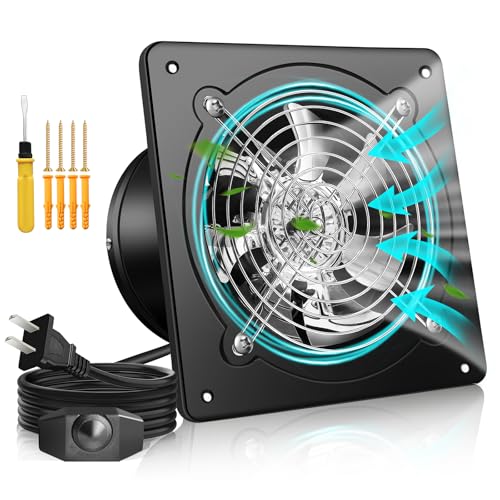
8-Inch 700 CFM Wall Exhaust Fan
Greasy haze can travel from a skillet to nearby cabinets before a weak vent makes much of a dent. Small kitchens make that problem worse because heat, moisture, and cooking odors build quickly in a tight room. This 8-inch wall exhaust fan takes a direct approach to the best small exhaust fan for kitchen job, pushing air outdoors with a stated 700 CFM airflow rather than filtering it and sending it back inside. Its variable-speed control, metal housing, backdraft damper, and long power cord create a serious ventilation package, though installation takes more planning than a countertop fan.
8-Inch Wall-Mount Kitchen Exhaust Fan
The main attraction is direct outdoor exhaust. Instead of recirculating cooking air through carbon media, this fan is designed to move smoke, odors, humidity, and warm air through a wall opening or compatible duct. That difference can matter during frying, boiling, or repeated stovetop cooking because the unwanted air leaves the room. Proper placement is crucial, since a wall fan installed far from the cooking plume may clear the room more slowly than one positioned near the source.
The product lists 700 CFM airflow at a maximum speed of 2,600 RPM. That is a substantial airflow claim for an 8-inch unit, and the included controller means full output doesn't have to be used all the time. Gentle ventilation can handle lingering humidity or mild odors, while higher speed is available after searing meat or frying food. Actual room performance will still depend on the wall opening, duct resistance, exterior obstruction, and replacement air entering the kitchen.
Power consumption is listed at 80 watts, with operation at 110 volts and 60 Hz. Those specifications suit a standard household electrical setup, provided the outlet and installation comply with local requirements. The supplied 8.2-foot cord offers more flexibility than a short appliance lead, particularly when the fan sits high on a wall. Even so, the cord should be secured away from flames, splashing water, sharp edges, and moving cookware.
Variable Speed Without Fixed Steps
The infinite speed controller is more flexible than a basic low, medium, and high switch. Airflow can be dialed back during simmering, then increased when smoke starts rolling off a hot pan. That finer control helps avoid running the fan harder and louder than necessary. It also makes the unit useful beyond cooking, such as clearing basement humidity or ventilating a workshop where conditions change throughout the day.
Low-speed operation may be the sweet spot for routine kitchen use. A modest setting can maintain steady air exchange without creating the strong draft that sometimes accompanies a high-output exhaust fan. Turn it up, and the room should clear faster, though stronger exhaust can also pull heated or cooled indoor air outside. The adjustable airflow lets the setting match the mess instead of treating every meal like a smoke emergency.
A variable controller also makes noise easier to manage. The manufacturer describes the fan as quiet, but no specific decibel rating is provided, so sound expectations should remain realistic. At 2,600 RPM, airflow and motor noise are likely to be more noticeable than at a reduced setting. Solid mounting, a properly sized opening, and a firmly secured housing can help prevent extra vibration from turning normal fan sound into an annoying buzz.
Brushless Motor And Seven-Blade Design
The fan uses a brushless motor paired with seven large blades. Brushless construction reduces the friction associated with traditional brushed motor components, which can support smoother operation and lower mechanical wear. The product also specifies double ball bearings, a detail intended to stabilize the rotating assembly during extended use. Those features make sense for a fan expected to handle ongoing ventilation rather than a few minutes of occasional airflow.
Seven blades give the unit a broad surface for moving air through the opening. Blade count alone doesn't guarantee better ventilation, since pitch, motor speed, resistance, and housing design all play a role. Still, the stated combination is built around high-volume air movement in a compact frame. Keeping the blades clean matters because accumulated kitchen grease can add weight, disrupt balance, and reduce effective airflow.
The motor is presented as suitable for continuous ventilation in kitchens, garages, attics, basements, and similar spaces. Continuous use places more importance on secure installation and unobstructed airflow than short, occasional operation does. A blocked exterior flap or grease-covered guard can make the motor work against unnecessary resistance. Regular inspection protects the motor efficiency better than waiting until airflow has obviously weakened.
Energy savings are mentioned as a benefit of the upgraded motor, but no comparative consumption data is supplied. The useful fact here is the listed 80W power draw, which gives a concrete basis for judging operating needs. Running the fan at a lower setting may reduce consumption, depending on how the controller regulates motor speed. Long daily operation should still be considered as part of the household energy picture.
Metal Housing, Guard, And Backdraft Damper
The metal construction is a sensible fit for a wall-mounted exhaust fan exposed to warm, greasy, or humid air. A rigid shell helps the fan remain stable after mounting and is less likely to flex than a lightweight plastic body. The product description also notes resistance to moisture, heat, and corrosion. Real durability will depend on cleaning habits, installation conditions, and whether the exterior side is protected from direct weather exposure.
A dense protective mesh covers the fan area to reduce accidental contact with the blades. That guard is especially useful where the unit sits within reach or where stored items might shift toward the intake. The mesh also catches larger debris before it reaches the spinning assembly. The tradeoff is that dense screening can collect dust and grease, so it needs cleaning before buildup begins restricting airflow.
The automatic closing damper helps block insects, debris, and outside drafts while the fan is off. A functioning flap is more than a small convenience because an uncovered wall opening can become an easy path for cold air, hot air, or pests. Grease and outdoor dirt may eventually interfere with the damper's movement. Checking that it opens fully during operation and closes freely afterward should be part of routine maintenance.
Exterior wind can sometimes make lightweight dampers rattle, though the supplied description doesn't specify flap thickness or weather sealing. A suitable outer hood may offer extra protection where the installation faces rain or strong wind. The fan's own damper handles basic backflow control, but the complete wall assembly determines overall weather resistance. That distinction matters when the unit is mounted through an exposed exterior wall.
Installation Demands Careful Measurement
The housing measures approximately 9.8 by 9.8 by 7.5 inches, while the actual fan diameter is listed as 7.5 inches. It is designed to fit a standard 8-inch duct or wall opening with clearance for wiring. Measuring before cutting is essential because the visible front panel and the portion entering the opening aren't the same size. A rough guess can leave an opening too tight for installation or too loose for stable mounting.
The package includes four screws, installation accessories, and a manual. Rounded panel edges are intended to reduce the chance of cuts while handling the metal housing, which is a thoughtful detail during alignment and fastening. Still, cutting into a wall can involve electrical wiring, plumbing, insulation, and structural framing. The easy-installation claim applies most comfortably where a suitable opening already exists or the installer has the right tools and experience.
A wall-mounted design needs a clear path to the outdoors. Long duct runs, tight elbows, restrictive grilles, and undersized openings can reduce the airflow that reaches the exterior. A direct through-wall installation generally creates less resistance than a winding duct route. Sealing around the opening also helps prevent water intrusion, air leaks, and vibration around the fan frame.
The 8.2-foot cord gives the unit a practical plug-in connection, but electrical safety shouldn't be treated casually. Kitchens contain heat, grease, and water, all of which demand careful cord placement and an appropriate outlet. Ceiling or high-wall installations may leave the cord visible unless it is routed neatly. Local building and electrical rules may also influence where and how a powered exhaust fan can be installed.
How 700 CFM Fits A Small Kitchen
A stated 700 CFM capacity can exchange air quickly in a compact room, but more airflow isn't automatically better in every situation. Strong exhaust creates negative pressure by removing indoor air, and that air must be replaced from somewhere. An open doorway, transfer grille, or other safe air path may be needed to prevent the fan from struggling. Homes with fuel-burning appliances require extra care because excessive negative pressure can interfere with proper venting.
Kitchen layout also shapes the result. A fan installed above or near the cooking area can catch rising heat and smoke before those pollutants spread. Mounting it across the room may still reduce overall odor, but the plume gets more time to coat cabinets and drift into adjoining spaces. The capture location can matter just as much as the motor's maximum specification.
Full power may be unnecessary for boiling vegetables or warming soup. Frying fish, using a wok, or searing on cast iron produces a sharper burst that justifies a stronger setting. The speed controller gives this fan a practical advantage because the airflow can follow the cooking intensity. That keeps the room from feeling like a wind tunnel during mild tasks while retaining extra capacity for smoky moments.
This fan doesn't include a grease filter in the supplied description, which is an important limitation for kitchen installation. Airborne oil can reach the guard, blades, housing, damper, and nearby duct surfaces. Frequent frying may require much more cleaning than a bathroom or attic installation. The detachable design helps, but it doesn't eliminate grease maintenance.
Cleaning And Long-Term Upkeep
The detachable construction allows access for removing grease and debris. That matters because a kitchen exhaust fan gradually collects residue even when it appears clean from across the room. Sticky blades can become less efficient, and a coated mesh can choke the intake. Light, regular cleaning is easier than scraping off months of hardened cooking film.
Power should be disconnected before any cleaning begins. The motor and electrical parts must remain dry, while removable non-electrical pieces can be handled according to the manual. Harsh chemicals may damage coatings or leave strong fumes near the cooking area. A mild degreasing approach is usually easier on the metal surfaces, provided the manufacturer's care directions allow it.
The damper deserves attention during maintenance because grease can make its moving parts sluggish. A flap that opens only halfway creates resistance, while one that won't close allows outside air and insects indoors. Dust on the protective mesh should also be removed before it mixes with oil into a stubborn paste. These small checks keep the airflow path clear from intake to exterior outlet.
Ball bearings and a brushless motor reduce some wear points, but they don't make the fan maintenance-free. Unusual vibration, scraping sounds, or sudden airflow loss should be investigated rather than ignored. Loose mounting screws can amplify noise and strain the housing. A stable, clean installation gives the mechanical parts a better shot at reliable operation.
Where This Exhaust Fan Makes Sense
The unit suits spaces that need strong direct ventilation without a large commercial exhaust system. Kitchens with an exterior wall nearby are an obvious match, particularly where smoke and humidity linger after cooking. Garages, workshops, basements, pet rooms, and smoking rooms can also benefit from adjustable air exchange. The metal body and variable speed make the design less specialized than a kitchen-only appliance.
It is less convenient in a rental where cutting a wall is prohibited. Unlike a portable desktop hood, this fan requires a suitable opening and secure mounting before it becomes useful. The installation also leaves a visible exterior vent that may need weather protection. Anyone seeking a fan that can be stored after dinner will likely view the fixed wall design as a drawback rather than a benefit.
An 8-inch opening may also be difficult to add in a tiled backsplash, masonry wall, or crowded utility area. Existing studs and pipes can rule out the most convenient location. Planning the route before buying helps avoid ending up with a capable fan that can't be mounted near the stove. The stated 7.5-inch actual diameter deserves particular attention during that measurement process.
Outdoor comfort involves a separate kind of air movement, and a neutral reference appears in outdoor patio ceiling fans. Those fans circulate air around people but don't remove kitchen smoke through a wall. This extractor serves a different purpose by creating a one-way route out of the room. Keeping those roles separate leads to much more realistic expectations.
Strengths, Weaknesses, And Practical Expectations
The main strengths are the stated 700 CFM output, continuous speed adjustment, brushless motor, double ball bearings, metal shell, and automatic damper. A long power cord makes high-wall placement less restrictive, while the detachable construction supports routine cleaning. Direct exhaust also removes humid and odorous air rather than recirculating it. For a compact wall unit, that's a useful set of functional features.
The biggest weakness is the installation commitment. A correctly sized wall or duct opening is mandatory, and placement errors can reduce capture even when the fan itself moves plenty of air. No grease filter is described, so kitchen residue may reach the internal parts more readily. High-speed operation may also be louder and draftier than expected in a very small room.
The 700 CFM rating should be treated as a maximum product specification rather than a guarantee of installed airflow. Duct length, outlet design, mesh condition, damper movement, and replacement-air availability all affect real performance. A clean, short route outdoors gives the fan its best chance to operate near its intended capacity. Poor installation can turn an impressive number into disappointing ventilation.
As a candidate for the best small exhaust fan for kitchen, this model favors raw air movement and adjustability over portability or decorative styling. It makes the most sense where a permanent through-wall setup is acceptable and grease cleaning won't be neglected. Used at a sensible speed, it can handle everyday humidity and odors without always running flat out. Asked to exhaust a kitchen through a restrictive duct or dirty screen, even a strong motor will have its work cut out.
HG Power 6-Inch Kitchen Exhaust Fan
Lingering bacon smoke has a way of settling into curtains, cabinets, and the room next door before a weak vent catches up. Compact kitchens make the problem more obvious because heat and odors have nowhere to spread except across the living space. The HG Power 6-inch exhaust fan approaches the best small exhaust fan for kitchen role with a stated 308 CFM airflow, a 38W motor, seven metal blades, and a removable backdraft damper. It’s a fixed ventilation solution rather than a countertop appliance, so the payoff depends heavily on correct placement and a suitable route outdoors.
HG Power 6-Inch Wall Exhaust Fan
The compact frame is built for spaces where a larger wall fan would feel excessive or simply wouldn’t fit. Its 6-inch format can work well in a small kitchen, basement utility area, garage, workshop, or smoking room that needs steady air exchange. The fan is designed to remove smoke, humidity, and stale odors rather than merely circulate them around the room. That distinction gives it an advantage over a regular desk or ceiling fan when the real problem is contaminated indoor air.
A stated output of 308 CFM provides a useful middle ground between gentle room circulation and the aggressive pull of a much larger extractor. In a compact cooking area, that level may be enough to clear everyday steam and moderate frying fumes without turning the room into a wind tunnel. Real airflow can drop when the opening is restrictive, the damper is dirty, or the exterior vent is blocked. The number on the product page matters, but the installation decides how much of that capacity reaches the room.
The seven-blade design gives the motor a broad surface for moving air through the housing. More blades don’t automatically guarantee stronger extraction, yet the combination of blade size, speed, and motor output is clearly aimed at consistent ventilation. Grease and dust will eventually collect on those blades in a kitchen, so occasional cleaning isn’t optional. A clean fan can move air more freely and is less likely to develop vibration from uneven buildup.
308 CFM Airflow For Everyday Cooking
Cooking tasks don’t all create the same ventilation demand. Boiling pasta releases humidity, sautéing onions adds odor, and frying meat can send grease-laden smoke toward every nearby surface. The fan’s 308 CFM rating is better suited to these routine loads than a tiny decorative vent with barely noticeable pull. Heavy searing or repeated wok cooking may still produce fumes faster than a compact wall fan can capture, especially if it’s mounted far from the stove.
Placement deserves more attention than most buyers give it. A fan positioned near the rising plume can catch smoke before it fans out across the ceiling, while one installed on the opposite wall mainly clears the room afterward. Source capture is usually more effective than waiting for fumes to spread. The shortest practical path outdoors also reduces resistance and gives the motor an easier job.
Replacement air matters, too. Every cubic foot pushed outside has to be replaced through a doorway, window gap, transfer grille, or another safe air path. A tightly sealed room can make the fan struggle and may create uncomfortable pressure changes. Homes with fuel-burning appliances need particular care because strong exhaust can affect how combustion gases vent.
The fan isn’t supplied with adjustable speed control in the provided description, so operation appears straightforward: plug it in and let it run at its designed output. That simplicity suits spaces where steady ventilation is the goal. It also means there’s less flexibility during light cooking when full airflow may not be necessary. A separate compatible control shouldn’t be assumed unless the manufacturer specifically approves one.
38W Motor And Energy Use
The motor draws a listed 38 watts, which is modest compared with many larger ventilation fans. That lower power requirement makes regular operation easier to justify in spaces that need repeated air exchange throughout the day. It also pairs reasonably with the stated 308 CFM output, at least on paper. Actual energy cost will depend on local electricity rates and how many hours the fan remains on.
Efficiency isn’t just about wattage. A clogged guard, sticky damper, or greasy blade surface can reduce airflow while the motor continues consuming power. Keeping the path clear helps the fan deliver more useful ventilation from the electricity it uses. That’s why a quick visual inspection every so often beats waiting until the kitchen starts feeling stuffy again.
The manufacturer states a service expectation of 30,000 hours. That figure provides a useful reference, though real lifespan will vary with heat, grease exposure, installation quality, and cleaning habits. A motor in a dry home office has an easier life than the same motor sitting above frequent frying. Sensible maintenance gives the fan a better shot at reaching its intended working life.
Steady operation can be practical after cooking, especially when moisture and odors remain after the burners are off. Running the fan for a while helps clear the room rather than trapping humidity on windows and cabinets. Still, there’s little reason to leave it operating indefinitely once the air has cleared. The 38W consumption is restrained, but unnecessary runtime is still unnecessary runtime.
Metal Construction And Long-Term Durability
The housing uses metal construction, which fits the rougher conditions found in kitchens, garages, and workshops. Metal provides a rigid mounting surface and is less prone to flexing than a thin plastic shell. It also handles warm exhaust air more confidently, though it shouldn’t be exposed directly to flames or extreme heat. Surface durability will depend on moisture, cleaning chemicals, and whether the exterior side is protected from rain.
A silver finish gives the fan a functional, industrial look rather than a hidden-appliance appearance. That styling may blend easily into a garage or workshop, while a finished kitchen might require more thought about placement. The visible panel is compact, but it won’t disappear the way a built-in range hood can. Function takes priority here, plain and simple.
Low-maintenance language is fair only if “low” doesn’t get confused with “none.” Kitchen air contains fine oil droplets that cling to metal surfaces and attract dust. Left alone, that coating can become sticky, dark, and hard to remove. Occasional cleaning protects both the airflow path and the appearance of the housing.
The sturdy body also helps reduce movement once the unit is properly secured. Loose screws or an uneven wall opening can still create vibration, even with a solid metal shell. A careful mount keeps the fan from buzzing against the wall or ceiling. That little bit of installation patience often makes the difference between ordinary motor sound and an irritating rattle.
Plug-In Setup And Installation Details
A pre-installed 3.3-foot power cord removes the need for direct hardwiring in a suitable plug-in installation. That can make the setup less intimidating than a fan requiring electrical connections inside a junction box. The cord length is fairly short, however, so the outlet needs to be close to the mounting location. Stretching a cord across a hot backsplash or wet work area would trade convenience for a safety headache.
The fan can mount on a wall or ceiling, but the included guidance says the damper must be removed for ceiling installation. That detail shouldn’t be skipped because a gravity-operated flap may not work correctly in the wrong orientation. Wall mounting is the more natural choice when exhausting directly outdoors. Ceiling mounting makes sense only when the connected path and outlet arrangement are designed for it.
Easy mounting still requires an appropriately sized opening, a stable surface, and a safe route for exhausted air. Cutting through drywall can reveal studs, pipes, electrical wiring, or insulation where the fan was supposed to go. Masonry and tile create an even tougher job. A professional installation may be the wiser path if the wall structure or electrical setup is uncertain.
The plug-in design doesn’t remove the need for weather sealing around an exterior opening. Gaps can admit rain, insects, drafts, and outdoor noise. A properly fitted exterior hood or grille may also help shield the outlet from direct weather, depending on the wall setup. The complete vent assembly, not just the fan body, determines whether the installation stays dry and efficient.
Backdraft Damper And Outdoor Air Control
The detachable backdraft damper is meant to close when the fan is off. That flap helps keep outside air, small debris, and insects from entering through the vent opening. Without one, a kitchen wall fan can become an open doorway for winter drafts or hot summer air. The feature is simple, but it makes the installation much more livable.
Dampers need room to move freely. Grease, dust, and exterior grime can make the flap sluggish, causing it to remain partly open or restrict exhaust while the fan runs. A quick check from time to time can reveal sticking before it becomes an obvious airflow problem. The hinge area should remain clean without being forced or bent.
Wind exposure may affect how the damper behaves. A lightweight flap can occasionally rattle during gusty weather, while a protected exterior location may stay quiet. The supplied details don’t specify weather seals or flap thickness, so expectations should remain measured. An exterior cover can provide another layer of protection where the outlet faces strong rain or wind.
Ceiling use changes the equation because the damper is supposed to be removed in that orientation. That leaves backflow control to the connected duct or exterior termination. A ceiling-mounted setup therefore needs a carefully planned outlet rather than an open path into an attic. Moist, greasy kitchen air shouldn’t be dumped into an enclosed roof space.
Kitchen Cleaning And Grease Buildup
Kitchen use is harder on an exhaust fan than ventilating a dry office or storage room. Fine grease particles stick to the seven blades, protective surfaces, and damper before they’re visible from the floor. That residue can slowly narrow the airflow path and create an old-cooking smell. Frequent frying calls for more attention than occasional boiling or baking.
Power should be disconnected before the housing or blades are cleaned. The motor and electrical parts need to stay dry, while accessible metal surfaces can be wiped according to the supplied care instructions. Strong solvents may damage the finish or leave harsh odors behind. A mild grease-cutting method is usually more sensible than waiting until the buildup requires aggressive scrubbing.
The product is described as requiring only occasional cleaning, but “occasional” depends entirely on the room. A basement fan moving mostly humid air may stay clean for a long stretch. A kitchen fan near a frying station can become dirty much sooner. The actual cooking routine should set the maintenance schedule, not a fixed calendar date.
Blade balance deserves attention during cleaning. Scrubbing one area while leaving thick residue on another can create uneven weight and vibration. Cleaning all blades consistently helps maintain smoother rotation. A soft brush can also reach narrow areas without bending the metal parts.
Where This Compact Fan Fits Best
The HG Power model suits kitchens that need a permanent, compact exhaust route rather than a portable recirculating filter. It can also serve garages, basements, workshops, home offices, chicken coops, and smoking rooms where stale air needs to leave the space. That broad application comes from its simple wall-fan design. It isn’t tied to one appliance or one type of room.
Rental kitchens may present a problem because installing the fan usually requires a wall or duct opening. A landlord may not allow that modification, and patching the opening later isn’t a small task. A countertop hood would be easier to remove, though it wouldn’t exhaust air outdoors. The right format depends on whether permanent alteration is possible.
Large kitchens or heavy commercial cooking may exceed what a six-inch fan can comfortably handle. Smoke from repeated grilling, high-heat wok cooking, or multiple burners spreads quickly and may need a wider capture hood. This unit is better matched to localized, everyday ventilation. Its compact size is an advantage only when the airflow demand remains within reason.
Room circulation serves a different need, and a neutral reference appears in 24-inch ceiling fans with lights. A ceiling fan can move air around a compact room and add overhead illumination, but it won’t send kitchen grease or smoke outdoors. The HG Power extractor creates outward airflow through an opening. Each product tackles a separate comfort problem.
Strengths, Weaknesses, And Realistic Use
The strongest points are the 308 CFM airflow, low 38W power draw, metal body, seven-blade assembly, and ready-to-use cord. A removable damper adds basic protection against backflow during wall installation. The compact dimensions also suit tighter spaces where a larger extractor would dominate the wall. For ordinary humidity, odors, and moderate cooking smoke, the specifications form a sensible package.
The main weaknesses are the fixed-speed operation, short 3.3-foot cord, and installation commitment. No dedicated grease filter is mentioned, so oil residue can reach the blades and damper directly. Wall or ceiling mounting also requires a suitable exhaust route rather than merely an empty outlet. Those details make it less convenient than a portable fan, even though outdoor exhaust is more effective.
The stated 30,000-hour lifespan sounds reassuring, but it shouldn’t overshadow installation and maintenance. Heat exposure, dirty blades, blocked vents, and loose mounting can shorten the useful life of any exhaust fan. Keeping the damper free and the blades balanced gives the motor better working conditions. Reliability is a shared job between the hardware and the way it’s treated.
As a candidate for the best small exhaust fan for kitchen, this HG Power model favors straightforward extraction over extra controls and decorative features. It makes the most sense where a six-inch wall opening is practical and moderate airflow is enough for the room. The 38W motor keeps the operating demand restrained, while 308 CFM gives it more muscle than its compact face might suggest. Regular grease cleaning and careful placement remain the price of getting the most from it.
Amico 8-Inch Remote Kitchen Exhaust Fan
Heavy frying can turn a compact kitchen into a warm, smoky box before dinner reaches the table. A basic fan may stir that air around, but it won’t necessarily move grease, moisture, and stubborn odors outdoors. The Amico 8-inch exhaust fan tackles the best small exhaust fan for kitchen role with a stated 686 CFM output, nine selectable speeds, remote operation, and a low-power EC motor. Its specifications are unusually ambitious for a compact wall unit, though the installation, room pressure, and exhaust path will decide how much of that performance shows up in everyday use.
Amico 8-Inch Remote Exhaust Fan
The fan is built around direct air extraction rather than recirculating filters. Smoke, humid air, heat, and cooking odors are pushed through a wall opening or connected duct instead of being returned to the room. That setup is especially relevant during repeated stovetop cooking, where steam and grease can coat cabinets or drift into nearby living areas. A properly located outlet gives the unit a more direct route for removing the problem rather than merely diluting it.
Amico lists a maximum airflow of 686 CFM, driven by a motor reaching up to 2,873 RPM. That figure suggests enough capacity for rapid air exchange in a small kitchen, garage, attic, greenhouse, basement, or shed. Maximum airflow isn’t guaranteed after installation, however, because duct bends, restrictive grilles, dirty surfaces, and inadequate replacement air can all reduce output. The product number is useful, but the complete ventilation path tells the fuller story.
The nominal eight-inch sizing also deserves a careful look. Its cylindrical portion measures approximately 7.12 inches in diameter, allowing clearance inside a standard eight-inch duct or wall opening. That gap can make installation and wire placement easier, but the surrounding frame still needs a secure mounting surface. Measuring the opening, wall depth, and exterior clearance before cutting saves a pile of frustration later.
686 CFM Airflow For Demanding Cooking
A smoky skillet creates a concentrated plume that spreads quickly once it reaches the ceiling. Mounted close to that rising path, the 686 CFM exhaust capacity can help move heavy vapor outdoors before it settles across the room. High-heat searing, frying, and long simmering sessions place more demand on ventilation than reheating leftovers. The fan’s broader speed range allows that stronger output to be reserved for the messier jobs.
Large airflow in a small room can feel aggressive if it isn’t controlled. Full speed may create noticeable drafts, pull conditioned air outside, or make doors move as replacement air enters. That’s where the nine-speed system earns its keep. A lower setting can maintain steady circulation, while the upper range remains available when smoke or humidity climbs fast.
Replacement air is a practical part of the equation. An exhaust fan can’t continuously remove hundreds of cubic feet per minute from a sealed room without drawing air from another opening. A nearby doorway, transfer grille, or other safe air path may help the unit operate more freely. Homes with fuel-burning equipment need extra caution because strong negative pressure can interfere with proper combustion venting.
The fan’s power makes placement more important, not less. Installed across the room from the stove, it may clear the kitchen eventually while allowing grease to spread first. Positioned nearer the cooking zone, it has a better chance of intercepting the plume early. The shortest practical exhaust route generally gives a compact fan the least resistance and the most useful airflow.
Nine Speeds And Remote Operation
The included wireless remote removes the awkwardness of reaching toward a high-mounted wall fan. Nine speed settings provide much finer adjustment than the familiar low, medium, and high arrangement. That matters during cooking because airflow needs can change in seconds. A gentle simmer may need only a modest setting, while frying or grilling can justify a quick jump toward maximum output.
Remote control is also helpful in garages, attics, and greenhouses where the fan may sit above comfortable reach. The supplied information says spare remote parts are available, which addresses one common worry with remote-dependent appliances. Still, keeping the controller in a consistent place is the simplest way to avoid hunting for it while a pan is smoking. Physical onboard controls aren’t described, so the remote’s role appears central to daily operation.
An eight-hour timer adds useful shutoff control. The fan can continue clearing heat, moisture, or stale air after the immediate activity ends, then stop without being left on indefinitely. Shorter use would make sense after cooking, while longer settings may suit a humid basement or greenhouse. Timer flexibility helps balance ventilation needs against unnecessary runtime.
Nine levels may sound excessive at first, yet they make more sense with a fan capable of strong airflow. Small adjustments can reduce drafts and noise while still keeping air moving. The difference between two nearby settings may be more comfortable than jumping from a weak low speed straight to an overpowering medium. That precision is a genuine usability strength, especially in compact rooms.
29W EC Motor And Energy Efficiency
The fan uses a listed 29W electronically commutated motor, often shortened to EC motor. That power figure is notably low beside the stated 686 CFM airflow, suggesting the design prioritizes efficient motor control. The manufacturer compares it with traditional 60W models and claims up to 50 percent lower energy use. Actual savings will depend on runtime, selected speed, local electricity rates, and the performance of the model being replaced.
A yearly savings claim of more than $150 is also included in the supplied description. That number shouldn’t be treated as universal because electricity costs and operating schedules differ widely. A fan used for twenty minutes after dinner won’t create the same savings pattern as one running for hours in a greenhouse. The most dependable specification is the stated 29W power draw, which gives buyers a concrete basis for estimating their own usage.
EC motors regulate speed efficiently and can be well suited to appliances with multiple control levels. Lower settings may reduce both airflow and energy demand rather than forcing the motor to run at a single fixed rate. That pairing makes the nine-speed system more than a comfort feature. It gives the fan room to operate closer to the actual ventilation need instead of wasting output.
Efficiency can still be undermined by poor installation. A blocked outlet, tight duct bend, or grease-coated guard forces the fan to work against resistance while delivering less useful air movement. Clean surfaces and a direct exhaust route help preserve the benefit of the low-watt motor. Hardware matters, but airflow management matters right alongside it.
50dB Maximum Noise Rating
The supplied noise specification lists a maximum of 50 decibels. That figure suggests the fan is designed to remain conversationally manageable even near its upper setting. Room acoustics can change how loud it feels, though, especially in kitchens with tile, bare walls, or metal cabinets that reflect sound. Mounting vibration may also add buzzing that isn’t part of the motor’s stated rating.
Lower speed settings should naturally be less intrusive than maximum output. During light cooking, the fan can run at a restrained level while conversation and television remain easier to hear. Heavy smoke may call for stronger airflow and a more noticeable sound, but the increased noise serves a clear purpose. The nine-level control lets the user decide how much sound is justified by the air quality problem at hand.
A solid wall opening and tight fasteners help keep the fan quiet. Loose screws, an uneven frame, or a rattling exterior damper can make a modest motor sound much harsher. Padding or sealing methods should follow the installation guidance rather than being improvised around moving parts. The 50dB claim describes the fan, not every possible vibration created by the wall around it.
Grease buildup can also alter the sound over time. Uneven deposits on the blades may produce vibration, while a clogged outlet can create turbulent airflow. Cleaning isn’t only about appearance or odor. It helps the fan remain closer to its intended noise and airflow behavior.
Stainless Steel Housing And Grease Exposure
The fan uses stainless steel construction, a practical material for humid or greasy environments. Stainless surfaces resist rust better than untreated steel and are usually easier to wipe clean after cooking residue settles. The rigid frame also supports stable mounting around a high-speed blade assembly. Resistance doesn’t mean immunity, however, especially if harsh cleaners, salt, or standing moisture remain on the surface.
Kitchen air is unforgiving. Fine droplets of oil can pass through the intake, settle on the guard, and gradually coat the blades or inner housing. The provided description doesn’t mention a dedicated grease filter, so direct cleaning will likely matter more than it would with a filtered range hood. Frequent frying may shorten the interval between wipe-downs considerably.
The dark exterior can hide light staining better than bare polished metal, but it can also make dust easier to notice under bright kitchen lighting. Cosmetic upkeep is secondary to keeping the airflow path open. A clogged intake reduces extraction and may increase turbulence. The easy-to-clean metal surface is useful, provided maintenance happens before residue hardens.
Stainless construction also makes the unit suitable for garages, greenhouses, sheds, and attics where moisture or temperature swings may be present. Exterior exposure still needs proper protection because the fan body alone doesn’t replace a weather-rated vent assembly. Rain entering through an unprotected wall opening can damage electrical parts. The complete installation must shield the fan from direct water intrusion.
Wall Installation And Opening Requirements
This model is intended for standard hole-mounted wall installation. The 7.12-inch cylinder is designed to slide into a nominal eight-inch opening while leaving clearance for electrical wiring. That design may simplify fitting, but it doesn’t eliminate the need for careful measuring. Wall thickness, exterior trim, frame dimensions, and nearby obstacles all affect whether the unit will sit securely.
Cutting through a wall is a bigger commitment than setting a portable fan on a counter. Studs, wiring, plumbing, tile, and masonry can complicate what looks like an easy installation on paper. A direct route outdoors is essential because exhausting into an attic or enclosed cavity can create moisture and grease problems elsewhere. Professional help may be sensible where the wall structure or electrical route isn’t obvious.
The product description doesn’t specify a pre-installed plug cord, so electrical connection details should be confirmed from the included manual. Assuming a wiring method before opening the package would be risky. Kitchens and humid spaces require suitable electrical protection and secure cable routing. The installation plan should account for both airflow and power before any hole is cut.
An exterior hood or damper may also be needed, depending on what is included and how the wall faces the weather. Backflow protection keeps insects, drafts, and rain from using the opening as an easy entrance. A restrictive outlet can reduce airflow, while an exposed opening can invite water. The best setup balances weather protection with a clear exhaust path.
Timer Use Beyond The Kitchen
The eight-hour timer broadens the fan’s usefulness beyond short cooking sessions. A greenhouse may need ventilation through the warmest portion of the afternoon, while a garage could benefit after painting, cleaning, or running heat-producing equipment. Basements often need longer moisture-control periods than kitchens do. The automatic shutoff prevents those extended sessions from becoming all-day operation by accident.
Attic use places different demands on the fan. High temperatures can require sustained airflow, but installation needs to respect roof ventilation design and safe electrical practices. A powerful exhaust fan without adequate intake vents may pull conditioned air from the home instead of moving attic air as intended. The nine-speed control helps, yet the broader ventilation system still needs to make sense.
Greenhouses benefit from adjustable airflow because plants don’t need the same ventilation in every season. A low speed may handle mild humidity, while warmer afternoons call for stronger heat removal. The timer can match a predictable daily period without leaving the motor on overnight. Even there, the fan must remain protected from direct spraying and heavy condensation.
Garage and shed installations can use the higher settings to clear stale heat or strong odors more quickly. That doesn’t make the fan a substitute for specialized hazardous-fume equipment. Flammable vapors and combustible dust require purpose-rated ventilation systems. The Amico unit is described as a general air-exchange fan, not explosion-proof industrial machinery.
Cooking Benefits And Practical Limits
The fan’s strongest kitchen benefit is its ability to remove air outdoors rather than push it through a filter and back into the room. That helps with heat, moisture, smoke, and lingering odor all at once. A recirculating desktop hood may catch some grease and smell, but it can’t discharge steam or hot air outside. The Amico’s fixed wall design trades portability for a more complete exhaust route.
Its compact intake isn’t the same as a wide range hood canopy. Smoke rising from a large cooktop can escape to the sides before reaching a small wall fan, particularly if the fan sits several feet away. Mounting location and cooking layout will shape capture effectiveness. A powerful motor can clear the room, but it can’t pull back grease that has already landed on cabinets.
No grease collection tray or removable filter is mentioned in the provided information. That omission matters for frequent high-fat cooking because oil may accumulate directly on the blades and housing. The stainless surface should make wiping easier, but internal access will determine how convenient deep cleaning feels. The maintenance burden may be higher than the sleek exterior suggests.
The 50dB rating, remote control, and nine speeds soften some of the usual drawbacks of a high-output wall fan. Instead of running full blast every time, the user can tune the airflow to the meal. That control is particularly useful in a studio apartment or open kitchen where noise and drafts spill into the living area. Power is available, but it doesn’t have to be used with a heavy hand.
Related Airflow Roles Around The Home
Exhaust and circulation often get lumped together, though they solve different problems. This wall fan removes indoor air through an opening, while a ceiling fan redistributes air without sending smoke or humidity outside. A related decorative reference appears in bamboo ceiling fans with lights, where the focus is room circulation and overhead illumination rather than source extraction. Keeping those roles separate prevents a comfort fan from being mistaken for kitchen ventilation.
A ceiling fan may make a warm room feel more comfortable, but it can also spread cooking smoke farther before an exhaust fan captures it. Running both appliances requires thoughtful placement and airflow direction. The extractor should receive the contaminated air rather than fight against a cross-breeze. The ventilation path matters more than simply turning on every fan in the room.
Likewise, opening a nearby window can either support or disrupt performance. A controlled source of replacement air may help the exhaust fan move air more freely. Strong wind entering from the wrong direction can push smoke away from the intake. Small adjustments to doors and windows can sometimes improve the fan’s practical effect without changing the hardware.
Strengths, Weaknesses, And Best-Fit Use
The most compelling strengths are the stated 686 CFM airflow, nine-speed remote control, eight-hour timer, 29W EC motor, and 50dB maximum noise figure. Stainless steel construction suits humid and greasy rooms, while the compact cylinder fits nominal eight-inch openings. The combination offers more control than a basic fixed-speed wall fan. It’s designed to deliver strong extraction without forcing full power during every use.
The main weaknesses are installation commitment, uncertain grease-management details, and reliance on a suitable exhaust path. A wall opening must be cut or already available, and the electrical connection needs to match the manual. High airflow can also create negative pressure in a tightly sealed home. These aren’t minor details, even though the fan itself is compact.
Manufacturer claims about energy savings and long-term support add reassurance, but they should be read carefully. The stated three-year product support and FCC compliance are concrete supplied details, while yearly electricity savings will vary from one household to another. Performance also depends on duct resistance and cleaning, not just the motor label. The fairest evaluation rests on the provided specifications and the realities of installation.
As a contender for the best small exhaust fan for kitchen, the Amico stands out for control, low listed wattage, and unusually strong stated airflow. It fits kitchens, garages, greenhouses, and attics where a permanent wall opening is practical and adjustable ventilation matters. It’s less suitable for renters who can’t modify a wall or for cooks wanting a filter-and-cup system directly beside the stove. Installed with a clear outlet and maintained regularly, it offers a flexible balance between quiet everyday ventilation and serious smoke-clearing power.


Best Quiet Ceiling Fan For Bedroom 2026 Ultimate Comfort Picks

Best Ceiling Fan For Master Bedroom 2026 With Ultimate Comfort

Best White Ceiling Fan With Light For Bedroom 2026 Top Picks

Best Quorum Medallion Ceiling Fan 2026 With Style & Breeze
Best Outdoor Fan For Pergola 2026 Comfort Boost

Best Ceiling Fan For Great Room 2026 With Ultimate Comfort

Best Outdoor DC Ceiling Fans 2026 For Breezy Comfort
Best ceiling exhaust bath fan with light and heater 2026





