
Best Small Table Desk Fan 2026: Cool Air, Less Clutter

A bulky fan can cool a room, but it can also crowd a keyboard, scatter loose papers, and hum loudly enough to ruin concentration. A best small table desk fan takes a more focused approach, sending air toward one seat without demanding half the available surface. The strongest models balance a compact footprint with enough airflow to take the edge off a warm afternoon. Still, size alone doesn't tell the whole story.
Noise level matters just as much as fan speed, especially during calls, reading sessions, or late-night work. A quiet motor creates a soft background sound rather than a distracting mechanical buzz, though the highest setting will usually be more noticeable. Well-spaced speed controls also help because full power isn't always necessary. Some days call for a light breeze, while sticky weather may justify the extra sound.
Desk space tends to disappear quickly under monitors, chargers, notebooks, and coffee cups. That's why a narrow base, stable construction, and adjustable tilt can be more useful than decorative extras. A fan that aims upward or downward lets the breeze reach the face and upper body instead of blowing directly into paperwork. Adjustable airflow also reduces the temptation to keep shifting the entire fan every few minutes.
Power options deserve a close look, too. A USB-powered desk fan can plug into a laptop, wall adapter, or power bank, which keeps setup simple and makes moving between rooms less of a hassle. Battery-powered designs offer greater freedom, but runtime often drops at higher speeds, so charging habits become part of the deal. Standard outlet models avoid battery anxiety, although the extra cable may add clutter.
Cleaning is another detail that's easy to overlook until dust begins collecting on the blades and grille. Removable covers make routine care far less annoying, while sealed housings can turn a simple task into a fiddly chore. A fan used near an open window, pet bed, or plant shelf will usually need attention more often. Easy-clean construction helps preserve steady airflow and keeps dusty odors from circulating around the desk.
The smallest fan isn't automatically the smartest buy. Tiny units may fit almost anywhere, yet some produce a narrow breeze that fades just a short distance away. Larger compact models often move air more comfortably at lower speeds, which can mean less noise during daily use. The practical sweet spot combines a modest base, dependable controls, a steady breeze, and enough stability to resist tipping when the desk gets bumped.
A good personal cooling fan won't replace air conditioning or cool an entire living room. It works best as a close-range tool that makes a warm workspace feel less stuffy without lowering the thermostat for the whole house. That distinction keeps expectations realistic and helps avoid paying for flashy features that don't improve comfort. In the end, thoughtful airflow beats oversized promises.

- LFR Score9.2
LFR Score is a ranking system developed by lightfansreviews.com. LFR Score has no relationship or impact from any manufacturers or sales agent websites. Learn more
- BrandHoneywell
- LFR Score9.2
LFR Score is a ranking system developed by lightfansreviews.com. LFR Score has no relationship or impact from any manufacturers or sales agent websites. Learn more
- BrandDREO
- LFR Score9.2
LFR Score is a ranking system developed by lightfansreviews.com. LFR Score has no relationship or impact from any manufacturers or sales agent websites. Learn more
- BrandHoneywell

- LFR Score9.2
LFR Score is a ranking system developed by lightfansreviews.com. LFR Score has no relationship or impact from any manufacturers or sales agent websites. Learn more
- BrandTriPole

- LFR Score9.2
LFR Score is a ranking system developed by lightfansreviews.com. LFR Score has no relationship or impact from any manufacturers or sales agent websites. Learn more
- BrandGaiatop
- LFR Score9.0
LFR Score is a ranking system developed by lightfansreviews.com. LFR Score has no relationship or impact from any manufacturers or sales agent websites. Learn more
- BrandGaiatop

- LFR Score9.0
LFR Score is a ranking system developed by lightfansreviews.com. LFR Score has no relationship or impact from any manufacturers or sales agent websites. Learn more
- BrandRJVW

- LFR Score9.0
LFR Score is a ranking system developed by lightfansreviews.com. LFR Score has no relationship or impact from any manufacturers or sales agent websites. Learn more
- BrandWSKEN
- LFR Score8.6
LFR Score is a ranking system developed by lightfansreviews.com. LFR Score has no relationship or impact from any manufacturers or sales agent websites. Learn more
- BrandDigibond

- LFR Score8.6
LFR Score is a ranking system developed by lightfansreviews.com. LFR Score has no relationship or impact from any manufacturers or sales agent websites. Learn more
- BrandBESKAR

- LFR Score8.6
LFR Score is a ranking system developed by lightfansreviews.com. LFR Score has no relationship or impact from any manufacturers or sales agent websites. Learn more
- BrandAmazon Basics
Last update on 2026-07-08 / Affiliate links / Images, Product Titles, and Product Highlights from Amazon Product Advertising API
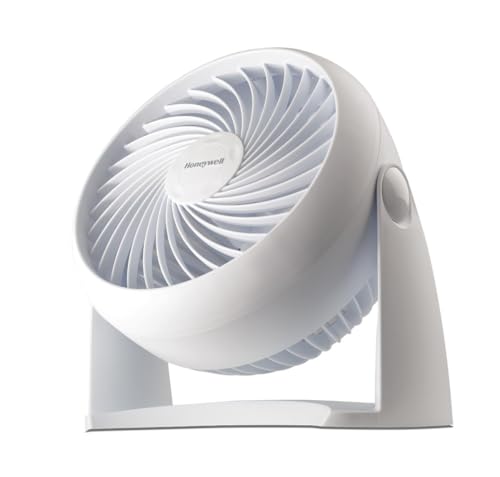
Honeywell TurboForce HT900 Small Table Desk Fan
A warm desk can turn a simple afternoon into a drawn-out battle with sticky skin, stale air, and fading concentration. Large fans often take up too much room, while tiny novelty models may barely move air beyond the keyboard. The Honeywell TurboForce HT900 addresses that awkward middle ground within the best small table desk fan category, pairing a compact housing with concentrated air circulation. Its practical design favors focused airflow and flexible placement rather than decorative extras.
Honeywell TurboForce HT900
The HT900 is small enough to sit on a desk, nightstand, shelf, or side table without swallowing the surrounding space. Its housing also supports floor placement and wall mounting, giving it more flexibility than a conventional personal fan with a fixed tabletop base. That multi-position design becomes useful in rooms where furniture placement leaves few open surfaces. Rather than forcing the fan into one permanent spot, the compact frame can adapt as cooling needs change throughout the day.
Honeywell describes this model as suitable for small to medium-sized rooms, though its strongest role remains personal cooling and localized circulation. The fan can push air across a room, but it won’t behave like a large pedestal fan or central cooling system. That distinction matters because realistic room coverage keeps expectations in check. Positioned several feet away, it can create a noticeable stream of air without sitting inches from a chair.
The black finish looks straightforward and doesn’t call much attention to itself. There’s no display panel, decorative lighting, or complicated control menu to learn. Frankly, that simplicity suits a fan designed for daily use in an office, bedroom, dorm, or compact living area. The no-fuss control layout makes it easy to change speeds without pausing work or fumbling through unnecessary settings.
Concentrated Airflow From A Compact Frame
The standout feature is Honeywell’s aerodynamic turbo design, which channels air into a more focused stream than many basic tabletop fans. According to the supplied specifications, airflow can be felt from up to 25 feet away. That figure doesn’t mean every corner of a room will receive equal cooling, but it does suggest stronger reach than a typical close-range USB fan. The longer airflow reach helps when the nearest outlet or safe surface isn’t directly beside the chair.
Focused circulation can also help break up pockets of warm, still air. A fan aimed across a room may encourage existing cooled air to move more evenly, especially when an air conditioner is already running. This approach won’t replace mechanical cooling, yet air circulation support can make a set temperature feel more comfortable. As a result, the air conditioner may not need to work as aggressively during mild heat.
The airflow pattern is directional rather than oscillating. That brings a clear benefit and a clear tradeoff. A steady stream delivers consistent cooling to one area, but it won’t sweep back and forth across several seats. The fixed airflow direction works nicely at a personal desk or beside a bed, while shared spaces may benefit more from an oscillating model.
Its compact blades and housing can produce a punchy breeze without the bulk of a full-sized floor fan. Still, higher airflow usually comes with more audible motor and air noise, particularly on the fastest setting. The HT900’s strength lies in giving three usable levels rather than forcing maximum power all the time. That speed flexibility lets a lighter setting handle routine circulation while the top speed tackles stuffier conditions.
Three Speeds And A Pivoting Head
Three speed settings cover the basic range most people need from a personal air circulator. The lowest level is better suited to close placement, quiet work, or nighttime use, while the upper settings move more air across greater distance. There’s no elaborate fine-tuning, but three-speed control keeps operation simple and predictable. A quick adjustment is all it takes to move from a mild breeze to stronger cooling.
The 90-degree pivoting head changes the direction of airflow without requiring the entire fan to be repositioned. It can aim forward across a desk, tilt upward from the floor, or direct air toward a higher bed or chair. That adjustable fan angle is especially helpful when the available surface sits below shoulder level. Instead of blowing at paperwork or chair legs, the fan can point toward the area where airflow is actually wanted.
The pivot mechanism also supports more strategic room circulation. Angling the fan upward can help move cooler air through a room, while a direct horizontal position provides stronger personal relief. However, the head adjusts within a defined range rather than rotating freely in every direction. The 90-degree adjustment is practical, though placement still matters if airflow needs to travel sideways across an awkward layout.
Controls remain mechanical, so there’s no remote, timer, app, or automatic mode. Some may see that as bare-bones, while others will appreciate not having another device that requires pairing or menu navigation. The tradeoff is simple: manual operation delivers reliability and ease, but anyone wanting scheduled shutoff or remote adjustments will need a more feature-heavy fan. For a desk within arm’s reach, the absence of those extras may barely register.
Noise And Everyday Comfort
Honeywell states that the TurboForce Air Circulator is 25% quieter than comparable fans, based on the company’s stated comparison. That claim is useful as a reference, although the actual experience will still depend on speed, distance, room acoustics, and personal sensitivity. On a lower setting, the reduced operating noise is more compatible with reading, computer work, or sleep. At full power, moving a stronger volume of air will naturally be easier to hear.
Fan noise isn’t always a drawback. A steady hum can soften distracting household sounds, hallway activity, or office chatter without the sharp interruptions associated with rattling parts. The key difference lies between consistent airflow noise and an irritating mechanical buzz. The HT900’s air circulator design aims for strong movement without relying on an oversized motor or wide blade assembly.
Placement affects sound more than many product descriptions admit. Setting the unit directly beside a microphone may make even the lowest setting noticeable during calls, while moving it a few feet away can reduce the intrusion. A stable, level surface also helps prevent vibration from traveling through a hollow desk or lightweight shelf. That placement tradeoff is worth considering before assuming one speed will suit every situation.
The fan’s focused output may allow it to run at a lower speed when aimed correctly. That matters because poor positioning often leads to unnecessary use of the loudest setting. Tilting the head toward the upper body and keeping the airflow path clear can improve comfort without extra noise. In practical terms, smart positioning can matter almost as much as raw fan power.
Desk, Floor, And Wall Placement
Versatile placement separates the HT900 from small fans that work only on flat tabletops. It can sit low on the floor and tilt upward, rest on a desk for direct cooling, or mount on a wall when surfaces are crowded. That wall-mounting capability can free valuable room around monitors, plant pots, books, and charging equipment. It also keeps the fan away from accidental spills or curious hands.
Wall mounting does require a sensible location and secure installation. Once mounted, the fan becomes less convenient to move from room to room, so the extra flexibility comes with a commitment. A tabletop setup remains better for frequent repositioning, while fixed wall placement makes sense in a consistently warm workstation or sleeping area. The fan’s pivoting head helps compensate for the more permanent location.
Floor placement can be surprisingly effective in rooms where cooler air gathers near ground level. Angling the fan upward may help circulate that air instead of letting it sit unused beneath a desk or bed. Still, a small floor fan can collect dust and pet hair faster than one placed higher. The low-level placement option improves circulation flexibility, but it may also require more regular cleaning.
The compact footprint reduces clutter, yet the fan still needs open space around its intake and front grille. Pushing it tightly against a wall, stack of folders, or curtain can restrict airflow and reduce the benefit of the turbo design. A few inches of breathing room supports consistent air movement and may also prevent loose materials from being pulled toward the housing. Small size helps, but cramped placement can still undermine performance.
Energy Use And Cooling Expectations
A personal fan can help make a room feel more comfortable without lowering the thermostat every time the air turns slightly warm. The HT900 supports this approach by moving conditioned air and creating a direct cooling effect on the skin. That energy-saving potential depends on how it’s used, since running the fan alongside unchanged air-conditioning habits won’t automatically reduce costs. Savings are more likely when improved circulation allows less aggressive cooling settings.
The fan doesn’t lower room temperature on its own. It moves air, which can improve comfort and reduce the heavy feeling caused by stagnant conditions. That’s an important limitation for extremely hot or humid rooms, where air movement alone may not provide enough relief. Used beside air conditioning or an open window, however, the fan can help distribute cooler air more effectively.
Strong directional airflow can feel more useful than broader but weaker movement. Sitting within the stream provides immediate relief, while areas outside that path may feel little change. This characteristic makes the HT900 better suited to targeted personal cooling than evenly cooling several people at once. A larger oscillating or whole-room fan would make more sense for broad shared coverage.
The corded design avoids battery charging, runtime limits, and declining output as a battery drains. On the flip side, it needs access to an outlet and isn’t as flexible as a rechargeable model during travel or power outages. The steady corded power suits long work sessions, overnight circulation, and regular household use. Portability here means moving between outlets, not operating completely untethered.
Practical Strengths And Noticeable Tradeoffs
The HT900’s strongest qualities are its concentrated airflow, compact housing, adjustable head, and multiple mounting options. Those features solve common frustrations without adding controls that most people rarely touch. The simple three-speed system also keeps everyday operation quick. For a fan that may be switched on and off several times a day, straightforward controls have genuine value.
The lack of oscillation is the most obvious limitation. One person can receive a steady breeze, but the fan won’t automatically spread air across a couch, meeting table, or large bedroom. Its directional cooling style rewards careful placement and may require manual repositioning as seating changes. That’s not necessarily a flaw, though it narrows the situations where the fan feels most convenient.
There’s also no built-in timer or remote control. Reaching for the fan is easy on a desk, yet bedside use may make manual controls less appealing after the lights are off. Anyone who relies on automatic shutoff should weigh that feature limitation against the model’s simpler design. Fewer electronic features can mean less fuss, but they also reduce hands-free convenience.
Honeywell positions the TurboForce HT900 as a quiet personal fan with enough reach for small to medium spaces. Based on the supplied details, its appeal rests on practical airflow rather than elaborate technology. The best small table desk fan isn’t always the model with the longest feature list; often, it’s the one that fits the available space, aims easily, and moves enough air without becoming another distraction. The HT900 makes that case with a compact, purpose-built design and a few honest compromises.
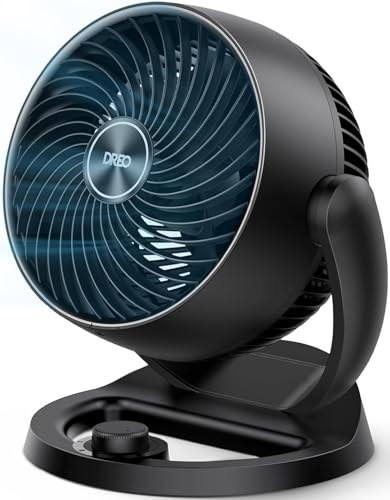
Dreo 12-Inch Quiet Whole-Room Table Fan
Stale air has a sneaky way of making a comfortable room feel warmer, heavier, and harder to settle into. A tiny personal fan may cool one elbow while leaving the rest of the space untouched, and a bulky floor model can become another object to step around. The Dreo 12-inch air circulator takes a broader approach to the best small table desk fan idea by combining a manageable footprint with airflow designed to travel across a room. Its strongest appeal lies in long-range circulation, subdued operation, and a frame that can move from desk to floor or wall without much fuss.
Dreo 12-Inch Quiet Air Circulator
The Dreo measures 9 inches deep, 11 inches wide, and 12 inches high, so the word “small” needs a little perspective. It’s compact compared with a pedestal fan, yet it occupies more surface area than a palm-sized USB model. That extra body size supports a wider air path and a steadier base, making the 12-inch frame better suited to meaningful room circulation than novelty cooling. On a narrow desk, though, the footprint may compete with monitors, speakers, notebooks, and coffee mugs.
Its design works on a tabletop, floor, or wall, which opens up several practical placement choices. A low position can push cooler air upward, a desk position delivers direct relief, and wall mounting keeps crowded surfaces clear. The integrated base and handle make room-to-room movement less awkward than carrying a fan by the grille. This flexible placement matters because circulation changes dramatically depending on where the fan sits and what blocks its airflow.
The controls stay refreshingly basic. Three speeds are selected through a knob, so there’s no app, remote, timer menu, or glowing control panel demanding attention at night. That simple knob control favors quick adjustments and fewer electronic distractions. The downside is just as clear: anyone wanting automatic shutoff or bedside control from across the room won’t get those conveniences here.
WingBoost Airflow With A Longer Reach
Dreo’s WingBoost system combines deep-pitched blades with an aerodynamic housing to direct air outward rather than letting it scatter immediately around the fan. The supplied specifications state that airflow can travel as far as 70 feet. That figure describes reach under the manufacturer’s stated conditions, not identical cooling at every point along the path. Even so, the 70-foot airflow claim signals that this model is built for circulation beyond arm’s length.
A longer air stream changes how the fan can be used. It doesn’t need to sit inches from a keyboard or bedside pillow to create noticeable movement, so the fan can stay on a shelf, dresser, or open patch of floor. That separation can reduce clutter and keep the strongest breeze from hitting the face too aggressively. The distance-friendly airflow also makes the unit more practical in rooms where the nearest outlet isn’t beside the main seating area.
Whole-room circulation shouldn’t be confused with actual refrigeration. The fan moves existing air and can make skin feel cooler, but it doesn’t lower the room’s temperature by itself. Its benefit becomes more obvious when warm and cool pockets have formed around furniture, windows, or heating equipment. By keeping air moving, the circulation-focused design helps a room feel less stagnant without pretending to replace an air conditioner.
The air path remains directional because the fan doesn’t oscillate. A concentrated stream can travel farther and provide steadier movement, yet it won’t sweep automatically across several people seated in different spots. That non-oscillating airflow rewards thoughtful positioning and occasional manual adjustment. For broad side-to-side coverage, an oscillating fan may fit better, while this design favors consistent circulation along one chosen route.
Quiet Operation For Sleep And Focus
Dreo lists a minimum noise level of 28 dB, supported by NACA-inspired airflow engineering and a bionic design intended to move air efficiently. That number applies to the quietest operating condition rather than every speed. At low output, the 28 dB noise rating makes the fan more compatible with sleeping, reading, or working in a room where a rough mechanical hum would become irritating. Higher speeds will naturally create more air noise as the blades move greater volume.
Sound quality matters almost as much as sound level. A steady rush of air tends to fade into the background, while clicking, buzzing, or uneven vibration keeps pulling attention back to the machine. The aerodynamic approach aims to reduce turbulence, which can help produce a smoother acoustic character. This low-noise circulation is particularly useful during calls, though placing any fan directly beside a microphone may still make airflow audible.
Bedroom placement brings its own tradeoffs. A soft setting can keep air moving without blasting bedding or drying the face, while stronger speeds may feel too direct if the fan sits close to the bed. Tilting it slightly above or beside the sleeping position often produces gentler circulation. The quiet sleep setting works best when paired with sensible distance and angle, not simply parked at full power on the nightstand.
Desk use follows a similar pattern. Low speed can relieve stuffiness during long work sessions without scattering receipts or turning every loose note into a paper airplane. Medium or high speed offers stronger relief during hotter afternoons, but the concentrated stream may need to be aimed away from lightweight objects. That adjustable speed range gives enough flexibility for different routines, even without advanced electronic controls.
Adjustable Tilt Changes The Air Path
The fan head offers up to 120 degrees of manual tilt, allowing airflow to travel forward, upward, or at an intermediate angle. This wider adjustment range is handy when the unit sits below shoulder height or needs to move air toward a distant corner. A 120-degree tilt range also gives wall mounting more practical value because the air stream isn’t locked into one horizontal line. The head still requires manual positioning, so it won’t change direction on its own.
Placed on the floor, the fan can aim upward to lift cooler air that has settled near ground level. That setup may help distribute air from an air conditioner without crowding a table or desk. Floor placement also exposes the grille to more dust, pet hair, and stray fibers, so the convenience comes with extra upkeep. The upward circulation option works well, but it rewards regular cleaning.
A tabletop position provides more immediate personal cooling. The head can angle slightly above papers and electronics, sending air toward the upper body instead of straight across the desktop. This targeted desk airflow reduces the nuisance of fluttering pages while still easing that warm, boxed-in feeling around a workstation. The 11-inch width remains worth measuring beforehand, especially on compact desks with little open depth.
Wall mounting offers the cleanest surface arrangement, though it turns a portable fan into a more permanent fixture. The installation location needs enough open space around the intake and a clear path in front of the fan. Once secured, the wall-mount configuration can circulate air without consuming floor or furniture space. Moving it between rooms becomes less convenient, of course, so that setup suits a consistently stuffy area better than changing daily needs.
Seasonal Circulation Beyond Summer
The Dreo isn’t limited to pushing cool air during hot weather. Its directional output can also help distribute warmth from a space heater, reducing the tendency for heated air to gather around one corner or rise near the ceiling. That year-round air movement can make heating feel more even, although the fan should always remain at a safe distance from any heat source. It supports the appliance by moving air, not by producing warmth itself.
Humidifiers and air purifiers can benefit from better circulation as well. Moisture or filtered air often spreads slowly when a room is still, particularly around furniture and closed doorways. A steady fan can encourage that treated air to travel farther and mix more evenly. The appliance-pairing benefit depends on placement, since pointing the fan directly at a humidifier’s mist or blocking a purifier intake may create the opposite effect.
Air-conditioning use presents another sensible pairing. Instead of lowering the thermostat whenever one side of the room feels warm, the fan can move conditioned air toward the area that needs it. That may support lower energy use if the improved circulation allows less aggressive cooling settings. The energy-saving potential isn’t automatic, though, because running every appliance exactly as before simply adds another device to the power load.
Open-window weather can be handled more deliberately, too. Facing the fan inward may draw cooler evening air deeper into a room, while aiming it outward can help move stale indoor air toward the opening. The result depends on outdoor temperature, humidity, and window placement. This seasonal flexibility gives the fan more value than a close-range model that spends most of the year tucked in a closet.
Cleaning And Daily Maintenance
Dust buildup gradually reduces airflow and can make a fan sound rougher than it did out of the box. Dreo’s removable parts simplify access to the areas where lint and debris tend to settle. That easy-clean construction is more practical than a sealed grille that forces awkward work with brushes or compressed air. The fan should still be unplugged before parts are removed or cleaned.
Routine cleaning frequency depends heavily on placement. A fan near a kitchen, open window, carpeted floor, or shedding pet may collect residue faster than one used on a clean office shelf. The removable components make that maintenance less of a production, but they don’t eliminate it. Keeping the blades and grille clear helps preserve the focused airflow that gives the unit its longer reach.
The carrying handle supports maintenance as much as portability. Moving the fan to a sink-side cleaning area or open workspace is easier than wrestling with a smooth, awkward shell. Its base also provides a stable place to set the unit while wiping the housing. That handle-and-base design sounds minor on paper, yet it removes some friction from chores that are often postponed.
Immediate out-of-box use adds convenience, since the fan doesn’t require complicated assembly before it can circulate air. Wall mounting naturally takes extra preparation, but ordinary tabletop or floor use remains straightforward. The ready-to-use setup suits anyone who wants mechanical simplicity rather than another connected appliance. Still, the lack of remote functions means every adjustment happens at the unit itself.
Strengths, Limits, And Best-Fit Situations
The strongest case for this Dreo rests on airflow reach, restrained noise, adjustable tilt, and flexible placement. Those qualities solve a broader circulation problem than a tiny clip fan or low-powered USB unit can manage. The WingBoost system is especially relevant in bedrooms, offices, and living areas where air needs to travel across furniture rather than stop at the edge of a desk. Its dimensions remain compact for a room circulator, though not miniature.
Its most noticeable compromises are the absence of oscillation, remote control, and timer functions. Directional airflow needs manual aiming, and changing speed requires reaching the knob. The basic control system may feel refreshingly direct or slightly dated, depending on the routine. A bedside setup several feet away exposes that limitation more clearly than a fan sitting within arm’s reach on a desk.
The 12-inch body can also be too substantial for a crowded workstation. A narrow desk may benefit more from wall mounting or floor placement, provided there’s enough clearance for the intake and air path. The 9-by-11-inch footprint should be considered alongside monitor stands, lamps, and other equipment before choosing a permanent spot. Bigger than a personal mini fan, yes, but that size helps support stronger circulation.
Realistic expectations make the Dreo easier to assess. It won’t chill a hot room without cooler air to circulate, and it won’t distribute airflow side to side by itself. What it does offer is quiet long-range air movement in a portable frame with three straightforward speeds and broad manual tilt. Within the best small table desk fan category, it suits spaces that need more than a close facial breeze but don’t have room for a tall floor fan.
Honeywell HT-904 TurboForce Tabletop Air Circulator
A cramped desk doesn’t leave much room for a fan that hogs space, rattles during calls, or pushes a weak breeze that fades before reaching your chair. The Honeywell HT-904 tackles those everyday annoyances with a compact white housing, concentrated airflow, and flexible positioning. Within the best small table desk fan category, it stands out for its 25-foot airflow reach, three speed settings, and 90-degree pivoting head. It isn’t loaded with digital extras, but that stripped-down approach may be exactly why it fits easily into a bedroom, office, or small living area.
Honeywell HT-904 TurboForce Fan
The HT-904 is small enough to rest on a desk, nightstand, shelf, or countertop without taking over the entire surface. It can also sit on the floor or mount on a wall, which gives the compact body more flexibility than a standard tabletop-only model. That three-way placement helps in rooms where furniture, monitors, lamps, and charging cables already compete for space. The white finish looks clean and understated, though it may show dust sooner than a darker housing.
Honeywell describes the fan as suitable for small to medium-sized rooms, but its strongest performance is still likely to come from thoughtful placement. A compact air circulator can move air around a room, yet it won’t cool every corner like a large pedestal fan or an air-conditioning system. The localized cooling strength is better understood as a focused stream that can reach beyond the immediate desktop. That distinction keeps expectations grounded and makes the fan easier to judge on what it actually does.
The design skips touchscreens, remote controls, timers, and app-based settings. Instead, the HT-904 relies on a straightforward mechanical control with three speeds. That simple control layout cuts down on fiddling and makes quick adjustments easy during work, sleep, or meal preparation. On the flip side, anyone who prefers automated shutoff or remote operation may find the setup a little basic.
TurboForce Airflow In A Small Housing
The central feature is Honeywell’s aerodynamic TurboForce design, which concentrates airflow rather than letting it disperse immediately around the grille. According to the supplied product information, the breeze can be felt from up to 25 feet away. That stated range gives the airflow reach a practical advantage over tiny USB fans meant only for close facial cooling. It also allows the unit to sit farther from paperwork, microphones, or delicate items that don’t need a constant blast of air.
Strong directional airflow can make a room feel less stuffy by breaking up warm pockets and helping existing cool air travel farther. Used alongside an air conditioner, the fan may improve circulation so the conditioned air doesn’t remain trapped near one vent. The energy-saving potential depends on changing cooling habits, though, rather than simply running both appliances at full strength. A fan moves air; it doesn’t lower the actual room temperature on its own.
The HT-904 doesn’t oscillate, so the airflow stays aimed in one direction. That can be a strength at a desk because the breeze remains consistent instead of sweeping away every few seconds. It can also be a limitation in shared rooms where several seats need coverage. The fixed airflow pattern suits personal comfort better than broad side-to-side cooling.
A more concentrated air stream also rewards careful positioning. Pointing the fan across an open path lets the TurboForce design do its job, while placing it behind a monitor, curtain, or stack of folders can choke the intake or block the breeze. The directional air movement feels more effective when the fan has breathing room around both the front and rear. A compact footprint helps with placement, but cramped surroundings can still reduce performance.
Three Speeds Keep Cooling Straightforward
Three speed options give the HT-904 enough range for light circulation, everyday cooling, and stronger airflow during warmer stretches. Low speed makes sense at close range, while the upper settings can push air farther across a bedroom or office. The three-speed selection keeps operation uncomplicated without limiting the fan to a single intensity. There’s no need to scroll through a dozen modes just to soften the breeze.
The lowest setting should be the natural starting point for desk work, reading, or sleep because less air movement generally means less sound. Medium speed offers a useful middle ground when the room feels stale but full power would be distracting. High speed is better reserved for greater distance or noticeably warmer conditions. This practical speed range lets placement and comfort determine the setting rather than forcing one fixed output.
Manual controls have an old-school charm, but they come with a tradeoff. The fan needs to stay within reach if frequent speed changes are part of the routine. A desk setup makes that easy, while a wall-mounted or across-the-room position may feel less convenient. The hands-on operation favors simplicity over remote flexibility.
Mechanical controls also mean there’s no sleep timer or programmed schedule. Someone who likes a fan to switch off after an hour will need to handle that separately. Still, fewer electronic features can reduce visual clutter and keep nighttime operation free from glowing displays. The minimalist design works well for those who value direct control and don’t need automation.
A 90-Degree Pivot Adds Useful Flexibility
The pivoting head can move through 90 degrees, allowing the fan to aim forward, upward, or somewhere between those positions. That adjustment becomes especially useful when the unit sits below shoulder level or rests on the floor. The 90-degree tilt range helps direct airflow toward the upper body instead of wasting it on chair legs or the underside of a desk. It also makes wall mounting more practical because the breeze isn’t locked into one horizontal angle.
Floor placement can help lift cooler air that settles near ground level. Tilting the fan upward may improve circulation around a bed, sofa, or workstation without filling a tabletop with another appliance. The tradeoff is faster dust buildup, particularly around carpet, pets, or open windows. That low-position versatility is useful, but it may require more frequent grille cleaning.
On a desk, a slight upward angle can keep papers from fluttering while still directing air toward the face and shoulders. This is a small detail, yet it makes a noticeable difference during long work sessions. A fixed-head fan often forces awkward repositioning, while the HT-904’s adjustable airflow angle lets the base remain stable. Less shifting also means fewer chances of knocking into cups, cables, or office supplies.
The head pivots manually rather than automatically. It won’t track movement, sweep across the room, or switch angles on its own. That limitation is easy to accept for personal cooling, but it matters in spaces where the seating position changes often. The manual tilt design is dependable and simple, though not especially hands-free.
Quiet Operation For Work And Sleep
Honeywell presents the HT-904 as a quiet personal fan, which matters in bedrooms, home offices, and study areas where motor noise can become more irritating than the heat itself. Quiet doesn’t mean silent, especially at the highest speed, because moving more air naturally creates more sound. The low-noise emphasis is most relevant on the gentler settings and at a reasonable distance. Proper placement can make the difference between a soft background hum and a distracting rush beside the ear.
Fan sound also depends on the surface beneath it. A hollow desk, loose shelf, or uneven floor can amplify vibration that wouldn’t be noticeable on a solid table. Setting the unit on a stable surface supports smoother operation and reduces the chance of buzzing through furniture. Wall mounting may remove desktop vibration altogether, provided the fan is secured correctly.
A steady hum can even soften unpredictable household sounds, hallway noise, or office chatter. That effect is different from true silence, but many people find consistent airflow easier to ignore than sudden background interruptions. The HT-904’s continuous sound profile may suit sleep or concentration better than a fan that clicks, rattles, or changes pitch. Still, sound sensitivity varies, so the lowest speed remains the safer choice for light sleepers.
Video calls add another wrinkle. A fan can sound quiet from across the room yet become obvious when placed directly beside a laptop microphone. Moving it several feet away and using the stated airflow reach can preserve cooling without pushing air straight into the mic. That distance advantage helps the HT-904 serve a workspace without dominating every conversation.
Wall Mounting Can Free Valuable Space
Wall-mount capability gives the HT-904 a useful edge in crowded rooms. Desks packed with dual monitors, speakers, notebooks, and charging stations often don’t have room for even a modest fan. Mounting the unit above or beside the workspace preserves surface area while maintaining directed air circulation. The pivoting head then helps aim the breeze downward or outward as needed.
A permanent mount requires more planning than simply setting the fan on a table. The chosen spot needs access to power, a clear intake area, and enough room for the head to pivot. Once installed, the fan loses some of its room-to-room portability. The space-saving benefit is strongest in a location that stays warm throughout the day.
Wall placement can also keep the fan away from spills, pets, and loose desktop items. That elevated position reduces clutter and may help airflow travel over furniture rather than crashing into it. However, cleaning becomes a little less convenient if the fan sits high above the floor. The safer elevated setup trades easy access for a cleaner, more open workspace.
Tabletop use remains the simplest arrangement for anyone who moves the fan between a bedroom and office. The compact frame is easier to relocate than a tower or pedestal model, though it still relies on a power outlet. This portable corded design avoids battery runtime limits while keeping movement within the reach of available sockets. It’s portable in a practical household sense, not untethered travel gear.
Air Circulation May Support Smarter Cooling
The HT-904 can help an air conditioner distribute cool air more evenly, especially in rooms where vents sit far from the main seating area. Directing the fan across the room may reduce stagnant spots and make a moderate thermostat setting feel more comfortable. That circulation support can contribute to lower energy use only if it changes how heavily the air conditioner runs. Operating both devices without adjusting anything else won’t guarantee savings.
The same principle works during milder weather. An open window may bring cooler air into one part of the room, but that air often stays near the opening. Positioning the fan to move it farther inside can improve comfort without switching on central cooling. The window-air circulation benefit depends on outdoor temperature and humidity, so it won’t solve every warm day.
Cooler seasons offer another use. A directional fan can help move warm air from a heater or vent instead of letting it collect near the ceiling or around one corner. Safe distance from heat sources remains essential, and the fan shouldn’t be placed where hot air can damage the housing. The year-round circulation role adds usefulness beyond summer without turning the fan into a heating appliance.
Air movement may also help a purifier or humidifier affect a wider area. Gentle circulation can spread treated air more evenly, though blasting directly at mist or blocking an appliance intake can create problems. The appliance-pairing value comes from moving room air thoughtfully rather than simply aiming every device at one another. Placement, once again, matters more than raw speed alone.
Practical Strengths And Honest Limitations
The HT-904’s clearest strengths are its compact body, focused airflow, three speeds, and adjustable head. Those features address everyday frustrations without piling on complicated electronics. Its 25-foot stated reach gives it more placement freedom than a fan designed only for close-range use. The wall-mount option also makes the unit easier to fit into tight rooms.
The missing oscillation is the most obvious compromise. One seat can receive steady airflow, but the fan won’t automatically share that breeze across a wide area. Manual repositioning may be necessary as people move or furniture arrangements change. This directional limitation is manageable for personal use but less convenient for group cooling.
The absence of a timer and remote may also matter in a bedroom. Reaching over to change the speed is simple on a nightstand, yet less appealing if the fan sits across the room or on a wall. The basic feature set favors reliability and ease over automation. That balance will feel sensible to some and restrictive to others.
The white finish brings a lighter visual presence than the typical black utility fan, though dust and scuffs may be easier to spot. Regular cleaning will help maintain both appearance and airflow. Because the supplied details don’t specify a removable grille, maintenance expectations should stay conservative. The clean-looking housing suits bright offices and bedrooms, but it may need occasional wiping to stay that way.
Where The HT-904 Makes The Most Sense
A small office or bedroom is the natural home for this model. The compact frame can sit near a computer, bedside lamp, or reading chair while the focused stream reaches beyond immediate arm’s length. Its personal cooling focus works especially well where one area feels warm even though the rest of the room is tolerable. That situation doesn’t always justify turning down the thermostat for the entire house.
Limited floor space also favors the HT-904. A pedestal fan may block walkways, and a tower fan can still claim valuable room beside furniture. The tabletop and wall-mount options offer a more adaptable footprint for apartments, dorms, compact kitchens, or small workrooms. Measuring the intended location remains wise, even with a fan described as small.
Larger shared spaces may expose the fan’s boundaries. A directional stream and compact housing can improve circulation, but they won’t provide broad oscillating coverage for several distant seats. The HT-904 is better treated as a focused air circulator than a substitute for a full-room cooling system. Realistic expectations prevent its modest size from becoming an unfair disadvantage.
Within the best small table desk fan conversation, the Honeywell HT-904 earns attention through practical flexibility rather than flashy features. It offers strong stated reach, quiet-focused operation, three straightforward speeds, and an adjustable head in a compact white design. Its limitations are plain: no oscillation, remote, timer, or cordless power. For steady personal airflow and uncomplicated room circulation, though, that straightforward formula has a lot going for it.
Honeywell HT-904 TurboForce Tabletop Air Circulator
A cramped desk doesn’t leave much room for a fan that hogs space, rattles during calls, or pushes a weak breeze that fades before reaching your chair. The Honeywell HT-904 tackles those everyday annoyances with a compact white housing, concentrated airflow, and flexible positioning. Within the best small table desk fan category, it stands out for its 25-foot airflow reach, three speed settings, and 90-degree pivoting head. It isn’t loaded with digital extras, but that stripped-down approach may be exactly why it fits easily into a bedroom, office, or small living area.
Honeywell HT-904 TurboForce Fan
The HT-904 is small enough to rest on a desk, nightstand, shelf, or countertop without taking over the entire surface. It can also sit on the floor or mount on a wall, which gives the compact body more flexibility than a standard tabletop-only model. That three-way placement helps in rooms where furniture, monitors, lamps, and charging cables already compete for space. The white finish looks clean and understated, though it may show dust sooner than a darker housing.
Honeywell describes the fan as suitable for small to medium-sized rooms, but its strongest performance is still likely to come from thoughtful placement. A compact air circulator can move air around a room, yet it won’t cool every corner like a large pedestal fan or an air-conditioning system. The localized cooling strength is better understood as a focused stream that can reach beyond the immediate desktop. That distinction keeps expectations grounded and makes the fan easier to judge on what it actually does.
The design skips touchscreens, remote controls, timers, and app-based settings. Instead, the HT-904 relies on a straightforward mechanical control with three speeds. That simple control layout cuts down on fiddling and makes quick adjustments easy during work, sleep, or meal preparation. On the flip side, anyone who prefers automated shutoff or remote operation may find the setup a little basic.
TurboForce Airflow In A Small Housing
The central feature is Honeywell’s aerodynamic TurboForce design, which concentrates airflow rather than letting it disperse immediately around the grille. According to the supplied product information, the breeze can be felt from up to 25 feet away. That stated range gives the airflow reach a practical advantage over tiny USB fans meant only for close facial cooling. It also allows the unit to sit farther from paperwork, microphones, or delicate items that don’t need a constant blast of air.
Strong directional airflow can make a room feel less stuffy by breaking up warm pockets and helping existing cool air travel farther. Used alongside an air conditioner, the fan may improve circulation so the conditioned air doesn’t remain trapped near one vent. The energy-saving potential depends on changing cooling habits, though, rather than simply running both appliances at full strength. A fan moves air; it doesn’t lower the actual room temperature on its own.
The HT-904 doesn’t oscillate, so the airflow stays aimed in one direction. That can be a strength at a desk because the breeze remains consistent instead of sweeping away every few seconds. It can also be a limitation in shared rooms where several seats need coverage. The fixed airflow pattern suits personal comfort better than broad side-to-side cooling.
A more concentrated air stream also rewards careful positioning. Pointing the fan across an open path lets the TurboForce design do its job, while placing it behind a monitor, curtain, or stack of folders can choke the intake or block the breeze. The directional air movement feels more effective when the fan has breathing room around both the front and rear. A compact footprint helps with placement, but cramped surroundings can still reduce performance.
Three Speeds Keep Cooling Straightforward
Three speed options give the HT-904 enough range for light circulation, everyday cooling, and stronger airflow during warmer stretches. Low speed makes sense at close range, while the upper settings can push air farther across a bedroom or office. The three-speed selection keeps operation uncomplicated without limiting the fan to a single intensity. There’s no need to scroll through a dozen modes just to soften the breeze.
The lowest setting should be the natural starting point for desk work, reading, or sleep because less air movement generally means less sound. Medium speed offers a useful middle ground when the room feels stale but full power would be distracting. High speed is better reserved for greater distance or noticeably warmer conditions. This practical speed range lets placement and comfort determine the setting rather than forcing one fixed output.
Manual controls have an old-school charm, but they come with a tradeoff. The fan needs to stay within reach if frequent speed changes are part of the routine. A desk setup makes that easy, while a wall-mounted or across-the-room position may feel less convenient. The hands-on operation favors simplicity over remote flexibility.
Mechanical controls also mean there’s no sleep timer or programmed schedule. Someone who likes a fan to switch off after an hour will need to handle that separately. Still, fewer electronic features can reduce visual clutter and keep nighttime operation free from glowing displays. The minimalist design works well for those who value direct control and don’t need automation.
A 90-Degree Pivot Adds Useful Flexibility
The pivoting head can move through 90 degrees, allowing the fan to aim forward, upward, or somewhere between those positions. That adjustment becomes especially useful when the unit sits below shoulder level or rests on the floor. The 90-degree tilt range helps direct airflow toward the upper body instead of wasting it on chair legs or the underside of a desk. It also makes wall mounting more practical because the breeze isn’t locked into one horizontal angle.
Floor placement can help lift cooler air that settles near ground level. Tilting the fan upward may improve circulation around a bed, sofa, or workstation without filling a tabletop with another appliance. The tradeoff is faster dust buildup, particularly around carpet, pets, or open windows. That low-position versatility is useful, but it may require more frequent grille cleaning.
On a desk, a slight upward angle can keep papers from fluttering while still directing air toward the face and shoulders. This is a small detail, yet it makes a noticeable difference during long work sessions. A fixed-head fan often forces awkward repositioning, while the HT-904’s adjustable airflow angle lets the base remain stable. Less shifting also means fewer chances of knocking into cups, cables, or office supplies.
The head pivots manually rather than automatically. It won’t track movement, sweep across the room, or switch angles on its own. That limitation is easy to accept for personal cooling, but it matters in spaces where the seating position changes often. The manual tilt design is dependable and simple, though not especially hands-free.
Quiet Operation For Work And Sleep
Honeywell presents the HT-904 as a quiet personal fan, which matters in bedrooms, home offices, and study areas where motor noise can become more irritating than the heat itself. Quiet doesn’t mean silent, especially at the highest speed, because moving more air naturally creates more sound. The low-noise emphasis is most relevant on the gentler settings and at a reasonable distance. Proper placement can make the difference between a soft background hum and a distracting rush beside the ear.
Fan sound also depends on the surface beneath it. A hollow desk, loose shelf, or uneven floor can amplify vibration that wouldn’t be noticeable on a solid table. Setting the unit on a stable surface supports smoother operation and reduces the chance of buzzing through furniture. Wall mounting may remove desktop vibration altogether, provided the fan is secured correctly.
A steady hum can even soften unpredictable household sounds, hallway noise, or office chatter. That effect is different from true silence, but many people find consistent airflow easier to ignore than sudden background interruptions. The HT-904’s continuous sound profile may suit sleep or concentration better than a fan that clicks, rattles, or changes pitch. Still, sound sensitivity varies, so the lowest speed remains the safer choice for light sleepers.
Video calls add another wrinkle. A fan can sound quiet from across the room yet become obvious when placed directly beside a laptop microphone. Moving it several feet away and using the stated airflow reach can preserve cooling without pushing air straight into the mic. That distance advantage helps the HT-904 serve a workspace without dominating every conversation.
Wall Mounting Can Free Valuable Space
Wall-mount capability gives the HT-904 a useful edge in crowded rooms. Desks packed with dual monitors, speakers, notebooks, and charging stations often don’t have room for even a modest fan. Mounting the unit above or beside the workspace preserves surface area while maintaining directed air circulation. The pivoting head then helps aim the breeze downward or outward as needed.
A permanent mount requires more planning than simply setting the fan on a table. The chosen spot needs access to power, a clear intake area, and enough room for the head to pivot. Once installed, the fan loses some of its room-to-room portability. The space-saving benefit is strongest in a location that stays warm throughout the day.
Wall placement can also keep the fan away from spills, pets, and loose desktop items. That elevated position reduces clutter and may help airflow travel over furniture rather than crashing into it. However, cleaning becomes a little less convenient if the fan sits high above the floor. The safer elevated setup trades easy access for a cleaner, more open workspace.
Tabletop use remains the simplest arrangement for anyone who moves the fan between a bedroom and office. The compact frame is easier to relocate than a tower or pedestal model, though it still relies on a power outlet. This portable corded design avoids battery runtime limits while keeping movement within the reach of available sockets. It’s portable in a practical household sense, not untethered travel gear.
Air Circulation May Support Smarter Cooling
The HT-904 can help an air conditioner distribute cool air more evenly, especially in rooms where vents sit far from the main seating area. Directing the fan across the room may reduce stagnant spots and make a moderate thermostat setting feel more comfortable. That circulation support can contribute to lower energy use only if it changes how heavily the air conditioner runs. Operating both devices without adjusting anything else won’t guarantee savings.
The same principle works during milder weather. An open window may bring cooler air into one part of the room, but that air often stays near the opening. Positioning the fan to move it farther inside can improve comfort without switching on central cooling. The window-air circulation benefit depends on outdoor temperature and humidity, so it won’t solve every warm day.
Cooler seasons offer another use. A directional fan can help move warm air from a heater or vent instead of letting it collect near the ceiling or around one corner. Safe distance from heat sources remains essential, and the fan shouldn’t be placed where hot air can damage the housing. The year-round circulation role adds usefulness beyond summer without turning the fan into a heating appliance.
Air movement may also help a purifier or humidifier affect a wider area. Gentle circulation can spread treated air more evenly, though blasting directly at mist or blocking an appliance intake can create problems. The appliance-pairing value comes from moving room air thoughtfully rather than simply aiming every device at one another. Placement, once again, matters more than raw speed alone.
Practical Strengths And Honest Limitations
The HT-904’s clearest strengths are its compact body, focused airflow, three speeds, and adjustable head. Those features address everyday frustrations without piling on complicated electronics. Its 25-foot stated reach gives it more placement freedom than a fan designed only for close-range use. The wall-mount option also makes the unit easier to fit into tight rooms.
The missing oscillation is the most obvious compromise. One seat can receive steady airflow, but the fan won’t automatically share that breeze across a wide area. Manual repositioning may be necessary as people move or furniture arrangements change. This directional limitation is manageable for personal use but less convenient for group cooling.
The absence of a timer and remote may also matter in a bedroom. Reaching over to change the speed is simple on a nightstand, yet less appealing if the fan sits across the room or on a wall. The basic feature set favors reliability and ease over automation. That balance will feel sensible to some and restrictive to others.
The white finish brings a lighter visual presence than the typical black utility fan, though dust and scuffs may be easier to spot. Regular cleaning will help maintain both appearance and airflow. Because the supplied details don’t specify a removable grille, maintenance expectations should stay conservative. The clean-looking housing suits bright offices and bedrooms, but it may need occasional wiping to stay that way.
Where The HT-904 Makes The Most Sense
A small office or bedroom is the natural home for this model. The compact frame can sit near a computer, bedside lamp, or reading chair while the focused stream reaches beyond immediate arm’s length. Its personal cooling focus works especially well where one area feels warm even though the rest of the room is tolerable. That situation doesn’t always justify turning down the thermostat for the entire house.
Limited floor space also favors the HT-904. A pedestal fan may block walkways, and a tower fan can still claim valuable room beside furniture. The tabletop and wall-mount options offer a more adaptable footprint for apartments, dorms, compact kitchens, or small workrooms. Measuring the intended location remains wise, even with a fan described as small.
Larger shared spaces may expose the fan’s boundaries. A directional stream and compact housing can improve circulation, but they won’t provide broad oscillating coverage for several distant seats. The HT-904 is better treated as a focused air circulator than a substitute for a full-room cooling system. Realistic expectations prevent its modest size from becoming an unfair disadvantage.
Within the best small table desk fan conversation, the Honeywell HT-904 earns attention through practical flexibility rather than flashy features. It offers strong stated reach, quiet-focused operation, three straightforward speeds, and an adjustable head in a compact white design. Its limitations are plain: no oscillation, remote, timer, or cordless power. For steady personal airflow and uncomplicated room circulation, though, that straightforward formula has a lot going for it.
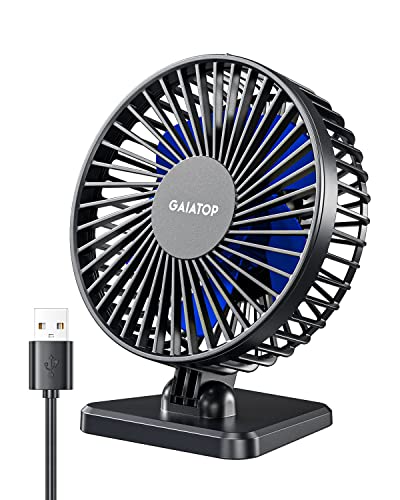
Gaiatop 5-Inch Portable Desk Air Circulator
Desk space disappears fast once a monitor stand, keyboard, mug, charger, and a few loose papers settle in. A bulky fan can solve the heat problem while creating a brand-new clutter problem, which isn’t much of a win. The Gaiatop 5-inch model approaches the best small table desk fan category with a genuinely compact body, low stated power draw, and airflow designed to feel stronger than its dimensions suggest. Its biggest draw is the balance between small footprint, manual control, and enough directional flexibility to make placement less fussy.
Gaiatop 5-Inch Desk Air Circulator
The housing measures 5.59 by 5.65 by 4.33 inches and weighs 0.73 pounds, so it won’t bully its way across a crowded work surface. Those dimensions make the fan easy to place beside a laptop, under a raised monitor, or on the corner of a nightstand. The compact frame also makes moving it from one room to another less of a chore. Still, the light weight means base stability matters more than it would on a heavier tabletop fan.
Gaiatop addresses that concern with four rubber pads underneath the base. They help reduce slipping and dampen vibration, especially on smooth desks, counters, or bedside furniture. That anti-slip base is a practical touch because small fans can otherwise creep across a surface at higher speeds. It also helps keep mechanical vibration from turning a hollow desk into an unwanted sounding board.
The fan uses a standard AC connection with a 4.92-foot attached cord. Corded power means there’s no battery to recharge and no drop in output as stored power runs low. The steady AC power suits long work sessions, kitchen use, or overnight circulation where consistent operation matters. The fixed cable does limit portability to locations near an outlet, so it isn’t the same kind of grab-and-go device as a rechargeable travel fan.
Compact Airflow With More Punch Than Expected
Deep-pitched blades and an aerodynamic housing form the core of the airflow design. Rather than scattering a weak breeze around the grille, the fan is built to push air in a more focused direction. The supplied specifications list a maximum wind speed of 6.2 meters per second, which supports the idea that this isn’t merely a decorative desk accessory. That 6.2 m/s maximum speed gives the fan enough muscle for close personal cooling and short-range room circulation.
A concentrated stream makes the fan useful from more than a few inches away. It can sit behind a laptop, across a small desk, or on a nearby shelf without needing to blow directly into the face. This focused airflow also helps avoid sending papers, receipts, and sticky notes flying every time the top speed is selected. Careful aiming matters, though, because a narrow air path won’t cover every corner of a room evenly.
The phrase “large areas” deserves a realistic reading here. A five-inch fan can help circulate air beyond the desktop, but it won’t perform like a full-size pedestal unit or an air conditioner. Its room-circulation role is better understood as breaking up still pockets and moving existing cool or warm air through a modest space. That distinction keeps the product’s strengths clear without expecting a small housing to rewrite the laws of airflow.
The fan also doesn’t appear to oscillate, so airflow remains fixed in the chosen direction. That steady stream works well for one seat, one bed, or one work zone. The non-oscillating design becomes less convenient when several people need coverage across a wider area. Manual repositioning handles the issue, but it isn’t automatic.
Three Speeds Keep Control Simple
Three manual speed settings cover the basic range from gentle circulation to stronger cooling. Low speed makes sense during quiet work or close placement, while medium and high settings bring more noticeable movement during warmer stretches. The three-speed control keeps operation straightforward, with no app, remote, or digital menu to navigate. Sometimes a simple switch is exactly the point.
The control setup also makes the fan easy to understand straight out of the box. There’s no pairing process, no timer programming, and no battery indicator to monitor. That mechanical simplicity reduces fuss, though it also means every change has to be made directly on the unit. A bedside position across the room may expose that limitation more than a desk placement within arm’s reach.
High speed will naturally create more sound and stronger airflow than the lower settings. That’s the tradeoff with any small fan trying to move a useful amount of air through a compact grille. The adjustable output lets the fan stay restrained when silence matters and ramp up when heat becomes the bigger annoyance. It’s better to have that range than to be stuck with one inflexible breeze.
The lack of a timer may matter during sleep. Anyone who prefers a fan to shut off after an hour won’t get that function here. The basic feature set favors direct operation over automation, which keeps the design simple but less hands-free. That balance will feel sensible in an office and a bit more limited beside the bed.
360-Degree Tilt Adds Real Placement Freedom
The head can rotate through 360 degrees vertically, letting the airflow point upward, downward, or anywhere between. That range gives the fan more flexibility than models with a narrow fixed-angle adjustment. The 360-degree tilt is especially useful when the available surface sits below shoulder height or above the intended cooling zone. Instead of moving the whole base, the head can do the work.
Desk placement benefits from a slight upward angle. The fan can send air toward the face and upper body while staying low enough to avoid blocking the monitor. This directed desk cooling also helps keep airflow off loose papers and small objects. A few degrees of tilt can make the difference between comfortable circulation and a constant battle with fluttering notes.
Floor use brings another advantage. Pointing the fan upward can lift cooler air that has settled near the ground and encourage it to mix with warmer air above. That vertical circulation can be useful near a bed, sofa, or compact workspace, though floor placement usually leads to faster dust buildup. Pet hair, carpet fibers, and debris collect more easily close to the ground.
The fully adjustable head also makes the fan easier to use in a kitchen or bathroom. It can direct air around a sink area, toward a steamy corner, or away from sensitive items without taking up much counter space. The angle flexibility broadens its usefulness, but the fan should still stay clear of water and unstable edges. Small doesn’t mean careless placement is harmless.
Noise Control And Everyday Comfort
Gaiatop lists a minimum operating noise of 30 dB, supported by an upgraded motor intended to produce smoother airflow. That figure applies under the manufacturer’s stated conditions and will likely correspond to the lower setting. The 30 dB noise rating makes the fan a reasonable fit for reading, focused work, or sleep where a harsh buzz would be distracting. Stronger speeds will be easier to hear because moving more air always creates more sound.
Sound quality matters just as much as the number itself. A smooth rush of air tends to blend into the background, while vibration, rattling, or an uneven motor tone can become irritating quickly. The rubber feet support vibration reduction by separating the base from the surface beneath it. A solid table will usually keep noise lower than a thin shelf or hollow desktop.
Placement beside a microphone deserves some thought. Even a quiet fan can become noticeable during video calls if it blows directly toward a laptop or external mic. The compact airflow control helps because the head can be angled away while still sending air toward the upper body. Moving the fan a little farther back may also soften the captured sound without losing much cooling.
Nighttime use benefits from the same flexibility. A gentle setting and indirect angle can circulate air without drying the face or making bedding flap. The quiet low-speed mode is the more sensible choice for sleep, while high speed fits brief cool-down periods better. The absence of a timer remains the one obvious bedtime inconvenience.
Cleaning Is Easier Than On Sealed Fans
Dust always finds its way onto fan blades, no matter how clean the room looks. Gaiatop uses a detachable front cover, allowing easier access to the grille and blades for routine cleaning. That removable fan cover is a meaningful advantage over sealed housings that require awkward brushing through narrow slots. Regular care helps prevent buildup from reducing airflow or adding a dusty smell.
Cleaning frequency depends on where the fan lives. A kitchen can expose it to grease particles, a bathroom may bring humidity, and floor placement collects hair and lint faster than a raised desk. The easy-access design makes those environments less intimidating from a maintenance standpoint. The unit should always be unplugged before the cover is removed or the blades are wiped.
The attached power cord adds one small inconvenience during cleaning because it can’t be separated from the fan. Still, the unit weighs less than a pound, so moving it to a clear workspace shouldn’t be difficult. The lightweight body keeps routine upkeep manageable even without a detachable cable. A soft cloth and careful blade access should handle most ordinary dust.
Clean blades preserve more than appearance. Heavy buildup can disturb airflow, increase noise, and make a small fan feel weaker than it should. The maintenance-friendly grille protects the performance that gives the fan its appeal in the first place. That’s a plain feature, but it pays off over months of regular use.
Low Power Draw And Seasonal Circulation
The fan is rated at 120 volts and 6.8 watts, giving it a modest stated power requirement. That 6.8-watt input supports long sessions without the heavier draw associated with larger cooling appliances. A fan still uses electricity, of course, but its role is air movement rather than mechanical refrigeration. The biggest efficiency benefit comes from using circulation to reduce reliance on more demanding equipment.
Pairing the fan with an air conditioner can help distribute cool air instead of letting it remain concentrated near a vent. A similar approach works with a space heater, provided the fan stays at a safe distance and doesn’t face excessive heat. The appliance-pairing potential comes from moving treated air through the room more quickly. It doesn’t increase the heating or cooling capacity of the other device.
Humidifiers and air purifiers may also benefit from gentle circulation. Moving air can help moisture or filtered air spread beyond the immediate area around the appliance. The circulation support needs thoughtful positioning because blowing directly into a humidifier’s mist or blocking a purifier intake may work against the goal. A sideways or indirect path usually makes more sense.
Open-window weather gives the fan another seasonal job. It can pull cooler air inward or push stale indoor air toward an opening, depending on its angle and placement. The year-round usefulness extends beyond hot afternoons, though outdoor humidity and temperature still determine how helpful the setup feels. Air movement can improve comfort, but it can’t make muggy air dry.
Practical Strengths And Clear Tradeoffs
The strongest qualities are easy to identify: compact dimensions, low weight, three speeds, full vertical tilt, rubber feet, and a detachable front cover. Together, those details make the fan easy to place, aim, move, and maintain. The space-saving design is especially valuable on small desks or crowded nightstands. Its stated airflow and wind speed also suggest more purpose than a novelty mini fan.
The limitations are equally straightforward. There’s no oscillation, remote, timer, battery, or USB power. The corded manual setup favors dependable operation but ties the fan to an outlet and requires direct interaction. That may be perfectly acceptable at a desk and less convenient in a room where the fan sits several feet away.
The fan’s low weight can be both helpful and slightly tricky. Portability improves, yet lightweight appliances need a stable base to resist vibration or accidental bumps. The four rubber pads support desk stability, but a dangling cord or crowded edge can still pull the unit out of position. Sensible placement matters more than the small footprint might suggest.
Within the best small table desk fan category, the Gaiatop 5-inch air circulator makes the most sense where space is tight but weak airflow won’t cut it. It delivers three manual speeds, 360-degree tilt, a 30 dB stated minimum noise level, and a 6.8-watt rated input in a body weighing only 0.73 pounds. The missing convenience features keep it from feeling luxurious, yet the practical cooling focus remains clear. It’s built to move air, stay out of the way, and avoid turning basic comfort into another complicated setup.

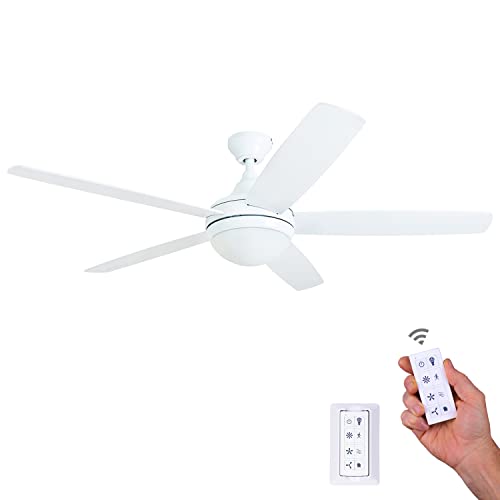
Best Quiet Ceiling Fan For Bedroom 2026 Ultimate Comfort Picks

Best Ceiling Fan For Master Bedroom 2026 With Ultimate Comfort

Best White Ceiling Fan With Light For Bedroom 2026 Top Picks

Best Quorum Medallion Ceiling Fan 2026 With Style & Breeze
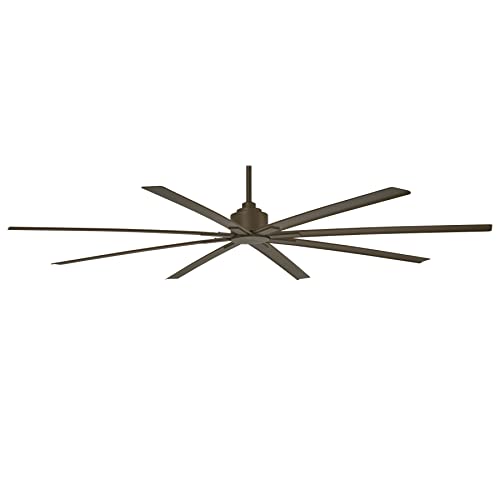
Best Outdoor Fan For Pergola 2026 Comfort Boost

Best Ceiling Fan For Great Room 2026 With Ultimate Comfort

Best Outdoor DC Ceiling Fans 2026 For Breezy Comfort
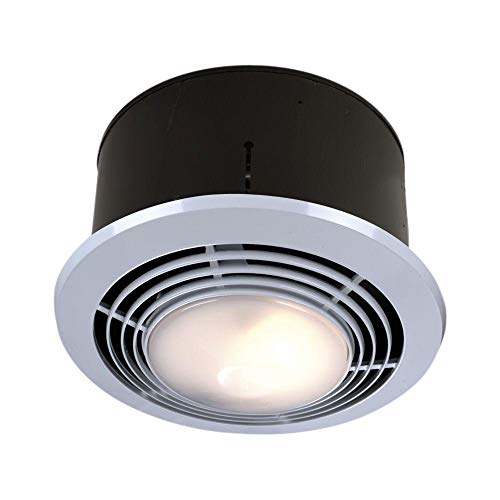
Best ceiling exhaust bath fan with light and heater 2026





