
Best Smallest Desk Fan 2026, Tiny Cooling That Works

Best smallest desk fan shopping sounds simple until the desk starts fighting back. A fan can be cute, cheap, and tiny, yet still rattle like a drawer full of coins or shove papers across the table like it has a personal grudge. Small spaces need steady airflow, not a bulky plastic gadget that steals room from a keyboard, notebook, coffee mug, and half the day’s clutter. So, the real win is a compact fan that cools close-range without turning the workspace into a wind tunnel.
A truly useful mini desk fan earns its spot by staying quiet, stable, and easy to adjust. The footprint matters, sure, but blade design, tilt range, speed control, and grille spacing matter just as much. A fan that only points at one awkward angle gets old fast, especially during long typing sessions or warm afternoons when the air feels stuck. Small shouldn’t mean flimsy, and honestly, that’s where many bargain models fall flat.
USB-powered fans make sense for desks because they can run from a laptop, power bank, docking station, or wall adapter. That flexibility helps in tight bedrooms, shared offices, dorm corners, and plant shelves where outlets never seem to be where they should. Still, a corded model can feel cleaner for all-day use, while a rechargeable one keeps the setup neater and more portable. The better choice depends on whether the fan stays parked or moves from desk to bedside table to kitchen counter.
Noise is the dealbreaker people notice after the first hour, not the first minute. A soft hum can fade into the background, but a high-pitched whine cuts through music, calls, and quiet focus like a mosquito near your ear. The quietest small desk fans usually offer more than one speed, letting airflow stay gentle when the room is only mildly warm. Full blast is useful, but low speed often tells the truth about daily comfort.
Air direction also deserves more attention than it gets. A fan with tilt adjustment can cool the face, hands, laptop area, or a small plant shelf without needing a stack of books underneath it. Clip-on designs save surface space but can wobble on thin shelves, while flat-base fans feel more dependable on a desk. The sweet spot is compact cooling that feels intentional, not like a toy fan pretending to handle real heat.
Build quality shows up in little moments. Rubber feet reduce sliding, a weighted base keeps the fan from tipping, and an easy-clean grille helps when dust starts collecting around the blades. Some tiny fans look sleek online but become annoying once lint and debris gather behind a fixed cover. A practical small personal fan should be easy to wipe down, simple to reposition, and sturdy enough for daily bumps.
Battery life sounds exciting, but expectations need to stay grounded. The smallest rechargeable fans often run much longer on low speed than high speed, and that’s normal. Stronger airflow drains compact batteries faster, so the best setup is usually a balance of portable convenience and realistic cooling distance. For close personal use, a small fan doesn’t need to cool the whole room; it just needs to make the air around you feel less stale.
- LFR Score9.4
LFR Score is a ranking system developed by lightfansreviews.com. LFR Score has no relationship or impact from any manufacturers or sales agent websites. Learn more
- BrandGaiatop

- LFR Score9.4
LFR Score is a ranking system developed by lightfansreviews.com. LFR Score has no relationship or impact from any manufacturers or sales agent websites. Learn more
- BrandSWEETFULL

- LFR Score9.2
LFR Score is a ranking system developed by lightfansreviews.com. LFR Score has no relationship or impact from any manufacturers or sales agent websites. Learn more
- BrandGaiatop

- LFR Score9.2
LFR Score is a ranking system developed by lightfansreviews.com. LFR Score has no relationship or impact from any manufacturers or sales agent websites. Learn more
- BrandTriPole
- LFR Score9.2
LFR Score is a ranking system developed by lightfansreviews.com. LFR Score has no relationship or impact from any manufacturers or sales agent websites. Learn more
- BrandGaiatop

- LFR Score9.2
LFR Score is a ranking system developed by lightfansreviews.com. LFR Score has no relationship or impact from any manufacturers or sales agent websites. Learn more
- BrandHoneywell

- LFR Score9.2
LFR Score is a ranking system developed by lightfansreviews.com. LFR Score has no relationship or impact from any manufacturers or sales agent websites. Learn more
- BrandWHATOOK
- LFR Score9.2
LFR Score is a ranking system developed by lightfansreviews.com. LFR Score has no relationship or impact from any manufacturers or sales agent websites. Learn more
- BrandSWEETFULL
- LFR Score9.2
LFR Score is a ranking system developed by lightfansreviews.com. LFR Score has no relationship or impact from any manufacturers or sales agent websites. Learn more
- BrandGaiatop

- LFR Score9.0
LFR Score is a ranking system developed by lightfansreviews.com. LFR Score has no relationship or impact from any manufacturers or sales agent websites. Learn more
- BrandKoonie

- LFR Score8.8
LFR Score is a ranking system developed by lightfansreviews.com. LFR Score has no relationship or impact from any manufacturers or sales agent websites. Learn more
- BrandAecooly
Last update on 2026-06-13 / Affiliate links / Images, Product Titles, and Product Highlights from Amazon Product Advertising API
Gaiatop Pink USB Desk Fan Review
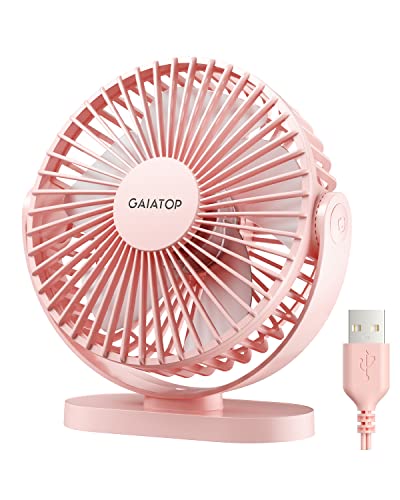
A crowded desk doesn’t need another chunky gadget stealing space from the keyboard, coffee, notebook, and phone charger. This tiny pink fan aims for that narrow sweet spot where best smallest desk fan needs meet real everyday cooling, especially in warm corners where a full-size fan feels like overkill. The Gaiatop model keeps things simple with USB power, three airflow speeds, a 90° rotating head, and a body small enough to move from a desk to a nightstand without making a fuss. It’s not trying to cool a whole room, and honestly, that’s the right expectation for a 5.5-inch personal fan.
Gaiatop USB Desk Fan
The Gaiatop USB Desk Fan feels built around one clear idea: keep cool air close without crowding the surface around it. At 5.5 inches and about 0.6 lb, it has the kind of small footprint that makes sense for a tight office desk, dorm shelf, bedside table, or even a car setup with a USB power source nearby. The pink finish gives it a softer look than the usual black plastic desk fan, which helps if the fan is always visible. For anyone chasing the best smallest desk fan, that blend of size, color, and practical airflow is the main draw.
The first thing worth respecting is the fan’s honesty as a personal cooler. It’s not pretending to replace an air conditioner, and it shouldn’t be judged like a floor fan across the room. The listed max wind speed of 5.3 m/s suggests it’s meant to push noticeable air at close range, especially on high speed. Used on a desk, aimed toward the face, neck, or hands, it should feel more useful than its compact shell might suggest.
The upgraded motor is described as making the wind stronger while keeping noise lower, with a listed range of 30-50 dB. That range matters because desk fans often fail less from weak airflow and more from annoying sound. A soft breeze during typing is one thing; a scratchy whine during calls is another headache entirely. Gaiatop’s quiet-focused design gives it a better shot at fitting into work sessions, sleep routines, and study blocks without becoming the loudest thing in the room.
Airflow Control That Fits Real Desk Life
The three-speed setup gives this fan a practical rhythm instead of a one-note blast. Low speed creates a gentle breeze, which makes sense for sleeping, reading, or working late when too much wind feels distracting. Medium can handle the usual warm-desk problem, the kind where the room isn’t unbearable but the air around the laptop feels stale. High speed is there for quick cooling, especially after coming indoors from summer heat or sitting near a sunny window.
Speed variety matters more on a small fan than people often expect. A tiny fan with only one setting can feel either too weak or too aggressive, with no middle ground. The Gaiatop model avoids that trap by letting the airflow match the moment, whether the goal is quiet background cooling or a faster burst of air. That flexibility makes it easier to keep the fan on the desk instead of constantly unplugging it out of irritation.
The 90° rotation adds another layer of control, and that’s a big deal in cramped spaces. A fixed-angle fan can force awkward stacking, twisting, and repositioning just to get air where it belongs. With this design, the airflow can point toward the face, hands, upper body, or a small bedside area without shifting the whole base. For a personal mini fan, that adjustability keeps the experience from feeling cheap or one-dimensional.
The fan does need the right power source to perform properly. Gaiatop notes that it should be powered by a 5 V / 2 A power supply, which is worth paying attention to because weak USB ports can limit performance. A laptop port, power bank, USB socket, wall charger, or car charger may work, but the wall charger itself isn’t included. That’s not a dealbreaker, though it does mean the setup depends on what power accessories are already around.
Small Build, Stable Base, And Easier Cleaning
Small fans can be surprisingly annoying when they slide around, buzz against the desk, or walk sideways from their own vibration. Gaiatop addresses that with silicone pads in four positions on the base, helping the fan stay put during use. That detail sounds minor until a fan starts creeping across a smooth desktop during a long work session. A stable base makes the whole thing feel less toy-like and more suited for daily use.
The detachable cover is another practical point, especially for a fan that may sit near keyboards, windowsills, fabric surfaces, or travel bags. Dust builds up on blades faster than most people want to admit. A removable cover makes fan cleaning less of a chore, which matters because dirty blades can make airflow feel weaker and the fan look neglected. This is the kind of feature that doesn’t sound flashy, but it keeps the product useful longer.
The 5-foot cord gives the fan more freedom than short-cord USB models. A little extra reach helps on desks where the laptop sits on one side, the outlet is behind furniture, or the power bank is tucked away. The fan can move around the desk without dragging everything with it, which helps protect that neat little setup people fight to maintain. For compact desk cooling, cord length can be the difference between convenient and constantly awkward.
The lightweight body makes it easy to move, but that also comes with a realistic tradeoff. At 0.6 lb, the fan shouldn’t be treated like a heavy-duty shop fan or left where it can get knocked around carelessly. It’s better suited for close personal airflow, travel bags, camping tables, baseball games, bedrooms, offices, and car use where gentle handling is normal. That makes the Gaiatop fan practical, not rugged in the bulky outdoor-gear sense.
Where This Fan Makes The Most Sense
The strongest fit is a small personal zone where air needs to move just a little better. A warm office corner, a stuffy bedroom, a nightstand beside a bed, or a crowded desktop can benefit from this fan’s portable size and USB-powered setup. The compact shape also helps during travel, especially where summer heat turns waiting areas, hotel desks, or parked-car breaks into sweaty little battles. It slips into routines without asking for much space.
Home office use may be the most natural match. Warm laptops, desk lamps, poor airflow, and long sitting sessions can make a workspace feel uncomfortable even when the rest of the room is fine. The Gaiatop fan gives close-range air without blasting papers, drying eyes too aggressively, or eating up the whole surface. That’s exactly where a best smallest desk fan earns its keep.
Bedroom use also makes sense, mostly because of the lower-speed setting and quiet-focused motor. A gentle breeze near the bed can make humid nights feel less sticky without turning the room into a noisy wind zone. Still, sleepers sensitive to sound should remember the fan has a listed 30-50 dB noise range, so high speed may be more noticeable than low. The smart move is using low speed for nighttime comfort and saving high speed for quick daytime cooling.
The provided URL points to the product source, while a separate warm-climate cooling reference can sit naturally in outdoor ceiling fans for larger spaces that need overhead airflow rather than close-range desk cooling. That distinction matters because this Gaiatop fan is built for personal comfort, not patio-wide air movement. It belongs near the body, close enough for the airflow to feel direct. Pushing it beyond that role would only make expectations unfair.
Strengths, Tradeoffs, And Daily Expectations
The biggest strength is how many everyday annoyances the fan tries to solve at once. It’s small, USB powered, adjustable, and easy to clean, which covers the common problems that make mini fans frustrating. The three speeds give enough control for different moods and temperatures, while the silicone-padded base helps reduce sliding. For a desk fan this small, those details carry more weight than fancy extras.
The tradeoffs are pretty clear, though. The fan needs USB power, and no wall charger is included, so it’s not a true grab-and-go rechargeable model. It also isn’t designed to cool a room, a large patio, or a wide shared space. Anyone expecting a tiny fan to act like a tower fan will feel let down, but anyone needing close personal airflow will understand the point quickly.
The pink design may be a plus or a mismatch depending on the setup. Some desks benefit from a softer, brighter accessory, while others may call for something more neutral. That’s not a performance flaw, but it does affect how comfortably the fan fits into an office, bedroom, or travel kit. A small item that stays visible every day should match the space well enough that it doesn’t become visual clutter.
Gaiatop’s fan makes the most sense as a practical companion for focused cooling. It helps during warm work sessions, stuffy sleeping conditions, travel downtime, car breaks, and small indoor spaces where airflow feels trapped. The detachable cover, 5-foot cord, three-speed airflow, and stable base keep it from feeling like a disposable novelty. For the best smallest desk fan category, this model lands as a sensible little tool with clear limits and a surprisingly useful feature set.
SWEETFULL 5 Inch USB Desk Fan Review
Small desks have a funny way of exposing every bad design choice. A fan that takes up too much room, hums too sharply, or only points in one stiff direction can turn quick cooling into one more daily annoyance. The SWEETFULL 5 Inch USB Desk Fan steps into the best smallest desk fan category with a compact body, quiet brushless motor, four speed levels, and a 360° adjustable head that makes close-range cooling feel less fussy. It’s clearly made for personal comfort, not whole-room airflow, and that honesty works in its favor.
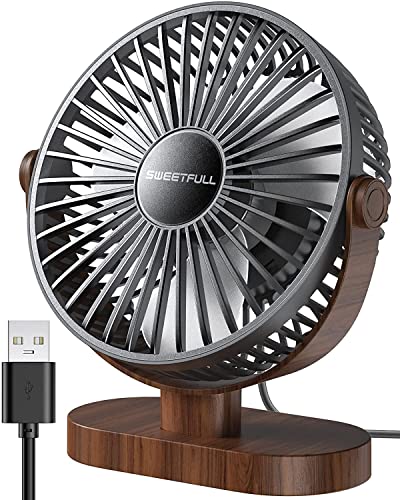
SWEETFULL 5 Inch USB Desk Fan
The SWEETFULL fan keeps its footprint tight without looking too fragile on a real desk. Its listed size of 5.67×2.60×6.06 inches gives it enough height to aim air where it matters, while the narrow base helps it fit beside a keyboard, monitor stand, planner, or bedside lamp. At only 0.61 lb, it’s easy to move from a desk to a nightstand or tuck into a bag for travel. That kind of portability makes sense for warm bedrooms, cruise cabins, shared offices, and small corners where airflow gets trapped.
The black finish also helps it blend into practical spaces instead of shouting for attention. Some mini fans lean heavily into cute styling, but this one feels more like a simple desktop tool. That matters when the fan sits in view all day, especially beside electronics or a clean workstation. The overall design feels focused on personal cooling rather than decoration, which suits the product well.
The 7 curved fan blades give the airflow a softer character on lower speeds, based on the provided description. That’s useful because a tiny fan with harsh wind can feel tiring after a while, especially near the face or hands. The brushless motor is also tied to quieter operation, with noise levels listed as low as 25 dB. For work, reading, studying, or a short nap, that quiet-first approach is a meaningful strength.
Four Speeds Give The Fan Better Range
Four speed settings make this fan feel more flexible than many basic USB models. Low speed can create a soft breeze for close desk use, while higher settings push stronger airflow for quick relief during hot afternoons. The listed maximum wind speed of 5.2 m/s gives the fan enough punch for a compact personal cooler. It won’t cool an entire room, but it can make the air right around a desk feel less stale.
The simple button control keeps the fan from becoming another gadget with a learning curve. Tap, adjust, settle in. That’s the kind of plain usefulness that matters during a busy workday or while packing for a trip. A mini USB fan should be easy to control without digging through menus or dealing with tiny remote parts that disappear under the couch.
The extra speed level also helps with comfort over time. Two-speed fans can feel too limited, with one setting barely noticeable and the other a bit too much. SWEETFULL’s four options give more room to dial things in, whether the moment calls for a gentle air wash or stronger cooling. That range makes the fan easier to live with during long stretches at a desk or beside the bed.
There’s still a sensible limit here. High speed may move more air, but close-range airflow can become too direct if the fan sits inches from the face. A better setup is placing it slightly off to the side, then letting the adjustable tilt guide the breeze across the body instead of straight into the eyes. Small comfort tweaks like that can make this fan feel more polished in daily use.
USB Power Keeps It Practical But Not Cordless
The SWEETFULL fan runs through USB, which is convenient in places already packed with charging points. It can work with USB chargers, computer ports, power banks, and car chargers, so it fits into home desks, travel bags, offices, and vehicle setups with little drama. The 4.9 ft cable gives enough reach for most small workspaces without forcing the fan to sit right beside the power source. That cable length is especially helpful on nightstands or desks where outlets are tucked behind furniture.
No built-in battery is included, and that’s worth saying plainly. This fan is portable in size, not cordless in operation. That tradeoff may actually suit people who don’t want to remember another device battery, but it does mean the fan needs a USB power source every time. For travel, a power bank can fill that gap, but the fan won’t run on its own inside a bag or away from power.
USB power also keeps the product simple and lightweight. Batteries add weight, charging cycles, and long-term aging concerns, while a plug-in setup tends to stay predictable. For desk use, that’s not a bad compromise at all. The lightweight build makes more sense when the fan is expected to move between rooms, hotel spaces, cruise cabins, and work surfaces.
The energy-efficient design noted in the product details fits the fan’s role as a small personal appliance. It isn’t trying to pull heavy power or run a large motor. Instead, it leans on close placement, a compact blade system, and adjustable airflow to create comfort in a tight zone. That’s the lane where a best smallest desk fan should stay.
Adjustability And Cleaning Make Daily Use Easier
The 360° adjustable head is one of the standout practical details. A fan this small becomes far more useful when it can aim upward, downward, or across a desk without moving the whole base. Sitting, lying down, reading in bed, or working at a laptop all call for slightly different airflow angles. The 360° tilt range gives the fan enough freedom to handle those shifts without a clumsy setup.
That adjustability also helps in awkward spaces. Cruise cabins, dorm rooms, compact bedrooms, and packed desks rarely offer the perfect fan position. A fixed head can force the whole fan into a weird spot just to catch a breeze. SWEETFULL’s rotating head makes it easier to keep the base stable while sending air where it actually helps.
The detachable rear cover gives the fan a maintenance advantage over sealed mini models. Dust collects on fan blades, especially around desks, bedding, travel bags, and shelves. Being able to access the blades and interior helps preserve cleaner airflow over time. It also makes the fan feel less disposable, since cleaning isn’t treated like an afterthought.
Cleaning access matters more than it sounds. A dusty fan can look rough, smell stale, and lose some of that crisp airflow people bought it for in the first place. The removable cover makes regular upkeep easier, even for someone who doesn’t want another complicated chore. For a small fan meant to sit close to the face, easy cleaning is a quiet but valuable feature.
Best Fit, Limits, And Realistic Cooling
The SWEETFULL fan fits best where personal airflow matters more than room coverage. A desk corner, bedside table, office cubicle, cruise cabin, or travel setup can benefit from the compact size and quiet operation. It’s the kind of fan that helps during sticky afternoons, warm laptop sessions, or stuffy sleeping conditions. Used close by, it can make a small zone feel noticeably more comfortable.
The main limitation is simple: this isn’t a cordless fan, and it isn’t meant for large-space cooling. Anyone expecting it to replace a tower fan or push air across a room will probably ask too much of it. Its real value comes from close placement and careful angle adjustment. In that role, the USB-powered design feels sensible rather than limiting.
The quiet rating as low as 25 dB gives it a strong case for calmer environments, though actual sound can change by speed and placement. A fan on a hard desk surface may sound different than one on a padded nightstand or shelf. Lower speeds should be the better match for sleep, calls, and focused work, while higher speeds belong to quick cooling moments. That’s a normal tradeoff for a small fan with multiple airflow levels.
The product details mention gift use for friends and family, but the more convincing angle is everyday practicality. This fan solves a specific discomfort without demanding much space, much power, or much attention. The four-speed airflow, 360° adjustment, detachable cover, and compact frame all support the same goal: personal cooling that stays tidy and manageable. For the best smallest desk fan search, SWEETFULL’s 5-inch model makes sense for tight spaces where quiet, adjustable air matters more than brute force.
Gaiatop 5 Inch Air Circulator Fan Review
Desk heat can be sneaky. It starts with a warm laptop, a stale corner, or a small room where the air just sits there, and suddenly a full-size fan feels too clunky for the job. The Gaiatop 5 Inch Air Circulator Fan lands in the best smallest desk fan space with a compact AC-powered build, 360° adjustable tilt, three manual speeds, and a stronger airflow setup than its little frame suggests. It’s built less like a cute travel gadget and more like a tiny air mover meant to stay plugged in and earn its spot.
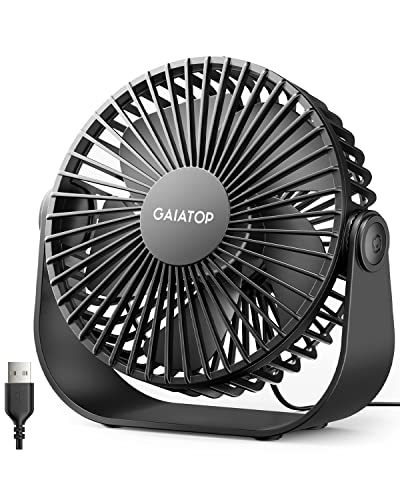
Gaiatop 5 Inch Air Circulator Fan
The first thing that separates this Gaiatop fan from many tiny desk fans is its power setup. Instead of relying on USB, it uses an AC plug with a 4.92 ft undetachable cable, which gives it a more fixed, appliance-like personality. That can be a plus on a desk, kitchen counter, bedroom shelf, or office corner where the fan stays in one place most days. It’s not the grab-a-power-bank type, but it doesn’t need a laptop port or USB adapter to get moving.
The listed size of 5.59*5.65*4.33 inches keeps it genuinely compact, while the 0.73 lb weight gives it a little more presence than featherlight mini fans. That small bump in weight may help it feel steadier during higher-speed use. For a fan that claims stronger airflow and air circulation, the body still stays easy to fit on a crowded surface. A small desk fan has to respect space first, and this one seems aware of that job.
The black finish keeps the look plain and practical. No flashy styling, no toy-like shape, just a compact little air circulator that can sit near a monitor, sink, nightstand, or bathroom counter without making the space look messy. That matters more than it sounds because desk accessories become part of the room’s visual rhythm. A fan this small should fade in while still doing useful work.
Airflow That Feels Bigger Than The Frame
Gaiatop describes this model with deep-pitched blades and an aerodynamic design meant to push air and help circulate cooler airflow. That gives it a different angle from a simple face-only mini fan. The goal appears to be stronger air movement across a small area, not just a soft breeze a few inches from the grille. For the best smallest desk fan category, that matters because tiny fans often look convenient but feel underpowered.
The max wind speed is listed at 6.2 m/s, which is stronger than many small desktop fans in the same general size range. That figure should still be understood as close-range performance, not whole-house cooling. Used nearby, it can help cut through warm desk air, muggy bedroom corners, or kitchen heat that gathers around counters. Pushed too far across a large room, though, expectations need to stay grounded.
The three manual speeds give the fan a simple but useful range. Low speed can work for steady background airflow, medium can handle routine warmth, and high speed gives a quicker burst when the room feels stuffy. Manual controls also keep things straightforward, which is handy when the fan sits in a work area where nobody wants extra fiddling. A three-speed cooling fan doesn’t need to feel complicated to feel useful.
The air circulator design also makes sense in rooms where airflow gets boxed in. Bathrooms after a shower, kitchens during cooking, bedrooms with closed doors, or offices with poor ventilation can all feel stale fast. This fan can help move air around that small zone without taking over the counter or desk. It won’t replace central cooling, but it can make a tight spot feel less trapped.
Quiet Operation And Daily Comfort
Noise can ruin a desk fan faster than weak airflow. Gaiatop lists the noise level at 30 dB, paired with an upgraded motor designed for smoother airflow. That matters for work calls, reading, sleep, and quiet kitchen mornings where a buzzing fan would get old fast. A fan that moves air without drawing attention to itself is easier to leave running for longer stretches.
The quiet claim pairs well with the fan’s compact size because close placement makes sound more noticeable. A fan sitting beside a keyboard or bed doesn’t have much distance to hide motor noise. If the motor stays smooth, the whole experience feels calmer and less mechanical. That gives the Gaiatop a practical edge for working and resting environments.
High speed may still be more noticeable than low speed, and that’s normal for a small fan with stronger airflow. The better everyday rhythm is using lower speeds for focus or sleep, then bumping it up when quick cooling matters. That kind of speed discipline keeps the fan from becoming tiring. Small fans work best when treated like personal comfort tools, not brute-force cooling machines.
The AC-powered design also helps avoid one common annoyance: battery anxiety. There’s no waiting for a recharge, no guessing how much runtime is left, and no gradual fade as a battery drains. The tradeoff is obvious, though. This plug-in desk fan needs an outlet nearby, so it’s better for fixed spaces than outdoor travel setups without easy power.
Adjustable Tilt, Stable Pads, And Cleaning Access
The 360° adjustable tilt gives the fan real placement freedom. A small air circulator can sit low on a desk and still aim upward, or sit on a shelf and angle downward toward a bed or chair. That range matters because tight rooms rarely offer the perfect surface at the perfect height. Adjustability lets the fan work around the room instead of forcing the room to work around the fan.
The four rubber pads are a small but welcome detail. A lightweight fan can slide, buzz, or creep across a smooth surface if the base doesn’t grip well. Rubber padding helps reduce vibration and keeps the fan planted during use. For a compact air circulator, stability is part of comfort because nobody wants to keep nudging the fan back into place.
The detachable front cover makes cleaning less annoying. Dust, kitchen residue, bathroom humidity, and bedroom lint can collect on fan blades over time. Being able to remove the cover and wipe the blades and grille helps maintain cleaner airflow. A small fan sits close to the face more often than a large room fan, so easy cleaning carries real value.
Maintenance also affects how long the fan feels pleasant to use. A dusty grille can make airflow feel dull, and dirty blades can make a fan look older than it is. Gaiatop’s removable cover gives the owner a realistic way to keep the fan from becoming a neglected corner gadget. That’s a practical feature, not a flashy one, and those are often the ones that matter most after a few weeks.
Energy Use And Best-Fit Spaces
The rated input is listed as 120V 6.8 Watts, which fits the fan’s small-scale cooling role. It’s meant to move air efficiently in a personal zone or smaller room area rather than carry the load of a large appliance. Gaiatop also frames it as helpful when paired with other appliances to move airflow faster. That makes sense in a room where air conditioning or another fan needs a little help pushing cool air around.
The fan’s best spaces are practical and varied: office desk, bedroom, kitchen, living room, bathroom, and dorm. The kitchen angle is especially believable because a compact fan can sit on a counter without blocking prep space. A bedroom or dorm setup benefits from the low-noise design and small footprint. The small but powerful fan idea feels most convincing in these close-range, daily-use spots.
The provided internal reference is more about wobble and larger ceiling-fan behavior, but airflow problems can show up in many fan types, and a neutral maintenance note fits naturally in wobbly ceiling fan video for readers thinking beyond desktop cooling. This Gaiatop model stays in a different lane, focused on compact air movement and close comfort. That distinction keeps expectations clean. A tiny plug-in circulator should solve small-space heat, not pretend to handle every cooling problem in the house.
The biggest limitation is portability away from outlets. The fan is compact enough to move room to room, but the AC plug makes it less flexible for cars, camping tables without power, or travel bags compared with USB or battery models. Still, that same plug-in design may appeal to anyone tired of weak ports or drained batteries. For the best smallest desk fan search, this Gaiatop fan feels like a sensible pick for steady indoor use where strong airflow, simple controls, and a tiny footprint matter most.
TriPole USB Mini Desk Fan Review
Cluttered work corners don’t leave much room for comfort gear. A fan has to sit between cables, notebooks, chargers, and half-finished coffee without becoming the biggest object on the desk. The TriPole USB Mini Desk Fan fits the best smallest desk fan idea with a 4.5-inch diameter, three speed modes, 360° up-and-down rotation, and a USB-powered setup that makes sense for everyday close-range cooling. It’s a tiny plug-in fan with a simple job: move air where the body actually feels it.
TriPole USB Mini Desk Fan
The TriPole fan feels built for tight surfaces first. Its 4.5-inch diameter keeps the footprint smaller than many personal desk fans, which helps on nightstands, office desks, dorm shelves, and travel tables where every inch gets claimed fast. The black finish keeps it low-key, so it doesn’t fight with monitors, speakers, or other desk gear. For a mini personal fan, that quiet visual presence is a plus.
The size also makes it easier to pack for trips without treating it like a fragile appliance. A fan that can slip into a bag yet still sit firmly on a table hits a useful middle ground. It’s not cordless, so it still needs USB power, but the body itself doesn’t feel like a burden. That portability supports the best smallest desk fan search better than a bulky fan with travel claims it can’t really back up.
The 4.9 ft cable helps solve a small but familiar problem: outlets and USB ports are rarely exactly where the fan needs to sit. A short cord can force awkward placement, especially beside a bed or across a desk with a monitor stand. This longer cable gives the fan more freedom without needing an extension cable right away. That matters in real rooms, not just tidy product photos.
Three Speeds And Close-Range Cooling
The three speed modes give the TriPole fan enough range for different levels of heat. Low speed can keep air moving gently during work or reading, while the higher settings create a stronger breeze for quick relief. The control button sits on the back, keeping the front clean and simple. A three-speed airflow setup is practical for a fan this small because comfort changes throughout the day.
Close-range cooling is where this model makes the most sense. A 4.5-inch fan shouldn’t be expected to cool a whole room or push air across a wide space. Set near the face, neck, hands, or beside a laptop, though, it can help break up that sticky pocket of warm air that builds around a desk. The value is in personal airflow, not room-wide force.
The higher speed depends on proper USB power, and TriPole calls that out directly. The fan needs 0.8A current while working, and if the third speed doesn’t run, a 5V/1A USB charger may be needed for testing. That note is useful because weak USB ports can make a small fan seem worse than it really is. Power quality matters, especially with compact USB appliances.
This fan is also easy to understand without a manual-heavy routine. Plug it in, press the rear button, and pick the airflow level that feels right. No battery app, no remote, no extra charging schedule. For someone who just wants a small plug-in desk fan that behaves predictably, that simplicity is part of the appeal.
USB Power Makes Travel Less Complicated
The USB-A power setup gives this fan a travel-friendly edge. It can plug into a USB charger, computer, power bank, or similar power source, which helps at home, in an office, or while traveling overseas. TriPole notes that the USB design avoids voltage-difference worries during international travel. That’s a practical perk for a portable table fan that may move between hotels, desks, and shared spaces.
No built-in battery is included, so the fan isn’t cordless. That’s the tradeoff. It stays lightweight and simple, but it can’t run unless it’s connected to power. For desk use, a power bank or USB charger solves that neatly, though outdoor use still depends on having a reliable power source nearby.
The USB design may actually be better for steady desk routines than a rechargeable battery. There’s no waiting for a charge or watching airflow drop as the battery drains. The fan either has enough power or it doesn’t, which keeps expectations cleaner. That kind of steady USB operation suits a fan meant for work sessions, bedside use, and travel lodging.
The longer cable gives the USB setup more breathing room. A 4.9 ft cord can reach from a desktop tower, wall charger, or power strip without forcing the fan into an awkward corner. In tight spaces, a few extra feet can make the difference between airflow landing on the face and airflow hitting a stack of books. Small design choices like this decide whether a mini fan becomes useful or annoying.
Stable Base And 360° Rotation
A small fan can be strong enough and still fail if it tips, buzzes, or wanders across the desk. TriPole uses a wide fan base with four silicone pads underneath to help keep the fan firm during use. Those pads also help reduce vibration and noise, which matters when the fan sits inches from a keyboard or bed. Stability is one of those boring details that feels very important once it’s missing.
The 360° up-and-down rotation makes the fan easier to aim in cramped spots. A fan sitting low on a desk can point upward toward the face, while a fan on a shelf can angle down toward a bed or chair. That flexibility helps the airflow feel intentional instead of random. For adjustable desk cooling, the rotating head gives this small fan more range than its size suggests.
The ability to direct air toward the face is useful, but it should be handled with a little common sense. A direct stream can feel refreshing for a few minutes, then become too much during long work blocks. Angling the breeze slightly across the body can feel more comfortable, especially on higher speed. That’s where the 360° rotation earns its keep.
The wide base also helps balance the rotating head. Some small fans get top-heavy when tilted sharply, especially if the base is too narrow. TriPole’s base design appears aimed at keeping the fan planted while the airflow angle changes. That makes the fan feel more practical for real use, not just quick bursts on a perfectly flat desk.
Cleaning, Limits, And Everyday Fit
The detachable cover is a useful maintenance feature, especially for a fan that may travel or sit near dusty electronics. Regular cleaning of the fan mask and blades helps reduce dirt buildup and keeps the breeze feeling fresher. Dusty blades can make a fan look tired and may dull the airflow over time. A detachable fan cover makes cleanup less of a hassle.
The best-fit spaces are easy to picture: desktop, bedroom, office table, nightstand, travel room, or any small spot with USB power nearby. It’s not the fan for cooling a garage, patio, or large living room. It’s the fan for that warm pocket of air right around the body, the one that makes typing, reading, or sleeping feel a little sticky. In that lane, the compact size and simple speed control make sense.
The internal reference points toward lighting rather than desk airflow, yet ceiling fixtures and small comfort gear often overlap in rooms where heat and visibility both shape comfort; a neutral related note can sit naturally in brightest ceiling fan light without pretending it replaces this mini fan’s role. TriPole’s fan stays focused on close personal air movement. That separation matters because a desk fan and a ceiling fan solve different comfort problems. One cools the immediate workspace, while the other changes the feel of the whole room.
The main drawbacks are tied to power and scale. The fan needs enough USB current to run properly, especially on third speed, and it has no built-in battery for cordless use. Its compact frame also means airflow should be judged from close range, not across a room. Still, for the best smallest desk fan category, the TriPole USB Mini Desk Fan brings a sensible mix of size, stability, adjustability, and no-nonsense operation.
Gaiatop Blue USB Desk Fan Review
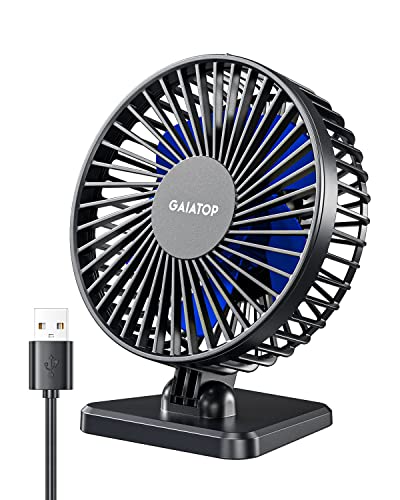
A tiny fan can make or break a cramped setup faster than expected. Too weak, and it becomes desk clutter with blades; too loud, and it turns every quiet work block into a low-grade headache. The Gaiatop Blue USB Desk Fan fits the best smallest desk fan lane with a compact body, USB-powered operation, three speed settings, and a vertically adjustable head for close personal cooling. It’s clearly meant for small spaces where airflow needs to stay simple, portable, and easy to control.
Gaiatop Blue USB Desk Fan
The Gaiatop Blue USB Desk Fan has the kind of small, straightforward design that feels made for everyday surfaces. Its body is listed as less than 8 ounces, so it won’t feel like a heavy appliance taking over the desk. That lightweight build helps it move from home office to car, bedroom, travel bag, or small shelf without much thought. For the best smallest desk fan search, that easy portability is one of its clearest strengths.
The classic shape also works in its favor. Some mini fans try too hard with odd styling, but this one keeps the look familiar and practical. The blue color adds a bit of personality without making the fan feel childish or distracting. On a crowded desk, that balance between compact size and simple appearance matters more than flashy design.
The biggest expectation to keep in mind is range. This isn’t built to cool a whole room or replace a larger circulator. It’s a personal fan for close airflow, the kind that helps with warm hands, sticky desk air, or a stuffy corner near a laptop. Judged in that role, the small desktop fan design makes much more sense.
Three Speeds Keep Cooling Simple
The three-speed setup gives the fan a useful range without overcomplicating the controls. Low, medium, and high settings cover the usual comfort shifts during the day, from a soft breeze during quiet work to stronger airflow when the room starts feeling muggy. The speed changes are handled by pressing the power button repeatedly, which keeps operation direct and fuss-free. A three-speed fan should be easy to adjust without stealing focus from the task in front of you.
Low speed is the setting that probably matters most for long sessions. A gentle airflow can keep the space around the face and hands more comfortable without making papers flutter or drying out the eyes too quickly. Medium gives a bit more push for warm afternoons, while high speed is better for quick cooling. That kind of personal airflow control makes a tiny fan feel more useful over time.
The product details describe the fan as strong while keeping noise under 50 dB even with stronger wind. That’s helpful information because sound is usually where small fans either win trust or lose it fast. A fan can move decent air, sure, but if it whines on the desk, it becomes annoying within minutes. The quieter design supports work, rest, and close-up use better than a loud mini fan would.
There’s still a practical tradeoff with speed and sound. Higher airflow usually means more noticeable noise, even on a small fan. The better everyday move is using low or medium during focused work, then turning to high only when quick cooling matters. That keeps the quiet operation promise closer to what people actually need.
USB Power Fits Modern Small Spaces
The USB-powered design makes this fan flexible around the places people already charge devices. It can work with PCs, laptops, mobile power supplies, AC adapters, car chargers, and other USB-supported power sources. That makes it easier to use at a desk, in a car, near a bed, or while traveling. For a compact fan, power flexibility often matters as much as airflow.
USB compatibility also helps in travel situations where outlets aren’t always convenient. A power bank can keep the fan useful in a hotel room, car stop, campsite table, or shared workspace. Still, this is not described as a built-in rechargeable fan, so it needs a connected power source while running. That’s a fair limitation for a USB desk fan, but it’s worth knowing before packing it as a cordless cooling tool.
The lack of battery can be a benefit in its own quiet way. There’s no charging schedule to remember, no battery aging concern, and no weak airflow as stored power runs down. Plug it into a suitable USB source, and it does its job. That straightforward setup suits a portable mini fan that’s meant to be used often rather than babied.
The fan’s compact build also pairs naturally with USB power. A large fan needs stronger placement planning, but a small USB model can slip into odd corners where a bigger appliance would feel silly. Desk edges, car cup-adjacent spaces, nightstands, and small shelves are all more realistic fits. That gives the Gaiatop fan a useful role in places where comfort matters but space is tight.
Adjustable Wind Helps Aim The Breeze
The fan head rotates vertically from 0 to 30 degrees, giving some control over where the breeze lands. That adjustment range is smaller than full 360° tilt designs, but it still helps with basic desk and tabletop positioning. A fixed mini fan can be frustrating because the airflow often hits the wrong spot. This model at least lets the breeze angle upward or downward enough for close-range cooling.
That 30-degree adjustment works best when the fan sits near the body. On a desk, it can point toward the face, neck, or hands without needing a stack of books underneath it. On a nightstand, it can angle toward the pillow area instead of blowing straight across the table. For a small personal fan, even modest angle control can improve comfort noticeably.
The limitation is obvious, though. Anyone needing wide-angle positioning, overhead airflow, or directional cooling from odd shelf heights may want more tilt range. This Gaiatop model is better for simple setups where the fan sits close and the airflow only needs minor adjustment. That’s not a flaw as much as a realistic boundary for a compact USB fan.
The small frame also means placement does a lot of the work. Put it too far away, and the benefit fades. Put it near the keyboard, bedside, or car workspace, and the breeze becomes much more useful. Tiny fans are all about distance, angle, and expectation.
Everyday Strengths And Honest Limits
The main strength is convenience. The fan is light, compact, USB compatible, and simple to control, which makes it easy to keep within arm’s reach. It doesn’t ask for much room, and it doesn’t require a complicated setup. That combination gives it a real place among best smallest desk fan options for small desks, cars, offices, and travel use.
The quiet operation claim under 50 dB also supports its daily comfort role. A fan this small usually sits close, so lower noise matters more than it would with a floor fan across the room. During work or rest, a less intrusive sound profile helps the fan fade into the background. That’s where quiet personal cooling becomes more valuable than raw power.
The provided internal reference belongs to a different fan category, yet airflow choices often overlap across rooms, and a broader ceiling-fan note can sit naturally in 4 blade ceiling fan for spaces that need wider overhead circulation. This Gaiatop model stays focused on close, portable airflow instead. That distinction keeps expectations clean. A small USB desk fan helps the person nearby, while a ceiling fan changes the feel of the room.
The biggest drawbacks come from scale and adjustment range. It’s not a room cooler, not a cordless model based on the provided details, and not a full-angle air circulator. Still, its small size, USB compatibility, three speeds, quieter operation, and basic tilt control give it a practical identity. For a desk, car, travel setup, or bedside spot where space is tight, the Gaiatop Blue USB Desk Fan makes sense as a compact cooling helper with clear limits.

Best Quiet Ceiling Fan For Bedroom 2026 Ultimate Comfort Picks

Best Ceiling Fan For Master Bedroom 2026 With Ultimate Comfort

Best White Ceiling Fan With Light For Bedroom 2026 Top Picks

Best Quorum Medallion Ceiling Fan 2026 With Style & Breeze
Best Outdoor Fan For Pergola 2026 Comfort Boost

Best Ceiling Fan For Great Room 2026 With Ultimate Comfort

Best Outdoor DC Ceiling Fans 2026 For Breezy Comfort
Best ceiling exhaust bath fan with light and heater 2026





