
Best Smart Light Bulbs Apple HomeKit 2026 Picks

Best smart light bulbs apple homekit setups can feel oddly simple on the surface, yet the wrong bulb turns a cozy room into a tiny tech headache. A light that drops offline, ignores Siri, or resets after a power blink gets old fast. The real win isn’t just color, either. It’s stable Home app control, quick response, and lighting that fits daily habits without making the room feel like a gadget demo.
Apple HomeKit lighting makes the most sense when the bulb behaves like part of the home instead of another app to babysit. A good bulb should dim smoothly for dinner, shift warmer at night, and still turn on from the wall without drama. Some models lean on Wi-Fi and keep setup familiar, while others use Thread or Matter support for a cleaner smart-home backbone. That difference matters most in apartments with crowded routers or homes where every family member expects the lights to just listen.
Color quality deserves more attention than flashy rainbow modes. Cheap color bulbs can make reds look muddy, whites feel greenish, and low dimming levels flicker in a way that ruins the mood. Better bulbs hold a warmer white for bedrooms, a brighter neutral tone for kitchens, and softer evening scenes that don’t blast tired eyes. Still, not every room needs full color, and plain tunable white can be the smarter buy for hallways, closets, and desk lamps.
Setup reliability separates the keepers from the drawer clutter. HomeKit pairing codes, hub requirements, router bands, and firmware updates can turn a five-minute install into a little circus. Bulbs that support Apple Home directly or through Matter usually feel cleaner inside the Home app, especially for scenes, automations, and Siri commands. Still, a bridge-based system can be worth it if the lighting plan includes several rooms, wall switches, motion sensors, or outdoor zones.
Best smart light bulbs apple homekit choices also depend on how the room is actually used. A nursery needs gentle dimming and quiet predictability, not party effects. A kitchen needs bright, crisp whites that make prep work easier without making countertops look sterile. A living room benefits from richer color and scene control, but only if the bulb stays responsive when the Wi-Fi is busy.
Price can be sneaky here. A cheaper bulb looks fine until it needs constant reconnecting, lacks decent warm white, or forces another app for basic control. Pricier bulbs usually bring better color tuning, stronger ecosystem support, and steadier firmware updates, though they’re not automatically the right fit for every socket. The sweet spot is a bulb that matches the room’s job, plays nicely with Apple Home, and doesn’t demand attention after the first week.

- LFR Score9.4
LFR Score is a ranking system developed by lightfansreviews.com. LFR Score has no relationship or impact from any manufacturers or sales agent websites. Learn more
- BrandPhilips Hue

- LFR Score8.8
LFR Score is a ranking system developed by lightfansreviews.com. LFR Score has no relationship or impact from any manufacturers or sales agent websites. Learn more
- BrandOREiN

- LFR Score8.6
LFR Score is a ranking system developed by lightfansreviews.com. LFR Score has no relationship or impact from any manufacturers or sales agent websites. Learn more
- BrandLinkind

- LFR Score8.4
LFR Score is a ranking system developed by lightfansreviews.com. LFR Score has no relationship or impact from any manufacturers or sales agent websites. Learn more
- BrandTapo
- LFR Score8.4
LFR Score is a ranking system developed by lightfansreviews.com. LFR Score has no relationship or impact from any manufacturers or sales agent websites. Learn more
- Brandmeross

- LFR Score8.4
LFR Score is a ranking system developed by lightfansreviews.com. LFR Score has no relationship or impact from any manufacturers or sales agent websites. Learn more
- BrandTapo
Last update on 2026-06-15 / Affiliate links / Images, Product Titles, and Product Highlights from Amazon Product Advertising API
Philips Hue White And Color Ambiance A19 3 Pack
Few things derail the promise of a smart home faster than lights that ignore commands or demand constant troubleshooting. The appeal of the best smart light bulbs apple homekit category isn't flashy colors alone. Reliability, predictable automation, and lighting that blends into everyday routines matter far more after the novelty fades. Philips Hue has built its reputation around that idea, and this three-pack aims to strike a balance between flexibility and simplicity without overwhelming the experience.
Hue Ambiance A19
Simple setup stands out immediately. Bluetooth support allows these bulbs to work without requiring a separate hub right away, which removes one of the biggest barriers people often face with smart lighting. Pairing through the Hue Bluetooth app feels approachable rather than intimidating. Even those who usually dread app-based installations may appreciate the Certified for Humans philosophy behind the product.
There's a practical side to that convenience. Adding up to ten bulbs through Bluetooth means smaller apartments, bedrooms, or living spaces don't necessarily need additional hardware from day one. The system grows alongside changing needs instead of demanding a larger investment upfront. That flexibility gives these bulbs an advantage over ecosystems that insist on all-or-nothing commitments.
Apple HomeKit enthusiasts often prioritize consistency over experimentation. While HomeKit integration reaches its full potential through the Hue Bridge, the transition feels seamless for households already invested in Hue products. Existing users won't encounter awkward compatibility gaps or fragmented controls that interrupt established routines.
Lighting Quality And Everyday Atmosphere
Sixteen million colors can sound like marketing fluff until daily situations put them to work. Soft amber tones during movie nights create a calmer environment, while cooler daylight shades can sharpen focus during busy mornings. The bulbs don't merely cycle through novelty effects. They offer subtle adjustments that influence how a room feels throughout the day.
White ambiance versatility deserves equal attention. With access to approximately 50,000 shades spanning warm white through cool daylight, these bulbs adapt naturally to shifting activities. Reading under cooler temperatures feels different from winding down beneath warmer hues. Small adjustments often have an outsized impact on comfort without drawing attention to themselves.
Party settings receive plenty of attention in smart lighting advertisements, yet real life tends to revolve around quieter moments. Preparing dinner, folding laundry, helping children settle before bedtime, or enjoying a peaceful evening all benefit from nuanced lighting. Philips Hue captures those ordinary transitions exceptionally well through its balanced color rendering and smooth dimming behavior.
Interestingly, recessed lighting projects sometimes call for different bulb considerations altogether. Readers curious about ceiling-specific performance often encounter useful context in best light bulb for recessed lighting, especially when room layout affects illumination patterns.
Expanding Beyond The Basics
The optional Hue Bridge unlocks capabilities that elevate this product beyond straightforward bulb replacement. Support expands from ten Bluetooth-connected lights to as many as 50 smart lights within the broader Hue ecosystem. Large homes, layered lighting designs, and outdoor installations benefit significantly from this scalability.
Automation features become noticeably richer with the Bridge in place. Timers, customized routines, and out-of-home control introduce convenience without feeling gimmicky. Arriving home to softly illuminated hallways or having lights adjust automatically according to schedules can quietly streamline daily rhythms.
Accessories also broaden the experience. Motion sensors and smart switches reduce dependence on voice commands or mobile devices. Family members who prefer traditional interactions aren't forced into smartphone habits they may dislike. That inclusiveness often determines whether smart home products remain useful long after installation.
Still, prospective buyers should recognize the tradeoff involved. The Bridge introduces an additional expense that not every household needs immediately. Those seeking a few standalone bulbs may never outgrow Bluetooth functionality, while larger homes gain considerably from the expanded ecosystem.
Efficiency, Longevity, And Practical Value
Energy Star certification reinforces the practical appeal of these bulbs. Energy-efficient operation aligns naturally with products designed to remain installed for years rather than seasons. Reducing power consumption while maintaining strong lighting performance contributes to long-term value.
The advertised lifespan of approximately 25,000 hours translates into years of routine use under average conditions. Although real-world longevity varies according to usage habits, the expectation of infrequent replacements offers welcome convenience. Nobody enjoys dragging out ladders simply because a bulb reached the end of its life prematurely.
Brightness consistency also matters. Some smart bulbs exhibit noticeable flickering at lower dimming levels or uneven color transitions. Philips Hue generally maintains stable dimming performance, helping preserve atmosphere instead of disrupting it. Bedrooms and living areas particularly benefit from smoother adjustments during evening hours.
Price inevitably enters the conversation. Hue products often occupy a higher tier compared with entry-level competitors. The premium doesn't guarantee universal suitability, but households prioritizing ecosystem maturity, broad accessory support, and dependable operation may view the additional investment through a different lens.
Strengths, Limitations, And Realistic Expectations
Strengths emerge clearly throughout everyday use. Setup remains approachable, lighting quality feels polished, and expansion options accommodate evolving needs. Existing Hue owners receive seamless compatibility that preserves previous investments without unnecessary complications.
Limitations deserve acknowledgment as well. Unlocking advanced capabilities requires purchasing the Hue Bridge separately. Budget-conscious shoppers interested only in occasional color changes might question whether the ecosystem's depth justifies its cost. Smaller living spaces with minimal automation needs could find Bluetooth mode entirely sufficient.
Voice assistant compatibility broadens flexibility, although Apple households focused on HomeKit will likely appreciate the polished interactions achieved through complete integration. The experience rarely feels experimental or fragile. Instead, it resembles infrastructure quietly supporting routines behind the scenes.
Philips Hue doesn't rely solely on dazzling effects to earn attention. Its appeal rests in dependability, thoughtful ecosystem design, and lighting adjustments that support ordinary moments as effectively as celebratory ones. That combination helps explain why these bulbs continue to occupy conversations surrounding the best smart light bulbs apple homekit landscape.
OREiN Matter Smart Light Bulb 4 Pack
Nothing kills enthusiasm for a smart home faster than a light bulb that vanishes the moment the internet hiccups. Plenty of products promise convenience, then stumble over setup confusion or ecosystem limitations. That's where the best smart light bulbs apple homekit category has shifted in recent years. Reliability, broad compatibility, and fewer technical hoops often matter more than flashy promises on the packaging.
OREiN Matter Bulb
Matter compatibility sits at the center of this product's appeal. Instead of forcing commitment to a single ecosystem, these bulbs work across Apple Home, Alexa, Google Home, and SmartThings. Households that mix devices across platforms won't constantly run into digital dead ends. That flexibility feels practical rather than futuristic.
The setup process avoids unnecessary drama. Scanning the Matter QR code allows the bulbs to integrate into compatible apps without lengthy workarounds. Even people who've been burned by complicated smart home installations may appreciate how the experience focuses on simplicity. Less fiddling with settings means more time actually using the lights.
Multi-platform interoperability also future-proofs the investment to some degree. Smart home preferences evolve over time. A device that can adapt alongside changing voice assistants and ecosystems carries an advantage over products locked behind proprietary walls.
Connection Stability In Daily Life
Internet outages happen. Routers misbehave. Service interruptions arrive at inconvenient moments. OREiN attempts to reduce those frustrations through local area network operation, allowing Matter devices within the same network to continue functioning even if internet access disappears.
That capability changes how smart lighting feels during everyday use. Instead of wondering whether a cloud service is having a bad day, lights respond within the local environment. Routine actions such as dimming lamps before bed or brightening the kitchen during breakfast remain accessible. Dependability tends to earn trust quietly.
Network requirements deserve careful attention, though. These bulbs support only 2.4GHz WiFi connections. Homes relying exclusively on 5GHz networks will need adjustments before installation. It's not a dealbreaker, but overlooking this detail can lead to avoidable frustration.
Dimmers introduce another limitation. Traditional dimmer switches and smart bulbs rarely coexist peacefully. OREiN explicitly notes that dimmers may trigger buzzing, flickering, or premature burnout. Using app-based controls instead helps preserve both performance and bulb longevity.
Color Performance And Atmosphere
Sixteen million colors sound extravagant until specific situations reveal their usefulness. Warm amber tones can soften a hectic evening, while brighter whites support productivity during demanding work sessions. Lighting becomes less about novelty and more about matching the mood of a space.
The inclusion of RGBTW technology expands versatility beyond colorful accents. Adjustable white temperatures ranging from 1800K to 6500K accommodate changing routines throughout the day. Morning tasks benefit from cooler illumination, while warmer tones ease the transition into quieter nighttime hours.
Color quality often separates memorable products from forgettable ones. OREiN specifies a CRI above 90, suggesting attention to maintaining richer color representation without washing out the environment. Artwork, furnishings, and decorative details generally appear more natural under lighting that prioritizes accurate rendering.
Seasonal decorating conversations sometimes branch into specialized lighting ideas. Readers interested in festive displays may appreciate the perspective offered in best multi-function Christmas tree lights, especially when synchronized effects shape the atmosphere of gatherings.
Music Sync And Entertainment Value
Music synchronization adds personality that extends beyond practical illumination. The bulbs react to audio rhythms through the AiDot app, creating movement that mirrors changing beats. Party mode embraces energy, while calmer presets offer subtler transitions.
Not every household will prioritize reactive lighting. Some people may experiment with it once before settling into more traditional scenes. Others might embrace dynamic color shifts during celebrations, movie nights, or family events. The flexibility to choose matters more than assuming everyone wants constant spectacle.
The available rhythm modes, including Party, Dynamic, Calm, and Auto Rhythm, allow users to shape the experience according to occasion rather than forcing one interpretation of entertainment. Customization often elevates a feature from gimmick to genuine enjoyment.
Efficiency, Value, And Realistic Tradeoffs
Each bulb delivers approximately 800 lumens, roughly equivalent to a traditional 60-watt bulb while consuming only 9 watts. The stated energy savings of up to 85 percent align with the broader appeal of LED technology. Lower energy use becomes especially noticeable in homes running multiple smart bulbs daily.
Lifespan expectations reach approximately 25,000 hours according to the provided specifications. Although real-world outcomes vary depending on usage patterns, fewer replacements translate into reduced maintenance over time. Nobody enjoys discovering a failed bulb in an inconvenient ceiling fixture.
OREiN's emphasis on security protections also deserves mention. Matter utilizes established cryptographic standards to secure communications between devices. The addition of ongoing OTA updates strengthens defenses over time, reinforcing confidence in connected products that increasingly occupy everyday spaces.
Tradeoffs remain part of the conversation. The absence of 5GHz support may inconvenience certain setups. Traditional dimmer compatibility isn't recommended. Yet the combination of Matter interoperability, offline local control, vibrant lighting options, and broad ecosystem support positions this four-pack as a compelling contender among the best smart light bulbs apple homekit options available to households seeking flexibility without excessive complexity.
Linkind Matter Smart Light Bulb 4 Pack
A lamp that needs five taps, two app restarts, and a little prayer before it turns on doesn't feel smart for very long. Daily lighting has to be more boring than that, in the best possible way. The best smart light bulbs apple homekit conversation usually comes down to control, compatibility, and whether the bulb can behave itself in real rooms with real WiFi. Linkind steps into that space with a Matter-focused A19 bulb that tries to make mixed smart homes feel less scattered.
Linkind Matter Bulb
Matter support is the headline feature here, and it gives this Linkind set a wider lane than many older WiFi bulbs. Apple Home, Siri, Alexa, Google Home, and SmartThings can all fit into the same lighting plan when the right Matter controller is in place. That matters in homes where the phone, speaker, and hub situation isn't perfectly matched. Nobody wants a light bulb that starts a family debate over which app owns the living room.
The setup path has two sides, and that detail deserves a close look. A Matter-certified hub or controller, such as HomePod, Echo, Nest, or SmartThings Hub, is required for control through Apple Home, Alexa, Google Home, or SmartThings. The AiDot app can control the bulb directly without a separate hub, which keeps the door open for simpler use. Still, Apple HomeKit-focused setups should factor the controller requirement into the plan before buying.
Privacy-minded control also strengthens the pitch. Matter is designed to reduce dependence on juggling separate cloud-driven apps for every device. Fewer app silos can make daily control cleaner and less mentally noisy. That said, the real experience will still depend on a stable home network and proper setup, not just the Matter logo on the box.
The four-pack format feels practical for building a full-room scene instead of replacing one lonely lamp. Matching bulbs across a room helps keep color temperature consistent, which is more noticeable than people expect. A single mismatched bulb can make a cozy room look oddly patchy. With A19 E26 sizing, the bulbs suit many common table lamps, floor lamps, and ceiling fixtures that accept standard bulbs.
Color Range And Room Mood
RGBTW color control gives the Linkind bulb more personality than a basic tunable white lamp. The range runs from warm white to cool white, with color temperatures listed from 1800K to 6500K. That wide span helps shift a room from a sleepy amber glow to a crisp task-lighting feel. Small changes can alter the whole attitude of a space without moving a single piece of furniture.
The millions-of-colors feature can be fun, sure, but the everyday white range may end up doing more work. Warm tones are easier on tired eyes at night, while cooler whites can make a desk or kitchen corner feel more alert. Quiet reading, relaxed evenings, and early-morning routines all ask for different light. A bulb that handles those shifts without harsh jumps feels much more polished.
Dynamic scenes add a playful layer for casual gatherings, date-night lighting, or background color during movies. The phone microphone-based music sync lets the bulb react to sound, which can make a party corner feel more alive. It's not a feature everyone will use every week, and that's fine. Music sync lighting makes the most sense as an occasional mood tool rather than the main reason to buy the pack.
The product description also points out that the colors are not too eye-catching, which is an interesting promise. Some color bulbs go hard on saturation and end up making rooms feel like a small arcade. Linkind seems to aim for a softer balance, especially with its mention of a healthy light source. That approach may appeal more than extreme brightness effects in bedrooms, reading corners, or shared spaces.
Voice Control And Group Lighting
Voice control can be the difference between a smart bulb that feels useful and one that becomes another app icon to ignore. Linkind supports voice commands through compatible Matter platforms, which means Siri can be part of the routine once the proper Apple Home setup is in place. Turning off several lights while carrying laundry or settling into bed is exactly where voice control earns its keep. Hands full, lights handled.
Group control gives this four-pack a clear advantage over scattered single-bulb setups. Multiple bulbs can be adjusted together, so a living room doesn't require separate taps for every lamp. Synchronized dimming helps keep the lighting scene cohesive rather than uneven. That matters in open spaces where one overly bright lamp can throw off the whole room.
The 2.4GHz WiFi requirement is a practical limitation, not a footnote to skim past. These bulbs don't support 5GHz WiFi, so router settings may need attention before installation. A stable 2.4GHz connection is especially important when several bulbs are grouped together. Weak signal quality can turn smooth smart lighting into a stop-and-start nuisance.
Traditional dimmer switches are another no-go area. Linkind notes that smart bulbs generally are not compatible with old-style wall dimmers. Flicker, buzzing, and unreliable operation can happen when two dimming systems fight each other. App-based or voice-based dimming is the cleaner route for this bulb.
Wake-Up Mode And Comfort Features
Wake-Up Mode gives the Linkind bulb a softer purpose beyond color tricks. The bulb can change color automatically across a 24-hour rhythm, with gradual shifts that mimic sunlight patterns. A gentle brightening effect can feel less jarring than a phone alarm screaming from the nightstand. For winding down, warmer light can help the room feel calmer before sleep.
The product description frames this feature around comfort for elderly family members and children, but the idea is broader than that. Predictable lighting routines reduce friction during mornings, evenings, and late-night movement through the home. Scheduled control can also help lamps feel lived-in even when routines vary. That small layer of automation can make a space feel more settled.
Remote control adds another practical angle. Adjusting lights away from home can be helpful for forgotten lamps, travel days, or returning after dark. It shouldn't be treated like a security system replacement, though. Remote lighting access works best as convenience, not as a dramatic promise.
Comfort claims around reduced blue-ray hazard and 60Hz operation should be read with realistic expectations. The product positions the bulb as easier on the eyes than inferior LED magic bulbs, and that fits the broader emphasis on less aggressive color. Still, lighting comfort varies by fixture, room size, wall color, and brightness level. A bulb can help, but it can't fix every poor lighting setup by itself.
Efficiency, Coverage, And Practical Limits
Energy efficiency looks solid on paper, with a 9W bulb positioned as equivalent to a 60W incandescent light bulb. That makes sense for everyday lamps where long evening use can quietly add up. Lower wattage helps reduce energy draw without forcing the room into dim, gloomy corners. For most standard lamp needs, 800 lumens lands in a familiar brightness range.
The stated coverage of about 54 square feet per bulb helps set realistic expectations. One bulb may handle a small nook, bedside lamp, or compact workspace, but larger rooms usually need multiple light sources. That's where the four-pack becomes useful. Layering bulbs across a room creates better balance than expecting one fixture to do all the heavy lifting.
Linkind lists an estimated lifespan of about 15 years based on 4 hours of daily use, along with a 2-year warranty. Those figures provide a reasonable frame, but real life can be messier. Heat buildup inside enclosed fixtures, unstable voltage, and switch habits can all affect longevity. The safer expectation is long service under suitable conditions, not immortality in every lamp.
Desk lighting, camera lighting, and room lighting often overlap in modern homes, especially around video calls. A related lighting angle appears in best desk lamp for video conference, where face visibility and glare control matter more than colorful scenes.
Where It Fits And Where It May Frustrate
Apple Home integration is the big reason this bulb belongs in a smart lighting shortlist, but the Matter controller requirement changes the buying decision. Homes already using a HomePod or another supported hub will have a cleaner path. Without that controller, the AiDot app can still handle direct control, but the Apple Home experience won't be the same. That distinction can save a lot of head-scratching later.
The bulb fits best in spaces where flexible white temperature, voice control, and group scenes matter. Living rooms, bedrooms, small offices, and reading corners all make sense. Color-changing scenes can add warmth or energy without requiring separate decorative lamps. It may feel less compelling for closets, garages, or fixtures controlled only by wall switches.
Several tradeoffs keep the review grounded. The lack of 5GHz support may bother people with modern router setups that hide or merge bands. Dimmer switch incompatibility limits placement in some older rooms. Music sync depends on the phone microphone, so it may feel less seamless than systems with dedicated audio integration.
Still, Linkind brings a thoughtful mix of Matter compatibility, broad platform support, warm-to-cool lighting, and practical four-bulb coverage. It doesn't pretend to solve every smart-home headache, and that's part of its appeal. For the best smart light bulbs apple homekit search, this set makes the strongest case in homes that already understand the value of a reliable Matter controller and want colorful lighting without getting boxed into one ecosystem.
TP-Link Tapo L535E Smart Bulbs 2 Pack
Bright smart bulbs can sound like overkill until a room looks flat, dim, or strangely gray after sunset. A colorful bulb that only glows well in tiny lamps doesn't pull its weight in a kitchen, office corner, or busy living room. The best smart light bulbs apple homekit category gets much more interesting when brightness, Matter support, and everyday control all land in the same package. TP-Link Tapo L535E leans into that practical side with a 1100-lumen output, broad platform support, and enough color control to make routines feel less stiff.
Tapo L535E Smart Bulbs
Matter certification gives this two-pack a cleaner role in mixed smart homes. Apple Home, Alexa, Google Home, and SmartThings support means the bulbs aren't boxed into one ecosystem from the start. That matters when the household already has Siri in one room, Alexa in another, and a phone full of half-forgotten apps. Tapo's pitch feels less about showing off and more about reducing the usual smart-home tug-of-war.
The local-network behavior also deserves real attention. Matter-certified devices on the same local area network can keep working smoothly even if home internet goes offline. That detail may not sound exciting, but it becomes valuable the first time a router or service provider has a bad afternoon. Lights that still respond during an internet outage feel far more dependable than bulbs that go silent without cloud access.
Matter Multi-Admin adds another layer of convenience. Trusted people can manage the same devices without forcing one phone to become the keeper of every lighting decision. Shared control helps avoid the familiar problem where one person sets up the bulb and everyone else gets stuck asking for help. Smart lighting feels better when it belongs to the room, not to one app login.
Setup expectations should still stay grounded. Matter simplifies compatibility, but it doesn't magically fix weak WiFi, crowded networks, or confusing router settings. The bulb works over WiFi, so signal quality near the fixture still matters. A lamp tucked behind thick furniture or placed far from the router may not behave as smoothly as one in an open, well-covered space.
Brightness That Actually Changes The Room
1100 lumens is the feature that separates the Tapo L535E from many standard color smart bulbs. A lot of A19 color bulbs sit around 800 lumens, which can be fine for accent lamps but underwhelming as the main light source. This model pushes brighter, making it more useful in rooms that need real illumination. Kitchens, workspaces, and shared living areas benefit from that extra headroom.
Brighter output also improves flexibility. A bulb with more brightness can dim down for evenings while still having enough power for tasks during the day. Dimmable control from 1% to 100% gives the room a wider working range instead of a simple bright-or-dull feel. That range is useful for late-night hallway lighting, early morning routines, or a desk lamp that shifts from paperwork to background glow.
The 75W-equivalent brightness makes the bulb feel less like a decorative add-on. It can carry more responsibility in a fixture, especially where one socket has to cover a meaningful portion of the room. Still, fixture shape matters. A shaded lamp, enclosed globe, or downward-facing ceiling fixture can change how the light spreads, so brightness on paper isn't the whole story.
High brightness can also expose room details more clearly, for better or worse. Cool white light may sharpen focus during work, but it can feel a bit harsh in a bedroom at night. Warm white is easier for winding down, though it may not feel crisp enough for detailed tasks. The Tapo L535E gives the range, but the room still needs thoughtful settings.
Color, White Tuning, And Daily Feel
Sixteen million colors give the bulb plenty of range for playful scenes, but the more useful feature may be tunable white. The bulb shifts from warm white at 2500K to cool white at 6500K. That spread covers restful evening light and brighter working light without requiring separate bulbs. One lamp can stop feeling like a one-note fixture.
Color scenes can be fun, especially for movie nights, small gatherings, or seasonal decor. Still, color lighting can get old quickly if it's too saturated or poorly balanced. Tapo highlights a higher Color Rendering Index, which suggests stronger attention to how colors appear in the room. Better rendering can help furniture, wall art, and fabrics look less washed out under artificial light.
The warm end of the range suits bedrooms and relaxed living spaces. A softer 2500K tone feels more natural after dinner than a sharp daylight setting. The cool 6500K side, meanwhile, makes sense for task-heavy routines. Warm-to-cool tuning is where smart bulbs often become useful every single day, not just during novelty moments.
Brightness and color together create a wider set of moods than color alone. A deep color at low brightness can work as background atmosphere, while a neutral white at higher brightness can keep a room functional. The trick is restraint. Too much color all the time makes a home feel restless, while small shifts can make routines feel more intentional.
Voice, Remote Control, And App Use
Voice control with Siri, Alexa, or Google Assistant gives the Tapo L535E practical appeal. Saying a quick command while carrying groceries, settling into bed, or cooking with messy hands feels genuinely useful. The best version of smart lighting removes little interruptions rather than creating new ones. Siri support also keeps the bulb relevant inside an Apple Home setup.
Remote control through the Tapo app adds convenience for simple situations. A forgotten lamp can be turned off from another room or away from home. Colors and brightness can also be adjusted without walking back to the switch. Remote access is not a substitute for thoughtful automation, but it does clean up daily annoyances.
The Tapo app becomes more important for color adjustments and finer brightness control. Some people enjoy that level of tinkering, while others may set a few favorite scenes and rarely touch the app again. Both approaches make sense. A good bulb shouldn't punish casual use, and this one has enough direct voice and platform support to avoid feeling app-only.
A separate lighting topic sometimes comes up in hobby rooms where switches, lamps, and redstone-style ideas overlap in playful ways. A neutral reference appears in how to light redstone lamp, especially for readers who enjoy thinking about lighting beyond standard home fixtures.
Strengths, Limits, And Room Fit
Brightness is the Tapo L535E's strongest everyday advantage. The 1100-lumen output gives it more practical reach than many color bulbs designed mostly for atmosphere. That makes the two-pack useful for lamps that need to support actual tasks, not just decorate a corner. For rooms that often feel underlit, the extra output matters.
Matter support is another major strength, especially for homes that don't want to commit to one platform forever. Apple Home compatibility sits comfortably beside Alexa, Google Home, and SmartThings support. Multi-Admin sharing adds a practical household layer that single-user setups often overlook. It feels designed for real shared spaces rather than a solo tech experiment.
The limitations are worth spelling out. WiFi-based bulbs still depend on network strength, and performance can dip in dead zones. Very bright bulbs may feel too intense in small bedside lamps unless dimmed properly. Also, the product details don't highlight compatibility with traditional dimmer switches, so app, voice, or smart-platform dimming is the safer expectation.
This bulb set makes the most sense in areas where high brightness, flexible white temperature, and voice control all matter. A home office, kitchen nook, living room lamp pair, or multipurpose bedroom setup can use the brighter output well. Tiny accent lamps may not need this much power, especially if the main goal is soft background color. The best fit is a space that asks one bulb to be both practical and expressive.
TP-Link's Tapo L535E doesn't try to win by throwing every smart-lighting trick into the room at once. It focuses on Matter compatibility, stronger brightness, flexible color, and remote control that fits daily routines. For the best smart light bulbs apple homekit search, that combination gives it a clear role among shoppers who care less about novelty and more about whether the bulb can brighten a real room without turning setup into a weekend project.
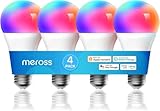
Meross Smart RGBWW WiFi LED Bulbs 4 Pack
A smart bulb should not turn a quiet evening into a small troubleshooting session. The light should answer Siri, hold its connection, and make the room feel better without asking for a hub, a manual, and a spare hour. That is the real pressure behind the best smart light bulbs apple homekit search. Meross aims for that sweet middle ground with HomeKit support, 900-lumen brightness, RGBWW color, and app-based control that feels built for everyday rooms rather than showroom demos.
Meross Smart RGBWW Bulbs
Apple HomeKit compatibility is the main reason this Meross four-pack earns attention. The bulbs work with Apple HomeKit, Apple Watch, Siri, Alexa, Echo devices, and Google Assistant, so they fit into homes that already have mixed voice assistants. The Siri example says it plainly: “Hey Siri, set the bedroom light to green.” That kind of voice control feels useful when the phone is across the room or hands are busy with laundry, dinner, or a half-asleep bedtime routine.
No hub required keeps the setup lighter than bridge-based systems. The bulbs connect through a stable 2.4GHz WiFi network, which is common for smart home gear and often reaches farther than 5GHz through walls. That said, router quality still matters. A weak signal in a far bedroom or crowded apartment network can make any WiFi bulb feel less polished than it should.
The Meross app and Apple Home app split the workload in a practical way. Apple Home handles familiar HomeKit control, while the Meross app adds remote access from anywhere with internet. The product description also says data is securely transmitted and stored in Amazon AWS servers, which may reassure anyone who pays attention to where smart-home commands travel. Still, cloud-connected features always depend on internet access, so local switch behavior remains part of the everyday experience.
Brightness, Color, And Daily Room Feel
900 lumens gives this bulb a little more punch than many standard 800-lumen smart color bulbs. That extra brightness can matter in a shaded floor lamp, a bedroom ceiling fixture, or a home office corner that always seems dim after sunset. The bulb is listed as a 60W equivalent while using only 9W, which keeps the energy use modest for daily lighting. Brightness alone does not make a bulb pleasant, but it gives the room more breathing room.
RGBWW color control gives Meross more flexibility than a plain RGB bulb. The white range stretches from 2700K warm white to 6500K cool white, so it can shift between cozy evening light and sharper daytime-style lighting. Warm white feels better before bed, especially in bedrooms and reading corners. Cool white suits cleaning, desk work, and morning routines where sleepy amber light just does not cut it.
The upgraded design claims stronger WiFi signal support through a separate antenna and increased LEDs for brighter light and more vibrant colors. That is a meaningful detail because color bulbs can look dull if the hardware is weak. Vibrant color matters for movie nights, small gatherings, and playful room accents, but the real work happens in the white modes. A smart bulb that handles everyday white light well usually stays useful long after the color effects stop feeling new.
Color scenes should be treated like seasoning, not the whole meal. A green bedroom on command is fun, but most rooms need warm dimming, clean white light, and predictable response more often than party colors. Meross gives enough flexibility to style a space without pushing every moment into neon territory. That restraint makes the bulb easier to live with.
Voice Control, Remote Access, And Schedules
Voice control is the feature that can turn smart bulbs from a novelty into a habit. Siri support makes the Meross bulb especially relevant inside an Apple HomeKit setup, while Alexa and Google Assistant support keep it from feeling locked to one household style. Turning lights off from bed, brightening a room before walking in, or changing color without opening an app all feel natural after a few days. Small conveniences add up quietly.
Remote control through the Apple Home app and Meross app gives the bulb a useful away-from-home layer. A lamp left on in the morning can be turned off later, and a light can be switched on before arriving back after dark. That is not a substitute for a full security setup, but it can make a home feel less unattended. Practical, not dramatic.
Schedules and timers add the kind of automation that actually sticks. The bulbs can turn on or off automatically based on a routine, and sunrise or sunset mode is supported. Sunrise and sunset scheduling works well for porch-adjacent rooms, bedrooms, and living areas where light changes with the day. It helps remove one more tiny task from the evening shuffle.
The energy-saving claim says the bulb uses 9W for 60W-equivalent brightness and may save up to 8.19 dollars per year. That number comes from the provided product details, so real savings will depend on local electricity prices, daily use, and how many bulbs are installed. Still, lower wattage LED lighting makes sense in rooms where lamps stay on for hours. Less waste, less heat, fewer guilty glances at the switch.
Setup Details And Practical Tradeoffs
2.4GHz WiFi is both useful and limiting. It often travels farther than 5GHz, which helps smart bulbs installed away from the router. But some modern routers combine bands under one network name, and that can make setup more annoying than expected. A little network housekeeping before installation can save a lot of muttering later.
The product details do not position these bulbs as traditional dimmer-switch bulbs. Smart LED bulbs usually prefer full power at the switch, with dimming handled through the app, voice assistant, or automation. Using an old wall dimmer can cause flicker, buzzing, or unreliable behavior in many smart bulb setups. App-based dimming is the safer path here.
The four-pack format suits rooms where matched lighting matters. Two bedside lamps, a pair of living room lamps, and a desk lamp can all share the same color temperature and brightness style. Mismatched bulbs can make a room feel patched together, especially in open spaces. Consistent light tone gives the setup a cleaner, calmer feel.
There is also a styling angle that smart bulbs alone cannot solve. Lampshades change how brightness spreads, how warm light appears, and whether a bulb feels harsh from the side. A soft shade can make a bright smart bulb feel more relaxed, and a related lighting detail appears in best fabric reading lamp shade for rooms where comfort matters as much as smart control.
Where The Meross Bulbs Make Sense
Apple HomeKit support gives this Meross set a strong role in homes already using Siri and Apple Home. The experience feels most fitting in bedrooms, living rooms, reading corners, and home office lamps where voice control and schedules can remove repeated little tasks. The 900-lumen output gives enough brightness for more than accent duty. It is not just a colored glow hiding in the corner.
The main strengths are clear: no hub requirement, broad voice assistant compatibility, remote control, schedules, RGBWW color, and stronger brightness than many basic smart color bulbs. Those features line up well with daily use rather than rare special occasions. The bulbs can support a morning routine, a quieter evening, or a quick mood shift for a small gathering. That range makes the four-pack feel practical.
The limitations should stay on the table. These bulbs depend on a stable 2.4GHz WiFi network, and remote control needs internet access. They may not suit fixtures tied to old dimmer switches, and very large spaces may need more than one bulb for balanced coverage. Smart lighting still works best when the fixture, shade, router, and room size all cooperate.
Meross does not try to win the best smart light bulbs apple homekit conversation by piling on confusing extras. It focuses on HomeKit control, useful brightness, flexible color, and everyday scheduling without requiring a hub. For rooms where the light needs to be both comfortable and obedient, this four-pack makes a grounded, easy-to-understand case.


Best Lighting For Makeup 2026 Bright Ideas For Flawless Looks

Best Wall Sconces For Staircase 2026 Brighten Your Home
Best Lighting For Computer Desk 2026 For Focused Work

Best Boat Black Lights 2026 For Nighttime Adventure

Best Black 30 Inch Light Bar Reviews – Top Picks of 2026

Best Black Light For Aquarium 2026 For Vibrant Glow

Best Black Light for Authenticating Glass 2026 Top Picks
Best Waterproof Spotlight 2026 That Outshines Expectations






