
Best Smart Switch For Fan And Light 2026 Picks

A wall switch seems simple until the ceiling fan has one pull chain, the light has another, and the room never feels quite right. A best smart switch for fan and light setup fixes that daily annoyance by giving the fan and fixture separate controls from one clean wall plate. The real win isn’t just app control. It’s being able to dim the light, lower the fan speed, and stop fumbling around in the dark.
The smartest choice usually depends on the wiring behind the plate, not the shiny app screenshots. Many strong models need a neutral wire, separate fan and light load wires, and a standard AC ceiling fan without a built-in remote module. That little detail matters. Miss it, and the switch may buzz, fail to dim properly, or refuse to control the fan speed at all.
A good smart fan and light switch should feel natural at the wall first. Touch bars, physical buttons, or separate sliders make a big difference on tired evenings when nobody wants to open an app just to cool the room down. Voice control is handy, sure, but the switch still needs to behave like a normal switch. That’s where some cheaper models feel clumsy.
Light dimming brings its own quirks. Dimmable LED bulbs usually behave better than random old bulbs pulled from a drawer, but even then, flicker can happen if the load range doesn’t match. Fan speed control also has limits, especially with DC motor fans, exhaust fans, and ceiling fans that already use a remote receiver. The sweet spot is a traditional ceiling fan with a separate light kit and compatible dimmable bulbs.
Scheduling can quietly improve comfort without making the home feel over-automated. A fan timer helps on warm nights when the room cools after midnight, while a dimmed light scene keeps the bedroom from feeling like a hardware store aisle. Small routines add up. Less chain pulling, less guessing, fewer “who left the fan on?” moments.
The best models don’t try to do too much. They offer separate fan speed control, reliable dimming, stable Wi-Fi or smart home support, and clear manual controls. Some work with Alexa, Google Assistant, Apple Home, or Matter-based setups, but compatibility should come after electrical fit. A switch that fits the wiring beats a fancy feature list every time.
There are tradeoffs, of course. Installation can be tight in older wall boxes, especially if the switch body is deeper than a basic toggle. Multi-gang plates may need careful spacing, and renters may not want to touch wiring at all. For permanent rooms like bedrooms, offices, nurseries, and living rooms, though, the convenience feels practical rather than flashy.

- LFR Score9.0
LFR Score is a ranking system developed by lightfansreviews.com. LFR Score has no relationship or impact from any manufacturers or sales agent websites. Learn more
- BrandKasa Smart

- LFR Score8.8
LFR Score is a ranking system developed by lightfansreviews.com. LFR Score has no relationship or impact from any manufacturers or sales agent websites. Learn more
- BrandKasa Smart

- LFR Score8.8
LFR Score is a ranking system developed by lightfansreviews.com. LFR Score has no relationship or impact from any manufacturers or sales agent websites. Learn more
- BrandMOES

- LFR Score8.6
LFR Score is a ranking system developed by lightfansreviews.com. LFR Score has no relationship or impact from any manufacturers or sales agent websites. Learn more
- BrandTaoellen

- LFR Score8.6
LFR Score is a ranking system developed by lightfansreviews.com. LFR Score has no relationship or impact from any manufacturers or sales agent websites. Learn more
- BrandGHome Smart

- LFR Score8.6
LFR Score is a ranking system developed by lightfansreviews.com. LFR Score has no relationship or impact from any manufacturers or sales agent websites. Learn more
- BrandTREATLIFE

- LFR Score8.4
LFR Score is a ranking system developed by lightfansreviews.com. LFR Score has no relationship or impact from any manufacturers or sales agent websites. Learn more
- BrandLightinginside
- LFR Score8.4
LFR Score is a ranking system developed by lightfansreviews.com. LFR Score has no relationship or impact from any manufacturers or sales agent websites. Learn more
- BrandTREATLIFE

- LFR Score8.4
LFR Score is a ranking system developed by lightfansreviews.com. LFR Score has no relationship or impact from any manufacturers or sales agent websites. Learn more
- Brandmeross
Last update on 2026-06-15 / Affiliate links / Images, Product Titles, and Product Highlights from Amazon Product Advertising API
Kasa Smart Switch 2-Gang HS200-2
Wall switches rarely get much attention until daily routines start exposing their little annoyances. One light controls the hallway, another powers the porch, and somehow someone always forgets to switch one off before leaving. The best smart switch for fan and light category exists because convenience isn't laziness. It's about reducing friction in ordinary moments, and the Kasa Smart Switch 2-Gang HS200-2 steps into that role with a surprisingly practical approach.
Dual Control Without Visual Clutter
The 2-gang design is the first thing that makes this model stand apart. Instead of squeezing separate smart controls into mismatched plates, Kasa combines two switches into one streamlined faceplate. The flush appearance looks intentional rather than pieced together over several weekend upgrades.
Homes with adjacent light circuits often benefit most from this setup. Kitchen lighting paired with dining fixtures, patio lights beside entryway illumination, or a fan-light combination can all be managed from one location. The arrangement simply feels tidier, both physically and mentally.
Function meets practicality here. There isn't unnecessary ornamentation or flashy hardware competing for attention. The layout remains straightforward enough that guests won't stand staring at the wall wondering which button controls what.
Installation That Reduces Guesswork
Electrical work tends to intimidate even enthusiastic DIYers. Pulling off a switch plate sometimes reveals a bundle of wires that instantly drains confidence. Kasa attempts to soften that learning curve through its app-guided installation process.
The instructions inside the Kasa app walk through setup step by step. That doesn't eliminate the importance of caution, though. A neutral wire is required, and households lacking one may need professional assistance before proceeding.
Kasa avoids introducing master and auxiliary switch complexity often associated with certain smart installations. That simplicity deserves recognition. It lowers the barrier for homeowners comfortable handling basic electrical tasks while still acknowledging that consulting an electrician remains sensible if uncertainty creeps in.
The tradeoff deserves attention. Older homes without neutral wiring compatibility may not accommodate this switch easily. Buyers expecting plug-and-play convenience without verifying existing wiring could encounter frustration.
Daily Convenience Through App Control
Smart home technology succeeds when it disappears into everyday life. Nobody wants an app that feels like homework. The Kasa Smart app keeps things relatively uncomplicated by placing controls within a familiar mobile interface.
Whether sitting at work wondering if the porch light stayed on or settling into bed after forgetting the downstairs lamp, remote access eliminates those nagging doubts. Control from anywhere isn't flashy marketing language in this case. It's genuinely useful in small, repeated situations.
The ability to monitor switch status also adds peace of mind. Instead of guessing, users can verify whether connected circuits remain active. Tiny reassurances like that tend to become surprisingly addictive over time.
Voice Commands That Feel Natural
Alexa and Google Assistant compatibility bring hands-free convenience into the equation. Carrying groceries through the front door becomes slightly easier when lighting responds to spoken commands instead of elbow gymnastics.
Samsung SmartThings integration broadens flexibility for households already invested in broader automation ecosystems. The switch doesn't force allegiance to a single platform, which removes one more obstacle from adoption.
Voice control isn't always essential. Some people use it constantly, while others forget it exists after the novelty fades. Still, having the option available provides flexibility without demanding lifestyle changes.
Scheduling Features That Serve Real Life
Advanced scheduling often sounds more dramatic than it actually is. Yet timers quietly solve recurring problems. Exterior lighting can follow evening routines without relying on memory, while hallway lights switch off automatically after busy mornings.
The countdown timer function proves useful during rushed departures. Set the lights to shut down shortly after leaving, and second-guessing becomes less frequent. Those little efficiencies accumulate over weeks and months.
Away Mode deserves mention as well. Randomized on-and-off behavior creates the impression of occupancy while traveling. It isn't presented as an ironclad security measure, nor should it be. Rather, it introduces an additional layer of lived-in realism during extended absences.
Practicality defines these automation tools. They address ordinary oversights instead of chasing futuristic fantasies that rarely survive everyday use.
Fan And Light Compatibility Considerations
Buyers exploring the best smart switch for fan and light category should pause before assuming universal compatibility. The HS200-2 controls two separate circuits, but its intended application centers around lighting loads rather than direct variable fan speed management.
Expectations matter. Traditional on-off operation for compatible fan circuits may fit certain setups well. Those specifically seeking dedicated fan speed adjustment should verify electrical requirements carefully before purchase.
Households replacing outdated dual switches often appreciate the streamlined experience this device delivers. Others pursuing advanced fan-specific controls might require a different style of smart switch tailored to that purpose.
Separate maintenance topics occasionally arise alongside smart upgrades. In conversations about ceiling fan upkeep, related hardware discussions sometimes include craftmade ceiling fan replacement blades as a reference point for restoring aging fixtures without replacing entire assemblies.
Strengths, Limitations, And Everyday Impressions
Strengths emerge through consistency. Dual-circuit control, app-guided setup, reliable remote access, voice assistant compatibility, and useful scheduling features form a practical package. None of these elements seek attention through gimmicks.
Limitations deserve equal visibility. Neutral wiring remains mandatory, 2.4GHz Wi-Fi support is required, and buyers wanting sophisticated fan speed adjustment should evaluate alternatives before committing. Honest expectations prevent disappointment later.
Kasa appears to understand that successful smart home products don't need theatrical promises. They simply need to remove small irritations from daily routines. The HS200-2 accomplishes that with restraint, focusing on usability over spectacle.
That restraint becomes its defining characteristic. It won't reshape the way an entire household functions overnight. What it can do is make lighting control smoother, routines less forgetful, and ordinary spaces feel a little more thoughtfully connected.
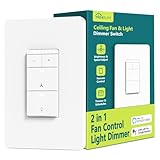
Kasa Smart Ceiling Fan Control & Dimmer Switch KS240
Little annoyances have a funny way of piling up. One person wants brighter lighting to finish a project, another reaches for the fan chain because the room suddenly feels stuffy, and before long someone is standing on tiptoe tugging strings again. The best smart switch for fan and light should eliminate those interruptions rather than complicate them, and the Kasa Smart Ceiling Fan Control & Dimmer Switch KS240 leans heavily into convenience without making the experience feel overly technical.
KS240 At A Glance
Kasa's KS240 takes a more specialized route than a standard smart light switch. Instead of simply switching power on and off, it focuses on two functions people actually use every day: adjusting fan speed and controlling light brightness. It sounds obvious, yet surprisingly few products handle both in one streamlined package.
The physical design sticks with familiar wall-switch proportions. That's an underrated strength. Nobody wants guests staring at futuristic controls wondering how to turn on the ceiling light before dinner. The interface feels approachable while quietly packing in smart features behind the scenes.
Its intended role is clear from the start. This isn't trying to automate an entire house. It's designed to improve one frequently used space by removing tiny frustrations that repeat day after day.
Four Speeds That Actually Matter
Ceiling fans aren't one-size-fits-all appliances. Sometimes a gentle breeze is enough to keep the room comfortable during a rainy afternoon. Other situations call for stronger airflow after cooking, exercising, or enduring a sticky summer evening. The four-speed fan control addresses those shifts naturally.
Many traditional fans leave users choosing between too little airflow and too much noise. KS240 creates more flexibility by letting adjustments happen through the wall switch, app, or voice assistant. That convenience feels practical rather than flashy.
Airflow customization becomes part of normal routines instead of a separate task. Nobody has to hunt for a misplaced remote or drag a chair across the room to pull a chain overhead.
There is a realistic caveat, though. Compatibility matters. Buyers should confirm their fan setup aligns with the switch requirements before expecting flawless operation.
Brightness Control That Shapes Atmosphere
Lighting influences mood more than people often realize. Bright illumination helps during cleaning sessions and busy mornings, while softer settings create a calmer environment during quiet evenings. The adjustable dimmer gives that flexibility without requiring separate devices.
Subtle brightness changes can shift how a room feels. Movie nights benefit from lower lighting levels, while focused activities often demand stronger illumination. The transition between those moments becomes remarkably effortless.
Dimming capability also reduces the abruptness of traditional switches. Instead of harsh on-and-off changes, the room adapts to the pace of real life. It's a small luxury that quickly becomes difficult to give up.
Bulb compatibility still deserves attention. Dimmable bulbs generally produce the best results, and verifying existing fixtures beforehand can prevent unnecessary frustration.
Smart Home Integration Without Platform Drama
Apple HomeKit compatibility instantly broadens the appeal of the KS240. Households already invested in Apple's ecosystem won't feel left out, and neither will those relying on Alexa or Google Assistant. Flexibility tends to age better than exclusivity.
Voice commands simplify moments when hands are occupied. Walking into a room carrying laundry baskets or groceries becomes slightly easier when lighting and airflow respond without physical interaction.
The ability to use the Kasa Smart app alongside HomeKit introduces another layer of convenience. Some people enjoy voice control daily, while others prefer tapping a screen occasionally. KS240 accommodates both habits without judgment.
Technology works best when it adapts to routines instead of forcing routines to adapt around it. This switch understands that distinction surprisingly well.
Scheduling That Fits Everyday Patterns
Automation often gets marketed with grand promises, yet its real value appears in ordinary situations. Schedules and timers help bedrooms feel comfortable before bedtime and ensure lights don't burn unnecessarily through empty afternoons.
A fan activating shortly before bedtime can make the room more inviting after a long day. Morning lighting routines can soften the transition from sleep to productivity. Those repeated moments quietly improve quality of life.
Away scheduling introduces an additional practical benefit. Activating lights while the house sits empty can create the impression that someone remains home. It's not a substitute for comprehensive security measures, but it contributes another layer of awareness.
Routine automation succeeds because it removes mental clutter. Remembering every switch no longer demands constant attention.
Installation Experience And Expectations
Smart switches occasionally earn a reputation for intimidating installation procedures. KS240 attempts to reduce that anxiety through app-guided setup, presenting instructions in manageable steps rather than overwhelming diagrams.
A neutral wire remains mandatory, and the switch requires a 2.4GHz Wi-Fi connection. Older homes lacking compatible wiring may face additional work before installation becomes possible.
The standard wall plate size simplifies replacement compared with unusually shaped smart controls. Existing spaces generally maintain a familiar appearance instead of looking heavily modified.
Electrical projects deserve respect. Those uncomfortable identifying wiring configurations may prefer professional assistance rather than relying on trial and error.
Strengths, Tradeoffs, And Daily Impressions
The biggest strength lies in the product's focus. Fan speed adjustment and dimming aren't treated like secondary features squeezed into a generic switch. They form the core experience from the beginning.
Tradeoffs exist, naturally. Neutral wiring requirements narrow compatibility, and buyers should verify that their ceiling fan configuration supports this style of control. Smart upgrades work best when expectations align with reality.
Discussions around fan aesthetics occasionally branch into broader design preferences. Conversations about minimalist airflow solutions sometimes reference best 2 blade ceiling fans while evaluating how modern fixtures balance appearance and performance.
KS240 ultimately succeeds through practicality. It streamlines repetitive tasks, smooths everyday routines, and avoids drowning useful functions beneath unnecessary complexity. Rather than chasing novelty for its own sake, it focuses on making familiar spaces feel just a little easier to live in.
MOES WiFi Fan Light Wall Switch
A ceiling fan gets annoying fast when the light and airflow refuse to behave like separate parts of the same room. The lamp needs to stay off during a late movie, the fan needs to keep moving air, and nobody wants to jab at random buttons until the right setting appears. The best smart switch for fan and light should make those little daily adjustments feel calmer, and the MOES WiFi Smart Ceiling Fan Light Wall Switch aims for exactly that with separate touch, app, and voice control.
MOES Fan Light Switch
The updated control mode is the detail that gives this switch a stronger purpose than a basic smart wall button. MOES describes this version as having separate 3-gear fan adjustment, which matters because fan control can feel messy when speed changes seem random. A cleaner gear system makes the experience easier to understand. Tap, adjust, move on.
The product also addresses a complaint that can drive people up the wall: unwanted motor sound. According to the provided description, this newer version is designed to avoid the current sound from the motor while the fan is running. That doesn't mean every fan installation will behave identically, because wiring and fan design still matter. Still, quieter operation is a meaningful improvement for bedrooms, nurseries, reading corners, and small living rooms where background hum feels bigger than it should.
The black faceplate gives the switch a sharper look than the usual plain white control. That can suit darker trim, modern wall plates, or rooms where a standard switch looks a little too builder-basic. Style isn't the main selling point, but it helps when smart hardware sits in plain view every day. Nobody wants convenience that makes the wall look cluttered.
Separate Fan And Light Control
Independent fan and light control is where this MOES switch earns its place in the conversation. The light can stay off while the fan keeps circulating air, which sounds simple until a standard ceiling fan forces both functions into an awkward routine. Late-night airflow without harsh overhead brightness feels much more natural. So does turning the light on without changing the fan speed by mistake.
Touch control keeps the wall interaction familiar. The app adds flexibility, but the switch doesn't depend on a phone for every small adjustment. That matters in real homes, where phones get left charging in another room and someone still needs the light on now. Wall control plus app control gives the setup a practical rhythm instead of turning a basic room function into a gadget chore.
The 3-speed adjustment helps tailor comfort during different parts of the day. Low speed can take the edge off a warm room without making papers flutter across a desk. Higher speed fits muggy afternoons, post-cooking heat, or a room that traps warmth near the ceiling. Fan speed flexibility feels especially useful when the weather keeps changing and one fixed setting never quite lands right.
There is one honest limitation to keep in mind. This switch is made for compatible ceiling fan and light setups, not every fan motor or remote-controlled fixture under the sun. Compatibility checks matter before installation, especially if the existing fan already uses a receiver module, unusual wiring, or a nonstandard control system. Smart switches behave best when the electrical setup matches the job.
App, Voice, And Schedule Control
Smart Life and Tuya app support gives this switch its remote-control backbone. The practical benefit shows up in familiar moments: leaving home in a hurry, wondering whether the fan stayed on, or wanting the room comfortable before walking back in. Remote control won't fix poor wiring or a mismatched fan, but it can reduce the small doubts that follow people out the door. That's the kind of feature that earns its keep quietly.
Voice control through Alexa and Google Home brings another layer of convenience. Turning the fan off from bed or adjusting speed while cooking keeps hands free and routines smoother. It isn't about showing off a smart home setup. It's about not stopping what you're doing just to manage airflow or light.
The schedule and countdown features make the switch more useful for daily habits. A countdown from 1 to 60 minutes can help when someone falls asleep with the fan or light still running. Scheduling can also handle repeated routines, like turning lights on before evening or switching a fan off after the room cools down. Little by little, that reduces wasted energy and late-night second-guessing.
Group control adds another practical angle for homes with several smart switches. Shared access lets multiple people adjust the connected fan and light from the app instead of funneling every change through one phone. Shared household control is less glamorous than voice commands, but it can prevent plenty of tiny arguments. Comfort should not depend on whoever installed the app first.
Installation Fit And Real-World Tradeoffs
No hub required keeps the setup simpler for anyone trying to avoid extra boxes, bridges, or complicated smart home layers. A WiFi-based switch can be appealing because it works through the existing network instead of adding another device to maintain. The tradeoff is that WiFi quality matters. A weak signal near the switch location can make app control feel less dependable than expected.
The provided details emphasize app control, touch control, voice control, schedules, and countdowns, but they don't remove the need for careful installation. Wall switches sit inside electrical boxes, and fan-light wiring can vary more than people expect. Wiring confidence matters here. Guessing behind the wall is never worth it.
This switch fits best where separate fan and light behavior creates daily irritation. Bedrooms, home offices, and living areas benefit from being able to cut the light while keeping air moving. High-ceiling rooms may involve different airflow needs and fixture decisions, and related ceiling fan planning sometimes brings up best ceiling fans for high ceilings as a separate reference for matching fan design to room height. The switch handles control, while the fan itself still determines how well air moves through the space.
The main weakness is not the feature list, but the number of assumptions buyers might make before checking their existing fan. A smart wall switch cannot turn an incompatible fan into a compatible one. It also won't solve airflow issues caused by an undersized fan, poor blade pitch, or awkward room layout. Still, paired with the right ceiling fan and wiring, the MOES switch can make daily control feel cleaner, quieter, and far less fussy.
2-In-1 Smart Dual Wall Switch
Room comfort can fall apart over something embarrassingly small. The fan is running too low, the light is too bright, and the wall switch only gives half the control needed for the moment. A best smart switch for fan and light should clean up that mess without turning the wall into a control panel from a spaceship, and the 2-In-1 Smart Dual Wall Switch focuses on separate fan speed and light dimming in one practical setup.
2-In-1 Smart Dual Switch
The main appeal is right there in the name. This switch combines independent fan control and light dimming, so the ceiling fan and the light no longer have to behave like one stubborn appliance. That matters in bedrooms, living rooms, and home offices where airflow and brightness rarely need the same treatment. Cool air can stay on while the light drops low, and that alone solves a surprisingly common irritation.
The design supports 3-position wind speed, which gives more control than a plain on-off switch. Low speed can keep air moving during a quiet evening, while a stronger setting fits warmer afternoons or rooms that trap heat after cooking. It doesn't pretend to be a full climate system. It simply makes the ceiling fan easier to live with.
The light side brings 5-position brightness control, plus smooth dimming from 10% to 100% through a long press on the adjustment button. That range is useful because overhead light can feel harsh at full brightness, especially late at night. A softer setting helps the room relax a bit without requiring a lamp in every corner.
That said, the switch asks for the right setup before it can show its strengths. It needs separate load wires for the fan and light, along with a neutral wire. Wiring compatibility isn't a tiny footnote here. It's the difference between a neat upgrade and an afternoon full of regret.
Control That Feels Less Fussy
Separate adjustment gives this switch its everyday usefulness. A fan without a light can still be controlled, while the dimmer handles the lighting circuit on its own. That split control feels more thoughtful than a basic smart switch that only turns everything on or off. Real rooms need more nuance than that.
The physical switch matters because nobody wants to open an app for every small change. Long-press dimming keeps control at the wall, where muscle memory already lives. Tap, hold, adjust, done. Manual usability keeps the switch from feeling like a gadget that forgot how people actually move through a room.
The 10% to 100% dimming range helps during quick shifts in routine. Bright light works for cleaning, sorting laundry, or reading paperwork. Lower light works better for winding down, watching TV, or sneaking through the room without waking everyone up. Brightness flexibility can make one ceiling fixture behave like several different lighting moods.
The fan control stays practical rather than overbuilt. Three speeds are enough for most daily needs, though anyone expecting ultra-fine fan tuning may want a more specialized system. The sweet spot here is straightforward comfort control, not endless customization for its own sake.
Voice Control And Smart Home Fit
Alexa, Google Assistant, and SmartThings compatibility make this switch easy to fold into familiar smart home habits. Voice control helps most during awkward moments, like walking in with full hands or settling into bed and realizing the fan is still too strong. Nobody has to fish for a phone under the blanket. A quick command handles the job.
The switch works over 2.4GHz Wi-Fi and does not require a hub. That keeps the setup simpler for homes that don't want another bridge plugged into the router. The tradeoff is familiar: Wi-Fi reliability depends on signal strength. A weak connection near the switch can make smart control feel less polished than the product description suggests.
Voice control should feel like a bonus, not the only way the product makes sense. This switch still has wall control, app control, schedules, and timers, so it doesn't lean too hard on one method. That balance is important. Redundant control options keep daily use from breaking down when someone misplaces a phone or prefers not to talk to a speaker.
The strongest smart home products tend to fade into habits. This one has that potential if the installation is right and the connected fan and bulbs match the requirements. Without that fit, even good features can feel uneven.
Schedules, Timers, And Daily Rhythm
Time and schedule features make the switch more useful than a manual wall control. A fan can turn off after the room cools, or the light can dim at a set time to match evening routines. Small automations like that don't need to feel fancy. They just reduce the number of things to remember.
Timers help with the classic late-night problem. The fan feels great at bedtime, then the room gets chilly at 3 a.m. A scheduled shutoff can prevent that without requiring anyone to wake up and reach for the wall. Automatic shutoff also helps cut down on lights staying on in empty rooms.
Scheduled brightness changes can make mornings gentler, especially in rooms where full overhead light feels too abrupt. A lower brightness level at a set time can be enough to start the day without blasting the room. The switch doesn't need dramatic claims to be useful. It just needs to handle repetitive habits with less nagging.
There is a practical ceiling to these features. Schedules only help if the household has predictable routines, and app-based control depends on stable Wi-Fi. For chaotic schedules, manual and voice control may end up doing more of the heavy lifting.
Compatibility Details That Deserve Attention
Compatibility is the make-or-break section for this product. The switch is not compatible with exhaust fans, ceiling fans with canopy modules, fans or bulbs with built-in remote control, Bluetooth or Wi-Fi control, or non-dimmable bulbs. That list may sound restrictive, but it is also helpful. It draws a clear line before anyone starts unscrewing a wall plate.
The supported load limits also matter. The description lists 1A 200W maximum ceiling fans, along with 200W max incandescent, 150W max halogen, and 100W max dimmable CFL lighting support. Those figures aren't decoration. They should be checked against the fixture and bulbs before installation.
Homes built before the mid-1980s may not have a neutral wire, according to the provided details. That could turn a simple swap into a more involved electrical project. Neutral wire requirements are common with smart switches, but they still catch people off guard. Older wiring deserves patience, not guesswork.
The switch is also single pole only. It is not intended for 3-way or 4-way circuits, which means it won't suit every hallway, stairway, or multi-entry room. That limitation is not a flaw by itself. It just needs to match the room before expectations get too high.
Installation Feel And Practical Tradeoffs
The installation note calls for three wires: one neutral wire and two separate load wires for the light and ceiling fan. That structure supports the independent control that makes the switch appealing. Without separate loads, the whole promise falls apart. Pretty simple on paper, not always simple inside the wall.
The panel can be installed separately with a standard panel or used as a replacement for a previous multi-way panel, based on the provided description. That gives some layout flexibility. Still, replacing older setups can reveal tight boxes, short wires, or wiring choices that don't match the diagram. Electrical box space is one of those boring details that suddenly becomes very important.
A realistic buyer should treat this as a smart electrical component, not a decorative accessory. The product can simplify daily control, but installation still requires careful attention. Anyone unsure about line, load, neutral, and fan wiring should bring in qualified help. No switch is worth unsafe wiring.
Related ceiling fan questions sometimes branch into brand and certification confusion, especially when labels appear on fixtures without clearly explaining who made them. A neutral reference on that topic appears in who makes Intertek ceiling fans for readers sorting through fan identification while planning smarter controls. The switch solves control behavior, while the fan's construction and wiring still set the boundaries.
Strengths, Weaknesses, And Best Fit
The biggest strength is the combination of 3-speed fan adjustment and dimmable light control in a single wall switch. That pairing answers a real household problem without needing separate wall devices. It also keeps control available through the switch, app, and voice assistants. Flexibility feels useful here, not tacked on.
The dimming range gives the product a softer side. Full brightness for chores, low brightness for evenings, somewhere in the middle for normal use. 5-position brightness plus smooth dimming makes the connected light more adaptable than a simple on-off circuit. That can change how often the overhead fixture actually gets used.
The weaknesses are mostly compatibility-related. No exhaust fans, no canopy-module ceiling fans, no built-in remote-control fans, no non-dimmable bulbs, and no multi-way circuits. Those limitations are serious, especially in homes with newer fans that already include remote receivers. A careful pre-check matters more than excitement over the feature list.
This switch makes the most sense in a room with a compatible ceiling fan, separate light wiring, dimmable bulbs, a neutral wire, and a single-pole layout. In that setting, it can replace daily tugging, guessing, and app juggling with smoother control. In the wrong setup, it may be the wrong tool for the job, no matter how useful the features look on paper.
GHome Smart Fan Light Dimmer Switch
Some rooms never seem to land on the right setting. The light is too sharp for winding down, the fan is too weak after a warm afternoon, and the old pull chain turns every adjustment into a tiny nuisance. A best smart switch for fan and light should smooth out those moments without making the wall feel overcomplicated, and the GHome Smart Fan Light Dimmer Switch tries to do that with fan speed control, stepless dimming, voice support, and app-based scheduling in one compact wall control.
GHome Smart Fan Light Switch
The 2-in-1 design is the main reason this switch makes sense for a ceiling fan with a light kit. It replaces the basic on-off routine with separate control over airflow and brightness. That difference matters after a few days of use. The room stops feeling like it has only two moods: fully bright or completely off.
Fan control gets a real upgrade here because the switch adds four speed levels. Low, medium, high, and maximum settings give enough range for different seasons, room sizes, and daily routines. A gentle breeze works for sleep or quiet reading. A stronger setting fits stuffy evenings when the air has been sitting still for too long.
The switch also gives the light its own personality through 0%-100% stepless dimming. Sliding a finger across the touch interface feels more natural than clicking through fixed brightness levels. Full brightness helps with cleaning, organizing, or finding something under the couch. Lower brightness keeps the room from feeling harsh at night.
Its biggest appeal is balance. It doesn't just make the ceiling fan smart, and it doesn't only focus on lighting. Fan speed and light brightness both get meaningful attention, which is exactly where many basic smart switches fall short.
Touch Control That Feels Practical
The sensitive touch interface gives this switch a cleaner day-to-day feel than old rocker switches or dangling chains. A slide adjusts brightness, while a tap handles simple on-off control. That sounds small, but wall controls get used constantly. Anything clumsy becomes annoying fast.
The dimming behavior is especially useful in rooms that pull double duty. A bedroom may need bright light while folding laundry, then soft light twenty minutes later. A living room may need enough brightness for tidying up, then a calmer glow during TV time. Stepless brightness control handles those shifts without forcing a separate lamp into every corner.
Fan speed control at the wall also removes one of the most familiar ceiling fan headaches. Pull chains are easy to yank too far, and remotes have a talent for disappearing under cushions. Four-speed wall control keeps the adjustment where people expect it to be. No scavenger hunt, no guessing game.
The touch layout does come with a learning curve. Someone used to old toggle switches may need a day or two before the controls feel automatic. That isn't a dealbreaker. Still, touch-based controls can feel less satisfying for anyone who prefers a firm mechanical click.
Smart Features For Daily Routines
Alexa and Google Assistant compatibility adds convenience without making voice control mandatory. A voice command can turn off the light from bed, change the fan setting while cooking, or bring airflow back without walking across the room. The best part is simple: comfort doesn't have to interrupt whatever is already happening.
The switch works on 2.4GHz Wi-Fi only, which is common for smart home devices but still worth noting. A stable signal near the switch location matters. If the router sits far away or the wall box is in a weak coverage area, app response may feel less smooth than expected. Smart control is only as good as the connection behind it.
App control adds a useful safety net for forgetful moments. The provided details mention checking status through the app and controlling the fan or light remotely. That can ease the little mental itch that shows up after leaving home. Remote status control is not flashy, but it is genuinely handy.
Scheduling through the app gives the switch more range than manual use alone. Lights and fans can turn on or off based on certain times, temperatures, weather, or scenes, according to the provided description. Timers and schedules help reduce repetitive chores. The room starts behaving more like part of the routine instead of another thing to manage.
Installation And Compatibility Notes
Neutral wire required is the first installation detail to check. Many smart switches need a neutral wire to keep their internal electronics powered, and this model follows that pattern. Homes with older wiring may not have the right setup in the wall box. That can turn a simple swap into a job for someone with electrical experience.
The switch is listed for 120V 60Hz input, with a fan max power of 120W and light max power of 400W. Those limits should be taken seriously. A ceiling fan or lighting load outside the stated range is not the right match. Electrical specs aren't decorative fine print.
Single-pole installation also shapes where this switch belongs. It is built for one switch location controlling the fan and light, not complex multi-location wiring. Rooms with 3-way or 4-way switching may need a different solution. Matching the switch to the circuit matters more than liking the feature list.
The product notes also say it is not compatible with smart bulbs. That makes sense because smart bulbs and smart dimmers can sometimes fight over control. Standard dimmable lighting is the cleaner fit here. Pairing smart controls with the wrong bulb type can cause flicker, odd behavior, or a setup that never feels settled.
Comfort Benefits And Real Limits
The comfort benefit shows up most clearly in bedrooms, small living spaces, and rooms where the ceiling fan gets used every day. A low fan speed can keep air moving during sleep without making the room feel drafty. Dim lighting can soften the room before bed. Together, those controls make the space easier to tune.
The switch also helps reduce the awkwardness of shared rooms. One person may want airflow while another hates overhead glare. With independent fan and light control, the fan can keep running while the light stays low or off. That kind of separation feels basic after using it, but plenty of older setups still don't offer it.
There are limits, though. This switch won't fix a noisy fan motor, poor blade balance, or weak airflow from an undersized ceiling fan. Fan performance still depends on the fan itself. The switch improves control, not the mechanical quality of the fixture it controls.
Room size matters too. A ceiling fan in a large room may need more than smarter control to feel effective, while a compact bedroom may benefit from a smaller cooling setup in certain situations. Practical cooling discussions sometimes include best small fan for bedroom as a separate reference for spaces where a ceiling fixture isn't the only comfort tool. The GHome switch makes sense when the existing ceiling fan is worth keeping and simply needs better control.
Where The GHome Switch Makes Sense
The strongest case for this switch is a room with a compatible ceiling fan, standard lighting, neutral wiring, and frequent fan-light adjustments. That setup lets the four-speed fan control and stepless dimming do real work. The switch becomes less of a gadget and more of a better wall control. That's the sweet spot.
Its smart features are useful without feeling excessive. Voice control handles lazy moments, app access covers forgotten switches, and schedules support repeated habits. Everyday convenience is the theme here. Nothing about the provided details suggests it needs a complicated hub or advanced smart home system.
The weaknesses are mostly about fit. 2.4GHz Wi-Fi only, neutral wire requirements, single-pole use, stated load limits, and incompatibility with smart bulbs all narrow the field. Those constraints aren't unusual, but ignoring them can create problems. A careful pre-check will save more frustration than any app feature can repair later.
GHome's switch feels most convincing as a practical replacement for an old fan-and-light control that never quite gave enough flexibility. It brings airflow, brightness, scheduling, and voice control into one place without promising miracles. Paired with the right fan and wiring, GHome Smart Fan Light Dimmer Switch can make a familiar room feel calmer, easier to manage, and less dependent on pull chains or misplaced remotes.


Best Quiet Ceiling Fan For Bedroom 2026 Ultimate Comfort Picks

Best Ceiling Fan For Master Bedroom 2026 With Ultimate Comfort

Best White Ceiling Fan With Light For Bedroom 2026 Top Picks

Best Quorum Medallion Ceiling Fan 2026 With Style & Breeze
Best Outdoor Fan For Pergola 2026 Comfort Boost

Best Ceiling Fan For Great Room 2026 With Ultimate Comfort

Best Outdoor DC Ceiling Fans 2026 For Breezy Comfort
Best ceiling exhaust bath fan with light and heater 2026





