Best Solar Fan for Car Window 2026: Cooler Parking

A parked car can turn into a stuffy heat box surprisingly fast, especially when direct sunlight pours through the windshield for hours. A best solar fan for car window helps move trapped air outward while drawing slightly fresher air through small cabin gaps. It won't replace air conditioning or make the interior chilly, but it can reduce that heavy wave of stale heat that hits the moment the door opens. That realistic distinction matters because many disappointing purchases begin with expectations the device was never designed to meet.
The most useful models pair a compact solar panel with an exhaust fan that sits along the top edge of a side window. Sunlight powers the motor, and the spinning blades encourage warm cabin air to escape rather than remain completely stagnant. Strong sunshine generally produces faster airflow, while cloudy weather, tinted glass, deep shade, and awkward panel angles can slow the fan down. So, panel placement matters just as much as the advertised fan speed.
Fit deserves close attention because car windows don't all share the same shape, thickness, or upper frame design. A bulky housing may interfere with curved glass, frameless doors, rain guards, or automatic window sensors. Adjustable sealing strips can close the gaps around the unit, helping keep insects and light rain outside while limiting hot air from slipping back in. Still, checking the installation dimensions before buying saves a lot of fiddling in the parking lot.
Airflow control also separates a practical vent fan from a noisy plastic gadget. Multiple speed settings provide more flexibility, though a simple single-speed design may be easier to operate and less prone to confusing controls. Quieter motors make sense near offices, apartments, or campsites where an irritating buzz quickly wears thin. On the flip side, stronger airflow often brings more sound, so chasing the highest speed isn't always the smartest move.
Some solar car fans include an internal rechargeable battery that stores energy for low-light periods. That feature can keep the blades moving after clouds roll in, but it also adds weight, cost, and another battery that will eventually age. Solar-only units are simpler and require fewer charging habits, yet they stop or slow down whenever sunlight weakens. The better setup depends on whether straightforward daytime ventilation matters more than consistent operation across changing conditions.
Odors are another reason this small device can earn its place. Damp floor mats, sports gear, pet smells, food containers, and hot upholstery can leave the cabin feeling unpleasant even after a short stop. Continuous window ventilation may help prevent those smells from becoming as concentrated, though it won't remove the source or clean dirty fabric. A fan works best alongside basic habits such as removing trash, drying wet items, and keeping cabin vents clear.
Security and weather resistance shouldn't be brushed aside. The window must close firmly enough around the fan and included seals to discourage easy removal from outside. A poorly fitted unit can leave gaps that invite rainwater, dust, or curious fingers. For frequent outdoor parking, a compact body, tight mounting system, and covered air channel are more valuable than flashy displays or decorative lights.
The best solar fan for car window is ultimately a modest heat-management tool, not a miniature climate-control system. It makes the biggest difference by reducing stagnant air, easing odor buildup, and helping the cabin recover faster once the doors open and the air conditioner starts. Results will vary with sunlight, vehicle size, interior color, window tint, and parking position. With those limits understood, the right fan can make daily summer parking noticeably less punishing without touching the car battery.

- LFR Score10.0
LFR Score is a ranking system developed by lightfansreviews.com. LFR Score has no relationship or impact from any manufacturers or sales agent websites. Learn more
- BrandEOHMAK

- LFR Score6.6
LFR Score is a ranking system developed by lightfansreviews.com. LFR Score has no relationship or impact from any manufacturers or sales agent websites. Learn more
- BrandTujoe

- LFR Score6.2
LFR Score is a ranking system developed by lightfansreviews.com. LFR Score has no relationship or impact from any manufacturers or sales agent websites. Learn more
- BrandTujoe

- LFR Score6.0
LFR Score is a ranking system developed by lightfansreviews.com. LFR Score has no relationship or impact from any manufacturers or sales agent websites. Learn more
- BrandTujoe

- LFR Score6.0
LFR Score is a ranking system developed by lightfansreviews.com. LFR Score has no relationship or impact from any manufacturers or sales agent websites. Learn more
- BrandCYDZSW

- LFR Score6.0
LFR Score is a ranking system developed by lightfansreviews.com. LFR Score has no relationship or impact from any manufacturers or sales agent websites. Learn more
- BrandCYDZSW

- LFR Score5.8
LFR Score is a ranking system developed by lightfansreviews.com. LFR Score has no relationship or impact from any manufacturers or sales agent websites. Learn more
- BrandShkalacar
- LFR Score5.6
LFR Score is a ranking system developed by lightfansreviews.com. LFR Score has no relationship or impact from any manufacturers or sales agent websites. Learn more
- BrandWinnes

- LFR Score4.6
LFR Score is a ranking system developed by lightfansreviews.com. LFR Score has no relationship or impact from any manufacturers or sales agent websites. Learn more
- BrandGeneric
Last update on 2026-07-08 / Affiliate links / Images, Product Titles, and Product Highlights from Amazon Product Advertising API
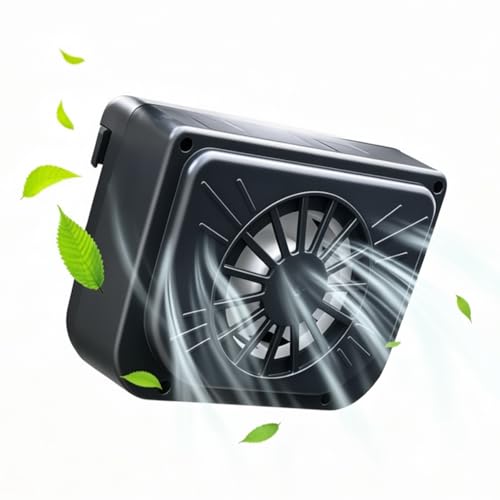
EOHMAK Solar Dual-Head Car Window Exhaust Fan
Stepping into a parked vehicle after hours in direct sunlight can turn a routine drive into an uncomfortable scramble for the air-conditioning controls. Hot upholstery, trapped odors, and stale cabin air don’t disappear instantly, even with the doors open. The best solar fan for car window category addresses that everyday frustration through steady ventilation rather than active refrigeration, and the EOHMAK model takes a practical route with solar-powered operation, two adjustable fan heads, and a window-mounted design. It’s meant to keep air from sitting completely still while the vehicle is parked, though buyers should keep expectations grounded because an exhaust fan won’t cool a cabin like an air conditioner.
EOHMAK Solar Dual-Head Car Exhaust Fan
The EOHMAK fan draws its operating power from an integrated solar panel, so it doesn’t need to tap into the vehicle’s battery during use. That matters during long parking periods, particularly when leaving an electrical accessory connected could create unnecessary worry about battery drain. Sunlight becomes the working fuel, giving the fan a straightforward purpose: encourage hot cabin air to move outward while the car sits. The tradeoff is just as straightforward, since weaker sunlight can reduce available power and limit how strongly the fans run.
This design makes the most sense as a heat-buildup management tool, not a substitute for climate control. A closed vehicle continues absorbing heat through its windows, roof, dashboard, and dark interior surfaces, so no compact window fan can promise a cool cabin under harsh summer sun. What it can do is reduce stagnant air and help prevent heat and odors from remaining completely trapped. That more modest benefit may shorten the uncomfortable period between opening the door and feeling the vehicle’s regular air conditioning take effect.
Parking position will influence the experience more than flashy wording on a product page ever could. A solar panel receiving direct sunlight should have a better chance of maintaining operation than one shaded by a building, tree, window visor, or deeply tinted glass. The solar energy efficiency is useful precisely because the system remains independent of charging cables and accessory sockets, but that independence comes with weather-dependent performance. Cloud cover, changing sun angles, and partial shade are natural limitations rather than product defects.
Dual Fan Heads Add Useful Directional Control
The product’s most distinctive feature is its pair of independently adjustable fan heads. A fixed exhaust fan moves air in one predetermined direction, which can feel restrictive if the housing doesn’t line up well with the cabin layout. Two movable heads provide more room to adjust how air is directed around the window area, making the setup less rigid. That doesn’t mean the fan can distribute conditioned air throughout every seat, but the added control helps tailor ventilation instead of forcing one angle on every vehicle.
Directional adjustment can also help with uneven pockets of stale air. A cabin may hold lingering smells from food containers, damp floor mats, sports equipment, pets, or work gear, especially after the windows remain shut for several hours. Pointing the heads where air movement is most useful may support faster circulation near problem areas. Still, odor reduction depends on removing the actual source, so the fan should complement basic cleaning rather than cover up spills, moisture, or forgotten trash.
The two-head arrangement does add bulk compared with a tiny single-fan unit. Window curvature, rain guards, frameless doors, thick seals, and unusually shaped upper frames may affect how neatly the body sits. That makes window compatibility worth checking before purchase, even though the product is described as suitable for cars, trucks, and recreational vehicles. A secure installation matters more than squeezing the unit onto a window where it pinches the seal or prevents the glass from closing correctly.
Separately, rooms with limited floor space often benefit from overhead airflow, and a neutral reference to small ceiling fans may be relevant for compact indoor cooling layouts. That topic doesn’t change how this automotive exhaust fan performs, but both products address airflow where space and placement impose practical limits. Keeping the distinction clear avoids pretending that two unrelated installation environments share the same operating demands. The EOHMAK remains a vehicle-window accessory with sunlight-dependent output.
Quiet Motors Suit Long Parking Sessions
Noise can make a small ventilation device irritating faster than weak airflow does. EOHMAK describes the motors as quiet yet powerful, a pairing intended to keep air moving without producing an overly intrusive mechanical sound. No measured noise level is provided in the supplied information, so it would be misleading to attach a decibel figure or claim near-silent operation. The practical takeaway is that low-noise performance is part of the intended design, though actual sound may vary with mounting pressure, fan speed, vibration, and window fit.
A loose housing may rattle even when the motor itself is relatively quiet. Proper seating against the window and careful placement of any included fitting pieces can help prevent plastic surfaces from buzzing against the glass or door frame. That small setup detail often separates a tolerable accessory from one that becomes annoying after a few minutes. Stable installation supports both quieter operation and safer use, especially when the vehicle door is opened and closed repeatedly.
The airflow claim also deserves a sensible reading. Compact solar fans have limited panel area and motor size, so “powerful” should be understood within the scale of a window-mounted exhaust unit. The goal is continuous ventilation, not the forceful blast produced by a dashboard fan connected to a high-output electrical source. Buyers expecting a dramatic temperature drop may be disappointed, while those seeking gradual air exchange are more likely to appreciate the intended function.
Heat-Resistant Housing Supports Sun-Exposed Use
Vehicle accessories mounted near a closed window face a rough environment. Direct sun, heated glass, and rising cabin temperatures can strain ordinary plastic, making heat-resistant construction more than a decorative product claim. EOHMAK specifies heat-resistant plastic for prolonged exposure, which fits the basic demands of a solar exhaust fan. The supplied description doesn’t identify the exact resin type or a tested temperature threshold, so durability should be judged by the stated material purpose rather than invented technical limits.
Plastic construction keeps the unit relatively practical for window mounting because metal housings could add unnecessary weight and transfer heat quickly. Even so, plastic can still fade, warp, or become brittle after extended exposure depending on material quality, climate, and storage habits. Removing the fan during severe storms, freezing conditions, or long periods of nonuse may help reduce needless wear. Weather resistance shouldn’t be confused with complete waterproofing unless the manufacturer explicitly provides that specification.
The black finish may blend neatly with many window trims and dark interiors, but it can also absorb sunlight readily. That makes the heat-resistant material particularly relevant during summer parking. A darker body won’t automatically create a performance issue, though buyers should avoid touching sun-exposed surfaces carelessly after hours outdoors. Practical handling matters with any accessory left against hot automotive glass.
Tool-Free Mounting Keeps Setup Manageable
Complicated installation would undermine the appeal of a compact solar ventilator, so the stated tool-free mounting is one of the product’s more useful everyday traits. The fan is designed to attach at the car window without drilling, wiring, or modifying the door. That makes removal and repositioning easier, especially when switching parking sides to improve solar exposure. It also lowers the risk of turning a simple accessory into a permanent alteration.
Easy installation doesn’t mean every fit will be effortless. The unit needs to sit firmly while allowing the surrounding window area to seal as closely as the design permits. Gaps may let in rain, dust, insects, or extra road noise, so careful alignment is worth the extra minute. The window seal should never be forced around a housing that clearly doesn’t match the frame shape.
Drivers should also remove or secure the fan before traveling unless the instructions specifically permit operation while the vehicle is moving. A window-mounted accessory can face vibration, wind pressure, and sudden movement on the road, conditions far different from stationary parking. The supplied details emphasize cooling ventilation during parking rather than driving use. Treating it as a parked-car device keeps expectations aligned with its stated design.
Strengths, Weaknesses, And Realistic Daily Use
The strongest part of the EOHMAK design is its combination of battery-free solar operation and dual directional fans. It can work without occupying a charging port, trailing a cable across the dashboard, or placing another load on the vehicle’s electrical system. The adjustable heads provide more flexibility than a fixed single-fan layout. For frequent daytime parking in open sunlight, those features address real annoyances without making the setup overly complicated.
The main weakness is the same limitation shared by solar ventilation products: performance depends on sunlight. Shade, clouds, dark tint, and an unfavorable parking angle may reduce output at the exact moment stronger airflow is wanted. It also can’t make a hot cabin safe for children, pets, electronics, medication, or other heat-sensitive occupants and items. Ventilation is a comfort aid, never a safety substitute for responsible parking decisions.
Vehicle fit is another potential sticking point. The product is described broadly for cars, vehicles, trucks, and recreational vehicles, yet window geometry varies widely across those categories. Frameless windows and deeply curved glass may be less accommodating than conventional framed doors. Measuring the available mounting area and inspecting seals, visors, and trim can prevent a frustrating mismatch.
Used within those boundaries, the EOHMAK fan offers a practical response to stale air and parked-car heat buildup. Its quiet motor concept, adjustable airflow, heat-conscious housing, and simple mounting approach all support low-effort daily use. The product won’t turn a sun-soaked cabin into a cool room, and it shouldn’t be judged by that impossible standard. Its value rests on keeping some air moving while requiring no energy from the car battery.
Tujoe 2-Pack Solar Car Exhaust Fans
A sealed car can collect heat, stale smells, and stuffy air long before the next drive begins. That discomfort gets worse after grocery stops, work shifts, or long afternoons in open parking lots, especially when the cabin has dark upholstery and little shade. The best solar fan for car window category aims to keep air moving without pulling power from the vehicle, and the Tujoe package approaches that job with two window-mounted units, multiple fan blades, and solar operation. It won’t turn a parked vehicle into an air-conditioned space, but it may help reduce the heavy, stagnant feeling that builds behind closed glass.
Tujoe Solar Car Exhaust Fan Set
The Tujoe package includes two solar exhaust fans, giving it more flexibility than a single-unit setup. One fan can be placed on each side of the vehicle, or the second can remain available as a replacement when needed. That two-piece arrangement may be especially useful in larger cabins where one small exhaust point can feel limited. Still, actual placement depends on window shape, door design, and how much direct sunlight reaches each solar panel.
A clean white housing gives the fans a lighter visual presence than the usual black automotive accessory. The color may blend well with pale interiors, although it will stand out more against dark window trim. Tujoe describes the design as both stylish and practical, but appearance is naturally a matter of taste. The more important point is that the compact window-mounted body is intended to add ventilation without permanent modifications.
The listing mentions multiple power supply styles, so careful selection matters before ordering. Different versions may not share the same operating setup, and choosing the wrong style could lead to confusion once the package arrives. The described model uses solar energy and includes a switch for solar and battery control, but the supplied information doesn’t fully explain the battery configuration. That uncertainty is worth keeping in mind rather than assuming every variant operates identically.
Two Motors Support Faster Air Exchange
The fan uses a two-air-duct, two-motor design intended to improve exhaust speed. Instead of relying on one narrow airflow path, the paired channels work together to move cabin air toward the outside. Tujoe states a rotational speed of up to 4,000 RPM in the detailed description, even though the product title mentions 4,500 RPM. Because those figures conflict, the safest reading is that the unit is designed for rapid fan rotation without treating either number as independently verified performance.
Fast blade movement sounds promising, but rotation speed alone doesn’t tell the whole story. Air volume also depends on blade size, duct shape, solar input, installation gaps, and resistance around the window seal. A small fan spinning quickly may still move less air than a larger powered ventilator. The practical benefit here is ongoing air exchange, not a forceful blast across the entire cabin.
Two motors may help the fan respond better during strong sunlight, particularly when the panel receives a clear angle toward the sun. Partial shade, heavy cloud cover, or deeply tinted glass can reduce the available energy and weaken output. That’s the central tradeoff with solar-powered ventilation: there’s no drain on the car battery, but performance follows the weather. Parking orientation can make a noticeable difference, so the sunny side of the vehicle may be the better mounting location.
The fan is best understood as an exhaust device rather than a cooling appliance. It can encourage hot air to leave and help prevent complete stagnation, yet it doesn’t create refrigerated air or actively lower cabin temperature in the way an air conditioner does. A sun-soaked dashboard, steering wheel, and seat surfaces can still become very hot. Realistic expectations make this product easier to judge fairly.
Solar Power Keeps The Car Battery Unloaded
Polycrystalline solar panels provide the operating energy described for this model. That means the fans can run without occupying a charging port or relying on a cable stretched across the dashboard. The biggest everyday benefit is independent daytime operation, especially during long parking sessions. There’s less concern about leaving an accessory connected to the vehicle’s electrical system while the engine is off.
The solar and battery switch is described as allowing separate control of the energy source. That could provide useful flexibility, although the supplied information doesn’t explain whether batteries are included, rechargeable, replaceable, or supported only on certain versions. Buyers should avoid assuming a specific battery type without checking the selected product style. The power-control feature sounds useful, but its exact operation remains one of the less clearly documented parts of the listing.
Solar energy also reduces the need for routine charging, which suits a device that may stay near the window for extended periods. There’s no charging schedule to remember if the unit is operating directly from sunlight. On the other hand, weak winter sun and covered parking can leave the fan with little energy to work with. The energy-saving design is convenient, though it can’t overcome poor solar exposure.
Odor Control Adds Everyday Practical Value
Stale cabin smells often linger after food spills, damp clothing, gym bags, pet travel, or sweaty upholstery. Tujoe positions the fan as a way to improve air circulation and reduce concentrated odors from interior surfaces and frequently touched areas. Moving air outward may help the cabin feel less closed-in after sitting for hours. Still, ventilation can’t remove the underlying source, so dirty mats, wet fabric, and leftover food still need direct cleaning.
The listing also refers to gases released inside the car, though it doesn’t provide measured data or identify specific compounds. Heat can intensify interior smells from plastics, adhesives, cleaners, and upholstery, making the cabin feel harsher after long sun exposure. A working exhaust fan may help prevent those odors from becoming as concentrated. That’s a sensible benefit, provided it isn’t mistaken for certified filtration or complete air purification.
Air movement can also make the first few minutes of a drive more tolerable. Opening the doors will still provide the fastest immediate release of trapped heat, but a fan may reduce how stale the cabin feels beforehand. The regular air conditioner can then handle the heavier cooling once the engine starts. The Tujoe set is most useful as a ventilation aid that supports normal cooling habits rather than replacing them.
Indoor airflow problems follow different installation rules, and a neutral reference appears in anti-dust ceiling fans for rooms where dust buildup and overhead circulation are the main concerns. That topic isn’t directly connected to automotive ventilation, so it shouldn’t be treated as an extension of this product’s performance. Both involve moving air, but the environment, power source, and maintenance demands are entirely different. The Tujoe units remain compact solar exhaust fans designed for vehicle windows.
Window Installation Looks Simple But Needs Care
The fans are designed to fit over the top edge of the car door glass. That setup avoids drilling, wiring, or permanent changes to the vehicle, which is helpful for leased cars and anyone who dislikes complicated installations. Tujoe says the design sits snugly and avoids leaving window gaps. A proper fit is essential because seal quality affects noise, weather protection, and overall airflow.
Window geometry varies more than product photos often suggest. Curved glass, frameless doors, thick weather stripping, rain guards, and narrow upper frames can all complicate mounting. A housing that fits one sedan neatly may sit awkwardly on a coupe or recreational vehicle. Checking the fan dimensions against the available window space is the smartest way to avoid a loose or strained installation.
The product is described as capable of continuing operation during rainy conditions. That sounds convenient, but the supplied details don’t state a waterproof rating or explain how water is kept away from the motors and electrical parts. Light rain resistance isn’t automatically the same as protection during storms or high-pressure washing. Weather caution remains sensible, especially if water can pool around the window seal.
Installation should also preserve normal door operation. A poorly seated unit may rattle, pinch the rubber seal, or shift when the door closes. Taking a moment to align both fans carefully can prevent vibration and reduce the chance of gaps. The promised non-obstructive mounting depends heavily on matching the accessory to the vehicle rather than forcing it into place.
Strengths And Weaknesses In Daily Parking
The strongest feature is the combination of two included units and solar operation. That setup provides broader placement options while avoiding battery drain from the vehicle. The dual-motor airflow design also gives the product a more purposeful layout than a basic single-blade window fan. For long daytime parking in exposed areas, those traits address a real cabin-comfort problem.
The white finish is another practical difference, although it won’t appeal equally to every interior. It may absorb less visible heat than a dark housing, but the supplied description doesn’t provide material testing or temperature comparisons. The look is clean, yet color should remain secondary to fit and solar-panel exposure. Visual design can’t compensate for poor window compatibility.
The main limitation is sunlight dependence. A fan powered primarily by solar energy may slow down or stop under shade, cloudy skies, covered parking, or unfavorable panel angles. The conflicting RPM figures also make it difficult to know which speed claim applies to the exact version. That doesn’t make the device unusable, but it does call for a cautious reading of the performance language.
Another weakness is the incomplete explanation of the available power styles. The listing says three options exist, yet the relationship between solar control, battery control, and the selected package isn’t fully clear. Careful variant selection is more important here than it would be with a single fixed configuration. The product-style distinction could be the difference between receiving the expected setup and receiving one that operates differently.
Best Use Cases And Sensible Expectations
Open outdoor parking gives these fans the conditions they need most. Strong direct sunlight can power the panels while the window placement lets heated air move outward. The two-pack format may suit a sedan, truck, or recreational vehicle with enough compatible window space. The clearest benefit is less stagnant cabin air during long stationary periods.
Covered garages and heavily shaded streets are less favorable. Without adequate light, solar output may fall below what the motors need for useful airflow. Battery-assisted operation could help if the selected version supports it, but the listing doesn’t provide enough detail to guarantee how that mode works. Anyone parking mostly indoors should treat solar availability as the deciding factor.
The fans should never be viewed as a safety device for children, pets, medication, electronics, or heat-sensitive belongings. Ventilation doesn’t make a parked car safe during hot weather, even if both units are running. Cabin temperatures can still rise sharply under direct sun. The product’s role is comfort support, not protection from dangerous heat exposure.
Used within those boundaries, the Tujoe set offers a straightforward way to keep some air moving without wiring into the car. The package’s dual motors, two-unit format, solar panels, and simple window mounting give it practical appeal for sunny parking conditions. Fit, weather exposure, and variant selection deserve careful attention before use. Those tradeoffs are manageable, but they matter just as much as the fan speed printed in the listing.
Tujoe Triple-Fan Solar Car Window Vent Set
Parking under a clear afternoon sky can leave the cabin smelling stale and feeling punishingly hot before the engine even starts. Opening every door helps, but that routine gets old fast, especially during short stops when there’s barely time to let the interior breathe. The Tujoe set enters the best solar fan for car window conversation with three fan motors, two included units, and three available power methods: solar, battery, and USB. It’s an exhaust system rather than an air conditioner, so the realistic payoff is steadier ventilation, less concentrated odor, and a cabin that may feel easier to air out.
Tujoe Triple-Fan Car Vent Set
The most noticeable difference is the three-duct, three-motor layout built into each window unit. Tujoe lists a rotational speed of up to 5,000 RPM, giving the design a stronger on-paper airflow focus than simpler single-motor vents. Speed alone doesn’t reveal the exact amount of air moved, since blade size, duct restriction, sunlight, and window fit also matter. Even so, splitting the airflow across three channels should help create a broader exhaust path than one narrow outlet.
Two fans arrive in the package, which creates a few sensible setup choices. Both can be mounted on opposite windows for dual-side ventilation, or one can remain stored as a spare when only a single exhaust point is needed. Larger vehicles may benefit from placing the units farther apart, though the supplied details don’t promise equal airflow across every seat. Cabin size, door shape, and the position of each solar panel will shape the actual experience.
The black housing fits naturally beside dark window trim, tinted glass, and common dashboard finishes. It looks less like a temporary add-on than many brightly colored car gadgets, which matters when the unit stays mounted throughout a workday. Still, appearance is secondary to secure placement and unobstructed sunlight. A sleek body won’t help much if a rain guard blocks the panel or the window frame prevents a firm seal.
Three Power Options Reduce Everyday Friction
Solar operation is the headline feature, but this version also supports battery and USB power. That broader power arrangement addresses one of the biggest frustrations with solar-only accessories: weak output during cloud cover, shaded parking, or changing sun angles. Direct sunlight can handle routine daytime operation, while another source may keep the motors useful when the panel isn’t receiving enough light. The listing doesn’t describe battery capacity, charging time, or USB input specifications, so those details shouldn’t be guessed.
The solar panel uses polycrystalline technology and converts sunlight into electricity for the fan system. That setup avoids drawing energy directly from the vehicle battery during ordinary solar use, easing concerns about returning to a car with a weakened starting battery. The solar and battery switch provides separate control over the available modes according to the supplied description. Clear labeling will matter in daily use because three power choices are helpful only when switching between them feels straightforward.
USB charging also makes the unit less dependent on perfect parking orientation. A cloudy forecast, covered garage, or deeply shaded street won’t automatically make the fan useless if stored power or USB operation is available. On the flip side, charging adds another small task, and battery performance can decline with age and repeated heat exposure. The power flexibility is a genuine strength, but it brings more parts and habits than a basic panel-to-motor design.
Tujoe sells several versions, and the product description specifically warns that the power styles differ. That detail deserves more attention than it might get during a rushed order. The reviewed black model is described as the solar, battery, and USB three-fan version, yet similarly named listings may use another configuration. Matching the exact variant prevents disappointment over missing controls or an unexpected power arrangement.
Cabin Ventilation Targets Heat And Lingering Smells
Closed vehicles trap more than heat. Damp floor mats, food packaging, work clothes, pet odors, and residue on frequently touched surfaces can produce a heavy smell after several hours in the sun. The Tujoe system uses outward air circulation to keep the cabin from remaining completely stagnant. That movement may reduce how concentrated those odors feel, although it can’t remove stains, moisture, or the original source.
The listing refers to gases released from interior materials, but it doesn’t provide laboratory measurements or identify particular compounds. Warm plastic, adhesive, upholstery, and cleaning products can certainly smell stronger in a heated cabin, so exhaust ventilation has a practical role. Still, this unit contains no stated filter or purification stage. Air exchange is the function here, not certified contaminant removal.
Heat relief also needs a level-headed reading. Three fast-spinning motors may push warm air outside more actively than a small single-fan vent, but they don’t create cold air. Seats, steering wheels, dashboards, and interior panels can continue absorbing solar heat even while the fans run. The likely benefit is a less stagnant starting point before the doors open and the vehicle’s regular air conditioning takes over.
Different airflow problems call for completely different hardware, and decorative room circulation is discussed separately in chandelier ceiling fans where lighting, ceiling clearance, and indoor comfort take priority. That reference doesn’t imply shared performance with an automotive exhaust unit. A room fan recirculates indoor air through a broad space, while the Tujoe device vents a confined vehicle cabin through the window. Keeping those roles separate prevents a forced connection based only on the word “fan.”
Window Fit Determines Whether The Design Feels Refined
Installation is designed around the upper edge of the car door glass, with no drilling or permanent vehicle modification required. That approach suits quick mounting and removal, especially when the fan needs to be repositioned toward stronger sunlight. Tujoe says the housing fits snugly without leaving window gaps or damaging the vehicle. In practice, window compatibility will depend on the exact glass shape, seal thickness, and door-frame design.
Frameless windows, steeply curved glass, bulky rain guards, and tight weather stripping may create trouble. A fan can look compact in a product image yet occupy more of the upper window channel than expected. Forcing the glass against an awkward housing risks pinched seals, rattling, or incomplete closure. A careful fit supports stable airflow and helps keep outside dust, insects, and water from slipping through unnecessary gaps.
The product is described as continuing to function on rainy days, which adds practical appeal for changing weather. No specific waterproof or water-resistance rating appears in the provided details, however, so that claim shouldn’t be stretched into storm-proof protection. Light rain and heavy wind-driven water place very different demands on a window-mounted electrical accessory. Weather awareness remains sensible even when the design is intended for outdoor parking.
Door movement deserves attention too. Repeatedly slamming a door can shift a poorly seated unit or increase vibration around the plastic body. A firm mount should reduce motor buzz and prevent the fans from knocking against the glass while operating. The non-obstructive installation sounds convenient, but the best result still depends on patient alignment rather than a rushed clamp-and-go setup.
Practical Strengths And Meaningful Tradeoffs
The strongest feature is the combination of three motors and three power choices in a two-unit package. Solar energy handles sunny parking without leaning on the car battery, while USB and battery support may make the fans more useful beyond ideal daylight conditions. That flexibility gives the Tujoe set a broader operating window than strictly solar designs. It also makes the product easier to adapt across commuting, travel stops, outdoor work, and recreational vehicle parking.
Another strength is the ability to create two ventilation points. Mounting one unit on each side may help air travel through the cabin rather than leaving all exhaust work to a single window. Whether that arrangement produces a meaningful difference will vary by vehicle, since no measured airflow data is supplied. The two-pack format offers useful placement freedom without guaranteeing identical results in every cabin.
The main weakness is that several performance details remain unspecified. There’s no stated airflow volume, noise level, battery capacity, USB charging time, or confirmed weather-resistance standard in the provided description. The 5,000 RPM figure sounds energetic, but it can’t be translated into cabin cooling performance without more information. Buyers should judge the fan by its ventilation purpose, not by assuming the speed number promises a dramatic temperature drop.
Heat exposure may also affect long-term durability. The black housing can become quite warm against sunlit glass, and internal batteries generally face extra stress in hot environments. Tujoe describes a practical automotive design, but no material grade or temperature tolerance is given. Removing the units during severe weather or long storage periods may reduce avoidable wear on the plastic housing and power components.
Where This Tujoe Set Makes The Most Sense
Sunny outdoor parking gives the solar panel its best chance to support consistent fan operation. The USB and battery options broaden the use case, yet direct daylight remains the simplest power source because it doesn’t require advance charging. Vehicles that collect food smells, damp gear, or stale air during long stops may see the clearest everyday benefit. The goal is continuous low-effort ventilation, not a chilled interior.
Short errands may not justify mounting two units every time, particularly if the car will sit for only a few minutes. Long work shifts, outdoor events, road-trip breaks, and daytime recreational vehicle stops align better with the design. The fans have time to exchange air gradually instead of being judged after a brief parking period. That slower, steady role fits the limits of a compact window exhaust system.
Covered parking presents a mixed case. Solar output may drop sharply, but battery or USB operation can help if the unit has been charged and configured correctly. That added flexibility is the clearest difference between this model and Tujoe’s simpler solar-only variants. Still, remembering to charge the device may feel like one chore too many for someone who wanted a completely hands-off accessory.
No window fan makes a parked vehicle safe for children, animals, medicine, electronics, or other heat-sensitive belongings. Interior temperatures can remain dangerous even with ventilation running, and the fans shouldn’t influence safety decisions. Used for their intended job, the Tujoe units offer odor relief, air movement, and battery-independent solar operation with useful backup power choices. Used as a replacement for air conditioning or responsible heat precautions, they’ll fall well short.
Tujoe Dual-Motor Solar Car Exhaust Fan Set
Heat settles into a closed vehicle quietly, then hits all at once when the door opens. The steering wheel feels punishing, the upholstery holds stale odors, and the first few minutes behind the wheel become a scramble for cooler air. Tujoe approaches the best solar fan for car window category with a two-piece package built around dual motors, polycrystalline solar panels, and tool-free window mounting. It’s not a miniature air conditioner, but it offers a practical way to keep trapped cabin air from sitting completely still during sunny parking periods.
Tujoe Dual-Motor Solar Fan Set
The package contains two black exhaust fan units, giving the setup more placement flexibility than a single window vent. Both fans can be installed on separate windows, which may encourage air to move through more than one part of the cabin. A second unit can also remain stored as a replacement if only one fan is needed for daily parking. That arrangement is useful, though the actual benefit still depends on vehicle size, window shape, and direct solar exposure.
The black exterior has a restrained automotive look that should sit naturally beside dark trim and tinted glass. Cosmetic details won’t change the airflow, of course, but a bulky accessory feels less distracting when its finish matches the surrounding door frame. Tujoe presents the housing as both functional and visually tidy. The more important concern is whether the window-mounted body sits securely without pressing awkwardly against seals or rain guards.
This version is described as a solar two-fan style, while the broader product family may include other power arrangements. That distinction matters because similarly named versions can cause confusion during ordering. The supplied description mentions a solar and battery switch, yet it also says the polycrystalline panel removes the need for charging through external power. Since battery details aren’t fully explained, it’s safer to treat solar energy as the core power source rather than assume a particular backup runtime.
Two Motors Create A Broader Exhaust Path
Each unit uses a two-air-duct, two-motor design intended to move warm cabin air outward more quickly than a single-motor layout. Tujoe states a speed of up to 4,000 RPM in the detailed specifications, although the product name references 4,500 RPM. Those conflicting figures shouldn’t be blended into a made-up estimate. The sensible takeaway is that the fans are designed for fast rotation, but their real cooling effect can’t be judged from RPM alone.
Blade speed tells only part of the story. The amount of air leaving the cabin also depends on duct width, blade dimensions, resistance around the housing, and how much sunlight reaches the panel. A compact motor can spin rapidly without producing the same airflow as a larger powered fan. The Tujoe unit is better understood as a continuous ventilation device than a high-volume cabin cooler.
Two exhaust paths may help reduce pockets of trapped air near the side window, especially when both included units are installed. Placing them on different sides could create a more balanced ventilation pattern, although no measured airflow data is supplied to confirm how evenly air travels through the cabin. Vehicles with larger interiors may still retain warm zones farther from the windows. The dual-unit arrangement provides options, not a promise of uniform temperature.
Strong midday sunlight should give the solar panels their best operating conditions. Cloud cover, tree shade, parking structures, and deeply tinted windows may reduce motor speed or stop operation altogether. That limitation comes with nearly every direct-solar accessory. The tradeoff is simple: no routine load on the car battery, but performance remains tied to the available light.
Solar Operation Keeps The Setup Simple
Polycrystalline panels convert sunlight into electricity for the motors, avoiding a charging cable stretched across the dashboard. That design suits long outdoor parking sessions because the fan can operate while the vehicle is off. There’s no need to occupy a USB port or leave an accessory connected to the car’s electrical system during normal solar use. The energy-saving approach is practical precisely because it asks very little from the vehicle.
Solar power also removes one small chore from the daily routine. A directly powered unit doesn’t need to be remembered, charged, unplugged, and packed away every evening. Park in adequate sunlight, position the panel well, and the fan can do its modest job without much fuss. Still, hands-off operation works only when the parking spot supplies enough light.
The described switch allows separate control of the solar cells and battery mode, but the provided information leaves several questions unanswered. Battery capacity, charging method, included battery type, and operating duration aren’t stated. Those missing details make it unwise to claim reliable nighttime or cloudy-day performance. The switch may add flexibility, yet solar input remains the clearest documented feature.
Parking orientation matters more than many buyers expect. A panel facing away from the strongest sunlight may produce disappointing output even on a bright day. Window visors and roof overhangs can create narrow bands of shade that land directly across the solar surface. A small change in mounting position may therefore matter more than the difference between the advertised RPM figures.
Air Movement Helps With Stale Cabin Odors
Heat intensifies the smell of damp fabric, leftover food, plastic trim, cleaning products, and frequently touched interior surfaces. Tujoe describes the fan as helping remove odors associated with upholstery, the steering wheel, buttons, and other cabin materials. Moving air outside can reduce how concentrated those smells become during a long parking period. It can’t clean the source, though, so odor relief still depends on removing spills, trash, wet mats, and dirty gear.
The listing also refers to gases released inside a heated vehicle, but it provides no laboratory results or filtration claims. That means the product shouldn’t be described as an air purifier or a certified method for removing specific contaminants. Its job is much simpler: encourage air exchange through the window opening. That can make the cabin feel less stale without pretending the fan performs chemical filtration.
Freshening the interior may be particularly helpful after carrying sports equipment, pets, work clothes, or takeout containers. Those smells can settle quickly once the doors close and the sun warms every surface. A steady exhaust path gives the air somewhere to go rather than allowing it to remain trapped for hours. The benefit is gradual and practical, not dramatic.
Airflow needs vary across different spaces, and compact indoor cooling is covered separately through cool desk fans where close-range circulation and powered operation matter more than solar window mounting. That reference doesn’t suggest the products solve the same problem. A desk fan pushes air toward a person, while the Tujoe system pulls warm air out of a parked vehicle. The shared idea is airflow, but the installation and expected results are worlds apart.
Window Installation Needs A Careful Fit
The units mount over the upper edge of the car door glass without drilling or permanent changes. That makes the installation approachable for anyone who doesn’t want to mess with wiring, tools, or interior panels. Tujoe says the design fits snugly and avoids leaving gaps around the window. In real-world use, fit quality will depend on the shape of the glass and the thickness of the surrounding weather seal.
Frameless doors may create a different challenge than conventional framed windows. Curved glass, narrow channels, bulky rain guards, and unusually tight rubber seals can also interfere with placement. Forcing the window closed around a poor fit risks damaging the seal or creating a rattle. A secure mount should feel stable without requiring excessive pressure.
The product is described as continuing to work during rainy weather, which sounds reassuring for outdoor parking. No formal water-resistance rating appears in the supplied details, however, so that claim needs a cautious interpretation. Light rain is not the same as a storm, wind-driven water, or a high-pressure wash. Weather protection should be treated as a practical design intention rather than proof of complete waterproofing.
Door movement can expose a loose unit quickly. Repeated opening and closing may shift the housing, especially if the fan sits against a curved section of glass. Careful alignment helps reduce vibration, rattling, and gaps around the mounting point. That little setup step may determine whether the unit feels tidy or becomes an annoyance.
Useful Strengths And Honest Weaknesses
The strongest feature is the combination of two included fans and battery-independent solar operation. A dual-unit setup provides more placement choices while keeping the vehicle’s charging ports free. The paired motors inside each housing also give the design a broader airflow path than a basic single-fan vent. For long daytime parking in direct sun, those features address a familiar comfort problem without complicated installation.
The black design is another practical strength for vehicles with darker trim. It won’t look invisible, but it should blend better than a bright housing mounted against tinted glass. The compact form also avoids consuming dashboard or cup-holder space. Space-efficient mounting matters in smaller cabins where loose accessories quickly become clutter.
Sunlight dependence is the biggest weakness. Covered garages, cloudy weather, tree-lined streets, and shaded sides of buildings can reduce performance sharply. Even on bright days, an unfavorable panel angle may leave the motors underpowered. Anyone expecting identical airflow in every parking situation will probably feel let down by this weather-dependent system.
The conflicting speed claims are another concern. The product name mentions 4,500 RPM, while the detailed description specifies up to 4,000 RPM. Without outside verification, neither figure should be treated as a guaranteed operating speed under all conditions. More useful specifications, such as airflow volume and measured noise, aren’t included in the provided information.
Realistic Use During Hot-Weather Parking
The Tujoe set makes the most sense during long stops in open sunlight. Work shifts, outdoor events, daytime errands, and recreational vehicle parking give the fans enough time to exchange air gradually. A five-minute stop may not reveal much difference, while several hours of ventilation better matches the product’s purpose. The main gain is reduced stagnation, not instant refrigeration.
Cabin surfaces will still absorb heat even while the motors run. Dark seats, dashboards, steering wheels, and door panels can remain uncomfortable to touch after extended sun exposure. Opening the doors and running the regular air conditioner will still be necessary before driving. The fans may simply make that first blast of trapped air less severe.
No exhaust fan makes a parked car safe for children, pets, medicine, electronics, or heat-sensitive belongings. Interior heat can remain dangerous despite visible fan movement. The Tujoe units should never influence decisions about leaving vulnerable occupants inside the vehicle. Their role is comfort-focused ventilation, nothing more.
Used with those limits in mind, the Tujoe package offers a low-maintenance approach to stale air and parked-car heat buildup. The dual motors, two-piece format, solar panels, and simple window installation create a sensible feature set for sunny conditions. Fit and solar exposure deserve careful attention, while the unclear battery details and inconsistent RPM figures remain drawbacks. Those compromises don’t erase the product’s usefulness, but they do define where it’s likely to perform well.
CYDZSW Solar Window Exhaust Fan
Hot air has a nasty habit of settling into every corner of a parked vehicle, turning the first few minutes of a drive into a sticky, uncomfortable mess. Cracking a window can help, but it also invites dust, insects, and sudden rain into the cabin. The CYDZSW unit takes a more controlled approach to the best solar fan for car window category by combining three motors, dual power support, and a window-mounted exhaust design. It won’t chill the cabin like air conditioning, but it can keep stale air moving before the engine starts.
CYDZSW Solar Car Exhaust Fan
The CYDZSW fan is built around a three-duct, three-motor system designed to move heated cabin air toward the outside. The supplied description lists a maximum speed of 4,500 revolutions per minute, which gives the unit a clear emphasis on rapid exhaust movement. RPM alone doesn’t reveal the full airflow volume, since blade size and duct width also influence performance. Even so, three separate channels should provide a broader escape path than a basic single-motor window fan.
That broader layout may prove useful after several hours of parking in direct sunlight. Warm air rises and collects near the upper cabin, exactly where a window-mounted exhaust fan sits. By pulling air through that area, the CYDZSW can reduce some of the stuffiness that greets you when the door opens. The important benefit is continuous ventilation, not a dramatic drop to outdoor temperature.
The black housing gives the device a low-key appearance beside tinted windows and dark door trim. It looks more like an automotive accessory than a colorful gadget stuck awkwardly on the glass. Appearance is nice, sure, but the real concern is whether the body fits the window channel correctly. A stable mount supports quieter operation, fewer gaps, and less vibration when the motors are running.
Solar And Battery Power Add Useful Flexibility
Polycrystalline solar panels supply energy during bright daytime conditions, allowing the fan to operate without drawing power from the vehicle. That makes the CYDZSW practical for long parking sessions where leaving an accessory connected to the car battery would feel risky. The solar-powered design also removes the need for a cable running across the dashboard during normal use. Sunlight does the work, provided the panel receives enough exposure.
The separate solar and battery switches add another layer of control. Solar mode suits open parking areas, while the battery backup is intended to support airflow during weaker light conditions. That matters under cloud cover, partial shade, or late afternoon sun when a direct-solar fan might slow down. The supplied information doesn’t state battery capacity or expected runtime, so those details shouldn’t be assumed.
Dual power makes the fan less dependent on perfect parking orientation, but it doesn’t remove every limitation. Battery performance can decline over time, especially when a device spends hours near hot glass. Solar output also changes with weather, panel angle, window tint, and nearby shade. The strength here is power-source flexibility, not guaranteed full-speed operation in every situation.
The controls should remain simple enough for everyday use because each power source can be selected separately. That separation avoids unnecessary confusion between direct solar operation and stored energy. Still, the instruction manual deserves a careful read before the first installation. A few minutes spent understanding the switches can prevent a lot of head-scratching later.
Ventilation Helps Reduce Stale Cabin Air
Closed vehicles collect more than heat. Upholstery, floor mats, food containers, damp clothing, and plastic trim can create a heavy smell after sitting in the sun. CYDZSW positions the fan as a way to improve air convection and support a fresher driving environment. Moving air outward may reduce concentrated odors, though it can’t clean the actual source.
The product description also refers to maintaining a non-toxic and harmless cabin, but that wording should be treated cautiously. No filtration system, laboratory testing, or contaminant-removal data is provided in the supplied details. The fan’s documented job is air exchange, not certified purification. It may help stale air escape, but it shouldn’t be described as removing every harmful substance.
Real-world odor control still depends on basic housekeeping. Wet mats need drying, food spills need cleaning, and forgotten trash needs to leave the vehicle. The fan can help prevent smells from becoming as concentrated while the doors remain shut. Used that way, it supports a more pleasant cabin without pretending ventilation replaces cleaning.
Airflow problems indoors follow different rules, and quiet overhead circulation is discussed separately through DC motor ceiling fans where room size, lighting, and ceiling placement shape performance. That subject isn’t directly tied to automotive exhaust ventilation. A ceiling fan recirculates air inside a room, while the CYDZSW unit pushes trapped air outside a vehicle. The products share an airflow purpose, but their operating environments are completely different.
Installation Is Simple But Fit Still Matters
The installation process uses the upper edge of the car window rather than screws, drilling, or permanent wiring. According to the supplied instructions, the fan is positioned on the glass, the rubber strip is adjusted, and the window is rolled up to secure the assembly. That approach keeps the setup approachable for anyone who doesn’t want to alter the door panel. The included long and short rubber strips help adapt the mount to the available window space.
Window shape will determine whether that process feels easy or fiddly. Conventional framed windows should generally offer a more predictable mounting surface than frameless doors or sharply curved glass. Rain guards, thick weather seals, and narrow channels may also interfere with the fan body. A poor fit can create air gaps, rattling, or extra strain on the window mechanism.
The fan can be placed on either a front-seat or back-seat window, giving the installation more flexibility. Rear placement may keep the unit farther from the driver’s line of sight, while front placement could position it closer to concentrated dashboard heat. There’s no single correct location for every vehicle. The better spot is the one that provides strong sunlight, a secure seal, and unobstructed operation.
CYDZSW states that the fan can remain usable during rainy days. That sounds handy, but no specific waterproof rating appears in the supplied information. Light rain resistance and full protection against wind-driven water are not the same thing. Weather caution is still sensible, particularly during storms or automated car washes.
Three Motors Bring Benefits And Tradeoffs
The strongest mechanical feature is the triple-motor design. More motors allow the fan to divide exhaust work across three ducts rather than forcing all airflow through one small opening. That may help the device move air more steadily when solar input is strong. It also makes the CYDZSW feel better suited to sustained ventilation than tiny single-blade models.
More motors can also mean more potential noise and vibration. The supplied description doesn’t include a decibel rating, so there’s no factual basis for calling the fan silent or whisper-quiet. A tight installation may reduce buzzing against the glass, while a loose mount could exaggerate motor sound. The noise level will likely depend as much on fit as on the motors themselves.
Three motors also place a greater demand on the available solar energy. Under bright sun, that may not be a concern, but shaded conditions could limit how strongly all three channels operate. Battery assistance is meant to soften that weakness, though runtime remains unspecified. The design trades absolute simplicity for stronger airflow potential and broader power support.
The 4,500 RPM figure sounds impressive, but it shouldn’t be mistaken for a cabin temperature guarantee. A fast motor can move warm air efficiently without producing cold air. Seats, dashboards, steering wheels, and interior panels will continue absorbing heat through the glass. This fan helps manage ventilation, not eliminate solar heat gain.
Included Parts Keep The Package Straightforward
The package includes one solar exhaust fan, one long fixed rubber strip, one short fixed rubber strip, and an instruction manual. That’s a focused set of parts without unnecessary accessories cluttering the box. The rubber strips matter because they help close space around the fan body after the window rises. A better seal supports cleaner installation and reduces the chance of outside debris entering through open gaps.
Only one fan is included, so coverage is naturally more limited than with a two-unit package. A single exhaust point may be enough for a compact car, while larger cabins could require more time to exchange stale air. Placement becomes especially important because all ventilation depends on one window position. The single-unit format keeps setup simple but offers less flexibility.
The instruction manual is more valuable than it might seem. Rubber-strip alignment, switch selection, and window pressure all affect how the unit behaves. Skipping those details could lead to rattling, incomplete closure, or weak solar exposure. A careful first setup can save repeated adjustments later.
Strengths And Weaknesses In Everyday Use
The clearest strength is the combination of solar operation and battery backup. Direct sunlight handles routine daytime use, while the secondary power option is intended to keep air moving when light weakens. That arrangement makes the CYDZSW more adaptable than a solar-only fan. It also avoids relying on the vehicle battery for normal operation.
Flexible placement is another useful feature. Front and rear windows present different sunlight angles throughout the day, so being able to move the fan can improve solar exposure. Rear placement may also keep the device out of the way during driving. The adjustable location helps compensate for differences between vehicle layouts.
The biggest weakness is that several useful specifications are missing. No airflow volume, motor noise level, battery capacity, operating time, or formal water-resistance rating is included in the provided description. Those gaps make it difficult to estimate performance beyond the stated features. Buyers need to judge the device by its intended ventilation role rather than fill the blanks with optimistic assumptions.
Solar dependence remains another limitation despite the battery option. Parking structures, heavy tint, tree cover, and cloudy skies can reduce panel performance. The battery may help, but its duration is unknown. The CYDZSW makes the most sense where direct daylight is common rather than occasional.
Realistic Expectations For Parked-Car Cooling
The fan is likely to be most useful during long daytime stops. Work shifts, outdoor events, road-trip breaks, and extended errands give the device time to move trapped air gradually. A very short stop may not allow enough time to notice much difference. The product’s benefit builds through steady exhaust ventilation, not instant cooling.
Opening the doors will still release heat faster once you return to the vehicle. The regular air conditioner remains responsible for lowering the cabin temperature during the drive. The CYDZSW simply gives hot air another route out while the car is parked. That can make the first moments inside feel less oppressive without promising a cold cabin.
No solar exhaust fan makes a parked vehicle safe for children, pets, medicine, electronics, or heat-sensitive items. Dangerous temperatures can still develop even while the blades are spinning. The device should never influence decisions about leaving vulnerable occupants inside. Its role is strictly comfort-focused air circulation.
Used within those boundaries, the CYDZSW offers a thoughtful mix of triple-motor airflow, dual power, flexible mounting, and a relatively simple parts package. The three exhaust ducts are its most distinctive feature, while missing performance specifications and weather details remain genuine drawbacks. Drivers who park regularly in strong sunlight may appreciate the low-effort ventilation. Those expecting air-conditioning results from a compact window fan will need to dial those expectations back.

Best Quiet Ceiling Fan For Bedroom 2026 Ultimate Comfort Picks

Best Ceiling Fan For Master Bedroom 2026 With Ultimate Comfort

Best White Ceiling Fan With Light For Bedroom 2026 Top Picks

Best Quorum Medallion Ceiling Fan 2026 With Style & Breeze
Best Outdoor Fan For Pergola 2026 Comfort Boost

Best Ceiling Fan For Great Room 2026 With Ultimate Comfort

Best Outdoor DC Ceiling Fans 2026 For Breezy Comfort
Best ceiling exhaust bath fan with light and heater 2026