
Best Table Top Fan 2026: Cool Air Without the Clutter

A best table top fan should cool the space around you without rattling across the desk, drowning out a conversation, or demanding half the available surface. Compact size matters, but a tiny housing means little if the airflow barely reaches beyond arm's length. The better designs balance a stable base, useful speed settings, and a fan head that can be aimed where the air is actually needed. That sounds simple, yet plenty of models miss the mark.
Airflow control deserves more attention than raw power. A strong blast can feel refreshing for a minute, but it may scatter papers, dry out eyes, or become distracting during long work sessions. Multiple speed levels make it easier to shift from a light background breeze to faster cooling after cooking, exercising, or coming inside from the heat. Oscillation can help in a shared room, though a fixed fan often feels more effective when cooling one chair or bedside area.
Noise is another sticking point, especially in bedrooms and home offices. A soft motor hum usually fades into the background, while clicking controls, loose grilles, and uneven blades can become maddening after dark. A dependable quiet desk fan won't be completely silent, but its sound should stay steady rather than pulse, buzz, or change pitch. Low speed often matters most because that's the setting commonly used during calls, reading, and sleep.
Power options shape where the fan can be used. A traditional plug-in model provides consistent output without battery worries, while a USB-powered fan fits neatly beside a laptop, power bank, or compact charging station. Rechargeable designs offer more freedom, but battery life usually drops quickly at the highest speed. Well, that's the tradeoff: cordless convenience is handy on a patio table or during a power interruption, yet a corded fan makes more sense for all-day cooling.
Cleaning shouldn't require a toolbox and a free afternoon. Dust builds up on blades and guards faster than expected, especially near open windows, kitchens, and pet areas. A removable front grille makes routine care far less annoying, while narrow, fixed guards tend to trap lint in awkward corners. Easy access helps preserve steady airflow and keeps dusty air from blowing directly toward the face.
Size also needs a reality check. A larger blade can move more air at a lower speed, but the wider base may crowd a nightstand or compete with a monitor stand. Mini fans tuck into tight spots, though some trade reach and stability for portability. Measure the intended surface, leave room around the intake, and consider whether the controls remain easy to reach once the fan is positioned.
The most sensible pick isn't automatically the model with the longest feature list. Touch controls can look tidy, but physical buttons are often easier to use in the dark. A timer is useful beside the bed, while adjustable tilt may matter more at a kitchen counter or standing desk. Focus on the small frustrations that show up every day, because practical cooling beats flashy extras that rarely leave their default setting.

- LFR Score9.2
LFR Score is a ranking system developed by lightfansreviews.com. LFR Score has no relationship or impact from any manufacturers or sales agent websites. Learn more
- BrandHoneywell
- LFR Score9.2
LFR Score is a ranking system developed by lightfansreviews.com. LFR Score has no relationship or impact from any manufacturers or sales agent websites. Learn more
- BrandHoneywell
- LFR Score9.2
LFR Score is a ranking system developed by lightfansreviews.com. LFR Score has no relationship or impact from any manufacturers or sales agent websites. Learn more
- BrandDREO

- LFR Score9.0
LFR Score is a ranking system developed by lightfansreviews.com. LFR Score has no relationship or impact from any manufacturers or sales agent websites. Learn more
- BrandDREO

- LFR Score8.8
LFR Score is a ranking system developed by lightfansreviews.com. LFR Score has no relationship or impact from any manufacturers or sales agent websites. Learn more
- Brandduludulu

- LFR Score8.8
LFR Score is a ranking system developed by lightfansreviews.com. LFR Score has no relationship or impact from any manufacturers or sales agent websites. Learn more
- BrandBEYOND BREEZE

- LFR Score8.6
LFR Score is a ranking system developed by lightfansreviews.com. LFR Score has no relationship or impact from any manufacturers or sales agent websites. Learn more
- BrandAmazon Basics

- LFR Score8.6
LFR Score is a ranking system developed by lightfansreviews.com. LFR Score has no relationship or impact from any manufacturers or sales agent websites. Learn more
- BrandHoneywell

- LFR Score7.6
LFR Score is a ranking system developed by lightfansreviews.com. LFR Score has no relationship or impact from any manufacturers or sales agent websites. Learn more
- BrandJOEY'Z
Last update on 2026-07-17 / Affiliate links / Images, Product Titles, and Product Highlights from Amazon Product Advertising API
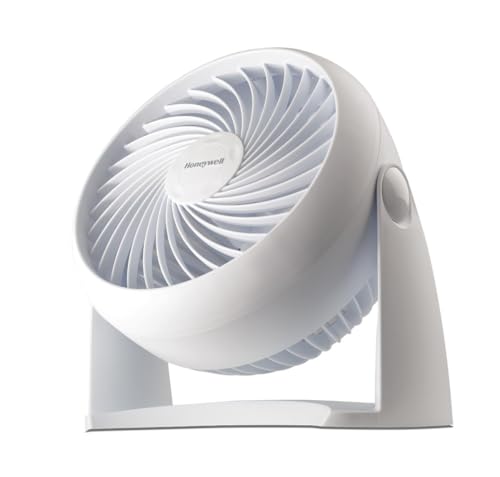
Honeywell TurboForce HT900 Tabletop Air Circulator
A stuffy desk corner can sap focus faster than expected, especially when the main room vent barely reaches the chair. Cranking down the thermostat may cool the whole space eventually, but it also wastes energy on areas that don’t need the extra chill. The best table top fan should solve that smaller, immediate problem, and the Honeywell TurboForce HT900 approaches it with focused air circulation, a compact frame, and straightforward controls. It isn’t loaded with decorative extras, which frankly suits a fan built to move air rather than compete for attention.
Honeywell TurboForce HT900
The HT900 is small enough to sit on a desk, nightstand, kitchen counter, or low shelf without swallowing the entire surface. Its housing also works on the floor, and the design can be wall-mounted when available space is especially tight. That flexibility gives the compact tabletop fan more staying power than a model locked into one position. Still, placement matters because the rear intake needs breathing room to maintain useful airflow.
Honeywell describes this fan as suitable for small to medium-sized rooms, though its strongest effect will naturally be felt within the area toward which the head is aimed. The aerodynamic turbo design is meant to concentrate air movement rather than spread a weak breeze in every direction. According to the supplied specifications, airflow can be felt from up to 25 feet away, giving the HT900 more reach than its modest size might suggest. That longer airflow reach can be handy across a bedroom, office, dorm room, or compact living area.
The black finish is plain, practical, and unlikely to clash with most electronics or office furniture. There’s no display glowing beside the bed and no oversized control panel demanding extra space. Instead, the overall design feels utilitarian, with the small footprint doing much of the selling. Anyone hoping for a decorative accent may find it a little blunt, but those tired of bulky appliances may appreciate the no-nonsense shape.
Focused Airflow With Three Practical Speeds
Three speed settings provide enough range for common daily situations without turning operation into a menu-diving exercise. The lowest setting suits steady background circulation, while the upper levels make more sense after cooking, exercising, or walking into a room that’s been closed up all afternoon. This three-speed control lets the fan shift between gentle comfort and more assertive cooling. The controls are simple, which is refreshing when all that’s needed is a quick blast of air.
The TurboForce design aims the breeze in a concentrated stream, so it feels different from a wide oscillating fan that sweeps slowly from side to side. Focused air can cool one workstation more effectively because the breeze isn’t constantly moving away. It can also help circulate conditioned air from a nearby vent or doorway, allowing cooler air to travel beyond the spot where it tends to collect. That directed circulation is useful, though it won’t evenly cover several people seated in different corners.
Air movement from a compact unit always comes with a practical tradeoff. Higher speed usually means more audible motor and blade noise, while lower speed feels softer but won’t cut through heavy warmth as quickly. Honeywell states that the HT900 is 25 percent quieter than comparable fans, based on the comparison referenced in the supplied product information. The important benefit is controlled cooling without oversized hardware, not the unrealistic promise of total silence.
A 90-Degree Pivot That Fixes Awkward Placement
The adjustable head pivots through 90 degrees, making it easier to direct air upward, forward, or somewhere between those positions. That movement solves a surprisingly common annoyance with fixed tabletop fans, which often blow into the edge of a desk, the side of a mattress, or a stack of papers instead of toward the body. The 90-degree pivoting head lets the base stay planted while the airflow angle changes. Less fuss, fewer books wedged underneath, and no balancing act on a crowded surface.
Placed low on the floor, the fan can push cooler air upward or help move air from one room toward another. Set on a desk, it can be tilted away from loose notes while still directing a breeze toward the face and shoulders. Wall mounting offers another route for cramped spaces, especially where a table fan would otherwise compete with lamps, chargers, and daily clutter. This flexible positioning broadens the fan’s usefulness beyond a single desktop role.
The head pivots, but the HT900 doesn’t provide automatic oscillation according to the supplied details. That distinction matters because a fixed stream is better for one focused spot, while oscillation is often preferable for shared seating or broad room coverage. Repositioning the head manually is easy enough, yet it won’t continuously sweep air across a couch or meeting table. The lack of oscillation is a real limitation, not necessarily a deal breaker, provided concentrated airflow is the actual goal.
Quiet Operation With Realistic Expectations
Noise can make or break a small personal fan, particularly when it sits close to a microphone, pillow, or reading chair. The HT900 is presented as a quieter alternative to comparable fans, which gives it a practical edge in bedrooms and offices where a rough mechanical hum becomes irritating. Its quieter operating profile should help the sound blend into normal room noise rather than dominate it. Even so, any fan moving meaningful air will create some combination of blade noise and airflow sound.
Low speed will generally be the sensible setting during video calls, late-night reading, or quiet desk work. Medium speed offers a useful middle ground when the room feels warm but a louder rush of air would become distracting. High speed is better treated as the setting for stronger cooling or quicker circulation rather than the default for every situation. This usable speed range makes the fan adaptable without pretending one setting can handle every comfort preference.
Sleep comfort is personal, and steady fan noise can either soothe or annoy depending on sensitivity. The HT900’s focused design may be more pleasant beside a bed when angled indirectly, preventing a harsh stream from blowing into the eyes or face all night. On the other hand, light sleepers who require near silence may still notice it, especially at the upper speeds. The fairest expectation is reduced fan noise, not silent operation.
Cooling Support Without Overworking the Air Conditioner
A personal air circulator doesn’t lower room temperature the way an air conditioner does, but it can make existing cooling feel more effective. Moving air across the skin improves perceived comfort, while directing conditioned air into stagnant corners can reduce the temptation to keep lowering the thermostat. The HT900’s energy-saving support comes from helping the cooling system distribute air more effectively, not from replacing that system during severe heat. Used wisely, it can give the air conditioner a breather without overselling what a nine-inch-class fan can accomplish.
Room layout plays a big role here. A fan placed near an air-conditioning vent can help move cool air farther into the room, while a position near a doorway may encourage circulation between adjoining spaces. During cooler evenings, it can also draw in fresher air from an open window, provided outdoor temperature and humidity are comfortable. This strategic airflow management often matters more than simply putting the fan at the nearest empty corner.
The potential savings depend on climate, thermostat habits, room insulation, and how the fan is actually used, so a fixed dollar claim wouldn’t be credible. The practical benefit is behavioral: targeted airflow may feel comfortable enough that the thermostat doesn’t need another downward adjustment. That small change can reduce unnecessary cooling demand over time. The portable indoor fan works best as a companion to sensible ventilation and air conditioning, not as a substitute for either one.
Daily Use Is Simple, but Cleaning Needs Attention
Simple controls are one of the HT900’s strengths because there’s little to configure or remember. Select a speed, adjust the head, and leave it aimed at the spot that needs circulation. There’s no remote control mentioned in the supplied details, no timer, and no smart-home connection. Those missing extras may disappoint gadget lovers, yet the straightforward operation reduces the number of features that can become confusing or go unused.
Dust accumulation is unavoidable on any fan, particularly around the intake grille and blades. As buildup thickens, airflow can weaken and the fan may sound rougher, so routine cleaning shouldn’t be treated as optional. The supplied description doesn’t specify tool-free grille removal, which means buyers shouldn’t assume deep cleaning will be effortless. Regular exterior dusting and careful maintenance help protect consistent air movement and keep loose debris from being blown back into the room.
The compact housing also makes placement easy, but it can invite careless positioning. Pushing the rear grille flat against a wall, curtain, or stack of folders restricts intake and may reduce performance. A little open space behind the unit allows the aerodynamic design to do its job properly. That clear intake path costs almost nothing, yet it has a noticeable effect on how efficiently a small circulator moves air.
Where the HT900 Fits and Where It Falls Short
The Honeywell TurboForce HT900 makes the most sense where personal cooling, tight dimensions, and directional control matter more than room-wide automation. It suits a desk that heats up around computer equipment, a bedside table with limited room, or a kitchen counter where stagnant air lingers after cooking. Its compact cooling power also gives it a role in dorms, workshops, and small offices. The wall-mounting option adds value in spaces where every horizontal surface is already spoken for.
Shared rooms expose the main compromise. Without automatic oscillation, the concentrated breeze may keep one chair comfortable while barely reaching another person sitting off to the side. Larger rooms may also need a broader circulator or multiple fans if the goal is even airflow across the entire area. The HT900’s focused airflow pattern is a strength for personal use and a weakness for wide, constantly changing coverage.
The fan also favors function over refinement. There’s no mention of a timer for overnight shutoff, a remote for across-the-room adjustments, or cordless operation for places without a nearby outlet. Those omissions keep the design simple, but they limit convenience in certain setups. As a best table top fan candidate, the HT900 earns attention through reach, adjustability, and manageable size rather than a long checklist of electronic features.
Honeywell identifies it as the number-one-selling table fan in the provided product description, but the more useful buying signal lies in the actual design. Three speeds cover basic comfort changes, the pivoting head fixes awkward angles, and the turbo-style airflow reaches beyond the immediate edge of a desk. Its weaknesses are just as clear: no stated oscillation, no cordless freedom, and no advanced controls. That honest balance makes the Honeywell HT900 a sensible air circulator for concentrated cooling, provided its focused approach matches the room and routine.
Honeywell HT-904 TurboForce Tabletop Air Circulator Fan
Warm air tends to settle exactly where it causes the most irritation: around a desk, beside a bed, or in the corner of a room with weak ventilation. Lowering the thermostat may cool the whole house, but that can feel like overkill when only one area needs relief. The best table top fan should handle that smaller problem with focused airflow, manageable noise, and a footprint that doesn’t crowd the surface. Honeywell’s HT-904 takes a stripped-down approach, relying on a compact body, three speeds, and a pivoting head instead of decorative extras.
Honeywell HT-904 TurboForce Fan
The white HT-904 is designed to work on a tabletop, desk, floor, or wall, giving it more placement freedom than a fan with a fixed stand. Its compact size helps it fit beside a monitor, lamp, alarm clock, or stack of books without taking over the entire area. Wall mounting also gives cramped rooms another option when floor and desk space are already packed. That flexibility makes the fan useful in small bedrooms, offices, dorms, kitchens, and other spots where bulky equipment becomes a nuisance.
Honeywell describes the unit as powerful enough for small to medium-sized rooms, though the strongest cooling effect will naturally remain along the direction of the airflow. This isn’t a broad oscillating fan sweeping every corner. Instead, the HT-904 uses a focused air stream to move air farther from its compact housing. That design works well when one chair, one side of a bed, or one work area needs more attention than the rest of the room.
The white finish gives the fan a lighter, less industrial appearance than many black desk fans. It blends easily with pale walls, white shelving, bedroom furniture, and modern office setups. Still, the appearance is practical rather than decorative, and the body prioritizes function over visual flair. The simple housing suits anyone who’d rather have a fan fade into the room than become a centerpiece.
TurboForce Airflow With Reach Beyond the Desk
The HT-904 uses Honeywell’s aerodynamic TurboForce design to increase air movement from a relatively small frame. According to the supplied product information, the breeze can be felt from up to 25 feet away. That extended airflow reach can help move air across a bedroom, down a short hallway, or from one side of a home office to the other. A compact fan won’t replace central cooling, but stronger circulation can make stagnant spaces feel less stuffy.
Focused airflow also changes how the fan behaves compared with a wide-blade room fan. Rather than spreading a mild breeze everywhere, it pushes air along a more concentrated path. This approach can feel more effective at a desk because the breeze stays directed toward the body instead of wandering across unused space. The tradeoff is clear: directional cooling helps one area more than several scattered seating positions.
The design can also help distribute conditioned air that tends to collect near a vent or window. Positioned thoughtfully, the fan may push cooler air deeper into a room or encourage circulation between connected spaces. That can reduce the urge to keep lowering the air conditioner just because one corner feels warm. The air circulation support is most useful when placement works with the room rather than fighting furniture, walls, or blocked intake space.
Three Speeds Keep Comfort Simple
Three speed settings provide a straightforward range for daily cooling. Low speed fits quiet desk work or bedtime use, medium offers a stronger breeze without immediately jumping to full output, and high handles heavier warmth or faster air movement. This three-speed setup avoids complicated menus and lets the fan respond quickly to changing conditions. A simple dial may not feel fancy, but it’s easy to operate without stopping to read instructions.
High speed will make the strongest impression when the room has been closed up, the afternoon heat has built, or computer equipment adds warmth around the desk. Medium speed tends to be the practical middle ground for steady comfort during longer sessions. Low speed is better suited to close-range use, especially when papers, lightweight curtains, or dry eyes become concerns. The adjustable airflow gives the fan more range than a single-speed personal model.
Still, three settings don’t provide the fine control found on fans with several levels or variable-speed motors. Someone who wants a barely noticeable breeze may find the lowest setting stronger or weaker than preferred, depending on placement. Moving the fan farther away or changing the angle can help fine-tune the effect. That little adjustment matters because distance and direction often influence comfort as much as the selected speed.
The 90-Degree Head Solves Placement Problems
The fan head pivots through 90 degrees, allowing airflow to be aimed forward, upward, or at angles between those positions. This feature becomes especially useful when the fan sits below shoulder level, on the floor, or on a shelf that doesn’t line up neatly with the intended cooling zone. The pivoting fan head keeps the base stable while the airflow direction changes. No books underneath, no awkward tilting, no balancing the fan on the edge of a crowded table.
A floor position can send air upward toward a bed or chair, while a tabletop setup can direct the breeze away from loose papers and toward the upper body. Mounted on a wall, the fan can aim down into a small room without using any horizontal surface. That placement flexibility makes the HT-904 more adaptable than compact fans with a fixed front-facing grille. The pivot also helps prevent a direct stream from blowing into the face when softer, indirect circulation feels better.
The head pivots manually, but the provided specifications don’t mention automatic oscillation. That means the air stays aimed in one direction until the fan is repositioned. Focused cooling works well for a single workstation or sleeping position, yet shared rooms may feel uneven if people are sitting apart. The lack of oscillation is the clearest limitation for anyone expecting the breeze to sweep across a wider area.
Quiet Operation Matters at Close Range
A tabletop fan usually sits close enough for every rattle, click, or motor change to become obvious. Honeywell presents the HT-904 as a quiet personal fan, which makes sense for bedrooms and offices where harsh mechanical noise would quickly become irritating. Its quiet operating intent supports reading, computer work, phone calls, and sleep without turning airflow into the loudest thing in the room. Still, quiet doesn’t mean silent, especially on the highest setting.
Air movement itself creates sound, and stronger output naturally produces a more noticeable rush. Low speed will usually be the sensible choice during video meetings or late-night use, while higher speeds are better reserved for moments when cooling matters more than background quiet. The steadiness of the sound is often just as important as volume because an even hum is easier to ignore than pulsing or rattling. The HT-904’s close-range usability depends on that balance between airflow and sound.
Placement can affect perceived noise as well. A hollow desk, uneven shelf, or loose wall mount may amplify vibration that wouldn’t be noticeable on a solid surface. Setting the fan on a stable base and keeping nearby objects away from the grille can prevent extra buzzing or tapping. That simple setup protects both airflow consistency and a calmer sound profile.
Cooling Support Without Chasing a Lower Thermostat
A fan doesn’t reduce room temperature the way an air conditioner does, but moving air across the skin can make a warm space feel more comfortable. The HT-904 can also help circulate cooled air rather than letting it gather near a vent or one side of the room. This energy-conscious cooling support may reduce the need to adjust the thermostat every time one small area feels stuffy. The benefit comes from targeted comfort and better circulation, not from pretending a compact fan can handle extreme heat alone.
Using the fan near an open doorway may encourage airflow between rooms, while positioning it near a window can help move cooler evening air indoors. Beside an air-conditioning vent, it can push conditioned air farther toward a desk or bed. Those practical arrangements often make a bigger difference than simply placing the fan wherever an outlet happens to be closest. The portable circulation works best when the room layout guides the setup.
Actual energy savings will vary with climate, insulation, air-conditioner use, and personal thermostat habits. No fixed dollar amount can be promised from the information provided. Still, a personal fan can make it easier to cool the occupied area rather than lowering the temperature for empty parts of the home. That localized comfort is the sensible argument for using the HT-904 alongside air conditioning.
Simple Controls Come With a Few Tradeoffs
The HT-904 keeps operation basic: choose a speed, adjust the head, and aim the airflow. There’s no remote, digital display, timer, or smart control mentioned in the supplied details. That straightforward design makes the fan easy to use, but it also means adjustments must be made by hand. Beside a desk, that’s rarely a problem; across a bedroom, it may feel less convenient.
The fan is also presented as a corded indoor model rather than a rechargeable unit. Consistent power suits long workdays or overnight circulation because there’s no battery to recharge. On the flip side, outlet placement limits where the fan can go, and the cord needs to be managed around furniture or walking paths. The corded reliability favors routine indoor use over portable outdoor cooling.
Cleaning deserves attention because compact air circulators pull dust toward the rear intake and front grille. The provided description doesn’t specify tool-free grille removal, so easy deep cleaning shouldn’t be assumed. Regular exterior dusting can prevent heavy buildup and help preserve airflow. A clear intake and clean guard support steady fan performance far better than letting lint gather until the breeze weakens.
Where the HT-904 Makes the Most Sense
The Honeywell HT-904 fits naturally in spaces that need direct cooling without a large appliance. A warm office desk, bedside corner, compact kitchen, dorm room, or small home workspace can benefit from its reach and adjustable angle. The small tabletop footprint also leaves more room for everyday items that can’t simply be moved elsewhere. Wall mounting adds another practical route when available surfaces are already full.
Its strongest appeal lies in concentrated circulation rather than broad coverage. One person sitting within the airflow path will likely get more benefit than several people spread around the room. Larger spaces, open floor plans, and shared seating areas may call for oscillation or a larger whole-room fan. The HT-904’s focused cooling pattern is useful, but it shouldn’t be mistaken for uniform room-wide airflow.
The feature list is modest, and that’s both a strength and a weakness. Three speeds and a 90-degree pivot cover the core job without clutter, yet there’s no stated timer, oscillation, remote, or cordless option. Those missing features matter less at a nearby desk and more across a room or during overnight use. As a best table top fan candidate, the Honeywell HT-904 stands out through compact reach, flexible positioning, and simple operation rather than electronic extras.
The supplied specifications paint a clear picture of what this fan is built to do. It directs air from multiple positions, provides three levels of output, and can send a noticeable breeze up to 25 feet under the conditions referenced by Honeywell. It also keeps expectations grounded with a few obvious compromises, including manual aiming and no listed oscillation. The Honeywell HT-904 makes the most sense where reliable, directional airflow matters more than automation or decorative design.
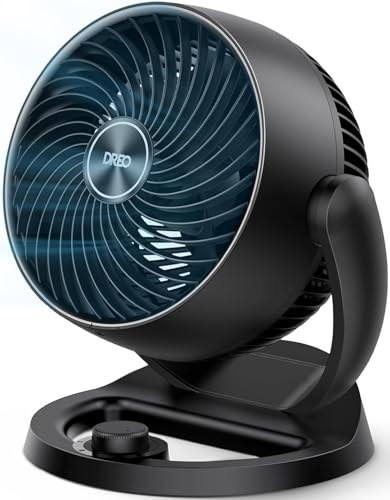
Dreo 12-Inch Whole-Room Table Air Circulator
Small fans often make a lot of noise while pushing a breeze that fades a few feet from the desk. That mismatch becomes especially annoying at night, in a warm kitchen, or during a long afternoon beside a heat-producing computer. The Dreo air circulator takes a broader approach to the best table top fan idea, pairing a compact 12-inch body with 70-foot airflow reach and a noise rating as low as 28 dB. It’s still a straightforward fan, but its design aims beyond close-range face cooling.
Dreo 12-Inch Air Circulator Fan
The Dreo measures 9 inches deep, 11 inches wide, and 12 inches high, so it occupies more room than a palm-sized personal fan but stays manageable on a desk, dresser, countertop, or sturdy shelf. That middle-ground size gives the blades enough room to move useful air without turning the fan into a bulky floor appliance. Its compact 12-inch frame also includes a convenient base and handle, which makes moving it between rooms less of a chore. Still, a narrow nightstand may feel crowded once lamps, chargers, and other bedside items enter the picture.
Placement isn’t limited to a tabletop. The supplied details state that the fan can be hung on a wall, creating another option for crowded offices, bedrooms, kitchens, or hobby rooms. Wall placement can free up valuable surface space and keep the airflow above stacks of papers or low furniture. This wall-mounting flexibility is practical, though mounting hardware, wall suitability, and installation requirements should be confirmed before committing to a permanent spot.
The fan arrives ready to use out of the box, avoiding the fiddly assembly that can sour the first impression of a simple appliance. Knob controls keep operation familiar, and there’s no complicated display to navigate just to change speed. That straightforward setup suits daily routines where the fan may be turned on and adjusted several times without much thought. The downside is equally plain: no remote control or app-based operation is listed in the provided information.
WingBoost Airflow Reaches Across the Room
Dreo’s WingBoost system combines deep-pitched blades with an aerodynamic design intended to propel air as far as 70 feet. That stated reach separates this model from tiny desk fans that provide relief only when they’re parked within arm’s length. A long-range air stream can move through a bedroom, living area, or home office without forcing the fan to occupy the closest available surface. Room layout, furniture, open doors, and the chosen speed will naturally influence how strongly that breeze feels at a distance.
The airflow pattern is designed for circulation rather than merely blasting one spot with a narrow gust. By moving air across a wider room, the fan can help break up warm pockets near ceilings, windows, electronics, or sun-facing walls. That whole-room circulation may make the environment feel more even, especially where vents leave certain corners neglected. It won’t lower the actual temperature like air conditioning, but better air movement can make existing cooling feel more useful.
Strong reach also allows more freedom in furniture placement. The fan doesn’t necessarily need to sit at the edge of a desk, blow directly into the face, or compete with a monitor for the most convenient position. Set farther away, it can create a softer, more natural-feeling breeze while still moving air around the workspace. This distance-friendly performance is especially appealing when close airflow causes dry eyes, scattered paperwork, or an uncomfortably concentrated chill.
There is a tradeoff, though. A fixed air circulator doesn’t distribute air in the same moving pattern as an oscillating fan, and automatic side-to-side oscillation isn’t listed in the supplied description. The Dreo relies on reach and manual positioning instead. Its directed circulation suits a defined airflow path, but rooms with several occupied corners may benefit more from a model that sweeps continuously.
Quiet Enough for Sleep and Focused Work
Fan noise feels louder after dark, particularly when the unit sits near a pillow or on a bedside dresser. Dreo states that this model can operate at a noise level as low as 28 dB by using NACA technology and a bionic design to move air efficiently. That 28 dB minimum noise rating supports quieter use during sleep, reading, calls, or concentrated desk work. The figure should be understood as the lowest stated operating noise, not a promise that every speed remains equally quiet.
Low speed will generally be the natural setting for nighttime circulation because it balances gentle airflow with reduced sound. Medium speed can provide more noticeable cooling while remaining practical for daytime work, and high speed favors stronger circulation when the room feels muggy or stale. The three-speed range keeps those choices simple without burying them inside touch-sensitive controls. A physical knob is also easier to locate by feel when the room is dark.
Sound character matters alongside volume. A steady rush of air often fades into the background, while clicking, pulsing, or rattling can keep attention locked on the fan. The aerodynamic design is intended to reduce unnecessary turbulence, helping the Dreo move air without sounding harsher than the job requires. Its quiet airflow design is a meaningful strength, though surface vibration may still increase if the fan sits on a hollow, loose, or uneven piece of furniture.
Distance can make the fan feel quieter, too. Since the airflow is designed to travel farther, the unit can be positioned away from the bed or microphone rather than sitting inches from the listener. That setup reduces perceived motor noise while preserving useful circulation across the room. The combination of long reach and low-speed operation offers more flexibility than a weak fan that must stay close to be felt.
A 120-Degree Tilt Makes Placement Less Fussy
The fan head provides 120 degrees of adjustable tilt, giving it a wider aiming range than many compact fans with limited vertical movement. Air can be directed forward across a desk, upward from the floor, or toward higher areas where warm air tends to collect. This 120-degree adjustable tilt helps the base remain stable while the airflow angle changes. No propping the fan on books, no balancing it at the edge of a shelf, and no wrestling with an awkward stand.
Floor placement makes sense when the goal is to push cooler air upward or move air from a doorway into a room. On a countertop, the same fan can aim above dishes, plants, papers, or other objects that shouldn’t receive a direct blast. The adjustable head also works well beside a bed because the breeze can be angled across the room instead of blowing straight toward the face. That directional control can reduce dry eyes and make overnight airflow feel less aggressive.
The tilt range also improves compatibility with other appliances. A fan positioned near a humidifier can help disperse moisture more evenly, while placement near an air purifier may assist room circulation around the unit. Used with a space heater, it can help move warmed air away from the immediate area, provided safe clearances and the heater manufacturer’s instructions are followed. This appliance-pairing flexibility broadens the Dreo’s usefulness beyond hot-weather cooling.
Three Speeds Favor Simplicity Over Automation
The knob offers three built-in speeds, making adjustments quick and predictable. Low handles background circulation, medium suits steady everyday comfort, and high moves stronger air through the room. This simple speed control avoids accidental taps and confusing icon combinations found on some digital models. It also means the fan can be operated without hunting for a remote that has slipped between couch cushions.
Three choices may feel limiting to anyone who likes extremely fine airflow adjustments. There’s no mention of an ultra-low sleep setting, variable-speed dial, timer, or programmable schedule in the supplied details. A change in distance or tilt can soften the breeze, but that isn’t as precise as having several incremental speeds. The limited control range is worth weighing against the appeal of a clean, uncomplicated interface.
Manual operation is easiest when the fan stays within reach on a desk or bedside table. Across a living room, getting up to adjust the knob may become less convenient, particularly if the speed needs frequent changes. The absence of a listed remote keeps the design basic and potentially reduces unnecessary electronic clutter. Still, hands-on controls won’t suit every room arrangement.
Seasonal Circulation Can Support Other Appliances
The Dreo isn’t confined to summer use. Its air-circulation design can help distribute warmth from a space heater, moisture from a humidifier, or filtered air from an air purifier more quickly around a room. That year-round circulation can reduce stagnant zones where one appliance’s effect remains concentrated near its outlet. The fan doesn’t increase the appliance’s actual capacity, but it may help the existing output travel more evenly.
Air conditioning can benefit from the same principle. Placing the fan where it can push cool air away from a vent may help reach a warm desk, bed, or sitting area without another thermostat adjustment. The potential for lower cooling demand depends on room insulation, weather, appliance efficiency, and personal habits, so a fixed savings figure wouldn’t be credible. The practical win is a room that feels less patchy without asking one cooling source to do all the work.
Cold-weather use requires a sensible setup rather than simply pointing the fan directly at a heater. Safe spacing must remain the priority, and the fan shouldn’t interfere with heater safeguards or manufacturer-required clearances. Angled correctly, it can encourage warm air to travel instead of pooling near the ceiling or one side of the room. That seasonal airflow management makes the unit more useful than a personal fan that disappears into storage after summer.
Cleaning Access Addresses a Common Fan Headache
Dust buildup is the quiet enemy of every air circulator. Blades and grilles collect lint, pet hair, kitchen residue, and fine particles, which can weaken airflow and make the fan look neglected. Dreo states that parts can be removed for cleaning, giving this model a serviceable design rather than sealing the mess behind an inaccessible guard. Easier access encourages routine maintenance before dust becomes a stubborn layer.
Removable parts don’t eliminate the need for care. The fan should be disconnected from power before cleaning, and components need to be reinstalled securely before operation. A soft brush or cloth can handle regular surface dust, while deeper cleaning frequency will depend on pets, open windows, cooking activity, and indoor air conditions. This maintenance-friendly construction is useful, but it still asks for a small amount of hands-on upkeep.
The handle helps during cleaning because the fan can be moved away from walls or furniture without grabbing the grille. That same feature makes it easier to carry the unit from a bedroom to an office or kitchen as routines change. Combined with its stable base, the portable handle design adds everyday convenience without introducing another electronic feature. Simple hardware sometimes earns its keep more reliably than a crowded control panel.
Practical Strengths and Honest Limitations
The Dreo’s strongest case rests on three supplied specifications: airflow reaching up to 70 feet, operation as quiet as 28 dB, and a 120-degree adjustable head. Together, those features address weak reach, distracting noise, and awkward fan placement. The whole-room airflow capability gives it broader ambitions than a fan meant only for close-range desktop relief. Its size remains compact enough for common surfaces, though it isn’t tiny.
The limitations come from what isn’t listed. Automatic oscillation, remote control, a timer, cordless use, and smart features aren’t included in the provided description. Those omissions keep operation straightforward, but they may matter in a large bedroom or living room where manual adjustment is inconvenient. The basic three-speed design favors dependable simplicity over automation.
Space should also be measured before purchase rather than judged from the word “tabletop.” At 9 by 11 by 12 inches, the fan needs a stable area and clear room around its intake. A crowded desk may accommodate it, but not without rearranging speakers, notebooks, or charging accessories. The moderate tabletop footprint is reasonable for its airflow goals, yet smaller surfaces may call for a more compact personal fan.
As a best table top fan contender, the Dreo stands out most where quiet circulation and meaningful reach matter more than bells and whistles. It can serve a bedroom at night, move air around a home office during the day, and support heating or air-treatment appliances as seasons change. The removable components make cleaning less of a knuckle-scraping chore, while the handle encourages movement between rooms. Its compromises are easy to understand: manual controls, no listed oscillation, and a body that needs more space than a miniature desk fan.
Dreo 11-Inch Whole-Room Table Air Circulator
Heat rarely spreads itself evenly. One corner feels stale, the desk gets stuffy, and the air near the bed barely moves even though the rest of the room seems tolerable. That’s where a best table top fan needs to do more than blow directly at one chair. The Dreo 11-inch air circulator is built around 800 CFM airflow, a stated 40-foot reach, and low-noise operation intended to move air through a room without taking over the space.
Dreo 11-Inch Air Circulator Fan
The Dreo keeps its footprint modest while aiming for broader circulation than a typical personal desk fan. At 11 inches, it sits in a useful middle zone: large enough to move meaningful air, yet compact enough for a desk, dresser, kitchen counter, or sturdy shelf. The space-conscious size matters in rooms already crowded with monitors, lamps, chargers, books, or cooking tools. It won’t disappear into the background like a tiny USB fan, but it also doesn’t demand the floor space of a tower model.
A built-in handle makes relocation straightforward, so the fan can shift from a home office during the day to a bedroom at night. The same handle also supports wall mounting, according to the supplied details, which helps free up furniture surfaces and raises the airflow above common obstructions. That portable and mountable design gives the fan more flexibility than a fixed desktop unit. Wall installation still requires a suitable surface and sensible placement, so the mounting option shouldn’t be treated as completely effortless.
The design leans toward practical operation rather than decorative flair. A physical knob controls the three speeds, and the head tilts manually instead of relying on motorized positioning. That simple control layout keeps everyday use quick and familiar. Anyone expecting app control, a remote, or a digital display may find the setup basic, but basic controls can be a relief when all that’s needed is a fast change in airflow.
800 CFM Airflow Changes the Room Faster
Dreo states that this model produces 800 CFM of airflow and can establish whole-room circulation in about three minutes. Those claims describe a fan designed to stir the larger body of room air rather than create a narrow breeze that disappears a few feet away. The 800 CFM output gives the circulator enough ambition for bedrooms, offices, kitchens, and other enclosed spaces where warm or stale pockets tend to linger. Actual circulation speed will still depend on room size, furniture placement, open doors, and the selected speed.
The airflow dynamics design directs turbine-style air into the room to disturb stagnant zones and keep air moving through a broader area. That approach can be useful near a poorly placed vent, a sunny window, or a desk packed with heat-producing electronics. Instead of lowering the thermostat every time one corner feels uncomfortable, the fan can help distribute the air that’s already present. This room-balancing effect is often more useful than a harsh breeze aimed at the face all afternoon.
Strong circulation also supports rooms that feel uneven from floor to ceiling. Warm air may gather higher up, while cooler air stays near the floor or close to an air-conditioning outlet. Directing the fan upward can help mix those layers and reduce that patchy feeling. The vertical air mixing won’t change the actual temperature by itself, but it can make heating or cooling feel less concentrated in one spot.
Forty-Foot Reach Adds Placement Freedom
The supplied specifications list airflow reach of up to 40 feet, which gives the Dreo more flexibility than a small fan that must stay within arm’s length. A longer stream allows the unit to sit across the room, on a wall, or beside another appliance while still contributing to circulation. That 40-foot airflow reach can reduce desk clutter because the fan doesn’t always need the closest position. Distance also helps soften the feel of the breeze when direct airflow becomes too sharp or drying.
Dreo attributes that reach to TurboSilent Technology, aircraft-turbine-inspired mechanics, and a wind tunnel design. Put into practical terms, the fan is built to send air farther instead of letting it disperse immediately around the grille. The turbine-style airflow should suit rooms where a weak personal fan leaves most of the space untouched. Still, doors, tall furniture, curtains, and awkward corners can interrupt any air stream, so placement deserves a little thought.
The fan doesn’t list automatic side-to-side oscillation in the supplied information, which is worth noting despite the strong reach. It relies on directional power and manual aiming rather than sweeping air continuously across several positions. That fixed airflow path works well for circulating air toward a doorway, across a bed, or through a work zone. Shared seating spread around a wide room may call for occasional repositioning.
Twenty-Eight Decibels Keeps the Mood Calmer
A loud fan can cool the room while ruining the reason for using it. Buzzing near a microphone, pulsing beside a pillow, or rattling during quiet work gets old in a hurry. Dreo rates this model as low as 28 dB, using unique blades and its TurboSilent design to reduce operating noise. That 28 dB minimum noise level makes the fan better suited to sleep, reading, calls, and focused work than a rough-sounding utility fan.
The lowest stated noise level shouldn’t be mistaken for identical sound across all three speeds. Higher output generally creates more airflow sound because more air is moving through the grille and across the room. Low speed will likely be the natural fit for overnight use, while medium and high serve warmer moments when stronger circulation matters more. The three-speed balance lets noise and cooling be adjusted without overcomplicating the controls.
Placement affects sound as much as motor design. A hollow dresser, loose shelf, or uneven desk can amplify vibration, turning a quiet fan into an annoying one. A stable surface and a little clearance around the intake help preserve the low-noise performance described in the product information. Moving the unit farther from the bed or workstation can also make the sound less noticeable while the 40-foot reach continues moving air.
A 120-Degree Tilt Fixes Awkward Angles
The head tilts manually from minus 30 degrees to 90 degrees, creating a 120-degree vertical range. That gives the fan room to aim slightly downward, straight ahead, or sharply upward depending on where it’s placed. The 120-degree adjustable tilt is especially useful on low tables, floors, high shelves, or wall mounts where a fixed forward-facing grille would miss the intended area. No stacking books underneath, no balancing the base on an edge, and no settling for airflow at knee level.
Upward tilt can help move cooler floor air into the room or encourage warm air near the ceiling to mix with lower layers. A forward angle works well across a desk or bed, while a slight downward position may suit a high shelf or wall-mounted setup. This wide aiming range gives the fan a role beyond close personal cooling. It also helps keep the breeze off loose papers, food preparation areas, or sensitive eyes without sacrificing circulation.
Manual adjustment is reliable, though it lacks the convenience of motorized vertical movement. The fan stays where it’s aimed until someone changes it, which can be either a strength or a limitation. A fixed direction avoids the breeze repeatedly moving away from the occupied area, but it won’t automatically adapt as people shift around the room. The manual tilt system favors predictable airflow over automation.
Three Speeds Keep Daily Operation Straightforward
The control knob offers three speeds, covering light circulation, moderate cooling, and stronger room movement. A twist changes the airflow without menus, touch panels, or tiny icons that are hard to read in low light. The three-speed knob suits quick adjustments during work, sleep, cooking, or household chores. It also avoids the frustration of searching for a remote that has wandered under furniture.
Low speed makes sense when only gentle air movement is needed. Medium can keep a warm office or bedroom comfortable for longer stretches, while high is better suited to faster circulation after the room has been closed up. The practical speed range covers common situations, though it doesn’t provide the fine tuning of a model with several levels. Changing distance and tilt can help bridge the gaps between settings.
The simplicity comes with missing conveniences. The supplied details don’t mention a timer, remote, app, automatic oscillation, or cordless battery. Those omissions keep the interface clean, but they may matter if the fan sits across a large room or needs to turn off automatically during the night. The hands-on operation works best where the controls remain reasonably accessible.
Seasonal Air Circulation Extends Its Usefulness
The Dreo can support more than warm-weather comfort because an air circulator helps move heated, cooled, humidified, or filtered air. Positioned near an air-conditioning vent, it can encourage cool air to travel beyond the immediate area. Near a purifier or humidifier, it may help the treated air spread more evenly across the room. This year-round circulation role gives the fan a reason to stay out after summer ends.
Space-heater pairing can also improve the distribution of warm air, provided the heater’s required clearances and safety instructions remain the priority. The fan should never block the heater, sit too close to hot components, or interfere with safety sensors. Used from a sensible distance, its strong directional airflow can help prevent warmth from staying trapped near one wall or rising unused toward the ceiling. That makes the room feel less uneven without asking the heater to produce more output.
Energy savings can’t be guaranteed from the supplied information because climate, insulation, appliance efficiency, and thermostat habits vary widely. The realistic benefit is improved distribution, which may reduce the urge to push heating or cooling equipment harder just because one area feels off. A better-mixed room often feels more comfortable at the same thermostat setting. That’s a practical gain, even without attaching an invented dollar figure.
Real Strengths Come With Clear Tradeoffs
The Dreo’s strongest qualities are easy to identify from the provided specifications. It combines 800 CFM airflow, up to 40 feet of reach, operation as low as 28 dB, and a broad vertical tilt range in an 11-inch format. Those features directly address weak reach, noisy motors, and awkward aiming. The fan is better suited to moving room air than a tiny personal model built only for close-range cooling.
The tradeoffs are just as plain. Three speeds limit fine adjustment, manual controls require physical access, and no automatic side-to-side movement is listed. The fan may also occupy more tabletop space than expected if the surface is already crowded. Its moderate footprint is reasonable for the airflow it targets, but a tiny desk or narrow bedside shelf may need something smaller.
Maintenance details aren’t included in the supplied description, so easy disassembly or tool-free cleaning shouldn’t be assumed. Like any circulator, the fan will collect dust on the intake, grille, and blades over time. Routine surface cleaning and clear space behind the intake help protect steady airflow and reduce the chance of added noise. A powerful fan still needs basic care if it’s expected to keep moving air efficiently.
As a best table top fan candidate, the Dreo 11-inch circulator makes the strongest case in rooms where reach and quiet operation matter more than smart features. It can sit across a bedroom, aim upward from the floor, or mount on a wall while continuing to move air through a defined path. The combination of strong room circulation and a low stated noise floor feels thoughtfully matched to offices, kitchens, and sleeping areas. Its appeal is practical rather than flashy: move more air, aim it where needed, and keep the controls simple.
duludulu Rechargeable 100-Speed Desk Fan
A crowded desk doesn’t leave much room for a bulky fan, yet weak airflow can be just as frustrating as the heat itself. Cables add another nuisance, especially when outlets are already claimed by a laptop, monitor, lamp, and phone charger. The duludulu rechargeable model approaches the best table top fan role with 100 adjustable speeds, cordless operation, a digital display, and a compact 0.9-pound body. It’s a feature-heavy little fan, but those features are aimed at practical control rather than decoration.
duludulu 100-Speed Rechargeable Desk Fan
The first thing that separates this model from basic three-speed fans is its unusually broad speed range. A long press allows stepless adjustment from level 1 through 100, while a short press jumps between four presets at levels 25, 50, 75, and 100. That mix gives the 100-speed control system both precision and convenience. Fine adjustments work well for quiet desk use, while the presets make quick changes possible without holding the button every time.
The digital display shows the selected speed and remaining battery level, which removes some of the guesswork common with rechargeable fans. Instead of waiting for airflow to weaken unexpectedly, the display gives a clearer sense of when charging is due. This battery and speed readout is especially useful during travel, dorm use, or long work sessions away from a wall outlet. The tradeoff is that the display adds another electronic component that simpler fans don’t need.
Its black housing and compact frame keep the design understated rather than flashy. At 0.9 pounds, it can be carried from a desk to a nightstand, packed for a trip, or moved around a dorm room without much effort. The lightweight portable build makes it easier to use in several places instead of buying a separate fan for each room. Small size still means smaller blades than a whole-room circulator, so expectations should stay focused on personal and nearby cooling.
Dual Cooling and Seven Blades Add More Punch
The fan uses dual cooling technology and a seven-blade spiral design intended to create stronger, broader airflow than a basic miniature desk fan. More blades can help smooth the air stream and distribute it across a wider area rather than producing one narrow blast. The result is meant to feel deeper and more refreshing at close range. This seven-blade airflow design suits desks, bedside tables, kitchen counters, and other compact setups where direct comfort matters most.
Stepless speed control helps make that stronger airflow easier to live with. A high setting may be welcome after walking in from the heat, but it can become too much during reading, typing, or sleeping. Dropping the fan to a precise lower level allows the breeze to stay present without constantly blowing papers around or drying the eyes. That fine airflow tuning is a meaningful advantage over fans that leave a large gap between low and medium.
The silicone base helps keep the fan planted on smooth surfaces. That detail sounds minor until a lightweight fan starts creeping across a desk from vibration or gets nudged by a charging cable. A more secure footing supports stable desktop use and keeps the airflow angle from drifting. Still, any compact 0.9-pound appliance can be tipped if placed too close to an edge, so sensible positioning remains part of the setup.
Quiet Operation Fits Sleep and Focused Work
The supplied description rates the fan at about 30 dB on low speed. That puts the emphasis on gentle overnight airflow and quiet office use rather than high-output silence across the entire range. The 30 dB low-speed rating should make the fan easier to tolerate beside a bed, microphone, or reading chair. Higher settings will naturally create more blade and airflow noise because the fan is moving more air.
Low-speed precision is where the 100-level design becomes especially useful. Instead of choosing between a weak first setting and a noticeably louder second setting, the fan can be nudged upward in smaller steps. That makes it easier to settle on a comfortable noise-to-airflow balance for sleep, calls, study sessions, or close desk work. It won’t be completely silent, but a steady low hum is usually easier to ignore than rattling or pulsing sound.
Surface choice also affects perceived noise. A hollow nightstand or loose metal shelf can amplify vibration, even if the motor itself is quiet. The silicone base should help dampen some movement, but a stable, solid surface will still give the quiet fan design the best chance to perform as intended. Keeping nearby objects away from the grille also prevents tapping sounds that can become maddening in a quiet room.
Battery Life Supports Cordless Daily Use
The rechargeable battery is rated for up to 17 hours on low speed and about 4 hours at maximum output. That range makes sense because high-speed airflow demands much more power than a gentle background breeze. The up to 17-hour runtime can cover a long workday, an overnight period, or several shorter sessions when the fan stays near the lower end of its speed range. Maximum speed is better treated as a short-term cooling boost rather than an all-day setting.
A full charge takes about four hours through a Type-C USB connection. Charging can come from a wall adapter, laptop, or power bank, which gives the fan more flexibility than a model tied to a proprietary charger. This USB-C charging setup is convenient for travel because the same general charging ecosystem may already be in the bag. Charging speed and compatibility can still vary with the power source used.
Cordless operation solves a common desk problem: too many wires and not enough outlets. The fan can sit on a bedside table, move to a kitchen counter, or travel to a campsite without dragging an extension cord behind it. That battery-powered portability also helps during short power interruptions or in rooms where the nearest outlet is awkwardly placed. Battery aging is the long-term tradeoff, since rechargeable capacity gradually declines with repeated use.
A 360-Degree Head Makes Aiming Easy
The fan head rotates through 360 degrees, allowing airflow to be directed upward, downward, forward, or at angles in between. This broad range helps when the base sits lower than the intended cooling zone or when the fan needs to avoid blowing directly into the face. The 360-degree adjustable head gives more placement freedom than a fixed-front desk fan. It also lets the unit circulate air toward a bed, chair, ceiling, or nearby doorway without moving the entire base.
Despite the phrase “full-room air circulation” in the supplied details, the adjustment is manual rather than described as automatic oscillation. The fan stays aimed where it’s set instead of sweeping from side to side by itself. That manual directional control works well for one sleeping position or workstation, but it won’t continuously share airflow across several seats. The distinction matters because a rotating head and an oscillating motor solve different problems.
Manual rotation does have one clear benefit: the breeze doesn’t keep wandering away. Once the preferred angle is set, the airflow remains focused on the same spot. That can feel better at a desk or bedside where consistent cooling matters more than broad coverage. The fixed airflow direction also avoids the mechanical movement and extra noise that oscillation can introduce.
Compact Safety Details Help With Travel
The grille is described as safety-encrypted, with spacing intended to prevent fingers from reaching the internal blades. That protection matters around cramped desks, luggage, dorm rooms, and bedside areas where hands may reach toward the fan in low light. The protective grille design adds reassurance without requiring a bulky outer cage. It doesn’t remove the need for caution, especially around children, cords, or loose fabric.
At only 0.9 pounds, the fan is easy to place in a backpack, suitcase, or vehicle storage compartment. Its compact construction suits temporary setups such as hotel rooms, dorm desks, shared offices, and camping tables. This travel-friendly weight makes it less of a commitment to carry than a full-size circulator. The smaller body also means it’s better at personal cooling than pushing air evenly through a large open room.
Portability brings a few practical concerns. A lightweight fan needs a stable surface, and the battery should be protected from excessive heat, moisture, or rough handling. The silicone base helps on desks and counters, but uneven outdoor tables may still require careful positioning. The compact portable design is genuinely useful, though it works best when treated like a small electronic appliance rather than tossed around casually.
Where the Fan Shines and Where It Doesn’t
The duludulu model makes the strongest case where precise airflow control and cordless freedom matter more than room-wide power. A bedside table, home office, dorm desk, kitchen counter, or travel setup can benefit from the adjustable speed range and small footprint. The 100 stepless speeds give it far more tuning flexibility than most compact fans with only a few fixed levels. That feature is especially helpful for people who notice small changes in noise or airflow.
Its battery performance is another clear strength, particularly at low speed. Up to 17 hours of stated runtime can handle extended use without keeping the fan permanently attached to a cable. The four-hour maximum-speed runtime is less generous, but that’s the expected tradeoff for stronger output. Anyone planning to use level 100 all day will likely need access to USB charging.
The limitations come from scale and manual operation. This is a lightweight personal fan, not a large whole-room circulator, and no automatic oscillation is stated in the supplied description. The digital display and extensive controls may also feel excessive to someone who only wants low, medium, and high. Its feature-rich interface rewards fine control, but simplicity seekers may prefer a more basic knob-operated model.
As a best table top fan candidate, the duludulu stands out through control, portability, and quiet low-speed use. The combination of a digital battery display, USB-C charging, a 360-degree head, and a stable silicone base fits modern desk and travel routines well. It won’t replace a larger air circulator for an entire room, but it offers personalized cordless cooling without forcing the user to settle for three widely spaced airflow levels.


Best Quiet Ceiling Fan For Bedroom 2026 Ultimate Comfort Picks

Best Ceiling Fan For Master Bedroom 2026 With Ultimate Comfort

Best White Ceiling Fan With Light For Bedroom 2026 Top Picks

Best Quorum Medallion Ceiling Fan 2026 With Style & Breeze
Best Outdoor Fan For Pergola 2026 Comfort Boost

Best Ceiling Fan For Great Room 2026 With Ultimate Comfort

Best Outdoor DC Ceiling Fans 2026 For Breezy Comfort
Best ceiling exhaust bath fan with light and heater 2026





