
Best UV Light For Resin Curing 2026 Top Picks

Best uv light for resin curing matters more than it first seems, especially once sticky surfaces, cloudy finishes, and soft edges start ruining pieces that looked fine in the mold. Resin can be picky. A weak lamp may cure the top layer while leaving deeper areas gummy, and that’s the kind of headache that turns a quick craft session into a full cleanup job. The right UV curing light gives small jewelry pieces, charms, nail-art accents, and coated decorations a better shot at curing evenly without constant repositioning.
Wavelength compatibility sits near the top of the list because many UV resins respond best around the common 365nm to 405nm range. That doesn’t mean every lamp in that range behaves the same, though. A compact flashlight-style lamp can help with spot curing, while a larger dome-style unit offers more even coverage for trays, pendants, or several small pieces at once. So, the real trick is matching the lamp to the size of the work, not chasing the brightest-looking beam on the product page.
Coverage area can make or break the curing routine. Tiny lights feel handy until larger resin pieces need several passes, and every pass creates another chance for uneven hardening. A broader lamp usually feels less fussy because the resin stays under consistent light from edge to edge. Still, bigger units take up more desk space, which can be annoying on a crowded craft table already packed with molds, pigments, gloves, cups, and half-finished experiments.
Timer controls are another small feature that saves patience. Resin curing often needs short bursts, especially with thin layers, so a lamp with 30-second, 60-second, or longer presets keeps the process calmer and more repeatable. Without a timer, it’s easy to overdo one side and under-cure another, especially while juggling pigments or domed coatings. Well, nobody wants to babysit a lamp with one eye on a phone stopwatch while resin slowly levels itself.
Heat buildup deserves attention, too. Some UV lamps warm up during longer curing sessions, and thicker resin pieces may react poorly if the cure gets too aggressive. A gentler, steady cure can help reduce warping, yellowing concerns, or surface weirdness, depending on the resin formula. That’s why the best uv light for resin curing isn’t always the most powerful unit, but the one that balances output, coverage, control, and comfort during real craft work.
- LFR Score9.0
LFR Score is a ranking system developed by lightfansreviews.com. LFR Score has no relationship or impact from any manufacturers or sales agent websites. Learn more
- BrandPPESULK
- LFR Score9.0
LFR Score is a ranking system developed by lightfansreviews.com. LFR Score has no relationship or impact from any manufacturers or sales agent websites. Learn more
- BrandKISREL
- LFR Score9.0
LFR Score is a ranking system developed by lightfansreviews.com. LFR Score has no relationship or impact from any manufacturers or sales agent websites. Learn more
- BrandHeyClear

- LFR Score8.8
LFR Score is a ranking system developed by lightfansreviews.com. LFR Score has no relationship or impact from any manufacturers or sales agent websites. Learn more
- BrandLET'S RESIN

- LFR Score8.8
LFR Score is a ranking system developed by lightfansreviews.com. LFR Score has no relationship or impact from any manufacturers or sales agent websites. Learn more
- BrandPUWANJILI

- LFR Score8.8
LFR Score is a ranking system developed by lightfansreviews.com. LFR Score has no relationship or impact from any manufacturers or sales agent websites. Learn more
- BrandResiners

- LFR Score8.8
LFR Score is a ranking system developed by lightfansreviews.com. LFR Score has no relationship or impact from any manufacturers or sales agent websites. Learn more
- BrandWaklyte
Last update on 2026-06-15 / Affiliate links / Images, Product Titles, and Product Highlights from Amazon Product Advertising API
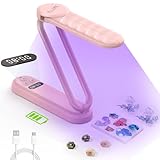
PPESULK Cordless UV Light for Resin Curing
Halfway through a resin project, few things feel more frustrating than realizing a piece that looked crystal clear has developed tacky patches hours later. The promise behind the best uv light for resin curing is consistency, yet many compact lamps stumble once projects become larger or more frequent. PPESULK's cordless resin lamp enters that gap with a practical approach, prioritizing flexibility, uninterrupted sessions, and user control over flashy gimmicks.
PPESULK Resin Lamp
PPESULK's 34-bead setup immediately stands out because it focuses on delivering steady output rather than dramatic claims. The lamp emits UV wavelengths between 365–405nm, which aligns with the curing requirements of most UV resins commonly used in jewelry molds, keychains, and decorative crafts. Small details such as domed surfaces and narrow crevices benefit from even exposure, reducing those annoying sticky corners that require repeat sessions.
Fast curing performance isn't simply about shaving minutes off a project. Even curing means resin layers develop a more uniform finish without obvious soft spots. During longer creative sessions, the lamp reportedly maintains stable brightness instead of gradually fading, which often happens with lower-powered rechargeable alternatives.
Of course, expectations matter. The manufacturer clearly notes that this unit is not suitable for AB epoxy resin. That's actually refreshing. Rather than pretending to work with every resin formula under the sun, PPESULK limits its promise to UV resin applications, helping avoid disappointment caused by mismatched materials.
Flexible Timing Without Guesswork
Timer customization turns out to be one of the lamp's strongest assets. Resin isn't predictable. Thin jewelry coatings may cure quickly, while layered phone charms and thicker coaster embellishments often demand extra patience. Starting with a three-minute countdown and adding thirty-second intervals gives creators the freedom to adjust without restarting entire cycles.
That little detail changes the workflow considerably. Instead of hovering nearby with a stopwatch, interruptions become less stressful. Someone mixing pigments, repositioning inclusions, or cleaning tools won't have to scramble back because an automatic setting expired too soon.
Extended curing options reaching thirty or sixty minutes also accommodate experimental projects. Larger UV resin pieces frequently require staged curing, and fixed one-minute presets can feel limiting. Here, the lamp adapts to the project rather than forcing the project to adapt to the lamp.
Practicality wins over novelty. Resin crafting already demands enough attention through bubble removal, layering, and placement. Eliminating timer frustration makes the entire process noticeably smoother.
Wireless Convenience That Actually Matters
The 3000mAh rechargeable battery shifts the experience from workstation-bound crafting toward genuine portability. Cords stretched across crowded desks tend to snag molds, pigment jars, and silicone tools at the worst possible moment. A cordless setup creates breathing room.
Battery performance is rated for up to three hours of operation, which suits batches of jewelry components, ornament pieces, and decorative accessories. While few creators continuously cure resin for that entire period, the convenience of completing multiple sessions without hunting for outlets shouldn't be underestimated.
Travel-friendly crafting also becomes more realistic. Weekend workshops, kitchen-table projects, and temporary creative setups all benefit from equipment that moves effortlessly. The pink finish gives it a playful personality without overshadowing its functionality.
Rechargeable products inevitably introduce charging routines, and those preferring permanent plug-in setups may not fully utilize this advantage. Still, the wireless approach addresses one of the most common annoyances surrounding compact UV stations.
Foldable Design With Real Adaptability
Adjustable height and width aren't flashy specifications, yet they often determine whether a lamp remains useful six months later. Resin projects evolve. Tiny pendants lead to layered keychains. Then come larger molds that suddenly refuse to fit beneath rigid curing units.
The foldable structure accommodates that learning curve gracefully. Narrow settings support delicate pieces positioned close to the light source, while expanded configurations create room for taller molds. Larger resin creations may still require additional curing time, something the product openly acknowledges.
Storage practicality deserves attention as well. Dedicated craft rooms aren't universal. Supplies frequently migrate between shelves, closets, dining tables, and spare corners. A lamp that folds neatly into smaller spaces respects those realities.
Compromise naturally exists. Massive resin art pieces designed for oversized molds will exceed the comfort zone of most portable lamps. Yet for earrings, necklaces, coasters, decorative tags, and phone accessories, the adjustability offers meaningful versatility.
Everyday Resin Experience
Ease of use ultimately defines whether equipment becomes part of a regular routine or gathers dust. PPESULK keeps the learning curve approachable without feeling stripped down. The controls remain straightforward enough for beginners while offering enough flexibility to satisfy increasingly ambitious projects.
Resin crafting has a habit of teaching patience through trial and error. Soft spots, uneven finishes, and repeated curing cycles can chip away at enthusiasm. Tools that reduce those interruptions quietly support creativity rather than dominating it.
Realistic expectations matter throughout the ownership experience. This lamp excels within UV resin boundaries and acknowledges its limitations. That honesty strengthens its appeal because dependable tools rarely promise miracles. They simply handle their intended job well.
Interestingly, unrelated household concerns sometimes intersect with conversations about UV technology. Readers curious about another specialized application may notice that broader references occasionally appear in discussions such as best UV light for dust mites, highlighting how purpose-built UV devices often perform best within clearly defined roles.
PPESULK's cordless resin lamp succeeds by emphasizing thoughtful conveniences over exaggerated promises. Adjustable timing, rechargeable portability, adaptable dimensions, and stable UV output collectively address frustrations that surface during actual resin work. Rather than chasing novelty, it concentrates on helping projects move from sticky uncertainty toward satisfying completion.
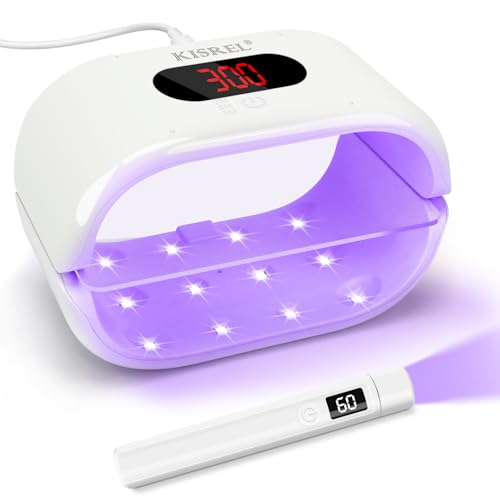
KISREL UV Light for Resin
Few things derail a resin project faster than flipping molds over and over, hoping both sides cure evenly without leaving behind tacky patches. The hunt for the best uv light for resin curing often starts after a handful of ruined charms, cloudy pendants, or domino pieces that looked finished but still bent under pressure. KISREL approaches that frustration differently with a design that tackles one of resin crafting's most common annoyances: uneven exposure during the curing process.
KISREL DualGlow Resin Lamp
The double-sided curing system immediately changes how resin projects move from liquid to solid. Instead of curing one side, repositioning the mold, and repeating the cycle, KISREL uses upper and lower light panels to expose both surfaces simultaneously. That simple adjustment saves effort while helping maintain a more consistent finish across smaller UV resin creations.
Equipped with 24 high-power LED beads, the lamp combines 365nm and 405nm dual wavelengths specifically intended for UV resin applications. Resin artists frequently encounter situations where edges cure differently than center portions, particularly with layered embellishments. The balanced exposure aims to reduce those inconsistencies without demanding constant supervision.
The dedicated 36W output focuses entirely on UV resin rather than trying to accommodate incompatible materials. That distinction matters. Products claiming universal compatibility often create unrealistic expectations, whereas KISREL clearly positions itself within the UV resin category.
Double-Sided Efficiency In Practice
Simultaneous curing feels less like a novelty and more like a practical workflow improvement. Jewelry pieces suspended in molds, coaster embellishments, and resin dominoes benefit from receiving light from both directions. Less handling also means fewer opportunities to accidentally disturb freshly poured resin before it fully stabilizes.
Projects involving embedded flowers, glitter gradients, or layered pigments often require patience. Repeatedly flipping molds introduces interruptions that can stretch a short creative session into an all-evening affair. KISREL trims some of that downtime by simplifying the curing sequence.
Uniform exposure doesn't guarantee perfection, though. Thicker UV resin pours may still demand additional curing intervals depending on resin depth and formulation. The lamp assists the process, but realistic expectations remain important for anyone experimenting with larger decorative pieces.
That balanced perspective actually strengthens confidence in the product. It acknowledges the natural limitations of UV resin while addressing genuine workflow frustrations.
Detachable Design Adds Flexibility
The magnetic 2-in-1 configuration gives this curing setup an identity distinct from conventional fixed-body lamps. Connected together, both sides operate as a coordinated curing station. Detached, they transform into independent units that can be positioned according to the shape and layout of individual projects.
Creative routines aren't always predictable. One afternoon may involve tiny polymer clay earrings coated with UV resin, while another focuses on several keychains spread across a crowded worktable. Adaptability becomes valuable because rigid equipment often struggles to accommodate evolving project needs.
Separate operation capability also provides opportunities to target unusual curing angles. Awkward mold dimensions, raised decorative details, or asymmetrical pieces sometimes benefit from customized positioning rather than one-size-fits-all exposure.
Magnetic systems occasionally require attention during setup to ensure proper alignment. Fortunately, the operating process itself remains uncomplicated once the connections are correctly positioned.
Flashlight Precision For Tiny Details
The included UV flashlight deserves more appreciation than it might initially receive. Small resin details often become the biggest source of irritation. A delicate charm loop, a recessed area beneath an embellishment, or a thin edge coating can resist broader curing patterns.
Having a dedicated flashlight available introduces another layer of control. Rather than maneuvering an entire curing station toward miniature sections, users can focus UV exposure exactly where it's needed. Spot treatments become quicker and far less awkward.
Precision curing proves particularly useful during staged assembly processes. Resin artists assembling layered jewelry components frequently secure one element before proceeding to the next. The flashlight supports that gradual workflow without overwhelming delicate areas with unnecessary exposure.
Interestingly, lighting discussions sometimes branch into adjacent categories focused on entirely different purposes. Broader household lighting references occasionally surface through resources such as best lamp sets, highlighting how specialized tools tend to excel when designed with one task firmly in mind.
Timers That Respect Creative Momentum
KISREL's timing selections of two, three, and five minutes reflect an understanding that resin curing rarely follows identical rhythms. Thin topcoats cure differently from thicker decorative layers. Having several preset durations eliminates the repetitive cycle of restarting extremely short timers.
Creative momentum has a funny way of disappearing during constant interruptions. Stopping to adjust settings after every minute pulls attention away from pigment placement, mold preparation, and finishing touches. Extended timing options help maintain focus where it belongs.
Reduced mold movement offers another practical advantage. Frequent repositioning introduces opportunities for shifting inclusions or disturbing uncured resin. Longer curing intervals allow projects to remain undisturbed while exposure continues.
Advanced users may occasionally wish for even broader customization, especially during experimental techniques. Yet the selected presets strike a reasonable balance between simplicity and flexibility for most UV resin projects.
Day-To-Day Crafting Experience
Ease of operation often separates equipment that becomes indispensable from tools left tucked away in storage bins. KISREL keeps its interface straightforward enough that attention stays centered on creativity rather than troubleshooting instructions.
Resin crafting already presents enough variables through pigments, inclusions, bubbles, and curing behavior. Equipment that reduces friction allows experimentation to feel enjoyable instead of exhausting. The detachable construction, flashlight integration, and double-sided curing collectively support that objective.
The strongest appeal lies in how thoughtfully the system addresses everyday inconveniences rather than relying on exaggerated promises. Faster workflows, targeted spot curing, and adaptable configurations all stem from situations resin enthusiasts regularly encounter at their workstations.
Limitations still exist. Massive pours and non-UV formulations fall outside its intended scope. Within the boundaries of UV resin jewelry, decorative accessories, coasters, dominoes, and similar crafts, KISREL delivers a practical blend of efficiency and versatility that feels grounded in real creative habits rather than marketing theatrics.
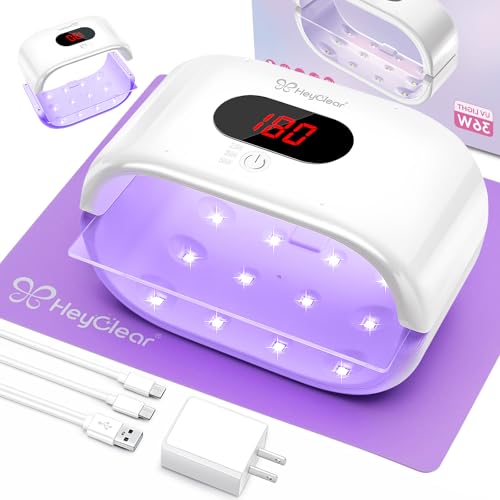
HeyClear UV Light for Resin
A glossy resin piece can look finished on the surface, then betray you with a soft underside, a cloudy edge, or that stubborn tacky feel that ruins the mood fast. That’s why the best uv light for resin curing needs more than raw brightness; it needs smart exposure, sensible timing, and a setup that doesn’t make every mold feel like a balancing act. HeyClear steps into that messy little corner of craft life with a dual-sided design built to cure from both directions, which feels especially useful for jewelry, keychains, decor pieces, and nail art accents that need cleaner results without constant flipping.
HeyClear Dual UV Lamp
HeyClear Dual UV Lamp keeps its main idea refreshingly direct: cure the front and back of UV resin projects at the same time. The lamp uses a 36W dual-sided layout with 24 LED beads, giving resin pieces exposure from above and below instead of relying on one side to do all the heavy lifting. That matters most with molds where the underside tends to lag behind, especially in small charms, pendant shapes, and decorative inserts.
Double-sided curing doesn’t magically fix every resin mistake, but it does address a real workflow problem. Single-sided lamps often force repeated repositioning, and every move adds a chance to nudge a mold, smear a glossy layer, or shift tiny inclusions before the resin has properly hardened. HeyClear’s structure feels built around fewer interruptions, which is exactly the kind of practical advantage that makes crafting feel less fussy.
The lamp is meant for UV resin projects, not every resin formula sitting on a craft shelf. That distinction deserves respect because resin materials behave differently depending on chemistry, thickness, pigment load, and exposure needs. For UV resin jewelry, small decor, DIY gifts, and nail art, the design lines up well with the product’s stated purpose.
Two-Sided Curing Feels More Controlled
360-degree coverage is the phrase that gives this lamp its personality. Instead of blasting only the top surface, HeyClear surrounds the project with light from two directions, which can help reduce uneven curing between the visible face and the hidden base. That’s especially helpful for clear molds, small layered pieces, and resin shapes that need both sides to feel firm before handling.
Craft tables rarely stay neat for long. Pigment cups, silicone mats, tweezers, pressed flowers, mica powder, and half-poured molds all compete for elbow room. A lamp that reduces flipping and shifting can make the session feel calmer, because the project can stay where it is while the cure develops.
Stronger curing results should still be understood with a bit of common sense. Thick resin pieces, heavily tinted resin, or molds with deep areas may still need extra curing time. HeyClear gives better exposure conditions than many single-sided setups, but resin still has its own stubborn rules.
The real benefit is control. Less handling, steadier exposure, and fewer awkward pauses create a smoother rhythm, especially during batch work with earrings, keychains, small ornaments, or nail gel accents. That rhythm can save more frustration than people expect.
Detachable Design Adds Real Flexibility
The 2-in-1 detachable structure gives HeyClear more range than a fixed curing box. Both sides can work together for full double-sided exposure, or the lamp can shift into single-sided use when the project calls for a simpler setup. That flexibility matters because resin work changes from one session to the next.
A pair of earrings may need close, focused exposure, while a flat coaster mold benefits from wider coverage. A raised charm, meanwhile, might need careful positioning so the light reaches edges without creating awkward shadows. HeyClear’s detachable design helps adapt to those different shapes without making the whole process feel like a wrestling match.
Magnetic alignment plays an important role here. The product notes that the upper and lower parts need to be correctly aligned so both UV lights turn on properly. That’s not a dealbreaker, but it does mean setup attention matters, especially during the first few uses.
Small details like this separate realistic reviewing from glossy product talk. The lamp offers useful flexibility, but it asks for correct assembly and a quick read of the manual. Fair trade, honestly, as long as expectations stay grounded.
Timer Modes Reduce The Babysitting
Three curing modes give HeyClear a practical edge: 2 minutes, 3 minutes, and 5 minutes. Those settings cover the kind of short curing windows often used for UV resin crafts, especially smaller jewelry pieces, decorative molds, and nail art layers. Instead of restarting a tiny cycle again and again, the lamp lets the cure run long enough to stay useful.
Timer control matters because resin work already asks for plenty of attention. Bubbles need coaxing, inclusions need placing, edges need checking, and sticky tools always seem to land where they shouldn’t. Having preset curing times helps free up mental space while the lamp does its job.
The 5-minute mode feels especially handy for thicker UV resin layers or pieces with more surface area. It won’t replace judgment, since resin depth and pigment opacity can still slow curing. But it does reduce the stop-start rhythm that makes traditional short-timer lamps feel annoying during longer projects.
The tradeoff is limited customization. Some resin makers may prefer broader timing control, especially for experimental pieces or very small touch-ups. Still, the included timer modes cover common craft routines without making the interface feel cluttered.
Details That Affect Daily Use
The transparent middle plate comes with a protective film that needs removal before use. That sounds minor, but it’s the kind of detail that can cause confusion if skipped. Leaving the film on could interfere with the clean setup experience, so the reminder in the product notes is actually useful.
Ease of operation is one of the lamp’s quieter strengths. The setup doesn’t appear overloaded with complicated controls or unnecessary parts. Once aligned properly, the double-sided lamp is designed to work in a straightforward way, which suits craft sessions where the focus should stay on the resin piece rather than the machine.
HeyClear also fits a broad range of small creative work, including necklaces, keychains, earrings, resin molds, DIY decor, and nail art. That variety makes sense because the lamp’s format supports compact projects better than oversized resin pours. Large, thick molds may need patience, staged curing, or a different setup altogether.
Kitchen heat, airflow, and workspace comfort sometimes become part of the same craft conversation, especially in small homes where resin tables share space with daily routines; a separate home reference can sit naturally beside that concern through best small fan for kitchen. The connection isn’t about resin curing itself, but about how small workspace choices can shape comfort during hands-on projects.
Practical Strengths And Honest Limits
HeyClear’s biggest strength is how directly it tackles uneven curing. The double-sided 36W design, 24 LED beads, detachable layout, and timed modes all point toward smoother handling of small UV resin pieces. It feels less like a flashy gadget and more like a bench tool made to remove repeated little annoyances.
The detachable format also gives it room to grow with different project habits. Someone making simple earrings today may later try coasters, decor pieces, layered charms, or nail accents. A lamp that can switch between paired and single-sided use has more staying power than a rigid one-position unit.
Still, realistic limitations belong in the conversation. The lamp depends on correct alignment, the protective film must be removed, and thicker or darker resin pieces may require longer curing than expected. It’s designed for UV resin, so assuming it will handle every resin type would be asking for trouble.
For small craft work, though, the balance feels strong. HeyClear gives resin makers a way to cut down on flipping, reduce repeated timer resets, and keep projects more stable while curing. That combination makes it a serious contender in the best uv light for resin curing category, especially for compact molds, jewelry pieces, DIY gifts, and detail-heavy resin work where even exposure matters more than bells and whistles.
LET'S RESIN Upgraded UV Light for Resin
Sticky edges have a way of making a finished resin piece feel unfinished, even after the surface looks glossy under the lamp. A small charm may cure fine, then a wider mold suddenly needs more patience, more repositioning, and a little muttering under your breath. That’s where the best uv light for resin curing starts to matter, not as a fancy extra, but as the tool that keeps the work moving without turning every batch into a guessing game. LET'S RESIN builds this upgraded UV lamp around a larger curing area, simple timing, and a lightweight frame that fits both kitchen-table crafting and more serious small-studio routines.
LET'S RESIN UV Lamp
LET'S RESIN UV Lamp keeps the setup refreshingly simple while still feeling more capable than the tiny nail-style lights often pressed into resin duty. The lamp uses 18 double light source lamp beads with a uniform distribution, aiming to spread UV exposure more evenly across resin pieces. That evenness matters because resin rarely forgives patchy light, especially around mold edges, raised details, and thicker decorative sections.
Faster curing performance comes from the product’s focus on stronger UV output compared with smaller, lower-powered lamps. The benefit shows up most clearly during repeat projects, where several charms, pendants, or small accessories need curing without constant rearranging. Instead of treating each piece like a separate little emergency, the lamp gives more room to work in batches.
The product description presents this as a professional UV resin light, but the real appeal is less about big studio language and more about practical control. Resin work can get messy fast, with silicone molds, pigment bottles, glitter, dried drips, and tools scattered everywhere. A lamp that handles a wider area helps reduce that cluttered, stop-start feeling.
There is still a boundary to respect. This lamp is designed for UV resin curing, and it should not be treated as a cure-all for every resin formula or thick pour. Dark pigments, deep molds, and dense decorations may still need extra time, which is just resin being resin.
Larger Curing Area For Busy Craft Tables
The larger lamp size is one of the clearest reasons this model earns attention in the best uv light for resin curing conversation. According to the provided details, it can fit molds up to 12 by 20cm under the UV light. That space gives resin projects more breathing room than compact lamps that force awkward placement.
Batch curing becomes easier with this kind of footprint. Several small jewelry pieces can sit under the lamp at once, which helps during earring sets, charm batches, keychain blanks, or tiny decorative pieces waiting for a final glossy coat. Less moving around means fewer chances to smear uncured resin or accidentally bump a mold before it settles.
Efficiency matters most during repetitive work. A single pendant doesn’t always expose the limits of a small lamp, but a dozen tiny pieces will. That’s where the broader coverage starts feeling less like a luxury and more like a quiet time-saver.
Still, the larger surface area doesn’t remove the need for good technique. Resin pieces should be spaced thoughtfully so light can reach them cleanly. Crowding molds too tightly may create shadows or uneven curing, especially with taller shapes.
Simple Timing Without Extra Fuss
The one-button irradiation switch keeps operation easy, which is a real advantage during hands-on crafting. LET'S RESIN includes 60-second and 120-second timing options, giving short, manageable curing sessions without crowding the lamp with complicated controls. That simplicity feels right for UV resin work, where the focus usually belongs on the project rather than a menu of settings.
Short curing intervals are especially helpful for layered work. A thin base layer may need a quick set before flowers, glitter, pigment swirls, or small decals go in. Then another short cure locks the next detail in place without turning the whole process into a marathon.
The 120-second mode gives a little more breathing space for pieces that need extra exposure. Thicker domed finishes, wider surfaces, or multiple small jewelry pieces may benefit from that longer setting. It won’t replace judgment, but it does reduce the urge to keep tapping the button every few seconds.
The tradeoff is obvious: timing choices are limited. Some resin makers may prefer longer preset modes for bigger pieces or extended curing sessions. Even so, the two included settings make sense for a lightweight lamp built around portability and everyday craft work.
Portable Build With A Long USB Cable
Portability gives this LET'S RESIN lamp a down-to-earth advantage. At a listed net weight of 143g, it should be easy to move between a desk, craft cart, storage shelf, or temporary workspace. That matters in homes where resin supplies come out for a session, then disappear again before dinner.
The 150cm USB cable is a small detail with a surprisingly practical payoff. Short cords can make a crafting setup feel trapped beside an outlet, especially once molds and tools are already arranged. A longer cable gives more freedom to shift the lamp without dragging the whole table layout along with it.
The folding support frame also makes storage less annoying. Resin equipment tends to multiply quickly, with molds, UV resin bottles, gloves, pigments, tweezers, silicone mats, and finishing tools all fighting for space. A lamp that folds down neatly respects that reality.
There is a flip side, of course. USB-powered convenience still depends on a suitable power source, and anyone wanting a fully cordless lamp may prefer a rechargeable model. For a stable tabletop setup, though, the longer cord feels more dependable than a short cable that constantly limits placement.
Crafting Range And Realistic Uses
Jewelry making sits naturally at the center of this lamp’s purpose. Pendants, earrings, resin charms, and small decorative accessories all fit the kind of work the product description emphasizes. The larger curing space also helps with multiple small pieces, which is useful when matching pairs or creating several gift items at once.
DIY craft and decor projects benefit from the same coverage. Flat tags, mini ornaments, coated embellishments, and decorative resin accents often need enough room to sit level under the light. A cramped lamp can make those simple projects feel oddly stressful.
The product description also mentions pairing it with LET'S RESIN UV resin. That makes sense from a compatibility standpoint, though resin makers may still use other UV resin formulas as long as curing requirements align. The important part is matching resin type, layer thickness, and UV exposure instead of assuming every bottle behaves the same way.
Comfort around a workspace can matter more than expected, especially during evening craft sessions where eye strain creeps in after detail work; a separate lighting reference can sit beside that broader setup conversation through best light bulb for reading at night. That reference is separate from resin curing, but it fits the larger idea that small lighting choices shape how comfortable long, focused projects feel.
Strengths, Limits, And Workbench Feel
The strongest advantage of this LET'S RESIN lamp is its balance of size, weight, and simple operation. It doesn’t try to overwhelm the workflow with complicated controls. Instead, it gives resin pieces a broader light zone, quick timing choices, and enough portability to suit changing work areas.
Uniform lamp bead distribution is another meaningful strength. Resin pieces can be surprisingly sensitive to uneven exposure, and poorly placed light often leaves edges soft while the center appears cured. A more even lamp layout helps reduce those little surprises, especially across flat molds and multiple small jewelry pieces.
The limitations are worth naming plainly. The lamp has only 60S and 120S timing modes, so longer curing sessions may require repeated cycles. Larger or deeper resin pieces may also need extra exposure, and heavily colored resin can slow the curing process.
Even with those tradeoffs, the lamp feels well suited for practical craft routines rather than oversized resin experiments. It supports everyday UV resin work with less crowding, fewer placement headaches, and a lighter footprint than bulkier curing stations. For small studios, hobby tables, and gift-making sessions, LET'S RESIN offers a grounded approach to the best uv light for resin curing without pretending resin is always neat, quick, or predictable.
PUWANJILI UV Light for Resin
A resin piece can look calm and glossy on the table, then turn into a sticky little problem once the underside refuses to cure. That kind of uneven finish is exactly why the best uv light for resin curing needs more than a bright top lamp and crossed fingers. PUWANJILI leans into a stronger, more structured approach with dual-layer curing, a 360-degree ring design, adjustable timing, and a split-body build that aims to make resin work feel less like babysitting and more like steady progress.
PUWANJILI Dual-Layer UV Lamp
PUWANJILI Dual-Layer UV Lamp gets its identity from a two-level curing system built to expose resin from both the top and bottom. Instead of curing one side, flipping the mold, then hoping the second pass matches the first, this setup uses 56 LEDs arranged across two layers. That design feels especially useful for resin molds where hidden undersides tend to stay soft longer than the glossy top surface.
The 360-degree ring light design adds another layer of practicality. Resin pieces are often awkwardly shaped, with raised corners, small holes, domed finishes, or decorative details that don’t sit flat under a narrow beam. A more even light pattern can help reduce the patchy curing that makes keychains, coasters, trays, and small jewelry pieces feel inconsistent.
The product description mentions faster curing and uniform results, but resin still has its own mood. Thick pours, dark pigments, and packed-in decorations can slow curing no matter how capable the lamp is. That doesn’t weaken the lamp’s appeal; it simply keeps expectations grounded.
For UV resin work, the lamp’s biggest promise is control. Less flipping means fewer chances to disturb a mold, smear a surface, or shift tiny inclusions while the resin is still vulnerable. That’s the kind of quiet workflow improvement that matters after the first few messy projects.
Dual-Layer Curing Without Constant Flipping
Top-and-bottom coverage is the feature that makes this PUWANJILI model feel different from a basic single-sided lamp. The two-layer arrangement uses 28 LEDs on each layer, giving resin pieces light from both directions during the curing cycle. For clear molds and thinner UV resin pieces, that can make the process feel more balanced.
Anyone who has worked with small molds knows the underside can be sneaky. The top hardens, the edges seem firm, then the base feels rubbery after removal. Dual-sided curing helps address that exact frustration by reducing dependence on manual repositioning.
There’s also a practical cleanliness benefit. Less handling means less contact with uncured resin, fewer fingerprints on glossy surfaces, and fewer accidental bumps on a crowded craft mat. Resin work already involves enough wiping, peeling, and tool cleaning, so any step that cuts down on mess earns its keep.
The limitation is size and placement. Large resin molds still need thoughtful positioning on the transparent curing board, and pieces shouldn’t be crammed together so tightly that they block light from each other. Better coverage helps, but sloppy layout can still create shadows.
Timing Controls Fit Different Resin Jobs
Adjustable timer settings give this lamp a flexible edge. The 1, 3, and 5-minute presets suit many common UV resin tasks, from thin coatings to deeper mold work. A longer 600-second mode through the long-press setting adds breathing room for pieces that need extended exposure.
That range matters because resin projects rarely behave the same way twice. A tiny charm may need only a short cure to hold a layer in place, while a thicker mold or resin tray may need more patience. Preset timing reduces the repeated button-tapping that can make small craft sessions feel oddly tiring.
The longer setting also helps during batch work. Earrings, domino molds, keychains, and small decor pieces often need steady exposure without constant restarts. Once the timer is chosen, the workbench can move on to mixing, trimming, arranging, or simply staying out of the resin’s way.
Still, timing should stay flexible in practice. Deep-pour resin behavior depends on formula, color, thickness, and mold transparency. The lamp gives useful control, but clean curing still requires watching how each project responds.
Split-Body Design For Awkward Shapes
The detachable 2-in-1 build makes PUWANJILI more adaptable than a fixed lamp. The two UV lamps can be combined for full-surface curing or separated for targeted use on specific areas. That flexibility becomes handy once resin projects move beyond flat, simple pieces.
Raised charms, curved molds, resin trays, polymer clay earrings with glossy coating, and nail art accents don’t always sit neatly under one light. A split setup allows more intentional placement, which can help with edges, corners, and detail areas that need extra attention. Precision curing matters most when the project has small features that a broad lamp might miss.
The magnetic alignment does require care. The usage notes say the top and bottom magnets should be aligned before powering on so both lamps light up correctly. That’s not complicated, but it does reward a quick setup check before pouring energy into a long curing session.
There’s one more important warning in the details: do not plug in two power sources at once when connecting both UV curing lamps. That instruction deserves to be taken seriously because powering craft equipment incorrectly can damage the device and derail the whole setup.
Included Kit Pieces Add Practical Structure
The full curing kit includes two UV lamps, a power adapter, a transparent curing board, a light-blocking panel, and a user manual. That listed setup feels more complete than a bare lamp, especially for resin work where placement and light control matter. The transparent board gives projects a defined curing surface rather than leaving pieces scattered on a random table mat.
The light-blocking panel is another thoughtful part of the package. UV lamps can be uncomfortable to stare at, and resin work often happens close to the hands and face. A panel that helps manage light exposure can make longer sessions feel more controlled.
The protective frosted film on the panel needs to be removed before use. Tiny setup details like that sound boring, but they can affect the first impression fast. Forgetting the film may make the lamp feel less clear or less polished than intended.
Clear instructions also matter because this lamp has more pieces than a simple one-button arch lamp. The kit offers more flexibility, but it also asks for a bit more attention during setup. That tradeoff feels fair for a dual-layer system.
Workbench Feel And Everyday Fit
PUWANJILI’s strongest appeal is its ability to make UV resin curing feel less interrupted. The dual-layer LEDs, detachable body, 360-degree ring coverage, and longer timer options all work toward the same goal: fewer flips, fewer resets, and fewer soft spots. That matters in jewelry making, resin trays, domino molds, coasters, keychains, and decorative craft pieces.
The lamp also suits detail-heavy work where small mistakes show quickly. A cloudy edge or sticky corner can make a finished piece look rushed, even after careful pigment mixing and mold prep. Even UV exposure gives those details a better chance to cure cleanly.
Its limits are mostly tied to complexity and resin behavior. The device needs correct magnetic alignment, the original charger should be used, and the protective film has to come off before curing. Large or heavily tinted resin pieces may still need extra time, even with a stronger lamp setup.
Workspace lighting choices sometimes overlap with craft comfort, especially around benches that also handle home projects, plant shelves, or kitchen-side repairs; a separate household lighting reference can sit naturally in that broader conversation through best light bulbs for kitchen track lighting. That reference sits outside resin curing, but it fits the practical truth that better task lighting can make detail work feel less tiring.
PUWANJILI Dual-Layer UV Lamp feels best suited for UV resin projects that demand steadier coverage than a small single-sided lamp can provide. It brings more parts and setup steps, yes, but those pieces serve a purpose. For resin crafters tired of flipping molds, restarting timers, and guessing whether the underside is truly cured, this lamp offers a more deliberate way to work through the sticky middle of the process.


Best Lighting For Makeup 2026 Bright Ideas For Flawless Looks

Best Wall Sconces For Staircase 2026 Brighten Your Home
Best Lighting For Computer Desk 2026 For Focused Work

Best Boat Black Lights 2026 For Nighttime Adventure

Best Black 30 Inch Light Bar Reviews – Top Picks of 2026

Best Black Light For Aquarium 2026 For Vibrant Glow

Best Black Light for Authenticating Glass 2026 Top Picks
Best Waterproof Spotlight 2026 That Outshines Expectations






