
Best uv light for resin jewelry 2026 Craft Picks

Best uv light for resin jewelry can make the difference between a glossy pendant that feels finished and a tacky little charm that keeps collecting dust no matter how long it sits on the desk. Resin work looks calm from the outside, but anyone who has poured bezels, filled tiny molds, or sealed dried flowers knows the frustration. A weak lamp leaves soft corners, cloudy surfaces, and sticky backs that ruin the whole piece. A stronger, well-shaped UV resin lamp helps the cure feel more predictable, especially with earrings, rings, cabochons, and layered charms.
Small jewelry pieces don’t need a huge industrial curing box, but they do need even UV coverage. That matters most when resin sits inside deep bezels or domed molds where light can miss the edges. A compact lamp with enough room underneath is easier to use than a flat nail lamp that forces awkward angles. Still, bigger isn’t always better, because a bulky unit can crowd a craft table already packed with pigments, tweezers, silicone mats, and half-finished pieces.
Wattage gets a lot of attention, and sure, it matters, but layout matters too. A lamp with poorly placed beads may cure the center faster than the edges, which can leave uneven hardness across a pendant. Timers are another quiet lifesaver, since guessing cure time gets old fast after the third batch of tiny flower studs. A simple 60-second or 120-second setting keeps the process cleaner without turning every piece into a stopwatch job.
Resin jewelry also brings a few tradeoffs. Dark pigments, glitter-heavy mixes, and thick pours usually need more patience because light has to travel through the material. Clear UV resin cures faster, while opaque colorants can slow things down and sometimes need thin layers instead of one thick pour. That’s where a dependable resin curing light earns its space, not by magically fixing bad ratios or dusty molds, but by making careful work easier to repeat.
A good setup should feel practical, not fussy. Foldable legs, a stable base, simple buttons, and enough clearance for small molds all help when hands are already sticky from resin. Heat is worth watching too, because some pieces can warp or bubble if they sit too close under intense light for too long. The sweet spot is a UV light for crafts that cures cleanly, fits the workspace, and doesn’t make every pendant feel like a science experiment.
- LFR Score9.0
LFR Score is a ranking system developed by lightfansreviews.com. LFR Score has no relationship or impact from any manufacturers or sales agent websites. Learn more
- BrandKISREL

- LFR Score9.0
LFR Score is a ranking system developed by lightfansreviews.com. LFR Score has no relationship or impact from any manufacturers or sales agent websites. Learn more
- BrandPPESULK

- LFR Score8.8
LFR Score is a ranking system developed by lightfansreviews.com. LFR Score has no relationship or impact from any manufacturers or sales agent websites. Learn more
- BrandLET'S RESIN

- LFR Score8.8
LFR Score is a ranking system developed by lightfansreviews.com. LFR Score has no relationship or impact from any manufacturers or sales agent websites. Learn more
- Brandakisey

- LFR Score8.8
LFR Score is a ranking system developed by lightfansreviews.com. LFR Score has no relationship or impact from any manufacturers or sales agent websites. Learn more
- BrandLET'S RESIN

- LFR Score8.8
LFR Score is a ranking system developed by lightfansreviews.com. LFR Score has no relationship or impact from any manufacturers or sales agent websites. Learn more
- BrandResiners
Last update on 2026-06-15 / Affiliate links / Images, Product Titles, and Product Highlights from Amazon Product Advertising API
Best UV Light for Resin Jewelry
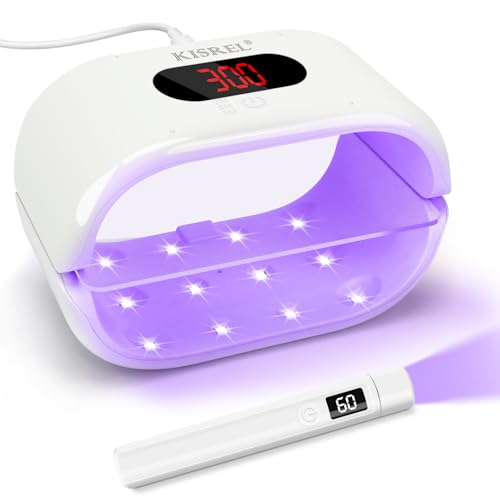
Half the battle with resin jewelry isn't creativity. It's patience. Tiny pendants that refuse to cure evenly, flower charms with sticky backs, and layered earrings that seem finished until fingerprints sink into the surface can test anyone's nerves. That's where the KISREL UV Light for Resin steps into the conversation surrounding the best uv light for resin jewelry, offering a setup designed to simplify one of the most frustrating parts of the craft.
KISREL DualGlow Resin Lamp
Double-sided curing immediately separates this resin lamp from many compact units that only project light from above. Equipped with 24 LED beads across both surfaces, it targets resin from multiple angles at once. That practical approach reduces the need to flip molds repeatedly, which is especially useful when working with delicate embellishments that shift easily.
The inclusion of 365nm and 405nm dual wavelengths addresses another common irritation. Different UV resins react slightly differently under varying spectrums, and broader compatibility can make the curing process feel less like guesswork. Rather than forcing repeated short sessions to compensate for uneven exposure, the lamp provides more balanced curing conditions.
Thirty-six watts of dedicated curing power sounds impressive on paper, but the real benefit lies in workflow efficiency. Jewelry artists juggling bezels, charms, and embedded botanicals often prefer fewer interruptions. Faster curing helps maintain momentum without rushing delicate details that demand a steady hand.
Detachable Design That Changes Workflow
One of the clever touches here is the 2-in-1 detachable structure. Connected magnetically, both panels work together to surround pieces with UV exposure. Separate them, and the setup adapts to awkward projects that don't cooperate with traditional enclosed lamps.
Flexibility matters more than many beginners realize. Domino molds require different spacing than polymer clay earrings coated with UV resin. Larger coasters occupy more surface area than tiny jump-ring charms. The ability to adjust positioning allows the lamp to accommodate projects instead of forcing projects to fit the lamp.
Magnetic connections also streamline setup. There aren't complicated brackets or multiple assembly steps cluttering the worktable. During long crafting sessions, simple design choices often become the ones people appreciate most.
That said, detachment introduces a small tradeoff. Crafters accustomed to rigid enclosed curing chambers may need a short adjustment period to determine optimal positioning. Fortunately, the learning curve remains manageable rather than intimidating.
Practical Timing Without Constant Guesswork
Timing mistakes can sabotage an otherwise beautiful resin piece. Cure too briefly and surfaces remain tacky. Cure excessively and certain embellishments may discolor or develop excess heat. KISREL addresses this challenge through 2-minute, 3-minute, and 5-minute timer settings.
Those longer presets feel particularly thoughtful. Many traditional UV lamps emphasize short intervals, forcing repeated resets and frequent mold handling. Moving uncured resin increases opportunities for dust contamination and accidental smudging. Extended timing options encourage a more hands-off approach.
Digital display functionality adds another layer of convenience. Rather than estimating elapsed time, users can monitor curing sessions more confidently. Small refinements like this rarely dominate marketing materials, yet they significantly improve the crafting experience.
Experienced resin artists often develop routines based on pigment density, mold depth, and decorative inclusions. Having accessible timer options supports those routines without overcomplicating them.
The Included UV Flashlight Earns Its Place
Accessories frequently end up forgotten in storage bins. The included UV flashlight, however, has genuine utility. Tiny details such as securing metal findings, spot-curing jump ring attachments, or stabilizing layered decorations benefit from targeted exposure.
Pressed flowers drifting inside bezels can be nudged into place and briefly cured before adding additional resin. Miniature embellishments on shaker charms become easier to manage. Those situations highlight why a handheld option isn't simply filler inside the package.
Portable curing precision becomes especially valuable for intricate projects. Instead of maneuvering fragile pieces beneath a larger lamp repeatedly, the flashlight brings curing directly to hard-to-reach areas.
Interestingly, readers curious about various portable UV applications sometimes encounter related references such as best UV light sanitizer wand, illustrating how compact UV formats have expanded into different categories beyond crafting.
Performance Across Common Resin Projects
Jewelry molds remain the obvious match for this lamp, yet its versatility stretches further. Keychains with layered pigments, domino sets requiring broader coverage, and coaster molds can all benefit from the dual-panel arrangement.
Polymer clay earrings sealed with UV resin topcoats also fit naturally into its capabilities. Uneven gloss often frustrates creators attempting polished finishes. Balanced exposure from multiple directions may help reduce those inconsistencies.
Still, realistic expectations matter. Extremely thick pours generally perform better when cured gradually in layers. Dark pigments and heavy glitter mixes naturally impede light penetration regardless of lamp quality. The KISREL unit supports proper technique rather than replacing it.
Workspace limitations also deserve consideration. Its detachable nature offers flexibility, but users with extremely limited desk space may need to organize materials thoughtfully to maximize efficiency.
Strengths And Minor Compromises
Strengths include the double-sided curing system, adaptable detachable configuration, practical timer selections, and the genuinely useful UV flashlight. Together, these features target everyday annoyances rather than relying solely on inflated specifications.
Ease of operation deserves praise as well. Correct magnetic alignment, straightforward controls, and clear functionality reduce hesitation for newer crafters while remaining practical for seasoned hobbyists.
Potential limitations aren't deal-breakers but should be acknowledged. Optimal positioning may require experimentation after detaching the panels. Larger decorative pours still benefit from layer-by-layer curing techniques. Resin behavior itself remains influenced by pigment density and application methods.
The overall impression feels refreshingly grounded. Rather than promising impossible shortcuts, this curing setup focuses on smoother routines, fewer interruptions, and greater flexibility during the creative process. For jewelry makers tired of flipping molds and second-guessing cure times, those everyday improvements often matter more than flashy promises.
Best UV Light for Resin Jewelry
Nothing kills creative momentum faster than being tethered to an outlet while trying to maneuver resin molds around a crowded workspace. Half-cured charms, cords snagging on silicone mats, and repeated timer resets can quietly drain the joy from crafting. Discussions around the best uv light for resin jewelry often focus on raw power, yet convenience plays just as important a role. The PPESULK Cordless UV Light approaches resin curing with portability and flexibility at the forefront rather than relying solely on impressive specifications.
PPESULK Cordless Resin Glow
Cordless freedom stands out immediately. Equipped with a built-in 3000mAh rechargeable battery, this resin lamp removes the constant negotiation between workspace layout and outlet placement. Whether positioned beside a window, moved to a dining table, or tucked into a compact crafting nook, it adapts without dragging extension cords into the equation.
The battery supports up to three hours of use, according to the provided specifications. For people working through batches of earrings, keychains, and layered pendants, that uninterrupted period helps maintain a productive rhythm. Creative sessions often unfold unpredictably, and stopping midway to rearrange charging cables can feel like hitting a speed bump.
Portability also introduces practical advantages beyond convenience. Shared living spaces, temporary crafting stations, and travel-friendly projects benefit from a setup that can move wherever inspiration happens to strike.
Timer Control That Respects Different Projects
One feature that deserves genuine attention is the adjustable timing system. Instead of restricting users to a handful of fixed presets, the lamp starts with a three-minute countdown and adds thirty seconds with each press. That flexibility accommodates varying resin depths and decorative choices.
Clear UV resin poured in thin layers behaves differently from opaque mixtures packed with glitter or dried botanicals. Some projects need quick stabilization, while others demand longer exposure. The ability to select 3, 5, 10, 30, or even 60 minutes reduces unnecessary interruptions.
Repeated timer resets may sound trivial until you've nudged a mold accidentally while reaching for controls. Small workflow frustrations accumulate. Thoughtful timer customization helps eliminate some of those avoidable annoyances.
The LCD timer display contributes to that streamlined experience. Monitoring curing progress becomes straightforward, especially during longer sessions involving multiple molds waiting their turn.
Steady Output And Practical Performance
PPESULK incorporates 34 LED beads emitting wavelengths between 365nm and 405nm, which align with common UV resin curing requirements. The emphasis isn't merely brightness. Consistency matters just as much.
According to the product description, the lamp maintains strong output even after extended operation. That's encouraging because fluctuating intensity can lead to uneven curing. Resin artists often notice these inconsistencies later through tacky edges, soft centers, or cloudy finishes.
Fast curing capability becomes especially useful when creating multiple pieces in succession. Small stud earrings, layered pendants, and shaker charms can move through production more efficiently. The result isn't necessarily rushing the process, but reducing idle waiting time between creative decisions.
Realistic expectations still belong in the conversation. Heavily pigmented resin and thick pours naturally require patience. This lamp supports efficient curing practices but doesn't rewrite the limitations of UV resin chemistry itself.
Foldable Design With Room To Adapt
Resin molds rarely cooperate with one-size-fits-all equipment. Tiny bezels sit comfortably beneath almost any lamp, while taller decorative pieces can create clearance issues. PPESULK addresses that challenge through its foldable and adjustable structure.
Height and width adjustments allow the curing area to accommodate a broader range of projects. Phone grips, coasters, dimensional molds, and resin-coated accessories all bring different spatial requirements. Flexibility becomes more than a convenience feature. It supports experimentation without demanding specialized equipment for every idea.
Foldable construction also simplifies storage. Craft supplies tend to multiply quickly, and preserving workspace matters. A lamp that tucks away neatly can be surprisingly valuable in smaller environments.
There's a tradeoff worth acknowledging. Larger and taller resin creations may still need extended curing sessions despite the adaptable design. The product itself notes this limitation, and that honesty reinforces practical expectations.
Built Specifically For UV Resin Projects
One aspect handled with refreshing clarity involves compatibility. PPESULK explicitly states that the lamp is intended for UV resin crafts only and is not suitable for AB epoxy resin. That distinction matters because confusion between resin types often leads to disappointing outcomes.
Projects such as earrings, necklaces, keychains, phone case embellishments, nail gel applications, and coaster accents align naturally with its intended use. Staying within those boundaries increases the likelihood of achieving cleaner finishes and predictable curing behavior.
Specialized functionality can sometimes be more beneficial than broad promises. Rather than claiming universal compatibility, the lamp focuses on a particular category of creative work and supports it effectively.
Lighting solutions designed for entirely different environments occasionally highlight how varied illumination needs can be. Broader outdoor applications are discussed in references such as best solar lights for parking lots, illustrating that purpose-built tools often outperform all-purpose alternatives.
Strengths, Limitations, And Everyday Use
Wireless operation, adjustable timing, rechargeable convenience, and adaptable dimensions collectively shape this lamp's identity. It prioritizes ease of use in ways that resonate during real crafting sessions rather than only on specification sheets.
The 34-bead LED arrangement and steady output support more uniform curing across typical UV resin projects. Portable design reduces clutter, while the LCD interface minimizes guesswork during extended curing periods.
Limitations remain part of an honest review. This lamp isn't intended for AB epoxy resin, and substantial pours still require layered approaches and additional patience. Dark pigments, dense glitter mixtures, and oversized molds naturally influence curing outcomes regardless of equipment.
Viewed through the lens of daily crafting habits, the PPESULK Cordless UV Light favors practicality over flashy claims. It acknowledges the realities of resin work, from cramped tables to shifting project sizes, and attempts to smooth out the rough edges that can quietly disrupt creative flow.
LET'S RESIN Upgraded UV Light
A resin charm can look finished on the surface, then betray you with a soft edge or a tacky underside once it leaves the mold. Annoying, right? That little curing gap is where a wider, steadier lamp starts to matter, especially for anyone comparing the best uv light for resin jewelry and trying to avoid the endless flip, wait, touch, regret routine. The LET'S RESIN Upgraded UV Light focuses on practical coverage, simple controls, and a lightweight build that suits small craft tables without turning resin work into a tangled cable mess.
LET'S RESIN WideCure Lamp
LET'S RESIN WideCure Lamp is the shortened name that fits this review because the product’s strongest personality comes from its larger curing area. Many compact UV lamps feel fine for a single ring bezel, then become fussy once a tray of earrings or a 12 by 20 cm mold enters the scene. This model is designed to handle broader layouts, which can cut down on repeated repositioning. That matters during batch work, where one crooked move can send glitter, dried petals, or tiny charms sliding out of place.
The lamp uses 18 double light source lamp beads with a uniform distribution, based on the provided description. That wording points toward a curing pattern meant to cover more than a narrow spotlight. Resin jewelry often fails at the edges first, not the center, so spread matters just as much as brightness. A wider beam can make the process feel calmer, especially with flat molds, cabochons, pendant blanks, and several small pieces curing at the same time.
Fast curing sounds tempting, but the better way to read this feature is workflow support. Thin UV resin layers can move through the lamp quickly, while pigmented or deeper pieces still need sensible timing. The lamp doesn’t erase resin’s natural limits, and it shouldn’t be treated like a shortcut for thick pours. It does, however, support a smoother rhythm for the kinds of small resin projects that pile up fast on a silicone mat.
The product also leans into the familiar LET'S RESIN ecosystem, especially for people already using the brand’s UV resin. That can feel reassuring because resin and curing lights perform best when their curing expectations match. Still, technique remains the boss. Dust control, layer thickness, pigment load, and mold clarity all influence the final finish.
Large Curing Area For Small Batch Work
Large size is the headline feature here, and it’s not just a nice extra. The product description says a 12 by 20 cm mold can fit under the UV light, which makes it more practical than tiny nail-style lamps for flat resin layouts. Earrings, small charms, and decorative pieces can sit under the same exposure area instead of waiting in line one by one. That saves mental energy during craft sessions where timing, placement, and surface cleanliness all compete for attention.
Batch curing has a quiet advantage. Resin work often involves repeating the same step across multiple pieces, such as sealing pressed flowers, adding a glossy topcoat, or curing thin decorative layers. With multiple small jewelry pieces under the lamp at once, the process feels less choppy. Fewer interruptions mean fewer chances to bump a mold or drag a sleeve through uncured resin.
The wider format may also suit small studio routines. A person filling several pendant trays for weekend orders doesn’t need a huge industrial curing box, but a narrow lamp can slow things down fast. This LET'S RESIN model sits in that middle lane, more capable than a pocket-sized light yet still simple enough for home use. It’s a practical compromise for a workspace that has to stay flexible.
There is a tradeoff, of course. A larger curing footprint still won’t guarantee a perfect cure if the resin layer is too thick or heavily colored. Dark pigments, metallic powders, and dense glitter can block UV penetration, so thinner layers remain the safer move. The lamp improves coverage, but it doesn’t replace patience.
Simple Controls That Keep The Pace Moving
One-button operation gives this lamp a low-friction feel. The 60-second and 120-second irradiation settings cover common UV resin tasks without asking anyone to fiddle with a complicated control panel. That simplicity helps during messy moments, especially when gloves are sticky and the worktable is already crowded with cups, tweezers, mica powder, and spare bezels. Sometimes fewer buttons are exactly what a resin station needs.
The two timing options make sense for thin layers, topcoats, and smaller jewelry elements. A quick 60-second session can help lock lightweight decorations in place before a final coat. The 120-second option gives a longer exposure window for pieces that need more time under the lamp. Timer discipline matters because guessing by feel often leads to overhandling and fingerprints.
Some users may wish for longer built-in timer settings, especially for larger molds or pieces with thicker resin. That’s a fair limitation. Repeating a 120-second cycle isn’t difficult, but it does require more attention than a lamp with extended countdown options. The upside is that the control system stays clean and beginner-friendly.
The product description emphasizes easy use, and that claim fits the design. No detachable panel learning curve, no complex display, no layered menus. Just place the work, press the button, and let the light do its part. Practical simplicity can be underrated in resin work because the craft itself already brings enough variables.
Portable Build With A Long USB Cable
Portability gives this lamp another useful angle. At a listed net weight of 143 g, it should be easy to move around a work area or tuck away after curing. Resin supplies can swallow a desk quickly, so lightweight tools feel less annoying at the end of a session. A folding support frame also helps with storage, especially in drawers or small craft bins.
The 150 cm USB cable deserves more credit than it might get at first glance. A short cord can turn a resin setup into a wrestling match, forcing the lamp to sit where the outlet decides. With a longer cable, the curing area can shift closer to the actual work surface. Better reach means fewer awkward arm movements over uncured resin.
That cable-based design has both benefits and limits. It avoids battery anxiety, which is helpful during longer crafting sessions. On the flip side, it still needs a USB power source, so it isn’t as free-moving as a rechargeable cordless lamp. The better fit depends on whether constant power or total mobility matters more at the craft table.
Small appliances and craft tools often share the same lesson: airflow, cord length, and placement can shape daily comfort more than flashy specs. A neutral reference in that wider home-tool category appears in best small fan with remote, which shows how compact devices often succeed or fail based on convenience in tight spaces.
Realistic Strengths And Crafting Limits
Even curing support is the main strength that gives this LET'S RESIN lamp its appeal. The 18 double light source beads, larger usable area, and foldable structure work together for small jewelry batches and flat resin molds. It feels especially suited to earrings, pendants, decorative tags, resin-coated craft pieces, and small decor elements. The setup is approachable without feeling flimsy in concept.
The lamp also suits craft routines where speed matters, but not at the expense of control. A wider light area can help finish more pieces in fewer rounds, which is handy during repeat projects. Efficiency here means less shuffling, not careless rushing. Resin still rewards slow layering and clean surfaces.
Limitations show up around timer depth and project thickness. The 60-second and 120-second settings are convenient, yet some larger or darker pieces may require repeated cycles. Taller molds may also need careful placement to make sure the light reaches the right areas. That’s not unusual for UV resin lamps, but it’s worth keeping expectations grounded.
The gift-friendly angle in the product description makes sense because the lamp is simple to understand and easy to store. Still, it’s most satisfying when used with realistic UV resin projects rather than thick epoxy-style pours. For jewelry makers who want wider coverage, simple timing, and a portable frame, the LET'S RESIN WideCure Lamp brings a practical, no-fuss approach to curing small resin work.
Akisey Two-Sided UV Resin Light
A pretty resin pendant can fool you at first glance, sitting glossy on top while the bottom stays stubbornly soft. That tiny mismatch turns into fingerprints, dust marks, and the kind of sticky edge that makes a finished piece feel half-done. The akisey UV Light for Resin enters the best uv light for resin jewelry conversation with a clear focus on two-sided curing, timed control, and a detachable layout that feels built for small molds, jewelry blanks, trays, and polymer clay earrings coated with UV resin. It doesn’t try to be flashy for the sake of it, which is honestly refreshing.
Akisey Dual Cure Lamp
Akisey Dual Cure Lamp is the shortened name that fits this review because the product’s main advantage sits right in its two-sided design. Traditional single-direction UV lamps often cure the top first while leaving the underside needing more attention. That means extra flipping, extra waiting, and more chances to disturb tiny inclusions before the resin fully sets. Akisey’s upper and bottom curing approach aims to reduce that fuss.
The lamp includes 24 powerful LED lamp beads and a stated 36W power output, based on the provided product details. Those specs suggest a curing setup designed for more serious craft use than a tiny pocket light. More importantly, the light placement matters because resin pieces don’t always sit flat or behave politely inside molds. A charm with raised edges or a small tray mold benefits from exposure that reaches more than one surface.
Two-sided curing feels especially useful for small resin keychains, jewelry molds, and thin trays where both faces need a clean finish. Instead of curing one side, touching the piece, flipping it, and hoping nothing picks up lint, the lamp gives the project a better chance at setting evenly from the start. Uniform curing is the quiet hero here. Less handling often means fewer smudges.
Still, resin technique doesn’t disappear just because the lamp is stronger. Thick pours, dark colorants, and glitter-heavy mixes can still slow light penetration. The Akisey lamp supports a cleaner process, but layer control remains the safer habit for polished results. Resin has its own rules, and this tool works best when those rules are respected.
Timer Settings That Feel Less Fussy
The 2-minute, 3-minute, and 5-minute timer modes make this lamp feel practical for real craft sessions. Short timer lamps can become annoying fast because every small mold turns into a cycle of pressing, waiting, pressing again, and hovering nearby. Akisey gives longer presets, which helps when a piece needs more than a quick flash. That matters during batches where several molds are curing at once.
The clear digital display screen adds a useful layer of control without making the lamp complicated. Resin work already includes enough small decisions, from pigment drops to bubble removal, so a visible timer keeps curing from becoming another guessing game. A countdown display also helps during longer sessions because it removes that itchy need to keep checking the clock. Simple, but helpful.
The 5-minute option is especially valuable for molds that need steady exposure without constant resets. Small trays, thicker pendants, and layered charms may benefit from that longer window. Of course, not every resin piece should be blasted blindly for the longest setting. Project thickness, resin brand, pigment load, and mold clarity still influence how much time makes sense.
Some crafters may prefer even longer custom timers, especially for oversized pieces. Akisey keeps the choices more focused, which makes operation easier but slightly less flexible than lamps with adjustable minute-by-minute control. That’s the tradeoff. Ease of use wins here, while fine-tuned timing takes a back seat.
Detachable Design For Awkward Resin Shapes
The detachable 2-in-1 structure gives this lamp a more adaptable personality than a fixed curing chamber. Used together, the two sides create a more complete curing zone. Used separately, the panels can work around odd project shapes that don’t fit neatly under a standard lamp. Resin crafting has plenty of those awkward moments.
That detachable format matters for coasters, trays, polymer clay earrings, and small decor pieces. A rigid lamp can force the mold into one position, whether that position is ideal or not. Akisey’s setup gives more room to adjust, especially when curing a glossy coat on a slightly raised surface. Flexible placement can prevent the annoying shadow spots that show up later as soft patches.
The magnetic connection system also keeps setup fairly straightforward. The product notes that the upper and bottom sides need correct magnetic alignment so both UV lamps light up properly. That detail shouldn’t be ignored. Proper alignment is part of the curing process, not a throwaway setup step.
Detachable tools always come with a small learning curve. The first few uses may involve figuring out spacing, angle, and the best position for each mold. Once that rhythm settles, the design can feel more forgiving than a single fixed lamp. It’s a hands-on tool, not a set-it-anywhere miracle.
Included Plate And Setup Details
The package includes a transparent acrylic plate, USB cable, instruction manual, and the double-sided UV curing light. The plate is more than a neat accessory because it creates a cleaner surface for positioning molds or small pieces. Resin work gets messy quickly, and having a dedicated plate helps separate curing space from the rest of the craft table. That can reduce accidental bumps and sticky surprises.
The product note about the frosted film on the board is worth taking seriously. Leaving protective film in place can affect clarity and may interfere with the setup experience. Peeling it off before use is a small step, but small steps matter in resin work. Clear surfaces help light move more predictably around the piece.
The USB cable setup keeps the lamp powered without relying on battery charge. That can be a plus during longer craft sessions where stopping to recharge would be a nuisance. The tradeoff is less freedom than a cordless lamp. Stable power and cable management have to share the same workspace.
Lighting comfort shows up in many small work areas, from craft desks to reading corners. A neutral related reference appears in best light bulb for reading lamp, where the same practical idea applies: the right light source depends heavily on the task in front of it.
Craft Performance And Realistic Limits
Jewelry making is where this lamp feels most at home. Small pendants, keychains, nail polish work, resin trays, coasters, and polymer clay earrings all match the product’s intended use. The two-sided exposure can be especially helpful for pieces that would otherwise need flipping midway through curing. Fewer moves can mean cleaner edges and less lint trapped in the finish.
The lamp’s 36W output and dual-surface layout make it appealing for anyone tired of underpowered mini lamps. Still, stronger curing doesn’t mean careless pouring becomes safe. Thick resin layers should still be built gradually, especially with darker colors. A lamp can support good habits, but it can’t rescue every shortcut.
Akisey also feels approachable for craft tables where space is limited but project variety keeps changing. One day it might handle a batch of earrings, the next day a small coaster or a decorative tray. Adaptability is the practical strength, not just the two-sided headline. The lamp gives room to adjust without demanding a huge permanent station.
The biggest limitation is the need for attention during setup. Magnetic alignment, protective film removal, and correct placement all affect the experience. People who want a fully enclosed, no-adjustment curing box may prefer something more rigid. For hands-on resin makers who like control, the Akisey Dual Cure Lamp offers a sensible balance of power, timing, and flexible positioning.
LET'S RESIN Mini UV Light
Tiny resin pieces have a funny way of making big problems. A charm can look glassy on top, then feel slightly tacky at the edge, or a small earring can cure unevenly because the light missed one corner of the mold. That’s the everyday headache behind the search for the best uv light for resin jewelry, and the LET'S RESIN Mini UV Light takes a compact, no-fuss approach to solving it. It’s small, light, and built around quick UV resin curing rather than oversized studio work.
LET'S RESIN Mini UV Light
LET'S RESIN Mini UV Light fits the name well because this lamp is clearly made for small resin jobs, not huge pours or bulky molds. At a listed weight of 84g, it’s the kind of tool that can sit beside mica powders, tweezers, silicone cups, and tiny bezels without hogging the whole table. That matters because resin work often happens in cramped corners, not picture-perfect studios. A smaller lamp keeps the station easier to manage.
The product description highlights a 2.5 times higher UV energy value compared with other UV lamps, based on the brand’s stated design. That claim points to its custom chip and lamp bead setup, which is meant to improve curing speed and reduce sticky finishes. For UV resin charms, pendants, and small decorative pieces, stronger targeted curing can save a lot of back-and-forth. Nobody enjoys touching a piece that looked done, only to leave a fingerprint in the surface.
This lamp uses 6 double light source beads with a uniform distribution and a stated 6W power. On paper, that sounds modest compared with larger curing machines, but the size tells the real story. It’s not trying to cure a tray full of large coasters at once. It’s aimed at small UV resin molds, jewelry details, and craft pieces where control matters more than brute force.
The biggest appeal is its simplicity. Small resin projects already involve enough fiddly steps, from bubble popping to flower placement and careful topcoating. A lamp that turns on easily, folds away, and doesn’t demand a complicated setup helps keep the work moving. Compact curing is the whole point here.
Small Size With A Practical Personality
Portability gives this mini UV lamp its strongest everyday advantage. A heavier lamp can feel fine at first, then become annoying once the worktable fills with molds, pigment jars, tape, gloves, and half-cured pieces waiting their turn. This one weighs very little, so moving it around the curing area doesn’t feel like rearranging furniture. Small tools can be surprisingly liberating.
The folding support frame also helps with storage. Resin supplies multiply quickly, and somehow the drawer that once held a few bezels turns into a crowded mess of silicone molds and glitter pots. A foldable lamp slips into that kind of setup more easily than a rigid curing box. Space-saving design matters for anyone who has to clean up after every session.
The included 103cm USB flat cable adds useful reach without making the setup feel too bulky. A short cord can force the lamp into an awkward position, especially if the power source sits behind a desk or across a small table. Extra length gives the curing area a little breathing room. That’s not glamorous, but it’s practical.
There is a tradeoff, though. This is still a USB-powered lamp, not a cordless rechargeable model. It needs a power source nearby, so total freedom isn’t part of the package. For steady desk use, that’s usually fine, but it’s worth noting if mobility is a top priority.
Timing Controls For Everyday Resin Work
The lamp uses a one-button irradiation switch with 60-second and 120-second settings. That keeps the control process clean and easy, especially when hands are gloved or slightly sticky. Resin work is already full of small decisions, so fewer buttons can be a blessing. Press, cure, check, repeat if needed.
The 60-second setting makes sense for quick stabilization. Tiny decorations, thin clear coats, and small jewelry details often need a short cure to hold placement before another layer goes on top. That can help prevent dried flowers, flakes, or tiny charms from drifting inside the resin. Little things move at the worst possible time.
The 120-second setting gives more breathing room for pieces that need a longer exposure. Small pendants, shallow molds, and slightly thicker domed finishes may benefit from the extra time. Still, resin should be handled with patience. Dark pigments, heavy glitter, and thicker layers can slow the cure even under a stronger lamp.
Some makers may wish for longer built-in timer choices. Repeating the 120-second cycle is simple enough, but larger or more opaque pieces may require extra attention. That limitation fits the lamp’s mini format. It’s built for small UV resin work, not deep curing marathons.
Curing Performance For Jewelry And Craft Decor
UV resin jewelry is where this lamp feels most natural. Earrings, small charms, bezels, pendants, miniature decorations, and craft accents match its compact footprint. A large lamp can feel unnecessary for one or two small pieces. This mini unit keeps the scale more aligned with the work.
The brand describes the lamp as having faster-curing speed and a better curing effect due to its custom chip and lamp bead design. Since no independent testing data was provided, that should be read as product positioning rather than a verified performance ranking. Even so, the stated design clearly aims to reduce sticky surfaces and improve cure consistency for UV resin. That’s the pain point that matters most in small jewelry projects.
The lamp may be especially handy for layered designs. A thin base layer can be cured, decorative pieces can be arranged, and a final glossy coat can follow. Working in smaller steps often leads to cleaner results than pouring too much at once. Layer-by-layer curing is one of those habits that separates neat resin work from rushed resin work.
It’s less suitable for large molds, tall pieces, or wide batches that need broad coverage. A mini lamp naturally has a smaller curing area. For coasters, large trays, or multiple pieces at once, a bigger UV lamp may feel more efficient. The LET'S RESIN Mini UV Light is better judged as a detail tool than a full production station.
Build Quality Claims And Realistic Limits
The product description mentions long service life and strong stability, supported by the brand’s customized lamp design. Since no usage-hour data or third-party durability results were provided, those claims should stay in practical perspective. The more useful takeaway is that the lamp is designed to maintain UV performance over repeated small craft sessions. That’s a reasonable expectation for a compact resin tool.
The 6W output sounds modest, but output alone doesn’t tell the full story. Lamp bead placement, resin thickness, distance from the surface, and pigment load all shape curing results. A small clear charm may cure quickly, while a dark opaque piece may need more time and thinner layers. Technique still matters, no matter how convenient the lamp feels.
The lamp is also better for UV resin than for general resin types that don’t cure under UV light. That distinction is important because epoxy resin and UV resin behave differently. Trying to cure the wrong material under this lamp would lead to frustration, not finished jewelry. Material compatibility should be checked before any project begins.
A neutral lighting reference outside resin work can still be useful because task lighting often depends on placement, beam spread, and surface detail. In that broader lighting category, gallery-focused illumination is discussed in best track light for art gallery, where controlled light direction matters for a very different kind of visual work.
Best Fit And Hands-On Tradeoffs
Ease of use is the main reason this lamp earns attention. The one-button control, two timer choices, folding frame, and lightweight body all support casual but careful resin work. It doesn’t bury the process under features. It keeps the tool simple so the focus stays on the piece.
The lamp feels best suited to small UV resin molds, jewelry making, craft decor, and touch-up curing. It can help with tiny zones that need extra exposure, especially near edges or raised details. For someone who works with small batches rather than big production runs, that compact setup makes sense. Small-scale precision is its lane.
The limitations are easy to understand. The curing area is small, the timer options are basic, and the USB cord means it still depends on a power source. Larger projects may require repeated sessions or a different lamp entirely. That isn’t a flaw so much as the reality of a mini UV curing tool.
Used with realistic expectations, the LET'S RESIN Mini UV Light can make resin jewelry sessions feel less clumsy. It gives quick access to UV curing without taking over the workspace, and it’s light enough to move around as a project changes shape. For pendants, charms, earrings, and careful detail work, its portable design and simple curing rhythm are the strengths that stand out most.


Best Lighting For Makeup 2026 Bright Ideas For Flawless Looks

Best Wall Sconces For Staircase 2026 Brighten Your Home
Best Lighting For Computer Desk 2026 For Focused Work

Best Boat Black Lights 2026 For Nighttime Adventure

Best Black 30 Inch Light Bar Reviews – Top Picks of 2026

Best Black Light For Aquarium 2026 For Vibrant Glow

Best Black Light for Authenticating Glass 2026 Top Picks
Best Waterproof Spotlight 2026 That Outshines Expectations






