
Best Wall Mount Fan For Bathroom 2026: Smart Picks

A best wall mount fan for bathroom setup should move stuffy air without taking over the room, rattling against the wall, or becoming another awkward appliance to clean. Bathrooms often hold heat and moisture long after a shower, especially where windows are small, blocked, or rarely opened. A wall-mounted design keeps the floor and countertop clear while directing airflow toward damp towels, fogged mirrors, and corners that tend to stay clammy. Still, raw power isn’t everything, since a fan that sounds like a shop tool will quickly become more annoying than useful.
Airflow control deserves close attention because bathroom conditions change throughout the day. A lower speed can provide a gentle breeze during grooming, while a stronger setting helps clear humid air after a long shower. Oscillation spreads air across a wider area, but a fixed head can make more sense in a narrow bathroom where the breeze needs to hit one stubborn zone. Adjustable tilt matters too, particularly when the fan must sit above shoulder height and push air downward rather than straight across the ceiling.
Quiet operation can be the difference between a fan that runs regularly and one that stays switched off. Motor hum, blade turbulence, and loose mounting hardware may sound minor in a store, yet bathroom walls and tile can bounce that noise around like an echo chamber. Look for stable mounting points, balanced blades, and several speed choices instead of assuming the largest motor will feel better. Also, remember that wall fans usually circulate indoor air rather than exhaust it outdoors, so they shouldn’t replace a proper ventilation fan where moisture removal is required.
Controls need to match the mounting position, plain and simple. Pull cords are dependable and easy to understand, though they can feel inconvenient if the fan is installed high above a cabinet or toilet. A remote control or wall switch offers easier access, but remotes have a habit of wandering off, and extra electronics may add maintenance concerns in a damp room. A timer can be genuinely handy because it keeps air moving after the bathroom is empty without leaving the fan running for hours.
Bathroom suitability also involves realistic placement and electrical safety. A household wall fan shouldn’t sit where water can splash directly onto the motor, plug, controls, or cord, and it must be installed according to the product instructions and local electrical requirements. Plastic guards resist visible rust better than untreated metal, although thick metal guards may feel sturdier and can be easier to secure firmly. Either way, accessible grilles and removable blades make dust removal less of a chore, which matters because lint, hair, and aerosol residue can build up surprisingly fast.
The strongest pick isn’t automatically the biggest model on the shelf. Compact bathrooms may feel uncomfortable with a wide fan blasting at close range, while larger rooms can leave a small fan working hard without reaching the dampest areas. Measure the available wall space, check the head’s full tilt and oscillation range, and leave enough clearance for safe movement. That little bit of homework prevents scraped walls, blocked cabinet doors, and a breeze aimed everywhere except where it’s needed.

- LFR Score9.2
LFR Score is a ranking system developed by lightfansreviews.com. LFR Score has no relationship or impact from any manufacturers or sales agent websites. Learn more
- BrandPELONIS

- LFR Score9.2
LFR Score is a ranking system developed by lightfansreviews.com. LFR Score has no relationship or impact from any manufacturers or sales agent websites. Learn more
- BrandQuini

- LFR Score9.0
LFR Score is a ranking system developed by lightfansreviews.com. LFR Score has no relationship or impact from any manufacturers or sales agent websites. Learn more
- BrandHurricane

- LFR Score8.6
LFR Score is a ranking system developed by lightfansreviews.com. LFR Score has no relationship or impact from any manufacturers or sales agent websites. Learn more
- BrandShinebella

- LFR Score8.6
LFR Score is a ranking system developed by lightfansreviews.com. LFR Score has no relationship or impact from any manufacturers or sales agent websites. Learn more
- BrandShinebella

- LFR Score8.6
LFR Score is a ranking system developed by lightfansreviews.com. LFR Score has no relationship or impact from any manufacturers or sales agent websites. Learn more
- BrandComfort Zone

- LFR Score8.6
LFR Score is a ranking system developed by lightfansreviews.com. LFR Score has no relationship or impact from any manufacturers or sales agent websites. Learn more
- BrandShinebella

- LFR Score8.6
LFR Score is a ranking system developed by lightfansreviews.com. LFR Score has no relationship or impact from any manufacturers or sales agent websites. Learn more
- BrandLEMOISTAR

- LFR Score8.4
LFR Score is a ranking system developed by lightfansreviews.com. LFR Score has no relationship or impact from any manufacturers or sales agent websites. Learn more
- BrandKoonie
- LFR Score8.4
LFR Score is a ranking system developed by lightfansreviews.com. LFR Score has no relationship or impact from any manufacturers or sales agent websites. Learn more
- BrandKoonie
Last update on 2026-07-28 / Affiliate links / Images, Product Titles, and Product Highlights from Amazon Product Advertising API
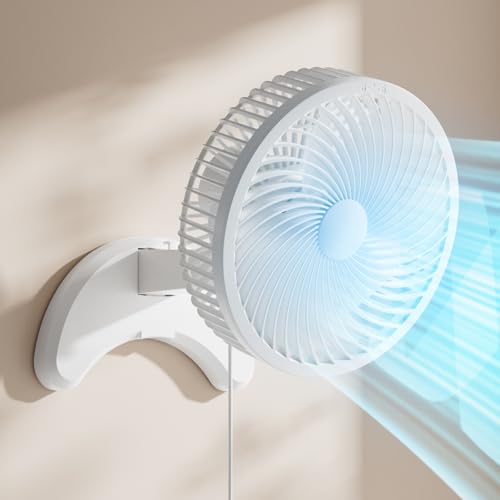
PELONIS Wall Fan for Bathroom Air Circulation
Floor space disappears quickly in a bathroom, especially once a hamper, storage cart, and bath mat enter the picture. Mounting a fan above the clutter solves that practical headache while keeping moving blades away from crowded walkways. The PELONIS 9-inch model fits naturally into a search for the best wall mount fan for bathroom use because it combines remote operation, broad directional movement, and a compact footprint. Its appeal lies less in brute size and more in controlled air circulation where a pedestal fan would simply get in the way.
PELONIS 9-Inch Wall Mount Fan
The PELONIS fan is built around a 9-inch head, which makes it easier to position on a narrow wall than a bulky commercial-style unit. That smaller frame can be useful beside a vanity, above a storage cabinet, or near the doorway, provided the mounting spot stays away from direct splashes. The product information describes airflow reaching across a room rather than stopping a few feet from the grille. For a compact model, that emphasis on long-range airflow gives it a clear purpose beyond creating a weak breeze near the wall.
Its controls are unusually flexible for a fan of this size. Three speeds handle everything from light background circulation to a stronger burst after a hot shower, while Normal, Slumberous, and Natural modes alter how the breeze feels over time. The 12-hour timer is particularly useful in a bathroom because the fan can continue circulating air after the room is empty and then shut itself off. A 1.5-meter pull rope also provides a simple backup when the remote isn’t within reach.
The remote matters more than it might seem. A wall-mounted fan is often installed above eye level, so repeatedly reaching for buttons can become a nuisance, especially on a damp floor. Remote access lets the speed, mode, timer, and movement settings remain manageable from across the room. That convenience strengthens its case as a best wall mount fan for bathroom candidate, although the remote will need a consistent storage spot to avoid the familiar hunt through drawers and cabinets.
Airflow Direction And Room Coverage
Directional range is the standout feature here. The fan offers automatic movement across 90 degrees horizontally and 68 degrees vertically, allowing the airflow to sweep across more than one fixed patch of wall. That movement can help air reach damp towels, a foggy mirror area, and the space around a shower enclosure without manually readjusting the head. In a narrow bathroom, though, the full sweep may be broader than necessary, so a fixed direction can feel calmer and more purposeful.
The supplied product details mention a wind speed of 15 feet per second and an airflow range of 33 feet. The longer product name, however, refers to 26 feet of powerful airflow, creating a range inconsistency that deserves attention. Rather than treating either figure as a guaranteed real-world distance, it’s more sensible to expect performance to vary with room layout, mounting height, open doors, and nearby obstacles. Tile walls and glass panels won’t stop the fan from operating, but they can shape where the breeze travels and how noticeable it feels.
Oscillation offers a real advantage in shared bathrooms or spaces with several damp zones. A stationary fan may dry one towel efficiently while leaving the opposite corner untouched, whereas the PELONIS can distribute air through a wider arc. Still, broad oscillation doesn’t remove humidity from the building; it only moves indoor air around. A proper exhaust fan remains the key tool for venting moisture outdoors, so this unit is better viewed as a circulation partner rather than a substitute for bathroom ventilation.
The vertical movement also separates this model from basic wall fans that only pivot by hand. Mounting the unit high and angling the airflow downward can reduce the uncomfortable feeling of air blowing straight across the ceiling. It may also help circulate warm, trapped air near the top of the room after a shower. Careful positioning is essential, since a badly placed fan can send air into a door, cabinet edge, or shower curtain and waste much of its adjustable coverage.
Noise, Modes, And Everyday Comfort
The stated operating level of 36 dB suggests the fan is designed for quieter settings. Bathrooms tend to amplify sound because tile, mirrors, and hard counters reflect motor hum instead of absorbing it. A lower speed will usually be the better fit during grooming, nighttime routines, or early mornings when the rest of the house is still quiet. The quiet-operation claim is promising, though actual sound can also depend on wall construction and how firmly the mounting bracket is installed.
Slumberous mode may seem aimed at bedrooms, yet it has a practical bathroom role too. A softer airflow pattern can keep the room from feeling stuffy without producing a constant hard draft during skin care, shaving, or makeup. Natural mode varies the breeze, which some people will enjoy and others may find distracting. Normal mode remains the straightforward setting for anyone who prefers steady airflow without shifts in intensity.
The timer brings another layer of control. Setting the fan to run for a limited period after a shower avoids leaving it on all afternoon, and that can reduce needless operation. Twelve hours is far more range than most bathroom routines require, but the longer window also makes the fan useful in a home office, garage, workout room, or RV. This flexibility gives the product value beyond one room, although repeatedly moving a wall-mounted appliance isn’t practical once the bracket is secured.
Bathroom Placement And Safety Limits
Bathroom use requires a little restraint. The provided information calls the fan suitable for home, office, garage, gym, RV, and indoor or outdoor scenarios, but it doesn’t state a specific wet-location or splash-resistance rating. That omission means the fan shouldn’t be mounted inside a shower enclosure, directly above a tub, or anywhere water can reach the motor, cord, outlet, or controls. Safe placement is a nonnegotiable factor, not a minor installation preference.
A protected wall near the bathroom entrance may be more sensible than a spot close to the sink. That location can pull air through the room while keeping the electrical components farther from splashes and heavy condensation. The cord path also needs attention, since a loose cable hanging near a countertop or towel rack creates needless clutter. Using a properly installed outlet and following local electrical requirements should take priority over placing the fan at the most convenient angle.
The mounting surface matters as well. Oscillation creates repeated movement, and a loose bracket may introduce buzzing, vibration, or gradual shifting. Solid framing or appropriate wall anchors can keep the unit stable, while careful leveling helps the fan sweep evenly rather than leaning toward one side. A secure installation supports both quieter operation and a longer service life, especially in a room where hard surfaces tend to exaggerate every small rattle.
Cleaning And Long-Term Practicality
Bathroom air carries more than humidity. Hair spray, powder, lint, and fine towel fibers can collect on the grille and blades, eventually reducing airflow or increasing noise. A wall-mounted position keeps the fan away from floor dust, but it also makes routine cleaning less convenient if the unit sits too high. Leaving enough access for grille cleaning is a small decision that can protect consistent airflow over time.
The compact 9-inch size should make the exterior less cumbersome to wipe than a large industrial fan. Even so, cleaning details such as grille removal and blade access aren’t included in the supplied description, so easy maintenance shouldn’t be assumed. A soft brush or vacuum attachment can handle surface dust while the fan is unplugged, but deeper cleaning depends on the manufacturer’s instructions. That unknown is worth weighing against the otherwise convenient wall-saving design.
Durability is described broadly, without details about the motor type, housing materials, moisture protection, or replacement parts. The fan may serve comfortably in a dry indoor location, yet bathroom humidity places more stress on electrical appliances than an ordinary bedroom does. Keeping it outside direct steam clouds and allowing the room to ventilate can reduce that strain. Realistic care matters because moisture exposure can shorten the life of equipment not specifically built for damp environments.
Strengths, Weaknesses, And Best-Fit Spaces
The strongest case for this PELONIS model comes from its combination of compact dimensions and unusually broad movement. Automatic horizontal and vertical oscillation offers more control than a basic wall fan that only swings side to side. Remote operation, a pull rope, three speeds, three modes, and a 12-hour timer provide several ways to manage comfort without touching the fan housing. These practical controls make daily operation easier after the unit is mounted above normal reach.
Several tradeoffs deserve equal weight. The airflow-distance figures conflict between the product name and the supplied description, and no bathroom-specific moisture rating is provided. A 9-inch fan may also feel modest in a large bathroom with high ceilings, multiple shower areas, or poor existing ventilation. Most importantly, circulation won’t solve a serious humidity problem on its own, no matter how wide the oscillation range is.
This model makes the most sense in a compact or medium indoor space where floor clearance, directional airflow, and low-effort control matter more than maximum blade size. It can help a bathroom feel less stagnant, move air around hanging towels, and reduce the discomfort of lingering heat. The same design also suits a garage workbench, workout corner, or small office where a pedestal fan would block movement. Judged within those limits, the PELONIS offers a thoughtful mix of space-saving installation, broad oscillation, and convenient control rather than pretending to replace a dedicated exhaust system.
Quini 512M Through-Wall Bathroom Exhaust Fan
Lingering steam can turn a small bathroom into a damp box, leaving mirrors fogged, towels slow to dry, and odors hanging around longer than they should. A circulation fan may move that heavy air from one corner to another, but the best wall mount fan for bathroom ventilation needs to push moisture outside the building. The Quini 512M takes that direct approach with an 80 CFM exhaust rate, a through-wall duct, and an exterior cover designed to resist wind and rain. It’s a purpose-built ventilator rather than a comfort fan, so installation demands more effort, but the payoff is actual air removal instead of a temporary breeze.
Quini 512M 6-Inch Exhaust Fan
The Quini 512M uses a 6-inch through-wall format intended for bathrooms, kitchens, laundry rooms, garages, and other areas where moisture, smoke, or stale smells collect. Its 80 CFM rating is listed for spaces up to 65 square feet, placing it in the range of compact bathrooms and targeted ventilation jobs. That capacity makes sense for a powder room, a modest full bath, or a troublesome corner that lacks steady air exchange. Larger bathrooms, vaulted ceilings, or rooms with oversized showers may require a stronger system or a different ventilation plan.
This model isn’t meant to sit on the wall and recirculate air like an oscillating fan. It pulls indoor air through the wall and releases it outdoors, addressing the source of the discomfort more directly. That exhaust-first design can help move humid air, cooking odors, laundry-room heat, or garage fumes away from the occupied space. The distinction matters because circulating damp air may feel cooler without meaningfully reducing the moisture trapped inside the room.
A one-year warranty accompanies the unit, offering a basic period of coverage after installation. The supplied information doesn’t spell out individual parts coverage, labor terms, or claim requirements, so the warranty should be read as limited reassurance rather than a blanket promise. Still, documented coverage is useful on a product that combines a motor, adjustable duct, exterior housing, and backdraft components. Keeping receipts and installation records would make any future warranty discussion less of a headache.
Airflow Suited To Compact Bathrooms
The 80 CFM airflow rating is the central performance figure for this fan. Cubic feet per minute describes how much air the unit is intended to move, and Quini states that the 512M can ventilate an area of up to 65 square feet. In practical terms, that can suit a bathroom where steam tends to hover after a shower but the overall floor plan remains relatively compact. Room volume, duct resistance, door gaps, and installation quality will still influence how quickly the air clears.
Placement affects results just as much as the published airflow number. Mounting the intake near the main moisture source can shorten the path that humid air has to travel, but the fan must also stay within safe electrical and building-code requirements. A unit installed too far from the shower may clear the room more slowly, while one blocked by a tall cabinet or partition can struggle to draw air evenly. The shortest sensible exhaust path usually gives a wall fan the best shot at doing its job.
The stated 65-square-foot coverage shouldn’t be treated as a guarantee for every room with that floor area. A low ceiling and a short, straight wall path create an easier ventilation job than a tall room with awkward partitions and heavy daily shower use. Open windows, undercut doors, and replacement-air paths also change how smoothly exhaust air moves. So, the Quini’s rating is a useful sizing reference, but real bathroom conditions still deserve a careful look before cutting into the wall.
Adjustable Duct And Wall Compatibility
The adjustable duct is one of the more practical details in the supplied specifications. Made from aluminum foil, it measures about 6.2 inches in diameter and extends from 2 to 15 inches. Quini states that the system accommodates walls ranging from 6 to 19 inches thick, which gives installers some room to work with different wall assemblies. That flexibility can simplify replacement jobs, but only if the existing opening and wall depth fall within the required range.
Measurements need to happen before purchase, not after the box arrives. The installation calls for an opening of roughly 6.4 inches through both wall faces, and a small mistake can leave gaps, interfere with the housing, or force an improvised repair. Wall thickness also matters because the duct must bridge the full cavity without being crushed, overstretched, or poorly sealed. Taking measurements at more than one point can reveal uneven surfaces that a single quick check might miss.
The retractable duct makes adaptation easier, though flexible aluminum foil brings a tradeoff. It can fit variable depths more readily than a rigid tube, but excessive bends or compression may create airflow resistance. A straight, supported path is preferable because the fan won’t have to push air through unnecessary wrinkles and tight turns. The adjustable housing helps with fit, yet careful installation still determines whether that flexibility becomes an advantage or a bottleneck.
Exterior Protection And Backdraft Control
The exterior assembly is built to handle exposure beyond the indoor wall surface. According to the supplied description, the outer cover uses sturdy materials intended to provide wind and rain protection. That feature matters for a bathroom exhaust fan because an unprotected opening can invite moisture, drafts, debris, and pests into the wall cavity. The exterior cover also gives the finished installation a cleaner, more deliberate appearance than an exposed duct opening.
A built-in flap helps prevent outdoor air from flowing backward into the room. This backdraft control can reduce cold drafts, hot air intrusion, and odor movement when the fan is switched off. The cover is also described as keeping out birds and mosquitoes while allowing exhaust air to escape. Those details are especially useful on ground-level walls, garage walls, and other locations where an uncovered vent could quickly become an entry point.
Backdraft flaps aren’t completely maintenance-free, though. Dust, grease, lint, or outdoor debris can interfere with movement over time, particularly in kitchens or laundry areas. A stuck flap may restrict airflow when the fan runs or remain partly open when it stops. Periodic inspection of the exterior vent cover can catch those problems before they turn into weaker ventilation or a noticeable draft.
Noise Level And Daily Operation
The Quini 512M is rated at 4.0 sones, which signals that quietness isn’t its main selling point. The fan may be clearly audible during operation, especially in a small bathroom with tile, glass, and other hard surfaces that reflect sound. That level can be acceptable for short ventilation cycles where removing steam matters more than creating a silent environment. Anyone expecting a whisper-soft fan for long nighttime operation should weigh this specification carefully.
Noise can also reveal installation problems. Loose fasteners, an uneven wall opening, or a poorly supported duct may add vibration and rattling on top of the motor sound. Securing the housing firmly and avoiding contact with loose wall materials can keep the unit closer to its intended operating character. The 4.0-sone rating won’t become silent through installation, but careful mounting can prevent unnecessary mechanical noise from piling on.
A wall switch controls the fan, which keeps daily use straightforward. The product requires wiring rather than a simple plug-in connection, so the switch location should match normal bathroom habits. A convenient switch makes it easier to start ventilation before showering and leave it running afterward. Timer-switch compatibility isn’t stated in the supplied details, so that kind of control shouldn’t be assumed without checking the manufacturer’s electrical guidance.
Installation Demands And Practical Limits
This is not a casual drill-and-hang project. Installation requires cutting through the interior wall, wall cavity, and exterior surface while maintaining a roughly 6.4-inch opening. Wiring must also connect the fan to a switch, adding an electrical step that may fall outside a homeowner’s comfort zone. The through-wall installation is direct and efficient, but it carries more risk than mounting a plug-in circulation fan.
Hidden pipes, electrical cables, framing, insulation, and exterior cladding can complicate the job. Cutting first and checking later could lead to expensive damage, so the wall cavity needs to be assessed before any opening is made. Masonry, brick, siding, and tiled interior walls each require different tools and sealing methods. A qualified installer may be the sensible route where the wall structure or electrical path isn’t obvious.
Weather sealing deserves equal attention. The exterior cover may resist rain and wind, but the perimeter around the opening still needs proper sealing to prevent water from entering behind the wall. Gaps can also allow insects, drafts, and noise to travel indoors. The fan’s outdoor protection features support a durable installation, yet they can’t compensate for careless flashing or an uneven exterior cut.
Strengths And Tradeoffs In Bathroom Use
The Quini’s biggest strength is straightforward: it removes air outdoors. That makes it more relevant to bathroom humidity than a wall-mounted oscillating fan that merely redistributes moisture. The 80 CFM rating, adjustable duct, exterior protection, pest-resistant cover, and backdraft flap form a sensible package for a small ventilation project. Its direct exhaust function addresses fog, stale smells, and dampness at their source.
The tradeoffs are equally clear. A 4.0-sone noise rating may be too noticeable for sound-sensitive spaces, and the 65-square-foot guidance limits its appeal in larger bathrooms. Installation requires wall cutting and electrical wiring, while the duct and opening dimensions leave little room for guesswork. This isn’t the simplest answer for a rental property or a bathroom where exterior-wall access is unavailable.
The Quini 512M fits best where a compact room needs a dedicated wall exhaust route and ceiling ductwork would be awkward or impractical. It can serve bathrooms, laundry rooms, kitchens, or garages, provided the space matches the stated capacity and the wall can accept the adjustable housing. Buyers who value quiet operation above all else may prefer a lower-sone design, while those focused on moisture removal may accept the audible operation. Its success ultimately rests on correct sizing, a clean duct path, secure mounting, and careful exterior sealing.
Hurricane Supreme 12-Inch Wall Mount Fan
A cramped bathroom can make even a small floor fan feel like one obstacle too many. Cords snake around the vanity, damp towels brush against the grille, and somebody eventually nudges the whole thing out of position. The Hurricane Supreme enters the best wall mount fan for bathroom conversation by lifting airflow above the clutter and delivering a stronger, more direct breeze than many compact household fans. Its 12-inch head, three-speed motor, adjustable tilt, and side-to-side movement give it practical muscle, though its bathroom role depends heavily on safe placement and realistic expectations.
Hurricane Supreme 12-Inch Fan
The Hurricane Supreme is a wall-mounted circulation fan built for places where floor space is tight. Its listed uses include homes, greenhouses, garages, workshops, and similar work areas, which tells you quite a bit about its personality. This isn’t a delicate decorative fan meant to disappear into the background. The rugged construction and straightforward controls lean toward function, durability, and dependable airflow.
A 12-inch blade diameter gives the fan more presence than a tiny personal model while remaining compact enough for many narrow walls. The full housing measures 13.6 inches long, 11.5 inches wide, and 20 inches high, so measuring the installation spot beforehand is still necessary. Cabinets, mirrors, doors, and shower curtains can interfere with the fan’s sweep if clearance is too tight. The wall-saving footprint helps, but the moving head still needs room to breathe.
Three speed settings keep operation simple rather than burying basic airflow behind a pile of buttons. A lower setting can handle mild stuffiness during grooming, while the stronger settings suit warmer rooms or damp towels that need more air movement. Pull cords control the speed and oscillation from below, which makes sense for a fan mounted above shoulder height. That simple control system also means there’s no remote to lose or battery to replace.
Strong Airflow With A Workshop Personality
The supplied specifications list airflow at 3,036 CFM with a motor speed of 1,250 RPM. Those figures suggest a fan designed to move a substantial amount of air rather than produce a faint breeze near the wall. In a compact bathroom, that output could feel forceful on the upper settings, especially if the fan sits close to the sink or shower area. The high airflow capacity is a strength, but more power isn’t automatically more comfortable in every layout.
Air movement can help a humid room feel less muggy by breaking up stagnant pockets and encouraging damp surfaces to dry. Towels hanging in a dead corner, bath mats lying on tile, and condensation around a vanity may benefit from the extra circulation. Still, this fan doesn’t exhaust moisture outdoors based on the information provided. It functions as a circulation fan, so a proper bathroom exhaust system remains necessary where moisture control and code compliance are concerns.
The gap between comfort and overkill will depend on room size and mounting distance. A small powder room may not need the highest setting, while a larger bathroom with an open dressing area could put the stronger airflow to better use. The fan’s industrial-leaning output also makes it useful beyond one room, including garages, workshops, or greenhouses. That flexibility is handy, although wall mounting means it won’t move from room to room without extra effort.
Oscillation And Adjustable Direction
The fan offers 90-degree side-to-side oscillation, allowing the airflow to cover a wider portion of the room instead of hammering one fixed spot. That movement can sweep across a vanity, towel rack, and open floor area during a single cycle. It may also reduce the harsh feeling of continuous air hitting one person at close range. The wide oscillation range is particularly useful where several damp zones sit along the same wall.
A static locked position is available when broad movement isn’t needed. That setting makes more sense if the goal is directing air toward a fog-prone mirror or a cluster of wet towels. Adjustable tilt adds another layer of control, letting the fan send air downward from a higher mounting point. Together, the tilt and locked position create focused airflow without forcing the unit to oscillate through unused sections of the room.
Placement can make or break these features. Mount the fan too close to a side wall, tall cabinet, or inward-swinging door, and part of the 90-degree sweep becomes useless. Position it too high without enough downward tilt, and much of the breeze may stay near the ceiling. A well-chosen spot lets the directional flexibility do real work instead of merely moving the fan head back and forth.
Pull-Cord Controls In Daily Use
Pull cords are old-school, and that’s not necessarily a criticism. They remain easy to operate from below, even when the fan is mounted where the control housing would otherwise be hard to reach. One cord can handle settings while another manages oscillation, keeping the interface obvious. The mechanical controls suit anyone who prefers a fan that doesn’t depend on a remote, app, or touch panel.
Bathroom routines can be messy, though, so cord placement deserves thought. A dangling cord shouldn’t brush against a wet counter, hang beside a shower curtain, or become tangled with towels. The fan also needs to remain outside areas exposed to splashing water because the description doesn’t identify it as a wet-location appliance. Safe positioning matters more than shaving a few inches off the reach to the pull-cord controls.
The lack of a timer is one practical limitation based on the features provided. Someone has to switch the fan off manually rather than setting it to run for a defined period after a shower. That may be fine in a workshop, where the fan stays on during a task, but bathroom use often benefits from automatic shutoff. The simple design reduces complexity, yet it also leaves out the hands-off convenience found on more bathroom-focused models.
Construction Built For Tougher Spaces
Polypropylene blades give the Hurricane Supreme resistance to chemicals that could damage less durable materials. That feature makes sense in greenhouses and workshops, where sprays, fertilizers, dust, or cleaning products may circulate through the air. In a bathroom, the same blade material may tolerate routine exposure to humid air and household residues reasonably well. Still, chemical resistance doesn’t automatically mean the motor or electrical components are rated for direct moisture exposure.
A powder-coated steel grille protects the blades, while a steel support neck adds structure between the fan head and mounting point. Those materials create a more substantial build than lightweight plastic desk fans. The included hanging bracket supports wall installation, but the wall itself must be capable of holding the fan securely through vibration and oscillation. The steel support structure is reassuring only when paired with suitable anchors or solid framing.
Bathrooms amplify rattles because tile, glass, and hard countertops reflect sound. A loose bracket or uneven mounting surface could turn normal motor vibration into an annoying buzz. Tight hardware and a level installation will help the fan run more cleanly, though the supplied details don’t provide a measured noise rating. The product is described as quiet, but actual sound perception will vary with speed, wall construction, and room acoustics.
Bathroom Fit And Safety Considerations
The Hurricane Supreme operates on 120 volts and carries an ETL listing. That certification indicates the product meets applicable North American safety testing standards, which provides a useful baseline for electrical construction. It doesn’t mean the fan can be mounted anywhere inside a bathroom, however. The ETL certification should be considered alongside manufacturer instructions, outlet placement, local electrical rules, and protection from water.
Direct splash zones are the wrong place for a standard wall fan. The unit shouldn’t sit inside a shower enclosure, above a tub where water can reach it, or beside a sink where wet hands may contact the cords or housing. A protected wall near the doorway or across from the wet area may offer a safer airflow path. The mounting location needs to balance circulation with electrical caution, and safety wins every time those goals conflict.
An exhaust fan and a circulation fan solve different problems, plain and simple. The Hurricane Supreme can move heat, reduce the feeling of stagnant air, and encourage surface drying, but the provided description doesn’t claim that it vents humidity outdoors. Bathrooms with peeling paint, recurring mildew, or heavy condensation need proper exhaust ventilation rather than stronger indoor circulation alone. This model works best as a supplemental airflow tool, not a replacement for moisture extraction.
Cleaning Effort And Long-Term Use
Bathroom air carries lint, hair spray, powder, and fine fibers from towels and tissue. Those particles eventually gather on the grille and blades, where they can restrict airflow or add imbalance. The steel grille offers useful protection, but the supplied details don’t explain how easily it can be removed for deeper cleaning. Regular surface care will help preserve the fan’s airflow efficiency and keep dusty buildup from becoming a sticky mess.
High wall placement creates an obvious maintenance tradeoff. It frees the floor and keeps the fan away from bumps, yet cleaning may require a step stool or ladder. Mounting it at a practical height can make routine care safer without putting the unit within easy reach of splashes. A fan that’s inconvenient to clean often gets ignored, so service access deserves attention before the bracket goes up.
The durable blades, steel neck, and powder-coated grille point toward a fan intended for repeated use in demanding spaces. No warranty details are included in the supplied information, so long-term coverage shouldn’t be assumed. Likewise, replacement-part availability and motor service requirements aren’t described. The visible durability features are meaningful, but they don’t eliminate the value of checking maintenance instructions before purchase.
Practical Strengths And Noticeable Tradeoffs
The Hurricane Supreme’s clearest strength is its airflow. Three speeds, 3,036 CFM, adjustable tilt, and 90-degree oscillation give it enough flexibility to handle both focused and broad circulation. Pull cords keep operation accessible even when the fan is mounted high. For a bathroom with limited floor space and a need for stronger air movement, those core performance features are easy to appreciate.
Its weaknesses come from being a general-purpose wall fan rather than a bathroom-specific exhaust unit. There’s no stated timer, remote, humidity sensor, splash rating, or measured sound level in the provided description. The stronger output may also feel excessive in very small rooms, particularly at close range. These practical limitations don’t make the fan unsuitable, but they narrow the situations where it feels naturally at home.
This model makes the most sense on a protected wall in a medium-size bathroom, dressing area, workshop-style washroom, or multipurpose space where robust circulation matters. It suits settings where straightforward controls and durable materials are more valuable than automatic features or whisper-soft operation. Tiny bathrooms, direct wet zones, and spaces that primarily need humidity removal call for a different approach. Used within those boundaries, the Hurricane Supreme brings powerful wall-mounted circulation without sacrificing precious floor space.
Shinebella 8.5-Inch Wall-Mounted Fan
Small bathrooms have a knack for trapping heat exactly where it feels most annoying, around the mirror, above the sink, and beside damp towels that refuse to dry. A floor fan can help, but squeezing one between a hamper and a vanity often creates more trouble than relief. The Shinebella model approaches the best wall mount fan for bathroom search with a compact 8.5-inch frame, four speeds, broad oscillation, and remote operation. It’s made to circulate air without occupying walking space, though it should be treated as a cooling fan rather than a replacement for an exhaust system.
Shinebella 8.5-Inch Wall Fan
The Shinebella fan keeps its footprint modest, which is a practical advantage in a narrow bathroom or cramped dressing area. Its 8.5-inch head can fit where a large workshop fan would crowd cabinets, block a mirror, or look out of scale. Mounted above everyday clutter, it leaves the floor clear while directing air toward humid corners and hanging towels. That space-saving size is the product’s main calling card, not oversized industrial airflow.
Four speed settings provide more adjustment than the basic low, medium, and high arrangement found on many compact fans. The softer settings can keep air moving during grooming without blasting loose tissue or pushing a shower curtain around. Higher speeds are better suited to a warm room after bathing or a stagnant garage corner. This four-speed range gives the fan room to adapt, although the supplied description doesn’t provide airflow or motor-speed measurements.
A 5.92-foot power cord offers some flexibility during placement, but outlet location still deserves a careful look before drilling. The cord needs a clean route that won’t cross a wet counter, hang beside a sink, or become trapped behind a cabinet door. An extension cord in a bathroom would add clutter and potential safety concerns, so the built-in reach should be measured against the intended mounting spot. Good planning keeps the electrical setup neat instead of turning the wall installation into a tangle.
Wide Oscillation In Tight Rooms
The fan provides 90-degree automatic oscillation, allowing its breeze to sweep from side to side without manual repositioning. That motion can distribute air across a vanity, towel rack, and open doorway rather than concentrating everything on one small patch. In a shared bathroom, broader circulation may feel more comfortable than a hard stream aimed at a single standing position. The automatic sweep also helps reach corners where warm air tends to sit still.
A 120-degree manual swing adds another layer of adjustment. This feature appears to control the broader positioning range, letting the fan head face different parts of the room before automatic oscillation begins. The distinction matters because the 90-degree movement handles active sweeping, while the manual range helps establish the general direction. Together, these adjustments create flexible airflow placement without requiring the wall bracket itself to be moved.
Wide movement isn’t always useful, mind you. A fan installed beside a tall medicine cabinet may spend part of each cycle blowing into furniture, while one mounted near a loose shower curtain could cause constant flapping. A static or narrower working area may feel better in a very small room, even if the fan can cover more space. The strongest installation uses the oscillation range deliberately rather than assuming maximum movement is always preferable.
Remote Control Without The Usual Hunt
The full-function remote handles speed changes, timer selection, mode adjustment, power, and other basic controls from a distance. That convenience matters once the unit is installed high enough to clear heads, shelves, or bathroom fixtures. Nobody wants to stand on tiptoe with damp hands just to lower the speed. Remote access turns the high wall position from a daily nuisance into a manageable setup.
The magnetic storage detail is especially practical. The remote attaches to the center of the fan head, giving it a designated resting place instead of letting it vanish into a drawer or laundry basket. A battery is included according to the supplied description, so the control is ready for use without an extra purchase. The magnetic remote holder won’t eliminate forgetfulness, but it gives the remote a logical home.
There is one small catch. Reaching the center of a wall-mounted fan may still be awkward if the unit sits very high, so magnetic storage works best when the fan remains accessible from the floor. A nearby wall hook or dry shelf might be more convenient in some layouts, provided the remote stays protected from splashes. The control system is thoughtfully designed, but mounting height will determine how useful that storage feature feels day to day.
Timer Options For Real Bathroom Routines
The available timer intervals are 0.5, 1.5, 4, and 8 hours. A half-hour setting fits naturally after a shower, giving the fan time to circulate air while the room sits empty. The longer settings suit bedrooms, garages, workshops, or RV interiors where steady cooling may be wanted for much of the evening. This variable timer is more practical than a single fixed shutoff period.
Controls appear on both the front panel and the remote, so losing the remote won’t leave the fan stuck on one setting. That backup matters more than it sounds, especially in a busy household where small accessories wander. The panel also makes basic operation possible while the remote battery is being replaced. A dual-control design keeps the fan usable without adding much complexity.
The timer can reduce the odds of leaving the fan running overnight or through an empty workday. It doesn’t measure humidity, though, and the supplied details don’t mention automatic moisture sensing. The fan will shut down according to the selected interval rather than the actual condition of the room. That’s still useful, but manual timer selection requires a little judgment instead of making every decision on its own.
Quiet Airflow And Seven-Blade Design
Seven balanced blades are intended to create a softer breeze while reducing vibration and wobble. More blades don’t automatically guarantee silence, but balanced movement can prevent the rough mechanical feel that makes a small fan irritating at close range. The description states that the unit remains free from vibration and oscillation noise even on its highest setting. Since no measured decibel rating is provided, the quiet-operation claim should be viewed as a design intention rather than a laboratory comparison.
Bathroom acoustics can be unforgiving. Tile, glass, mirrors, and hard countertops bounce sound around, making a mild motor hum seem more noticeable than it would in a carpeted bedroom. Secure wall mounting can help because a loose bracket may add buzzing or rattling that the fan itself didn’t create. The balanced blade assembly has the best chance to stay unobtrusive when the bracket and wall surface are equally stable.
A soft breeze can be more useful than an aggressive blast during skin care, shaving, or makeup. Strong airflow may dry the air around the face too quickly, scatter lightweight items, or make a cool bathroom feel chilly after bathing. Lower settings let circulation happen in the background, while the upper speeds remain available for stuffier conditions. That gentler airflow control gives the fan a more domestic feel than a loud utility model.
Cleaning Without Turning It Into A Chore
The frame can be disassembled for cleaning, according to the supplied product details. That matters because bathroom air carries lint, powder, hair products, and tiny fibers that eventually settle on the grille and blades. A fixed grille may look fine at first but becomes frustrating once sticky dust builds behind it. The removable frame should make regular maintenance less awkward.
Wall mounting keeps the fan away from floor dust, pet hair, and accidental kicks, yet it creates a different problem: access. A fan installed close to the ceiling may require a step stool every time the grille needs attention. Mounting it high enough for safety but low enough for comfortable maintenance strikes a better balance. The cleaning height deserves as much thought as the airflow angle.
Power should be disconnected before the frame is removed or the blades are cleaned. Damp cloths need to stay away from the motor housing, electrical panel, cord connection, and remote. The product description calls maintenance safe and easy, but it doesn’t provide detailed disassembly steps in the supplied information. Following the manufacturer’s instructions protects both the fan mechanism and the person cleaning it.
Bathroom Placement And Moisture Limits
The product is described for small bathrooms, bedrooms, RVs, garages, homes, offices, and shops. That broad use suggests a general indoor circulation fan rather than a fixture engineered specifically for wet locations. No splash-resistance, damp-location, or humidity-protection rating appears in the supplied details. Because of that, protected placement is essential rather than optional.
The fan shouldn’t be installed inside a shower enclosure, directly over a bathtub, or close enough for sink water to reach the housing or controls. A dry wall near the doorway or across from the main wet area may provide useful circulation with less exposure. Local electrical rules, outlet protection, and the manufacturer’s clearance instructions still apply. The bathroom mounting spot must be chosen around safety first, even if another location offers a slightly better breeze.
Circulation and ventilation aren’t the same thing. This fan can move warm air, reduce stagnant pockets, and help wet surfaces dry more evenly, but it doesn’t send humidity outdoors based on the supplied description. Bathrooms with persistent condensation, mildew, peeling paint, or damp ceilings need an appropriately sized exhaust fan. The Shinebella works better as a supplemental circulation fan that supports comfort while dedicated ventilation handles moisture removal.
Strengths And Everyday Tradeoffs
The Shinebella fan packs several useful controls into a compact body. Four speeds, 90-degree automatic oscillation, 120-degree manual positioning, multiple timer intervals, and a magnetic remote cover most daily adjustments without overcomplicating the interface. Its 8.5-inch size also suits walls that can’t accommodate a broad commercial fan. These compact convenience features make it appealing where space is tight and direct access is inconvenient.
The biggest unanswered question is measurable performance. No CFM rating, wind speed, wattage, or verified sound level appears in the supplied description, so airflow strength and energy use can’t be judged numerically. The product also lacks a stated bathroom moisture rating, and it isn’t described as an exhaust fan. Those missing specifications call for realistic expectations rather than assumptions based on feature count alone.
This model fits smaller bathrooms, RV wash areas, bedrooms, home offices, and compact garages where gentle, adjustable circulation matters more than raw power. It may feel underpowered in a large open room, and it won’t solve structural humidity problems. Still, the timer, remote storage, removable frame, and broad directional range address several annoyances that come with basic wall fans. Used in a dry, protected position, it offers space-conscious airflow with a welcome amount of control.
Shinebella Green-Blade 8.5-Inch Wall Fan
Warm air tends to settle into the most inconvenient bathroom corners, right beside a fogged mirror or behind towels that stay damp well into the afternoon. A pedestal fan can stir things up, but it also claims precious floor space and leaves a cord where bare feet are likely to pass. The Shinebella Green-Blade model enters the best wall mount fan for bathroom discussion with an 8.5-inch head, four speeds, remote control, and enough directional adjustment to cover more than one stubborn pocket of stagnant air. It favors flexible, low-clutter circulation over heavy-duty ventilation, so its value depends on using it for the right job.
Shinebella Green-Blade Wall Fan
The compact head is the first thing that makes sense in a tight room. At 8.5 inches, it can occupy a narrow patch of wall without looming over the vanity or interfering with shelves and cabinet doors. That smaller size also feels better suited to RV wash areas, little bedrooms, and tucked-away work corners where a full-size utility fan would be a bull in a china shop. The compact wall-mounted design keeps walking paths open while placing airflow above countertop clutter.
Four speed settings give the fan more breathing room than the familiar three-speed setup. Low airflow can keep the room from feeling stale during makeup, shaving, or skin care, while the upper levels are better suited to humid conditions after bathing. The supplied information doesn’t include CFM, wind speed, or motor wattage, so raw output can’t be judged by a number. Its four-speed control is best viewed as a comfort adjustment rather than proof of industrial-strength performance.
The green blade adds a visible splash of color, which may suit playful bathrooms, RV interiors, workshops, or rooms that already use green accents. It won’t blend into every décor, though, especially where fixtures and finishes lean neutral or minimalist. Appearance doesn’t change circulation, but a wall-mounted appliance remains in plain sight day after day. The distinctive blade color is either a bit of personality or an unnecessary distraction, depending on the room.
Oscillation That Reaches Awkward Corners
The fan automatically oscillates through 90 degrees, spreading its breeze across a broader zone instead of aiming at one fixed target. That sweep can pass over a mirror, towel rack, open doorway, and nearby floor area during the same cycle. A bathroom with limited natural airflow often develops several small dead spots rather than one obvious hot zone. The side-to-side oscillation helps break up those pockets without constant manual adjustment.
A 120-degree manual swing expands the positioning range before the automatic movement begins. This distinction is useful because the fan can be angled toward a particular section of the room, then allowed to oscillate within that general direction. Mounted near a corner, it might face across the vanity rather than wasting half its movement against the adjacent wall. The manual directional range gives the bracket more flexibility after installation.
Broad movement still needs room. A nearby cabinet, mirror edge, towel hook, or open door can interrupt the fan’s travel and turn part of the oscillation into wasted motion. Shower curtains are another nuisance, since repeated airflow may make them flap or pull inward. Measuring the full head movement before drilling helps the wide-area circulation operate as intended instead of fighting the room’s fixtures.
Remote Storage That Actually Makes Sense
High mounting positions create a familiar annoyance: the fan is out of the way, but so are its controls. Shinebella addresses that problem with a full-function remote that handles power, speeds, modes, and timer settings from across the room. The remote includes a battery according to the supplied details, removing one small setup chore. This remote operation is especially useful when the unit sits above a cabinet or beyond comfortable reach.
A magnetic backing lets the remote attach to the center of the fan head. That’s a clever answer to the disappearing-remote problem, since drawers, hampers, and countertop organizers have a habit of swallowing small controls. The storage position also keeps the remote associated with the appliance instead of floating around the house. Still, the magnetic holder works best when the fan isn’t mounted so high that returning the remote becomes a stretch.
Front-panel controls provide a backup when the remote is misplaced or its battery runs down. That redundancy keeps the fan functional rather than turning a tiny accessory into a single point of failure. Reaching the panel may be inconvenient in some installations, but it’s better than having no alternative at all. The dual-control arrangement adds everyday practicality without making operation fussy.
Timer Choices For Different Routines
The timer offers four preset durations: 0.5, 1.5, 4, and 8 hours. A 30-minute cycle suits the period after a shower, when extra air movement can help damp surfaces and towels begin drying. The longer intervals make more sense in bedrooms, garages, offices, or RV interiors where the fan may run through an afternoon or evening. This variable timer selection covers short bursts and extended use without requiring constant attention.
Preset intervals are simple, although they’re less flexible than a timer adjustable in smaller increments. Someone wanting exactly two or three hours will need to choose the nearest available option. The fan also isn’t described as having a humidity sensor, so it won’t react automatically to steam or shut off when moisture levels fall. The manual timer system provides convenience, but it doesn’t replace bathroom-specific ventilation controls.
An automatic shutoff can prevent the fan from running long after everybody has left the room. That reduces needless operation and avoids the nagging question of whether the fan was switched off before leaving home. It may also suit laundry rooms or workshops that need temporary circulation after a task. The timer is a practical energy-management feature, even though no wattage data is supplied for estimating exact consumption.
Soft Airflow And Noise Expectations
Seven balanced blades are intended to produce a smooth breeze with less wobbling and vibration. The description characterizes operation as quiet and states that oscillation remains stable even at the highest setting. No decibel figure accompanies those claims, so the fan can’t be placed on a measured noise scale from the information provided. The balanced seven-blade design suggests attention to smoothness, but room acoustics will shape the final experience.
Bathrooms are tough on quiet appliances. Tile, glass, mirrors, and hard countertops reflect mechanical sound that carpet, curtains, and upholstered furniture would normally absorb. Even a modest motor hum may become more obvious in a small tiled room, particularly early in the morning or late at night. Secure installation supports lower perceived noise by preventing bracket buzz and wall vibration from joining the party.
A softer breeze has practical benefits beyond sound. Strong air aimed at close range can chill damp skin, scatter lightweight toiletries, or pull at a shower curtain. Lower speeds should feel less intrusive during grooming, while faster settings remain available when the room becomes stuffy. That adjustable airflow character suits comfort-focused use better than a single-speed blast.
Cleaning Access And Mounting Tradeoffs
The frame can be disassembled for cleaning, which matters in rooms where lint, powder, hair spray, and moisture combine into sticky residue. Dust on the grille is easy to notice, but buildup behind it can gradually reduce airflow and make blades harder to balance. Removable parts should make deeper maintenance less frustrating than wiping through a fixed guard. The serviceable frame is a meaningful advantage for long-term upkeep.
Wall mounting creates a tradeoff that’s easy to overlook. The fan stays clear of wet floors, pets, children, and accidental bumps, yet every cleaning session may require a step stool if the bracket sits near the ceiling. A practical mounting height should protect the fan while leaving the grille reachable without risky stretching. The maintenance access deserves consideration before the holes are drilled, not months later when dust starts showing.
The fan should be disconnected from power before the frame or grille is opened. Moisture shouldn’t reach the motor, control panel, plug, or electrical connections during cleaning. The supplied description doesn’t include detailed disassembly instructions, so the manufacturer’s procedure remains the proper guide. Careful cleaning protects both the electrical components and the blade balance that supports smoother operation.
Bathroom Suitability And Real Limits
The 5.92-foot cord gives some freedom during placement, but bathroom outlet locations often limit where a plug-in fan can safely sit. The cord shouldn’t drape across a sink, touch damp surfaces, or create a snag near towels and cabinet doors. No wet-location or splash-resistance rating appears in the provided description. That makes dry-zone installation essential rather than merely preferable.
A protected wall near the bathroom entrance may offer a sensible compromise between airflow and electrical safety. The fan should remain outside shower enclosures, bathtub zones, and areas where sink water can reach the housing or remote. Local electrical requirements and the manufacturer’s mounting guidance should govern the final position. A slightly less direct breeze is worth accepting when it supports safer bathroom placement.
This Shinebella circulates indoor air; it isn’t described as venting moisture outside. That difference matters in bathrooms with recurring mildew, peeling paint, wet ceilings, or condensation that remains for hours. A dedicated exhaust fan handles structural humidity, while this model can make the room feel less stagnant and encourage more even surface drying. Its role is supplemental air circulation, not full moisture extraction.
Strengths, Weaknesses, And Best-Fit Rooms
The strongest features are easy to spot: a compact head, four speeds, broad directional movement, multiple timers, dual controls, and magnetic remote storage. Those details address real frustrations such as crowded floors, unreachable buttons, and fans left running in empty rooms. Removable framing also gives cleaning a better shot at becoming routine rather than an annual ordeal. The everyday convenience package is more persuasive than any vague promise of raw power.
Several limitations keep expectations grounded. The provided information doesn’t include CFM, wattage, measured noise, moisture resistance, or a bathroom electrical rating. Its green blade may not suit every interior, and the preset timer intervals won’t match every preferred runtime. These missing performance details make the model easier to judge by convenience and size than by technical output.
The fan is best suited to compact bathrooms, RV interiors, bedrooms, home offices, small garages, and corners where floor space is scarce. Large rooms may ask too much of an 8.5-inch head, while moisture-heavy bathrooms still need proper exhaust ventilation. In a dry, protected mounting position, the Shinebella offers controlled movement, easy remote access, and a manageable cleaning routine. Its best-fit advantage is adaptable comfort in small spaces, not industrial airflow or dedicated humidity removal.

Best Quiet Ceiling Fan For Bedroom 2026 Ultimate Comfort Picks

Best Ceiling Fan For Master Bedroom 2026 With Ultimate Comfort

Best White Ceiling Fan With Light For Bedroom 2026 Top Picks

Best Quorum Medallion Ceiling Fan 2026 With Style & Breeze
Best Outdoor Fan For Pergola 2026 Comfort Boost

Best Ceiling Fan For Great Room 2026 With Ultimate Comfort

Best Outdoor DC Ceiling Fans 2026 For Breezy Comfort
Best ceiling exhaust bath fan with light and heater 2026





