
Best Whisper Quiet Fan For Bedroom 2026 : Sleep Easy

A stuffy bedroom can make an otherwise comfortable night feel endless. The sheets get kicked aside, the pillow turns warm, and every small noise suddenly seems louder than it did during the day. A best whisper quiet fan for bedroom setup tackles both problems by circulating air without replacing the heat with a distracting hum, rattle, or pulsing motor sound. The real goal isn't brute-force wind, either; it's steady, unobtrusive airflow that keeps the room from feeling stagnant while the rest of the house settles down.
Noise ratings deserve attention, but a single decibel number doesn't tell the whole story. A low-pitched, consistent sound often fades into the background more easily than a fan with clicking controls, shifting motor tones, or loose plastic parts. Brushless DC motors tend to offer smoother operation and finer speed control, though they can raise the purchase price. Cheaper AC models may still suit a room across the hall from traffic or household noise, but light sleepers will notice every mechanical change once the lights go out.
Airflow should match the room rather than overpower it. A compact bedside fan can cool the immediate sleeping area without disturbing papers, curtains, or a partner who dislikes strong air blowing across the bed. A tower fan spreads air through a wider vertical area and takes up little floor space, yet some models produce turbulence at higher speeds. Pedestal fans move more air and offer flexible height adjustment, though their larger footprint and visible blades may feel clumsy in a tight bedroom.
Sleep-friendly controls make a bigger difference than flashy extras. Bright LED panels can turn into an annoying glow near eye level, so dimmable displays or automatic screen shutoff are worth seeking out. A timer helps prevent the room from becoming chilly before morning, while a remote keeps late-night adjustments from turning into a barefoot walk across the floor. App controls sound convenient, but they aren't essential if pairing is fussy or the basic buttons are awkward in the dark.
Speed range matters, especially during seasonal changes. A barely-there setting works well on mild nights when the room needs circulation rather than cooling. Medium speeds can move enough air to reduce that sticky feeling caused by trapped warmth, while the highest setting offers quick relief before sleep. Still, more speed usually means more noise, so a fan with several small speed increments gives better control than one that jumps abruptly from weak airflow to a windy roar.
Oscillation can soften direct airflow and spread it across a shared bedroom, but it comes with a tradeoff. Poorly built oscillation mechanisms may develop ticks, squeaks, or a faint grinding sound after months of use. Fixed airflow is often quieter and more predictable for a single bed. If oscillation is needed, a model with a wide range and the ability to stop at the desired angle prevents constant button tapping and keeps the breeze from sweeping across unwanted areas.
Cleaning shouldn't be an afterthought. Dust buildup on blades and intake grilles can reduce airflow, strain the motor, and create a rougher sound over time. Removable grilles, washable filters, and accessible rear covers make regular upkeep far less irritating. Bladeless designs look tidy and are easier to wipe down, but they often cost more and may produce a sharper air sound at high output, so the sleek appearance doesn't automatically guarantee quieter sleep.
The strongest pick balances low nighttime noise, useful airflow, simple maintenance, and controls that won't light up the room. It should feel calm on the lowest setting, stable on the floor or nightstand, and free from rattles when oscillating. No fan can cool a room below its actual temperature like an air conditioner, but thoughtful circulation can make warm air feel far less oppressive. That realistic expectation leads to a better purchase than chasing oversized motors, exaggerated airflow claims, or features that rarely get used.
- LFR Score9.4
LFR Score is a ranking system developed by lightfansreviews.com. LFR Score has no relationship or impact from any manufacturers or sales agent websites. Learn more
- BrandDREO

- LFR Score9.4
LFR Score is a ranking system developed by lightfansreviews.com. LFR Score has no relationship or impact from any manufacturers or sales agent websites. Learn more
- BrandDREO

- LFR Score9.2
LFR Score is a ranking system developed by lightfansreviews.com. LFR Score has no relationship or impact from any manufacturers or sales agent websites. Learn more
- BrandLevoit
- LFR Score9.2
LFR Score is a ranking system developed by lightfansreviews.com. LFR Score has no relationship or impact from any manufacturers or sales agent websites. Learn more
- BrandDREO

- LFR Score9.2
LFR Score is a ranking system developed by lightfansreviews.com. LFR Score has no relationship or impact from any manufacturers or sales agent websites. Learn more
- BrandDREO
- LFR Score9.2
LFR Score is a ranking system developed by lightfansreviews.com. LFR Score has no relationship or impact from any manufacturers or sales agent websites. Learn more
- BrandHoneywell

- LFR Score9.2
LFR Score is a ranking system developed by lightfansreviews.com. LFR Score has no relationship or impact from any manufacturers or sales agent websites. Learn more
- BrandDREO
- LFR Score9.0
LFR Score is a ranking system developed by lightfansreviews.com. LFR Score has no relationship or impact from any manufacturers or sales agent websites. Learn more
- BrandDREO

- LFR Score8.8
LFR Score is a ranking system developed by lightfansreviews.com. LFR Score has no relationship or impact from any manufacturers or sales agent websites. Learn more
- BrandLevoit

- LFR Score8.8
LFR Score is a ranking system developed by lightfansreviews.com. LFR Score has no relationship or impact from any manufacturers or sales agent websites. Learn more
- BrandHoneywell

- LFR Score8.6
LFR Score is a ranking system developed by lightfansreviews.com. LFR Score has no relationship or impact from any manufacturers or sales agent websites. Learn more
- BrandHoneywell

- LFR Score8.2
LFR Score is a ranking system developed by lightfansreviews.com. LFR Score has no relationship or impact from any manufacturers or sales agent websites. Learn more
- BrandKONSIDEN
Last update on 2026-07-08 / Affiliate links / Images, Product Titles, and Product Highlights from Amazon Product Advertising API
Dreo PolyFan 306 Quiet Bedroom Fan
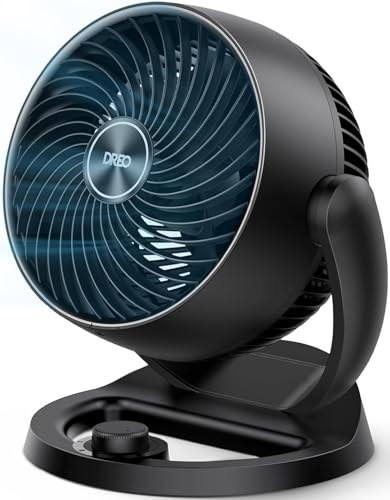
Warm air lingering around the bed can ruin a night long before the room feels genuinely hot. A loud motor fixes one irritation and replaces it with another, which is why the best whisper quiet fan for bedroom use needs more than raw airflow. The Dreo PolyFan 306 takes a more measured approach, pairing a claimed 25dB operating level with long-range circulation and adjustable positioning. It’s built for steady comfort rather than the harsh, direct blast associated with many basic pedestal fans.
Dreo PolyFan 306
The PolyFan 306’s biggest talking point is its ability to move air as far as 80 feet, according to the supplied product specifications. That reach matters in a bedroom because the fan doesn’t have to sit inches from the pillow to feel effective. Placed near a wall or dresser, it can encourage broader circulation instead of creating one chilly stream across the face. The result should feel more like the room is breathing and less like a fan is blowing directly at one spot.
Dreo also states that its airflow system can circulate the air in a bedroom, living room, or kitchen in under three minutes. Room dimensions, furniture, open doors, and ceiling height will naturally affect that claim, so it shouldn’t be treated as a guarantee in every space. Still, the combination of a focused air channel and air-circulator design gives this model a practical edge over a standard pedestal fan that simply pushes air forward. It can also help move cooled air from an air conditioner across the room, reducing those annoying hot pockets near the bed.
Three speed settings keep the controls straightforward, though people who enjoy tiny airflow adjustments may wish for more steps. The included Auto Mode adds some flexibility by raising the speed one level whenever the room temperature increases by 3°F. That hands-off adjustment can be useful overnight, especially when a room starts cool and gradually becomes stuffy after the door is closed. Still, anyone sensitive to changing sound levels may prefer a fixed speed rather than letting the fan shift on its own.
Quiet Airflow Without Bedtime Distractions
Dreo lists the lowest operating noise at 25dB, which places quiet performance at the center of this design. A number alone doesn’t reveal every sound characteristic, but smooth airflow and a stable motor tone usually matter more than sheer loudness. The bionic blade design is intended to move air with less turbulence, helping avoid the rough buffeting noise that some fans produce. At lower speeds, that approach is better suited to light sleepers than the chopping sound of a conventional high-speed fan.
The remote’s one-touch mute function deserves attention because button beeps can feel absurdly loud in a dark room. Adjusting oscillation or speed without waking someone nearby is a small benefit on paper, yet it can become one of the most appreciated features in daily use. The included remote also means there’s no need to leave the bed whenever the room temperature shifts. Dreo provides a built-in top control panel as well, so the fan remains usable if the remote slips between the cushions.
Quiet operation does involve a realistic tradeoff. The strongest speed will almost certainly sound more noticeable than the lowest setting because moving more air creates additional blade and wind noise. That doesn’t make the fan unsuitable for sleeping, but it means the 25dB claim shouldn’t be assumed across every speed and operating condition. For bedtime, the lower setting may offer the best balance between gentle cooling and a background sound that won’t keep calling attention to itself.
Flexible Direction And Adjustable Height
The fan combines 80-degree horizontal oscillation with a head that pivots manually through 90 degrees vertically. That range gives the PolyFan 306 more placement freedom than a pedestal fan limited to straight-ahead airflow. It can direct air across the mattress, toward the ceiling, or through the room without forcing the entire base into an awkward angle. Aiming it upward can also support broader circulation when direct wind feels too strong against bare skin.
Height adjusts from roughly 33.8 to 41.3 inches, covering several common bedroom arrangements. The lower position can send air beneath a raised bed frame or across a low mattress, while the taller setting better matches a standard bed. That flexibility also helps outside the bedroom, since sofa seating and desk setups rarely need airflow at the same height. The adjustment range isn’t enormous, but it’s wide enough to prevent the locked-in positioning that makes compact fans frustrating.
Horizontal oscillation is useful for sharing airflow, particularly when one side of the bed tends to feel warmer. It prevents a concentrated breeze from staying on one person all night, though the moving airflow may be less satisfying for someone who prefers constant cooling in one exact spot. The manual vertical pivot also means vertical direction won’t move automatically. That’s simpler and potentially quieter, but it requires getting out of bed if the initial angle isn’t quite right.
Cleaning, Aroma Pad, And Everyday Handling
Dust gradually changes how a fan performs. It clings to the grille and blades, reduces airflow, and can eventually introduce extra noise or vibration. The PolyFan 306 uses a detachable blade and grille design, allowing the front grille, rear grille, and blade to be removed separately for cleaning. That’s a meaningful advantage over fans with sealed housings that turn routine maintenance into a fiddly chore.
Regular cleaning is especially valuable in a bedroom, where fabric fibers, pet hair, and household dust gather quickly. Easier access makes it more likely that the fan will receive proper care rather than a quick wipe across the exterior. A clean blade can maintain smoother airflow and helps prevent dusty odors when the fan starts after sitting unused. The removable construction does add several parts to handle, so each piece needs to be reattached securely to avoid rattling.
The built-in aroma pad offers an unusual extra by allowing fragrance to move with the airflow. That may suit a room where a mild scent is welcome, but it won’t appeal to everyone. Strong fragrances can become overwhelming when distributed continuously, and scented oils may irritate sensitive noses. Used sparingly, the pad adds flexibility; left empty, it doesn’t interfere with the fan’s main job.
Where The PolyFan Fits Best
The Dreo PolyFan 306 makes the strongest case in rooms where quiet airflow and flexible aiming matter more than having a long menu of speed settings. Its pedestal design requires more floor space than a tower fan, so tight walkways and tiny bedrooms need careful measuring. Still, the narrow upright form is easier to position than a bulky box fan, and the adjustable height keeps the airflow from being trapped behind furniture. The remote also reduces the annoyance of repeatedly reaching around a nightstand or bed frame.
People who prefer powerful direct wind may feel limited by only three speed levels. On the other hand, the claimed 80-foot reach suggests the fan is intended to circulate an entire space rather than blast one small area. That distinction matters because an air circulator often feels less aggressive even while improving overall comfort. The benefit shows up most clearly in closed bedrooms where warm air settles and a basic fan merely shifts it from one corner to another.
Outdoor cooling has different demands because open air disperses the breeze and exposes equipment to weather, dust, and moisture. A neutral overview of those separate considerations appears in outdoor deck fans, while the PolyFan 306 remains positioned as an indoor bedroom and home-office model. Its listed features don’t indicate weather resistance, so using it on an exposed deck would be a poor fit. Keeping it indoors also protects the controls, motor, and detachable grille components from damp conditions.
Strengths, Weaknesses, And Practical Expectations
The clearest strengths are the low stated noise level, broad horizontal sweep, vertical adjustment, and remote-based mute control. Together, those features address the everyday annoyances that turn an otherwise capable fan into a bad bedroom companion. Long-range circulation also gives the fan more placement options, which helps when electrical outlets or furniture limit where it can stand. The automatic temperature response adds convenience without requiring an app or complicated setup.
The main weaknesses are just as practical. Three speeds provide less fine-tuning than fans with six, nine, or twelve levels, and the vertical angle must be changed by hand. A pedestal base also occupies floor space, while the aroma feature may go unused in fragrance-free homes. None of these drawbacks ruins the basic design, but they affect whether the fan feels thoughtfully matched to a particular room.
Realistic expectations make the PolyFan 306 easier to judge. It won’t lower the actual room temperature like an air conditioner, and maximum airflow won’t be as quiet as the gentlest setting. What it can do is improve air movement around the bed, spread cooled air more evenly, and reduce the stagnant feeling that makes sleep uncomfortable. For a bedroom that needs calm circulation, adjustable direction, and controls that won’t beep through the night, those benefits are the parts that genuinely count.
Dreo PolyFan Quiet DC Bedroom Fan
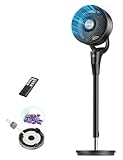
A restless night often starts with a small problem that keeps getting bigger: warm air sitting around the bed, a fan that rattles at low speed, or a breeze that never reaches the far side of the room. The best whisper quiet fan for bedroom use should calm that frustration without forcing a choice between meaningful airflow and peaceful sleep. Dreo’s PolyFan takes a room-circulation approach, combining a brushless DC motor, eight speed settings, three operating modes, and a wide range of directional adjustment. It’s less about blasting air at the pillow and more about keeping the entire room from feeling stale.
Dreo PolyFan Quiet DC Fan
This PolyFan blends the roles of a pedestal fan, oscillating fan, and air circulator into one compact floor unit. Its listed dimensions are 13.07 inches deep, 7.28 inches wide, and 39.29 inches tall, so the body stays relatively narrow even though it offers broad airflow coverage. That slimmer width helps beside a dresser, desk, or bed where bulky fan bases tend to become toe-stubbing obstacles. Still, floor space matters, and a pedestal design won’t disappear into a corner as neatly as a small tower fan.
Eight wind speeds offer considerably more control than the usual three-speed setup. That range is handy because bedroom comfort changes from hour to hour, and a single jump between low and medium can feel surprisingly dramatic after the lights go out. A barely noticeable breeze may be enough during mild weather, while stronger settings can clear trapped heat before bedtime. The extra steps let the airflow land closer to the sweet spot instead of settling for too weak or too windy.
Three operating modes add another layer of flexibility, though the supplied information doesn’t specify the exact behavior of each mode. The practical benefit is that the fan isn’t locked into one repetitive airflow pattern for every situation. A steady setting makes sense for predictable cooling, while alternate modes may better suit changing room conditions or softer nighttime airflow. Keeping expectations grounded, the mode selection is useful, but the eight individual speeds will likely do most of the everyday heavy lifting.
Quiet Performance That Still Moves Air
Dreo lists operating noise as low as 20dB, placing quietness at the center of this model’s design. That figure should be understood as the lowest stated noise level rather than a promise that every speed remains equally quiet. Higher airflow naturally creates more wind noise, even when the motor itself stays smooth. For bedtime, the lowest few settings are the ones most likely to show why a brushless DC motor matters.
The motor works with turbine-style blades and an air-booster design intended to push airflow as far as 85 feet. Long reach can be more useful than a harsh breeze because the fan doesn’t need to sit right beside the bed to make a difference. Positioned across the room, it can move air through a wider path and help prevent warm pockets from settling around furniture. That broader circulation also works well alongside an air conditioner, carrying cooled air farther instead of leaving one corner chilly and another stubbornly warm.
Dreo states that the DC motor produces 30% more air while using 40% less energy. Those are manufacturer-provided comparisons, and the exact real-world savings will depend on speed, runtime, room layout, and what kind of fan it replaces. Even so, DC motors generally suit long overnight use because they support finer speed adjustments and tend to operate with a smoother acoustic profile. The benefit isn’t merely a lower utility bill; it’s also the ability to run a gentler setting for hours without feeling wasteful.
Motor quietness can’t prevent every sound a floor fan may develop over time. Loose grilles, dust buildup, an uneven floor, or a poorly seated height adjustment can introduce vibration that has little to do with the motor itself. The stable setup and regular cleaning therefore matter if the goal is consistently quiet operation. A few minutes of maintenance can prevent the faint ticking and rough airflow noises that become impossible to ignore at two in the morning.
Wide Oscillation And Precise Air Direction
The PolyFan offers 120-degree horizontal oscillation, giving it a wider sweep than many conventional pedestal fans. That range helps distribute airflow across a shared bedroom, home office, or living area rather than repeatedly cooling one narrow strip. Horizontal movement can be controlled from the remote or the fan’s panel, which saves a late-night walk across the room. A wide sweep does mean each spot receives the breeze intermittently, so fixed positioning may feel better when constant direct airflow is preferred.
Vertical direction covers another 120 degrees, but that adjustment is manual. The broad tilt range makes it possible to aim air toward a tall bed, across a low mattress, or upward to circulate air near the ceiling. Directing the head above body level can soften the sensation of wind while still helping the room feel less stuffy. The tradeoff is simple: changing the vertical angle requires standing up and moving the head by hand.
The height adjusts from approximately 35 to 40 inches, a modest but useful range for matching different furniture layouts. At the lower position, airflow can pass across a sofa or low bed without shooting over the sleeping area. Raising the fan helps clear the edge of a mattress or reach across taller furniture. Five inches of adjustment won’t solve every awkward placement, but it adds enough flexibility to avoid the rigid, one-height feel of many compact floor fans.
A large LED display makes the settings easy to read from across the room. That convenience has a potential downside in a dark bedroom, since bright displays can become distracting even when the fan itself stays nearly silent. The supplied details don’t confirm whether the display dims or turns off automatically, so light-sensitive sleepers should keep placement in mind. Positioning the panel away from the bed may preserve the benefit of clear controls without creating an unwanted nighttime glow.
Remote Control And Eight-Hour Timer
The remote handles oscillation angles, modes, and speed adjustments without requiring direct access to the top panel. That’s more than a lazy-day perk when the fan sits across the room to take advantage of its 85-foot airflow reach. Small temperature changes can be handled without leaving the bed or interrupting focused work at a desk. The onboard panel remains available for regular operation, so losing the remote doesn’t make the fan useless.
An eight-hour timer fits a typical night better than short two-hour or four-hour timers. It can keep air moving through most of a sleeping period and shut the fan down near morning, when the room may naturally cool. The timer also helps in a home office where the fan could otherwise remain on after the room is empty. Folks who sleep longer than eight hours or want the fan running continuously can simply use regular operation instead.
Control variety does create a small learning curve. Eight speeds, three modes, oscillation settings, and a timer offer useful flexibility, but they’re more involved than a basic knob with low, medium, and high. The large display should make the current setting easier to track, while the remote reduces repeated button pressing at the unit itself. After a few evenings, most people will likely settle on two or three favorite combinations rather than constantly using every available option.
Cleaning And Long-Term Bedroom Use
Dust is the quiet fan’s sneakiest enemy. It gathers along blade edges and grille openings, reducing airflow and sometimes creating a faint flutter or imbalance that wasn’t present when the fan was new. Dreo describes this model as straightforward to clean, which matters for maintaining both airflow consistency and low noise. Easy access also reduces the temptation to let months of dust accumulate behind the front grille.
Routine care is especially relevant in rooms with carpeting, fabric bedding, or pets. Fine fibers can collect quickly, and the fan keeps pulling them toward the intake whenever it runs. Wiping the housing and cleaning accessible internal parts helps the motor work without pushing through a clogged airflow path. Reassembly deserves attention, since a grille that isn’t seated correctly can become a source of unnecessary vibration.
The fan’s indoor design also sets a clear boundary around where it belongs. Ceiling-mounted fixtures solve a different problem by combining overhead circulation with room lighting, and a neutral reference to that category appears in ceiling fan light kits. The PolyFan is better treated as a movable floor appliance that can shift between the bedroom, office, and living room. Its specifications don’t indicate outdoor protection, so damp patios and exposed decks would be outside its sensible use case.
Strengths, Weaknesses, And Realistic Fit
The strongest part of this Dreo model is its combination of quiet low-speed operation and broad room coverage. Eight speeds give the airflow enough nuance for sleep, work, and quick daytime cooling, while the 120-degree horizontal sweep spreads that air beyond one chair or bedside position. The adjustable height and large vertical tilt make placement less fussy than a fixed-head floor fan. Remote controls and the eight-hour timer round out the practical side without requiring an app.
The weaknesses are mostly tied to the same flexibility that makes the fan appealing. The manual vertical adjustment can’t be changed from bed, the large LED display may be too bright for sensitive sleepers, and a pedestal base still claims floor space. Maximum speed will also be more audible than the quoted 20dB minimum, regardless of how quiet the motor is. Those limits aren’t deal breakers, but they should be part of the decision rather than hidden beneath the headline specifications.
This fan won’t refrigerate a hot room or replace an air conditioner during extreme heat. Its real value lies in moving stagnant air, spreading cooled air more evenly, and creating a controlled breeze without forcing the motor to roar beside the bed. The wider speed range makes it particularly useful where small changes in airflow can determine whether a room feels calm or drafty. For sleep-focused use, the lower settings, careful head angle, and remote control are likely to matter far more than running the fan at full power.
Levoit 36-Inch Quiet Bedroom Tower Fan
Bedroom heat has a knack for becoming noticeable at the worst possible hour, usually after the lights are off and every mechanical buzz feels twice as loud. A bulky floor fan may move plenty of air, yet its footprint, exposed blades, and uneven motor tone can quickly wear out their welcome. The Levoit 36-Inch Tower Fan approaches the best whisper quiet fan for bedroom role with a slim body, a stated 28dB minimum noise level, and a sleep mode that adjusts airflow as the room temperature changes. Its strengths lean toward low-effort nighttime comfort, though the narrow tower format brings a few practical compromises.
Levoit 36-Inch Tower Fan
The Levoit fan stands 36 inches tall and uses a bladeless tower design rather than the familiar round grille of a pedestal model. That shape suits bedrooms where the walkway between the bed, dresser, and door already feels a little too tight. Its vertical outlet spreads air across more of the body instead of concentrating everything through one small circular opening. Still, a tower fan usually produces a narrower stream than a large pedestal fan, so placement matters more than it first appears.
A listed maximum air velocity of 25 feet per second gives the fan enough output for quick relief after entering a warm room. Turbo Mode makes the most sense in that moment, moving air aggressively before sleep rather than running at full force through the night. Once the room feels less oppressive, dropping to a lower speed can reduce both wind noise and the dry-eye feeling caused by constant strong airflow. That two-stage routine, fast cooling followed by quiet circulation, plays to the fan’s range better than leaving one setting untouched.
Five speeds provide useful separation between a faint background breeze and a stronger cooling stream. The extra steps help avoid the all-too-common jump from “barely there” to “papers flying off the nightstand.” Three settings might be enough in a kitchen or garage, but a bedroom rewards finer control because comfort shifts with blankets, room temperature, and how directly the fan faces the bed. The five-speed range doesn’t offer endless precision, yet it gives enough room to settle on a calmer nighttime setting.
Advanced Sleep Mode Feels Thoughtfully Designed
The standout feature is Advanced Sleep Mode, which combines reduced lighting with automatic airflow changes. Levoit states that the display turns off in this mode, removing the bright panel glow that can become surprisingly irritating in a dark room. The fan also uses a temperature sensor to gradually adjust its speed rather than blasting at one fixed level until morning. That approach addresses a familiar problem: the setting that feels right at bedtime may feel chilly several hours later.
Automatic adjustment sounds simple, but the pacing makes the difference. Abrupt speed changes can draw attention to the fan, especially when the room is otherwise silent, while gradual shifts are easier to ignore. The supplied details indicate that this mode takes different stages of sleep into account, though no specific adjustment schedule is provided. Practically speaking, the value lies in less overnight fiddling and fewer moments spent reaching for the remote half awake.
The stated minimum noise level of 28dB supports the sleep-focused design, but that number should be read with care. It likely refers to operation under the quietest conditions rather than Turbo Mode or the highest speed. Air moving through a slim outlet will always create some wind sound, even if the motor itself remains subdued. Light sleepers may appreciate that consistent sound, while anyone expecting absolute silence should keep expectations realistic.
Temperature-based control also has a tradeoff. A sensor reacts to the air around the fan, which may not match the temperature right beside the pillow or under heavy bedding. Placing the tower near a sunny wall, open doorway, or air-conditioning vent could influence its readings. The automatic response is convenient, but careful placement will help it make changes that feel sensible rather than slightly out of step with the sleeping area.
Four Modes Cover Different Daily Routines
Normal Mode offers the most predictable experience, keeping manual control front and center. Pick a speed, choose whether oscillation is active, and the fan continues without trying to interpret room conditions. That straightforward behavior suits steady work sessions, reading, or nights when changing airflow would be more distracting than helpful. The manual setting may sound plain, but reliability often beats clever automation once a favorite speed has been established.
Auto Mode handles comfort with less attention by responding to temperature changes. It can be helpful during late afternoon, when a bedroom warms as sunlight reaches the windows, or during transitional weather that swings between muggy and cool. The fan won’t lower the actual room temperature like an air conditioner, yet stronger circulation can make warm conditions feel more tolerable. Its role is air movement, not mechanical refrigeration, and that distinction prevents disappointment.
Turbo Mode is built for speed rather than discretion. The maximum output can clear stagnant air quickly, but it’ll naturally be louder and more forceful than the sleep-oriented settings. Running it before bed, while changing clothes, or after returning to a closed room makes more sense than expecting it to remain whisper-soft. Used that way, rapid airflow becomes a practical tool instead of an all-night compromise.
Advanced Sleep Mode rounds out the set by prioritizing low disturbance. Four modes may seem like a lot at first, though each one has a fairly clear role rather than existing as a minor variation with a fancy label. The controls should become familiar after a few days, especially once the preferred combinations are narrowed down. Most households will probably rely on Normal and Sleep Modes regularly, keeping Auto and Turbo for changing weather or quick cooling.
Oscillation And Room Coverage
The fan offers optional 90-degree oscillation, allowing the airflow to sweep across a wider section of the room. That range works well for a shared bed, a desk positioned beside the sleeping area, or a room where one fixed direction leaves warm pockets untouched. Oscillation also softens direct exposure because the breeze doesn’t stay planted on the face or shoulders. The downside is intermittent cooling, which may feel less satisfying to someone who wants a constant stream aimed at one precise spot.
Tower fans spread air vertically, but they generally provide less manual aiming freedom than pedestal models with tilting heads. This Levoit unit doesn’t list a vertical tilt feature, so the outlet height and placement determine where the breeze lands. A low bed may receive air across the upper body, while a tall mattress could place more of the stream around the legs or side of the frame. The fixed vertical direction keeps operation simple, though it removes one layer of customization.
Furniture can also interrupt the airflow path. A tall nightstand, laundry basket, or bed frame positioned directly in front of the tower may block part of the stream before it reaches the room. The narrow footprint makes repositioning easier, and placing it a few feet from large obstacles can improve circulation noticeably. In a small bedroom, that flexibility often matters more than chasing the highest possible velocity number.
Remote Control And Twelve-Hour Timer
The included remote handles the everyday adjustments that would otherwise require leaving the bed. Speed, mode, oscillation, and other settings can be changed from across the room, which fits the tower’s bedroom-first personality. The LED display keeps current information visible during daytime use, while Sleep Mode turns the display off when darkness matters. That combination avoids forcing a choice between readable controls and a glowing panel at night.
A 12-hour timer offers more scheduling room than the common eight-hour limit. It can cover a long night, an afternoon work block, or a slow weekend morning without requiring another input. Timed shutdown also prevents the fan from running all day after everyone has left the room. Continuous operation remains available for hotter periods, so the timer is an option rather than a restriction.
Remote controls have an obvious weakness: they wander. Bedding, couch cushions, and crowded nightstands have a habit of swallowing small accessories, so the onboard controls remain important. The large display should make panel adjustments relatively clear, even if bending down beside a 36-inch tower isn’t as convenient as using the remote. A dedicated storage spot near the bed can spare a fair amount of sleepy searching.
Cleaning And Assembly Are Refreshingly Simple
Dust buildup is more than a cosmetic annoyance because it can restrict airflow and create rougher sound over time. Levoit uses a washable rear cover that can be removed for easier access to the inside of the fan. That’s a practical advantage over sealed tower designs, where dust often remains trapped behind narrow vents. Regular cleaning should help preserve airflow without turning maintenance into a long disassembly project.
The interior still needs a careful hand. Wiping accessible surfaces is more sensible than soaking components or forcing tools deep into the housing. The supplied instructions describe the rear cover as washable, not the entire fan assembly, so the electrical body should remain dry. Keeping the intake clear is likely to matter most, especially in rooms with carpet, shedding pets, or fabric-heavy bedding.
Assembly requires no tools because the base pieces snap together and attach to the tower body. Levoit specifically advises aligning the fan body before tightening the base nut, and that detail shouldn’t be brushed aside. A skewed installation can make a tall appliance look crooked and may affect stability on hard flooring. Careful alignment supports a steadier stance, which also reduces the chance of vibration-related noise.
Strengths, Weaknesses, And Bedroom Fit
The clearest strengths are the quiet stated minimum, display-free Sleep Mode, temperature-based adjustment, and slim footprint. Five speeds allow more finesse than basic three-speed towers, while the four modes cover both quick cooling and low-key overnight use. A 12-hour timer and remote make the fan easier to live with after the room goes dark. None of those features feels wildly flashy, but together they address the annoyances that usually matter after several weeks of use.
The main weaknesses come from the tower format. Vertical direction appears fixed, the strongest settings won’t maintain the advertised minimum noise, and airflow can be blocked by nearby furniture more easily than with a raised pedestal head. Automatic temperature control also depends on where the fan is positioned. These aren’t fatal flaws, but they shape whether the fan feels well matched to a particular bedroom.
A smaller fan may make more sense on a crowded desk or narrow shelf where floor space isn’t available. That separate use case is reflected in cute desk fans, while this Levoit model is designed to stand independently and circulate air through a broader area. Its tall body is better suited to open floor placement beside a bed, dresser, or home-office corner. The distinction matters because compact convenience and whole-room reach rarely come from the same shape.
The Levoit 36-Inch Tower Fan is most convincing at lower speeds, where quiet circulation, dim-free nighttime operation, and remote control can work together without fuss. Turbo Mode adds useful muscle, but its real character shows during long, low-key sessions rather than brief bursts at maximum output. The washable rear cover and tool-free base make ownership less bothersome, provided the body is aligned carefully during setup. For bedrooms that need controlled airflow without a broad pedestal base, its balance of sleep features and practical maintenance makes sense.
Dreo 12-Inch Quiet Air Circulator Fan
Small bedrooms can feel stuffy long before the thermostat suggests anything is wrong. Air gets trapped around furniture, the pillow warms up, and a noisy fan introduces a new annoyance instead of fixing the first one. The Dreo 12-Inch Quiet Air Circulator aims at the best whisper quiet fan for bedroom role with a compact frame, a stated 28dB minimum noise level, and airflow rated to reach up to 70 feet. Rather than relying on an oversized body, it uses shaped blades and a focused air path to move air farther across the room.
Dreo 12-Inch Quiet Air Circulator
The fan measures roughly 9 inches deep, 11 inches wide, and 12 inches high, so it can sit on a dresser, desk, shelf, or sturdy nightstand without taking over the surface. That compact footprint is useful where floor space is already occupied by storage bins, laundry baskets, or a narrow walkway beside the bed. Its built-in base and handle also make room-to-room movement less awkward than carrying a full pedestal fan. Still, the 12-inch body isn’t tiny, and a crowded bedside table may need some rearranging.
Dreo’s WingBoost system pairs deep-pitched blades with an aerodynamic housing to propel air as far as 70 feet, according to the supplied product details. That distance matters because an air circulator is meant to influence more than the few feet directly in front of the grille. Positioned across a bedroom, it can help break up pockets of warm air without sitting close enough to blow aggressively across the face. Furniture, doorways, and room shape will affect the actual reach, so the figure is better treated as a maximum claim than a guaranteed result.
The design feels closer to a compact circulation tool than a conventional desk fan. A standard table fan often creates a broad but quickly fading breeze, while this model focuses the stream so it carries farther. That concentrated airflow can make placement more flexible, especially where electrical outlets aren’t conveniently located beside the bed. The tradeoff is that the breeze may feel fairly direct until the head angle is adjusted to bounce air from a wall or ceiling.
Quiet Airflow For Sleep And Focus
Dreo lists the lowest sound level at 28dB, which puts quiet operation near the top of the product’s priorities. That number should apply under the calmest operating conditions, not automatically across all three speeds. Faster blade movement produces more wind noise even if the motor remains smooth. During sleep, the lowest setting is likely to offer the strongest balance between useful circulation and a sound profile that fades into the room.
The fan uses NACA-inspired airflow technology and a bionic design intended to reduce turbulence as air passes through the housing. Less turbulence can mean fewer rough, choppy sounds, the sort that keep pulling attention back to the fan in a quiet bedroom. A steady hum is often easier to ignore than an inconsistent rattle or flutter. Of course, dust buildup, an uneven surface, or loosely fitted parts can change that experience over time, so maintenance still matters.
Quiet doesn’t mean silent, and that distinction is worth keeping front and center. The fan may provide a soft background sound that some sleepers appreciate, while extremely sound-sensitive rooms could still reveal the motor and airflow. Its compact body can also sit closer to the bed than a floor fan, which makes both the breeze and the sound more noticeable. Moving it several feet away and aiming the airflow indirectly may produce a calmer result than placing it inches from the pillow.
Three Speeds Keep Operation Simple
A physical knob controls the fan’s three speed settings, keeping operation refreshingly straightforward. There’s no menu to scroll through, no app pairing, and no remote to misplace under the blankets. Turning a knob also makes it easy to confirm the setting by touch, which can be handy in a dark room. The downside is obvious: changing speed means walking over to the fan.
Three speeds cover the basics, but they don’t provide the fine control offered by models with eight or more levels. The lowest setting may feel right for sleeping, medium can handle general circulation, and high can help clear warm air after the room has been closed all day. If one setting feels too weak and the next feels too strong, there’s no middle step. That limited range is the clearest control-related weakness in an otherwise uncomplicated design.
Simplicity has its own appeal, though. A fan used mostly at one preferred speed doesn’t necessarily benefit from extra modes, timers, display panels, and temperature sensors. The knob is less likely to become confusing during a half-awake adjustment, and there are no bright indicators mentioned in the supplied details. For anyone bothered by glowing control panels, the basic manual interface may feel more restful than a feature-heavy tower fan.
Adjustable Tilt Changes How The Breeze Feels
The fan head offers up to 120 degrees of manual tilt, allowing airflow to be directed forward, upward, or at an intermediate angle. That range is useful in a bedroom because direct airflow isn’t always comfortable for an entire night. Tilting the fan toward the ceiling can circulate air throughout the room while reducing the sensation of wind hitting the skin. A slight upward angle may also help move cool air from a lower part of the room into warmer areas.
Manual tilt requires a little trial and error during setup. Aiming too low may send most of the breeze into the side of the bed frame, while pointing too high can weaken the cooling effect around the mattress. Once the angle is right, the head stays focused rather than sweeping from side to side. The absence of oscillation means airflow remains consistent, but it also means shared spaces won’t receive a moving breeze automatically.
Fixed directional airflow can actually work well for long-range circulation. Placed near a doorway, the fan may help move conditioned air from one room toward another, while a ceiling-facing angle can encourage broader mixing. The best position won’t always be the most obvious spot beside the bed. A few small placement changes can make the 70-foot airflow claim more useful than simply pointing the fan straight ahead and hoping for the best.
Seasonal Use Beyond Basic Cooling
An air circulator can remain useful after summer because it moves existing air rather than creating cold air. Paired with a space heater, it can help spread warmth beyond the immediate area around the heater, reducing the hot-nearby and cold-across-the-room problem. The fan should never sit so close that it interferes with the heater’s safety clearances or intake. Gentle circulation from a sensible distance is the more practical arrangement.
Humidifiers and air purifiers can also benefit from broader air movement. Moisture from a humidifier may distribute more evenly instead of collecting around one corner, while purifier-treated air can circulate farther through the room. The fan doesn’t increase the actual capacity of either appliance, but it may help their output reach more of the space. That supporting role makes the Dreo useful during dry winters, allergy seasons, and closed-window weather.
Energy savings depend on how the fan is used, so the supplied claim should be treated realistically. Better circulation may allow a thermostat, heater, or air conditioner to work more effectively, but there’s no fixed savings figure provided for this model. The benefit comes from reducing uneven temperatures rather than expecting the fan itself to cool or heat the room. Used thoughtfully, it can help comfort feel more consistent without pretending to replace climate-control equipment.
Cleaning And Flexible Placement
The removable parts are designed to make routine cleaning easier. Dust gathers quickly on blade edges and grille openings, especially in bedrooms filled with bedding fibers, carpet, and pet hair. As that layer builds, airflow can weaken and the fan may begin sounding rougher than it did out of the box. Easier access gives the design a practical advantage over sealed housings that are difficult to clean properly.
The fan can be used on a tabletop, placed on a suitable floor surface, or mounted on a wall according to the supplied description. Wall placement can free up valuable furniture space and keep the airflow path clear of clutter. It also requires secure installation and a location that still allows convenient access to the knob. Since no mounting hardware details were supplied, the setup should follow the manufacturer’s instructions rather than relying on improvised fasteners.
Desk-focused cooling brings a slightly different set of priorities, including closer airflow, smaller dimensions, and easy access to controls. A related discussion of that use case appears in quiet desk fans, while this Dreo model leans toward stronger whole-room circulation from a compact base. Its handle makes moving it between a bedroom, kitchen, and office fairly painless. The lack of a remote remains noticeable when the fan is mounted high or placed across a larger room.
Strengths, Weaknesses, And Realistic Use
The clearest strengths are the compact housing, far-reaching airflow claim, broad tilt range, and quiet stated minimum. It can sit where a pedestal fan won’t fit, yet its focused airflow is intended to reach beyond the immediate desktop area. The manual knob avoids complicated controls and bright displays. Easy cleaning and a carry handle add the kind of practical value that tends to matter after the novelty wears off.
The main weaknesses come from its simplicity. There’s no remote, timer, automatic temperature control, or horizontal oscillation in the supplied specifications. Three speeds may also feel limiting for someone who wants precise nighttime airflow. Those omissions keep the fan easy to operate, but they also mean comfort adjustments aren’t available from bed.
Placement will decide whether the Dreo feels impressively effective or merely adequate. A clear airflow path allows the WingBoost design to carry air through more of the room, while furniture directly in front of the grille can waste much of that reach. The fan can support cooling, heating, humidification, and air purification, yet it won’t replace any of those appliances. Its real talent is steady air circulation from a body small enough to move without turning the room upside down.
The strongest bedroom setup will likely use the lower speed, an indirect head angle, and several feet of distance from the bed. That arrangement takes advantage of the 28dB quietness claim while reducing the dry, over-cooled feeling caused by direct airflow all night. Higher speed remains useful for flushing out stagnant air before sleep or moving conditioned air between spaces. For rooms where simple controls and compact placement matter more than automatic features, the Dreo 12-Inch Air Circulator has a sensible, clearly defined role.
Dreo Nomad One Quiet Tower Fan
Hot air trapped around a bed can turn a decent night into hours of blanket kicking and thermostat bargaining. Crank up a clunky fan, though, and the cure may buzz, beep, or glow brightly enough to create a fresh problem. The Dreo Nomad One aims at the best whisper quiet fan for bedroom role with a slim 36-inch frame, airflow reaching up to 24 feet per second, and a Sleep Mode built to reduce nighttime distractions. It’s a practical floor fan for rooms that need meaningful circulation without giving up a large patch of floor space.
Dreo Nomad One Tower Fan
The Nomad One uses an all-in-one airflow system paired with a supercharged electric motor to produce brisk air from a narrow tower body. Dreo lists a maximum velocity of 24 feet per second, which gives the fan enough punch to clear that stale feeling after a bedroom has remained closed all afternoon. Strong output doesn’t mean every setting feels aggressive because four speeds allow the airflow to step down from forceful cooling to a softer breeze. That flexibility matters most at night, when a small adjustment can separate comfortable circulation from cold feet and dry eyes.
Its 36-inch height places the outlet above low furniture while keeping the unit compact enough for common bedroom layouts. A tower fan slips beside a dresser or into a corner more neatly than a round pedestal fan with a wide base and protruding head. The slim freestanding design is especially helpful where every inch between the bed and wall already has a job. Still, it needs an open intake and a clear path in front, so squeezing it tightly behind curtains or laundry hampers would undercut its airflow.
The hidden carrying handle makes the fan easier to move between a bedroom, home office, and living room. Dreo also includes a built-in compartment for the remote, a small touch that prevents the familiar hunt beneath pillows and couch cushions. Portability is useful here because the fan isn’t tied to one permanent installation or a specific ceiling location. At the same time, its free-standing format still requires a stable floor and access to an outlet wherever it lands.
Sleep Mode Cuts Several Nighttime Annoyances
Quiet bedroom use involves more than lowering motor noise. Beeping controls, bright displays, and sudden airflow changes can be just as irritating once the room goes dark. The Nomad One addresses those details with automatic display shutoff and muted operating sounds in Sleep Mode. That combination lets settings change without filling the room with button tones or a glowing control panel aimed toward the bed.
Dreo credits its algorithmic impeller design and the Coanda effect for producing smoother, quieter airflow. In everyday terms, the fan is shaped to guide air efficiently rather than letting it tumble noisily through the housing. Smooth wind noise tends to fade into the background more easily than rattling plastic or a motor tone that rises and falls. The supplied information doesn’t include a specific decibel rating, so there’s no reason to attach an invented number to its quietness.
The strongest speed will naturally sound more noticeable than the gentlest setting. Moving air at up to 24 feet per second creates wind noise even if the internal motor stays controlled, so full power makes more sense for quick cooling than silent overnight operation. Sleep Mode and the lower speeds are the better match for restful airflow. A little distance from the bed can further soften both the breeze and the sound without sacrificing room circulation.
Placement can make or break the nighttime experience. Set too close, even a low speed may feel sharp against exposed skin; tucked too far behind furniture, the fan may circulate less air than expected. A position several feet from the mattress allows the vertical outlet to spread air across a broader area. That setup supports the Nomad One’s whole-room approach rather than treating it like a tiny personal fan aimed directly at the pillow.
Four Modes Give The Fan Distinct Personalities
Normal Mode keeps operation straightforward by holding the selected speed until it’s changed. That predictability suits reading, working, or sleeping when a consistent breeze feels better than automatic variation. Four speeds run from soft circulation to much stronger airflow, providing enough separation for changing weather and room conditions. The manual control may be the least flashy mode, but it’s likely to become the everyday default.
Natural Mode varies the breeze instead of maintaining one unbroken stream. The shifting airflow can feel less mechanical, especially while relaxing in a living room or working at a desk for several hours. Some sleepers enjoy that rise-and-fall pattern because it reduces constant pressure on one part of the body. Others may notice each speed change, making steady Normal Mode the calmer choice for a very quiet bedroom.
Auto Mode is designed to handle adjustments with less intervention. It suits days when indoor conditions change gradually and repeatedly reaching for the controls becomes a nuisance. The supplied details don’t specify the exact temperature thresholds or adjustment pattern, so its behavior shouldn’t be described more precisely than the manufacturer has provided. Its practical appeal lies in hands-off comfort, not in replacing a thermostat or air-conditioning system.
Sleep Mode focuses on the details most likely to interrupt rest, including the display and control sounds. Its soothing airflow pairs well with the eight-hour timer, allowing the fan to run through much of the night and stop without another input. Eight hours won’t cover every sleep schedule, but it fits a typical overnight period better than a short two-hour timer. Continuous operation remains available whenever the room stays warm until morning.
Ninety-Degree Oscillation Spreads The Breeze
The Nomad One uses 90-degree horizontal oscillation to sweep airflow across a wider section of the room. That range works well for a shared bed, a bedroom-office combination, or any layout where fixed airflow would cool one spot and ignore another. Oscillation can also reduce the discomfort of a breeze staying planted on the face for hours. Instead, each part of the room receives moving air in intervals.
Dreo pairs the oscillating motion with a calibrated airflow path intended to carry air beyond the immediate area around the fan. The tall outlet distributes the breeze at several heights, which helps around beds, couches, and standard desk chairs. Unlike a pedestal fan, though, the tower doesn’t list a tilting head for manually changing the vertical direction. That fixed outlet angle keeps the body tidy but limits precise aiming above or below its natural airflow path.
Direct airflow remains available by turning oscillation off. That setting makes sense when one side of the room stays warmer or when the fan is being used to move conditioned air through a doorway. A fixed stream also feels stronger because it doesn’t sweep away every few seconds. The choice between broad coverage and focused cooling gives the fan more flexibility than a tower that oscillates continuously.
Furniture placement deserves a second look before settling on a permanent spot. Tall bed frames, solid nightstands, and heavy curtains can block part of the outlet or intake, weakening the circulation pattern. Moving the fan a foot or two into a clearer path may matter more than increasing the speed. Good placement allows the 90-degree sweep to reach the room instead of repeatedly blowing into the side of a dresser.
Remote Controls Keep Adjustments Within Reach
The included remote handles speeds, modes, and oscillation without requiring a trip across the bedroom. That convenience becomes much more valuable after the lights are off and the preferred setting suddenly feels one notch too strong. The controls are also available on the fan’s panel, so a missing remote won’t shut down basic operation. Keeping the remote in its built-in storage compartment helps it stay with the fan between rooms.
An eight-hour timer supports both sleep and daytime routines. It can shut the fan off near morning, cover a long work session, or prevent it from running after everyone leaves the room. Timer controls don’t cool the room differently, but they reduce the nagging question of whether the fan was left on. That kind of low-effort scheduling is useful without dragging an app or wireless setup into a simple appliance.
The lack of app control may actually feel refreshing in a bedroom. There’s no account setup, network pairing, or phone screen needed for a basic speed adjustment. A physical remote provides the useful distance control while keeping operation self-contained. The tradeoff is that commands depend on having the remote nearby and pointed within a workable range.
Cleaning Access Is Better Than A Sealed Tower
Tower fans often collect dust in places that are awkward to reach. The Nomad One counters that problem with a removable rear grille and accessible impeller wheel, making internal cleaning less of a guessing game. Dust removal helps preserve airflow and prevents buildup from contributing to uneven sound. That’s particularly useful in bedrooms filled with fabric fibers, carpeting, and pet hair.
Cleaning still calls for care around the motor and electrical components. Removable parts can be handled according to the manufacturer’s instructions, while the powered body should remain dry. A soft brush or cloth can address accessible dust without forcing debris deeper into the housing. Correct reassembly matters too because a loose grille may introduce vibration that undermines the fan’s quiet operation.
Maintenance frequency depends on the room rather than a rigid calendar. A fan near the floor in a pet-friendly home will usually gather dust faster than one used occasionally in a clean office. Watching the rear intake gives a practical clue about when cleaning is due. Reduced airflow, a dusty smell, or a rougher sound are signs that the internal path may need attention.
Safety Features Suit Busy Living Spaces
Dreo equips the Nomad One with fingertip pinch-proof grilles, a fused plug, and built-in circuit protection. Those details don’t remove the need for sensible placement, but they address common concerns around a floor appliance used near beds, desks, and shared walkways. The tower format also keeps moving components enclosed rather than exposing large spinning blades. Its ETL listing adds a recognized safety mark to the supplied product specifications.
A stable surface remains essential because the body is tall and narrow. Power cords should stay out of walking paths, and the fan shouldn’t sit where bedding or curtains can press against the intake. The hidden handle should be used when carrying the unit rather than dragging it by the cord. These ordinary precautions support the fan’s built-in safeguards instead of asking them to compensate for careless setup.
Bladeless-looking floor fans and ceiling-mounted designs solve different space problems. A neutral reference to the overhead category appears in bladeless ceiling fans, while the Nomad One remains a portable tower that can shift between rooms. It doesn’t require permanent wiring, ceiling clearance, or installation hardware. The tradeoff is that it occupies floor space and can’t circulate air from overhead.
Strengths, Weaknesses, And Everyday Fit
The Nomad One’s clearest strengths are its compact shape, forceful maximum airflow, four useful modes, and sleep-oriented control behavior. Automatic display shutoff and muted sounds address details that cheaper fans often overlook. The removable grille makes long-term upkeep more realistic, while remote storage prevents a small accessory from becoming a daily nuisance. Ninety-degree oscillation adds enough coverage for many standard bedrooms without making the unit bulky.
The main weaknesses are tied to the limits of a compact tower. The supplied details don’t state a precise decibel level, vertical airflow can’t be tilted, and the eight-hour timer may fall short for longer schedules. High speed won’t be as quiet as Sleep Mode, regardless of the impeller design. A tower’s concentrated stream may also feel less airy than the broad breeze from a large pedestal fan.
This model won’t lower the actual room temperature, nor will it replace an air conditioner during severe heat. Pairing it with cooling equipment can help distribute conditioned air, allowing fewer warm pockets to linger around furniture or across the far side of the room. The benefit comes from circulation and perceived cooling, not from generating cold air. Used alone, it makes warm conditions feel more manageable by increasing evaporation from the skin.
The strongest bedroom arrangement will likely combine a lower speed, Sleep Mode, and enough distance to let the airflow spread before reaching the mattress. Turbo-like maximum airflow is better saved for clearing a stuffy room before settling down. The Nomad One’s real appeal sits between those extremes: quiet overnight convenience with enough power in reserve for hotter parts of the day. Its slim body and uncomplicated controls make that balance easy to use without turning a fan into a household project.

Best Quiet Ceiling Fan For Bedroom 2026 Ultimate Comfort Picks

Best Ceiling Fan For Master Bedroom 2026 With Ultimate Comfort

Best White Ceiling Fan With Light For Bedroom 2026 Top Picks

Best Quorum Medallion Ceiling Fan 2026 With Style & Breeze
Best Outdoor Fan For Pergola 2026 Comfort Boost

Best Ceiling Fan For Great Room 2026 With Ultimate Comfort

Best Outdoor DC Ceiling Fans 2026 For Breezy Comfort
Best ceiling exhaust bath fan with light and heater 2026





